
MATH I
In this collection
How many? How big? How far? How long? And when should kids know what?
From PBS, Learn & Grow at https://www.pbs.org/parents/learn-grow has age-by-age tips, activities, and descriptions of what kids generally know and do from ages 2 to 8, in the fields of Creative Arts, Language, Literacy, Mathematics, Physical Health, Science, and Social and Emotional Growth.
There are - literally - hundreds of books aimed at introducing just-beginners to numbers; check out some good resources below.
Numbers and Counting

There are several picture-book versions of the loved-by-everybody song/nursery rhyme “Ten in the Bed:” “There were 10 in the bed and the little one said/”Roll over! Roll over!’/So they all rolled over and 1 fell out…” David Ellwand’s Ten in the Bed (Chronicle Books, 2001) is illustrated with enchanting photographs of ten teddy bears (including one in a striped night cap and one in wire-rimmed spectacles). For ages 1-4.

In Donald Crews’s rhyming Ten Black Dots (Greenwillow, 1994), various numbers of black dots (from 1 to 10) can be anything from a sun and a moon, to the eyes of a fox, the face of a snowman, or beads “for stringing on a lace.” Illustrated with big bright graphics for ages 1-5.
Math Literature Connections: Number Sense has activities and downloadable cards, worksheets and charts to accompany Donald Crews’s Ten Black Dots, Theo LeSieg’s Ten Apples Up on Top, and Jerrie Oughton’s How the Stars Fell Into the Sky.

Lois Ehlert’s Fish Eyes (“A Book You Can Count On”) (Houghton Mifflin Harcourt, 1992), illustrated with gorgeous bright-colored fish, makes for a great interactive read, with many fish and fish eyes to count, plus shapes and colors to identify. For ages 2-5.

By Mitsumasa Anno, Anno’s Counting Book (Crowell, 1997) is an enchanting picture book that teaches the numbers 0 to 12 as a small village grows through the months of the year. The book opens with an empty snow scene (0); by 1, we have one house, one snowy pine tree, one bridge over the river, one snowman, and one skier; by 7, there are seven buildings, seven pine trees, seven spotted cows, a clothesline hung with seven sheets and, in the sky, a seven-colored rainbow. Delightful for ages 2-6.

In Rick Walton’s rhyming So Many Bunnies (HarperFestival, 2000) – an ABC and counting book – Old Mother Rabbit, who lives in a shoe, is putting her 26 alphabetical offspring to bed, counting them one by one, from (1) Abel (who sleeps on a table) to (26) Zed, who sleeps in a shed. For ages 2-6.

By Maurice Sendak, One Was Johnny (HarperCollins, 1991) begins with Johnny, who lives alone, happily reading by himself. Then a rat leaps in, followed by a cat, a dog, a turtle, and so on until an annoyed Johnny cleverly counts backwards, getting rid of his uninvited guests and restoring peace and quiet. For ages 2-7.

In Jean Marzollo’s I Spy Numbers (Scholastic, 2012) – illustrated with colorful photo spreads of appealing little objects – challenges readers to find numbers of items via little rhyming clues. Great for trips. For ages 3-5.

For dinosaur lovers, How Do Dinosaurs Count to Ten? by Jane Yolen and Marc Teague (Blue Sky Press, 2004) features enormous dinosaurs perched on kid-sized beds and playing with kid-sized toys. Readers count to 10 beginning with 1 tattered teddy bear. One of a series for ages 3-5.

In Louise Yates’s Dog Loves Counting (Knopf Books for Young Readers, 2013), Dog has tried counting sheep, but still can’t get to sleep – so off he goes to find other animals to count. He begins with one baby dodo, and together the two of them set off in search of number three – a three-toed sloth, followed by a four-legged camel, a five-lined skink, and so on up to ten. At the end of the book, all ten animals end up counting stars. Other books featuring Dog include Dog Loves Books (2010) and Dog Loves Drawing (2012). For ages 3-6.
See also

Richard Scarry’s Best Counting Book Ever (Sterling, 2010) counts by ones to twenty, then by tens to one hundred – all with Scarry’s busy little pictures in which there’s a lot to study and count. For ages 3-6.

Paul Giganti’s How Many Snails? (Greenwillow, 1994) is a clever counting book that introduces kids to the idea of sets and subsets. (How many clouds? How many clouds are big and fluffy? How many clouds are big and fluffy and gray?) The School Library Journal trashed it for ambiguity (What constitutes a truck? Will kids know that fire trucks are trucks?) – but I think that’s a plus. Discuss and debate. That’s what books are for. For ages 3-7.

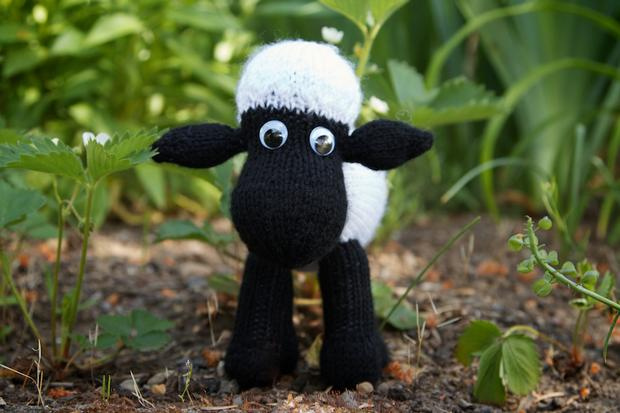
In Stioshi Kitamura’s When Sheep Cannot Sleep (Square Fish, 1988), Woolly, a pop-eyed little sheep in blue-and-white striped pajamas, can’t get to sleep - so off he goes for a walk, counting along the way, from one butterfly to two ladybugs, three owls, and four bats, up to 20 stars. Back in bed again, he thinks about his family – 21 relatives, all sheep – and so, finally, counting sheep, he falls asleep. Great watercolor illustrations. For ages 3-7.

We’re all primates! Anthony Browne’s One Gorilla (Candlewick, 2013) is a counting book of primates, from 1 gorilla to 2 orangutans, 3 chimpanzees, and so on, through gibbons, macaques, and mandrills to 10 ring-tailed lemurs. The book ends with 20 portraits of people (“All primates/All one family”). Illustrated with wonderful detailed paintings. For ages 3-7.

In Philemon Sturges’s Ten Flashing Fireflies (NorthSouth, 1997), a pair of children capture – one by one – ten fireflies in a jar, and then, as the lights begin to blink out, let them go (and glow) again, counting back down from 10 to 1. The illustrations are soft summer night scenes in pastels, with luminous balls of glowing fireflies. For ages 4-8.
Firefly Activities include making a wax-paper-winged fireflies, ice-cream-spoon fireflies, and a firefly keepsake jar. (Count them!)
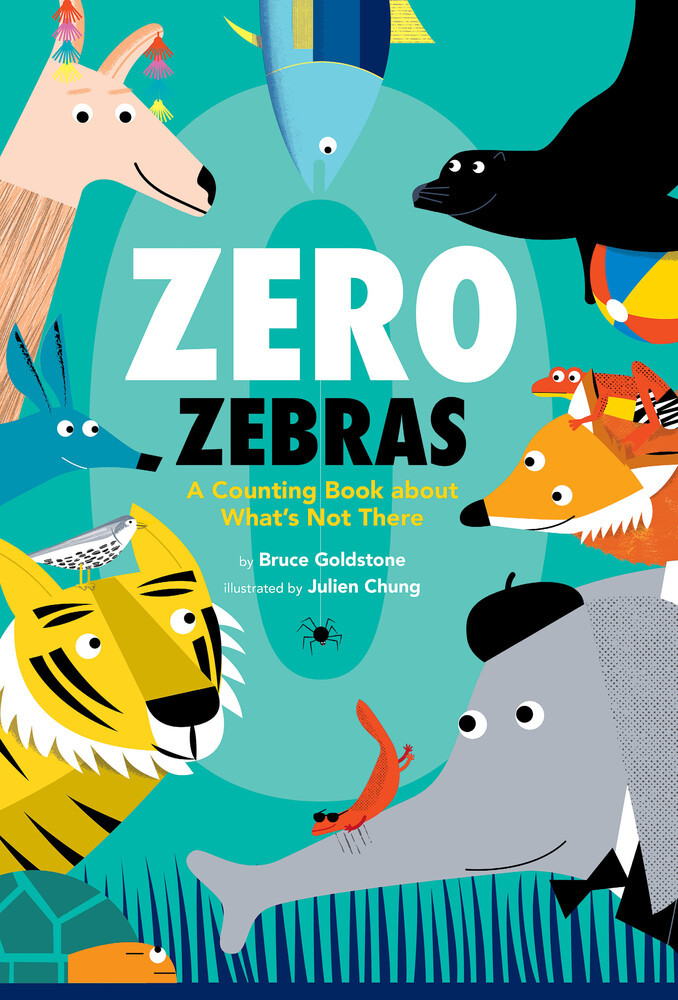
By Bruce Goldstone, Zero Zebras (Orchard Books, 2022) is a brilliant animal counting book of things that…aren’t there. An introduction to zero for ages 4-7.

Alice Melvin’s Counting Birds (Tate, 2010), written in rhyming couplets, counts birds (1-20) over the course of a day, beginning at dawn with one cockerel, then two love birds in a cage, then three ducks. Readers learn 21 different birds (the book ends at evening, with one nocturnal barn owl.) For ages 4-8.

By April Pulley Sayre, One is a Snail, Ten is a Crab (Candlewick, 2008) is a counting book of feet, beginning with the one-footed snail – then 2 (people), 4 (dog), 6 (insect), 8 (spider), and 10 (crab). Odd numbers are represented by an even-footed animal plus one snail. The numbers 10 to 100 are then represented by various combinations of animals – 80, for example, can be eight crabs or ten spiders. Cheerful cartoon illustrations. For ages 4-8.
Bigger Numbers

Rosemary Wells’s Emily’s First 100 Days of School (Disney-Hyperion, 2005) covers the numbers 1 to 100, with Emily’s daily number journal, which is rammed with creative number ideas. (Make a number journal of your own!) Great project possibilities for ages 4 and up.

Lola M. Schaeffer’s Lifetime: The Amazing Numbers in Animal Lives (Chronicle Books, 2013), is a mix of biology and math, as kids learn numbers and cool animal facts from 1 to (with skips) 1000. For example, in a single lifetime, a spider will spin one egg sac, a caribou will shed ten sets of antlers, a woodpecker will drill 30 nesting holes in trees, a rattlesnake will add 40 beads to its rattle, and a pair of seahorses will produce 1000 baby seahorses. For ages 4-8.

In Loreen Leedy’s Missing Math (Two Lions, 2008), all the numbers in town have simply disappeared – leaving behind a mess: clocks and calendars don’t work, money has no value, sports competitions and elections can’t be resolved, and nobody knows how old or tall they are. The culprit is finally caught: a number thief with a powerful vacuum, trying to make a number large enough to reach infinity. For ages 4-8.

Christina Dobson’s Pizza Counting (Charlesbridge, 2003) covers counting, addition, large numbers, and fractions, all through the medium of creative and yummy-looking pizzas. Pizza toppings not only demonstrate the numbers 1-20, but are combined to make pictures, such as a pizza face, a pizza cat, a pizza clock. A pizza tricked out with 100 topping pieces is duplicated 10 times (to demonstrate 1000) and then 100 times (10,000); millions and biliions are discussed in terms of numbers of pizzas necessary to circle the globe or reach to the moon. Try pairing this one with making your own numerical paper or baked-in-the-oven pizzas. For ages 5-8.

In David Birch’s The King’s Chessboard (Puffin, 1993), the king insists on giving his wise counselor a reward. Finally the counselor asks for a single grain of rice, the quantity to be doubled each day for as many days as there are squares on the king’s chessboard. The king soon realizes that he has made a dreadful mathematical mistake. For ages 6-10.

Demi’s One Grain of Rice (Scholastic, 1997) is a gorgeously illustrated version of the same tale, set in India; Helena Clare Pittman’s A Grain of Rice (Yearling, 1995) is a Chinese version of the story, in which a mathematically clever farmer’s son wins the hand of a princess.

Andrew Clements’s picture-book A Million Dots (Simon & Schuster Children’s Publishing, 2006) contains one million dots, along with a lot of catchy factoids to help readers visualize crucial numerical quantities along the way. Kids learn, for example, that there are 525,600 minutes from one birthday to the next and that when the cow jumped over the moon, she soared upward 238,857 miles. For ages 4-8.

In David Schwartz’s How Much Is a Million? (HarperCollins, 2004), kids learn about millions, billions, and trillions, with the help of Marvelosissimo the Mathematical Magician and a lot of clever analogies. Readers discover, for example, that it would take 23 days to count to a million, that a goldfish bowl big enough for a million goldfish could hold a blue whale, and that a stack of a million kids, standing on each other’s shoulders, would reach all the way to the moon. For ages 4-8.

In David Schwartz’s On Beyond a Million (Dragonfly Books, 2001), Professor X and Dog Y (both in sweater vests) show kids how to count exponentially (by powers of ten). The book is appealingly designed, with conversation in cartoon bubbles and a lot of fascinating “Did you know?” side bars filled with numerical facts. For example, readers learn that one colony of weaver ants contains 500,000 ants, that there are 40,000 characters in Chinese, and that Americans eat 500,000,000 pounds of popcorn each year. Readers learn about the enormous googol (a 1 with a hundred zeroes after it) and the even more enormous googolplex (a googol raised to the power of a googol). However, they find that it’s impossible to count to infinity, and the book ends with: “No matter what number you have, there is always one bigger.”For ages 5-8.

Robert E. Wells’s Is A Blue Whale the Biggest Thing There Is? (Albert Whitman & Company, 1993), for ages 6-9, is a cleverly illustrated exercise in big numbers and relative sizes: For example, it takes about 12 minutes to count to a thousand, but a good three weeks to count to a million, and a lifetime to count to a billion; and yes, a blue whale is big, but it’s tiny in comparison to massive Mount Everest, which is tiny in comparison to planet Earth, which is dwarfed by the Sun, which is puny compared to the red supergiant Antares. For ages 6-11.

By Robert E. Wells, Can You Count to a Googol? (Albert Whitman & Company, 2000) is a counting book by tens (beginning with one banana, balanced on a nose) and moving up through 1000 (scoops of ice cream), 100,000 (marshamallows), and so on, ending with an explanation of the googol (a 1 with 100 zeroes after it) and how it was named by a nine-year-old boy. A googol, Wells points out, is much too enormous to illustrate (“If you counted every grain of sand on all the worlds’ beaches and every drop of water in all the oceans, that wouldn’t even be CLOSE…”). For ages 6-9.

In Kate Hosford’s Infinity and Me (Carolrhoda Books, 2012), young Uma – gazing at the star-filled night sky - grapples with the difficult-to-grasp concept of infinity. Family and friends all offer different takes on infinity, and eventually Uma comes to terms with it, realizing that her love for her grandma is “as big as infinity.” With gorgeous illustrations by Gabi Swiatkowska. For ages 5-8.
Math Series Books

The Math Counts Series (Children’s Press) by Henry Pluckrose is a collection of 32-page books, each with a simple text and illustrated with attractive color photos, introducing a range of math topics. Titles include Numbers, Counting, Sorting, Shape, Patterns, Size, Length, Capacity, and Weight. For ages 3-6.

Brian Cleary’s Math is Categorical series (Lerner Publishing) includes such titles as The Action of Subtraction, The Mission of Addition, and Windows, Rings, and Grapes – a Look at Different Shapes. (See complete list at the website.) All are simple introductions to math concepts, with friendly examples, a rhyming text, and a lot of bright zany animal illustrations. For ages 4 and up.

Stuart J. Murphy’s extensive MathStarts series is categorized by age group: Level 1 (ages 3 and up), Level 2 (ages 6 and up), and Level 3 (ages 7 and up). See the website for the complete list, with descriptions of math concepts covered.

The Math Matters series (Kane Press) by various authors is a series of picture-book stories, each related to a specific math concept and variously targeted at ages 5-7 or 6-8. For example, Gail Herman’s Bad Luck Brad covers probability; Jennifer Dussling’s Fair is Fair introduces readers to bar graphs; and Linda Williams Aber’s Grandma’s Button Box is all about sorting. See the complete list of titles at the website.

The Mouse Math series (Kane Press), variously by Eleanor May, Daphne Skinner, and Laura Driscoll, are picture-book introductions to simple math concepts for preschoolers, starring a pair of adorable mice, Albert and his big sister Wanda. Albert Is Not Scared, for example, covers direction words; Albert’s Amazing Snail emphasizes position words; and Albert the Muffin-Maker introduces ordinal numbers. Cute and funny.
Math Concepts

Suzanne Aker’s What Comes in 2s, 3s, and 4s (Aladdin, 1992) in a picture-book introduction to sets – starting with your own two eyes, two ears, two arms, and two legs. For ages 2-5.

In Margarette S. Reid’s The Button Box (Puffin, 1995), a little boy gets out his grandmother’s enormous button box and begins to play, sorting the buttons into rows and piles – all the flower-painted china ones, all the sparkly jewel-like ones, and so on. There’s not much to it, but it would be great paired with an actual button box. (Got one?) For ages 3-6.

Eve Merriam’s 12 Ways to Get to 11 (Aladdin, 1996) is a clever twist on the counting book, showing 12 different combinations of things that all add up to 11: 9 pine cones and 2 acorns, for example; or 4 flags + 5 rabbits + 1 pitcher of water + 1 bouquet of flowers, all pulled from a magician’s hat. For ages 3-7.

In Kathryn Cristaldi’s Even Steven and Odd Todd (Cartwheel, 1996), Steven is definitely odd, in that he insists everything come out even, from his breakfast pancakes to the fish in his goldfish bowl. Then cousin Odd Todd arrives, who prefers his numbers odd. Eventually all works out – and the book ends with a handful of questions and simple activities on even and odd numbers. For ages 4-8.

Michael Dahl’s Eggs and Legs (Nonfiction Picture Books, 2005) is a clever exercise in learning to count by twos, as a hen watches pairs of legs emerge from hatching eggs. Also see Dahl’s Lots of Ladybugs: Counting by Fives and Toasty Toes: Counting by Tens. For ages 4-8.

In Lily Toy Hong’s Chinese folktale Two of Everything (Albert Whitman & Company, 1993), Mr. Haktak unearths an ancient pot in the garden that turns out, miraculously, to double anything placed inside it. He and Mrs. Haktak happily double their money (again and again), but then Mrs. Haktak herself falls into the pot. And doubles. For ages 4-8.

In Stuart J. Murphy’s Double the Ducks (HarperCollins, 2002), a pint-sized cowboy is caring for his flock of five ducks. Then each duck brings home a friend, which means twice as much food, twice as much bedding, and twice as much work. For ages 4-8.

Cynthia DeFelice’s One Potato, Two Potato (Farrar, Straus & Giroux, 2006) is an Irish version of the doubling story, in which Mr. and Mrs. O’Grady are so ragged and poor that they have only one of everything – one potato for dinner, one blanket on their bed, one chair to sit in, and one winter coat. Until, that is, Mr. O’Grady finds a magic pot, that doubles everything put inside. For ages 4-8.

In Pat Hutchins’s The Doorbell Rang (Greenwillow, 1989), Sam and Victoria have just divided one dozen of their mother’s freshly baked cookies, when the doorbell starts ringing and more and more friends arrive. With each new guest, the dozen cookies must be divided all over again. An exercise in beginning division (and sharing) for ages 4-8.
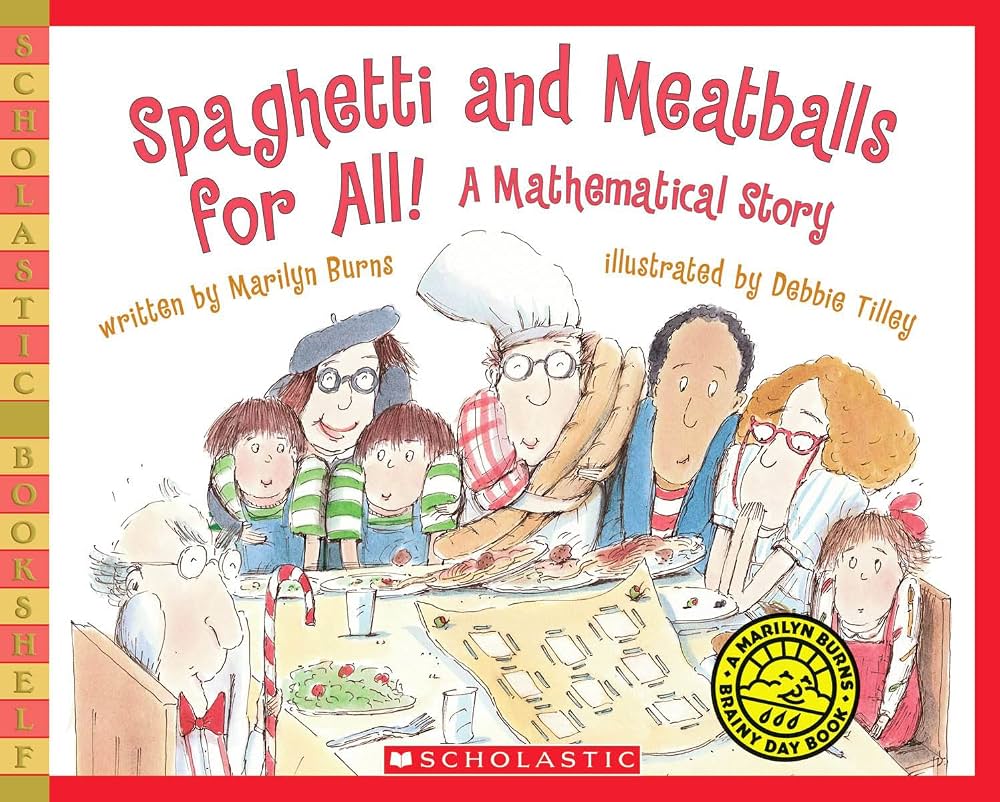
By Marilyn Burns, in Spaghetti and Meatballs for All (Scholastic, 2008), the Comforts are hosting a family reunion with eight tables and thirty-two chairs – but as the guests arrive, they have their own ideas about seating plans. A fun exercise in area and perimeter for ages 4-8.

Paul Giganti’s Each Orange Had Eight Slices (Greenwillow, 1999) is a simple picture-book introduction to counting, addition and, by extension, multiplication. (“On my way to the zoo I saw 3 waddling ducks. Each duck had 4 baby ducks trailing behing, Each duck said, “QUACK, QUACK, QUACK.” So: how many ducks, how many baby ducks, how many quacks? For ages 4-8.

In Elinor J. Pinczes’s One Hundred Hungry Ants (Houghton Mifflin Harcourt, 1999), a tale of division, one hundred ants are headed toward a picnic when they are halted by one mathematically minded ant, who suggests that they will get food more efficiently if they split up into ranks. Obediently the ants rearrange themselves in groups of 50, 25, 10, and so on – only to discover by the time they’ve finished that the picnickers have packed up and left. For ages 4-8.

Also by Pinczes is A Remainder of One (Houghton Mifflin Harcourt, 2002), in which the ants struggle to form even ranks to march in the big parade. For ages 4-8.

Margaret Mahy’s rhyming 17 Kings and 42 Elephants (Dial, 1987) features a royal procession through the jungle in which 17 kings and 42 elephants meet a tongue-twisting array of animals. A fun romp with potential for problem-solving. (How to divide 42 elephants among 17 kings?) For ages 4-8.
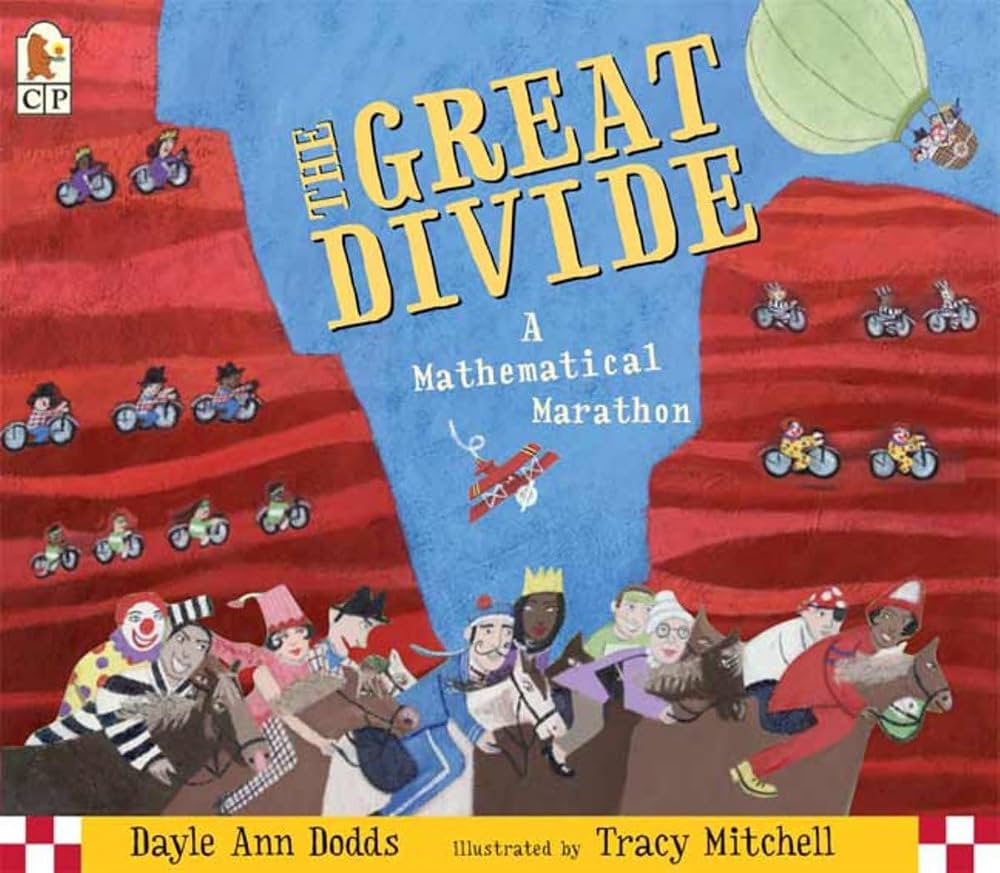
In The Great Divide by Dayle Ann Dodds (Candlewick, 2005), eighty marathon racers take off, only to encounter a canyon that cuts their number in half. Divided again and again, fewer and fewer head for the finish line. For ages 5-9.

In Mitsumasa Anno’s Anno’s Magic Seeds (Puffin, 1999), Jack meets a wizard who gives him two golden seeds, telling him to plant one and eat the other (“You will not be hungry again for a whole year”). Jack does, and the seed grows into a lovely blue-flowered plant that produces two seeds. Eventually Jack decides to eat something different for a change, and so plants both seeds, getting two plants and a harvest of four seeds. This time he eats one and plants three – and things rapidly multiply, becoming more and more complicated. For ages 4-8.

Laura Overdeck’s Bedtime Math series (Felwel & Friends) is a curiosity-provoking approach to math with fun fact-crammed problems centered around everything from jalapeno peppers and squirting ketchup bottles to roller coaster rides, crayons, marshmallows, and ladders to the moon. For each, there are questions targeted at wee ones, little kids, and big kids. A great family program that emphasizes how math is a part of everyday life.

Greg Tang is a master of math riddles, and his books – written in catchy rhyme - encourage kids to identify patterns and combinations and to devise effective problem-solving strategies. Titles include The Grapes of Math (Scholastic, 2004), Math for All Seasons, and Math Potatoes. For ages 4-8.

By Masaichiro Anno and Mitsumasa Anno, Anno’s Mysterious Multiplying Jar (Penguin Putnam, 1999) is a wonderful introduction to the concept of factorials through the medium of a blue-and-white Oriental jar. The jar, opened, contains an ocean in which there are two islands. Each island has two countries; each country has three mountains; on each mountain, there are four walled kingdoms; and so on. A gorgeous multiplication problem ending up with a phenomenal number of jars. For ages 4-8.

In Marilyn Burns’s The Greedy Triangle (Scholastic, 1998), the greedy triangle wants more than just three sides and three angles. With the help of the local shapeshifter, he acquires more and more, becoming in turn a quadrilateral, pentagon, hexagon, heptagon, and octagon before finally deciding that life as a triangle was really the best of all. For ages 4-8.

In Ann Tompert’s Grandfather Tang’s Story (Dragonfly, 1997), a Chinese grandfather tells his little granddaughter a story about a pair of magical shape-changing foxes, illustrating the story with geometrical tangram puzzle pieces. The book includes a reproducible tangram template for making a set of your own. For ages 4-8.
From ABCYa.com, Tangrams for Kids has tangram puzzles to solve online. Click and drag to rearrange the shapes.

In Duncan Birmingham’s Look Twice (Tarquin, 1993), readers use an enclosed mirror card to turn a pair of identical objects into a pair of opposites. A fun study in symmetry for ages 4-8.

Bruce Goldstone’s That’s a Possibility! (Henry Holt and Company, 2013) is an introduction to probability, using an interactive question-and-answer format and bright color photographs to discuss concepts of possible, probable, improbable, and certain. For example, a teddy bear has ten shirts and ten pairs of pants, which combine to make 100 different outfits – so it’s unlikely (100 to 1) that anyone can correctly guess what outfit he’s going to wear. For ages 5-9.

In Lauren Leedy’s The Great Graph Contest (Holiday House, 2006), Chester (a snail) is monitoring a contest between friends Beezy (a lizard) and Gonk (a toad) over who can make the best graph. In the process, the friend explore data collection processes and many different kinds of graphs, among them bar graphs, pie graphs, pictographs, and Venn diagrams. For ages 5-8.

Ann Whitehead Nagda’s Polar Bear Math (Square Fish, 2007) is a real-life exercise in fractions based on data from two polar bear cubs born at the Denver Zoo. Each double-page spread includes a page of data – how to mix polar-bear formula, for example – while the facing page tells the story of the bears, illustrated with photographs. For ages 6-9.
Also by Nagda, see Cheetah Math (Henry Holt, 2007) in which kids learn division with real-life data from a pair of cheetah cubs; Tiger Math (Square Fish, 2002) in which kids learn to graph by tracking the growth of a tiger cub; and Chimp Math (2002), in which readers learn to keep time records.
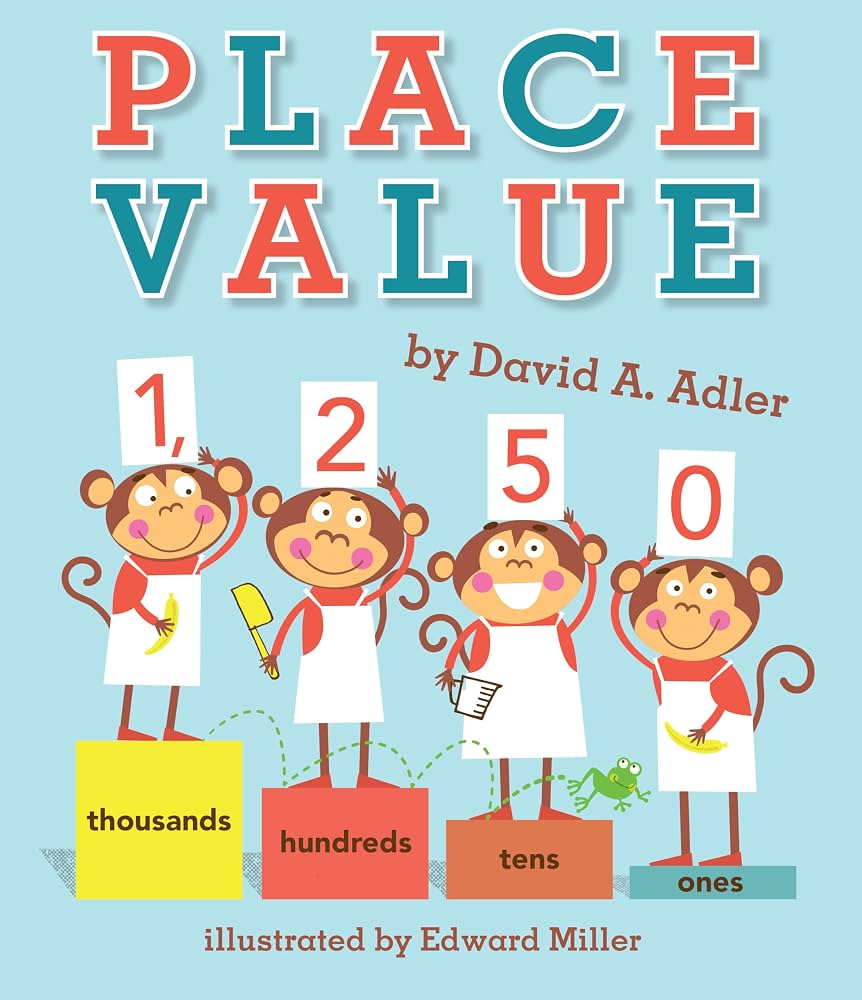
David A. Adler’s Place Value (Holiday House, 2017) introduces kids to the ins and outs of place value with the help of four little monkeys from the Banana Café baking a Colossal Banana Cupcake. For ages 6-9.
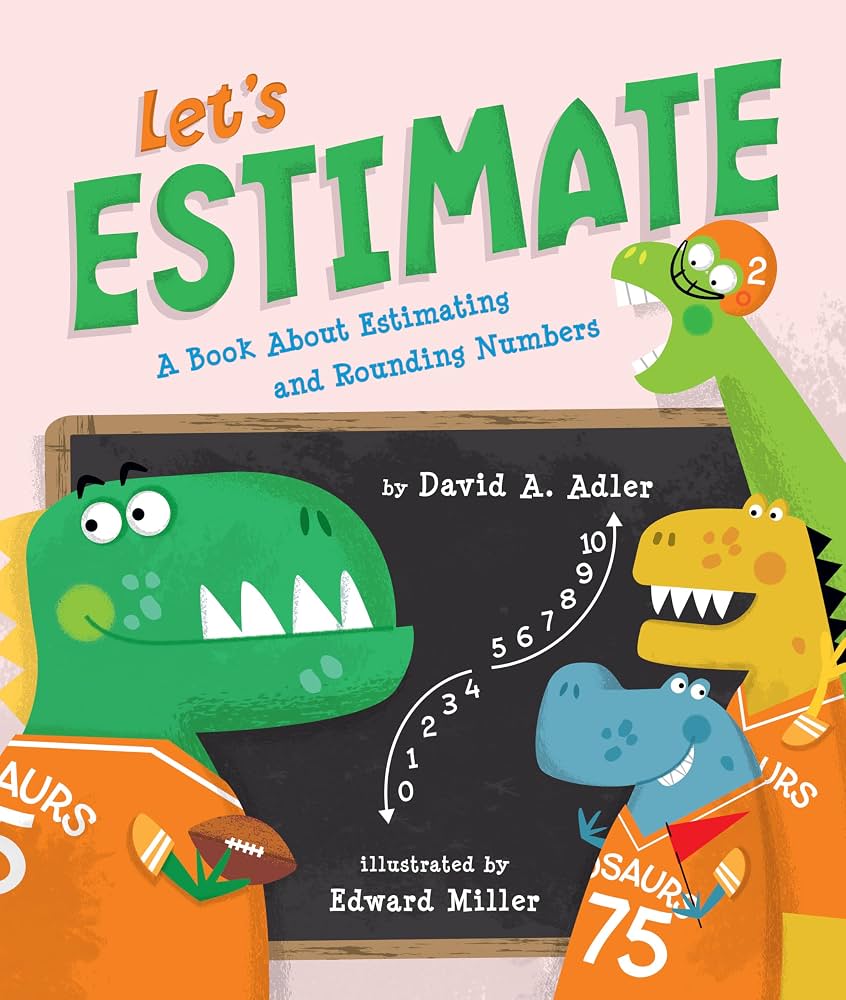
In David A. Adler’s Let’s Estimate (Holiday House, 2018), kids learn how to estimate and round numbers while ordering pizza for a dinosaur party. Lots of fun examples for ages 6-9.
Hands-on Math

By Yelena McManaman and Maria Droujkova, Moebius Noodles (Delta Stream Media, 2014) – subtitled “Adventurous Math for the Playground Crowd” - is a 80+-page collection of games and investigations for kids, plus helpful hints for parents hoping to provide a mind-expanding math environment. The book is divided into four sections: Symmetry, Quantity, Function, and Grid. Kids learn real math terms – say, transitive property – through play. Delightful, substantive, and sensible. For ages 1 and up.
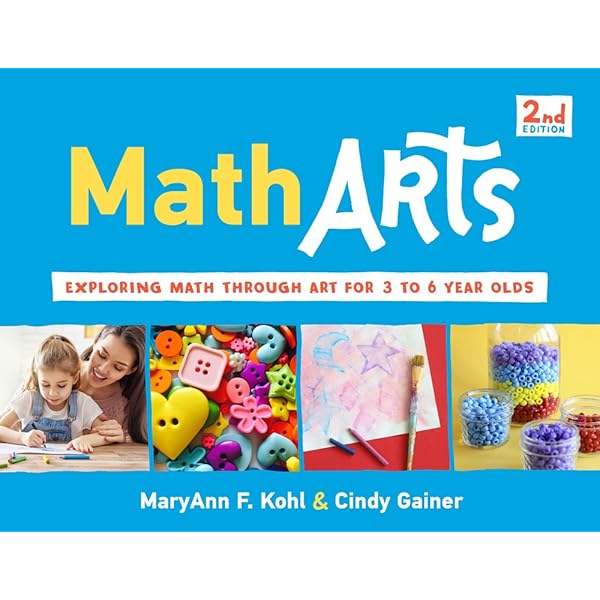
MathArts by MaryAnn F. Kohl (Chicago Review Press, 2018) has over 100 projects pairing art with such basic math skills as one-to-one correspondence, matching, sorting, and counting for ages 3-6. (For example, make a button box, a sand painting, and a stick sculpture.)
Also see Math and Art below.

Family Math for Young Children (Grace Coates and Jean Stenmark; Lawrence Hall of Science, 1997) is a creative investigative approach to early math, concentrating on such skills as counting, estimating, comparing, measuring, shape recognition, directions, logic, and sorting. Sample activities include making jigsaw puzzles, making (and sorting) a stamp collection, making and playing number games, playing shadow games, measuring yourself (and family and friends) with adding machine tape, and designing a quilt patch. All instructions, game boards, matching cards, and number charts are included in the book. For each activity, there’s an explanation of the math skills involved, a materials list, and complete instructions. For ages 3-7.

Margaret McNamara’s How Many Seeds in a Pumpkin? (Schwartz and Wade, 2007) turns into a mathematical guessing game as the kids in Mr. Tiffin’s class try to figure out how many seeds are in large, small, and middle-sized pumpkins (A million? 500? 22?) Finally they cut the pumpkins open, scoop out the seeds, and count them, which is (1) messy and (2) the most straightforward way to find out. For ages 4-8.
For a mathematical lesson plan on pumpkins and pumpkin seeds, see Pumpkin Exploration.


SET is an award-winning card game for ages 5 and up in which players are challenged to identify three-card sets based on such features as shape, shading, number, and color. It can be played by several players of widely varying ages, all at the same time – and older players don’t necessarily have advantages over younger.
There are dozens of sources for commercial math manipulatives and hands-on kits. A good starting point is Learning Resources, which sells dozens, including plastic counters, pattern blocks, tangrams, magnetic numbers, base-ten blocks, balances, and more.
See these printable math manipulatives. (Free download.)
Math Around the World

Quentin Blake’s Ten Frogs/Dix Grenouilles (Anova Books, 2008) is a French/English animal counting book, running from one crow (that is, un corbeau) to 100 wasps. For ages 3-7.

In Yuyi Morales’s Mexican-themed Just a Minute (Chronicle Books, 2003), a skeleton arrives at Grandma Beetle’s door, demanding that she “come along.” Grandma, however, cleverly puts him off with a series of (countable) chores: she has one house to sweep, two pots of tea to brew, three pounds of corn to make into tortillas, and nine grandchildren to invite to her birthday party. Children plus skeleton – guest number ten – have such a wonderful time that the skeleton decides that Grandma doesn’t need to come along after all. Readers learn to count to ten in both English and Spanish. For ages 4-7.

By Muriel Feelings, Moja Means One (Puffin, 1992) is a Swahili counting book, in which kids learn numbers 1-10 in Swahili as well as interesting facts about the land and culture of East Africa. The book begins with one impressive Mount Kilimanjaro, and continues through two kids playing a game of Mankala, three coffee trees, and so on, culminating in a group of ten children listening to a traditional storyteller. With lovely earth-toned illustrations by Tom Feelings. For ages 4-8.

In Andrea Cheng’s Grandfather Counts (Lee & Low, 2003), Helen’s grandfather, newly arrived in America from China, speaks no English and Helen and her siblings speak no Chinese. Gradually, though, as they watch passing trains together, her grandfather begins to teach Helen to count in Chinese, while she teaches him to count in English. A lovely story of an intergenerational relationship (with counting). For ages 4-8.
Roman Numerals

Arthur Geisert’s Roman Numerals I to MM (Houghton Mifflin Harcourt, 2001) is a clever and witty introduction to Roman numerals with lots and lots of cavorting pigs. Delightful for ages 5-8.

David A. Adler’s picture book Fun With Roman Numerals (Holiday House, 2010) is an attractively illustrated explanation of Roman numerals and their uses today. For ages 7-10.
From ABCYa, Roman Numerals is an online game that teaches Roman numerals (while rebuilding a collapsed Roman temple).
Try this online Roman Numeral Converter, which runs from 1 to 4999.
From Math Is Fun, Roman Numerals has an explanation of the symbols and their combinations, rules for forming numbers, how to write really big numbers (up to a million), and a couple of handy mnemonics for remembering what’s what.
Math and Art

From the San Antonio Museum of Art, 123 Si! (Trinity University Press, 2011) is a counting book illustrated with color photos of art works from the Museum, among them Mexican puppets, Olmec clay statuettes, and Korean pen-and-ink tigers. For ages 3-6.
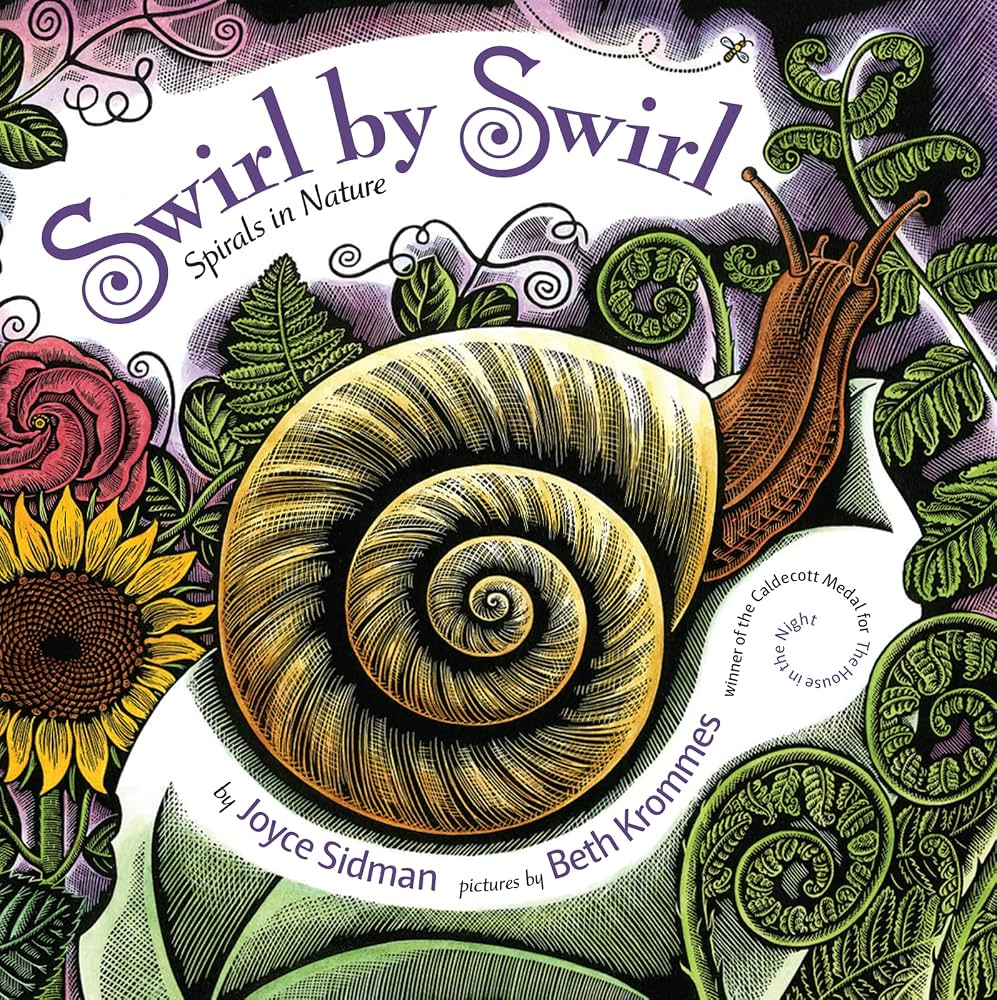
By Joyce Sidman with gorgeous illustrations by Beth Krommes, Swirl by Swirl (Clarion, 2011) is all about discovering spirals in nature. For ages 3-6.
Make spirals! See How to Cut a Spiral from Deep Space Sparkle at https://www.deepspacesparkle.com/video-art-tip-how-to-cut-a-spiral/.
Make these colorful twirlers. See https://theartfulage.com/paper-twirlers/.
Also by Sidman and Krommes, see We Are Branches (Clarion, 2023), an exploration of branching shapes in everything from tree roots to butterfly wings.

In Lucy Mickelthwait’s I Spy Two Eyes: Numbers in Art (HarperTeen, 1993) readers search for objects in classical works of art, from 1 fly and 2 eyes to 12 squirrels, 17 birds, and 20 angels. For ages 4-7.

Greg Tang’s Math-terpieces (Scholastic, 2003) is a catchy rhyming mix of problem-solving and art history, through the art of twelve different artists, among them Degas, Dali, Pollock, Warhol, and Picasso. For ages 6-10.

Anna Weltman’s This Is Not Another Maths Book (Ivy Kids, 2017) is packed with creative mathematical art activities and puzzles. For ages 8-11.

Karyn Tripp’s Math Art + Drawing Games for Kids (Quarry Books, 2019) is a wonderful collection of mathematical art projects. Kids experiment with Klee geometric mosaics, Frank Lloyd Wright stained-glass windows, pattern block cookies, Native American quill art, and much more. For ages 8-12.

With Mondrian Blocks, kids are challenged to reproduce Mondrian-style painting patterns with colorful blocks. See

From PBS’s Picture This, kids explore art and math using Calder sculptures, Picasso’s Three Musicians, and more.

Artful Math has lessons on everything from Celtic knotwork to insect symmetry to mazes, patchwork patterns, and snowflakes.

From YouCubed, check out these downloadable lessons on math and art, categorized by grade (K-12).

Math Anxiety

In Mark Pett’s The Girl Who Never Made Mistakes (Sourcebook Jabberwocky, 2011), nine-year-old Beatrice never ever makes a mistake (unlike little brother Carl, who eats crayons). In fact, Beatrice is absolutely perfect, until the day of the annual talent show, when she makes a colossal and very public mistake. And discovers that it’s not the end of the world. For ages 4-8.
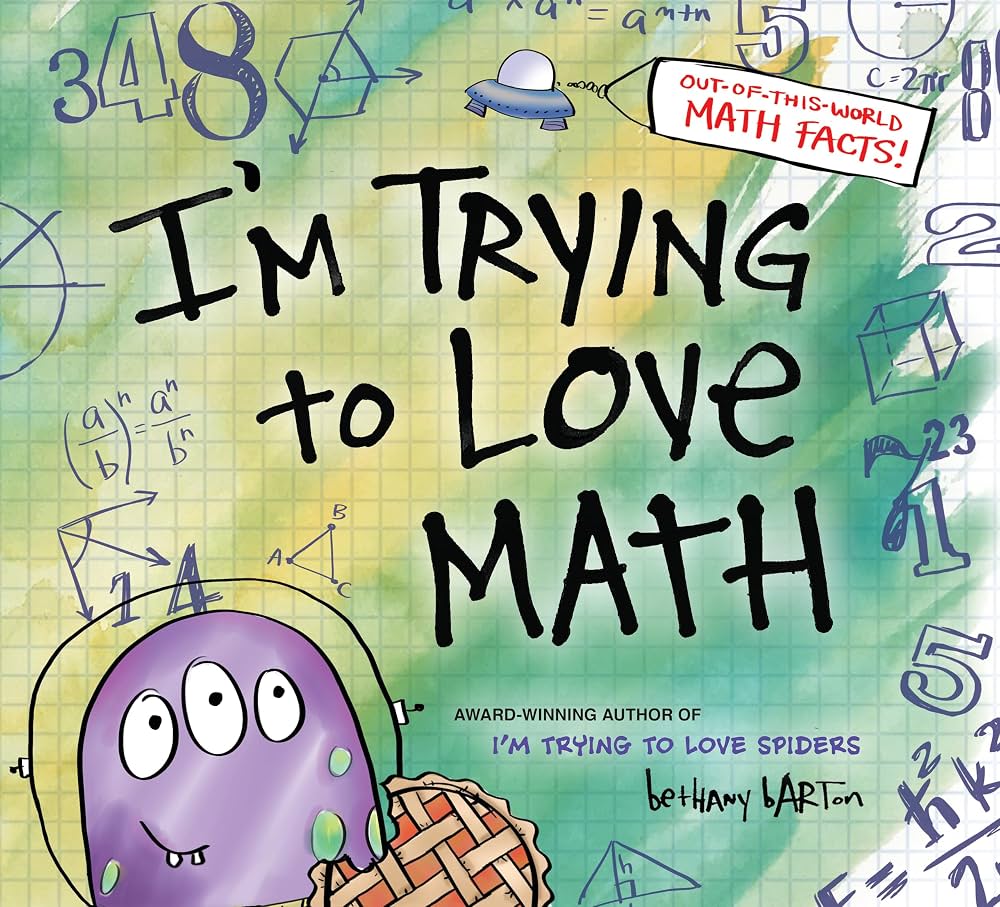
Bethany Barton’s cleverly designed I’m Trying to Love Math (Viking, 2019) lays it on the line: “If you ask me, math is not very lovable.” However, via a conversation with a little purple space alien, readers discover a lot of appealing and unexpected facts about math. For ages 5-7.

In Danny Schnitzlein’s The Monster Who Did My Math (Peachtree Publishers, 2012), a math-hating kid is struggling with his impossible multiplication homework when a monster arrives and offers to take care of it for him – all he has to do is sign the contract on the dotted line. All is well until the teacher sends him to the blackboard, and he discovers the contract’s fine print (“In paragraph seven of clause ninety-three/If you don’t learn anything, do not blame me!”). And then, as in all Faustian bargains, he has to come up with the pay-off. Which involves some math. For ages 6-8.

Barbara Esham’s Last to Finish (Mainstream Connections Publishing, 2008), one of the Adventures of Everyday Geniuses series, features third-grader Max who has always liked math – but falls apart when his teacher starts giving the class timed tests. Max is miserable. Eventually, however, the teacher discovers that Max has been working problems from his older brother’s algebra book (for fun), and Max ends up on the school math team. A nice reminder that different kids learn in very different ways. For ages 6-9.

In Jon Scieszka's Math Curse (Viking, 1995), the appalled narrator wakes up to discover that everything in his life has turned into a math problem. Great illustrations by Lane Smith (and answers in the back).
Just for Fun

Amy Krouse Rosenthal’s Wumbers (Chronicle Books, 2012), with bright cartoonish illustrations by Tom Lichtenheld, is a picture book for the text-messaging generation. Wumbers are words spelled with sound-alike numbers, familiar to anyone who has ever texted “gr8!” For example, try these: At a tea party (attended by a teddy bear and two little girls in purple): “Would you like some honey 2 swee10 your tea?” “Yes, that would be 1derful.” At a family picnic: “We have the 2na salad and the pl8s. What have we 4gotten?” (Dismay!)“The 4ks!” Fun creative word puzzles for beginning readers ages 5-8.