
WOOF! All About Dogs
In this collection
Literature is full of dogs.
There’s Dorothy’s sidekick Toto; Tintin’s buddy Snowy; brave Nana, who did her best to keep Wendy, Michael, and John from flying off to Neverland with Peter Pan; Tock, the watchdog, in The Phantom Tollbooth; Argos in The Odyssey – the only one to recognize his master upon his return; and Cerberus, the three-headed dog who in Greek mythology guards the entrance to the Underworld.
And, of course, dozens more, fictional, non-fictional, funny, fierce, or famous. See below for many great dog books, dog poems, resources for science (and dogs), math (and dogs), astronomy (and dogs), helpful how-tos for young dog owners, and more.
Dog Books for Younger Kids

In Eric Hill’s Where’s Spot? (Warne, 1980), kids lift the flaps to find Spot. (Under the stairs? In the piano?) For ages 2-5.

Alyssa Satin Capucilli’s Biscuit (HarperCollins, 2006) is a “My First I Can Read” book starring a little yellow puppy who thinks up any number of reasons not to go to bed. Many sequels. For ages 2-6.

In Chris Haughton’s Oh No, George! (Candlewick, 2012), George intends to be good while his owner is out, but some things are just too much for him. Like cake in the kitchen and cats in the yard. For ages 2-6.

In Mercer Mayer’s priceless A Boy, a Dog, and a Frog (Dial, 2003), a boy and his dog discover a frog in a pond and set out to catch it. They fail, spectacularly, and eventually (frog-less) head home for a bath. The frog, left behind, misses them and by the end of the book, has followed and joined them in the tub. A simple wordless story (with more in the series) for ages 2-7.
See A Boy, A Dog, and a Frog on You Tube for a real-life version of the story.

P.D. Eastman’s Go, Dog, Go (Random House, 1961) is a classic for beginning readers ages 3-6.

In Norman Bridwell’s Clifford, the Big Red Dog (Cartwheel Books, 2010), Emily Elizabeth has a truly GIANT dog. There are many books in this series for ages 3-6.

In Jules Feiffer’s delightful Bark, George (HarperCollins, 1999), George does everything but bark. When told by his mother to bark, George meows. “No, George,” said George’s mother. “Cats go meow. Dogs go arf. Now, bark, George.” George went: “Oink.” Funny and adorable for ages 3-7.

Laura Vaccaro Seeger’s Dog and Bear (Roaring Brook Press, 2007) is a collection of three short stories about irrepressible Dog and his shy, often baffled, best friend Bear. (They’re somewhat reminiscent of Arnold Lobel’s wonderful duo, Frog and Toad.) Dog announces that he’s changing his name. “From now on, call me SPOT.” “But you don’t have any spots,” Bear says. For ages 3-7.

In Maurice Sendak’s Some Swell Pup; or, Are You Sure You Want a Dog? (Farrar, Straus & Giroux, 1976) – illustrated panel-cartoon-style - a pair of new puppy owners learn to cope with their obstreperous new charge. For ages 3-7.

Gene Zion’s Harry the Dirty Dog (HarperCollins, 2006) is the story of Harry, a dog who “liked everything, except getting a bath.” That is, until one day when Harry has so many grubby adventures that he changes from a white dog with black spots to a black dog with white spots. For ages 3-8.

In Keiko Kasza’s The Dog Who Cried Wolf (Puffin, 2009), Michelle reads her dog Moka a book about wolves – and Moka immediately decides that he’d like to be a wolf, running around free, hunting wild animals, and staying up late to howl at the moon. (“Look at the way I live,” Moka sighed. “I’m nothing but a house pet.” He felt like a failure, especially when Michelle made him dress up for her tea parties.) So Moka runs away to be a wolf, which isn’t as much fun as he thought it would be. Funny and charming for ages 4-7.

Peggy Rathmann's Officer Buckle and Gloria (G.P. Putnam’s Sons, 1995), a Caldecott Medal winner, stars safety-tip-dispensing Officer Buckle and his police dog buddy, Gloria. All the kids have been bored by Officer Buckle’s lectures until Gloria chimes in with helpful demonstrations of “Never leave a thumbtack where you might sit on it!” and “Do not go swimming during electrical storms!” For ages 4-8.

In Lauren Child’s A Dog with Nice Ears (Candlewick, 2018), Lola wants a dog. (Not a squirrel, not a fox, not a rabbit. A dog.) For ages 4-8.

In Susan Meddaugh’s Martha Speaks (Houghton Mifflin Harcourt, 1992), Martha, the family dog, eats a bowl of alphabet soup – and suddenly she can talk. The problem: sometimes Martha talks too much. Many funny sequels, for ages 4-8.

In Caralyn Buehner’s Dex: The Heart of a Hero (HarperCollins, 2007), Dex is a very small dog, so puny that Cleevis the cat bullies him. Dex, however, is determined to be a superhero. He heads to the library for background reading material, subscribes to an exercise regime, and even orders himself a catchy superhero suit. Soon he’s out doing good deeds – even rescuing Cleevis from a tree. By the end of the book, Dex and Cleevis have teamed up for what looks to be a beautiful and heroic friendship. For ages 4-8.

In Cynthia Rylant’s Henry and Mudge (Simon Spotlight, 1996), Henry, an only child who lives on a block without any other kids, is lonesome, so he asks for a dog. Enter Mudge, who rapidly goes from being a tiny puppy to a perfectly enormous dog – and Henry’s best friend. A good pick for beginning readers. Many sequels. For ages 5-7.
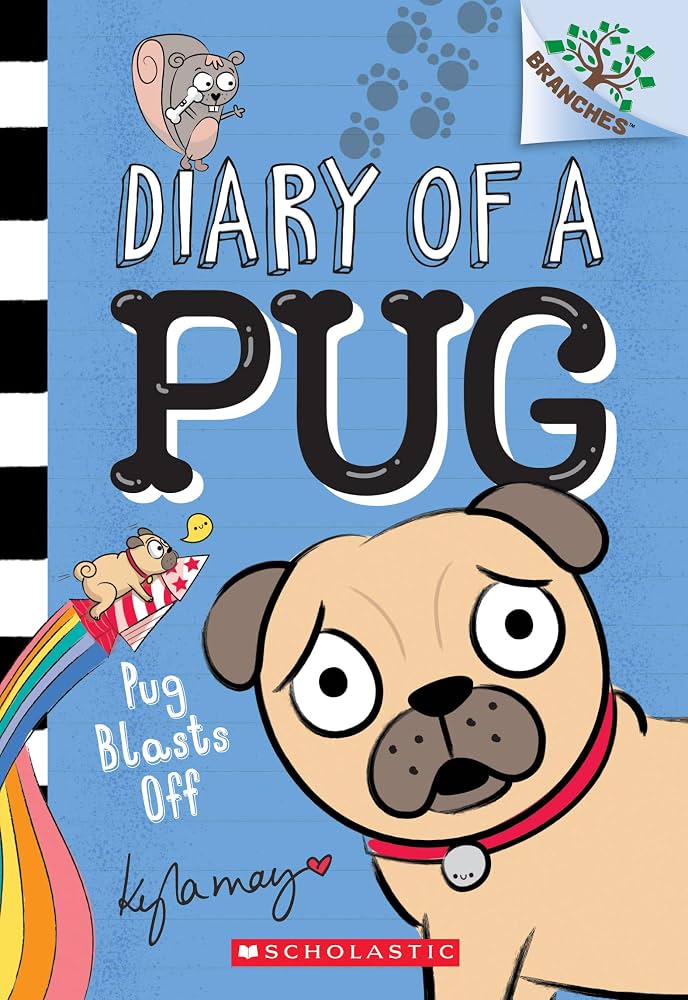
Kyla May’s cleverly designed Diary of a Pug series (Scholastic), targeted at early readers, features Baron von Bubbles (known as Bub), a personality-filled dog who loves fashion, peanut butter, and Bella, his person – but could do without the annoying Nutz the squirrel, baths, and rain. All written in diary format for ages 5-8.
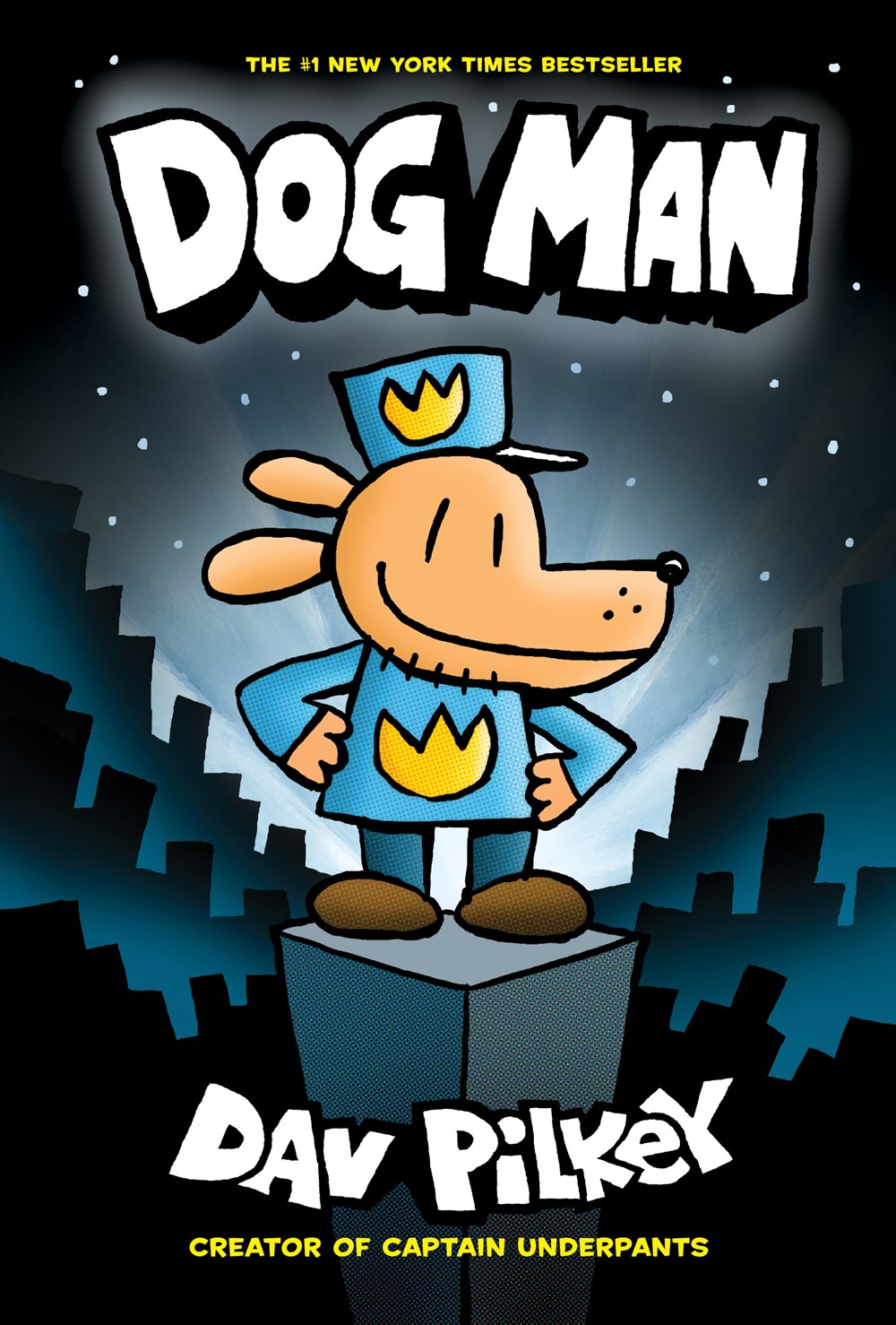
Dave Pilkey’s Dog Man graphic-novel series (Graphix) features canine cop Dog Man, part dog, part human, who solves crimes, captures crooks, and occasionally chases squirrels. Kids love him. For ages 6 and up.
Dog Books for Older Kids

Kate Messner’s Ranger in Time series (Scholastic, 2015) features a time-traveling golden retriever – and failed search-and-rescue dog; he simply can’t resist squirrels. Helpful Ranger visits everything from ancient Rome to the Oregon Trail. An exciting and history-filled series for ages 7-10.

Tom Watson’s Stick Dog (HarperCollins, 2020), the first of a series, follows the hilarious adventures of the Stick Dog and friends – here, in pursuit of hamburgers. For ages 7-12. For activities and info about the books, see the Stick Dog website.

In William Stieg’s Dominic (Square Fish, 2007), Dominic – a dog – packs his hats and his piccolo and heats out to see the world, where he soon encounters the villainous Doomsday Gang. For ages 8-11.

Eric Knight’s Lassie Come Home (Square Fish, 2007), originally published in 1940 and now available in many editions, has led to movie versions and a television series. The book features Lassie, the prize collie belonging to young Joe Carraclough, who has to be sold when the family falls into hard times. Taken to the north of Scotland by her new owner – the Duke of Rudling – Lassie escapes and makes the long trek home to Joe. For ages 8 and up.

The 1943 film version of Lassie Come Home stars Roddy MacDowell as young Joe and Elizabeth Taylor as Priscilla, the Duke’s sympathetic daughter. Rated G.

In Eleanor Estes’s Ginger Pye (Houghton Mifflin Harcourt, 2000), siblings Jerry and Rachel Pye love their dog Ginger, the smartest dog ever. Then – on Thanksgiving Day – Ginger is stolen. For ages 8-12.

Check your library for Mary Stolz’s A Dog on Barkham Street (HarperCollins, 1960) – it’s out of print, but worth tracking down. Main character Edward Frost wants just two things: to be free of neighborhood bully Martin Hastings and to have a dog. Then his wandering on-the-road Uncle Josh shows up with a dog – Argess – who adopts Edward as his boy. For ages 8-11.

In Phyllis Reynolds Naylor’s Newbery winner Shiloh (Atheneum, 1991), 11-year-old Marty Preston, growing up in rural West Virginia, finds an abused beagle puppy. Knowing that the puppy will be mistreated if returned to its rightful owner – the rotten Judd Travers – Marty struggles with moral values and a determination to protect the dog he has come to love. For ages 8-12.

By Betsy Byars, Betsy Duffey, and Laurie Myers, in Dog Diaries: Secret Writings of the WOOF Society (Henry Holt and Company, 2007), the dog members collect assorted stories from dogs from all places and times. (WOOF stands for “Words of Our Friends.”) For ages 8-12.

Katherine Applegate’s Endling trilogy (HarperCollins, 2019), features Byx, youngest and last of her daime pack – a mythical doglike species – who sets off to seek others of her kind, meeting human and animal allies along the way. A wonderful fantasy series for ages 8-12.

In Dodie Smith’s 101 Dalmatians (Puffin, 1989), originally published in 1956, Pongo and Missis Pongo’s fifteen puppies have been kidnapped by Cruella de Vil and taken to her ancestral home, Hell Hall, where she plans to have them skinned and made into fur coats. Pongo and Missis discover their whereabouts with the help of the dogs’ communication network (“Twilight Barking”) and head off to rescue their brood, along with all the other Dalmatian captives at the Hall. Much better than the movie. For ages 8-12.

Film versions include the 1961 Disney animation. Rated G.
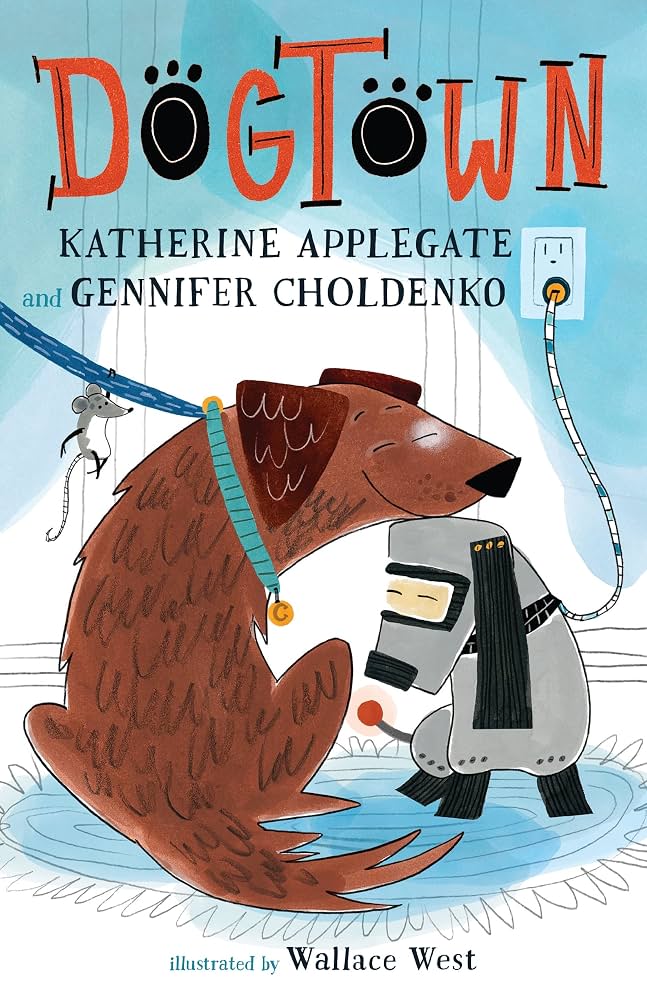
Dogtown by Katherine Applegate and Gennifer Choldenko (Square Fish, 2024) is a shelter for stray and abandoned dogs – and there Chance, a real dog (lost when his irresponsible dogsitters skipped town) and Metal Head, a discarded robot dog, meet and set off on an adventure to find their real homes. A lovely read for ages 8-12 – and there are sequels.

In Barbara O’Connor’s Wonderland (Square Fish, 2019), Mavis’s mother has moved her from place to place all her life – most recently to Landry, Alabama, where she’s taken a job as housekeeper to the Tully family. There Mavis forms a friendship with Rose, the Tully daughter, and the two join forces to find a new dog for Mr. Duffy, who has been brokenhearted since losing his longtime pet, Queenie. The solution may be Henry, a runaway greyhound that the girls find hiding in the wood. Told from the alternating perspectives of Mavis, Rose, and Henry. For ages 8-12.
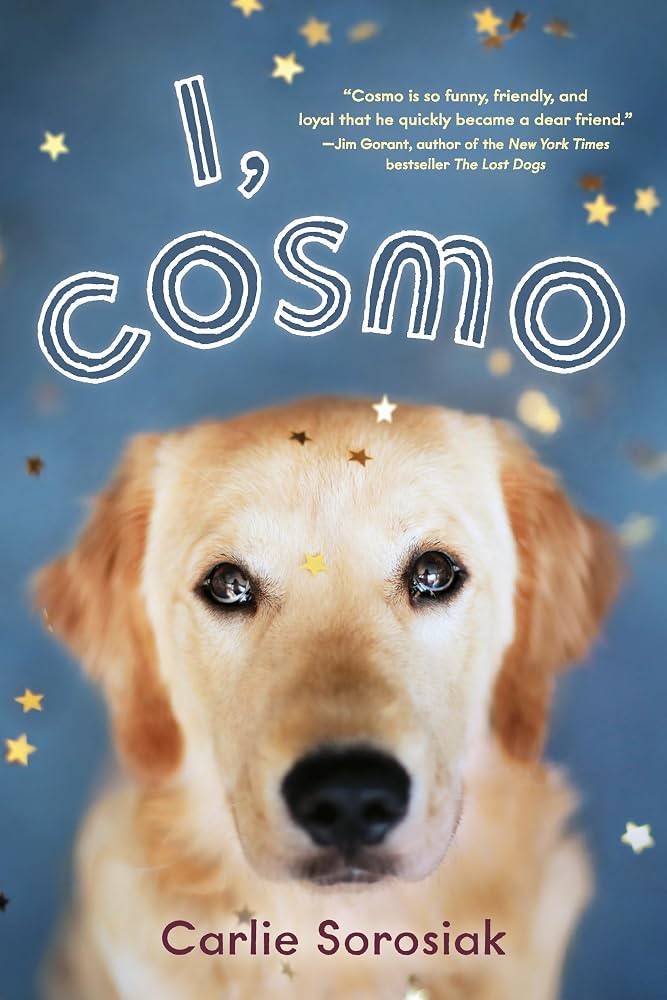
By Carlie Sorosiak, I, Cosmo (Walker Books, 2021) is the story of a struggling family and the dog who loves them, told in the voice of a wonderful golden retriever. A lovely read for ages 8-12. And their grown-ups.
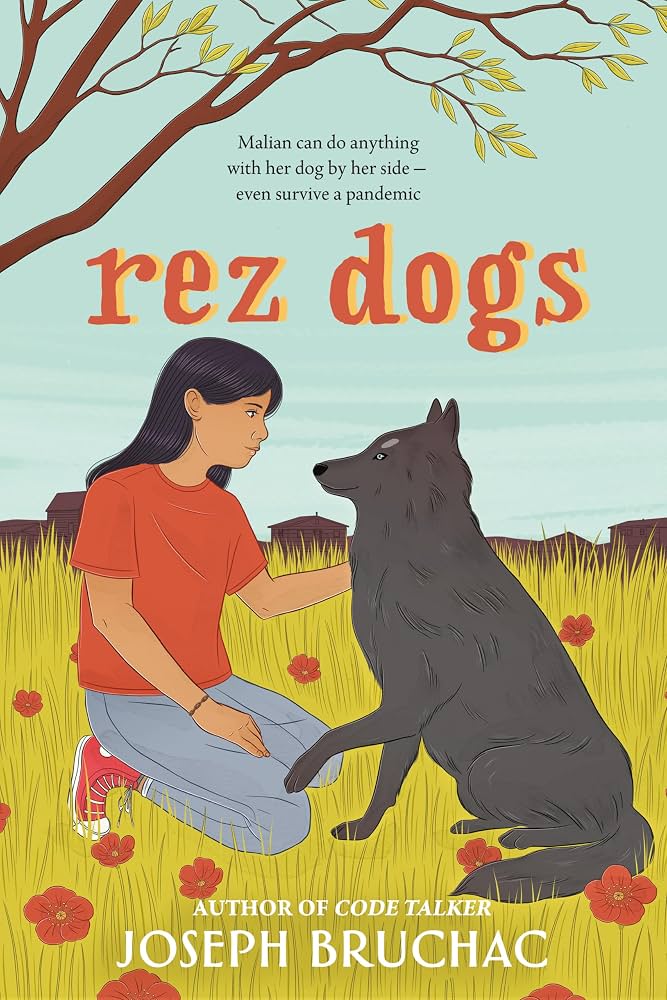
In Joseph Bruchac’s Rez Dogs (Dial, 2022), a novel in verse, Malian, stranded on her grandparents’ reservation during the Covid-19 pandemic, hears traditional Wabanaki stories and learns about her Native heritage – including some of the hard truths of indigenous history – and forms a bond with Malsum, a stray reservation dog. For ages 8-12.
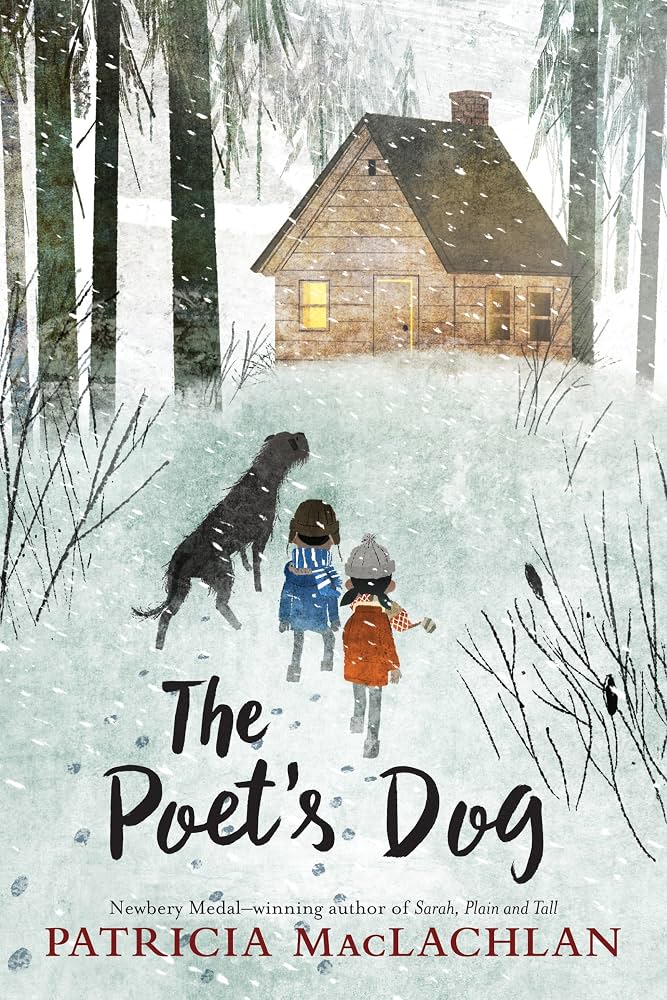
By Patricia MacLachlan, in The Poet’s Dog (HarperCollins, 2018), Teddy, a dog raised in a cabin in the woods by Sylvan, a poet, has been told that only two people in the world can hear Teddy speak: poets and children. This proves true when Teddy rescues two children, Nickel and Flora, from a snowstorm. Since Sylvan’s death, Teddy has been grieving – but now there’s the possibility of loving again and moving on. For ages 8-13.
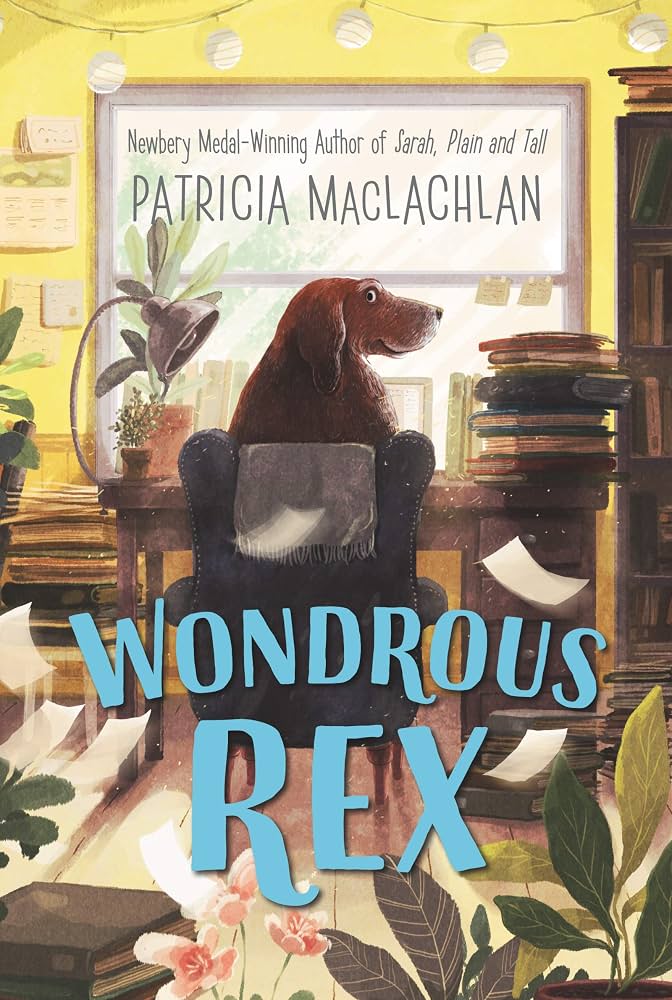
Also by MacLachlan, in Wondrous Rex (HarperCollins, 2021), Grace’s Aunt Lily – a writer with problems – posts an ad for an assistant (a helper who can provide “inspiration and some magic”). The next day Rex, an amazing Labrador retriever, shows up at the door. For ages 8-12.

By Wilson Rawls, Where the Red Fern Grows is the story of ten-year-old Billy Coleman, growing up in the Ozarks, with his two coonhounds, Old Dan and Little Ann. It’s a powerful and emotional story with a tragic ending – though Billy eventually finds some comfort in the native American legend of the red fern. For ages 9 and up.


In Kate DiCamillo’s Newbery Honor book Because of Winn-Dixie (Candlewick, 2009), ten-year-old Opal and her preacher father have just moved to the little town of Naomi, Florida, when Opal finds a homeless and homely dog at the Winn-Dixie grocery store. She names the dog after the store – and the pair proceed to make friends with guitar-playing, ex-convict, pet store owner Otis; librarian Miss Franny Block, whose great-grandfather invented Litmus Lozenges; and even Gloria Dump, who just might possibly be a witch. A great story about life, people, and dogs, with a wonderful cast of characters. For ages 9-12.

The film version of Because of Winn-Dixie (2005) is rated PG.

In Shari Green's Missing Mike (Pajama Press, 2018), Cara's family has been forced to flee their home in the wake of a wildfire - and in the haste and confusion, Cara's beloved dog Mike has been left behind. But Cara insists he survived and is determined to find him. For ages 9 and up.

In Rob Buyea’s What Comes Next (Delacorte, 2021), twelve-year-old Thea, traumatized by the loss of her best friend in an accident, gradually heals with the help of Jack-Jack, a rescue dog. For ages 9-12.

Sheila Burnford’s now-classic The Incredible Journey (Yearling, 1997) is the story of two dogs – Luath, a young Labrador retriever and Bodger, an elderly bull terrier – and Tao, a Siamese cat, who join forces to survive a harrowing trek across the Canadian wilderness to find their owners. For ages 9-12.

Homeward Bound: The Incredible Journey (1993) is a re-make of the original movie, made in 1963. The new version is set in California. Rated G.
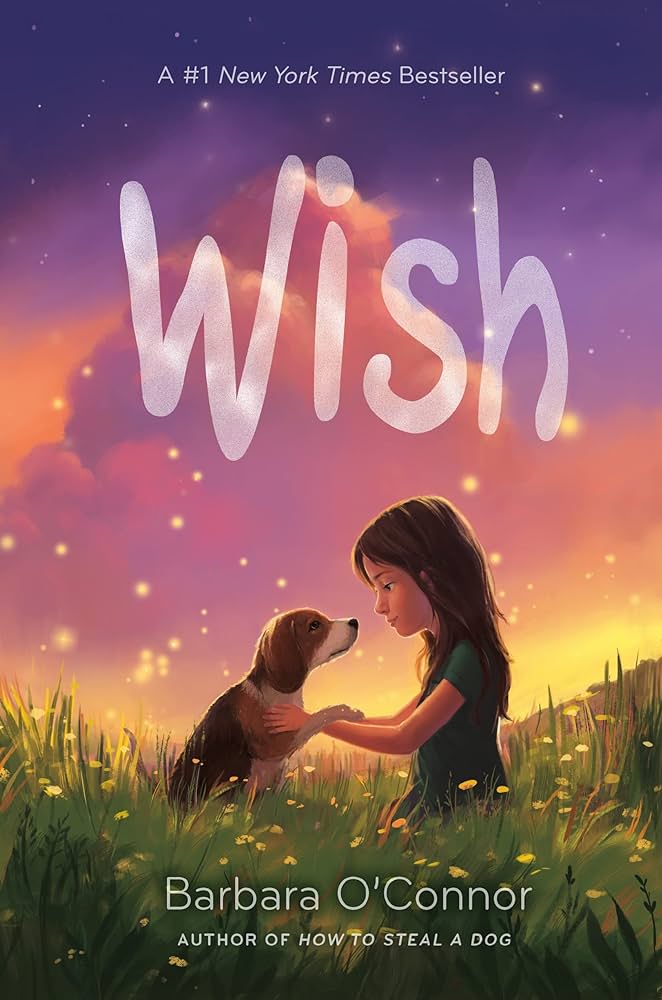
In Barbara O’Connor’s Wish (Farrar, Straus & Giroux, 2016), Charlie – who knows every possible way there is of making a wish – is sent to the Blue Ridge Mountains of North Carolina to live with an aunt and uncle she barely knows. There she bonds with Wishbone, a skinny stray dog – and discovers that what she’s been wishing for isn’t what she really wanted all along. For ages 9-12.
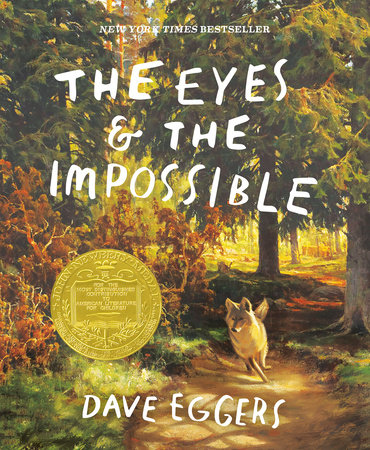
In The Eyes and the Impossible by Dave Eggers (Yearling, 2025) – a Newbery Medal winner – Johannes is a free dog in an island park where his job, as the Eyes, is observing all the park goings-on and reporting back to the park elders, a trio of elderly bison. Then change arrives along with a boatload of goats – inspiring Johannes to come up with a plan for liberating the bison. Ultimately it’s a story about freedom and finding oneself, as told by a thoughtful and delightful dog. For ages 9-12.

In Survivors (HarperCollins, 2013), Erin Hunter – author( of the Warriors and Seekers animal fantasy series – turns her collective attention to dogs. A series for ages 9 and up.

Fred Gipson’s Old Yeller (HarperPerennial, 2009) has been breaking hearts since it was first published in 1956. In charge of the family ranch while his father is off on a cattle drive, young Travis adopts a mongrel yellow dog, who proves himself a hero many times over, saving the family from bears, hogs, and – tragically – a rabies-infected wolf, who gives Old Yeller the disease. There’s a positive end (Old Yeller fathered puppies), but it’s still a tearjerker. For ages 10 and up. With tissues.

The Disney film version of Old Yeller (1957) stars Dorothy McGuire, Fess Parker, and Tommy Kirk.

In William H. Armstrong’s Newbery winner Sounder (HarperCollins, 2002), Sounder is the loyal hound belonging to a family of black sharecroppers in the Depression-era South. When the father of the family is arrested for stealing, Sounder is shot and disappears, and the oldest son of the family – who desperately wants to learn to read – is left to support the family as best he can. Ultimately father and dog come home, and – though the ending is sad – the family finds healing. For ages 10 and up.

The film version of Sounder (1972) is rated G and stars Cicely Tyson, Paul Winfield, and Kevin Hooks.

In Kathi Appelt’s The Underneath (Atheneum, 2010), Ranger – a hound – shelters a cat and her kitten beneath the porch, saving them from Gar-Face, his evil master. A magical and wonderful story, populated with legendary creatures of the bayou – the Alligator King and Grandmother Moccasin, who lives trapped in a buried jar. For ages 10 and up.

In Paul Griffin’s When Friendship Followed Me Home (Puffin, 2017), Ben Coffin, the narrator, has had a tough time in the foster-care system, though he’s helped by the little dog, Flip, who follows him home, and by Halley, the girl he meets at the library. The pair train Flip as a therapy dog while Halley, who has cancer, struggles with chemotherapy. It’s a tearjerker, but also a hopeful story of love and resilience. With a dog. For ages 10 and up.

In Tom Rogers’s Eleven (Alto Nido Press, 2014), Alex turns eleven on September 11, 2001 – and for his birthday he wants a dog. He finds and connects with a little stray dog – but his birthday this year is fraught with emotion and terror, as Alex worries about his father, who drives a train to the World Trade Center. Told from three different points of view, a well-done story of an unforgettable and tragic disaster. For ages 10 and up.

I have to sympathize with Wallace Wallace, star of Gordon Korman’s No More Dead Dogs (Disney-Hyperion, 2002). Hyper-honest eighth-grade football player Wallace has had it with books in which the dog dies, and so refuses to write a favorable book report about the current class read, Old Shep, My Pal. As punishment, Wallace is forced to attend rehearsals of the Drama Club’s production of Old Shep – and finds that he has a lot of suggestions. Snappy, funny, and the dog – in Wallace’s hands -makes it. For ages 11-14.

Clifford Simak’s City (Ace, 1952) is a collection of eight stories set in the distant future in which human beings have left Earth, leaving behind only robots and a population of now highly evolved and articulate dogs. Check your library. For ages 13 and up.

Paul Auster’s Timbuktu (Picador, 2009) is the story of a schizophrenic homeless man, Willy Christmas, and his dog, Mr. Bones. Willy is dying, and so sets off on a trek from Brooklyn to Baltimore to find his former high-school English teacher, hoping to find both a home for his dog – and for the collection of manuscripts that he has written and stashed at the Greyhound bus terminal. The story is told from the point of view of Mr. Bones. For older teenagers and adults.
Dog Mysteries

In John Erickson’s Hank the Cowdog Series, beginning with The Original Adventures of Hank the Cowdog (Maverick Books, 2011), the ever-suspicious Hank is the head of security on a Texas ranch where - with the help of his assistant, Drover (whose old leg wound acts up at the least hint of danger) – he solves giggle-provoking mysteries involving Night-Stalking Bone Monsters, Swirling Killer Tornadoes, Kidnapped Collies, and Vampire Cats. For ages 5-9.

By Gertrude Chandler Warner, The Mystery at the Dog Show (Albert Whitman & Company, 1993) is one of the many Boxcar Children books, in which the four children – Henry, Jessie, Violet, and Benny Alden – solve mild mysteries. For ages 6-9.

James Howe’s Bunnicula (Atheneum, 1979), narrated by Harold, the family dog – with input from Chester, the hysterical family cat – is the story of Bunnicula, a suspected vampire bunny, found in a movie theater during a showing of Dracula. The first of a hilarious series for ages 7-12.

In Play Dead (Scholastic, 2013), the first of the A Dog and His Girl mystery series by Jane B. Mason and Sarah Hines-Stephens, readers are introduced to Dodge, a police dog, retired from the force after an accident leaves him deaf in one ear, and his new owner Cassie, a 12-year-old with a nose for mysteries (helped along by her mother, a police chief, and her dad, a coroner). For ages 8-12.

Sir Arthur Conan Doyle’s The Hound of the Baskervilles, originally published in 1902, is available in many editions. Set on Dartmoor in Devon, this is the story of the attempted murder (via family curse) of the Baskerville heir, based on the legend of a terrible supernatural hound. Sherlock Holmes and Dr. Watson, of course, solve the case.
At Project Gutenberg, read The Hound of the Baskervilles online.
Film versions include the 1939 Hound of the Baskervilles with Basil Rathbone and Nigel Bruce and the 1959
Hound of the Baskervilles with Peter Cushing and Andre Morell.
Life with Dogs

I love James Thurber’s awful Airedale Muggs – star of “The Dog That Bit People,” which short story appears in Thurber’s hilarious biographical My Life and Hard Times (Harper Perennial, 1999). (Each Christmas the Thurber family doled out boxes of candy to all the people Muggs had bitten.) For ages 12 and up.
From the New Yorker, see Adam Gopnik's A Note on Thurber's Dogs.

Farley Mowat’s The Dog Who Wouldn’t Be (Bantam, 1984) is the story of the author’s boyhood on the Canadian prairies in company with his wonderful dog Mutt (purchased as a puppy for four cents). A great read-aloud for all ages.

From the Editors of The Bark, Dog is My Co-Pilot (Crown, 2004) is a collection of short stories, essays, and reflections on dogs by a wide range of well-known writers, among them Alice Walker, Ann Patchett, and Maxine Kumin. For teenagers and adults.

In John Steinbeck’s Travels with Charley (Penguin Books, 1980), Steinbeck, aged 58, sets off in a pick-up truck (Rocinante) on a cross-country trip with his poodle, Charley, in search of America. A great memoir/travel book (with dog) for teenagers and adults.

John Grogan’s best-seller Marley and Me (William Morrow, 2008) is the story of family life with Marley, a badly behaved but lovable golden Lab. (Grogan calls him “the world’s worst dog.”) For teenagers and adults.

J.R. Ackerley’s My Dog Tulip (New York Review of Books Classics, 2010) is the story of a curmudgeonly British writer’s unexpectedly close sixteen-year-long relationship with Tulip, his German shepherd. For teenagers and adults.
The animated film version of My Dog Tulip (2009) is voiced by Christopher Plummer, Lynn Redgrave, and Isabella Rossellini,
Sled Dogs
The Sled Dog Relay That Inspired the Iditarod is the story of the “Great Race of Mercy,” involving 20 drivers and 150 dogs, who collaborated to bring diphtheria antitoxin from Anchorage to the beleaguered town of Nome, 1000 miles away.

In Robert Blake’s Akiak: A Tale from the Iditarod (Puffin, 2004), Akiak – lead husky on her Iditarod team – injures her paw and has to be left behind. Feisty Akiak, however, sets off to catch up with her owner. For ages 5-9.

Natalie Standiford’s The Bravest Dog Ever: The True Story of Balto (Random House, 1989) is the story of Balto, the sled dog who led his team through the Alaskan wilderness to deliver diphtheria antitoxin to sick children in Nome. Based on a true occurrence in 1925. For ages 5-8.

Debbie Miller’s The Great Serum Race (Walker Children’s Books, 2006) is the story of the 1925 serum run, in which twenty teams of sled dogs – among them Togo and Balto – brought diphtheria antitoxin to the town of Nome, Alaska. It’s this heroic race that is commemorated annually by the Iditarod. For ages 7-12.

Also see Elizabeth Cody Kimmel’s Balto and the Great Race (Random House, 2009), a more detailed account of the story for ages 8-11.

In 1985, Libby Riddles became the first woman to win the 1000+-mile Iditarod race. She tells her story in Storm Run (Sasquatch Books, 2002). For ages 6-10.

Joe Funk’s Mush! The Sled Dogs of the Iditarod (Scholastic, 2013) is a short chapter book covering sled dogs, the Iditarod (sometimes called the “Last Great Race on Earth”), the tools and techniques of dogsled racing, and famous racing dogs. Illustrated with maps and color photographs. For ages 7-11.

In John Reynolds Gardiner’s Stone Fox (HarperCollins, 2010) Little Willy is determined to win a dog sled race in order to use the prize money to save his grandfather’s farm. The problem is that Willy and his dog Searchlight are up against Stone Fox, a massive and silent native American who has never lost a race. The wonderful ending always makes me cry. For ages 9-12.

Jack London’s Call of the Wild (Kingfisher Classics, 2002), originally published in 1903, is set during the Klondike Gold Rush. Buck, the main character, is stolen from his home in California and taken to the Yukon, where he must survive as a sled dog. For ages 12 and up.

The latest movie version of Call of the Wild (2020), starring Harrison Ford, is rated PG.

In Gary Paulsen’s Newbery Honor book Dogsong (Simon Pulse, 2007), young Russel Susskit takes the village shaman Oogruk’s dog team and heads off on a voyage of self-discovery across the Alaskan wilderness. For ages 12 and up.
Support Dogs

In Glenna Lang’s picture-book Looking Out for Sarah (Charlesbridge, 2003), Perry, a guide dog, helps Sarah, who is blind, as she goes through the day. For ages 4-7.
At How Guide Dogs Work, find out all about guide dogs for the blind, including what they do and how they are trained.

In Mary Pope Osborne’s 46th Magic Tree House book, Dogs in the Dead of Night (Random House, 2013), Jack and Annie – searching for a rare flower needed to break a magic spell – end up at a monastery in the Swiss Alps, where they meet up with Barry, a St. Bernard dog, trained to save avalanche victims. For ages 6-9.

In the Magic Tree House Fact Tracker series, see the non-fiction companion book Dog Heroes (Random House, 2011) for lots of information about St. Bernard rescue dogs, war dog heroes, and service dogs. For ages 8-9.

By Cammie McGovern, Chester and Gus (HarperCollins, 2017) is the story of Chester, a failed service dog (he can’t resist chasing squirrels), adopted as a companion to Gus, a ten-year-old with severe autism. A heartwarmer. For ages 9-12.
Owning a Dog

Emily Gravett’s delightfully illustrated Dogs (Simon & Schuster, 2010) introduces readers to a wide range of dogs – from Chihuahua to Great Dane – with a clever rhyming text (and a bit of a surprise ending). For ages 2-6.

Lisa Rosenthal’s A Dog’s Best Friend (Chicago Review Press, 1999) is an activity book for kids and their dogs, filled with basic information, pet care tips, recipes, and games and activities. For ages 6-12.

Elizabeth Carney’s Cats vs. Dogs (National Geographic Children’s Books, 2011), illustrated with great color photographs and crammed with helpful “Pet Words” and “Weird But True” fact boxes, compares the two. Who has the scariest relatives, for example? For each short section, there’s a declared winner. For ages 6-9.


By Gideon Kidd – aged eleven - and Rachel Braunigan, Pet That Dog! (Quirk Books, 2020) is a helpful “Handbook for Making Four-Legged Friends.” Find out how to communicate with and care for your dog. For ages 7-12.

Malcolm Gladwell’s “What the Dog Saw” is an essay in his book of the same name (What the Dog Saw, Little, Brown and Company, 2009) about Cesar Millan, dog psychologist, and his remarkable insights into the behavior of dogs. For teenagers and adults.

By John Homans, What’s a Dog For?: The Surprising History, Science, Philosophy, and Politics of Man’s Best Friend (Penguin Press, 2012) is a fascinating overview of all things dog. For teenagers and adults.
From the American Kennel Club, Educator Resources include lesson plans categorized by grade (K-2, 3-5, 6-8, and 9-12).
Science and Dogs

By Juliet Clutton-Brock, Dog (DK, 2014) in the popular Eyewitness series is stuffed with wonderful illustrations and information on all things dog, including evolution, domestication, anatomy, behavior, and breeds. For ages 8-12.
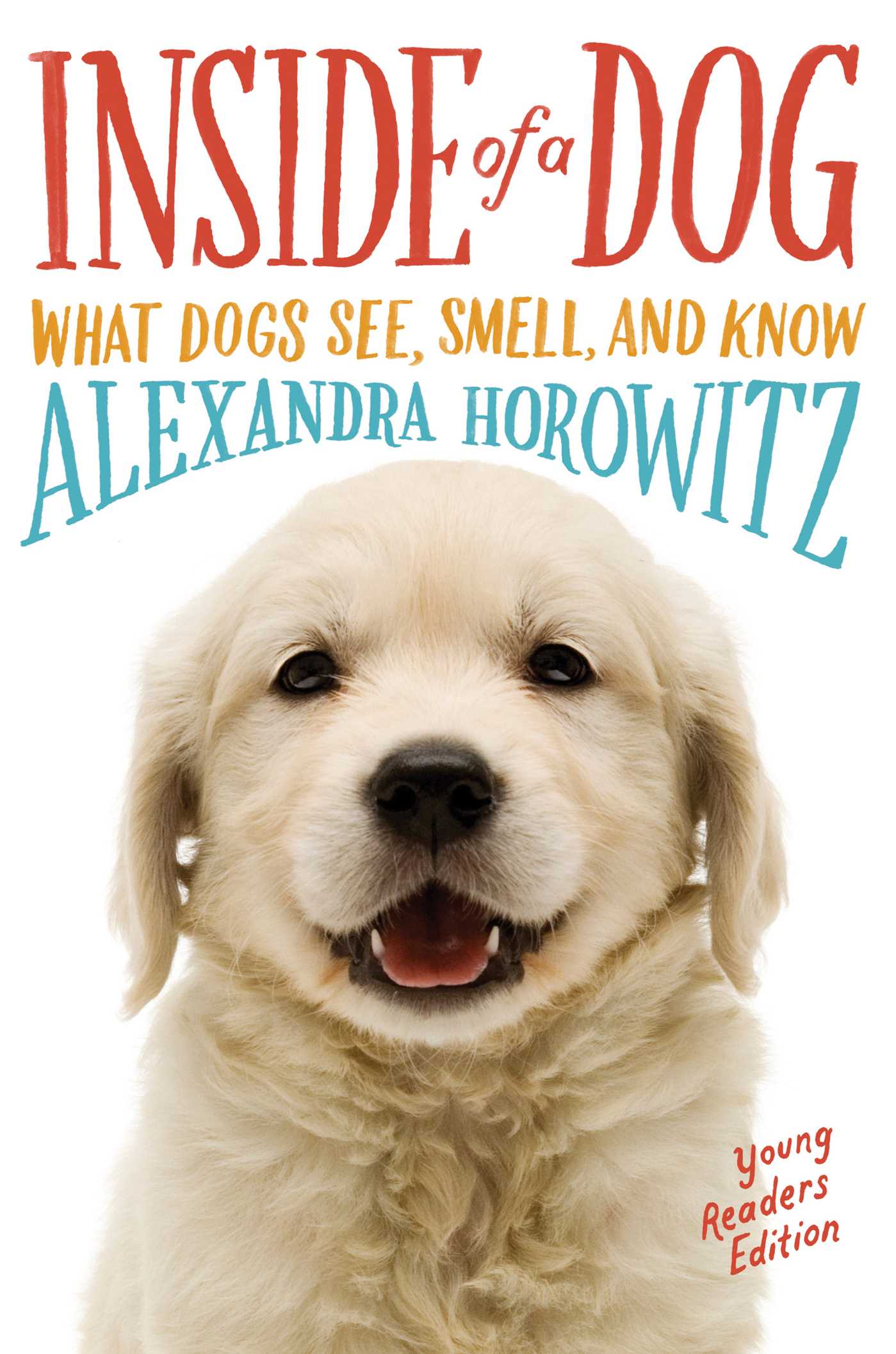
By Alexandra Horowitz, Inside of a Dog (Simon & Schuster, 2017), the Young Readers Edition of the adult book of the same title, is a fascinating excursion into the science of dogs. Readers learn how dogs smell, see, think, learn, behave, and interact with the world and their humans. For ages 10 and up.

Mark Derr’s How the Dog Became the Dog (Overlook, 2013) discusses the various theories about the evolution of the domesticated dog from the wolf. Derr’s best guess: people and wolves co-evolved, teaming up in a relationship that was mutually beneficial. For teenagers and adults.
From The Scientist, The Origin of Domestic Dogs presents evidence that suggests that dogs evolved from European wolves that hung out with human hunter-gatherers. See https://www.the-scientist.com/origin-of-domestic-dogs-38399.
From PBS, Evolution of the Dog has a short hyperlinked explanation.

By Emma Townshend, Darwin’s Dogs (Frances Lincoln Books, 2009) is the story of how Darwin’s pet dogs – and dogs in general – helped him develop his famous theory of evolution. For teenagers and adults.
National Geographic’s How to Build a Dog is a short explanation of the science behind why dogs come in such a remarkable variety of shapes and sizes.

At the website for the NOVA program Dogs and More Dogs, find background information on the history and science of dogs, a slide show on working dogs, a matching quiz on dogs around the world, a program transcript, and teacher’s guide.
From Scitable, find out about the Genetics of Dog Breeding.
A Recipe for Traits is a genetics lesson in which kids create a “DNA recipe” for a dog and then decode the recipe to discover what their dog looks like. See https://vetmed.tamu.edu/peer/wp-content/uploads/sites/72/2020/04/Dog-Traits-Activity.pdf.

Dogs That Changed the World is a two-part special from Nature on the evolution of the dog from the wolf, the ways in which dogs have changed human society, and the ways in which humans have changed dogs.
Pavlov’s Dog is a game based on the work of Nobel laureate Ivan Pavlov on conditioned resources. Train your dog to drool on demand.
Pavlov’s Dogs is an explanation of the work of Russian physiologist Ivan Pavlov. Readers learn the about classical conditioning. Included is original film footage of Pavlov’s experiments.
Astronomical Dogs

For dog-loving astronomers, Sirius – our sky’s brightest star (after the Sun) – is also known as the Dog Star. See Sirius for history, mythology, science, and viewing how-tos.
Check out Orion the Hunter and Sirius the Dog Star.

Sun dogs – also called parahelia or mock suns – are caused by the refraction of light from ice crystals in the upper atmosphere.
Check out dog stars and constellations at https://www.space.com/10716-dog-constellations-skywatching-guide.html.

Famous and Historical Dogs
Check out Dog Stories From History.

Frank Murphy’s George Washington and the General’s Dog (Random House, 2002) is the story of a little-known incident from the Revolutionary War in which Washington finds and returns British General Howe’s lost dog. (Included is the actual letter Washington wrote to Howe.) For ages 5-8.

Roland Smith’s The Captain’s Dog: My Journey with the Lewis and Clark Tribe (Houghton Mifflin Harcourt, 2008) is the story of the Lewis and Clark expedition as told by Seaman, Lewis’s Newfoundland dog. For ages 10 and up.

Ann Bausum’s Stubby the War Dog (National Geographic Children’s Books, 2014) is the story of a little stump-tailed terrier, smuggled by his owner to the Western Front during WWI, who became a war hero. (Today, Stubby, now stuffed, is in the Smithsonian.) For ages 10 and up.

Susan Orlean’s Rin Tin Tin (Simon & Schuster, 2012) is the story of the German shepherd puppy who was rescued from a World War I battlefield and went on to become a Hollywood star. A fascinating read for teens and adults.

Virginia Woolf’s Flush (Mariner Books, 1976), originally published in 1933, is the biography of poet Elizabeth Barrett Browning’s cocker spaniel, Flush. It’s based both on poems Elizabeth wrote about her dog and correspondence between her and her husband, poet Robert Browning. For teenagers and adults.
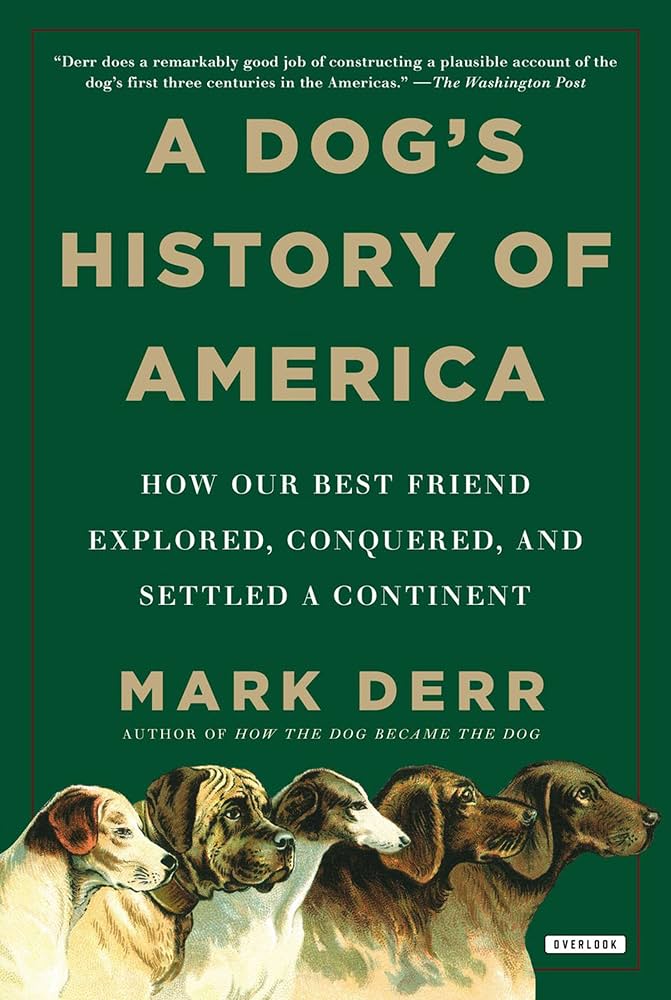
Mark Derr’s A Dog’s History of America (North Point Press, 2004) is a wide-ranging story of dogs in the New World, encompassing their roles in the Spanish conquest of Central and South America, as trackers during the age of slavery, as guide dogs, sled dogs, and bomb-sniffers, and as heroes in time of war. For teens and adults.
Math and Dogs

In Louise Yates's Dog Loves Counting (Knopf, 2013), Dog can't sleep and counting sheep isn't helping - so, after consulting his books, he sets off to find more creatures to count, collecting en route a three-toed sloth, four-legged camel, and so on up to a ten-legged crab. For ages 3-6.

If your dog was a person, how old would he/she be? Figure it out with the Dog Age Chart.
From MakingLearningFun, Math Ideas for a Pet Theme has many activities involving dogs for preschoolers and early-elementary-level kids, variously involving counting, money, and graphing.
Dog Poems

Amy Schmidt’s Loose Leashes (Random House, 2009) pairs 16 short poems with great (and funny) color photos of cheerful dogs (by Ron Schmidt) – wearing glasses, perched in toy cars, rowing boats, and more. Also, in the same vein, see Amy and Ron’s Dog-Gone School (Random House, 2013). For ages 5-8.

In Sharon Creech’s Love That Dog (Perfection Learning, 2003), Jack – a student of the incomparable Ms. Stretchberry in Room 105 – is, in spite of himself, learning to love poetry. The book – entirely written in free verse – begins with Jack’s objections to all things poetic (“I don’t want to/because boys/don’t write poetry./Girls do.”), continues through his strictures on famous poets (“I think Mr. Robert Frost/has a little/too/much/time/on his/hands”), to his discovery of a poem by Walter Dean Myers (“Love That Boy”) that strikes a chord – and helps him deal with the heartbreaking loss of his yellow dog, Sky. For ages 8-12.

Mary Oliver’s pen-and-ink-illustrated Dog Songs (Penguin Press, 2013) is a lovely collection of 35 dog-themed poems (and one essay). For all ages.

By Francesco Marciuliano, I Could Chew On This: And Other Poems by Dogs (Chronicle Books, 2013) is a wonderful collection divided into four parts (Inside, Outside, By Your Side, and Heavy Thinking). “Inside” is introduced with the “Dog Dictum:” “We were wolves once/Wild and wary/Then we noticed you have sofas.” Delightful for a range of ages.
From the Poetry Foundation, Dog Poems is a long list, including selections by Elizabeth Barrett Browning, Pablo Neruda, Delmore Schwartz, and many more.
I love Judith Viorst’s Mother Doesn’t Want a Dog. (“Mother doesn’t want a dog/She’s making a mistake/Because, more than a dog, I think/She will not want this snake.”)
Arts, Crafts, and Dogs

In Thacher Hurd's Art Dog (Harpercollins, 1997), a mild-mannered museum guard by day, is also a mysterious masked canine painter who roams the streets of Dogopolis, searching for a missing masterpiece. Check out the dog versions of famous works of art. For ages 4-8.
Dog Crafts from Enchanted learning has instructions for making a dog greeting card, bookmark, mask, puppet, and more.

From Deep Space Sparkle, Royal Pooches in an art lesson in which kids draw three types of dogs, paint them, and then add spectacular crowns and jewelry.


Colorful Dogs is an art lesson for preschoolers and early-elementary-level kids in which kids make dog collages using colorful shapes.

By Sally Muir and Joanna Osborne, Knit Your Own Dog (Black Dog & Leventhal, 2011) has patterns for knitting 25 different woolly canines. For both new and advanced knitters.
Cooking for Dogs

Make your own dog biscuits! (And lots more.) Lisa Fortunato’s The Everything Cooking for Dogs Book (Adams Media, 2007) has 150 recipes of yummy foods for dogs. There’s even a dog version of Green Eggs and Ham.
Helpful accessories: dog bone cookie cutters. For example, see 
5 Dog Treat Recipes That Kids Can Make include banana bites, buckwheat bone biscuits, and a beefy birthday cake.
Also see Cookies for Canines (9 recipes) and King Arthur Flour’s
Best of Breed Dog Biscuits, which recipe, they say, has been “vetted by a vet.”
Losing a Dog

Hans Wilhelm’s I’ll Always Love You (Dragonfly Books, 1988) is the story of Elfie, “the best dog in the whole world,” narrated by her young owner. The two grow up together – but then, one day, Elfie doesn’t wake up. It’s hard to lose a beloved pet, but this gentle book does help. For ages 3-7.

By Jon Katz – author of many books about dogs - Going Home (Random House, 2012) is a comforting book on coping with the death of a dog. For teens and adults.