
Astronomy
In this collection
There are - if not quite billions and billions - at least a LOT of resources for astronomy-lovers.
All About Astronomy

Lynn Wilson’s What’s Out There? (Grosset & Dunlap, 1993) is a simply presented introduction to stars and planets, illustrated with terrific paper-collage pictures. For ages 3-7.

In Joan Sweeney’s Me and My Place in Space (Dragonfly Books, 1999), the young narrator takes off on a tour of the solar system, making crayon illustrations as she goes. (Pair with crayons!) For ages 3-7.

By Catherine Hughes, National Geographic Kids First Big Book of Space (National Geographic Children’s Books, 2012) is a beautifully illustrated introduction, filled with basic information and catchy facts. (“If you could drive a car to the sun, it would take you 170 years.”) For ages 4-8.

Karen Fox’s Older Than the Stars (Charlesbridge, 2011) – in catchy verse - explains how everything that makes up every one of us (and everything else) originated billions of years ago in the Big Bang. Included is a colorful timeline of the universe. For ages 6-10.

Also see Michael Rubino’s Bang! How We Came to Be (Prometheus Books, 2011) for ages 8-11.

The Let’s-Read-and-Find-Out Science series many astronomy-themed picture books for early-elementary-level kids. Titles include Mission to Mars, The International Space Station, What the Moon is Like, and The Planets in Our Solar System.

Emma Vanstone's This is Rocket Science (Page Street Kids, 2018) is an activity guide with dozens of experiments designed to demonstrate gravity, friction, Newton’s laws of motion, air resistance, thrust and trajectory, life in space, and the solar system, illustrated with color photos. For ages 7-12.

Philip Harrington’s Astronomy for All Ages (Globe Pequot Press, 2000) is subtitled “Discovering the Universe Through Activities for Children and Adults.” Over fifty activities for all ages, variously covering the moon, planets, stars, constellations, and galaxies. Included are charts of lunar eclipses and meteor showers.

Robin Kerrod’s Universe (Dorling Kindersley, 2009) in the popular Eyewitness series devotes a gorgeously illustrated double-page spread to each topic, among them “How the universe works,” “Comparing the planets,” “Clusters and nebulae,” “Pulsars and black holes,” and “Quasars and other active galaxies.” For ages 8 and up.
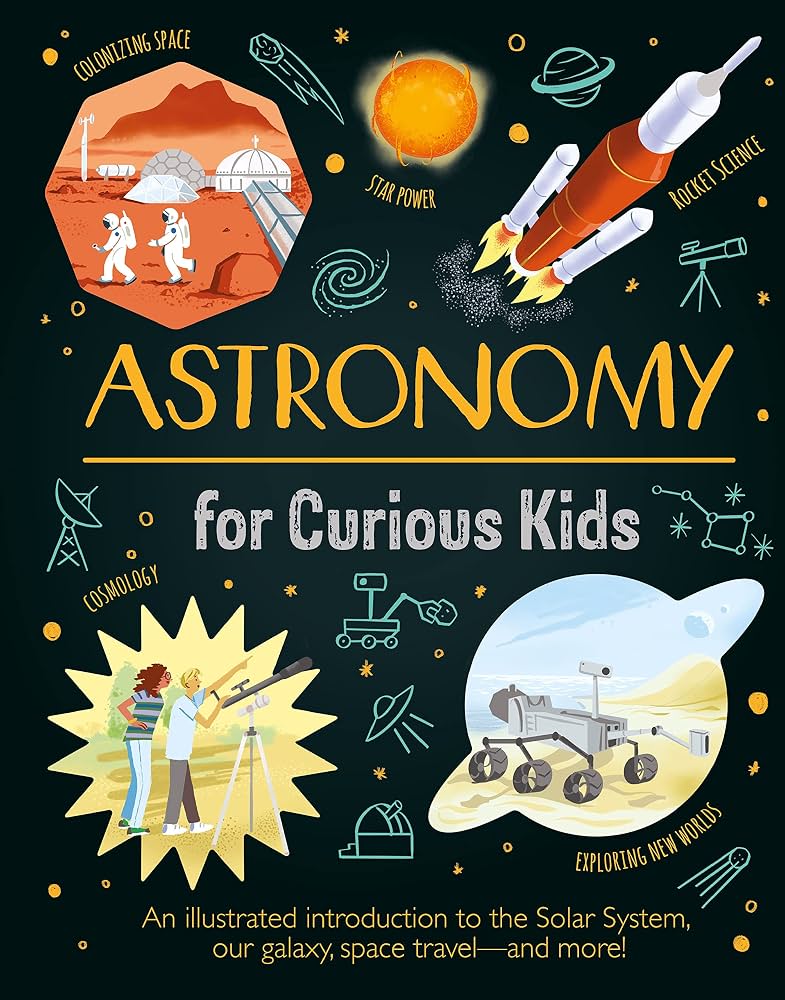
By Giles Sparrow, Astronomy for Curious Kids (Arcturus, 2023) is a of astronomy from the Big Bang on, variously covering the solar system, galaxy, space exploration, and the discoveries of key scientists, illustrated with brightly colored boxes, drawings, and diagrams. One of the For Curious Kids series for ages 8-12.

Mary Kay Carson's Beyond the Solar System (Chicago Review Press, 2013) is an exploration of galaxies, black holes, alien planets, and more, with 21 hands-on activities. For ages 9 and up
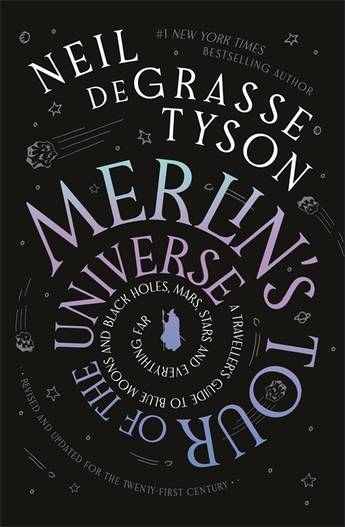
In Neil de Grasse Tyson’s Merlin’s Tour of the Universe (Black and White Publishing, 2025), Tyson – in the person of Merlin, an omniscient visitor from the Andromeda Galaxy - answers astronomy questions from kids and adults on topics “from Mars and Quasars to comets, Planets, Blue Moons, and Werewolves.” A great read for ages 10 and up.

Neil de Grasse Tyson's Astrophysics for Young People in a Hurry (Norton, 2019) is an overview of cosmology for curious kids from the big bang on, stuffed with catchy facts, infographics, photos, and fascinating information. For example, readers discover the location of Superman’s home planet and the site of the solar system’s tallest mountain, and find out why Santa Claus should spend the off-season in Ecuador. Chapter titles include “How to Communicate with Aliens,” “My Favorite Elements,” “Dark Energy,” and “Why the World is Round.” For ages 10-14.

By Carolyn Cinami DeCristofano, A Black Hole is Not a Hole (Charlesbridge, 2012) is a reader-friendly account of gravity, quasars, black holes, and the event horizon, written with both expertise and a sense of humor. (“A black hole is nothing to look at. Literally.”) For ages 11 and up.

By Elaine Scott, Space, Stars, and the Beginning of Time (Clarion, 2011) is an account of discoveries from the Hubble telescope, illustrated with dazzling photos. For ages 10 and up.

Ben Gilliland's Rocket Science for the Rest of Us (DK, 2015) is an illustrated guide to black holes, antimatter, physics, and space exploration. For ages 12 and up.

Chet Raymo’s 365 Starry Nights (Simon & Schuster, 1990) has star maps, well-presented scientific information and an astronomical adventure for every night of the year. A great family resource.
Also see the (unrelated) 365 Days of Astronomy which has an informational astronomical podcast for every day of the year.

Bob Berman’s Secrets of the Night Sky (Harper Paperbacks, 1996): subtitled “The Most Amazing Things in the Universe You Can See with the Naked Eye,” is a fascinating collection of essays on everything from the Big Dipper to the aurora borealis. Though intended for adults, these make for great astronomical family read-alouds. Also included are helpful appendices on selecting binoculars and buying a telescope.

Carl Sagan's Cosmos (Ballantine Books, 2013) covers fourteen billion years of cosmic history. Said to be one of the most popular science books of all time. For teens and adults.

NASA’s Starchild is a “Learning Center for Young Astronomers.” Visitors learn about the solar system, universe, and outer space with a wide range of activities. For elementary- and middle-school-level kids.
NASA’s Space Place is a great resource, with many interactive projects, activities, and explorations for kids of all ages, categorized under Space, Sun, Earth, Solar System, and Peiople & Technology.
NASA’s Imagine the Universe has information, multimedia exhibits, interactive projects and activities (some using real satellite data), and more. Designed for ages 14 and up.

The SETI Institute has an excellent activity guide for kids and families on the sun, the solar system, and eclipses, as well as year-long curricula targeted at either elementary- and middle-school-level kids (Life in the Universe) or high-school students (Voyages Through Time).
Astronomy Basics for Children is a nicely organized hyperlinked list, covering What Astronomers Do, How Did the Universe Begin, Home Sweet Home, The Light We Live By, Eight or Nine Planets, and How Far Does the Apple Fall from the Tree? Included are astronomy calculators, a mnemonic for remembering the planets in order, a tutorial on the Milky Way, and more.

Designed by an astronomy teacher, the Lie Back, Look Up website has many suggestions for family adventures with the night sky, including projects, activities, and viewing helps.
See Space Science Teaching for a lesson plan on navigating by the North Star, constellation teaching resources, a map of the northern circumpolar constellations, and more. (Learn how to make a sextant!)
From Core Knowledge, Astronomy: Our Solar System and Beyond is an excellent ten-part lesson plan targeted at third-graders. Various sections – all with instructions and materials and resource lists – cover Origins of the Universe; Galaxies; the Solar System; Planetary Motion; Gravity; Asteroids, Meteors, and Comets; Eclipses; Stars, Constellations, and Orienteering; and Exploration of Space.
At Ology, the American Museum of Natural History’s website for kids, learn all about astronomy, take a virtual tour of the solar system, find out if you’re a likely candidate for a colony on Mars, build the Big Dipper, and more.

Stardate is the public education and outreach branch of the University of Texas McDonald Observatory. Visit the website for episodes of the informational Stardate radio program, a moon phase calendar, an illustrated “Astro Guide” to the universe, and a downloadable teacher’s lesson plan guide.

For interested amateur astronomers, Astronomy magazine is filled with news and information about astronomy and sky-viewing. For teenagers and adults.

Cosmos: A Spacetime Odyssey is a 13-part 2014 science documentary hosted by Neil DeGrasse Tyson, an update of Carl Sagan’s original Cosmos: A Personal Voyage, aired on PBS in 1980. A great way to get an astronomy education.
At the Hubble Site, learn all about the Hubble telescope and its discoveries., and get the scoop on the Webb Space Telescope, the Hubble’s successor. Included at the site are videos, podcasts, a photo gallery, and more.
The James Webb Telescope is "the premier observatory of the next decade." Find out about it at https://science.nasa.gov/mission/webb/.
From the Astro Society, see these downloadable astronomy activities and projects for kids, variously for grades K-12, at https://astrosociety.org/education-outreach/education-activities/grades-k-12.html.
Stars and Stargazing

Anne Rockwell’s Our Stars (Houghton Mifflin Harcourt, 2002) has bright pictures and a short simple text for ages 3-6.

In the Let’s-Read-and-Find-Out Science series, Franklyn Branley’s The Sky Is Full of Stars (HarperCollins, 1983) is a simple introduction to stars and stargazing for ages 4-8.

C.E. Thompson’s Glow-in-the-Dark Constellations (Grosset & Dunlap, 1999) is a straightforward introduction to ten major constellations, each given a double-page spread. (And they glow in the dark.) For ages 4-8.

By Gail Gibbons, The Stargazers (Holiday House, 1999), illustrated with bright attractive drawings, covers stargazers, ancient and modern, stars and constellations, and the operation of telescopes and planetariums. A straightforward introduction for ages 5-8.

Seymour Simon’s Stars HarperCollins, 2006) and Galaxies (HarperCollins, 1991) are excellent introductions, illustrated with spectacular full-page color photographs. For ages 6-10.

Looking up, of course, is easy; the trick is to know just what you’re looking up at. A wonderful help here is H.A. Rey’s 72-page Find the Constellations (Houghton Mifflin Books for Children, 2008) – an excellent (and classic) beginner’s guide to the stars for ages 5-11.
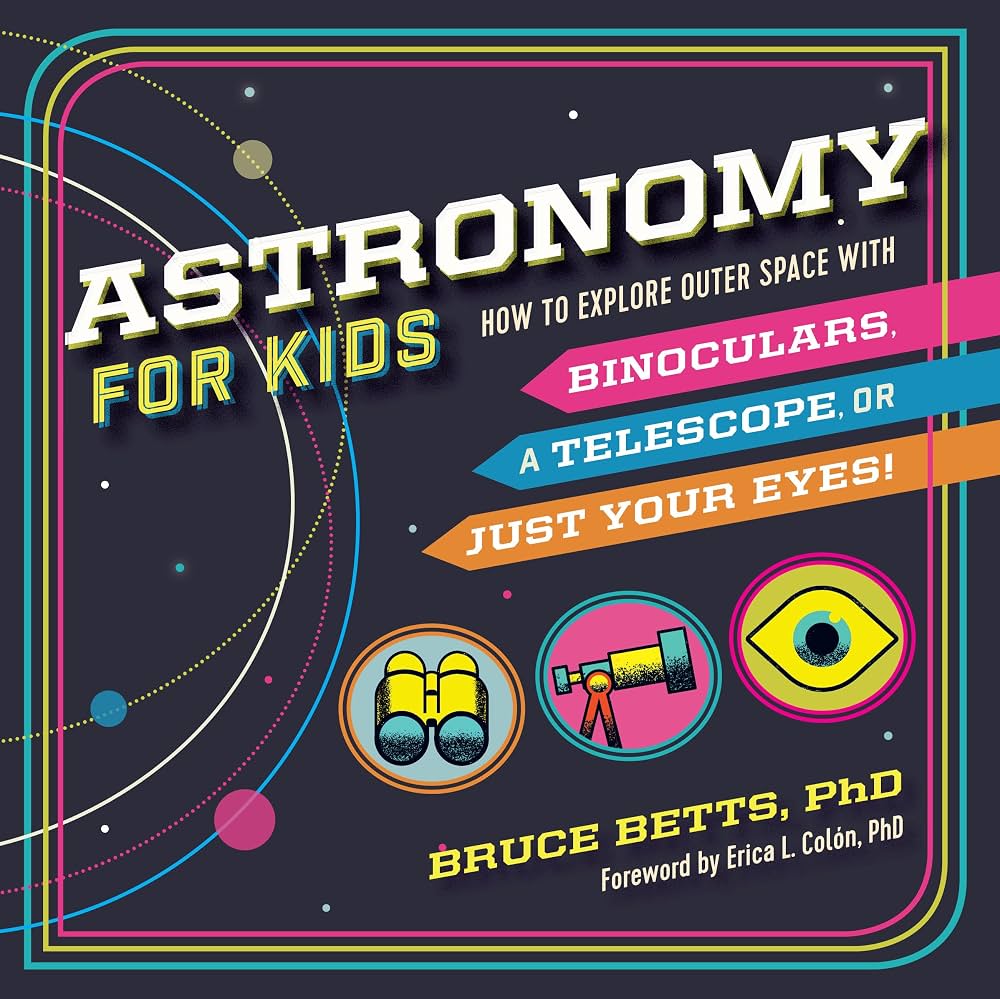
By Bruce Betts, Astronomy for Kids (Rockridge Press, 2018) is a helpful guide for
exploring the sky with binoculars, a telescope, or just your eyes. For ages
7-13.
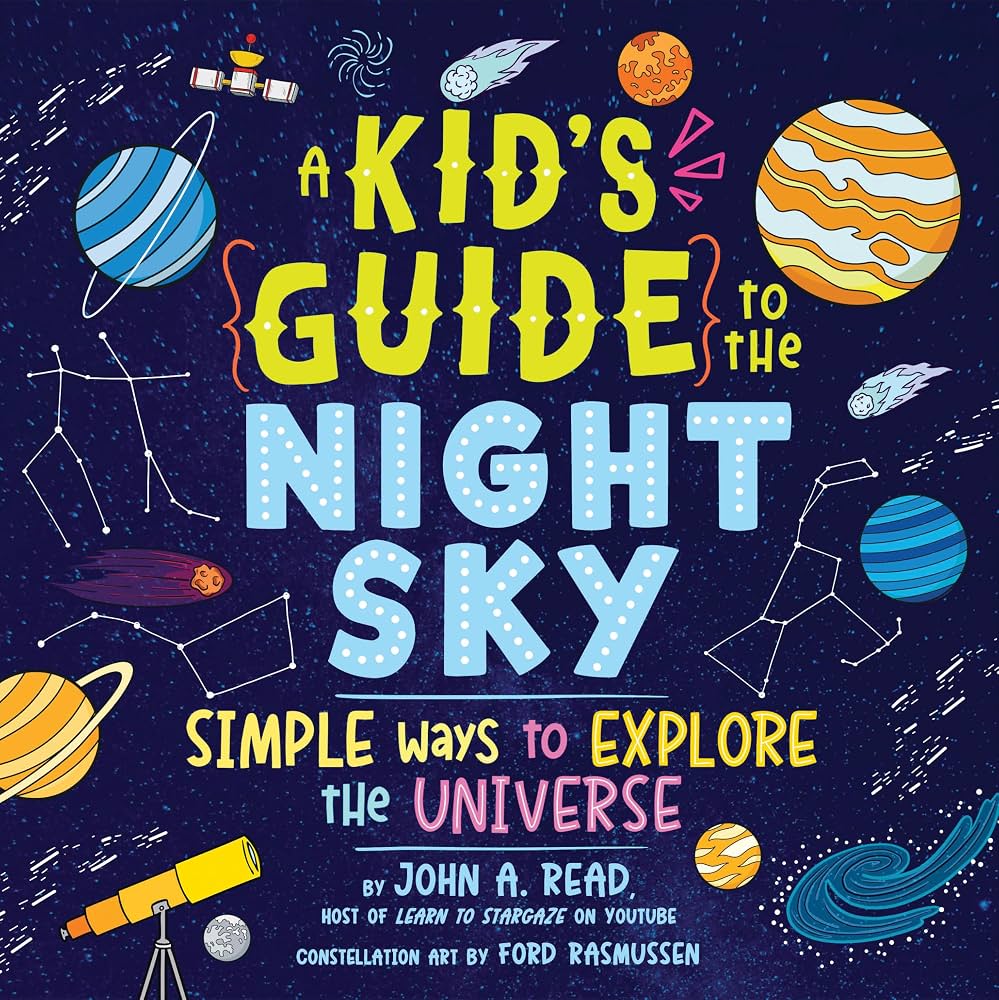
By John A. Read, A Kid’s Guide to the Night Sky (Sourcebooks Explore, 2024) is a comprehensive guide to stargazing (no telescope required). Various chapters cover winter, spring, summer, and autumn constellations, planets, movement of the sky, and astronomical events such as eclipses, meteor showers, and auroras. For ages 8-12.
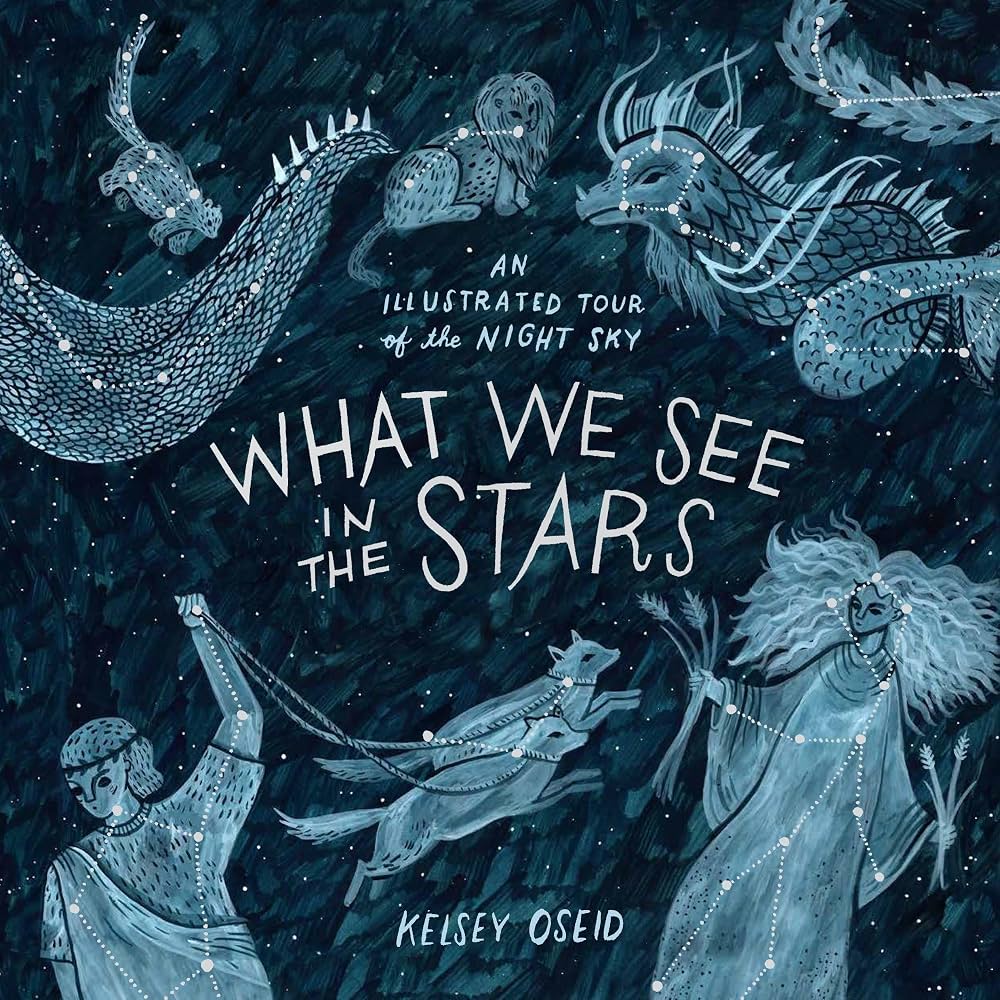
By Kelsey Oseid, What We See in the Stars (Ten Speed Press, 2017) is a magical tour of the night sky, starting with Earth’s “cosmic address,” and covering constellations, the Milky Way, planets, asteroids, comets, and meteors, and deep space. Beautiful illustrations. For ages 8-12.

For older kids, check out Rey’s The Stars: A New Way to See Them (Houghton Mifflin Books for Children, 2008), 160 pages of beautifully presented information, diagrams, drawings, and star maps. For ages 12 and up.

A Child’s Introduction to the Night Sky by Michael Driscoll (Black Dog & Leventhal, 2004), illustrated with photos, diagrams, and colorful cartoon drawings, is divided into two main sections: “What’s Up There?” (including “What We Can See” and “What We Can’t See”) and “Exploring What’s Up There,” which provides guidelines for sky viewing through the four seasons of the year. For ages 8 and up.

Terence Dickinson’s Exploring the Night Sky (Firefly Books, 1987) is an excellent star-spotting resource, featuring a “Cosmic Voyage” in “40 jumps” from the neighborly Moon to distant galaxies; an overview of the solar system and deep space; and a stargazing guide. For ages 10 and up.Also see Dickinson's Night Watch (Firefly Books, 2006), which includes stargazing guides for the naked eye, binoculars, or small telescopes, plus a great series of star charts.
The barebones stargazer doesn’t need more than a star map, a red-cellophane-covered flashlight for peeking at it (red light won’t interfere with your night vision), and a comfy blanket. A wonderful extra, however, is a green laser pointer. These are much brighter than the red versions, and the green beam dot shows up in midair, which means that it can be used for pointing at stars and constellations (“skypointing”).

Bob Crelin’s picture-book There Once Was a Sky Full of Stars (Sky Publishing, 2007), in simple rhyming text, describes the wonders of the night sky and their loss due to light pollution. For more information, visit the International Dark Sky Association.
Enchanted Learning has a large collection of printable constellation connect-the-dot puzzles.
Donna Young’s Pringles Can Viewer and Constellation Slides has printable constellation slides and instructions.
For the ambitious, see How to Build an LED Plantetarium.
This Shoebox Planetarium Project has complete instructions – suggested as a group project for learning constellations.

Skymaps offers free printable monthly sky maps (both northern and southern hemispheres) and a monthly sky calendar of best objects to see with binoculars, telescope, or naked eye.
Amazing Space has a gallery of Hubble images, “Tonight’s Sky,” a guide to currently viewable constellations and other night-sky objects, and a long list of terrific interactive explorations for kids on galaxies, comets, black holes, the solar system, and more.
From NASA’s Space Place, Make a Star Finder has instructions and printable star-map patterns for each month of the year.

See these instructions for making origami dream stars.

From the Van Gogh Gallery, learn about and view Van Gogh’s Starry Night and other starry paintings. (Try painting one of your own.)
See a Starry Night project for kids at https://kidsartprojects101.com/van-gogh-starry-night-art-project-and-elementary-art-lessons/.
Star Stories

Harriet Peck Taylor’s Coyote Places the Stars (Aladdin, 1997) is a picture-book tale of the irrepressible Coyote who climbs a ladder to the moon and there makes wonderful animal pictures in the sky by shooting arrows at the stars. For ages 4-8.

Jerrie Oughton’s How the Stars Fell Into the Sky (Sandpiper, 1996) is a Navajo legend about the origin of the stars and constellations. First Woman is making a careful pattern – a “careful mosaic on the blackberry cloth of night” – until impatient Coyote decides to help. For ages 4-8.

By Jacqueline Mitton and Christina Balit, see Once Upon a Starry Night (National Geographic Children’s Books, 2009) for star stories from Greek myths; and Zodiac: Celestial Circle of the Sun (Frances Lincoln Children’s Books, 2008), for science, history, and legends of the twelve constellations of the Zodiac. For ages 5-9.

Joseph Bruchac’s The Earth Under Sky Bear’s Feet (Putnam Juvenile, 1998) is a collection of poems based on tribal legends of the Sky Bear (Big Dipper), illustrated with oil paintings. For ages 6-12.

Anita Ganeri's Star Stories (Running Press, 2019) is a beautifully illustrated collection of myths about sun, stars, and Milky Way from cultures worldwide. For ages 8-12.

They Dance in the Sky by Jean Guard Monroe and Ray A. Williamson (Sandpiper, 2007) is a 144-page collection of star myths from a wide range of Native American tribes, among them Navajo, Pawnee, Micmac, Tlingit, and Mohawk. For ages 9 and up.

Keepers of the Night by Michael J. Caduto and Joseph Bruchac (Fulcrum Publishing, 1994) pairs native American star legends with activities, games, and science and nature experiments.
The Solar System

In Joanna Cole’s The Magic School Bus Lost in the Solar System (Scholastic, 1992), the planetarium is closed, so Miss Frizzle launches her class into space on board the magic school bus, where they take a tour of the solar system. Must of the information is delivered via hand-printed student reports. For ages 4-9.

Seymour Simon’s Our Solar System (HarperCollins, 2007), illustrated with spectacular full-page color photographs, covers the sun, the planets and their moons, and asteroids, comets, and meteoroids. For ages 6-12.
Also by Simon in the same format, see The Universe (2006), Galaxies (1991), Stars (2006), Destination: Space (2006), The Sun (1989), Earth (2003), The Moon (2003), Destination: Jupiter (2000), Destination: Mars (2016), and other individual books on the planets.

Anita Yasuda’s Explore the Solar System! (Nomad, 2009) includes background information, Words to Know and factoid boxes, and 25 hands-on activities. For ages 6-9.
In the same format by Yasuda, also see Explore Comets and Asteroids! (Nomad, 2017).

Astronomer David Aguilar’s 13 Planets: The Latest View of the Solar System (National Geographic Children’s Books, 2011) brings readers up to date on the solar system, including its latest inhabitants, Ceres and Eris. Illustrated with wonderful photos and diagrams. For ages 8-12.

Exploring the Solar System by Mary Kay Carson (Chicago Review Press, 2006) is “A History with 22 Activities” charting space science from its ancient beginnings to the present day. Attractive diagrams demonstrate planetary motion, the inner workings of reflector, refractor, and compound telescopes, and the anatomy of a rocket; colored boxes hold capsule biographies of such famous space scientists as William Herschel, Robert Goddard, Edmond Halley, Edwin Hubble, and Yuri Gagarin. Projects include building a spectroscope (you’ll need an old CD), making craters in the kitchen, watching for satellites, taking a walk to Pluto, and making a map of the Moon. For ages 9 and up.

Delano Lopez’s Amazing Solar System Projects You Can Build Yourself (Nomad, 2008) is an introduction to the solar system and beyond, with many hands-on projects, among them building a model of an astronomical unit, an asteroid jigsaw puzzle, and a Newtonian telescope. For ages 9-12.

Matthew Brenden Wood's Planetary Science (Nomad, 2017) is a creatively-designed survey of the solar system, with cartoons, fact boxes, primary sources, and activities intended to promote inquiry and investigation. For ages 12 and up.

Dava Sobel's The Planets (Penguin, 2006) covers the origins and oddities of the planets through popular culture, literature, art, music, biography, and history. For teens and adults.
Make a scale model of the solar system. Just fill in the diameter of your proposed sun and this program will fill in all the rest.
Make a walk-through solar system. Prepare to count a lot of paces.
Astronomers and Astronauts

In Meghan McCarthy’s Astronaut Handbook (Knopf Books for Young Readers, 2008), four adorably pop-eyed kids head off for astronaut school. Readers learn what astronaut training is all about. Delightful for ages 4-8.
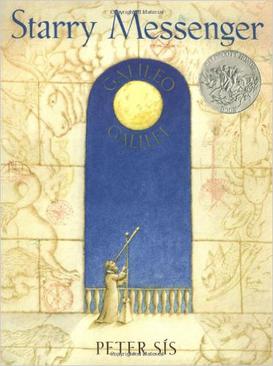
By Peter Sis, Starry Messenger (Square Fish, 2000) is the gorgeously illustrated story of Galileo and his astronomical explorations and discoveries. Recommended for ages 4-8 but a treat for all.
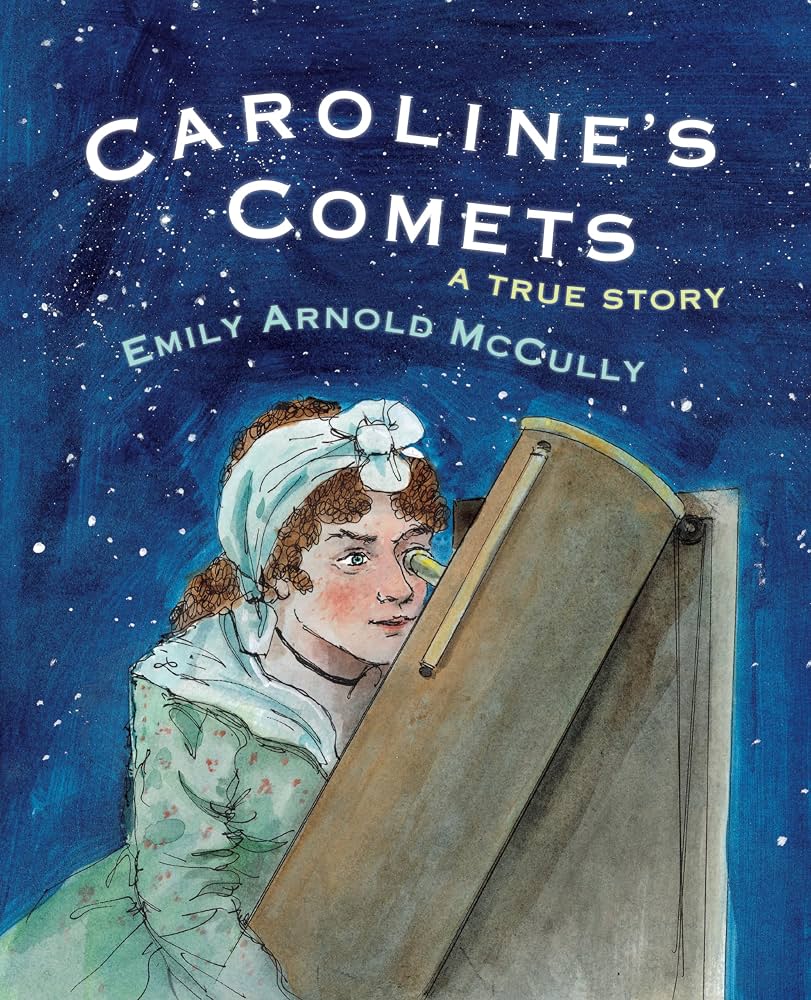
By Emily Arnold McCully, Caroline’s Comets (Holiday House, 2020) is the story of Caroline Herschel (1750-1848) – the first woman to discover a comet and the first to be officially employed as a scientist (by King George III). Included are excerpts from Caroline’s autobiography. For ages 6-9.
Also see Pamela S. Turner's Comet Chaser (Chronicle Books, 2024).

Patrick O’Brien’s You Are the First Kid on Mars (Putnam Juvenile, 2009) stars a little boy in an orange space suit traveling to Mars via space elevator, space station, and Nuclear Thermal Rocket (which last travels at a thrilling 75,000 miles per hour), and finally arriving at a Martian colony populated by scientists and engineers. The book is illustrated with wonderful photorealistic paintings, peppered with interesting facts, and written in the second person, which gives the text a feel of you-are-there immediacy. For ages 5-8.

Carole Stott’s Space Exploration (Dorling Kindersley, 2009), an Eyewitness book, covers each topic in a double-page spread, creatively illustrated with photographs. Topics include “What is space?” “Rocket science,” “Man on the moon,” “Space stations,” and “Landers and discoverers.” For ages 8 and up.
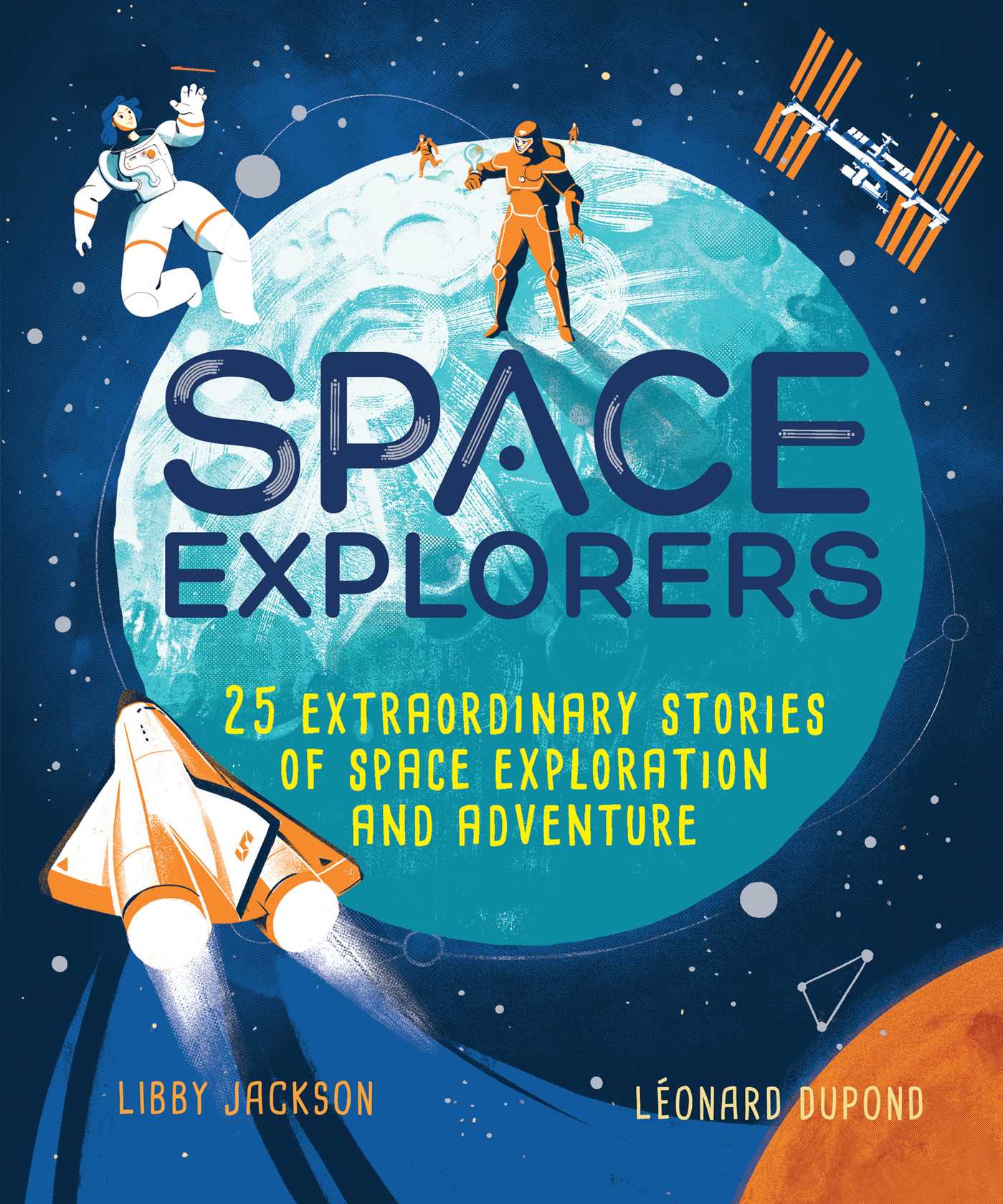
By Libby Jackson, Space Explorers (Aladdin/Beyond Words, 2021) is a chronological anthology of 25 stories of space exploration, covering everything from the first beeping satellites to life on the International Space Station. For ages 8-12.

How to Be a Space Explorer (Lonely Planet Kids, 2014) has everything you need to know for exploring space, from a tour of the planets and their moons to space rocks, volcanoes, searching for alien life, deep space – and the return home. Included are stories of real-life exploration and over 300 photos. For ages 9-12.

Simon Basher and Dan Green’s Space Exploration (Kingfisher, 2019) covers space exploration to infinity and beyond. A lot of information delivered in snarky first-person accounts. For ages 9 and up.

Tanya Lee Stone’s Almost Astronauts (Candlewick, 2009) is a fascinating (and infuriating) photo-essay about 13 women who almost became astronauts – and by doing so, opened the way to space for women. For ages 10 and up.

Best, of course, would be to take a trip to the Smithsonian National Air and Space Museum – but, lacking that, there’s a lot of good stuff online. For example, check out the exhibit of artifacts from the Apollo 11 mission.
Want to help search for extraterrestrial intelligence? Find out how at https://seti.berkeley.edu/.
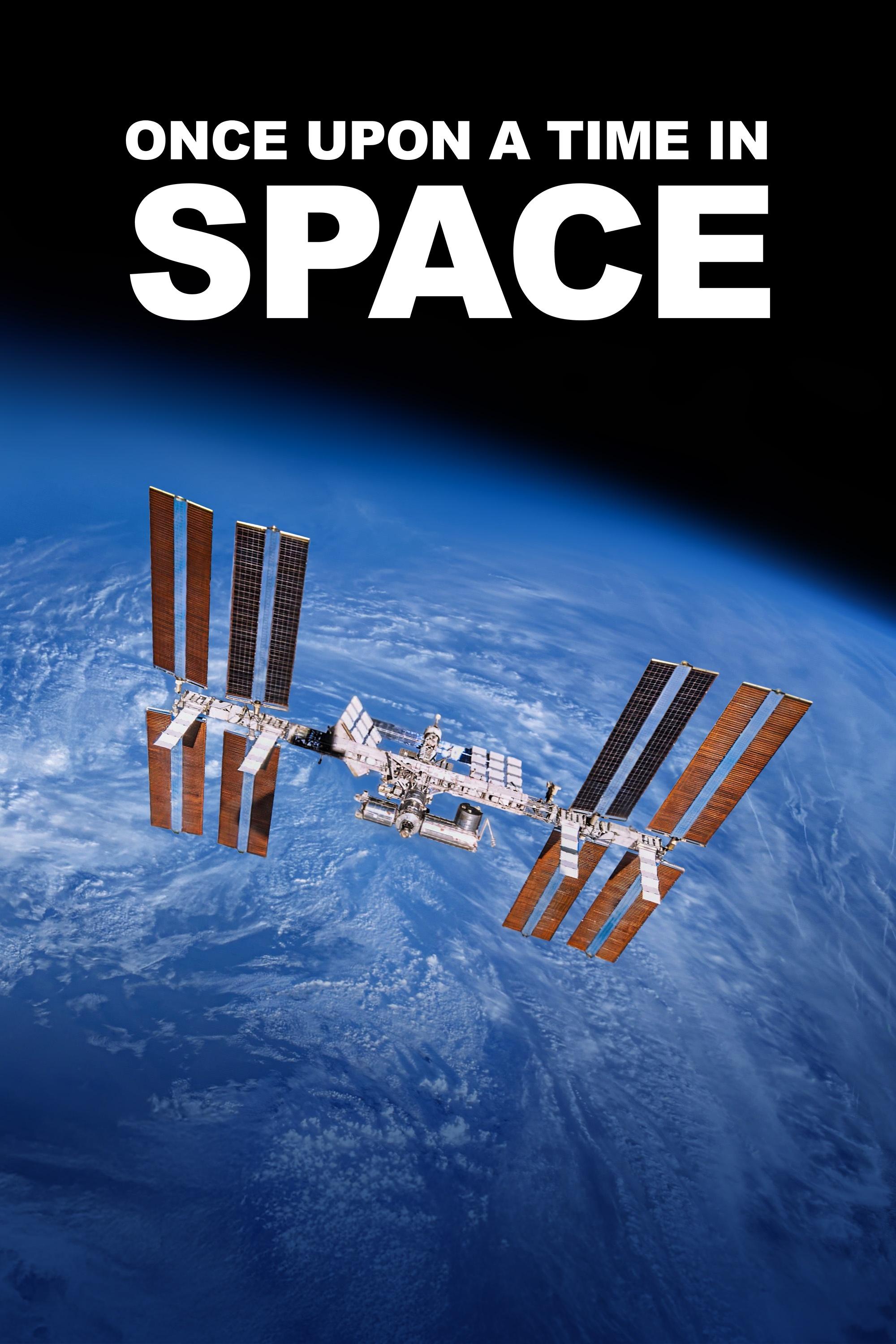
Once Upon a Time is Space (2026) is a four-part PBS series on space exploration. See https://www.pbs.org/show/once-upon-a-time-in-space/.
Poems

Laura Purdie Salas’s And Then There Were Eight (A+ Books, 2008) combines 15 poems about astronomy and space exploration with gorgeous color photographs. For ages 4-8.

Douglas Florian’s Comets, Stars, the Moon and Mars (Harcourt Children’s Books, 2007) is an illustrated collection of catchy space poems for ages 5 and up.

Jack Prelutsky’s The Swamps of Sleethe (Knopf Books for Young Readers, 2009) – subtitled “Poems From Beyond the Solar System” – is a fun but creepy collection about aliens that you really don’t want to meet. For kids who like a touch of the scary. For ages 6-9.
Walt Whitman’s When I Heard the Learn’d Astronomer is not a plug for science. Go on. Discuss.
This collection of 10 Best Poems About Stars and Planets includes selections by Robert Frost, Emily Dickinson, and Carl Sandburg.
Alan Shapiro’s Astronomy Lesson begins with two boys on the front porch, looking up.
Science Fiction
From the Astronomical Society of the Pacific, Science Fiction Stories with Good Astronomy is a terrific (and long) categorized list.

Jane Yolen’s Commander Toad in Space (Puffin, 1996) is the first of a series starring the “bold and bright” Commander Toad and his crew on the spaceship Star Warts. For ages 4-8.

Mark Kelly’s Mousetronaut (Paula Wiseman Books, 2012) (“based on a (partially) true story”) features Meteor, a very small mouse, who saves a mission on the space shuttle Endeavor. Includes a lot of helpful info about daily life on the space shuttle. For ages 4-8.

In Mary Pope Osborne’s Midnight on the Moon (Random House, 1996), one of the popular Magic Tree House series, Jack and Annie go forward in time and end up at the International Space Station on the moon. For ages 6-9.

In Eleanor Cameron’s The Wonderful Flight to the Mushroom Planet (Little, Brown, 1988), Chuck and David build a homemade space ship and head off in it with odd little scientist Mr. Bass to the green planet of Basidium. For ages 8-11.
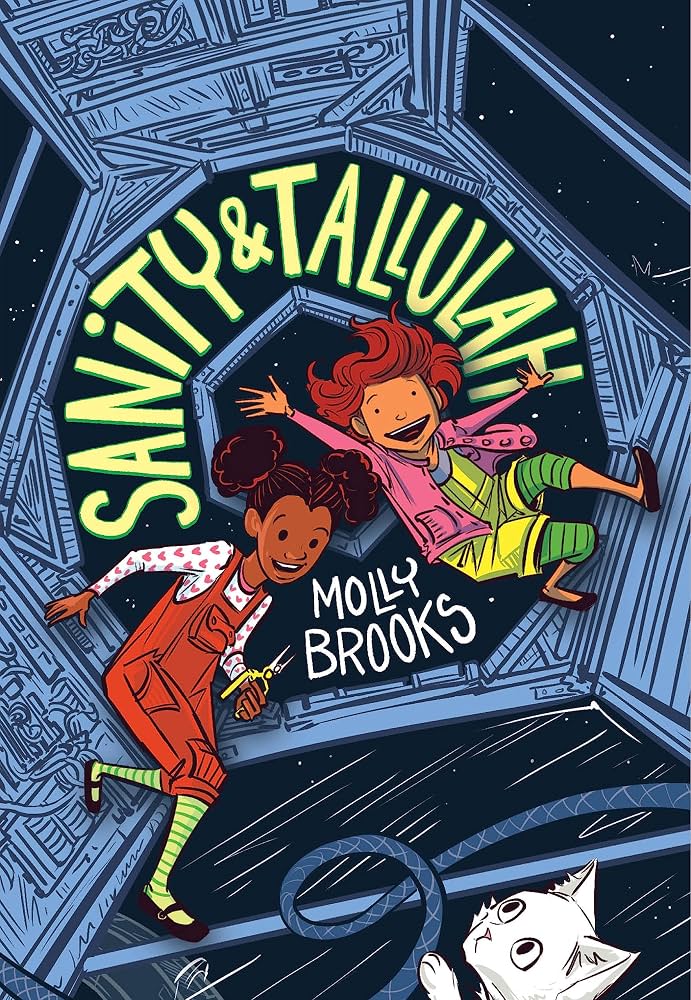
In Molly Brooks’s graphic novel Sanity & Tallulah (Little, Brown Ink, 2018), the two title characters live on a space station – where they create havoc with their science project, an especially cute three-headed kitten named Princess Sparkle, Destroyer of Worlds. For ages 8-12.

In Adam Rex’s funny and delightful The True Meaning of Smekday, aliens known as the Boov have taken over the Earth and forced all humans to relocate to Florida. Eleven-year-old Tip Tucci and a renegade Boov end up on a wild cross-country trip trying to find Tip’s mother and, incidentally, to save the world. A riotous read for ages 8-12.

In Jill Paton Walsh’s The Green Book (Square Fish, 2012), Pattie and family have left the dying Earth to settle on the new planet of Shine – though on this beautiful crystalline planet it soon becomes clear that they may not be able to survive. (Readers learn on page one that colonists are only allowed to take one book per passenger – a tough decision.) For ages 8-12.
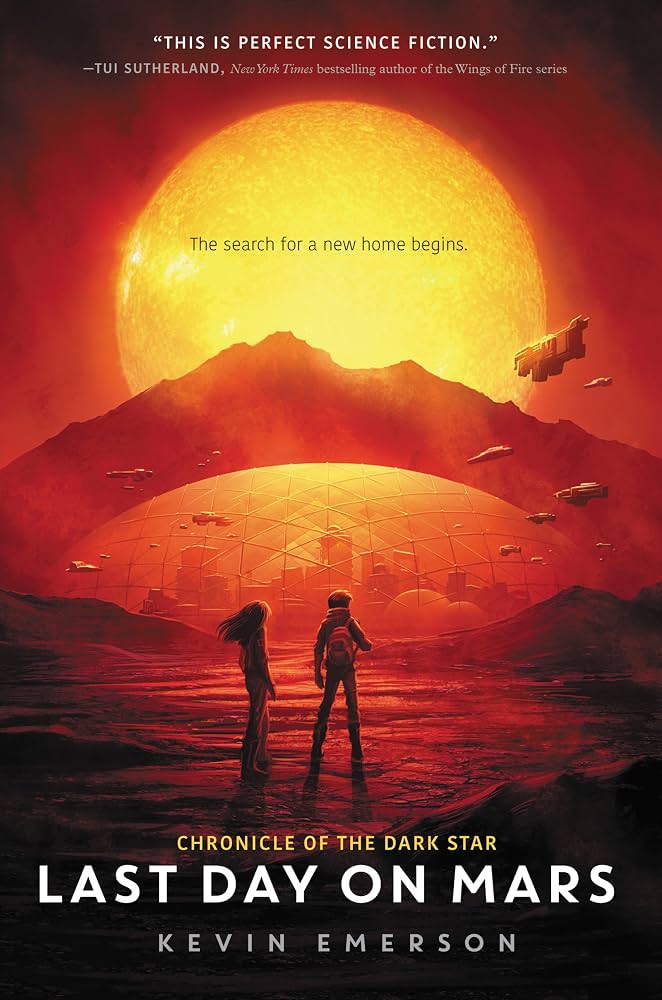
In Kevin Emerson’s Last Day on Mars (Walden Pond Press, 2018), the Earth has been burned to a cinder by the expanding sun and the survivors on Mars are preparing to leave the solar system on the long journey to a distant star. Liam and Phoebe, whose parents are scientists, are about to depart on the last starliner – when there’s an explosion and the discovery of a dead alien. First of a trilogy for ages 8-12.

In Geoff Rodkey's We're Not From Here (Crown, 2019), Earth is uninhabitable; and Mars doesn’t readily support human life – so the human race, en masse, heads out to Planet Choom, world of the Zhuri, who look like giant mosquitoes, the marshmallow-like Ororo, the Krik (green werewolves), and the Nug (giant worms). By the time the human ships arrive, however, the government of Choom has changed its mind about accepting refugees – and Lan Mifune and family are picked as a test case, tasked with proving that humans can assimilate and live in peace. It turns out that there’s a lot more to this than expected. For ages 9-12.
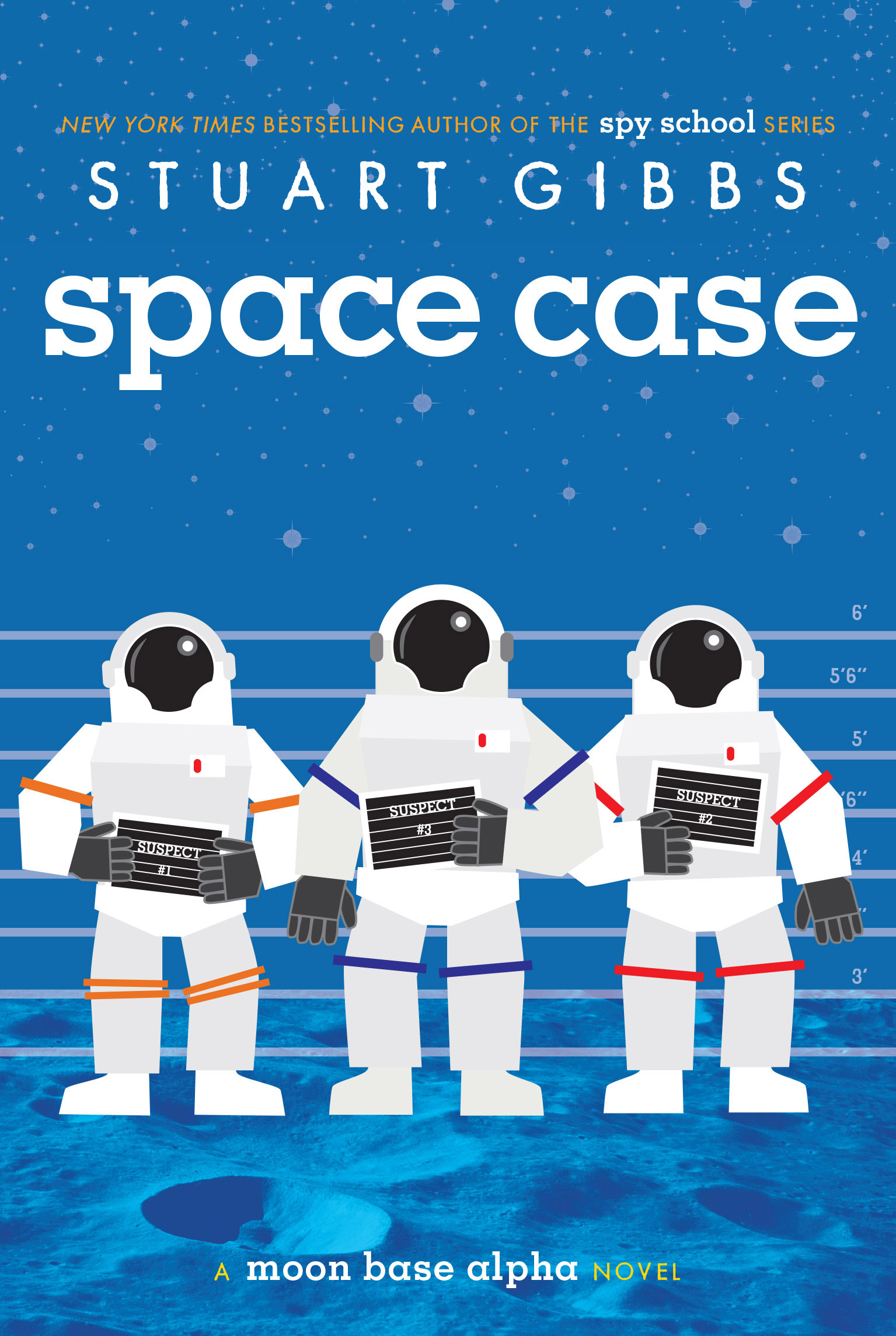
By Stuart Gibbs, Space Case (Simon & Schuster, 2015) is an exciting murder mystery set on the Moon – and 12-year-old Moonie Dash is out to solve it. For ages 9-12.
Also see the graphic novel version (Simon & Schuster, 2025).

In Borgel (Aladdin, 1992), by the hysterically funny Daniel Pinkwater, young Marvin Spellbound is taken on an intergalactic road trip by his Uncle Borgel in search of the elusive Giant Popsicle. Uncle Borgel – who travels with 32 small black suitcases – turns out to be 111 years old and an experienced time-and-space traveler. For ages 9-12.
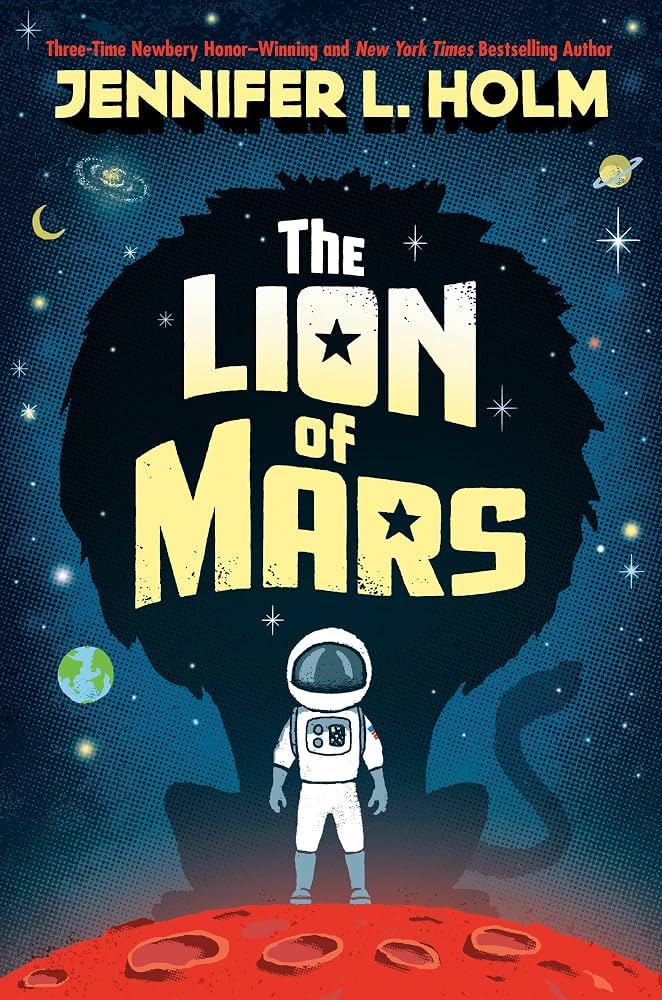
By Jennifer L. Holm, in The Lion of Mars (Yearling, 2022), there are several different colonies established in lava tunnels on Mars, but the American colony – where 11-year-old Bell lives – stays strictly separate from the others. When a disease (carried on a supply ship) strikes the colony’s adults, it’s up to Bell and friends to contact other settlements – and forge new ties to a vibrant international community. For ages 9-12.

In John Christopher’s The White Mountains (Aladdin, 2014), the Tripods – giant alien machines – have taken over the Earth. Young Will Parker – about to turn 13 and due to undergo the Capping ceremony that will put him under the Tripods’ control – instead runs away to the White Mountains, hoping to join the anti-Tripod rebels. For ages 9 and up.
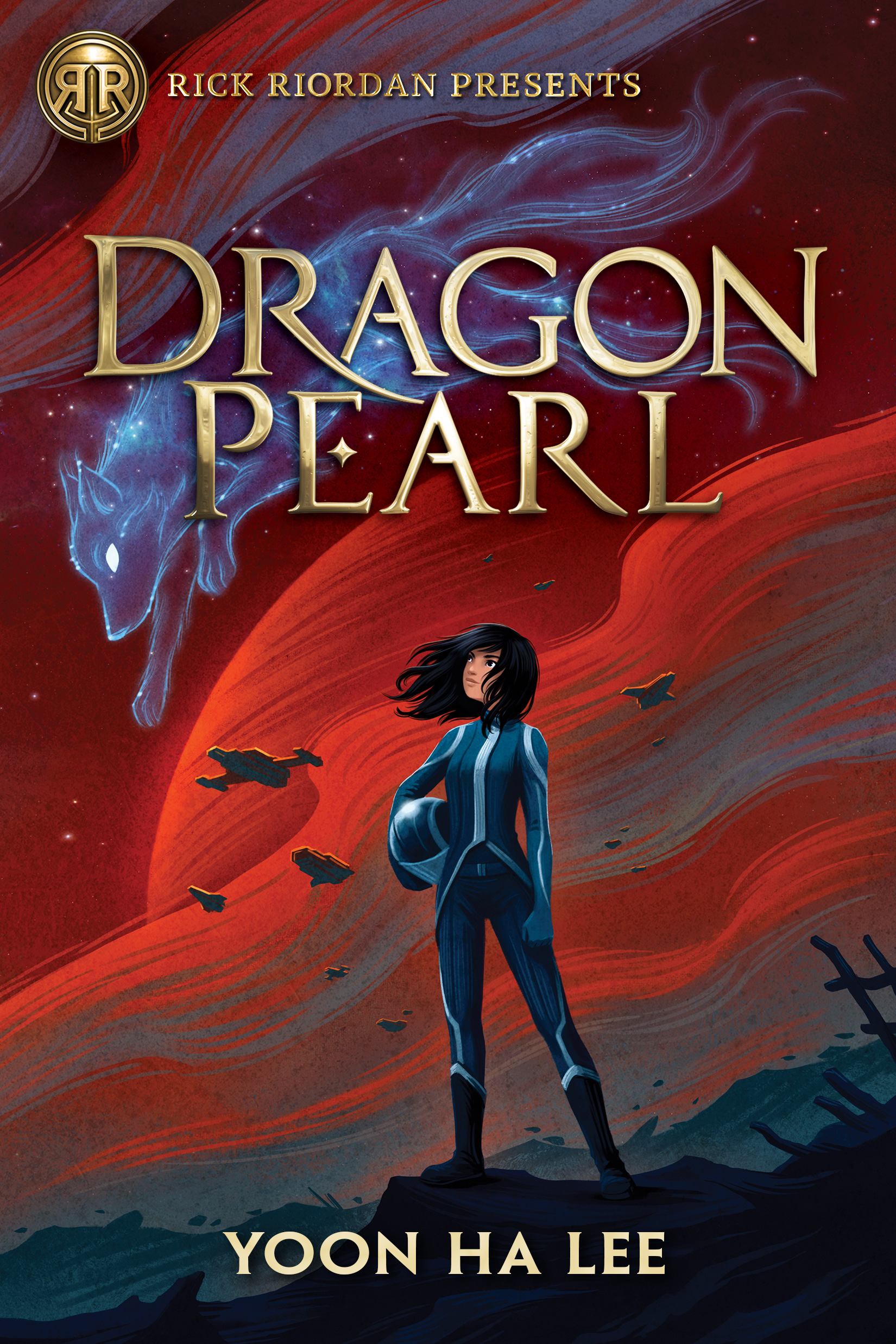
Space pirates and fox spirits? In Yoon Ha Lee’s Dragon Pearl (Rick Riordan Presents, 2020), Min – from a long line of fox spirits – is eager to follow her older brother , Jun, into the Space Forces and explore the Thousand Worlds. Then Jun is accused of deserting his battle cruiser to got in search of the mystical Dragon Pearl – and Min sets off on a quest to find him and clear his name. A mix of space adventure and Korean mythology for ages 9-13.
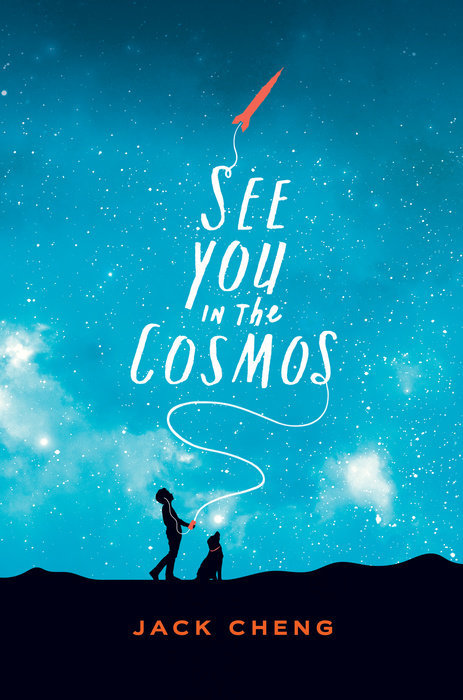
In Jack Cheng’s See You in the Cosmos (Dial, 2018), 11-year-old Alex Petroski is set on launching his golden iPod into space like his hero, Carl Sagan, launched the Golden Record on the Voyager spacecraft in 1977 – so he sets off with his dog (named Carl Sagan) on a solo cross-country trip to a rocket festival. For ages 10-12.
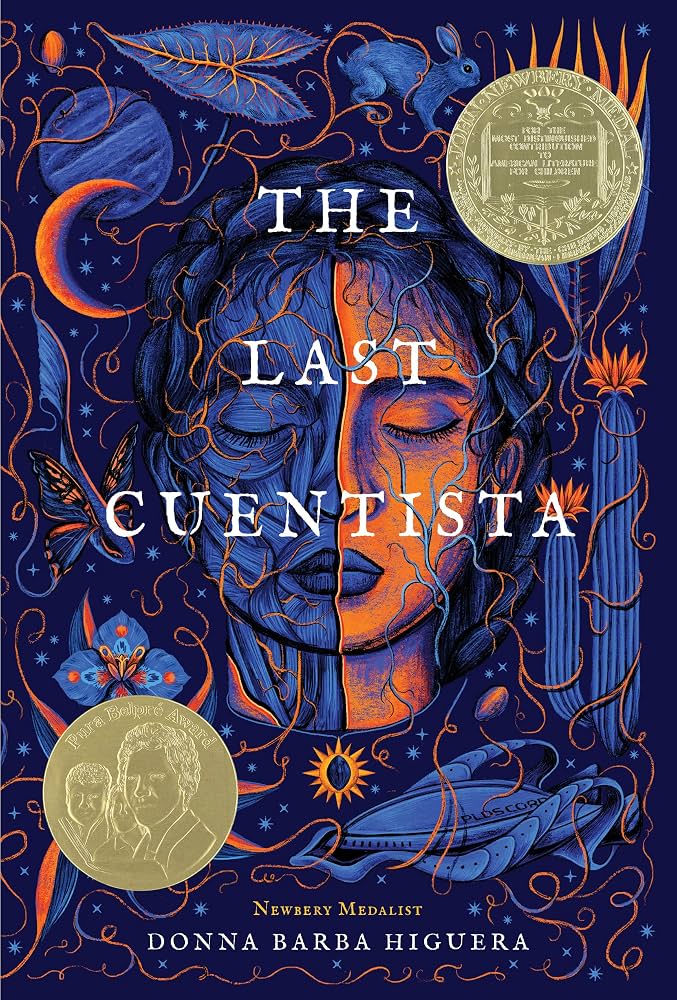
In Donna Barba Higuera’s The Last Cuentista (Levine Querido, 2021) – a Newbery Medal winner - Petra and family have been in stasis on a journey to a new planet after the destruction of Earth by a comet. When Petra awakes, however, a sinister Collective has taken over the ship and, bent on eradicating the sins of humanity’s past, has erased the memories of all aboard. Petra, however, still remembers the stories of the past. A wonderful and hopeful read for ages 10 and up.
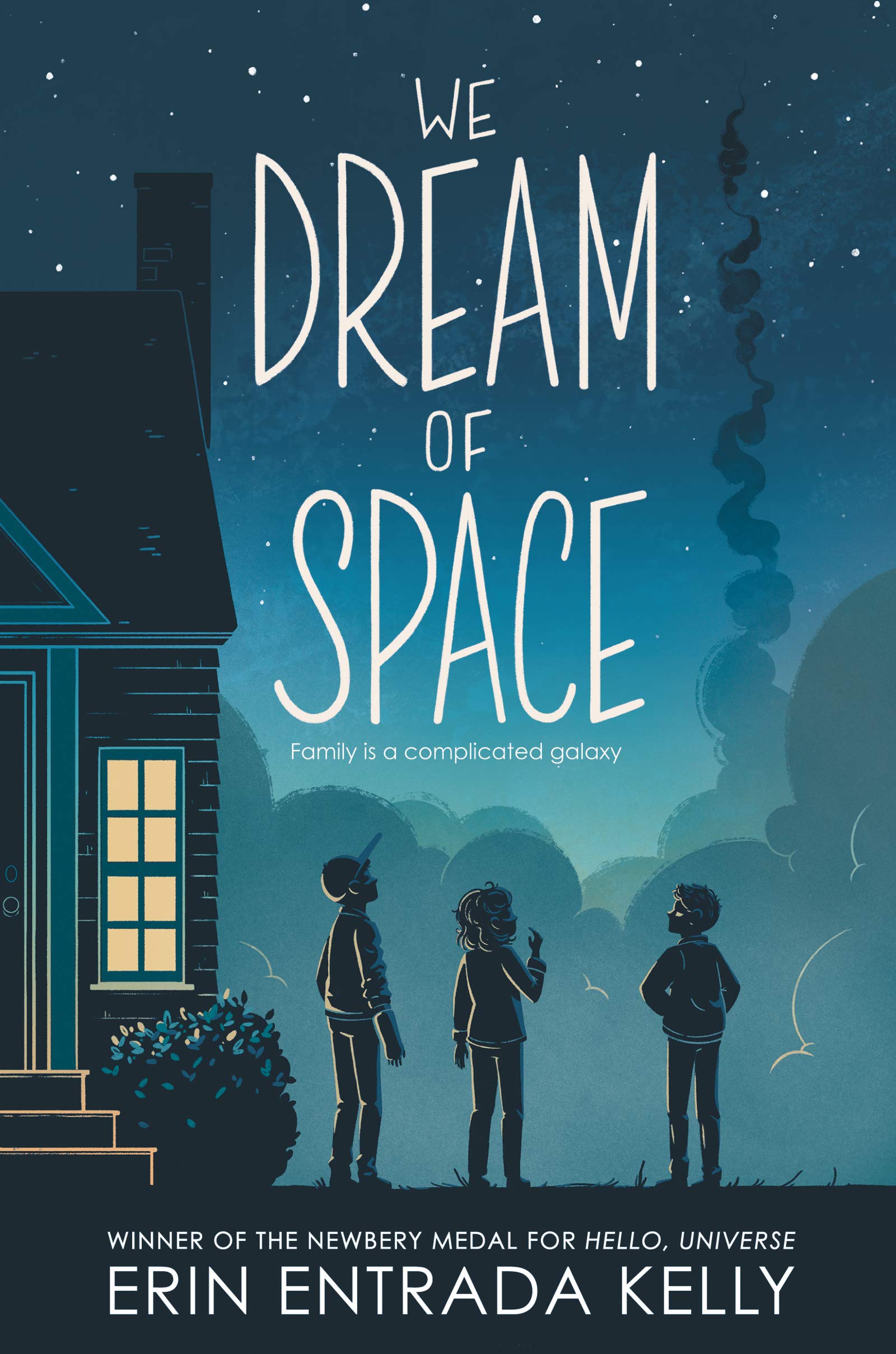
Erin Entrada Kelly’s We Dream of Space (Greenwillow, 2022) is set during the lead-up to the Challenger launch, told from the differing points of view of three seventh-grade siblings who share a science teacher. For ages 10-12.

In Madeline L’Engle’s A Wrinkle in Time (Square Fish, 2007), originally published in 1962, Meg Murry, along with her five-year-old genius brother Charles Wallace and friend Calvin, are transported across the universe with the help of the mysterious Mrs. Whatsit, Mrs. Which, and Mrs. Who (and a tesseract) to find Meg’s lost scientist father. For ages 10 and up.

Also see the film version of A Wrinkle in Time (2018). Rated PG.
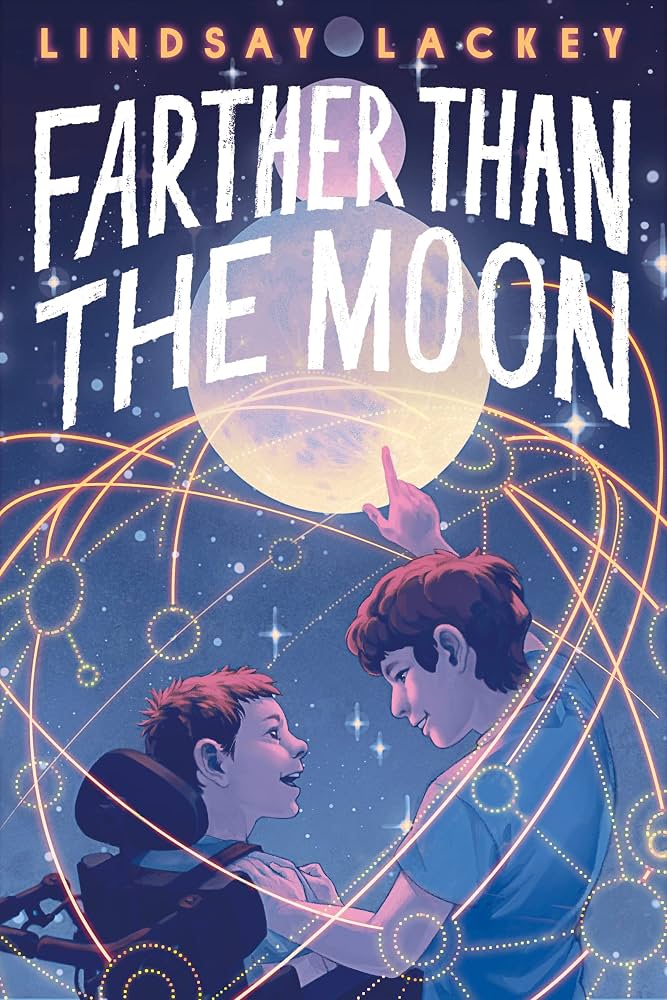
The main character of Lindsay Lackey’s Farther Than the Moon (Square Fish, 2025) is 13-year-old Houston Stewart – thrilled to have been chosen for the Junior Astronaut Recruitment Program – but his hopes for space mean leaving his brother Robbie, who has cerebral palsy, behind. For ages 10-14.

Ray Bradbury’s classic The Martian Chronicles (Simon & Schuster, 2012) is a collection of short stories about the colonization of Mars. Titles include “Rocket Summer,” “The Settlers,” “The Old Ones,” “The Silent Towns,” and “The Million-Year Picnic.” A wonderful read for ages 12 and up.

In Robert Heinlein’s Tunnel in the Sky (Pocket Books, 2005), Rod Walker, who wants to be a professional space colonist guide, is sent to a distant planet with other members of his high-school class for a short survival test. Something, however, goes terribly wrong and the kids are stranded. For ages 12 and up.

In Ursula LeGuin’s The Word for World is Forest (Tor, 2010), the peaceful forest planet of Athshe has been colonized by yumans – us - who are exploiting the “primitive” green-furred natives. Talk about metaphors. A good discussion book for ages 13 and up.

In Orson Scott Card’s Ender’s Game (Tor, 1994), the government is training child geniuses as soldiers to combat a hostile alien race. For ages 13 and up.

In C.S. Lewis’s Out of the Silent Planet (Scribner, 2003), Dr. Ransom is kidnapped by scientists Weston and Devine and taken to Malacandra (Mars), where they plan to turn him over to the sorns – the Malacandran natives – as a sacrifice. Along with the two sequels, Perelandra and That Hideous Strength, these are not only exciting science fiction adventures, but raise issues of theology and ethics. For ages 13 and up.

In Douglas Adams’s irresistible The Hitchhiker’s Guide to the Galaxy (Del Ray, 1995), Arthur Dent is yanked off Earth by his friend Ford Prefect – who is really an alien – seconds before the planet is demolished to make way for an intergalactic freeway. Always remember: (1) a towel is the most useful thing a space traveler can carry and (2) Don’t panic. For ages 13 and up.

Also see the film version (2005), starring Martin Freeman as Arthur Dent. Rated PG.

Frank Herbert’s Dune (Ace, 1990) – set on the desert planet of Arrakis – is the story of Paul Atreides who joins the desert-dwelling Fremen and becomes the legendary leader Muad’Dib. The book is a rich combination of politics, environmentalism, and religion, with giant sand worms. For ages 13 and up.
.jpg)
Dune was produced as a three-part mini-series in 2000. Not rated.
The lastest remake, with Timothee Chalamet as Paul Atreides (Part One, 2021) is rated PG-13. See https://www.imdb.com/title/tt1160419/,
For Part Two (2024), see https://www.imdb.com/title/tt15239678/.