
Sheep! Yarn, Science, and Math
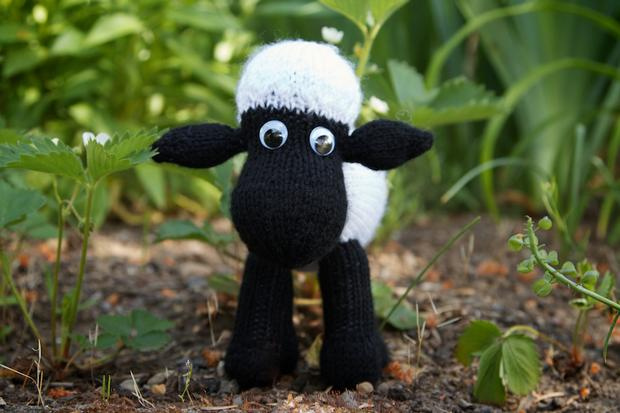
In this collection
There are lots of educational possibilities in yarn. (Yes, yarn!)
Knitting is a marvelous activity for kids, touted by 18th-century educator Johann Pestalozzi for teaching math skills, routinely featured in the Waldorf school curriculum, and today popping up in public- and private-school classrooms, and countless homeschool living rooms.
See below for knitting how-tos, knitting stories, knitting with math and science, and some great books about sheep.
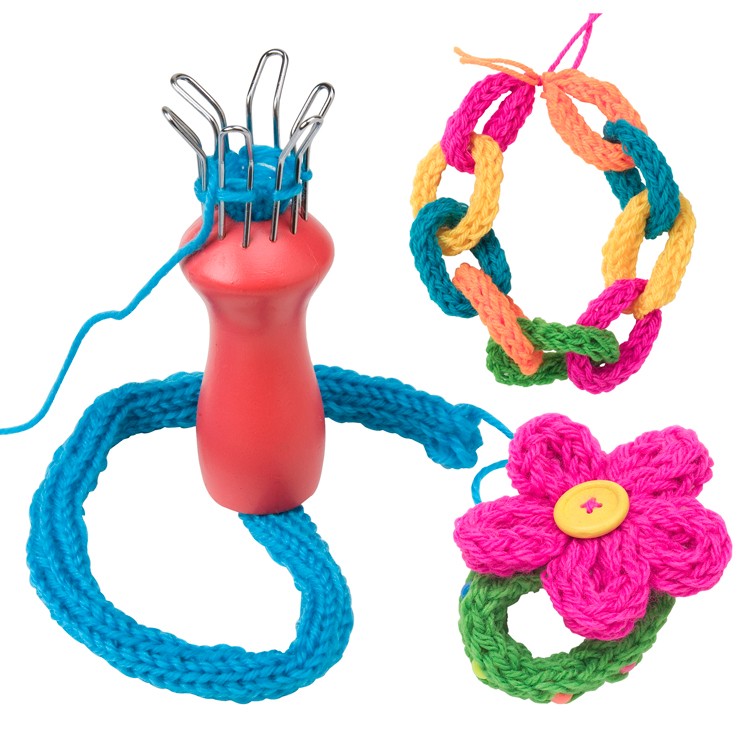
Our three boys began their (limited) knitting careers with a knitting mushroom, which somebody got for a birthday. The mushroom is a variation on the knitting spool or knitting nancy, a clever little doohickey with which kids can produce long knitted strings, suitable for making bracelets or headbands. (The strings can also be coiled and stitched; there was talk here once of making an entire dining-room rug, but we settled for a trio of coasters.) 
See these You Tube instructions for making your own spool knitter, using a cardboard tube and craft sticks.

Judy Ann Sadler’s Corking (Kids Can Press, 1995) includes instructions for making your own home-style knitting spools from toilet-paper rolls and tin cans, along with knitting instructions and an assortment of simple projects for ages 5 and up.

Melanie Falick’s Kids Knitting (Artisan, 2003), targeted at ages 5-12, is a 128-page guide illustrated with bright drawings and color photographs that takes young knitters from first stitches to first sweater. Projects are arranged in order of difficulty (starting with a simple square), and Falick also provides instructions for making your own wooden knitting needles, dyeing yarn (with Kool-Aid), felting, and more.

Sarah Bradberry’s Kids Knit! (Sterling, 2006) for ages 8 and up features instructions for 20 kid-friendly knitting projects, among them a washcloth, a scarf, a teddy-bear puppet, and a tote bag.
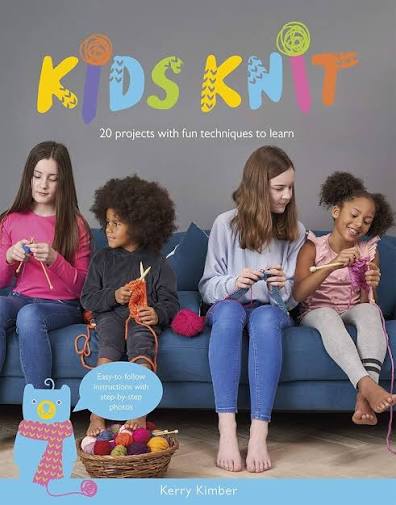
By Kerry Kimber, Kids Knit (GMC Publications, 2020) is a photo-illustrated guide to knitting for ages 5-11.
Arguably the most famous knitter in fiction is Madame Defarge, the sinister villain in Charles Dickens’s Tale of Two Cities, who sits clicking her needles at the foot of the guillotine – but there’s also the busily knitting Sheep encountered by Alice in Lewis Carroll’s Through the Looking-Glass, and Agatha Christie’s clever Miss Marple who adroitly solves murder mysteries while knitting.
Among the pleasantly funny stories in Robert McCloskey’s Homer Price (Puffin, 2005) is a tale of a knitting competition and some truly enormous balls of yarn; and in Eleanor Estes’s The Middle Moffat (Sandpiper, 2001), set in the days of World War I, young Jane struggles to knit a scarf (or maybe a helmet) for a soldier in France.
Laura and Mary knit mittens and stockings in Laura Ingalls Wilder’s Little House books; and in Mary Norton’s The Borrowers, Homily – the tiny Borrower mother – knits sweaters made of cotton thread using straight pins as knitting needles.
All the troubles in Dr. Seuss’s environmental parable The Lorax (Random House, 1971) stem from knitting, when the greedy Once-ler discovers that the Lorax’s beloved Truffula trees can be turned into knitted thneeds. And who can forget the gaudy hand-knitted Weasley sweaters in Harry Potter? Also see:

Mac Barnett’s Extra Yarn (Balzer + Bray, 2012) for ages 4-8 – with wonderful illustrations by Jon Klassen – is the story of Annabelle who “on a cold afternoon, in a cold little town, where everywhere you looked was either the white of snow or the black soot from chimneys,” found a marvelous colorful box of yarn. Soon, knitting sweater after sweater (for people, dogs, and even pickup trucks), she turns the town into a warm and brightly colored place – until a selfish archduke steals the mysterious and seemingly bottomless yarn box. But he gets his comeuppance. A thoroughly delightful read.

In Tomie dePaola’s Charlie Needs a Cloak (Aladdin, 1982), Charlie the shepherd needs a cloak – and the story shows how he goes about getting one, from shearing the sheep through washing the wool, spinning, weaving, dyeing, and sewing the new garment. The sheep help out (or not) every step of the way, and much of the charm of the story is in the clever and whimsical illustrations. For ages 3-.

In Annemarie van Haeringen’s How to Knit a Monster (Clarion, 2018), Greta the goat is such a talented knitter that her creations can come to life – but if she doesn’t pay attention, suddenly monsters spring from her needles and she needs to knit her way out of danger. For ages 4-7.

Joanna Johnson’s Phoebe’s Sweater (Slate Falls Press, 2013) is the story of a young mouse whose mother is expecting a baby. While waiting for Phoebe’s new brother or sister to be born, the mother knits Phoebe a very special sweater. Included in the book are knitting patterns for Phoebe’s sweater and a Phoebe mouse toy. For ages 4-8, plus an adult knitter.

Sweaters, of course, aren’t always a success. In The Truly Terribly Horrible Sweater That Grandma Knit (HarperCollins, 2009) by Debbie Macomber and Mary Lou Carney, Cameron gets a handmade sweater from his grandmother for his birthday - and he hates it. He does his level best to get rid of it – dousing it with mustard, putting it on the dog – all to no avail. Then Grandma comes to visit and explains why she chose each of the sweater’s special colors, and Cameron comes to understand that when it comes to gifts, it’s the thought that counts. For ages 4-8. Included are knitting instructions and the pattern for the truly terrible horrible sweater.

George Ella Lyon’s Weaving the Rainbow (Atheneum/Richard Jackson Books, 2004) for ages 3-8, illustrated with lovely soft watercolors, is the start-to-finish story of a weaver and her flock of sheep, showing how wool is transformed into a rainbow-colored woven tapestry.

In Knitting Nell by Julie Jersild Roth (Houghton Mifflin, 2006), Nell – who was once told by mean Danny Tucker that she has a voice like a cricket with a pillow over its head – is shy and quiet and hardly ever talks. What she does, however, is knit – making blankets for new babies, and hats and socks and mittens for people in need. None of her friends think much of her hobby – until she knits a sweater that wins first prize at the county fair and receives a medal for her many good works for others. Clever artwork and design add greatly to the story. For ages 5-9.
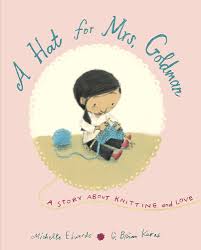
In A Hat for Mrs. Goldman by Michelle Edwards (Anne Schwartz Books, 2016), kindly Mrs. Goldman makes hats for everyone in the neighborhood – but doesn’t have one of her own. Sophia – who helps Mrs. Goldman by making pom-poms – struggles to make Mrs. Goldman a hat. (Finally she comes up with a creative solution.) Included are instructions for both a knitted hat and for making pom-poms. For ages 4-8.
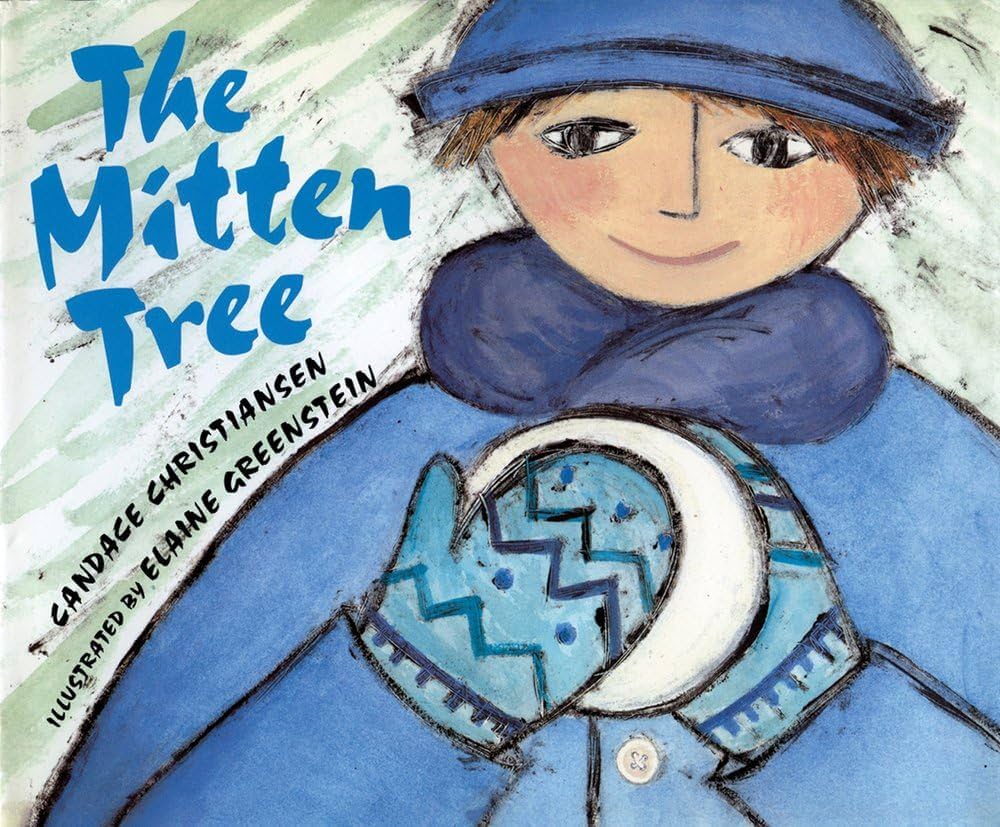
In The Mitten Tree by Candace Christiansen (Chicago Review Press, 2009), Sarah, who watches the children on their way to school every day, notices that one little boy has no mittens. So she knits him a pair and, for a surprise, hangs them on a blue spruce tree. Soon she’s knitting more and more mittens and leaving them on the tree. A lovely story about kindness for ages 4-8.
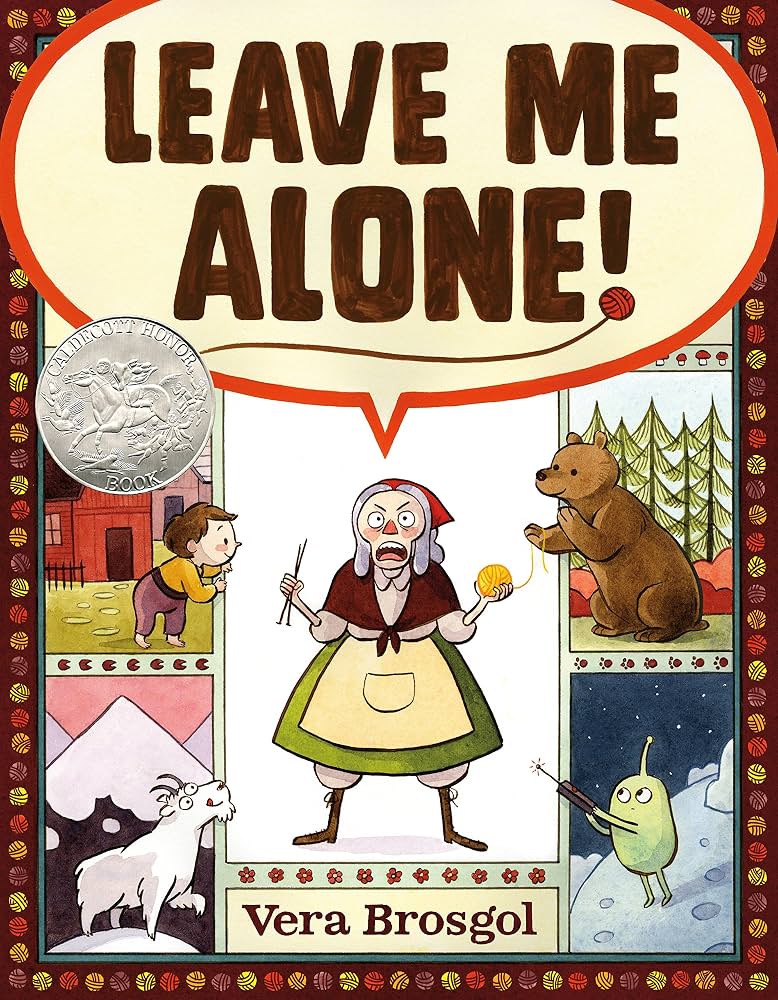
Vera Brosgol’s Leave Me Alone! (Roaring Brook Press, 2016), a Caldecott Honor Book, a frustrated grandmother with a very big family shouts “Leave me alone!” and sets off for the moon to find enough peace and quiet to finish her winter knitting. En route, she encounters, bears, rambunctious goats, and little green moon-men – but still manages to finish 30 sweaters for her 30 grandchildren. Funny and delightful for ages 4-8.
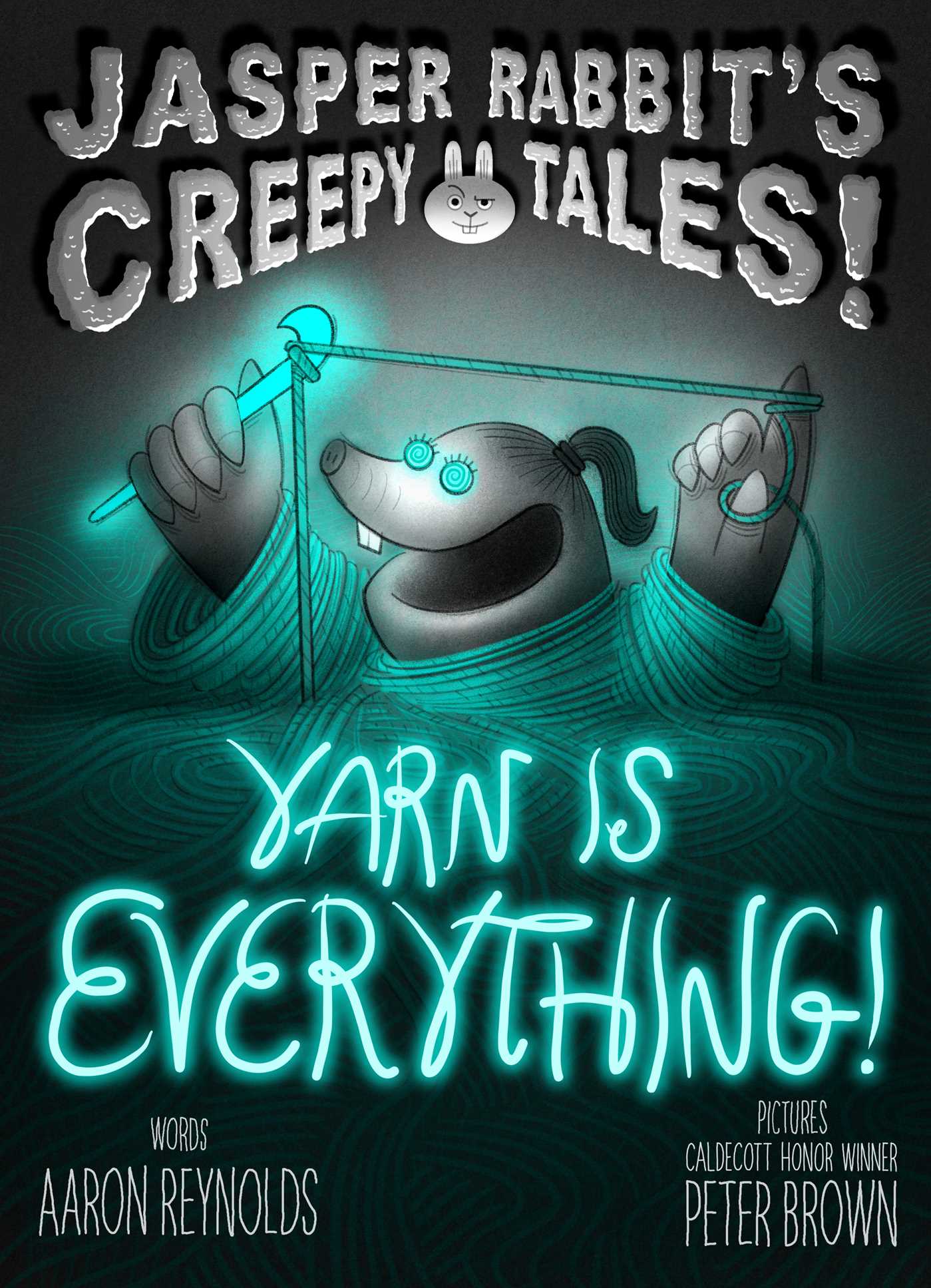
In Aaron Reynolds’s Yarn Is Everything! (Simon & Schuster, 2026), third installment in the Jasper Rabbit’s Creepy Tales series, Winona Mole – who loves crocheting – runs into some creepy trouble with yarn. For ages 6-9.
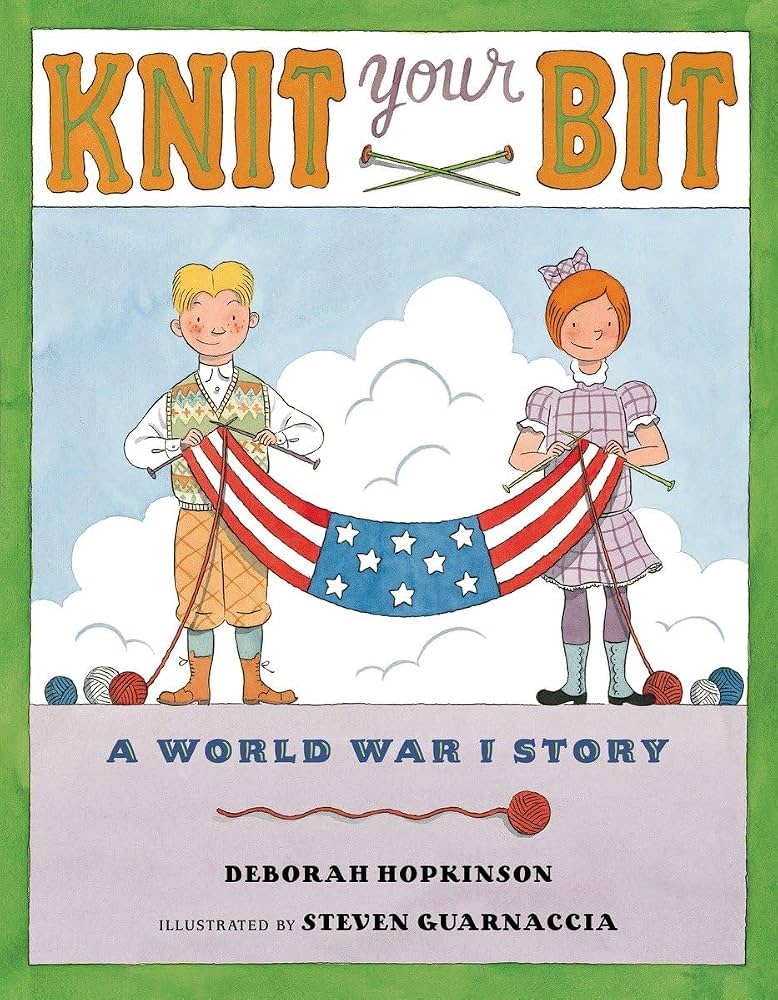
In Deborah Hopkinson’s Knit Your Bit: A World War I Story (G.P. Putnam’s Sons, 2013), Mikey’s dad has left for war and Mikey wants to do something to help the war effort. He’s disappointed when his teacher tells the class about a knitting bee in Central Park to make hats, scarves, and socks for soldiers – but as the knit-in progresses, he changes his mind. Based on a true story. For ages 5-8.
For older readers, see Rufus M. by Eleanor Estes (Clarion, 2001), one of the four-book Moffats series set during World War I. The book finds Rufus, the youngest (and funniest) of the Moffats, struggling along with his class to knit washcloths for soldiers overseas. A heartwarming read for ages 8-12.

Donate a knitting project! The Snuggles Project recruits volunteers to knit security blankets for homeless animals. The
Linus Project is an organization of volunteer “blanketeers” who knit blankets for sick or needy children. Also see
Knitting for Charity, which has a list of volunteer organizations and knitting patterns.
Knitting: Math and Science

Making Mathematics with Needlework: Ten Papers and Ten Projects, edited by Sarah-Marie Belcastro and Carolyn Yackel (A.K. Peters/CRC Press, 2007) is worth a look even if you're a little squeegy about higher math. For each of the projects, there’s an overview of the mathematical concept, teaching ideas, and instructions, all with great color illustrations. For mathematically inclined teenagers and curious others. (It's not cheap. Check your library.)
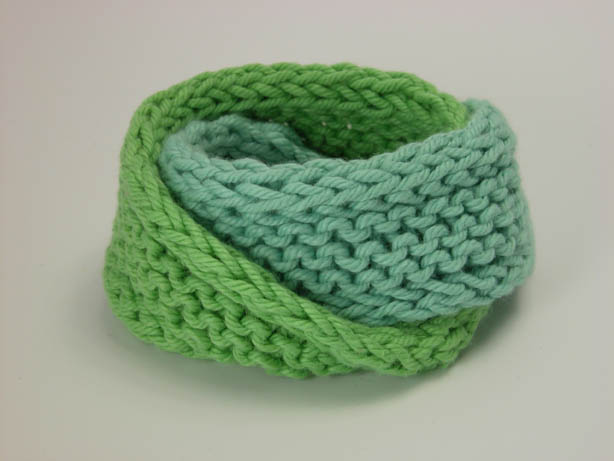
The Home of Mathematical Knitting has some interesting links to galleries of mathematical fiber arts and instructions for making knitted Mobius strips and Klein bottles.

What Is the Science Behind Knitting? Turns out there’s a lot.

Science-Inspired Knitting Patterns. Make a Mars Rover hat, moon phase mittens, or a DNA headband. (And more.)

Learn anatomy (!) with dissected knit creatures by Emily Stoneking.
Knitting: Hobbits, Robots, and Time Traveler Socks
There are dozens of available knitting and crochet books - interested knitters can make not only scarves (good for beginners) and sweaters, but teddybears, dolls, dinosaurs, and huggable monsters.

Toni Carr’s Knits for Nerds (Andrews McMeel, 2012) has instructions for 30 projects with science fiction and fantasy themes, among them a baby Elf Beanie, Hobbit Slippers (with furry toes), and a robot.
Also by Carr, see Geek Knits (2015), another 30 projects, among them robot gloves, time traveler socks, and - for Game of Thrones fans - a furry knitted dragon and Dire Wolf.
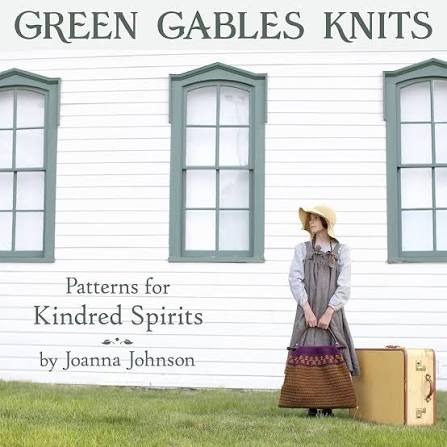
By Joanna Johnson, Green Gables Knits (Slate Falls Press, 2013) – inspired by L. M. Montgomery’s Anne of Green Gables – is a collection of knitting patterns for ages 12 to adult, supplemented with quotes from the book and photos of Prince Edward Island.
Also by Johnson, see Little Women Knits (Slate Falls, 2020), with patterns and photos based on Louisa May Alcott’s classic Little Women.
And who doesn’t like sheep?

Robin Nelson’s From Sheep to Sweater (Lerner Classroom, 2013), one of the Start to Finish series, begins with shearing a sheep, then traces the process through sorting, washing, carding, spinning, and knitting to finished sweater. For ages 5-9.
By Ilaria Demonti, Sheepology (Princeton Architectural Press, 2023) is a delightfully illustrated encyclopedia of sheep stuffed with appealing information, variously covering “Meet the Flock,” “What Are Sheep Like?,” “Milk and Wool,” “Humans and Sheep Living Together,” and “Sheep Breeds.” For ages 6-11.
Other books in the same series include Rabbitology, Chickenology, and Pigology.

For ages 2-5, Where Is the Green Sheep? by Mem Fox and Judy Horacek (Harcourt Children’s Books, 2004) is a clever repetitive read for just-beginners. There are red sheep and blue sheep, thin sheep and wide sheep, bath sheep and bed sheep – but where is the green sheep?

For ages 3-7. Rob Scotton’s Russell the Sheep (HarperCollins, 2011) stars a wonderful googly-eyed sheep in a blue-and-white-striped nightcap who simply cannot – no matter what he counts – go to sleep. Funny and delightful.

In Morag Hood’s Brenda is a Sheep (Random House, 2020), Brenda – who has gray fur, sharp teeth, and a long bushy tail, and wears an orange sweater – claims to be a sheep, and the sheep all love her. A clever twist on the story of a wolf in sheep’s clothing. For ages 3-7.

Another insomniac sheep is the main character of Satoshi Kitamura’s When Sheep Cannot Sleep (Farrar, Straus & Giroux, 1988), a counting book in which the wakeful Woolly goes for a walk on which he sees one butterfly, two ladybugs, three owls, four bats – and finally 20 stars, and 21 relatives (all sheep). As he counts these last, he (finally)falls asleep.
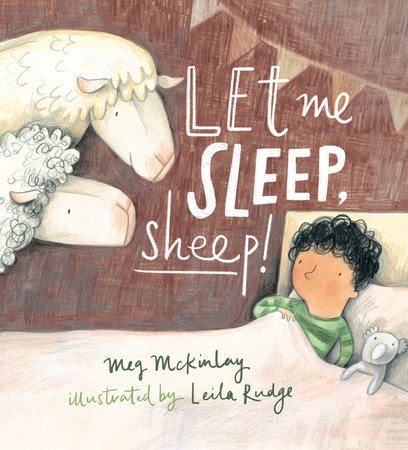
In Meg McKinlay’s hilarious Let Me Sleep, Sheep! (Candlewick, 2019), Amos is counting sheep to fall asleep, when – with a pair of THUDS – two annoyed sheep land on his bedroom floor. For ages 5-8.
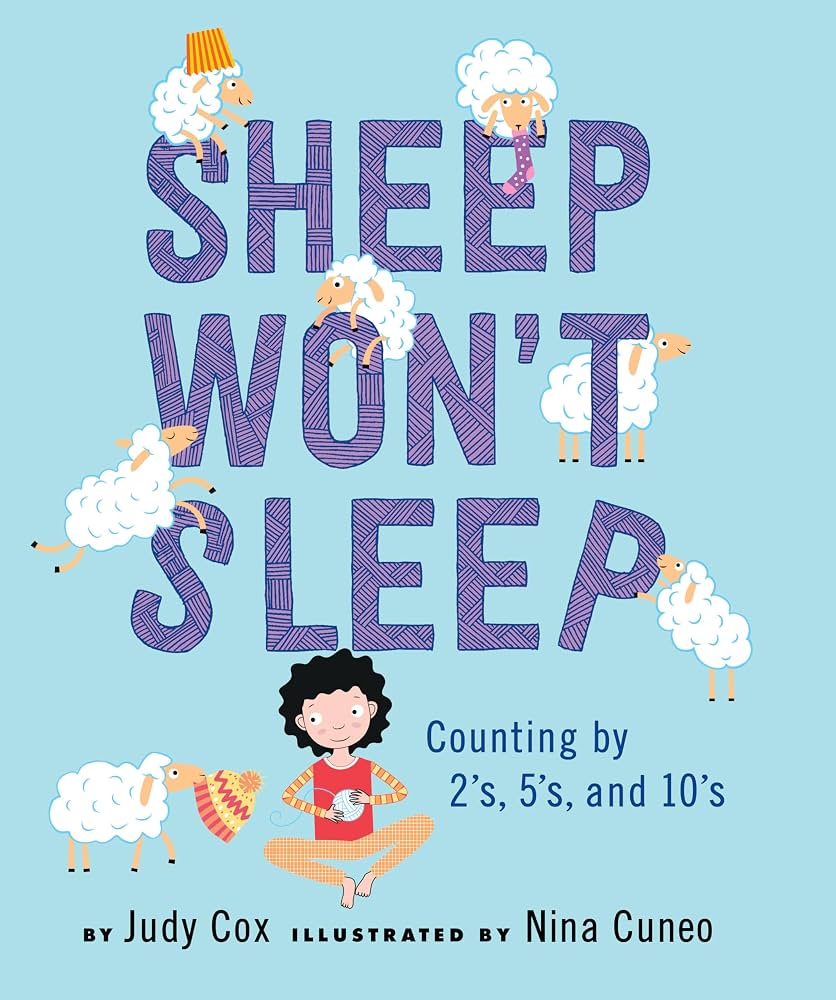
In Judy Cox’s clever counting book Sheep Won’t Sleep (Holiday House 2019), Clarissa is doing her best to fall asleep – first counting sheep by ones, then alpacas by twos, llamas by fives, and yaks by tens until her bedroom is crammed with disruptive animals. The solution: counting back down again. For ages 4-8.
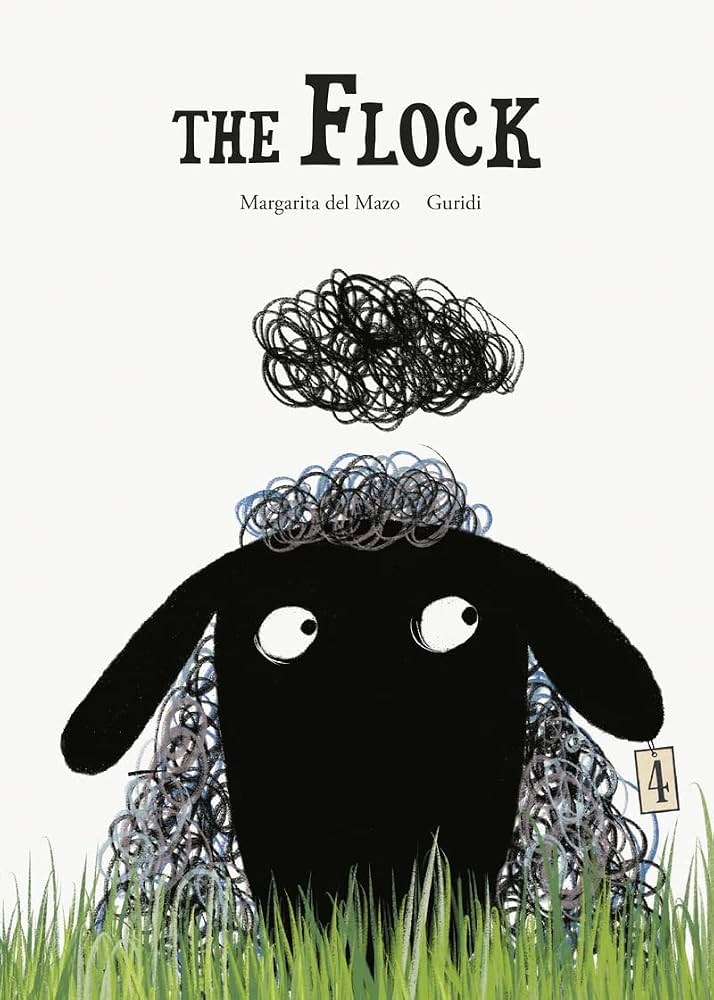
In The Flock by Margarita del Mazo (NubeOcho, 2023), Mike is counting sheep to fall asleep – but Sheep Four isn’t about to jump the fence. For ages 5-8.

Charlotte, of Anu Stohner and Henrike Wilson’s Brave Charlotte (Bloomsbury USA, 2005) is – to the dismay of the rest of the flock - a most unsheep-like and daring sheep. When the shepherd breaks a leg, however, it’s Charlotte who manages to get help and save the day. For ages 4-8.

In Olivier Tallec’s Louis I, King of the Sheep (Enchanted Lion Books, 2015), a gust of wind blows a blue crown toward Louis – who puts it on his head and declares himself King of the Sheep. As Louis rises to power, he becomes increasingly entitled and arrogant, eventually even deciding to drive out all the sheep who don’t look like him. And then a gust of wind blows the crown away. A good discussion book about the uses and abuses of power for ages 5-9. Pair this one with Dr. Seuss’s Yertle the Turtle (Random House, 1958), in which Yertle the Turtle is king of the pond. From Brainpickings, see an excellent overview and discussion of Louis I, King of the Sheep.

In Dick-King-Smith’s Babe the Gallant Pig (Knopf Books for Young Readers, 2005), young Babe is adopted by Farmer Hogget’s sheepdog Fly – and against all odds goes on to become a prize-winning sheep-herding pig. For ages 8-12.

For ages 10 and up, David Macaulay’s BAAA (Sandpiper, 1985) is a fable on the order of James Thurber’s The Last Flower, with touches of “Soylent Green.” The last person on earth has disappeared – and a flock of sheep wanders into town and gradually takes up where humanity left off. Soon the sheep encounter all the problems of their predecessors: overpopulation, food shortages, zealotry, military police. To cope with famine, a new food called BAAA appears – and simultaneously, suspiciously, the sheep population goes into a sharp decline. Finally there are just two sheep left – and then, none. It’s not an upbeat story, but it's a great discussion book.

For ages 8-12, James Riordan’s Jason and the Golden Fleece (Frances Lincoln Children’s Books, 2005) – with a Russell-Crowe-ish Jason in leopard skin on the cover – is a 64-page retelling of the tale of Jason’s Argonauts and the quest for the fabulous Golden Fleece.Jason’s story can also be found in D’Aulaire’s Greek Myths by Ingri and Edgar Parin d’Aulaire (Delacorte Books for Young Readers, 1992).
Sheep 101, authored by a sheep and goat specialist from the University of Maryland, has a wealth of historical, scientific – and quirky – information about sheep. Readers find out that sheep are brilliant at recognizing faces, that not all sheep produce wool, and that, during World War I, Woodrow Wilson kept sheep on the White House lawn – among them a tobacco-chewing ram named Old Ike.

Make your own sheep! See 30 Lamb and Sheep Crafts.

Make a paper-plate sheep mask!

Paper sheep puppets! (Put on a play?)