
Mythology
In this collection
Everybody loves a myth. Who can resist tales of gods and goddesses, heroes and monsters, flying horses and magic apples? It’s all wonderful stuff, if a little gruesome in parts – toned-down versions are available for younger readers.
While often we commonly associate mythology with the ancient Greeks, cultures worldwide have rich and unique mythologies. Creation stories, heroic adventures, tales of rebirth and sacrifice, and love stories are part of every mythological tradition, from Greece and Rome to Scandinavia, Africa, Asia, the Americas, and beyond.
Link this one to geography, astronomy, art, and literature.

A great resource here is Joseph Campbell’s The Power of Myth (Anchor, 1991), available both in book form and as a six-part video series on PBS. Episodes are “The Hero’s Adventure,” “The Message of the Myth,” “The First Storytellers,” “Sacrifice and Bliss,” “Love and the Goddess,” and “Masks of Eternity.” For ages 13 and up.
See https://www.pbs.org/show/joseph-campbell-and-the-power-of-myth-with-bill-moyers/.

How well do you know your mythology? If you think you’ve got it down, you might tackle the annual National Mythology Exam sponsored by the American Classical League. The exam is offered on two levels: the Pegasus Mythology Exam for kids in grades 3-8 and the Medusa Mythology Exam for grades 9-12.
Classical Mythology: Collections

By Marcia Williams, Greek Myths (Candlewick, 2011) is a delightful retelling of eight classic myths, among them the stories of Pandora, Theseus, and Hercules and his Twelve Labors. The stories are told in brightly colored cartoon-strip format with a simple friendly text and clever little voice balloons. For ages 4-8.

William F. Russell’s Classic Myths to Read Aloud (Crown, 1992) is a fat collection of Greek and Roman myths, divided into two sections: Listening Level I (for ages 5 and up) and Listening Level II (for ages 8-12). Included, among others, are the stories of Icarus and Daedalus, Echo and Narcissus, Pegasus, Perseus, and the Iliad and the Odyssey.

By Jean Menzies, with stunning stylized illustrations by Katie Ponder, Greek Myths (Dorling Kindersley, 2020) introduces gods, goddesses, heroes, and monsters, along with the retelling of 30 myths. Targeted at ages 7-9.

D’Aulaires’ Book of Greek Myths by Ingri and Edgar Parin d’Aulaire (Delacorte, 1992) has been captivating kids for the past fifty years with its wonderful illustrations and detailed, well-told stories, beginning with the story of creation. For ages 8-14.

Heather Alexander’s charmingly illustrated A Child’s Introduction to Greek Mythology (Black Dog and Leventhal, 2011) begins with the definition of myths, then proceeds through “Who’s Who and What’s What” (including “Meet the Olympians”) followed by sixteen major myths, among them “The War of Beauty and the Trojan Horse,” “Pandora’s Box,” “Perseus and Medusa,” and “The Twelve Labors of Heracles.” For ages 8-12.

By Donna Jo Napoli, the prize-winning Treasury of Greek Mythology (National Geographic, 2011) is a 192-page illustrated collection of classic stories about gods, goddesses, heroes, and monsters. Included are a family tree of the Greek pantheon and sidebars with additional information. For ages 8-12.
Also by Napoli in the same format, see Treasury of Egyptian Mythology and Treasury of Norse Mythology.

It’s not all about Zeus. Yung In Chae’s Goddess Power (Rockridge Press, 2020) tells the stories of ten powerful women from Greek mythology, including Gaia, Rhea, Hera, Artemis, and Athena. For ages 9-12.

By Lise Lunge-Larsen, Gifts from the Gods (HMH, 2016) traces words and phrases commonly used today to their mythical origins. Readers learn the stories behind “Achilles’ heel” and “arachnid,” and the sources of such everyday words as echo, grace, hypnotize, and museum. Highly recommended for ages 9-12.

Edith Hamilton’s Mythology: Timeless Tales of Gods and Heroes, originally published in 1942, remains a classic of classics, covering in detail the Greek and Roman pantheons, creation stories, tales of lovers, Jason’s quest for the Golden Fleece, the Trojan War, the great families of mythology, minor myths, and (briefly – you can tell Hamiton’s heart is in Greece) Norse mythology. A wealth of information for teens and adults.

Annette Giesecke’s Classical Mythology A to Z (Black Dog and Leventhal, 2020) is a 375-page illustrated encyclopedia of gods and goddesses, heroes and heroines, monsters and other creatures, and places and landmarks. Packed with information; a beautifully designed reference work. There’s also a double-page family tree of the Greek pantheon, in which Zeus figures prominently.

By the brilliant writer/actor Stephen Fry, Mythos (Chronicle Books, 2019) is a witty and wonderful retelling of the classics, with color illustrations. Highly recommended for teens and adults.
Also by Fry, see the sequels, Heroes, which includes the stories of Perseus, Jason, Atalanta, Theseus, Heracles, and more; and Troy, the tale of the Trojan War.
Classical Mythology: Picture and Chapter Books

For beginning readers, see Joan Holub’s Do Not Open (Simon Spotlight, 2014), the story of Pandora and her disastrous box; Anne Rockwell’s Romulus and Remus (1997), the story of the twins who founded Rome; and Joan Holub’s The One-Eyed People Eater (2014), the story of Cyclops. Very short chapter books in the Ready-to-Read series for ages 6-8.

Marianna Mayer’s Pegasus (HarperCollins, 1998) is the gorgeously illustrated picture-book story of the hero Bellerophon, son of the king of Corinth, who battles the terrifying Chimera with the help of the magnificent winged horse, Pegasus. For ages 5-10.

By Demi, King Midas: The Golden Touch (Margaret K. McElderry, 2002), illustrated with splendid gold-leaf paintings, is the story of the foolish king who wished that everything he touched would turn to gold. For ages 6-10.
Also see Charlotte Craft’s King Midas and the Golden Touch (HarperCollins, 2003).

Charlotte Craft’s lavishly illustrated Cupid and Psyche (HarperCollins, 1996) is the story of Cupid, the arrow-shooting god of love, and Psyche, the most beautiful woman in the world. For ages 7 and up.

By Crispin Boyer, Zeus the Mighty (Under the Stars, 2019) is a quirky re-imagining of the tale of the Golden Fleece, through the medium of the Mount Olympus Pet Center in Athens, Georgia, and its population of talking animals. Zeus is a hamster. First of a series for ages 7-10.

In Zeus and the Thunderbolt of Doom (Aladdin, 2012), first of Joan Holub and Suzanne Williams’s Heroes in Training series, ten-year-old Zeus yanks a magical thunderbolt from a stone and sets off on a quest to save his fellow young Olympians from the evil Cronus. First of a funny chapter-book series for ages 7-9.
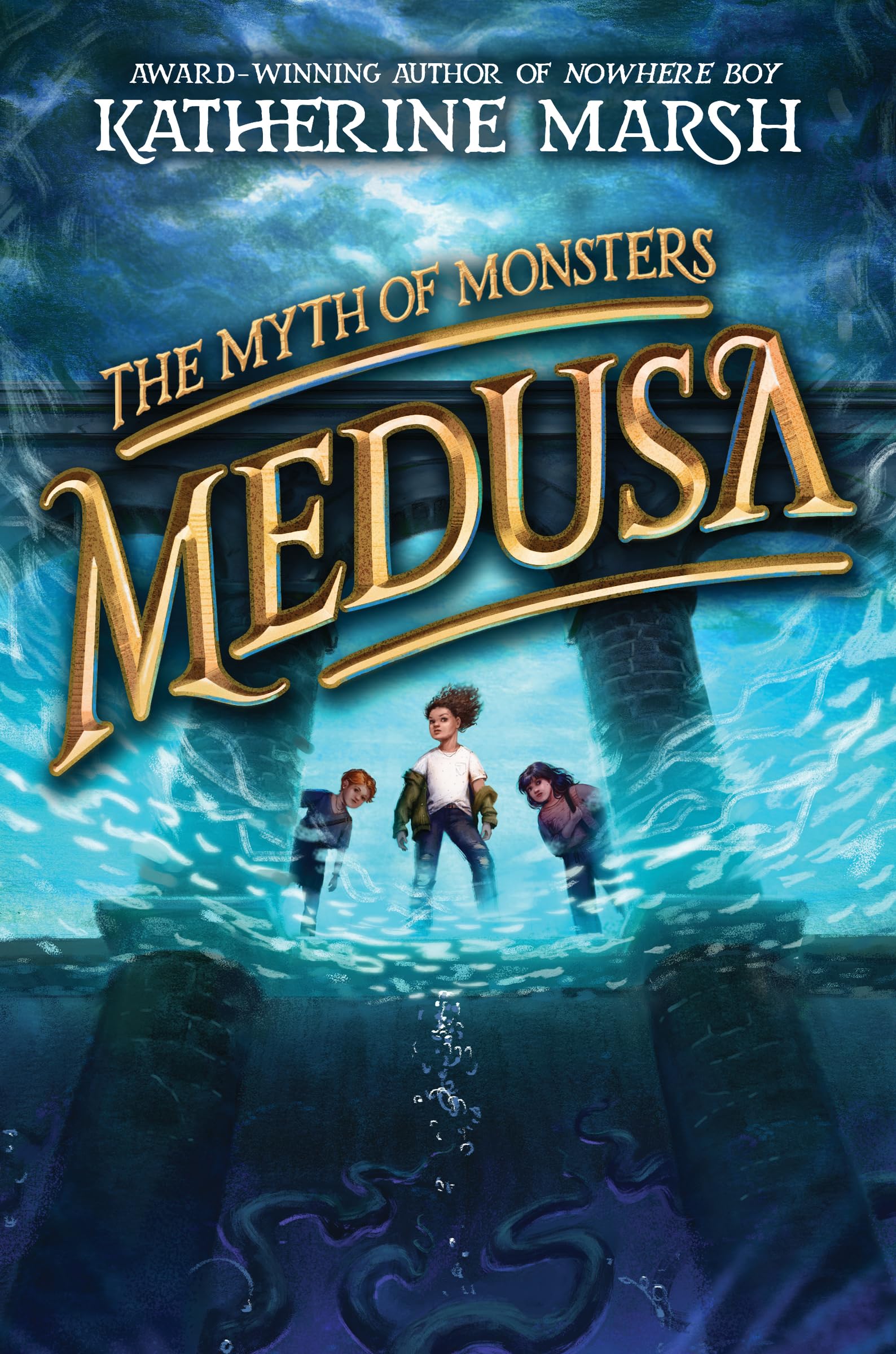
In Katherine Marsh’s Medusa (Storytide, 2025), Ava – who has problems with anger control – is sent to the Accademia del Forte in Venice, a boarding school for the descendants of mythological monsters. For ages 8-12.
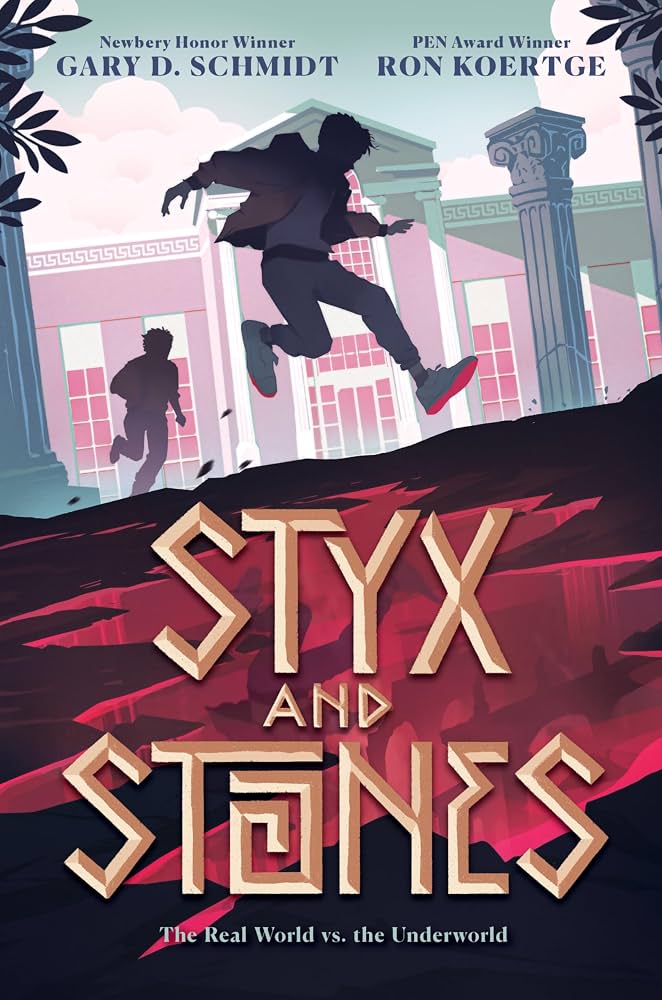
In Gary D. Schmidt’s Styx and Stones (Clarion, 2026), Simon, orphaned in ancient Greece, is determined to escape Hades – and finally ends up in a middle-school bathroom. (Naked.) For ages 8-12.
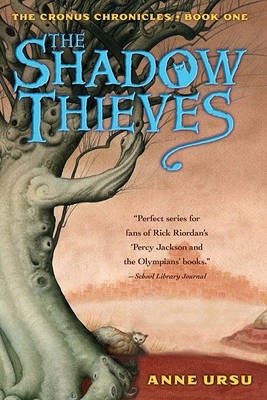
Anne Ursu’s trilogy, The Cronus Chronicles, inspired by Greek mythology, follows cousins Charlotte and Zee as they deal with Greek gods and the Underworld. Titles are The Shadow Thieves (Atheneum, 2025), The Siren Song, and The Immortal Fire. For ages 8-12.
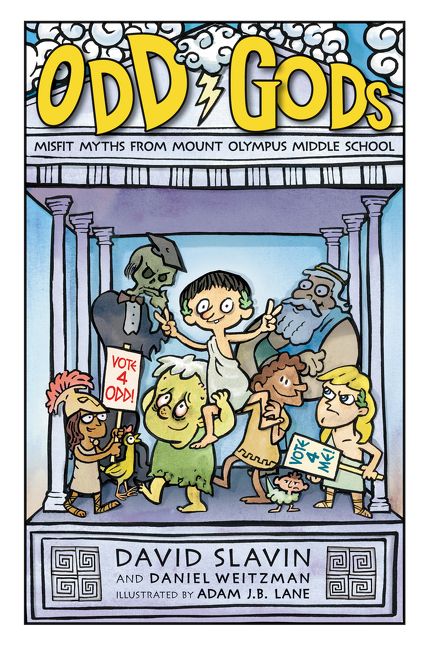
By David Slavin, Odd Gods (HarperCollins, 2019) (Misfit Myths from Mount Olympus Middle School) features the cartoon-illustrated misfits of Olympus, among them Oddonis, twin brother of Adonis; Mathena, goddess of math and poultry; and Puneous, a very small god. For ages 8-12.
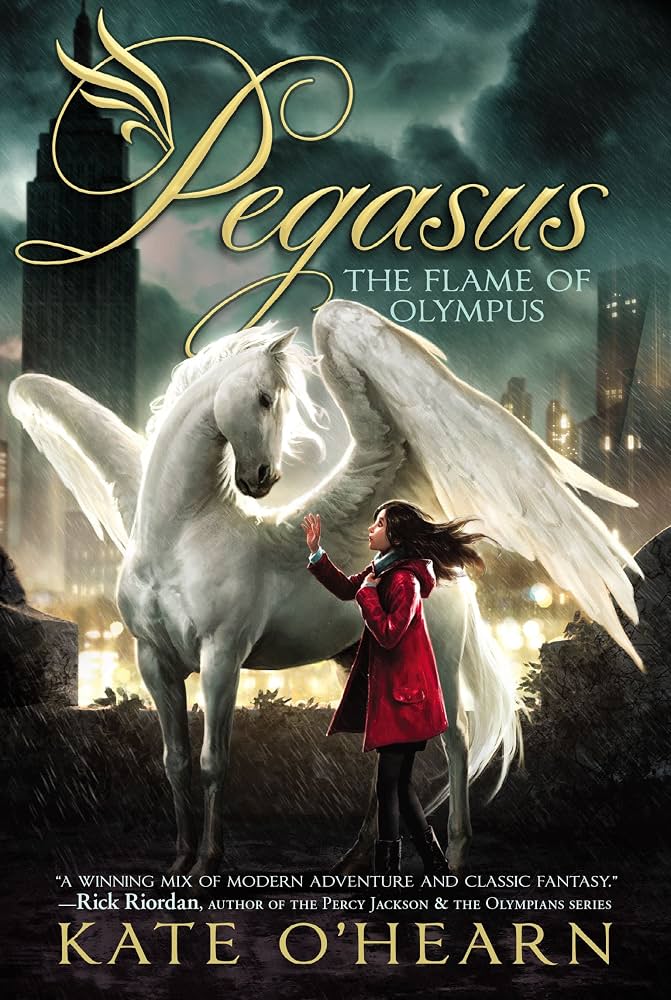
In Pegasus: Flame of Olympus by Kate O’Hearn (Aladdin, 2013) – first of a series – Pegasus, caught in a storm, crashes onto Emily’s Manhattan rooftop – and soon Emily is embroiled in a battle between the Roman gods and a terrifying race of stone warriors. For ages 8-12.

In Rick Riordan’s Percy Jackson and the Olympians series, twelve-year-old Percy – shipped off to Camp Half Blood, a summer camp for young demigods - discovers that he’s actually the son of Poseidon. Together with his best friends – a satyr and the demigod daughter of Athena – Percy embarks on a series of gripping adventures. Book one in the series is The Lightning Thief (Hyperion, 2005).

Also see the movies Percy Jackson and the Lightning Thief (2010) and
Percy Jackson: Sea of Monsters (2014). Both rated PG.

In Christiane M. Andrews’s Spindlefish and Stars (Little, Brown, 2020), young Clo’s father has disappeared – but has sent her half-passage on a ship to a mysterious gray island. There she ends up carding fish to make wool for an old woman weaving a mysterious tapestry of life and death and befriends Cary, a boy who has fallen into the sea. Cary remembers nothing of his past – but has a single great feathered wing. A wonderful fantasy with tropes from Greek mythology for ages 10 and up.
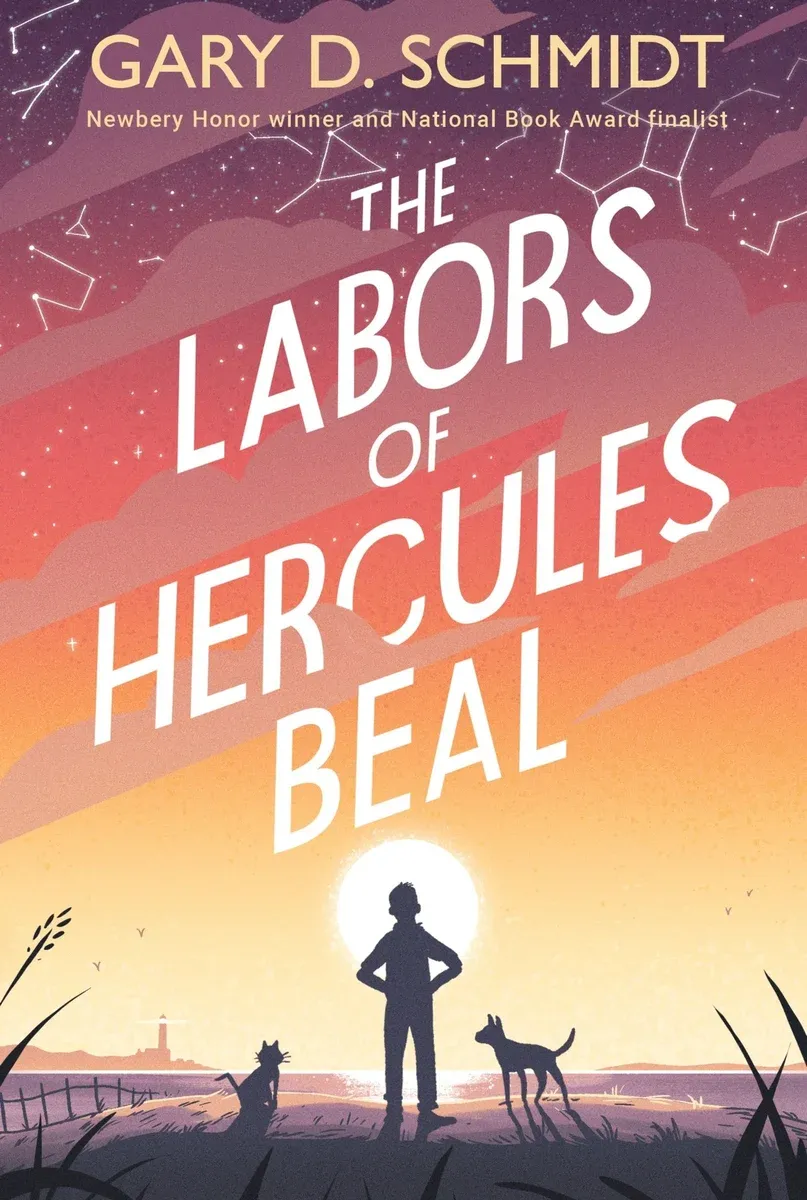
Gary D. Schmidt’s The Labors of Hercules Beal (Clarion, 2025) is a modern take on Greek mythology in which orphaned Herc Beal – living with his older brother Achilles – is challenged to tackle all the twelve labors of the mythological Hercules, from braving the Nemean lion to facing down Cerberus. A heartwarmer for ages 10 and up.

By C.S. Lewis, Till We Have Faces (HarperOne, 2017) is a brilliant retelling of the story of Cupid and Psyche from the point of view of Psyche’s sister Orual. A thought-provoking read for teens and adults.
Classical Mythology: Plays, Poems, and More

By Carol Pugliano-Martin, Greek Myth Plays (Scholastic, 2008) has ten short theater scripts based on the myths of “Atalanta and the Great Race,” “Daedalus and Icarus, “Demeter and Persephone,” and more. For ages 7-10.
By Zachary Hamby, Greek Mythology for Teens (Prufrock Press, 2011) combines scripts of nine featured myths with background information, discussion questions, and research and writing activities. For ages 13 and up.
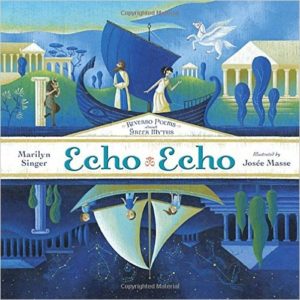
Marilyn Singer’s Echo Echo (Dial, 2016) is an ingenious illustrated collection of Greek-myth-themed “reverso” poems that can be read both forward and backward, revealing a whole new take on the story.
Greek Mythology has a wealth of basic information about the Olympian gods, the Titans, mythical creatures, monsters, and heroes, plots of myths and Greek plays, and more. Useful reference.
Theoi Greek Mythology is an encyclopedic reference site on Greek mythology and characters in literature and art.
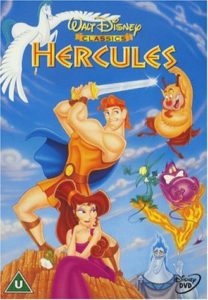
The animated movie version of Hercules, which takes considerable liberties with the classical myth, is rated G.
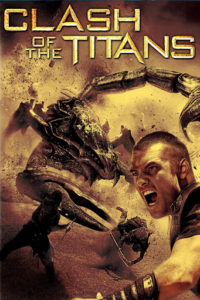
In the movie Clash of the Titans, Perseus battles Hades and the forces of the Underworld and rescues the Princess Andromeda from the Kraken. Rated PG-13.
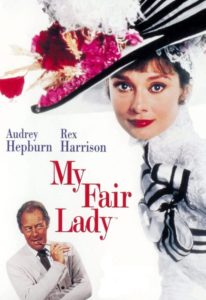
Interpretations of myths continue in modern times. The movie My Fair Lady (1964) (rated G) and George Bernard Shaw’s play “Pygmalion,” are both based on the myth of Pygmalion and Galatea, in which a sculptor’s statue of a beautiful woman comes to life.
The Iliad and the Odyssey
Perhaps the most famous mythical duo of all are Homer’s Iliad, the tale of the kidnapping of Helen, the beautiful queen of Sparta, and the ensuing Trojan War; and Odyssey, the story of the adventures of Odysseus, King of Ithaca, on his way home from Troy. (Poseidon, god of the sea, was seriously displeased with Odysseus, which made things difficult for a man traveling by ship.)
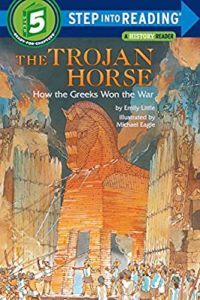
Emily Little’s The Trojan Horse: How the Greeks Won the War (Random House, 1988) is one of the “Step Into Reading” series for grades 2-3. In the same series, also see Marc Cerasini’s The Twelve Labors of Hercules (1997). Short chapters, big print, colorful pictures and an early-elementary vocabulary.
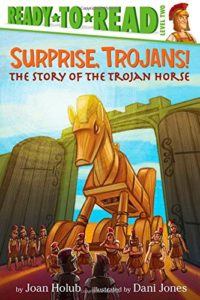
From the Ready-for-Reading series, see Joan Holub’s Surprise, Trojans! (Simon Spotlight, 2014), the story of the Trojan Horse for readers ages 6-8.
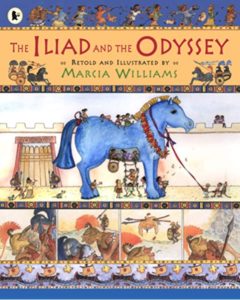
The Iliad and the Odyssey by Marcia Williams (Walker Books, 2006) tells the stories of the Trojan War and Odysseus’s perilous journey home afterward in panel-cartoon style. For ages 6-10.
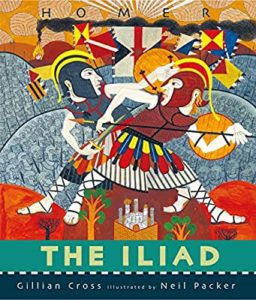
Gillian Cross’s The Iliad and The Odyssey (Candlewick, 2017), with bright and dramatic illustrations by Neil Packer, are exciting reader-friendly retellings of the stories – hitting all the high points – for ages 7-12. (Available either separately or included in one volume.)

Hugh Lupton’s The Adventures of Odysseus (Barefoot Books, 2006) is illustrated with watercolor and gold-ink paintings reminiscent of historical Greek style. For ages 8-12.

A classic prose retelling of both stories is found in Padriac Colum’s The Children’s Homer: The Adventures of Odysseus and the Tale of Troy (Aladdin, 2004). Also available as an audio CD. For ages 9 and up.
Also by Colum for the same age group, see The Golden Fleece: And the Heroes Who Lived Before Achilles (Aladdin, 2004).

By author Diego Agrimbau and illustrator Marcelo Zamora, The Iliad (Capstone Press, 2017) is a graphic-novel version of Homer’s story of the Trojan War.
By the same team, also see the graphic versions of The Odyssey and The Aeneid. For ages 9 and up.
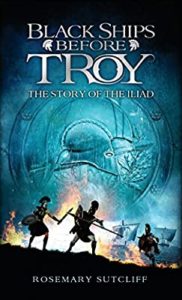
Rosemary Sutcliff’s Black Ships Before Troy and The Wanderings of Odysseus (Laurel Leaf, 2005) tell the stories in novel form for ages 10 and up.
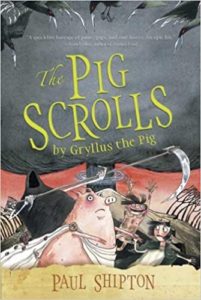
Paul Shipton’s riotous The Pig Scrolls (Candlewick, 2007) is narrated by Gryllus, once one of Odysseus’s crew, now a pig, having been enchanted by Circe. He a sarcastic talking pig who’s just been told by the prophetess Sybil that it’s up to him to save the world. For ages 10 and up.
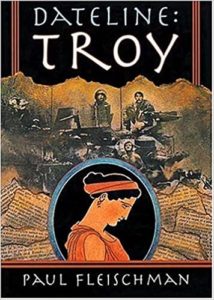
Paul Fleischman’s Dateline: Troy (Candlewick, 2006) juxtaposes the story of the Trojan War with newspaper headlines and clippings from the 20th century. A fascinating approach to history and a great discussion book for ages 12 and up.
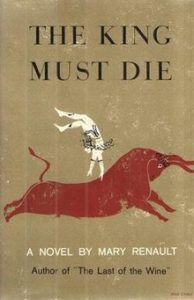
Mary Renault’s The King Must Die (Vintage, 1988) and its sequel, The Bull from the Sea, are gripping retellings of the story of Theseus and the Minotaur, narrated in the first person by Theseus himself. For teens and adults.

Madeline Miller, hailed as a successor to Mary Renault, is the author of The Song of Achilles (Ecco, 2012), a version of the Iliad as told by Achilles’s beloved friend Patroclus; and Circe (Back Bay Books, 2020), a “subversive retelling” of the story of Circe, daughter of Helios, who discovers her powers as a witch. For teens and adults.

By Bettany Hughes, Helen of Troy (Vintage, 2007), is subtitled “The Story Behind the Most Beautiful Woman in the World.” The book covers depictions of Helen in history, literature, and art, with a lot of information about what life was like for a Greek woman at the time of the Trojan War. For teens and adults.
The movie Helen of Troy (1956, unrated) is said to be an epic spectacle, though a little shaky on the details of the Iliad. See https://www.imdb.com/title/tt0049301/.
There's also a TV mini series (2003). See https://www.imdb.com/title/tt0340477/.

Margaret Atwood’s The Penelopiad (Canongate, 2006) is the story of Odysseus from the point of view of Penelope and the twelve maids – those hanged by Odysseus upon his return home. An insightful and very different take on the tale by the brilliant author of The Handmaid’s Tale. For teens and adults.

Directed by the Coen brothers, the award-winning O Brother Where Art Thou? (2000), based on the Odyssey, is set in 1930s Mississippi and follows the struggles of Ulysses Everett McGill and two companions, sprung from a chain gang and now trying to get home. Rated PG-13.
Norse Mythology
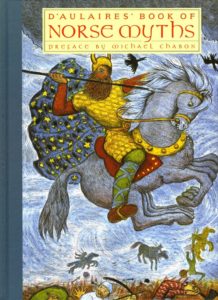
D’Aulaires’ Book of Norse Myths by Ingri and Edgar Parin d”Aulaire (New York Review Children’s Collection, 2005) is just as good – and as wonderfully illustrated – as the D’Aulaires’ Book of Greek Myths (see above). Chapters include “Yggdrasil, the World Tree,” “Asgard and the Aesir Gods,” “Odin’s Eight-legged Steed,” “The Theft of Thor’s Hammer,” and 26 more. For ages 8-12.
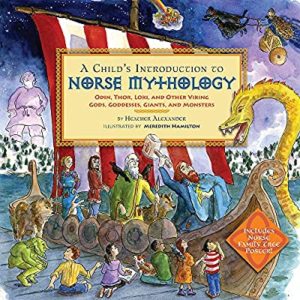
Heather Alexander’s A Child’s Introduction to Norse Mythology – one of the excellent A Child’s Introduction series – introduces kids to the gods, goddesses, dwarfs, giants, and monsters of the Vikings. For ages 8-12.
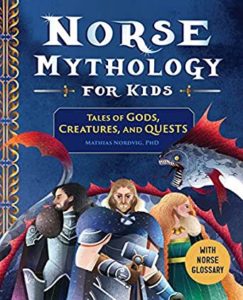
Chapters in Mathias Nordvig’s Norse Mythology for Kids (Rockridge Press, 2020) include “Odin, Ruler of the Gods,” “Thor, God of Thunder,” “Jormungand, the Great Sea Serpent,” “Fenrir, the Vengeful Wolf,” and “Sigurd, the Dragon Slayer.” A fascinating collection for ages 9-12.
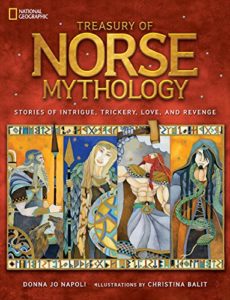
Donna Jo Napoli’s beautifully illustrated Treasury of Norse Mythology (National Geographic, 2015) – subtitled “Stories of Intrigue, Trickery, Love, and Revenge” – introduces the gods and goddesses of Asgard and their stories. Included is a map of the ancient Norse world and a timeline of Norse history. For ages 9-12.
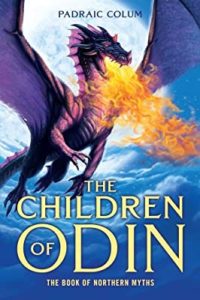
By master storyteller Padraic Colum, The Children of Odin (Aladdin, 2004) is a collection of wonderfully told tales divided in four parts: “The Dwellers in Asgard,” “Odin the Wanderer,” “The Witch’s Heart,” and “The Sword of the Volsungs and the Twilight of the Gods.” For ages 10 and up.
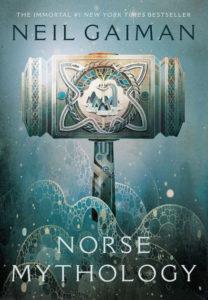
Neil Gaiman’s Norse Mythology (W.W. Norton & Company, 2018) is described as a Tolkien-like retelling of Norse myths – with a good dose of Gaiman-esque wit - beginning with the creation of the world and ending with Ragnarok. (“’Today,’ mused Thor, ‘it will probably take me about an hour to break every bone in your body. But I bet that with practice I could get it down to about fifteen minutes.’…’Dwarfs!’ shrieked Loki.”) For ages 10 and up.

Adam Shaughnessy’s The Unbelievable FIB: The Trickster’s Tale (Algonquin Young Readers, 2016), eleven-year-old Pru and friends find themselves dealing with a world of trolls, magic, and battling Norse gods. First of a series for ages 8-12.

In Neil Gaiman’s Odd and the Frost Giants (HarperCollins, 2016), young Odd – along with a bear, an eagle, and a fox, all Norse gods who have been trapped in animal form by a frost giant – sets out to retrieve Thor’s hammer and save Asgard. For ages 8-12.

In Diana Wynne Jones’s Eight Days of Luke (HarperCollins, 2000), David’s extraordinary adventures with the Norse gods begin when – while attempting to curse his awful guardians – he inadvertently releases the god Loki, in the form of red-headed Luke, from magic imprisonment. For ages 9-12.

In Rick Riordan’s Magnus Chase and the Gods of Asgard: The Sword of Summer (Disney-Hyperion, 2017), Magnus – son of a Norse god – is off to prevent Ragnarok, with the help of a diverse cast of characters including a hearing-impaired elf, a Muslim Valkyrie, and a black dwarf. First of an exciting series for ages 9-12.

By K.L. Armstrong and Melissa Marr, Loki’s Wolves (Little, Brown, 2014) stars thirteen-year-old Matt Thorsen – who just happens to be the son of Thor. As it turns out, many of the inhabitants of Blackwell, North Dakota, are descendants of Thor or Loki – and now Matt and friends have to find Thor’s hammer and prevent Ragnarok. Subsequent titles are Odin’s Ravens and Thor’s Serpents. For ages 9-12.

Nancy Farmer’s The Sea of Trolls (Atheneum, 2006), set in the 8th century, begins when young Jack and his sister Lucy are kidnapped by Viking berserkers. Rich in excitement, adventure, and Norse traditions, this is the first of a trilogy: subsequent titles are The Islands of the Blessed and The Land of Silver Apples. For ages 12 and up.

From the BBC, Viking Sagas is a collection of animated Norse myths for ages 7-11. Scripts are available to download and print.
See Mr. Donn’s The Vikings: Gods and Myths.

Directed by Kenneth Branagh, in the movie Thor (2011), Thor is cast out of Asgard by Odin and sent to Earth to live among humans. There he struggles to regain his powers and to battle Loki and the Frost Giants, who have taken over Asgard. Rated PG-13.
Check out Walter Simonson's multi-series Marvel classics on Thor - plus his cameo role in the movie's final banquet.
Celtic Mythology

Christopher Pinard’s well-done Celtic Mythology for Kids (Rockridge Press, 2020), subtitled “Tales of Selkies, Giants, and the Sea,” is a collection of twenty different myths from Wales, Ireland, Scotland, and Brittany. Each story is followed by a “Questions to Think About” box. For ages 8-12.

The stories in Kate Forrester’s Celtic Tales (Chronicle Books, 2016), illustrated with eye-catching silhouette art, are categorized under “Tricksters, “The Sea,” “Quests,” and “Romance.” Stories include “The Kildare Pooka,” “The Seal Catcher and the Selkies,” “The Brownie of Fern Glen,” and “The Black Bull of Norroway.” For ages 8-12.

Philip Freeman’s Celtic Mythology (Oxford University Press, 2017) is a historical collection of myths from Ireland and Wales, including “The Earliest Celtic Gods,” “The Book of Invasions,” “The Wooing of Etain,” “Tales from the Ulster Cycle,” and “The Mabinogi.” For ages 13 and up.

Lloyd Alexander’s five-volumn The Prydain Chronicles – titles are The Book of Three, The Black Cauldron, The Castle of Llyr, Taran Wanderer, and The High King – is a rich and wonderful fantasy series based on Welsh mythology. For ages 9-12.
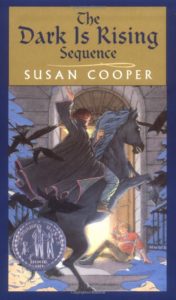
Susan Cooper’s Dark Is Rising series (Margaret K. McElderry, 1999) combines elements of Arhurian legend and Celtic mythology as three children join the Old Ones in the long-ongoing battle between Dark and Light. Titles are Over Sea, Under Stone; Greenwitch; The Dark Is Rising; The Grey King; and Silver on the Tree. For ages 9-13.
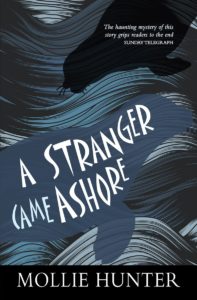
In Mollie Hunter’s A Stranger Came Ashore (Kelpies, 2012), a strange man staggers out of the sea in a village on Scotland’s Shetland Islands – and proceeds to charm one and all, especially Robbie’s older sister Elspeth. But only Robbie suspects that the stranger is one of the selkie folk, bringing danger. For ages 9-12.
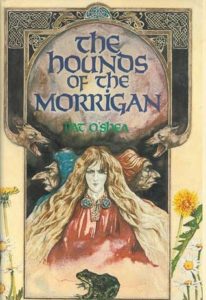
Pat O’Shea’s The Hounds of the Morrigan, originally published in 1985, is a marvelous story based on Celtic mythology, in which Pidge accidentally releases the evil serpent Olc-Glas from a book, and then with his little sister Brigit, becomes embroiled in a battle between the forces of good (the Dagda) and evil (the Morrigan). Well worth the effort to track down. For ages 10 and up.
See The Celts: Myths and Legends from creative history teacher Mr. Donn.
From Academic Kids, Celtic Mythology covers the various Celtic deities, religious practices, and Druidism.
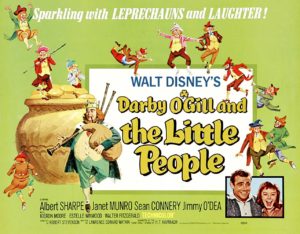
Disney’s Darby O’Gill and the Little People (1959) is an oldie, but has worn surprisingly well. Elements of Irish mythology as Darby O’Gill matches wits with the king of the leprechauns and confronts a banshee. Rated G. See https://www.imdb.com/title/tt0052722/.
African/Egyptian Mythology
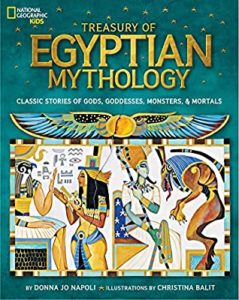
Donna Jo Napoli’s Treasury of Egyptian Mythology (National Geographic, 2013) is a gorgeously illustrated collection of myths, introducing Egyptian gods, goddesses, and mythical creatures. For ages 8-12.
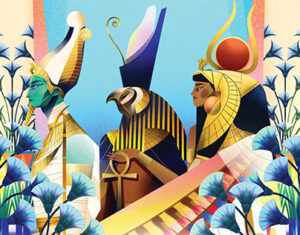
By Morgan E. Moroney, Gods and Goddesses of Ancient Egypt (Rockridge Press, 2020) includes a timeline, map, and an introduction to the stories of the major Egyptian gods and goddesses, among them Ra (the Sun God), Osiris (God of the Underworld), Isis (Goddess of Magic, Thrones, and Healing), Seth (God of Deserts, Storms, War, and Chaos), Anubis, (God of Mummification), and Bastet (Goddess of Cats, Joy, and Motherhood). For ages 9-12.
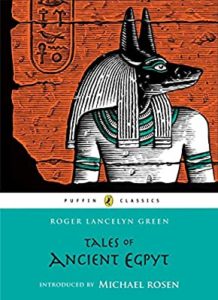
Roger Lancelyn Green’s Tales of Ancient Egypt (Puffin, 2011) is a prose re-telling of Egyptian myths, categorized as “Tales of the Gods,” “Tales of Magic,” and “Tales of Adventure.” Stories include “Ra and His Children,” “Isis and Osirus,” “The Book of Thoth,” and “The Girl with the Rose-Red Slippers.” For ages 9-12.
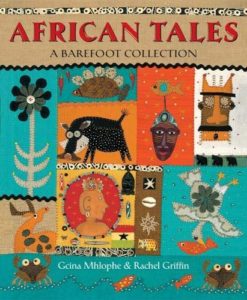
By Gcina Mhlophe, African Tales (Barefoot Books, 2017) is a collection of eight traditional stories, gorgeously illustrated with hand-sewn and beaded collage artwork. For ages 9-12.

Jamilla Okubo’s illustrated Tales of East Africa (Chronicle Books, 2020) is a collection of 22 traditional tales from Tanzania, Kenya, and Uganda. For ages 9 and up.

Gail E. Hayley’s A Story, A Story (Aladdin, 1988) is the picture-book tale of how Anansi the Spider – who can spin a web up to heaven – frees the world’s stories from Nyame, the Sky God. For ages 4-8.

Anansi the Spider by Gerald McDermott (Henry Holt, 2017) is the Ashanti tale of the tricky (but lovable and resourceful) hero Anansi, with bold folk-art illustrations. For ages 4-8.
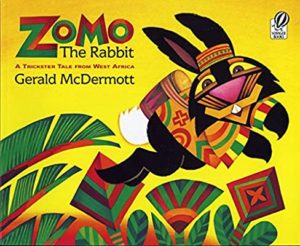
Also by McDermott, see Zomo the Rabbit (HMH, 1996), a trickster tale from West Africa, in which Zomo wants wisdom – but first must perform three seemingly impossible tasks for the Sky God. For ages 4-8.
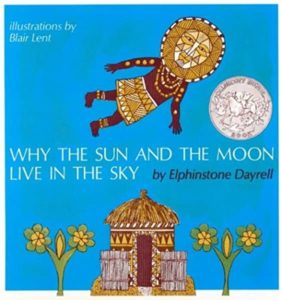
Elphinstone Dayrell’s Why the Sun and Moon Live in the Sky (HMH, 1990) explains that it was all the result of a disastrous visit from the water people.
Also see Mary-Joan Gerson’s Why the Sky is Far Away (Little, Brown, 1995). For ages 4-8.
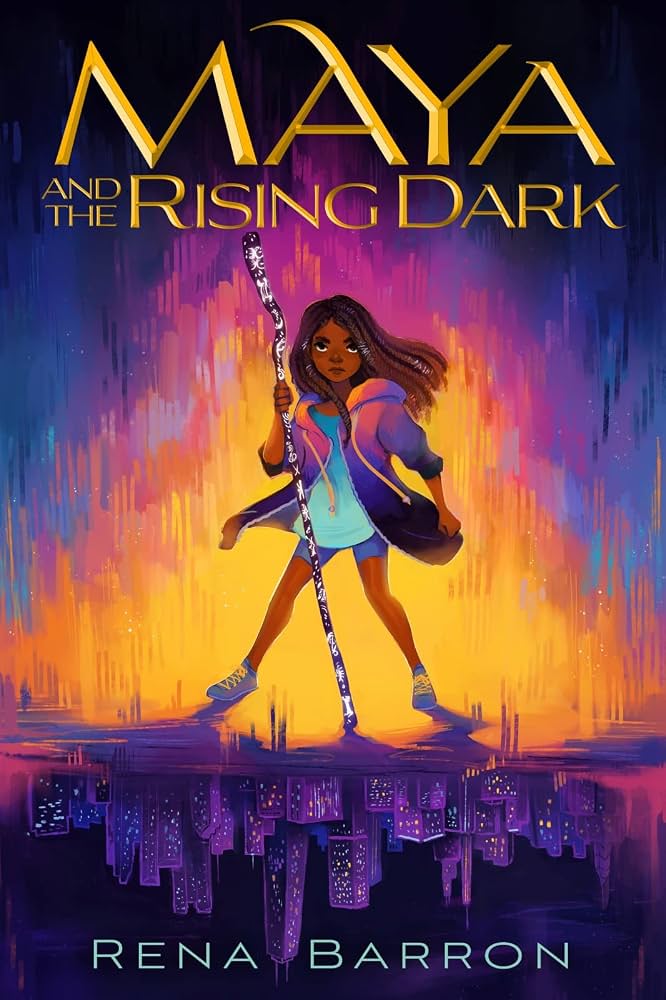
By Rena Barron, in Maya and the Rising Dark (Clarion, 2020) – first of a series, based on West African mythology – 12-year-old Maya discovers that she's a half orisha godling and her Chicago neighborhood is now the site of a battle between the human world and the Lord of Shadows. For ages 8-12.
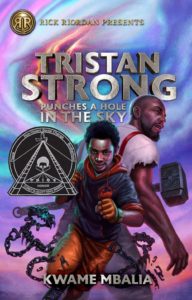
In Kwame Mbalia’s Tristan Strong Punches a Hole in the Sky (Disney-Hyperion, 2019), Tristan accidentally opens a hole between our world and MidPass and plunges into a dangerous mythical world of black American folk tale heroes and West African gods. For ages 9-13.
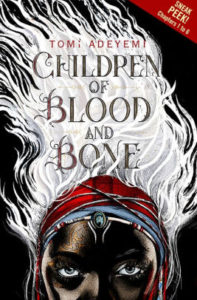
Tomi Adeyemi’s Children of Blood and Bone (Henry Holt, 2018) is an acclaimed young-adult fantasy with roots in the hero’s journey and West African mythology. Zelie remembers when Orisha was a land of magic – until the maji were slaughtered by a ruthless king. Now, in company with the rogue princess Amari, Zelie is on a quest to unlock the power of the old gods and restore Orisha to what it once was. For ages 13 and up.
From the Yale-New Haven Teachers Institute, African Myths and What They Teach is a detailed curriculum unit for grades 3-5 with background information, integrated activities, and a bibliography.
Middle Eastern Mythology
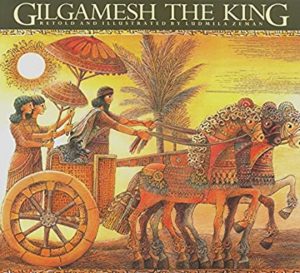
Ludmila Zeman’s Gilgamesh trilogy translates the ancient Sumerian epic into picture-book form for ages 7-9. Titles are Gilgamesh the King, The Revenge of Ishtar, and The Last Quest of Gilgamesh (Tundra Books, 1998).
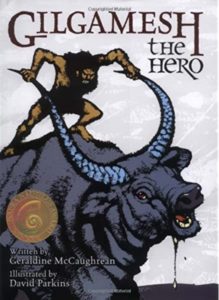
By Geraldine McCaughrean, Gilgamesh the Hero (Eerdmans Books, 2003) is a prose retelling of what may be the oldest story in the world, the tale of the Sumerian King Gilgamesh, his beloved friend Enkidu, and a quest for immortality. For ages 12 and up.
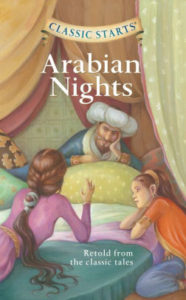
The Classic Starts Arabian Nights ((Sterling, 2008) includes nine simplified tales for younger readers, among them the stories of Aladdin, Sinbad the Sailor, and Ali Baba, with a prologue introducing King Shahryar and Scheherazade. For ages 7-9.
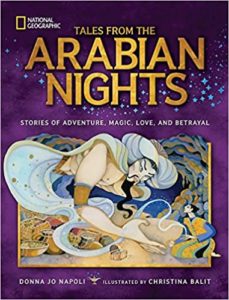
Donna Jo Napoli’s Tales from the Arabian Nights (National Geographic, 2016) is a beautifully illustrated and designed collection of gold-bordered stories from One Thousand and One Nights, including those of Aladdin, Ali Baba and the Forty Thieves, The Tale of Prince Hussein and the Magic Carpet, and The Tale of the Ebony Horse. For ages 8-12.
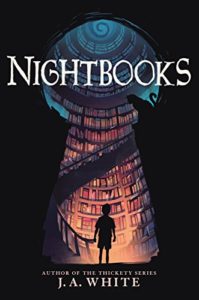
J.A. White’s Nightbooks (Katherine Tegen, 2019) is a creepy twist on the Scheherazade story, when Alex is kidnapped by a witch – and in order to survive, must tell her a different spooky story every night. For ages 9-12.

In Jonathan Stroud’s Bartimaeus Trilogy (Little, Brown, 2004), set in a parallel London, Nathaniel, a young magician’s apprentice, summons Bartimaeus, a 5000-year-old djinni – and the two are soon caught up in a complex tangle of magical espionage and revolution. Titles are The Amulet of Samarkand, The Golem’s Eye, and Ptolemy’s Gate. For ages 10 and up.

In P.B. Kerr’s Children of the Lamp series (Orchard Books, 2004), New York City twins John and Philippa discover that they’re descended from the Djinn and have magical powers. For ages 10 and up.

The story of the kind-hearted street urchin, Aladdin, the evil Grand Vizier, and the genie-containing magic lamp was produced as an animated movie in 1992, featuring the voice of Robin Williams as the giant blue genie (rated G), and again as a
live-action film in 2019, with Will Smith as the (still blue) genie (rated PG).

In the Arabian Nights animated adventure Sinbad: Legend of the Seven Seas (2003), Sinbad and his crew of pirates set out to find the magical Book of Peace and save the life of Sinbad’s friend Prince Proteus. Rated PG.
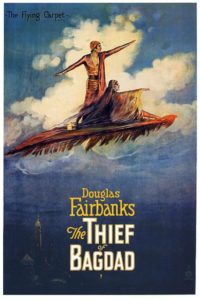
While there are glitzier and more recent versions, The Thief of Bagdad (1924) with Douglas Fairbanks as the thief of the title is still a delightful Arabian-Nights-style fantasy, complete with flying carpet. A family-friendly experience of film history.
Asian Mythology
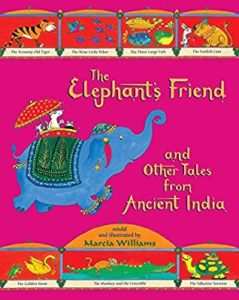
Marcia Williams’s The Elephant’s Friend and Other Tales from Ancient India (Candlewick, 2014) is a charmer: retellings of eight classic tales in clever panel-cartoon style. For ages 5-9.
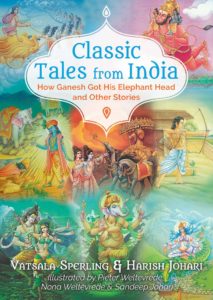
By Vatsala Sperling and Harish Johari, Classic Tales from India (Bear Cub Books, 2020) introduces the gods, goddesses, and heroes of India through eight classic tales drawn from the Mahabharata and the Ramayana. For ages 7-12.
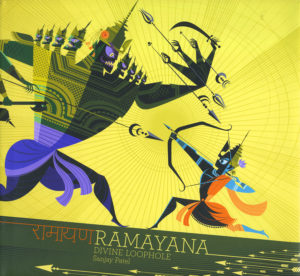
Sanjay Patel’s Ramayana: Divine Loophole (Chronicle Books, 2010) is a retelling of the story of Rama and his quest to rescue his wife, Sita, kidnapped by a demon king. Battles, monsters, and flying monkey gods for ages 9-12.
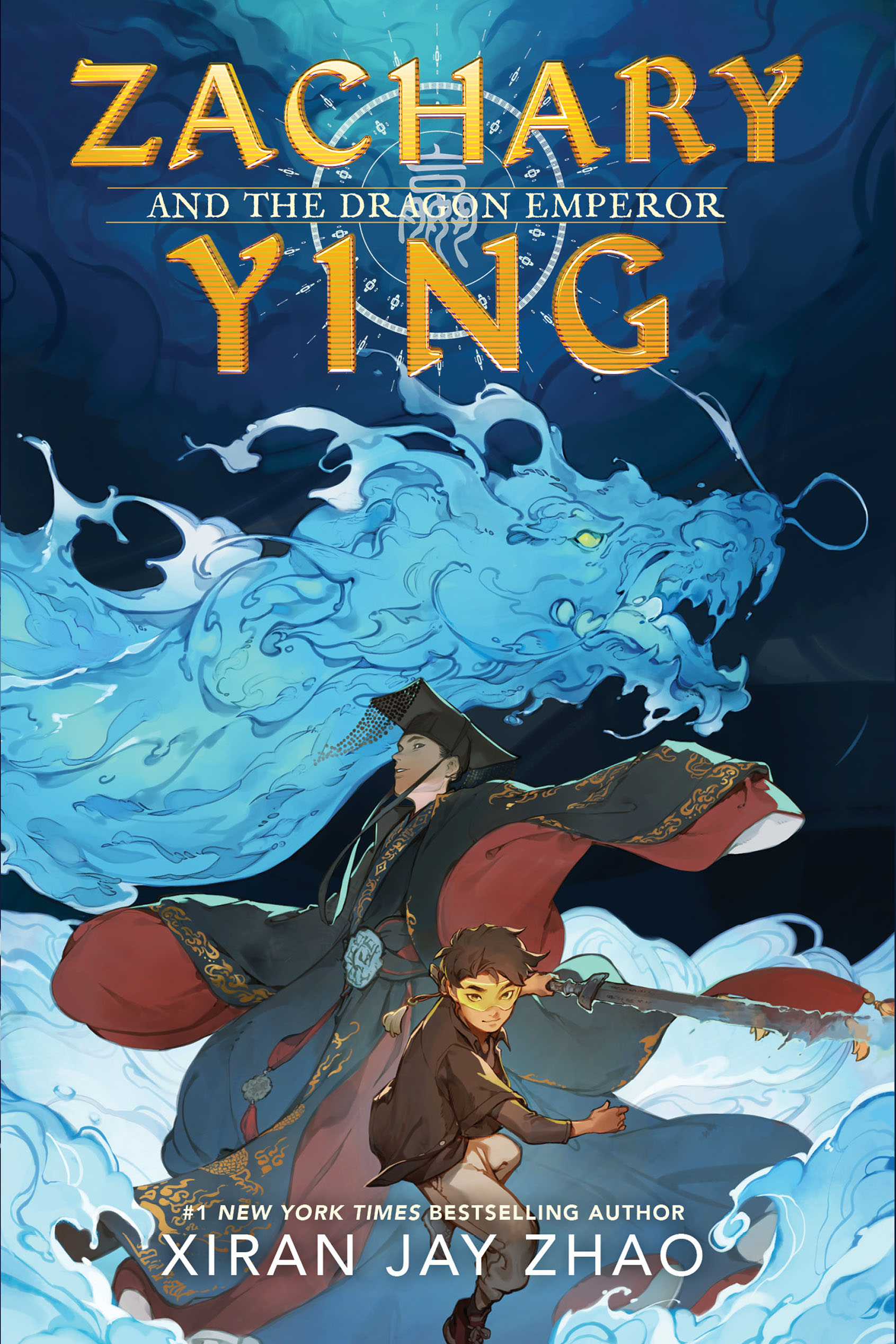
By Xiran Jay Zhao, in Zachary Ying and the Dragon Emperor (Margaret K. McElderry, 2023) , Zachary discovers that he was born to host the spirit of the First Emperor of China and to battle the spirits of the underworld. And, incidentally, to save his mom, captured by demons. For ages 8-12.
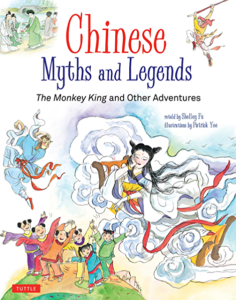
Stories in Shelley Fu’s Chinese Myths and Legends (Tuttle Publishing, 2018) are grouped under “Pan Gu and the Creation of the World,” “Nu Wo, the Mother of Mankind,” “Ho Yi the Archer,” “Journey to the West,” “The Man in the Moon,” “The Story of the White Snake,” and “The Heavenly River.” For ages 9-12.
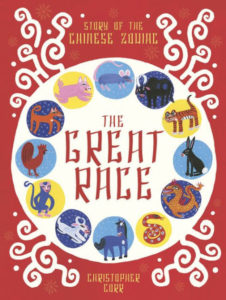
Christopher Corr’s The Great Race (Frances Lincoln Children’s Books, 2018) is the story of the animals’ race that established the Chinese zodiac – and made enemies of former friends Cat and Rat. For ages 4-8.
Also see Ed Young’s Cat and Rat (Square Fish, 1998).
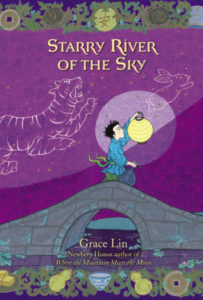
Titles in Grace Lin’s gorgeously illustrated and designed fantasy trilogy based on Chinese mythology are Starry River of the Sky (Little, Brown, 2014), When the Sea Turned to Silver (2017), and Where the Mountain Meets the Moon (2019). For ages 9-12.

Roshani Chokshi’s Aru Shah and the End of Time (Rick Riordan Presents, 2019) is the first of an exciting fantasy series based on Hindu mythology. Twelve-tear-old Aru Shah inadvertently frees the Sleeper, an ancient demon whose mission is to awaken the God of Destruction. For ages 9-12.

Tae Keller’s When You Trap a Tiger (Random House, 2020), is based on Korean mythology. Lily traps a magical tiger in hopes of helping her terminally ill grandmother – but tigers, as her grandmother always told her, are two-faced and tricky. For ages 8-12.
See this online collection of Indian Mythological Stories.
Also see Japanese Mythology from Academic Kids.
From history teacher Mr. Donn, see Ancient Chinese Stories, Fables, and Legends for Kids.

Princess Mononoke (1997) is an animated fantasy containing many elements from Japanese mythology. A young prince – cursed after a battle with a demon – goes in search of the Forest Spirit for help and becomes embroiled in a conflict between the gods of the forest and the Princess Mononoke and the people of a nearby village. Rated PG-13.
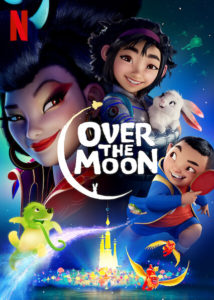
In Over the Moon (2020), a musical fantasy with elements of Chinese mythology, a young girl builds a rocket ship and sets of in search of the moon goddess. Rated PG.
American Mythology
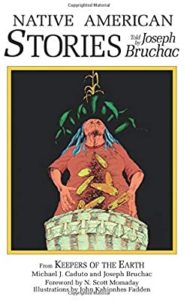
Joseph Bruchac’s Native American Stories (Fulcrum, 1991) is a collection of myths from a wide range of North American tribes. Included are “The Earth on Turtle’s Back,” “Loo-wit the Fire-Keeper,” “Old Man Coyote and the Rock,” “How Raven Made the Tides,” and many more. For ages 7 and up.
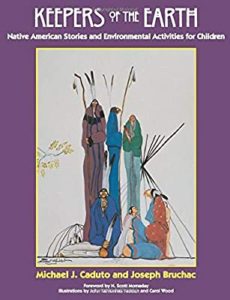
By Michael J. Caduto and Joseph Bruchac, Keepers of the Earth (Fulcrum, 1997) pairs traditional Native American myths with background information and hands-on science-based activities. For ages 7-13.
In similar format, see Keepers of Life, Keepers of the Night, and Keepers of the Animals.
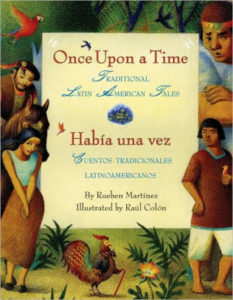
By Rueben Martinez, Once Upon a Time (HarperCollins, 2010) is a bilingual collection of seven traditional myths and legends from Latin America. For ages 4-8.
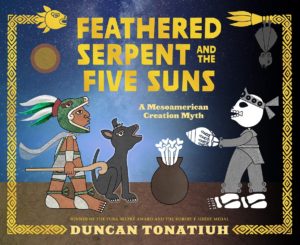
Duncan Tonatiuh’s Feathered Serpent and the Five Suns (Harry N. Abrams, 2020) is a picture-book retelling of a Mesoamerican creation myth, the story of Quezalcoatl. For ages 5-9.

Duncan Tonatiuh’s The Princess and the Warrior (Harry N. Abrams, 2016) is the Aztec legend that explains the origins of the volcanoes Iztacclhuatl and Popocatepetl. (Don’t panic; pronunciation guide included.) For ages 4-8.

By David Wisniewski, Rain Player (HMH, 1995) is a picture-book version of a Mayan tale in which a boy must defeat the Rain God in a ball game to save his people from disaster. For ages 4-8.

Gerald McDermott’s Arrow to the Sun (Puffin, 1977) is the Pueblo Indian tale of a boy whose father proves to be the Sun god. For ages 4-8.
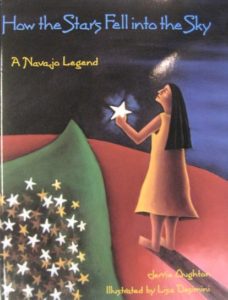
Jerrie Oughton’s How the Stars Fell Into the Sky (HMH, 1996), First Woman attempts to write the laws of the land in the sky, only to have everything scattered by the impatient Coyote. For ages 4-8.
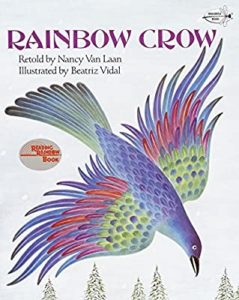
Nancy Van Loon’s Rainbow Crow (Dragonfly Books, 1991) is the story of how the crow lost his singing voice and beautiful multicolored feathers while bringing fire from the Great Sky Spirit to Earth. For ages 4-8.
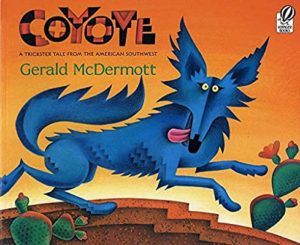
Gerald McDermott’s boldly illustrated picture-book trickster tales include Coyote (HMH, 1999) from the American Southwest; Raven (2001) from the Pacific Northwest; and Papagayo: The Mischief Maker (1992) and Jabuti the Tortoise (2005) from the Amazon. For ages 4-8.

All cultures have tricksters. Edited by Matt Dembicki, Trickster (Fulcrum, 2010) is a prize-winning graphic collection of 21 different Native American trickster tales for ages 10 and up.

Adapted by Joseph Bruchac The Girl Who Helped Thunder (Sterling, 2008) is a wonderful anthology of Native American tales from a wide range of tribal traditions. Each story is introduced with background information about its tribe of origin. For ages 8-12.

In Rebecca Roanhorse’s Race to the Sun (Rick Riordan Presents, 2020), which features elements from Navajo mythology, seventh-grader Nizhoni Begay with her little brother and best friend, end up following in the footsteps of the legendary Hero Twins in an attempt to find the House of the Sun and save Nizhoni’s father. For ages 9-12.
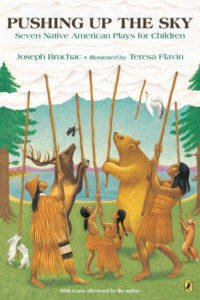
By Joseph Bruchac, Pushing Up the Sky (Dial, 2000) is a collection of Native American stories to be performed as plays – among them “Gluskabe and Old Man Winter” (Abenaki), “Star Sisters” (Ojibway), and “The Cannibal Monster” (Tlingit). Recommended for ages 7-10.
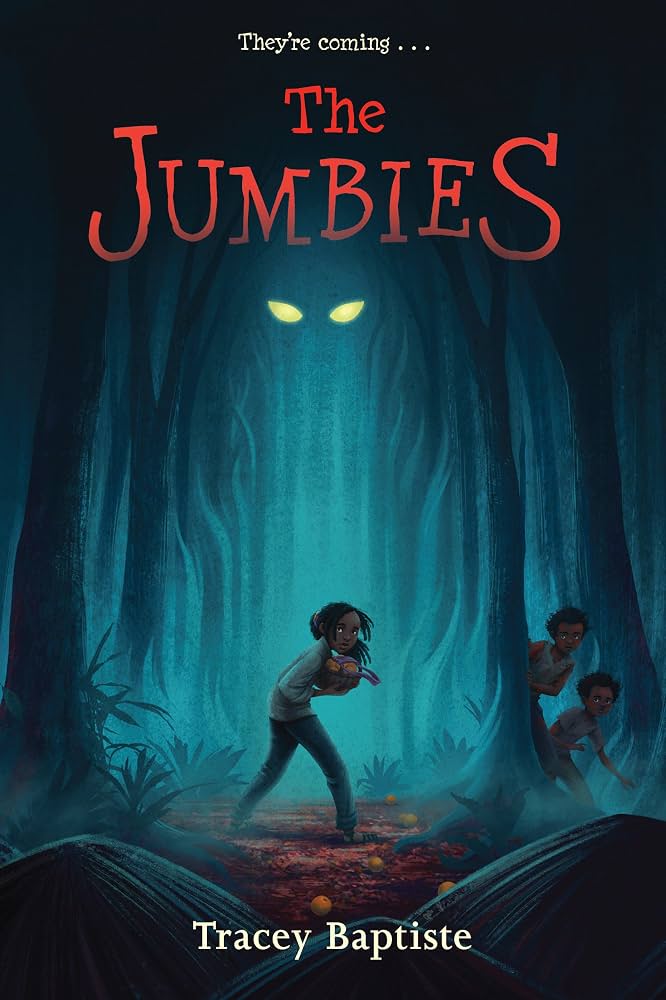
By Tracey Baptiste, in The Jumbies (Little, Brown, 2016) , Corinne encounters a malevolent jumbie in a tale loosely based on the Haitian folktale “The Magic Orange Tree.” For ages 9-12.
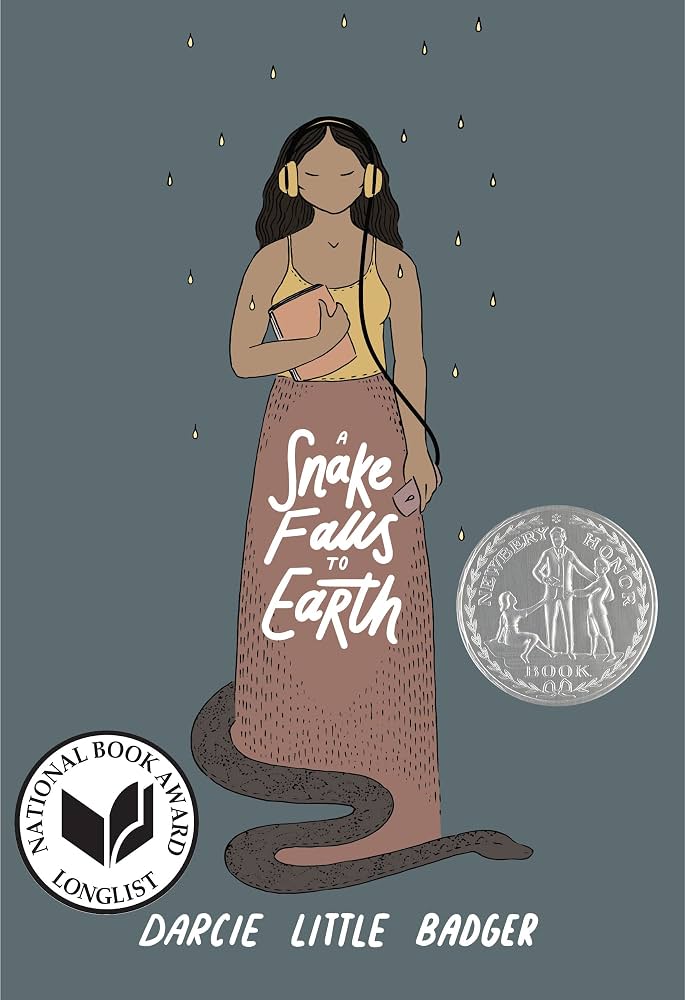
By Darcie Little Badger, A Snake Falls to Earth (Levine Querido, 2021) is the story of Oli, a cottonmouth snake person in the Reflecting World, and Nina, a Lipan Apache on Earth, who connect when trying to save Ami, a dying toad – whose sickness is due to threatened extinction in the human world. A mix of climate change and traditional lore for ages 10 and up.
From Mr. Donn, see Aztec Myths and Stories for Kids and
Native American Stories, Myths, and Legends for Kids.
For a hyperlinked list of Aztec gods and supernatural creatures, see Aztec Mythology from Academic Kids.
For a long list of Native American legends, myths, and folklore listed by tribe (from in alphabetical order from Abenaki to Zuni), see Native American Indian Legends and Folklore.
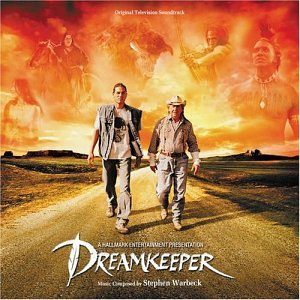
In the movie DreamKeeper (2003), teenage Shane is driving his grandfather from the reservation in South Dakota to Albuquerque for the great annual powwow. En route, the grandfather, a Lakota elder and storyteller, shares with Shane traditional myths and legends used to help their people find “the good red road” on their way through life. Not rated.
Multicultural Mythology
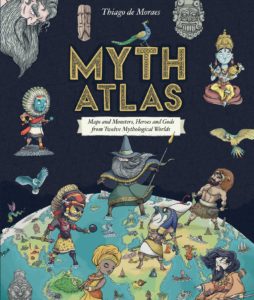
Mythology and geography! By Thiago de Moraes, Myth Atlas (Blueprint Editions, 2019) is an annotated picture atlas of twelve different mythological worlds, including those of the Greeks, Egyptians, Hindus, Norse, Polynesians, Aztecs, and more. For ages 7-10.
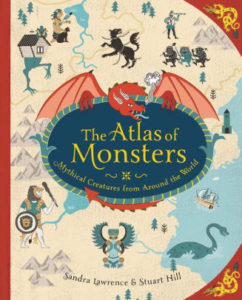
Purporting to be the work of intrepid (and imaginary) 15th-century explorer Cornelius Walters, The Atlas of Monsters (Running Press, 2019) is a collection of elaborate maps showing the location of mythological monsters and creatures from around the world. (And includes strange messages in a cryptic code…) For ages 7-12.
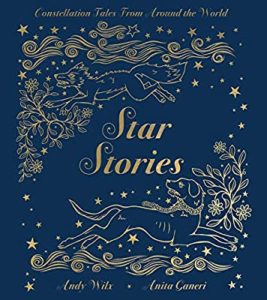
Mythology and astronomy! Anita Ganeri’s Star Stories (Running Press, 2019) is a collection of 23 constellation myths from around the world, including tales from ancient Greece, the America, Egypt, China, India, and the South Pacific. A wonderful tie-in to geography and astronomy. For ages 7-12.
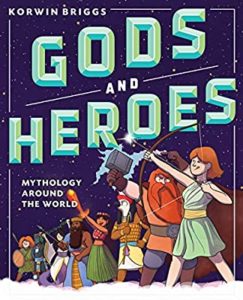
By Korwin Briggs, Gods and Heroes: Mythology Around the World (Workman, 2018) is a beautifully designed, reader-friendly collection of stories about mythological characters from 23 different cultures, presented in alphabetical order from Amaterasu, Anansi, and Aphrodite to the Yellow Emperor, Yi, and Zeus. Includes cartoon-style illustrations and fact boxes. For ages 8-12.
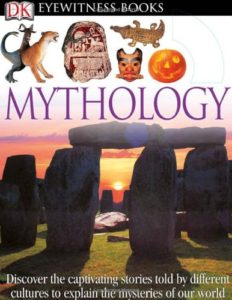
Mythology (Dorling Kindersley, 2017), one of the popular Eyewitness series, is an overview of world mythology, illustrated with colorful reproductions and annotated photographs of artifacts. Various double-page spreads cover “Creation of the world,” “Supreme beings,” “Super heroes,” “Gods of war,” “Mythical beasts,” “Sacred sites,” and more. For ages 8-12.

Alli Brydon’s Myths and Legends of the World (Lonely Planet, 2019) is an illustrated collection from Africa, Europe, Asia, Oceania, the Americas, and the Arctic. Stories include “The Tale of the Ghosts and the Flutes” (Africa), “The Selkies” (Europe), “Ganesh” (Asia), “Coyote Steals Fire” (America), and “Sedna, the Mother of the Sea” (Arctic). For ages 9-12.

Marzio Accatino’s Gods, Goddesses, and Heroes (Lonely Planet, 2020) – subtitled “Mythology from Around the World” – includes tales from Greece, Egypt, Scandinavia, Asia, and the Americas. For ages 9-12.

Virginia Hamilton’s In the Beginning (HMH, 1991) is a collection of 25 creation stories from around the world for ages 9 and up.

Kathy Ceceri’s World Myths and Legends (Nomad, 2010) is a collection of tales from the Middle East, Greece and Rome, Europe, Sub-Saharan Africa, Asia, Australia, and the Americas with 25 accompanying hands-on projects, among them making a cuneiform tablet, a thunder drum, and a rainbow suncatcher. For ages 8-12.
The Encyclopedia Mythica has hundreds of searchable articles on various aspects of world mythology, folklore, and religion, categorized by world region or culture.
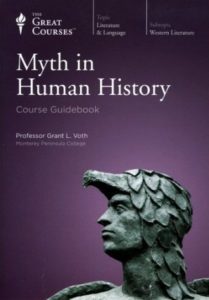
The Great Courses offers a huge array of classes, available as instant video, instant audio, or on DVDs. Mythology courses include “Great Mythologies of the World,” “Myth in Human History,” “The Iliad of Homer,” and more. “Great Mythologies of the World,” taught by multiple professors, consists of sixty thirty-minute lectures variously covering the Greeks and Romans, the Celts, the Norse, the Babylonians, the Egyptians, the great Indian epics, and myths of Persia, Africa, China, Australia, the native Americans. Courses are generally appropriate for ages 13 and up.