
Native Americans
In this collection
Native American history, historically, has been poorly taught in our schools, if at all.
Anna Diamond, in an article in Smithsonian Magazine, Inside a New Effort to Change What Schools Teach About Native American History, writes: “Most students across the United States don’t get comprehensive, thoughtful, or even accurate education in Native American history and culture. A 2015 study by researchers at Pennsylvania State University found that 87 percent of content taught about Native Americans includes only pre-1900 context. And 27 states did not name an individual Native American in their history standards.”
Native American history is a rich, as well as a painful and tragic, story - and one we all need to know. It's more than time for a change.

James W. Loewen’s Lies My Teacher Told Me: Everything Your American History Textbook Got Wrong (New Press, 2018) is a best-selling plea for truth in history education, including compelling chapters on the traditional teaching of Native American history. “Historically, American Indians have been the most lied-about subset of our population,” writes Loewen.
Also see the Young Readers Edition for ages 12 and up (2019) and the graphic novel version, adapted and illustrated by Nate Powell (New Press, 2024).
The 
From the Smithsonian’s National Museum of the American Indian, Native Knowledge 360 is a (searchable) collection of lessons and resources aimed at providing broader perspectives and more accurate information about Native peoples and cultures. See https://americanindian.si.edu/nk360.
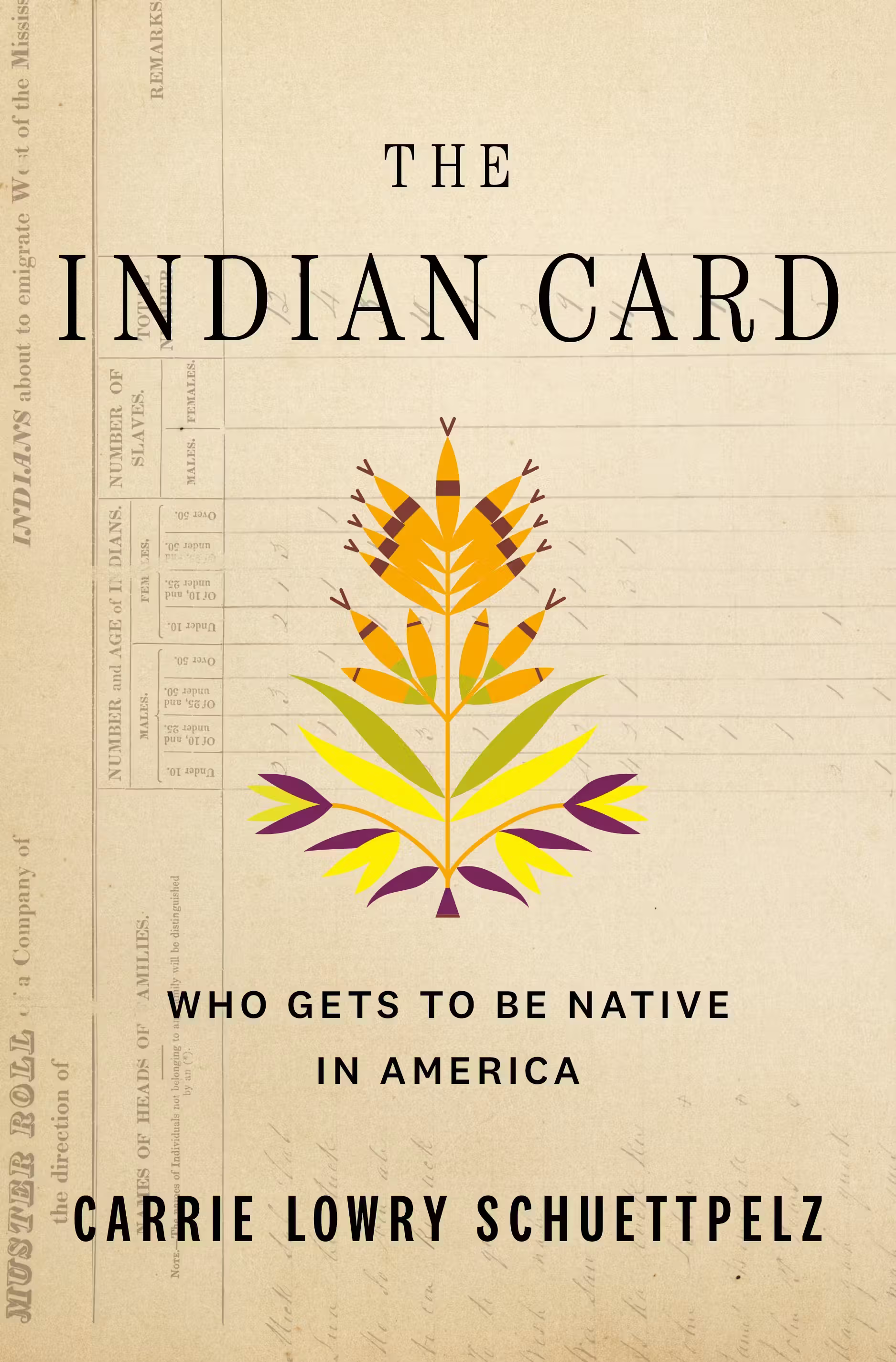
By Carrie Lowry Schuettpelz, The Indian Card (Flatiron Books, 2024) is a well-researched look at who gets to be Native in America – a complex problem of politics and indigenous identity that varies from tribe to tribe. A revelatory read for teens and adults.
Native American History
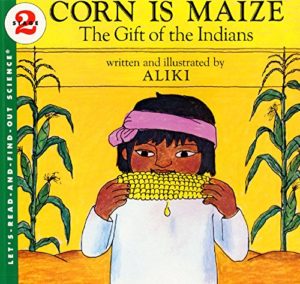
Aliki’s Corn is Maize: The Gift of the Indians (HarperCollins, 1996) is a simple and charmingly illustrated story of the history and science of corn. For ages 4-8.

The True Books: American Indian series (Children’s Press) consists of 48-page picture-book introductions to many Native American tribes, illustrated with color photographs. Many titles including The Pueblo, The Navajo, The Inuit, The Wampanoag, The Apache, The Hopi, and more. For ages 7-10.

By Anita Yasuda, Explore Native American Cultures! (Nomad, 2013) introduces readers to seven major North American cultural regions, with background information, “Words to Know” boxes, catchy facts, and 25 hands-on projects, among them making a turtle shell rattle, a bear-claw necklace, a wampum belt, and a birchbark canoe. For ages 8-12.
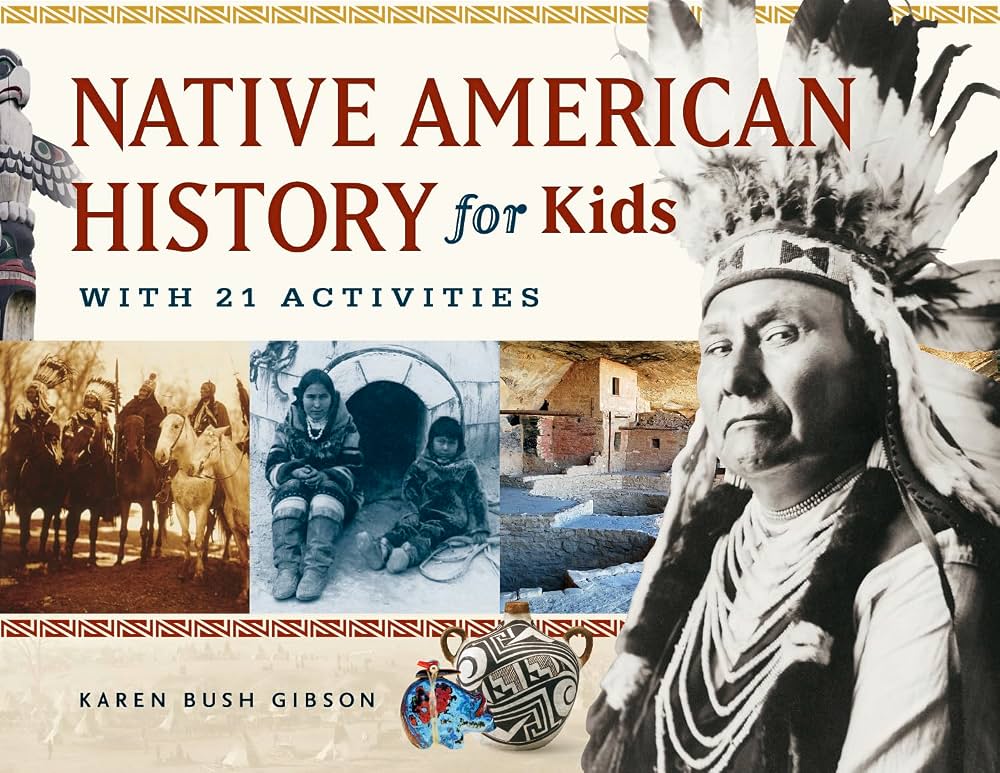
By Karen Bush Gibson, Native American History for Kids (Chicago Review Press) covers Native history from the arrival of the first people in North America through the coming of the European settlers, the impact of westward migration, and the struggles to survive and preserve indigenous cultures. Included are maps, a timeline, capsule biographies of notable Native Americans, and 21 hands-on projects and activities, among them planting a Three Sisters garden, creating a totem pole, and making a batch of Arapaho fry bread. For ages 9 and up.

Jane Yolen’s Encounter (HMH, 1996), illustrated with detailed paintings by David Shannon, is an indigenous view of the story of Columbus, told from the point of view of a young Taino boy – who, after a frightening prophetic dream, tries to warn his people against the strangers. His warning is ignored – and many years later, as an old man, he tells of the destruction of his people and their culture. A picture book for ages 8-12.

By Michael Dorris, Morning Girl (Little, Brown, 1999) is the story of siblings Morning Girl and Star Boy, growing up in the lovely world of their Caribbean island in the fatal year 1492. It ends as Morning Girl welcomes a boatload of strange visitors – and an epilogue, from Columbus’s diary, ominously indicates what the future holds. For ages 8-12.
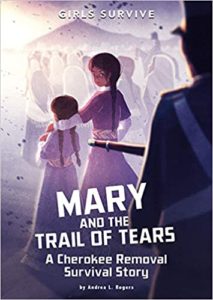
One of the Girls Survive series, Mary and the Trail of Tears by Andrea L. Rogers (Capstone, 2020) is the story of 12-year-old Mary and her Cherokee family, forced from their home in Georgia by the U.S. Army and sent on a forced march to Indian Territory via what came to be called the Trail of Tears. For ages 8-12.
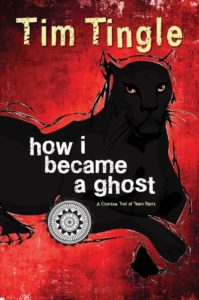
Tim Tingle’s How I Became a Ghost (Roadrunner Press, 2015) is set on the Trail of Tears – the path taken by thousands of Native Americans in the 1830s following Andrew Jackson’s Indian Removal Act that sent tribes from their homelands to designated “Indian territory” west of the Mississippi River. The story is narrated by Isaac, a young Choctaw boy, who didn’t survive the journey. For ages 9-12.
For more information, see Trail of Tears.
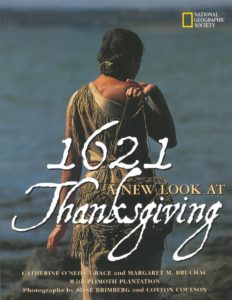
By Catherine O’Neill Grace and Margaret M. Bruchac, 1621: A New Look at Thanksgiving (National Geographic, 2004) attempts to dispel the mythological Thanksgiving story that so many of us have grown up with by presenting a historically balanced account of the event and incorporating the point of view of the participating Wampanoags. Illustrated with wonderful photos of re-enactors at Plimouth Plantation. For ages 8-12.
For younger kids, see Keepunumuk (Charlesbridge, 2022) by Daniel Greendeer and co-authors, a picture-book story of the first Thanksgiving through Wampanoag eyes. For ages 5-8.
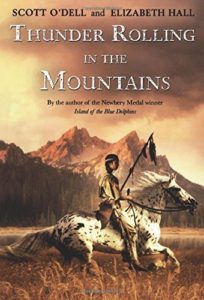
By Scott O’Dell, Thunder Rolling in the Mountains (HMH, 2010) is the heart-wrenching story of the defeat of the Nez Perce Indians in 1877 by the U.S. Army, narrated by Chief Joseph’s young daughter. For ages 8-12.
From the History Place Great Speeches Collection, see Chief Joseph Surrenders.
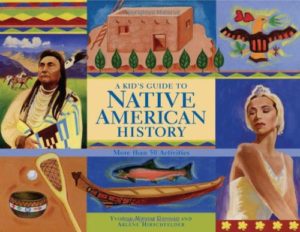
By Yvonne Wakim Dennis, A Kid’s Guide to Native American History (Chicago Review Press, 2009) covers the tribes and cultures of nine major geographical areas in the continental United States, Alaska, and Hawaii. Included are capsule biographies of notable people, maps and timelines, background information, and hands-on activities, games, recipes, and crafts. For example, kids make a storyteller bag, cook a batch of succotash, create ledger art, and play a game of stone jacks. For ages 9 and up.
Joseph Bruchac’s Code Talker (Speak, 2006) is the story of the Navajo code talkers whose unbreakable code – their native language – saved innumerable lives during World War II. The story is told through the eyes of sixteen-year-old Ned Begay, a Navajo boy who becomes a code talker. For ages 12 and up.
For younger readers, see Bruchac’s picture book Chester Nez and the Unbreakable Code (Albert Whitman and Company, 2018). For ages 6-9.
Roxanne Dunbar-Ortiz’s An Indigenous Peoples’ History of the United States for Young People (Beacon Press, 2019), an adaptation of the adult book, is history from a perspective rarely (never?) encountered in traditional textbooks, beginning with American origin myths and ending with the 21st century. Highly recommended for ages 12-17.
This Place: 150 Years Retold (Highwater Press, 2019) is a graphic-novel anthology of 150 years of indigenous Canadian history: ten stories, each accompanied by a timeline of the events surrounding the narrative. For ages 15 and up.
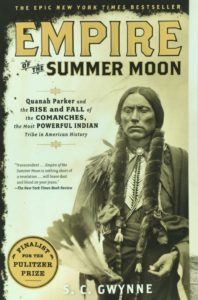
By S.C. Gwynne, Empire of the Summer Moon (Scribner, 2010) is the story of Cynthia Ann Parker – kidnapped by the Comanches at the age of nine – and her son Quanah, the canny warrior who became the tribal chief of the last free riders of the plains. For teens and adults.
By Roxanne Dunbar-Ortiz and Dina Gilio-Whitaker, All the Real Indians Died Off (Beacon Press, 2016) debunks twenty major myths about Native Americans, among these “Columbus Discovered America,” “Indians Were Savage and Warlike,” and “Europeans Brought Civilization to the Backward Indians.” Thought-provoking for teens and adults.

By Charles C. Mann, 1491 (Vintage, 2006) is a fascinating picture of the Americas before the arrival of Columbus – followed by 1493 (Vintage, 2012), the story of the world that Columbus created. Wide-ranging and multifaceted histories for teens and adults.
For younger readers, see Mann's illustrated 128-page Before Columbus: The Americas of 1491 (2009) for ages 8-13.

Dee Brown’s Bury My Heart at Wounded Knee: An Indian History of the American West (Picador, 2007), first published in 1970, is a devastating and carefully researched account of the destruction of Native American tribes in the second half of the 19th century. A powerful and painful narrative for teens and adults.

The movie (2007) based on the book chronicles the displacement of Native American tribes following the Battle of Little Bighorn.
National Geographic Kids: Native Americans has reader-friendly, fact-filled, photo-illustrated accounts of Native American tribes by region.
From Ducksters, see Native American History for Kids - an overview covering culture and religion, social structure, myths and legends, major historical events, individual tribes and regions, and famous Native Americans.
History for Kids: Native American History has pages on individual nations, famous people, homes, clothing, mythology, art, religions, and more.
From TED Ed, see Native Americans for Kids: Cherokee, Apache, Navajo, Iroquois, and Sioux.
Folktales, Myths, and Legends
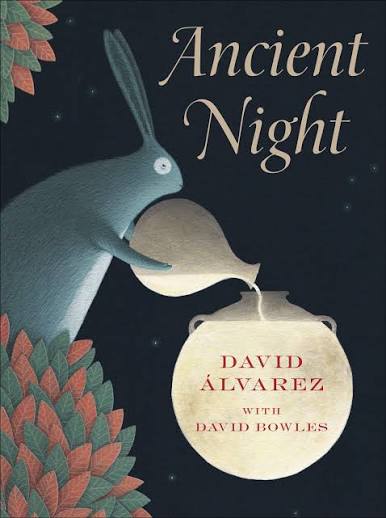
By David Bowles with luminous illustrations by David Alvarez, Ancient Night (Levine Querido, 2023) is the story of Rabbit, Opossum, and the Moon, based on Mesoamerican mythology. For ages 4-8.
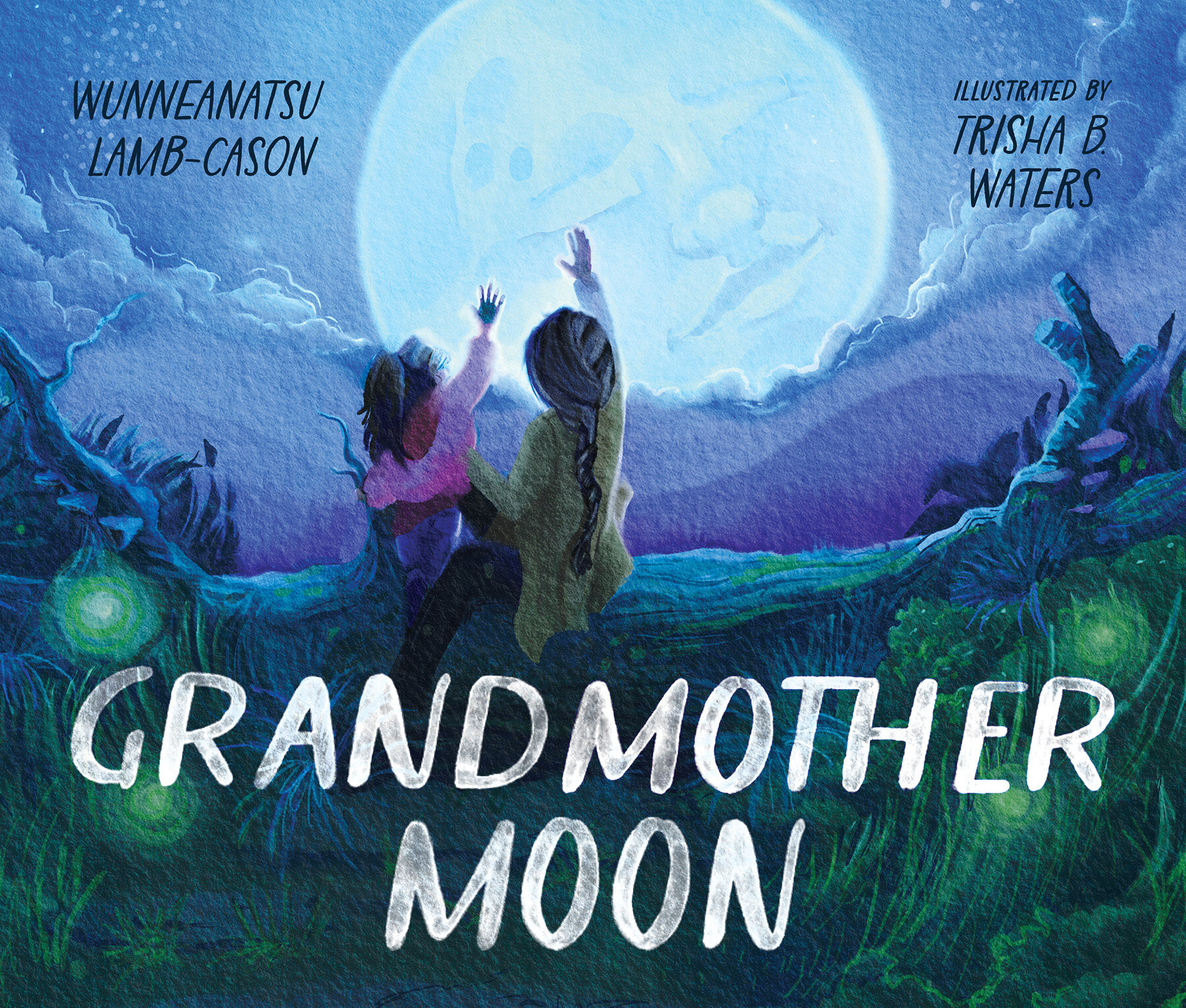
In Wunneanatsu Lamb-Cason’s Grandmother Moon (Beaming Books, 2025), a grandmother shares the story of the moon from an Algonquian perspective with her little granddaughter, An appendix lists the Native names for the thirteen lunar months of the year. For ages 4-8.
Joseph Bruchac has written many wonderful versions of Native American legends in picture-book format for young readers. Among these are The First Strawberries (Puffin, 1998), How Chipmunk Got His Stripes (Puffin, 2003), Turtle’s Race with Beaver (Puffin, 2005), and Rabbit’s Snow Dance (Dial Books, 2012),
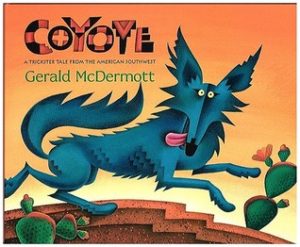
Gerald McDermott’s brightly illustrated picture books of Native American tales include Coyote: A Trickster Tale from the American Southwest (HMH, 1999), Raven: A Trickster Tale from the Pacific Northwest (HMH, 2001), Jabuti the Tortoise: A Trickster Tale from the Amazon (HMH, 2005), and Arrow to the Sun: A Pueblo Indian Tale (Puffin, 1977). For ages 4-8.
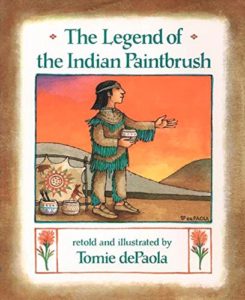
By Tomie de Paola, The Legend of the Indian Paintbrush (Putnam & Grosset, 1996) is the story of a young Plains Indian boy who has a dream vision of creating a painting in all the colors of the sunset – and how this at last came to pass. For ages 4-8.
Also by de Paola, see The Legend of the Bluebonnet (Puffin, 1996), the story of a courageous Comanche girl who finds a way to bring much-needed rain to her tribe.
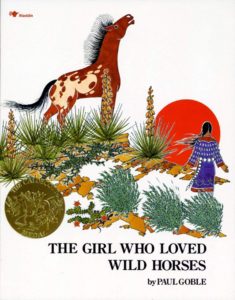
Paul Goble’s beautifully illustrated picture books of Native American stories include The Girl Who Loved Wild Horses (Aladdin, 1993), The Gift of the Sacred Dog (Aladdin, 1984), Buffalo Woman (Aladdin, 1987), Star Boy (Aladdin, 1991), and Dream Wolf (Aladdin, 1997).
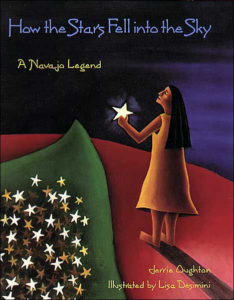
Jerrie Oughton’s How the Stars Fell Into the Sky (HMH, 1996) is a Navajo legend about how First Woman prepared to write the laws of the land in star patterns in the sky – only to have rambunctious Coyote scatter them far and wide. For ages 4-8.
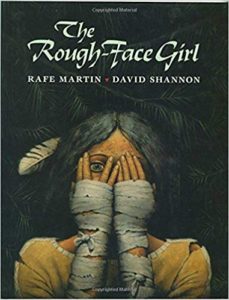
Rafe Martin’s The Rough-face Girl (Puffin, 1998) is a lovely Algonquin version of the Cinderella story for ages 4-8.
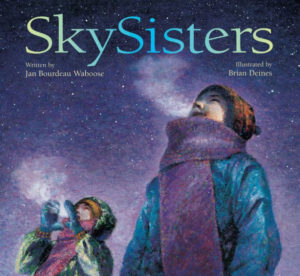
In Jan Bourdeau Waboose’s SkySisters (Kids Can Press, 2002), a pair of Ojibway sisters set off on a frozen trek to see the SkySpirits dance – that is, the glorious northern lights. For ages 5-8.
By Michael J. Caduto and Joseph Bruchac, Keepers of the Earth (Fulcrum, 1997) is a superb collection of Native American folktales paired with background information and hands-on environmental activities. For ages 7 and up.
In the same format, see Keepers of Life: Discovering Plants through Native American Stories, Keepers of the Animals: Native American Stories and Wildlife Activities, and Keepers of the Night: Native American Stories and Nocturnal Activities.
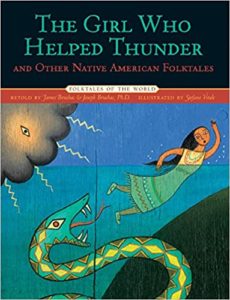
Adapted by James and Joseph Bruchac, The Girl Who Helped Thunder and Other Native American Folktales (Sterling, 2008) is a collection of native folktales arranged geographically. The illustrated tales come from a wide range of peoples and cultures, among them Cherokee, Cheyenne, Hopi, Seminole, Seneca, and more, each introduced with historical background information. For ages 8-12.
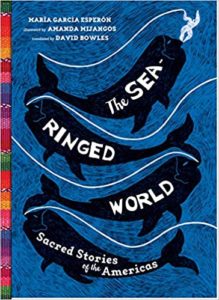
By Maria Garcia Esperon, The Sea-Ringed World (Levine Querido, 2021) is a visually gorgeous collection of sacred stories from the native nations and cultures of the Americas. Included are a culture guide, a map, and a glossary. For ages 8 and up.
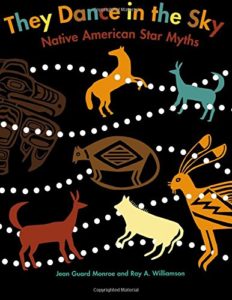
By Ray. A. Williamson, They Dance in the Sky (HMH, 2007) is a collection of Native American star myths from a range of native cultures. For ages 10 and up.
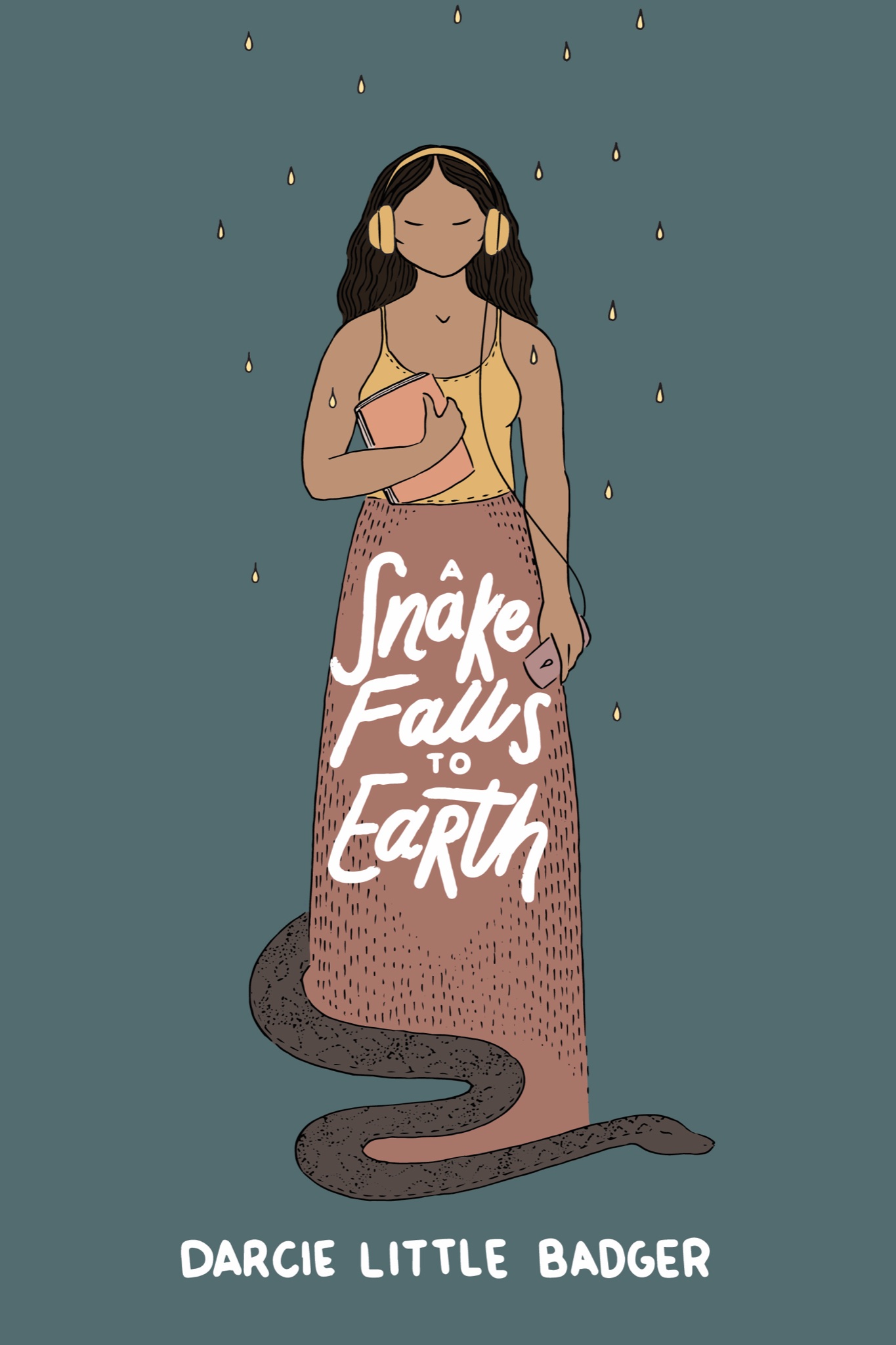
By Darcie Little Badger, A Snake Falls to Earth (Levine Querido, 2021) is the story of Oli, a cottonmouth snake person in the Reflecting World, and Nina, a Lipan Apache on Earth, who connect when trying to save Ami, a dying toad – whose sickness is due to threatened extinction in the human world. A mix of climate change and traditional lore for ages 10 and up.
Edited by Matt Dembicki, the graphic novel Trickster (Chicago Review Press, 2010) is a collection of 21 Native American trickster tales, variously involving coyotes, ravens, rabbits, alligators, beavers, and more. For ages 10 and up.
Native American Life

Carole Lindstrom’s Caldecott Medal winner We Are Water Protectors (Roaring Brook Press, 2020), gorgeously illustrated by Michaela Goade, is a magical and poetic environmental plea in defense of the world’s water inspired by indigenous activist movements. A beautiful book for ages 4 and up.

By Traci Sorell, We Are Grateful: Otsaliheliga (Charlesbridge, 2018) is a picture-book demonstration of the many ways in which the Cherokee express gratitude – with the word “otsaliheliga” – in an illustrated trip through the year and seasons. For ages 4-8.
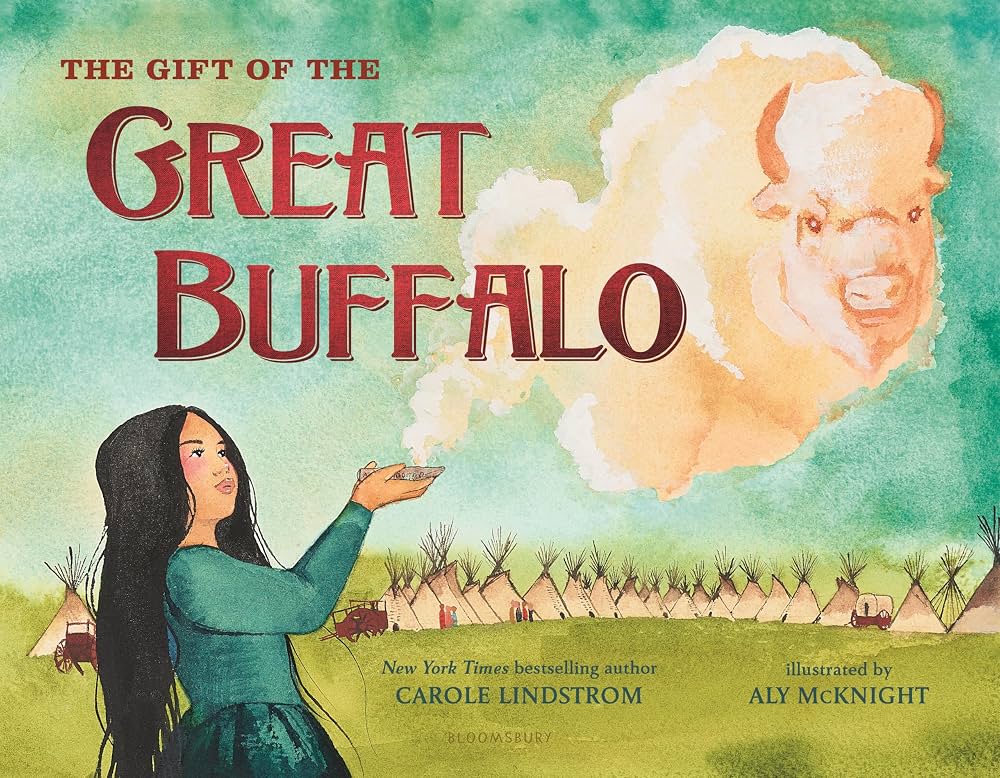
In Carol Lindstrom’s The Gift of the Great Buffalo (Bloomsbury, 2025), Rose, a Metis-Ojibwe girl, and her family have joined hundreds of others for the biannual buffalo hunt – but the arrival of the white settlers and the railroad have depleted the buffalo population and there are none to be found. But Rose is convinced that she can find them. For ages 4-8.

S.D. Nelson’s Buffalo Bird Girl: A Hidatsa Story (Harry N. Abrams, 2012) is the picture-book story of a young girl who lived in a Hidatsa village near the Missouri River in the mid- to late-19th century. Told in the first person, using the actual story of Buffalo Bird Woman as recorded by an anthropologist in 1906, and supplemented with archival photos. For ages 6-10.
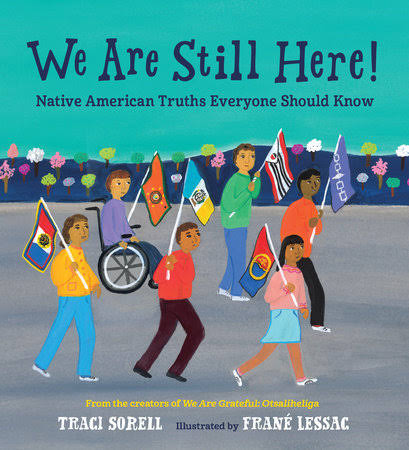
By Traci Sorell, We Are Still Here (Charlesbridge, 2021) is an informational picture book covering such past and present Native issues as assimilation, allotment, relocation, economic development, education, language revival, sovereignty, and more through presentations by kids at the Native Nationals Community School. For ages 7-10.
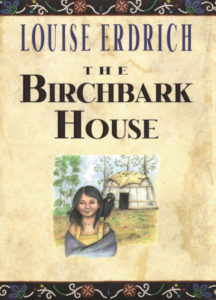
Louise Erdrich’s The Birchbark House (Hyperion, 2002) is the story of Omakayas – Little Frog – an Ojibwe girl, growing up with her family on an island in Lake Superior in 1847. Often recommended as an alternative to Laura Ingalls Wilder’s Little House books, which are set in the same time period, but told from a white settler’s perspective. For ages 8-12.
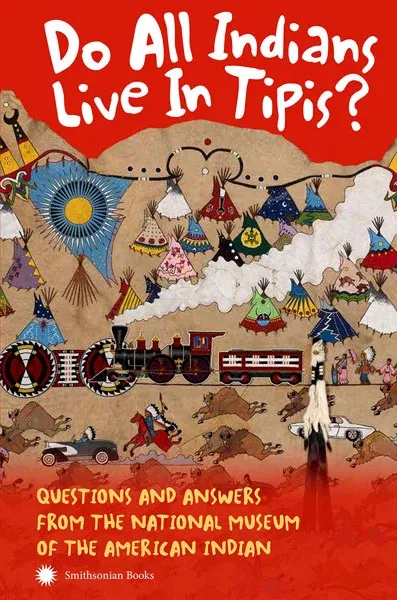
From the National Museum of the American Indian, Do All Indians Live in Tipis? (Smithsonian Books, 2018) is an illustrated guide designed to debunk common myths and answer frequently asked questions about Native Americans, past and present. How much do you really know about totem poles, tipis, and Tonto? Short essays on a range of topics for ages 10 and up.
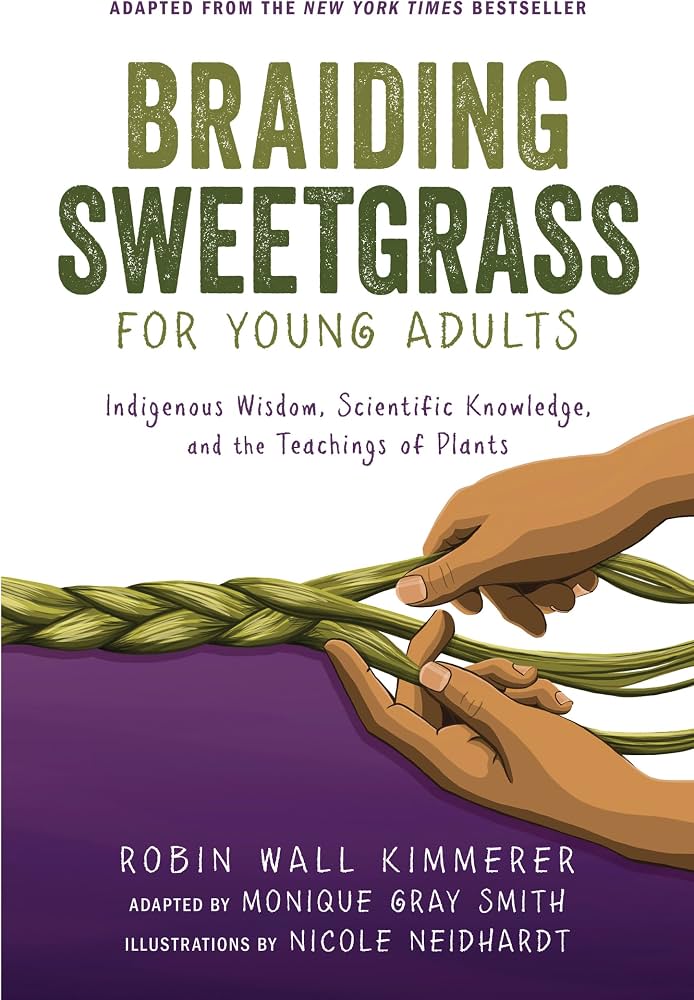
By botanist Robin Wall Kimmerer, Braiding Sweetgrass for Young Adults (Zest Books, 2022) is a adapted version of Kimmerer’s adult book, a creative combination of indigenous lore, science, and the teachings of plants. For ages 11 and up.
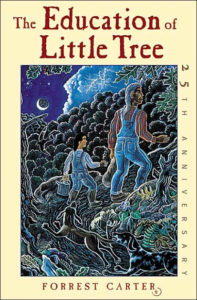
Forrest Carter’s The Education of Little Tree (University of New Mexico Press, 2001), set during the Great Depression in the mountains of Tennessee, is the story of the orphaned boy known as Little Tree, sent to live with his Cherokee grandparents – where he learns about Native American culture, customs, and philosophies. For ages 12 and up.
It’s a lovely and well-written book. Here’s the problem: since its publication in 1976, when it claimed to be a true story, it has been discovered to be a fiction and that its actual author was Asa Earl Carter, a white supremacist and Ku Klux Klan organizer. (See Biblio Hoaxes: The Education of Little Tree.) Despite some inaccuracies, it remains a highly rated coming-of-age novel – and certainly, given its provenance, provides a lot of food for discussion.
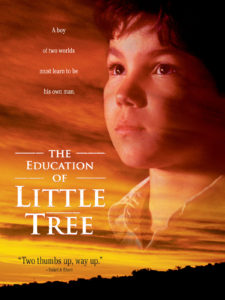
The movie version of The Education of Little Tree (1997) is rated PG.
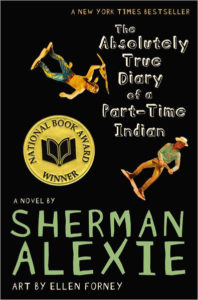
Sherman Alexie’s The Absolutely True Diary of a Part-Time Indian (Little, Brown, 2009) is the story of Junior who wants to be a cartoonist – the book is illustrated with his cartoons – growing up on the Spokane Indian Reservation. Then he decides to switch to the all-white high school - where the only other Indian is the school mascot. Funny, heartbreaking, and based on Alexie’s own experiences. A National Book Award winner. For ages 12 and up.
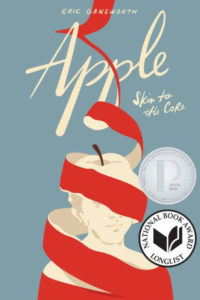
Eric Gansworth’s Apple (Levine Querido, 2020) is a stunning memoir in verse by an Onondaga quthor and artist, raised on a reservation. (The apple of the title is a pejorative term, used for someone who supposedly is “red on the outside, white on the inside.”) Creatively designed and illustrated with photos and graphic art. For ages 12-18.
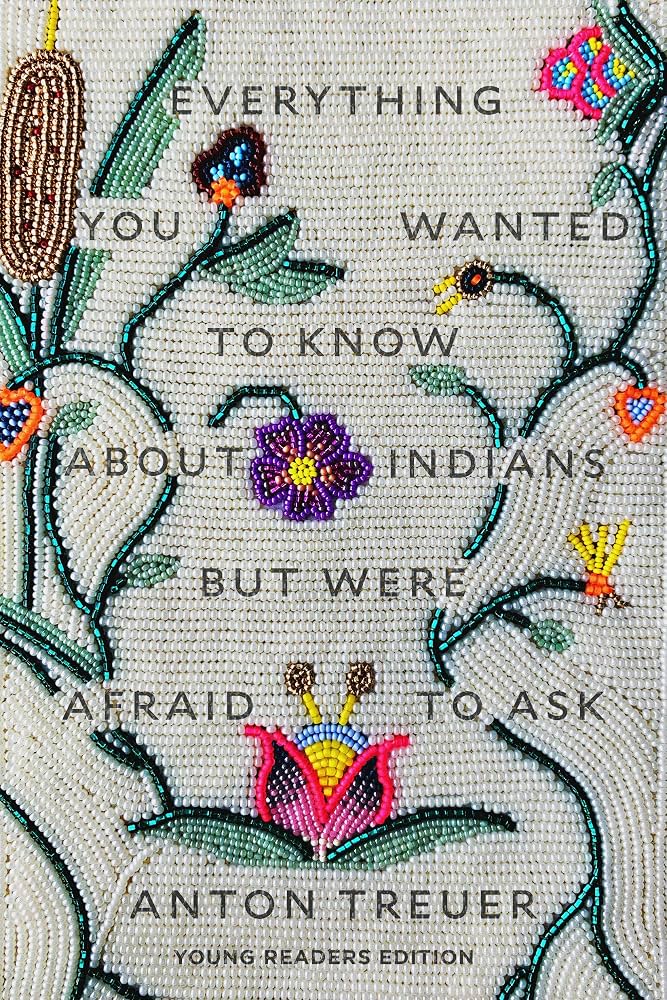
The Young Readers Edition of Anton Treuer’s Everything You Wanted to Know About Indians But Were Afraid to Ask (Levine Querido, 2021) is a collection of dozens of questions and answers, with explanations and background information. For example: “Why is there such a fuss about nonnative people wearing Indian costumes for Halloween?” “What terms are not appropriate for talking about North America’s first people?” “When did Natives really get to North America?” For ages 12 and up.
From Sterlin Harjo and Taika Waititi, the television series Reservation Dogs (2021-2023) follows the lives of four teenagers growing up on the Muscogee reservation in Oklahoma. Rated 8.3/10 by viewers on the Internet Movie Database, See https://www.imdb.com/title/tt13623580/.
Native Americans in Fiction
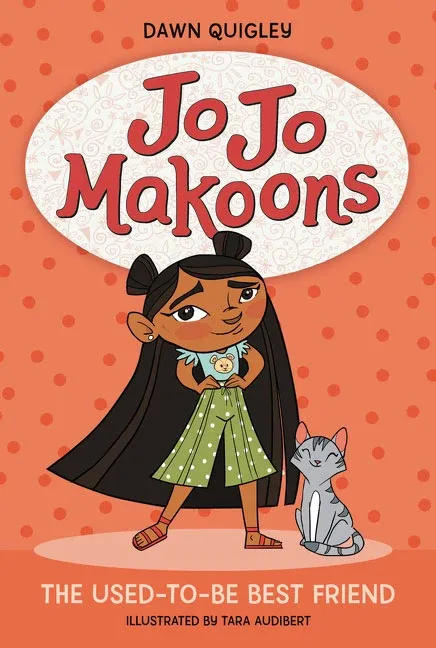
By Dawn Quigley, Jo Jo Makoons: The Used-to-Be Best Friend (Heartdrum, 2021) is the first of a series about irrepressible seven-year-old Jo Jo Makoon, growing up on an Ojibwe reservation. For ages 6-9.
Scott O’Dell’s Newbery Medal winner Island of the Blue Dolphins (HMH, 2010), now a classic, is the story of Karana, a Native American girl who lived alone for nearly twenty years on an island off the California coast – hunting, building a canoe, living in a house of whale bones. For ages 8-12.
In Jean Craighead George’s Newbery Medal winner Julie of the Wolves (HarperCollins, 2019), 13-year-old Julie, threatened with an arranged marriage, runs away from her Eskimo village and survives on the tundra with the help of a pack of wolves. For ages 8-12.
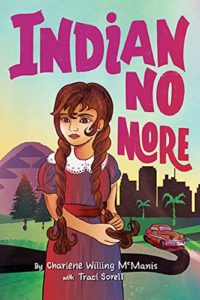
In Charlene Willing McManis and Traci Sorell’s Indian No More (Tu Books, 2019), set in the 1950s, ten-year-old Regina Petit and family have always been Umpqua, living on the Grand Ronde reservation in Oregon – until the federal government decrees that the tribe no longer exists, rendering them “Indian no more.” Regina’s father then moves the family to Los Angeles where Regina for the first time encounters the mainstream culture’s grasp of Indian identity – largely gleaned from the TV show The Lone Ranger – and struggles with racism. For ages 8-12.
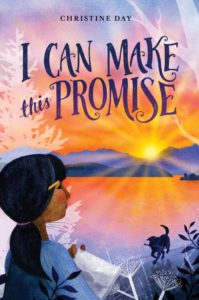
In Christine Day’s I Can Make This Promise (Heartdrum, 2020), Edie knows that her mother was adopted by a white couple – but knows next to nothing about her Native American heritage. Then in the attic she discovers a box filled with letters and a photograph of a woman who could be her twin – and begins to learn painful truths about Native American history and her own family’s past. For ages 8-12.
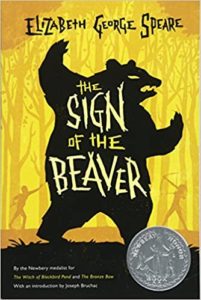
In Elizabeth George Speare’s The Sign of the Beaver (HMH, 2011), set in 18th-century Maine, young Matt’s father leaves him alone to guard their frontier cabin. When a white stranger steals his gun, Matt is left helpless – he not only can’t defend himself, but can’t hunt for food. His salvation is Atean, a Native American boy, who helps Matt survive and teaches him about his culture. As Matt’s friendship with Atean evolves, his assumptions about Indians and his understanding of their relationship with white settlers begins to change. For ages 9-12.

Tom Tingle’s Stone River Crossing (Tu Books, 2019) is a story of the rarely explored bond between Native Americans and African-American slaves. Only the Bok Chitto River separates the Choctaw nation from a slaveholder’s Mississippi plantation. When Lil Mo discovers that his mother is to be sold, he and his family – with the help of Choctaw girl Martha Tom – escape across the river to the Choctaw village. There they adapt to a new life with the help of the squirrel hunter, Funi Man, though there are still dangers – not only from slave hunters, but from an otherworldly witch owl. For ages 9-12.

For a picture-book version of the story, see Tom Tingle’s Crossing Bok Chitto (Cinco Puntos Press, 2008).

In James Bird’s The Brave (Feiwel and Friends, 2020), Collin has a condition that causes him to count every letter in every word spoken to him – which makes him prey for bullies and a problem in school. His discouraged father sends him to Minnesota to live on a reservation with the Ojibwe mother whom he has never met. There, with the help of his mother, his grandmother (a ghost), some wise elders, and next-door neighbor Orenda, who believes she’s turning into a butterfly – but is actually dying of ALS – Collin comes to terms with his problems and finds himself. For ages 9-12.
Though the book received some starred reviews (Booklist, School Library Journal), it hasn’t been well-received by the Ojibwe community. See this review from the New York Times and

Helen Frost’s Salt (Square Fish, 2015) is the story of the friendship between two twelve-year-old boys in the Indiana Territory in 1812 – Anikwa, a member of the Miami tribe, and James, who lives with his family in the stockade near Fort Wayne. As war between British and Americans comes closer, the two find they have to decide where their loyalties lie. A novel in verse, told in the voices of both boys. For ages 10-14.
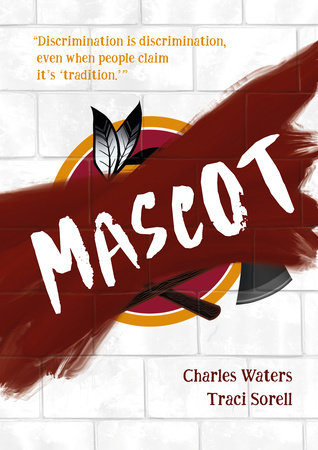
By Traci Sorell and Charles Waters, Mascot (Charlesbridge, 2025) is a novel in verse, told in the voices of six very different middle-school students, as they debate whether or not to keep the sports team’s (the Braves) indigenous mascot and traditional tomahawk-chop chant. A good discussion book for ages 10-14.
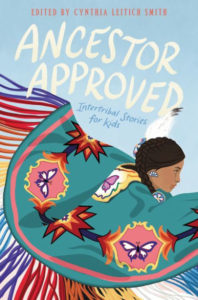
Edited by Cynthia Leitich Smith, Ancestor Approved (Heartdrum, 2021) is a collection of stories and poems centered around a pow-wow, by contemporary Native authors representing a range of nations, among them Cree, Ojibwe, Choctaw, Cherokee, Navajo, Abenaki, and more. Included is a glossary of indigenous vocabulary words. For ages 10-14.
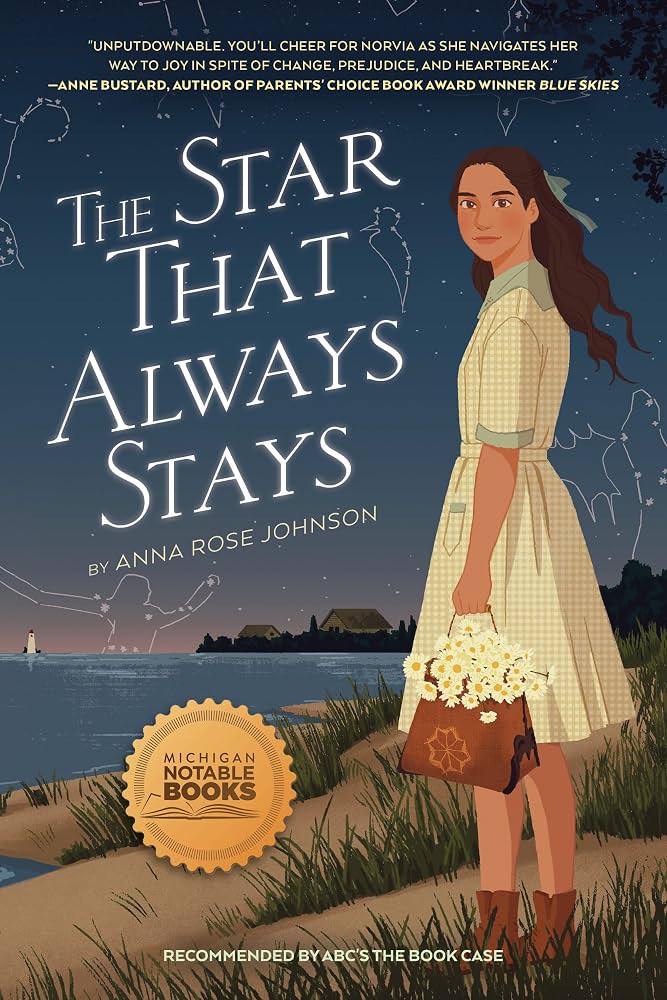
In Anna Rose Johnson’s The Star That Always Stays (Holiday House, 2023), Norvia has always lived on Lake Michigan’s Beaver Island where she’s proud of her Ojibwe heritage and has loved listening to her grandfather’s tales of ancestors and traditional stories. Now, though, her mother has remarried and Norvia now lives in the city with a stepfamily, where her mother insists that she hide her Ojibwe roots. For ages 11 and up.
Beth Kanell’s Darkness Under the Water (Candlewick, 2008) is the story of Molly, a half-Abenaki, half-French Canadian girl growing up in Vermont in the 1920s – where she begins to realize that the government’s eugenics project is targeting people such as her pregnant mother, who have been deemed undesirable. For ages 12 and up.
From the New Yorker, see The Forgotten Lessons of the American Eugenics Movement.
Captives
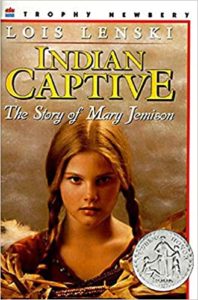
Lois Lenski’s Indian Captive (HarperCollins, 1995), young Mary Jemison is captured along with her family in 1758, separated from her parents and siblings, and sent to a Seneca village in western New York. There she’s adopted – and struggles to adjust to a new life, missing her family, learning a new language and new customs, forging new relationships. Ultimately Mary – now called Corn Tassel – has a chance to return home, but elects to stay with the Seneca. Based, more or less, on a true story. For ages 8-12.
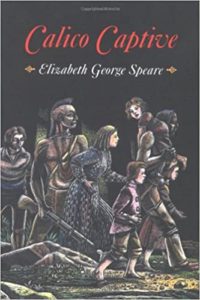
Elizabeth George Speare’s Calico Captive (HMH, 2001) is the story of Miriam Willard, her sister Susanna, brother-in-law James, and their children captured by Indians in a raid during the French and Indian War and taken to Montreal. Miriam dislikes both Indians and French, though she does eventually admit that the Indians were sometimes fair and kind; and neither were French Catholics as dreadful as she had been taught to believe. (Her young nephew, Sylvanus, ultimately stays with the Indians; and a niece stays with the French.) The story is based on an actual diary, A Narrative of the Captivity of Mrs. Johnson. For ages 9-12.
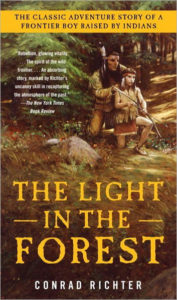
In Conrad Richter’s The Light in the Forest (Vintage, 2004), John Cameron was captured as a child in a raid on the Pennsylvania frontier in 1764, adopted by the Lenni Lenape, and raised as an Indian. When the Lenni Lenape sign a treaty that requires the return of captives, fifteen-year-old John – now known as True Son – must go back to his long-forgotten white family. A story of a boy caught between two cultures. For teens and adults.
The Disney movie version of The Light in the Forest (1958) is unrated, but family-appropriate.
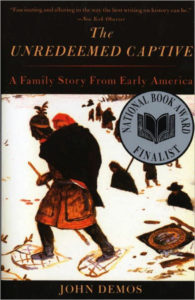
By John Demos, The Unredeemed Captive (Vintage, 1995) is the well-researched story of a 1704 Indian attack on the village of Deerfield, Massachusetts, in which Puritan minister John Williams, his wife, and five children were captured. Williams’s wife died in captivity, but he and three surviving children were eventually freed. Seven-year-old Eunice, however, was adopted by a Mohawk family and eventually married into the tribe, steadfastly refusing all efforts to redeem her. For teens and adults.
See the story of Eunice Williams from the New England Historical Society here.
Family separation policies aren’t new. Beginning in the late 19th century, a U.S. government policy advocated the removal of Native American children from their families, sending them instead to government boarding schools, where children were forbidden to speak their native languages or practice native customs. Read about it here.
From The Atlantic, see Death by Civilization, the story of the traumatic legacy of the forced Indian boarding schools.
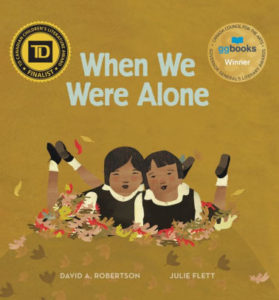
In David A. Robertson’s When We Were Alone (HighWater Press, 2017), a little girl hears her grandmother’s story of her life in a residential school a long time ago – which explains why today she wears her hair long, wears colorful native clothing, speaks her own language, and – above all – values her family. For ages 5-9.
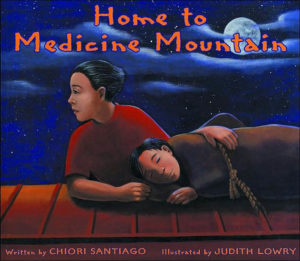
By Chiori Santiago, Home to Medicine Mountain (Children’s Book Press, 2002) is the picture-book story of two young brothers taken from their parents and sent to a government-run residential school. For ages 6-10.
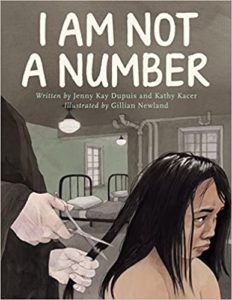
In Jenny Dupuis and Kathy Kacer’s I Am Not a Number (Second Story Press, 2016), set in Canada, young Irene and her brothers, suddenly deemed “wards of the state,” are taken from their home and send to a boarding school, where Irene is given a number in lieu of a name, her long hair is cut, and she is punished for speaking her native language. Based on the childhood of Dupuis’s grandmother. For ages 7-11.
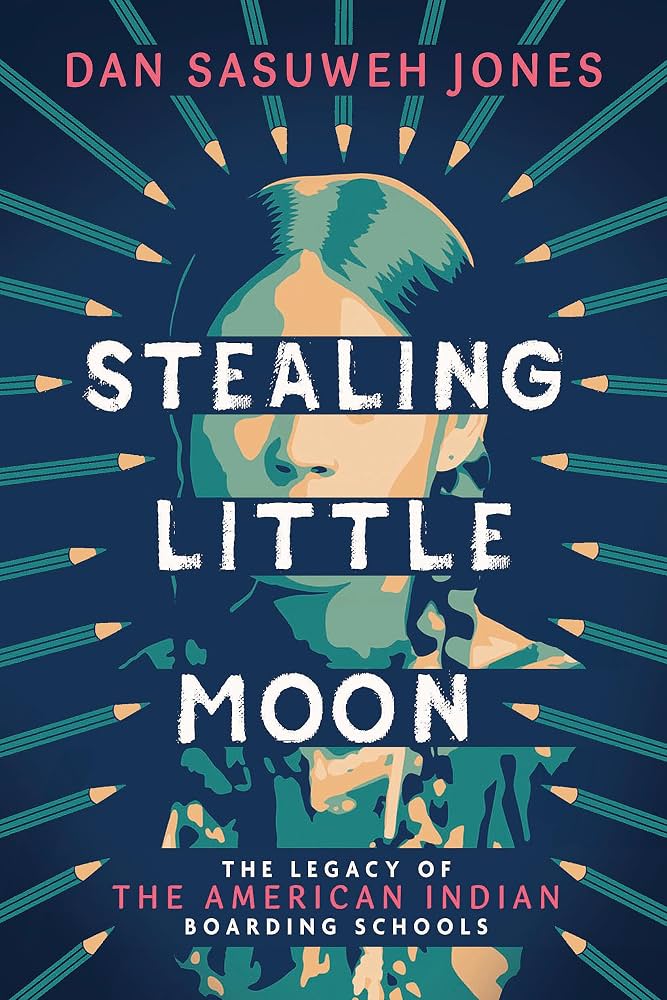
By Dan SaDuWeh Jones, in Stealing Little Moon (Scholastic Focus, 2024), based on family history, Little Moon was just four years old when federal agents forcibly took her from her family and sent her to a boarding school with the goal of obliterating her connections to family, friends, and her Native culture and language and teaching her the ways of white society. A powerful account of the abuse of indigenous kids. For ages 9-12.
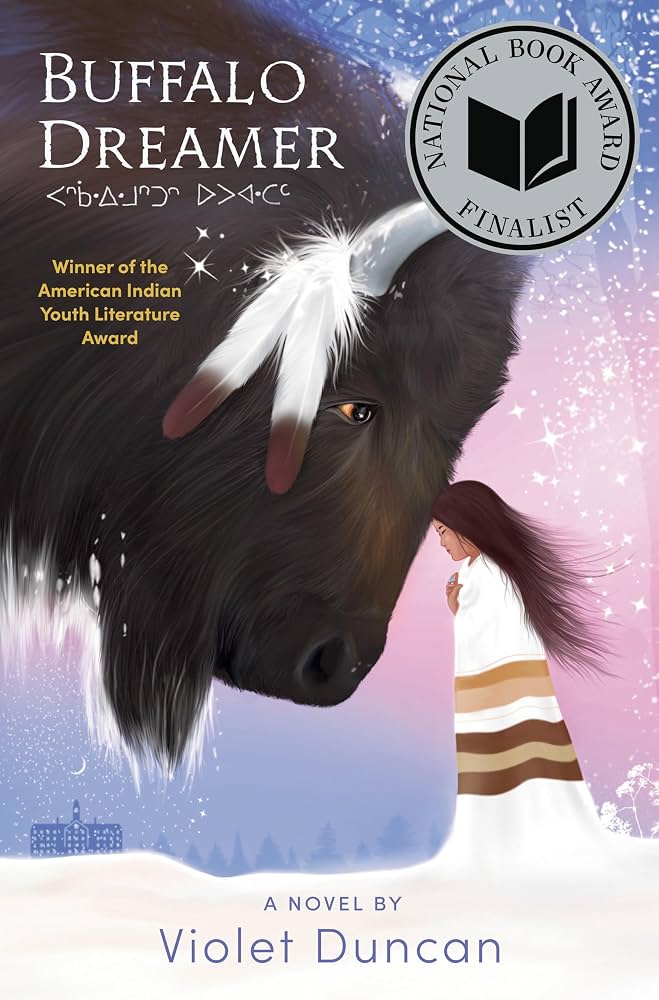
By Violet Duncan, in Buffalo Dreamer (Nancy Paulsen Books, 2026), Summer – who has always spent summers in Canada on the Cree reservation where her mother’s family lives – this year begins to have vivid dreams about Buffalo Dreamer, a child escaping from a residential school. At the same time, unmarked graves of children are discovered at the residential school her grandfather was forced to attend. A heartbreaking story of historical trauma with an ultimate message of resilience. For ages 10-14.
Native Americans in Fantasy

In Rebecca Roanhorse’s fast-paced Race to the Sun (Rick Riordan Presents, 2020), Dine 12-year-old Nizhoni Begay has the ability to sense monsters – one of whom proves to be her dad’s new boss, the sinister Mr. Charles, head of an oil and gas company. After her dad is kidnapped – leaving behind the message “Run!” – Nizhoni, her younger brother Mac, and best friend Davery, set off on a quest inspired by Navajo mythology, which involves dangerous challenges, a journey into the spirit realm, and the discovery of their own heritage. For ages 8-12.
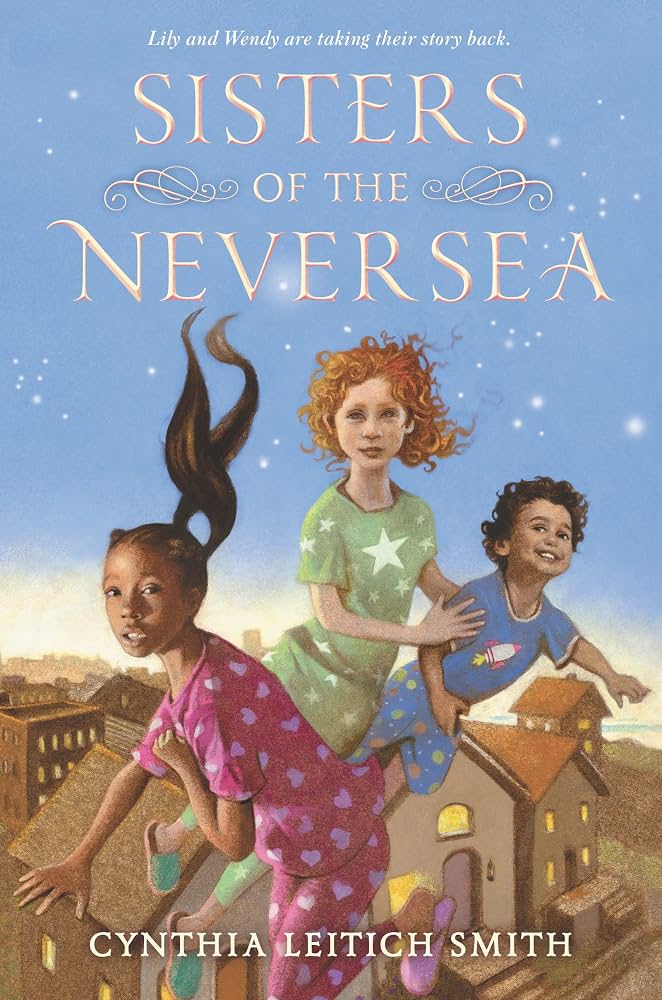
By Cynthia Leitich Smith, Sisters of the Neversea (Heartdrum, 2022) is a Muscogee Creek version of Peter Pan, in which Native American Lily and English Wendy – stepsisters – follow a mysterious boy to Neverland. They find a Neverland ruled by a Peter, a tyrannical bully, and suffering from environmental and humanitarian disasters. Still a marvelous adventure, and free of the jarring stereotypes in Barrie’s original. (There’s a tight-knit band of very competent indigenous kids.) For ages 8-12.
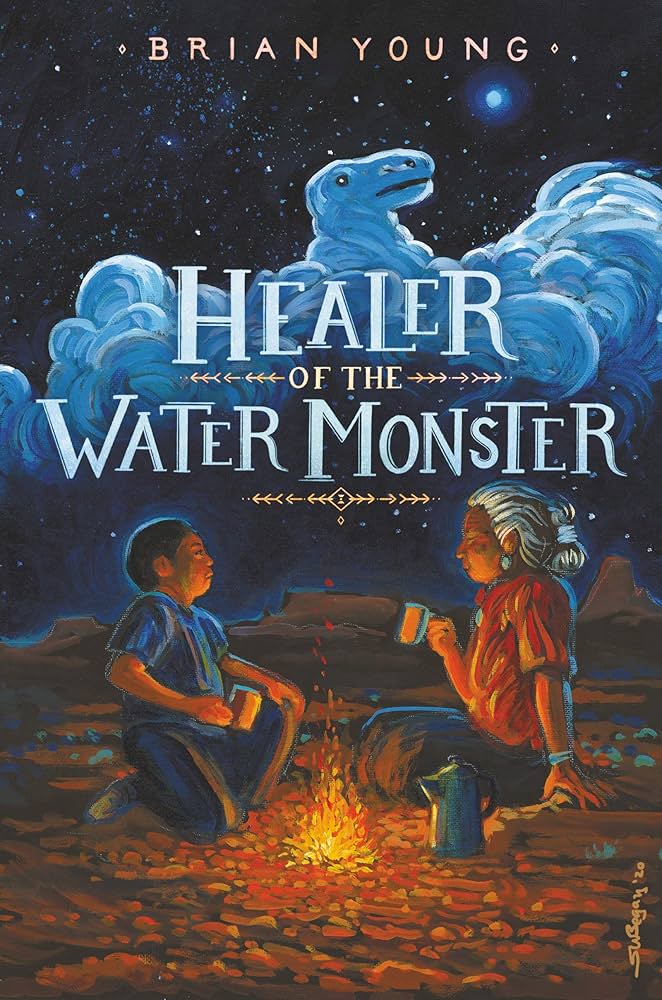
In Brian Young’s award-winning Healer of the Water Monster (Heartdrum, 2022), Nathan, lost in the desert while visiting his grandmother on the Navajo reservation, comes upon a Holy Being from the Navajo creation story – a Water Monster in need of help. The story interweaves traditional knowledge and legend with contemporary issues such as drought in the Southwest and pollution from uranium mining. For ages 8-12.
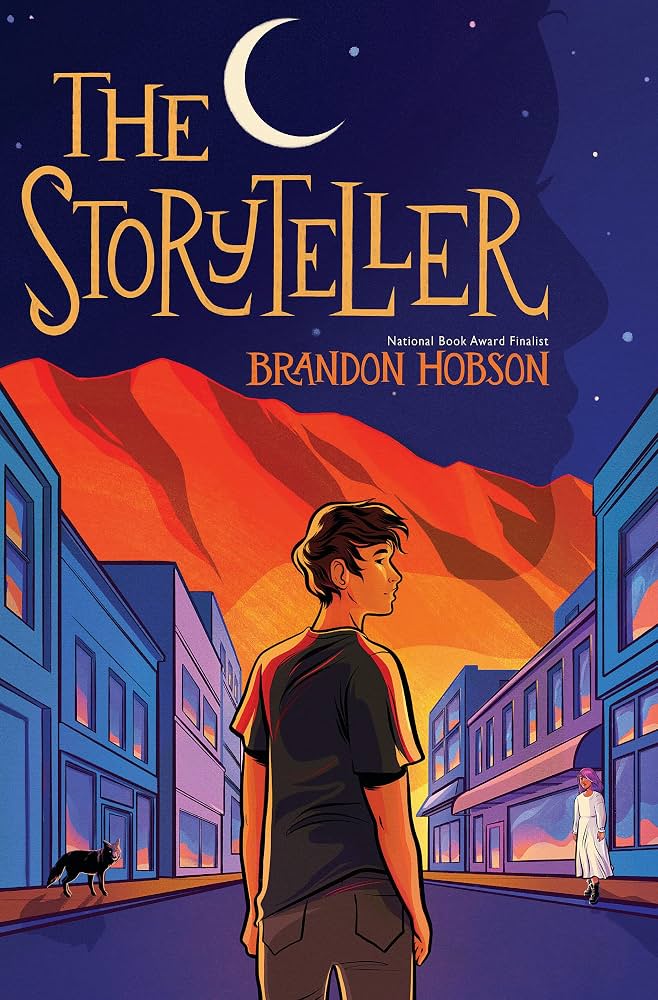
By Brandon Hobson, in The Storyteller (Scholastic, 2025), Ziggy, who belongs to the Cherokee nation, still wants to know what happened to his mother, who disappeared when he was a baby. Together with friends, he sets out to explore the caves his mother once visited – which his friend Alice claims are home to the Nunnehi, the spirit people. Ziggy’s quest soon turns into a series of encounters with magical and legendary people and animals. A theme is the healing power of stories. For ages 9-12.

In David A. Robertson’s The Barren Grounds (Puffin Canada, 2020), two indigenous kids in foster care find a portal that leads them into the frozen Barren Grounds of Misewa, a community of talking animals, who desperately need their help. For ages 10 and up.

By Drew Hayden Taylor, Take Us to Your Chief (Douglas & McIntyre, 2017) is a collection of Native-American-themed sci fi stories. A sentient computer turns to Native American spirituality; dream catchers turn dangerous; ancient petroglyphs hold the secret to time travel. For ages 11 and up.
By Darcie Little Badger, Elatosoe (Levine Querido, 2020) is a supernatural murder mystery in which Elatsoe (Ellie), a 17-year-old Lipan Apache with a talent for ghost calling, her spectral pet spaniel, Kirby, and best friend Jay, descendant of the fairy king Oberon, join forces to track down the murderer of her beloved cousin, Trevor. And there are vampires. For ages 12 and up.
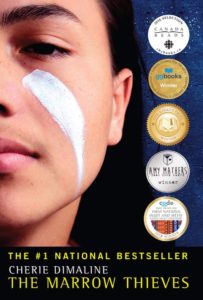
In Cherie Dimaline’s dystopic The Marrow Thieves (Cormorant Books, 2017), the world is ravaged by global warming, cities have crumbled into the sea, and survivors have lost the ability to dream – with the exception of the Native Americans. Indigenous peoples are being hunted for the marrow of their bones, which holds the cure to dreamlessness – and fifteen-year-old Frenchie and companions are fleeing to the north, trying to hide from the Recruiters. En route, Migwans, the leader of the group, shares stories in which he educates the younger members about indigenous history. For ages 13 and up.
Famous Native Americans
Some names to know: Squanto, Metacomet (King Philip), Powhatan, Pocahontas, Sacagawea, Pontiac, Osceola, Cochise, Geronimo, Sitting Bull, Crazy Horse, Chief Joseph, Tecumseh, Black Elk, Sequoyah, Red Cloud, Jim Thorpe, Maria Tallchief, Wilma Mankiller.
See 13 Important Native Americans You Didn’t Learn About in School.
From Biography, see 12 Influential Native American Leaders.
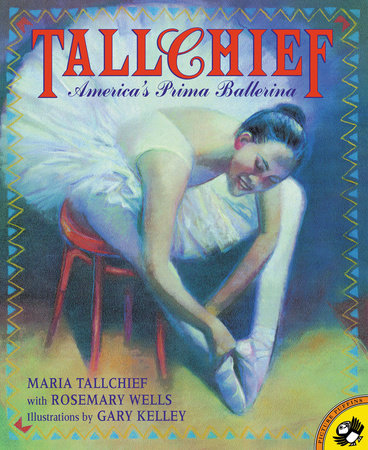
By Maria Tallchief and Rosemary Wells, Tallchief (Puffin, 2001) is the picture-book story of Maria Tallchief, the talented Native American who became America’s first prima ballerina. For ages 5-8.
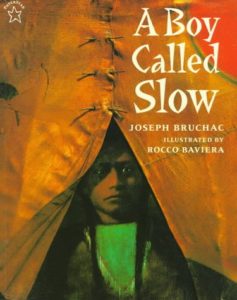
By Joseph Bruchac, A Boy Called Slow (Puffin, 1998) is a picture-book story of the boy who became Sitting Bull. For ages 5-9.
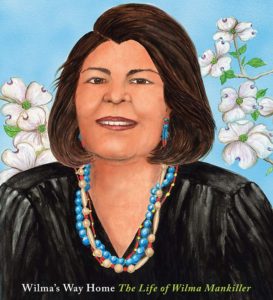
By Doreen Rappaport, Wilma’s Way Home (Little, Brown, 2019) is a picture-book version of the life of Wilma Mankiller, first female chief of the Cherokee tribe, an activist who worked to promote Native American rights in the 20th century. For ages 6-11.
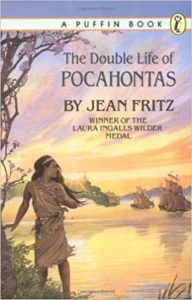
By Jean Fritz, The Double Life of Pocahontas (Puffin, 2002) is a fictionalized but well-researched biography of the young girl who ended up torn between two cultures. The compelling narrative moves back and forth among the perspectives of Powhatan, Pocahontas, and John Smith. For ages 8-12.
From Smithsonian magazine, see The True History of Pocahontas.
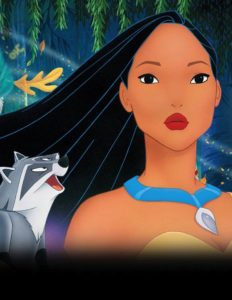
Historically, Disney’s Pocahontas (1995) (rated G) has a lot of problems, but it’s entertaining. Sophie Gilbert in
Revisiting Pocahontas at 20 points out, in its favor, that it delivers an environmental message and is the first ever Disney move starring an adult female and a woman of color.
From The Atlantic, Does Disney’s Pocahontas Do More Harm Than Good?
By S.D. Nelson, Red Cloud (Harry N. Abrams, 2017) is a picture-book biography of the great Lakota warrior and chief who led the only Native nation to win a war against the U.S. army, Eventually, however, he came to accept the inevitable advance of white civilization and moved his people onto a reservation. Included are an annotated timeline, a map, quotations, and background historical notes. For ages 8-12.
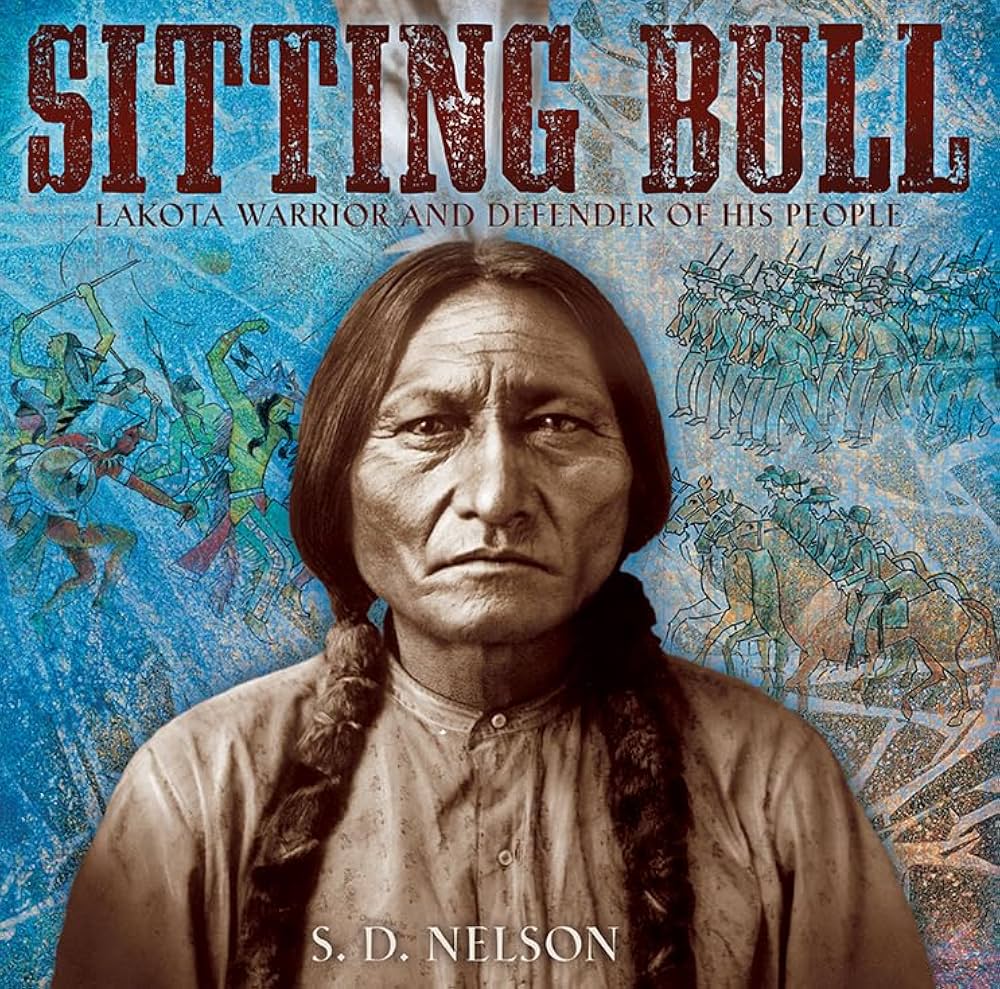
Also by Nelson in the same format, see Sitting Bull (Harry N. Abrams, 2015), the picture-book biography of the great Lakota/Sioux warrior, told in the first person, for ages 8-12.
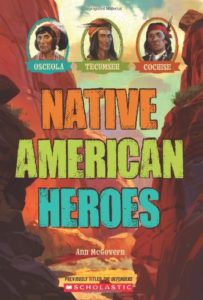
By Ann McGovern, Native American Heroes (Scholastic, 2013) is a gripping triple biography of Osceola, Tecumseh, and Cochise, supplemented with primary source materials including photos, maps, and portraits. For ages 8-12.
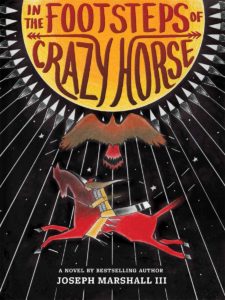
Joseph Marshall’s In the Footsteps of Crazy Horse (Amulet Books, 2015) is the story of a road trip or “vision journey,” taken by Jimmy McLean, a young Lakota boy, and his grandfather, Nyles High Eagle. In the course of the journey, Jimmy’s grandfather recounts the life story of the heroic warrior Crazy Horse – the last of his people to surrender to the U.S. Army. For ages 9-12.
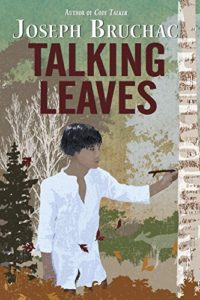
Joseph Bruchac’s Talking Leaves (Puffin, 2017), set in the 1820s, is the fictionalized story of Sequoyah and the invention of the Cherokee alphabet, told from the point of view of Sequoyah’s 13-year-old son. For ages 9-12.
Native American Poetry
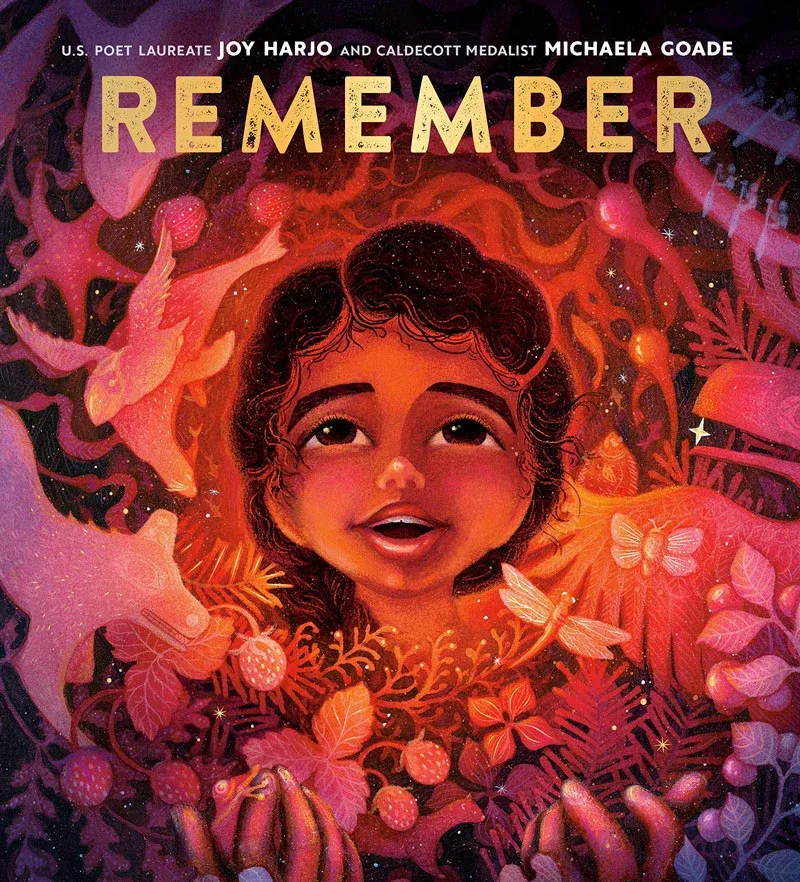
By Joy Harjo, America’s first Native American poet laureate, Remember (Random House Studio, 2023) is the picture-book version of her poem of the same name. (“Remember the sky you were born under,/Know each of the star’s stories./Remember the moon, know who she is.”)
By Joseph Bruchac, Thirteen Moons on Turtle’s Back (Puffin, 1997) is a collection of poems about the Native American lunar months, beginning with the shivery Moon of Popping Trees. For ages 4-9.
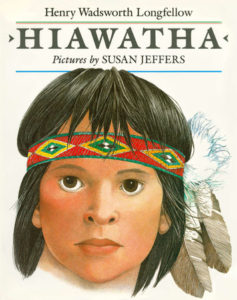
Hiawatha (Puffin, 1996), exquisitely illustrated by Susan Jeffers, is a picture-book introduction to Henry Wadsworth Longfellow’s famous poem for ages 4-8.
The complete Song of Hiawatha, which is 250+ pages long, is available at Project Gutenberg.
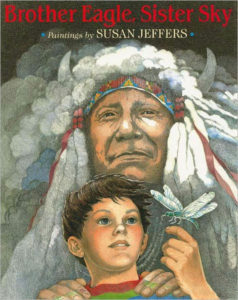
By Susan Jeffers, Brother Eagle, Sister Sky (Puffin, 2002) is a poetic picture-book version of the powerful speech given by Chief Seattle of the Suquamish tribe in 1854. “How can you buy the sky?/How can you own the wind and rain?” A beautiful book for all ages.

By Joseph Bruchac, The Earth Under Sky Bear’s Feet (Puffin, 1998) is a collection of 12 poems detailing what Sky Bear – also known as the Big Dipper – sees on the earth below. Beautifully illustrated with paintings by Thomas Locker. For ages 5 and up.
From the Academy of American Poets, see Poems for Native American Heritage Month and
Native American Heritage Month: Poems for Kids.

By N. Scott Momaday, The Way to Rainy Mountain (University of Mexico Press, 1976) is a blend of poetry, memoir, history, and folklore, as the author explores his Kiowa heritage. For teens and adults.

In 2019, Joy Harjo, a member of the Muscogee/Creek nation, became the first Native American to hold the position of United States Poet Laureate. Many of her poems have Native American themes. See An American Sunrise (W.W. Norton, 2020).

Edited by Joy Harjo, When the Light of the World Was Subdued, Our Songs Came Through (W.W. Norton, 2020) is a rich anthology of Native American poetry by 161 poets from 90 indigenous nations. For teens and adults.
Native Americans in the Movies
From Partnership with Native Americans, see this list of 5 Films with Accurate Native Representation at https://nativepartnership.org/5-films-with-accurate-native-representation/.
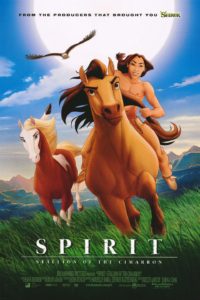
In the animated Spirit: Stallion of the Cimarron (2002), Spirit – a wild horse – is captured and taken to an army fort, where the resident Colonel does his best to break him. A young Lakota prisoner, Little Creek, and Spirit manage to free themselves – and Spirit is taken to the Lakota camp, where he falls for Little Creek’s horse, Rain. A lot of excitement follows before the happy ending. Rated G.
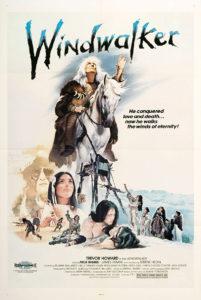
In Windwalker (1980), set in Utah in 1797, an aged Cheyenne warrior helps fight off a raiding party of rival Crow; and, through flashbacks, tells the story of his life. Other than voice overs, the film is spoken in the Cheyenne and Crow languages, with English subtitles. Rated PG.
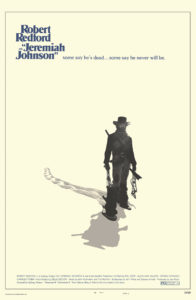
Jeremiah Johnson (1972) is loosely based on the story of mountain man John Jeremiah Johnston – a.k.a. Liver-eating Johnston – though luckily without the more horrific aspects of the real Johnson’s life. In this story, Jeremiah (Robert Redford), after leaving the army, heads west for a life of solitude as a mountain man. There – after the U.S. Cavalry forces him to lead them through a sacred burial ground - he stumbles into a vendetta with the Crow. But there’s a lovely ending. Rated PG.
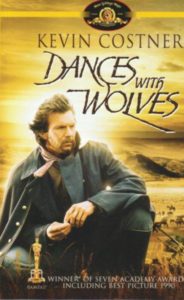
Dances with Wolves (1990) is spoken of as a watershed for Native Americans in the movies, one of the first to attempt in-depth portrayals of Native American characters and culture – and to hold a good portion of the dialogue in Lakota, with English subtitles. The story is that of Civil War lieutenant John Dunbar, next assigned to the western frontier, where he befriends a local Lakota tribe who give him the name “Dances with Wolves.” Dunbar adopts the lifestyle and customs of the tribe, but trouble arises when the U.S. Army arrives and Dunbar is captured and ordered executed as a deserter. Rated PG-13.
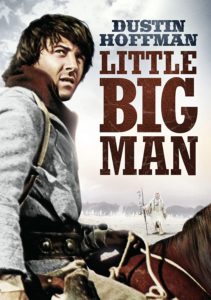
Little Big Man (1970) traces the life of Jack Crabb (Dustin Hoffman), a 121-year-old man whose family was killed by the Pawnee when he was ten years old. He’s rescued and adopted by the Cheyenne (long-time enemies of the Pawnee) – and from then on is torn between the worlds of the Native Americans and that of the invasive whites. Rated PG-13.
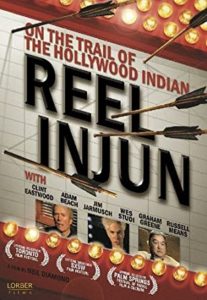
Reel Injun (2009), created by Cree filmmaker Neil Diamond, is a documentary about the portrayal of Native Americans in the movies, from the age of silent film to the present day. Recommended for ages 15 and up.
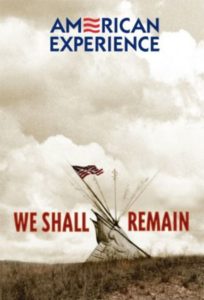
From PBS’s The American Experience, We Shall Remain (2009) is a five-part overview of 300 years of Native American history from an indigenous point of view. Episode titles are “After the Mayflower,” “Tecumseh’s Vision,” “Trail of Tears,” “Geronimo,” and “Wounded Knee.”
Arts, Crafts, Activities
See Native American History (above) for Anita Yasuda’s Explore Native American Cultures! and Yvonne Wakim Dennis’s A Kid’s Guide to Native American History, both of which pair historical and cultural information with hands-on projects and activities.
Native Tech is a website devoted to Native American technology and art, with separate categories for Beads and Beadwork, Birds and Feathers, Clay and Pottery, Stonework and Tools, Weaving and Cordage, and more.
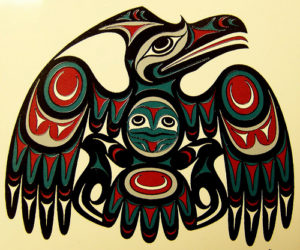
The Denver Art Museum has a vast collection of Native American art, consisting of over 18,000 pieces by artists from over 250 indigenous nations. Browse the collection here.
From Khan Academy, see Terms and Issues in Native American Art, a well-done kid-friendly article on stereotypes, sacred art, repatriation, and problematic terminology.
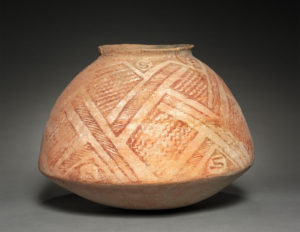
See Native American Art from the Metropolitan Museum’s Heilbrunn Timeline of Art History.