Dinosaurs
In this collection
Dinosaur love, as every parent knows, usually begins sometime between the ages of 4 and 9 - but the passion can go on forever. Dinosaurs are cool.
See below for books, projects, interesting lesson plans, dinosaur cookies, a great dinosaur sock puppet, and the scoop on becoming a paleontologist.
Fictional Dinosaurs

Jane Yolen’s How Do Dinosaurs Say Goodnight? (Blue Sky Press, 2000) is a rhyming picture-book account of how dinosaurs (and, by implication, kids) go to bed. “Does a dinosaur slam his tail and pout?/Does he throw his teddy bear all about?/Does a dinosaur stomp his feet on the floor/And shout “I want to hear one book more”?/Does a dinosaur ROAR?” No. As it turns out, they’re much better behaved. Mark Teague’s witty illustrations feature ten different oversized dinosaurs. Many good-behavior-promoting sequels, among them How Do Dinosaurs Go to School?, How Do Dinosaurs Play with Their Friends?, and How Do Dinosaurs Clean Their Room? For ages 2-7.

Jon Surgal’s Have You Seen My Dinosaur? (Random House, 2010) is a giggle-provoking hide-and-seek book in catchy rhyme. (“Have you seen my dinosaur?/He’s large. He’s green. He likes to roar.”) The dinosaur all the while is hiding in plain sight. For ages 3-6.

In John Steven Gurney’s Dinosaur Train (HarperCollins, 2002), Jesse – who loves trains and dinosaurs – is taken on a marvelous just-before-bedtime trip on a train filled with spectacular dinosaurs. For ages 3-6.
Check out the PBS kids’ show Dinosaur Train. Included at the site are games, a field guide to dinosaurs, videos, and a teacher’s guide.

Elise Broach’s When Dinosaurs Came with Everything (Atheneum Books, 2010) is every kid’s dream giveaway: as a little boy and his mother run their Friday errands, every store and office is handing out free dinosaurs. (At the doughnut shop: Buy a Dozen, Get a Dinosaur.) And these are real dinosaurs. The kid collects four before his mom calls it quits, and home they go for lunch. A giggle for ages 3-7.

In Bernard Most’s If the Dinosaurs Came Back (Houghton Mifflin Harcourt, 1984), the narrator imagines what if would be like if dinosaurs were around today: they’d mow lawns and serve as ladders; people could ride to work on their backs; and they’d protect us from robbers. With catchy illustrations of big bright-colored dinosaurs. For ages 4-8.

In Ian Whybrow’s Harry and the Bucketful of Dinosaurs (Puffin, 2012), Harry finds a cache of old plastic dinosaur toys in his grandmother’s attic, cleans them up, learns all their names, and soon carries them everywhere with him in a bucket. These are special dinosaurs: for Harry, they come to life. A problem arises when he loses his beloved dinosaurs on the train – but Harry knows just how to get them back. There are several sequels featuring Harry and his dinosaurs. For ages 4-8.

Paul Stickland’s Dinosaur Roar (Puffin, 2002) is an introduction to opposites, with colorful and expressive dinosaurs and a simple, but clever, rhyming text – starting with “Dinosaur roar/Dinosaur squeak/Dinosaur fierce/Dinosaur meek.” For ages 4-8.

Syd Hoff’s Danny and the Dinosaur (HarperCollins, 2008) was originally published in 1958 and is still going strong today. Danny visits a museum where he meets a live, friendly (and appealingly blimpish) dinosaur and off the two go for an adventurous day. Sequels are Danny and the Dinosaur Go to Camp and Happy Birthday, Danny and the Dinosaur! For ages 4-8.

Tony Mitton’s Dinosaurumpus (Scholastic, 2009) is a bouncy and colorful rumpus of cavorting dinosaurs with a rhyming and onomatopoetic text (lots of Thwacks, Bomps, Donks, and EEEKs). (“Shake, shake, shudder/near the sludgy old swamp./The dinosaurs are coming./Get ready to romp!”) Readers also learn some real dinosaur names and features. For ages 4-8.

In James Mayhew’s Katie and the Dinosaurs (Hodder & Stoughton, 2009), Katie visits the Natural History Museum, goes through a door marked “No Admittance,” and finds herself in a prehistoric world of dinosaurs - where she helps a baby Hadrosaurus and distracts a hungry T. rex (with her lunch box). One of many Katie books. For ages 4-8.

In William Joyce’s Dinosaur Bob and His Adventures with the Family Lazardo (HarperCollins, 1995), the adventurous Lazardo family obtains a pet dinosaur while on safari in Africa. (“He looks kind of like my uncle Bob,” said Mrs. Lazardo. So they named him Bob.) The illustrations are gorgeous, and the whole thing is topped off with “The Ballad of Dinosaur Bob” (by Zelda Lazardo), to be sung to the tune of “Auld Lang Syne.” For ages 4-8.

In Mo Willems’s Edwina, The Dinosaur Who Didn’t Know She Was Extinct (Hyperion Books, 2006), Edwina is a sweetheart of a dinosaur who helps old ladies cross the street and bakes chocolate chip cookies. She’s loved by all, except Reginald Von Hoobie-Doobie, who insists – with lecture, illustrations, and a pointer – that the dinosaurs are TOTALLY EXTINCT. Edwina is horrified. For ages 4-8.
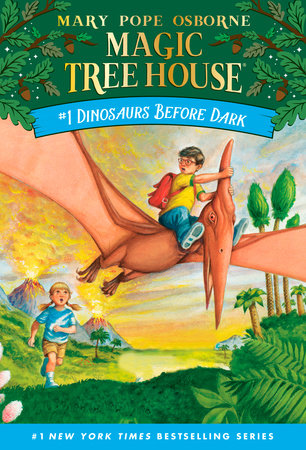
In the very first of Mary Pope Osborne’s Magic Tree House series, Dinosaurs before Dark (Random House, 1992), Jack and Annie land in the Cretaceous period. For ages 5-8.

In Mo Willems’s hysterical Goldilocks and the Three Dinosaurs (Balzer + Bray, 2012), the dinosaurs make the beds, arrange the chairs, set out three tempting bowls of chocolate pudding heated to various temperatures, and go for a walk. Says Mama Dinosaur, “I SURE HOPE NO INNOCENT LITTLE SUCCULENT CHILD HAPPENS BY OUR UNLOCKED HOME WHILE WE ARE…uhh…SOMEPLACE ELSE!” Luckily visiting Goldilocks wises up before she becomes a dinosaur bon-bon. For ages 5 and up.

In Judith Viorst’s Lulu and the Brontosaurus (Atheneum Books for Young Readers, 2010) – with terrific illustrations by Lane Smith – Lulu, denied a brontosaurus for her birthday, throws a screaming fit, then packs a pickle sandwich and heads off into the woods to find a brontosaurus for herself. When she finally finds one, a problem arises: the brontosaurus wants to keep Lulu as a pet. Readers get a choice of three different endings. Funny, clever, and a helpful lesson in behavior for ages 5-9.

In Oliver Butterworth’s The Enormous Egg (Little, Brown Books for Young Readers, 1993), young Nate Twitchell is flabbergasted when an oversized egg from the family chicken coop in Freedom, NH, hatches out an infant Triceratops. Soon scientists and politicians converge on the farm, and Nate is confronted with the problem of what’s best to do with his dinosaur. For ages 8-12.
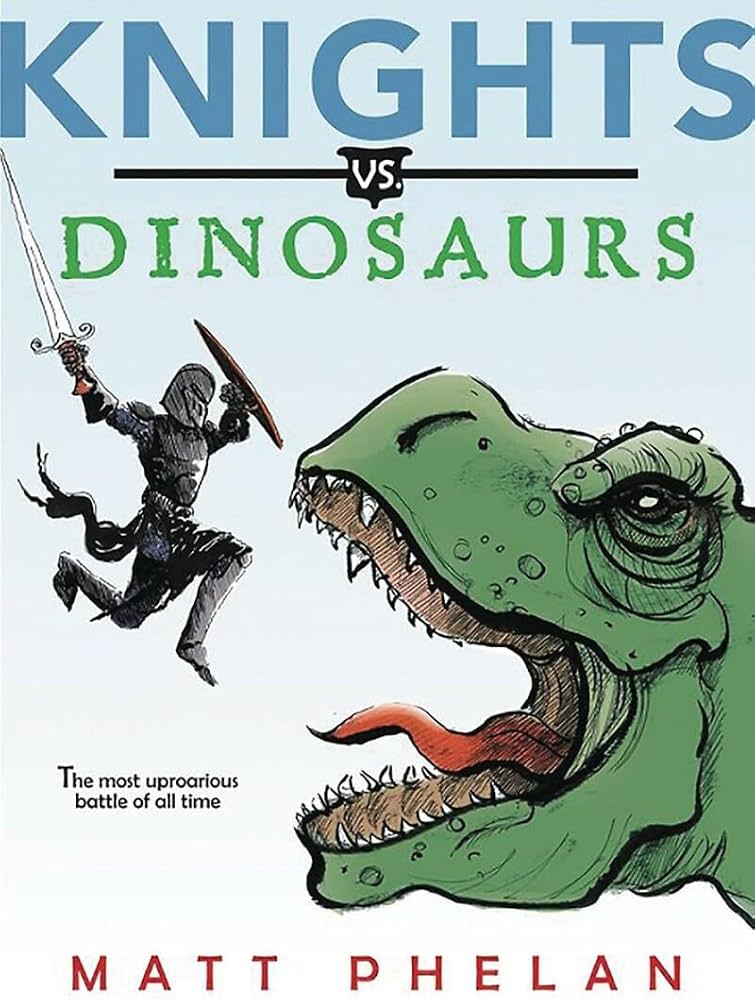
In Matt Phelan’s hilarious Knights vs. Dinosaurs (Greenwillow, 2019), Merlin sends King Arthur’s knights off to battle dinosaurs. Think Monty Python for ages 8-12.

In Evelyn Sibley Lampman’s The Shy Stegosaurus of Cricket Creek (Purple House Press, 2007), twins Joan and Joey Brown – out hunting fossils in the desert – find far more than they bargained for: a live Stegosaurus (George) who likes bananas and speaks English. For ages 8-12.
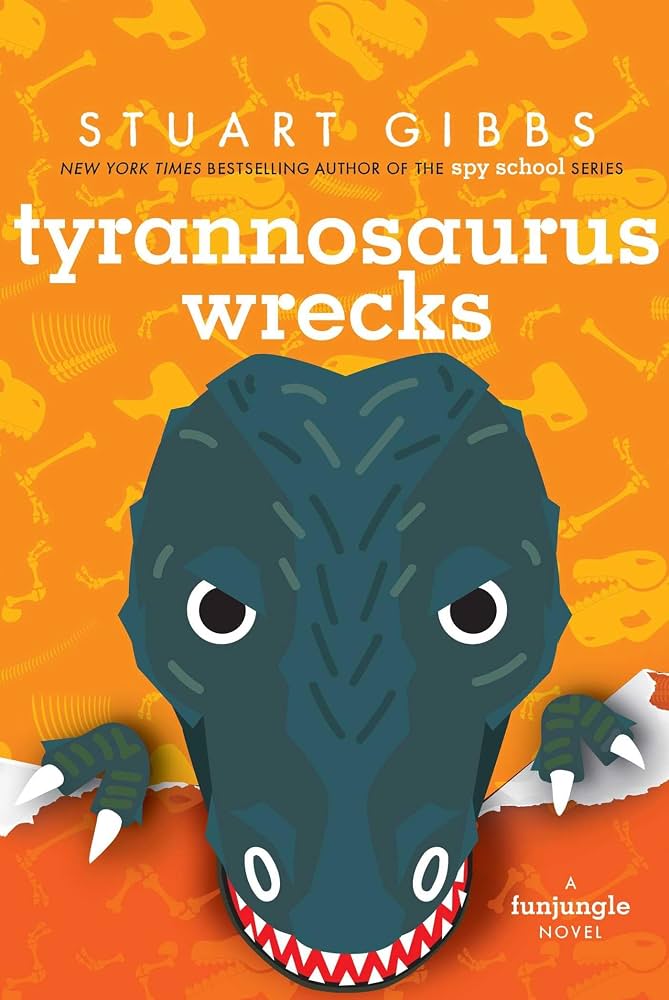
In Tyrannosaurus Wrecks by Stuart Gibbs (Simon & Schuster, 2021), 12-year-old sleuth Teddy Fitzroy investigates a stolen T. rex skull. One of the FunJungle mystery series, featuring Teddy, who lives in the world’s largest zoo and theme park. For ages 8-12.

Abby Howard’s Dinosaur Empire! (Amulet, 2017) is a graphic novel in which Ronnie and next-door neighbor Ms. Lernin, a retired paleontologist, go back in time to visit the three periods of the Mesozoic Era: the Triassic, Jurassic, and Cretaceous. One of the Earth Before Us series. For ages 9-12.
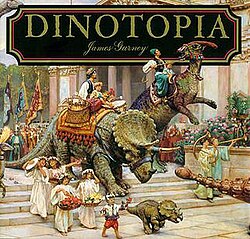
In James Gurney’s gorgeously illustrated Dinotopia: A Land Apart from Time (Calla Editions, 2011), a father and son, shipwreck survivors, come upon an undiscovered island where people live with intelligent dinosaurs. A wealth of creative detail for a wide range of ages.

In Michael Crichton’s Jurassic Park (Ballantine Books, 2012), the dinosaurs are back – cloned from blood samples in ancient amber – and they’re smart and dangerous. In the sequel, Lost World, they’re back again. Exciting reads for teenagers and adults.
Steven Spielberg’s 1993 film version of Jurassic Park stars Sam Neill, Laura Dern, and lot of spectacular dinosaurs. Rated PG-13.
Jurassic Park Danger! (Ravensburger) is a strategy board game that pits prowling dinosaurs against a cast of characters from the movie. For ages 10 and up. See 
Real Dinosaurs

In Byron Barton’s Bones, Bones, Dinosaur Bones (HarperFestival, 1990), six paleontologists in different-colored pith helmets hunt for dinosaur bones, dig them up, wrap them and send them to the museum, and then assemble a dinosaur skeleton. For ages 3-6.

By Catherine D. Hughes, National Geographic’s First Big Book of Dinosaurs (National Geographic Children’s Books, 2011) covers dinosaurs in ascending order of size, from Small to Big, Giant, and Gigantic. For each, there’s a reader-friendly description, a quick Facts box, and a pronunciation guide. The book is filled with activity suggestions and interactive questions and has great realistic illustrations by Franco Tempesta. A good pick for ages 4-8.

In Joanna Cole’s The Magic School Bus in the Time of the Dinosaurs (Scholastic, 1995), everyone’s favorite teacher Ms. Frizzle – whose clothes I crave, especially that dress covered in vegetables – transports her class back in time for a tour of the Triassic, Jurassic, and Cretaceous Periods, with a stop-off at a Maiasaura nesting ground. Much of the information is conveyed through hand-written and illustrated student reports. For ages 4-8.

By Kathleen Weidner Zoehfeld, Dinosaur Tracks (HarperCollins, 2007) in the Let’s-Read-and-Find-Out Science series explains how fossil footprints form and what we can learn from them. For ages 4-8.

In the same series by Zoehfeld, see Dinosaurs Big and Small (HarperCollins, 2002) which discusses the range of dinosaur sizes in terms of recognizable measures, such as an average-size kid, a school bus, and an elephant – a great link to math - Where Did Dinosaurs Come From? (HarperCollins, 2010), which covers fossil clues to the evolution of dinosaurs; and Did Dinosaurs Have Feathers? (HarperCollins, 2003) which covers the first discovery of early feathers in a fossilized Archaeopteryx, Chinese fossils of feathered dinosaurs, and the link between dinosaurs and modern birds. For ages 4-8.

Aliki’s Digging Up Dinosaurs (HarperCollins, 1988) in the Let’s-Read-and-Find-Out Science series not only covers digging up dinosaurs, but the process of putting them back together again. The illustrations are wonderful, with detailed dinosaur skeletons, clever little cartoon people with dialogue in cartoon bubbles, and – on the cover – a female paleontologist. For ages 4-9.
Related books by Aliki are My Visit to the Dinosaurs (HarperCollins, 1985), Dinosaur Bones (HarperCollins, 1990) and Fossils Tell of Long Ago (HarperCollins, 1990).

Aliki’s Dinosaurs Are Different (HarperCollins, 1986) provides more detailed information than is found in the usual elementary dino book. Dinosaur differences are anatomic and taxonomic: the author explains the dinosaur family tree and shows the differences between the two orders of dinosaurs: the lizard-hipped saurischians and the bird-hipped ornithischians. Pictures, with color-coded bones, show readers how to tell them apart. Additional information is provided through kids exchanging dinosaur facts in cartoon conversation balloons. For ages 5-9.

By Gail Gibbons, Dinosaurs! (Holiday House, 2009) is a straightforward introduction to paleontology and dinosaurs – beginning with the massive meteor that hit the earth, bringing the Age of Dinosaurs to an end. Gibbons covers the Triassic, Jurassic, and Cretaceous periods, profiles 14 different dinosaurs, and discusses dinosaur discoveries. For ages 5-9.

Kathleen V. Kudlinski’s Boy, Were We Wrong about Dinosaurs (Puffin, 2008) describes our changing beliefs about dinosaurs, beginning with the ancient Chinese, who thought the giant bones belonged to dragons. Theories continue to change today, as we discover more about dinosaur anatomy and behavior. For ages 6-9.

The National Geographic Society’s The Dinosaur Museum (National Geographic Children’s Books, 2006) is a fabulous interactive tour of a natural history museum, with pop-up fossils, a dinosaur timeline, a sliding dinosaur size chart, and all kinds of fascinating flaps, tabs, and wheels. For ages 5-11.

By Kathi Wagner and Sheryl Racine, The Everything Kids’ Dinosaurs Book (Adams Media, 2005) is a 144-page collection of information, activities, recipes, and puzzles. Included are Words to Know (say, paleontologist) and jokes. For ages 8-12.

Jacob Berkowitz’s Jurassic Poop: What Dinosaurs (and Others) Left Behind (Kids Can Press, 2006) – a sure hit with the dinosaur-and-potty-humor crowd – is filled with helpful information about preserved dung and what scientists learn from it. Readers learn the formal name for fossilized poop, which is coprolite. For ages 8-12.

David Lambert’s Dinosaur (Dorling Kindersley, 2010) in the Eyewitness series covers a wide range of dinosaur topics in a series of spectacularly illustrated double-page spreads. Among the topics covered are the dinosaurs of various geologic periods, dinosaur evolution, meat-eaters and plant-eaters, feathered dinosaurs, eggs and young, fossils, and dinosaur classification. Included is a discovery timeline and a glossary. For ages 8 and up.

By Monica Kulling, Mary Anning’s Curiosity (Groundwood Books, 2017) is the story of early 19th-century paleontologist Mary Anning, who made her first major fossil discovery at the age of twelve when she found an ichthyosaurus in the cliffs near her home on the southern coast of England. For ages 9-13.

Stephen Jay Gould’s natural history collections are a great science resource for teenagers and adults. None are all about dinosaurs, but most include a number of interesting dinosaur essays. Check out The Panda’s Thumb (W.W. Norton & Company, 1992) for “Were the Dinosaurs Dumb?” and “The Telltale Wishbone.” See

Walking with Dinosaurs is a six-part series from the BBC: episode titles are New Blood, Time of the Titans, Cruel Sea, Giant of the Skies, Spirits of the Ice Forest, and Death of a Dynasty. See https://www.imdb.com/title/tt0214382/.
Also see Walking with Dinosaurs (reimagined series) which highlights the life of six incredible dinosaurs. Episode titles are The Orphan, The River Dragon, Band of Brothers, The Pack, The Journey North, and Island of the Giants. See https://www.imdb.com/title/tt32564124/.

Paleontology has information, games, videos, experiments and projects on fossils and dinosaurs from the American Museum of Natural History.
Paleontologists and Dinosaur Hunters
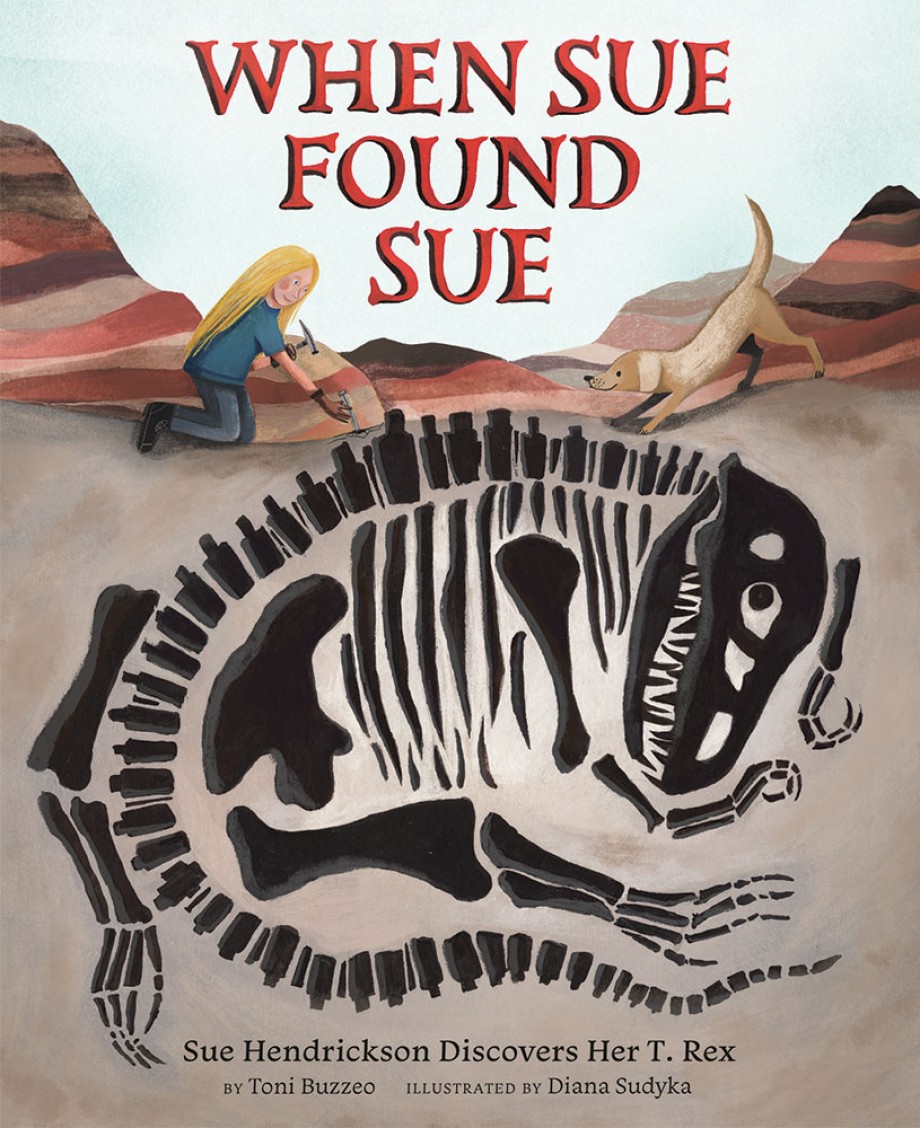
Toni Buzzeo’s When Sue Found Sue (Abrams, 2019) is the story of paleontologist Sue Hendrickson and her discovery, on a dig in South Dakota, of the most complete Tyrannosaurus rex skeleton ever unearthed. For ages 4-8.
Check out Sue at the Field Museum at https://www.fieldmuseum.org/blog/sue-t-rex.
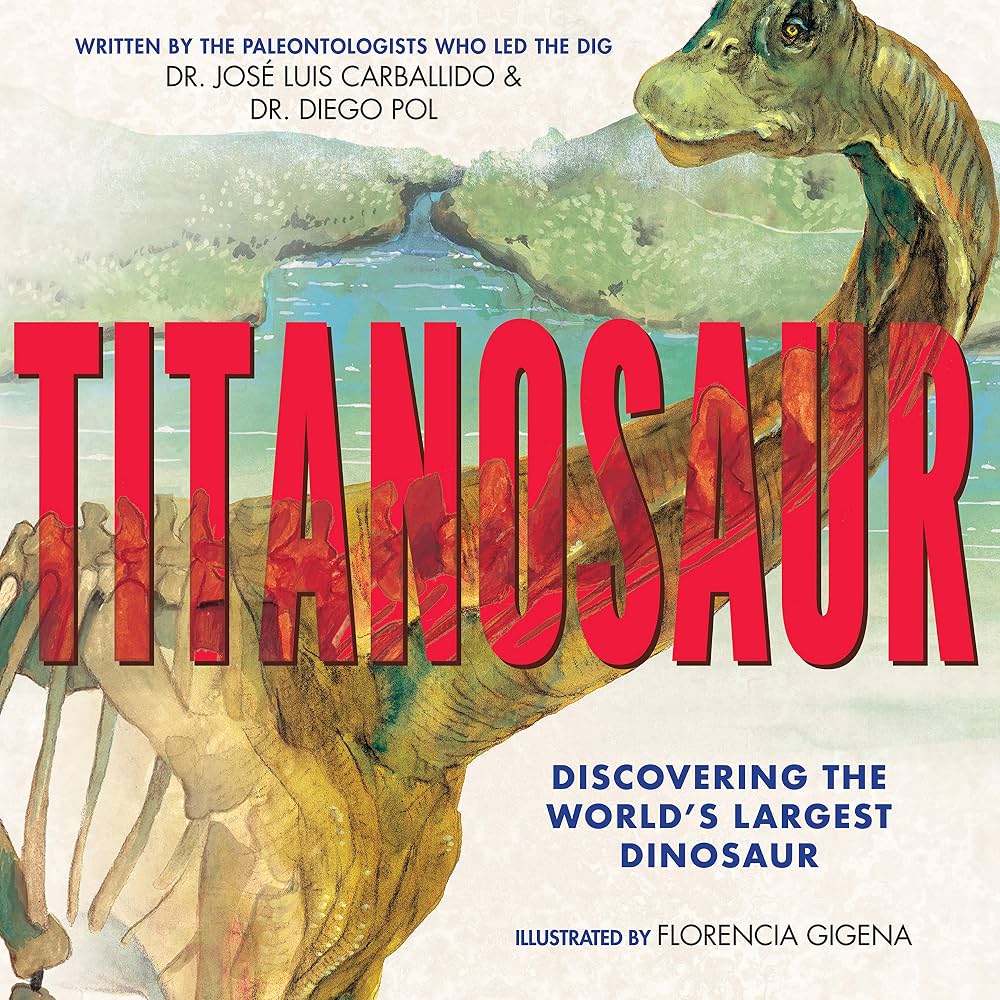
By Diego Pol and Jose Carballido, Titanosaur: Discovering the World’s Largest Dinosaur (Scholastic, 2019) is the story of the discovery and excavation of the world’s biggest dinosaur (and the largest creature ever to walk the earth) in the deserts of Argentina. Appendices include more information and photos of the dig. For ages 5-7.

Tracy Fem’s Barnum’s Bones (Farrar, Straus & Giroux, 2012) is the story of paleontologist Barnum Brown – named for the showman P.T. Barnum – who discovered the first documented Tyrannosaurus rex skeleton. For ages 5-9.
From the American Museum of Natural History, see Barnum Brown: The Man Who Discovered Tyrannosaurus rex on You Tube.

Barbara Kerley’s The Dinosaurs of Waterhouse Hawkins (Scholastic, 2001) – with wonderful illustrations by Brian Selznick – is the story of Benjamin Waterhouse Hawkins, the Victorian artist who built the life-size dinosaur models that ornamented the grounds of London’s famous Crystal Palace. (He threw a dinner party for scientists inside his Iguanodon.) For ages 6 and up.

Shirley Raye Redmond’s That Dog That Dug for Dinosaurs (Simon Spotlight, 2012) – a Ready to Read book - is the (true) story of Mary Anning’s dog Tray and their fossil-hunting expeditions in England in the early 19th century. For ages 6-8.

Kate McMullen’s Dinosaur Hunters (Random House, 2005) – a Step Into Reading book – is an information-packed history of paleontology from Mary Ann and Gideon Mantell’s 19th-century discovery of Iguanodon through “Dinosaur Jim” Jensen, discoverer of Supersaurus and Ultrasaurus. For ages 7-9.

By Peter Larson and Kristin Donnan, Bones Rock! (Invisible Cities Press, 2004) - subtitled “Everything You Need to Know to Be a Paleontologist” – has background information and how-tos for young dinosaur- and fossil-lovers. Find out how to dig, clean, and evaluate fossils, and to propose and test scientific hypotheses. Illustrated with color photos and diagrams. For ages 9-12.
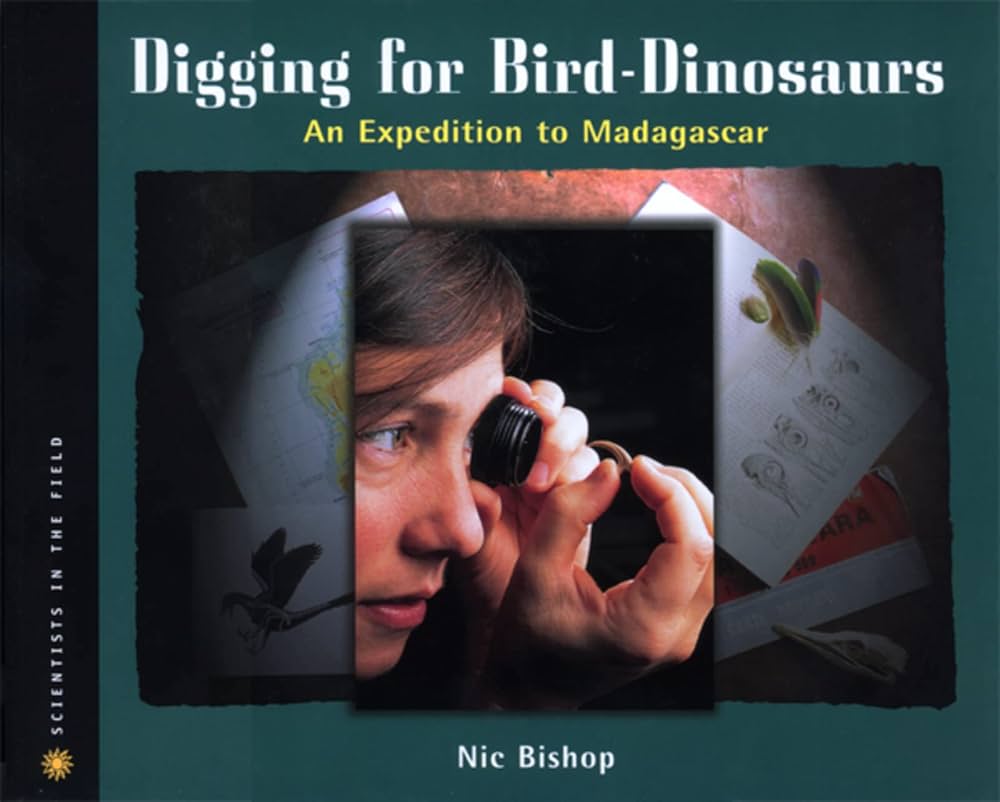
Nic Bishop’s Digging for Bird-Dinosaurs (Houghton Mifflin Harcourt, 2002) – one of the Scientists in the Field series – is a photo-essay on Cathy Forster’s 1998 expedition to Madagascar and her work on the evolutionary link between dinosaurs and birds. For ages 10 and up.

By Jim Ottaviani and colleagues, Bone Sharps, Cowboys, and Thunder Lizards (G.T. Labs, 2005) is a well-done historical graphic novel about the “Bone Wars” of the Gilded Age, during which rivals Edward Drinker Cope and Othniel Charles Marsh competed for the West’s troves of dinosaur bones. For ages 10 and up.

By Deborah Noyes, the beautifully designed Tooth & Claw: The Dinosaur Wars (Viking, 2019) is the story of the rivalry between paleontologists Edward Cope and Othniel Marsh, illustrated with fact boxes and period photos. For ages 11 and up.

Nature writer David Rains Wallace’s The Bonehunters’ Revenge (Mariner Books, 2000) is a detailed account of the fatal Bone Wars for teenagers and adults.

From the PBS American Experience series, Dinosaur Wars is a video account of the Othniel Marsh/Edward Cope conflict that (on the positive side) set off a permanent American passion for dinosaurs. The website has background information and a teacher’s guide.

In Bone Wars (“The Game of Ruthless Paleontology”) from Zygote Games, players take on the role of paleontologists and compete to collect dinosaur bones, fending off natural disasters and unscrupulous rivals along the way. For 2-4 players ages 10 and up.
The DinoHunters is an online history of dinosaur hunting with capsule biographies of famous dinosaur hunters, among them Gideon Mantell, Mary Anning, Barnum Brown, and Sue Hendrickson.
From Enchanted Learning, The Top Paleontologists and Dinosaur Hunters of All Time is a long hyperlinked alphabetized list beginning with Luis Alvarez.
The Dinosaur Hunters is a kid’s musical about the 19th-century dinosaur “bone wars” between paleontologists Othniel Marsh and Edward Cope (“two men with very strange beards”). A fun free download.
Going Extinct

In Julie Middleton’s Are the Dinosaurs Dead, Dad? (Peachtree Press, 2013), Dave and his dad are visiting the natural history museum where – whenever Dad’s back is turned – the dinosaurs come alive. With clever and funny illustrations by Russell Ayto. For ages 4-8.

Jack Horner and James Gorman’s How to Build a Dinosaur (Dutton, 2009) – subtitled “Extinction Doesn’t Have to Be Forever” – suggests that it might be possible to build a dinosaur by reverse engineering starting with chicken DNA. For teenagers and adults.
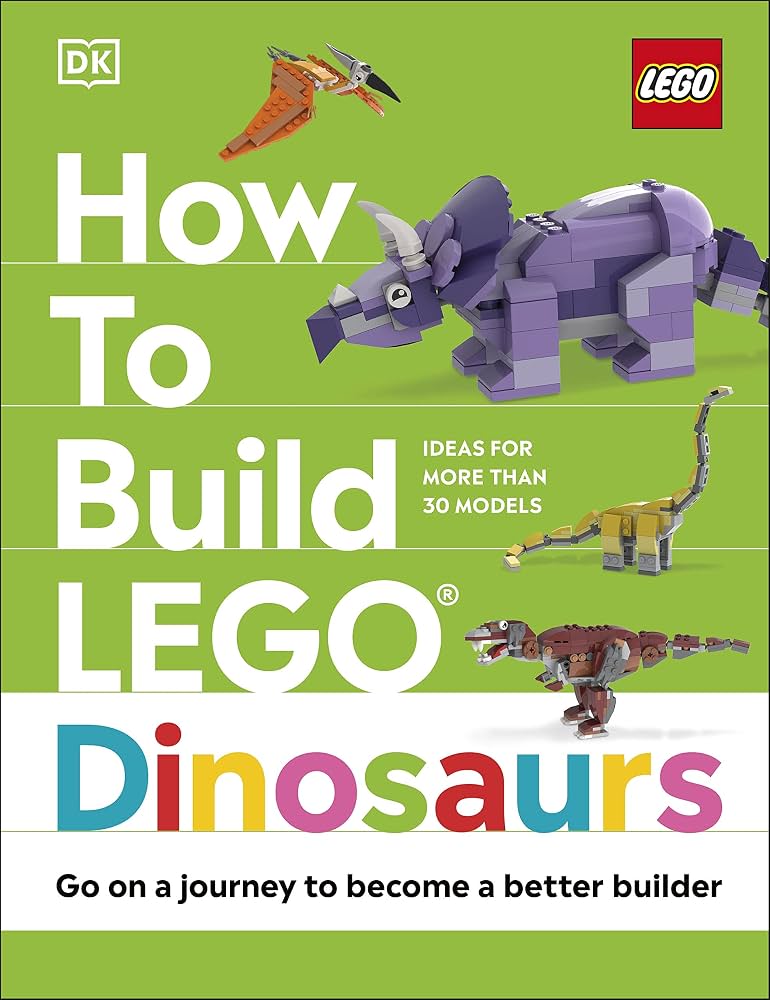
By Jessica Farrell et al., How to Build LEGO Dinosaurs (DK, 2022) has easy-to-follow instructions for building over 30 creative dinosaur models. For ages 7-9.
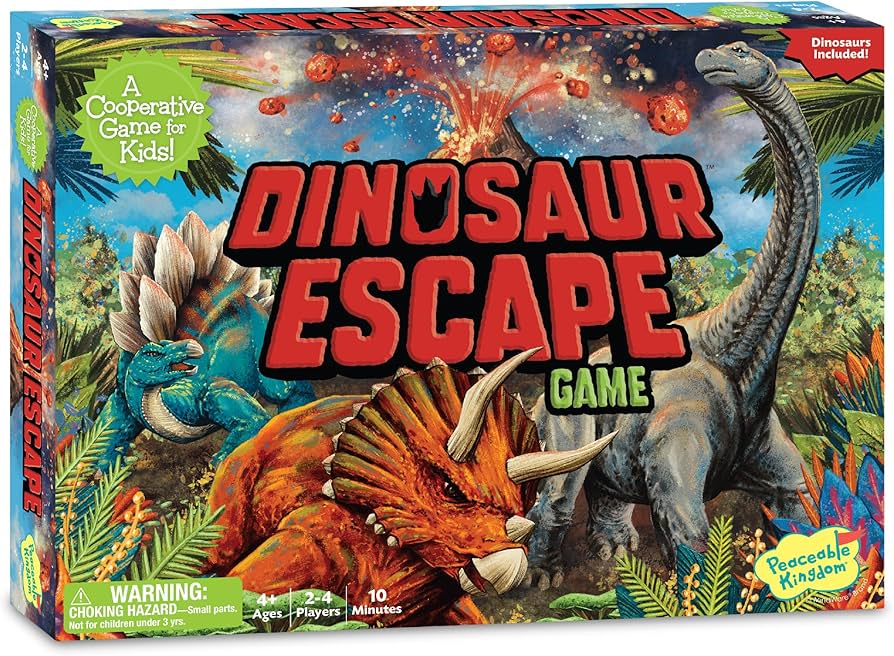
Save the dinosaurs? In Dinosaur Escape (Peaceable Kingdom), dinosaurs are lost in the ferns and a volcano is about to erupt. A board game for 2-4 dinosaur lovers, ages 4 and up. See
Dinosaur Math

Bernard Most’s How Big Were the Dinosaurs? (Houghton Mifflin Harcourt, 1995) puts dinosaur size in perspective, using a lot of kid-friendly analogies: A T. rex’s tooth was as long as your toothbrush; a Triceratops head was too big to fit through your front door; a Diplodocus was as long as a basketball court. Included is a cool fold-out. For ages 4-8.
How Big Was That Dinosaur? is a math activity printout and chart from Enchanted Learning, in which dinosaur sizes are computed in terms of cars, school buses, and human adults.

In Stuart J. Murphy’s Dinosaur Deals (HarperCollins, 2001) – a MathStart book – Mike and Andy go to a Dinosaur Card Trading Fair. The book deals with the concept of equivalency as the kids trade cards worth varying point values; also included is a scattering of dinosaur facts. For ages 6-9.
From Making Learning Fun, Math Ideas for a Dinosaur Theme has printable pattern cards, missing number cards, counting cards, a roll-and-color addition game, and more, all with dinosaurs.
Problem of the Month: Digging Dinosaurs is math challenge with a dinosaur theme, presented at five different levels (variously appropriate for kindergarteners through high-school students).
Activities and Projects
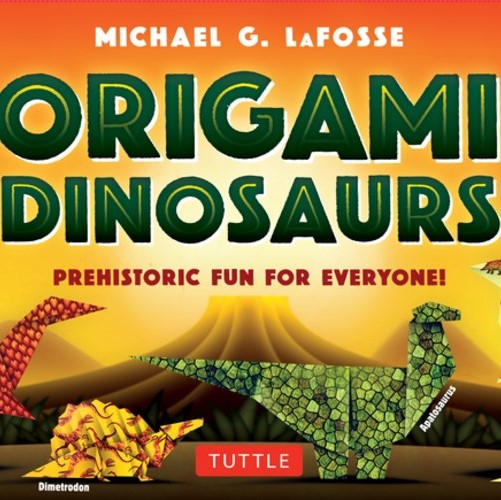
By Michael G. LaFosse, the Origami Dinosaurs Kit (Tuttle, 2017) has prehistoric-patterned origami paper and instructions for making 20 different paper dinosaurs. See
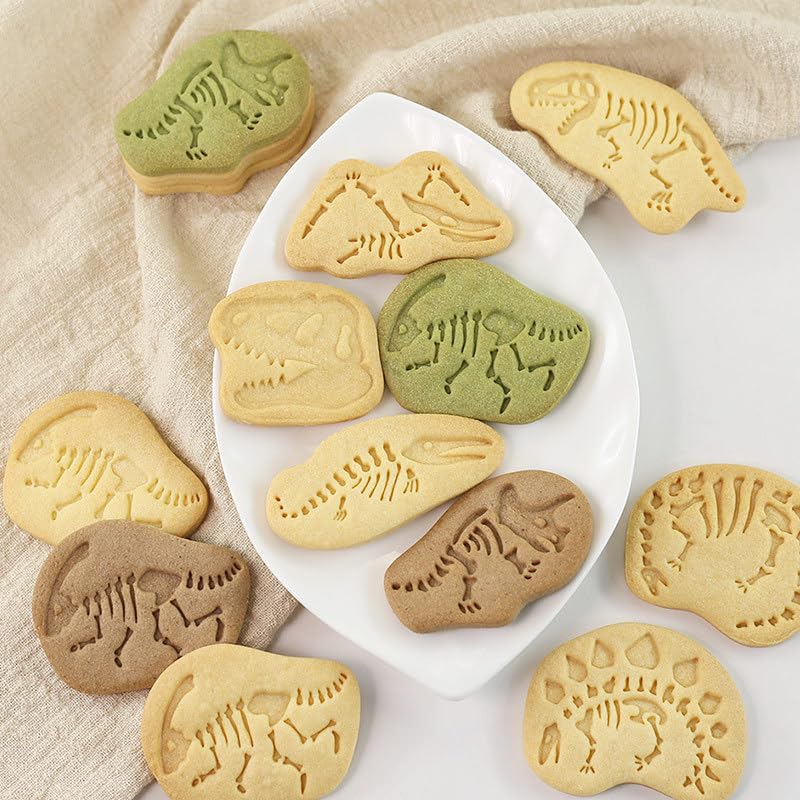
Edible fossils! Make a batch of your own with these dinosaur fossil cookie stamps. See
Build a
From All Kids Network, Dinosaur Crafts has a great assortment, among them a tissue-paper dinosaur window ornament, an adorable dinosaur sock puppet, a dinosaur color matching game, and a salt-dough fossil.
Dinosaur Crafts from Activity Village include a paper-plate Diplodocus and Styracosaurus, and a pair of tie-on dinosaur feet. (Put them on and stomp in them!)

dinosaur excavation cake.

This one is a craft and a half. Chris McGowan’s How to Make a Dinosaur out of Chicken Bones (HarperPerennial, 1997) has instructions for making an (“incredibly realistic") Apatosaurus skeleton from chicken bones. (You’ll need three chickens, boiled; the book includes recipes for the leftovers.) A fun and challenging project. This clever book is out of print, but inexpensive used copies are readily available. (And check the library.) For ages 9 and up.
Songs and Poems

Jack Prelutsky’s Tyrannosaurus Was a Beast (Greenwillow Books, 1992) is a collection of humorous poems illustrated by Arnold Lobel. The title poem: “Tyrannosaurus was a beast/that had no friends, to say the least./It ruled the ancient out-of-doors,/and slaughtered other dinosaurs.” For ages 4-8.
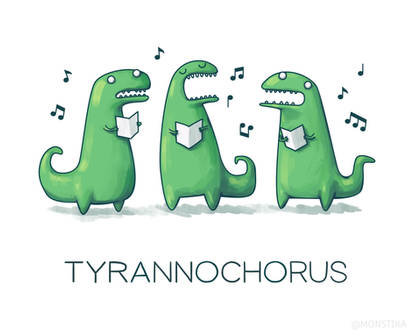
Who knew there were so many dinosaur songs? See https://open.spotify.com/playlist/1XCsgDtTY8i7csrwutqiv9.