
Birds
In this collection
Who doesn’t love the birds? And think about all the great birds in literature: Stuart Little’s Margalo, Harry Potter’s Hedwig, Mo Willems’s Pigeon. Edgar Allan Poe’s Raven. The doleful Dodo in Alice in Wonderland. And all those piratical parrots.
See below for bird stories, bird science, birds in art, bird food recipes, mathematical birds, famous birds, and the best birds in movies.
Bird Stories

Jane Yolen’s Owl Moon (Philomel, 1987) is a magical picture-book story about a walk through the winter woods at night to go owling. For ages 3-8.
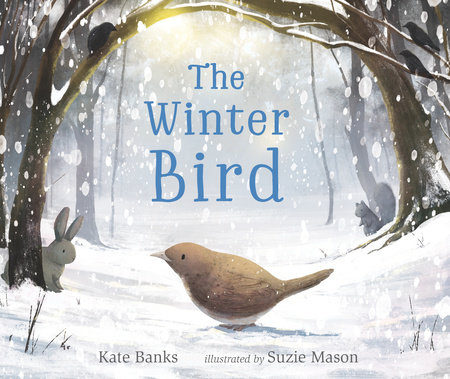
By Kate Banks, The Winter Bird (Candlewick, 2022) is a lovely story of friendship as forest animals rally round to help a little nightingale with a broken wing survive the winter. For ages 3-7.
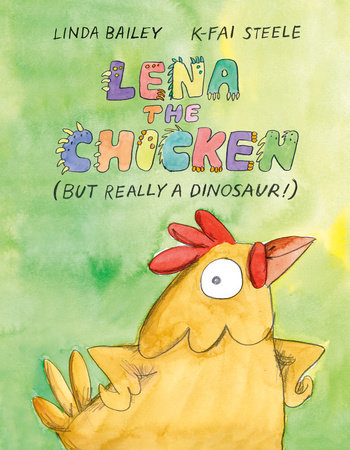
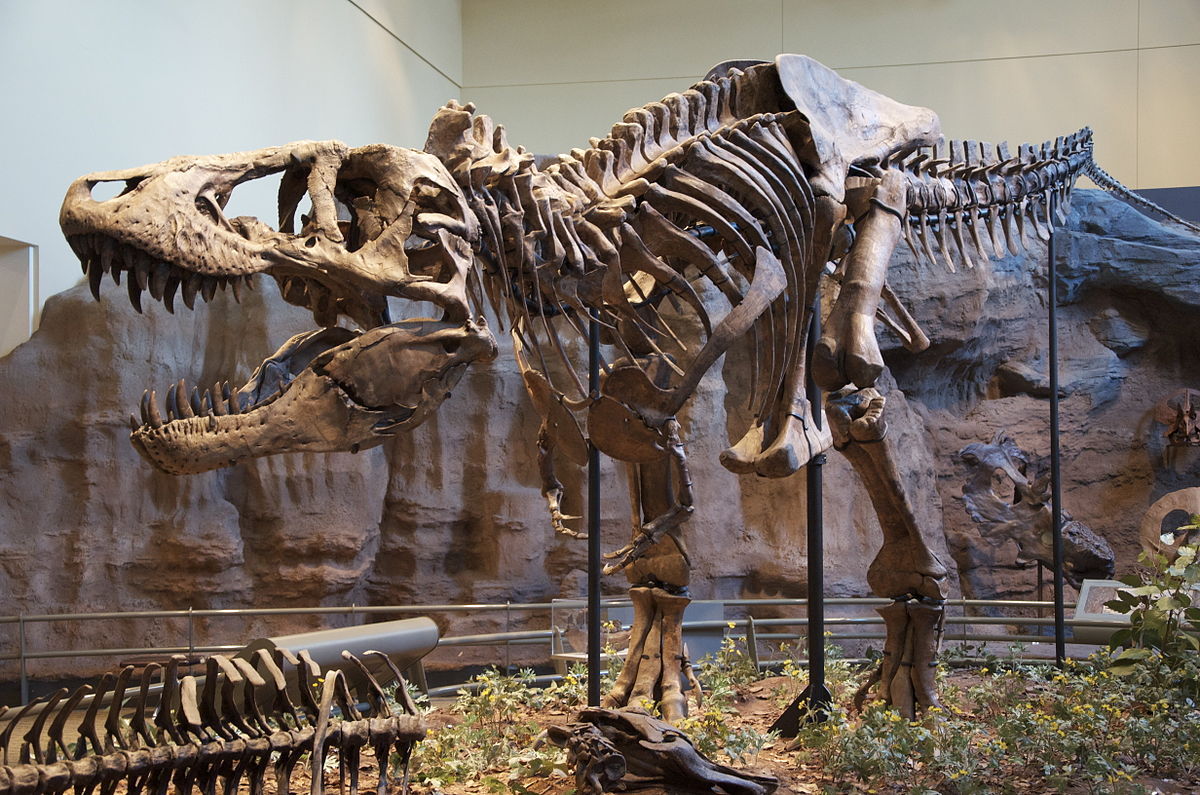
In Linda Bailey’s Lena the Chicken (But Really a Dinosaur) (Tundra Books, 2024), Lena – a particularly feisty and obstreperous chicken - is convinced she’s a dinosaur. Nobody knows what to make of her – though Madeline, the farmer’s daughter, thinks she’s great. Lena’s dinosaur roots save the day when a weasel moves in on the coop – and a report by Madeline (and a page of backstory) explain how birds really are descended from dinosaurs. For ages 3-7.

In Jennifer Sattler’s Sylvie (Random House, 2009), Sylvie – a little flamingo – asks her mother why flamingos are pink and discovers that it’s because of the pink shrimp that they eat. Sylvie promptly sets out to experiment, snacking on grapes (which turn her purple), chocolate (brown), a red kite (scarlet), and even a paisley bathing suit (paisley-patterned). Finally, however, she discovers that she’d prefer to be her own pink self. For ages 3-7.
Pair this one with Leo Lionni’s A Color of His Own (Dragonfly, 1997).
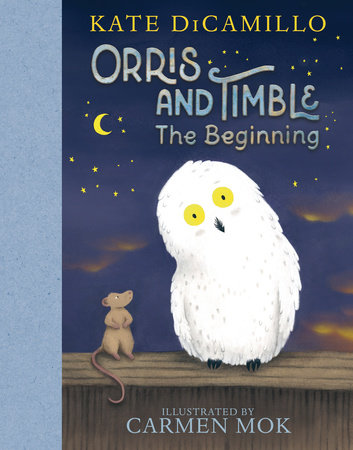
In Kate DiCamillo’s Orris and Timble (Candlewick, 2024), Orris – a rat – lives in an abandoned barn in a comfy nest surrounded by his treasures (a red velvet slipper, a marble, and a sardine can). Then Timble, a little owl arrives, and becomes caught in a mousetrap. A lovely story of an unlikely friendship for ages 4-7.

In I.C. Springman’s More! (Houghton Mifflin Harcourt, 2012), an acquisitive magpie learns about the perils of too much stuff with the help of some friendly mice. When the book begins, the magpie has nothing, until a mouse offers him a marble – but soon, obsessively collecting, he passes from “plenty” to “much too much.” A nicely done lesson on materialism (with a bird). For ages 4-8.

Adam Rubin’s hilarious and delightful Those Darn Squirrels! (Sandpiper, 2011) features the unspeakably grumpy Old Man Fookwire, who hates pies and puppies – but loves birds. He paints bird portraits and fills his yard with beautiful bird feeders, in hopes of persuading his beloved birds stay with him through the winter. The feeders promptly attract a gang of particularly persistent and innovative (they’re good with pulleys and catapults) squirrels. When the birds do fly south, leaving Old Man Fookwire alone in his house mournfully eating cottage cheese, the squirrels decide to do him a good turn in payment for all the goodies they’ve nabbed. For ages 4-8.

Inspired by Old Man Fookwire? From Deep Space Sparkle Art Lessons for Kids, see How to Draw a Bird for a great bird drawing, painting, and decorating project. Make beautiful bird portraits of your own.

In Dr. Seuss’s Horton Hatches the Egg (Random House, 2004), Horton, the kind and patient elephant, determinedly cares for the egg left behind by lazy bird Maysie, who has taken off for Palm Springs. (“I said what I meant and I meant what I said/An elephant’s faithful, one hundred percent!”) And at last, when the egg hatches, Horton gets a wonderful reward. For ages 4-8.

Janell Cannon’s Stellaluna (Houghton Mifflin Harcourt, 1993) is the story of a little fruit bat who, attacked by an owl, falls and lands in a nest of birds. Her new siblings teach her about life as a bird – and she, in turn, shows them what life is like for bats. It’s a lovely story about friendship, despite differences. (Stellaluna, at the end, is reunited with her mother and discovers that she’s supposed to eat mangoes, not bugs.) For ages 4-8.

In Don Freeman’s Will’s Quill, or How a Goose Saved Shakespeare (Viking Juvenile Books, 2004), Willoughby, a country goose, heads for London to see the sights. There he has a hard time until befriended by playwright Will Shakespeare – and ultimately, by providing feathers for quill pens, he does Will a great service in return. For ages 5-8.
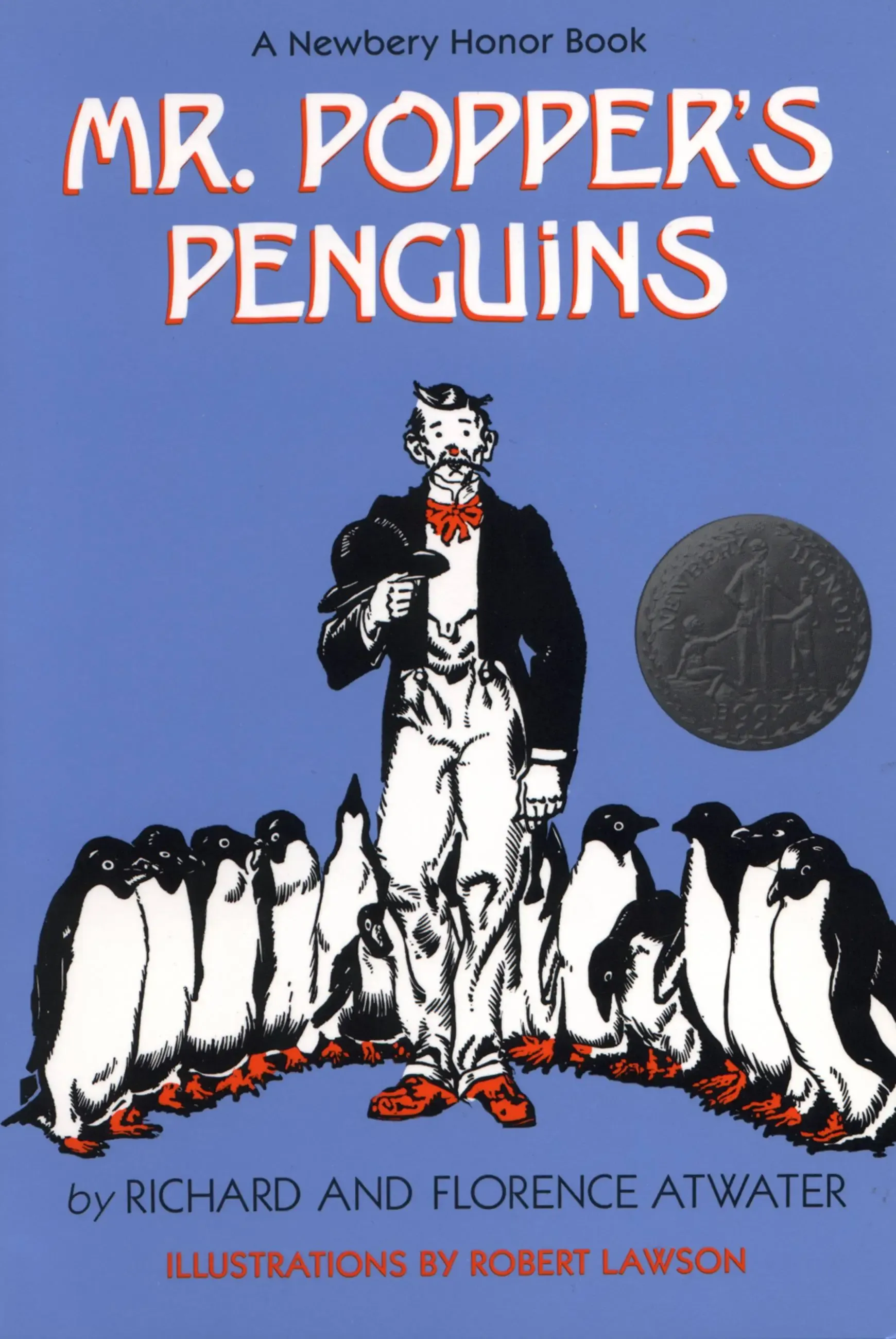
In Florence and Richard Atwater’s classic Mr. Popper’s Penguins (Little, Brown, 1992), Mr, Popper – a house painter – is sent a gift of a penguin by polar explorer Admiral Drake. Next he acquires a female penguin – and soon there’s a house full of obstreperous penguins. So Mr. Popper takes his penguins on the stage. For ages 6-9.
The movie version (2011), with Jim Carrey as Mr. Popper, is rated PG.

In Dick King-Smith’s chapter book Harry’s Mad (Yearling, 1997), Mad is a bird – a highly intelligent and creative talking parrot named Madison, left to Harry by his eccentric uncle. Trouble strikes when Mad is parrot-napped. For ages 6-10.

In Joan Aiken’s Arabel’s Raven (Houghton Mifflin Harcourt, 2007) – with illustrations by the incomparable Quentin Blake – Arabel’s father, a taxi driver, brings home an injured bird. Subsequently named Mortimer, the raven - who insists on answering the telephone by squawking “Nevermore!” – wreaks havoc. He’s a sort of avian Paddington Bear. Arabel loves him and so do I. For ages 7-10.
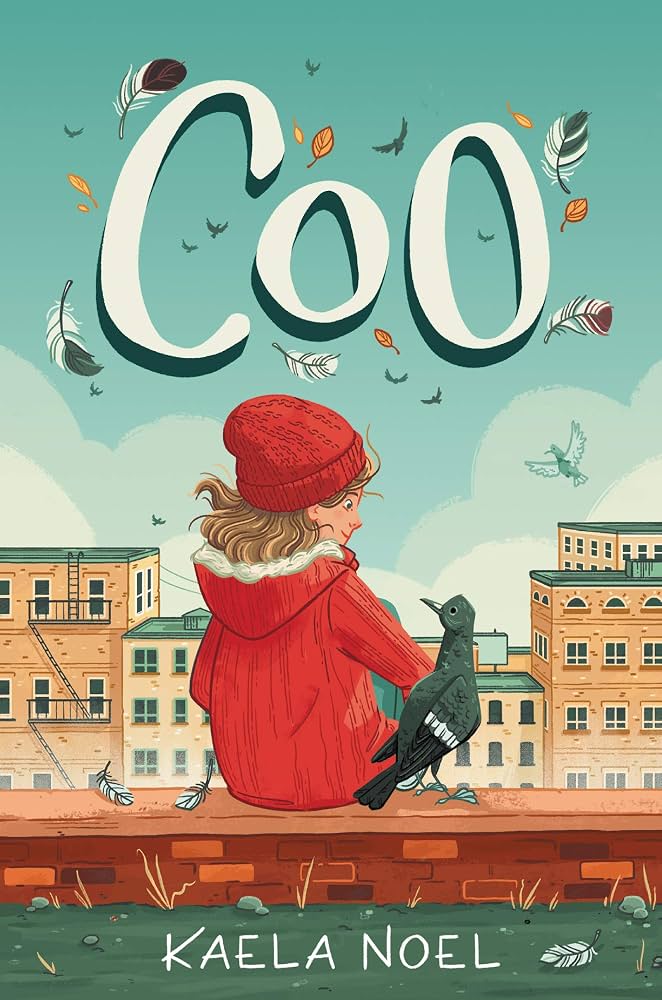
By Kaela Noel, Coo (Greenwillow, 2021) is the story of Coo, a young girl who has been raised on a rooftop by a flock of pigeons. Now one of the flock is injured and Coo must find help from a human on the ground. For ages 7-12.

In E.B. White’s The Trumpet of the Swan (HarperCollins, 2001), originally published in 1970, eleven-year-old Sam discovers a family of trumpeter swans while on a camping trip – the youngest of whom, a cygnet named Louis, is mute. Louis’s father steals a brass trumpet from a music store to give his son a voice. A wonderful book for ages 8-12.
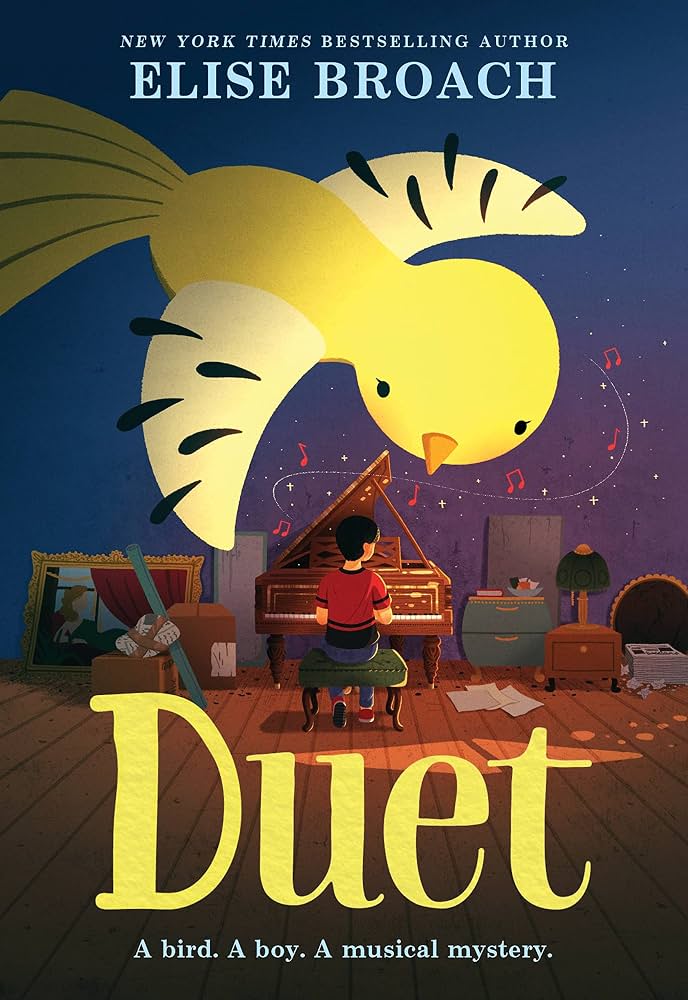
By Elise Broach, Duet (Christy Ottaviano Books, 2024) is the story of Mirabelle, a gifted young goldfinch who lives in a piano teacher’s backyard, and Michael, a talented 11-year-old pianist who refuses to play. A history-rich mystery involving a lost piano, Frederic Chopin, George Sand, and Eugene Delacroix – a a bird-and-boy duet. For ages 8-12.

In Kathleen O’Dell’s The Aviary (Yearling, 2012), eleven-year-old Clara and her mother live in a crumbling mansion with old Mrs. Glendoveer. Clara, said to have a weak heart, is forbidden to run, play, or go to school – but nonetheless manages to make a friend and to solve the mystery of the Glendoveers’ past. It’s a spooky and addictive story that involves vanished children and the birds caged in the great aviary behind the house. For ages 8-12.

In Farley Mowat’s Owls in the Family, Billy – growing up on the plains of Canada – adopts two personality-laden pet owls, Wol and Weeps, who promptly turn the family and the neighborhood upside-down. For ages 8-12.

The main character in Jean Craighead George’s My Side of the Mountain (Puffin Books, 2004) is 12-year-old Sam Gribley who runs away from home to live on his own in a hollow tree in the Catskills. There he learns to survive, and adopts and tames a peregrine falcon chick, which he names Frightful. A wonderful read for any kid who has ever dreamed of life in the woods – and luckily there are several sequels. For ages 8-12.

Holling C. Holling’s Seabird (Houghton Mifflin Harcourt, 1978) is the story of a carved ivory seagull who travels across oceans and through time with four generations of seafarers, from a Nantucket whaling ship to a clipper, a steamship, and an airplane. The carving is made by young Ezra Brown, based on the seagull he saw in a snowstorm from the crow’s-nest of the whaling ship. It’s a wonderful book, illustrated both with colorful paintings and detailed marginal drawings, diagrams, and maps. For ages 9-12.

In Sally J. Pla’s The Someday Birds (HarperCollins, 2017), young Charlie is on a crazy cross-country journey with his siblings to visit their journalist father in the hospital, where he is being treated for a brain injury sustained in Afghanistan. Along the way, Charlie copes with his worries by trying to spot all the birds that he and his father had planned to see “someday,” with the help of the serendipitously discovered journal of a famous birder. For ages 8-12.

An abusive father, a brother who has lost his legs in Vietnam, and an original edition of Audubon’s Birds of America are all factors in the life of eighth-grader Douglas Swieteck, main character in Gary D. Schmidt’s Okay for Now (Clarion, 2011). For ages 10-14.
Folk Tales, Fairy Tales, and Fantasy

Gerald McDermott’s Raven (Houghton Mifflin Harcourt, 2001) is a trickster tale from the Pacific Northwest in which clever Raven feels sorry for the people living in the cold and dark, and so sets out to steal light and warmth from the Sky Chief. Illustrated with colorful native-American-style drawings. For ages 4-8.

In James Mayhew’s Ella Bella Ballerina and Swan Lake (Barron’s Educational Series, 2011), Ella’s ballet class is preparing to dance Tchaikovsky’s Swan Lake – and Ella, as she listens to the music, is magically transported into the world of Swan Lake, where she meets Odette, the swan princess, and the evil sorcerer who turned her into a bird. For ages 4-8.

There are now many versions and editions of Hans Christian Andersen’s story of “The Ugly Duckling,” the homely and heckled little duck who grew up to be a beautiful swan. See Jerry Pinkney’s Caldecott Honor book The Ugly Duckling (HarperCollins, 1999).

Jane Ray’s The Emperor’s Nightingale and Other Feathery Tales (Boxer Books, 2013) is a collection of 12 stories and poems from around the world, all featuring birds. Included, along with Hans Christian Andersen’s “The Emperor’s Nightingale,” are Oscar Wilde’s “The Happy Prince,” “Jorinda and Joringel” from the Brothers Grimm, and Edward Lear’s “The Owl and the Pussycat.” For ages 5 and up.

In Katherine Paterson’s The Tale of the Mandarin Ducks (Puffin, 1995), set in medieval Japan, a greedy lord captures and cages a beautiful mandarin duck, who pines miserably for freedom and his mate. Yasuko, the little kitchen maid, releases the bird, and she and her friend, the one-eyed ex-warrior Shozo, are sentenced to death by their angry master – only to be saved by a pair of mysterious messengers. For ages 5 and up.

By Gennady Spirin, The Tale of the Firebird (Philomel, 2002) is a gorgeously illustrated picture-book version of the Russian folktale about the Tsar’s youngest son and his quest for the Firebird. Danger, adventures, a helpful wolf, the frightening Baba Yaga who lives in a cottage with chicken feet, a beautiful princess, and a wonderful bird. For ages 6-10.

By R. L. LeFevers, Flight of the Phoenix (Houghton Mifflin Harcourt, 2010) stars ten-year-old Nathaniel Fludd, sent to live with his aunt after his parents are declared lost at sea – where he sets out to learn the family business of beastology. In this, the first of an extensive series (all crammed with mythological creatures), Nate and Aunt Phil travel to Arabia to witness the hatching of a phoenix egg. For ages 7-10.

In Edward Ormondroyd’s David and the Phoenix (Purple House Press, 2001) – originally published in the 1950s – David explores the mountains behind his new North Carolina home and there discovers the Phoenix. The Phoenix is being pursued by a Scientist and had been studying Spanish, in preparation for fleeing to South America – but he decides to stay put for a while, and to take David’s education in hand. There follows a series of hilarious and often near-disastrous adventures, involving fauns, leprechauns, witches, griffins, and a Sea Monster – and ultimately a painful, but hopeful ending. I’ve loved this book for years, as it waffles in and out of print. At the moment, it's in. It’s also available in used editions and inexpensively (even for free) on Kindle. For ages 8-12.

Kathryn Lasky’s Guardians of Ga’hoole series is a gripping battle between good and evil, with owls. In Book 1 of the series, The Capture (Scholastic, 2003), a young owl named Soren has been living happily with his family, raised on tales of the Guardians of Ga’hoole, legendary owls famed for their noble deeds. Then he is knocked out of the nest and captured by evil owls from the Academy of St. Aegolius. There Soren and his new friend Gylfie struggle to survive, resist their captors, and secretly learn to fly. Many exciting sequels. For ages 8-12.

By James Riordan, The Seven Voyages of Sinbad the Sailor (Frances Lincoln Children’s Books, 2008) – from the classic A Thousand and One Arabian Nights – is a 64-page illustrated account of astounding adventures with (among others) an island that turns out to be a whale, a sea monster, ogres, and a gigantic bird called a rookh. For ages 9-12.

Clem Martini’s The Mob (Kids Can Press, 2005) is the story of the Kinaars, a crow clan, now come together for their annual meeting at the Gathering Tree. Kyp, a headstrong young crow, is ostracized from the Flock for calling down a mob on an encroaching cat; when a blizzard hits, however, Kyp and friends – though they’ve flouted crow tradition – save the day. It’s a great story, and many of the behaviors of the crow clan are based upon those of real crows in the wild. Reminiscent of Watership Down. There are two sequels. For ages 10 and up.
Bird Poems

Susan Stockdale’s Bring on the Birds (Peachtree Publishers, 2011) is a gorgeously illustrated rhyming account of the many different kinds of birds (“Swooping birds/Whooping birds/Birds with puffy chests/Dancing birds/Diving birds/Birds with fluffy crests”). An illustrated appendix explains just what each bird is. For ages 4-8.

Deborah Ruddell’s Today at the Bluebird Café (Margaret K. McElderry Books, 2007) is a terrific picture-book collection of 22 bird poems. (From “The Loon’s Laugh:” “A wail. A chuckle. A shriek at the moon./You pull up your covers. You hope it’s a loon.”) For ages 4-10.

Douglas Florian’s on the wing (Houghton Mifflin Harcourt, 2000) is a beautifully illustrated collection of 21 bird poems, each dedicated to a different bird – among them “The Egret,” “Magnificent Frigate Birds,” “The Quetzal,” “The Emperor Penguins,” and “The Common Crow.” For ages 5-10.
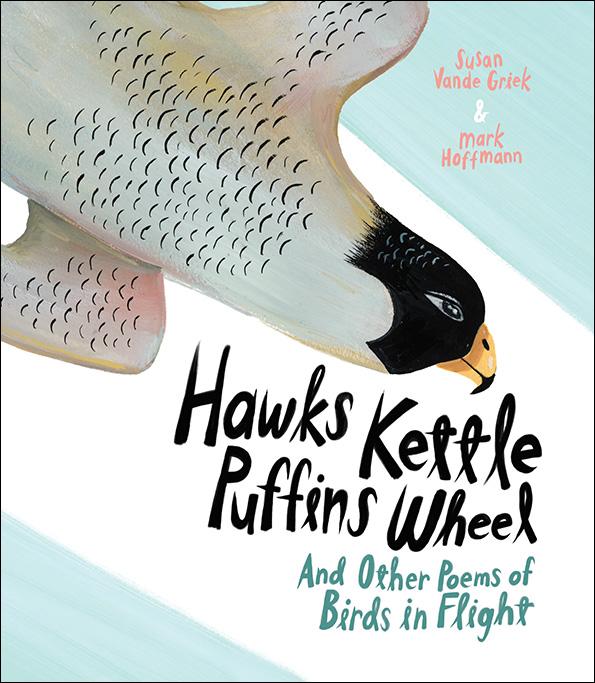
By Susan Vande Griek, Hawks Kettle, Puffins Wheel (Kids Can Press, 2019) is a collection of bird poems, each paired with a short informational note on the featured bird. For ages 6-9.

Paul Fleischman’s I Am Phoenix (HarperCollins, 1989) is a wonderful collection of “Poems for Two Voices,” all about birds. For ages 8-12.

Edited by Billy Collins and illustrated by nature artist David Allen Sibley, Bright Wings (Columbia University Press, 2012) is a wide-ranging anthology of poems about birds, beginning with Stephen Vincent Benet’s “John James Audubon.” Also included are poems by Seamus Heaney, Marianne Moore, Mary Oliver, Walt Whitman, Sylvia Plath, Delmore Schwartz, Henry David Thoreau, Robert Browning, and many more. For teenagers and adults.
Real Birds

Cathryn Sill’s About Birds: A Guide for Children (Peachtree Publishers, 2013) pairs a simple straightforward text (“Birds have feathers”) (“Birds flock together”) with detailed watercolor paintings. For ages 3-6.

Kevin Henkes’s Birds (Greenwillow Books, 2009) is a delightful introduction to birds that conveys the magic of bird-watching through stylized acrylic paintings and an appealing text in the voice of a child narrator. (“Once I saw seven birds on a telephone wire. They didn’t move and they didn’t move and they didn’t move. I looked away for just a second…and then they were gone.”) A charmer for ages 3-7.
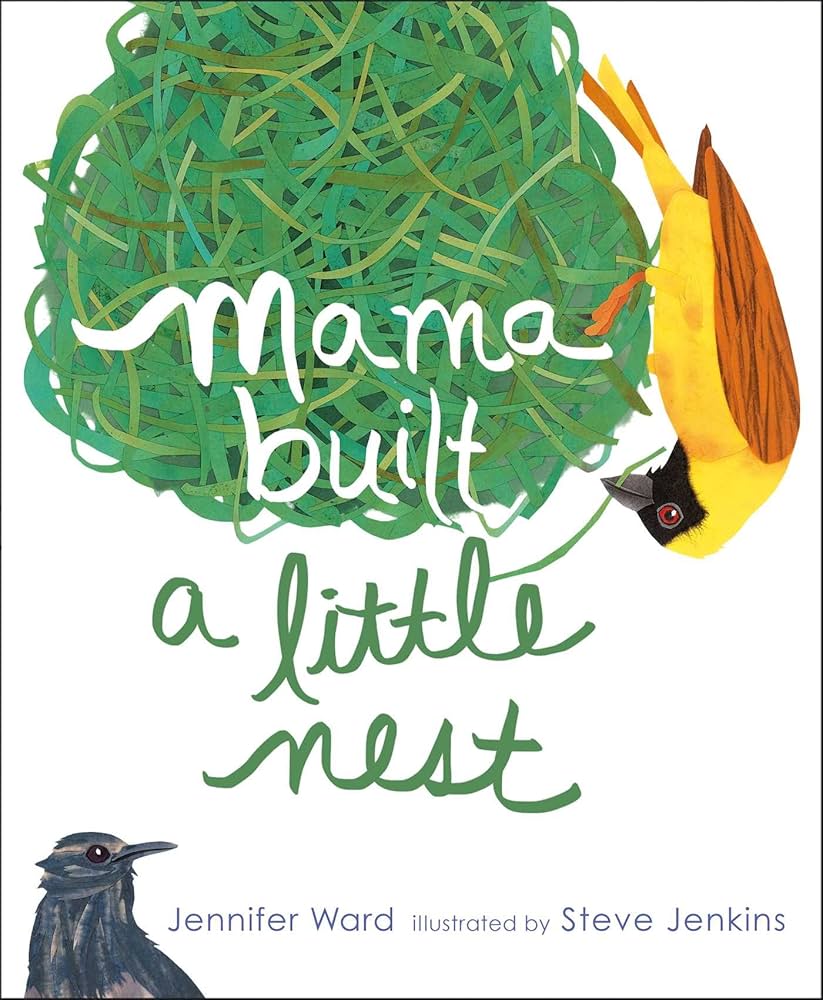
By Jennifer Ward, Mama Built a Little Nest (Beach Lane Books, 2014) is a beautifully illustrated rhyming introduction to the many different kinds of bird’s nests for ages 4-7.

In Priscilla Belz Jenkins’s A Nest Full of Eggs (HarperCollins, 1995) – one of the Let’s-Read-and-Find-Out Science series – a pair of children watch as robins build a nest, lay a clutch of eggs, and raise chicks. Finally, the babies grown, the robins leave in the fall to fly south – though the kids look forward to them returning again the next spring. For ages 4-8.

May Garelick’s What Makes a Bird a Bird? (Mondo Publishing, 1995) in a thought-provoking exploration of just that. Is it a bird because it flies? But bees, butterflies, bats, and flying fish all fly – and some birds, like ostriches and penguins, can’t. The book proceeds in this fashion, question by question, until readers finally discover the defining characteristic of birds: feathers. For ages 4-8.

By Roma Gans, How Do Birds Find their Way? (HarperCollins, 1996) in the Let’s-Read-and-Find-Out Science series is an explanation of the hows and whys of bird migration. (Arctic terns travel from northern Maine to the South Pole. Why don’t they get lost?) For ages 4-9.
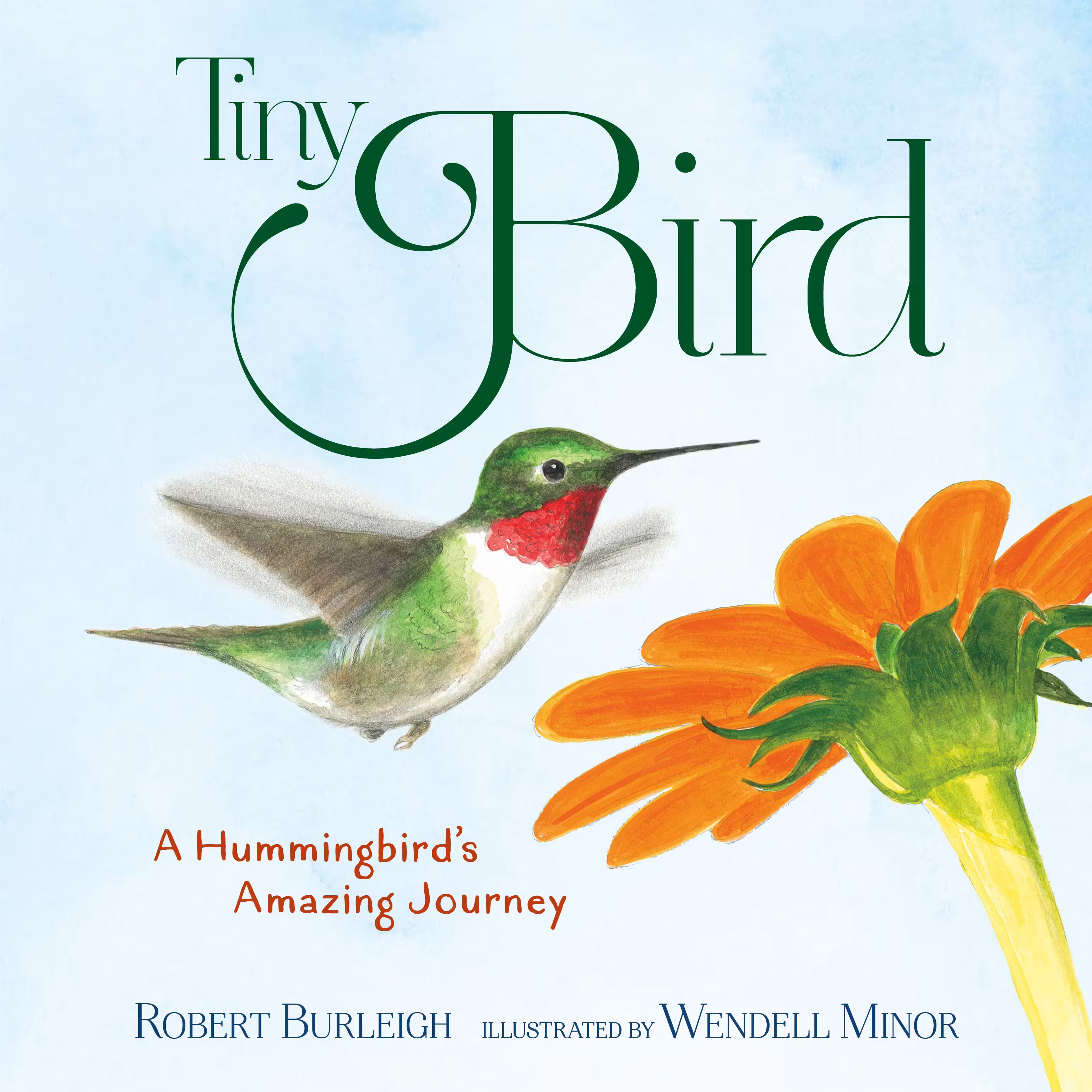
By Robert Burleigh with illustrations by Wendell Minor, Tiny Bird (Henry Holt, 2020) is the picture-book story of a hummingbird’s truly amazing journey to its winter home. For ages 5-9.

By Bernadette Gervais and Francesco Pittau, Birds of a Feather (Chronicle Books, 2012) is crammed with creative graphics, interactive features – including flaps, pop-ups, and puzzles, and a lot of fascinating facts about birds. (Did you know that flamingos are gray when they’re first hatched?) For ages 4-9.

By Sneed B. Collard III, Beaks! (Charlesbridge, 2002) is an exploration of the many kinds and uses of bird beaks, illustrated with impressive 3-D cut-paper sculptures by Robin Brickman. In the same format, see Collard’s Wings! (2008). For ages 4-9.

Rachel Poliquin's Ostriches (HMH, 2019) in the Superpower Field Guides series is clever, funny, and informative. Learn all about ostriches through Eno of the Serengeti (Claws of death! Egg of wonder!). For ages 8-12.

In Melissa Stewart’s lovely scrapbook-style picture book Feathers: Not Just for Flying (Charlesbridge, 2014), readers are introduced to sixteen different birds and the many surprising uses of feathers. (For example, they can “warm like a blanket” or “shade out sun like an umbrella;” and the feathers on the willow ptarmigan’s feet act like snowshoes.) For ages 5-9.

By Steve Jenkins and Robin Page, How to Clean a Hippopotamus (Houghton Mifflin Harcourt, 2013) is a picture book about unusual animal partnerships, several involving birds. Find out why ravens and wolves, plovers and crocodiles, and egrets and antelopes stick together. For ages 6-9.

In David Burnie’s Bird (Dorling Kindersley, 2008) in the Eyewitness Series, each double-page spread covers a different aspect of bird anatomy, physiology, or behavior. (Topics include Feathers, Courtship, Beaks, Making a Nest, Extraordinary Eggs, and more.) Illustrated with wonderful photographs and diagrams. For ages 8 and up.

Where did birds come from anyway? Are they really…dinosaurs? Check out Christopher Sloan’s How Dinosaurs Took Flight (National Geographic Children’s Books, 2005) for ages 10 and up.
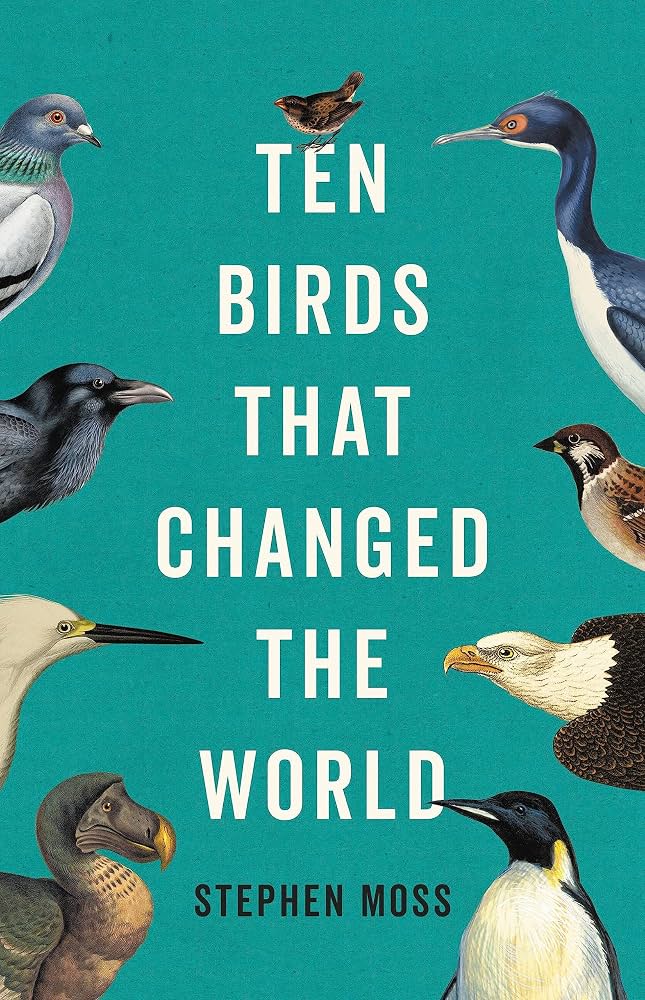
By Stephen Moss, Ten Birds That Changed the World (Basic Books, 2023) is the story of our relationship with ten key species from around the world, among them the raven, pigeon, wild turkey, dodo, Darwin’s finches, and the emperor penguin. For teens and adults.
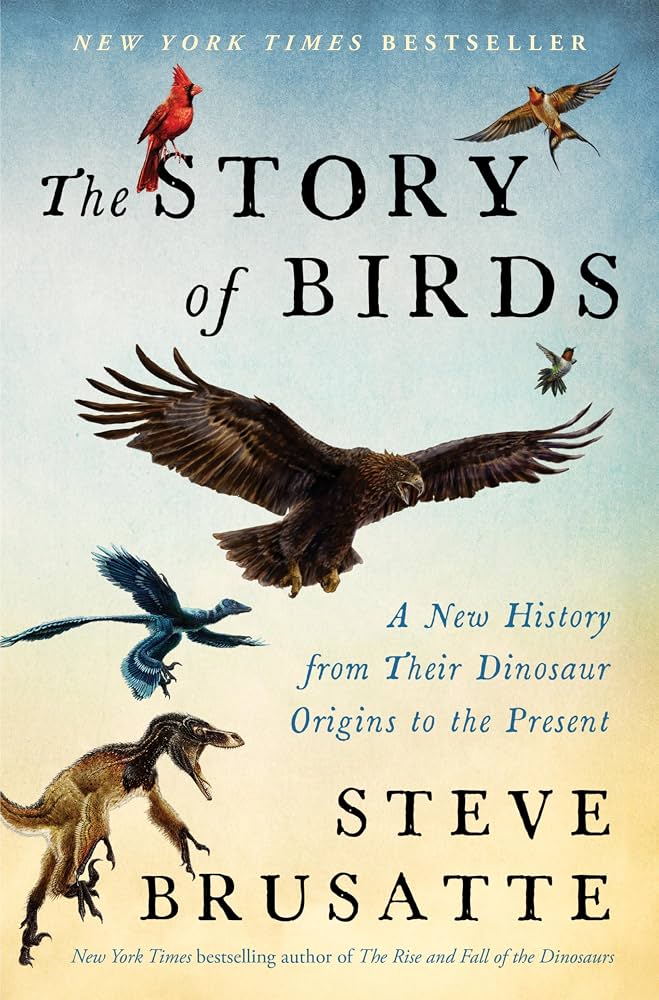
Steve Brusatte’s The Story of Birds (Mariner Books, 2026) is a marvelous evolutionary history of birds, tracing them from their dinosaur origins to the present. A fascinating read for teens and adults.

Colin Tudge’s The Bird: A Natural History of Who Birds Are, Where They Came From, and How They Live (Broadway Books, 2010) is an excellent overview of all things bird for teenagers and adults.

By Jennifer Price, Flight Maps (Basic Books, 2000) – subtitled “Adventures with Nature in America” – includes terrific essays on the extinction of the passenger pigeon, the trends for birds on women’s hats that led to the founding of the Audubon Society, and the history of the pink flamingo lawn ornament. For teenagers and adults.

Jonathan Weiner’s Pulitzer-Prize-winning The Beak of the Finch (Knopf, 1994) is the story of modern-day biologists Peter and Rosemary Grant and their studies of the evolution of Charles Darwin’s famous Galapagos finches. For teens and adults.

From PBS, David Attenborough’s Life of Birds is a fascinating and beautifully done documentary, variously covering bird brains, evolution, champions, parenthood, bird song, and more. See https://www.imdb.com/title/tt0175394/.

The Cornell Lab of Ornithology is an excellent source for all forms of bird information. Included on the website are bird citizen science projects (participate in Project Feeder Watch or join in the Great Backyard Bird Count), online courses (among these a superb home study course in Bird Biology), bird identification guides, bird cams, and much more.

Audubon.org has information on citizen science and bird conservation projects, bird FAQs, an online bird ID guide, and reports on birds in the news.
At National Geographic: Birds, learn all about birds, visit bird photo galleries, and take a backyard bird quiz.
From UC Berkeley, Introduction to the Aves has detailed information on bird fossils, life history and ecology, systematics, and morphology.
Which Bird?

In Lois Ehlert’s rhyming Feathers for Lunch (Houghton Mifflin Harcourt, 1996), a black cat – safely equipped with collar and jingling bell – escapes from the house and encounters twelve common backyard birds, among them a cardinal, blue jay, goldfinch, robin, and hummingbird. Kids learn beginning bird identification and the cat ends up with nothing but feathers for lunch. The painted paper illustrations are wonderful. For ages 3-7.

By Mel Boring, Birds, Nests, and Eggs (Cooper Square Publishing, 2008) is a helpful “Take Along Guide” to help kids identify fifteen different birds, along with a handful of activities (make a bird bath, a blind for bird watching, and a suet feeder) and scrapbook pages for sketches and notes. For ages 5-10.

Chris Earley’s Birds A to Z (Firefly Books, 2009) covers 26 birds from Anhinga to Zone-tailed Hawk, each with color photographs, reader-friendly background information, and a fact box of vital statistics. For ages 7-10.

By Annette LeBlanc Cate, Look Up! Bird-watching in Your Own Backyard (Candlewick, 2013) is a quirky, humorous, and delightful introduction to bird-watching, with clever cartoon-style illustrations. Kids will love this. Highly recommended. For ages 7-11.

See Peterson Field Guides for birder Roger Tory Peterson’s famed bird guide series – now also available as apps for iPad, iPhone, or iPod.
What Bird has detailed bird identification guides (search by state or province, body shape, body size, or color) and a cool video-based Avian Sleuth bird identification game. (Practice your skills.)


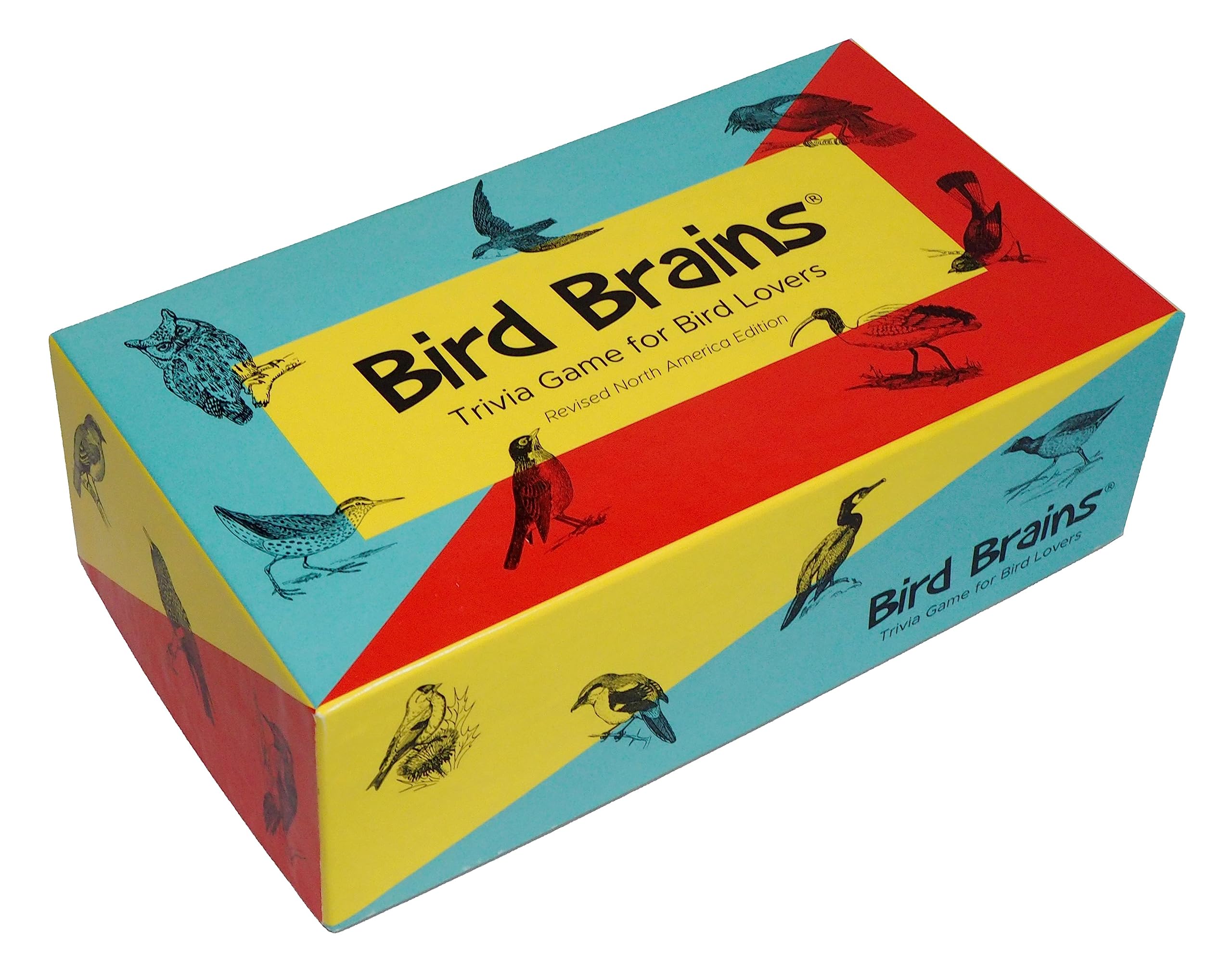
Bird Brains (Teretizo), a trivia game for bird lovers, include 300 colorful question cards (Anatomy, Behavior, Random). For ages 14 and up.
See
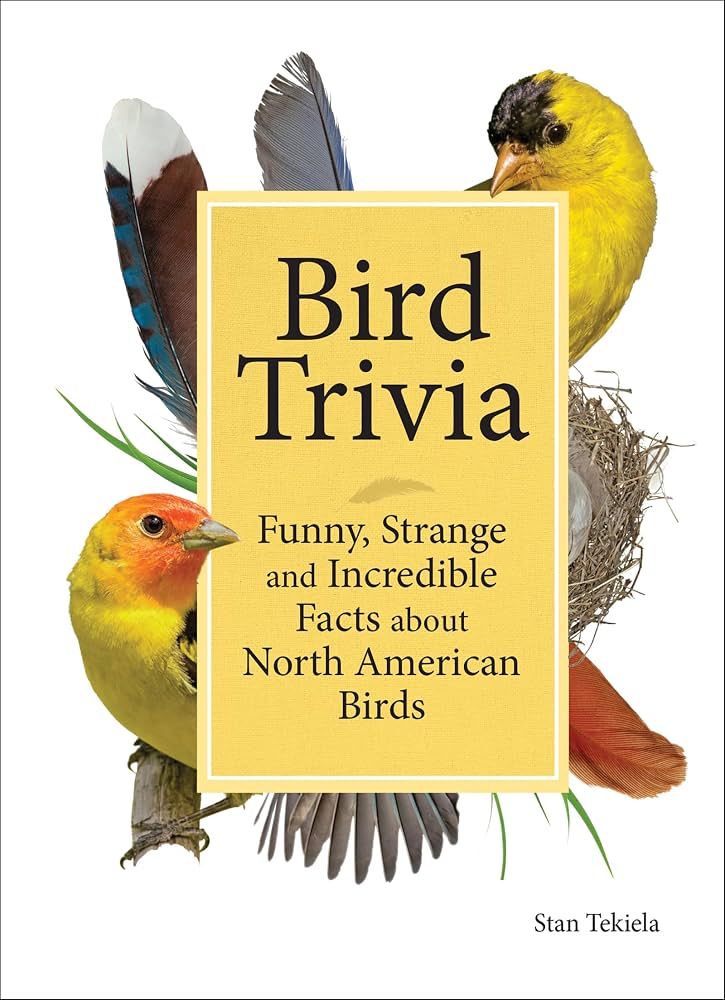
By Stan Tekiela, Bird Trivia (Adventure Publications, 2018) is a compilation of “Funny, Strange and Incredible Facts about North American Birds.” Use it to invent your own bird trivia game? All ages.
Bird Song

“Chirp, warble, quack, coo, rattle, screech!” Lita Judge’s Bird Talk (Flash Point, 2012) is a colorful picture-book account of what birds are saying and why. (Finding mates? Defending territory? Keeping an eye on their young?) For ages 5-9.
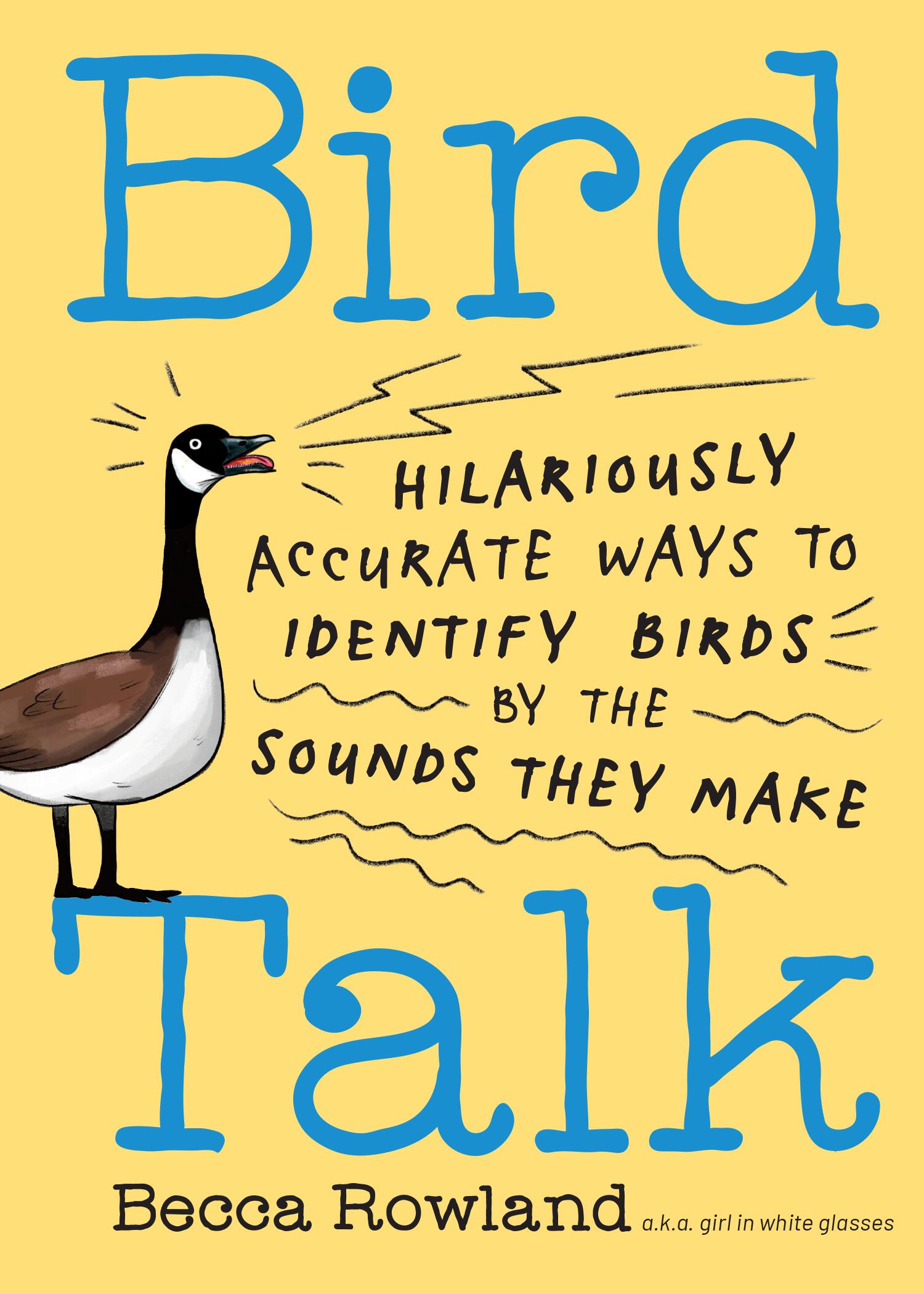
Becca Rowland’s Bird Talk (Storey Publishing, 2025) – subtitled “Hilariously Accurate Ways of Identifying Birds by the Sounds They Make” – covers 101 distinctive bird calls. (“If it sounds like a chain saw…it’s a blue heron.”) A fun resource for all ages.
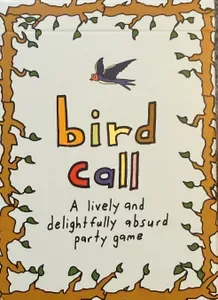
Bird Call (Niche Nation Games) is a (somewhat cacophonous) card game for ages 7 and up in which players honk, cheep, and squawk while trying to identify matching cards. See
Feeding the Birds

Mark Golley's Make Your Own Bird Food (Bloomsbury, 2017) has forty easy recipes for the birds.

Ten DIY Bird Feeder Ideas, including instructions for making your own suet cakes and birdseed ornaments.

A Variety of Bird Feeders has instructions for making five simple feeders, variously using plastic bottles, milk cartons, pine cones, plastic lids (plus a doughnut), and potato chip cans.
On YouTube, listen to Julie Andrews sing Feed the Birds from Mary Poppins.
Saving the Birds
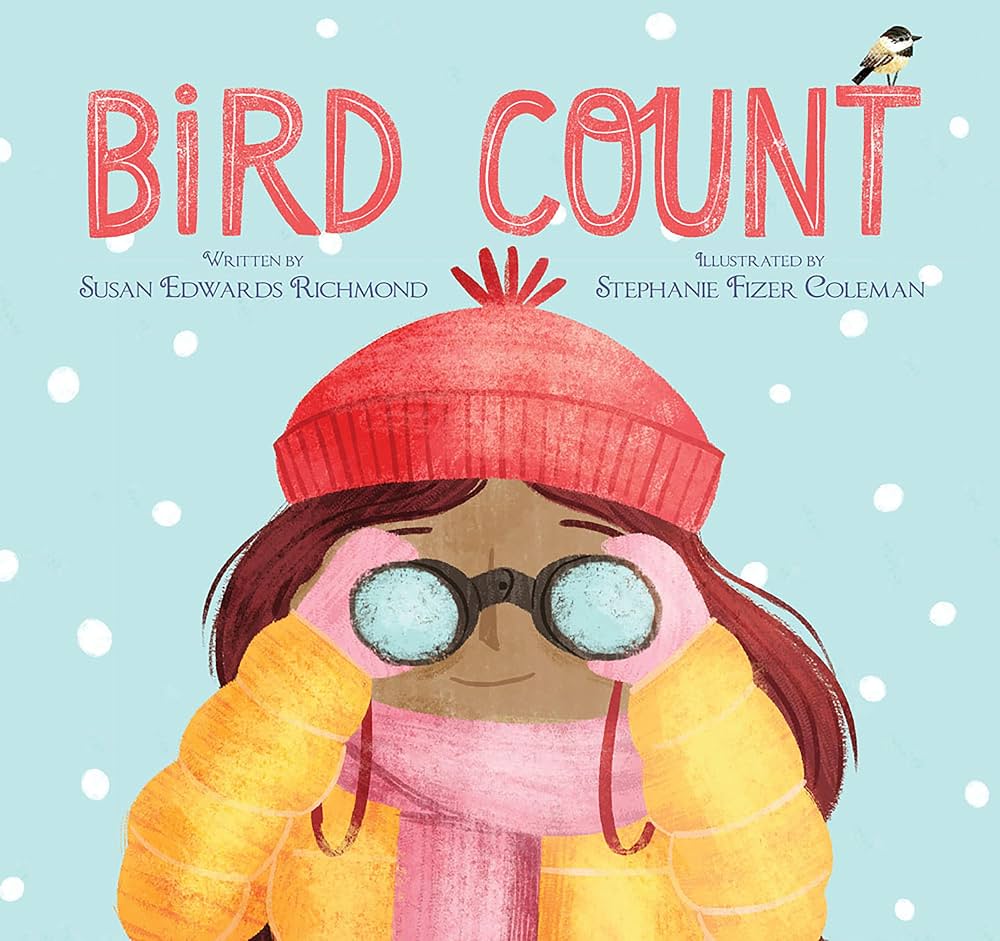
In Bird Count by Susan Edwards Richmond (Peachtree, 2021), a little girl and her mother participate as citizen scientists in the Audubon Society’s annual Christmas Bird Count. Sidebars show sample bird tallies; included are notes on birdwatching and bird habitats. For ages 4-8.
Everybody can join in! For information on the Audubon Christmas Bird Count, see https://www.audubon.org/community-science/christmas-bird-count.

By Olivia Bouler, Olivia’s Birds: Saving the Gulf (Sterling, 2011) is the story of an 11-year-old girl’s campaign to save the Gulf Coast birds after the devastating oil spill of 2010. For ages 3-9.

Kathryn Lasky’s She’s Wearing a Dead Bird on Her Head! (Disney-Hyperion, 1997) is the picture-book story of Harriet Hemenway and Minna Hall, who founded the Massachusetts Audubon Society. For ages 5-9.

Sara Pennypacker’s Sparrow Girl (Disney-Hyperion, 2009) is based on Mao-Tse-tung’s “Sparrow War” in 1958, when farmers were ordered to terrify and destroy the sparrows who were eating the grain crop. The unexpected result was a plague of locusts, which the sparrows had kept under control, and a famine. The hero of the story is young Ming-Li who defends the sparrows. For ages 5-9.

In Meindert DeJong’s 1955 Newbery winner, The Wheel on the School (HarperCollins, 1972), young Lina wonders why there are no more storks – birds that are said to bring good luck - in her village. Soon she has co-opted the entire community into luring the storks back home by proving rooftop wheels where they can build their nests. For ages 8-12.

In Gill Lewis’s Wild Wings (Atheneum Books for Young Readers, 2012), Iona and Callum in Scotland (an unlikely pair) join forces to protect an endangered osprey – a story that eventually links to people around the world. For ages 8-12.

In Carl Hiaasen’s Hoot (Yearling, 2005), Roy Eberhardt, recently moved from Montana to Florida, joins forces with the intimidating Beatrice and her brother Mullet Fingers to save a colony of tiny burrowing owls from Mother Paula’s All-American Pancake House. Funny, brave, and wonderful. For ages 10 and up.

Stephen Kress’s Project Puffin (Tilbury House Publishers, 2003) is the story of how Kress and his team of “Puffineers” restored the puffin population of Egg Rock, an island off the coast of Maine. For ages 10 and up.
For more information, see Project Puffin.

By Pete Salmansohn and Stephen W. Kress, Saving Birds: Heroes Around the World (Tilbury House Press, 2005) has six dramatic stories of people around the world fighting to save wild birds. For ages 10 and up.

Philip Hoose’s beautifully designed The Race to Save the Lord God Bird (Farrar, Straus & Giroux, 2014) is a 200-year history of the pursuit of the – extinct? - ivory-billed woodpecker. For ages 12 and up.
State Birds

Hudson Talbot’s United Tweets of America (Putnam Juvenile Books, 2008) is the humorously illustrated story of all 50 state birds, in alphabetical order by state. For each is included information about the bird, a map of the state, and basic state information, including other state symbols, the state capital, famous people, and more. For ages 7-10.
Official U.S. State Birds has them all, listed by state or bird name. Click on an entry for illustrations and information.

Annika Bernhard’s State Birds and Flowers Coloring Book (Dover Publications,1990) has black-line versions of them all, ready for crayons or colored pencils.
History with the Birds
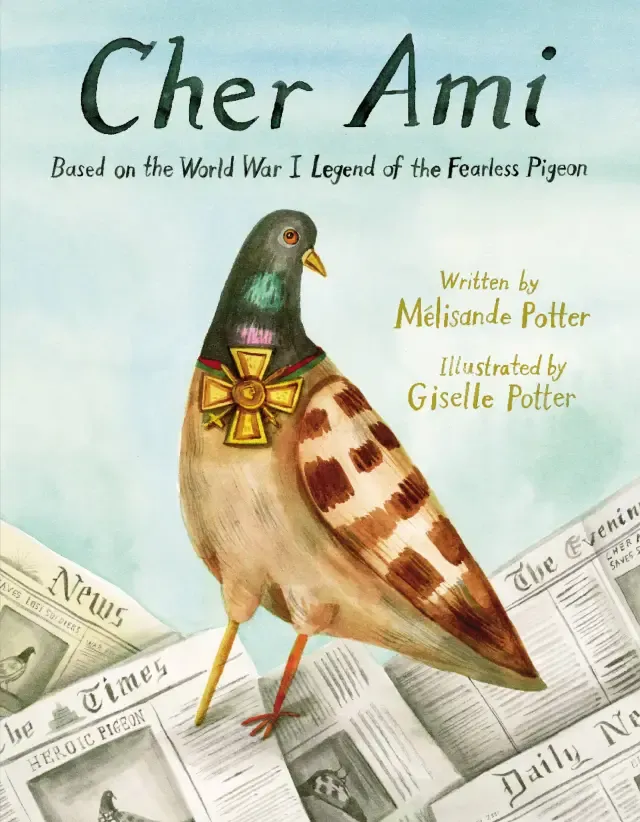
By Melisande Potter, Cher Ami (Christy Ottaviano Books, 2022) is a picture-book version of the true story of Cher Ami, the heroic messenger pigeon who saved the lives of soldiers during World War I. For ages 4-8.
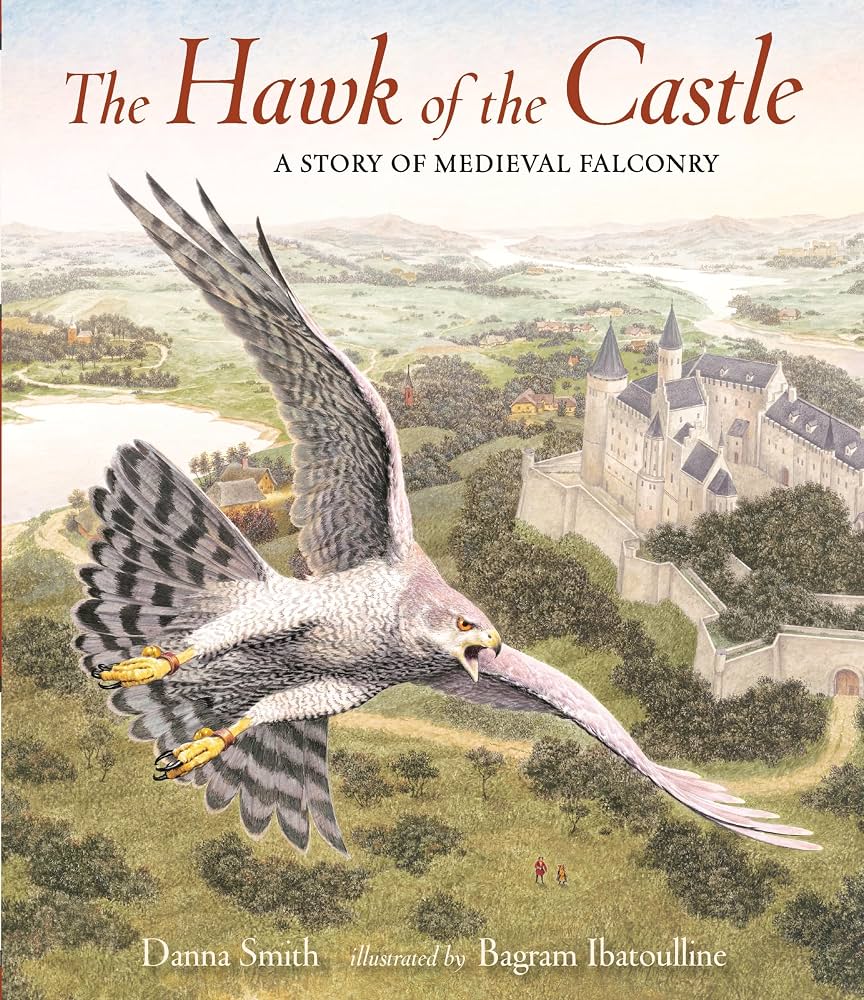
By Danna Smith, The Hawk of the Castle (Candlewick, 2017) pairs blank verse with informational boxes as a young girl and her father, the falconer at a medieval castle, prepare to take a goshawk on a training flight. A story of medieval falconry for ages 5-8.
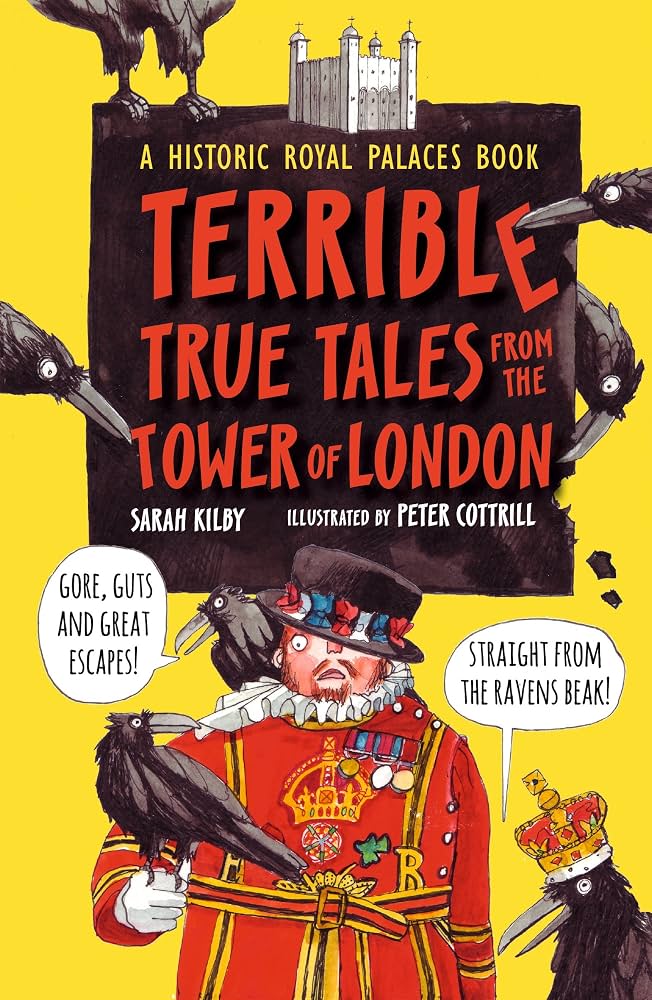
Terrible True Tales from the Tower of London: As told by the Ravens (Historic Royal Palaces, Walker Books, 2017) is a fascinating history as recounted by a flock of snarky ravens. Readers learn about the polar bear who once lived at the Tower, an attempt to steal the Crown Jewels, and the story of the enterprising prisoner who tried to escape through the toilet. And there’s the occasional beheading. For ages 8-12.
See 20 Famous Birds from History at https://www.historysnob.com/eras/20-famous-birds-from-history/11.
Mathematical Birds

In Frank Mazzola’s Counting Is for the Birds (Charlesbridge, 1997), birds, two by two, gather at a backyard feeder, until they’re scattered by a squirrel. Kids count to 20 and back again, and learn a bit about birds from thumbnail sketches. For ages 3-7.

Alice Melvin’s Counting Birds (Tate, 2010) is a lovely counting book with a rhyming text. Kids count to twenty, beginning with one cockerel, two lovebirds, and three flying ducks. For ages 3-7.

Stuart J. Murphy’s Double the Ducks (HarperCollins, 2002) – a MathStart book – introduces kids to concepts of addition and multiplication when five little ducks each bring home a friend. For ages 4-8.
Discover Birds! Changing Populations and Bird Champions are a pair of math projects using real-world data. Targeted at grades 4-6.
How Smart Is This Bird? Find out how good pigeons are at math.
Famous Birds

Shirley Raye Redmond’s Pigeon Hero (Simon Spotlight, 2003) in the Ready to Read series is the true story of G.I. Joe, a World War II homing pigeon, who saved an Italian town by carrying crucial messages through enemy lines. (He was awarded a medal for bravery.) For ages 5-7.

Leo Politi’s Song of the Swallows (J. Paul Getty Museum, 2009) is a picture-book story of the famous annual return of the swallows to the Mission San Juan Capistrano in California. For ages 5-9.

By Stephanie Spinner, Alex the Parrot: No Ordinary Bird (Knopf Books for Young Readers, 2012) is the true story of scientist Irene Pepperberg and the amazingly intelligent Alex, an African gray parrot, who could count, name colors, and had a vocabulary of hundreds of words. For ages 8-12.

Philip Hoose’s award-winning Moonbird (Farrar, Straus & Giroux, 2012) is the true story of the phenomenal travels of a little shorebird known to scientists as B95 – in his lifetime, a distance of over 325,000 miles, enough to have taken him to the moon and halfway back. Illustrated with photographs and maps. For ages 10 and up.
Read more about Moonbird here.
Birds and Art
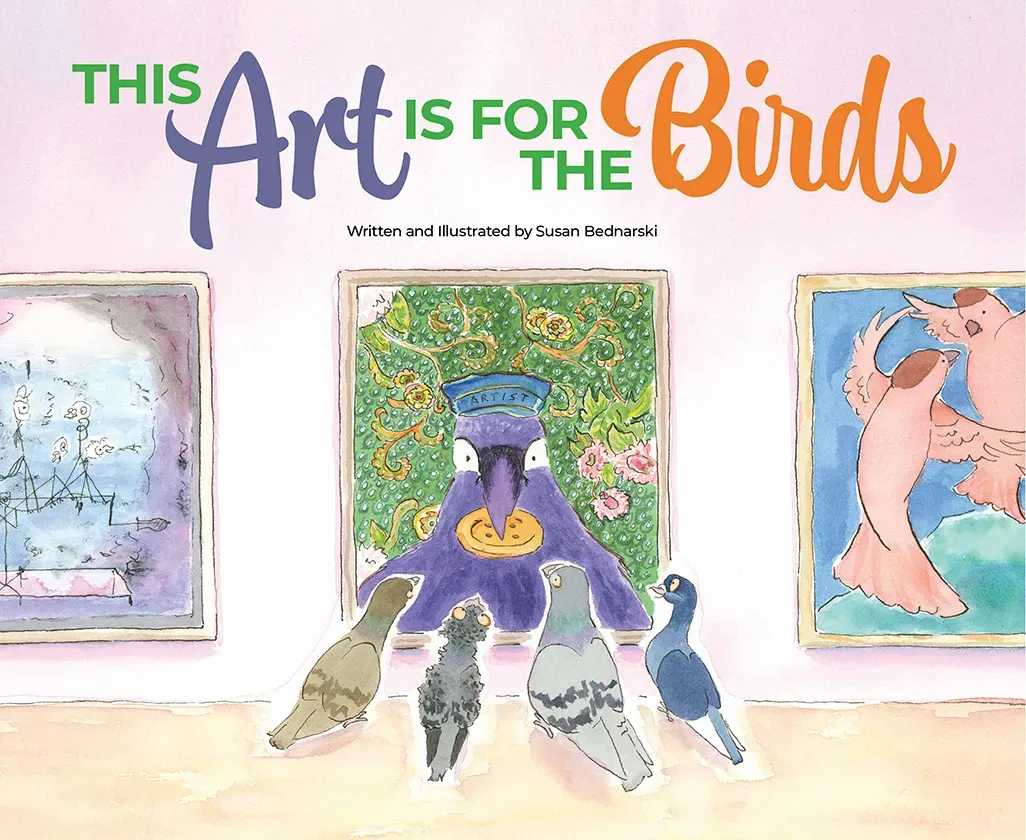
In Susan Bednarski’s This Art Is for the Birds (Kind World, 2023), four persistent pigeons are determined to get the work of their talented artist friend, Alex the Crow, into the museum. For ages 4-7.

Jacqueline Davies’s The Boy Who Drew Birds (Houghton Mifflin Harcourt, 2004) – with wonderful illustrations by Melissa Sweet – is the picture-book story of John James Audubon, perhaps the world’s best-known painter of birds. For ages 5-9.
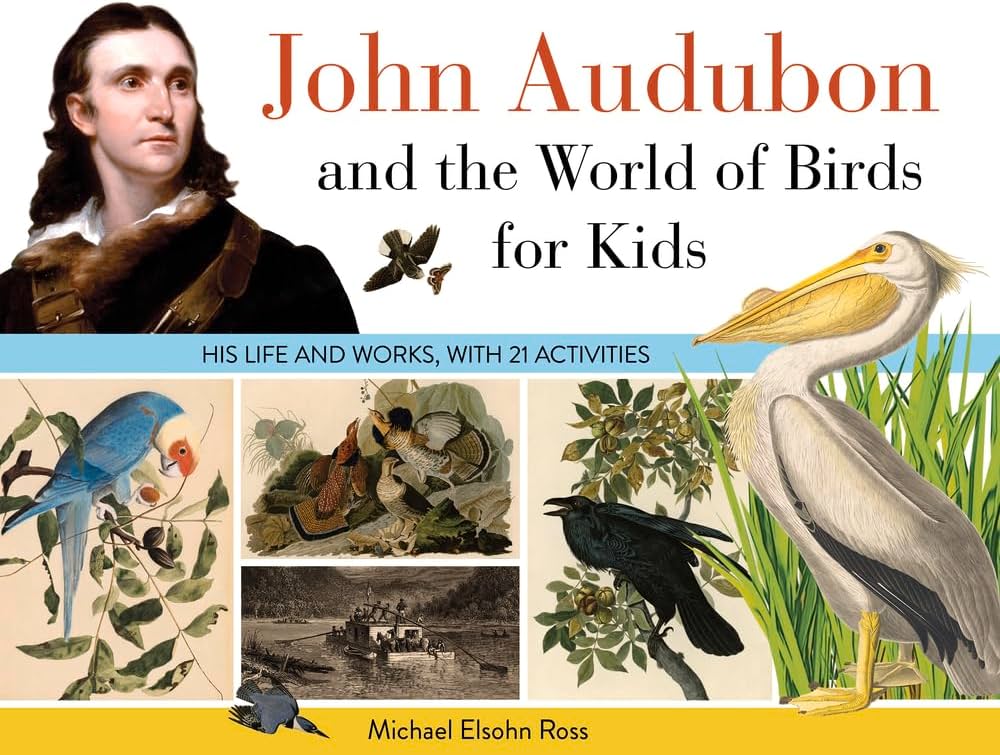
By Michael Elsohn Ross, John Audubon and the World of Birds for Kids (Chicago Review Press, 2022) pairs a biography of Audubon and the story of his work with 21 bird-related hands-on activities. Included are a timeline, a resource list, photos, and fact boxes. For ages 9-12.

Audubon’s Birds of America Coloring Book (Dover Publications, 1974) has black-line versions of 44 of Audubon’s famous bird paintings.

Geraldine Elschner’s The Cat and the Bird (Prestel Publishing, 2012) – inspired by and illustrated in the style of artist Paul Klee – is the tale of a little cat who, despite a lovely home filled with toys, envies the freedom of the bird. Then one day the bird manages to set the cat free, and at the end the cat is dancing joyfully on the roof in the moonlight. For ages 5-8.

Deep Space Sparkle Art Lessons for Kids has a wonderful Paul Klee art lesson featuring The Cat and the Bird. Kids make gorgeous multicolored castles.

Bijou le Tord’s A Bird or Two (Eerdmans Books for Young Readers, 1999) is the picture-book story of Henri Matisse, told through a brief poetic text. For ages 6-10.

By Newbery Honor winner Margarita Engle, The Sky Painter (Two Lions, 2015), beautifully illustrated by Aliona Bereghici, is the first of a series of picture-book biographies-in-verse about great Latino naturalists. This is the story of Louis Fuertes, an upstate New York Puerto Rican, and one of the world's greatest bird artists. Unlike Audubon, who killed and posed his subjects, Fuertes pioneered the painting of living birds in flight. During the 1920s, bird identification cards by Fuertes were included in every box of Arm & Hammer baking soda, causing children to become eager birdwatchers. A great pick for ages 5-8.
Bird Projects
From DLTK’s Crafts for Kids, Bird Activities for Children has a long list categorized by bird, from Bald Eagle and Chicken to Phoenix and Turkey. Lots of creative paper projects for younger kids.

By Johan Scherft, Beautiful Paper Birds (Sterling Innovation, 2013) is a kit with which kids can make 16 folded-paper cardinals, bluebirds, goldfinches, and nuthatches using realistic pre-printed project sheets.

For the San Francisco Exploratorium, Bird in the Cage is a cool experiment on color and perception.
Birds on Screen

Fourteen best bird movies!