
Shakespeare
In this collection
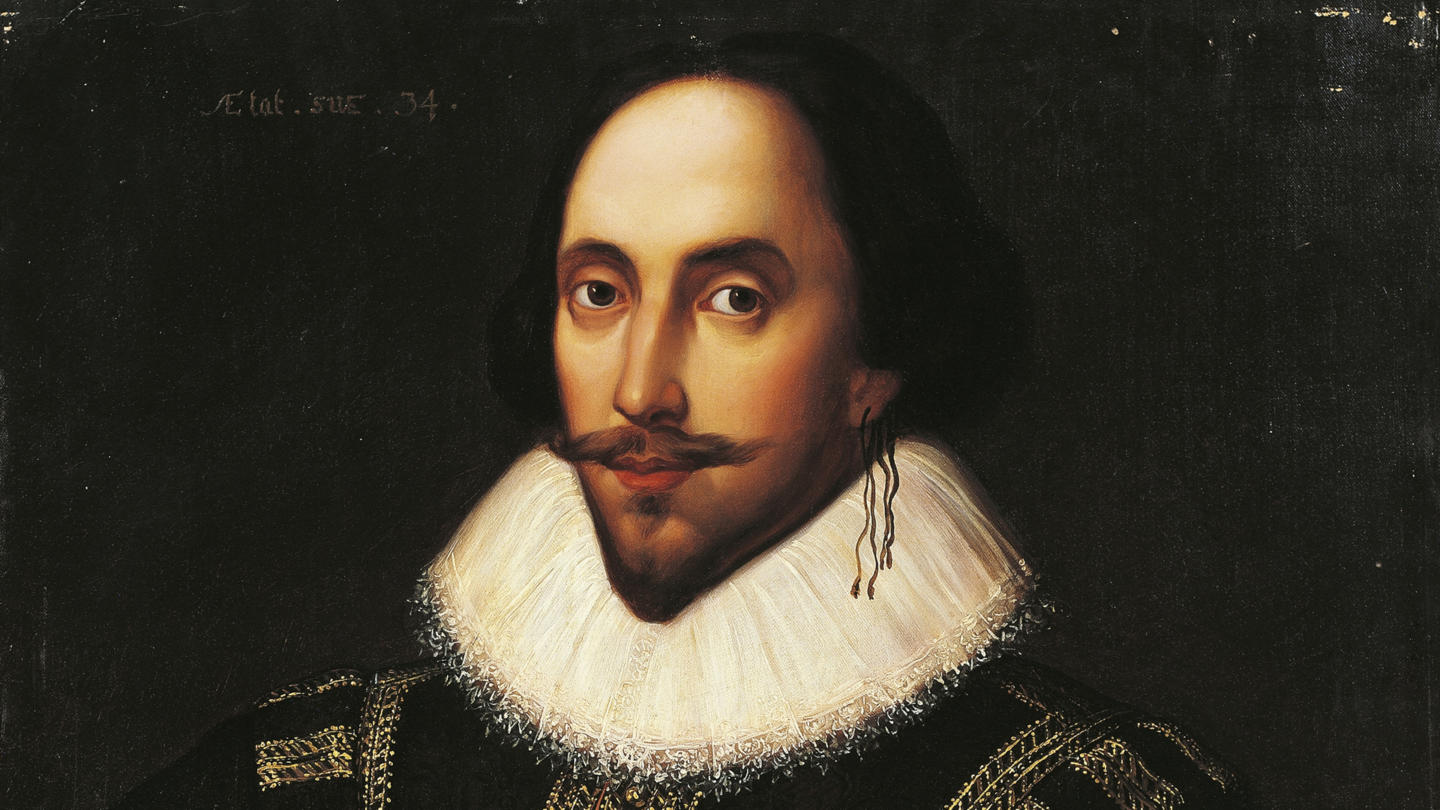
If you’re a lover of language, there’s nothing that holds a candle to Shakespearean prose. (This is, after all, the man who gave us leapfrog, dead as a doornail, What’s done is done, To be or not to be, and A horse! A horse! My kingdom for a horse!, to say nothing of the immortal Let’s kill all the lawyers.)
See below for all (well, a lot) on the Bard, including Shakespeare in fiction, Shakespeare’s poems and plays, helps for performing Shakespeare, and info on Shakespearean sports, games, gardens, and feasts. See “Seriously Quirky Shakespeare” for Shakespeare and Star Wars, Shakespearean baseball, and the impressive Shakespeare Rubber Duck.
Fun Fiction

Don Freeman’s Will’s Quill (Viking Juvenile, 2004) is the delightful picture-book tale of Willoughby Waddle, an adventurous goose, who sets off for London, where he is befriended by young Will Shakespeare. There’s a disastrous episode in which Will (goose) attempts to save Will (playwright/actor) from a stage duel, but all ends happily, when the goose – with a gift of feathers – is able to help his new friend. For ages 5-9.

In Mary Pope Osborne’s Stage Fright on a Summer Night (Random House Books for Young Readers, 2002) – one of the Magic Treehouse Series – Jack and Annie are whizzed back to Elizabethan England, where they meet William Shakespeare, save a bear, and appear in a performance of “A Midsummer Night’s Dream.” For ages 5-9.

In Elise Broach’s Shakespeare’s Secret (Square Fish, 2007), Hero is named for a character in Much Ado About Nothing – but her new classmates think the name “Hero” sounds more like a dog. Lonely and left out, Hero makes friends with Mrs. Roth, an eccentric neighbor, who tells her the story of the missing “Murphy Diamond,” said once to have belonged to Anne Boleyn. With the help of an eighth-grader named Danny, Hero sets out to solve the mystery of the diamond – discovering a lot along the way about Elizabethan life, William Shakespeare, and the controversy over who really wrote Shakespeare’s plays. For ages 9-12.

In Deron R. Hicks’s Secrets of Shakespeare’s Grave (Houghton Mifflin Harcourt, 2013). 12-year-old Colophon Letterford is off to save the family publishing business by tracking down a mysterious Elizabethan treasure. (Each chapter begins with a quote from Shakespeare.) For ages 9-12.

John Bennett’s Master Skylark (Forgotten Books, 2012) was originally published in 1897. The main character, young Nick Attwood, a boy with a voice like a skylark, runs away to see a play and ends up forced to perform with the Lord Admiral’s Men, a group of traveling players, under the thumb of Gaston Carew. Eventually he arrives in London, meets Will Shakespeare, sings before the queen, and all ends happily. (The last chapter is titled “All’s Well That Ends Well.”) It’s a delightful, old-fashioned read for ages 9-12.
The entire text of Master Skylark is online at Project Gutenberg.

In Bailey MacDonald’s Wicked Will (Aladdin, 2009), a troupe of strolling players arrives in Stratford, among them 13-year-old Viola (a.k.a. Tom), who travels disguised as a boy. When Viola’s uncle is accused of murder, she joins forces with theatre-obsessed 12-year-old William Shakespeare, and together they devise a plot to discover the true culprit, involving an imaginative script written by Will, and Viola disguised as a ghastly ghost. For ages 9-13.

In Susan Cooper’s King of Shadows (Margaret K. McElderry Books, 2001), orphaned Nat Field, in London to play Puck in a new production of A Midsummer Night’s Dream, travels back in time to Elizabethan England where he meets Shakespeare. For ages 10 and up.

Gary Blackwood’s The Shakespeare Stealer (Puffin, 2000) is the story of Widge, an orphan, whose unscrupulous master sends him to the Globe Theater to steal Shakespeare’s latest play (Hamlet). Despite this, Widge eventually finds new friends and ends up a member of the Globe company. Sequels include Shakespeare’s Scribe and Shakespeare’s Spy. For ages 10 and up.

Tom Stoppard’s acclaimed play Rosencrantz and Guildenstern Are Dead (Grove Press, 1994) is a brilliant version of Hamlet, told from the unexpected points of view of minor characters Rosencrantz and Guildenstern – old school friends of Hamlet, summoned by the King, his uncle, to cheer the depressed prince up. When this fails, they’re ordered to kill him, but Hamlet manages to turn the tables on them. A good pick for high-school-level literature classes, and a great discussion promoter.
The film version of Rosencrantz and Guildenstern Are Dead (1990), directed by Tom Stoppard, stars Gary Oldman and Tim Roth as the title characters. Rated PG.

Connie Willis’s short story “Ado,” which appears in her creative sci-fi collection Impossible Things (Spectra, 1993), is set in a super-politically-correct future where the plays of Shakespeare are banned due to multiple protests (the International Federation of Florists objects to Hamlet because Ophelia fell into the water and drowned while picking flowers; the National Cutlery Council objects to the depiction of swords as deadly weapons). In the same collection, see “Winter’s Tale,” Willis’s take on who really wrote Shakespeare. For teenagers and adults.

Terry Pratchett’s Wyrd Sisters (Harper, 2013), a fantastic and hilarious concoction of Shakespeare and fairy tale, features the three witches - Granny Weatherwax, Nanny Ogg, and Magrat Garlick – along with a host of other characters, among them the wicked Duke Felmet (who has murdered King Verence), Hwel, a dwarf playwright, and young Tomjon who – though he doesn’t know it – is the rightful heir to the throne. One of the wonderful Discworld series. For ages 12 and up.

For mystery-minded readers, see James Thurber’s hilarious short story “The Macbeth Murder Mystery” in The Thurber Carnival (Harper & Brothers, 1945) – the Macbeths, it turns out, were (!) totally innocent. Read it online here.

In Josephine Tey’s Daughter of Time (Scribner, 1995), detective Alan Grant – confined to a hospital bed with a broken leg – tackles the mystery of Richard III. (Did Richard really murder the little princes in the Tower? Is Shakespeare’s Richard historically correct?). For ages 12 and up.
You might check out the 1996 film Looking for Richard, Al Pacino's multifaceted analysis of Shakespeare and the play Richard III. Rated 7.3/10 on IMDb; PG-13. See https://www.imdb.com/title/tt0116913/.
For the movie The Lost King (2022), which centers around amateur historian Philippa Langley's search for Richard, see https://www.imdb.com/title/tt13421498/.

Alan Bradley’s I Am Half-Sick of Shadows (Bantam, 2012) – one of the terrific Flavia de Luce mystery series – is set in the 1950s in a crumbling mansion in England, and features precocious eleven-year-old chemist Flavia de Luce and her eccentric family. Here, Flavia’s father, the financially strapped Colonel de Luce, had agreed to rent out the family home to a film company just before Christmas. Featured, along with Flavia’s chemistry-based plans to prove the existence of Father Christmas, is a fatal re-enactment of the balcony scene from Romeo and Juliet. For ages 13 and up.

In mystery writer Ngaio Marsh’s Death at the Dolphin (HarperCollins, 1999), the plot revolves around a restored theater, a Shakespeare performance, and a rare antique glove, once owned by Shakespeare’s son Hamnet. Also by Marsh, see Light Thickens (Jove, 1992), which features a performance of Macbeth and a legendary Scottish sword. For teenagers and adults.
See also
The Works

Shakespeare for babies? By author Jennifer Adams and artist Alison Oliver, Romeo and Juliet: A BabyLit Counting Primer (Gibbs Smith, 2011) is a stylishly illustrated counting book with Shakespearean motifs (beginning with ONE BALCONY). Cute, but don’t expect a whole lot of Shakespeare. For ages 1-3.

Titles in Lois Burdett’s Shakespeare Can Be Fun picture-book series (Firefly Books) include Hamlet for Kids, Macbeth for Kids, The Tempest for Kids, and many more. In each, an abbreviated plot of the play, delivered in rhyming couplets, is paired with great illustrations by Burdett’s early-elementary students. For ages 5-8.

Marcia Williams’s Tales from Shakespeare (Candlewick Press, 2004) presents the plots of seven Shakespearean plays in a clever comic-book-style format, with the story line in boxes beneath the pictures and supporting dialogue in cartoon bubbles. The illustrations, which are wonderful, include lots of detailed and colorful little people; and the borders of the pages depict an Elizabethan theater audience, from the rowdy pit to the elegant boxes. Plays include Hamlet, Macbeth, Romeo and Juliet, and a truly gorgeous Midsummer Night’s Dream. For ages 7 and up.

A sequel, More Tales from Shakespeare (Candlewick, 2005) includes seven more plays in the same format, among them Twelfth Night, King Lear, As You Like It, Much Ado About Nothing, The Merchant of Venice, Richard III, and Antony and Cleopatra.

E. Nesbit’s The Children’s Shakespeare (Academy Chicago Publishers, 2000), originally published in 1938, contains simple prose re-tellings of eleven of the plays, all of which read like enthralling fairy tales. Nesbit’s Romeo and Juliet, for example, begins “Once upon a time there lived in Verona two great families named Montagu and Capulet. They were both rich, and I suppose they were as sensible, in most things, as other rich people. But in one thing they were extremely silly.” For ages 7-11.

Tina Packer’s Tales from Shakespeare (Scholastic, 2004) is a beautifully designed 192-page collection of prose retellings of ten of Shakespeare’s best-known plays, each with an illustration by a popular children’s book artist. For ages 8-12.

Charles and Mary Lamb’s Tales from Shakespeare was originally published in 1807, these prose versions of the plays still charm today. Now available in many editions. For ages 10 and up.

Geraldine McCaughrean’s Stories from Shakespeare (Orion, 2017) retells ten of Shakespeare’s plays in kid-accessible prose, with a cast list and assorted quotations. For ages 9-12.

Leon Garfield’s Shakespeare Stories (NYR Children’s, 2015) has prose versions of 21 Shakespearean plays. A masterful interweaving of Shakespeare’s own words with lively modern prose. For ages 9 and up.

Where did Shakespeare get his ideas? Patrick Ryan’s Shakespeare’s Storybook (Barefoot Books, 2006) is an illustrated collection of the traditional stories that led to seven of Shakespeare’s plays. For example, “The Devil’s Bet” underlies The Taming of the Shrew and “Cap-o-Rushes” may have inspired King Lear. Each story is preceded by a discussion of its influence on the play. For ages 9 and up.
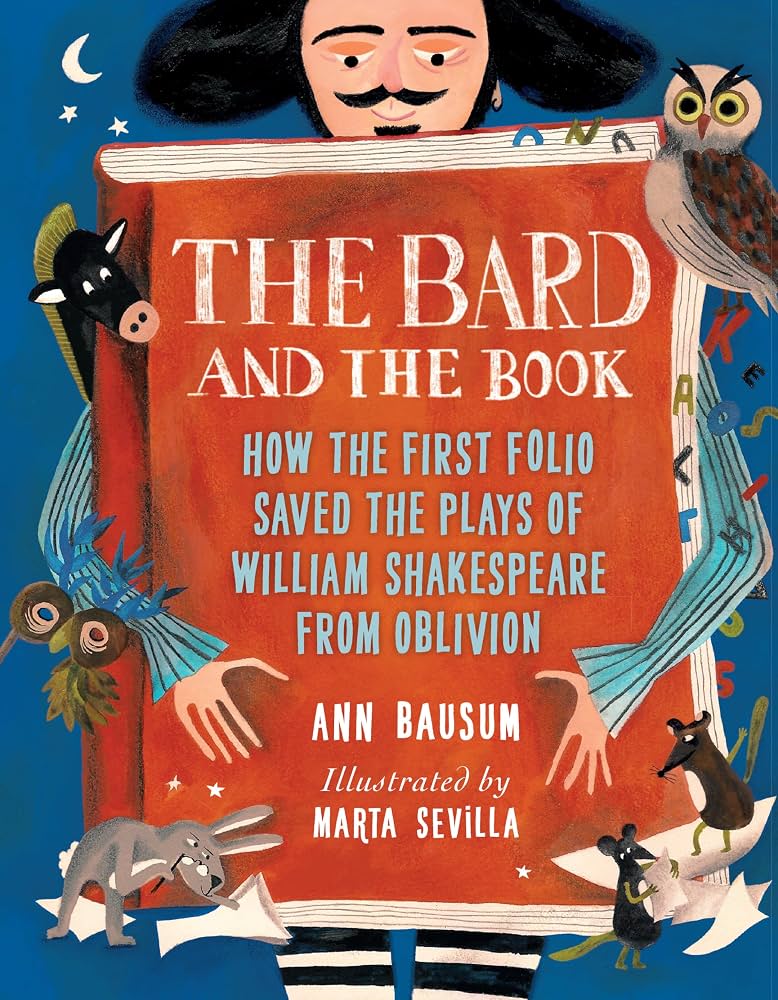
By Ann Bausum, The Bard and the Book (Peachtree, 2024) is the story of the First Folio – the reason Shakespeare survives to this day. For ages 10-13.
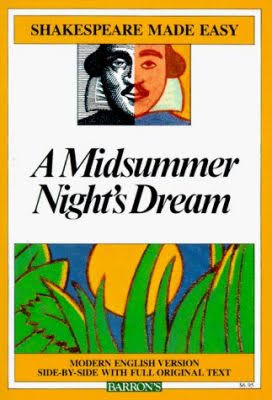
Alan Durband’s Shakespeare Made Easy Series (Barron’s Educational Series) is targeted at Shakespeare-phobic high-school students: each play is presented with the original text on one side of the page and, on the facing page, a “translation” into modern English. (I’d urge teenagers to at least try the original before settling for the translation – “Hey! You got a knife?” just doesn’t have the same ring.)

The Manga Shakespeare series (Amulet Books) pairs manga-style illustrations and a comic-book format with right-from-the-text Shakespearean dialogue. (Check out Macbeth, shirtless, with sword and purple pants, and Romeo and Juliet, with motorcycle.) For ages 12 and up.

Norrie Epstein’s The Friendly Shakespeare (Penguin Books, 1994) presents – in 550 nicely designed pages and a very friendly manner - all kinds of fascinating information about Shakespeare’s life, times, and plays. Included is almost everything you could possibly want to know about Shakespeare: who he really was and what he might have looked like, the histories of each of the plays from conception to the present day, the workings of the Elizabethan stage, modern Shakespearean spin-offs, timelines and chronologies, famous quotations, irresistible trivia. A great resource for teenagers and adults.

Marjorie Garber’s (enormous; it’s over 1000 pages long) Shakespeare After All (Anchor, 2005) – based on her college lecture series - is a scholarly analysis of all of Shakespeare’s works, one chapter per play. For serious and devoted Shakespeare students.

Harold Bloom’s massive and erudite Shakespeare: The Invention of the Human (Riverhead Trade Books, 1999) provides in-depth analyses of each of the plays and discusses Shakespeare’s role in the evolution of the English language and the development of Western thought. For older teenagers and adults.

James Shapiro’s Contested Will: Who Wrote Shakespeare? (Simon & Schuster, 2010) covers arguments for and against the many claimants for authorship of Shakespeare’s plays, and discusses how the plays themselves may reveal the truth about their author. For teenagers and adults.

John Julius Norwich’s Shakespeare’s Kings (Scribner, 2001), subtitled “The Great Plays and the History of England in the Middle Ages,” is an intriguing comparison of Shakespeare’s plots to documented history. A thoroughly interesting read for teenagers and adults.
Absolute Shakespeare has the texts of all the plays and sonnets on line, a selection of famous Shakespearean quotes, a list of Shakespearean film adaptations, a Shakespeare timeline, and a “grueling” Shakespeare quiz.
Having trouble with all those varlets and forsooths? No Fear Shakespeare pairs the original Shakespearean text with side-by-side translation into modern English. Includes 24 plays, plus the sonnets.
From the Learning Network, Teaching Shakespeare with the New York Times has a list of creative lesson plans, among them “To Freeze or Not to Freeze,” in which kids create “frozen tableaux” of scenes from the plays; and “The Bard in the Big Apple,” in which kids experiment with setting Shakespeare’s plays in modern times.
All About the Bard

Lois Burdett’s A Child’s Portrait of Shakespeare (Firefly Books, 1995) is a picture-book biography related in rhyming couplets, and illustrated by early-elementary students. For ages 5-9.
From Kids Discover, which publishes illustrated short non-fiction magazines for kids, see the Shakespeare issue for a catchy overview of Shakespeare’s life, work, and times (and a great cutaway illustration of the Globe Theatre). For ages 6-12.

By Diane Stanley and Peter Vennema, Bard of Avon (Morrow Junior Books, 1998) is a beautifully done and well-balanced biography, with great full-page illustrations and an interesting “Postscript” in the back on Shakespearean language and spelling. For ages 7-11.

Aliki’s William Shakespeare and the Globe (Harpercollins, 1999) presents Shakespeare’s life as a picture-book play in five Acts, with charming illustrations and lots of additional information in little sidebars and boxes. For ages 7-11.

Celeste Mannis’s Who Was William Shakespeare? (Grosset & Dunlap, 2006) is an attractive short chapter book on the life and times of Shakespeare, with a lot of interesting asides – a list of words coined by Shakespeare (puppy dog, rascally, zany), a capsule biography of Queen Elizabeth I, an explanation of blank verse. A good pick for ages 8 and up.

Shakespeare for Kids by Colleen Aagesen and Margie Blumberg (Chicago Review Press, 1999) is an informational activity book on the life and times of Shakespeare. Included, along with biographical and historical background information, are suggestions for staging a scene from Shakespeare’s Julius Caesar, and directions for making an Elizabethan costume and a sword, a pomander ball, a quill pen (to be used for composing a sonnet), and a recipe for a yummy dish of Elizabethan Apple Moye. For ages 9 and up.

Bill Bryson’s Shakespeare: The World as Stage (HarperPerennial, 2008) is a wonderful and witty 200-page biography of Shakespeare (“at once the best known and the least known of figures”). For teenagers and adults.

Stephen Marche’s How Shakespeare Changed Everything (HarperPerennial, 2012) is an interesting and informational account of how Shakespeare impinges on all aspects of culture. For example, his influence led to the rise of black actors on Broadway, the introduction of starlings to America, and the murder of Abraham Lincoln, and helped form our attitudes toward sex and young love. A final chapter dwells on who Shakespeare was (or wasn’t). A fun read for interested teenagers and adults.

James Shapiro’s highly readable A Year in the Life of William Shakespeare: 1599 (HarperPerennial, 2006) covers a landmark year both in Shakespeare’s life and in British history. Shakespeare wrote four of his most famous plays and saw the building of the Globe Theater; England dealt with the threat of a second Armada, a disastrous campaign in Ireland led by the Earl of Essex, and worries about succession to the throne. Thoroughly interesting, for teenagers and adults.

Peter Ackroyd’s Shakespeare: The Biography (Anchor Books, 2006), an in-depth coverage of Shakespeare’s life and times, is crammed with interesting information. Highly recommended for teenagers and adults.

Stephen Greenblatt’s award-winning Will in the World: How Shakespeare Became Shakespeare (W.W. Norton, 2005) interweaves Shakespearean biography with the world of the Elizabethans. A great read for teenagers and adults.

Laura Bates’s Shakespeare Saved My Life: Ten Years in Solitary with the Bard (Sourcebooks, 2013) is the story of the author’s experience teaching Shakespeare to prison inmates – notably to Larry Newton, who spent ten years in solitary confinement after a murder conviction as a teenager, and for whom Shakespeare was a life-changing revelation. For teenagers and adults.

John J. Ross’s Shakespeare’s Tremor and Orwell’s Cough (St. Martin’s Press, 2012) is subtitled “The Medical Lives of Famous Writers” – various chapters cover the ailments of William Shakespeare, John Milton, the Bronte family, Jack London, Herman Melville, and more. For older teenagers and adults.

From the BBC, In Search of Shakespeare is a four-part series hosted by historian Michael Wood. See https://www.youtube.com/playlist?list=PL2vJ5Cg-wlPzm6GTryxd3Sd7j4E8BMrj3.
The BBC’s William Shakespeare site, targeted at elementary-level kids, has basic information on Shakespeare’s life and work, fun facts about Shakespeare, and an interactive “To Be or Not to Be” gameshow-style Shakespearean game.

From the Folger Shakespeare Library, Shakespeare for Kids has Shakespearean games, puzzles, and challenges, fun facts, info on the life and times of Queen Elizabeth I, activities for kids based on items in the library collection, an exhibit of favorite Folger treasures, a page for sharing writing and artwork, and much more. There’s also an extensive list of resources for teachers.

From creative teacher Mr. Donn, William Shakespeare has PowerPoint presentations and lesson plans, background information, summaries, paraphrases, full texts of several plays, and games and activities centered around Elizabethan England.
The Shakespeare Resource Center is a great comprehensive site, variously covering Shakespeare’s biography and will, his works, language, the authorship debate, the Globe Theatre, and more. Each topic has a list of related websites. Also included is an extensive reading list and (go right to the source) an "Ask the Bard" feature.
How did Shakespeare spell his name? And what did he look like? Shakespeare Online deals with these questions and much more: included on the website, for example, are a complete list of Shakespearean characters, a guide to Shakespearean theatres, study questions and quizzes on the plays, and info on Elizabethan outfits and Ophelia’s flowers.
The Globe Theatre
Shakespeare’s Globe is the website of the modern rebuilt Globe Theatre. The site, along with wonderful scenes of the theatre and performances, has an extensive and excellent education section and a playground for kids with games, activities, and quizzes, hosted by a collection of Shakespeare’s Beasts.

The Globe Theater Model Kit is a cardstock model of the theatre with 239 parts. (Finished size: about 10 inches wide and 4 inches high.) Not for the very young. See https://paperlandmarks.com/products/globe-theatre-paper-model
At 8 Insane Literary Lego Projects, check out the incredible Lego version of Shakespeare’s Globe.
Daily Living with Shakspeare, or Food, Football, Flowers, and Insults
For Sports and Games in Shakespeare, see https://nosweatshakespeare.com/sports-games-references/. Archery, falconry, football, billiards, and more.

Jessica Kerr’s Shakespeare’s Flowers (Johnson Books, 1997) covers the lore of all the flowers mentioned in Shakespeare’s plays and poems. Illustrated with lovely full-color paintings.
Plant a Shakespeare garden of your own. From the New York Botanical Garden, see Shakespeare Garden for suggestions and plant lists.
Want to talk like Shakespeare? See Proper Elizabethan Accents for pronunciation drills, vocabulary and grammar practice, insults and cursing (use your judgment), forms of address, and songs. Learn how to say “Good morrow” properly and what to yell at a pickpocket.
Take your diction out for a spin on Talk Like Shakespeare Day, celebrated annually on April 23, Shakespeare's birthday.

By Wayne F. Hill and Cynthia J. Ottchen, Shakespeare’s Insults (Three Rivers Press, 1995) is a collection of 5000, excerpted from the plays. Everything you ever wanted to know about Elizabethan invective. For teenagers and adults.


Francine Segan’s Shakespeare’s Kitchen (Random House, 2003) is a terrific collection of “Renaissance Recipes for the Contemporary Cook,” running from “Kickshaws” and “Pottage” to “Feasting and Bills of Fare.” The original 17th-century recipes are paired with modern interpretations, background information, and color photographs. A great source for your next Shakespearean banquet.
Also see To Feast or Not to Feast: Toasting the Bard's Birthday from National Geographic's The Plate.
From TeachersFirst, find out how to throw a Shakespearean Feast. The site includes a discussion of Elizabethan table manners (no forks) and a range of Elizabethan recipes, from trifle to steak and kidney pie.
Performing Shakespeare

By Brendan P. Kelso, the Playing with Plays Series (BookSurge Publishing) consists of short (10-minute) adaptations of Shakespeare’s plays for young performers. Titles include A Midsummer Night’s Dream, The Tempest, Twelfth Night, Romeo and Juliet, Macbeth, Hamlet, Julius Caesar, and The Taming of the Shrew. Each book contains three versions of the play (for small-, medium-, and large-sized casts) with rehearsal and performance suggestions. For ages 7 and up. Also see the Playing with Plays: Shakespeare for Kids website.

Edited by Jennifer Kroll, Simply Shakespeare: Readers Theatre for Young People (Libraries Unlimited, 2003) has simplified and modernized versions of 13 Shakespearean plays, with accompanying suggestions for presentations and props. For ages 10 and up.

Truncated or modernized versions of Shakespeare can be helpful for those planning Shakespearean performances, particularly if your cast is on the younger side. The Discovering Shakespeare Series by Fredi Olster and Rick Hamilton (Smith and Kraus) are worktexts for middle- and high-school-level kids interested in Shakespearean acting. The books include both abridged and vernacular versions of the originals, plus stage directions, performance tips, and related exercises. Available for A Midsummer Night’s Dream, Macbeth, Much Ado About Nothing, The Taming of the Shrew, and Romeo and Juliet.

Playwright Ken Ludwig’s How to Teach Your Children Shakespeare (Crown, 2013) as an engrossing account of how the author taught his kids Shakespeare, beginning when they were six years old. (And why teach Shakespeare? Because, says Ludwig, he’s one of the two great bedrocks of Western civilization in English, along with the King James Bible.) A great resource for parents and teachers.

Rafe Esquith’s Teach Like Your Hair’s on Fire (Penguin Books, 2007) is the story of a brilliant, dedicated, and creative teacher attempting to promote a progressive and successful curriculum for his fifth-graders despite the restrictions of the school system. It’s a fascinating and inspirational book, crammed with wonderful ideas. Check out Esquith’s account of his Hobart Shakespeareans, famous for performing full-text Shakespeare plays. For parents, homeschoolers, teachers, and all interested in education.
See the PBS documentary on Esquith’s Shakespeare program, The Hobart Shakespeareans (2005).

Robert Sugarman's Performing Shakespeare: A Way to Learn (Mountainside Press, 2011) describes four very different (and very successful) programs for doing Shakespeare with kids. A great resource for would-be Shakespeareans.

Edited by Susannah Carson, Living with Shakespeare (Vintage, 2013) is a collection of essays by writers, actors, and directors, sharing their personal experiences of the Bard. Among the contributors are Isabel Allende, Ralph Fiennes, James Earl Jones, Joyce Carol Oates, and Julie Taymor. For teenagers and adults.

From the Unemployed Philosophers Guild, how about a Shakespeare finger puppet? (Put on a small play.) See https://philosophersguild.com/collections/plush-finger-puppets.
Playing with the Bard

From Prospero Art,

From Big Fish Games, in The Chronicles of Shakespeare: Romeo and Juliet, players take on the roles of Romeo or Juliet as Shakespeare is in the process of writing his famous play. Lots of puzzles and obstacles to be overcome (check out the Blog Walkthrough). Available for Mac or Windows.
Enter the Story is an online project and teaching tool in which books are converted into interactive games. There are eight Shakespearean plays available as free online games: Julius Caesar, The Tempest, Othello, A Midsummer Night’s Dream, A Winter’s Tale, Hamlet, Macbeth, and Romeo and Juliet (with more in the works). Fun, witty, and informative.

Munchkin Shakespeare (Steve Jackson Games) is one of a parody series on fantasy role-playing games, involving a board, clever cards, and – as in all Munchkin games – opportunities to kill monsters and backstab your friends. Cards include “Curse! Winter of Your Discontent, “Mortal Coil,” and “Sonnet the Hedgehog.” The more Shakespeare you know, the funnier it is. For ages 10 and up. See https://munchkin.game/products/games/munchkin-shakespeare-deluxe/.
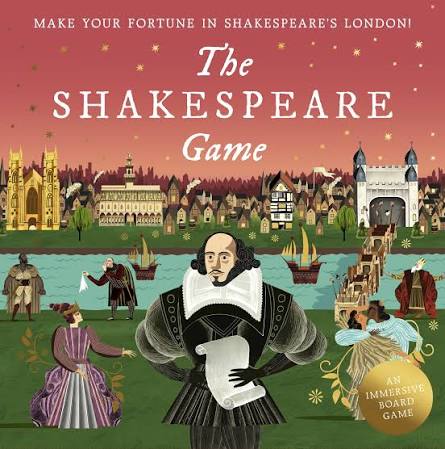
In The Shakespeare Game (Laurence King), players journey from Stratford to London, collecting characters, then race to produce as many plays as possible before rival playwrights steal your ideas, the theater burns down, or plague strikes. For 3-5 players ages 8 and up.
See

In

Zounds! (Clarkson Potter) is a card game for "Rhymers, Rulers, and Star-Crossed Language Lovers." Players compete to collect Shakespearean characters; extra points for filling in missing words in Shakespearean quotations. For ages 8 and up.
See

Tom Tierney’s Great Characters from Shakespeare Paper Dolls (Dover Publications, 2000) has two dolls and 30 costumes, variously for Romeo and Juliet, Hamlet and Ophelia, Othello and Desdemona, and more. Included are short synopses of the plays. $6.95 from Dover Publications.
Seriously Quirky Shakespeare

Ian Doescher’s William Shakespeare’s Star Wars (Quirk Books, 2013) translates George Lucas’s epic into the language of the Bard, complete with chorus and dialogue in iambic pentameter. (“The Death Star plans we could not find herein/Nor are they on the main computer, Lord.”) Hilarious for teenagers and adults.

For the Bard-lover who has everything, the Shakespeare Rubber Duck is the perfect literary bathtub toy, complete with mustache, manuscript, Elizabethan ruffles, and orange bill. Available from several sources. For example, see https://ducksinthewindow.com/shakespeare-rubber-duck/.
Poetic Shakespeare

Miriam Weiner’s Shakespeare’s Seasons (Downtown Bookworks, 2012) pairs gorgeous artwork with quotes from Shakespeare’s plays and poems to illustrate the changing seasons. For ages 4 and up.

Edited by Barbara Holdridge, Under the Greenwood Tree (Stemmer House Publishers, 1986) pairs paintings with Shakespearean poems and play excerpts. For ages 9 and up.
Read Shakespeare’s poem “Under the Greenwood Tree” (from As You Like It) here.

Edited by David Scott Kasten and Marina Kasten, Poetry for Young People: William Shakespeare (Sterling, 2008) – one of an excellent poetry series – pairs Shakespearean sonnets and soliloquies with impressive artwork. For ages 10 and up.
Shakespeare’s Sonnets has all of them, with line-by-line notes, word definitions, and analyses.
Shakespeare at the Movies
For those who lack ready access to Shakespearean theater, there’s a lot of superb Shakespeare available on video. (Be warned: concerned parents should screen movies in advance. Shakespeare interpretations range from the mild to the gory; and in Roman Polanski’s 1971 version of Macbeth – telling known as the “Nude Macbeth” – the Lady sleepwalks without jammies.)

Shakespeare: The Animated Tales is an award-winning series of short (about half an hour) animated adaptations of Shakespeare’s plays, originally aired on television between 1992 and 1994.

Shakespeare Uncovered is a series of six films combining history, biography, performance, and dramatic analysis of Shakespeare’s plays with such famous presenters as Ethan Hawke, Jeremy Irons, and Derek Jacobi. Included at the website is a quiz to determine which Shakespearean character you are and a series of interactive games, among them “Death and Dying in Hamlet and Macbeth” and “Shakespeare’s Enchanted Forest.”

The TV series Slings and Arrows (2003-2006) is the story of Geoffrey (Paul Gross), a director recovering from a nervous breakdown, who is tasked with revitalizing a dystopic Canadian theater festival. In each of the three seasons of the miniseries the festival puts on a different Shakespearian play (“Hamlet” for season one, followed by “Macbeth” and “King Lear”), and the characters come to understand the facets of their own lives through the lens of the dramas they perform. The first season is the strongest, with the most direct Shakespearian parallels to the characters lives, but the series is a must-watch for anyone interested watching ins-and-outs of how Thespians make the sausage. [Guest reviewer Josh Rupp. Thanks, Josh!]

Impatient? Check out The Complete Works of Shakespeare (Abridged) by the Reduced Shakespeare Company. Thirty-seven plays in under two hours. And it's hilarious.
A few movie highlights:

Kenneth Branagh’s 1996 version of Hamlet is cinematically spectacular. Branagh plays Hamlet; Kate Winslet, Ophelia. The production is four hours long, but it doesn’t feel like it. Rated PG-13.

Directed by Kenneth Branagh, A Midwinter’s Tale (1995) is the story of out-of-work actor Joe Harper who – in a effort to stave off depression - volunteers to help save his sister’s church from land developers by staging a Christmas production of Hamlet. A romantic comedy with a caste of oddball British characters. Rated R.

The entrancing 1999 version of A Midsummer Night’s Dream is set somewhere around the turn of the century; the confused lovers ride bicycles through the forest. Kevin Kline plays Nick Bottom, complete with donkey ears; Michelle Pfeiffer, Titania; and Stanley Tucci is a terrific Puck. Rated PG-13.

Kenneth Branagh plays Benedick, in a delightful 1993 production of Much Ado About Nothing, with Emma Thompson as a very witty Beatrice and Michael Keaton as a notably dippy Dogberry. Rated PG-13.

In this great version of Henry V (1989), Kenneth Branagh plays Henry, with Emma Thompson as the French king’s daughter, Katherine. There’s a phenomenal Battle of Agincourt. Rated PG-13.

In this 1995 production of Richard III, the play is set in the 1930’s; Richard (Ian McKellen) is a uniformed dictator; and the final battle features airplanes and guns. Rated R.

Looking for Richard (1996) is a fascinating documentary-style account of the staging of the Richard III in which Al Pacino and cast dissect, discuss, and experiment with all aspects of the play. Rated PG-13.

Among the most popular of Romeo and Juliets is the 1996 version starring Leonardo DiCaprio and Clare Danes; if you’re not a fan of Leonardo, try Franco Zefferelli’s 1968
Romeo and Juliet, with Leonard Whiting and Oliva Hussey. Rated, respectively, PG-13 and PG.

In Shakespeare in Love (1998), Shakespeare (Joseph Fiennes) struggles to write the play that ultimately becomes Romeo and Juliet. He’s in love with Viola (Gwyneth Paltrow); the supporting case includes Judi Dench, who plays a marvelous Queen Elizabeth, and Geoffrey Rush as a harried theater manager. Rated R.

In Trevor Nunn’s 1978 Macbeth, Ian McKellen plays Macbeth and Judi Dench, his manipulative Lady, with a cast of supporting characters from the Royal Shakespeare Company.

Macbeth (2010) with Patrick Stewart and Kate Fleetwood is a Stalinesque version of the play, with the three Witches as a trio of creepy hospital nurses. Not rated, but for older viewers.

Directed by Julie Taymor, Titus (1999) – a film version of Titus Andronicus, with Anthony Hopkins in the title role and Jessica Lange as Tamora – is terrific. Rated R.

In Taymor’s The Tempest (2010), a plot twist is a gender change: Prospero is Prospera, played by Helen Mirren. Rated PG-13.