
Eggs
In this collection
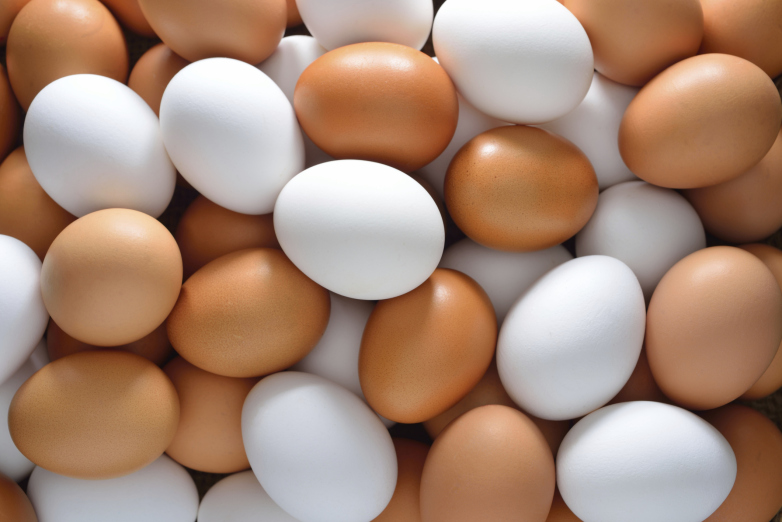
See below for all things egg, including surprising eggs, scientific eggs, magical eggs, alien eggs, and jeweled eggs.
And what about that screeching egg that Harry Potter has to deal with in Harry Potter and the Goblet of Fire?
Try the incredible egg drop experiment, make egg geodes, and find out the real answer to the troubling question of which came first: the chicken or the egg?
See also
All About Eggs

Laura Vaccarro Seeger’s First the Egg (Roaring Brook Press, 2007), a Caldecott Honor Book, is a cleverly designed explanation of what comes first: First the egg, then the chicken; First the tadpole, then the frog; First the caterpillar, then the butterfly; First the paint, then the picture…and all ties up neatly at the end. For ages 2-5.

Ruth Heller’s gorgeous picture book Chickens Aren’t the Only Ones (Puffin, 1999) is an irresistible rhyming account of egg-laying animals and their eggs – among them seahorses, snakes, spiders, and octopuses. You’ll never forget the meaning of “oviparous.” For ages 4-8.

Mia Posada’s Guess What’s Growing Inside This Egg (Millbrook Press, 2006) is a fun interactive read. For each of the featured eggs, there’s a riddle-like verse providing clues; then readers turn the page to find out what’s inside the egg, along with a short informational paragraph about the animal. Attractive collage illustrations. For ages 4-8.

By Priscilla Belz Collins, A Nest Full of Eggs (HarperCollins, 1995) in the Let’s-Read-and-Find-Out Science series follows a robin family through the year, beginning with nest building, then the eggs are laid and hatched, baby birds are cared for, and learn to fly. Nicely presented information in story form for ages 4-8.

Also in the Let’s-Read-and-Find-Out Science series, see Amy E. Sklansky’s Where Do Chicks Come From? (HarperCollins, 2005).

By Nicola Davies, One Tiny Turtle (Candlewick, 2005) is the gentle story of a loggerhead turtle who lives in the ocean – until one summer night she arrives on the very beach where she was born to lay her own eggs. Notes provide additional information. For ages 4-8.

Martin Jenkins’s The Emperor’s Egg (Candlewick, 2002) is the story of how the male emperor penguin – largest of all penguins – spends two months without food, standing with an egg on his feet. For ages 4-9.
From The Teacher’s Guide, The Emperor’s Egg Printouts are a collection of word games and puzzles to accompany the book.

Gail Gibbons’s Chicks and Chickens (Holiday House, 2005) is an attractively illustrated picture-book introduction to chicken biology and behavior, variously covering egg-laying, embryo development and hatching, the characteristics of chicks, hens, and roosters, and a survey of chicken breeds. For ages 5-8.

By Dianna Hutts Aston, An Egg is Quiet (Chronicle Books, 2014) is an exquisitely illustrated introduction to the vast variety of eggs, discussing shapes, sizes, patterns, functions, and the many places in which eggs are found. A wonderful introduction for ages 5-8.

People have eggs too. Robie H. Harris’s 88-page It’s So Amazing! (Candlewick, 2004) - subtitled “A Book about Eggs, Sperm, Birth, Babies, and Families” – is a gentle, cheerful, and straightforward explanation of sex, birth, puberty, and different kinds of families (helped along with some banter between a talkative bird and bee). Very well done for ages 7-10.
From the Food Timeline, Eggs has a lot of information about the history of eggs, egg symbolism, egg sizes and preservation, and egg cookery, with quotations and resources.
From The Incredible Egg, see Eggs in the Classroom for virtual egg farm tours and egg-based projects and activities for all ages.
What's the world's most expensive egg? Who invented the egg carton? Learn fascinating facts at Egg Facts A to Z at https://www.finedininglovers.com/explore/articles/eggs-z-26-things-know-about-eggs.
Lesson Plans

From First School, Eggs Theme is a multifaceted preschool lesson plan with printable worksheets (E is for Egg, N is for Nest) and coloring pages, online puzzles and games, and activity suggestions.
Egg-Laying Animals is a lesson plan for grades 2-6 in which kids make papier-maché eggs and build appropriate habitats for them.
The Incredible Egg is a downloadable 4-H curriculum guide targeted at grades 4-5. It covers the parts of an egg, chick embryology, and egg nutrition and the food pyramid. Many illustrated worksheets.
Education World’s multidisciplinary Five Lesson Plans for Easter: Just Add Eggs are really appropriate for any time of the year. For example, kids make and read maps leading to hidden eggs; make egg-based paints; experiment with eggs in saltwater; do math exercises with jelly eggs; and do art projects with egg cartons. Each lesson plan has extension activities. (There’s a lot here.) Appropriate for a wide range of ages.
Imaginative Eggs
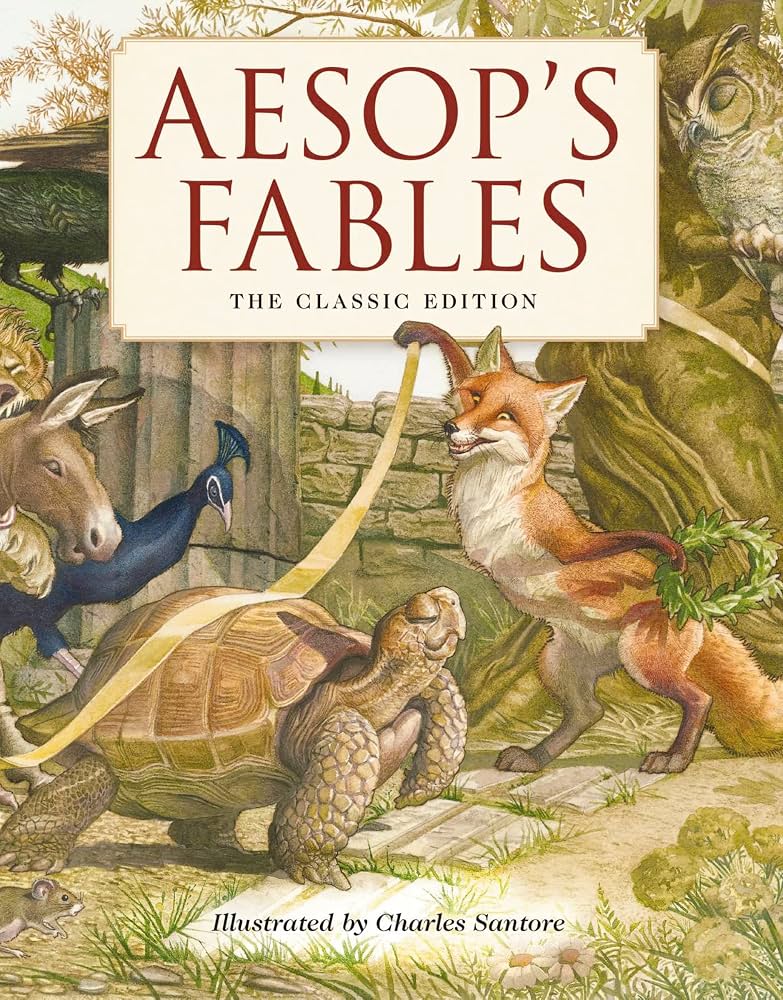
There are dozens of editions of Aesop’s collected fables – and almost all include the story of “The Goose That Laid the Golden Eggs.”
Read the fables online at https://read.gov/aesop/001.html.

By Tad Hills, Duck & Goose (Schwartz & Wade, 2006) features a delightful pair who occasionally have trouble getting along. When they find an enormous spotted egg, both claim it (“I saw it first.” “I touched it first.”). They unite, however, in the process of caring for the egg – and aren’t at all dismayed when they discover that the “egg” is actually a polka-dot ball. One of a series. For ages 3-7.

In Leo Lionni’s An Extraordinary Egg (Dragonfly Books, 1998), Jessica, an adventurous frog, finds and rolls home an egg – promptly pronounced by her know-it-all friend Marilyn to be a chicken egg. When the egg hatches an alligator, the frogs persist in calling it a chicken and all become friends – though it’s surprising how well the “chicken” can swim. When the baby is finally returned to its mother, the frogs all get a chuckle out of how she refers to the chicken as “My sweet alligator.” For ages 3-7.

In Dr. Seuss’s Horton Hatches the Egg (Random House, 2004), Horton – surely the most lovable elephant in literature – faithfully cares for ditsy bird Maysie’s egg, despite trials, tribulations, and teasing. (“I said what I meant and I meant what I said/An elephant’s faithful, one hundred percent!”) Finally Horton’s much-cared-for egg hatches out an elephant bird. For ages 4-8.
Learn about real elephant birds with David Attenborough and the mystery of the elephant bird.
See these 10 cool facts about the elephant bird.

I – well – just love Emily Gravett. In Gravett’s The Odd Egg (Simon & Schuster, 2009), all the birds had laid an egg – except Duck. Instead he finds an enormous green-spotted egg and, though all the other birds make fun of it, he persists in waiting for it to hatch (knitting all the time). Finally Duck’s egg produces an enormous baby alligator. The pictures are priceless. For ages 4-8.
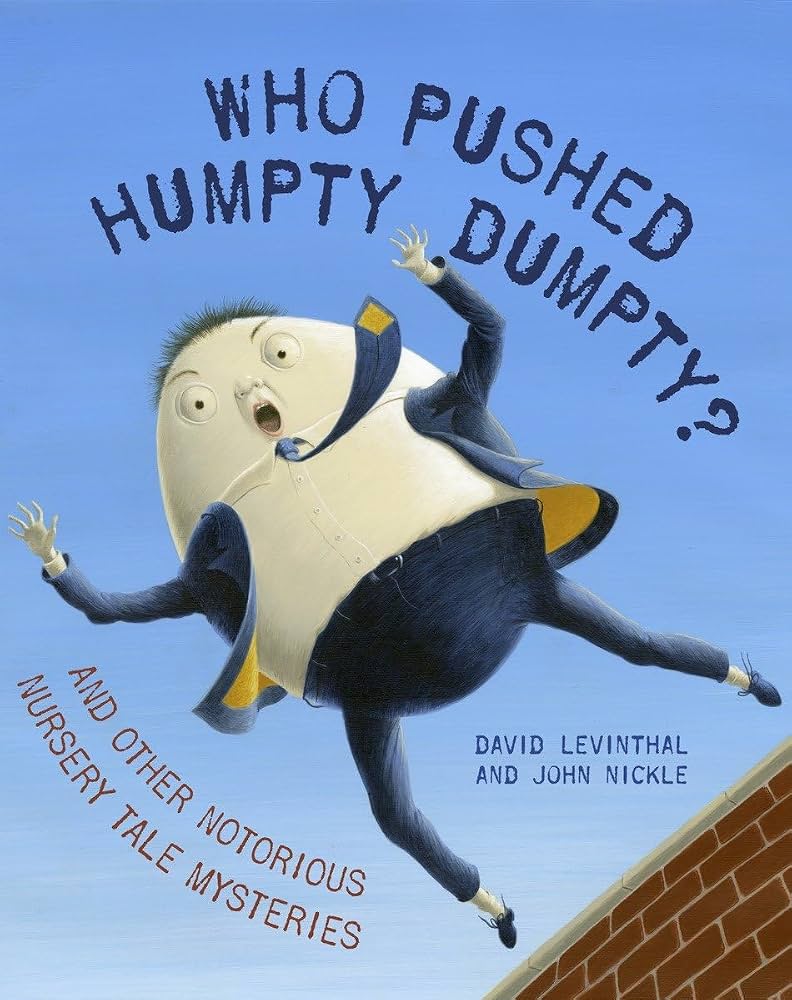
Humpty Dumpty – generally shown as a giant person-like egg – was originally a character in an English nursery rhyme – later made famous in Lewis Carroll’s Through the Looking Glass. Read about it at https://en.wikipedia.org/wiki/Humpty_Dumpty.
In David Levinthal’s Who Pushed Humpty Dumpty? (Schwartz & Wade, 2012), Officer Binky – a detective toad – solves a number of notorious nursery tale mysteries, among them who pushed Humpty Dumpty, who was responsible for a break-in at the house of the Three Bears, and just what happened to the witch at the gingerbread cottage. For ages 4-8.

In Bill Peet’s rhyming The Pinkish, Purplish, Bluish Egg (Sandpiper Books, 1984), Myrtle, a turtle dove, adopts an enormous and peculiar egg, which hatches out a little griffin. Despite horrified responses from the other birds (“Just look! The thing is half lion, half eagle./I’m sure that it must be unsafe or illegal.”), Myrtle loves the griffin and names him Zeke – and Zeke, grown bigger, heroically saves the birds from a pack of foxes. For ages 4-8.

Robert D. San Souci’s The Talking Eggs (Dial, 1989) is the adaptation of a Creole folktale featuring two sisters, Blanche (“sweet and kind and sharp as forty crickets”) and Rose (selfish and mean). Kind Blanche helps a strange old lady who gives her some talking eggs that provide her with wonderful things. Rose then sets off to get some eggs of her own, but – since she ignores the old lady’s instructions – ends up with eggs that release only snakes and wasps. With illustrations by Jerry Pinkney. For ages 4-8.

In Patricia Polacco’s Just Plain Fancy (Dragonfly Books, 1994), Naomi, an Amish girl, complains that everything about her life – clothes, houses, and chickens – is just too plain. Then she and her sister Ruth find an unusual egg that hatches out a very peculiar chicken. They name it Fancy and try to keep it a secret for fear that the elders won’t approve – until one day. at a working bee, Fancy breaks out of the henhouse and shows himself to be a glorious peacock. (The elders think he’s just fine.) For ages 4-8.

In The Crows of Pearblossom (Harry N. Abrams, 2011) – Aldous Huxley’s one and only children’s book – the crows who live in Pearblossom’s cottonwood tree are bedeviled by a rattlesnake, who keeps eating their eggs. Finally, with the help of an owl, they manage to trick the snake with a pair of fake eggs – and then live happily ever after, hatching out four families of seventeen children each. The illustrations are great fun – the crows’ nest, for example, includes a grandfather clock and a bassinet for the egg. A witty read for ages 4-8.

In M.P. Robertson’s The Egg (Puffin, 2004), George discovers a truly gigantic golden egg in the family henhouse. He transports it (by wheelbarrow) to his bedroom, settles it on his bed, and reads it stories - and shortly the egg hatches, producing a baby dragon. George now sets about teaching the dragon the essentials of dragonly ways: flying, breathing fire, battling knights, and distressing damsels. The two can’t talk to each other, but they understand each other – as is revealed at the touching and grateful end. For ages 5-8.
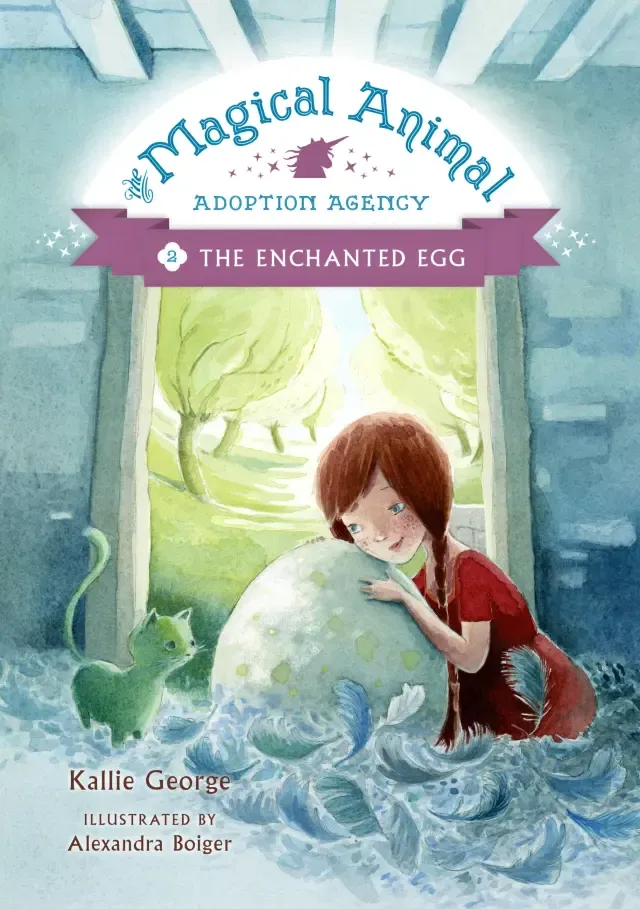
In Kallie George’s The Enchanted Egg (Little, Brown, 2015), one of the Magical Animal Adoption Agency series, the Agency has acquired a mysterious giant egg. For ages 7-10.

In E. Nesbit’s The Phoenix and the Carpet (Puffin, 2012) – originally published in 1904 – five children discover a wonderful egg rolled up in the new carpet that has been purchased for the nursery. The egg falls into the fire and hatches out a fabulous (talking) Phoenix. In company with the Phoenix and the carpet (which turns out to be magic), the kids set out on a series of adventures. (A sequel to Five Children and It.) For ages 8-11.

In Oliver Butterworth’s The Enormous Egg (Little, Brown, 1993), one of the hens in the Twitchell family henhouse lays an enormous egg – which hatches out an infant Triceratops. Twelve-year-old Nate names the dinosaur Uncle Beazley and decides to raise it himself, but a growing dinosaur proves challenging, so Nate – with the help of a friendly paleontologist – decides to find Uncle Beazley a home. He doesn’t expect the resulting political furor. For ages 8-12.
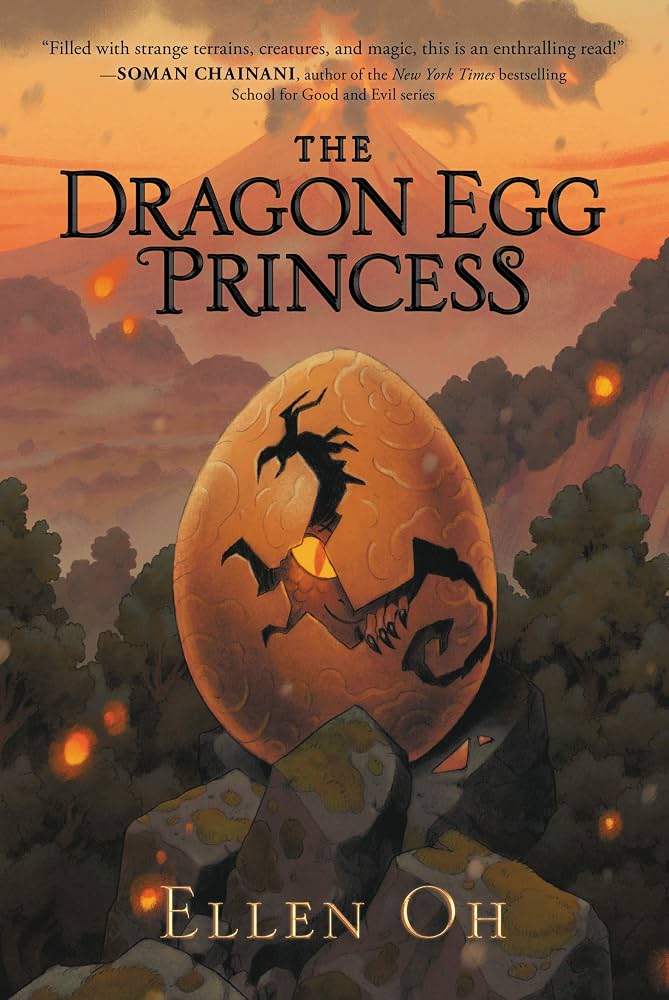
In Ellen Oh’s The Dragon Egg Princess, with roots in Korean folktales, a great evil is awakening in Mysterious Kidahara forest, and young Jiho Park – along with a bandit chief and a lost princess with links to a long-extinct dragon race – is determined to stop it. For ages 8-12.

In Bruce Coville’s Jeremy Thatcher, Dragon Hatcher (Houghton Mifflin Harcourt, 2007), 12-year-old Jeremy stumbles upon a mysterious magic shop and ends up with a dragon’s egg. Eventually the egg hatches and produces Tiamat, a dragon that only Jeremy and his friend Mary Lou can see. It’s not easy, however, raising an invisible dragon. One of the Magic Shop series for ages 9-12.

By Diana Wynne Jones, The Pinhoe Egg (Harper Collins, 2006) is one of the Chronicles of Chrestomanci series, set in a parallel British universe featuring castles and magic. In this volume, enchanter Cat Chant and young witch Marianne Pinhoe find an incredible egg – hidden for years in an attic – that hatches out a baby griffin. A good bet for fans of Harry Potter. For ages 9 and up.
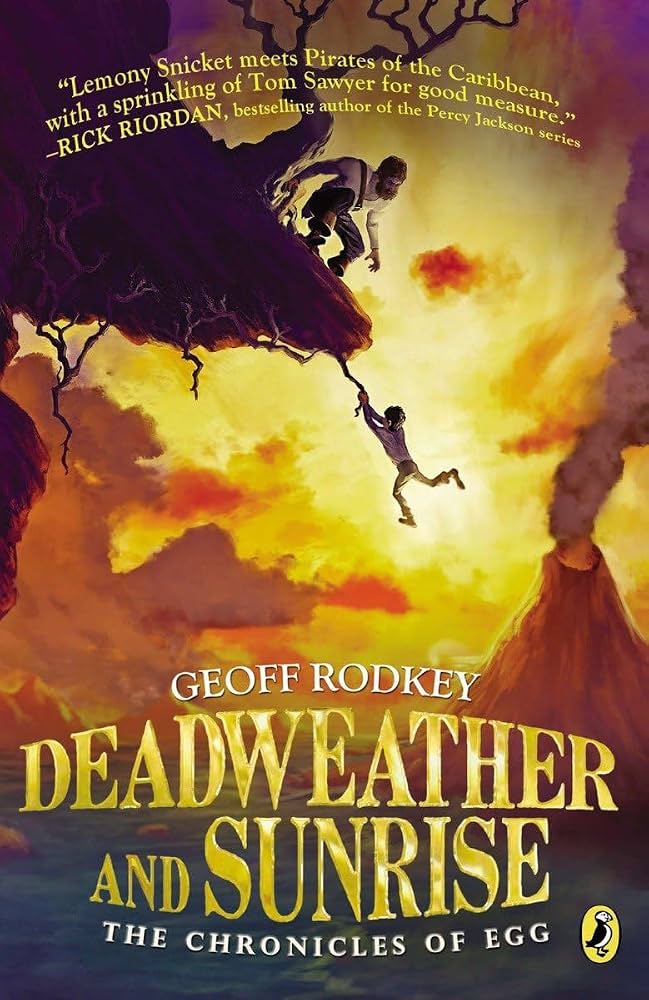
Geoff Rodkey’s Chronicles of Egg series is described as “Lemony Snicket meets Pirates of the Caribbean, with a sprinkling of Tom Sawyer for good measure.” The series traces the exciting adventures of Egg (that is, Egbert), raised on the pirate-infested island of Deadweather along with an incompetent tutor and Venus and Adonis, his hateful older siblings. Book One is Deadweather and Sunrise (Puffin, 2013). All right - no actual eggs, but it’s fun and exciting for ages 10-12.
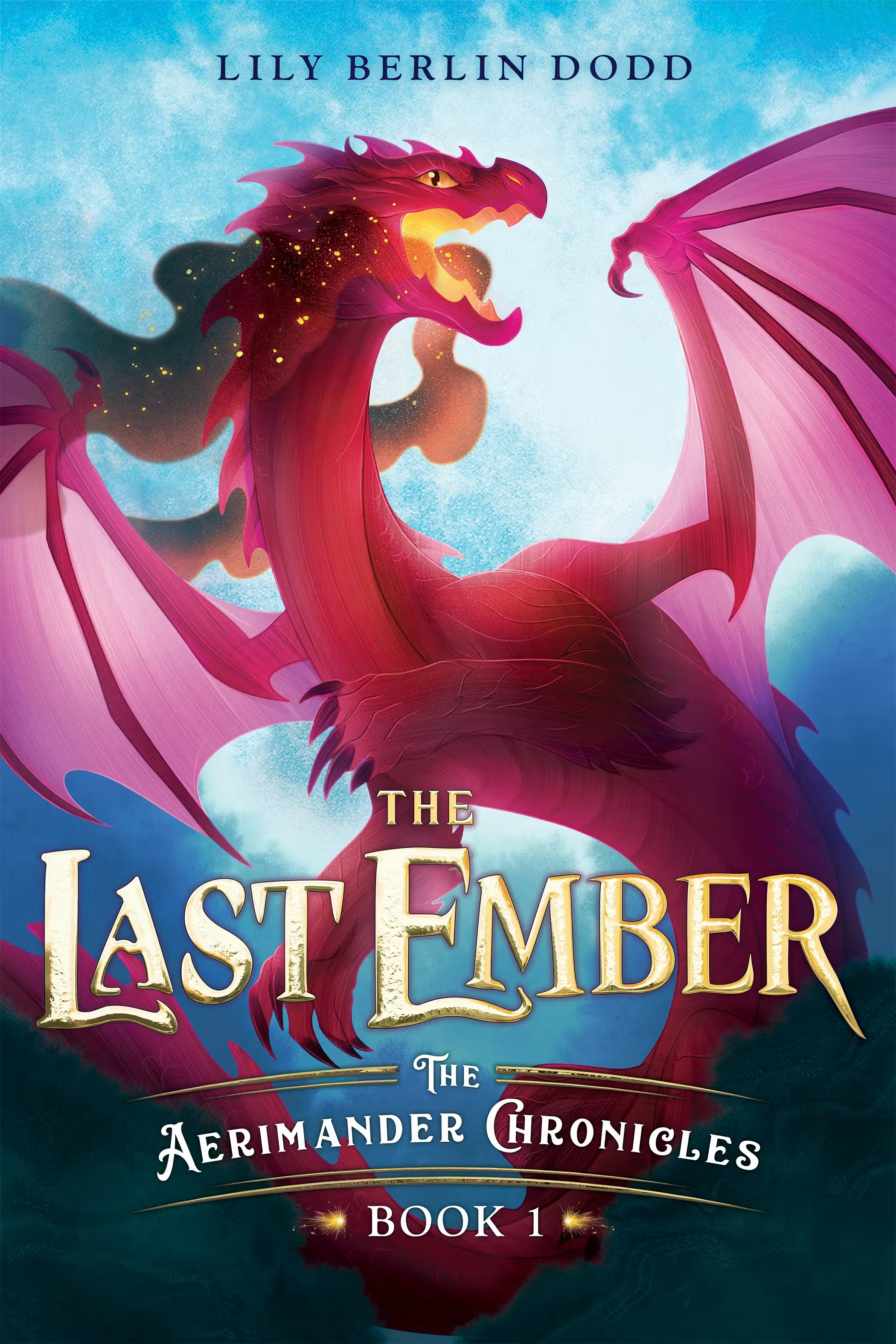
In Lily Berlin Dodd’s The Last Ember (Farrar, Straus & Giroux, 2025), 12-year-old chemistry student Eva Alexander has (accidentally) found the world’s last aerimander egg – and now she’s the target of thieves and the government, in the shape of power-hungry Eoin Parnassus, Director of Kingdom Secrets. On Eva’s side: Dusty, an orphan delivery boy, and Gourd, an incredibly slow getaway pony. For ages 10-14.
Eating Eggs

Dr. Seuss’s Green Eggs and Ham (Random House, 1960) is the rollicking story of Sam-I-Am, who is doing his best to convince a friend to eat green eggs and ham. His friend DOES NOT LIKE green eggs and ham. For ages 3-7.
It’s also funny in French, as Les Oeufs Verts au Jambon (Ulysses Press, 2009).
See if YOU like green eggs and ham. You can just add a drop of blue (yes, blue) food coloring to your breakfast scrambled eggs - or try this fancier version, which calls for spinach.
Also see Dr. Seuss’s Scrambled Eggs Super (Random House, 1953) in which Peter T. Hooper sets out to find a fabulous collections of eggs for the most incredible breakfast ever. For ages 4-8.

In Alison Jackson’s Eggs Over Evie (Henry Holt and Company, 2010), 12-year-old Evie – a budding chef – has problems: her celebrity-chef father’s new wife is expecting twins; her mother is starting to date; and Evie is feeling lost. Cooking turns out to be a way for Evie to find herself. Each chapter begins with a cooking quote and features a recipe (many with eggs). Try Evie’s Mount Vesuvius Omelet Souffle. For ages 9-12.

By Roald Dahl (with great illustrations by Quentin Blake), see Roald Dahl’s Revolting Recipes (Puffin, 1997) for an irresistible recipe for Stink Bug Eggs.
A recipe for perfectly cooked soft-boiled eggs (with science): from Scientific American, see Egg-cellently Cooked Eggs for instructions and explanations.
The Science Behind Eggs has a brief explanation and a slide show of favorite foods made possible by eggs (say, angel food cake and custard).
Egg Science

Steve Spangler’s Naked Eggs and Flying Potatoes (Greenleaf, 2010) is a collection of great science experiments, among them at least four with eggs. Cool for everybody; recommended for ages 9 and up.
Check out the Naked Egg experiment, a Science Snack from the San Francisco Exploratorium at https://www.exploratorium.edu/snacks/naked-egg.
See a full list of Science Snacks at https://www.exploratorium.edu/explore/activities.
Chemistry and calcium! See Translucent Egg at https://sciencefairadventure.com/projects/translucent-egg/ for an experiment involving calcium carbonate, acetic acid, and an egg.
For a complete list of Science Fair Adventure projects (many and varied), see https://sciencefairadventure.com/projects/.
Incubation and Embryology from the University of Illinois Extension has an excellent collection of detailed resources on chickens, chick embryology, and eggs. Included are instructions for building a simple cardboard-box incubator and a coffee-can egg candler.
Sources for incubators, eggs, and chick supplies include My Pet Chicken,
Stromberg’s Chicks and Game Birds, and the
Carolina Biological Supply Company.
Which came first: the chicken or the egg? See what science says with this great animated explanation from Gizmodo.
Chicken or Egg? Science Decides! is a great evolutionary explanation on YouTube.

Is it really hot enough to fry an egg on the sidewalk?
Experiment with an exciting Egg Bungee! See https://www.youtube.com/watch?v=bdDZugMTQso.

Eggs to Dye For has an explanation of the chemistry of egg dyeing, plus an egg color activity.
The early Earth smelled like rotten eggs. Really! Read about it here.
Dropping Eggs

In Mini Grey’s Egg Drop (Alfred A. Knopf, 2009), the star character is an egg who wants to fly. Now. Without waiting to hatch. (“The Egg was young./It didn’t listen./If only it had waited.”) So, in the teeth of all advice, the egg climbs to the top of a tower and jumps. When the inevitable happens, and the broken egg can’t be fixed (not even with nails, tomato soup, or band-aids), it ends up on a breakfast plate, sunny-side-up. It’s hilarious, but some kids may not think so. For ages 5-8.

The Egg Drop – a great experiment that illustrates the concept of inertia – is simple and thrilling. (A standard event here every Thanksgiving.) You’ll need a glass of water, a cardboard tube, a pie pan, and an egg. See https://www.youtube.com/watch?v=6gzCeXDhUAA.

Can you save an egg from death? Try building a device that will keep your egg intact when it’s dropped from a height of ten feet. (Balloons? A parachute? Bubble wrap?) For explanations and suggestions, see https://www.scienceworld.ca/resource/egg-drop/.
Artistic Eggs

In Tom Ross’s Eggbert (Puffin, 1997), an artistic egg who sports a red beret is evicted from the refrigerator because he is slightly cracked. Eggbert, at first dismayed, soon finds out that that the world is full of cracks, in everything from clouds to volcanoes to the Liberty Bell. For ages 4-8.

In Patricia Polacco’s Rechenka’s Eggs (Philomel, 1988), Babushka lives alone in a little house – dacha – in the Russian countryside, where she spends her winters painting beautiful eggs for the Easter festival. Then she rescues a wounded goose and names her Rechenka – who, once healed, accidentally breaks all of Babushka’s eggs. Babushka is devastated, until Rechenka miraculously lays a set of wonderful eggs to replace the ones that were lost. For ages 4-9.

Make Pysanky Ukrainian eggs. (It's not easy.) See https://www.instructables.com/Pysanky-Ukrainian-Egg-Dying/.
For little kids, see Ukrainian Eggs from Crayola - for making a colorful crayon watercolor resist egg. See https://www.crayola.com/lesson-plans/ukrainian-eggs-lesson-plan.
See Martha Stewart's Best Ideas for Decorating Eggs, which includes instructions for gold-foil eggs, decoupage eggs, natural-dye eggs, pysanky eggs, and many more.
From That Artist Woman, Easy Easter Egg Art Project has instructions for making beautiful paper pastel-resist pysanky eggs.

In Katherine Milhous’s The Egg Tree (Aladdin, 1992) – the Caldecott winner in 1951 – Katy (who can’t find any eggs on the traditional family Easter egg hunt) finds a collection of painted eggs in her grandmother’s attic. She and her cousins then learn about the Pennsylvania Dutch tradition of the Egg Tree, a tree decorated with colorful eggs. For ages 5-9.

Chuck Abrams’s Intricate Eggs (Running Press, 2008) is a coloring book of intricately patterned eggs to color. A gorgeous project for lovers of colored pencils. For ages 9 and up.

Keep your eggs warm! Egg Cozies (Guild of Master Craftsman Publications, 2010) has instructions for many creative egg cozies – those little English-style hats used to keep teatime boiled eggs warm. Fun for beginning knitters on up.

From Tinkerlab, see these instructions for making egg geodes.
From Scientific American, Silky Science: Tie-Dyeing Eggs has instructions for dyeing eggs with a silk necktie.

Eggshell People has instructions for making “eggshell people” from empty eggshells, potting soil, and grass seed (for hair). Accompanying activities include charting the rate of growth of the grass hair, keeping eggshell people diaries, and writing eggshell people stories.

Make gorgeous String Eggs with balloons, string, and glue.
From Tinkerlab, 60 Egg Activities for Kids is a great collection of arts and crafts projects, among them collage eggs, vegetable-dyed eggs, ice eggs, egg candles, egg shell sculptures, and more.
From DLTK’s Crafts for Kids, Egg Carton Crafts has a long list of projects: make ants, bats, chicks, snakes, dragons and more, all from cardboard egg cartons.
Chinese artist Wen Fuliang makes spectacularly detailed egg shell sculptures.
Fabergé’s Eggs

By Toby Faber, Fabergé’s Eggs (Random House, 2008) is the story of the fabulous jeweled eggs made for Russia’s czars by renowned jeweler Carl Fabergé. A fascinating historical read for teenagers and adults.

Using Marty Noble’s Artful Eggs From Around the World Stained Glass Coloring Book (Dover Publications, 2011), colorers can make 16 “stained-glass” pictures of pysanky, washi, and Fabergé eggs.
From the Poetry Foundation, see Elizabeth Spires’s poem Fabergé’s Egg.
Math and Eggs

Michael Dahl’s Eggs and Legs (Nonfiction Picture Books, 2005) is a clever exercise in learning to count by twos, as a hen watches pairs of legs emerge from hatching eggs. For ages 4-7.

Make cool egg carton math games for early-elementary kids!
Fun with Buttons: Egg Math is a counting game in which kids pair numbers of buttons to big bright number-labeled foam eggs.

Mancala may be the oldest game in the world. 
Birds’ Eggs is a math project in which kids use a scatter graph to investigate the relationship between the length and width of birds’ eggs.
By Yutaka Nishiyama, The Mathematics of Egg Shape is an interesting illustrated essay for older students. (Did you know that eggs stop rolling on slopes? Check it out.)
Poetic Eggs

Russell Hoban’s Egg Thoughts and Other Frances Songs (HarperCollins, 1994) is a collection of poems by creative little badger, Frances. Frances’s “Soft-Boiled,” for example: “I do not like the way you slide/I do not like your soft inside/I do not like you many ways/And I could do for many days/Without a soft-boiled egg.”
See a riddle-poem about (spoiler!) an egg at https://www.giggleacademy.com/blog/learning/storybooks/an-egg-nursery-rhymes-and-traditional-poems-by-fcit. Pass it on to somebody else and don't tell.
Riddle Poems and How to Make Them has many examples of this very old tradition and helpful instructions for inventing some of your own.

An Egg Poem – in which E is for Eating, not Egg – once appeared on late 19th-century cigarette cards. See images (and poem).
Ezra Pound’s Poetic Eggs compared poetry writing to laying eggs.
By Naomi Shihab Nye, see Boy and Egg, about finding fresh eggs in the chicken house.
Featured on NPR’s The Writer’s Almanac, Baron Wormser’s poem A Quiet Life begins “What a person desires in life/Is a properly boiled egg./This isn’t as easy as it seems.” (Find out why.)