
The Amazing Chicken
In this collection
September is National Chicken Month. (Celebrate!)
See below for chicken books, chicken mummies, a dinosaur made from chicken bones, and Emily Dickinson's opinion of why the chicken crossed the road.
Chicken Tales

In John Himmelman’s hysterical Chickens to the Rescue (Henry Holt and Company, 2006), daily disasters – for example, when Farmer Greenstalk drops his watch down the well, Mrs. Greenstalk is too tired to cook dinner, or a duck steals the family truck – are expeditiously dealt with by a frenetic flock of chickens, who promptly rally round to the refrain of “Chickens to the rescue!” Except on Sunday, that is, the chickens’ day of rest, when it’s over to the pigs. Sequels include Pigs to the Rescue and Cows to the Rescue. For ages 3-6.

Janet Morgan Stoeke’s silly, but endearing, Minerva Louise (Dutton Juvenile, 1988) is the Amelia Bedelia of chickens, as she goofily wanders indoors and explores the farmhouse with the red curtains, mistakenly identifying the family cat as a friendly cow, a flowered bedspread as a meadow, a tricycle as a tractor, and a flowerpot as an easy chair. Several sequels. For ages 3-6.

In Pat Hutchins’s Rosie’s Walk (Aladdin, 1971), Rosie – a red-and-yellow chicken – emerges from her coop and goes on a walk, oblivious to a pursuing fox whom she blithely causes to step on a rake, fall into a pond, smother in flour, and careen into a beehive. Finally, still happily clueless, she returns to her coop, just in time for dinner. For ages 3-6.

In David Ezra Stein’s Interrupting Chicken (Candlewick, 2010), a patient father rooster (in spectacles and carpet slippers) tucks his offspring, a little red chicken, into bed and attempts to read a bedtime story – only to be continually interrupted by his daughter, who can’t bear the suspense. “Out jumped a little red chicken,” she cries, as her father reaches a crucial point in Hansel and Gretel, “and she said ‘DON’T GO IN! SHE’S A WITCH!’ So Hansel and Gretel didn’t. THE END!” Finally the little red chicken embarks on a story of her own, only to be interrupted by her tired father’s snores. For ages 3-7. Also see the sequel, Interrupting Chicken and the Elephant of Surprise (2018).

How many (reasonably polite) synonyms can you come up with for bottom, backside, and behind? In Michael Ian Black’s Chicken Cheeks (Simon & Schuster Books for Young Readers, 2009), a bear – determined to nab some distant honey – makes a teetery and improbable tower of animals, featuring views of their rear ends, among them a rhinoceros rump, polar bear derriere, moose caboose, and, of course, chicken cheeks. For ages 3-7.
For those - you know who you are - who find this hysterically funny, there are any number of games featuring (yes) butts, among them Gamewright's Butts on Things, a matching card game for ages 8 and up, in which players compete to identify butts on everything from pencil erasers to peaches, cupcakes, and planets. See https://gamewright.com/product/butts-on-things-card-game.

What better way to learn the months of the year than with Maurice Sendak’s Chicken Soup with Rice (HarperCollins, 1991)? (“In January it’s so nice/While slipping on the sliding ice/To sip hot chicken soup with rice.”) For ages 2-7.
A recipe for a yummy batch of chicken soup with rice can be found on the Food Network. (Sip it once, sip it twice.)
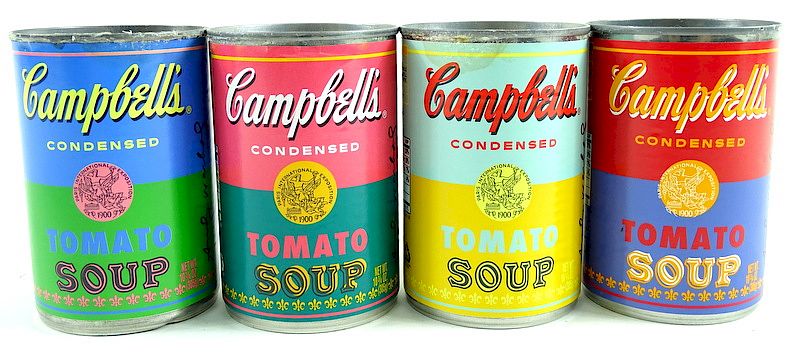

In Deborah Freedman’s Blue Chicken (Viking Juvenile, 2011), an artist is painting a barnyard scene when a curious little chicken hops out of the painting to help and tips over the artist’s pot of blue paint. Blue splatters across barnyard, animals, and pages, until finally the now-upset chicken washes it away by spilling the artist’s water jar. The illustrations are wonderful. For ages 4-7.
The Blue Hen Chicken is the official state bird of Delaware. Its story dates at least to the Revolutionary War.

In Bruce McMillan’s delightfully illustrated The Problem with Chickens (HMH, 2005), set in a small town in Iceland, the chickens have stopped laying eggs. What to do? For ages 4-7.
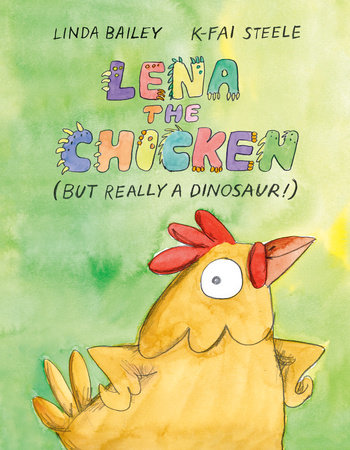
By Linda Bailey, Lena the Chicken (But Really a Dinosaur) (Tundra Books, 2025) features Lena, a personality-laden chicken, who's convinced that she's really a dinosaur. (Which comes in handy when a weasel attacks the chicken coop.) Then young Madeline - always a fan of Lena - comes up with a science project showing that chickens really are the descendants of dinosaurs. For ages 4-8.

Author Mary Jane Auch must like chickens: her picture books are full of them. Peeping Beauty (Holiday House, 1995), for example, is the tale of Poulette, a graceful hen whose dreams of becoming a ballerina lead to a close call with a persuasive fox claiming to be a talent scout. Chickerella (Holiday House, 2006) is a fractured Cinderella tale involving glass eggs and a Fairy Goosemother; while Souperchicken (Holiday House, 2004) and The Plot Chickens (Holiday House, 2010) feature Henrietta, a bookish chicken who has taught herself to read, write, and type. For ages 4-8.

In Catherine Friend’s The Perfect Nest (Candlewick, 2007), Jack, a hungry cat, has built the perfect nest in an attempt to lure the perfect chicken to lay the perfect egg for an omelet. The ploy works too well, attracting not only a chicken, but a duck and goose – each of which lays an egg and then refuses to leave the nest, though Jack does his best to scare them off, with cries of “Flood!” “Fire!” and “WOLF!” Finally he manages to evict his guests (with hints about an even better nest at a farm down the road), but by then, to his dismay, the eggs have hatched, producing a trio of fuzzy chicks, who promptly adopt Jack as their dad. The book ends with Jack and his new family peacefully asleep in what is, indeed, a perfect nest. For ages 4-8.

Carolyn Crimi’s Henry and the Crazed Chicken Pirates (Candlewick, 2010) stars Henry, the bookish son of Barnacle Black Ear, leader of the Buccaneer Bunnies and captain of the Salty Carrot. When Henry finds a threatening message in a bottle reading “We’re coming to steal all yer loot” and signed “yer worst enemies,” the buccanners refuse to pay attention. Henry, however, worried, begins to research and write a book: Henry’s Plan for Impending Danger from Unknown Enemy Who Wrote the Scary Note. When the enemy proves to be the Crazed Chicken Pirates, who arrive in a hot-air balloon, Henry manages to save the day. For ages 4-8.

Ellen Kelley’s My Life as a Chicken (Harcourt Children’s Books, 2007) is a riotous account of the perils of Pauline Poulet (her motto: “Pauline, Prevail!”) who – after hearing the farmer planning a dinner of chicken pot pie – flies the coop. She ends up battling foxes, hungry hawks, and cat pirates, before finally, happily, finding a new home in a petting zoo. For ages 5-8.

In Aubrey Davis’s A Hen for Izzy Pippik (Kids Can Press, 2012), Shaina finds Yevka, a spectacular hen with gold-speckled emerald feathers. Her hungry family wants to eat Yevka, but Shaina insists that the hen be returned to its rightful (absent) owner, Izzy Pippik. By the time Pippik returns to town, Yevka’s many chicks have overrun everything in sight, infuriating the townspeople – until they realize that the green-feathered chickens are attracting visitors and bringing prosperity. The generous Pippik rewards Shaina’s honesty by allowing the townspeople to keep them. For ages 5-8.

In Keiko Kasza’s The Wolf’s Chicken Stew (Puffin, 1996), Wolf decides to fatten up a chicken – his prospective future meal – by delivering piles of goodies to her doorstep: 100 pancakes the first night, then 100 donuts, and finally a 100-pound cake. When the Wolf arrives at the door to claim his fattened chicken, he finds that she’s been feeding an enormous family of baby chicks, who pounce upon him gratefully with cries of “Uncle Wolf!” The wolf, won over, heads home to plan a new treat for tomorrow. For ages 4-8.

Chanticleer and the Fox (HarperCollins, 1982), with illustrations by Barbara Cooney, is a picture-book version of Chaucer’s “Nun’s Priest’s Tale” in which a wily fox (almost) tricks a conceited rooster. For ages 4-8. Also see Helen Ward’s The Rooster and the Fox (Millbrook Press, 2003).

In Keith Graves’s Chicken Big (Chronicle Books, 2010), set on a teeny little farm populated by very small hens, a simply enormous egg hatches out a humongous yellow chick. “It’s an elephant!” squawks the smallest chicken. “Indoor elephants are dangerous!” The story has wacky elements of “Chicken Little” and “The Blind Men and the Elephant,” and a warm charm all its own, as eventually the patient, kindly, and gigantic chick convinces his freaky flock that he is indeed a chicken. For ages 4-8.
Listen to NPR’s Scott Simon and author Daniel Pinkwater read Chicken Big.

In Kate DiCamillo’s Louise, the Adventures of a Chicken (HarperCollins, 2008), brave Louise – a “not-so-chicken chicken” – survives pirates on the high seas, a high-wire walk and a chicken-eating circus lion, and an ominous dark stranger in a foreign bazaar, finally returning home to entertain her coopmates with stories of her exploits. A short chapter book for ages 4-8, with illustrations by Harry Bliss.
Louise, The Adventures of a Chicken has creative activities to accompany the book, among them inventing (and illustrating) adventures for a traveling pet (stuffed animal), writing an animal adventure book, or re-writing the adventures of Louise.

In Mary Amato’s The Chicken of the Family (Putnam Juvenile Books, 2008), Henrietta’s teasing big sisters Kim and Clare tell her a secret - she’s really a chicken. (“Mom got you from Barney’s farm.”) Henrietta, upset, is finally convinced, and heads off for Barney’s farm - where she finds that the chickens are much nicer to her than her big sisters are. Now Kim and Clare are hard put to persuade Henrietta that she’s a little girl again. Funny, charming, and there’s a lesson here about the perils of teasing. (Younger siblings especially will love it.) For ages 4-8.
This Chicken of the Family Reader’s Theater script calls for five characters plus any number of supporting chickens.

Ann Redisch Stampler’s The Rooster Prince of Breslov (Clarion Books, 2010) is a retelling of a traditional Jewish folktale about a prince who suddenly tears off his clothes, squawks and clucks, and insists that he’s a rooster. A wise old man – willing to pretend to be a rooster too – finally convinces the prince to become a human being again. For ages 5-9.

In Doreen Cronin’s The Trouble with Chickens (Balzer + Bray, 2012), J.J. Tully, retired search-and-rescue dog, is approached by a chicken who needs helps in finding two missing chicks. Funny, clever, and narrated in the first person by J.J., who sounds a bit like Sam Spade. The first of a series. For ages 6 and up.

Doreen Cronin’s hilarious The Chicken Squad: The First Misadventure (Atheneum, 2015) is the first of a series starring the crime-fighting Chicken Squad (Dirt, Sugar, Poppy, and Sweetie). This misadventure begins with a scatty and terrified squirrel. For ages 6-10.

In Judy Cox’s The Secret Chicken Society (Holiday House, 2012), Daniel’s third-grade class hatches chicken eggs, and Daniel ends up with five chicks to take home – including his special favorite, Peepers. Chick care turns out to be challenging, and even illegal, when Peepers turns out to be a rooster, forbidden within the city limits. A funny, chicken-friendly, (and informational) chapter book for ages 6-10.

In Daniel Pinkwater’s hilarious The Hoboken Chicken Emergency (Aladdin, 2007), Arthur Bobowicz is dispatched to fetch the family Thanksgiving turkey, but returns home instead with Henrietta, a colossal 266-pound chicken on a leash – who escapes and wreaks havoc. For ages 7-11.

Arnold Lobel’s cleverly illustrated Fables (HarperCollins, 1983) is a collection of twenty one-page original fables, each with an accompanying helpful moral. (“It is always difficult to pose as something one is not.” “It is the high and mighty who have the longest distance to fall.”) Two of the stories involve chickens: “The Hen and the Apple Tree” and “The Young Rooster.” For ages 7-11.

In Kelly Jones’s Unusual Chickens for the Exceptional Poultry Farmer (Yearling, 2016), Sophie’s family has just inherited a great-uncle’s farm – where Sophie discovers his flock of extraordinary chickens with superpowers. The story is told through letters, to-do lists, newspaper articles, a chicken-care correspondence course, and more. Funny and absolutely delightful for ages 8-12.

In Frances O’Roark Dowell’s Chicken Boy (Atheneum Books for Young Readers, 2008), seventh-grader Tobin McCauley has a lot on his plate: juvenile-delinquent siblings, a neglectful father, a dead mother, and a grandmother in jail. Then he becomes friends with Henry Otis, the new kid in town, and embarks on a chicken-raising project – “When you learn about chickens, you will learn about life,” says Henry – that ultimately leads to family reunion and self-discovery. For ages 10-14.
The Sky Is Falling!
There are many available versions of the story of Chicken Little, also known as Chicken Licken or Henny Penny. In all, the main character – irrationally believing that the sky is falling – convinces a lot of other animal characters to run for their lives. Classically, many of them end up eaten by a cagey fox (but not always).

In Rebecca Emberley’s Chicken Little (Roaring Brook Press, 2009), the googly-eyed Chicken Little (“not the brightest chicken in the coop”) is bonked by an acorn, thinks the sky is falling, and leads a troop of equally silly friends into a “warm dark cave” – a fox’s mouth. A good bet for the tender-hearted, since it ends with a miraculous escape. For ages 3-7.

In Steven Kellogg’s Chicken Little (HarperCollins, 1987), the hysterical Chicken Little and friends are lured into a poultry van by a fox disguised as a policeman, with a last-minute save by a helicopter piloted by a hippopotamus. For ages 3-7.

In Paul Galdone’s Henny Penny (Sandpiper, 1984), the main character is an excitable black-and-white hen who sets off with a gang of credulous friends to warn the king that the sky is falling. All end up as dinner for the fox. Be warned. For ages 4-8.

Vivian French’s Henny Penny (Bloomsbury USA, 2006) is more on the ball than most; once the fox has inveigled her and her friends into his den, Henny Penny – taking into account the chicken cookbook, bubbling stew pot, and some telltale bones and feathers – fools the fox and engineers a mass escape. For ages 4-8.

Ursula Dubosarsky’s rhyming picture book The Terrible Plop (Farrar, Straus & Giroux, 2009) is a chicken-less take on Chicken Little. Six rabbits, happily munching carrots and chocolate cake beside a lake, are terrified by a terrible PLOP. Five of them flee into the forest, picking up along the way a train of other scared animals, including a fox, monkey, pig, elephant, tiger, bat, and a big brown bear. The sixth stay-behind rabbit reveals the source of the terrible PLOP – it was an apple falling into the lake. For ages 3-7.

Leslie Helakoski’s Big Chickens (Puffin, 2008) are a nervous quartet of cowards. Frightened by a (quite pleasant-looking) wolf, they flee their coop, only to be terrified by a muddy ditch (bottomless pit?), a herd of cows, and a lake (icebergs?), until they end up in the wolf’s cave – where they inadvertently terrify the wolf. Sequels include Big Chickens Fly the Coop and Big Chickens Go to Town. For ages 3-7.
From the California Digital Library, check out this illustrated 19th-century edition of The Remarkable Story of Chicken Little.

In the animated movie version of Chicken Little (Disney, 2005), Chicken Little and his band of misfit friends save the world from disaster (an alien invasion).

James Thurber’s wonderfully funny Chicken-Little story, “The Day the Dam Broke,” is found in My Life and Hard Times (Harper Modern Perennial Classics, 1999). During the 1913 Ohio flood, a rumor that the dam had broken swept the town of Columbus, resulting in a panic-stricken rout of hundreds of people, many of whom ended up climbing trees in Franklin Park, four miles out of town. The dam, needless to say, had not broken. For ages 12 and up.
Read “The Day the Dam Broke” 
Chicken-hearted?
When did "chicken" come to mean "cowardly?"

The hero of Dave Horowitz’s Chico the Brave (Nancy Paulsen Books, 2012) is an adorable, but cowardly, little yellow chick from the Andes Mountains. Attempting to calm Chico’s fears, which include a terror of his own shadow, his father invents the story of the fabulous Golden Chicken who – whenever someone is in trouble – swoops in to save the day. Chico sets off to find the Golden Chicken, ends up saving his flock from a gang of wicked llamas, and discovers that he’s braver than he thought he was. For ages 4-8.

In Jan Brett’s exquisitely illustrated Daisy Comes Home (Puffin, 2005), set in China, Daisy is the smallest and unhappiest of Mei Mei’s six supposedly happy flock, picked on and teased by the larger hens. Miserable, she decides to spend the night in a basket by the side of the river – and is swept away into a series of adventures with a dog, a water buffalo, a gang of monkeys, and a fisherman. By the time Mei Mei rescues her and brings her back home, Daisy has become brave and self-confident, and is able to stand up to the rest of the flock. For ages 5-8.

EllRay Jakes, the star of Sally Warner’s EllRay Jakes is Not a Chicken! (Puffin, 2012), is eight years old, the shortest person in the third grade, and the favorite victim of Jared Matthews, the class bully, and his sidekick Stanley. EllRay tries to understand Jared’s unprovoked attacks – it’s not, he determines, because he’s black (“Jared would have said something if it was. He is not the type of kid to keep things to himself.”); in fact, maybe it’s for no reason at all. Trouble escalates until EllRay’s father promises him a day at Disneyland if he can just keep out of trouble for one week – which looks iffy, until EllRay and Jared manage to solve their problems. This is the first of a series featuring EllRay, whose chatty first-person narration makes for a fun read. For ages 7-11.
Little Red Hens
The Little Red Hen is an old folktale traditionally used to emphasize the importance of the work ethic. ("If any man will not work, neither let him eat.") This can backfire. My kids, when first exposed to the Hen, thought she was a sanctimonious twit.

In Paul Galdone’s Little Red Hen (Houghton Mifflin, 2011), the hen, cat, dog, and mouse are roommates, but cat, dog, and mouse slothfully sleep on the couch all day while hen does the work of wheat-planting, harvesting, grinding, and cake-baking. At the end, the hen eats the cake all by herself, thus providing an object lesson on the benefits of pitching in to do chores. My kids’ response: “Well, why didn’t she tell them that they wouldn’t get any cake if they didn’t help out?” Good question. For ages 3-6.

The Red Hen by Rebecca Emberley and Ed Emberley (Roaring Brook Press, 2010) stars a great paper-collage red hen, an unhelpful cat, rat, and frog, and a Splendid Cake (recipe included). For ages 3-6.

In Jerry Pinkney’s elaborately illustrated Little Red Hen (Dial, 2006), the hen (who wears a straw hat and flowered shawl) lives with her five chicks; the help-refusing dog, rat, goat, and pig with their refrains of “Not I!” are merely neighbors. The message here is enhanced by the nature of the hen’s appeals: she doesn’t merely plead for help, but points out each animal’s special gift – the dog, for example, is good at digging – which emphasizes the potential benefits of teamwork. For ages 4-8.
Florence White Williams’s version of The Little Red Hen, originally published in 1918, can be read online at Project Gutenberg.
Enchanted Learning's The Little Red Hen is a rebus puzzle. Fun for beginners (with help).
The Little Red Hen lesson plan has discussion questions and activities, among them baking bread in a bag and making a cool “retelling mural.”
EconEdLink's The Little Red Hen has an online illustrated version of The Little Red Hen, a bread recipe, an experiment to determine why bread rises, and many helpful links to bread and the bread-making process. Targeted at grades K-5.

In Philemon Sturges’s The Little Red Hen (Makes a Pizza) (Puffin, 2002), the hen, refused help by the duck, dog, and cat, goes to the store for pizza supplies and finally manages to make a pizza – which she shares, since duck, dog, and cat offer to clean up and do the dishes. The colorful cut-paper illustrations are filled with hilarious details: the duck wears a rubber-turtle inner tube and a bathing cap; the hen has a pair of bunny slippers on her clothesline and a can of worms in her cupboard. For ages 4-8.

In Janet Stevens’s Cook-a-Doodle-Doo! (Sandpiper, 2005), Big Brown Rooster and friends Turtle, Iguana, and Pig – using the cookbook of Rooster’s great-grandmother, the Little Red Hen – manage to produce a Magnificent Strawberry Shortcake. It’s not easy, though: when Turtle asks for flour, Iguana dashes off to pick a petunia; when asked to beat an egg; Iguana moves in with a baseball bat. A recipe is included. For ages 4-8, with help.

In Alma Flor Ada’s With Love, Little Red Hen (Atheneum Books for Young Readers, 2004), the Little Red Hen and her seven chicks have just moved to the storybook neighborhood of Hidden Forest and the Hen is trying to get help from her neighbors – among them Little Red Riding Hood, Goldilocks, Peter Rabbit, and the Three Little Pigs – to plant her garden. Like Ada’s earlier books, Dear Peter Rabbit and Yours Truly, Goldilocks, the story is told through a series of letters. For ages 5-9.
Why Did the Chicken Cross the Road?

Why Did the Chicken Cross the Road? (Dial, 2006), a collaboration of fourteen talented artists, is a marvelous collection of unexpected illustrated answers to the classic joke. Harry Bliss’s frantic chicken flees invading zombie chickens from Mars; Jon Agee’s chicken (and the rest of the city) flee Godzilla-like lizards; Mo Willems’s harried chicken confesses his crime to the police; and Jerry Pinkney’s Little Red Hen heads for a tea party. Readers are bound to come up with creative alternative answers (and chickens) of their own. For ages 5-9.

In David Macaulay’s picture book Why the Chicken Crossed the Road (Houghton Mifflin Books for Children, 1987), the road-crossing chicken sets off a chain of disastrous events – a cow stampede, a bridge collapse, a bandit escape, a bathroom explosion – finally looping back around to the chicken again. A hoot for all ages.
How Did the Chicken Cross the Road (Archie McPhee) is a rubber-chicken based card game in which players race to build a safe path to get the chickens home. Crossing the road involves everything from catapults to pterodactyls. For ages 8 and up. See https://mcphee.com/products/how-did-the-chicken-cross-the-road-game.
From Philosophy Now, the question of Why did the chicken cross the road? is answered as if by famous philosophers, writers, and political figures. (Emily Dickinson: “Because it could not stop for death.”)
Science with Chickens

Gail Gibbons’s Chicks and Chickens (Holiday House, 2005) is an attractively illustrated picture-book introduction to chicken biology and behavior, variously covering egg-laying, embryo development and hatching, the characteristics of chicks, hens, and roosters, and a survey of chicken breeds. For ages 5-8.

Amy Sklansky’s Where Do Chicks Come From? (HarperCollins, 2005) in the extensive Let’s-Read-and-Find-Out Science series covers the anatomy of the egg and (day by day) the three-week-long development of a chick. For ages 4-8.

Birth! Watch baby chicks hatching here!

Ruth Heller’s Chickens Aren’t the Only Ones (Puffin, 1999) is a gorgeously illustrated picture-book celebration of egg-layers, with an appealing and informational rhyming text. It begins, of course, with the chicken. For ages 3-8.
Sources for incubators, eggs, and chick supplies include My Pet Chicken,
Stromberg’s Chicks and Game Birds, and the
Carolina Biological Supply Company.
Make a dinosaur - from a chicken? Read about reverse-engineering a dinosaur from a chicken at Dino-Chicken or
Building a Dinosaur from a Chicken.

Paleontologist Chris McGowan’s Make Your Own Dinosaur Out of Chicken Bones (HarperPerennial, 1997) has a lot of interesting dinosaur information and complete instructions for making your own chicken-bone Apatosaurus. You’ll need three chickens, boiled. A great family project. For ages 9 and up, with help.
Which came first: the chicken or the egg? Answer: the chicken. Really. Read about it at Computer Cracks Eggshell Problem.
Math with Chickens

Keith Baker’s Big Fat Hen (Sandpiper, 1999) is a vibrantly illustrated picture book of the traditional counting rhyme “One, Two, Buckle My Shoe” with a great gaudy-colored big fat hen. For ages 2-5.

In Eric Carle’s Rooster’s Off to See the World (Aladdin, 1999), a gorgeous paper-collage rooster sets out to travel, picking up along the way two cats, three frogs, four turtles, and five fish. Soon, however, it turns out that Rooster hasn’t adequately planned for the trip – there’s no food and everyone is getting cold – so soon his companions, one by one, desert, and even Rooster himself eventually turns around and heads for home. It’s a running-away story for everybody who never got farther than the end of the driveway. For ages 3-6.


Chicken Math Ideas has printable activities for early-elementary-level students, including dot-to-dot puzzles, counting sheets, patterning problems, color-by-number pages, and addition exercises.
Solve the famous Chicken Crossing logic puzzle!

Katie Smith Milway’s One Hen (Kids Can Press, 2008), set in Ghana, is a picture-book explanation of micro-loan banking and its impact on people in developing countries. After Kojo’s father dies, he and his mother receive a tiny amount of money – a micro-loan – from their village to buy something to improve their lives. Hopefully their decision will enable them to pay back the loan, which will then be passed on to another needy villager. Kojo buys a hen – and from that hen gradually builds a thriving poultry business. His success impacts all around him. A wonderful story of mutual support and hope for ages 7-11.
The Once and Future Chicken
From Smithsonian magazine, How the Chicken Conquered the World is an interesting account of the history (and science) of the chicken from its origin in Asia to modern times. See https://www.smithsonianmag.com/history/how-the-chicken-conquered-the-world-87583657/.

Bob Sheasley’s Home to Roost (Thomas Dunne Books, 2008), subtitled “A Backyard Farmer Chases Chickens Through the Ages,” is a chatty and charming account of the life and times of the chicken, encompassing everything from Chaucer’s Chanticleer to pecking order and the chicken genome. For teens and adults.

By Page Smith and Charles Daniel, The Chicken Book (University of Georgia Press, 2000) is a history of the chicken from its origins in the Asian jungle to the modern industrial chicken. Included are fascinating chapters on chicken folklore, chicken sayings, cockfighting, chicken breeding, and the culinary chicken. Chicken broth, readers learn, was used as a beauty aid in ancient Egypt. For teens and adults.

Jane Smith’s In Praise of Chickens (Lyons Press, 2011) is a nicely designed compendium of all things chicken, with short chapters titled “A Brief History of Chickens: Domesticating Tyrannosaurus Rex,” “Count Your Chickens: The Numerology of Flock and Nest,” and “Dumb Clucks and Birdbrains: Can a Chicken Beat You at Checkers?” For teens and adults.

A one-hour PBS documentary, The Natural History of the Chicken (2000), through interviews, reenactments, and anecdotes, tells the fascinating (and sometimes downright peculiar) story of the chicken in American life. Available on DVD or through Netflix or Amazon Instant Video.
Mummify a Chicken!

Mummify a chicken! Just like (sort of) the ancient Egyptians. See Chicken Mummies at the Teacher’s Corner for a materials list and instructions.
Arts, Crafts, and Chickens

Colorful Clucking Chickens is a papercraft-and-pipecleaner project for elementary-level kids. Make a cool flock.
From First School, the Chicken and Hen Theme page has printable letter sheets (H is for Hen), coloring pages, and crafts for preschoolers, among them a handprint chicken and a chicken greeting card.

Make a handprint chicken (or a footprint pig) with these instructions from 

Maya Angelou’s My Painted House, My Friendly Chicken, and Me (Crown Books for Young Readers, 2003), illustrated with color photographs, is the story of eight-year-old Thandi who lives in a Ndebele village in South Africa. Thandi describes village life and culture to the reader (her “stranger-friend”), concentrating on the things she particularly loves – the brightly painted houses of the villagers, her mother’s beautiful beadwork, and the chicken who is her best friend. For ages 6-10.

Musical chickens! Sandra Boynton’s Philadelphia Chickens (Workman Publishing, 2002) is a book-and-CD “zoological musical revue,” with 20 catchy tunes, among them the title (chicken) song, performed by the Bacon Brothers. For ages 5 and up.

Bake chicken cupcakes – that is, cupcakes that look like chickens – with this recipe from Easy Cupcakes.
Poetic Chickens

Check out Jack Prelutsky’s poem Last Night I Dreamed of Chickens The title poem begins: “Last night I dreamed of chickens/there were chickens everywhere/they were standing on my stomach/they were nesting in my hair”).
At Kenn Nesbitt’s Poetry4Kids, see My Chicken’s on the Internet.

Karin S. Wiberg’s Chicken Haiku (Clear Sight, 2018) is a collection of 24 clever illustrated haiku, all about chickens. All ages.

William Carlos Williams’s classic The Red Wheelbarrow involves white chickens.
Chickens in the Movies
A very small genre.

In Peter Lord and Nick Parks’s Claymation comedy Chicken Run (2000), the residents of a sinister Yorkshire chicken farm (all at risk of Death by Chicken Pie) plan their escape with the help of Rocky Rhodes, an American flying rooster.

In Disney’s animated Robin Hood (1973), all the characters are animals: Robin Hood and Maid Marian are foxes; Little John a brown bear; King John a lion. The minstrel Allan-a-Dale is a rooster (voiced by Roger Miller).
Chickens in Your Backyard
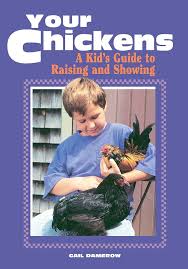
Gail Damerow’s Your Chickens: A Kid’s Guide to Raising and Showing (Storey Publishing, 1993) is a useful kid-friendly guide covering all the basics, including chicken breeds, coops, maintenance (What do you feed them? What to do in winter?), and egg management. The book has diagrams, photographs, fact boxes, a glossary, and a source list. For ages 10 and up.

By Kimberley Willis and Rob Ludlow, the annoyingly titled Raising Chickens for Dummies (For Dummies, 2009) covers all the basics, as does Jerome Belanger’s The Complete Idiot’s Guide to Raising Chickens (Alpha, 2010). Comprehensive and useful, though I maintain that ignorance of chickens does not necessarily make you a complete idiot.

Also helpful for beginners: Gail Damerow’s savvy Storey Guide to Raising Chickens (Storey Publishing, 2010); Rick and Gail Luttmann’s Chickens in Your Backyard (Rodale Books, 1976); and – my current favorite - Jenna Woginrich’s Chick Days: An Absolute Beginner’s Guide to Raising Chickens from Hatching to Laying (Storey Publishing, 2011), illustrated with great color photographs.

Jessi Bloom’s Free-Range Chicken Gardens (Timber Press, 2012), illustrated with drawings and color photographs, shows hopeful chicken-owners how to manage both wandering chickens and a growing garden.

Photographer Stephen Green-Armytage’s Extraordinary Chickens (Harry N. Abrams, 2003) covers fifty fantastic, fabulous, and bizarre breeds of chickens with splashy color photos. For even more spectacular chickens, see the sequel Extra Extraordinary Chickens (2005).

Judy Pangman’s Chicken Coops (Storey Publishing, 2006) has 45 plans for a range of creative chicken houses, variously for small flocks, large flocks, city flocks, and country flocks. Convert your backyard tool shed or build a coop on wheels.

For the artistic chicken owner, Chris Gleason’s The Art of the Chicken Coop (Fox Chapel Publishing, 2011) has designs, materials lists, and step-by-step instructions for building seven truly gorgeous chicken coops, including a chicken gypsy caravan. Get your kids to try their hands at designing a spectacular coop of their own.
A Gift of Chickens

Heifer International is a charitable organization dedicated to sustainable solutions to world hunger. For $20, donors can give a flock of chickens to a needy family.