
Art
In this collection
Why art? Because it’s mind-expanding, creativity-promoting, empowering, fun to do, and fun to look at.
Check out these resources on famous artists, famous works of art, art history and appreciation, art in fiction, and a lot of great hands-on projects.
Famous Artists

Eric Carle’s The Artist Who Painted a Blue Horse (Philomel Books, 2011) is a gorgeous celebration of art, complete with blue horse, red crocodile, black polar bear, yellow cow, and polka-dotted donkey. A delightful book for young artists – and a tribute to one of Carle’s inspirations, artist Franz Marc, who painted The Blue Horse in 1911. For ages 2-5.
See Franz Marc’s Blue Horse here.

By Jeanette Winters, Mr. Cornell’s Dream Boxes (Beach Lane Books, 2014) is the picture-book story of artist Joseph Cornell, who made wonderful “memory boxes” from found objects. For ages 4-7.
Make your own! See https://anitasagastegui.com/2022/08/04/7th-grade-joseph-cornells-memory-boxes/ and
https://www.royalacademy.org.uk/article/how-to-make-a-box-like-cornell.

Kathleen Benson’s Draw What You See (Clarion Books, 2015) is the inspirational story of African-American artist Benny Andrews, one of ten children, born to sharecroppers in rural Georgia in the 1930. He painted wonderful folk-art-like scenes of ordinary people in the South and fought against the exclusion of black artists from the greater art world. For ages 4-7.
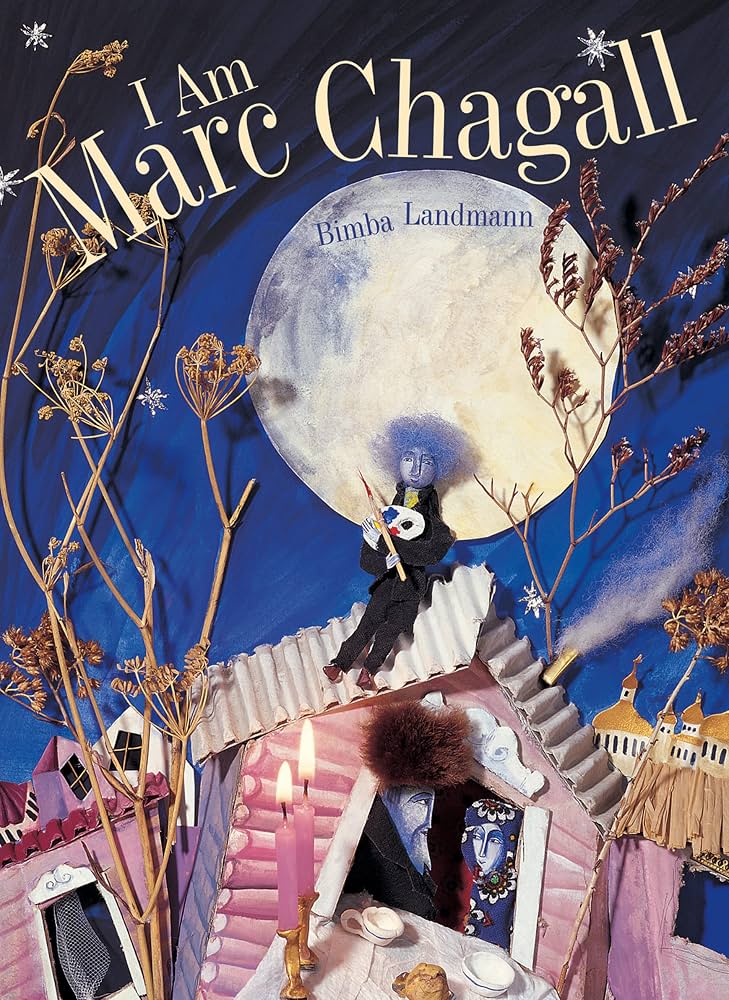
By Bimba Landmann, I Am Marc Chagall (Eerdmans, 2006) is a beautifully designed Mixed-media picture-book biography of Chagall, loosely based on the artist’s autobiography, for ages 7-12.
Daydreaming with Chagall is a hands-on art project based on Chagall’s painting “I and the Village.”
See Marc Chagall for Kids at https://www.youtube.com/watch?v=pa8_B1xIbyg.

Michelle Markel’s The Fantastic Jungles of Henri Rousseau (Eerdmans Books for Young Readers, 2012) begins “Henri Rousseau wants to be an artist. Not a single person has ever told him he is talented. He’s a toll collector. He’s forty years old. But he buys some canvas, paint, and brushes, and starts painting anyway.” A charming picture-book biography for ages 4-8.
Try creating 

From the Metropolitan Museum of Art, Vincent’s Colors (Chronicle Books, 2005) pairs reproductions of Van Gogh paintings with his comments upon them, in the form of gentle rhymes: “Leaves of silver, turning to green/stars sparkling, greenish, yellow, white/a big bunch of violet irises/and in my head a starry night.” For ages 4-8.

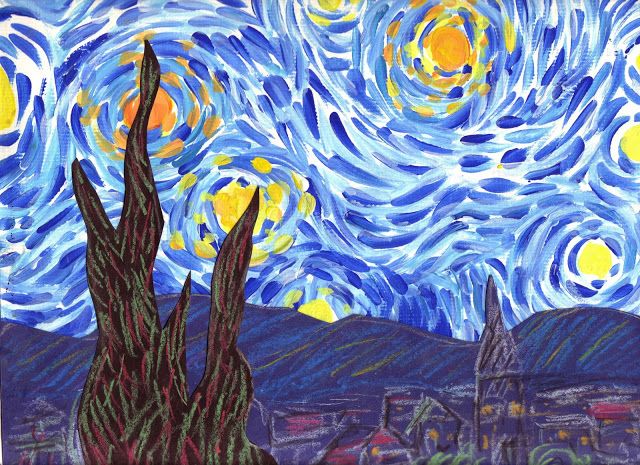
Make Van Gogh’s Starry Night with paper cut-outs and pencil-eraser and apple prints.
See a collection of Van Gogh-inspired art projects for kids here, among them 3D models of Van Gogh paintings, a sunflower collage, and hanging Starry Night ornaments.
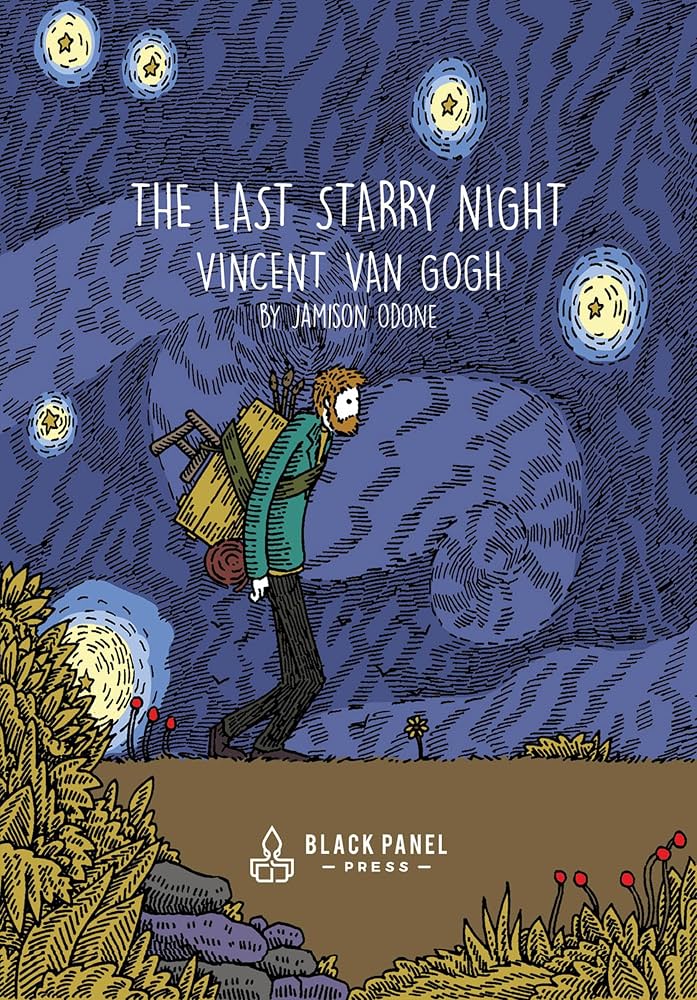
By Jamison Odone, The Last Starry Night (Black Panel Press, 2024) is a stunning graphic-novel account of the last – and most creative – period of Vincent van Gogh’s life. For ages 12 and up.

In Nina Laden’s When Pigasso Met Mootisse (Chronicle Books, 1998), the two painters (shown as a pig in a beret and a shaggy orange bull) are neighbors who fall out when each criticizes the other’s artworks. They build a fence between their houses – but then find that they miss each other’s company. They end up painting their respective sides of the fence, eventually producing a wonderful collaborative work of modern art. Loosely based on the real-life relationship between Picasso and Matisse. For ages 4-8.
Art Projects for Kids: Picasso has a list of Picasso-themed hands-on projects, among them cubist faces and self-portraits and cubist paper-bag masks.

Jonah Winter’s Diego (Dragonfly Books, 1994), written in both English and Spanish, is the story of Mexican muralist Diego Rivera, illustrated with richly colored folk-art-themed paintings. For ages 4-8.

Also by Winter, Frida (Arthur A. Levine Books, 2002) is the story of brilliant artist Frida Kahlo, Diego Rivera’s wife, who turned her often painful life into magical surreal paintings. For ages 4-10.

Frida Kahlo and Her Animalitos by Monica Brown (NorthSouth Books, 2017) is a charmer of a picture book about Kahlo’s life, art (and pets) for ages 5-9.

Make this Frida Kahlo portrait with black construction paper and oil pastels.

The Uncle Andy of James Warhola’s Uncle Andy’s (Puffin, 2005) is artist Andy Warhol. The book, written by Warhol’s nephew, describes his family’s visits to Uncle Andy’s amazing NYC apartment, crammed with all kinds of things that the author’s mother claims is junk, but Uncle Andy insists is art. For ages 4-9.
From KinderArt, make Warhol Pop Art Portraits.

Jeanette Winters’s Henri’s Scissors (Beach Lane Books, 2013) describes how Henri Matisse, when he became ill late in life and was too weak to paint, began making glorious cut-paper pictures. The simple story is embellished with quotes from Matisse; illustrations include Matisse’s paper-collage shapes. For ages 5-8.

In Samantha Friedman’s Matisse’s Garden (Harry N. Abrams, 2014), Matisse makes a bird out of cut paper – and then goes on to create a wonderful paper garden on the walls of his apartment. The book itself is illustrated with cut-paper collages. For ages 5-8. See more here.
Make Matisse-style paper collages.
See Henri Matisse for Kids at https://www.youtube.com/watch?v=hy4DUpsC22c. Included are instructions for making a Matisse-style paper collage.

In Sandy’s Circus by Tanya Lee Stone (Viking Juvenile Books, 2008), artist Alexander Calder is hired to draw pictures of the Ringling Brothers and Barnum & Bailey Circus – and goes on to create the marvelous wire-sculpture circus figures that made him famous. For ages 5-9.
See how to make your own Calder Wire Sculpture.

Check out these great 

Geraldine Elschner’s The Cat and the Bird (Prestel Publishing, 2012) is based on a painting by artist Paul Klee. It’s a simple story of a pampered cat who longs for freedom; finally, with the help of a sympathetic bird, he escapes from the house to dance on the roof in the moonlight. The book ends with a beautiful color reproduction of Klee’s “Cat and Bird.” For ages 5 and up.
From Deep Space Sparkle, Klee Cat & Bird is a great lesson plan based on the book, in which kids learn to paint wonderful Klee-style cats.

In D.B. Johnson’s Magritte’s Marvelous Hat (Houghton Mifflin Harcourt, 2012), surrealist painter Rene Magritte – represented by a very elegant dog – acquires a mysterious hat that floats just above his head. Eventually it inspires him to paint a wonderful picture. For ages 4-8.
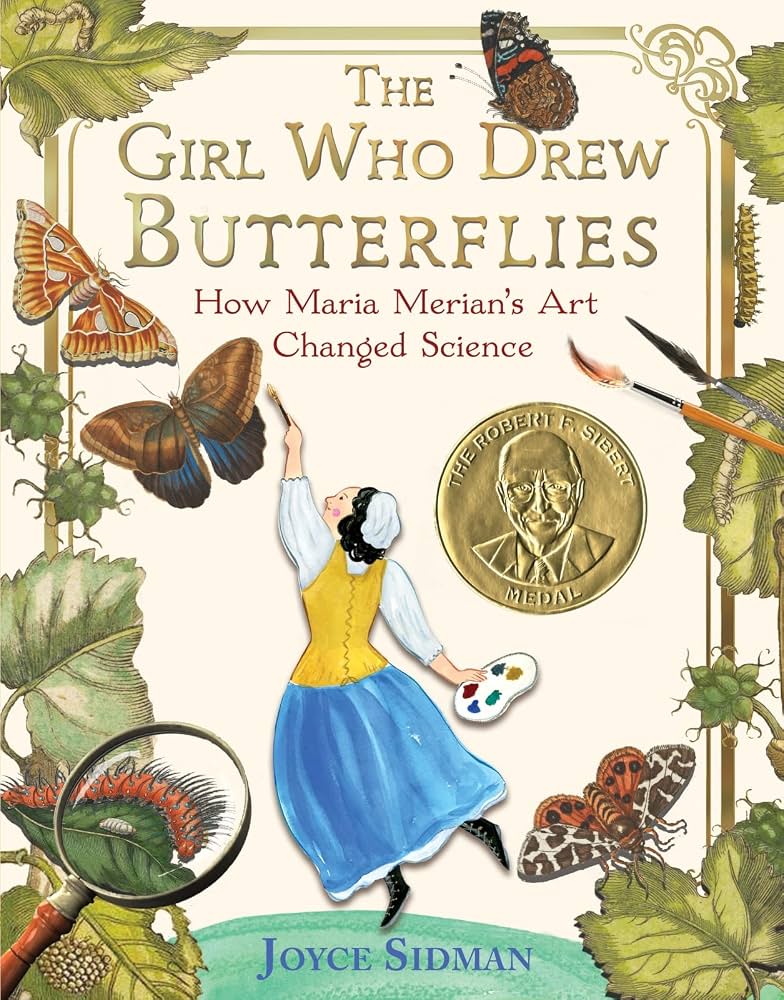
Joyce Sidman’s award-winning The Girl Who Drew Butterflies (Clarion, 2018) is a richly illustrated biography of 17th-century artist and entomologist Maria Merian – the first to document the metamorphosis of the butterfly. Illustrations include full-color images of Merian’s paintings. For ages 10-13.
See also
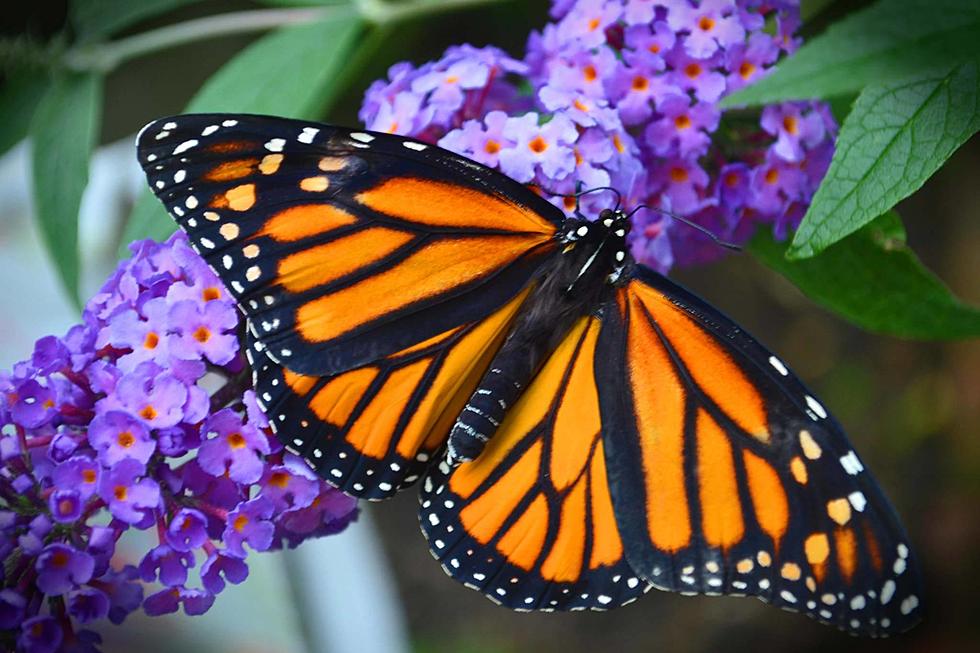

Kathy Whitehead’s Art from Her Heart (G.P. Putnam’s Sons, 2008) is the picture-book biography of self-taught African-American artist Clementine Hunter, who used to hang her wonderful folk-art paintings on the family clothesline. Eventually her talent was recognized and her paintings ended up hanging in museums – but even so, during the days of segregation, Clementine wasn’t allowed to see them, but had to be smuggled into the museum after-hours. For ages 5-9.

Barb Rosenstock’s The Noisy Paint Box (Knopf, 2014) is a picture-book biography of Vasily Kandinsky, one of the first abstract artists – who was a very proper little Russian boy until he was given his first paintbox. When he mixed colors, he found that he could hear them as marvelous musical sounds – and so he set out to paint music. Kandinsky had a condition called synesthesia, in which people have two or more intertwined senses. Synesthetics can see, hear, or smell colors; some associate colors with words, letters, or numbers; some perceive tastes as shapes. For ages 5-9.
Kandinsky & Color is a paper circle project for preschoolers and early-elementary kids.
In Kandinsky Color Circles, kids create circular color studies while listening to music.

Jen Bryant’s award-winning A Splash of Red (Knopf, 2013), with wonderful illustrations by Melissa Stewart, is the picture-book biography of self-taught African-American artist Horace Pippin. For ages 6-9.

In Jeanette Winters’s My Name is Georgia (HMH, 2003), Georgia O’Keeffe knew that she wanted to be an artist from the time she was a free-spirited little girl, who refused to wear shoes, sashes, and braids like her sisters did. For ages 6-10.

From Deep Space Sparkle, make Georgia O’Keeffe-inspired flowers.

Action Jackson by Jan Greenberg and Sandra Jordan (Square Fish, 2007) is a picture-book account of Wyoming-born artist Jackson Pollock, beginning as Pollock pulls on his paint-splattered boots and heads out to the barn to create one of his best-known paintings, Lavender Mist. (An appendix has a more detailed biography in smaller print.) For ages 6-10.

Try this great Jackson Pollock project. Outdoors. In old clothes.

Berenice Capatti’s Klimt and His Cat (Eerdmans Books for Young Readers, 2004) is a fictionalized story of 19th-century Viennese artist Gustav Klimt as told from the point of view of his cat, Katze. Illustrations include glittering views of Klimt’s works. For ages 6-10.

A glorious Klimt painting is featured in the 2015 film Woman in Gold, based on the true story of an elderly Jewish woman’s attempt to recover the portrait of her aunt, stolen from her family by the Nazis. Rated PG-13.

Make your own version of Gustav Klimt’s Tree of Life.
Klimt-themed art projects include making jeweled art trading cards and patterned line art.

Nancy Willard’s Pish, Posh, Said Hieronymus Bosch (HMH, 1991) is a fantastical tale of 15th-century painter Hieronymus Bosch, as told from the point of view of his frustrated housekeeper: “I’m quitting your service, I’ve had quite enough/Of your three-legged thistles asleep in my wash/Of scrubbing the millstone you use for a dish/And riding to shops on a pickle-winged fish.” (“Pish, posh,” said Hieronymus Bosch.) Illustrations are in the form of lush period paintings in gold frames, featuring a wild array of strange Boschian creatures. For ages 7 and up.
Oh My Gosh, It’s a Bosch! is a Bosch-based art project in which kids make their own strange surreal portraits.

In Christina Bjork’s Linnea in Monet’s Garden (Sourcebooks, 2012), the exuberant Linnea has come to visit Paris – and to see the house and garden of impressionist painter Claude Monet. Written in the first person in Linnea’s voice. A charming mix of art, history, and story. For ages 7-11.
10 Claude Monet Art Projects for Kids include a 3D waterlily pond and a seascape painting.

Jacqueline Davies’s The Boy Who Drew Birds (Houghton Mifflin Harcourt, 2004) is a beautifully illustrated picture-book biography of John James Audubon for ages 6-9.

Robert Burleigh’s Hi, I’m Norman (Simon & Schuster, 2019) is a picture-book biography of American artist Norman Rockwell, with illustrations by Wendell Minor. For ages 5-9.
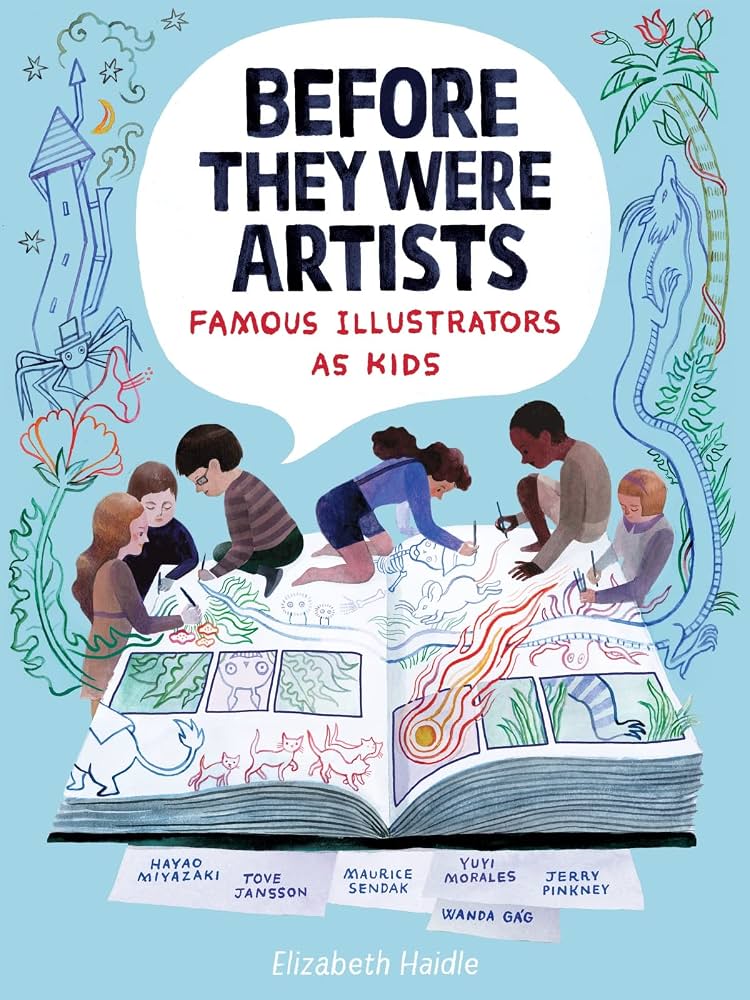
Everybody had to start somewhere. Elizabeth Haidle’s appealing graphic novel Before They Were Artists (Clarion, 2021) documents the early experiences of such illustrators as Maurice Sendak, Jerry Pinkney, and Hayao Miyazaki. For ages 8-12.
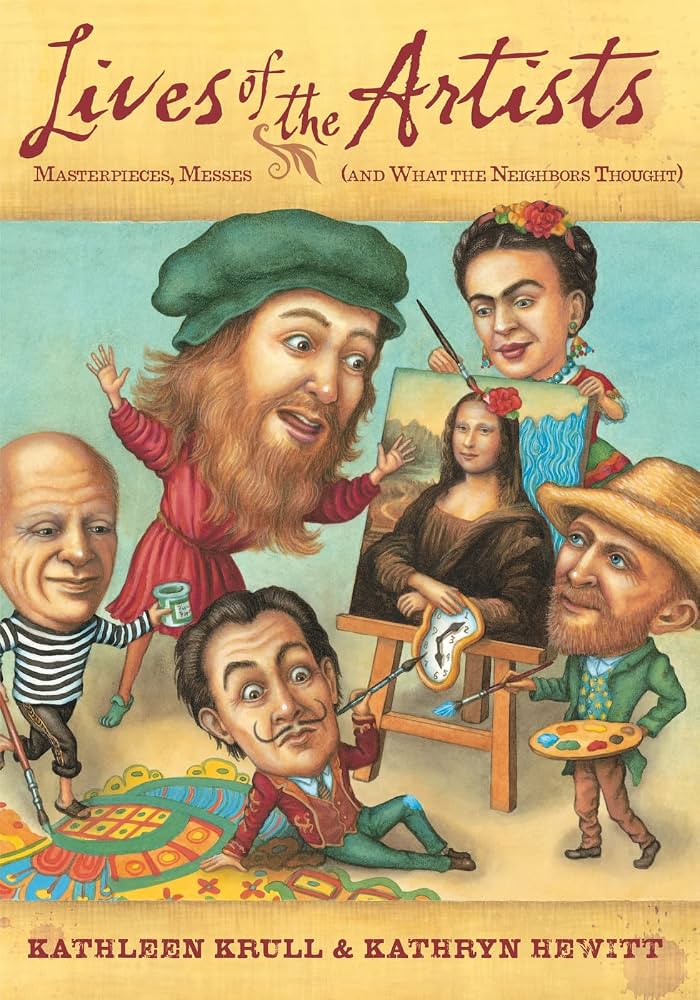
By Kathleen Krull, Lives of the Artists: Masterpieces, Messes (and What the Neighbors Thought) (Clarion, 2014) is a delightful collective biography of 20 famous artists filled with human interest. A great read for ages 10-12.
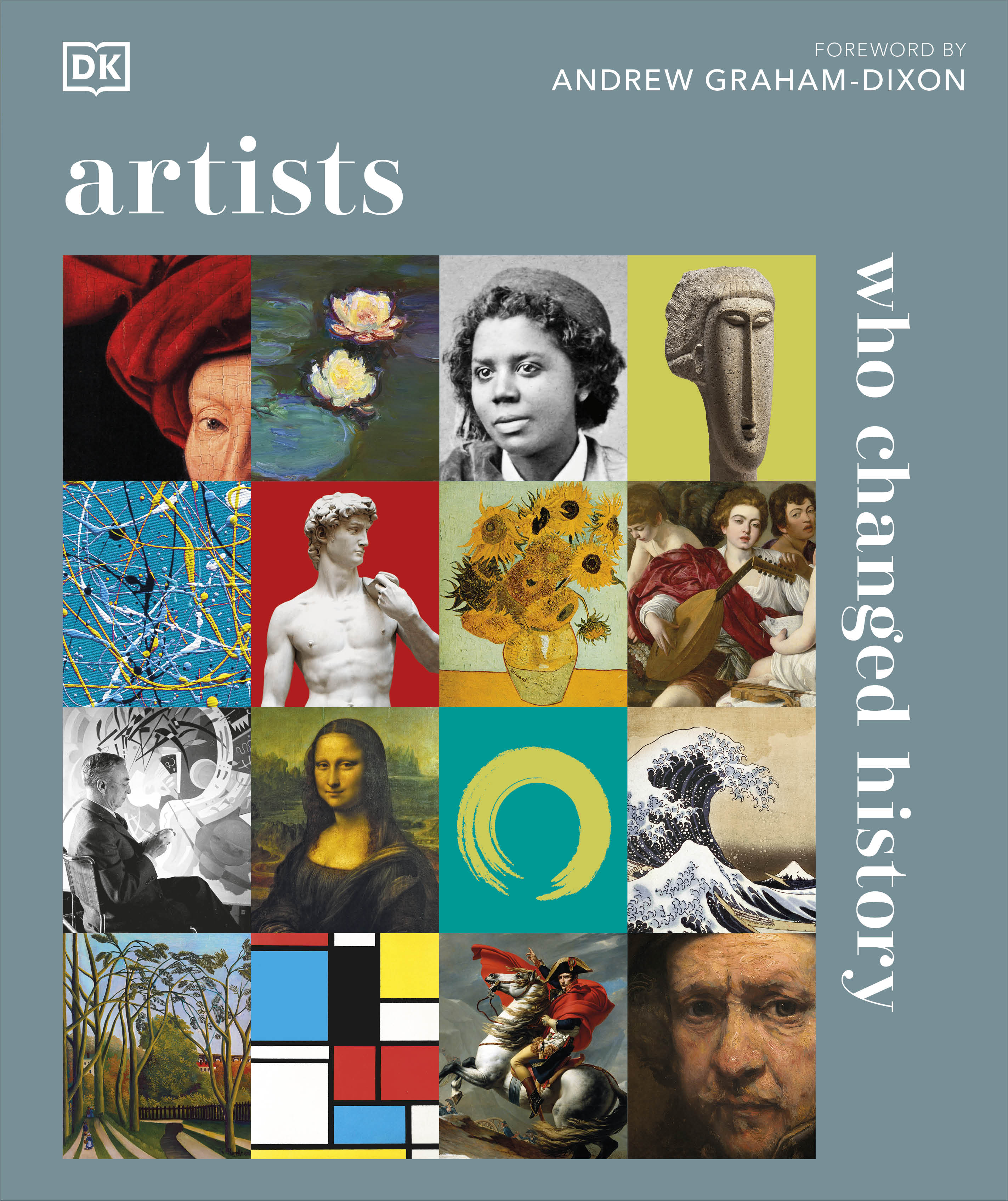
Artists Who Changed History (DK, 2024) is a gorgeously illustrated compendium of 80 influential artists from the Middle Ages to modern times, with portraits, reproductions of works, biographical information, historical “in context” fact boxes, and quotations. A great resource for all.
Series Art Books
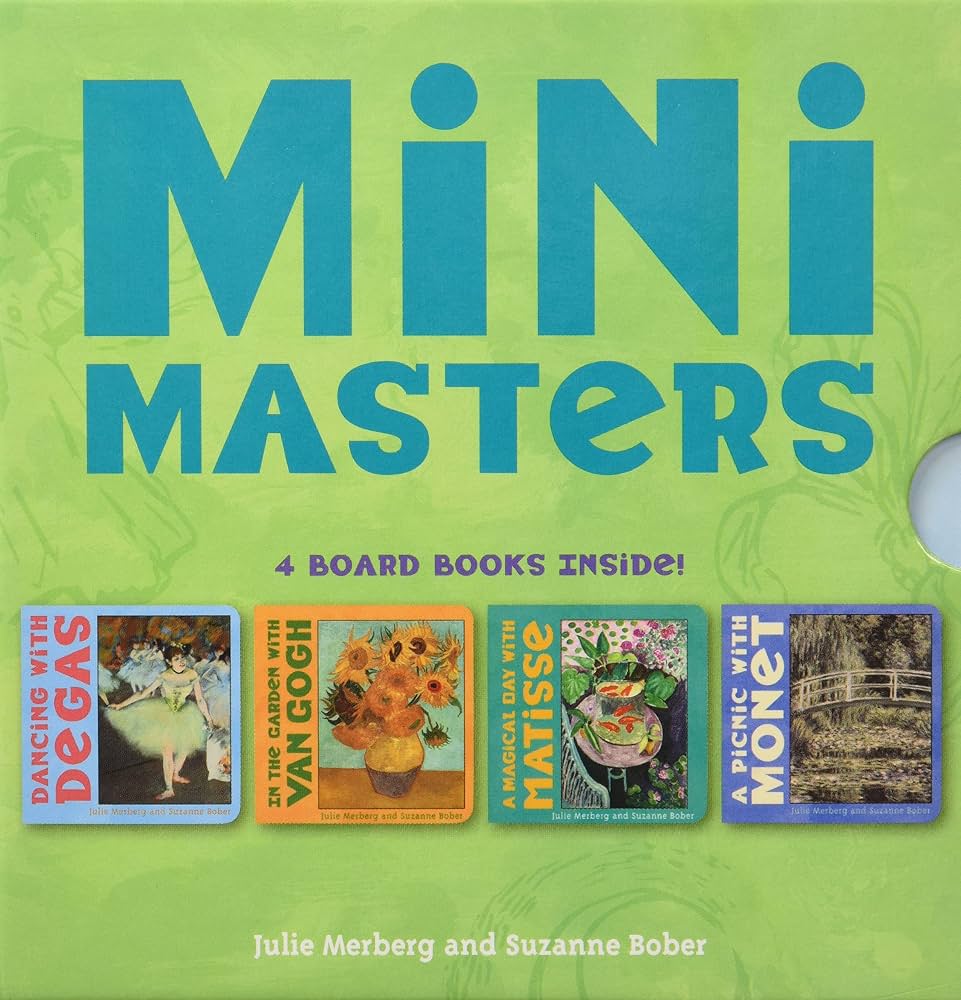
The Mini Masters series (Chronicle Books) is art history for toddlers in the form of illustrated board books. Titles include Painting with Picasso, Dreaming with Rousseau, Dancing with Degas, and more. For ages 1-3.

Julie Appel’s Touch the Art series (Sterling) is what you might get if you crossed Pat the Bunny with the Metropolitan Museum. Kids can count Monet’s waterlilies, pop the top on Andy Warhol’s soup can, make Van Gogh’s bed, and brush the Mona Lisa’s hair. For ages 3-6.

Mike Venezia’s 
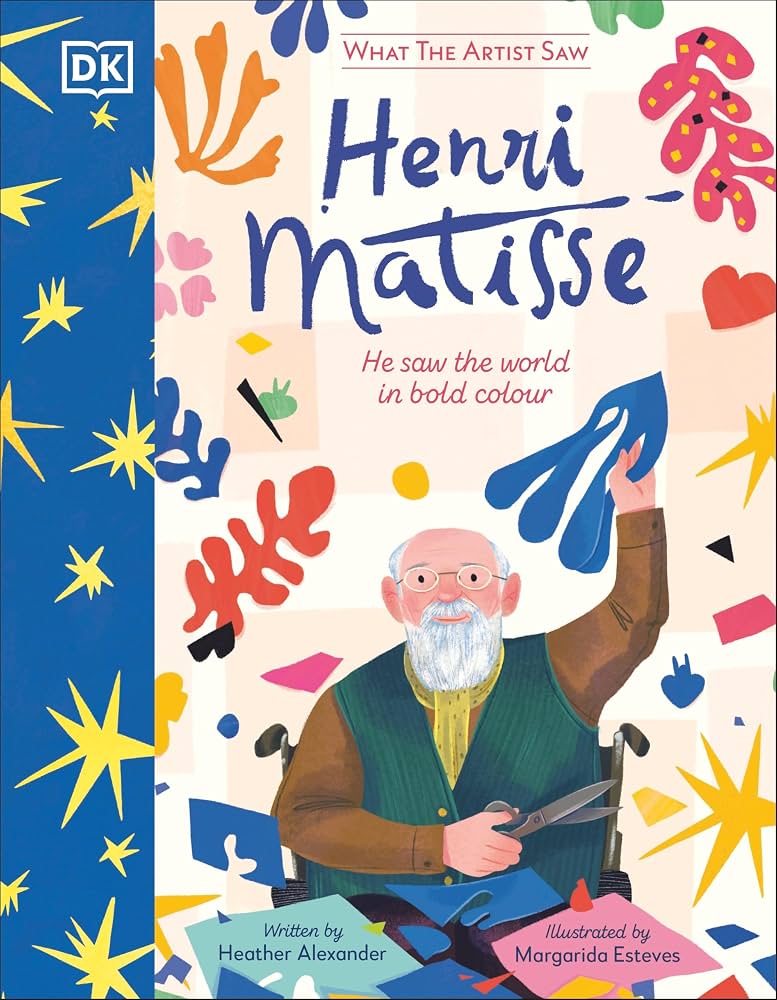
From the Metropolitan Museum of Art, the What the Artist Saw series is a collection of creative picture-book biographies of artists – including an illustrated timeline of each artist’s famous works and a suggested activity based on the artist’s work. Many titles, variously featuring Vincent van Gogh, Georgia O’Keeffe, Henri Matisse, Frida Kahlo, Hokusai, Edgar Degas, and more. For ages 5-10.

Anholt’s Artists Books for Children (Barron’s Educational Series) by author/illustrator Laurence Anholt are stories from the lives of famous artists, all featuring children. In Van Gogh and the Sunflowers, for example, a little boy named Camille brings a visitor to his town a gift of sunflowers – which the visitor, Vincent van Gogh, turns into a wonderful painting. For ages 4-9.
Other titles in the series include Picasso and the Girl with a Ponytail, Leonardo and the Flying Boy, Degas and the Little Dancer, Cezanne and the Apple Boy, The Magical Garden of Claude Monet, Rockwell: A Boy and His Dog, and Matisse: King of Color.

In the Come Look With Me series by Gladys S. Blizzard (Charlesbridge), each book introduces readers to 12 different paintings, with interactive discussion questions. Titles include Exploring Landscape Art with Children, Animals in Art, American Indian Art, and Discovering African American Art for Children. For ages 4-8.

The Smart About Art series (Grosset & Dunlap) is a collection of illustrated artist’s biographies, each presented in the style of a child-written school report – that is, a particularly appealing school report in which kid-style drawings and printed comments are interspersed with photographs, art reproductions, and a brief printed text. Each book covers the details of the artist’s life and describes his or her art style and techniques.
In Maryann Cocca-Leffler’s Edgar Degas: Paintings That Dance (2001), for example, kids discover that Degas learned all the ballet steps in order to paint them – there’s a sketch of a little girl in pigtails and a pink tutu demonstrating the five basic ballet positions. There’s also a double-page spread of the charcoal sketches Degas made while working on his famous sculpture of “The Little Dancer,” photographs of the finished statue, and an account of how the statue was made. A dollmaker, readers learn, made the dancer’s tiny ballet slippers, tutu, and wig of real hair; and a recent X-ray showed that the dancer’s “skeleton” is made of wire and broken paintbrushes.

Angela Wenzel’s 13 Artists Children Should Know (Prestel, 2009) is a collection of short biographies, reproductions of artists’ works, and background info, paired with games, quizzes, and activities. (The Amazon reviews list several protests about the inclusion of paintings of nudes.) There are many more books in the Children Should Know series, among them 13 Modern Artists Children Should Know, 13 American Artists Children Should Know, and 13 Women Artists Children Should Know. For ages 8 and up.
Appreciating Art

By Katy Friedland and Marla Shoemaker, A is for Art Museum (Temple University Press, 2008) is an interactive alphabet book based on full-color images of paintings, sculptures, prints, tapestries, and photos from the Philadelphia Museum of Art. D, for example, is for a Degas dancer; F (for Flowers) is paired with Van Gogh’s Sunflowers; M (for Music) with Picasso’s Three Musicians. For ages 3 and up.

Aline Wolf’s Child Size Masterpieces (Parent Child Press, 2010) is an eight-book series in which kids use the included postcard-sized reproductions of famous paintings for a wide range of sorting, ordering, and matching exercises. Art appreciation for a range of ages.

Lucy Micklethwait’s I Spy an Alphabet in Art (Greenwillow Books, 1996) leads readers through the alphabet with 26 famous paintings, using the childhood game “I spy with my little eye something beginning with A…” A, in this gorgeous book, is for the big green apple in Rene Magritte’s Son of Man; B for the ball in Henri Rousseau’s Football Players; V for the violin in Marc Chagall’s The Bride and Groom of the Eiffel Tower. A great interactive read for ages 4-8.
Other books by Micklethwait in the same format include I Spy Shapes in Art, I Spy Colors in Art, and I Spy Animals in Art.

In James Mayhew’s Katie and the Starry Night (Hodder & Stoughton, 2013), young Katie, on a trip to the museum, explores six masterpieces by Vincent Van Gogh – first spilling the stars from Starry Night, then borrowing a chair, a ladder, and a fishing net from other paintings in order to catch and put them back again. For ages 4-8.
Other books in the same format in which Katie hops in and out of famous paintings include Katie and the Sunflowers, Katie Meets the Impressionists, Katie and the Spanish Princess, Katie and the Mona Lisa, Katie and the Waterlily Pond, and Katie’s Picture Show.
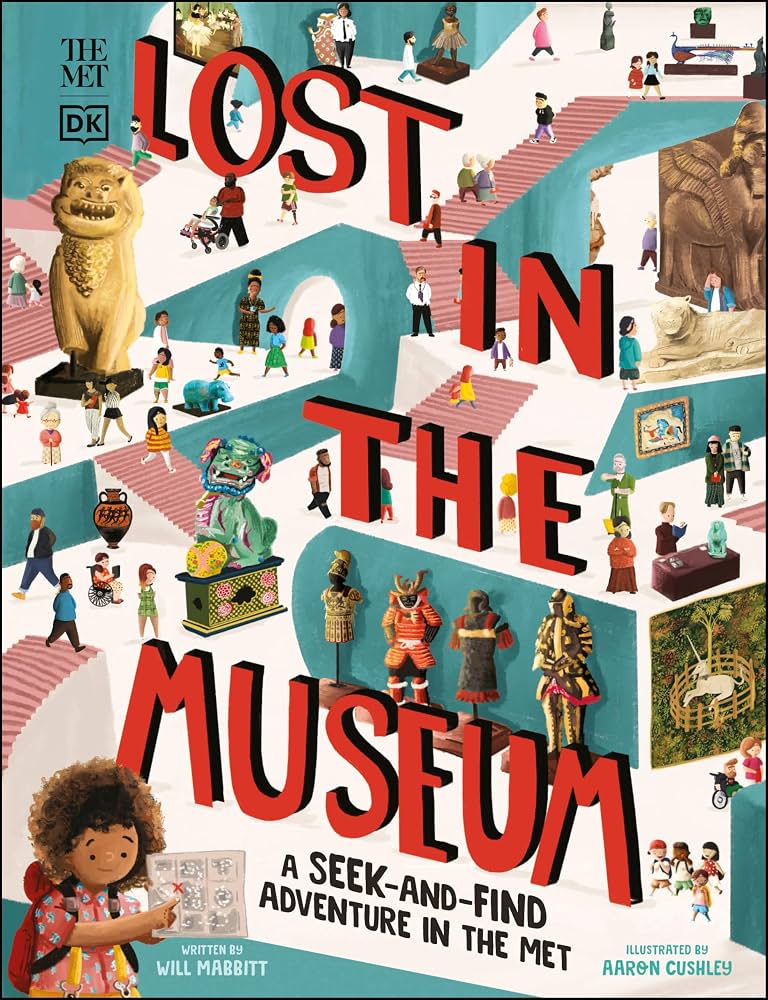
By Will Mabbitt, Lost in the Museum (DK, 2021) Stevie is lost in the Metropolitan Museum of Art – and needs to locate specific artworks to find her way back to her family. A wonderfully illustrated seek-and-find adventure as Stevie works her way through galleries and exhibitions. For ages 5-8.

Bob Raczka’s Art Is… (Millbrook Press, 2003) uses a simple rhyming text to cover a large assortment of unusual styles of art, from a cave painting to a Tiffany lamp, a Greek vase, an African mask, a collage, and a Pollock painting. Included are 27 different works of art. For ages 5-10.

In Bob Raczka’s Name That Style (First Avenue Editions, 2009), the author explains – with great examples – the basics of 14 different art styles, among them naturalism, realism, cubism, impressionism, and surrealism.(The subtitle is “All About Isms in Art.”) For ages 10 and up.
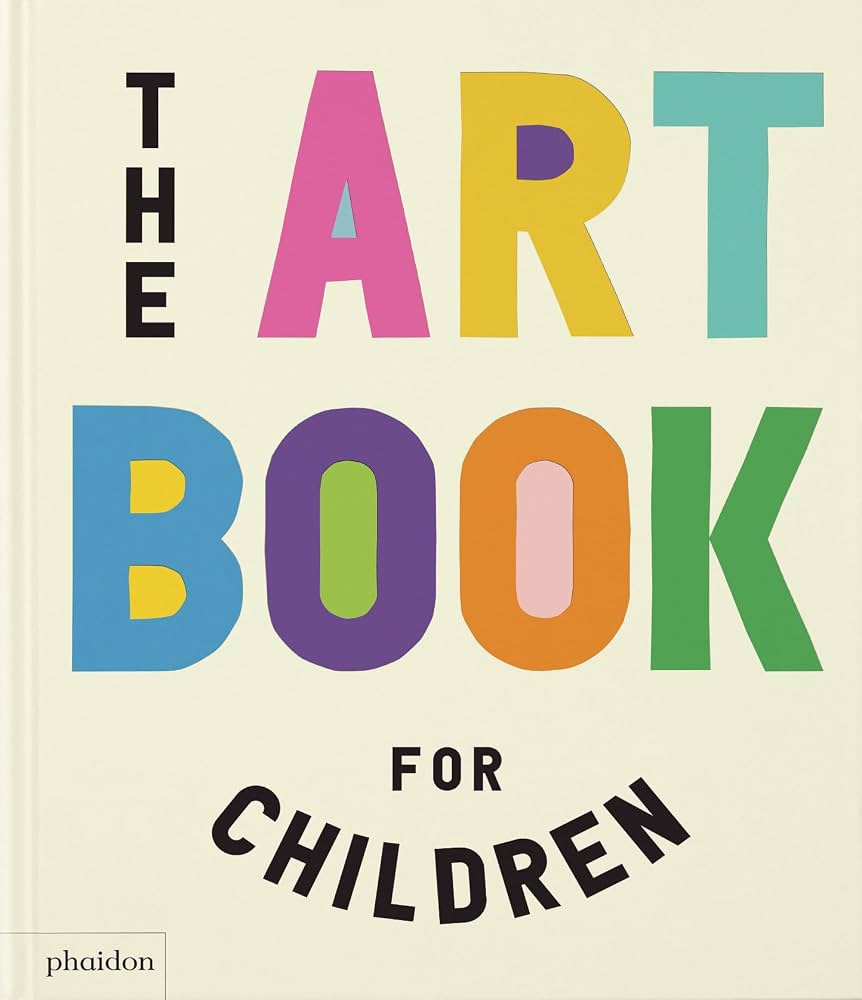
By Ferren Gipson et al., The Art Book for Children (Phaidon Press, 2024) is a spectacular overview of sixty artists and their works, along with background information, historical context, and gorgeous color reproductions. For ages 7-12.

One of these things is not like the other! In Doris Kutschbach’s Art Detective: Spot the Difference (Prestel, 2013) famous paintings are paired with forgeries. Try to spot the differences, with some help from Charlie, an art-sleuth dog. For ages 7-11.
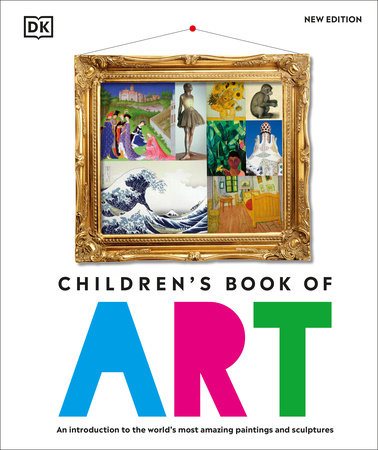
Dorling Kindersley’s gorgeously designed Children’s Book of Art (2023) is a tour of art history from prehistoric to modern times. Included is info on art styles and schools, famous works of art, and the lives of famous artists. The book is divided into three parts: Early Art (prehistoric times to 1850), Modern Art (Impressionism to the present), and Sculpture. For ages 8 and up.

By Heather Alexander, the 96-page A Child’s Introduction to Art (Black Dog & Leventhal, 2014) is a charmer, with historical background, 40 featured artists, informational side boxes, and hands-on projects. For example, kids can try upside-down painting like Michelangelo, experiment with Q-tip pointillism, make a (tissue-paper) stained-glass window, and create a Pollock spatter-paint painting. For ages 9-12.

Marianne Saccardi’s Art in Story (Libraries Unlimited, 2006) is an art curriculum for elementary-level kids that variously covers prehistoric art; the art of the Middle East, ancient Greece, ancient Rome, Asia and Africa, the Middle Ages and the Renaissance; European Masters, Impressionists and Post-Impressionists; and the art of the Americas. Included are background information, stories, journal-writing and viewing suggestions, activities, and cross-curriculum connections.

An Eye for Art (National Gallery of Art, 013) is an introduction to over 50 famous artists and their works in themed chapters, variously covering nature, places, portraits, telling stories, everyday life, and questioning tradition. Included are a timeline, wonderful illustrations, and 40 hands-on activities. For ages 10 and up.

A History of Pictures for Children by David Hockney and Martin Gayford (Harry N. Abrams, 2018) covers art from cave paintings to computers, with interesting commentary and wonderful illustrations. For ages 10-14.

Carol Strickland’s The Annotated Mona Lisa (Andrews McMeel, 2018), subtitled “A Crash Course in Art History from Prehistoric to Present,” includes short essays, sidebars, factoids, and over 300 photographs. For ages 12 and up.
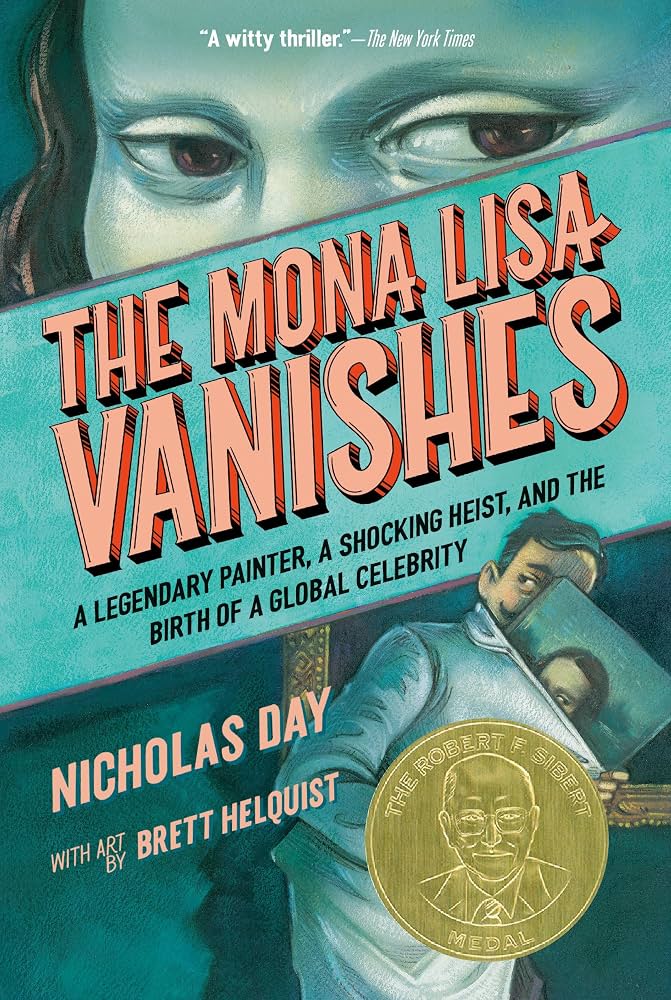
By Nicholas Day, The Mona Lisa Vanishes (Random House Studio, 2025) is the story of the theft of the Mona Lisa from the Louvre in 1911 – and its eventual return, years later. It’s a witty and fast-paced read – and also brings up the question provenance and rightful ownership of artifacts and artworks. For ages 10-14.
See 10 Famous Ownership Disputes Over Cultural Artifacts at https://www.artandobject.com/slideshows/10-famous-ownership-disputes-over-cultural-artifacts.
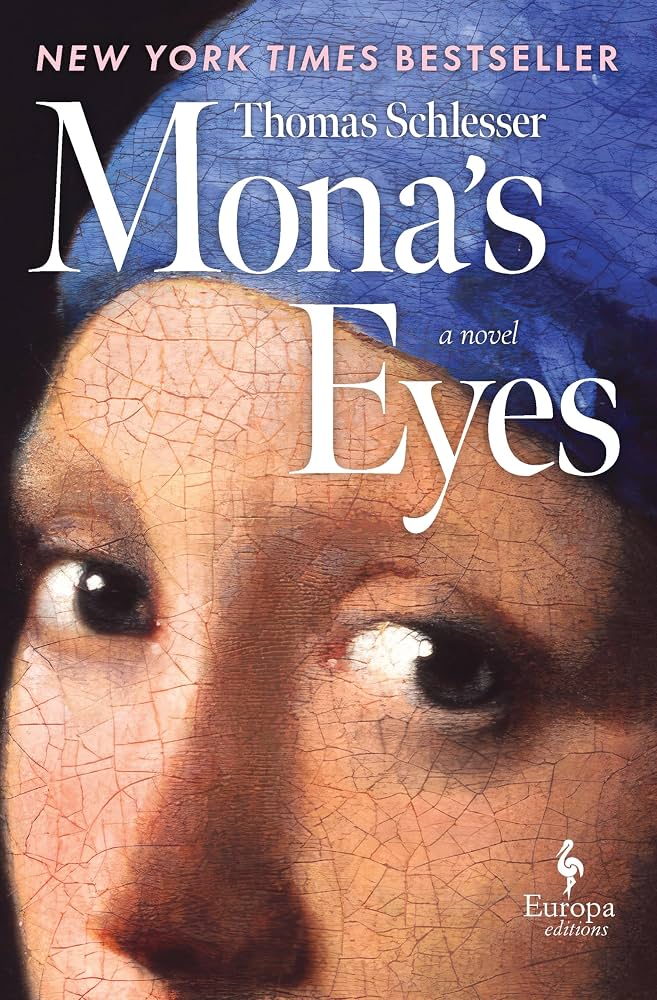
By Thomas Schlesser Mona’s Eyes (Europa Editions, 2025), 10-year-old Mona is in danger of going blind – so each Wednesday for a year her grandfather takes her to visit a single artwork at one of Paris’s famous museums. Mona’s experience of art changes her perspective as she takes away new lessons from each artwork. A fascinating read along with an out-of-the-ordinary education in art and art history for ages 11 and up. Pair with images of Mona’s masterpieces.

Anthony F. Janson’s The History of Art for Young People (Prentice Hall, 1997) is a time-honored classic, packed with information and illustrations. Recommended for ages 13 and up.
Famous Paintings is a collection of online art appreciation lesson for kids ages 8 and up. Each includes a biography of the artist, descriptions of his/her work, and images of paintings.
From the Metropolitan Museum of Art, the Heilbrunn Timeline of Art History is an illustrated timeline of art and culture through images from the museum collection.
Art in Fiction

In Leo Lionni’s Matthew’s Dream (Dragonfly Books, 1995), Matthew, a young mouse, lives with his parents in a dusty attic draped in cobwebs. Then, after a class trip to the art museum, Matthew decides to become a painter and sets about transforming his dingy world. For ages 3-7.
See Matthew’s Dream on You Tube

In Crockett Johnson’s Harold and the Purple Crayon (HarperCollins, 2005), originally published in 1955, young Harold, after thinking it over for some time, decides to go for a walk in the moonlight. Off he goes, armed only with his purple crayon, with which he draws an entire purple world. A delightful classic for ages 3-7.

Christopher Myers’s My Pen (Disney-Hyperion, 2015) is illustrated in pen-and-ink, which is appropriate because the simple story line is about what a little boy – with a bit of imagination – can do with his pen. (It can ride dinosaurs, put an elephant in a teacup, tell stories, and draw a new face every morning.) The last line encourages readers to do the same: “Let those worlds inside your pen out!” For ages 3-7.

In Ashley Spires’s cleverly illustrated The Most Magnificent Thing (Kids Can Press, 2014), a pigtailed little girl decides to build a “magnificent thing.” She designs the thing, collects tools and materials, and sets about constructing it – only to have absolutely everything go wrong. Frustrated, she pitches a fit (“It is not her finest moment”) – until her dog convinces her to go for a calming walk. Restored, she returns to her project and finds a solution. A good pick for young engineers and found-object artists, plus there’s a nice message about perseverance, For ages 3-8.

The title character of Thatcher Hurd’s Art Dog (HarperCollins, 1997) is by day a guard at the Dogopolis Museum (and admirer of Leonardo Dog Vinci), but by night a masked superhero who uses his paintbrush to apprehend art criminals. For ages 4-8.

In Raul Colon’s wordless picture book Draw! (Simon & Schuster/Paula Wiseman Books, 2014), a little boy reads a book about Africa, then with paper, pencils, and paint, creates a living African adventure of his own. For ages 4-8.

In Tomie de Paola’s The Art Lesson (Puffin, 2001), mop-headed Tommy loves to draw – and his pictures are everywhere. He can’t wait to get to school so that he can learn to be a real artist – but first grade is a disappointment; he finds that he’s expected to follow the rules and draw the same thing as everyone else in the class. The somewhat uncomfortable solution is that Tommy does the class drawing first, then can do a second drawing of his own, in his own way. I don’t like Tommy’s first-grade teacher. For ages 4-8.

In Demi’s Liang and the Magic Paintbrush (Square Fish, 1988), a poor Chinese boy is given a magic paintbrush with which everything he paints becomes real. Then the wicked emperor captures Liang and forces him to use the paintbrush for his own greedy purposes – but defiant Liang manages to thwart the emperor’s plans. For ages 4-8.

David Weisner’s Art & Max (Clarion Books, 2010) is the story of a pair of lizards, serious Art, an artist, and happy-go-lucky Max, who hopes to become one. When Max lacks ideas, Art replies “Well…you could paint me” – and Max, literally, does. There follows a chaotic romp through art media and styles – that ends, eventually, with Max painting a portrait and Art throwing paint at a cactus. A nice lead-in for discussions of the nature of art. (What is art, anyway?) For ages 4-8.

Veronique Massenot’s Journey on a Cloud (Prestel Publishing, 2011) is a story based on the paintings of Marc Chagall. The main character, Zephyr, a postman, lives in a little blue village in the mountains where everything always stays the same – so he flies off on a cloud in search of adventure. The book ends with a reproduction of Chagall’s “The Bride and Groom of the Eiffel Tower.” For ages 5 and up.

In the same vein, see Stepanie Girel’s A Bird in Winter (Prestel, 2011), based on the work of Pieter Breugel; Lucie Albon’s Little Ballerina (Prestel, 2011), based on the work of Edgar Degas; and Veronique Massenot’s The Great Wave (Prestel, 2011), inspired by the famous Hokusai print.

Peter Reynolds’s The Dot (Candlewick, 2003) is a must-read for kids who insist that they can’t…well, in this case, it’s draw, but the story applies to a wide range of childhood despairs. Vashti, frustrated in art class, claims she simply can’t draw. When urged by her teacher, she grabs a pencil and angrily makes a dot – “There!” – in the middle of her blank sheet of paper. The teacher (a kind and inspired person) asks her to sign it. Vashti, startled, does – and lo and behold, the next day she finds that her dot has been framed (in gold) and hung on the classroom wall. Immediately Vashti decides that she could make a better dot than that; and soon she has amassed an impressive collection of marvelous dots – so many, in fact, that she soon has an entire art exhibit all her own. For ages 5-9.
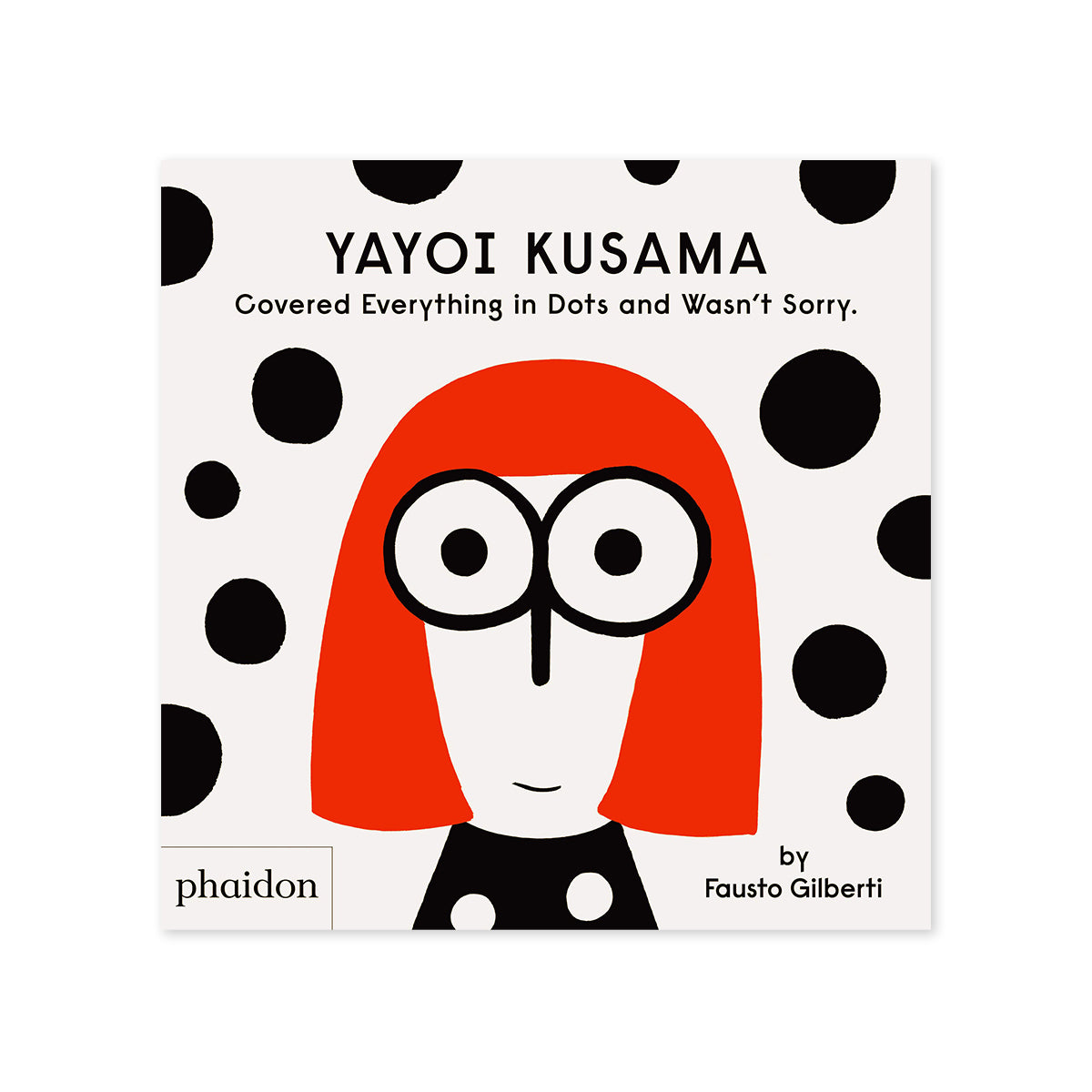
You might pair The Dot with the story of a modern artist famous for dots.By Fausto Gilberti, Yayoi Kusama Covered Everything in Dots and Wasn’t Sorry (Phaidon, 2020) is a quirky picture book about contemporary Japanese artist Kusama – who had a vision of the world covered with polka dots. For ages 4-7.

E.L. Konigsberg’s From the Mixed-Up Files of Mrs. Basil E. Frankweiler (Atheneum Books, 2007), originally published in 1967, is the story of twelve-year-old Claudia and her little brother Jamie who run away from home to live in the Metropolitan Museum. There they discover a statue of an angel that just might have been carved by Michelangelo, originally the possession of the smart and eccentric Mrs. Basil E. Frankweiler. For ages 8-12.

The Hideaways (1973), a movie version of the book, stars Ingrid Bergman as Mrs. Basil E. Frankweiler. Rated G.
The Metropolitan Museum gets so many questions about From the Mixed-Up Files of Mrs. Basil E. Frankweiler that they decided to devote an issue of Museum Kids to the book. The Mixed-Up Files issue includes photos and information about the artifacts Claudia and Jamie saw, notes on Michelangelo, and a message from E. L. Konigsberg. (Find out how the book started with a piece of popcorn on a blue silk chair.) Download it at https://libmma.contentdm.oclc.org/digital/collection/p15324coll10/id/150652/.

In Blue Balliett’s Chasing Vermeer (Scholastic, 2005), clever sixth-graders Petra and Calder deal with patterns and puzzles while trying to discover what happened to a stolen Vermeer painting. For ages 8-12.

Also by Balliett, see The Calder Game (Scholastic, 2010) in which the eleven-year-old art sleuths deal with a mysterious Calder mobile; and Pieces and Players (Scholastic, 2015) in which thirteen valuable pieces of art have gone missing from a small family museum.

In Elise Broach’s Masterpiece (Square Fish, 2010), Marvin, a beetle, lives under the floor of the Pompaday apartment. When James Pompaday turns eleven, he gets a pen-and-ink set for his birthday - which Marvin uses to make a brilliant miniature drawing. Because of Marvin’s art talen, he and James become embroiled in a plot to steal a Durer drawing from the Metropolitan Museum. Funny and suspenseful, and Marvin and James make a great pair of friends. For ages 8-12.
Also by Broach, see the Masterpiece Adventures series, in which James and beetle pal Marvin have further adventures. For example, see The Miniature World of Marvin & James (Square Fish, 2015). For ages 6-8.

In Henry Cole’s A Nest for Celeste (Katherine Tegen Books, 2012), Celeste is talented basket-weaving mouse who lives under the floor of Oakley Plantation where wildlife artist John James Audubon and his assistant, Joseph, spend several months in 1821. Celeste, who has to deal with mean rats and a cat, makes friends with Joseph; and also does her best to save Audubon’s captured birds. (Audubon shot his bird specimens; be warned.) A fat book illustrated with wonderful pencil drawings, reminiscent in style of The Invention of Hugo Cabret. For ages 8-12.

Jules Feiffer’s The Man in the Ceiling (HarperCollins, 1995) is a great read for budding cartoonists. Funny and poignant, this is the story of young Jimmy Jibbett who likes nothing better than drawing comics – but it’s not easy pursuing his dream, what with a father who wishes he’d play sports instead of draw, nagging sisters, and trouble with friends at school. For ages 8-12.
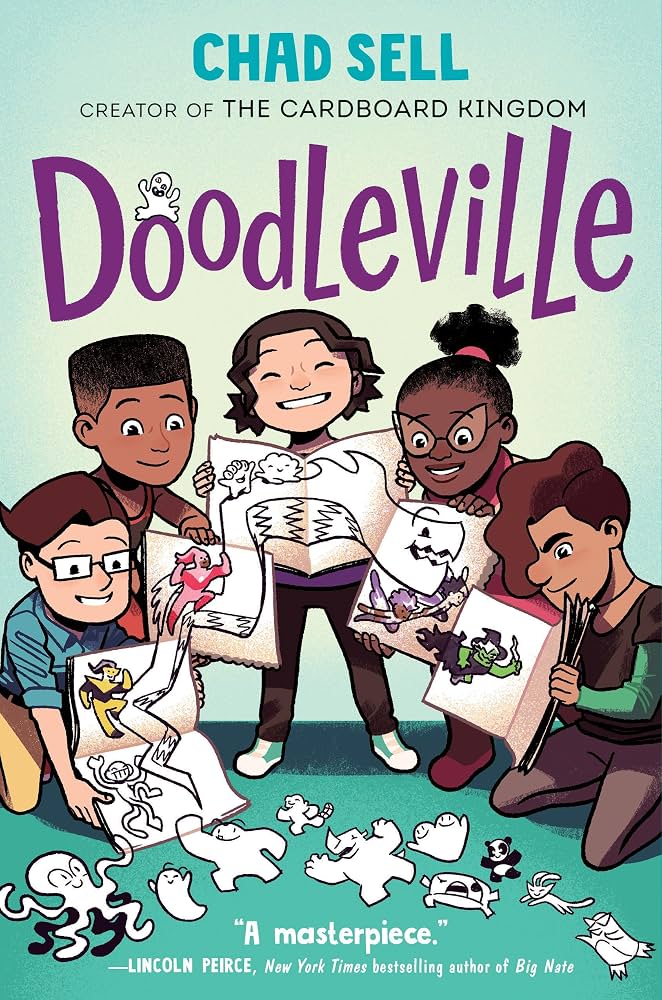
In Chad Sell’s graphic novel Doodleville (Knopf, 2020), doodles from Drew’s invented world of Doodleville come alive – and one of her creations is a monster. For ages 8-12.
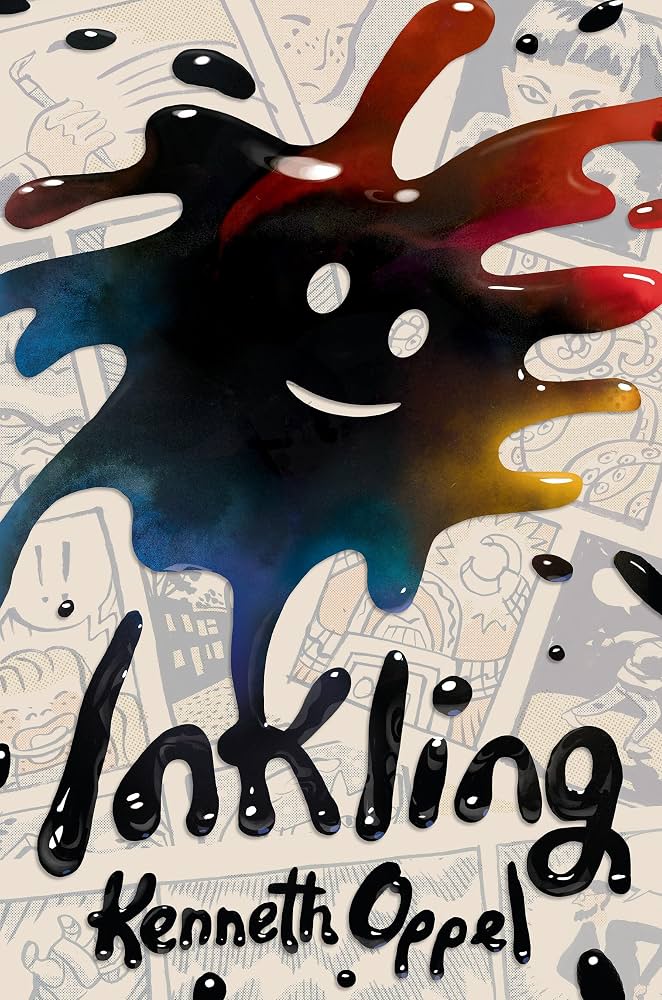
In Kenneth Oppel’s Inkling (Yearling, 2020), Inkling – an ink splot that escapes from a sketchbook – turns out to be an artistic inspiration for Ethan and his whole family. Until Inkling is kidnapped. For ages 8-12.

Laura Marx Fitzgerald’s Under the Egg (Puffin, 2014) covers everything from Renaissance art to World War II in a mystery involving a painting by Raphael. Thirteen-year-old Theo, struggling to make ends meet in Greenwich Village after the death of her grandfather, Jack, spills a bottle of rubbing alcohol and discovers, under her grandfather’s painting of an egg, what appears to be a Renaissance masterpiece. Theo and new friend Bodhi comb New York City, trying to find out the truth about the mysterious hidden painting. For ages 9-12.
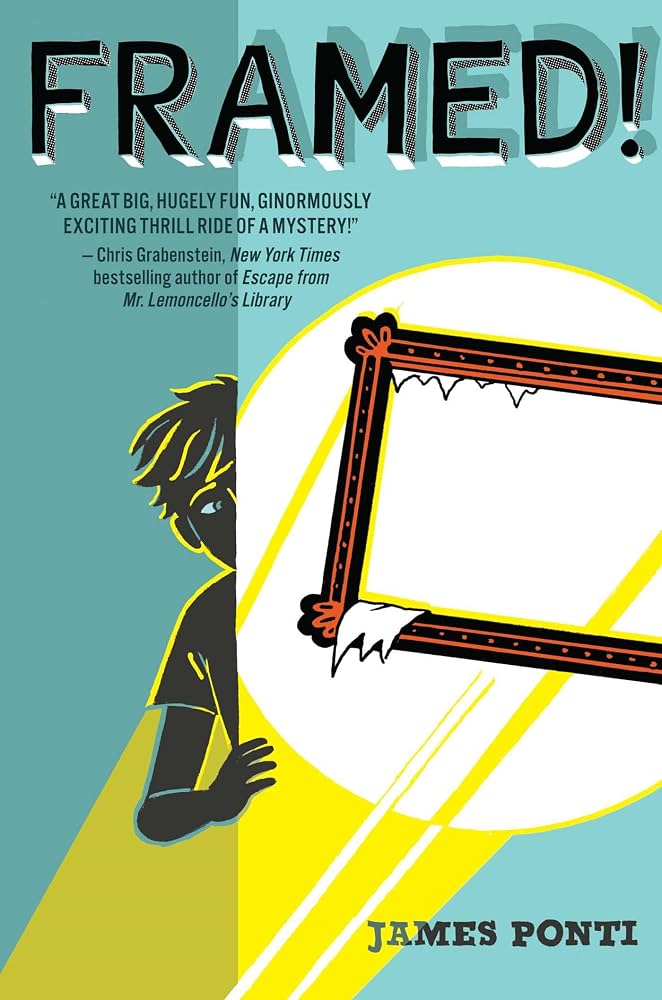
By James Ponti, in Framed! (Aladdin, 2017), 12-year-old genius Florian Bates and friend Margaret are recruited by the FBI to help deal with an art theft from the National Gallery of Art. For ages 9-12.

In Deron Hicks’s The Van Gogh Deception (HMH, 2018), a young boy is found in the National Gallery in Washington, DC, with no memory of who he is or why he’s there. An un-put-down-able thriller and a race to uncover one of the greatest art frauds of all time. Included are QR code links to famous paintings. For ages 9-13.

Set in Stone Age France, Justin Denzel’s The Boy of the Painted Cave (Puffin, 1996) is the story of young Tao who wants to be a cave painter – but is forbidden, since he’s not a Chosen One, having a crippled food. Isolated from the tribe, he tames a wild dog, meets a shaman named Greybeard who teaches him to paint, and ultimately overcomes adversity to attain his dream. For ages 10-14.

Darcie Clark Frohardt’s Teaching Art with Books Kids Love (Fulcrum Publishing, 1999) covers the elements of art, principles of design, and artistic styles, pairing illustrated explanations with fine-art examples, favorite children’s picture books, and hands-on projects.
From London’s National Gallery, check out this list of suggestions for using paintings for storytelling.
For older teens and grown-ups: Ten Books Inspired by Paintings.
Science, Math…and Art
The STEM disciplines – Science, Technology, Engineering, and Math – are certainly worthwhile, but we need the arts too. See the Scientific American article Science and Art Go Hand-in-Hand.
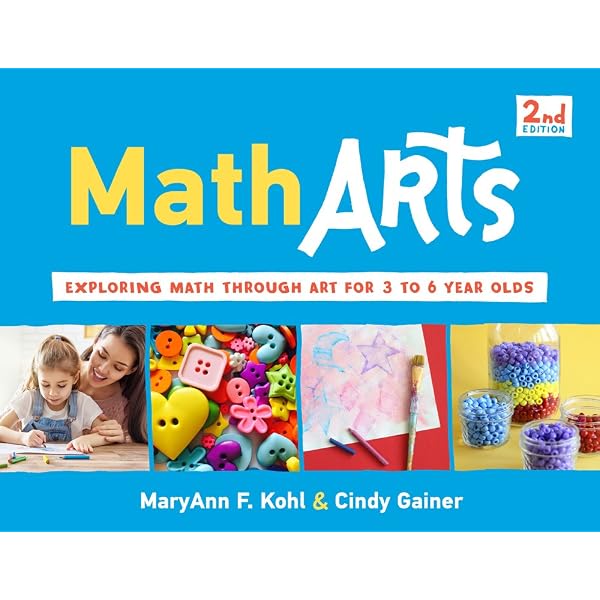
By MaryAnn Kohl and Cindy Gainer, Math Arts (Chicago Review Press, 2018) pairs basic math concepts such as one-to-one correspondence, matching, sorting, grouping, and number recognition with hands-on art activities. For ages 3-6.

Greg Tang’s creative Math-terpieces uses paintings by many famous artists – among them Degas, Monet, Renoir, Cezanne, Van Gogh, Picasso, Mondrian, and Dali – to pose clever math puzzles and problems. For ages 7-9.

Anna Weltman’s This Is Not Another Maths Book (Ivy Kids, 2017) is packed with creative mathematical art activities and puzzles. For ages 8-11.
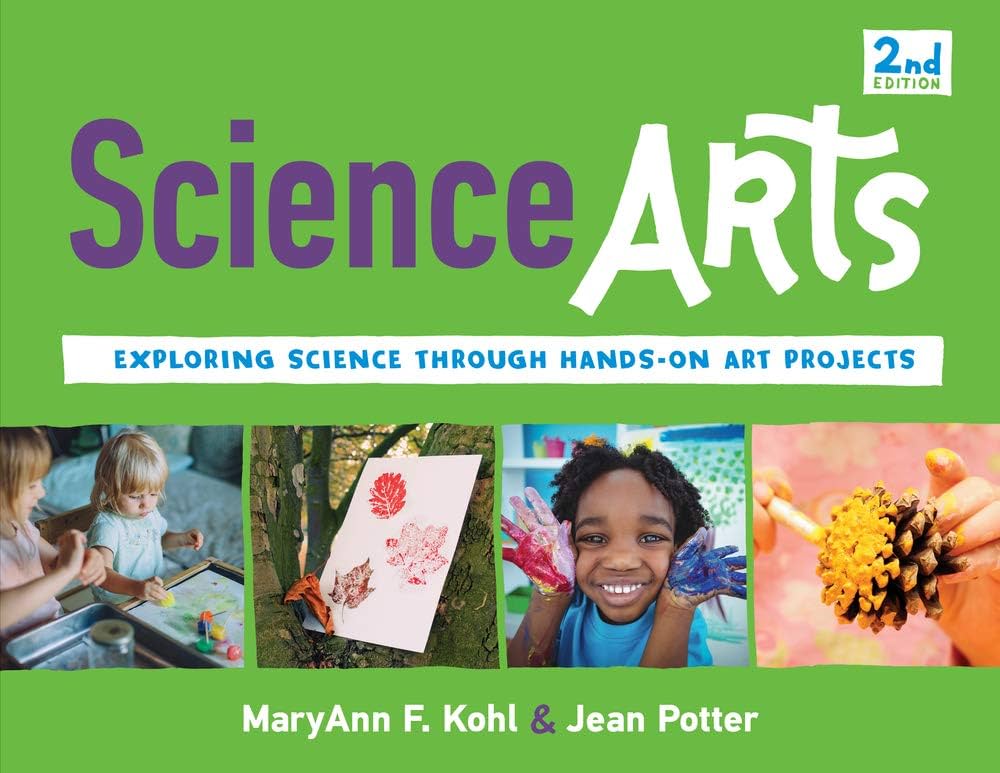
By MaryAnn Kohl and Jean Potter, in Science Arts (Chicago Review Press, 2020), kids explore science through hands-on art activities. Topics covered include Water and Air, Light and Sight, Motion and Energy, Reactions and Change, and Nature and Earth. For ages 7-9.

Karyn Tripp’s Math Art + Drawing Games for Kids (Quarry Books, 2019) is a wonderful collection of mathematical art projects. Kids experiment with Klee geometric mosaics, Frank Lloyd Wright stained-glass windows, pattern block cookies, Native American quill art, and much more. For ages 8-12.
By Ruth Millington, The Science of Art (DK, 2026) is a picture-book tour of art techniques and movements for ages 7-9. For example, kids learn where perspective came from, all about color theory, and the invention of op art.
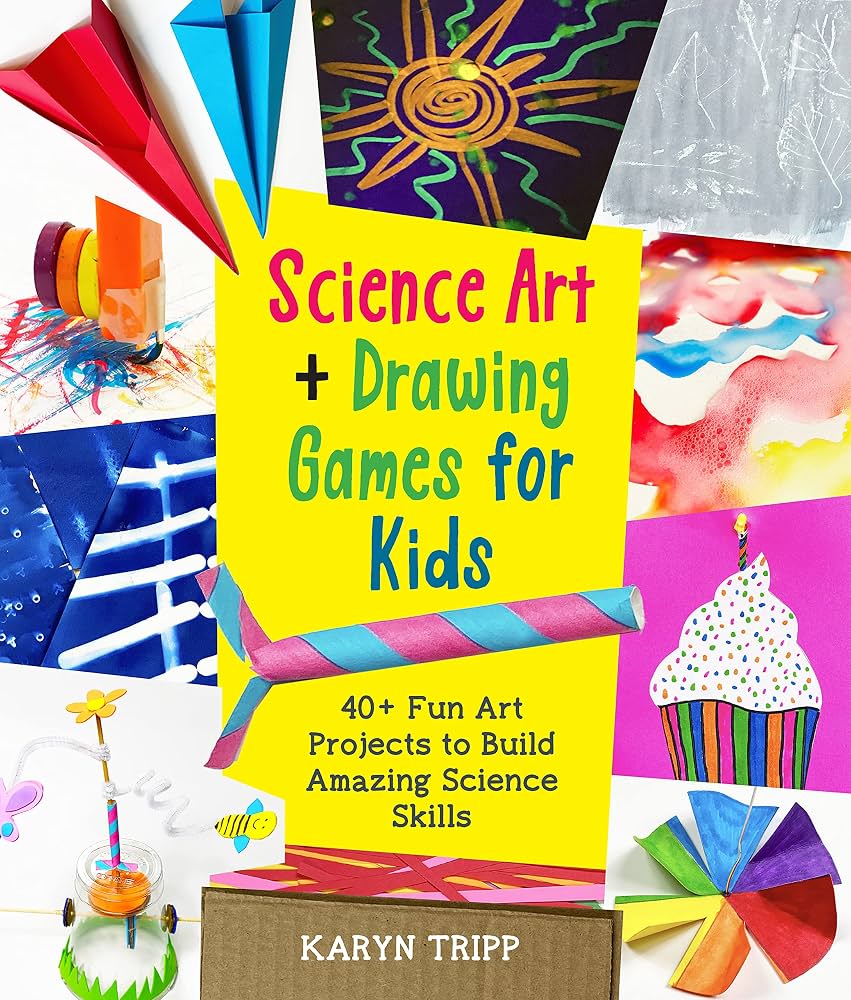
By Karyn Tripp, Science Art + Drawing Games for Kids (Quarry Books, 2022) is a collection of 40 science-based art projects for ages 8 and up. Kids can explore energy and motion, electricity and magnetism, life science, chemistry, and color and light by making spinning sculptures, light-up greeting cards, plantable seed paper, crystal gardens, sun prints, and more.

Artful Math has lessons on everything from Celtic knotwork to insect symmetry to mazes, patchwork patterns, and snowflakes.

From PBS’s Picture This, kids explore art and math using Calder sculptures, Picasso’s Three Musicians, and more.

With Mondrian Blocks, kids are challenged to reproduce Mondrian-style painting patterns with colorful blocks. See

By Matt Lamothe, Julia Rothman, and Jenny Volvovski, in The Where, the Why, and the How (Chronicle Books, 2012), 75 different artists illustrate the “wondrous mysteries of science.” Each double-paged spread pairs a scientific question with a spectacular illustration. Questions include: How are stars born and how do they die? Do rogue waves exist? Why do we dream? Why is the world green? Aimed at an adult audience, but could make a wonderful art/writing project for all ages.

Philip Ball’s Bright Earth (University of Chicago Press, 2003) is the story of how art, chemistry, and technology have interacted throughout history to give us colors. For teens and adults.

Victoria Finlay’s Color (Random House, 2004) is a fascinating history of the palette, combining history, geography, art, culture, and human-interest stories.

See 10 Geometric Art Explorations for Kids - a fun collection that includes spiraling triangles, a polygon robot, and a square explosion.
From Teachervision, Popular Art Activities for Math Class include tessellations, tangrams, quilt patterns, and geometry with Piet Mondrian.
Bridges is an annual conference featuring mathematical connections in art, music, and science. This article includes some examples of remarkable featured artwork.
Geometry in Art and Architecture is a fascinating annotated syllabus from Dartmouth College. For teens and adults.
The Art & Science Journal is a publication about artworks with themes of science, nature, and technology. For teens and adults.
Hands-on Art

The Young Rembrandts Program – founded in 1988 – uses a step-by-step method to teach kids drawing. Now a national franchise, Young Rembrandts provides drawing classes for preschoolers (ages 3 ½ – 5) and elementary-level students (6-12). See the website to learn more about the program or to locate classes in your area.

From KiwiCo, Doodle Crate is a monthly box of quality art materials, instructions, and suggestions, available by subscription. For example, kids made a cool wooden clock, sumi-e wash paintings, and colorful votive candles. For ages 9-16.

Ed Emberley’s wonderful step-by-step drawing books are terrific for ages 7 and up. Many titles, all fun. For free downloadable samples, see 

Douglas Florian’s How to Draw a Dragon (Beach Lane Books, 2015) is a terrific rhyming picture-book on – yes – how to draw a dragon. (“Drawing dragons isn’t hard/Drag a dragon to your yard/Dragons may be large in size/You’ll need lots of art supplies.”) Read and prepare to draw dragons! For ages 5-9.

Susan Schwake’s Art Lab for Kids (Quarry Books, 2012) – subtitled “52 Creative Adventures in Drawing, Painting, Printmaking, Paper, and Mixed Media” – is a photo-illustrated collection of inventive projects, each paired with an example of work by a professional artist. Arranged as weekly lessons. An excellent resource for ages 6 and up.
Also see Art Lab for Little Kids (Quarry Books, 2013) which has 52 projects targeted at ages 4-6; and Stephanie Corfee's Corfee, Paint Lab for Kids (Quarry Books, 2015) which has 52 kid-friendly projects using paint, illustrated with color photos, for ages 7-14.
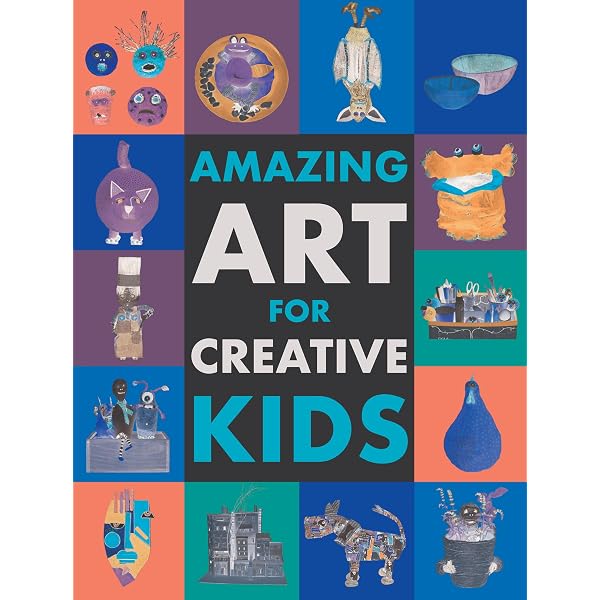
Emily Kington’s Amazing Art for Creative Kids (Beetle Books, 2020) has photo-illustrated instructions for creating over 30 spectacular art projects out of practically nothing. Great stuff for ages 7-11.
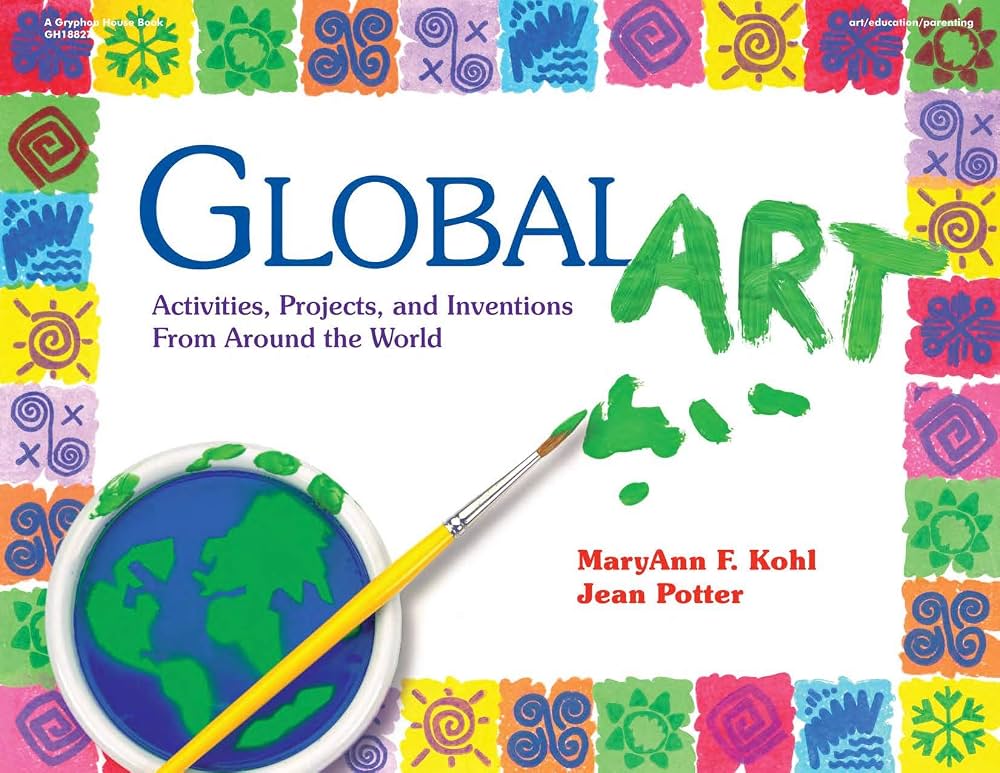
MaryAnn Kohl’s Global Art (Gryphon House, 1998) features activities, projects, and inventions from around the world, categorized by continent. For example, kids make animal masks from Cameroon, handmade paper from China, and shamrock stencils from Ireland. Included are background information and illustrated instructions. For ages 8 and up.

Kathryn Temple’s Art for Kids: Drawing (Sterling, 2014) is a step-by-step instruction book on drawing in pencil. Eight chapters deal with shapes and lines, light and shadow, proportion and scale, perspective, and drawing faces and bodies. Many creative exercises. For ages 8 and up.

MaryAnn Kohl’s Discovering Great Artists: Hands-On Art for Children in the Styles of the Great Masters (Chicago Review Press, 2020) combines brief biographies of 75 famous artists with particularly cool projects using a range of media, including paint, chalk, pen-and-ink, sculpture, photography, collage, and more. The book is divided into four sections: Renaissance and Post-Renaissance, Impressionists and Post-Impressionists, Expressionists and Surrealists, and Modern and Folk Art. For ages 4-12.

Carol Sabbeth’s Monet and the Impressionists for Kids (Chicago Review Press, 2002) combines a history of the impressionist movement and biographies of famous impressionist painters with 21 hands-on art-related projects and activities. Among these are planting a Monet garden (in a flowerpot), drawing faces in the style of Renoir, writing a story based on a Cassatt picture, and painting a Cezanne-style still life. Included are many color reproductions of artworks. For ages 10 and up.

The Drawing Lesson by Mark Crilley (Watson-Guptill, 2016) is an award-winning graphic novel that teaches you how to draw – along with David, a hopeful young artist, who meets a mentor in the park. For ages 9 and up.

Mona Brookes’s Drawing with Children (Jeremy P. Tarcher, 1996) is a creative lesson-by-lesson approach to drawing highly recommended for kids and beginning adults.
Also by Brookes, see Drawing for Older Children and Teens (Jeremy P. Tarcher, 1991).

Betty Edwards’s Drawing on the Right Side of the Brain (Jeremy P. Tarcher, 2012), now in its 4th edition, is touted as the world’s most widely used drawing instruction book. For teens and up.

Paint along with Bob Ross! Art instructor and painter Bob Ross was the host of the popular PBS series The Joy of Painting. See https://www.pbs.org/show/best-joy-painting/

Deep Space Sparkle has art lesson plans and teaching resources for K-6, categorized by grade, subject, and technique. Various subject categories include Birds, Animals, Nature, Art and Literature, Architecture, and The Masters.
Famous Artist Crafts for Kids includes hands-on projects based on the works of Van Gogh, Monet, Warhol, Miro, Mondrian, Seurat, Pollock, and Matisse.
Art Library is a terrific resource: a wide-ranging collection of lesson plans, multi-lesson courses on learning to draw, watercolor, and cartoon, a long list of artist’s biographies, a student art gallery, and the National Standards for Art Education (for grades K-4 and 5-8).
KinderArt has painting, drawing, printmaking, sculpture, recycled art, and art history and appreciation lessons, variously categorized by medium, theme, age, or grade. Click on Art 101 for color-mixing projects and exercises, articles on art education, and a long list of the birthdays of famous artists.
That Artist Woman has dozens of excellent hands-on projects for a wide range of ages, variously categorized under 3D Sculpture, Paint & Paper, Textiles, Mixed Media, Art Elements (which focuses on the basics of art education), Seasonal Projects, and Writing and Visual Arts Projects.
From No Time for Flash Cards, Artist Inspired Art Projects for Kids includes clever hands-on projects for elementary-level students based on the works of Emily Carr, Hokusai, Jasper Johns, Kandinsky, Matisse, Money, Poll0ck, Seurat, and Van Gogh. Projects are paired with picture books.
Learn your artists! Make this Masterpiece Memory Game.

Art in Poetry

World Make Way (Lee Bennett Hopkins, ed. Metropolitan Museum of Art, 2018) is a collection of poems inspired by and gorgeously illustrated with works of art from the Metropolitan Museum. Something for everyone, of all ages.

Talking to the Sun (Henry Holt, 1985), compiled by Kenneth Koch and Kate Farrell, is an anthology of poems for young people, illustrated with art works from the Metropolitan Museum. The title refers to Frank O’Hara’s poem “A True Account of Talking to the Sun on Fire Island.”

Belinda Rochelle's Words with Wings (Amistad, 2000) pairs twenty poems by African-American poets such as Maya Angelou, Gwendolyn Brooks, and Langston Hughes with gorgeous works by African-American artists. For all ages.

Try a black-out poetry project as a work of art!
Art at the Movies

The Secret of Kells (2009) is an animated film set in the Middle Ages in which young Brendan sets out on a dangerous quest after a master illuminator brings him an ancient book, filled with secrets. NR. Suitable for kids. There’s one scene of a Viking attack.

Werner Herzog’s Cave of Forgotten Dreams (2010) is a wonderful documentary filmed inside the Chauvet caves of southern France, home to some of the oldest paintings in the world. Rated G.

Girl with a Pearl Earring (2003) is the story of a young peasant maid, played by Scarlett Johansson, who becomes to model for one of painter Johannes Vermeer’s most famous works. Rated PG-13.

The Monuments Men (2014), with an all-star cast including George Clooney, Matt Damon, and Bill Murray, is the story of the World War II platoon tasked with rescuing art masterpieces stolen by the Nazis. Rated PG-13.

In Woman in Gold (2015), Helen Mirren plays an elderly Jewish refugee attempting to recover a Klimt painting stolen from her family by the Nazis. Rated PG-13.

Raiders of the Lost Art (2014-2016) is a series about art thefts and the attempts to recover them, with archival footage and dramatic re-creations.

In Loving Vincent (2017), young Armand is sent to find a recipient for Vincent Van Gogh’s last letter, and ends up exploring Van Gogh’s last days and troubled life. The movie is done entirely in animations based on Van Gogh’s oil paintings. PG-13.

In The Agony and the Ecstasy (1965), Michelangelo, played by Charlton Heston, struggles to paint the Sistine Ceiling. Not rated.

Lust for Life (1956) is the story of the unhappy life of brilliant painter Vincent Van Gogh (played by Kirk Douglas). Not rated.

Frida (2002), directed by Julie Taymor and starring Salma Hayek in the title role, is the story of artist Frida Kahlo. Rated R.

Mr. Turner (2014) is the story of eccentric 19th-century British painter J.M.W. Turner. Rated R.

Pollock (2000), starring Ed Harris as Jackson Pollock, is the story of the life and work of the artist. Rated R.
Art Contests!

The Congressional Art Competition is a nationwide visual art competition for high-school-level kids. Contact your representative to confirm your district’s participation.
National YoungArts Competition is an emerging artists competition for ages 15-18 in the fields of cinema, photography, music, dance, design, theater, and writing.
The Scholastic Art & Writing Awards, said to be the nation’s longest running and most prestigious program for creative teens, is open to kids in grades 7-12 and to homeschoolers ages 13 and up. There are many categories for entries, including comic art, digital art, drawing and illustration, fashion, film and animation, jewelry, mixed media, painting, photography, printmaking, and sculpture. For application guidelines, see the website at https://www.artandwriting.org/.