
Women's History (Not Just for Girls)
In this collection
Women’s history! The number of books and resources is…well, overwhelming. And they’re not just for girls.
Herstory
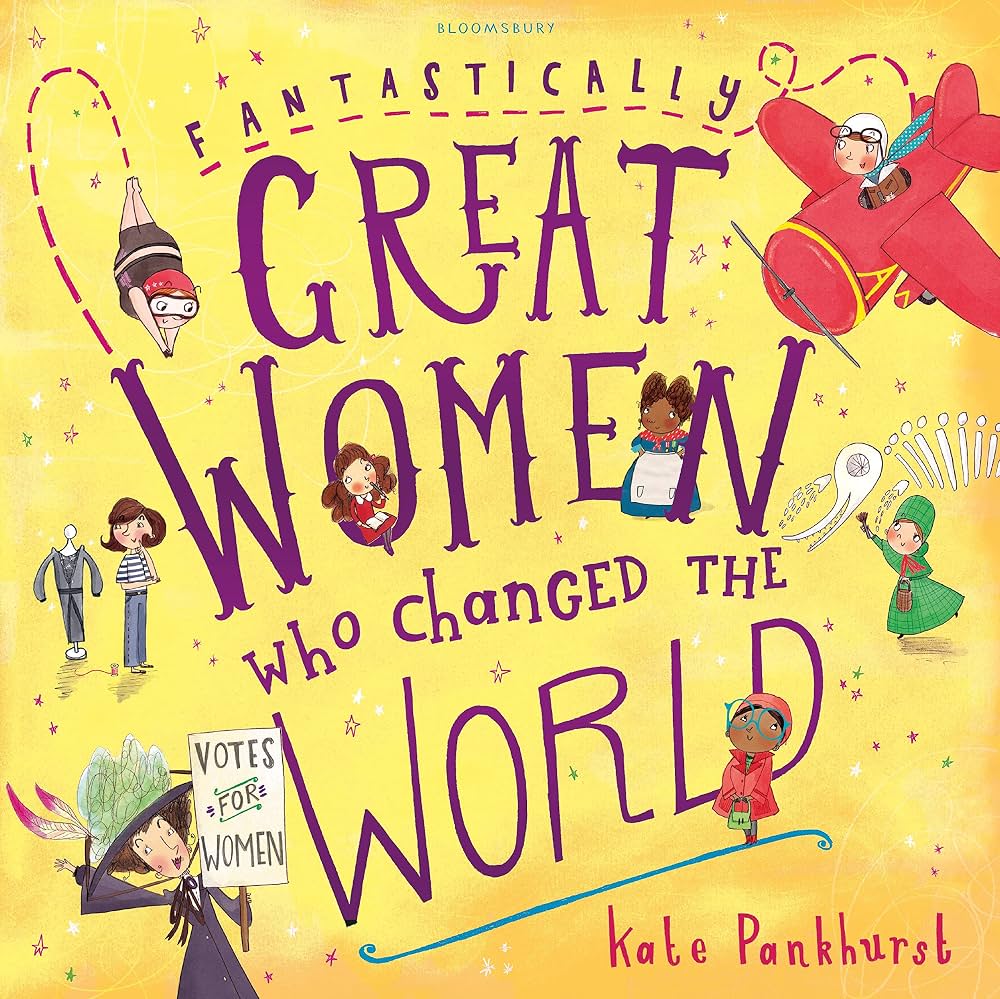
By Kate Pankhurst, Fantastically Great Women Who Changed the World (Bloomsbury USA, 2016) is a cleverly designed overview featuring one (fantastically great) woman per double-page spread. Among them: Amelia Earhart, Frida Kahlo, Rosa Parks, Marie Curie, and Sacagawea. For ages 4-9.
Also by Pankhurst in the same format, see Fantastically Great Women Who Made History, Fantastically Great Women Who Saved the Planet, and Fantastically Great Women Who Worked Wonders.

33 Things Every Girl Should Know About Women’s History: From Suffragettes to Skirt Lengths to the E.R.A. (Crown, 2002), edited by Tonya Bolden, is a beautifully designed overview of women’s history, packed with photos, essays, quotes, timelines, bios, poems, and short stories, covering a wide range of compelling issues. Included, for example, are an excerpt of Charlotte Perkins Gilman’s “The Yellow Wallpaper” and Abigail Adams’s famous “Remember the Ladies” letter. For ages 12 and up.

By Laurie Halse Anderson, Independent Dames (Simon & Schuster, 2008) is a graphically dense overview of women of the American Revolution. Included are a running timeline, a dazzling array of facts, cartoon illustrations with humorous dialogue balloons, and capsule biographies of 22 women, among them Martha Washington, Deborah Sampson, Sybil Ludington, and Margaret Corbin – who was wounded while firing a cannon, and became the first woman in America to be awarded a military pension. For ages 6-10.
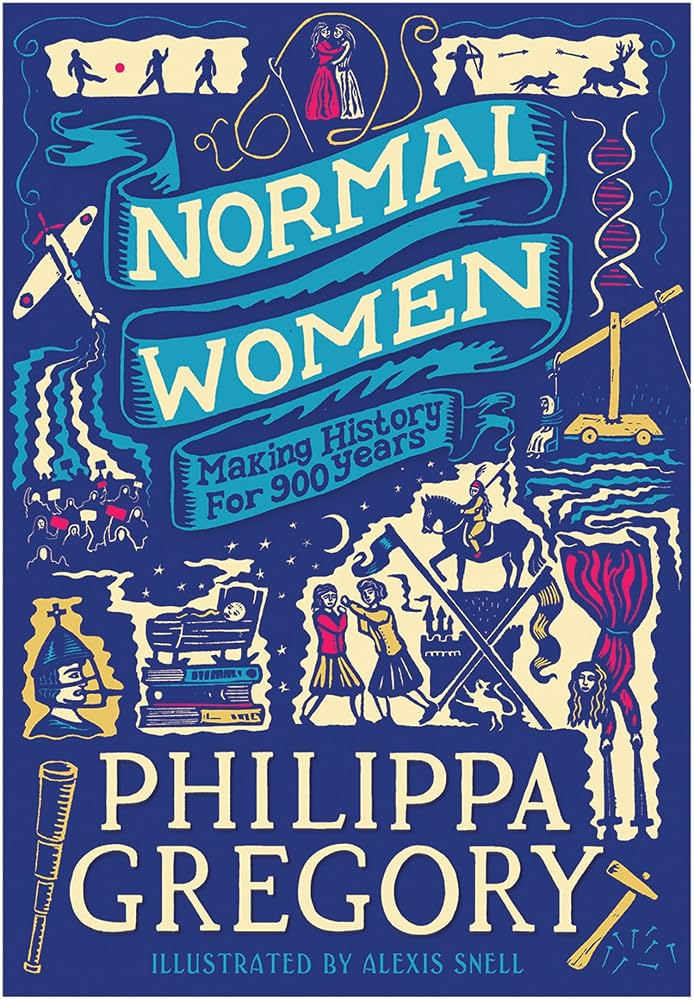
By Philippa Gregory, Normal Women (Red Shed, 2025) – the Young Readers version of the best-selling adult book – is a highly readable 900+-year social history of women, showing that “normal” women were far from shrinking violets, but were highwaymen, pirates, landowners, soldiers, inventors, and more. For ages 12-16.

By Cokie Roberts, Founding Mothers (Harper Perennial, 2005) is an account of the women of the American Revolution, much of it based on letters and diaries. The result is a very human and entertaining account of the lives and achievements of such women as Eliza Lucas Pinckney, Abigail Adams, Mercy Otis Warren, Martha Washington, Sally Jay (and more). For teenagers and adults.

By Gail Collins, the best-selling America’s Women: 400 Years of Dolls, Drudges, Helpmates, and Heroines (William Morrow, 2007) is a well-researched and thoroughly interesting history of women in America, from Roanoke’s Virginia Dare to the turbulent 1960s and 70s. Chapter titles include “The Women of New England: Goodwives, Heretics, Indian Captives, and Witches,” “African American Women: Life in Bondage,” “Reforming the World: Suffrage, Temperance, and Other Causes,” and “World War II: She’s Making History, Working for Victory.” Learn about tobacco brides, Civil War spies, and Rosie the Riveter. Filled with human interestor teenagers and adults.

Also by Gail Collins, see When Everything Changed: The Amazing Journey of American Women from 1960 to the Present (Little, Brown and Company, 2009), which covers the history of American women from June Cleaver to Sandra Day O’Connor and Hillary Clinton. For teenagers and adults.

Penny Colman’s award-winning Rosie the Riveter (Crown Books for Young Readers, 1998) is an account of women in the work force during World War II. The narrative combines human interest, first-hand accounts, and historical facts with terrific period photographs. Appendices provide a timeline, a list of women’s (many) wartime jobs, and facts and figures. For ages 10 and up.

Virginia Woolf’s famous feminist essay, A Room of One’s Own, based on a pair of lectures on women in fiction delivered by the author in 1928, argues that women need education and financial freedom in order to write. Shakespeare’s sister, Woolf points out, might have been “as adventurous, as imaginative, as agog to see the world as he was. But she was not sent to school.” The essay has been published in several print editions; the complete text is also available online. For ages 13 and up.
From Fordham University, the Women’s History Sourcebook is a superb online collection of primary documents, secondary discussions, images, and links to “sites of serious educational value.” A large and excellent resource for women’s history from ancient times to the present.
From Smithsonian Education, Women’s History Teaching Resources has photo and portrait galleries of famous women, lesson plans, activities, essays, and online features on women inventors, women in aviation and space, African American women, Native American women, and the Seneca Falls Convention.
The National Women’s History Alliance has information and resources for National Women’s History Month and an online store offering women’s history books and materials.
SUFFRAGISTS: FIGHTING FOR RIGHTS

Tanya Lee Stone’s Elizabeth Leads the Way: Elizabeth Cady Stanton and the Right to Vote (Henry Holt and Company, 2008) is a picture-book biography with a brief catchy text. “What would you do if someone told you that you can’t be what you want to be because you’re a girl?” the book begins. “Would you talk back? Would you fight for your rights? Elizabeth did.” For ages 5-8.

Mara Rockliff’s Around America to Win the Vote (Candlewick, 2016) is the story of Nell Richardson and Alice Burke who set off in 1916 to cross the country is a little yellow car promoting votes for women. (They took with them a sewing machine, a typewriter, and a kitten.) For ages 5-8.

By Dean Robbins, Miss Paul and the President (Knopf, 2016) is the picture-book biography of activist Alice Paul, who confronted President Woodrow Wilson over the issue of women’s suffrage. For ages 5-8.

In Jonah Winter’s Lillian’s Right to Vote (Schwartz and Wade, 2015), a 100-year-old African-American woman, climbing the hill to the polling place, recalls her family’s history and the long struggle for voting rights in America. A brave and poignant story for ages 5-9.

In Linda Arms White’s picture-book biography I Could Do That!: Esther Morris Gets Women the Vote (Farrar, Straus & Giroux, 2005), feisty Esther’s can-do philosophy – which starts at the age of six when she convinces her mother that yes, she can so make tea – eventually propels her to start her own business, help get women the vote in the Wyoming Territory, and become the first woman in the country elected to political office. For ages 5-8.

Ann Malaspina’s Heart on Fire: Susan B. Anthony Votes for President (Albert Whitman and Company, 2012) is a picture-book account of a landmark episode in Anthony’s life: the day in 1872 when she cast a ballot in a presidential election, was arrested, and – in spite of a convincing defense by Anthony – was convicted and fined. (She never paid.) The case effectively raised public awareness of the women’s suffrage movement. The book is written in free verse, with a compelling refrain of “Outrageous./Unbelievable./True.” For ages 5-9.

Deborah Hopkinson’s Susan B. Anthony: Fighter for Women’s Rights (Simon Spotlight, 2005) is a short chapter biography in the Ready-to-Read series. When Susan was born in 1820, Hopkinson begins “Married women couldn’t own land. Girls couldn’t go to college. No woman was allowed to vote.” Included is a timeline of Anthony’s life. For ages 6-9.

In Claire Rudolf Murphy’s Marching With Aunt Susan (Peachtree Publishers, 2011), ten-year-old Bessie, growing up in Berkeley, California, in 1896 – is beginning to discover that there are too many things girls aren’t allowed to do. Left behind when her father and brothers leave on a hiking expedition, Bessie meets Susan B. Anthony – called by all “Aunt Susan” – at a tea, and soon, along with her friend Rita, becomes a volunteer at the suffragists’ headquarters. Despite their efforts, California fails to give women the right to vote, but there’s hope for the future: at the end, Bessie is teaching her mother to ride a (liberating) bicycle and her father has agreed to take her hiking. Included is a supplementary resource list. For ages 6-9.

Alexandra Wallner’s Susan B. Anthony (Holiday House, 2012) is an attractive picture-book biography covering Anthony’s childhood and education, her passionate involvement in the women’s suffrage movement, and her friendship with fellow suffragist Elizabeth Cady Stanton. For ages 6-10.

Gwyneth Swain’s The Road to Seneca Falls (First Avenue Editions, 1996) is a short chapter biography of Elizabeth Cady Stanton and her role in the first women’s rights convention, told in story form and illustrated with pencil drawings. For ages 7-9.

Jean Fritz’s You Want Women to Vote, Lizzie Stanton? (Putnam Juvenile Books, 1999) is a marvelous 96-page chapter biography of Elizabeth Cady Stanton, crammed with human interest, engaging details, and superbly presented history. For ages 8-12.
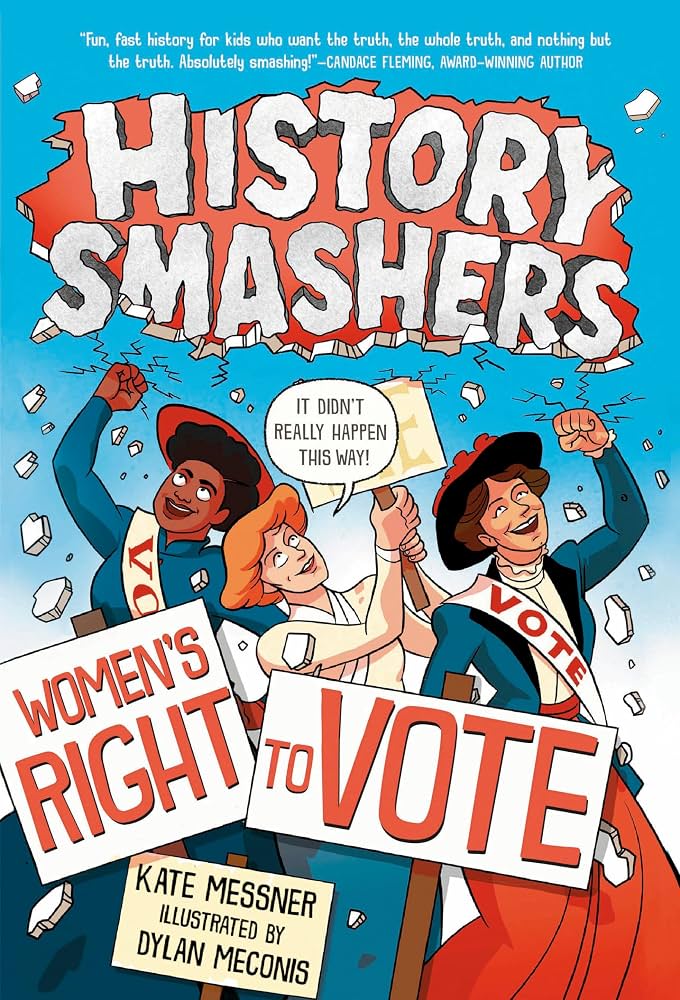
By Kate Messner, History Smashers: Women’s Right to Vote (Random House, 2020) – one of a series – is a catchy history of the suffragist movement and the Nineteenth Amendment, enhanced with illustrations, graphic panels, photos, and sidebars. For ages 8-12.

By Kerrie Logan Hollihan, Rightfully Ours: How Women Won the Vote (Chicago Review Press, 2012) is a terrific overview of the women’s suffrage movement, packed with wonderful period prints, cartoons, and photos, a timeline, a resource list, and 21 hands-on activities. These include making a coat-hanger banner and designing a pro-suffrage postcard, singing suffragist songs, experimenting with a “corset,” and trying some recipes from the Woman Suffrage Cook Book, written in 1886 to raise money for the cause. For ages 9 and up.
One of the projects in Rightfully Ours – “Make a Memory” – involves making a scrapbook, of the sort kept by Elizabeth Cady Stanton’s cousins, Elizabeth and Anne Miller, filled with mementos of the suffrage movement. From the Library of Congress, see Scrapbooking Suffragists at https://www.loc.gov/loc/lcib/1004/scrapbooks.html.
From ReadWriteThink, March is National Women’s History Month has a project for making a scrapbook of U.S. women’s history, with suggestions and recommended resources.

Sue Macy’s Wheels of Change (National Geographic Children’s Books, 2011), subtitled “How Women Rode the Bicycle to Freedom (With a Few Flat Tires Along the Way),” is a compelling account of how the bicycle contributed to women’s liberation, illustrated with terrific period photographs. For ages 10 and up.

Penny Colman’s Elizabeth Cady Stanton and Susan B. Anthony: A Friendship That Changed the World (Henry Holt and Company, 2011) – filled with historical detail and human interest – is the story of the historic friendship between the two famous women’s rights activists who first met in Seneca Falls, NY, in 1851, three years after the first American women’s rights convention. For ages 12 and up.

Lynn Sherr’s Failure Is Impossible: Susan B. Anthony in Her Own Words (Times Books, 1996) is a marvelous biography that interweaves historical narrative with excerpts from Anthony’s letters, articles, and speeches. A fascinating read that truly brings Anthony to life. For ages 13 and up.
From the National Archives Teaching With Documents collection, Failure Is Impossible is a Reader’s Theater script on the history of the suffrage movement. It calls for a narrator and three (or more) readers, who play the parts of fifteen historical figures.

Directed by Ken Burns, PBS’s Not for Ourselves Alone covers the lives and work of Elizabeth Cady Stanton and Susan B. Anthony. The accompanying website has articles and essays, historical documents, a book list, links, and a wealth of information about women’s suffrage and the women’s movement today.

From PBS’s History Detectives, in which historical artifacts provide clues to historical events, Votes for Women is a collection of lesson plans and activities to accompany episodes (viewable online at the website) related to women’s history and issues: “Suffrage Pennant,” “Tiffany Glass,” and “Clara Barton.”
A Woman for President? Women in Politics
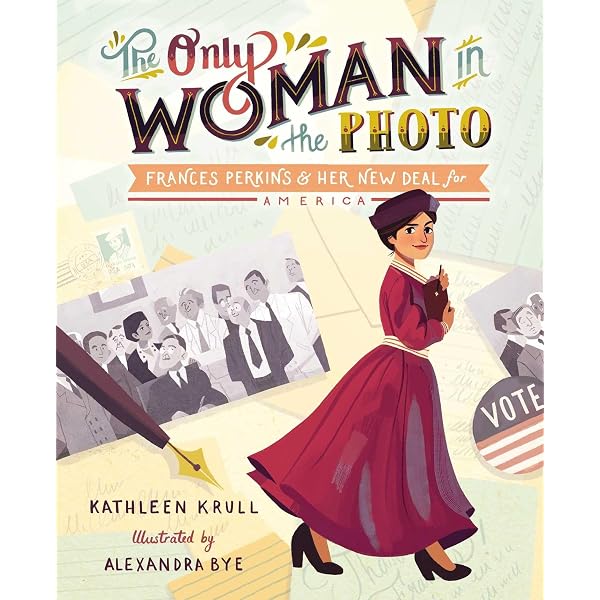
Kathleen Krull’s The Only Woman in the Photo (Atheneum, 2020) is the picture-book story of Frances Perkins, a fighter for workers’ rights, and the first woman to serve on a presidential cabinet (as Secretary of Labor under FDR). For ages 4-8.

In Kelly DiPucchio’s Grace for President (Disney-Hyperion, 2012), when Grace discovers that there has never been a female president (“Where are the GIRLS?”), she decides to run in her school’s mock election. For ages 5-8.

By Sudipta Bardhan-Quallen, Ballots for Belva (Abrams Books for Young Readers, 2008) is a picture-book biography of Belva Lockwood, who ran for president in 1884, long before women won the right to vote. For ages 6-9.

Catherine Thimmesh’s Madam President: The Extraordinary, True (and Evolving) Story of Women in Politics (Houghton Mifflin, 2004) is a cleverly designed collective biography of women who fought for political rights, with a frame story about a young girl who is pooh-poohed (“You…? A…GIRL?”) for wanting to grow up to be president. Featured women include Abigail Adams, Eleanor Roosevelt, Susan B. Anthony, Sandra Day O’Connor, Jeanette Rankin, Margaret Chase Smith, Francis Perkins, and Margaret Thatcher. The book also has a timeline and resource list. For ages 9-14.

Kathleen Krull’s A Kid’s Guide to America’s First Ladies (HarperCollins, 2017) covers 45, with biographical information and catchy facts. A “Women Break Through” timeline notes important historical events in the course of various administrations. For ages 9-12.
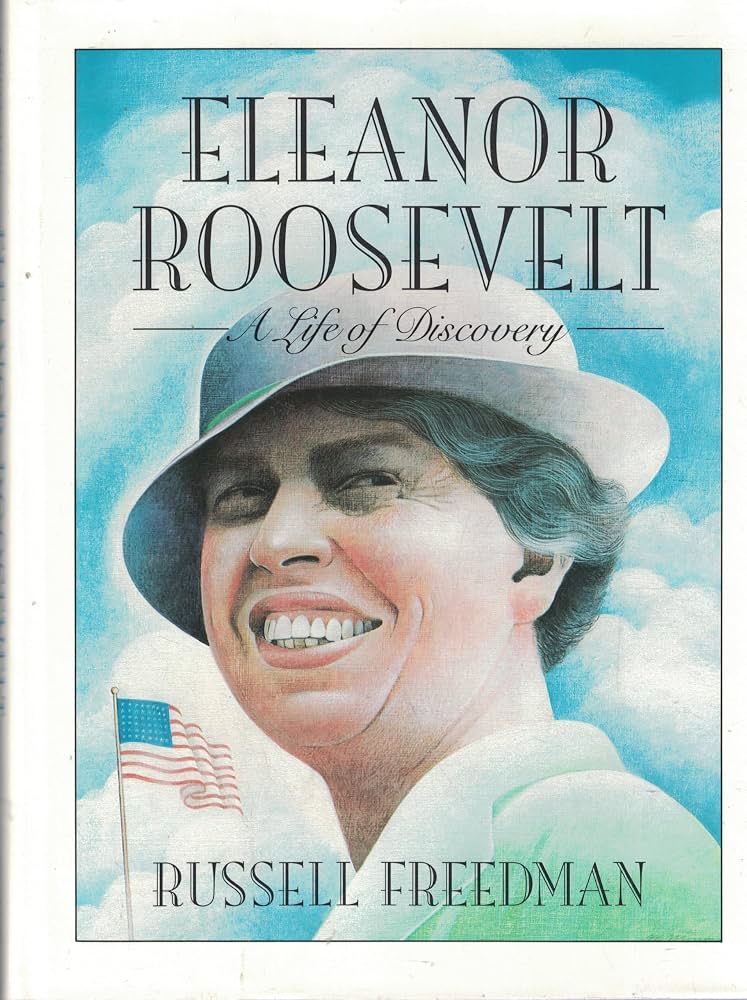
Russell Freedman’s Eleanor Roosevelt (Clarion, 1997) – a Newbery Honor book – follows the life of Eleanor Roosevelt from childhood through her years in the White House and her role in the United Nations post-World War II. Illustrated with photos. For ages 10 and up.
Also see Barbara Cooney’s picture-book Eleanor (Puffin, 1999) for ages 5-8.
Trailblazing and Triumphs

Chelsea Clinton’s She Persisted: 13 American Women Who Changed the World (Philomel, 2013) is a charmingly illustrated introduction to brave and persistent women – starting with Harriet Tubman. The title refers to Senator Elizabeth Warren’s refusal to be silenced on the floor of the Senate. For ages 4-8.
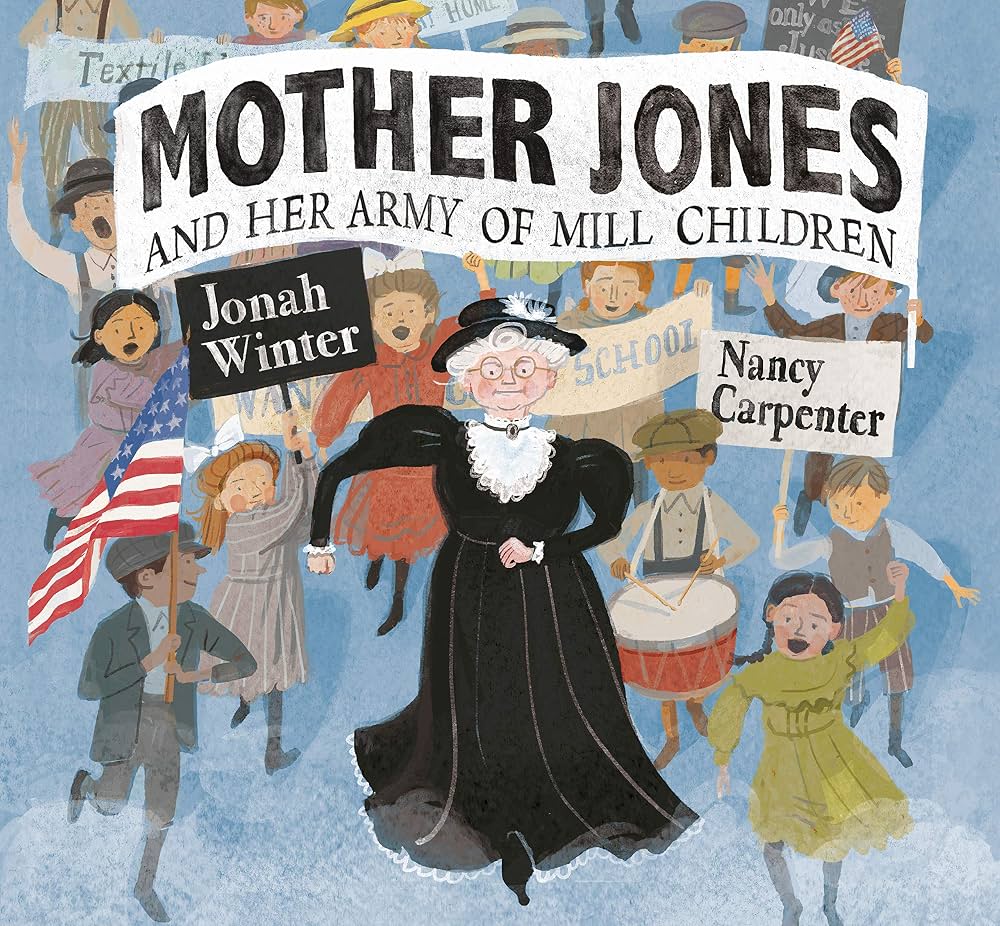
By Jonah Winter, Mother Jones and Her Army of Mill Children (Anne Schwartz Books, 2020) is the story of the powerful proponent for children’s labor laws who in 1903 lead a Children’s Crusade of 100 children on a march from Philadelphia to President Theodore Roosevelt’s front door on Long Island. For ages 4-8.
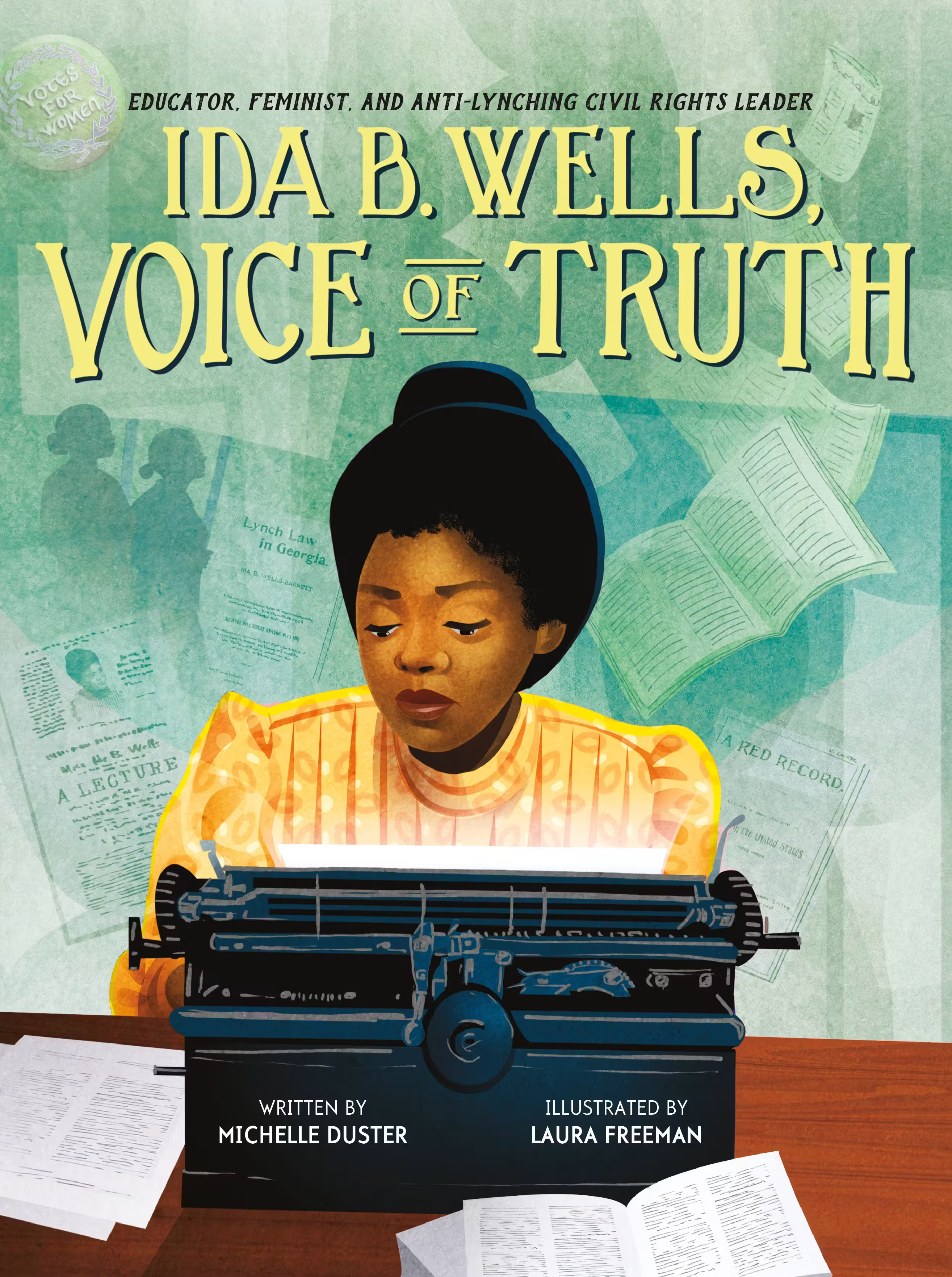
By Michelle Duster, Ida B Wells, Voice of Truth (Godwin Books, 2022) is the picture-book biography of passionate journalist, suffragist, and civil rights activist Wells, as told by her great-granddaughter. For ages 5-8.
Also see Lesa Cline-Ransome’s Ida B. Wells and the Untold Truth of a Country (Holiday House, 2027) for ages 10-12.

Lynne Cheney’s A is for Abigail (Simon & Schuster, 2003) is an “Almanac of Amazing American Women” with scads of adorable cartoonlike illustrations by Robin Preiss Glasser. Despite the suggestive title, this is not a one-woman-per-letter alphabet book, but instead, in clever capsule fashion, covers dozens of remarkable women. P, for example, is for performers (many); W for writers (ditto); F for First Ladies; and D – though ostensibly for Emily Dickinson – covers a long list of other talented female poets. Abigail, of course, is Abigail Adams, who so famously wrote “Remember the ladies.” For ages 6-9.
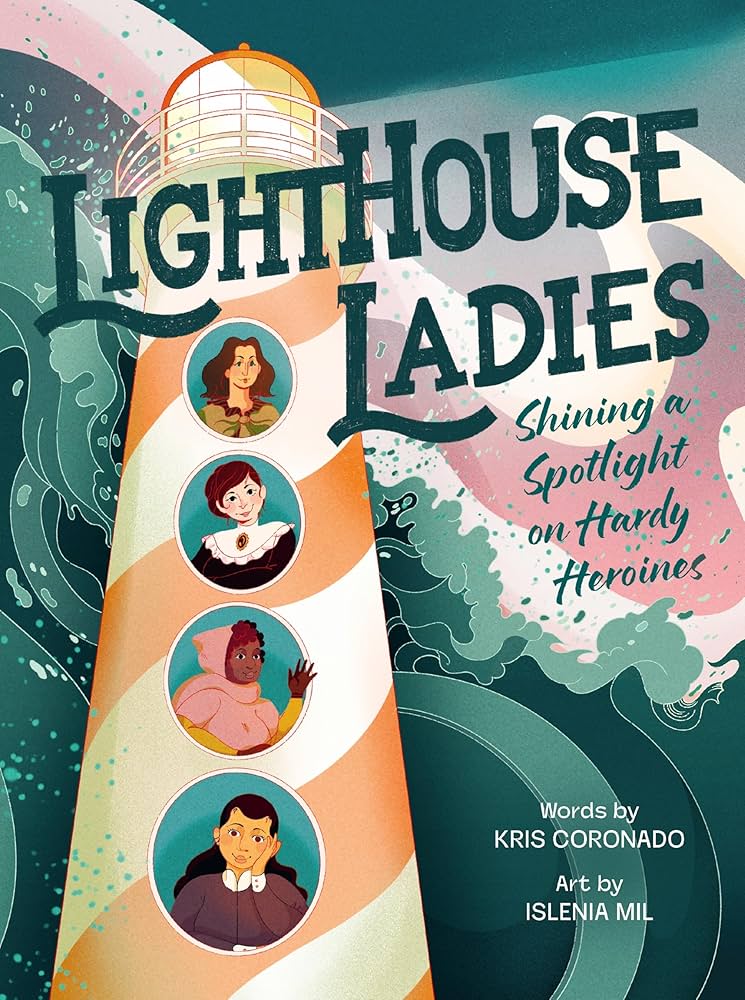
By Kris Coronado, Lighthouse Ladies (Clarion, 2025) is the nonfiction picture-book story of four women who – in the teeth of waves and wild weather – maintained the lighthouses that saved ships at sea. For ages 6-9.
Also see Anna Crowley Redding’s Courage Like Kate (Random House Studio, 2022), the true story of 12-year-old Kate who kept the lighthouse lights burning in 19th-century Connecticut – and eventually became the official lighthouse keeper herself. For ages 4-8.

Debbie Levy’s I Dissent: Ruth Bader Ginsburg Makes Her Mark (Simon & Schuster, 2016) is a picture-book biography of the famous Supreme Court justice for ages 6-10.

For teens and adults, see Irin Varmon’s Notorious RBG: The Life and Times of Ruth Bader Ginsburg (Dey Street Books, 2015) – also available in a Young Reader’s edition for ages 8-13.

RBG (2018) is an excellent documentary about the life and accomplishments of Ruth Bader Ginsburg. Rated PG.

By Vashti Harrison, Little Leaders: Bold Women in Black History (Little, Brown, 2017) covers over 40 notable African-American women from American history, from Phillis Wheatley and Sojourner Truth to Rosa Parks, Ella Fitzgerald, and Katherine Johnson. For ages 8-11.

Cynthia Chin-Lee’s Amelia to Zora: Twenty-Six Women Who Changed the World (Charlesbridge Publishing, 2005), on the other hand, is a one-woman-per-letter alphabet book, running from A is for Amelia (Earhart) and B is for Babe (Didrikson) though Z is for Zora (Neale Hurston). For each featured woman, there’s a one- to two-paragraph biography, an illustration, and a quotation. (There’s a companion volume: Akira to Zoltan: Twenty-Six Men Who Changed the World (Charlesbridge, 2006).) For ages 8-12.

Kathleen Krull’s Lives of Extraordinary Women: Rulers, Rebels (and What the Neighbors Thought) (Harcourt Children’s Books, 2000) is a witty and information-packed collection of short clever biographies. Arranged in chronological order, the book begins with Cleopatra and proceeds through 19 others, among them Eleanor of Aquitaine, Joan of Arc, Catherine the Great, Queen Victoria, Harriet Tubman, Tzu-Hsi, Eleanor Roosevelt, and Golda Meir. For ages 9-12.

By Shweta Jha with colorful illustrations by Jennifer Orkin Lewis, All Hail the Queen: Twenty Women Who Ruled (Chronicle Books, 2019) covers twenty of history’s greats in chronological order from Hatshepsut, female pharaoh of Egypt through England’s Queen Victoria, Hawaii’s Queen Liliuokalani, and Queen Marie of Romania. For ages 9 and up.

Andrea Davis Pinkney’s Let It Shine (Sandpiper, 2013) tells the stories of ten black female freedom fighters, among them Sojourner Truth, Harriet Tubman, Mary McLeod Bethune, Rosa Parks, and Shirley Chisholm. For ages 8 and up.
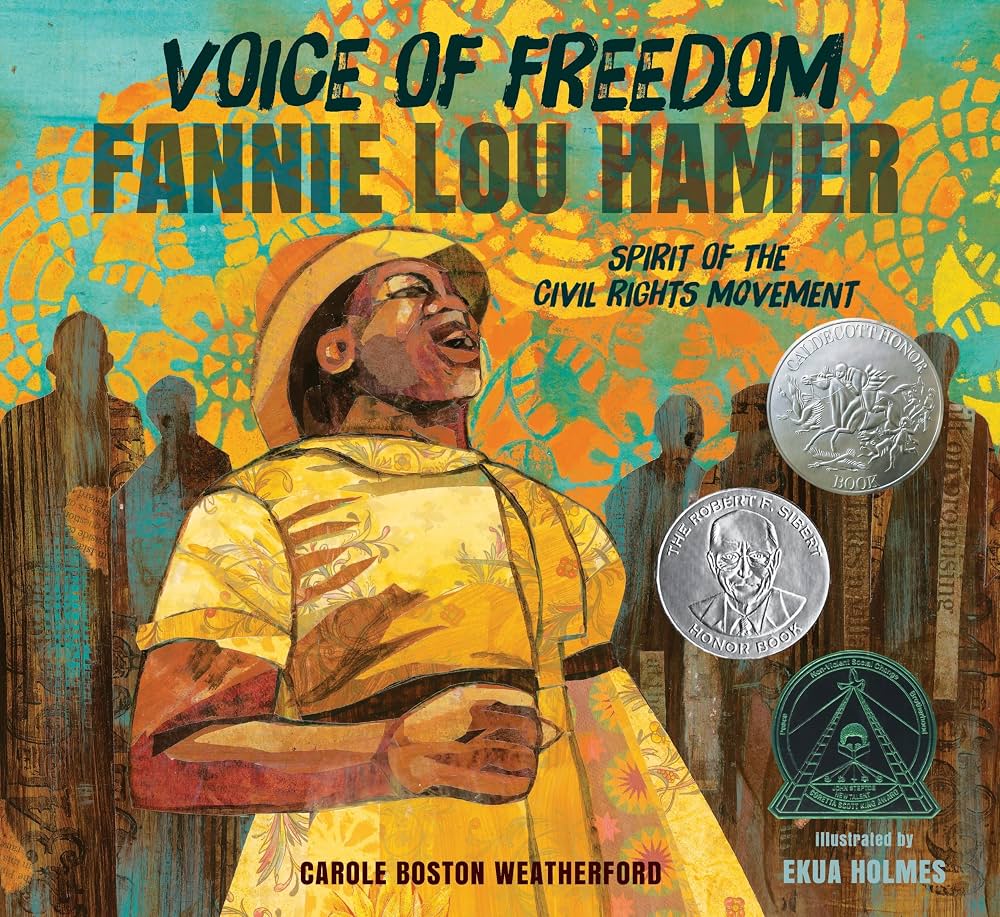
Carole Boston Weatherford’s Voice of Freedom: Fannie Lou Hamer (Candlewick, 2018) is the picture-book story of civil-rights champion Hamer, written in the first person. For ages 9-12.

Kate Schatz’s RAD American Women A to Z (City Lights, 2015) is a collective biography of a wide range of history-making women (“who didn’t keep their heads or voices down”) from Angela Davis to Zora Neale Hurston. For ages 10 and up.
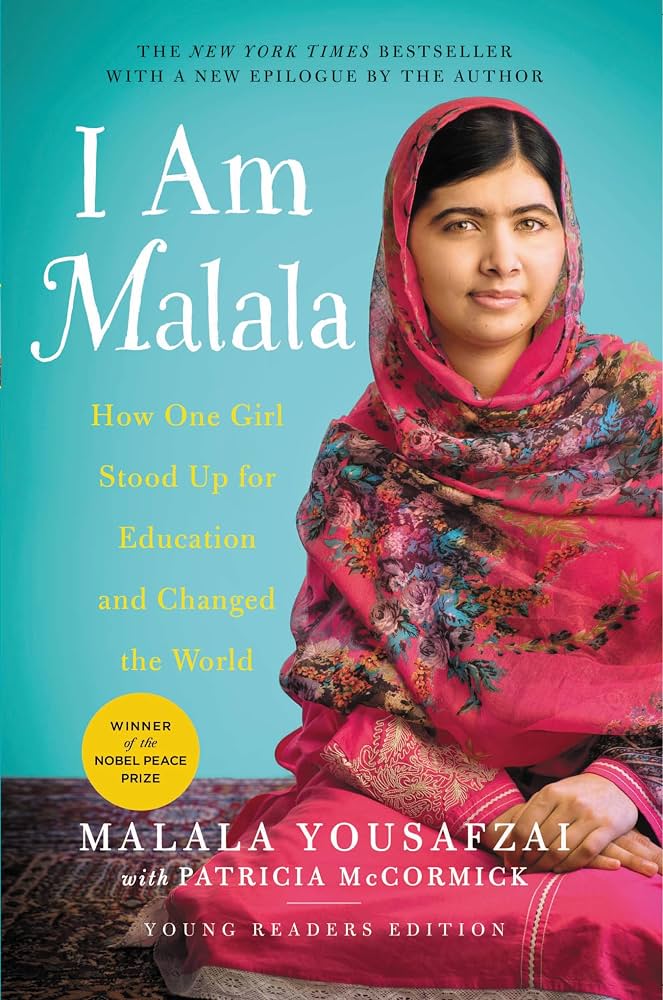
By Malala Yousafzai, I Am Malala (Little, Brown, 2016) is the story of the heroic Pakistani girl who stood up for women’s education in the teeth of the Taliban and at risk of her life – and became the youngest person ever to win a Nobel Peace Prize. The Young Readers edition is recommended for ages 10 and up.

Jill Lepore’s The Secret History of Wonder Woman (Vintage, 2015) is a fascinating cultural history of the famous superhero, whose creator was inspired by early feminists and suffragists. For teens and adults.
The National Women's Hall of Fame has information about great American women (searchable by first or last name). Included for each is a picture, a brief biography, and a resource list. See https://www.womenofthehall.org/.
Flying High

Amy Nathan’s Yankee Doodle Gals: Women Pilots of World War II (National Geographic Children’s Books, 2001) is a 96-page account of World War II’s Women’s Airforce Service Pilots (WASPs), punctuated with individual biographies and first-hand accounts, and illustrated with period photographs. Included is a supplementary resource list. For ages 10 and up.

From the PBS American Experience series, Fly Girls (1999) is a 60-minute documentary on the WASPs and the part they played in World War II. The website includes a resource bibliography and a list of primary source materials (including letters, log book excerpts, and songs from the official WASP songbook).

Roda Ahmed’s Mae Among the Stars (HarperCollins, 2018) is a lovely picture-book biography of Mae Jemison, the first African-American woman in space. For ages 4-8.

David A. Adler’s A Picture Book of Amelia Earhart (Holiday House, 1999) is a short simple biography, beginning with tomboy Amelia growing up in Kansas, where she built her own roller coaster with fence posts and roller skates, through her landmark flight across the Atlantic – the first woman to do this – in 1932. For ages 4-8.

Candace Fleming’s award-winning Amelia Lost (Schwartz & Wade, 2011) tells, in alternating chapters, both the story of Earhart’s life and the story of the long search for her lost plane, after her disappearance in 1937. The book is illustrated with period photographs, maps, and pictures of artifacts, and peppered with intriguing fact boxes. For ages 8-13.

By Louise Borden and Mary Kay Kroeger, Fly High! is a picture-book biography of Bessie Coleman – born in 1898 in Waxahachie, Texas – who became the first African-American to earn a pilot’s license. For ages 8-11.

In Nikki Grimes’s Talkin’ About Bessie (Orchard Books, 2002), Bessie Coleman’s story is told in 21 different voices, as family members and friends gather at a funeral parlor to mourn Bessie’s death. (She died at the age of 34 in a plane crash). An interesting approach to biography for ages 8 and up.

Tam O’Shaughnessy’s Sally Ride (Square Fish, 2017) is an award-winning photobiography of America’as first woman in Space – on board the Challenger in 1983. For ages 9 and up.

Tanya Lee Stone’s photo-illustrated Almost Astronauts (Candlewick, 2009) is the enthralling, exciting, and absolutely infuriating story of the thirteen highly qualified women who, in the early 1960s, attempted to become NASA astronauts. They faced overwhelming opposition and ultimately lost their battle – but not, as Stone points out, the war, since, inspired by their example, women did finally take their place in space. For ages 10 and up.
Science, Math, and More

By Catherine Thimmesh, Girls Think of Everything (Sandpiper, 2002) is a fascinating collection of “Stories of Ingenious Inventions by Women,” with terrific (and inventive) collage illustrations by Melissa Sweet. The inventions? Everything from Kevlar and windshield wipers to the chocolate chip cookie. Included are a timeline and a resource list. For ages 8 and up.

By Rachel Ignotofsky, Women in Science (Ten Speed Press, 2016) is the creatively designed story of 50 “fearless pioneers” in the fields of science, technology, engineering, and math. For ages 8-12.

Tanya Lee Stone’s Who Says Women Can’t Be Doctors? (Henry Holt, 2013) is a picture-book biography of Elizabeth Blackwell who was determined to become a doctor in the early 1800s, at “a time when girls weren’t allowed to become doctors.” An inspiring story of triumph in the teeth of opposition, with appealing illustrations by Marjorie Priceman – whose pictures of feisty young Elizabeth with her hair in bouncy ringlets are priceless. For ages 5-8.
Also by Stone in the same format, see Who Says Women Can’t be Computer Programmers? (Henry Holt, 2018), the story of Ada Lovelace.

By Dean Robbins, Margaret and the Moon (Knopf, 2017) is the story of mathematician Margaret Hamilton, who created the code that allowed NASA to put men on the moon. For ages 5-8.

Diane Stanley’s Ada Lovelace, Poet of Science (Simon and Schuster, 2016) is a clever and delightful picture-book biography of the first computer programmer. For ages 5-9.

By Laurie Wallmark, Grace Hopper: Queen of Computer Code (Sterling, 2017) is the story of the brilliant computer scientist who – among much else – coined the term “computer bug.” And because of a real bug. For ages 5-9.

Robert Burleigh’s Look Up! (Simon & Schuster, 2013) is a lovely night-blue-dominated picture-book biography of Henrietta Leavitt (born in 1868) who – at a time when women were almost entirely barred from science – made discoveries that revolutionized astronomy. For ages 6-9.
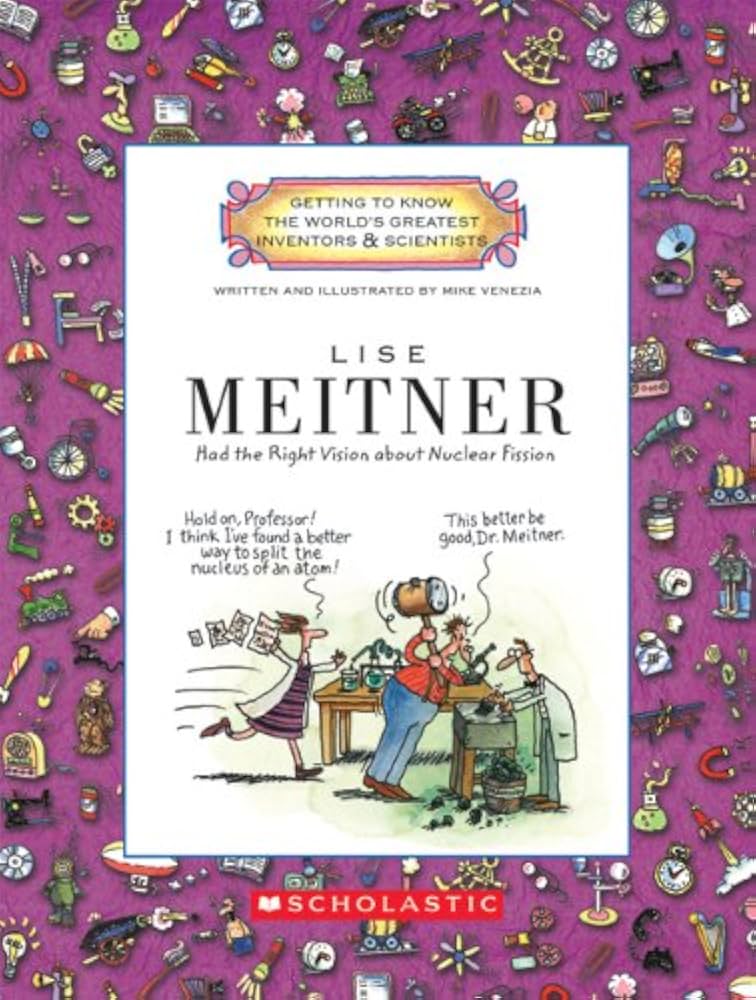
In Mike Venezia’s Getting to Know the World’s Greatest Inventors and Scientists series, Lise Meitner (Childrens Press, 2010) is a clever short biography of the brilliant physicist who won a Nobel Prize in Chemistry for the discovery of nuclear fission. Illustrated with cartoons, photos, and reproductions of science notebooks. For ages 6-9.
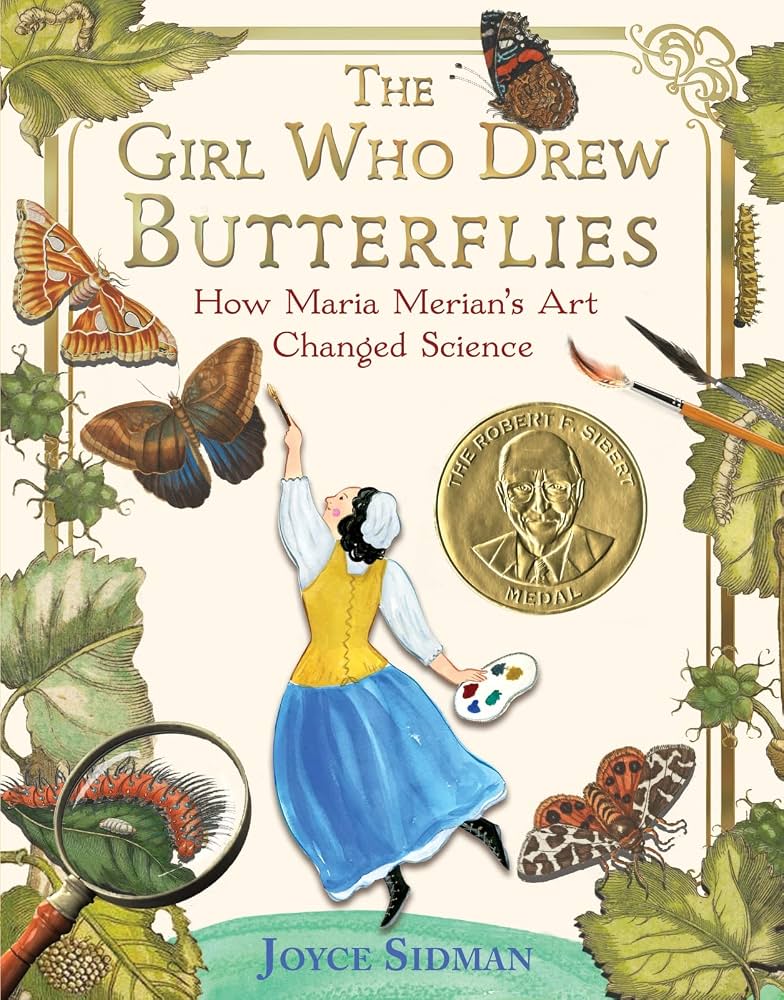
Joyce Sidman’s The Girl Who Drew Butterflies (Clarion, 2018) is the beautifully illustrated biography of Maria Merian, the 17th-century entomologist who was the first to describe the metamorphosis of the butterfly. (Included is a butterfly glossary). For ages 8-12.

Kathleen Krull’s Marie Curie (Puffin, 2009) is an outstanding biography of the brilliant scientist who became the first woman to win a Nobel prize – in fact, two, in physics and in chemistry – for her studies of radioactivity, and her discoveries of two new elements, radium and polonium. (Nonetheless, the French Academy of Sciences denied her admission, shortsightedly announcing that “Women cannot be part of the Institute of France.”) For ages 9 and up.

Amy M. O’Quinn’s Marie Curie for Kids (Chicago Review Press, 2016) covers Curie’s life with timelines, maps, period photos, fact boxes, and 21 assorted projects and activities, among them making elephant toothpaste and sunprints, conducting a Periodic Table scavenger hunt, and making a Marie Curie vision board. For ages 9 and up.

Lauren Redniss’s award-winning Radioactive (It Books, 2010) is a graphically spectacular “biography-in-collage” of Marie and Pierre Curie, covering their lives, work, and impact on the world. Redniss gathered her information from a phenomenal array of sources, including interviews with modern weapons experts and atom bomb survivors, and with Marie and Pierre’s granddaughter. A gorgeous book for teenagers and adults.

By Jeannine Atkins, Girls Who Looked Under Rocks (Dawn Publications, 2000) is a collective biography of six “pioneering naturalists,” among them Maria Sibylla Merian, a 17th-century painter of butterflies, Rachel Carson, and Jane Goodall. For ages 10 and up.
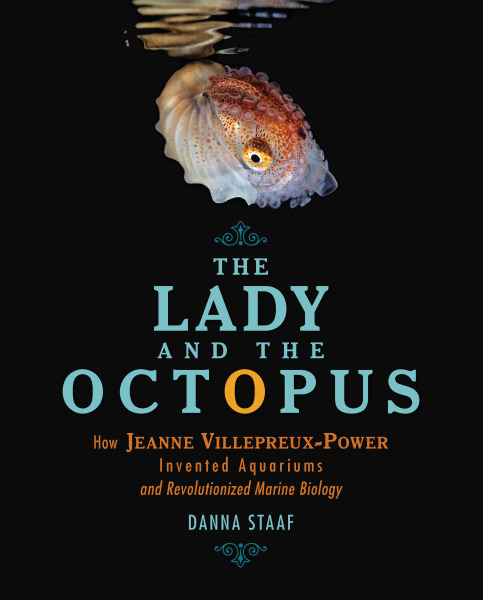
By Danna Staaf, The Lady and the Octopus (Carolrhoda, 2022) is the story of resourceful 19th-century scientist Jeanne Villepreux-Power, who studies of cephalopods led to the development of the aquarium. For ages 10-16.
Also see Secrets of the Sea: The Story of Jeanne Power, Revolutionary Marine Scientist by Evan Griffith (Clarion, 2021) for ages 6-9; and Dary Pattison’s Aquarium (Mims House, 2023) for ages 7-12.

Catherine Brighton’s The Fossil Girl (Frances Lincoln Books, 2007) tells Mary Anning’s story in graphic-novel format for ages 5-9.

Monica Kulling’s Mary Anning’s Curiosity (Groundwood Books, 2017) is a fictionalized account of the famous fossilist’s 19th-century childhood in Lyme Regis. For ages 8-13.
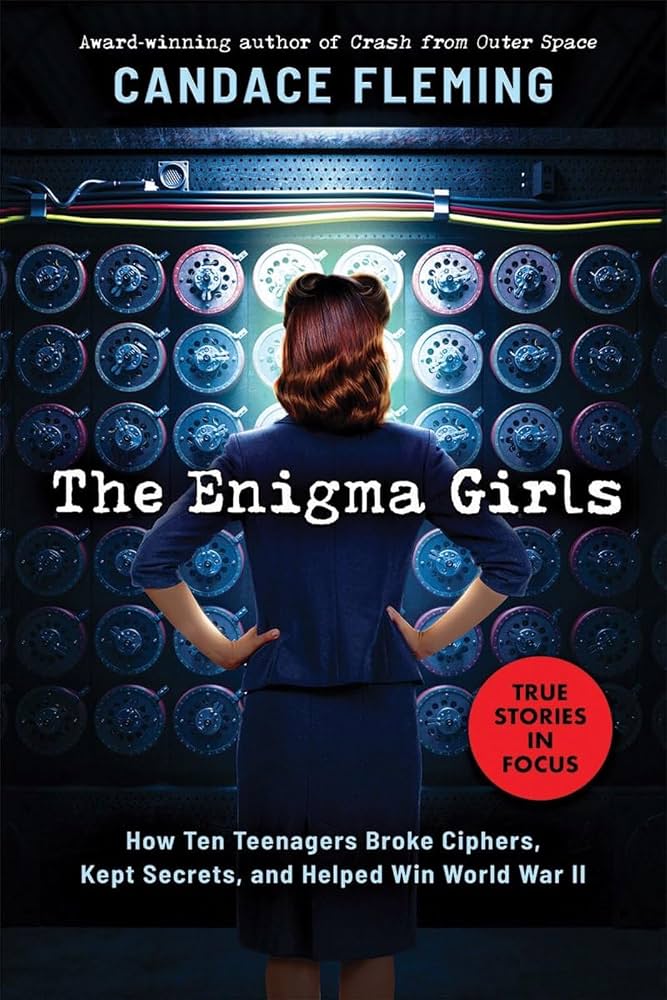
By Candace Fleming, The Enigma Girls (Scholastic Focus, 2024) is the gripping and true story of the teenage girls who helped crack German ciphers and win World War II. Illustrated with great photographs. For ages 8-12.
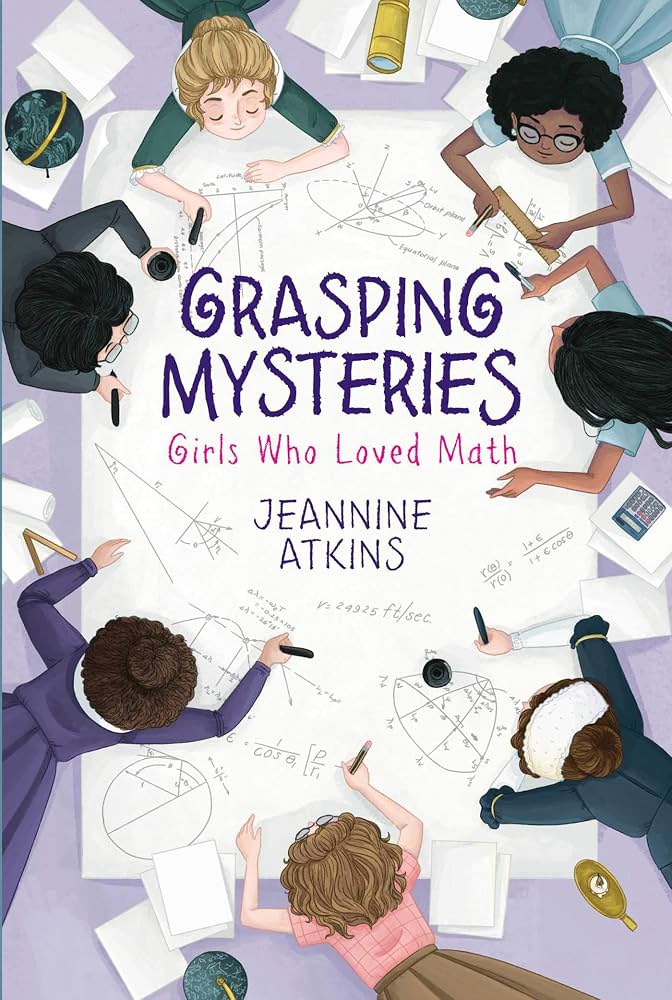
By Jeannine Atkins, Grasping Mysteries: Girls Who Loved Math (Atheneum, 2021) is a collective biography in verse of seven women whose careers involved a talent for math - such as Caroline Herschel (first woman to discover a comet), Florence Nightingale, Marie Tharp, and Katherine Johnson. For each, there is a list of discussion questions. For ages 10 and up.
In the same format by Atkins, see Finding Wonders: Three Girls Who Changed Science (Atheneum, 2021) is a collective biography in verse of three amazing women who found wonders in the world around them: entomologist Maria Merian, paleontologist Mary Anning, and astronomer Maria Mitchell. For ages 10 and up.

From the National Academy of Sciences, the Women’s Adventures in Science Series is an excellent collection of 128-page photo-illustrated biographies of modern women in different branches of science. Among the titles are Jordan Brown’s Robo World: The Story of Robot Designer Cynthia Brazeal; Lorraine Jean Hopping’s Bone Detective: The Story of Forensic Anthropologist Diane France; Renee Skelton’s Forecast Earth: The Story of Climate Scientist Inez Fung; and Adele Glimm’s Gene Hunter: The Story of Neuropsychologist Nancy Wexler. For ages 12 and up.

Margot Lee Shetterly’s Hidden Figures (William Morrow, 2016) is the wonderful story of the black women mathematicians who helped NASA win the space race.
The original book is for teens and adults; there’s also a Young Reader’s edition for ages 8-12 and a picture-book version for ages 4-8.
The 2016 movie Hidden Figures is rated PG.
Awesome Artists, Sculptors, Writers, Architects, and more
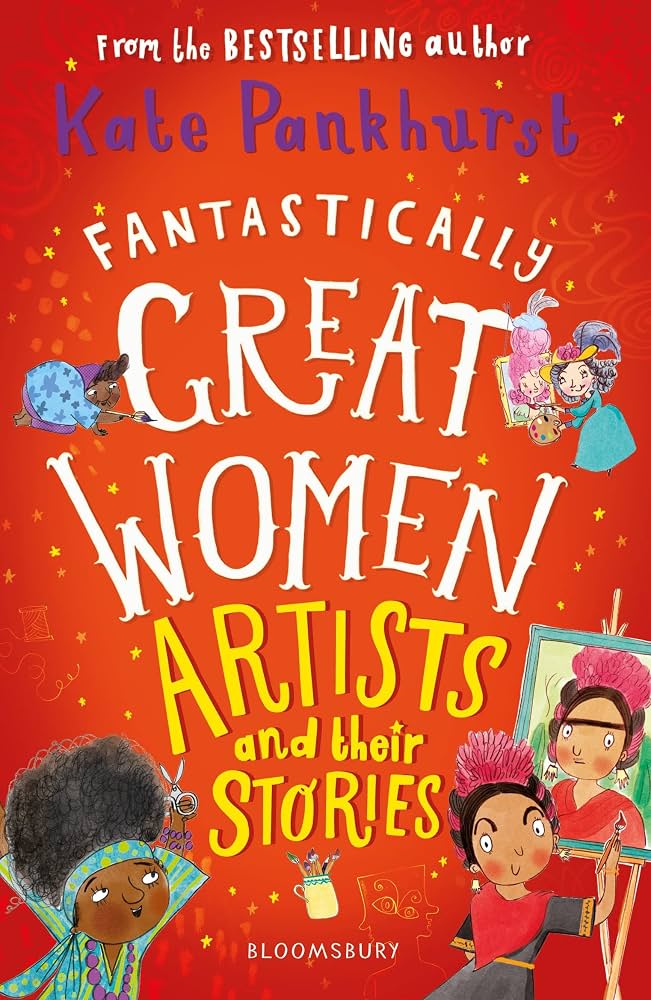
Kate Pankhurt’s Fantastically Great Women Artists and Their Stories (Bloomsbury, 2022) covers the life and times of eight women artists in a cleverly designed format incorporating cartoons, family trees, and maps. For ages 6-10.

By Rachel Ignotofsky, Women in Art (Candlewick, 2019) is the story of “50 Fearless Creatives Who Inspired the World” – including African-American quilter Harriet Powers and Native American ceramicist Nampeyo, along with a host of painters, sculptors, photographers, and more. For ages 8-12.

Jeanette Winter’s My Name is Georgia (HMH, 2003) is a picture-book biography of Georgia O’Keeffe, an independent-minded little girl who grew up to be a renowned artist. For ages 4-7.Also see Rachel Victoria Rodriguez’s Through Georgia’s Eyes (Henry Hold, 2006) for ages 4-8 and Mike Venezia’s Georgia O’Keeffe (Children’s Press, 2018) in the Getting to Know the World’s Famous Artists series for ages 6-10.

By Monica Brown, Frida Kahlo and Her Animalitos (NorthSouth Books, 2017) is the story of the famous Mexican artist as told through the eyes of her animal friends, among them a parrot and a pair of spider monkeys. For ages 4-8.
Also see Mike Venezia’s Frida Kahlo (Children’s Press, 1999) for ages 6-10.

Mike Venezia's Getting to Know the World's Greatest Artists series includes Frida Kahlo (Childrens Press, 1999), Dorothea Lange (2001), Grandma Moses (2004), Faith Ringgold (2008), Mary Cassatt (2015), and Georgia O'Keeffe (2018). Clever picture-book biographies that combine photos, art reproductions, and cartoons. For ages 6-10.

By Carole Boston Weatherford, Dorothea Lange (Albert Whitman, 2017) is the story of the talented photographer who documented life in the Great Depression. For ages 4-8.
Also see Mike Venezia’s Dorothea Lange (2001).

Kathy Whitehead’s Art From Her Heart (G.P. Putnam’s Sons, 2008) is the story of African-American folk artist Clementine Hunter, who began by painting on windowshades, frying pans, and old boards, and used to hang her paintings on the clothesline to dry. For ages 4-9.

By Jeanette Winter, The World Is Not a Rectangle (Beach Lane Books, 2017) is the story of Iraqi-born architect Zaha Hadid, whose visionary designs are based on shapes and patterns found in nature. For ages 5-10.

Jeanne Walker Harvey’s award-winning Maya Lin (Henry Holt, 2017) is a picture-book biography of the architect who designed the Vietnam Veterans Memorial Wall. For ages 4-8.
Pair this one with Eve Bunting’s The Wall (Clarion Books, 1992) is which a little boy and his father visit the Vietnam Veterans Memorial, searching for the boy’s grandfather’s name.
See also


Deborath Hopkinson’s Ordinary Extraordinary Jane Austen (Balzer + Bray, 2018) is subtitled “The Story of Six Novels, Three Notebooks, a Writing Box, and One Clever Girl.” A charming picture-book biography of the author of Pride and Prejudice for ages 4-8.

In Michaed Bedard’s delightfully illustrated Emily (Dragonfly Books, 2002), a little girl gets a chance to meet her neighbor, the reclusive poet Emily Dickinson, and receives a poem of her own (included in the book). For ages 4-8.

By Krystyna Poray Goddu, Becoming Emily (Chicago Review Press, 2019) is a biography of poet Emily Dickinson for ages 10 and up.

By Cornelia Meigs, Invincible Louisa (Little, Brown, 1995) is a biography of Louisa May Alcott, author of Little Women. A Newbery Medal winner for ages 8-12.

By Victoria Bond and T.R. Simon, Zora & Me (Candlewick, 2011) is a fictionalized coming-of-age story of young Zora Neale Hurston, whose creative talent sometimes blurs the truth between fiction and real life in her small Florida town. A winner of the John Steptoe Award. Included is an annotated bibliography of Hurston’s works, a short biography of the author, and a timeline. A great read for ages 8-12. Also see the sequel, Zora & Me: The Cursed Ground (2018).

Amateur detective Nancy Drew solved her first mystery in 1930 (The Secret of the Old Clock) and today she’s still going strong. Melanie Rehak’s Girl Sleuth: Nancy Drew and the Women Who Created Her (Mariner Books, 2006) is the story of the Stratemeyer syndicate and the way in which Nancy became a feminist heroine. For teens and adults.
For ages 8-12, check out the dozens of Nancy Drew mysteries. They’re supposedly written by Carolyn Keene.
Sensational Sports

Rachel Ignotofsky’s Women in Sports: 50 Fearless Athletes Who Played to Win (Candlewick, 2017) is a creatively designed collective biography of women athletes from the 19th century to the present day. For ages 8-12.

Sue Stauffacher’s Tillie the Terrible Swede (Knopf Books for Young Readers, 2011) is the story of Tillie Anderson, who came to America with nothing but a needle and ended up a bicycle champion. (“Bicycles aren’t for ladies,” Tillie’s mother reminded her. But Tillie wasn’t listening.) For ages 5-9.

Deborah Hopkinson’s Girl Wonder (Aladdin, 2006) is the picture-book story of Alta Weiss who – despite many objections – wangled a place as pitcher for the all-male Vermilion Independents in 1907. Soon she was the star of the team and people flocked to see the “Girl Wonder.” Told in the first person, this is a delightful read. An appendix includes a biography of Weiss and a timeline of women in baseball. For ages 5-9.

Marissa Moss’s Mighty Jackie: The Strike-Out Queen (Simon & Schuster, 2004) is the picture-book story of Jackie Mitchell, 17-year-old pitcher for the Chattanooga Lookouts, who – in an exhibition game in 1931 – struck out both Babe Ruth and Lou Gehrig. (She won the day, but women were still banned from professional baseball.) For ages 5-9.


Glenn Stout’s Yes, She Can! (Sandpiper, 2011) is a collective biography of women sports pioneers, from Gertrude Ederle, the first woman to swim the English Channel, to Danica Patrick, the first woman to race in the Indy 500. For ages 10 and up.

Karen Blumenthal’s Let Me Play: The Story of Title IX (Atheneum Books for Young Readers, 2005) is an illustrated history of the crucial law that banned sex discrimination in education and gave women equal access to athletics, college admissions, scholarships, and classes. An eyeopener for ages 12 and up.
Adventurers of All Kinds
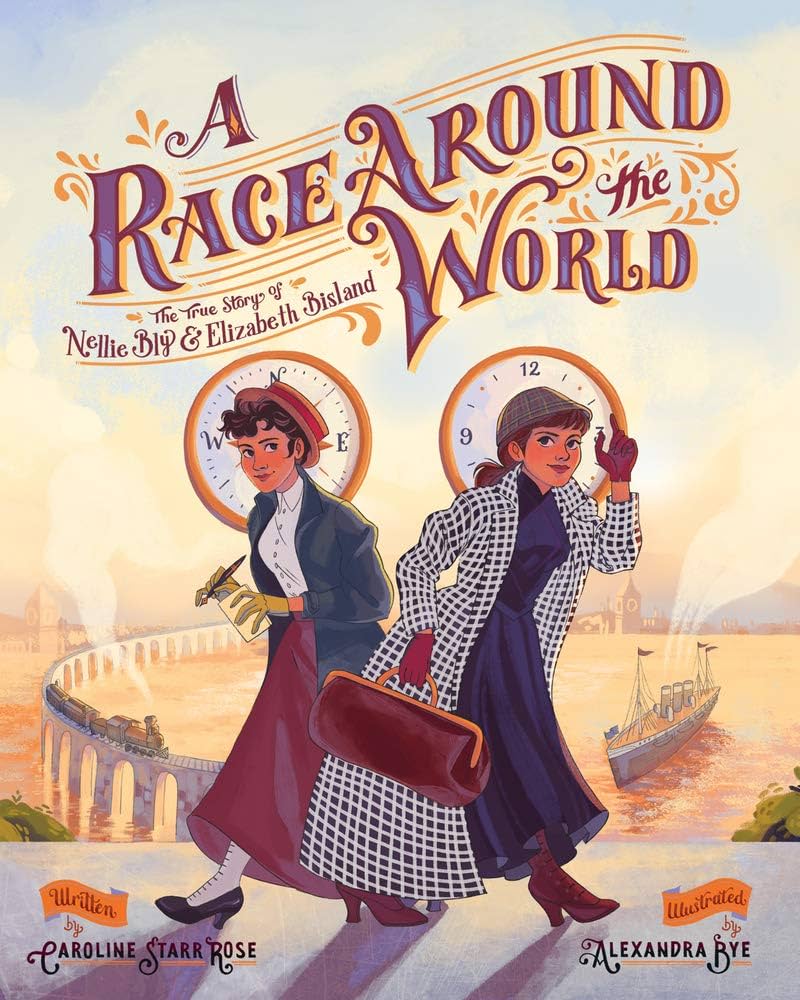
By Caroline Starr Rose, A Race Around the World (Albert Whitman, 2019) is the story of Nellie Bly and Elizabeth Bisland’s race to circle the globe in the footsteps of Phileas Fogg, hero of Jules Verne’s classic Around the World in Eighty Days. For ages 4-8.
For teens and adults, see Eighty Days: Nellie Bly and Elizabeth Bisland’s History-Making Race Around the World (Ballantine, 2014.)

Don Brown’s Uncommon Traveler (Sandpiper, 2003) is a picture-book biography of feisty Mary Kingsley, who – in long skirts, armed with a parasol – explored Africa in the 1890s, where she collected insects for the British Museum, dealt with hippos, crocodiles, and ravines, and fell into a spike-filled animal pit. For ages 5-9.
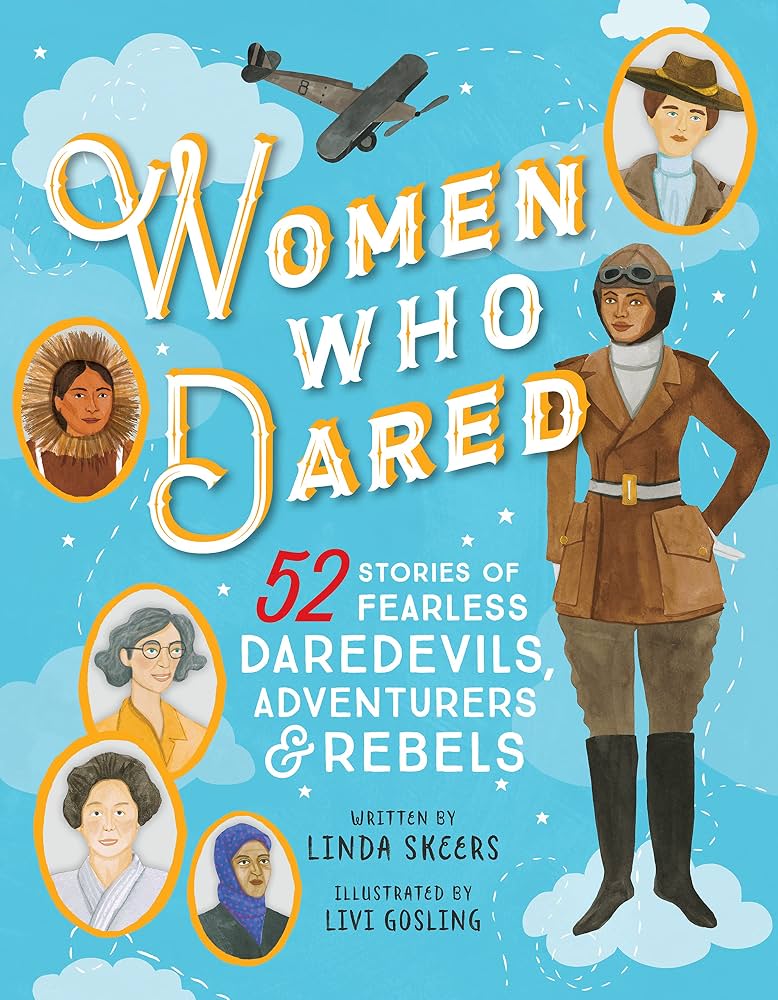
By Linda Skeers, Women Who Dared (Sourcebooks Explore, 2017) is the illustrated story of “52 Fearless Daredevils, Adventurers, and Rebels.” For ages 8-12.

Girls can be pirates too. Jane Yolen’s Sea Queens: Women Pirates Around the World (Charlesbridge Publishing, 2010) is a swashbuckling history of female buccaneers, chronologically arranged from Artemisia, Admiral-Queen of Persia, in the 5th century BCE through 16th-century Irish pirate Grania O’Malley, America’s Anne Bonney and Mary Read, and China’s Madame Ching. For ages 9-12.

Holly George-Warren’s The Cowgirl Way (Houghton Mifflin Books for Children, 2010) is a punchy photo-illustrated history of cowgirls from the early 19th-century to the present, highlighting such famous Western women as Calamity Jane, Annie Oakley, and Esther Morris. The author points out how the need for self-reliance and independence on the frontier often furthered the cause of women’s rights. For ages 10 and up.

By Jane Yolen and Heidi E. Stemple, Bad Girls: Jezebels, Murderesses, and Other Female Villains (Charlesbridge Publishing, 2013) profiles 26 females who (well, sometimes very badly) challenged the status quo. In a comic-book-style debate at the end of each brief biography, the authors argue about each subject’s innocence or guilt. Among the wicked: Salome, Cleopatra, Catherine the Great, Belle Starr, and Lizzie Borden. For ages 12 and up.
And the Nobel Prize
Nobel Prizes Awarded to Women has a categorized list (by prize and year), with biographies and images of winners.
From NPR, Is the Nobel Prize a Boys Mostly Club? (Yes.)
Stories of Strong Women and Brave Girls

Edited by Kathleen Ragan, Fearless Girls, Wise Women, and Beloved Sisters (W.W. Norton & Company, 2000) is a collection of over 100 folk and fairy tales from around the world, all featuring women as heroines. The tales are categorized by geographical region: Europe, North and South America, Asia, the Pacific, Sub-Saharan Africa, and North Africa and the Middle East. For all ages.

By Robert San Souci, Cut From the Same Cloth (Puffin, 2000) is a collection of American folk tales featuring brave and clever heroines, among them the Chippewa Star Maiden, Molly Cotton-Tail (Brer Rabbit’s savvy sister), Sweet Betsey from Pike, Sister Fox, and the Hawaiian Hiiaka. For ages 8 and up.

Edited by Jane Yolen, Not One Damsel in Distress (Harcourt, 2000) is a collection of 13 tales of brave women and girls from around the world and across time – among them the stories of Nana Miriam from Nigeria, who saves her father from a vicious hippopotamus, and Molly Whuppie of England, who outwits a giant and ends up a queen. Included is an extensive section of notes on the stories. For ages 8-12.

By Virginia Hamilton, Her Stories (Blue Sky Press, 1995) is a collection of 19 African-American folk, fairy, and true tales, all with strong female characters. Each story is followed by a brief note on its history. For ages 5 and up.

The heroine of Ludwig Bemelmans’s wonderful Madeline (Viking Juvenile Books, 2000) is a self-actualized redhead who is not afraid of anything. (“To the tigers in the zoo/Madeline just said ‘Pooh, pooh!’”). For ages 3-7.

Kay Thompson’s Eloise (Simon & Schuster Books for Young Readers, 1969) is a trouble-prone and utterly self-confident six-year-old who lives with her nanny and pet turtle in New York’s Plaza Hotel. A role model for uppity women everywhere. For ages 4-8.

Robert Munsch’s The Paper Bag Princess (Annick Press, 1992) is a role-reversal tale in which a dragon attacks on the eve of Princess Elizabeth’s wedding, smashing her castle, torching her wardrobe, and kidnapping her prince. The resourceful Elizabeth makes a dress from a paper bag, tracks down the dragon, and rescues the prince – who tells her ungratefully that she smells like ashes and looks a mess. Elizabeth promptly dumps him and sets off to live a happy life of her own. For ages 4-8.

In William Stieg’s Brave Irene (Square Fish, 2011), Irene’s dressmaker mother has fallen ill and can’t deliver the beautiful gown for the duchess to wear that night to a ball. So indomitable Irene sets off for the palace, gown in hand, in the teeth of a terrible snowstorm, and bravely manages to soldier through. It’s a sort of Little-Engine-That-Could story, with an adorable heroine. For ages 4-8.

Pippi of Astrid Lundgren’s Pippi Longstocking (Puffin, 2005) is unconventional, fiercely independent, and incredibly strong – and she lives on her own, with a pet monkey and a horse on the porch, and pays for her needs from a suitcase full of gold pieces. Neighbors Tommy and Annika are in awe. For ages 7-11.

In Roald Dahl’s Matilda (Puffin, 2013), brilliant and largely self-educated Matilda – afflicted with horrible parents and a monstrous school principal who flings students around by their pigtails – uses her gifts to stand up for herself, save her beloved teacher Miss Honey, and defeat the dreadful Miss Trunchbull. For ages 7-11.

Carol Ryrie Brink’s Newbery-winning Caddie Woodlawn (Aladdin, 2006) stars a brave, adventurous (and mechanically-minded) little girl, growing up in the woods of Wisconsin in the mid-1800s. Tomboy Caddie is the despair of her mother, her older sister Clara, and her snooty cousin Annabel, but her independence and kind-heartedness prove to be saving graces, and by the end of the book Caddie has come to understand more about herself and the people around her. She’s also saved the neighboring Indian tribe from an attack by frightened settlers and learned that her father is heir to a dukedom. An exciting read for ages 8 and up.

In Jennifer L. Holm’s Newbery winner Our Only May Amelia (HarperCollins, 2001), 12-year-old May Amelia, growing up in the state of Washington in 1899 along with seven older brothers, is the only girl in the settlement and is determined never to be a Proper Young Lady. Based on the diaries of the author’s great-aunt, the original May Amelia. For ages 9 and up.

Sixteen-year-old Kit Tyler, headstrong heroine of Elizabeth George Speare’s The Witch of Blackbird Pond (Sandpiper, 2011) has been sent from Barbadoes to live with her Puritan aunt and family in Connecticut. Unhappy and unable to fit in, Kit finds a friend in Hannah Tupper, a Quaker, suspected by the villagers of being a witch. A wonderful story for ages 9 and up.

Patricia Wrede’s Enchanted Forest series features the strong-minded (or possibly “stubborn as a pig”) Princess Cimorene who prefers fencing to embroidery. In the first of the series, Dealing with Dragons (Sandpiper, 2003), she foils a plot by wicked wizards, fends off would-be rescuers, and lands herself a satisfying job as Chief Cook and Librarian to Kazul, the (female) king of the dragons. Sequels are Searching for Dragons, Calling on Dragons, and Talking to Dragons. For ages 9 and up.

In Avi’s The True Confessions of Charlotte Doyle (Scholastic, 2012), the year is 1832 and 13-year-old Charlotte is sent by ship from England to join her family in Rhode Island. All, however, is not as it first appears: the gentlemanly captain is actually a vicious brute, and soon conventional Charlotte comes to side with the crew – and joins them, learning to climb the rigging and do all the work of ordinary sailors. When she attempts to help her mates take over the ship, the captain apprehends her and accuses her of murder; when he finally falls overboard and drowns, the crew makes Charlotte the captain. Restored to her prim and proper family in Providence, Charlotte finds she can no longer adjust to the life she once knew. Her beliefs have changed; and at the end she’s off to return to her ship. For ages 9 and up.

In Jacqueline Kelly’s The Evolution of Calpurnia Tate (Square Fish, 2011), 11-year-old Calpurnia – known to her family as Callie Vee – lives with her parents and six brothers on a cotton plantation in Texas in 1899. (Her favorite brother is Harry, the oldest, but I have a soft spot for ten-year-old Travis, who names his kittens after gunslingers.) As the book progresses, bright and curious Callie Vee becomes fascinated with science and disenchanted with the restricted and ladylike future her mother has planned for her. Luckily she finds a kindred spirit in her curmudgeonly grandfather. After Callie Vee is forbidden to check Darwin’s Origin of Species out of the library, her Granddaddy not only lends her his copy, but starts taking her with him on his specimen-collecting expeditions. A wonderful story of a science-minded girl taking control of her life. For ages 10 and up.

Shannon Hale’s Princess Academy (Bloomsbury USA Children’s Books, 2007) is a satisfying and empowering story: when the prince declares that he will choose a bride from their mountain mining village, the eligible girls of Mount Eskel are sent to the “Princess Academy” to learn the skills and behaviors suitable for the prince’s bride. Eventually the girls come together to deal with their elitist tutor, Olana, and to fend off an attack by bandits, and Miri, the heroine, learns a lot about her own strengths and desires – which don’t involve the prince. For ages 10-14.

In Karen Cushman’s The Loud Silence of Francine Green (Clarion Books, 2006), set at the height of the McCarthy era, Francine is a student at All Saints School for Girls, presided over by the bullying Sister Basil, and wants nothing more than to keep her head down and stay out of trouble. Then Sophie Bowman joins the class – fiery, rebellious, a free thinker, and a questioner of authority – and by the end of the book, Francine, too, finds her voice. For ages 11 and up.

Set in the 13th century, Karen Cushman’s Catherine, Called Birdy (Sandpiper, 2012) stars 14-year-old Catherine (“bit by fleas and plagued by my family”), who has little interest in conventional womanly pursuits – she’d rather be a peddler, a minstrel, or a Crusader – but she has to cope with her debt-ridden father’s ploys for an arranged marriage. For ages 12 and up.

Susan Collins’s The Hunger Games (Scholastic, 2010) is set in a post-apocalyptic future America, where each year 24 selected teenagers are sent to fight to the death in a televised battle known as the Hunger Games. Sixteen-year-old Katniss Everdeen becomes a participant in the Games when she volunteers to take the place of her younger sister. It’s a tense and exciting book, and Katniss is one strong girl. Sequels are Catching Fire and Mockingjay. For ages 13 and up.

Teenaged Katsa, the main character of Kirstin Cashore’s The Graceling (Graphia, 2009), lives in a world where certain people develop a special power called a Grace – and Katsa’s Grace makes her an invincible warrior. Political intrigue, gripping adventure, romance, and an impressive young girl make this a compelling read for ages 14 and up. Sequels are Fire and Bitterblue.

George Eliot’s Middlemarch – originally published in 1871, now available in many editions – is a marvelous and multifaceted novel, rich in interlocking plots. At heart, it’s a story of women’s issues in a confining society, centering around idealistic Dorothea Brooke who – thirsting for education – marries the elderly Edward Casuabon, whom she believes to be writing a great work. She soon finds herself trapped in a loveless marriage and deprived of independence. For older teenagers and adults.
More great books about great girls! 
See A Mighty Girl for terrific recommendations for books, movies, and more.
Poems

By Nikki Grimes, Meet Danitra Brown (HarperCollins, 1997) is an illustrated collection of poems about unflappable Danitra Brown (“the most splendiferous girl in town”) and her best friend, Zuri. Themes include friendship, support, and self-confidence. For ages 4-9.

By Vera B. Williams, Amber Was Brave, Essie Was Smart (Greenwillow Books, 2004) is the story of a wonderful friendship between two young sisters in a struggling family, told in poems and pictures. For ages 5-9.

Compiled by Lillian Morrison, More Spice Than Sugar (Houghton Mifflin Books for Children, 2001) is a 68-page collection of “Poems About Feisty Females” by such poets as Nikki Giovanni, X.J. Kennedy, Emily Dickinson, Felice Holman, and Marianne Moore. For ages 8 and up.

Ogden’s Nash’s poem The Adventures of Isabel stars the imperturbable Isabel who – faced with enormous bears, wicked witches, giants, and evil doctors – never screams or scurries, but deals with the situation with aplomb.