
Architecture, Building, and Blocks

In this collection
All About Architecture

In Tina Skinner’s Christopher Wren: The Avian Architect (Schiffer, 2008), kids learn about a wide range of architectural styles as a creative wren (named Christopher) tries to build the ultimate birdhouse. For ages 5-8.

Andrea Beaty’s Iggy Peck, Architect (Abrams, 2007) is the rhyming story of the talented and irrepressible Iggy, who has been an architect since the age of two (when he built a tower of diapers and glue). For ages 5-8.

Also see the accompanying Iggy Peck’s Big Project Book for Amazing Architects (Abrams, 2017), a collection of 40 cool projects and activities, among them designing a dwelling on Mars, drawing a gargoyle, and building a spaghetti-and-marshmallow bridge. For ages 7 or so and up – there’s a lot of drawing.
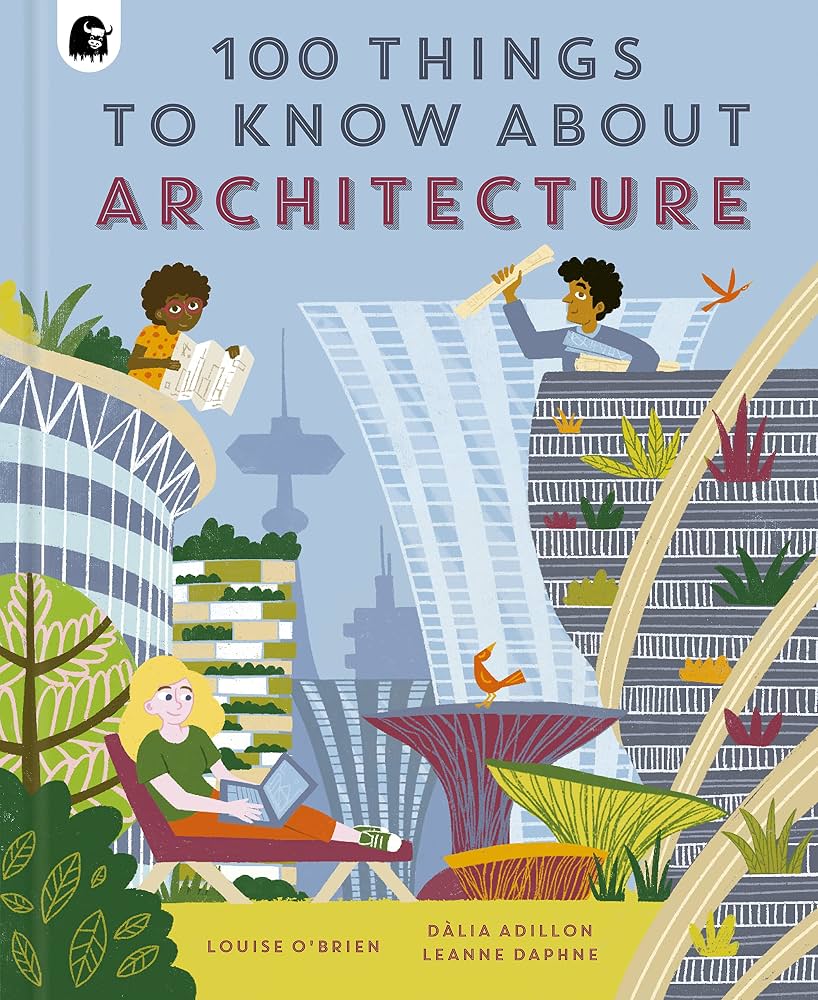
By Louise O’Brien, 100 Things to Know About Architecture (Happy Yak, 2023) is a wide-ranging survey of many aspects of architecture in bite-sized pieces, each with a short description and a colorful illustration. Entries include everything from Skyscraper to Treehouse, Sydney Opera House, Cave, Ancient Greek, Dome, Cantilever, and Pagoda. For ages 5-10.
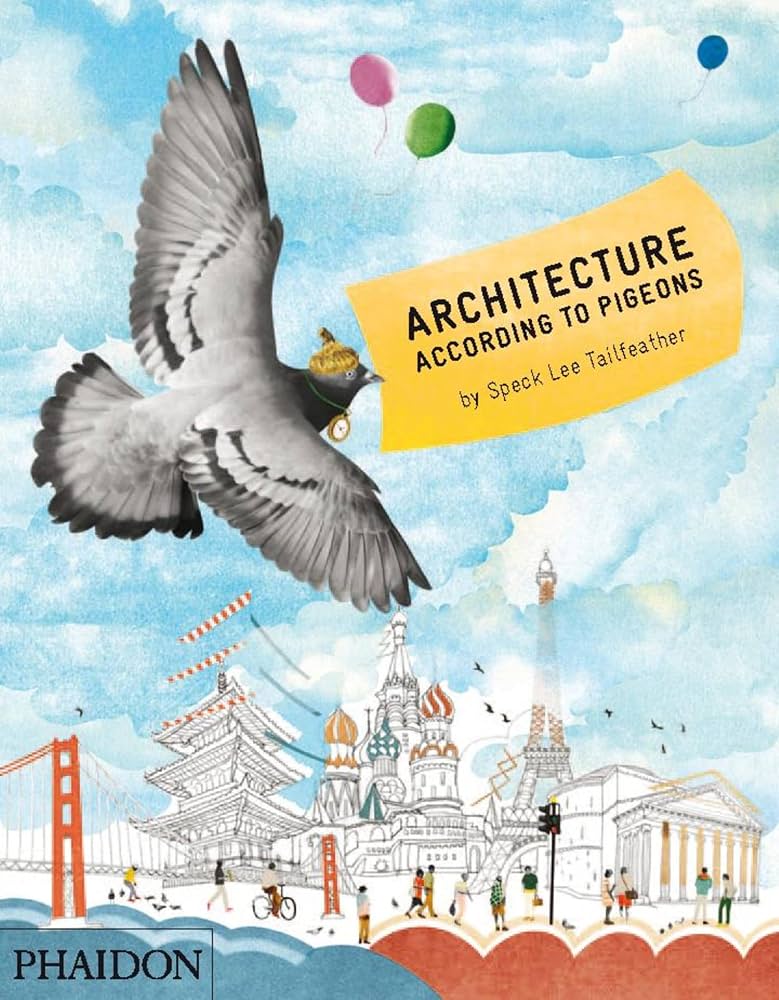
By Stella Gurney (in company with pigeon Speck Lee Tailfeather), Architecture According to Pigeons (Phaidon, 2013) is a witty bird’s-eye introduction to world architecture, covering such famous buildings as the Colosseum, the Golden Gate Bridge, and the Taj Mahal. (Included is a map for a link to geography.) For ages 8-12.

Annette Roeder’s 13 Buildings Children Should Know (Prestel, 2009) has background information and great color photos of such famous architectural sites as the Great Pyramid of Giza, the Parthenon, the Tower of London, and Neuschwanstein Castle. For ages 8-12.

Simon Armstrong’s Cool Architecture (Portico, 2015) is packed with fun facts about architecture through history and worldwide. Readers find out how bridges work, how to tell a Doric from a Corinthian column, why there’s only one way to build a medieval castle, and how to draw like an architect. For ages 9 and up.

David Macaulay’s wonderful building books, illustrated with exquisitely detailed black-and-white drawings, trace the building of a (fictional) historical structure step by step, from planning stage to completion, with a reader-friendly text and enough illustrative detail to satisfy even the most demanding young architect or engineer. Titles include Cathedral (Houghton Mifflin Harcourt, 1981), Pyramid (1982), Castle (1982) City: A Story of Roman Planning and Construction (1983), Mill (1989), Mosque (2008), and more. For ages 9 and up.

In Macaulay’s Built to Last (Houghton Mifflin Harcourt, 2010), the author combines and updates his earlier works Castle, Cathedral, and Mosque. Illustrations in the new version are in color. For ages 9 and up.

James Gulliver Hancock’s All the Buildings I’ve Drawn So Far series (Rizzoli Universe) is a delightfully illustrated and labeled building-by-building tour of world cities, among them New York, London, and Paris. A great architectural and geographical resource for all ages.

Patrick Dillon’s The Story of Buildings (Candlewick, 2014), with spectacular illustrations by Stephen Biesty, is a history of architecture from the pyramids through Greeks, Romans, and Renaissance to the Sydney Opera House and beyond. Features include London’s 19th-century Crystal Palace, Beijing’s Forbidden City, and the Taj Mahal. For ages 10 and up.
Try an architectural scavenger hunt! See hand-out at https://e7e5y3e3yyq.exactdn.com/wp-content/uploads/2022/05/Architectural-Scavenger-Hunt.pdf.

By Lisa Herrington, Totally Strange Buildings (Childrens Press, 2017), illustrated with color photos, features a selection of bizarre buildings from across the United States. Lots of questions make for an interactive read. (Check out the building shaped like a giant picnic basket!) For ages 5-9.

Joan Marie Arbogast’s Buildings in Disguise (Boyds Mills Press, 2010) is a great collection strange buildings that look like everything from elephants to binoculars. A fun look at some truly odd architecture for ages 7-11.

See pictures of some of the world's strangest buildings here.
ArchKIDecture has a large collection of architecture-related lessons and projects for all ages, plus annotated book and resource lists.

With the 
Building Small and Large

Byron Barton’s Building a House (HarperTrophy, 1990), with bright pictures and a brief text, traces the building process from digging a hole to finished house. For ages 3-6.

In Jonathan Bean’s Building Our House (Farrar, Straus & Giroux, 2013), a family is moving from the city to the country – and they’re building their new house themselves, from the ground up. For ages 3-7.

Gail Gibbons’s How a House Is Built (Holiday House, 1996) moves from architect to foundation diggers, carpenters, plumbers, masons, electricians, painters, and landscapers, all with appealing and carefully labeled illustrations. For ages 4-8.

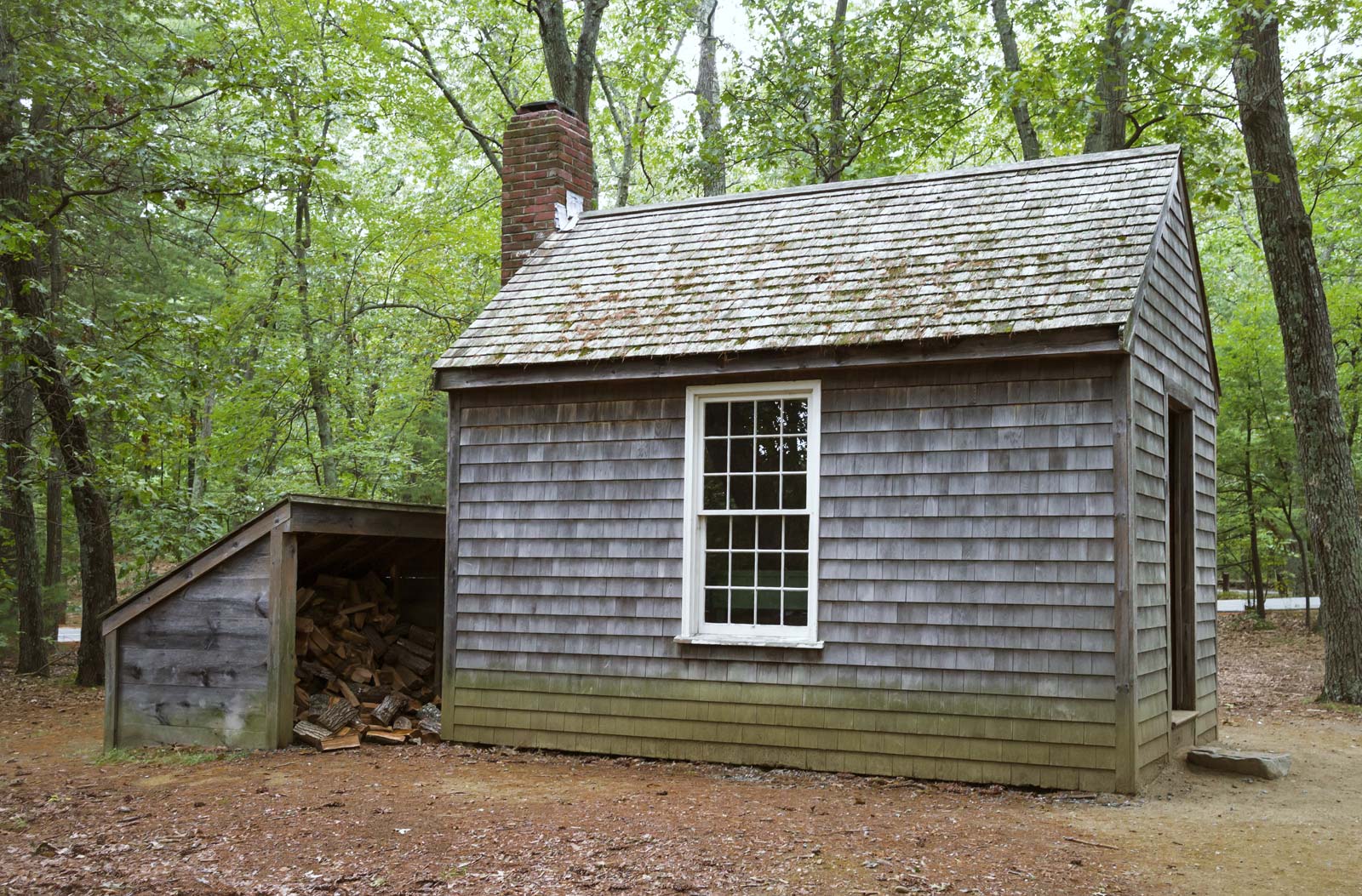
D.B. Johnson’s Henry Builds a Cabin (Houghton Mifflin Harcourt, 2019) is one of a series of delightful picture books about Henry, a bear, who is Johnson’s version of writer/philosopher Henry David Thoreau. In this book, Henry cuts down twelve trees and makes himself a very small cabin, explaining to critical friends why his tiny house is really much “bigger than it looks.” For ages 4-7.

By Jen Feroze and James Gulliver Hancock, How Cities Work (Lonely Planet Kids, 2016) is a wonderful introduction to skyscrapers, subways, sewers, apartment buildings, and construction sites, with lots of interactive flaps and fold-outs. Find out what's going on beneath the streets and behind walls, with lots of quirky details. For ages 5 and up.
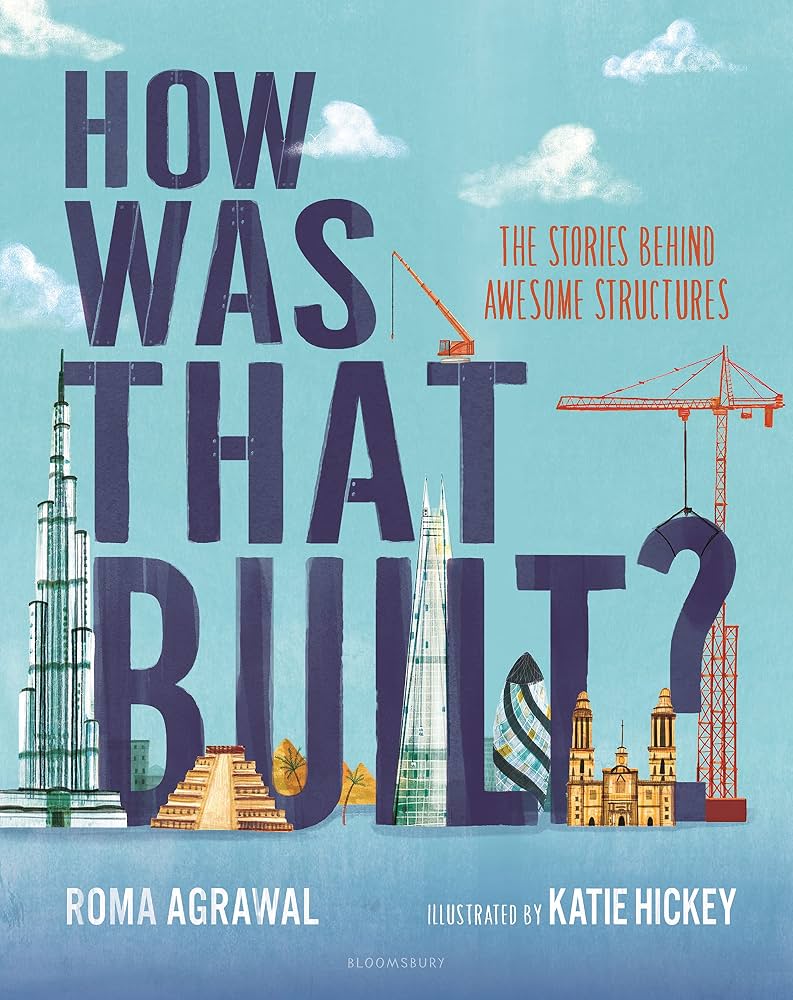
By Roma Agrawal, How Was That Built? (Bloomsbury, 2022) explains the ingenious engineering methods behind many fabulous structures – including domes, tunnels, dams, and bridges. Find out how to build on ice, under the sea, and even in outer space. For ages 7-10.
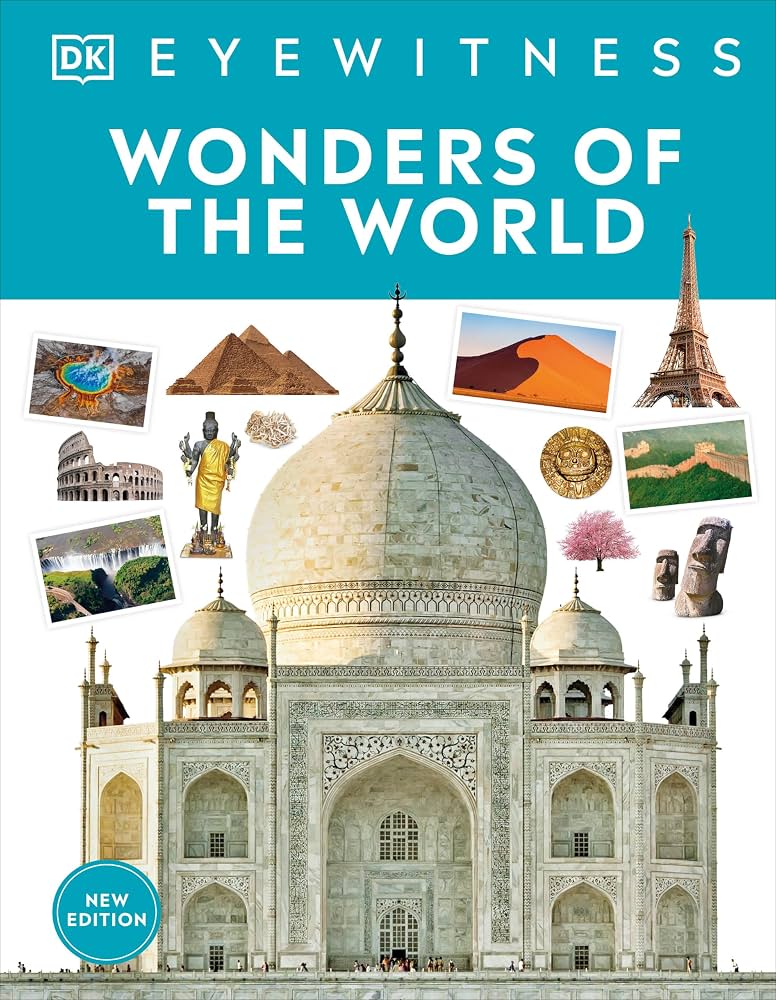
In the Eyewitness series, Wonders of the World (DK, 2022) explores over fifty wonders, architectural and natural, among them the Pyramids of Giza, the Colossus of Rhodes, the Taj Mahal, and the Eiffel Tower. Illustrated with wonderful color photographs. For ages 8-12.

From Nomad Press, the Explore Engineering series includes the creatively designed Bridges! (Jennifer Swanson), Canals and Dams! (Anita Yasuda), Tunnels! and Skyscrapers! (Elizabeth Schmermund), each with kid-friendly info, fact boxes, diagrams, and 25 related science projects. For ages 7-10.
Also from Nomad Press, see the Investigate Feats of Engineering series which includes Donna Latham’s Bridges and Tunnels, Skyscrapers, and Canals and Dams, each with a timeline, Words to Know boxes, notable quotes, historical and scientific background information, and 25 hands-on projects. For ages 9-12.
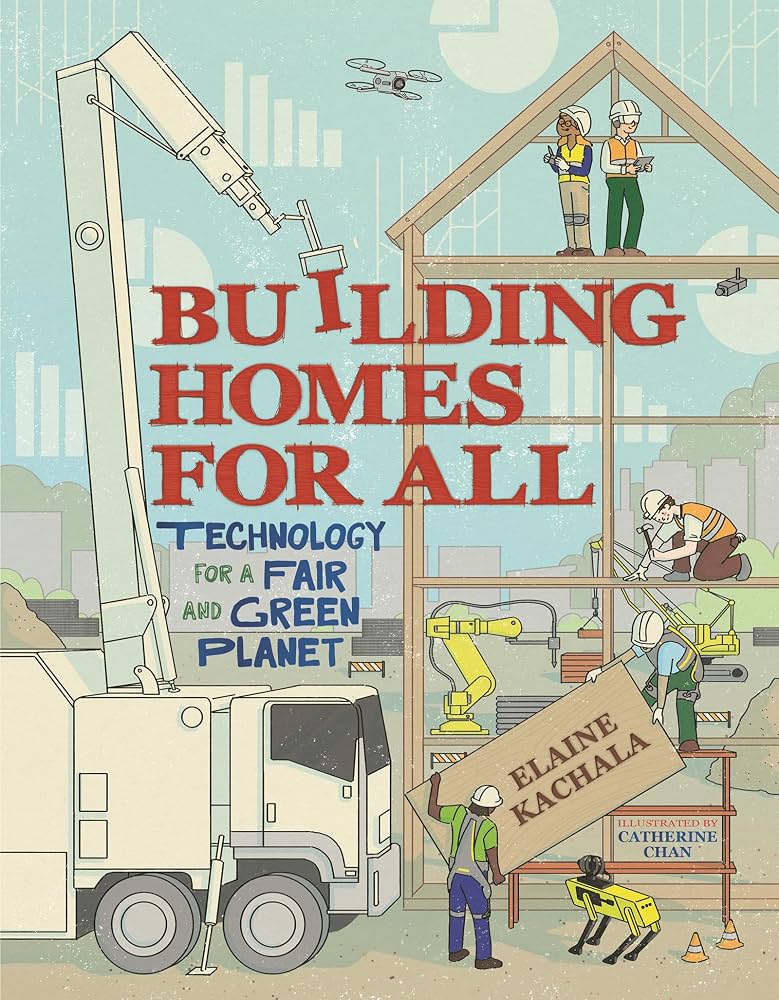
By Elaine Kachala, Building Homes for All (Orca, 2026) is a challenge to traditional home building, describing innovative new possibilities for affordable, eco-friendly homes. (Could robots help? And how to build housing on the Moon?) A thought-provoking read for ages 9-12.

David Macaulay’s Building Big (Houghton Mifflin Harcourt, 2004) is a fascinating account of the planning, design, and science behind bridges, tunnels, skyscrapers, domes, and dams, all explained with Macaulay’s wonderful detailed illustrations. For ages 10 and up.
For the PBS five-part series based on the book, see https://www.pbs.org/wgbh/buildingbig/. The website includes basic info, a databank of Wonders of the World images, interviews with builders and architects, and activities, experiments, and challenges for kids.
Skyscrapers

Anastasia Suen’s Up! Up! Up! Skyscraper (Charlesbridge, 2017) is an appealing picture-book explanation of how a skyscraper is built. Find out what goes on behind the construction fence. For ages 3-7.

Gail Gibbons’s brightly illustrated Up Goes the Skyscraper! (Aladdin, 2017) is a matter-of-fact account of skyscraper building from clearing the site to completion. For ages 4-8.

Deborah Hopkinson’s Sky Boys (Dragonfly Books, 2012) is the story of how the Empire State Building was built, as seen through the eyes of a young boy in 1930s New York City. For ages 4-8.

Brad Finger’s photo-illustrated 13 Skyscrapers Children Should Know (Prestel, 2016) covers famous skyscrapers worldwide, with a timeline, glossary, and background information. For example, readers find out how skyscraper technology has changed over time and what keeps very tall buildings from toppling over. For ages 8-12.
Elizabeth Schmermund’s Skyscrapers! (Nomad Press, 2018) has background information, Words to Know boxes, discussion questions, labeled diagrams, and 25 related science projects. For ages 7-10.
Also from Nomad Press, see Donna Latham’s Skyscrapers for ages 9-12.

What if we decided to take the Empire State Building down? David Macaulay’s Unbuilding (Houghton Mifflin Harcourt, 1987) is a fascinating fictional account of how to demolish a skyscraper, with Macaulay’s signature detailed illustrations. For ages 10 and up.

John Hill’s How to Build a Skyscraper (Firefly Books, 2017) is an overview of 46 famous skyscrapers, each with photos, structural diagrams, and historical and scientific information. An interesting read for skyscraper-loving teens and adults.
Bridges

By Eve Bunting, Pop’s Bridge (Houghton Mifflin Harcourt, 2006) is the story of the building of the Golden Gate Bridge, completed in 1937, as told by Robert, whose father is a skywalker at the construction site – that is, a high-climbing ironworker. For ages 5-8.

By Dave Eggers, This Bridge Will Not Be Gray (Chronicle Books, 2018) is a non-fiction account of the building of the Golden Gate Bridge, with clever cut-paper illustrations by Tucker Nichols. For ages 5-8.

Rachel Dougherty’s Secret Engineer (Roaring Brook Press, 2019) is the story of Emily Roebling, wife of Washington Roebling, chief engineer in charge of building the Brooklyn Bridge. When her husband fell ill of caisson disease in mid-construction, Emily took over and finished the job. For ages 5-8.
Also see Frieda Wishinsky’s How Emily Saved the Bridge (Groundwood Books, 2019) for ages 7-10.

April Jones Prince’s Twenty-One Elephants and Still Standing (Houghton Mifflin Harcourt, 2005) is the story of the opening of the Brooklyn Bridge in 1884, when P.T. Barnum - who never missed a trick - paraded twenty-one elephants across it to demonstrate how strong it was. For ages 5-9.

By Brad Finger, 13 Bridges Children Should Know (Prestel, 2015) has kid-friendly information and wonderful color photos of the most famous bridges in the world, among them the Millau Viaduct, London’s Tower Bridge, Venice’s Bridge of Sighs, and California’s Golden Gate. For ages 8-12.

Peter J. Tomasi’s The Bridge: How the Roeblings Connected Brooklyn to New York (Harry N. Abrams, 2019) is a terrific graphic-novel account of the building of the Brooklyn Bridge for ages 12 and up.

The Great Bridge (Simon & Schuster, 1983) by master historian David McCullough is the enthralling story of the building of the Brooklyn Bridge. For teens and adults.
Treehouses and Forts
Our kids – rejecting any help from us – built a treehouse. It had a worrisomely unstable ladder and a booby trap for unwanted visitors that involved a cement block on a rope. In my homeschool notebook, I variously listed this under Architecture, Life Skills, and Physics.
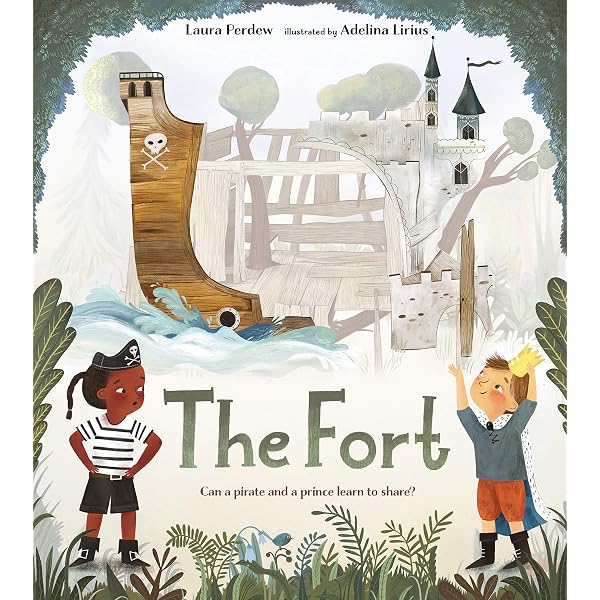
In Laura Perdew’s The Fort (Page Street Kids, 2020), the fort in the woods is used by one kid as a prince’s castle and another as a pirate’s ship – and when the two meet, it looks like a fight. The solution: the fort becomes a collaborative spaceship. For ages 4-8.

By Carter Higgins, Everything You Need for a Treehouse (Chronicle Books, 2018) is a lovely picture book about the wonder, magic, creativity, and imagination that surround treehouses. (“Everything you need for a/treehouse/starts with time/and looking up/and imagining a home/of timber and rafters/in wrangled, gnarled bark.”) For ages 5-8.

In Enid Blyton’s The Magic Faraway Tree (Egmont Books, 2014), three children discover an immense tree in the woods inhabited by pixies, fairies, and other magical people – and reaching into the clouds. From the top of the tree, via ladder, the children can reach any number of strange lands, a different one on each visit. One of a series for ages 5 and up

In Doris Burn’s Andrew Henry’s Meadow (Philomel, 2012), Andrew Henry, a middle child, is an inventor whose family doesn’t appreciate his contraptions (such as the unfortunate kitchen helicopter) – so he runs away to a meadow where he builds each of his friends an eccentric house suited to their own special interests. For ages 6-9.

By Andy Griffiths, The 13-Story Treehouse (Feiwel & Friends, 2013) – which began with a bowling alley, a see-through swimming pool, shark tanks, a marshmallow machine, and swinging vines – now has several hilarious sequels and is up to well over 100 stories. For ages 6-11.

By Johann David Wyss, The Swiss Family Robinson – originally published in 1812 – is available in many editions, including simplified kid-friendly versions (see the Great Illustrated Classics or Classic Starts Series). The shipwrecked family ends up living in a truly spectacular treehouse. Check it out in Disney’s old-but-good movie version (1960). Rated G.

In Jean Craighead George’s perennial favorite My Side of the Mountain (Dutton, 1988), young Sam Gribley – miserable in New York City – runs away to the Catskill Mountains, where he makes his home in a hollow tree. A wonderful story of courage, independence, and survival for ages 9-12.
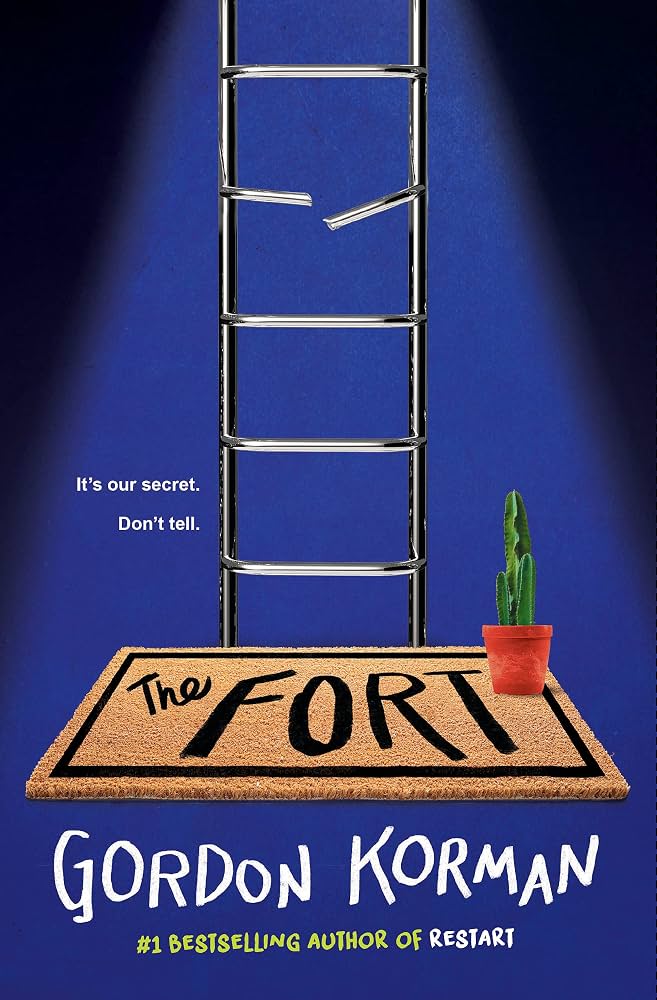
In Gordon Korman’s The Fort (Scholastic, 2024), a group of kids – each with problems of their own – discover a strange trap door in the woods that leads to an underground bomb shelter, compete with electricity, food, and even a supply of videocassettes. The best secret hideout ever. For ages 9-12.

In Toby Alone by Timothee de Fombelle (Walker Books, 2009), 13-year-old Toby is just over a millimeter tall – think the point of a pencil – and he and his entire civilization live in a tree. Now his scientist parents have been taken captive and Toby is on the run because the tree is in danger from an evil developer and empire builder. An ecological fantasy for ages 10 and up.

Who doesn’t want a treehouse? By David and Jeanie Stiles, Treehouses & Playhouses You Can Build (Gibbs Smith, 2006) is a photo-illustrated do-it-yourself guide for families, with step-by-step illustrations. There’s even a plan for a Treeless Treehouse for those who lack appropriate trees. The kids can help, but this is mostly for grown-ups.
Also by Stiles, see How to Build Treehouses, Huts and Forts (Lyons Press, 2018).
Igloos and Sandcastles

Ulli Steltzer’s Building an Igloo (Square Fish, 1999), illustrated with snowy black-and-white photos, follows the process from start to finish. (This is a very professional igloo.) Recommended for ages 4-8, but fun for all.
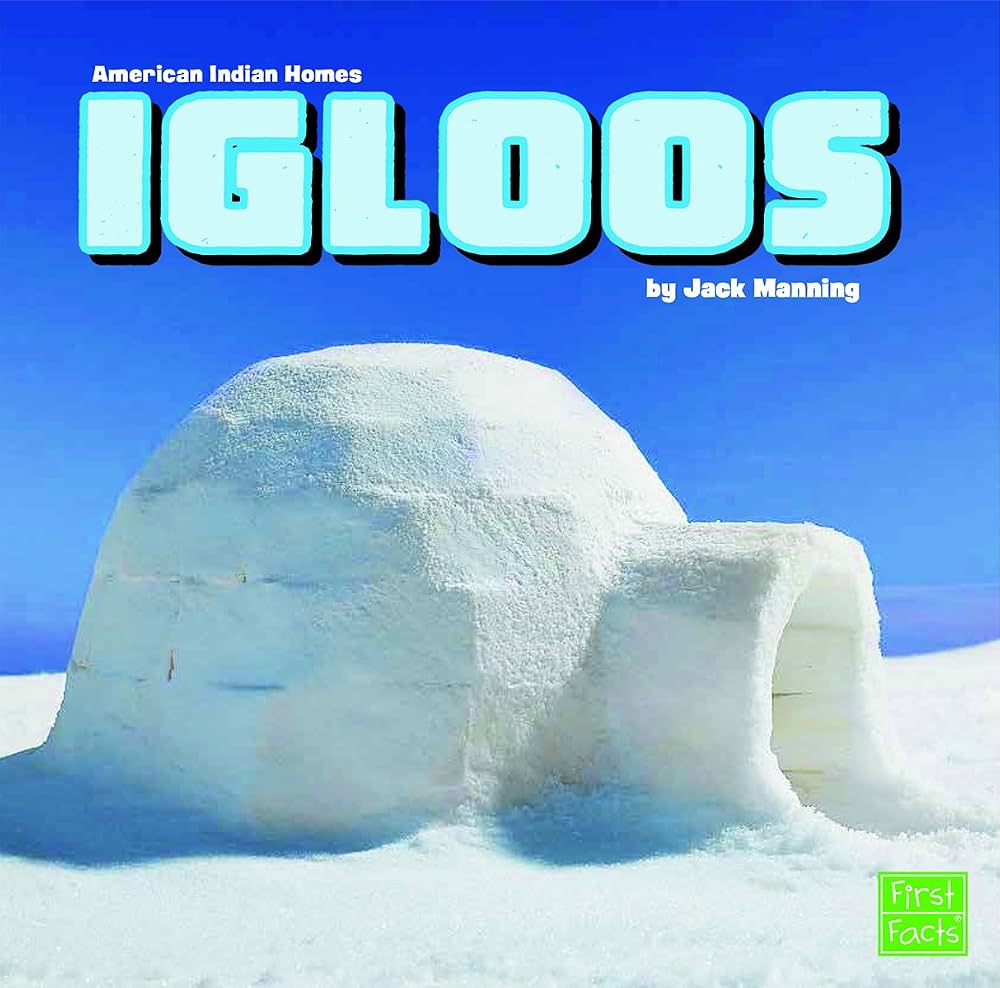
By Jack Manning, Igloos (Capstone, 2014) in the American Indian Homes series is a short photo-illustrated introduction to igloos for ages 5-8.
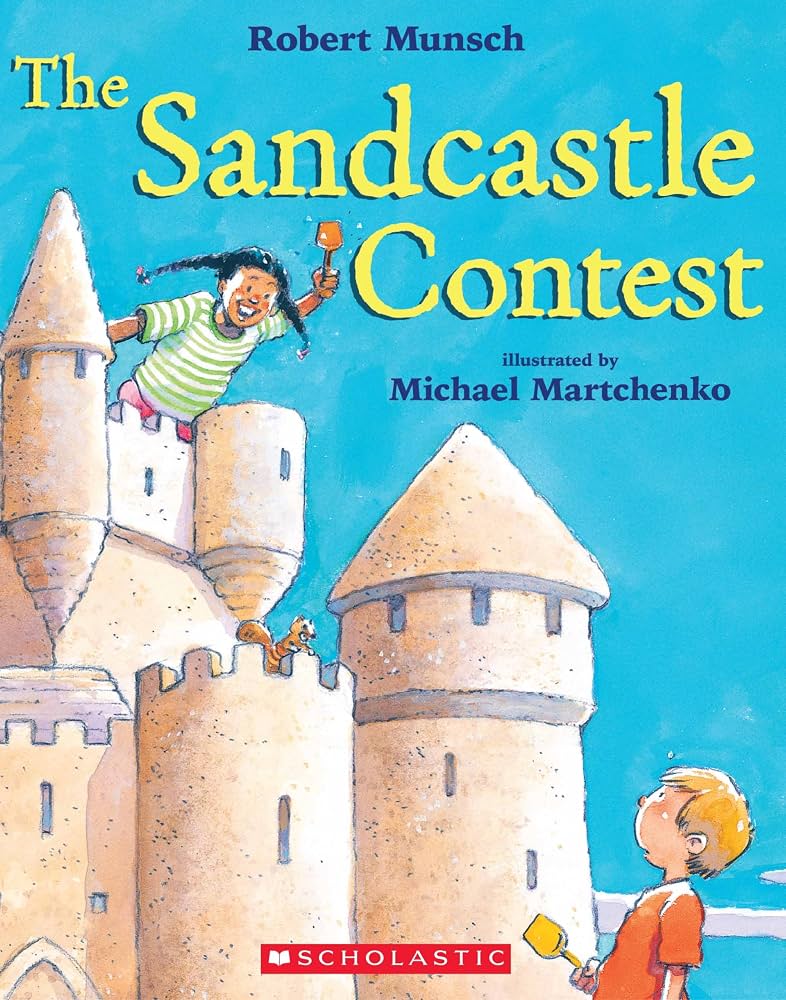
In Robert Munsch’s The Sandcastle Contest (Scholastic, 2021), Matthew builds the most spectacular sand house ever (and wins a bathtub full of ice cream). And gets a dog. For ages 4-7.

Lucinda Wierenga’s Sandcastles Made Simple (Stewart, Tabori, and Chang, 2009) is a 128-page guide to making some truly spectacular sandcastles.

Make your own kinetic sand! Try this recipe.
For How to Build a Perfect Sandcastle (according to science), see https://www.scientificamerican.com/article/how-to-build-the-perfect-sandcastle-according-to-science/.
Hands-On Projects
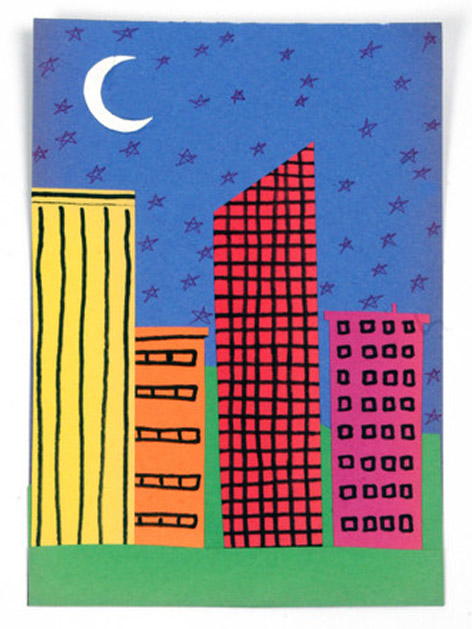
From KinderArt, make an Architecture Shape Collage. See https://kinderart.com/art-lessons/drawing/architecture-shape-collage/.
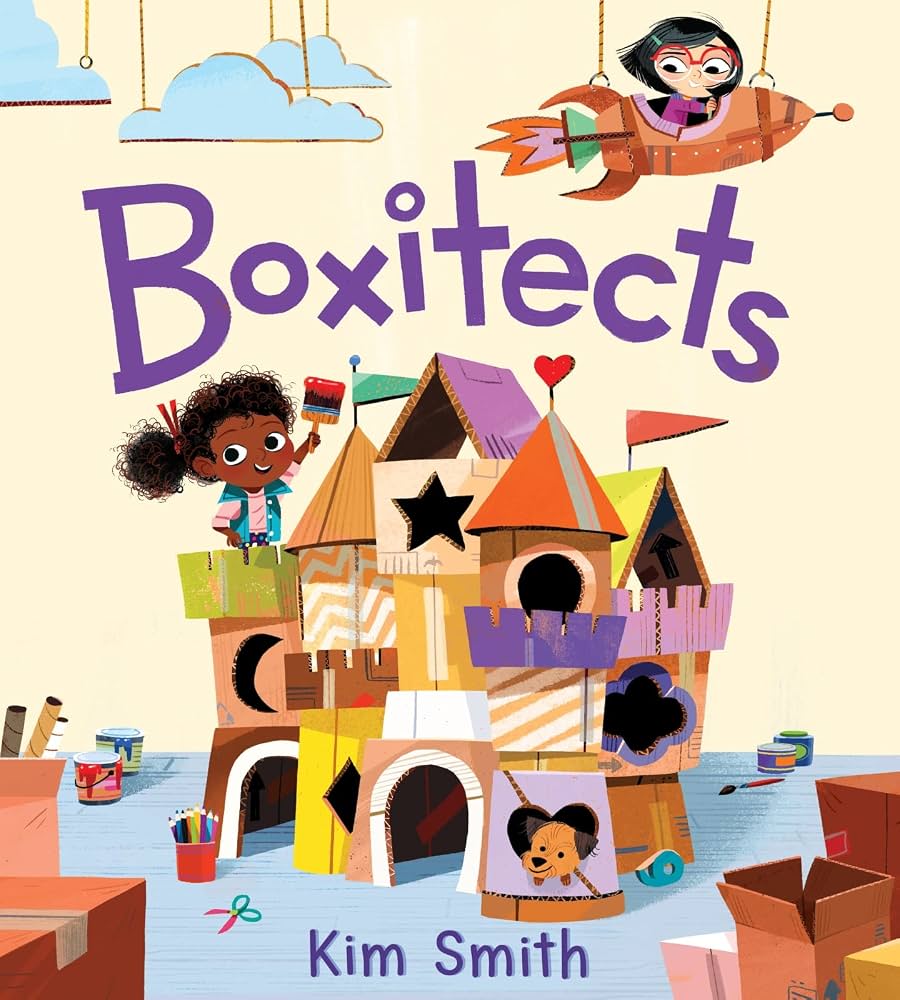
In Kim Smith’s Boxitects (Clarion, 2020), Meg and Simone are both talented boxitects – that is, they’re great at building with boxes – but when they’re paired as a team at the annual Maker Match, they can’t stop arguing. (Team work eventually triumphs.) For ages 3-7.
Be a boxitect!
What can you build with a box? As it turns out, practically anything. By Antoinette Portis, see Not a Box (HarperCollins, 2010) and Not-a-Box City (HarperCollins, 2024) for some creative exercises in building (with a bunny). For ages 4-8. (Add some boxes!)
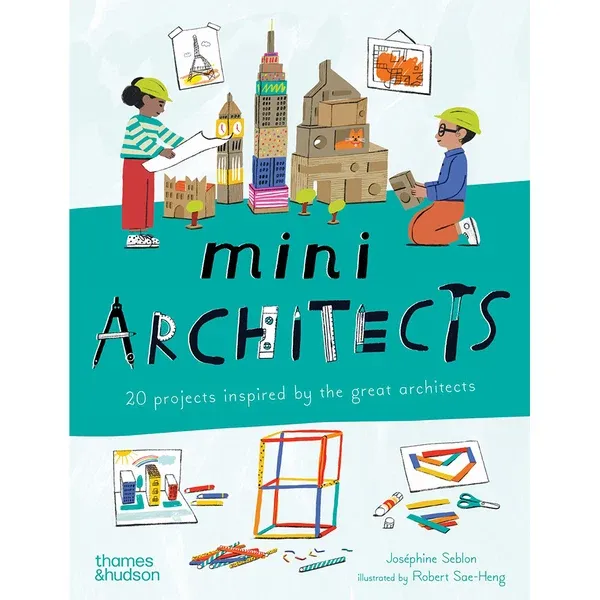
Josephine Seblon’s Mini Architects (Thames & Hudson, 2024) features 20 art projects inspired by famous structures around the world. The book is divided into three parts: Architects of the Past, Modern Architects, and Contemporary Architects. For example, kids build a model Stonehenge and invent a prehistoric pebble game, learn about the Labyrinth of Theseus and build a maze-like marble run, and construct pasta-and-marshmallows towers. For ages 4-8.
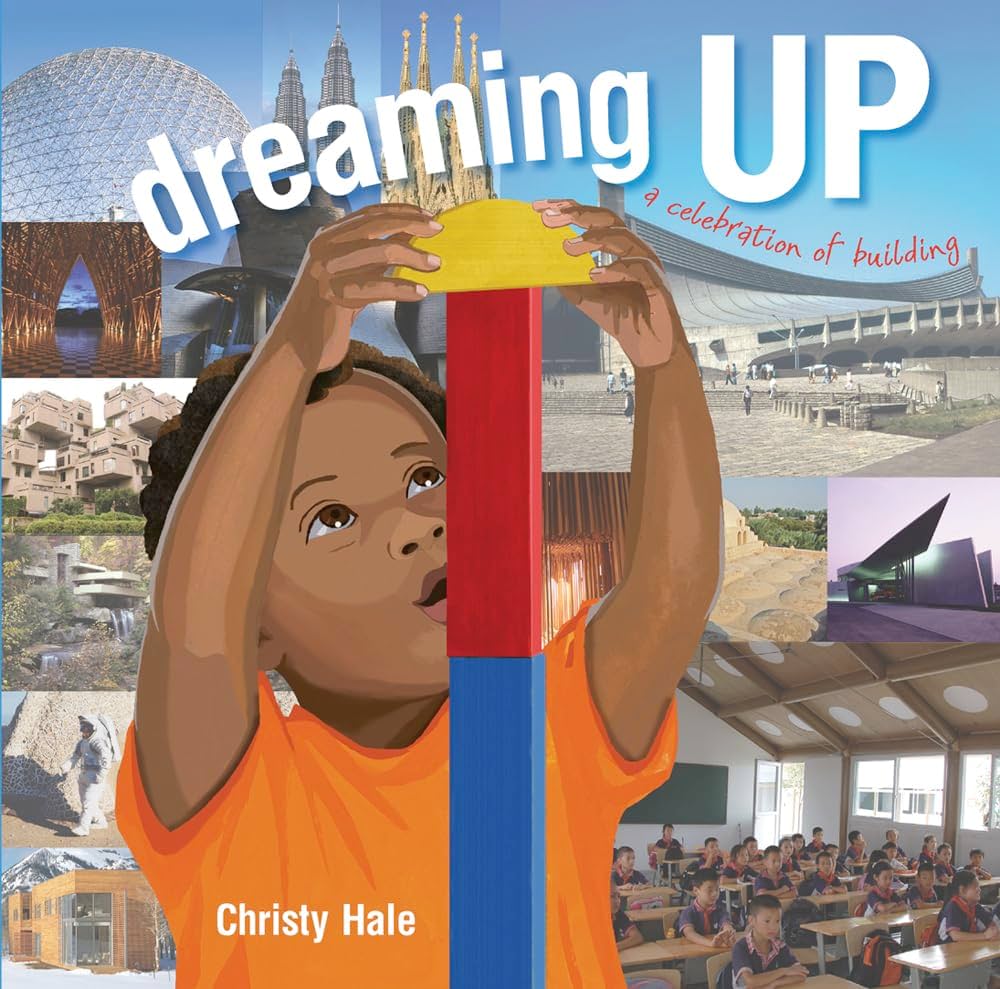
By Christy Hale, Dreaming Up (Lee & Low, 1996) pairs pictures of kid building projects – box houses, cup towers, mud pies – with photos of architectural structures from around the world. For ages 4-7.

In Seymour Simon’s Let’s Try It Out with Towers and Bridges (Simon & Schuster, 2003) young experimenters find out what makes skyscrapers stand up and what makes bridges strong. Activities and info for ages 4-8.
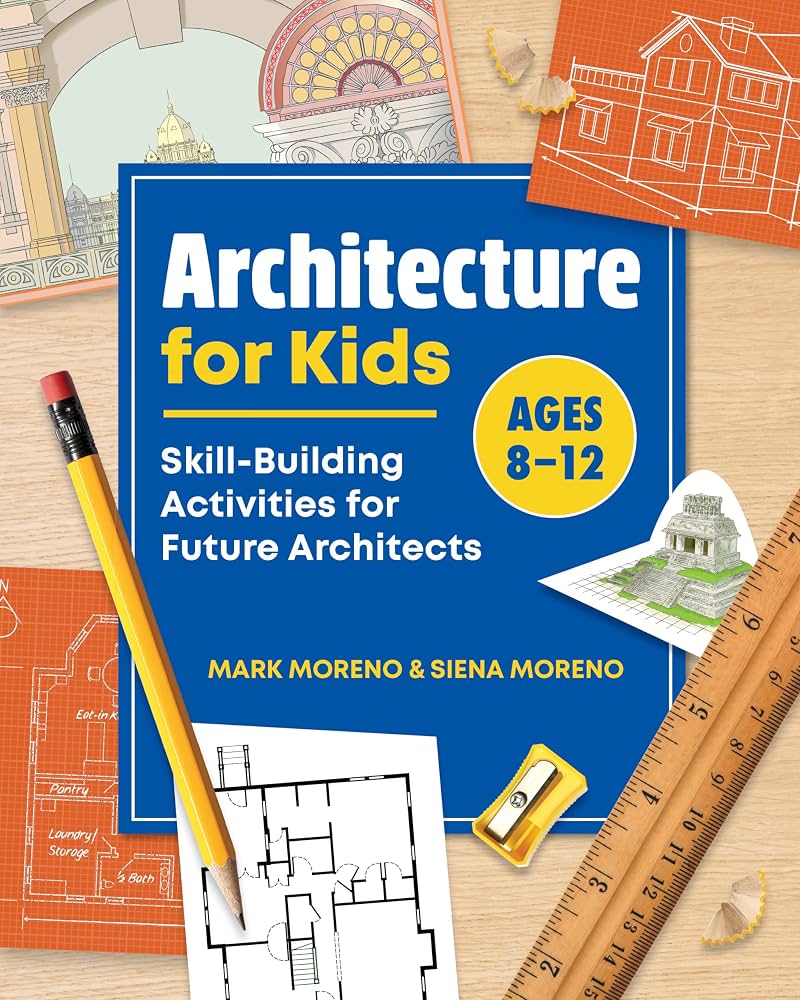
Mark Moreno’s Architecture for Kids (Callisto Kids, 2021) is a portfolio-style book crammed with basic information and illustrative interactive activities. For example, kids design a house layout that best responds to the sun, learn to draw a golden rectangle, map out a green roof, and much more. For ages 8-12.

Mario Salvadori’s The Art of Construction: Projects and Principles for Beginning Engineers and Architects (Chicago Review Press, 1990) provides basic information and many projects for building models of houses, skyscrapers, bridges, and more. For ages 9-14.

From Dan & Darci, see the Architect Design and Build It kit for ages 8-13. Transform your flat drawing into a 3-D model. See

With CubicFun 3-D puzzle, kids and families can assemble their own versions of Notre Dame, the Taj Mahal, the Great Wall of China, London’s Tower Bridge, and more. A nice mix of geography, architecture, and problem-solving. See

See instructions for building a recycled cardboard castle here. Start here – and go on to invent your own!
Architecture-based projects from Kinderart include city block painting, milk carton houses, architectural shapes collages, and a “Four Orders of Architecture” activity.

By Lee J. Ames, Draw 50 Buildings and Other Structures (Watson-Guptili, 2014) has detailed step-by-step instructions for drawing everything from an igloo to the Taj Mahal. For ages 9 and up.

There are dozens of architecture-themed coloring books for a wide range of skill levels. See, for example, A.G. Smith’s The American House (Dover, 2016), Abi Daker’s Landmarks of the World (Lark Crafts, 2016), Dennis Casey’s Stained Glass Window Designs of Frank Lloyd Wright (Dover, 1997) A.G. Smith’s Victorian Houses (Dover, 2001), or – for a real challenge – Steve McDonald’s Fantastic Structures (Chronicle Books, 2016), for which you’ll need steady hands and very sharp colored pencils.

Daniel Reif’s
Famous Architects
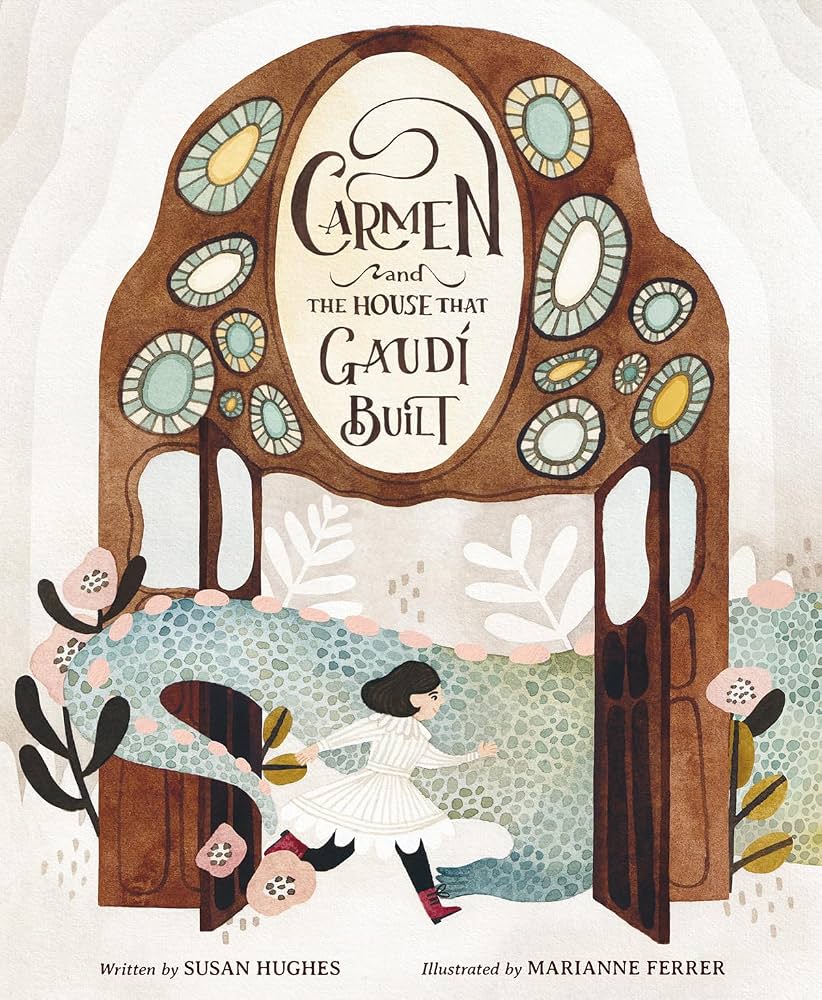
By Susan Hughes, in Carmen and the House That Gaudi Built (Owlkids, 2021), Carmen is dismayed at moving from the country to the city of Barcelona – until she finds that Antoni Gaudi, the architect hired to work on their new house loves the natural world as much as she does. (There’s even a place for Dragon, her imaginary pet salamander.) For ages 4-8.
Susan Katz’s Gaudi: Architect of Imagination (NorthSouth Books, 2022), illustrated with wonderful stylized paintings, is a picture-book biography of innovative Spanish architect Antoni Gaudi. For ages 4-8.
Also see Cecile Alix’s A Dragon on the Roof (Prestel, 2019), an imaginative picture-book story about Paloma who lives in the Casa Batllo, one of architect Antoni Gaudi’s most famous buildings. Its spectacular roof really does look like a dragon. For ages 4-8.

The Casa Batllo today is a museum in Barcelona, Spain. Visit it here.
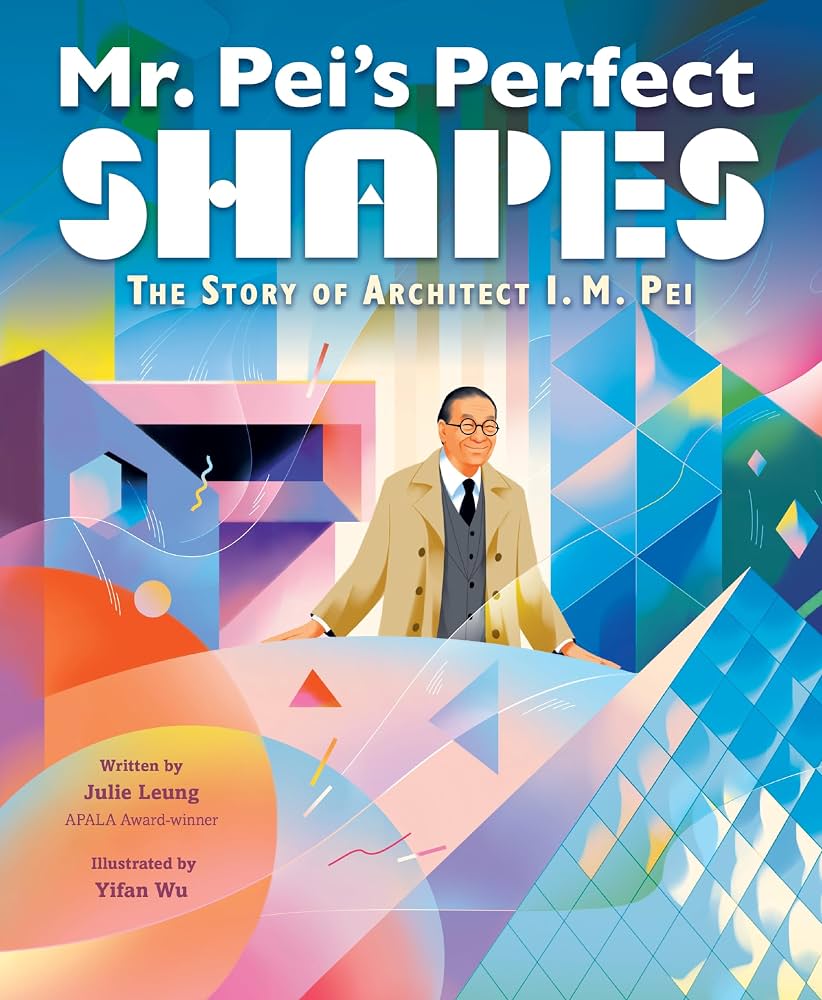
By Julie Leung, Mr. Pei’s Perfect Shapes (Quill Tree Books, 2024) is a picture-book biography of the renowned Chinese-American architect whose startling designs can be seen around the world today. For ages 4-8.
For the same age group, also see The Glass Pyramid by Jeanne Walker Harvey (Atheneum, 2025), the story of architect I.M. Pei and his famous design of the glass pyramid for Paris’s Louvre Museum.

Jeanette Winter’s The World Is Not a Rectangle (Beach Lane Books, 2017) is a picture-book biography of prize-winning Iraqi architect Zaha Hadid. For ages 5-10.
Also see Victoria Tentler-Krylov’s Building Zaha (Orchard Books, 2020) is a picture-book biography of Iraqi architect Zaha Hadid beginning with her childhood in Baghdad. For ages 4-8.

By K.L. Going, The Shape of the World (Beach Lane Books, 2017) is a picture-book biography of architect Frank Lloyd Wright, beginning when he was a little boy playing with blocks. For ages 5-9.

Barb Rosenstock’s Prairie Boy (Calkins Creek, 2019) is a charmingly illustrated picture-book biography of Frank Lloyd Wright that describes his love of shapes and his invention of organic architecture. For ages 7-10.

Fallingwater by Marc Harshman and Anna Egan Smucker (Roaring Brook Press, 2017) is the story of the building of the house known as architect Frank Lloyd Wright’s masterpiece. “Once upon a time,” the book begins, “Frank Lloyd Wright was the most famous architect in the world…but it had been years since he had built anything newsworthy. A stream in Pennsylvania was about to change all that.” For ages 7-10.

Florian Heine’s 13 Architects Children Should Know (Prestel, 2014) covers Christopher Wren, Thomas Jefferson, Frank Lloyd Wright, Le Corbusier, Mies van der Rohe, Zaha Hadid, and more, in chronological order, with background information and gorgeous color photos of their most famous buildings. For ages 8-12.
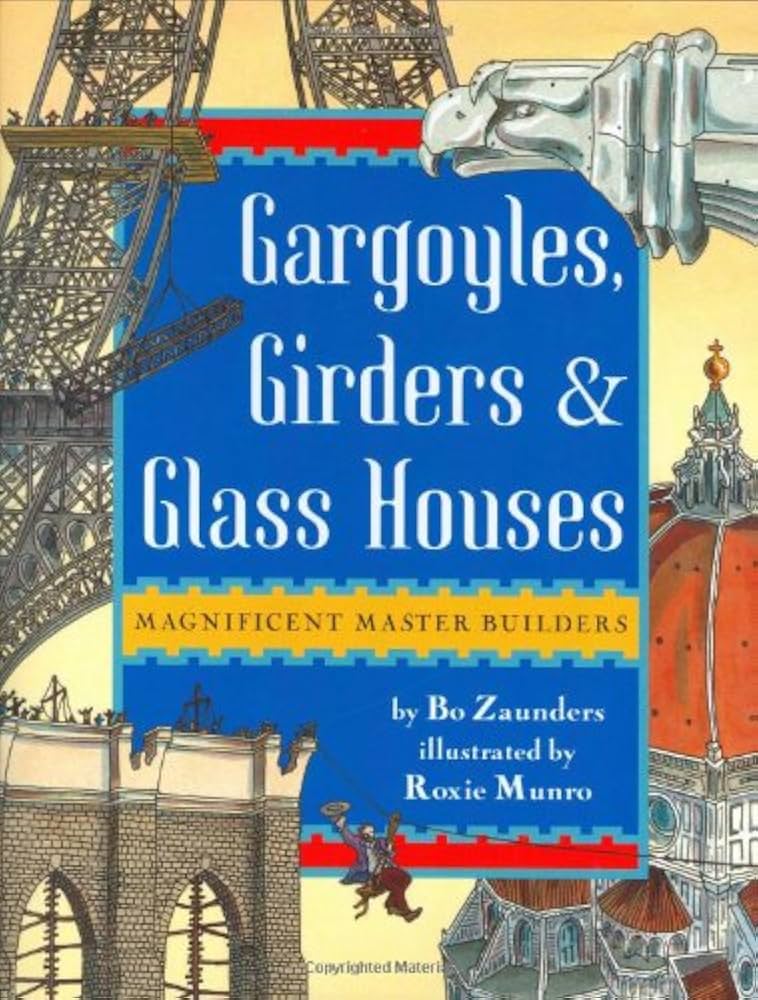
By Bo Zaunders, Gargoyles, Girders, and Glass Houses: Magnificent Master Builders (Dutton, 2004) surveys seven master builders and the structures they created. Chapter titles include “Pippo’s Dome,” “The Mosques of Sinan,” “The Brooklyn Bridge and the Roeblings,” and “Eiffel’s Tower.” For ages 8-12.

Kathleen Thorne-Thomsen’s Frank Lloyd Wright for Kids (Chicago Review Press, 2014) covers Wright’s life and architectural ideas, with photos, diagrams, drawings, and 21 hands-on projects, among them designing a Wright-style stained-glass window and a maze, and experimenting with geometric shapes. For ages 9 and up.

By Catherine Teegarden, How to Think Like Frank Lloyd Wright (Downtown Bookworks, 2020) is a collection of creative activities and practice exercises for young architects. Try designing a stained-glass window, sketching houses for different habitats, or designing roofs for different climates. Included are grids, worksheets, and geometric sticker shapes. For ages 10 and up.
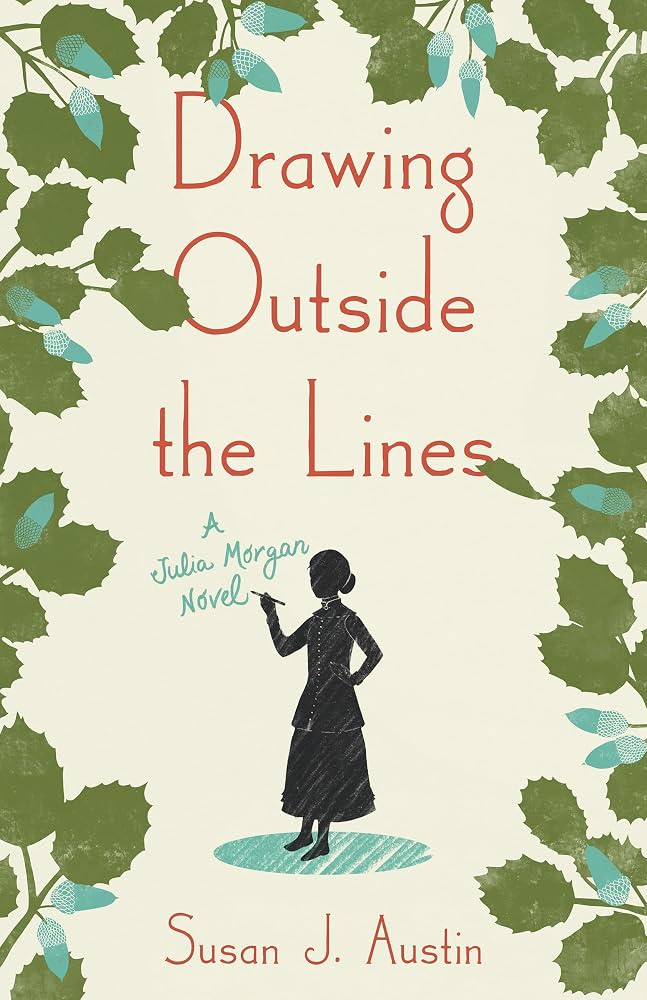
By Susan Austin, Drawing Outside the Lines (SparkPress, 2022) is the fictionalized story of American architect Julia Morgan, who as a kid preferred arithmetic to embroidery – and who, after a visit to the brand-new Brooklyn Bridge at the age of eleven, became determined to follow a career in engineering and architecture. It wasn’t easy – but nothing stopped Julia. For ages 10-14.

By Ross King, Brunelleschi’s Dome (Bloomsbury, 2013) is the story of how Renaissance clockmaker Filippo Brunelleschi came up with a brilliant plan for the dome to top Florence’s magnificent new cathedral, and by doing so revolutionized architecture. For teens and adults.
Animal Architects
By Arthur Dorros, Ant Cities (HarperCollins, 1988), one of the Let’s-Read-and-Find-Out Science series, shows kids what’s inside an anthill. For ages 3-7.
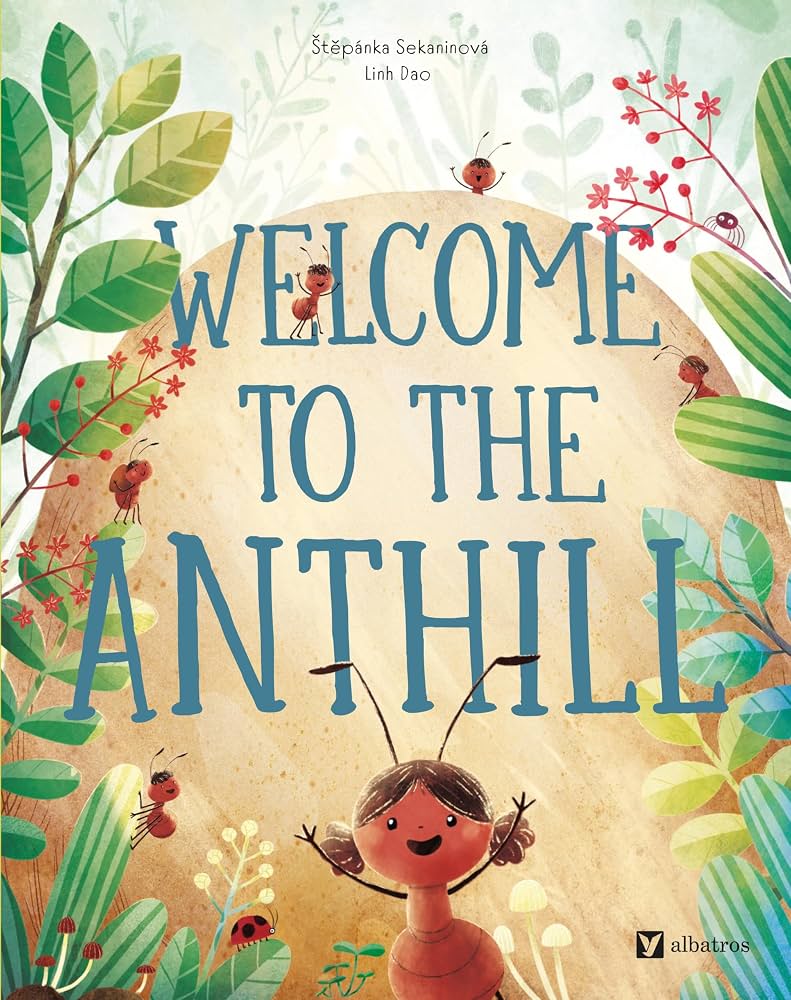
Also see Stepanka Sekaninova’s Welcome to the Anthill (Albatros Media, 2026) a catchy introduction to life inside an anthill with clever cartoon-style illustrations. For ages 6-9.
In Nina Laden’s Roberto, the Insect Architect (Chronicle Books, 2016), Roberto – a termite – had always wanted to be an architect. Discouraged by everyone around him, he finally leaves for the city – where he transforms a rundown block into a neighborhood of extraordinary homes for the city’s homeless bugs. For ages 5-8.
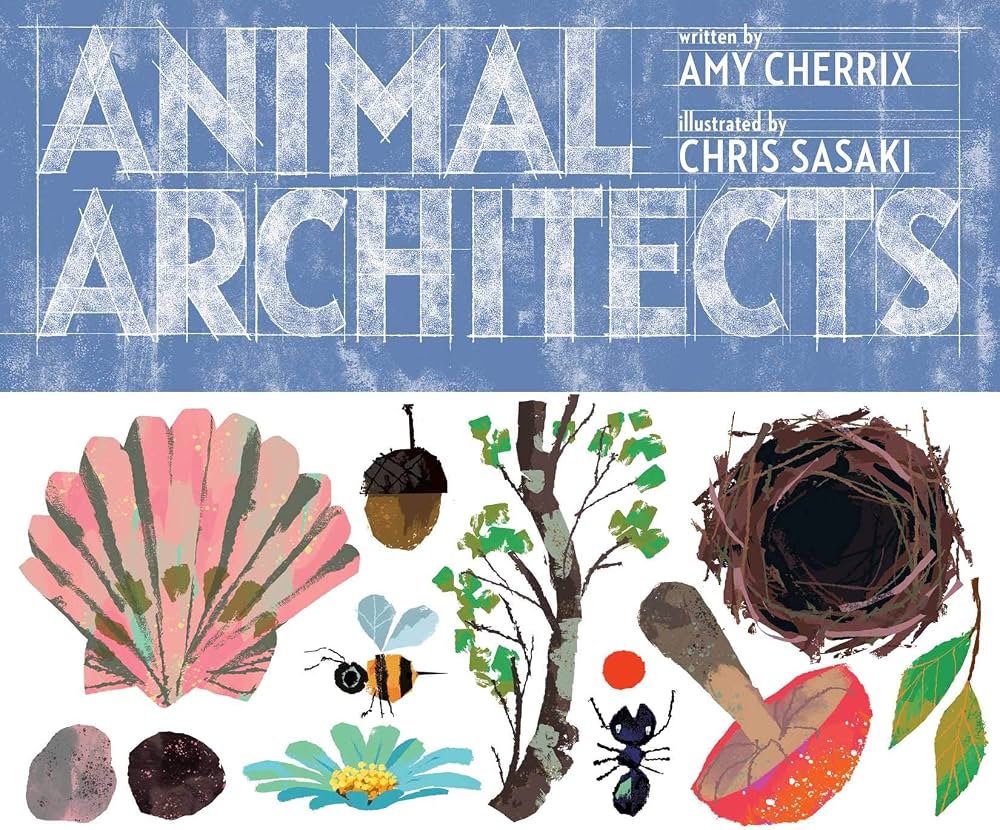
By Amy Cherrix, Animal Architects (Beach Lane Books, 2021) is a colorful introduction to the amazing structures built by 11 different animals, among them coral reefs, the bowers of bowerbirds, ant tunnels, and spider burrows. For ages 3-7.

Libby Romero’s Animal Architects (National Geographic, 2019), illustrated with gorgeous color photos, covers some amazing example of building in the animal world by birds, spiders, termites, wasps, busy beavers, and more. For ages 6-9.

Filled with amazing illustrations, Julio Antonio Blasco’s Animal Architects (Laurence King, 2015) covers chimpanzee nests, beaver dams, termite mounds, stork nests, and many more in a series of beautiful double-page spreads. For each, there’s general information about the animal, animal statistics, and an account of how and with what the animal builds a home. Recommended for ages 8-12, but fascinating for all.

Can you build a bird’s nest? Like the birds do, that is, using only natural materials and no tape or glue. See suggestions from Science Buddies here.
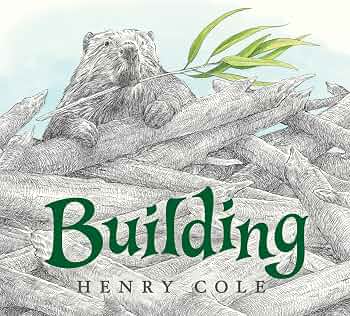
Building by Henry Cole (HarperCollins, 2022) follows a pair of beavers as they do what beavers do best: build a dam and a lodge and raise a family. For ages 4-8.
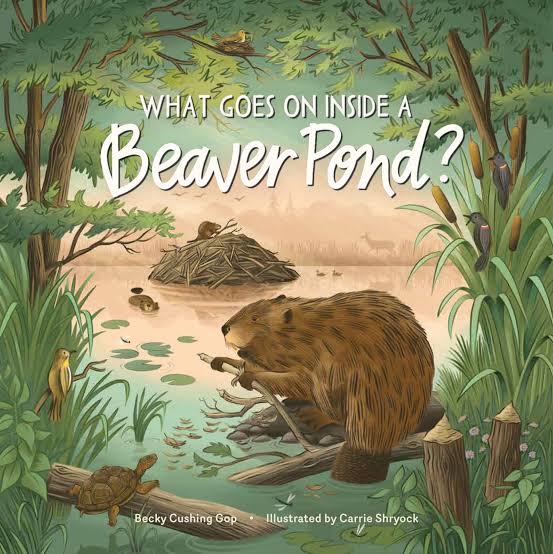
By Becky Cushing, What Goes On Inside a Beaver Pond? (Storey, 2023) follows a year in the life of a beaver kit as she leaves her home lodge and sets out to build a new home for herself. For ages 7-10.
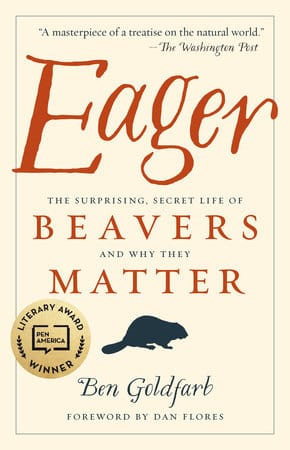
Ben Goldfarb’s award-winning Eager (Chelsea Green, 2019), subtitled “The Surprising, Secret Life of Beavers and Why They Matter” is a fascinating read for teens and adults – starting with Paleocastor, an ancient burrowing beaver that dug spiral-shaped tunnels with its teeth.
Also for teens and adults, see Beaverland: How One Weird Rodent Made America by Leila Philip (Twelve, 2024). (During the Middle Ages, the Catholic Church decreed that beavers could be eaten like fish on fast days.)
The Benefits of Blocks
“Through block play,” writes Sharon MacDonald in Block Play: The Complete Guide to Learning and Playing with Blocks (Gryphon House, 2001), “children can learn to read, write, speak, and listen. Block play can teach them about math, science, and social studies. Block play often includes cooperative collaborative learning, which helps children grow emotionally and socially. Block play also enhances their physical growth and development.”
How I translated this is that building all those little block castles in the living room encourages architectural imagination and motor coordination; knocking the castles down with homemade catapults is a lesson in physics; settling the ensuing fight enhances social growth; and picking up all six zillion blocks afterwards establishes a responsible work ethic.
The bottom line, however, is that almost everybody enjoys fooling around with blocks - and there are blocks out there to appeal to all ages and interests, from squashy cloth blocks for babies to some truly mind-boggling LEGO kits for older builders.
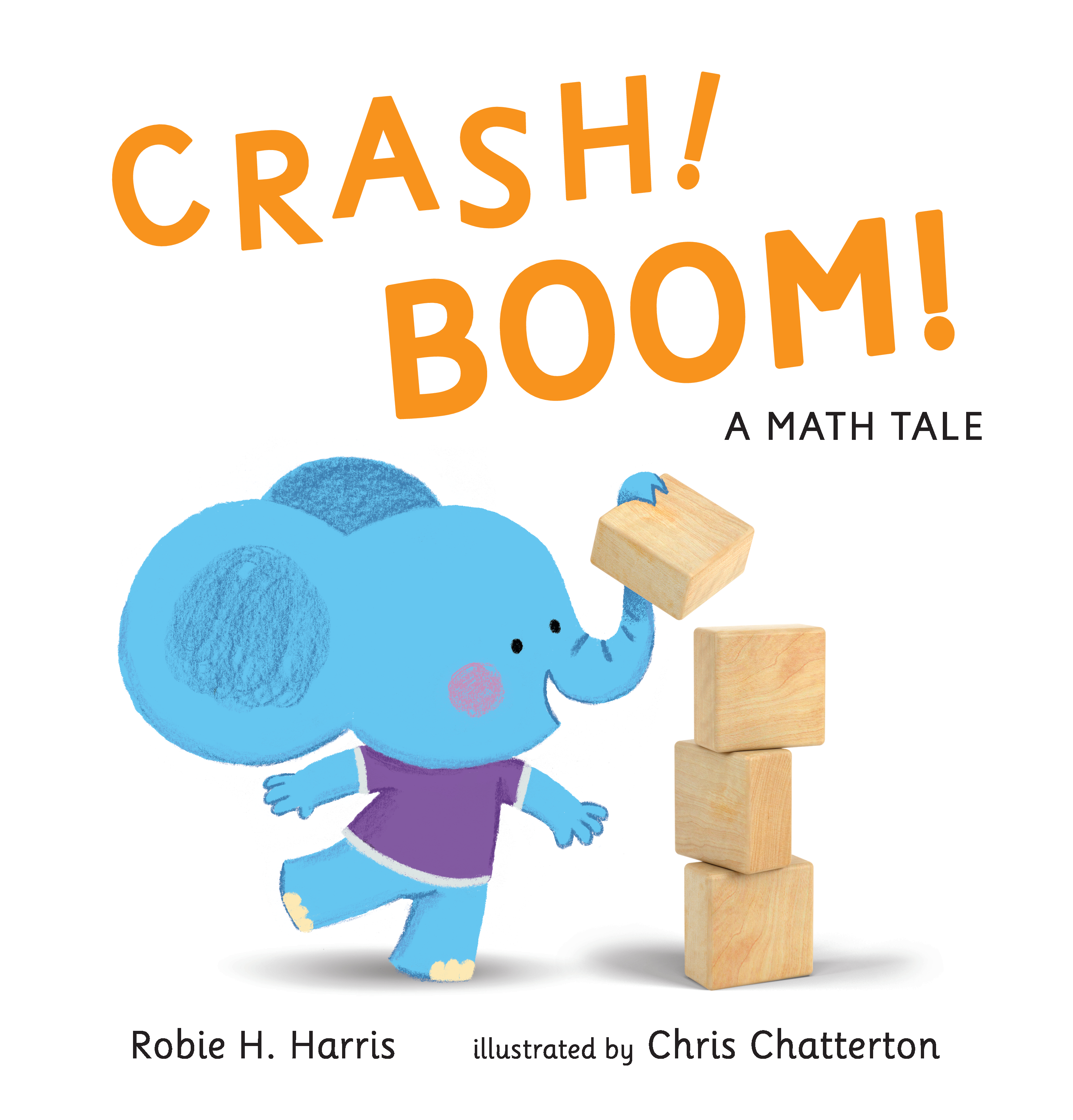
By Robie H. Harris, in Crash! Boom! A Math Tale (Candlewick, 2018), a little blue elephant tries to build block towers. Kids count and guess – will the tower stand up or come crashing down? For ages 2-5.
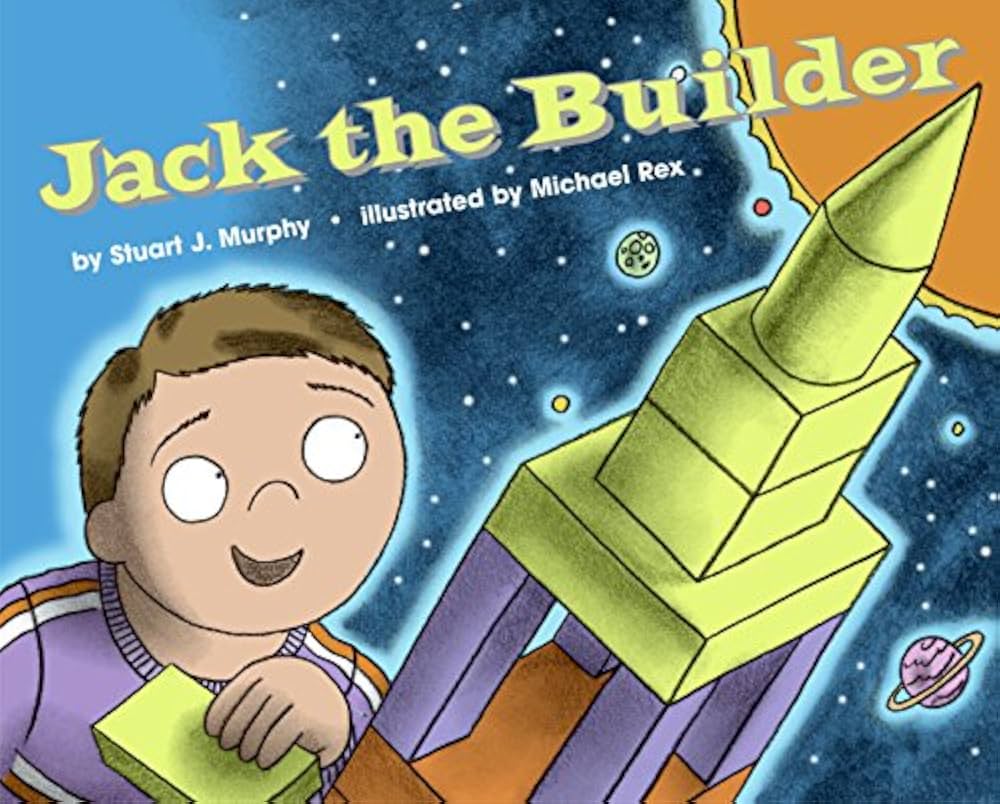
By Stuart J. Murphy in the MathStart series, Jack the Builder (HarperCollins, 2006) is a story about counting and addition, as Jack builds with blocks. For ages 2-5.

In Pat Hutchins’s Changes, Changes (Aladdin, 1987), a charmer of a wordless picture book, a little wooden couple builds a colorful block house – then, as needed, transform it into a fire engine, a ship, and a train. For ages 2-6.

Robert Louis Stevenson’s Block City (Simon & Schuster, 2005) is a picture-book version of the poem, with associated building and math activities. For ages 3-7.

Kurt Cyrus’s Billions of Bricks (Henry Holt, 2016) is a clever counting book in which a diverse construction crew builds impressive structures with bricks, in groups of ten, twenty, thirty, and many more. (You’ll also learn how to make bricks.) for ages 4-7.
Try making your own bricks! (Warning: this is messy. It involves mud.)

Check out these 10 Amazing Mud Brick Buildings.

Lester Walker’s Block Building for Children (Overlook, 1995) has instructions for building everything from a boat dock to the Emerald City of Oz using 11 different sizes and shapes of wooden building blocks. For ages 7-11.

Build your own block playhouse! There are many sources for

Wise Elk’s Building Bricks kits use real plaster and ceramic bricks and tiles (tiny ones) and glue to construct castles, towers, the Great Wall of China, and – of course – your own inventions. Try making a mansion for the savviest of the Three Little Pigs. For ages 5 to adult. See https://wiseelk.us/collections/all-models.

Castle blocks – always a hit - are available in many permutations from many toy suppliers. Pair with a catapult.
For example, from Lakeshore Learning, see https://www.lakeshorelearning.com/products/blocks-manipulatives/building-sets/castle-blocks/p/PP871/ and from Bella Luna Toys see
https://www.bellalunatoys.com/products/miniland-wooden-castle-building-blocks-set.

With the Engino Architecture Set, kids can build impressively enormous models of the Eiffel Tower and the Sydney Bridge. Recommended for ages 8-16+. See https://engino.com/products/stem-architecture-set-eiffel-tower-and-sydney-bridge.

LEGOS! From Duplo bricks for beginners to the spectacular 6000+-piece Hogwarts Castle.

For young artists and sculptors, see Zolo for a collection of zany modern art building pieces. (Naming your creations is half the fun.) All ages.

With Mondrian Blocks, kids are challenged to reproduce the Mondrian-style painting patterns on challenge cards with colorful blocks.Four difficulty levels; all ages. See

From Learning Resources, Mental Blox is a cool critical thinking game in which kids reproduce stacks, patterns, and multicolored shapes on activity cards using 3-D blocks. For ages 4-8.