
Snakes
In this collection
The snake is almost always the bad guy.
Voldemort’s Nagini in the Harry Potter series, Asmodeus Poisonteeth in Redwall, Cleopatra’s asp, and Satan in Milton’s “Paradise Lost” are all – well, pretty much evil.
Kaa, the ancient python in Kipling’s Jungle Book, helps rescue Mowgli (the “man-cub”) from a band of hostile monkeys – but he also tries (several times) to eat him.
Still, to be fair, snakes can be adorable and cool. And they're always interesting.
Snake Stories

Keith Baker’s Hide and Snake (Houghton Mifflin Harcourt, 1995) is a gorgeously illustrated interactive picture book, in which readers try to find a colorfully patterned snake as it slithers from page to page, entangling itself in yarn, hats, baskets, cats, and shoelaces. For ages 2-6.

In Ellen Stoll Walsh’s Mouse Count (Houghton Mifflin Harcourt, 1995), a hungry snake decides to fill a jar with ten (charming) mice to take home for dinner. He counts them as he adds them, one by one, to the jar – but the mice cleverly manage to un-count themselves again and escape. An exercise in counting forward and backward for ages 2-6.
Mouse Count Activities has games, activities, and printables to accompany the book. (Make adorable sewn-paper mice.)
See also
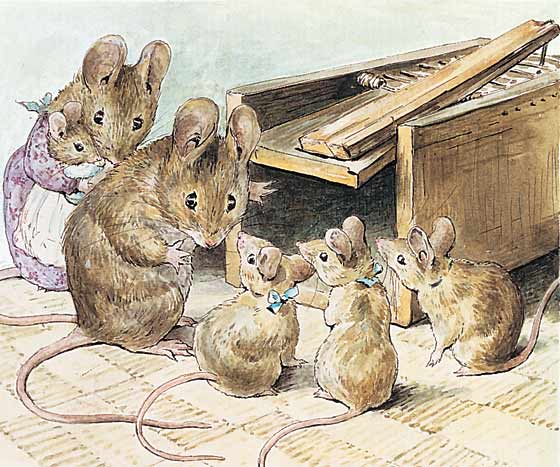

Salina Yoon’s Opposnakes (Little Simon, 2009) is an appealing lift-the-flap book about opposites, with snakes – which are variously clean and dirty, quiet and loud, hot and cold, straight and tangled, and more. For ages 3-6.
See also


Tomi Ungerer’s Crictor (HarperCollins, 1983) is the story of a perfectly delightful boa constrictor sent as a birthday present to Madame Bodot by her son who studies reptiles in Africa. Soon Crictor charms the entire village. For ages 4-8.

In Michael Sussman's Duckworth the Difficult Child (Atheneum, 2019), Duckworth's parents refuse to believe that a gigantic snake has crawled out of Duckworth's closet. "It's all in your head," said Father. "It says here you will forget such nonsense if we give you chores to do. Please wash the dishes, Duckworth, and when you're done with that, take out the garbage and mow the lawn." For ages 4-8.

Trinka Hakes Noble’s The Day Jimmy’s Boa Ate the Wash (Puffin, 1992) is the riotous story of the disaster-laden day when Jimmy brings his pet boa constrictor on a class trip. With illustrations by Steven Kellogg. For ages 4-8.

In Julia Donaldson’s The Gruffalo (Puffin, 2006), clever Mouse manages to scare off a hungry fox, owl, and snake by inventing a fearsome gruffalo (with terrible claws, terrible tusks, and terrible jaws). Mouse isn’t worried, because there’s no such thing as a gruffalo – until, to his horror, he actually encounters one. But it turns out that inventive Mouse has a story ready. For ages 4-8.

In Janell Cannon’s Verdi (Houghton Mifflin Harcourt, 1997), Verdi is a bright-yellow little python who is determined never to grow up to be “lazy, boring, or green!” When, to his horror, he discovers that he’s developing a green stripe, he does his very best to get rid of it, which nearly leads to disaster. Eventually Verdi comes to terms with adulthood, discovering that – even though he’s green – “I’m still me!” For ages 4-8.

In Randy Siegel’s My Snake Blake (Roaring Brook Press, 2012), the protagonist gets a super-long, bright green snake for his birthday as a present from his dad. (“I think your father is nuts,” said my mom, as she walked in, frowning. “And proud of it,” answered dad. “Now let the snake out.”) Luckily Blake is a very talented snake, capable of spelling words with his coils. Like “RELAX.” Funny and terrific for ages 4 and on up.

“Rikki-Tikki-Tavi,” which first appeared in Rudyard Kipling’s 1894 classic The Jungle Book, is the story of a brave little mongoose who saves a British family in India from Nag and Nagaina, a pair of deadly cobras.
For a picture-book version of the tale, see Rikki-Tikki-Tavi (Morrow Junior Books, 1997), with illustrations by Jerry Pinkney. For ages 6 and up.

David Adler’s Cam Jansen: The Scary Snake Mystery (Puffin, 2005) stars young detective Cam Jansen, whose nickname (Cam is short for “Camera”) refers to her photographic memory. This one involves a loose snake and a stolen video camera. For ages 5-8.

In Alexander McCall Smith’s Akimbo and the Snakes (Bloomsbury, 2006) - one of a series – ten-year-old Akimbo’s father is head ranger on a game preserve in Africa. In this book, Akimbo goes to visit his uncle’s snake farm, where he becomes involved in a hunt for a rare (and dangerous) green mamba. For ages 7-9.

David Almond’s Mouse Bird Snake Wolf (Candlewick, 2013) is an original creation tale in which the gods – now back in the clouds, having naps and tea – have left gaps in the world. These are filled in by three imaginative children who conjure up a mouse, bird, snake, and finally a wolf. With the wolf, things get dangerous. A thought-provoking read for ages 7-10.

Joy Cowley’s Snake and Lizard (Kane/Miller Books, 2008) covers – in many short chapters – the adventures of two unlikely friends, laid-back Snake and excitable Lizard. For ages 7-10.

The narrator of Patrick Jenning’s We Can’t All Be Rattlesnakes (HarperCollins, 2011) is Crusher, a gopher snake, captured by “an oily, filthy, fleshy human child” named Gunnar. (“Gunnar thinks I’ll be his adoring pet. He’s wrong.”) Snarky Crusher decides to pretend to be tame while plotting to escape, but soon finds herself feeling sorry for clueless Gunnar. Clever, funny, and a great animal voice. For ages 8-12.

In The Reptile Room (HarperCollins, 2007) – Book 2 of Lemony Snicket’s A Series of Unfortunate Events series – the luckless Baudelaire orphans are living with their herpetologist Uncle Monty, owner of the Incredibly Deadly Viper. Hilariously miserable for ages 8-12.
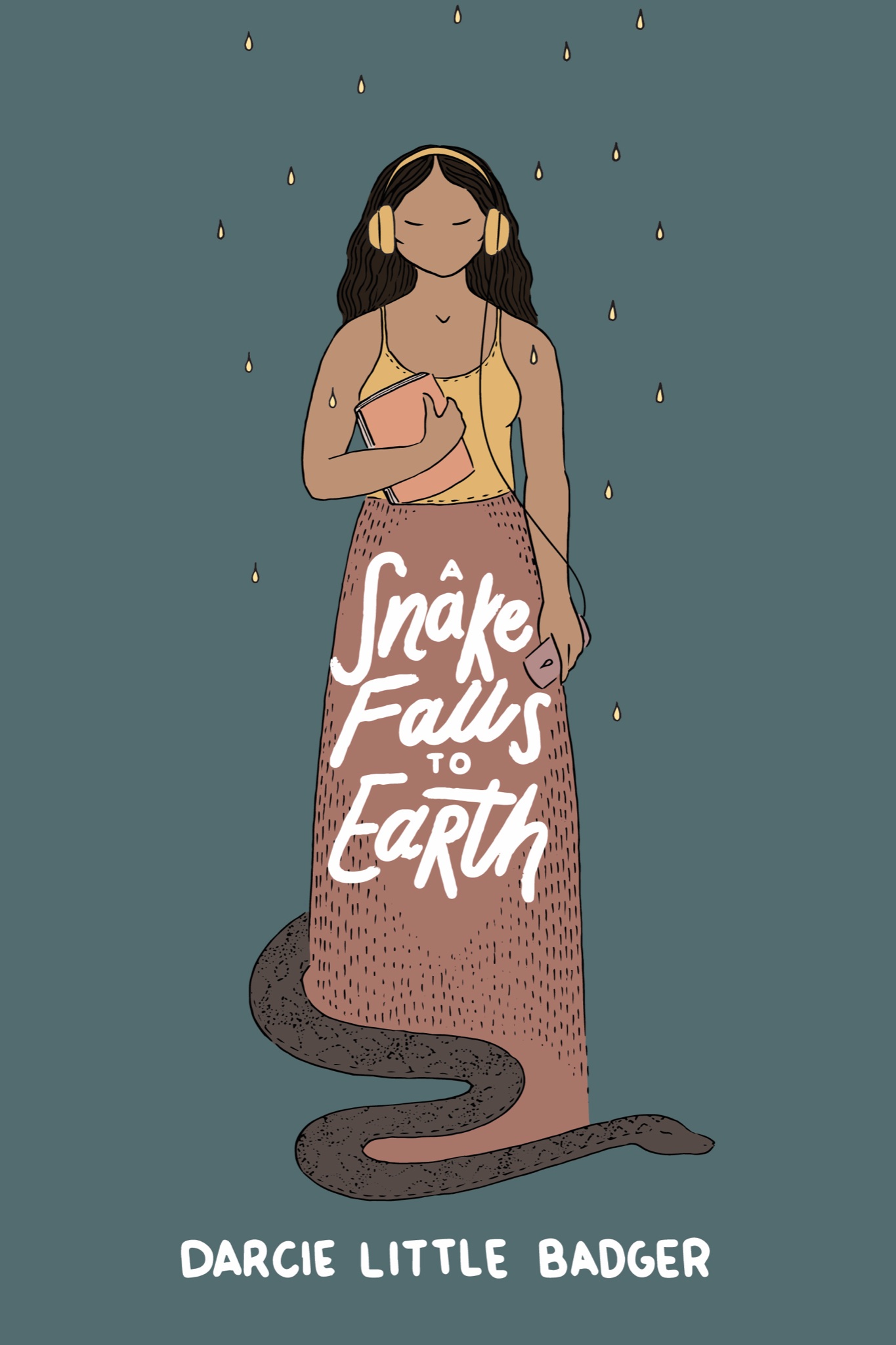
By Darcie Little Badger, A Snake Falls to Earth (Levine Querido, 2021) pairs Nina, a Lipan Apache girl, with Oli, a shape-shifting cottonmouth snake from the magical parallel Reflecting World in a quest to save an ancient toad, now in danger of extinction due to environmental destruction in Nina's world. A Newbery Honor book for ages 10-14.

Antoine de Saint-Exupery’s The Little Prince (Houghton Mifflin Harcourt, 2013), originally published in 1943, is the poetic and philosophical tale of an aviator who, as a child, drew a picture of an elephant that had been swallowed by a boa constrictor – but which all the adults around him said was a hat. Now an adult, the aviator is stranded in the desert, attempting to repair his plane, when he meets the mysterious little prince – here from his tiny distant home planet. For starts, the little prince knows the picture is of an elephant inside a snake. A wonderful story. Readers will find a lot to talk about. For ages 10 and up.
From the Teaching Children Philosophy , see a long list of creative discussion questions for The Little Prince at https://www.prindleinstitute.org/books/the-little-prince/.

The 1974 film version of The Little Prince, in which Bob Fosse plays a superb Snake, is rated G. There's also an
animated version (2015), a sequel, in which a little girl is introduced to the world of the Little Prince by the Aviator. Rated PG.

In Pat O’Shea’s The Hounds of the Morrigan (HarperTeen, 1999), ten-year-old Pidge and his little sister Brigit find a book in a second-hand bookshop that turns out to be an ancient prison for the powerful and evil serpent Olc-Glas. The Morrigan – goddess of death and destruction – wants to use the serpent’s power to take over the world, and the children soon find that they’re involved in a great battle between the forces of good and evil. This is a wonderful fantasy, filled with characters and images from Celtic mythology. It’s available through libraries and from used-book dealers. For fans of Tolkien and C.S. Lewis, this one is well worth tracking down. Highly recommended for ages 11 and up.

Rumer Godden’s The River (Trans-Atlantic Books, 2004) is the story of Harriet, who lives with her British family in India. There Harriet, a would-be poet, struggles with change and relationships – with her older sister, Bea; the wounded soldier, Captain John; and her little brother, who is fascinated with the cobra in the garden. A thoughtful and beautiful exploration of life and death, love, loss, and growing up. For ages 12 and up.
From Sir Arthur Conan Doyle’s The Adventures of Sherlock Holmes, "The Speckled Band" (spoiler!) involves a snake. Read it online here.
From the Brothers Grimm, “The White Snake” centers around a magical (and apparently cooked) white snake that gives people the power to understand the language of animals. See https://www.grimmstories.com/en/grimm_fairy-tales/the_white_snake.
From The Guardian, check out this list of the Ten Best Snakes in Literature.

In the Disney version of Robin Hood (1973), all the characters are animated – including Sir Hiss, wicked Prince John’s wicked snake sidekick. (Robin and Maid Marian are foxes.) Rated G.
Snake Myths and Legends
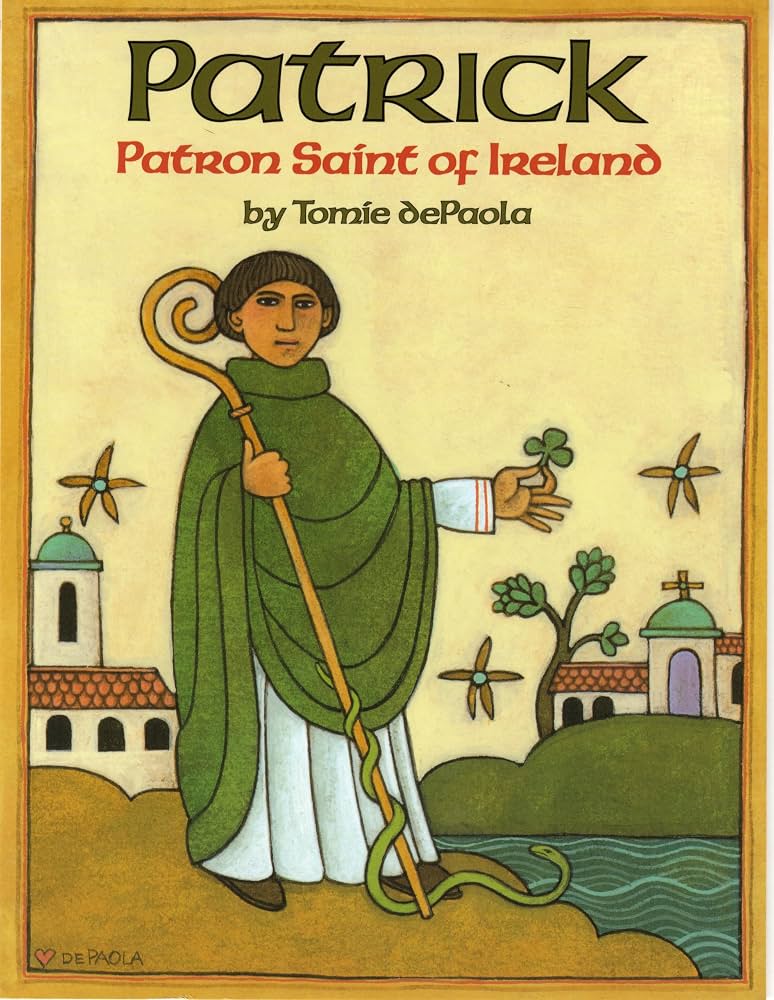
By Tomie de Paola, Patrick: Patron Saint of Ireland (Holiday House, 1992) is a simple account of Patrick's life including his association with the shamrock and his famous driving the snakes out of Ireland. For ages 4-8.
From Scientific American, see The Real Reason Ireland Has No Snakes at https://www.scientificamerican.com/article/the-real-reason-ireland-has-no-snakes/.

Sean Taylor’s The Great Snake: Stories from the Amazon (Frances Lincoln Children’s Books, 2008) is a collection of nine pourquoi-style folktales collected in the course of a boat trip along the Amazon, among them “The Great Snake.” Illustrations are colored woodcuts. For ages 8 and up.

Aaron Shepard’s lavishly illustrated Lady White Snake (Pan Asian Publications, 2001) is a tale from Chinese opera in which the beautiful Lady White – a snake in human form – falls in love with a young man and marries. A monk, who discovers Lady White’s true nature, finally succeeds – after a battle - in driving the lovers apart and imprisoning Lady White under a pagoda. (Though Lady White still has warrior friends who come to her aid.) Readers can also learn a handful of Chinese characters, including the one for “snake.” For ages 8-12.

Geraldine McCaughrean’s Perseus (Cricket Books, 2005) is a 160-page retelling of the Greek myth of Perseus, who slays the snake-headed gorgon Medusa and rescues the beautiful princess Andromeda. For ages 10 and up.

Edited by Gregory McNamee, The Serpent’s Tale (University of Georgia Press, 2000) is a collection of snakes stories and tales from around the world, including folktales from Germany, the American Southwest, China, Yugoslavia, Iceland, and India. For ages 13 and up.
Snake Science

Patricia Lauber’s Snakes Are Hunters (HarperCollins, 2002) – one of the Let’s-Read-and-Find-Out Science series – is a nicely presented picture-book overview of the natural history of snakes, variously covering anatomy, senses, predators, food, and egg-laying. For ages 4-8.

Sarah L. Thomson’s Amazing Snakes (HarperCollins, 2006) – one of the I Can Read series – is a nicely done introduction to snakes for beginning readers. (“There are more than 2000 different kinds of snakes. Some are shorter than a pencil. Some are almost as long as a school bus.”) For nonfiction lovers ages 5-7.

Amanda O’Neill’s I Wonder Why Snakes Shed Their Skin (Kingfisher, 2011) is an engaging overview of reptiles, organized in question-and-answer format for a great interactive read. Which is the biggest reptile? Which is the biggest snake? Why do snakes stare? Illustrated with color photos and cartoons. For ages 5-9.

By Diane Burns, Snakes, Salamanders, and Lizards (Cooper Square Publishing, 1995) is one of the Take Along Guides, with background information, identification helps, note pages, and three simple craft projects (make a dried-bean picture of a snake, for example). For ages 6-9.

Seymour Simon’s 32-page Snakes (HarperCollins, 2007), illustrated with terrific color photographs, is an excellent introduction to snake anatomy, behavior, and taxonomy for ages 8-12.

Cindy Blobaum’s Awesome Snake Science (Chicago Review Press, 2012) is packed with information, photos, diagrams, and “40 Activities for Learning About Snakes.” Subsections include Snake Study, Body Basics, Awesome Adaptations, Super Senses, On the Offense (make virtual viper venom), and Definitely Defense (make a color-changing snake). A great resource for ages 9-12.

By Marianne Taylor, What If Humans Were Like Animals? (Readers Digest, 2013), in icky science mode, details “The Amazing and Disgusting Life You’d Lead as a Snake, Bird, Fish or Worm.” For ages 9-12.

By Sy Montgomery with photographer Nic Bishop, The Snake Scientist (Houghton Mifflin Harcourt, 2001) – one of the Scientists in the Field series – follows the research of herpetologist Robert Mason on the red-sided garter snake. Find out what snake scientists do. For ages 10 and up.
From the California Academy of Science, Snakes and Lizards: Structure and Function is a hands-on activity in which kids measure and research a range of snakes and lizards. Find out what a squamate is. For ages 8-12.
From the Smithsonian, read about the 40-foot-long Titanboa, the largest snake ever.
Read all about the biggest living snake, the Giant Anaconda.
How Snakes Work covers snake anatomy and senses, growth, movement, digestion, and sex. Plus a note on flying snakes.
Scientists believe that snakes probably evolved from a lizard. Find out about it at How Snakes Lost Their Legs.
Learn about the animals at the National Zoo's Reptile Discovery Center.
The Snake Conservation Center hosts an annual citizen science project called the Snake Count. Help map and track snake distributions across North America.
Snake Poems

Douglas Florian’s lizards, frogs, and polliwogs (Houghton Mifflin Harcourt, 2005) is a collection of 21 illustrated poems about reptiles and amphibians. Featured: the diamondback rattlesnake, cobra, and python. For ages 5-10.
Practically everybody loves Shel’s Silverstein’s I’m Being Eaten by a Boa Constrictor. (Oh, gee/It’s up to my knee.)

Put to music, it’s on Peter, Paul, and Mary’s 1990 CD Peter, Paul and Mommy.
By the irrepressible Ogden Nash, The Python begins “The python has, and I fib no fibs/318 pairs of ribs…”
Emily Dickinson’s poem A narrow fellow in the grass ends "But never met this fellow/Attended or alone/Without a tighter breathing,/And zero at the bone.”
Read D.H. Lawrence’s poem “Snake” here.
Projects and Activities
KidZone’s Snake Activities has printable snake books and worksheets, a snake life cycle sheet, snake puzzles and coloring pages, and a recipe for chocolate snakes.

Make Rainbow Bubble Snakes. You’ll need plastic water bottles, old socks, duct tape, dish soap, and food coloring.
What to do with those hopeless single socks? Make Sock Snakes.
Make a 

Make a Shape Snake with cut-out shapes.

From Deep Space Sparkle, check out this wonderful project for making glittery Snakes in the Grass.
From DLTK’s Crafts for Kids, Snake Activities has a list of cool snake crafts, including shape snakes, egg-carton snakes, fingerprint snakes, paper-chain snakes, and a boingy spiral snake.
Got bubble wrap? Make this terrific Bubble Wrap Snake.

From eighteen25, particularly adorable painted 
From Dick Blick, see instructions for making a polymer clay Snake Basket.

This 

Snakes and Ladders (or Chutes and Ladders) is a classic board game that originated in ancient India. (The aim: maneuver your game piece across the board, while being helped by ladders and hindered by snakes.) Several versions are available (including a Harry Potter Serpents and Staircases.) Also see the classic board game and the Snakes and Ladders app from Google Play. Or play for free at various sites online. (For example, see
here.)

Jan Sovak’s Snakes of the World Coloring Book (Dover Publications, 1995) has brief information and black-line, ready-to-color portraits of some 40 different snakes, among them the anaconda, king cobra, cottonmouth, puff adder, and garter snake.
And Don’t Leave Out…

Ouroboros, the ancient symbol of a snake swallowing its own tail, represents the cycle of life.


The famous Gadsden flag – named for its designer Christopher Gadsden – was created during the American Revolution and pictures a coiled rattlesnake with the motto “Don’t Tread on Me.” This article has interesting information on historical snake flags and snake symbolism.