
Nice Mice and Awesome Rats
In this collection
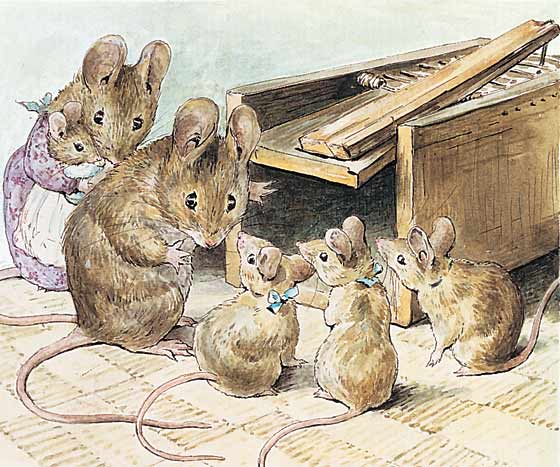
Beatrix Potter wrote about mice. A mouse – well, a Dormouse – is an unconscious guest at the Mad Hatter’s tea party in Lewis Carroll’s Alice’s Adventures in Wonderland; and Reepicheep, a touchy but gallant mouse, is a favorite in C.S. Lewis’s Prince Caspian and Voyage of the Dawn Treader.
In Kenneth Grahame’s ever-enchanting The Wind in the Willows, a main character is Ratty, a Water Rat – well, a vole – who loves the River and insists that there’s nothing – nothing – better than messing about in boats.
In Roald Dahl’s The Witches, the narrator is captured by witches, fed a potion called “Formula 86 Delayed-Action Mouse Maker,” and turned – permanently in the book, non-permanently in the movie – into a mouse.
Artistic Mice

Leo Lionni’s Frederick (Dragonfly Books, 1973) may just be my favorite mouse. While all the other mice scurry around gathering food for winter, Frederick – a seemingly spacy and unproductive mouse – claims to be collecting words and colors, “because winter is gray.” In the dark depths of winter, Frederick is beautifully vindicated as he warms and delights all the other mice with his stories and poems about summer and spring. For ages 4 and up.

The main character of Katharine Holabird’s Angelina Ballerina (Viking Juvenile Books, 2008) is an enchanting little mouse who refuses to do anything but dance – no cleaning her room, no helping in the kitchen, and a lot of leaping and arabesques that are hard on the furniture and her mother’s cheese pies. Finally her sensible parents buy her a tutu and enroll her in the Camembert Academy ballet school, where she blossoms. There are many sequels and a television series. For ages 3-8.

The famous Nutcracker Ballet – with score by Tchaikovsky – features an exciting battle between the Mouse King and his battalion of mice and the Nutcracker and his toy soliders. Susan Jeffers’s Nutcracker (HarperCollins, 2007) is a gorgeously illustrated version of the story from Christmas tree to Sugar Plum Fairy, for ages 3-8.

In Dick King-Smith’s A Mouse Called Wolf (Yearling, 1999), Wolfgang Amadeus Mouse is the youngest and smallest of Mary Mouse’s thirteen children, all born in the mousehole behind the elderly Mrs. Honeybee’s grand piano. Wolf loves to listen to Mrs. Honeybee play – and, to the astonishment of his mother, he proves to have a talent for singing. Soon Mrs. Honeybee is teaching him songs – and Wolf discovers that he can use his marvelous ability to save both his family and his human friend from disaster. A chapter book for ages 5-9.

Mice don’t just squeak; they also really do sing. Read about it in The Mystery of the Singing Mice from Smithsonian magazine at https://www.smithsonianmag.com/science-nature/the-mystery-of-the-singing-mice-1566363/.
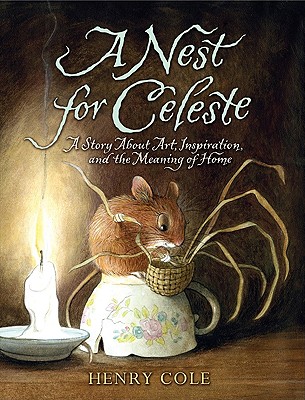
The title character of Henry Cole’s A Nest for Celeste (Katherine Tegen, 2010) is a kind and creative little mouse whose life is made miserable by a pair of bullying rats – but things look up when John James Audubon comes to visit (and paint birds) and Celeste makes friends with his young assistant, Joseph. For ages 7-10.

Montague Mad-Rat (the Younger), the endearing main character of Tor Seidler’s A Rat’s Tale (Farrar, Straus & Giroux, 2008) lives with his bohemian parents in the sewers under New York City. There his mother makes hats; his father builds mud castles; and Monty himself paints pictures on the shells his peripatetic Aunt Elizabeth brings home from her many travels. Then Monty meets and falls in love with upper-class wharf rat Isabella Moberly-Rat – hopelessly, he thinks, until his art saves all the wharf rats from extermination and he becomes a hero. There’s also a great sub-plot involving Monty’s peculiar black-sheep uncle, Montague Mad-Rat (the Elder). For ages 9-12.

Emmaline, the heroine of Elizabeth Spires’s The Mouse of Amherst (Farrar, Straus & Giroux, 2002), lives behind the wainscoting in Emily Dickinson’s bedroom. Soon she and Emily begin to exchange poems, through which they share their hopes and feelings. Lavinia, Emily’s sister, however, is set on ridding the house of mice – and though Emily manages to save her friend from the ratcatcher’s ferret, Emmaline decides sadly that it’s time to move on. Included, along with eight of Dickinson’s poems, is a short biography of the poet. For ages 8-12.

In Barbara Wersba’s Walter: The Story of a Rat (Front Street Press, 2005), Walter, a lonely and literary rat (he’s named for Sir Walter Scott) secretly shares a house and a library with a cross and reclusive children’s author, Miss Pomeroy. Disturbed by the fact that there seem to be no rat heroes in children’s books, he finally decides to contact Miss Pomeroy, first leaving her a note that reads “I live here too.” She writes back: “I know.” A wonderful story of an unusual friendship for ages 10 and up.

The Cheshire Cheese Cat by Carmen Agra Deedy and Randall Wright (Peachtree Publishers, 2011), the starring role belongs to Skilley, alley cat and contender for the post of chief mouser at the famed writers’ haunt, Ye Olde Cheshire Cheese Inn – but often in literature, where there’s a cat, there’s a mouse. The mouse here is Pip, a highly literate rodent with an enormous vocabulary, who befriends Skilley when he reveals his awful secret – when it comes to food, he much prefers cheese to mice. Characters include the evil cat Pinch, Maldwyn, a wounded royal raven, Queen Victoria, and Charles Dickens – who spends a lot of time at the inn, struggling to find an opening line for his new novel. (Hint: “He was the best of toms. He was the worst of toms.”) Kids may not get all the Dickensian references, but finding them is part of the fun. For ages 10-13.
Adventurous and Imaginative Mice

There are many picture books starring Lucy Cousins's Maisy, an adventurous four-year-old mouse.
See Maisy for info and games for kids.
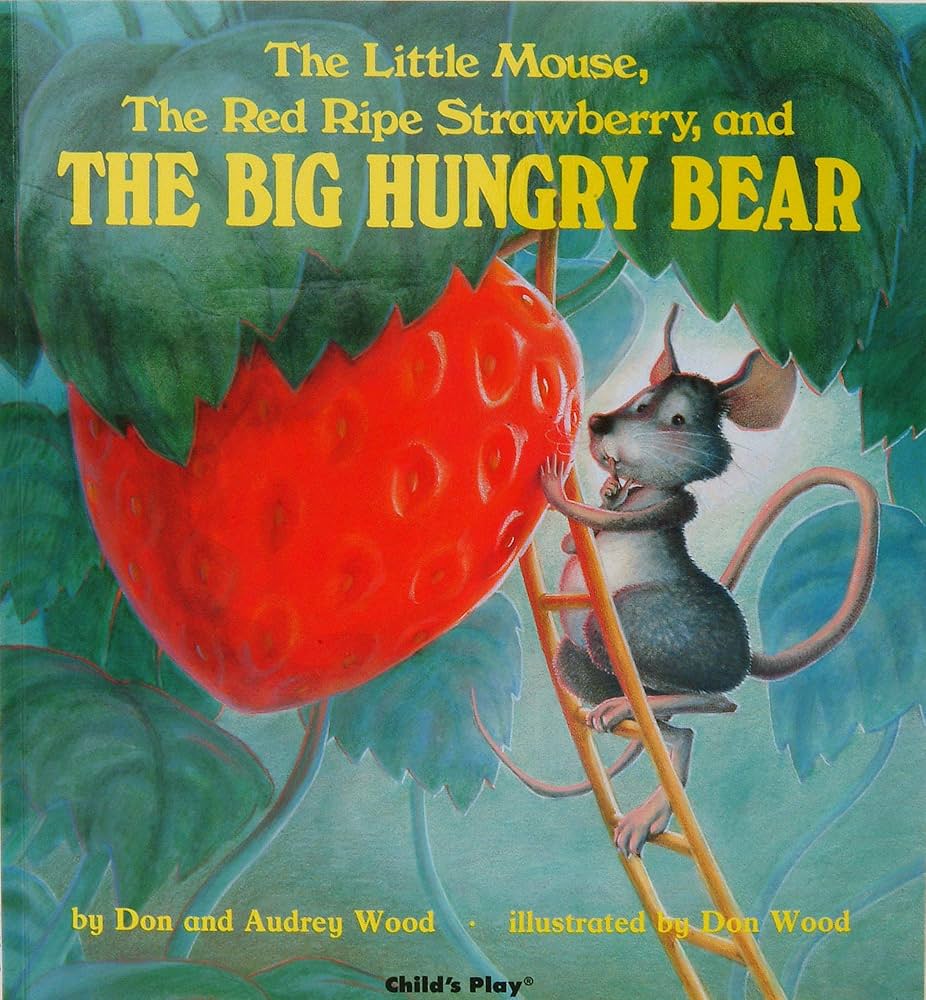
Audrey Wood’s The Little Mouse, the Red Ripe Strawberry, and the Big Hungry Bear (Clarion, 2020) is a funny and delightful book about sharing as Little Mouse deals with the Big Hungry Bear. For ages 1-4.

In Beatrix Potter's The Tale of Two Bad Mice (Warne, 1996), the mice vandalize a dollhouse - but they're sorry later. For ages 3-6.

Laura Numeroff’s If You Give a Mouse a Cookie (HarperCollins, 1985) is a giggle-provoking chain of disasters. A persistent and adorable mouse wants a cookie, then demands a glass of milk, then a straw, then a boost to the mirror to see if he has a milk mustache… all with increasingly awful messy consequences. There are many sequels in the same vein, among them If You Give a Pig a Pancake, If You Give a Moose a Muffin, and If You Give a Cat a Cupcake. For ages 3-7.

Jerry Pinkney’s The Lion and the Mouse(Little, Brown Books for Young Readers, 2009) is a retelling of Aesop’s fable in which a lion spares a mouse’s life; in return, the mouse frees the lion from a hunter’s trap. This version of the story has marvelous illustrations of African plains and a truly impressive golden lion. For ages 3-7.

Other picture-book takes on Aesop’s tale include Rand Burkert’s Mouse & Lion (Michael di Capua Books, 2011), with enchanting illustrations by Nancy Ekholm Burkert; Bernadette Watts’s The Lion and the Mouse (North-South Books, 2007), in which the mouse first meets the lion as a furry little cub; and Rebecca Emberley’s The Lion and the Mice (Holiday House, 2011) in which a pair of city mice, gorgeously tricked out for a night on the town, encounter the lion in a cage at the zoo.

Mouse Was Mad by Linda Urban (Harcourt Children’s Books, 2009) is an inspired mouse-based antidote for temper tantrums. Mouse is hopping, stomping, screaming, rolling-around-on-the-ground mad – but he just can’t seem to do mad right. (“Stomping, done right, should result in the shaking of trees and the rumbling of earth,” said Bear.) Finally Mouse discovers that his best way to cope with being mad is to stand very very still – and when he does, he begins to feel better. For angry kids ages 3-6.
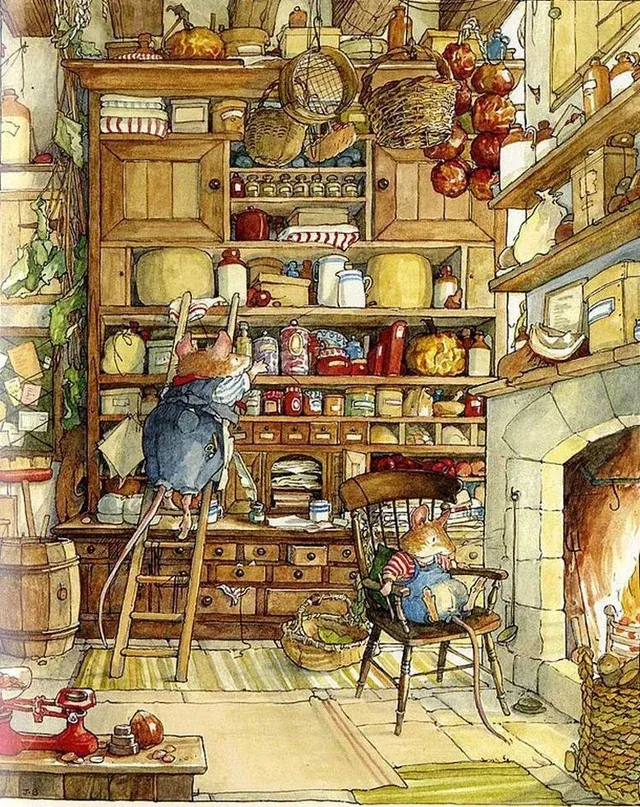
Jill Barklem’s Brambly Hedge books (HarperCollins) feature the adventures of a community of mice living in the old-fashioned English countryside. The first four books – there are many – follow Brambly Hedge through the seasons; titles are Spring Story, Summer Story, Autumn Story, and Winter Story. Illustrated with enchantingly detailed watercolors. For ages 3-7.
Also see https://bramblyhedge.com/.
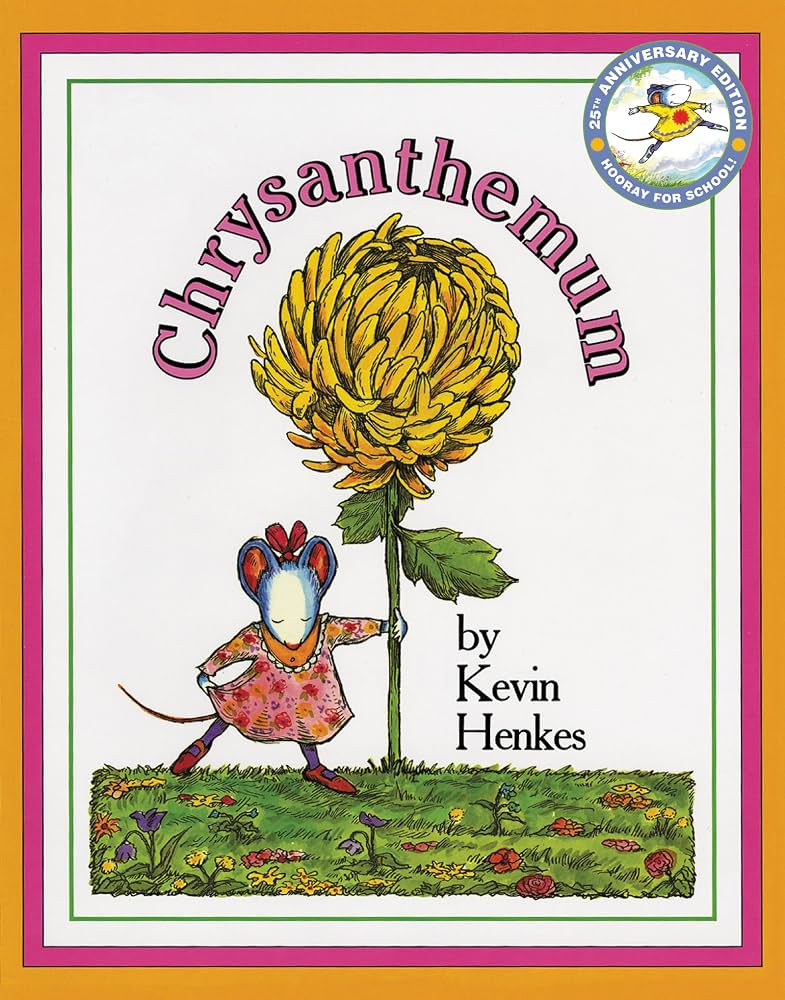
By Kevin Henkes, Chrysanthemum (Greenwillow, 2020) is a perfect charmer of a little mouse who loves her unusual name – until she starts school. A story about teasing, kindness, and respect for ages 4-7.

The narrator of Susan Meddaugh’s Cinderella’s Rat (Sandpiper, 2002) is an ordinary rat (“I was born a rat. I expected to be a rat all my days. But life is full of surprises.”). Then he and his sister Ruth, out foraging for food, are caught in a rat trap. Released by Cinderella’s fairy godmother, he’s turned into a coachboy, though Ruth remains a rat. At the Prince’s castle, a confused wizard – convinced that Ruth is a human turned into a rat by a magic spell – does his best to reverse the damage. A fun fractured fairy-tale for ages 4-8.

In Arnold Lobel’s Mouse Soup(HarperCollins, 1983), a quick-thinking mouse, captured by a hungry (but gullible) weasel, manages to trick his way out of the soup pot by telling four clever stories. For ages 4-7. Also see Lobel's Mouse Tales (HarperCollins, 1978), in which a mouse father tells seven short funny stories, one for each of his seven little sons.

Seven Blind Mice by Ed Young (Puffin, 2002) is a mouse-ish version of the old Indian tale of the blind men and the elephant. Seven differently colored mouse approach a mysterious – well, something – by the local pond, and each brings back a different impression of it. Only when the seventh mouse ties all their stories together does the conclusion become clear. Moral: “Knowing in part may make a fine tale, but wisdom comes from seeing the whole.” For ages 4-8.

In Jan Brett’s Town Mouse, Country Mouse (Puffin, 2003), a take on Aesop’s familiar fable, the town mice – who live in a lush Victorian townhouse – swap places with the country mice, who live in a tree stump. Both pairs struggle with new and unfamiliar surroundings and finally conclude that they’d rather be home. For ages 4-8.

The title character of Eve Titus’s Anatole (Dragonfly Books, 2010) is a talented gourmet mouse, who wears a beret and rides a bicycle. Struggling to find a way to feed his family, he begins to critique the cheeses of the Duvall Cheese Factory – where his recommendations are so spot-on and helpful that he becomes the factory’s official (though mysteriously never seen) cheese taster. Pair this one with a homestyle cheese tasting. For ages 4-8.

Graham Oakley’s The Church Mouse (Aladdin Books, 1972) can take a bit of effort to track down, but it’s well worth it. This is the first of a series of wonderful British picture books featuring Arthur, the church mouse, Sampson, the long-suffering church cat, and a delightful cast of mouse and human characters. Clever, tongue-in-cheek, and hilarious. For ages 5 and up.

In Beverly Cleary’s The Mouse and the Motorcycle (HarperCollins, 1990), Ralph (the mouse) discovers the (toy) motorcycle in a hotel room – and promptly drives it off the bedside table and into a wastebasket. Rescued by Keith, the motorcycle’s owner, Ralph soon learns to ride - including the trick of starting the motorcycle by making a special noise (p-p-b-b-b-b). Adventures and disasters ensue – themes of the book are friendship, trust, and responsibility – and ultimately Keith generously gives Ralph the motorcycle (and a crash helmet) for his very own. Sequels include Runaway Ralph and Ralph S. Mouse. For ages 5-9.

George Selden’s Cricket in Times Square (Farrar, Straus & Giroux, 1960) features not only a very talented cricket, but Tucker, a cool NYC mouse, and his friend Harry the Cat. For ages 6-9.

Eve Titus's Basil of Baker Street (Aladdin, 2016) is the first of a series starring mouse sleuth Basil, who lives in the basement of Sherlock Holmes's house at 221B Baker Street and is a disciple of the great detective. His first case: the Mystery of the Missing Twins. For ages 6-9.

Disney’s The Great Mouse Detective (1986) is based on the adventures of Basil, the rodent Sherlock Holmes. Rated G.


In Sarah Dillard’s Mouse Scouts (Yearling, 2016), first of the Mouse Scouts series, the new scouts – Violet, Tigerlily, Hyacinth, Petunia, Junebug, and Cricket – tackle their first merit badge, which involves planting a vegetable garden. Each book includes pages from the Mouse Scout Handbook, diagrams, games, and activities. For ages 7-10.

The Martin of Dick King-Smith’s Martin’s Mice (Yearling, 1998) is a cat. Martin befriends mice – for which he gets a lot of grief from the other cats and kittens – and eventually, secretly, he even captures a mouse to keep as a pet. When his mouse, Drusilla, escapes, Martin is dismayed – until his own experience of being a captive housepet gives him some perspective. Discussion topics include respect, differences, and the nature of freedom. For ages 7-11.

Margery Sharp’s The Rescuers (NYR Collection, 2011), originally written in 1959, has recently been beautifully re-issued as part of the New York Review of Books Children’s Collection. The story: the Prisoner’s Aid Society – the mouse version of Amnesty International – wants to rescue a Norwegian poet from imprisonment in fearsome Black Castle. To that end, Bernard (brave brown mouse) is dispatched to engage the services of the brilliant, beautiful, and Norwegian-speaking Miss Bianca (affected white mouse), who lives in a porcelain pagoda at the home of the Ambassador, eats cream cheese from a bonbon dish, and wears a silver chain around her neck. A mouse-style political thriller for kids. For ages 7-11.

In the Disney version of The Rescuers (1977), Bernard and Bianca – members of an organization quartered in the basement of the United Nations building – set out to rescue Penny, an orphan who has been kidnapped by evil pawnshop owner Madame Medusa. The plot involves a trip to Devil’s Bayou, a quest for the world’s largest diamond, and a pair of ferocious pet alligators. Rated G.

Mr. and Mrs. Little’s second son – and the protagonist of E.B. White’s classic, Stuart Little (Harper & Row, 1974) - is a mouse. His parents, unfazed, make their unusual child a bed from four clothespins and a cigarette box, and Stuart soon grows up to be an adventurous and personality-laden mouse, capable of tackling everything from a sailing race to the machinations of the family cat. Still, the cat succeeds in frightening away Stuart’s beloved bird friend, Margalo – and, now grown up, Stuart sets off on a quest to find her. The book ends there, with Stuart still looking, journeying hopefully. It’s a wonderful story and a great discussion-promoter. For ages 7-11.

A Guide for Using Stuart Little in the Classroom by Lorraine Kujawa and Virginia Wiseman (Teacher Created Materials, 2004) has quizzes, hands-on projects, and curriculum connections.
By Barbara Herkert, A Boy, a Mouse, and a Spider: The Story of E.B. White (Henry Holt, 2017) is a picture-book biography of the beloved author of Stuart Little (the mouse) and Charlotte’s Web (the spider). For ages 5-9.
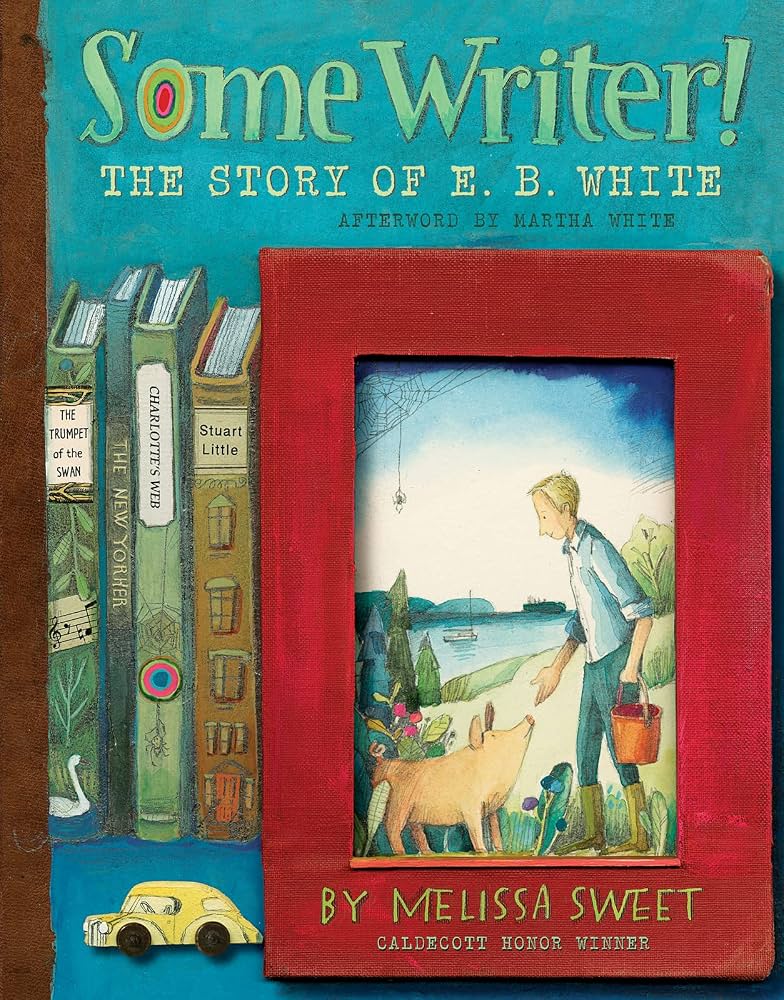
For the same age group, see Melissa Sweet’s marvelously designed E.B. White biography Some Writer! (Clarion, 2019).

In the movi Stuart Little (1999), the Little family adopts the mouse – which solves a lot of biological questions that are bound to pop up from the book. The plot involves a pair of imposter mice, claiming to be Stuart’s real parents, a kidnapping, and some murderous alley cats. Rated PG.

Abel, of William Stieg’s Abel’s Island (Square Fish, 2007), a wealthy, pampered, and sophisticated mouse (think quail eggs and croquet), is swept away from his wife Amanda by a hurricane. Stranded on an island, Abel struggles to survive and to find his way back home. He ends up spending a year as a castaway, during which he learns a great deal about himself, his place in the universe, and the nature of life and love. For ages 8-12.

In Avi’s Poppy (HarperCollins, 2005), the mice of Dimwood Forest live under the claw of the despotic owl Mr. Ocax, who has forbidden them to move about without his express permission, and who claims – deceitfully – to be protecting them from dangerous porcupines. After Poppy’s boyfriend Ragweed is killed by the owl, Poppy leads the move to relocate the forest mice to a new home - and ultimately, bravely armed with a porcupine quill, defeats Mr. Orax. Several sequels. For ages 8-12.

Julie Leung’s Mice of the Round Table (HarperCollins, 2017) is the first of an epic series based on Arthurian legend. With mice. For ages 8-12.
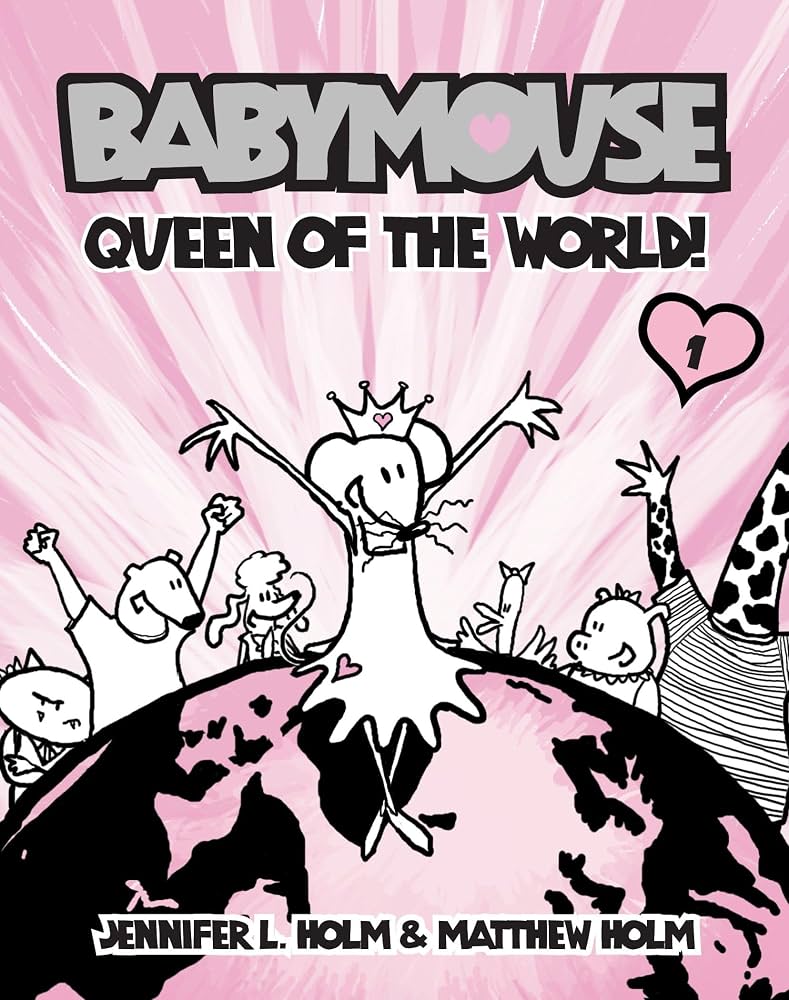
By Jennifer L. Holm, the Babymouse series of young graphic novels stars a feisty young mouse with a king-size imagination. First in the series is Babymouse: Queen of the World! (Random House Graphic, 2005). Fun reads for ages 8-12.

Richard Peck’s Secrets at Sea (Dial, 2011) is a tale of two Victorian-era families: the Upstairs Cranstons, humans with daughters Olive and Camilla, and the Downstairs Cranstons, a family of mice – Helena, Louise, flighty Beatrice, and little brother Lamont – who live inside the Cranston house walls. When the upstairs family embarks for Europe to find Olive a husband, the mice naturally go along. On the voyage they meet the ship’s complement of traveling mice – among them the Duchess of Cheddar Gorge, Mouse-in-Waiting to Queen Victoria’s fourth daughter, the elegant Lord Peter, Mouse Equerry to Lord Henshowe, and the handsome Nigel, the ship’s mouse steward. A delightful Borrowers-style story, filled with adventure, humor, and romance. For ages 8-12.

In Lynne Jonell’s Emmy and the Incredible Shrinking Rat (Henry Holt and Co., 2007), Emmy’s parents have suddenly become very rich – and they’ve also changed for the worse. Once they just wanted to stay home with Emmy, reading and sailing on the lake; now they’re interested in nothing but travel and parties, and take no notice of Emmy at all. In fact, Emmy, everywhere, is practically invisible. It all seems to be the fault of her new nanny, the nefarious Miss Barmy – but Emmy gets help from an unexpected quarter. Bitten by the class pet rat, she finds that she can understand rat speech – and a second bite, even more remarkably, causes a bitten victim to shrink down to rat size. With the help of Raston the Rat, Joe, Emmy’s soccer-playing best friend, the chipmunks who live under the house, and the remarkable magical rodents of the mysterious Antique Rat shop, Emmy manages to defeat Miss Barmy and bring her parents to their senses. For ages 8-12. Sequels are Emmy and the Home for Troubled Girls and Emmy and the Rats in the Belfry.

In Kate DiCamillo’s Newbery-Medal-winning The Tale of Despereaux (“Being the Story of a Mouse, A Princess, Some Soup, and a Spool of Thread”) (Candlewick, 2006), Despereaux is a little mouse whose ears are too big, whose eyes open too soon, and whose mother’s favorite word is “disappointment.” But Despereaux is a very special mouse: he loves music, loves to read, and very much loves the king’s daughter, Princess Pea. When a conflicted rat and an abused servant girl conspire to kidnap the princess and imprison her in the dungeon, Despereaux saves the day. A multidimensional story in which readers discover that few people (or mice or rats) are all bad or all good. For ages 8-12.

The movie version of The Tale of Despereaux (2008) is rated G.

Robert C. O’Brien’s Newbery-Medal-winning Mrs. Frisby and the Rats of NIMH (Aladdin, 1986) is the story of a widowed mouse who must relocate her family before spring plowing time, but whose little son Timothy is too sick to be disturbed. For help, she goes to the mysterious rats who live beneath the Fitzgibbon farm rosebush. The rats, escapees from a laboratory at the National Institute of Mental Health (NIMH), were victims of experiments that made them both long-lived and highly intelligent – they can read, write, and build and operate machinery. In return for their aid, Mrs. Frisby is able to do the rats a great service as well, when it turns out that plans are afoot to exterminate the rosebush colony. For ages 8-12.

The Secret of NIMH (1982) is a wonderful movie version of the book - though Mrs. Frisby's name has been changed to Brisby to placate makers of frisbees. Rated G.

In Roald Dahl's The Witches (Puffin, 2007) - a tale about REAL witches - the fearsome Grand High Witch arrives in England with a plan to turn all the country's children into mice. For ages 8-12.

The movie version of The Witches (1990) - with Angelica Huston as a truly awful Grand High Witch - is rated PG.

In Richard Peck’s The Mouse With the Question Mark Tail (Dial Books, 2013), Mouse Minor has been raised by his Aunt Marigold in the Royal Mews of Buckingham Palace, where he attends the Royal Mews Mouse Academy. Bullied for not knowing his family history, he decides to visit the elderly Queen Victoria, in hopes that she’ll be able to answer some of his questions. For ages 8-12.

In Brian Jacques’s Redwall (Puffin/Philomel, 2002), the peaceful mice of Redwall Abbey are pitted against the evil rat Cluny the Scourge and his hideous horde. To defeat Cluny, Matthias, a brave young mouse, sets out to find the legendary sword of Martin the Warrior, with the help of a wonderful cast of characters, among them Constance the badger, Warbeak Sparra, princess of the sparrow tribe, and the wood-savvy squirrel Silent Sam. There are twenty-two sequels – all exciting – which generally end happily with a post-battle feast of damson pudding. For ages 9 and up.

Fans of Redwall may also like Robin Jarvis’s Deptford series, beginning with The Dark Portal (Seastar Books, 2000). The Deptford mice live in an old house called Skirtings in the Deptford borough of London, where they lead a peaceful existence worshipping a kindly god known as the Green Mouse. Then mouse Albert Brown vanishes into the sewers, which are inhabited by villainous mouse-eating rats. His daughter Audrey sets out to rescue him, later followed by her brother and companions; and ultimately there’s a showdown between the mice and the demonic Jupiter, Lord of the Rats. Sequels are The Crystal Prison and The Final Reckoning. For ages 9 and up.
Arts and Crafts with Mice and Rats

First School's Mouse or Rat Theme page has mouse- and rat-themed activities and crafts for preschoolers. Included are coloring pages, puzzles, stories, and papercraft projects.
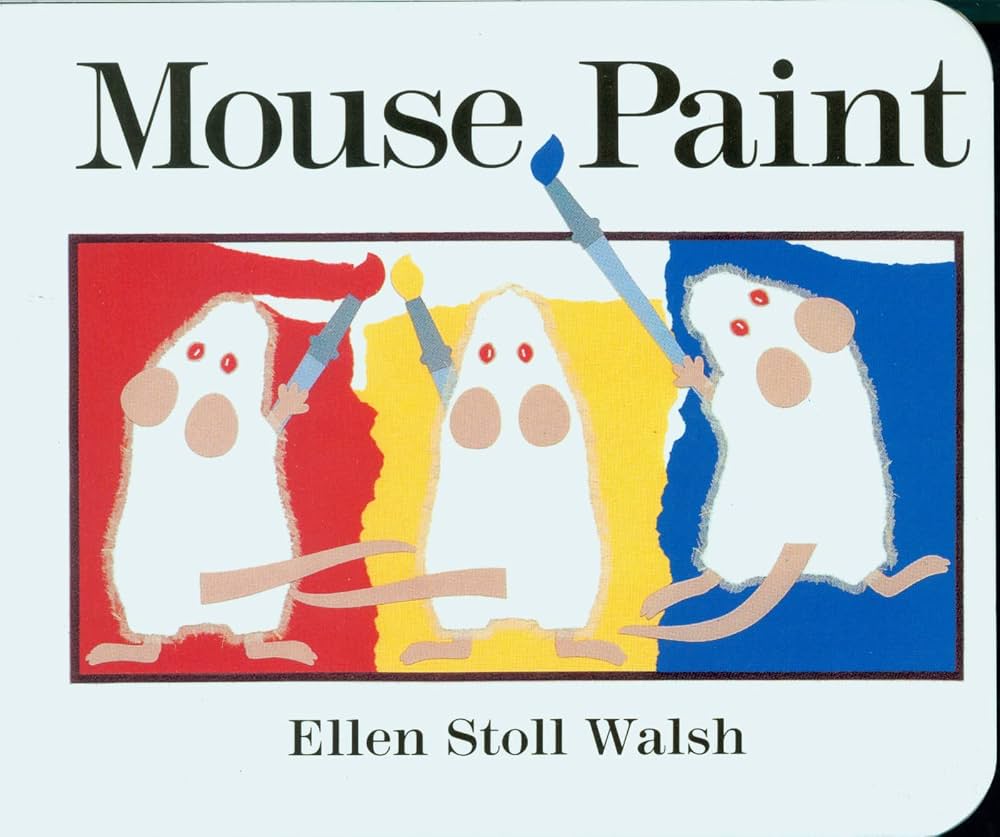
In Ellen Stoll Walsh’s Mouse Paint (Clarion, 1995), three white mice come across three pots of red, yellow, and blue paint – and embark on a messy and exuberant experiment in color mixing. For ages 2-5.
Add some fingerpaint and let the kids experiment for themselves.

Good Turn Mouse Crafts has patterns and instructions for making a stuffed felt mouse and a sock mouse.

Make candy-cane mice! See https://www.youtube.com/watch?v=Hjx6XuC3etw.

Make mouse corner bookmarks!
Rats, Mice, Pied Pipers, and Poetry
Perhaps the best-known poem about mice is Robert Burns’s “To a Mouse” (1785) which features the immortal lines “The best laid schemes ‘o mice and men/Gang aft agley.” Read and/or listen to it at BBC: Robert Burns.
There’s also Lewis Carroll’s “The Mouse’s Tail” – a concrete poem in the squiggly shape of a tail that appears in Alice’s Adventures in Wonderland.
Though I have to say that my favorite mouse poem is Rose Fyleman’s “Mice” which begins “I think mice/Are rather nice.”
When it comes to rats, however, the poem that leaps to mind is Robert Browning’s “The Pied Piper of Hamelin.”
The Pied Piper of Hamelin has the text of Browning's poem along with a list of related stories from other sources.

Robert Browning’s The Pied Piper of Hamelin (Knopf Doubleday, 1993) with Greenaway’s illustrations is available in an Everyman’s Library hardcover edition.

Michael Morpugo’s retelling of The Pied Piper of Hamelin (Candlewick, 2011) is an economic take on the tale: the greedy mayor has impoverished the town with crushing taxes, creating a wretched shantytown filled with orphans, trash, and rats. The mayor reneges on a deal with a mysterious stranger to rid the town of rats – with predictably awful consequences - leaving it up to the crippled narrator to help the town solve their problems and engineer the children’s return. For ages 5-9.

Terry Pratchett’s The Amazing Maurice and His Educated Rodents (HarperCollins, 2003) is a cleverly hilarious take on the Pied Piper tale, featuring the criminal-mastermind cat Maurice, some highly intelligent rats, and Keith, a kid with a flute. In company, they collude to fleece a number of towns by first infesting, then dramatically ridding them, of rats. It’s a great money-making scheme until they hit the town of Bad Blintz, where they run into a pair of truly evil rat-catchers. For ages 13 and up.

What really happened? Radu Florescu’s In Search of the Pied Piper (Athena Press, 2005) explores the mythological and historical origins of the legend. For teenagers and adults.
Mice, Rats, History, and Latin

Barbara Bell’s Minimus: Starting Out in Latin (Cambridge University Press, 2000) is a Latin course for children ages 7-10, based on the lives of a Roman family: Flavius, commander of the fort at Vindolanda near Hadrian’s Wall around 100 CE, his wife Lepidina, their three children, assorted slaves, a cat named Vibrissa, and – the star - Minimus, a mouse. The book is a colorful and creative mix of panel cartoons, stories and myths, historical and cultural background information (including photographs of Roman artifacts), word lists, and grammar exercises.
An accompanying Minimus Teacher’s Resource Book (Cambridge University Press, 2000) has teacher’s guidelines, English translations, and reproducible worksheets. Also available is Minimus Secundus: Moving On in Latin (Cambridge University Press, 2004), for ages 10-13.
See the companion Minimus website for information on the books and program, games and activities, a Latin sentence generator, templates for making a Minimus finger puppet and a pair of Roman sandals, and a Minimus mythology competition.

Amos the mouse, of Robert Lawson’s Ben and Me: An Astonishing Life of Benjamin Franklin By His Good Mouse Amos (Little, Brown Books for Young Readers, 1988) is the real force behind Franklin’s many inventions and accomplishments. At least so says Amos. A hilarious twist on colonial history for ages 8-12.

When it comes to Art Spiegelman’s Pulitzer-Prize-winning Maus (Pantheon, 1986), don’t be deceived by the comic-book/grapic-novel format: this is a painful, compelling, and brilliantly presented memoir of the Holocaust. The book is based on Spiegelman’s parents’ experiences, both in Nazi-occupied Poland and as concentration-camp survivors in the aftermath of World War II. Jews are pictured as mice, Germans as cats, Poles as pigs, French as frogs, and Americans as dogs. The story continues in Maus II. For ages 12 and up.

Also see Spiegelman’s MetaMaus (Panthon, 2011) a beautifully designed book packed with illustrations, photographs, and interview transcripts, that describes how Maus was made and why. For teenagers and adults.

James Cross Giblin’s When Plague Strikes (HarperCollins, 1997) is a well-written and fascinating history of three deadly epidemics: the Black Death (bubonic plague), smallpox, and AIDS. The devastating Black Death was disseminated by rats, via their cargo of bacteria-toting fleas. For ages 11 and up.
A Better Mousetrap?

Hasbro’s 
Trap a mouse online (and learn math skills) with Mouse Trap, an interactive strategy game.

For a history of mousetraps, see Jack Hope’s “A Better Mousetrap” – which originally appeared in the October 1996 issue of American Heritage magazine. Readers discover that the U.S. Patent Office has 39 official sub-categories for mousetraps, among them “Smiting,” “Constrictive Noose,” and “Electrocuting and Explosive.”
From the March 2011 issue of Atlantic magazine, see Nicholas Jackson’s “Mousetraps” (subtitled "A Symbol of the American Entrepreneurial Spirit").
Scientific Mice and Rats

Albert Martin’s Oh Rats! The Story of Rats and People (Dutton Juvenile Books, 2006) is a nicely done 48-page overview of the history and science of rats, spiced with quirky information and cool statistics. For ages 8-12.

Debbie Ducommun’s The Complete Guide to Rat Training (TFH Publications, Inc., 2008), illustrated with appealing rat photos, has background information on feral and pet rats, and a wealth of suggestions for training a pet rat using a variety of different techniques. Included are suggestions for rat games and science projects, a rat intelligence test, and instructions for building a rat-sized maze.

Mice & Rats has science projects and experiments with mice and rats, recommended for grades 4-6, 7-9, and 10-12. Projects include studies of diet and weight gain, territoriality, learning and memory, and more.

On You Tube, see The Curious History of the Lab Rat.

Robert Sullivan’s Rats (Bloomsbury USA, 2005), subtitled “Observations on the History and Habitat of the City’s Most Unwanted Inhabitants,” is a thoroughly interesting, though somewhat gicky, study of New York City’s invasive rats. For teens and adults.

In The Lab Rat Chronicles (Perigee Trade, 2011), neuroscientist Kelly Lambert explains what laboratory rats tell us about the human condition. It turns out that their behavior – in terms of everything from family values to stress responses – is a lot like ours. For teens and adults.

Stephen Jay Gould’s A Biological Homage to Mickey Mouse traces the evolution of Mickey Mouse from lanky and rat-like to short, wide-eyed, and appealing over the course of his long cartoon career. The essay, included in Gould’s The Panda’s Thumb (W.W. Norton & Company, 1992), is an interesting evolutionary discussion for teenagers and adults.
Mice and Rats in the Movies

Ratatouille (2007) is the story of Remy, a rat who dreams of becoming a great French chef – in spite of the fact that the restaurants of Paris don’t want rats in their kitchens. Rated G.

In An American Tail (1986), Fievel – a young Russian mouse – becomes separated from his family while emigrating to America. Until he finds them, he must survive on his own in the New World. Rated G.

Charlotte’s Web (2006), based on E.B. White’s wonderful book, is the story of Wilbur, an enchanting little pig, and how Charlotte, the spider who lives in his pen, befriends him and saves him from being turned into pork and bacon. Among Wilbur’s acquaintances is Templeton, a shamelessly selfish and gluttonous rat. Rated G.

Disney’s classic Fantasia (1940, which features eight short animations set to selections of classical music, features “The Sorceror’s Apprentice,” in which a harried Mickey Mou tries some of his master’s spells and finds they’ve gotten out of hand. Rated G.

There are dozens of movie versions of Cinderella, but the 1950 cartoon features wonderful mice Gus and Jacques, who have a lot to do with getting Cinderella to the ball. Rated G.

In Flushed Away (2006), Roddy – an upscale pampered pet rat – is flushed down the toilet of his penthouse apartment and ends up in the sewer world of Ratropolis, where he meets the feisty rat-girl Rita and comes up against the evil Toad. Rated PG.

Steamboat Willie (1928) was the debut of Mickey, possibly the world’s most famous mouse. It was also the first sound cartoon.