
Words, Word Play, and Grammar
In this collection
For those who haven’t been happy memorizing the definitions of gerund or participle, there are many other resources for approaching the weird and wonderful world of words and language.
See below for everything from a murderous panda to the world’s worst alphabet book, bug language, an unpronounceable poem, bad (even Deplorable) words, a delightfully difficult dictionary, and the best book ever on opposites.
Grammar: General

The Word Fun series (Picture Window Books) includes such titles as If You Were an Adjective, If You Were a Noun, If You Were a Verb, and If You Were a Pronoun. All are brightly illustrated picture books with word examples in colorful fonts. For ages 6-9.

Ruth Heller’s gorgeously illustrated “World of Language” picture-book series introduces kids to parts of speech through a clever (and memorable) rhyming text and gloriously colored pictures. Titles in the series (Puffin, 1998) include Merry-Go-Round: A Book About Nouns; Kites Sail High: A Book About Verbs; Many Luscious Lollipops: A Book About Adjectives; Up, Up and Away: A Book About Adverbs; Behind the Mask: A Book About Prepositions; Mine, All Mine: A Book About Pronouns (1999); and Fantastic! Wow! and Unreal!: A Book About Interjections and Conjunctions (2000). For ages 5-9.

Brian P. Cleary’s “Words Are Categorical” series is a collection of light-hearted cartoon-illustrated picture books, each detailing a different part of speech. Many titles (Millbrook Press) including A Mink, A Fink, A Skating Rink: What Is a Noun?; To Root, To Toot, To Parachute: What Is a Verb?; I and You and Don’t Forget Who: What Is a Pronoun?; Hairy, Scary, Ordinary: What Is an Adjective?; Dearly, Nearly, Insincerely: What Is an Adverb?; and Under, Over, By the Clover: What Is a Preposition? Try this, for example, from Hairy, Scary: Adjectives, Cleary explains, “modify nouns in ways that help tell us/If someone’s sincere, delighted, or jealous/If jackets are herringbone, pin-striped, or plaid/If babies are crabby, excited, or glad.” For ages 7-11.

Karen Elizabeth Gordon’s The Deluxe Transitive Vampire (Pantheon, 1993). Subtitled “The Ultimate Handbook of Grammar for the Innocent, the Eager, and the Doomed,” covers basic grammar with black-and-white Victorian woodcuts, a cast of characters that includes vampires, trolls, and gargoyles, and a lot of peculiar behavior. (“The werewolf or his wife wreaked havoc in the pantry.”) For ages 13 and up.
In a similar vein, also see Gordon’s The New Well-Tempered Sentence (Mariner Books, 2003), which deals with all the ins and outs of punctuation. (“Other fortresses under his jurisdiction have never sought clemency for March hares.”)

By William Strunk, Jr., and E.B. White, The Elements of Style (Pearson, 1999) is a classic for students of grammar. Just over 100 pages long, it’s a concise collection of rules of usage along with a helpful list of commonly misused words in alphabetical order. For ages 13 and up.

By Benjamin Dreyer – longtime copy chief at Random House - Dreyer’s English (Random House, 2019) is both a grammar book and an absolutely delightful read, filled with examples, information, and a lot of superb (and opinionated) advice for writers. (Never use the word “actually” – “because, seriously,” writes Dreyer, “it serves no purpose I can think of except to irritate.”) Highly recommended for teens and adults.
See the Young Readers edition (Yearling, 2022) for ages 10-15.

Patricia O’Connor’s Woe Is I (Riverhead Books, 2019) points out that English is an ever-changing language. Witness, for example, the current use of a singular “they,” “them,” and “their” as a gender-neutral pronoun – and, says Connor, there’s nothing wrong with “taller than me” as a simple comparison. Chapters include “Woe Is I: Therapy for Pronoun Anxiety” (“When a tiny word gives you a big headache, it’s probably a pronoun”), “Comma Sutra: The Joy of Punctuation,” and “The Living Dead: Let Bygone Rules Be Gone.” For teens and adults.

Kitty Burns Florey’s Sister Bernadette’s Barking Dog (Mariner Books, 2007) is subtitled “The Quirky History and Lost Art of Diagramming Sentences” – yes, a whole book on diagramming sentences, which Florey explains she learned in sixth grade from Sister Bernadette. It’s a hoot to read (“Trying to stuff the complexities of the English language into flat visual structures is a bit like trying to force a cat into the carrier for a trip to the vet”) and makes diagramming sentences look like a new form of parlor game. Florey calls it a cross between math and art. For ages 12 and up.

Check out Grammar Girl for catchy and interesting podcast episodes and articles on the rules and quirks of grammar. Sample titles: “Stationery versus Stationary,” “The History and Glory of the Spelling Bee,” “Bring versus Take,” and “Up with Which I Will Not Put!”
Punctuation

In Robin Pulver’s Punctuation Takes a Vacation (Holiday House, 2004), the punctuation marks all head for Take-A-Break Lake (on the hottest day of the year), leaving Mr. Wright’s class in chaos. Postcards from the missing marks emphasize just how important they are. For ages 5-8.
Also by Pulver, see Nouns and Verbs Have a Field Day (Holiday House, 2007) and Silent Letters Loud and Clear (Holiday House, 2010).

By Elsa Knight Bruno, Punctuation Celebration (Square Fish, 2012) is an illustrated collection of fourteen poems about punctuation marks. (“The period is just a dot/Found sitting in its/favorite spot./When a sentence ends,/it comes and plops,/And where it plops/the sentence STOPS.”) For ages 5-9.

In Brian P. Cleary’s The Punctation Station (Millbrook Press, 2028), a family of giraffes are on a train heading from Period Plaza to Punctuation Station, learning the proper uses of period, comma, apostrophe, question mark, hyphen, exclamation point, and quotation marks en route. All in catchy rhyme. For ages 5-9.

The title character of Amy Krouse Rosenthal’s Exclamation Mark (Scholastic, 2013) struggles to fit in – which seems hopeless. He even considers giving up and running away – until he meets an aggressive question mark and comes into his own. A delight for ages 4-8.

Lynn Truss’s Eats, Shoots & Leaves (Avery, 2006), subtitled “The Zero Tolerance Approach to Punctuation,” is a catchy account of the uses and misuses of punctuation marks – with many examples of hideously punctuated signs (easily the basis for a game of “Spot the Awful Grammar” during trips by car). Just to emphasize the dangers of a misplaced comma, the cover has a picture of a potentially murderous panda. For teens and adults.

For younger readers, see Truss’s series of illustrated picture books, all demonstrating the potentially awful results of misused punctation. Titles include Eats, Shoots & Leaves (G.P. Putnam’s Sons, 2006), More Eats, Shoots & Leaves (2019), The Girl’s Like Spaghetti (2007), and Twenty-Odd Ducks (2008). For ages 6 and up.

Seriously – an entire book on the semicolon? Cecelia Watson’s Semicolon: The Past, Present, and Future of a Misunderstood Mark (Ecco, 2019) is a chatty history of the much-debated semicolon. (My favorite punctuation mark.) For teens and adults.

Interrobang? Check out these 6 Punctuation Marks That Don’t Exist But Totally Should.

From the New York Times, see What’s Your Favorite Punctuation Mark?
Spelling

Need practice? Spell Quiz has spelling lists and spelling bee words for grades 1 through adult.

By Raj Haldar and Chris Carpenter, P is for Pterodactyl (Sourcebooks Explore, 2018) – subtitled “The Worst Alphabet Book Ever” – is a hilarious alphabetical take on the awfulness of English spelling, in which not only is P for pterodactyl, but C is for czar, K is for knight, and T is for tsunami. For ages 7 and up.

By Beth Anderson, An Inconvenient Alphabet (Simon & Schuster/Paula Wiseman Books, 2018) is the picture-book story of how Benjamin Franklin and Noah Webster tried to simplify the alphabet and make English easier to read and write. For ages 5-8.

Ghoti is an alternative phonetic way to spell “fish.” Really. Read about it in this article from the New York Times.

It could all be so much simpler. See Teddy Roosevelt’s Bold (But Doomed) Battle to Change American Spelling.

Gerard Nolst Trenite’s poem "Chaos" is a famous example of the craziness of English spelling and pronunciation. (Supposedly if you can read it correctly, you’ll be speaking English better than 90% of the world’s native English speakers.) Warning: it’s not easy.
See https://people.cs.georgetown.edu/nschneid/cosc272/f17/a1/chaos.html.

In Akeelah and the Bee (2006), an eleven-year-old from South Los Angeles – with plenty of troubles at school and at home – makes it to the National Spelling Bee. Rated PG.

Spellbound (2002) is an Academy Award nominee documentary about eight kids struggling to compete in the National Spelling Bee. Rated G.
Try an online spelling bee! Look at the image and spell the word. Playable at two levels (easy and hard).

Are you ready to tackle the National Spelling Bee? See the Scripps National Spelling Bee website. Included are round by round lists of the words used in the most recent bee.

In Dana Middleton’s The Infinity Year of Avalon James (Feiwel & Friends, 2016), Avalon and best friend Atticus are waiting for the magic powers Atticus’s grandfather claims that they will develop in their “infinity year” between the ages of ten and eleven. At the same time, Avalon struggles to cope with a father in prison and works to become a spelling champion. For ages 8-12.

Poetry + spelling. An acrostic is a poem in which the first letter of each line, when read vertically, combine to spell a word. Learn more about types of acrostic poems with some great examples here.
Cool Collective Nouns

Ruth Heller’s A Cache of Jewels and Other Collective Nouns (Puffin, 1998) is a gorgeously illustrated rhyming picture book in which readers learn about “batch of bread,” “muster of peacocks,” “parcel of penguins,” “fleet of ships,” “kindle of kittens,” and more. For ages 4-8.

By Matt Sewell, A Charm of Goldfinches and Other Wild Gatherings (Ten Speed Press, 2017) is a beautifully illustrated collection of collective nouns from the animal kingdom, organized in three sections: Land, Air, and Water. Learn about a sleuth of bears, a dazzle of zebras, a pod of pelicans, and a shiver of sharks. All ages.

Steve Palin’s A Murmuration of Starlings (Merlin Unwin Books, 2013) is an illustrated alphabetical list of collective animal nouns from Army of Frogs to Wisp of Snipe. All ages.

James Lipton’s An Exaltation of Larks (Penguin, 1993) is a classic for lovers of collective nouns or “nouns of assemblage,” with over 1000 collective words, ancient and modern. Fascinating for teens and adults.

From the drudge of lexicographers at Merriam-Webster, see these wonderful collective nouns.
Similes and Metaphors

In Audrey Wood’s Quick as a Cricket (Clarion, 2020), an imaginative little boy describes himself in rhyming similes. A fun interactive exercise – what are you loud as, quiet as, quick as, small as? For ages 4-8.

Loreen Leedy’s Crazy Like a Fox (Holiday House, 2009) is a story told entirely in similes – beginning with Rufus the fox who has been sleeping like a log. For ages 4-8.

What are similes and metaphors? Brian P. Cleary’s Skin Like Milk, Hair of Silk is a rhyming illustrated collection. The featured similes and metaphors are printed in color so readers can’t possibly miss them. For ages 6-10.

In Hanoch Piven’s My Dog is as Smelly as Dirty Socks (Dragonfly Books, 2012), each member of the family is described in terms of similes and illustrated with collage portraits, in which objects are used to show their various personality traits. Try making some of your own! For ages 4-8.
Also by Piven, see My Best Friend Is Sharp As a Pencil (2010), a collection of classroom collage portraits.

Just for fun, see this project for Pablo-Picasso-style collage self-portraits.

Or try making recycled self-portrait collages.
From Creativity School, see How to Make a Self-Portrait Collage for Kids.

Norton Juster’s A Surfeit of Similes (William Morrow, 1989) is a gem of a book, a charming collection of rhyming similes. (“As pure as an angel/As clever as zippers/As awkward as crutches/As friendly as slippers”) A lovely read for ages 7 and up.

Nancy Loewen’s You’re Toast (Picture Window Books, 2011) is a picture book of metaphors for ages 7-10.

Marvin Terban’s It Figures! (Clarion, 1993) introduces common figures of speech – similes, metaphors, onomatopoeia, alliteration, hyperbole, and personification – with helpful examples from classic literature and suggested writing exercises. For ages 9-12.

Mandy Grothe’s Metaphors Be With You (Harper, 2017) is an alphabetical collection of “history’s greatest metaphorical quotations,” selected from a wide range of sources including literature, philosophy, politics, and pop culture. (Helpful hint: an apt quotation is often a great help to a struggling writer.) For ages 13 and up.
Synonyms and Antonyms

Michael Dahl’s If You Were a Synonym (Picture Window Books, 2007) in the Word Fun series is a picture-book explanation of synonyms. (“If you were a synonym…you could be COOL, CHILLY, FROSTY, ICY, WINTRY, or FREEZING. No matter how you say it, you would still be COLD.”) For ages 6-9.
In the same series, see Nancy Loewen’s If You Were an Antonym.

Brian P. Cleary’s Pitch and Throw, Grasp and Know: What Is a Synonym? (Millbrook Press, 2007) is a lively rhyming explanation with many examples and colorful cartoon illustrations. For ages 6-10.
Also by Cleary in the same format, see Stop and Go, Yes and No: What Is an Antonym?

Susan Hood’s Double Take! (Candlewick, 2017) is a new twist on opposites, as a boy and a blue elephant discover that sometimes opposites like big and small or strong and weak are a matter of perspective. For ages 4-8.

Richard Wilbur’s Opposites, More Opposites, and a Few Differences (Harcourt, 2000) is an illustrated collection of brilliantly clever poems about opposites. (“What’s the opposite of riot?/It’s lots of people keeping quiet.”) A gem for ages 9 and up.

Laya Steinberg’s Thesaurus Rex (Barefoot Books, 2005) is a rhyming exploration of synonyms, along with an adorable dinosaur in red trousers. For ages 4-7.

By Jen Bryant with wonderful illustrations by Melissa Sweet, The Right Word (Eerdmans Books, 2014) is a picture-book biography of Peter Mark Roget, who published his famous Thesaurus – a treasure trove of synonyms - in 1852. For ages 6-10.
Perfect for January 18 which is both Roget’s birthday and National Thesaurus Day.

The Children’s Illustrated Thesaurus (DK, 2017) is an attractively designed, dictionary-style, 250+-page thesaurus for ages 9-12.

There are dozens of available thesauruses – but my favorite is the Oxford American Writer’s Thesaurus (Oxford University Press, 2012), an enormous 300,000-word collection of synonyms (and antonyms), helpfully arranged in alphabetical order and interspersed with mini-essays by the highly literate contributing editors.
Not Just Your Ordinary Dictionary
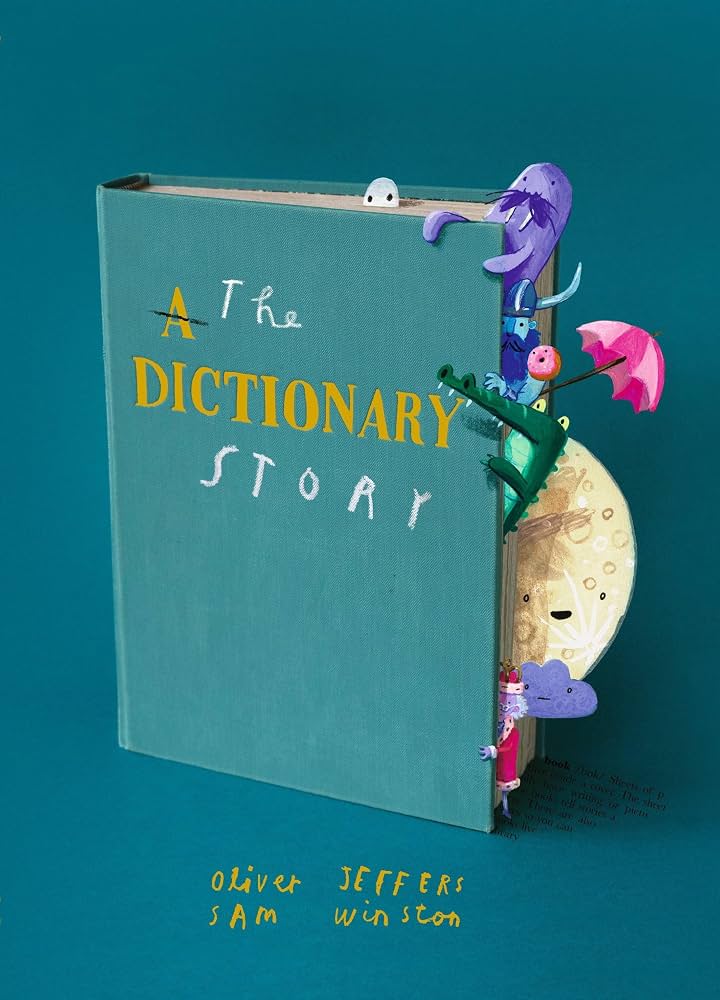
In Oliver Jeffers’s wildly innovative The Dictionary Story (Candlewick, 2024), Dictionary wishes she could tell stories like other books rather than just being a list of word – and so decides to bring the words to life. But what happens when you combine Alligator with Donut, and then add Moon, Ghost, and Queen? For ages 4-7, but all ages will love it.

In Judy Sierra’s The Great Dictionary Caper (Simon & Schuster, 2018), the dictionary words leave their book and head for Lexi-Con in Hollywood – a wild event featuring a parade with an onomatopoeia marching band, a lot of excited action verbs, and the world’s favorite 32-letter word. There are gatherings of rhyming words (and protests from non-rhyming words), homophones, anagrams, and a palindrome family reunion. Eventually Noah Webster manages to persuade the words to return to their proper places in the dictionary. For ages 4-8.

By Jeri Chase Ferris, Noah Webster and His Words (Clarion, 2015) is a delightful picture-book story of Noah Webster, author of Webster’s American Dictionary. For ages 6-9.

Tracy Nelson Maurer’s Noah Webster’s Fighting Words (Millbrook Press, 2017) is a picture-book biography of the author of America’s first dictionary (with comments in the margins by Webster himself). For ages 7-11.
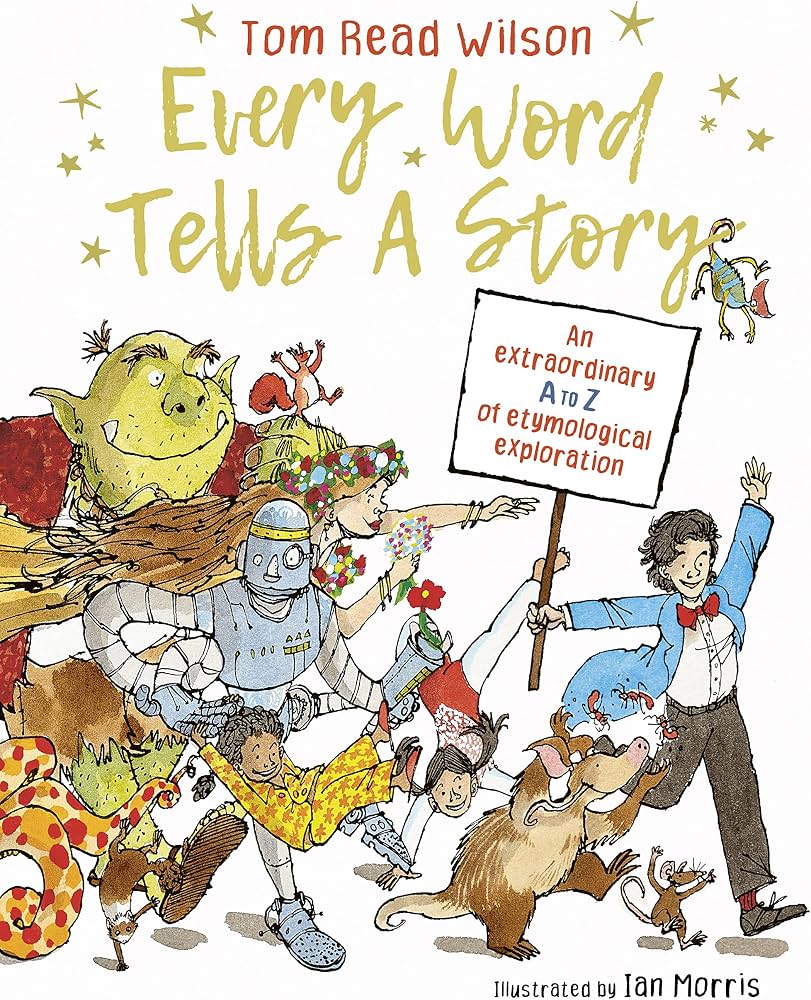
By Tom Read Wilson, Every Word Tells a Story (words & pictures, 2022) is an illustrated A to Z tour of etymology, filled with fascinating tidbits (and the occasional labored rhyme). For ages 6-10.

By lexicographer Jane Solomon, the cleverly designed and illustrated Dictionary of Difficult Words (Frances Lincoln Children’s Books, 2019) is a challenging collection of 400 not-just-ordinary words. Absquatulate? Funambulist? Zenography? (How about a vocabulary bee?) For ages 7-12.

In Natalie Babbitt’s The Search for Delicious (Square Fish, 2007), no one can agree on the proper definition for delicious for the realm’s new dictionary – the Prime Minister claims that “Delicious is fried fish;” the General of the Armies says it’s a mug of beer; the Queen, Christmas pudding; and the King, an apple - so twelve-year-old Gaylen is sent off to take a poll of the kingdom. A wonderful story involving a woldweller, a mermaid, a threatening war, and – ultimately – the perfect definition for delicious. For ages 8-12.
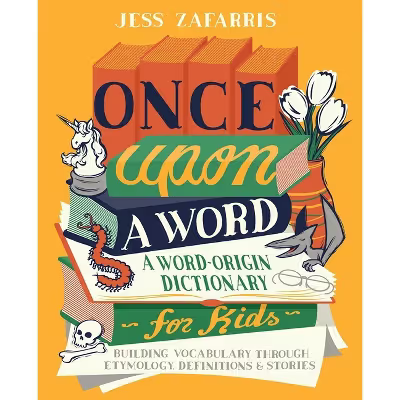
By Jess Zafarris, Once Upon a Word (Callisto Kids, 2020) is a word-origin dictionary for kids. Readers learn about Greek, Latin, and Old English roots, prefixes and suffixes, and a lot of great word origin stories. (Find out about gnome, zombie, and twang.) For ages 9-12.
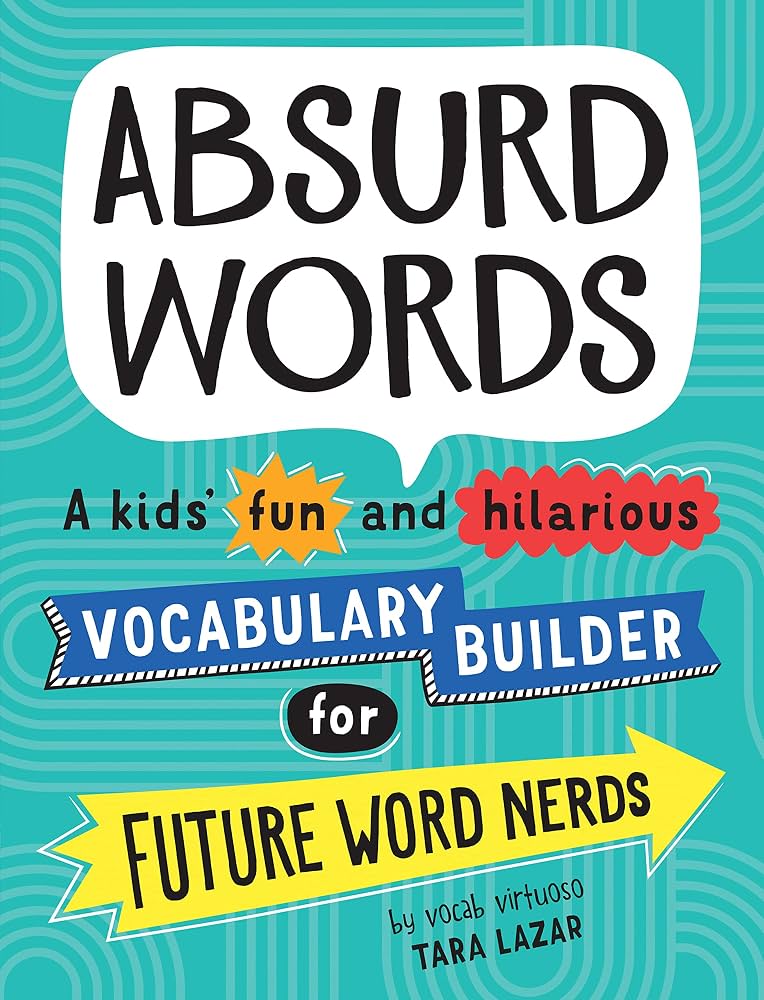
By Tara Lazar, Absurd Words (Sourcebooks Explore, 2022) is an illustrated collection of cool and/or weird words, arranged – rather than alphabetically – into “word squads.” For ages 9-12.

Simon Winchester’s The Meaning of Everything (Oxford University Press, 2018) is the story of the making of the Oxford English Dictionary, a Herculean task, involving many colorful characters. (Learn about J.R.R. Tolkien’s struggle to define “walrus.”) For teens and adults.

Simon Winchester’s The Professor and the Madman (Harper Perennial, 2005) is the story of the making of the Oxford English Dictionary, which involved as astounding collaboration between British professor James Murray and Dr. William Minor, a Civil War veteran and inmate of Broadmoor, a prison for the criminally insane. For teens and adults.

The movie version of the book (2019) stars Mel Gibson as James Murray and Sean Penn as Dr. Minor. Ratings show that audiences liked it better than the critics did. For ages 13 and up.
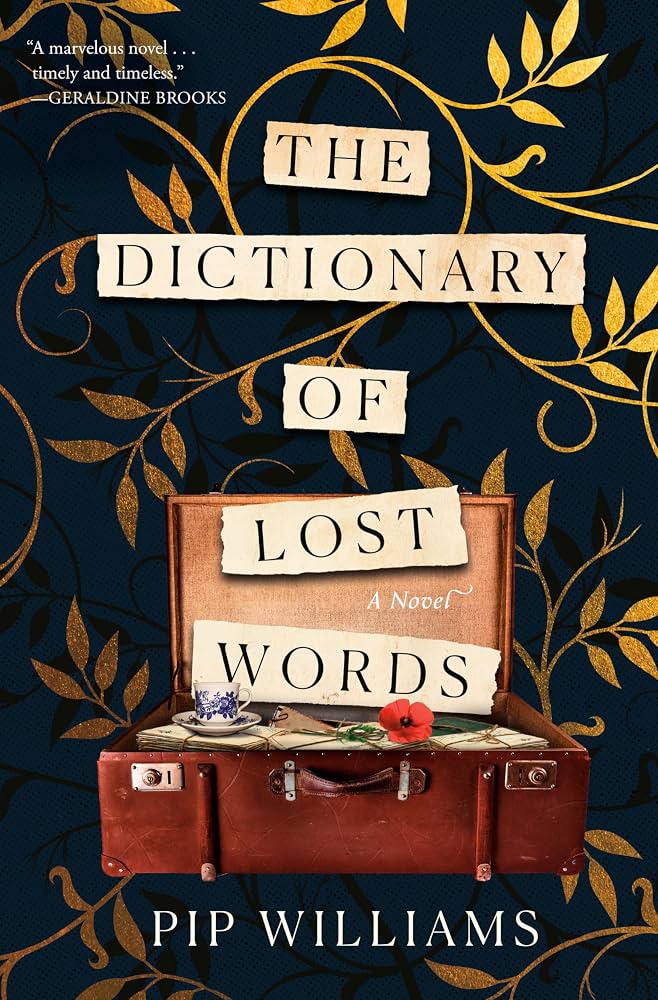
By Pip Williams, in The Dictionary of Lost Words (Ballantine, 2022), Esme has spent her childhood in the Scriptorium where her father and other lexicographers are collecting words for the Oxford English Dictionary. Esme begins to collect discarded words – words related to women and causes neglected by the dictionary men – and sets out to create her own Dictionary of Lost Words. Set at the height of the women’s suffrage movement in the years before World War I. For teens and adults.

Lexicographer Kory Stamper’s Word by Word (Vintage, 2018) is a fascinating account of the process of dictionary writing – including the constant struggles over what to define and how to do it and the difficulties of coping with the ever-changing English language – along countless fun facts and anecdotes. For teens and adults.
From the Merriam-Webster Dictionary, the Word of the Day includes a definition, an example in context, and additional catchy facts. Sign up at https://www.merriam-webster.com/word-of-the-day.
Homophones and Homonyms

In Gene Barretta’s Dear Deer (Square Fish, 2010), a picture book crammed with homophones, Aunt Ant has moved to the zoo and writes letters describing her experiences to Dear Deer. (“Wait until you HEAR what goes on over HERE.”) All the homophones are emphasized in capital letters. For ages 4-7

Brian P. Cleary’s How Much Can a Bare Bear Bear? (Millbrook Press, 2007) is a zany rhyming look at homonyms (words with the same spelling but different meanings) and homophones (words with the same pronunciation, but different spelling and meanings) for ages 6-10.
For more on homonyms and homophones by Cleary, see A Bat Cannot Bat, a Stair Cannot Stare (2016).

Marvin Terban’s Eight Ate (HMH, 2007) is a “feast of homonym riddles.” “What is an animal with a rough-sounding voice that cowboys ride?” “Hoarse horse.” For ages 4-8.

Fred Gwynne’s now-classic The King Who Rained (Aladdin, 1988) begins with a play on “reigned” and “rained” as the king, in robe and crown, floats like a cloud in the sky, raining on a little girl who holds a yellow umbrella. Other homonymous titles by Gwynne are A Chocolate Moose for Dinner (Prentice-Hall, 1987) and A Little Pigeon Toad (Aladdin, 1990).
Wonderful Words: Nonfiction
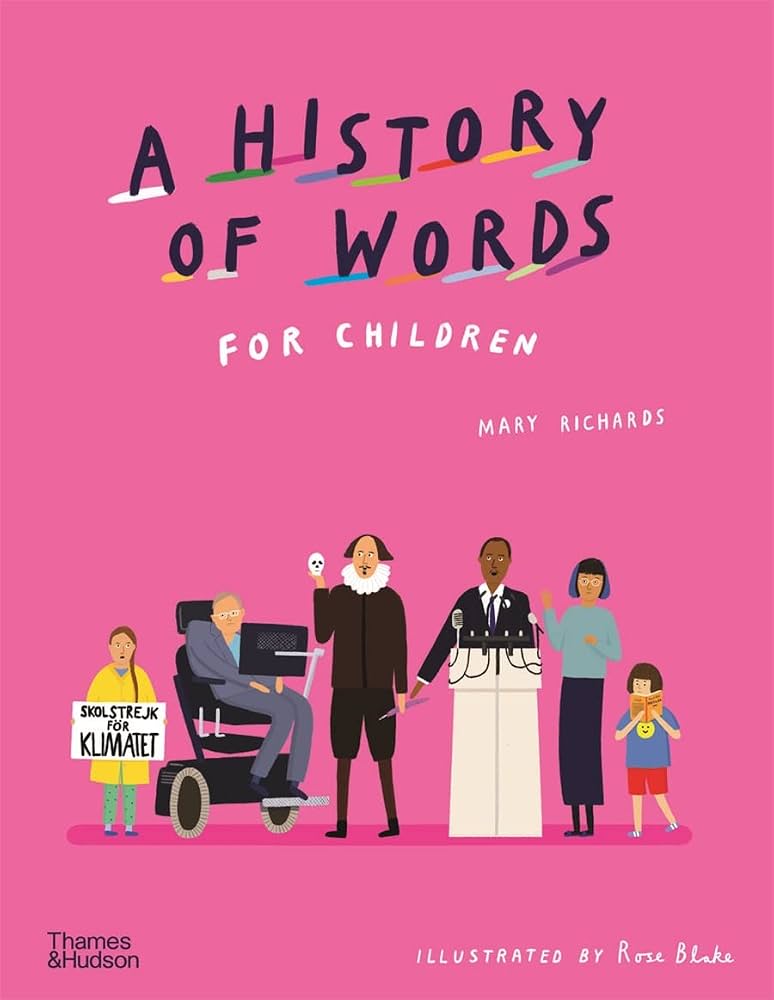
By Mary Richards, A History of Words for Children (Thames & Hudson, 2022) is a cleverly designed history of language, from the origins to words through writing, reading, the development of books, how words affect us, secret words and invented languages, poetic words, and the future of words. For ages 7-10.
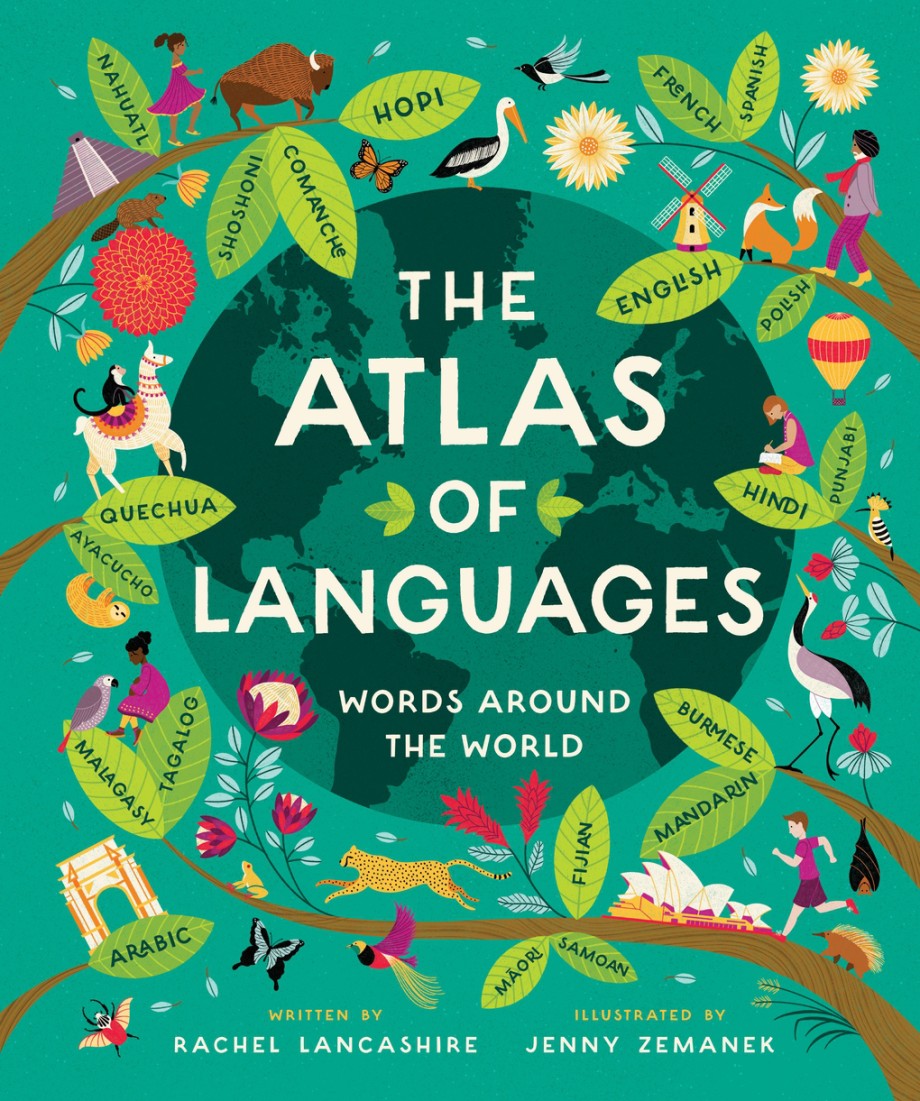
By Rachel Lancashire, The Atlas of Languages (Harry N. Abrams, 2025) is an illustrated survey of languages around the world, crammed with colorful maps and catchy fact boxes. For ages 8-11.

Rosalie Baker’s In a Word: 750 Words and Their Fascinating Stories and Origins (Cricket Books, 2003) is organized into 16 chapters (sample titles are “Math Magic and Science Synergy,” “Glorious Gizmos and Great Grub,” “Awesome Archaeology,” and “Fantastic Foreigners”) and is crammed with interesting tidbits. (The word “candidate,” for example, comes from the Latin meaning “clothed in white,” since persons running for political office in Rome took great care to whiten their togas.) For ages 9 and up.

Edited by Erin McKean, Totally Weird and Wonderful Words (Oxford University Press, 2006) is a cartoon-illustrated compendium of hundreds. (Spanghew: to cause a frog or toad to fly into the air.) A plus for all vocabularies.

By Paul Fleischman, with wonderful illustrations by Melissa Sweet, Alphamaniacs (Candlewick, 2020) is a collection of 26 mini-biographies of linguists, etymologists, and wordsmiths who have approached language, letters, words, and books in unusual, bizarre, and thoroughly entertaining ways. Meet the inventor of Klingon and the writer whose novella uses no vowels but e. For ages 10-14.

By Paul Anthony Jones, The Cabinet of Linguistic Curiosities (Elliot & Thompson, 2019) has a strange and forgotten word for every day of the year, starting on January 1 with qualtagh – a word which means, appropriately enough, the first person you meet on New Year’s Day. For ages 13 and up.

Robert Macfarlane’s The Lost Words (Anansi International, 2018) had its beginnings when the author discovered that the new edition of the Oxford children’s dictionary had dropped a long list of nature words, such as acorn, bluebell, fern, raven, and willow. This beautifully illustrated book is a “spell book,” designed to bring those words back. For all ages.
From Brainpickings, see this wonderful review of The Lost Words.

Renowned wordsmith Richard Lederer has published numerous books on the outrageous oddities of English. His Crazy English (Gallery Books, 1998), for example, is an irresistible overview of the language. (What’s the longest word in English? The most beautiful word? How many different kinds of phobia words are there? And why is English spelling so weird?) For teens and adults.

In Ben Blatt’s Nabokov’s Favorite Word Is Mauve (Simon & Schuster, 2018), data analysis meets literature – how do writers actually use words? (“On average, for every 17 words Hemingway wrote, one of them was an adverb.”) For teens and adults.
The Good Words podcast for kids and adults is a wide-ranging account of featured words plus creative connections. For the word OSTENTATIOUS, for example, included are an excerpt from Mark Twain’s The Innocents Abroad, an explanation of the phrase “dressed to the nines,” and an overview of cosplay and historical costuming. See https://goodwordspodcast.libsyn.com/.
Wonderful Words: Fiction

In Peter H. Reynolds’s The Word Collector (Orchard Books, 2018), while some people collect coins or stamps, Jerome collects wonderful words. For ages 4-8.

In Rebecca Van Slyke’s Lexie the Word Wrangler (Nancy Paulsen Books, 2017), cowgirl Lexie – complete with boots, hat, and lariat – has a talent for word wrangling, growing letters into bigger and bigger words, and hooking words together: “She could take a stick of butter and a pesky fly…and make a beautiful butterfly.” But then a word rustler comes to town. For ages 4-8.

In Kate Banks’s Max’s Words (Farrar, Straus & Giroux, 2006), Max’s two older brothers collect stamps and coins, but Max collects words – cutting them out of magazines or copying them out of the dictionary. His brothers laugh at him – but eventually, as Max shares his words, the three boys collaborate, using Max’s many words to create a story. For ages 4-8.
In Roald Dahl’s The BFG (Viking, 2007), orphaned Sophie wakes up one night and catches the Big Friendly Giant blowing dreams into children’s windows. A wonderful story filled with the BFG’s language of invented words from snozzcumber to frobscottle, phizzwizard, jumpsquiffling, and, of course, human bean. For ages 8-12.
The movie (2016) is rated PG. See https://www.imdb.com/title/tt3691740/.

In Roni Schotter’s The Boy Who Loved Words (Schwartz & Wade, 2006), Selig is a word collector, who writes his finds on slips of paper and carries them in his pockets. Finally he attaches his words to a tree – where some of them blow into the hands of a needy poet – and Selig discovers that his goal in life is to share wonderful words with others. For ages 6-9.

Edited by Lee Bennett Hopkins, Wonderful Words (Simon & Schuster, 2004) is a collection of poems about the many aspects of words, among them David McCord’s “How to Say a Long Hard Word” and Pat Mora’s “Words Free as Confetti.” For ages 6-11.

In James Thurber’s truly wonderful The Wonderful O (Penguin Classics, 2017), pirates Black and Littlejack – the former of whom has hated the letter O ever since his mother was fatally wedged in a porthole – land on an island and proceed to ban the letter O. It’s a magical exercise in language – and a heartwarming tale of overthrowing tyranny. For ages 8-12. And up.
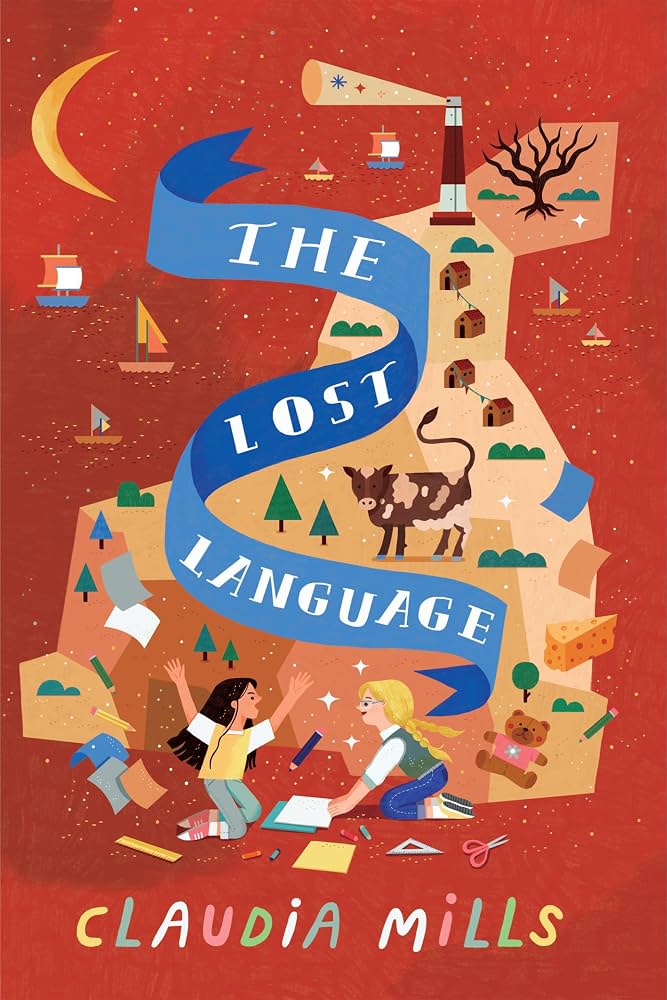
In The Lost Language by Claudia Mills (Margaret Ferguson Books, 2022), Betsy’s mother, a linguistics professor, is working to preserve the world’s endangered languages before they disappear. Lizard, Betsy’s best friend, suggests that the two save a language themselves – and the girls set out to learn Guernesiais, a language spoken on Guernsey, an island in the English Channel. For ages 9-12.
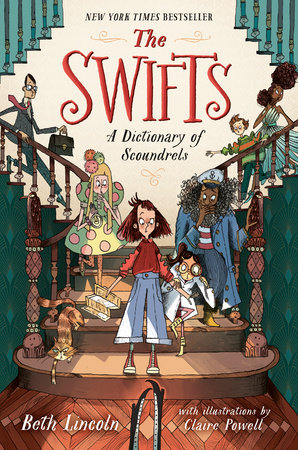
By Beth Lincoln, in The Swifts: A Dictionary of Scoundrels (Dutton, 2024), each member of the extended family gets a name and a definition from the family Dictionary. When Arch-Aunt Schadenfreude is shoved down the stairs at the family reunion, young Shenanigan Swift sets out to find the culprit – and, incidentally, to locate Grand-Uncle Vile’s long-lost treasure. A twisty and delightful read for ages 9-12.
Sequels include The Swifts: A Gallery of Rogues (2025) and The Swifts: A Garden of Vipers (2026).
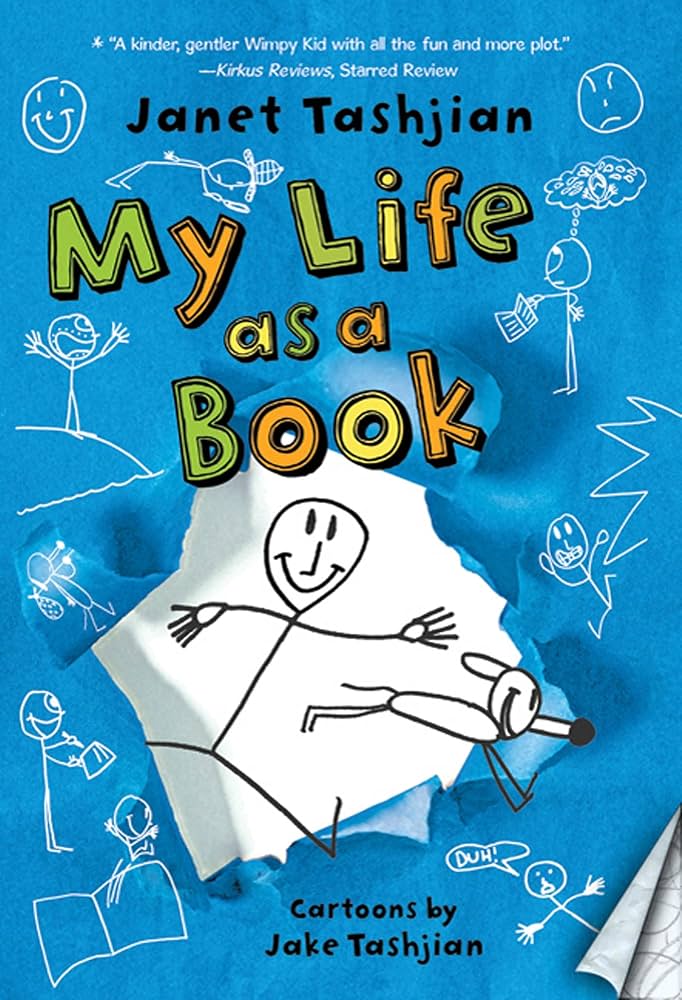
In My Life as a Book by Janet Tashjian (Christy Ottaviano/Henry Holy, 2010), Derek, a reluctant reader (except for Calvin and Hobbes), is dealing with a summer reading list, along with a ten-year-old mystery beginning with a newspaper article found in his parents’ attic (LOCAL GIRL FOUND DEAD ON BEACH). Illustrated with stick-figure sketches by Derek, who using these as a vocabulary-building technique. For ages 10-14.
Give Derek’s vocabulary technique a try! (How would you draw “reluctant” or “assassin”?)
Six Second Scribbles (Gamely) is a game in which players get just 60 seconds to draw ten things from a given category. For ages 8 and up. See 

In Mark Dunn’s Ella Minnow Pea (Anchor, 2002), Ella lives on the island of Nollop – named for Nevin Nollop, inventor of the phrase “The quick brown fox jumps over the lazy dog.” When letters of this phrase begin dropping off Nollop’s memorial statue, the island’s ruling Council takes it as a sign that the lost letters must be banned altogether. The book is written as a series of Ella's letters, which become increasingly impossible for her to write as more and more letters of the alphabet bite the dust. For ages 13 and up.

A sentence that uses every letter of the alphabet – like “The quick brown fox jumped over the lazy dog” - is called a pangram. See many more at https://pangrampangram.com/blogs/journal/best-pangrams-a-tool-for-every-graphic-designers.
Try inventing your own.
Word Play

William Steig’s letter-code books are also great (and educational) fun for imaginative word-lovers of all ages: in CDB! (Aladdin, 2003), the title illustration shows a pair of children pointing at a bumblebee. The translation is “See the bee!” – get it? And there are dozens more. (In one of my favorites, a small boy tells his dog “I M A U-M B-N. U R N N-M-L.” Try it: “I am a human being…”) The sequel, CDC?, begins with a helpful parent showing his small daughter the ocean. All ages.

Richard Lederer’s Pun and Games (Chicago Review Press, 1996) is a collection of wonderful word games and challenges for kids, variously involving awful puns, homographs, homophones, spoonerisms, and more. For ages 8 and up.

One criterion for joining the World War II Bletchley Park code-breaking group was the ability to solve crossword puzzles – and nowadays there are hundreds of crossword puzzle books for all ages and interests. Good for problem-solving skills and vocabulary-building. From the Smithsonian Magazine, see How the Crossword Became an American Pastime.

Adrienne Raphel’s Thinking Inside the Box (Penguin, 2021) is a fascinating history of crosswords. For teens and adults.
Try making your own crossword puzzles! See here and
here.
History of English

Jess Zafarris’s Once Upon a Word (Rockridge Press, 2020) is a fascinating word-origin dictionary for kids, packed with basic information about etymology – the study of words and their origins – and many intriguing word-origin stories. (Try this: “Algebra” comes from the Arabic al-jabr, meaning “a reunion of broken parts,” a term used both in mathematics and in medicine, for the setting of broken bones.) For ages 9 and up.

Stuart Berg Flexner’s Listening to America (Simon & Schuster, 1982) and I Hear America Talking (1979) are illustrated collections of the origins, evolutions, historical contexts, and meanings of thousands of phrases unique to American English – categorized under everything from "Cowboys" and "Dust Bowl" to "Voodoo" and "World War II and GI Joe." A terrific addition to any American history program.

Bill Bryson’s The Mother Tongue (Penguin, 2009) is a catchy history of English – the most influential language of modern times and a shameless borrower of words from over fifty different languages around the world. A treasure trove of information and oddities for teens and adults.
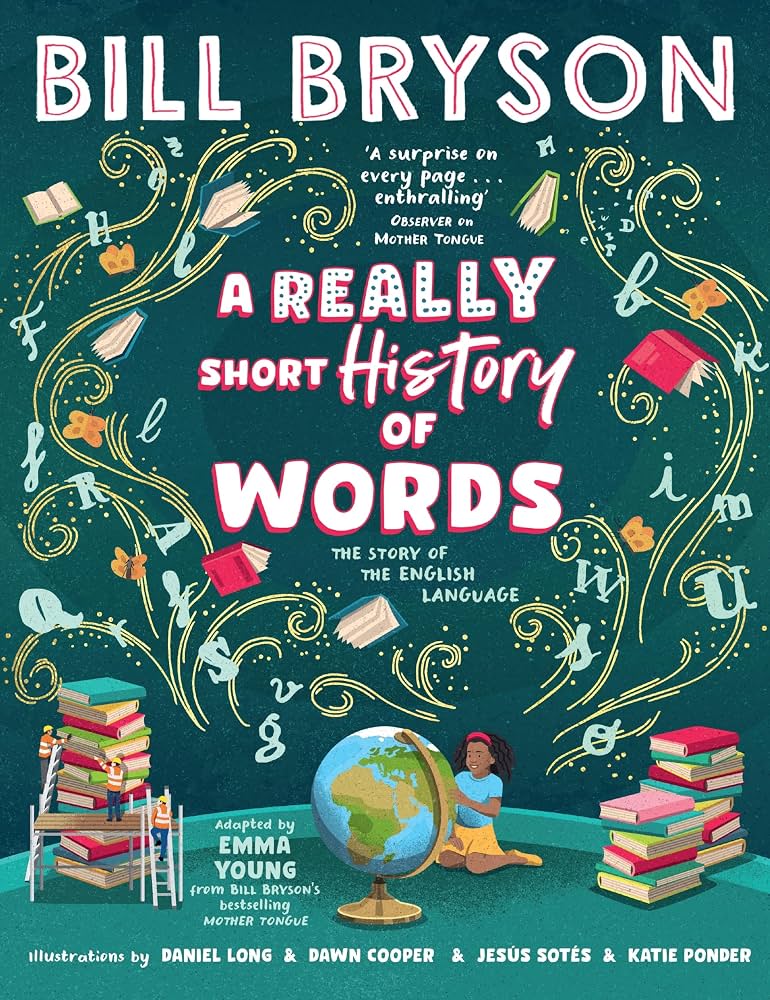
Bill Bryson’s A Really Short History of Words (Puffin, 2024), adapted from his adult book Mother Tongue, is an entertaining history of how English came to be. Find out how goodbye evolved from “god be with you” and how the Vikings gave us our words for glitter and sky. For ages 8 and up.

Seth Lerer’s Inventing English (Columbia University Press, 2015) traces the history of the language from the age of Beowulf to the age of rap. For teens and adults.

Melvyn Bragg’s The Adventure of English (Arcade, 2011) is a “captivating history” of how English conquered the world. For teens and adults.

Linguist John McWhorter has written several popular books on English and its relatives, among them Our Magnificent Bastard Tongue: The Untold Story of English (Penguin Random House, 2008), The Power of Babel: A Natural History of Language (Harper Perennial, 2003), and Words on the Move (Picador, 2017).

By Henry Hitchings, The Language Wars (Farrar, Straus & Giroux, 2011) is the story of the bitter arguments – raging at least since Shakespeare’s time – over just what constitutes proper English. For teens and adults.

In the musical My Fair Lady (1964), phonetics professor Henry Higgins wagers that he can turn cockney flower girl Eliza Doolittle into a lady. (“Why can’t the English teach their children how to speak?”) Rated G.

From the Children’s University of Manchester, see this illustrated Timeline of the English Language.
Words We Don't Have (but Maybe Should)

Carson Ellis’s Du Iz Tak? (Candlewick, 2016) is a marvelous tale of insects, all told in an invented bug language. “Du iz tak?” asks one, pointing to an emerging seedling. “Ma nazoot,” replies the second. Delightful for ages 4-8.
See a detailed review from the Marginalian.

In Andrew Clements’s Frindle (Atheneum, 1998), Nick Allen – learning about the creation of words - asks why a pen is called a pen? Why not call it a frindle? Soon the new word has caught on – and then goes nationwide. For ages 8-12.

English doesn’t always have a word for it. By Ella Frances Sanders, Lost in Translation (Ten Speed Press, 2014) is an illustrated collection of untranslatable words from around the world. Discover the Norwegian for anything that can be put on a slice of bread, the Finnish for the distance a reindeer can travel before needing to rest, and the Japanese for the way sunlight filters through the leaves of trees. For all ages.

Nicola Edwards’s What a Wonderful Word (Kane Miller, 2018) is a collection of such untranslatable words as the German verschlimmbesserung (a supposed improvement that only makes things worse) and the Spanish friolero (someone who is always cold). For ages 5 and up.

When it comes to invented languages, what may first spring to mind are Esperanto and Klingon – but there are many more. Arika Okrent’s In the Land of Invented Languages (Random House, 2010) is a fascinating history of totally-made-up languages, of which there are hundreds. (The earliest known dates to the 12th century.) For teens and adults.


Want to invent your own language? See The Art of Language Invention: From Horse-Lords to Dark Elves to Sand Worms (Penguin, 2015) by David J, Peterson, who invented the Dothraki language for HBO’s Game of Thrones. For teens and adults.

Lewis Carroll’s poem Jabberwocky is a masterpiece of invented language.

One ring to rule them all. See How did Tolkien come up with the languages for Middle Earth?
Idioms

English is a tricky language, beset with deceptive idioms and figures of speech – and both are the bane of Peggy Parish’s literal-minded housekeeper Amelia Bedelia who, when asked to “draw the drapes,” sits down with sketch pad and pencil, or told to “put out the lights,” hangs the light bulbs on the clothesline. There are a dozen books in this word-wacky picture-book series, starting with Amelia Bedelia (Greenwillow, 2013), in all of which Amelia hilariously tackles the pitfalls of language. For ages 4-8.

By Will Moses, Raining Cats and Dogs (Philomel Books, 2008), illustrated with folk-art-style oil paintings, explains such idioms as “in a pickle,” “make a beeline,” “get the ball rolling,” and “on thin ice.” For ages 5-9.

Loreen Leedy’s There’s a Frog in My Throat (Holiday House, 2004) is a collection of 440 illustrated animal sayings, with short explanations – giggling readers will learn about social butterflies, lucky ducks, why it’s best to let sleeping dogs lie, and how wet you get if it’s raining cats and dogs. For ages 6-10.

Marvin Terban’s In a Pickle (HMH, 2007), Mad as a Wet Hen!, and Punching the Clock are all cartoon-illustrated collections of a hundred or more different idioms with helpful explanations, among them “in the doghouse,” “in hot water,” “under the weather,” “hold your horses,” and “punch the clock.” For ages 7-12.

Charles E. Funk’s addictive books on “curious” word origins and expressions – written like a collection of catchy little short stories - are wonderful resources for any student of English. Titles (William Morrow, 2002), include Thereby Hangs a Tale, Horsefeathers, A Hog on Ice, and Heavens to Betsy!
Bad Words

In Audrey Wood’s Elbert’s Bad Word (HMH, 1996), a croquet ball lands on Elbert’s big toe at a garden party – and Elbert acquires a bad word. The word, a furry rat-like little creature, follows Elbert everywhere, until the gardener – who doubles as a magician – supplies Elbert with a list of wonderful word substitutes. For ages 4-8.

C.S. Lewis’s The Magician’s Nephew (HarperCollins, 2008), chronologically Book One in the Chronicles of Narnia – though most readers still start with The Lion, the Witch, and the Wardrobe – is the story of the origin of Narnia, beginning when Polly and Digory are sent to the strange Wood between the Worlds by Digory’s wicked magician uncle. The book features the truly awful Deplorable Word which, when spoken, destroys all living things except the speaker. For ages 8-12.
The movie version, Narnia: The Magician's Nephew, is directed by Greta Gerwig (2027).

By Wayne F. Hill and Cynthia J. Ottchen, Shakespeare’s Insults (Three Rivers Press, 1995) is a collection of evil and erudite insults, culled from all the plays. (“You are not worth the dust which the rude wind blows in your face.” “More of your conversation would infect my brain.”) Better yet for Shakespeare students, screen the plays and collect insults of your own. For ages 13 and up.

By linguist John McWhorter, Nine Nasty Words (Avery, 2021) – subtitled “English in the Gutter – Then, Now, and Forever” – is a lively and informative history of profanity from a range of angles, from the purely linguistic to the historical, sociological, and political. There’s more to it than just a lot of cursing. An interesting read for teens and adults.
Word Games

In

In Boggle, players shake up letter cubes onto a grid, then try to find the most words within a short amount of time. For ages 8 and up.
See
Play Boggle online.


In

Scrabble has been around since the 1930s: a classic crossword board game in which players build words using letter tiles (and winning huge points if they manage to land a Z, Q, or J on a triple-letter square). For ages 8 and up.
Play Scrabble online at https://playscrabble.com/.

Scrabble in the movies! Word Wars (2004) is a look at the world of competitive Scrabble players. Not rated.


The game of Doublets or Word Ladders was originally invented by Lewis Carroll. Players turn one word into another, one letter at a time. (Say, HEAD into TAIL.) Try
Doublets online.


For ages 14 and up, see the
Word games online! Wordplays is a collection on online crosswords, anagrams, word finder games, and more.
In Wordle, players get six chances to guess a five-letter word. See https://www.nytimes.com/games/wordle/index.html.