
Great Bears
In this collection
Great bears! Teddy bears, famous bears, bears in the sky, bear stories, bear science, and the peculiar history of Gummi Bears. AND a recipe for Bear Cupcakes.
Teddy Bears

In Susan Meyers’s Bear in the Air (Abrams Books for Young Readers, 2010), Bear bounces out his owner’s stroller and is grabbed by a dog who dashes off with him down the beach. Bear has a lot of adventures, including a dive with a seal and a flight with a pelican, before he finally makes it back home. A sweet story with charming flapper-era illustrations. For ages 2-5.

Jez Alborough’s Where’s My Teddy? (Candlewick, 1994) is a comedy of mistaken identities. Eddie, braving the woods at night to search for Freddie, his lost teddy bear, instead comes upon a real bear’s enormous teddy. (“How did you get to be this size?” he wonders.) At the same time, in another part of the forest, the upset bear has found Freddie, and believes it to be his own teddy, now shrunk dismayingly small. (It all sorts itself out nicely in the end.) For ages 3-7.

Jimmy Kennedy’s picture book The Teddy Bears’ Picnic (Aladdin, 2000) is an illustrated version of the catchy 1907 song. (“If you go down in the woods today/You’re sure of a big surprise…”) For ages 3-7.
Listen to the song The Teddy Bears Picnic at https://www.youtube.com/watch?v=5DJmi14ONqo.

The star of Don Freeman’s Corduroy (Puffin, 1976) is an endearing teddy bear in green overalls who has lost a button. Once all the shoppers have left his department store at night, off he goes in search of it, having misadventures with escalators and lamps along the way. Eventually, still button-less, he’s nabbed and returned to his shelf by the night watchman – but the story ends happily when a little girl loves him, buys him, takes him home, and sews on a new button. There’s a sequel: A Pocket for Corduroy. For ages 3-8.

In Bernard Waber’s Ira Sleeps Over (Houghton Mifflin Harcourt, 1975), Ira is thrilled to be spending the night at his friend Reggie’s house, until his sister raises the question of Ira’s teddy bear. What will Reggie think of Ira when he finds out that he sleeps with a teddy bear? And that it’s named Tah Tah? However, it turns out that Ira’s not the only kid with a teddy bear. A delightful read for ages 4-8.

In David McPhail’s The Teddy Bear (Square Fish, 2005), a little boy mistakenly leaves his beloved teddy bear behind in a restaurant. The bear is tossed in the trash and rescued by a homeless man, who comes to love him. Sometime later the little boy – the original owner – spots his bear, where the homeless man has left it propped on a park bench. At first he’s thrilled to have his bear back, but then – when he sees the homeless man’s distress – he gives him back the bear. A discussion promoter for ages 4-8.

In A.A. Milne’s Winnie-the-Pooh, first published in 1926, the pudgy and lovable Bear of Very Little Brain was based on the teddy bear belonging to Milne's son Christopher Robin. There are a lot of Disney Pooh books on the market; don’t fall for them. Get an edition with the original Ernest H. Shepard illustrations. Also see the sequel, The House on Pooh Corner. For ages 5 and up.
Listen to a rare 1929 recording of A.A. Milne reading a chapter of Winnie-the-Pooh (“In Which Pooh and Piglet Go Hunting and Nearly Catch a Woozle”) at https://www.themarginalian.org/2014/02/13/a-a-milne-reads-winie-the-pooh-1929/.

Learn about the REAL Winnie-the-Pooh at the New York Public Library.
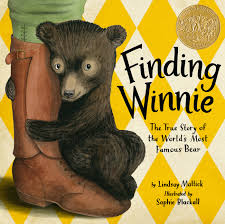
For the story of the little bear cub that inspired Winnie the Pooh, see Lindsay Mattick's Finding Winnie (Little, Brown, 2015). Framed as a bedtime story, the book is the story of the young Canadian veterinarian, en route to World War I, who adopted a little bear and named her Winnie, from his hometown, Winnipeg. For ages 4-7.
For ages 8-12, Mattick's see the longer and more detailed Winnie's Great War (Little, Brown, 2019).

Michael Bond’s A Bear Called Paddington (HarperCollins, 2002), originally published in 1958, introduces the adorable but disaster-prone Paddington, first encountered by the Brown family in Paddington station, wearing a label around his neck reading “Please Look After This Bear.” He comes from Darkest Peru (sent to England by his Aunt Lucy who is now in a Home for Retired Bears); he wears a strange squashy hat; and he’s very fond of marmalade. Many sequels. For ages 5-9.
See the official Paddington Bear website for games and activities, information on the author and illustrators, Paddington postcards, and synopses of all the books.
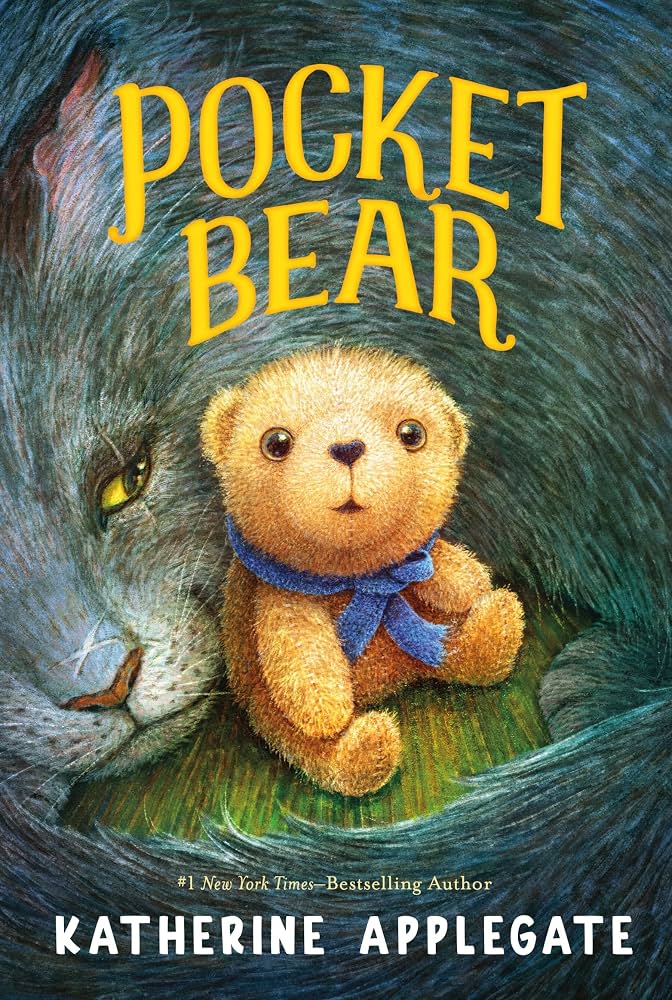
Katherine Applegate’s Pocket Bear (Feiwel & Friends, 2025) is the story of a tiny teddy bear created during World War I to fit in a soldier’s pocket as a good luck charm. Now a century has gone by and Pocket – and his best friend Zephyrina, a cat (that is, a self-described tiger trapped in a kitty costume) – are in the Second Chances Home for the Tossed and Treasured. A lovely story for ages 7 and up.
Read about the WWI mascot bears at https://markhillpublishing.com/wp-content/uploads/2016/08/HomesAntiquesJuly14Soldier-Bears.pdf.

By Daisy Corning Stone Spedden, Polar the Titanic Bear (Little, Brown Books for Young Readers, 2001) is a story of family life in the Edwardian era culminating in the voyage of the ill-fated Titanic, all told from the point of view of a little boy’s stuffed bear. The book was written in 1913; the author and her family were Titanic survivors. Illustrated with paintings and photographs. For ages 8-12.

In Tomi Ungerer’s Otto: The Autobiography of a Teddy Bear (Phaidon Press, 2010), Otto is a bear who lives through hard times. His original owner is David, a Jewish boy growing up in Germany just before World War II. When David and family are taken away by the military, David passes Otto on to his best friend Oskar. When Oskar’s town is bombed, Otto is found on the battlefield, where an American soldier picks him up just in time to block a bullet. After the war, Otto goes home with the soldier to America, only to be stolen by a gang of delinquents. He’s rescued by an antiques dealer, where he’s eventually noticed in the dealer’s shop window by a visiting German – Oskar. The story of Oskar and Otto makes the newspapers, where it’s read by David. At the end of the book, the three friends are reunited. A difficult subject made accessible by a very gallant bear. For ages 8 and up.

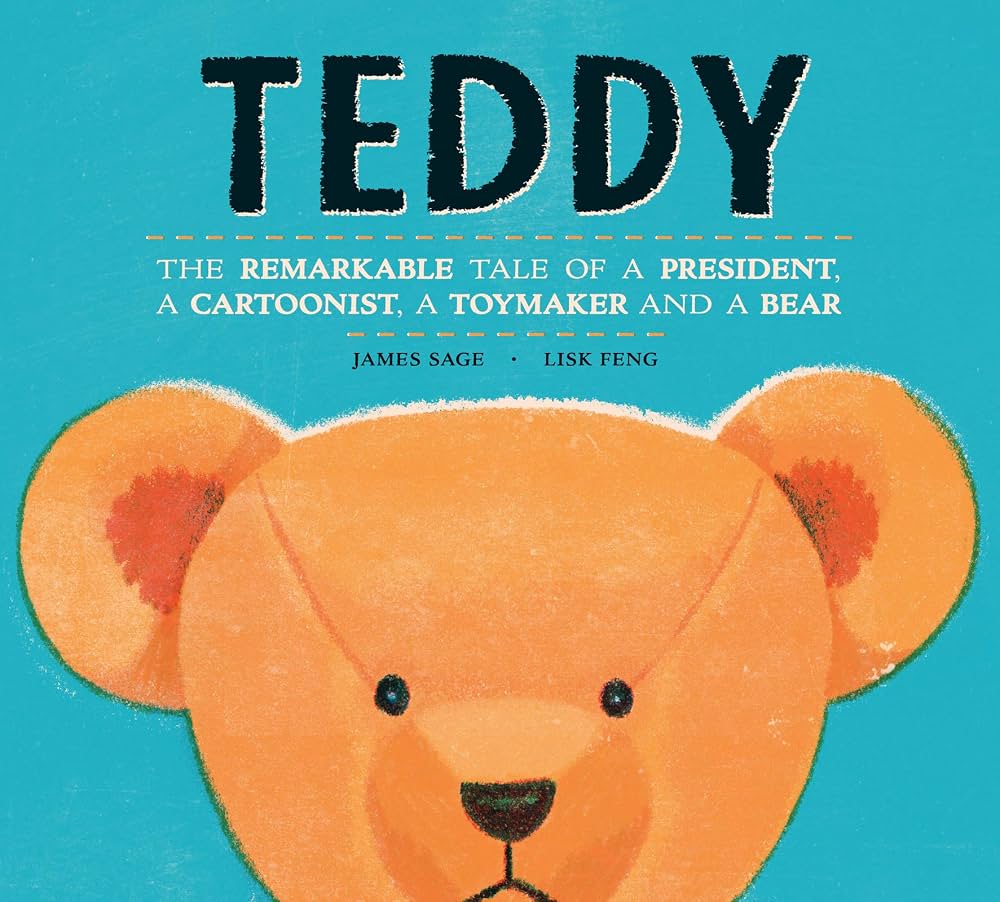
By James Sage, Teddy: The Remarkable Tale of a President, a Cartoon, a Toymaker, and a Bear (Kids Can Press, 2019) is a picture-book account of how the teddy bear came to be, beginning when President Theodore (never called Teddy) Roosevelt refused to shoot a little cub while on a bear hunt. If you can’t track it down any other way, it’s available on Kindle. For ages 4-7.

Seymour Eaton’s The Roosevelt Bears – respectively Teddy-B and Teddy-G – were the original “teddy bears,” first appearing in newspaper cartoons and books in the early 1900s.
From the Smithsonian, see The History of the Teddy Bear.
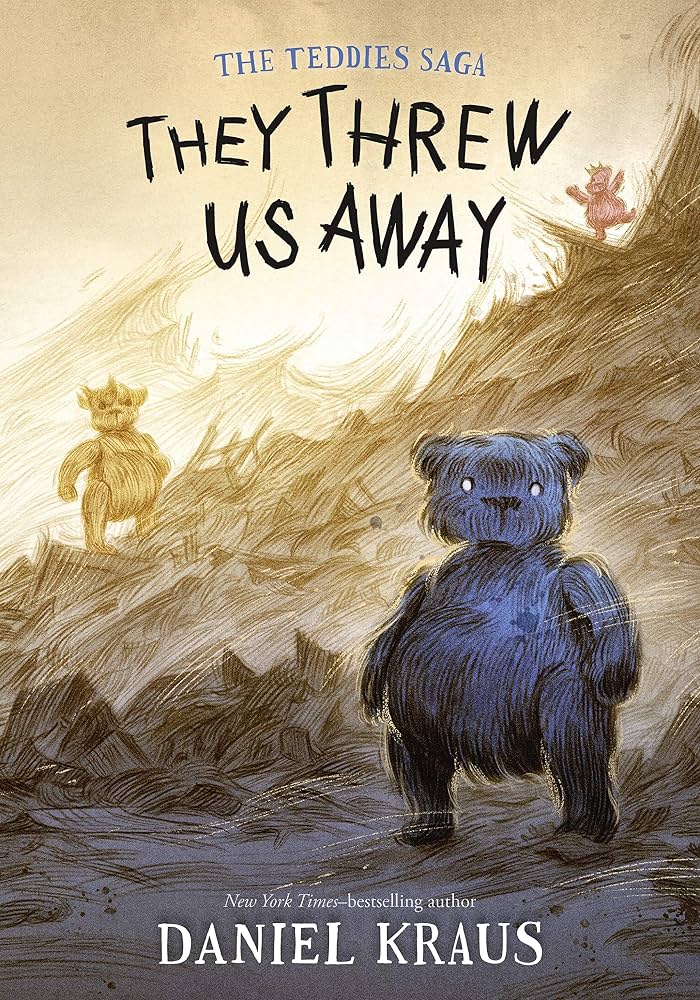
By Daniel Kraus, They Threw Us Away (Square Fish, 2022) is a dark fantasy with teddy bears. Buddy and his fellow bears – who have been in new boxes in a store – suddenly find themselves abandoned in a garbage dump. Now they have to confront any number of dangers as they struggle to find their way home – and hopefully to find children to love them. This is the first of the Teddies Saga; subsequent titles are They Stole Our Hearts and They Set the Fire. For ages 10-14 with a taste for the creepy.
Did the Vikings invent teddy bears? (Well, not exactly.) Check out
The truth about Viking berserkers.

Bear Stories

In Bill Martin, Jr.’s Brown Bear, Brown Bear, What Do You See? (Henry Holt and Co., 1996), a rhythmic repetitive text is paired with gorgeous paper-collage illustrations of colorful animals (brown bear, red bird, purple cat, green frog, blue horse) by Eric Carle. For ages 2-5.

In Bonny Becker’s delightful A Visitor for Bear (Candlewick, 2012) – with wonderful and witty illustrations by Kady Denton – Bear doesn’t like company. His door even boasts an enormous sign: NO VISITORS ALLOWED. Then the persistent Mouse shows up, and eventually Bear discovers the error of his ways. Sequels include A Birthday for Bear and Bedtime for Bear. For ages 3-7.

In Robert McCloskey’s Blueberries for Sal (Viking Juvenile, 1948), Sal and a bear cub have both gone with their mothers to the same Maine blueberry patch for blueberries – and suddenly there’s a dreadful mix-up. A classic for ages 3-7.

The main character of Else Holmelund Minarik’s Little Bear (HarperTrophy, 1978) is a furry and imaginative charmer: this, the first of the Little Bear books, has four short stories in which Little Bear variously plays in the snow, makes birthday soup, flies to the moon, and makes a special wish. Several sequels. For ages 3-7.

By Michael Rosen, illustrated by Helen Oxenbury, We're Going on a Bear Hunt (Little, Brown, 1997) is a classic and hilarious adventure, as a family romps across the countryside hunting for a bear. For ages 3-6.

Visit Spruce Crafts for a list of cool bear crafts, including a bear hunt map project.

There are many many improving titles in Jan and Stan Berenstain’s Berenstain Bears series (Random House), in which Brother and Sister Bear learn about the evils of junk food, greediness, too much television, and teasing, discover the importance of telling the truth, doing chores, and minding their manners, and cope with the doctor, the dentist, bad dreams, and bad habits. I am not fond of these – doofy Papa Bear and moralizing Mama Bear are a little much for me – but a lot of kids love them. Even a couple of mine. For ages 3-7.

In Meg McKinlay’s No Bears (Candlewick, 2012), Ella explains that a good story should have a princess, a fairy godmother, and a monster – but NO BEARS. (But there are helpful bears everywhere.) For ages 3-7.

In Philip C. Stead’s Bear Has a Story to Tell (Roaring Brook Press, 2012), Bear wants to tell a story before curling up in his den to hibernate, but his friends – Mouse, Duck, Frog, and Mole – are all too busy preparing for winter to listen. Patient Bear lends them all a helping paw – and then, winter over, the friends regroup and Bear prepares to tell his story again. Unfortunately, he can’t remember what he was going to say – though it turns out that all he needs is a little prompting from his pals. For ages 4-7.

In Jon Klassen’s poker-faced I Want My Hat Back (Candlewick, 2011), a bear has lost his hat and proceeds to question a long list of woodland creatures, all of whom deny knowledge of the hat, including the rabbit, who is obviously wearing it. Then realization dawns. (“WAIT! I HAVE SEEN MY HAT!”) For ages 4-8.

James Marshall’s version of Goldilocks and the Three Bears (Puffin, 1998) treats the traditional tale with wit and pizzazz. His Goldilocks is both naughty (“What a sweet child,” remarks a newcomer to town. “That’s what you think!” retorts another) and clueless (confronted with brown fur in the bear’s house, she concludes “They must have kitties!”). For ages 4-8.

In Gennady Spirin’s Goldilocks and the Three Bears (Two Lions, 2009), a simple traditional text is paired with gorgeous Renaissance backgrounds and costumes. For ages 4-8.

By Erik Brooks, Polar Opposites (Two Lions, 2010) is the story of Alex, a polar bear who lives in the Arctic, and Zina, a penguin who lives in the Antarctic. They’re not at all alike – Alex is big and Zina is small, Alex is loud and Zina is quiet – but when they meet at the equator, it’s clear that the disparate pair are best friends. For ages 4-8.

In Lauren Child’s I Am Going to Save a Panda (Grosset & Dunlap, 2010) – starring the perpetually entertaining Charlie and Lola – it’s Save the Animals Week and Lola and friend Lotta are bent on raising money to save a panda bear. Then Lola comes down with chicken pox. For ages 4-8.

Rudyard Kipling’s The Jungle Book – originally published in 1894 and now available in many editions – is a collection of wonderful short stories, many of them about Mowgli, a boy raised by wolves in the Indian jungle, who – with the help of Baloo the Bear and Bagheera the panther – battles the tiger Shere Khan. (The collection also includes the story of “Rikki-Tikki-Tavi,” the little mongoose who fights cobras.) For ages 6 and up.

In the Disney film version of The Jungle Book (1967), Baloo the bear and Bagheera the panther try to convince young Mowgli (the "man-cub") to return to his own kind in order to keep him safe from Shere Khan, the tiger. Baloo sings “Bear Necessities.”

In Alice Dagliesh’s The Bears on Hemlock Mountain (Aladdin, 1992) – originally written in 1952 and based on an old Pennsylvania tale – young Jonathan is sent on a journey over Hemlock Mountain on an errand for his mother. Everybody has told him that there are no bears – NO BEARS – on Hemlock Mountain, but it turns out that everybody was dead wrong. Luckily Jonathan is equipped with a large iron pot. For ages 6-9.

In Stephan Pastis’s hilarious comic novel Timmy Failure: Mistakes Were Made (Candlewick, 2013), eleven-year-old Timmy is the hapless CEO of the best detective agency in the world (Total Failure, Inc.) – in company with Total, his business partner, a large and lazy polar bear with a habit of eating trash. A hoot for ages 8 and up.
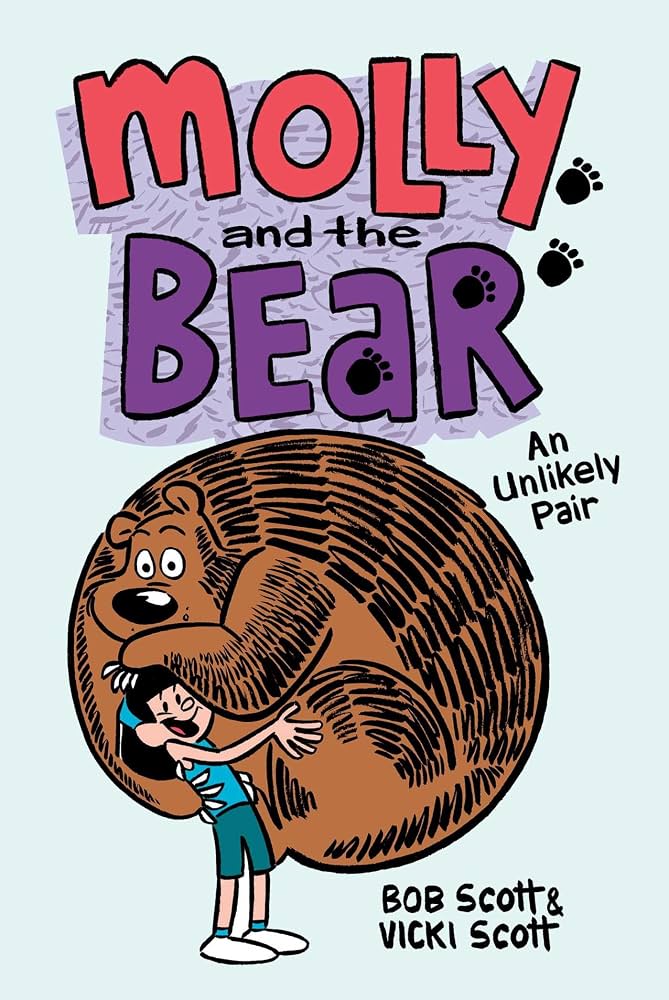
In Bob Scott and Vicki Scott’s giggle-provoking graphic novel Molly and the Bear: An Unlikely Pair (Aladdin, 2024), Molly’s best friend is an 800-pound bear – a total sweetheart who is terrified of practically everything. For ages 8-12.
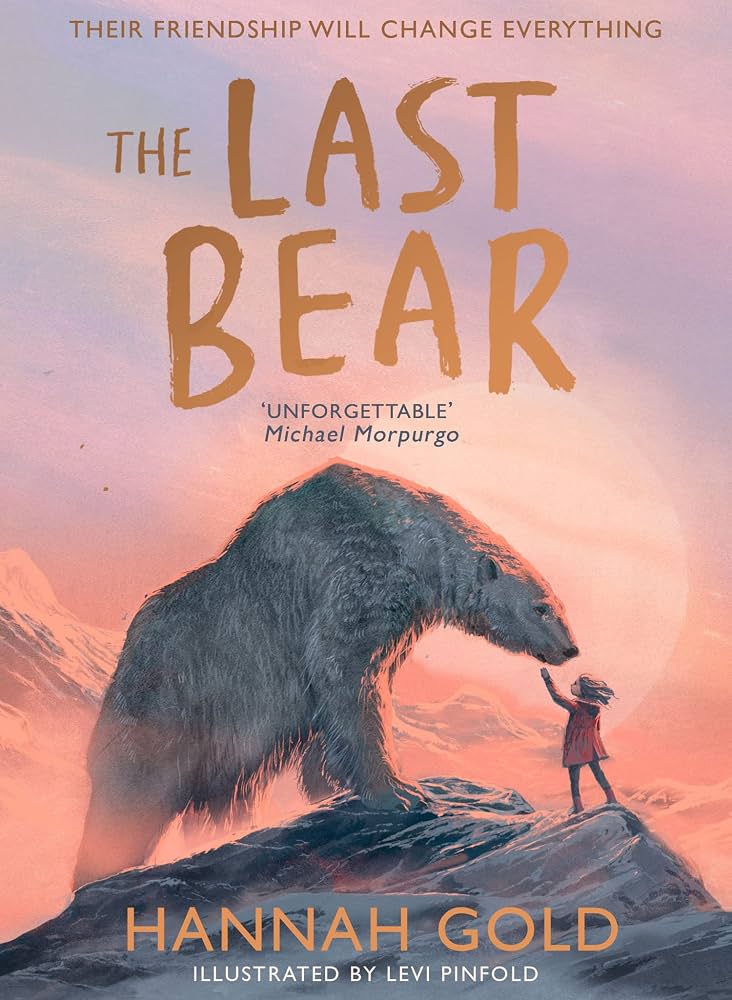
In Hannah Gold’s The Last Bear (HarperCollins, 2022), April’s scientist father tells her there are no bears on Bear Island, site of the Arctic research station where he is studying weather patterns. But April finds that there is indeed one last bear. A poignant story with an environmental message for ages 8-12.
Also by Gold, see the sequel Finding Bear (2024).

Set in the 13th century, Susan Fletcher’s Journey of the Pale Bear (Margaret K. McElderry, 2018), is the story of a bear sent as a gift from the King of Norway to the King of England – and befriended en route by young Arthur, a runaway. An adventurous story based on a true account of the “pale bear” kept by Henry III in his menagerie in the Tower of London. For ages 8-12.

Among the most fascinating and powerful characters in Philip Pullman’s His Dark Materials trilogy are the great armored bears of the far North. Titles in the trilogy are The Golden Compass, The Subtle Knife, and The Amber Spyglass. A challenging and wonderful read for ages 10 and up.
In the film version of The Golden Compass (2007), Iorek Byrnison, everyone’s favorite armored bear, is voiced by Ian McKellen. Rated PG-13.

Ben Mikaelsen’s Touching Spirit Bear (HarperTeen, 2005) is the story of teenage delinquent Cole Matthews who faces a prison sentence for severely beating a classmate. Due to the intervention of a Tlingit parole officer, however, Cole opts for Native American Circle Justice – in lieu of jail, he’ll spend a year on his own on a remote Alaskan island. There he encounters (almost fatally) a great white bear and learns to come to terms with himself and his troubles. For ages 12 and up.

In Will Hobbs’s Never Say Die (HarperCollins, 2013), Nick – a 15-year-old half-Inuit boy – accompanies his older brother Ryan, a nature photographer, on a trip to the Arctic. After their raft is lost in a log jam, the trip turns into a harrying struggle to survive. The brothers are traveling through grizzly country, and there’s an especially dangerous grolar – a hybrid grizzly-polar bear – on the prowl. Adventure, danger, and a strong climate change message for ages 11 and up.

William Faulkner’s short story, "The Bear," appears in Faulkner's short story collection Go Down, Moses (Vintage Press, 1991). For teenagers and adults.
Bears in the Sky
The constellation we know as the Big Dipper is really an asterism – a subset of a larger constellation known as Ursa Major, or the Great Bear. Learn all about it in Franklyn Branley’s The Big Dipper (HarperCollins, 1991), one of the Let’s-Read-and-Find-Out Science series. Readers learn the names of all the stars in the Dipper, discover how the Dipper is oriented in the sky in different seasons, and find out how to locate the North Star. For ages 4-7.

By Jacqueline Mitton, Zoo in the Sky: A Book of Animal Constellations (National Geographic Children’s Books, 2006) – illustrated with fantastical paintings on which the shape of the constellation is outlined in shiny stars – covers, among others, the Great and Little Bears. For ages 4-8.

Joseph Bruchac’s The Earth Under Sky Bear’s Feet (Puffin, 1998) is a collection of 12 poems based on a range of native American peoples describing what the Sky Bear – the Big Dipper – sees as she circles the Earth each night. Illustrated with lovely paintings by Thomas Locker. For ages 8-12.
From EarthSky, Big and Little Dippers has excellent reader-friendly explanations, illustrated with diagrams and photographs. Find out the names of the Big Dipper stars and how far they are from Earth, read the legends of the Bears, and more.
Real Bears

Florence Minor’s If You Were a Panda Bear – with wonderful illustrations by Wendell Minor – introduces young readers to the major species of bears (panda, sloth bear, polar bear, American black bear, and more) by means of a charming rhyming text. Added at the end are lists of Bear Fun Facts and resources. For ages 4-8.

By Gail Gibbons, Grizzly Bears (Holiday House, 2003) introduces kids to grizzlies through large appealing pictures and a straightforward text. Included are info on grizzly size, speed, behavior, and habitat. A helpful note at the end explains what to do if you’re ever threatened by a grizzly. For ages 5-9.
From National Geographic, find out more about grizzly bears at https://www.nationalgeographic.com/animals/mammals/facts/grizzly-bear.

Catherine Thimmesh’s award-winning Camp Panda (Houghton Mifflin Harcourt, 2018) is a photo-illustrated account of returning young pandas to the wild. For ages 9-12.

Sylvia Dolson’s Bear-ology (PixyJack Press, 2009) is an illustrated compendium of “Fascinating Bear Facts, Tales, and Trivia.” Included: information on bear myths, ancestral bears, bears’ relationships with humans, symbolic bears, and accounts of famous bears. For ages 12 and up.

Bernd Brunner’s Bears: A Brief History (Yale University Press, 2009) is a book for the serious bear student: nearly 300 pages of information on the history, literature, and science of bears. For teenagers and adults.

In the film The Bear (1988), directed by Jean-Jacques Annaud, a young orphaned bear cub is adopted by an adult male and together they manage to fend off hunters. A bear’s-eye view of the world. Rated PG. (There’s a brief bear mating scene.)
National Geographic’s Black Bear has background information, photographs and videos, an audio clip of a growl, a distribution map, fast facts, and links to other species of bears.
The West Virginia State Animal is the black bear. Check it out at State Symbols USA.

Only YOU can prevent wildfires. Check out the Smokey Bear website for the story of the famous Smokey Bear, Smokey imagery over the years, and information about wildfires and wildfire prevention. Included at the site are an interactive game for kids, teacher’s resources, and printable activity books.
Make a Smokey the Bear Finger Puppet.

Polar bears have transparent fur! Learn all about it at https://www.earthrangers.com/EN/CA/risk/polar-bears-have-clear-hair-so-why-do-they-look-white/.
By geneticist Ricki Lewis, Polar Bear Genome Reflects Climate Change discusses how – with warming temperatures and diminishing ice – polar and brown bear ranges are coming closer together, producing new polar/brown bear hybrids.
All polar bears trace their genetic lineage to a single female ancestor – a brown bear from Ireland. Read about it here.
Wolves helping bears? The reintroduction of wolves to Yellowstone National Park seems to be a plus for bears. Read about it here.

Bears don’t hibernate the same way that other hibernating animals do. Check out The Secrets of Bear Hibernation for an explanation and a video of a hibernating bear.
For more on bear hibernation studies, see Bears Hibernate (and Soon You Could Too).
For a more detailed account of bear hibernation (for older kids; the language is snarky and there’s discussion of bear sex), see The Great ‘Do Bears Hibernate’ Debate.
"Exit, pursued by a bear" from Shakespeare's A Winter's Tale is perhaps one of the best-known stage directions of all time - and certainly one that people find the funniest.
But did Shakespeare use a real bear?
See https://www.folger.edu/blogs/collation/exit-pursued-by-a-polar-bear/ .

What If There’s Bears? All right; I just love this. Home repair tips, with possibility of bears.
Gummi Bears (with Science)

Gummi bears were invented in Germany and have been around since the 1920s. Read about them at The History of Gummy Bears.
How to Make Gummy Bears has illustrated instructions for making gummy bears (etc.) of your own.

At Gummy Bear Science Experiments, study osmosis with gummy bears. Also see
Candy Chemistry Experiments (make dancing gummy bears).
Bear Poems and Songs

A.A. Milne’s Furry Bear appears in the poetry collection Now We Are Six, originally published in 1927.

In Ogden Nash’s The Adventures of Isabel, Isabel first meets an enormous bear. (But Isabel, Isabel, doesn’t care.)
For teenagers and up, see Robert Frost’s poem The Bear.
Just in case you’ve forgotten the words to “The Bear Came Over the Mountain” or “Teddy Bear, Teddy Bear, Turn Around,” see these 

By Seamus Kennedy, listen to Waltzing with Bears. (“There’s nothing on earth Uncle Walter won’t do/So he can go waltzing, wa-wa-wa-waltzing/Waltzing with bears!”) See https://www.youtube.com/watch?v=xSGTND0aFeI.
Bears and Math

By Barbara Barbieri McGrath, Teddy Bear Counting (Charlesbridge Publishing, 2010) is the first of the McGrath Math series, picture books that use colorful teddy bears to teach introductory math concepts. Other titles in the series include Teddy Bear Math and Teddy Bear Patterns. For ages 4-7.
Pair the books with a set of 

In Stuart J. Murphy’s The Grizzly Gazette (HarperCollins, 2002) – a MathStart book - the campers at Camp Grizzly are electing a mascot; winner gets to wear the camp’s famous grizzly bear costume. Each day the Grizzly Gazette polls the 100 campers and publishes graphs showing the percentage of votes that go to each candidate. For ages 6-9.
Bear Arts and Crafts

Make colorful cardstock bear cards.
Teddy Bears and Other Bears Too has a selection of bear-themed projects and activities, among them making teddy-bear bird food and a cinnamon-dough teddy bear ornament.
Make a calico Bear Doll.

Make a Sock Teddy Bear. The site has illustrated instructions for making a perfectly adorable bear from a striped sock.

For the committed teddy-bear-maker, Abigail Patner Glassenberg’s Stuffed Animals (Lark Crafts, 2013) has detailed instructions and templates for 16 different projects, among them a classic teddy bear. For teenagers and adults.

Meg Leach’s Knitted Finger Puppets (Martingale & Co., 2008) has patterns and instructions for 34 different puppets, among them Goldilocks and the Three Bears.
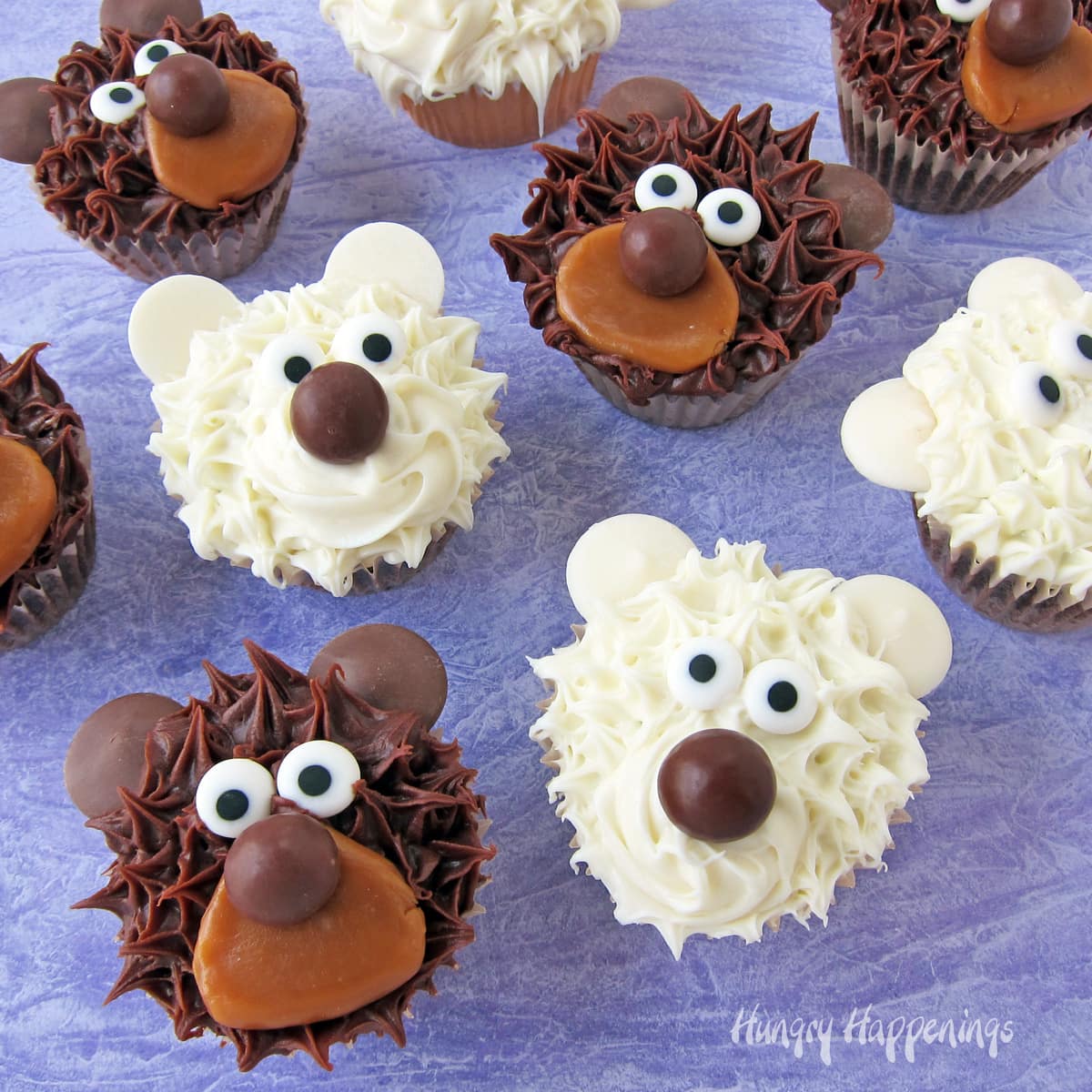
There are many many online recipes for teddy-bear cupcakes. For example, see https://hungryhappenings.com/easy-cupcake-decorating-bear-cupcakes/.