
The Holocaust
In this collection
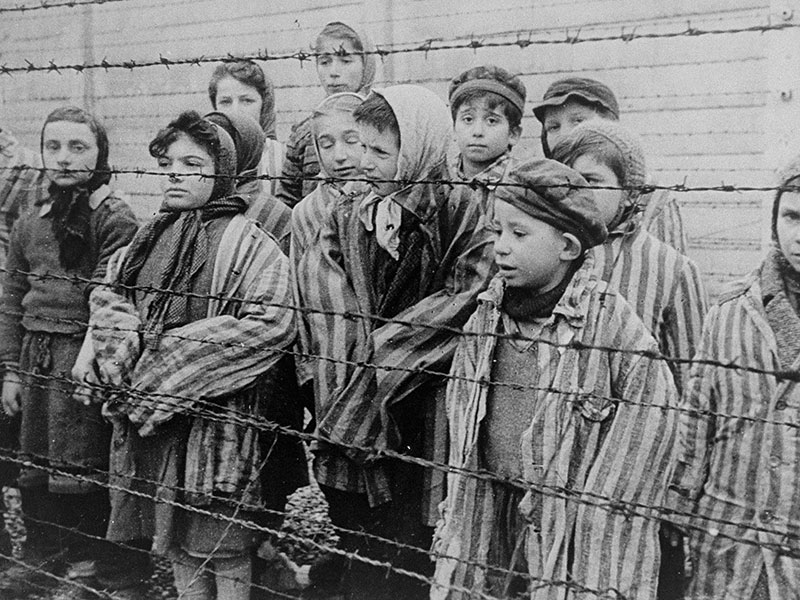
Introducing the Holocaust to children is tough. There’s no way around the fact that it’s a horrifying story – but even in the darkest and most dreadful of times, there’s still hope and bravery and heroes. Difficult as this topic may be, it should be taught. We should never forget.
By Ruth Franklin, see the New Yorker’s How Should Children’s Books Deal With the Holocaust?
From Psychology Today, see How Should You Talk to Your Child About the Holocaust?
The United States Holocaust Memorial Museum has many educational resources for students, including historical photos, maps, and clips of testimony from survivors, and general information on the history of the Holocaust, genocide, and anti-Semitism. See https://www.ushmm.org/information/visit-the-museum/plan-your-visit.
From Khan Academy, see The Holocaust, an overview of the Holocaust, including the events that led up to it.
Anne Frank
Perhaps one of the most famous names to come out of the Holocaust is that of teenaged Anne Frank, whose diary - written between 1942 and 1944 while she and her family were in hiding above a factory in the Nazi-occupied Netherlands - is now one of the best-known and most powerful books in the world. Titled The Diary of a Young Girl, it commonly appears on recommended high-school reading lists.

David A. Adler’s A Picture Book of Anne Frank (Holiday House, 1993) is a simple story of Anne’s life for ages 4-8.

By Meeg Pincus, Miep and the Most Famous Diary (Sleeping Bear Press, 2019) is the picture-book story of Miep Gies, who sheltered the Frank family in their years in hiding and who ultimately rescued Anne’s diary. For ages 6-9.
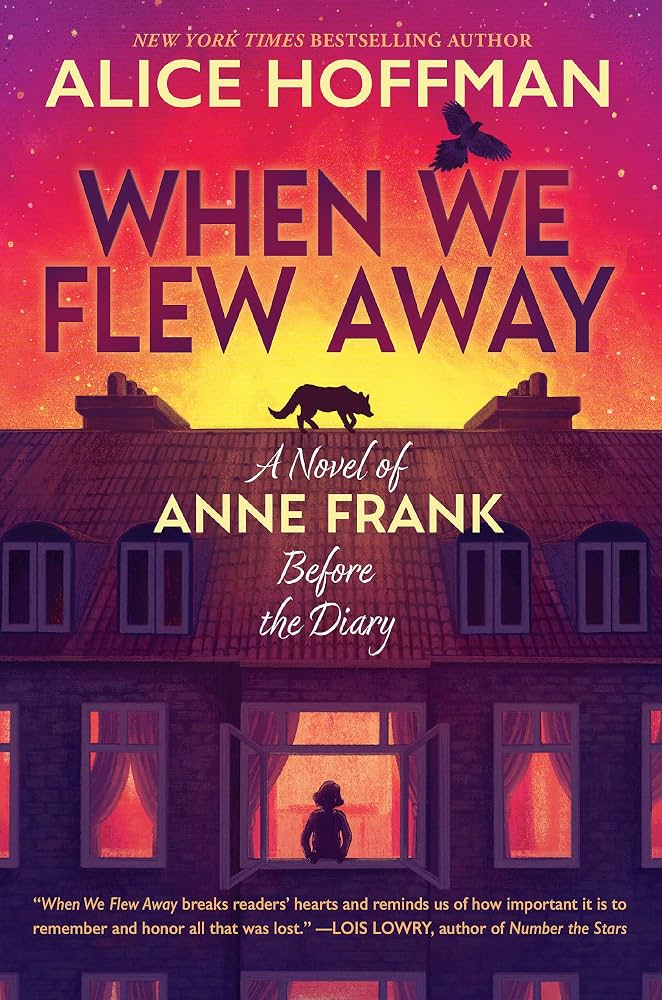
By Alice Hoffman, When We Flew Away (Scholastic, 2024) is a novel of Anne Frank before the diary, as the Frank family is caught up in the Nazi occupation of the Netherlands. For ages 10 and up.

There are many available editions of Anne Frank’s diary, Anne Frank: The Diary of a Young Girl, first published eight years after her death from typhus in the Bergen-Belsen concentration camp, and now one of the world’s most famous books. Learn more about the diary from the Anne Frank House.

Anne Frank’s Diary (Pantheon, 2018) is a graphic adaptation of the book, including extensive quotations from the original.

From the Anne Frank House, All About Anne (Second Story, 2018) is an illustrated account of Anne’s life, based on questions frequently asked by young visitors to the Anne Frank House Museum in Amsterdam. For ages 11-14.
For more information, see Anne Frank: the real story of the girl behind the diary from The Guardian.

The Diary of Anne Frank (1959) is a movie version of the story of the Frank and Van Daan families, hiding from 1942 to 1944 in the Secret Annexe above a factory in Amsterdam. Thirteen-year-old Anne kept a diary of their life there, which her father discovered when he returned after the war. Several subsequent versions of Anne’s story have been made, including a TV miniseries (2009). Generally appropriate for ages 12 and up.
Books for Younger Readers

In Jennifer Elvgren’s picture book The Whispering Town (Kar-Ben Publishing, 2014), set in 1943 in German-occupied Denmark, Anett’s family is hiding a Jewish mother and son until they can be taken on board a fishing boat to Sweden. The entire town joins in a plan of Anett’s to get the pair safely to the harbor. For ages 5-8.

Carmen Agra Deedy’s The Yellow Star (Peachtree Publishing, 2020) is the story of Danish King Christian X who – when the Nazis took over Denmark and attempted to force all Jews to wear a yellow star – donned a yellow star himself and urged all his countrymen to do the same. There’s reason to believe that this story is more legend than history – but there’s a kernel of truth here and it’s an inspiring tale for ages 6-9.
See The King of Denmark Wore a Yellow Star for a fact-check version of the story.

Patricia Polacco’s The Butterfly (Puffin, 2009), set in France during the Nazi occupation, is the story of young Monique who wakes up one night to discover a strange little girl at the foot of her bed. Her name is Sevrine and she is Jewish; Monique’s mother is hiding her family from the Nazis in a hidden basement room. When a neighbor sees Monique and Sevrine together, Sevrine’s family is forced to flee. The butterfly serves as a metaphor for Nazi brutality: a German soldier, seeing Monique admiring one, snatches it up and crushes it in his fist. For ages 6-9.

Eve Bunting’s picture book Terrible Things (Jewish Publication Society, 1989) is a Holocaust allegory. The Terrible Things have arrived in a woodland clearing and are capturing all the animals with feathers. Little Rabbit protests – “What’s wrong with feathers?” – but is silenced by the others. For ages 6-9.

By Loic Dauvillier, in the graphic novel Hidden (First Second, 2014) Dounia, now a grandmother, tells her granddaughter about her experiences as a young girl in Nazi-occupied Paris in which she was hidden by neighbors and friends after her parents were sent to a concentration camp. For ages 6-10.

By Marcia Vaughan, Irena’s Jar of Secrets (Lee & Low, 2015) is the picture-book story of Irena Sendler who, during the German occupation of Poland, smuggled children out of the Warsaw Ghetto, finding them safe homes in orphanages and convents or with sympathetic families. She kept secret lists of the children’s identities in buried jars, intended to help them find their families again after the war. For ages 6-11.
Also see Jennifer Rozines Roy’s Jars of Hope (Capstone, 2016), subtitled “How One Woman Helped Save 2500 Children During the Holocaust.” For ages 8-12.

Meg Wiviott’s Benno and the Night of Broken Glass (Kar-Ben Publishing, 2010) is the story of Kristallnacht as seen through the eyes of Benno, an orange cat. The book begins with a description of ordinary life in his neighborhood – and then an account of the awful night when the Brownshirts smashed windows and set fires to Jewish homes, after which nothing was the same again. For ages 7-10.

The star of Tomi Ungerer’s Otto: The Autobiography of a Teddy Bear (Phaidon Press, 2010) is Otto, played with by David, a Jewish boy, and his best friend Oskar in World War II Germany. David leaves the bear with Oskar when he and his family are sent to a concentration camp. Otto has an exciting wartime life, even managing to save the life of an American GI, who brings him home to his daughter in America - and eventually, long after the war is over, Otto brings David and Oskar together again. For ages 7-10.
For more information on Otto from Brainpickings, see Otto: The Autobiography of a Teddy Bear.

Claire Huchet Bishop’s Twenty and Ten (Puffin, 1978), set in occupied France, is the story of twenty French schoolchildren who, under the leadership of the courageous Sister Gabriel, save ten Jewish children from the Nazis. A short chapter book for ages 7-12.

Based on the real-life experiences of the author, in Judith Kerr’s When Hitler Stole Pink Rabbit (Puffin, 2009), Anna and her family must flee Berlin, which is no longer safe for Jews. Nine-year-old Anna, her mother, and brother flee first to Switzerland, then to France, and finally to England, where they rejoin Anna’s father. They can take very little with them – and Pink Rabbit comes to represent all they ultimately left behind. For ages 8-12.

Set during the German occupation of Holland, in Johanna Reiss’s award-winning The Upstairs Room (HarperCollins, 2019), ten-year-old Anna and her sister, in danger because they are Jewish, spend two years hidden in a tiny cramped room in a remote farmhouse. For ages 8-12.
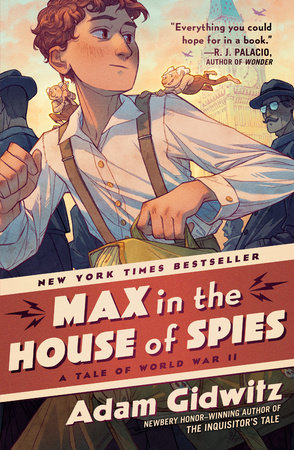
In Max in the House of Spies by Adam Gidwitz (Dutton, 2024), eleven-year-old Max, a Jewish evacuee escaping Nazi Germany, is sent to England – along with Berg and Stein, a kobold and a dybbuk, tiny invisible-to-others immortal companions riding on his shoulders. Max, who just happens to be a genius, is desperate to return to Berlin to protect his parents from the Nazis – and his plan is to convince British Naval Intelligence to take him on as an undercover agent. For ages 8-12.
Also see the sequel, Max in the Land of Lies (2026).

In Lois Lowry’s Number the Stars (Houghton Mifflin Harcourt, 2011), the Germans have invaded Denmark and have begun a campaign to relocate Danish Jews. Annemarie Johansen’s family is concealing Annemarie’s Jewish best friend, Ellen Rosen – and in the meantime the Danish resistance is working to evacuate the entire Jewish population of Denmark across the sea to safety in Sweden. Highly recommended for ages 9 and up.

I Never Saw Another Butterfly (Schockers, 1994) is a collection of children’s drawings and poems from the Terezin concentration camp between 1942 and 1944. Fifteen thousand children under the age of fifteen passed through the camp; fewer than 100 survived. A beautiful and heartbreaking book for ages 9 and up.

Allan Zullo’s Survivors (Scholastic, 2005) is a collection of true stories of nine Jewish children who survived the Holocaust, among them that of ten-year-old Mathei, who escaped from a cattle car en route to Auschwitz and became a resistance fighter, and of five-year-old Sarah, who spent two years hiding in the attic of a Polish family. For ages 9-12.
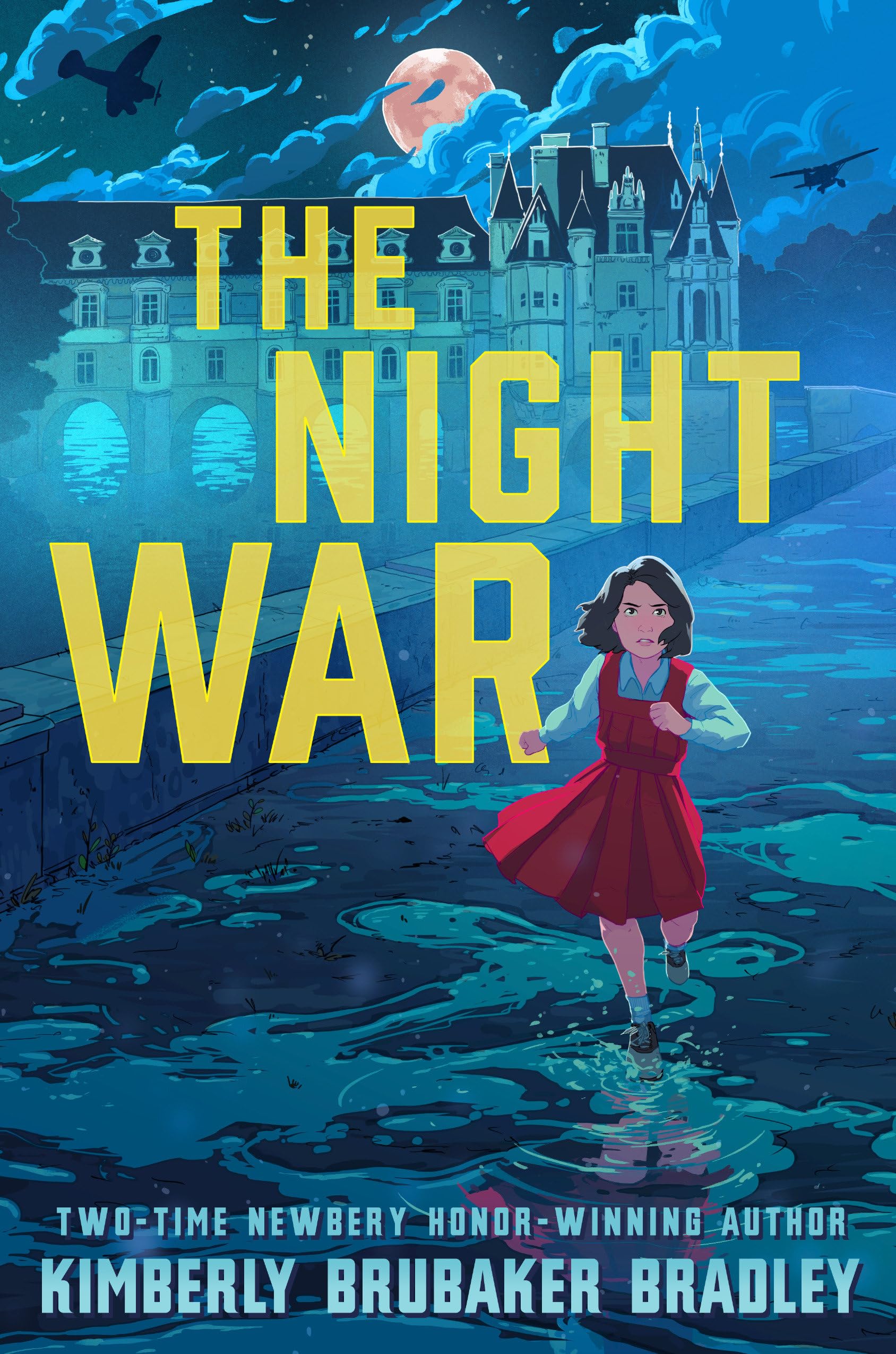
Kimberly Brubaker Bradley’s The Night War (Dial, 2024) is set in Nazi-occupied Paris in 1942, just as over 13,000 Jews are being rounded up, most to perish in Auschwitz. Twelve-year-old Miri gets away because a neighbor shoves her toddler, Nora, into Miri’s arms and tells her to run. Miri ends up in a convent school in the Castle de Chenonceau where – with the help of the ghost of Catherin de Medici – she helps escaping Jewish refugees; and eventually she and Nora set out on a perilous journey to Switzerland. For ages 9-12.

In Susan Lynn Meyer’s suspenseful Black Radishes (Yearling, 2011), young Gustave and his Jewish family have fled Paris when the Nazis occupy France. They settle in Saint-Georges, a village in the French free zone, where they become involved with the French resistance. Where the black radishes come in? In a plot to smuggle Jews out of the occupied zone, Gustave uses them to distract the border guards, because the German soldiers like them, salted, with their beer. For ages 9-12.
Books for Older Readers

The Young Readers edition of Irena’s Children by Tilar J. Mazzeo (Simon & Schuster/Margaret K. McElderry, 2016) is the story of Irena Sendler – sometimes called “the female Oskar Schindler” – who rescued thousands of Jewish children from the Warsaw ghetto. For ages 10 and up.

In Jane Yolen’s The Devil’s Arithmetic (Puffin, 2004), young Hannah Stern, bored with her family’s stories of the Holocaust and dismissive of family history, is suddenly transported back in time to Poland in 1942, where she finds herself in a concentration camp. For ages 10 and up.

The movie version of The Devil’s Arithmetic (1999) stars Kirsten Dunst as Hannah. Not rated, but includes intense and disturbing scenes.

Karen Levine’s nonfiction Hana’s Suitcase (Crown, 2016) is the story of the investigation of a Holocaust mystery which began when the curator of a Holocaust education center in Tokyo received an empty suitcase from the museum at Auschwitz. Painted on the side were the words “Hana Brady, May 16, 1931, Orphan.” The book alternates between the modern-day quest for Hana and Hana’s life in World War II Czechoslovakia which ended tragically at the Auschwitz concentration camp. For ages 10 and up.

In Laura E. Williams’s Behind the Bedroom Wall (Milkweed Editions, 2005), set in Germany in 1942, thirteen-year-old Korinna is an active member of her local Nazi youth group and a passionate believer in Hitler. Her parents, however, are members of the underground and are concealing a Jewish refugee family behind the wall in her bedroom. When Korinna discovers them, her sympathies gradually change – and her new beliefs are put to the test when someone tips off the Gestapo. For ages 10-14.
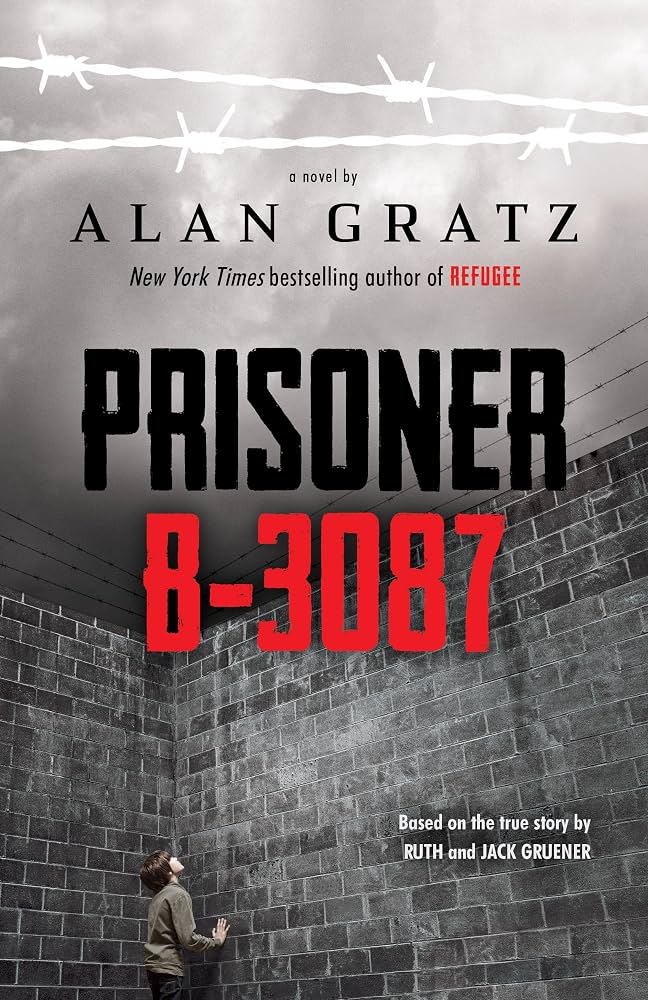
By Alan Gratz, Prisoner B-3087 (Scholastic, 2013), is the story of Yanek Gruener, ten years old when the German army invaded Poland. Over the course of the war, Yanek saw his parents deported and he himself survived ten different concentration camps. Based on the story of a Holocaust survivor. For ages 11 and up.

Markus Zusack’s The Book Thief (Knopf, 2007), narrated by Death, is the story of Liesel Meminger, living with a foster family in World War II Germany, who steals books and shares them with her neighbors and with Max, the Jewish man whom her foster parents are hiding in their basement. A wonderful read for ages 12 and up.

Jerry Spinelli’s Milkweed, set in Warsaw, Poland, during World War II, is the story of Misha, an eight-year-old orphan, who lives on the streets, survives by stealing, and wants nothing more than to become one of the magnificent German Jackboots. Then the Germans begin rounding up the Jews and imprisoning them in the Warsaw ghetto, and Misha begins to understand the brutality of war. For ages 12 and up.

Monica Hesse’s Girl in the Blue Coat (Little, Brown, 2017) is set in Amsterdam during the German occupation. Hanneke, who unbeknownst to her parents has been making money by delivering black market goods, is asked by a customer to find a Jewish girl whom she has been hiding – and who has mysteriously disappeared. For ages 12 and up.

R.J. Palacio’s graphic novel White Bird (Knopf, 2019) is the story of young Sara Blum in German-occupied France. When soldiers come to Sara’s school to arrest the Jewish students, Sara is saved by Julien, a boy she and her classmates have teased and shunned because of his crippled condition, the result of polio. Sara is hidden in Julien’s family barn for the duration of the war – and Julien becomes her closest friend. A painful and hopeful story, beautifully done, for ages 12 and up.

John Boyne’s The Boy in Striped Pajamas (David Fickling Books, 2007) is the story of two young boys, one the son of a concentration camp commandant, one – behind the barbed wire – a Jewish prisoner. The boys bond when they discover that they have the same birthday – and their affection for each other (spoiler) ends tragically. The book has received criticism for historical improbability, but pluses for emotional impact. For ages 12 and up.

Jane Yolen’s Mapping the Bones (Penguin, 2019), set in 1942 in Nazi-occupied Poland, is the story of twins Chaim and Gittel, who – after a failed attempt to escape to Russia – end up separated from their parents and sent to a concentration camp where, as twins, they are at risk from the infamous Doctor Von Schneir, modeled on Josef Mengele. For ages 12 and up.
From History.com, see Why the Nazis Were Obsessed With Twins.

Art Spiegelman’s The Complete Maus (Pantheon, 1996), combines the story of Spiegelman’s difficult relationship with his father with the World War II history of his parents’ survival under the Nazis. The story is in the form of a graphic novel in which the Jews are shown as mice, the Nazis as cats. A remarkable work, and one that changed the public view of graphic novels forever. For ages 12 and up.

In Antonio Iturbe’s The Librarian of Auschwitz (Henry Holt, 2017), 14-year-old Dita, a prisoner at Auschwitz, passionate book lover, and helper in the makeshift camp school, is asked to take charge of the eight books smuggled in by inmates that comprise the camp’s entire library. If discovered, this means certain death. For ages 13 and up.
The book is based on a true story. See Dita Kraus: The Librarian of Auschwitz.

By Michael Bornstein, Survivors Club (Square Fish, 2019) is the memoir of one of the youngest survivors of Auschwitz – Bornstein was four years old when the camp was liberated. A heartbreaking nonfiction narrative. For ages 10-14.

Jane Yolen’s Briar Rose (Tor Teen, 2016) is a re-telling of the tale of Sleeping Beauty, set in Poland during the Holocaust. Becca has grown up hearing her grandmother Gemma’s Briar Rose story. On Gemma’s deathbed, she asks Becca to promise to find the castle, the prince, and the maker of spells – which leads Becca to discover Gemma’s real history. For teens.

Elie Wiesel’s Night (Hill and Wang, 2006) is an autobiographical account of Wiesel’s survival as a teenager in Auschwitz and Buchenwald. This is the first of a trilogy; subsequent volumes are Dawn and Day. For teens and adults.

Leon Uris’s epic Mila 18 (Bantam, 1983) is the fictionalized story of Poland’s Warsaw ghetto uprising, when – after the Germans ordered the liquidation of the ghetto and the deportation of its inhabitants to the death camps – Jewish resistance fighters, armed with homemade weapons, held the Germans off for a month. A gripping, heartbreaking, and inspiring story for teens and adults.
See Warsaw Ghetto Uprising in the Holocaust Encyclopedia.

In Bernhard Schlink’s The Reader (Vintage, 1997), 15-year-old Michael is seduced by Hanna, a woman twice his age. Hanna then disappears, only to be discovered six years later, when Michael – now a law student – finds her on trial for war crimes as a concentration camp guard. Hanna refuses to reveal her shameful secret – that she is illiterate – and is sentenced to life in prison. For teens and adults.
See The Reader Reader’s Guide for a list of discussion topics and questions.
Movies

The Boy in Striped Pajamas (2008) is the story of the unlikely friendship between two eight-year-old boys, Bruno, son of a concentration camp commandant, and Shmuel, a Jewish prisoner. It has – yes, spoiler – a tragic ending. Rated PG-13.

In The Book Thief (2013), young Liesel Meminger, living with a foster family in Germany during World War II, is taught to read by her kindly foster father – and begins her book thievery by saving a book from a book burning. Eventually she steals – “borrows” – books to share with Jewish Max, whom her foster parents are hiding in their basement. Narrated, via voiceover, by Death himself. Rated PG-13.

Taika Waititi's JoJo Rabbit (2019) is a brilliant satirical film about Jojo, a young German boy, whose single mother is hiding a Jewish girl in the attic. Issues of prejudice and blind nationalism (both encouraged by Jojo’s imaginary friend, Adolf Hitler). Highly recommended. Rated PG-13.

In Life is Beautiful (1997), when a Jewish librarian and his son are sent to a concentration camp, the father uses humor and imagination to help his son survive, pretending that the Holocaust is a game, with a grand prize of winning a tank. Winner of an Academy Award. Rated PG-13.

Judgment at Nuremberg (1961) – with an impressive all-star cast including Spencer Tracy, Burt Lancaster, Richard Widmark, Maximilian Schell, and Marlene Dietrich – is the story of the post-war trial of four accused Nazi war criminals. Not rated.
From Teach with Movies, see Judgment at Nuremberg for teaching suggestions, research projects, and discussion questions. The site recommends the film for ages 10 and up.
Also see Nuremberg (2025) in which a psychiatrist evaluates the Nazi leaders pending trial, forming a complex bond with prisoner Hermann Goring. (Based on the book The Nazi and the Psychiatrist by Jack El-Hai.) Rated PG-13.

Conspiracy (2001) is a brilliant and chilling portrayal of the Wannsee Conference of 1942 in which Nazi officials met to decide upon the “Final Solution to the Jewish Question,” with Kenneth Branagh as Reinhard Heydrich and Stanley Tucci as Adolf Eichmann. Beautifully done and utterly horrifying. Most of the action takes place around a conference table. It’s rated R, apparently for occasional bad language and drinking.

Schindler’s List (1993) is the story of industrialist Oskar Schindler, owner of a factory in German-occupied Poland, who gradually becomes horrified by Nazi policies, eventually turning his factory into a haven for Jews, and saving over a thousand from death at the Auschwitz concentration camp. It’s rated R for sex and violence.