
Early Humans and the Stone Age
In this collection
Stone Age: Fiction

Michelle Robinson’s How to Wash a Woolly Mammoth (Henry Holt and Company, 2014) has next to nothing to say about prehistory, but it’s a delightful bathtime picture book. With a woolly mammoth. For ages 4-8.

In Satoshi Kitamura’s Stone Age Boy (Walker, 2008), a young boy out on a walk trips and falls into the Stone Age, where he meets a girl his own age and learns about her tribe’s way of life. After another fall, he returns to his own time, where his family insists it was all a dream – but he’s so fascinated by the experience that he grows up to be an archaeologist. For ages 6-8.

In Sunset of the Sabertooth (Random House, 1996) - one of Mary Pope Osborne's Magic Tree House series - Jack and Annie are sent back to the time of the cave people and the woolly mammoths. Unfortunately they arrive wearing nothing but bathing suits. For ages 6-9.
Also see Sabertooths and the Ice Age (Random House, 2005), the fact-filled nonfiction companion to the book.

Byrd Baylor’s lyrical One Small Blue Bead (Atheneum, 1992) centers around a Stone-Age tribe that believes they must be the only people in the world. One old man, however, isn’t so sure: “There must be caves just like our own/Somewhere/And other axes made of stone/Somewhere/And other men like me.” Eventually he sets off on a quest, returning with a strange boy from a different tribe and a blue bead, which last becomes a hopeful symbol of friendship and brotherhood. For ages 7-10.

In Jon Scieszka’s Your Mother Was a Neanderthal (Puffin, 2004) Joe, Sam, and Fred – the zany “Time Warp Trio” – by means of a magic book end up in the Stone Age. (It’s not history, but it’s fun, which is what leads to history.) For ages 7-11.
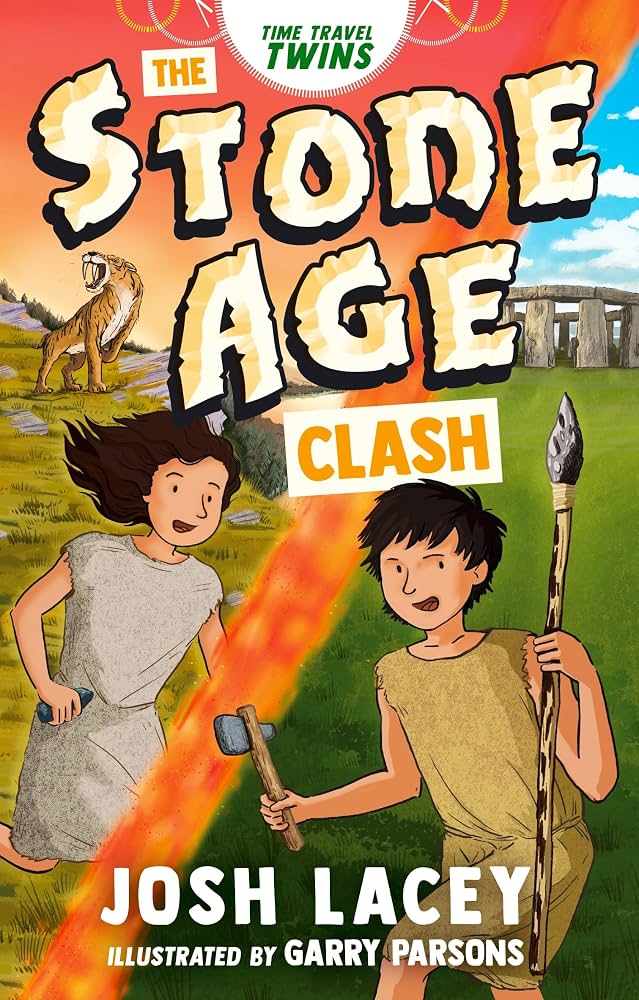
By Josh Lacey, in Time Travel Twins: The Stone Age Clash (Andersen Press, 2024), twins Scarlett and Lacey use their granddad’s time machine to travel back to the Stone Age. (Twice.) Thomas wants to see a saber-toothed tiger (Smilodon); Scarlett wants to see Stonehenge. It turns out to be trickier than expected. One of a series for ages 7-11.

In Clive King’s Stig of the Dump (Open Road Media, 2016), Barney falls into a chalk pit and meets Stig, a displaced cave boy dressed in a rabbit skin and living in an improvised den made of trash. Many adventures follow. A classic for ages 8-11.
See these Teaching Ideas and Resources for Stig of the Dump.
Also see the Stig of the Dump miniseries (2002).

In Kathleen Fidler’s The Boy with the Bronze Axe (Kelpies, 2012) two Stone-Age kids from the Orkney village of Skara Brae are trapped by the tide – and then rescued by a strange boy in a strange boat, armed with an axe like nothing they’ve ever seen before. Soon their village is struggling to cope with new technology. For ages 8-12.

Learn about the village of Skara Brae – which was abandoned around 2500 BCE.
See https://www.historicenvironment.scot/visit/all/skara-brae/.

Fiona MacDonald’s The Stone Age News (Candlewick Press, 2001) is a quirky history of the period in newspaper format, right down to the classified ads, fashion tips, and cooking columns. Features include “Ten Uses for a Mammoth,” “Bjorn’s Battle Tips,” and – for hopeful homeowners – “A Cave of My Own.” For ages 8-12.

Ann Turnbull’s Maroo of the Winter Caves (Clarion Books, 2004) is a Stone Age survival story. Maroo’s family is stranded by a blizzard and she and her younger brother, Otak, must cross the treacherous White Mountain to get help. For ages 8-12.

By Thomas Kingsley Troupe, Could You Survive the New Stone Age? (Capstone, 2020) is an interactive prehistoric adventure – see if you could survive if you suddenly traveled back in time to the Stone Age. Twenty different endings. For ages 8-12.
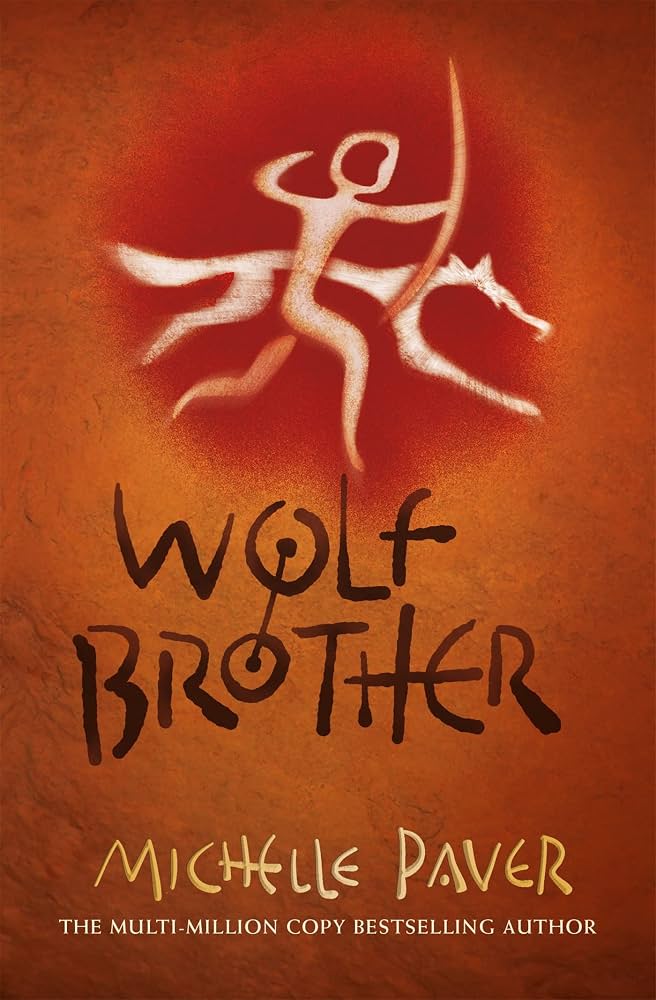
By Michelle Paver, Wolf Brother (HarperCollins, 2006) – first of the Chronicles of Ancient Darkness series – is a fantasy set 6000 years ago, when powerful mages threaten the clans and 12-year-old Torak and his wolf companion must deal with a demon-possessed bear. For ages 8-12.
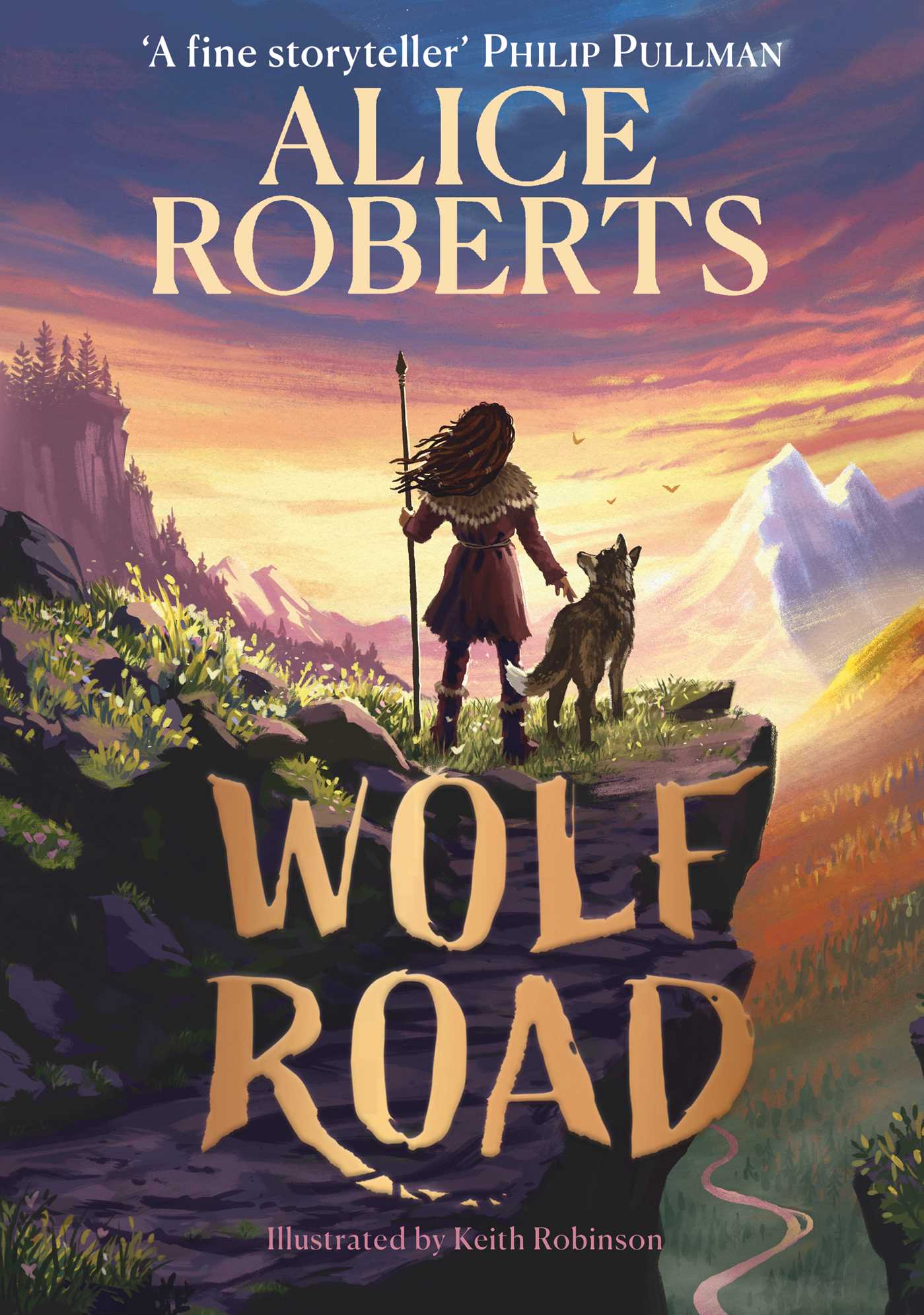
By Alice Roberts, Wolf Road (Simon & Schuster, 2024) describes 12-year-old Tuuli and life with her tribe, the reindeer people, as they navigate the seasons. Then Tuuli’s world expands when she meets a strange boy who turns out to be a Neanderthal. For ages 8-12.

In Sophie Kirtley’s The Wild Way Home (Bloomsbury, 2020), Charlie’s new baby brother is born with a life-threatening heart condition – and Charlie, devastated, flees to the neighboring forest. There he (or she; Charlie’s gender isn’t made clear) stumbles into the world of the Stone Age, meets a prehistoric boy who is looking for his baby sister - and the two form a bond over issues of family, courage, and survival. For ages 9-12.
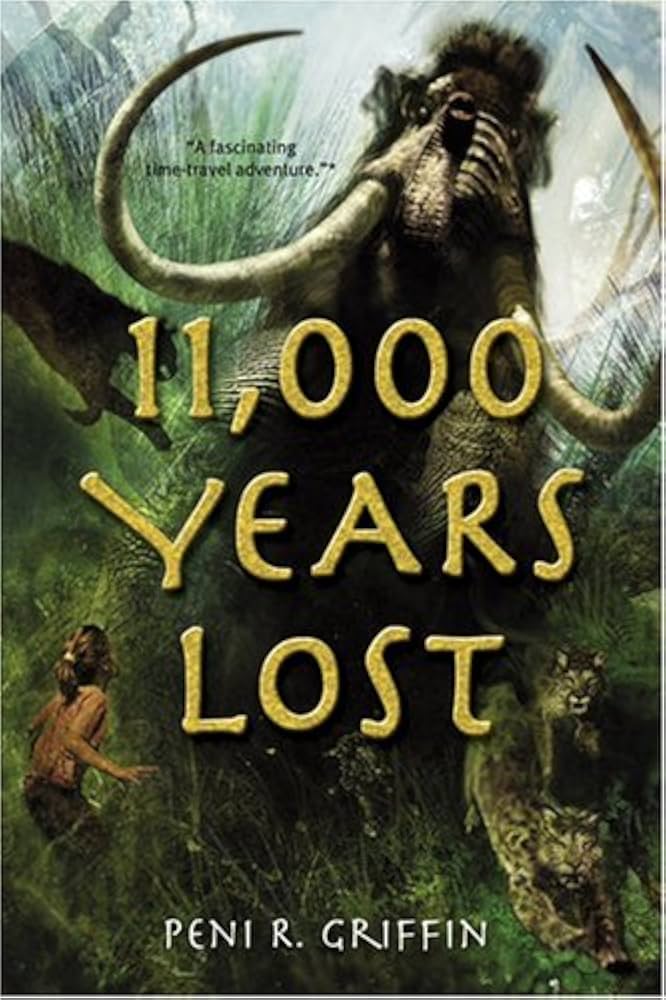
In Peni R. Griffin’s 11,000 Years Lost (Amulet Books, 2006), 11-year-old Esther, while participating in an archaeological dig, is transported back to the Stone Age, where she’s adopted by a tribe of mammoth hunters. A vivid picture of Pleistocene life for ages 10-14.

Peter Dickinson’s A Bone from a Dry Sea (Open Road Media, 2015) juxtaposes the story of a bright young female hominid named Li, growing up in Africa two million years ago, with the story of teenaged Vinny, spending the summer with her archaeologist father, who is excavating the site where Li and her people once lived. For ages 12 and up.
Also by Dickinson, see The Kin (Puffin, 2003), set in a tribal society of 200,000 years ago, in which a group of children are cut off from their “Kin” – the Moonhawks – and must survive on their own in a hostile world full of volcanoes, deserts, giant lions, and evil shamans. For ages 10 and up.
Stone Age: Nonfiction

Stone Age (DK, 2017), a DKfindout! book, is filled with photos of artifacts, paintings, maps, reproductions, and fascinating facts. Topics include “What is the Stone Age?,” “Meet a Stone Age human,” “Making tools,” “Taming wolves,” “Cave painting,” “Stone Age facts and figures,” and more. For ages 6-9.

By Marcia Williams, The Stone Age: Hunters, Gatherers, and Woolly Mammoths (Walker Books, 2016), illustrated in panel-cartoon style, is crammed with cleverly presented information. Chapters include “The Last Neanderthal,” “Hunter Gatherers,” “The Miracle of Fire,” “From Nomads to Farmers,” and ”The End of the Stone Age.” For ages 6-10.
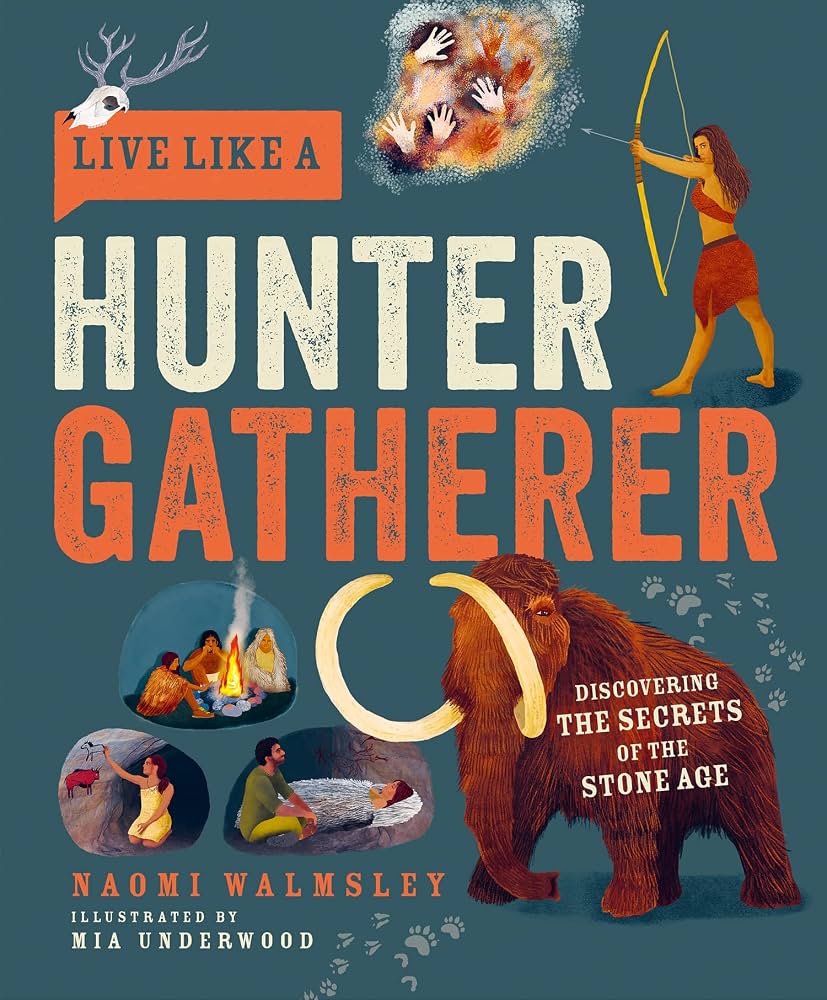
By Naomi Walsmsley, Live Like a Hunter Gatherer (Button Books, 2022) is an illustrated guide to life in the Stone Age: readers learn how to start a fire, the ins and outs of hunting and fishing, how to make a shelter, and much more, along with a map, a timelines, and hands-on crafts. For ages 7-11.
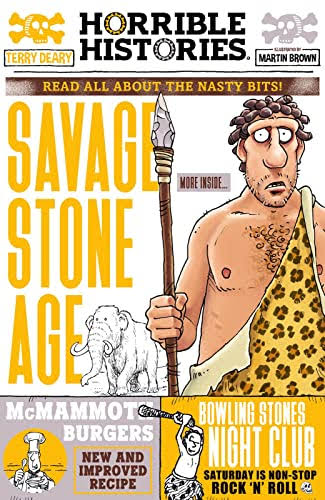
In Terry Deary’s Horrible Histories series – catchy and fun histories (“with all the nasty bits left in”) - Savage Stone Age (Scholastic, 2022) includes an annotated timeline and covers such topics as “Foul Food,” “Batty Beliefs,” “and “Awful Archaeologists.” (There’s also an “Interesting Index.”) For ages 8-12.
Stone Age Art

Mark Dubowski’s Discovery in the Cave (Random House, 2010), a Level 4 Step into Reading book, is the story of the discovery of the Lascaux Cave by four teenage boys and a dog. For ages 7-9.

Tour the Lascaux Cave. See https://lascaux.fr/en/.

Justin Denzel’s The Boy of the Painted Cave (Puffin, 1996) is the story of Tao, a fatherless boy with a crippled foot, who can never be a Chosen One and therefore is forbidden to be a cave painter. Rejected by his clan, Tao finds himself gradually beginning to question many of the tribal beliefs. Eventually he tames a wolf (forbidden), travels to the forbidden lands (forbidden), finds a mentor who teaches him how to paint, and triumphs over adversity, prejudice, and superstition. For ages 9-12.

Learn how to paint a mammoth – the Paleolithic way. Included are instructions for making your own pigments and paint brushes.

Got a giant cardboard box? For the youngest kids, add a flashlight and markers, crawl inside, and turn it into a painted Stone Age cave.

Werner Herzog’s Cave of Forgotten Dreams (2010) is a superb documentary on the 30,000-year-old paintings in the Chauvet caves in southern France.
From the Smithsonian, see A Journey to the Oldest Cave Paintings in the World.

By Mike Manning and Brita Granstrom, The Secrets of Stonehenge (Frances Lincoln Children’s Books, 2013) covers the history of this awe-inspiring ancient monument. (How did Stone-Age people manage to build it?) For ages 7-11.
See Stone Age Architecture at https://study.com/academy/lesson/video/the-stone-age-architecture-structures.html.

Stonehenge Model Kits are available from several sources. For example, see 
Stone Age Beasts
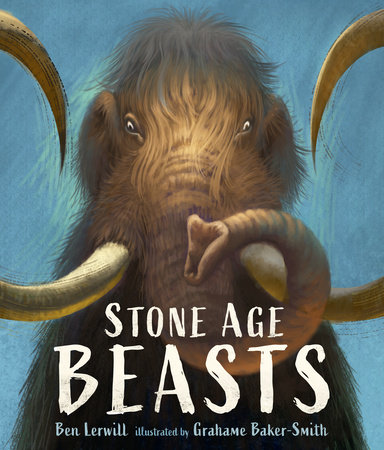
In Ben Lerwill’s Stone Age Beasts (Candlewick, 2023), each double-page spread features a different animal from the Stone Age past – among them the cave lion, the Siberian unicorn, the elephant bird, the woolly mammoth, and the dire wolf. For ages 6-9.
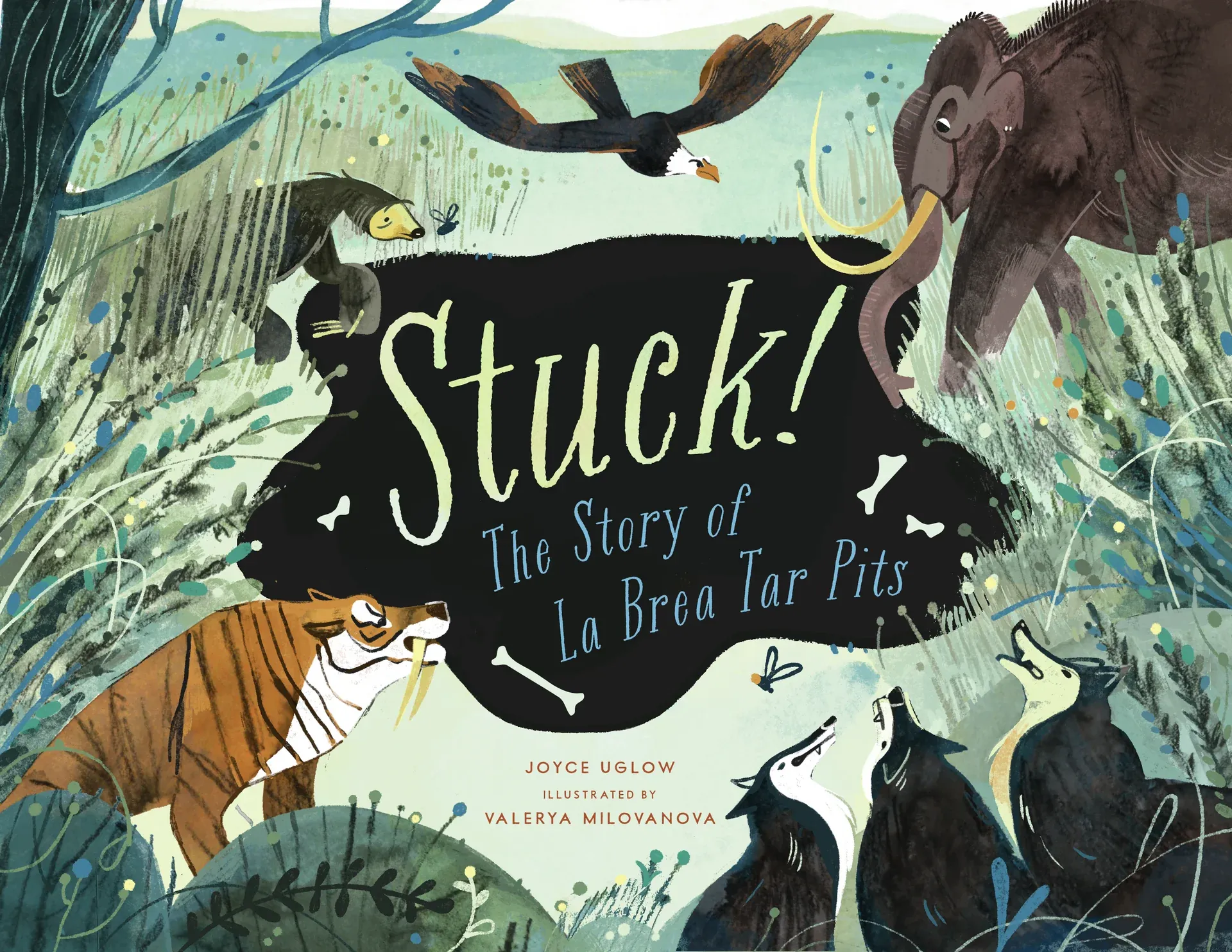
By Joyce Uglow, Stuck: The Story of La Brea Tar Pits (Bushel & Peck, 2025) begins when an unsuspecting ground sloth wanders into the tar pits and becomes stuck, followed by saber-tooth cats, dire wolves, eagles, and more – all buried in sediment until oil field workers and scientists discover them thousands of years later. For ages 7-10.
Also see Jessica Stremer’s Trapped in the Tar Pit: How Paleontologists Unearthed a City’s Prehistoric Past (Beach Lane Books, 2025) for ages 4-8.
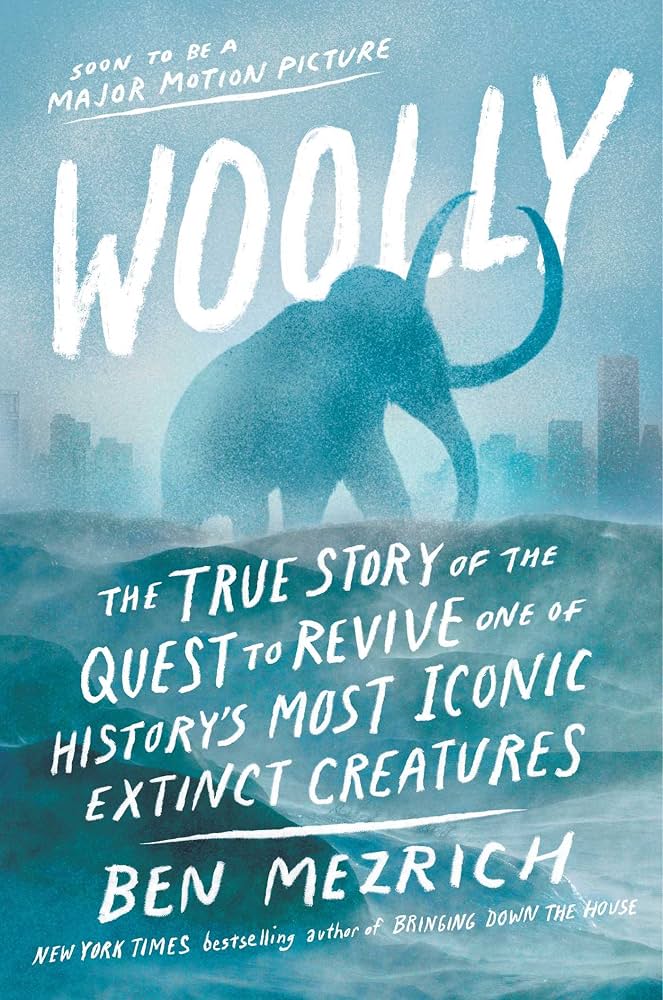
By Ben Mezrich, Woolly (Atria Books, 2017) is an account of the quest to bring back the woolly mammoth. A great story that reads like a thriller. For teens and adults.
What's de-extinction? And should we bring back the mammoths?
From The Kid Should See This, see this short video on de-extinction at https://thekidshouldseethis.com/post/de-extinction-science-ethics-pbs-video.
From the Science Journal for Kids and Teens, see “Why is it so hard to bring back extinct species?” at https://www.sciencejournalforkids.org/articles/why-is-it-so-hard-to-bring-back-extinct-species/.
How the Wolf Became the Dog

Jan Brett’s The First Dog (Voyager Books, 1992) is the exquisitely illustrated picture-book tale of Kip, an Ice-Age boy, who is followed home by a paleowolf, begging for a taste of Kip’s roasted woolly-rhino bones. En route, the wolf saves Kip from assorted dangers, among them a menacing saber-toothed cat, after which the two strike a deal: protection in exchange for food. For ages 4-8.

By Lee Alan Dugatkin and Lyudmila Trut, Pushinka the Barking Fox (Persnickety Press, 2019) is the story of a domestication experiment with a silver fox pup – which may just show us how wolves became dogs. Illustrated with photos. For ages 4-8.
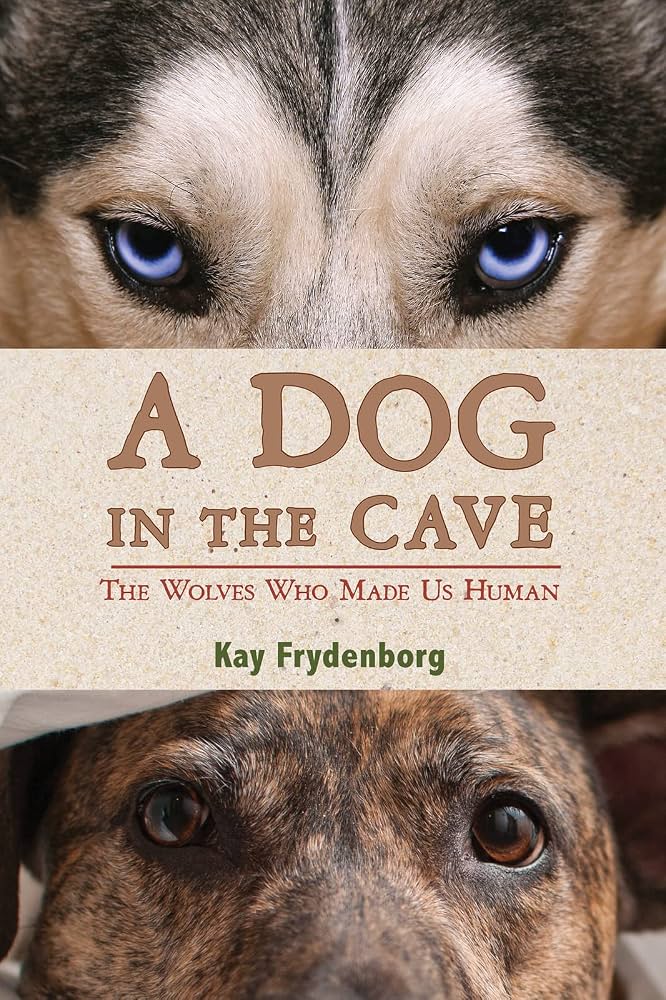
Kay Frydenborg’s A Dog in the Cave (Clarion, 2017) is the illustrated account of the co-evolution of wolves and humans – and how both came to understand and depend on each other. The story begins with the discovery of the footprints of an eight- to ten-year-old boy accompanied by a wolf-like dog, let in a chamber of the Chauvet Cave 26,000 years ago. For ages 12 and up.

By geneticist Bryan Sykes, Once a Wolf (Liveright, 2019) traces the science of the “astonishing” evolution of our best friend – which likely literally began when a human child adopted a wolf cub. An interesting and reader-friendly account for teens and adults.

By Lee Alan Dugartkin and Lyudmila Trut, How to Tame a Fox (and Build a Dog) (University of Chicago Press, 2019) is the story of an attempt to study the evolution of the domesticated dog – using Siberian foxes. For teen and adults.

In the movie Alpha (2018), an adventure/survival story set in the last Ice Age, a young man is injured on his first hunt and separated from his tribe. Alone in the wilderness, he tames a wolf and together the pair set out to find their way home. Rated PG-13.
From the Smithsonian, read about the science behind Alpha.
See this short hyperlinked article on the Evolution of the Dog from PBS.

Human Evolution

In Joanna Cole’s The Magic School Bus Explores Human Evolution (Scholastic, 2021), Arnold wants to know more about his family tree – so the marvelous Ms. Frizzle takes her class back 3.5 billion years in time. For ages 4-9.

By Catherin Barr, The Story of People (Frances Lincoln Children’s Books, 2019) is a whirlwind tour of the history of humankind from early hominids to the present day, illustrated with colorful childlike drawings. It’s necessarily truncated – all of human history in 40 pages? – but is still a good jumping-off point for younger kids. Read it together and prepare to answer lots of questions. For ages 5 and up.
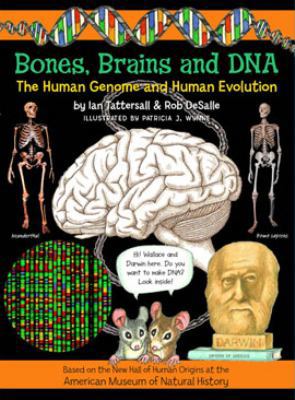
By Ian Tattersall and Rob DeSalle, Bones, Brains, and DNA (Bunker Hill Publishing, 2007) is a creatively illustrated introduction to the human genome and human evolution with the help of Wallace and Darwin, the museum mice from the American Museum of Natural History. For ages 7-10.

Michael Bright’s When We Became Humans (words & pictures, 2019) is a well-done illustrated guide to human evolution beginning with the first tiny primates who lived 65 million years ago and proceeding through the anatomical and behavioral changes that led to modern humans. A good pick for ages 7-11.
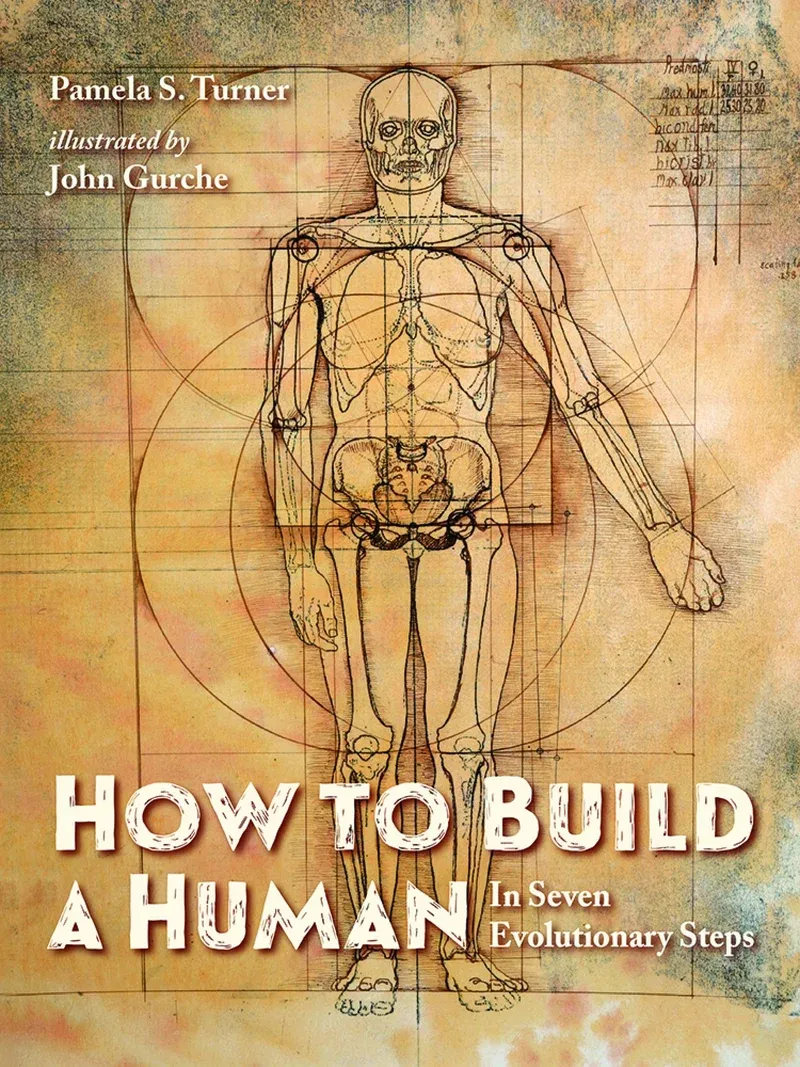
By Pamela Turner, How to Build a Human (Charlesbridge, 2022) is the history of our species in seven catchy steps from “We Stand Up” through “We Smash Rocks,” “We Invent Barbecue,” and “We Become Storytellers.” Substantive reader-friendly science and history presented with wit, humor, and some very cool footnotes. Highly recommended for ages 10 and up.

By Alice Roberts, Evolution: The Human Story (DK, 2018), a gorgeously illustrated and designed overview, begins with fossils and the geological record and goes on to cover primates, hominins, the human migration out of Africa, and the transition from hunter-gatherers to farmers. For ages 13 and up.

Learn through coloring! Adrienne L. Zihlman’s The Human Evolution Coloring Book (HarperCollins, 2001) covers a wide range of topics from Darwin’s discoveries through evidence for evolution, Mendelian genetics, Earth history, primate diversity, early hominids, and the rise of Homo sapiens. Black-and-white to-be-colored illustrations are paired with a detailed text. 300+ pages for teens and adults. Pair with a pack of colored pencils.

Subtitled “A Brief History of Humankind,” Yuval Noah Harari’s Sapiens (Harper Perennial, 2018) traces the story of our species – beginning 100,000 years ago when at least six different species of humans lived on Earth. A fascinating read for teens and adults.

From the American Museum of Natural History, see this YouTube presentation of 7 Million Years of Human Evolution.
From the Smithsonian Museum of Natural History, see What does it mean to be human? – an online introduction to human evolution with lesson plans, fun facts, a glossary, and more.
See this illustrated Evolutionary Timeline of Homo sapiens.
From National Geographic, Human Evolution 101 includes short explanations of how evolution works, the major milestones in human evolution, and the question of the “missing link.”
Human evolution was complicated. From Scientific American, see How Scientists Discovered the Staggering Complexity of Human Evolution.

On YouTube from Big History, see this fifteen-minute crash course in Human Evolution.
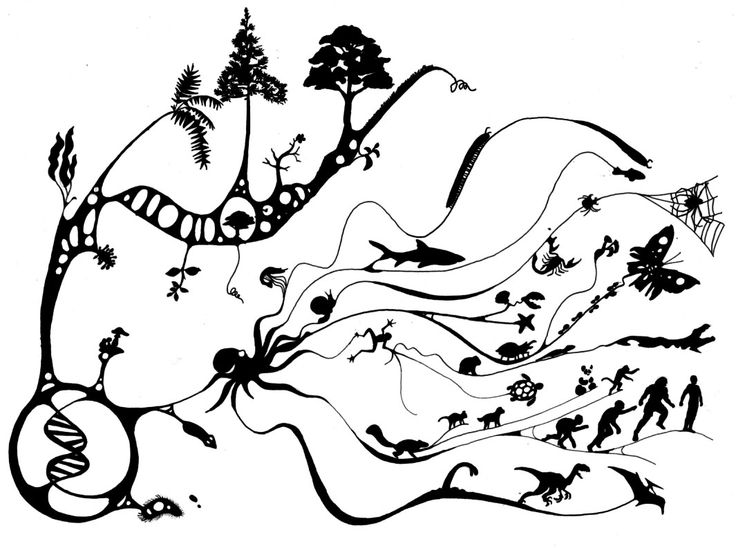
Movies

In Ice Age (2002) a lugubrious mammoth, a cheerful sloth, a hyperactive squirrel, and suspiciously sly saber-toothed tiger team up to reunite a human toddler with his nomadic Stone-Age tribe. Rated PG.

In Nick Park’s stop-motion Early Man (2018), a tribe of cavepeople have invented the game of football following as asteroid strike. Now many ages have passed – and Dug and his pet warthog must rally the tribe to defeat Lord Nooth and his Bronze Age soldiers. A riotous conflict that involves mammoths and a football match. Rated PG.

Quest for Fire (1981), set in Paleolithic Europe, is the story of three tribesmen searching for a new fire source, a journey that involves encounters with saber-toothed cats, mammoths, and cannibals. Rated R for nudity, gore, and violence.

In The Clan of the Cave Bear (1986), Cro-Magnon meets Neanderthal when a young Cro-Magnon girl is raised by a Neanderthal tribe. Rated R for nudity, gore, and violence.
Projects and Activities

In the Hands-On History series, Charlotte Hurdman’s Stone Age (Armadillo, 2013) has background information and instructions for fifteen hands-on projects, among them your own painted cave art, Stone Age hunting tools, a leopard’s tooth necklace, a miniature Stonehenge model, and recipes for a Stone Age meal. For ages 5-9.

Make an atlatl! An atlatl is a spearthrower – invented in the Stone Age (Upper Paleolithic period) and used by hunters to increase their spear-throwing strength and range. Try it!

From Imagining History, Stone Age Crafts for Kids has instructions for making Stone Age jewelry, a stone axe, a model stone circle, and a cave painting.
Try these Stone Age STEAM challenges. Make a dish to hold paint for a cave painting, weave a bag or basket for carrying crops, use a hammerstone for cracking nuts – and more.

Make Neolithic bread. You’ll need wheat berries and a lot of elbow grease.
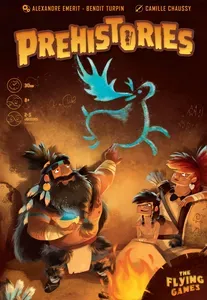
In Prehistories (25th Century Games), players, as leaders of prehistoric tribes, decide who hunts and what game to catch, and complete challenges created by the Elders by painting on the walls of your cave. For 2-5 players ages 8 and up. See

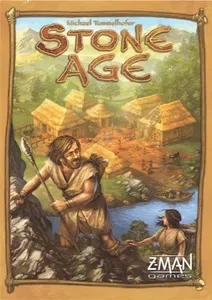
In Stone Age, players compete to accumulate resources (wood, stone, gold) to gain more knowledge and the ability to build increasingly sturdy structures, all while feeding your growing tribe. A board game for 2-4 players ages 13 and up. See https://www.zmangames.com/game/stone-age/.
Also see the digital version at https://apps.apple.com/us/app/stone-age-digital-edition/id6445834434.