
Evolution
In this collection
"Evolution” is a word that engenders considerable controversy - if not outright purple-faced fights - in this country; and its place in the public-school science curriculum has never been secure.
It’s time we did better.
Evolution is the fundamental underlying theory of all the life sciences. No science education is complete - or, frankly, possible - without it.
Evolution in the Classroom: How’s Your State Doing?
From NPR, Teaching Evolution: A State-by-State Debate describes how various states are dealing with the evolution. Most of them, poorly.

From the National Academy of Sciences, the 150-page Teaching About Evolution and the Nature of Science (National Academies Press, 1998) is crammed with illustrations, explanations, teaching suggestions, and resources for kids in grades 5-12. Of particular interest are the sections on “Why Teach Evolution,” which lists many convincing reasons; “Evolution and the Nature of Science,” which clearly explains the crucial theory and demonstrates its relevance to a wide range of scientific disciplines; and "Frequently Asked Questions About Evolution and the Nature of Science” (with answers).
Also see Evolution in Hawaii: A Supplement to Teaching About Evolution and the Nature of Science (National Academies Press, 2004) and by Lee Meadows, The Missing Link: An Inquiry Approach for Teaching All Students About Evolution (Heinemann, 2009).
All About Evolution
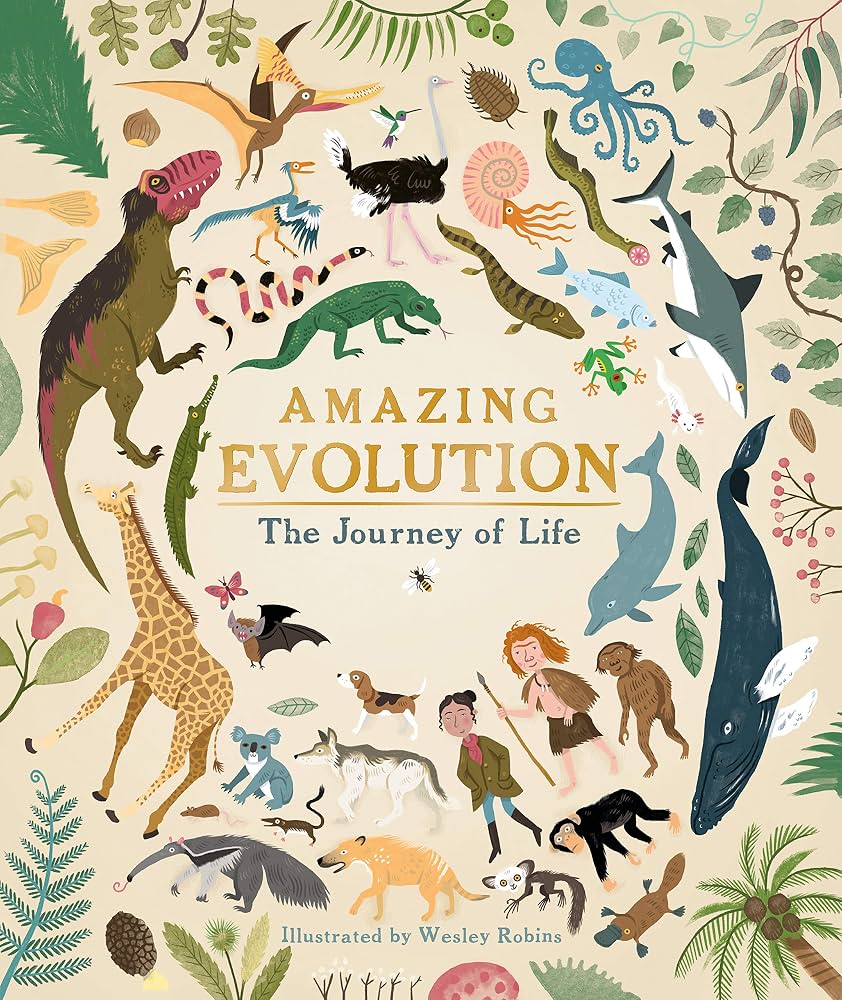
By Anna Claybourne, Amazing Evolution: The Journey of Life (Ivy Kids, 2019) covers the beginnings of life 3.8 billion years ago to the millions of different species alive today, with beautiful illustrations and fascinating facts. For ages 5-8.
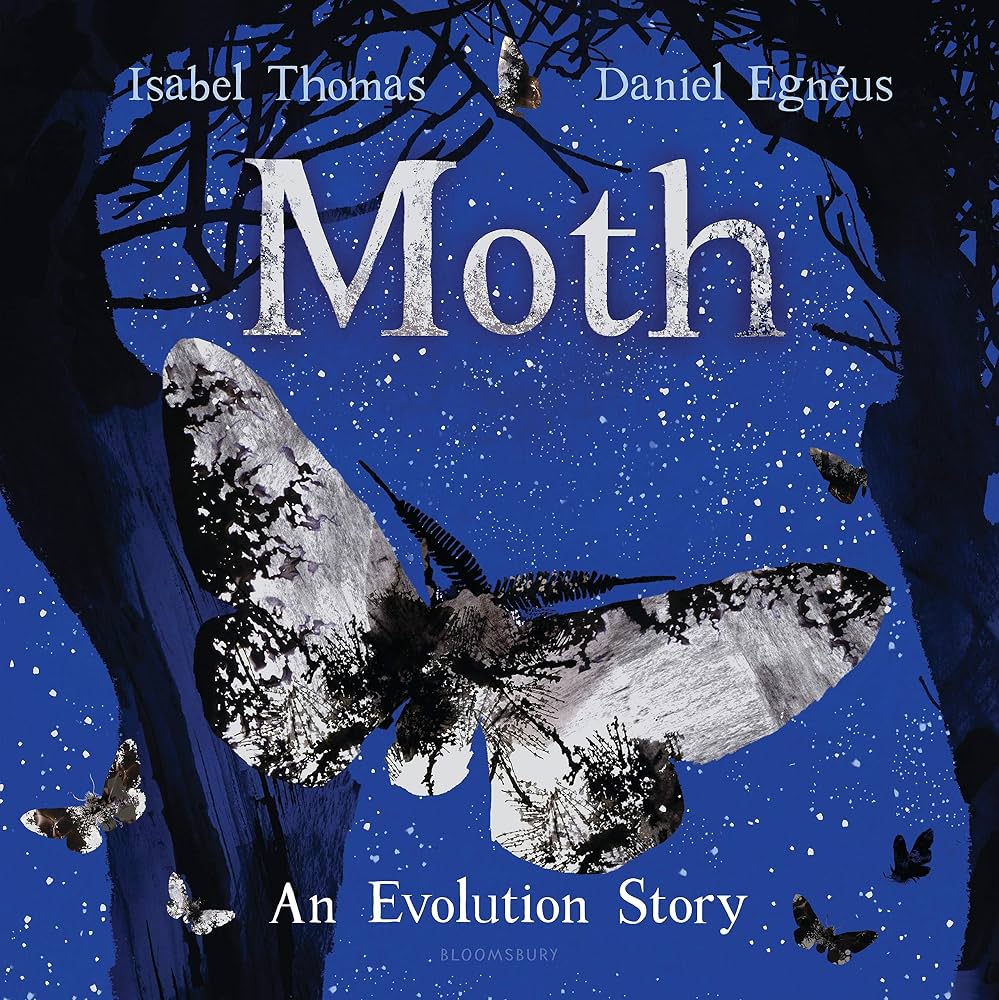
By Isabel Thomas, Moth: An Evolution Story (Bloomsbury, 2019) is a picture-book account of the peppered moth, a classic example of natural selection and evolution. For ages 5-8.
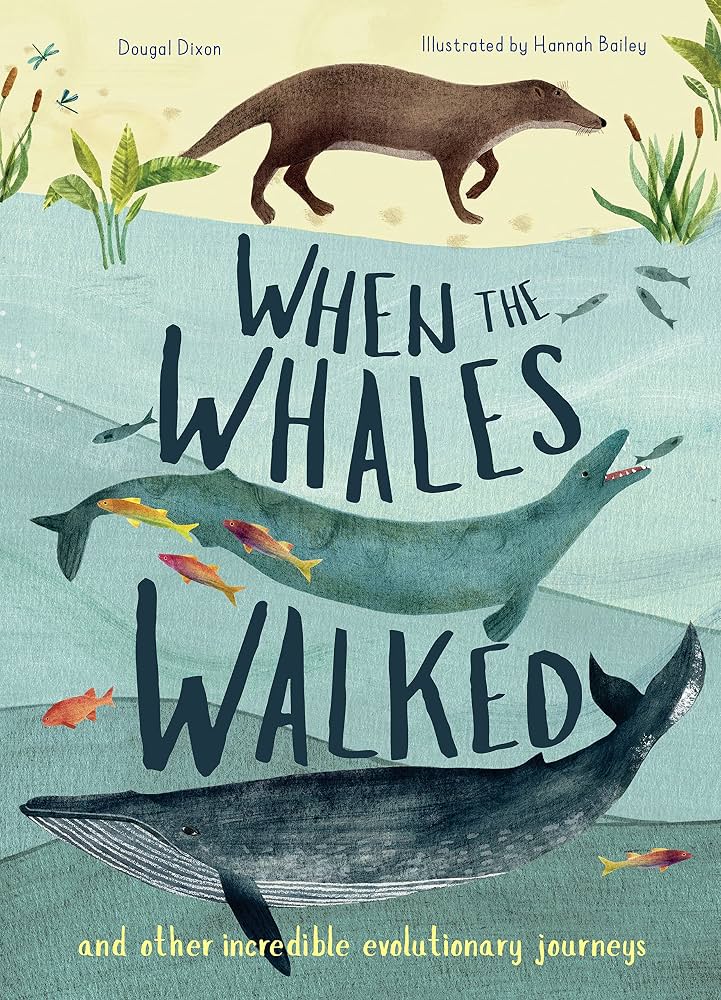
In Dougal Dixon’s When the Whales Walked: And Other Incredible Evolutionary Journeys (words & pictures, 2018), readers discover some of evolution’s most amazing stories, among them accounts of walking whales, warm-blooded crocodiles, tiny elephants, and terrifying birds. For ages 5-9.
Other titles in the Incredible Evolution series include When We Became Humans and When Plants Took Over the Planet.
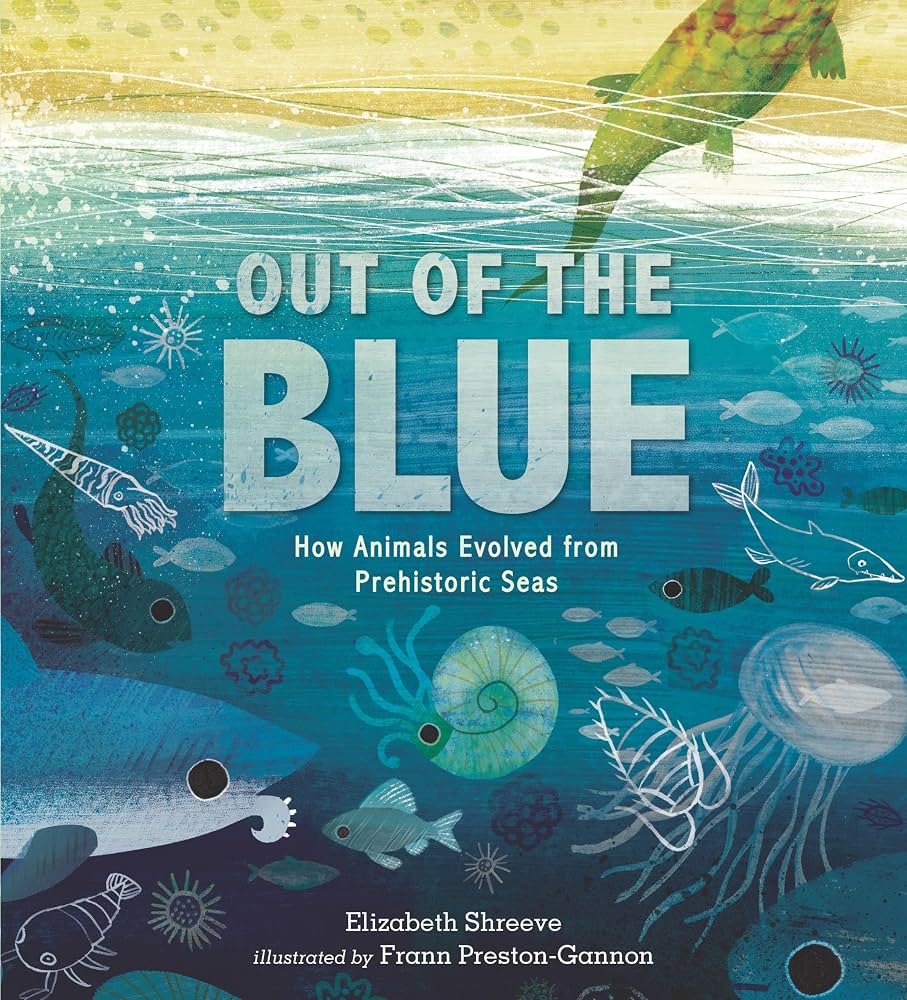
In Elizabeth Schreeve’s Out of the Blue: How Animals Evolved from Prehistoric Seas (Candlewick, 2021), bright illustrations and a timeline trace the emergence of life from the sea, from the first microorganisms to the Cambrian explosion, crustaceans, mollusks, fish, giant reptiles, and the rise of mammals. For ages 6-9.

In Karen Fox’s Older Than the Stars (Charlesbridge Publishing, 2011), a mix of splashy illustrations, catchy rhymes, and straightforward prose show readers that every part of human beings was created billions of years ago in the Big Bang. The iron in our blood may have come from an ancient volcano; the oxygen in our lungs may have been breathed by dinosaurs. A compelling overview of Big Bang cosmology, planetary formation, and evolution for ages 5-9.

By Catherine Barr and Steve Williams, The Story of Life (Frances Lincoln Children’s Books, 2018) is a first introduction to evolution, from the first cells through jellyfish, worms, fish, land animals, dinosaurs, and on. For ages 6-9.

By Steve Jenkins, Life on Earth: The Story of Evolution (Houghton Mifflin Harcourt, 2002) is a remarkable illustrated history of all the millions who have lived on earth, with dozens of wonderful color illustrations and an annotated timeline. For ages 7-10.

Virginia Lee Burton’s Life Story (Sandpiper, 2009) is a delightful picture-book history of life on earth, presented as a play in five acts - namely the Paleozoic, Mesozoic, and Cenozoic Eras, Recent Life, and Most Recent Life. The book begins with an introductory "Cast of Characters,” listing "Leading Animals” and "Leading Plants” in order of appearance; the curtain rises on the beginnings of the Milky Way Galaxy. For ages 7-10.

By Lisa Westberg Peters, Our Family Tree: An Evolution Story (Harcourt Children’s Books, 2003) is a poetic picture-book account of evolution, from the beginning of life on earth nearly four billion years ago to the emergence of human beings from primate ancestors. (“All of us,” Peters begins, “are part of an old, old family.”) Included are helpful notes and an illustrated timeline. For ages 7-10.

Linda Gamlin’s Evolution in the Eyewitness Series (Dorling Kindersley, 2009) contains 64 pages of visually appealing double-page spreads, each - through color photographs, drawings, and explanatory picture captions - detailing a different evolutionary topic. Examples include "Fossil evidence,” "The age of the Earth,” and "How new species are formed.” For ages 7-12.

Laurence Pringle’s Billions of Years, Amazing Changes (Boyds Mills Press, 2011) is a 112-page survey of evolution, illustrated with wonderful color photographs and drawings. Pringle discusses the evidence for evolution, beginning with geology and the fossil record, then moving on to Darwin’s discoveries, natural selection, genetics, and biogeography. For ages 8 and up.

Michael Rubino’s 64-page Bang! How We Came to Be (Prometheus Books, 2011) is a beautifully illustrated progression through time in a series of double-page spreads, from the Big Bang to the formation of the planets to the evolution of life on Earth. For ages 8 and up.

Daniel Loxton’s award-winning 56-page Evolution: How We and All Living Things Came to Be (Kids Can Press, 2010) – initially, disgracefully, shunned by US publishers as “too controversial” - covers the basics of natural selection and evolutionary theory, evolution as relevant to our daily lives (for example, why do we need a new flu vaccine each year?), and the various objections commonly posed by opponents of evolution, using a combination of interesting, accessible text and catchy Q&A boxes. Sample questions include “What is a species?” “Can we ever see evolution happening?” and “How could evolution produce something as complicated as my eyes?” For ages 8-13.
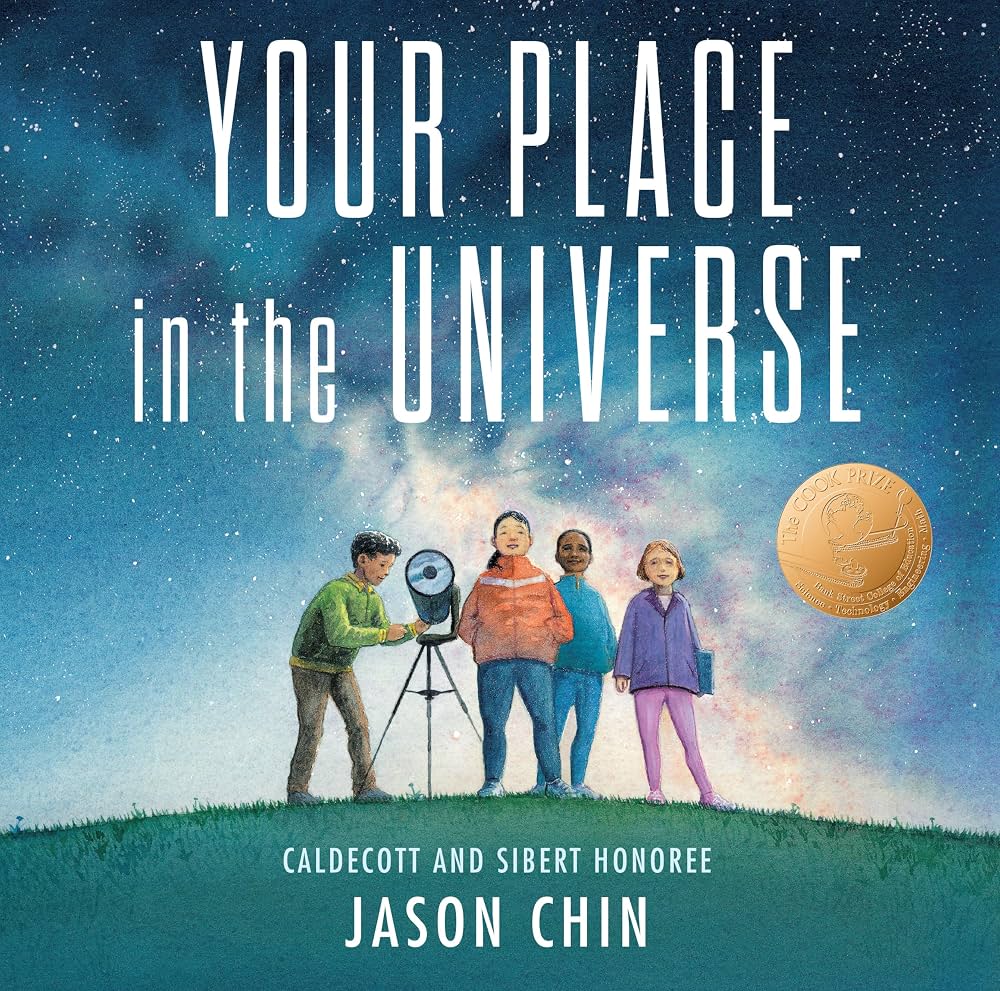
Jason Chin’s Your Place in the Universe (Neal Porter Books, 2022) begins with the tallest bird (ostrich), animal (giraffe), tree, and building, and expands to mountains, planet Earth, the moon, the sun, the solar system, the Kuiper Belt, the Milky Way galaxy, galaxy clusters, the cosmic web, and the universe. A super-charged link to math. For ages 8-12.
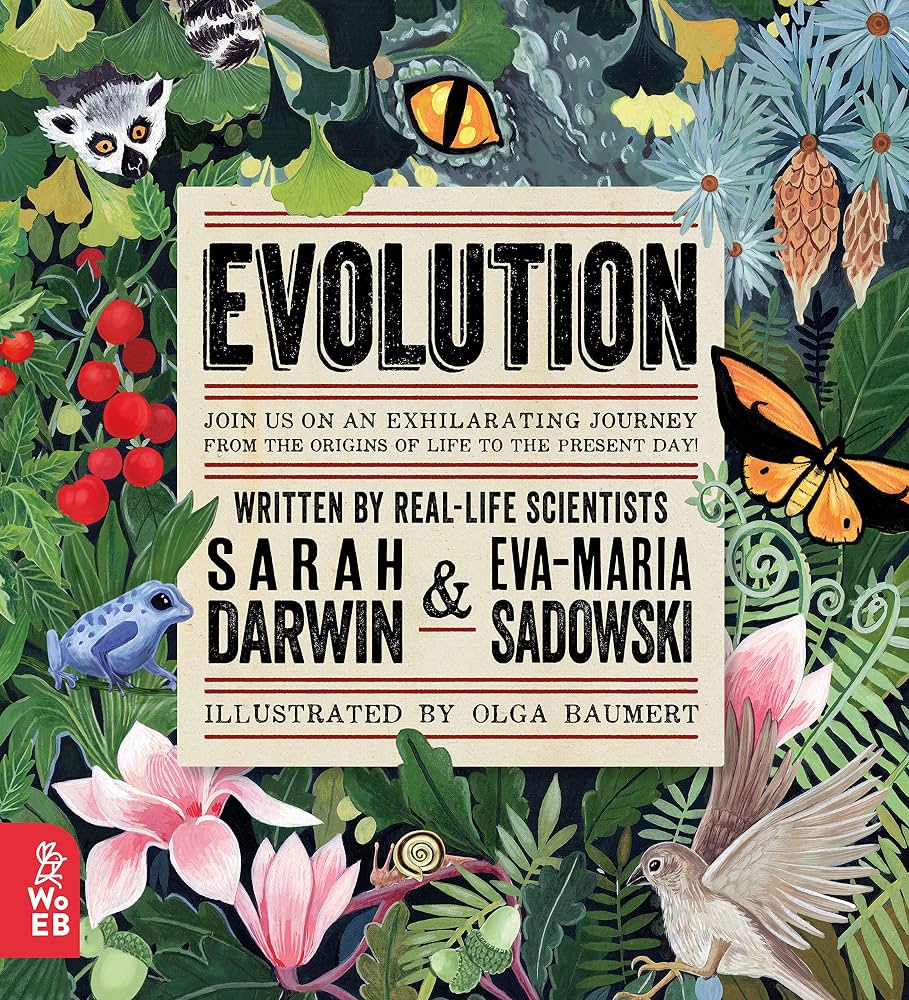
By Sarah Darwin – that is, Charles Darwin’s great-great-granddaughter – and paleobotanist Eva Maria Sadowski, Evolution (What on Earth Books, 2023) is a beautifully illustrated overview of the evolution of life on Earth. For ages 8-12.

Kristan Lawson’s Darwin and Evolution for Kids (Chicago Review Press, 2003), pairs the history and science of the theory of evolution with Charles Darwin’s life story. The book covers Darwin’s beetle-collecting school years; his voyage as a naturalist on board the Beagle; the development of his famous theory; and the publication of Origin of Species. A further chapter explains the theory in more detail, and includes a short but useful question-and-answer section. The book is illustrated with period prints, photographs, diagrams, and maps, and includes assorted interesting fact boxes (an account of the Galapagos Islands, a brief biography of Alfred Russel Wallace, the story of the peppered moth, a timeline of evolutionary thinkers). It also includes 21 hands-on activities – for example, kids can bake a batch of Shrewsbury cakes (the food of the Darwinian era); learn to tie a bowline knot (think sailors on the Beagle); build a model of geological strata; make plaster-of-Paris fossils; and play a life-simulation game designed to demonstrate the effects of natural selection on an imaginary population of Dum-Dum birds. For ages 9-13.

By anthropologist Ian Tattersall and molecular biologist Rob De Salle, the 40-page Bones, Brains, and DNA: The Human Genome and Human Evolution (Bunker Hill Publishing, 2007) – based on the American Museum of Natural History’s Hall of Human Origins exhibits - explores the cutting-edge science used to explore the history of human evolution, with the help of a pair of chatty museum mice, Wallace and Darwin. Illustrated with photos, diagrams, charts, and cartoon mice. For ages 7-10.

Ian Tattersall and Rob DeSalle’s The Great Human Journey: Around the World in 22 Million Days (Bunker Hill, 2013) traces human evolution from the first hominids to human migration across the planet with discussion of evolutionary changes in DNA - along with Wallace and Darwin, the Museum Mice from the American Museum of Natural History (using a time machine made from a yogurt container). For ages 8-12.
Visit the AMNH Hall of Human Origins online. At the website are highlights of the exhibits, printable resources for educators, book lists for both children and adults, informational articles, interactive puzzles, and instructions for many hands-on activities. For example, kids make a DNA model and a chimp genome bracelet, and make and excavate “fossils” using chicken bones and plaster of Paris.

By Niles, Gregory, and Douglas Eldredge, the 112-page The Fossil Factory (Roberts Rinehart, 2002) is an activity-packed “Kid’s Guide to Digging Up Dinosaurs, Exploring Evolution, and Finding Fossils.” The book covers fossil formation, excavation, and analysis, and the evolution of life on Earth. Among the topics covered are plate tectonics, carbon dating, rock layers and the fossil record, trilobites, the oldest trees, the extinction of the dinosaurs, Lucy and early hominids, and “the first Americans.” For ages 7-12.
From the science journal Nature, 15 Evolutionary Gems is a collection of short essays on key concepts in evolutionary thinking, categorized under the Fossil Record, Habitats, and Molecular Processes. Sample titles include “Land-living ancestors of whales,” “The origin of feathers,” “The evolutionary history of teeth,” “Natural selection in lizards,” and “Darwin’s Galapagos finches.”

Evolution is the website designed to accompany the excellent 7-part PBS series of the same name. Included are background information and activities related to each of the episodes: “Darwin’s Dangerous Idea,” “Great Transformations,” “Extinction!,” “The Evolutionary Arms Race,” “Why Sex?,” “The Mind’s Big Bang,” and “What About God?” Also at the site is an Evolution Library of resources for teachers and students, including online lessons and video presentations.
The Evolution Library’s Evolving Ideas series is a collection of seven short student-targeted videos, among them “Isn’t Evolution Just a Theory?,” “Who Was Charles Darwin?,” “How Do We Know Evolution Happens?,” and “Why Does Evolution Matter Now?” For accompanying lesson plans with activities, see
Online Lessons: Learning Evolution.
Explore the tree of life with NOVA's Evolution Lab.

From Khan Academy, Evolution and Natural Selection is a series of free lectures – delivered with the help of blackboard drawings – that clearly explains the crucial concepts for middle-school-level students and up. Titles are “Introduction to Evolution and Natural Selection” “Intelligent Design and Evolution,” “Evolution Clarification,” “Natural Selection and the Owl Butterfly,” “DNA,” and “Variation in a Species.”
The TalkOrigins Archive is a collection of articles, essays, and discussions about biological and physical origins. Click on “Evolution,” for example, for the full text of Darwin’s On the Origin of Species and essays on such topics as genetic drift, punctuated equilibria, fossil hominids, Piltdown man, and the evolution of color vision.
From the University of California Museum of Paleontology, Understanding Evolution includes Evolution 101, a free online course on the theory and mechanisms of evolution, as well as resources for teachers (K-college), an excellent and enormous online resource library, and accounts of evolution in the news.
Through MIT Open Courseware, course materials from MIT classes are made available online for the general public. A subset of the website, Highlights for High School, lists materials most useful for high-school-level students. See, for example,
Fundamentals of Biology, which includes video lectures on evolutionary theory.
Evolution for Older Readers
There are dozens of excellent books on various aspects of evolutionary theory, many targeted at a popular audience, which are excellent additions to any science program. Check out some of the following for older readers:

Richard Dawkins’s now-classic The Selfish Gene (Oxford University Press, 2006), originally published in 1976, is a compelling take on natural selection – in a nutshell, we are survival machines for genes. Dawkins has written several other excellent books on evolution, among them The Greatest Show on Earth: The Evidence for Evolution (Free Press, 2010).

Jared Diamond’s The Third Chimpanzee (HarperPerennial, 2006) is a thoroughly interesting account of human evolution. Chapter titles include “The Great Leap Forward,” “Bridges to Human Language,” “Animal Origins of Art,” and “Agriculture’s Mixed Blessings.”
For ages 12 and up, see the Young Readers edition, The Third Chimpanzee for Young People (Triangle Square, 2014).

Richard Fortrey’s Life: A Natural History of the First Four Billion Years of Life on Earth (Vintage Books, 1999) is an engaging and reader-friendly account of evolution from the beginnings of life to the emergence of human beings, based on the fossil record (and scattered with stories about Fortrey’s own experiences in the field).

Evolutionary biologist Stephen Jay Gould is known for developing the theory of punctuated equilibrium, which argues that long periods of evolutionary stability – during which nothing much happens – are followed by relatively rapid periods of change. Gould is also famous for his many wonderful collections of popular science essays. Good starting points for students of evolution: Ever Since Darwin and The Panda’s Thumb (both W.W. Norton & Company, 1992).
From The Panda's Thumb, see "A Biological Homage of Mickey Mouse," the story of the evolution of the famous mouse from his rat-like beginning in 1928. (Find out how he's changed and why.) Read it online at https://homepage.villanova.edu/diego.fernandezduque/Teaching/PhysiologicalPsychology/Articles/mickey%20mouse.pdf.

Carl Sagan’s The Dragons of Eden: Speculations on the Evolution of Human Intelligence (Ballantine Books, 1986) is a fascinating evolutionary history of the brain (beginning with the Big Bang).

Jonathan Weiner’s Pulitzer-winning The Beak of the Finch (Vintage Books, 1995) is a fascinating story of evolution in action, as the author follows the research of biologists Peter and Rosemary Grant, studying the Galapagos finches that Darwin used to prove his point in On the Origin of Species.
Bird Beak Buffet is a lesson plan based on Darwin’s Galapagos finches targeted at grades 3-5. Using various forms of beak-like tools (clothespins, tweezers, chopsticks), kids determine how much of what kinds of foods they can best pick up.

Carl Zimmer’s 300+-page Evolution: The Triumph of an Idea (HarperCollins, 2001) – written as a companion volume to the PBS series of the same name (see above) – combines well-presented science with a captivating, reader-friendly text, crammed with interesting examples and supplemented with color photographs, drawings, and helpful diagrams. In other words, what good textbooks should be, but usually aren’t.
Hands-on Evolution: Projects, Games, and Activities

Coloring books with evolution themes from Dover Publications include John Green’s Charles Darwin (2009), Jan Sovak’s Galapagos Islands (2006), and Patricia Wynne’s The Evolution of the Horse (2008). The books consist of blackline ready-to-color drawings accompanied by a brief explanatory text.
From the Biology Corner, Evolution & Taxonomy has a list of interesting and challenging lesson plans, among them a peppered moth simulation, an interactive exercise on natural selection (with bunnies and wolves), a “paper fossils” project in which kids create and analyze a fossil record, and instructions for making an evolutionary clock and calendar.
From OneZoom, the Tree of Life Explorer is an interactive map of relationships among over two million species with wonderful color images. Explore!
In Monster Evolution, players design a monster, release it into the wild, and see how well it survives. If you choose traits poorly, your ill-equipped monster explodes and a helpful note explains where you went wrong.
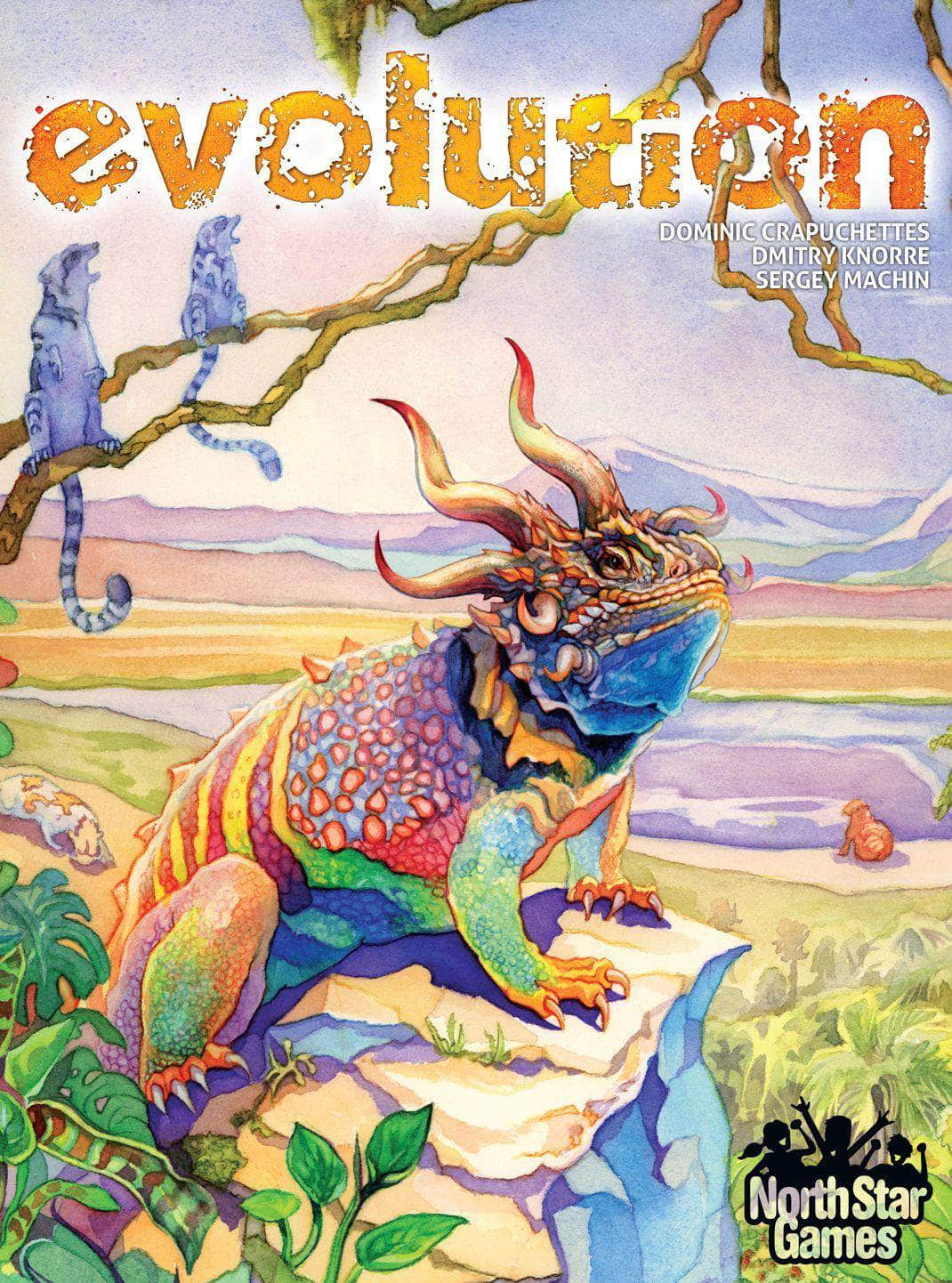
Evolution (Northstar Game Studio) is an award-winning board game in which players adapt species to ever-changing ecosystems plagued with hungry predators and limited resources. The trick is to survive while staying one step ahead of your opponents. For ages 12 and up.
See 

From Legends of Learning, see this assortment of short Natural Selection Games.

At Evolution in Action players can change the environment (background color) and observe how an array of little creatures – they look like Lego blocks with legs – survive, based on random color mutations.
Among the projects at Evolution Activities: kids play a dice game to Build a Beast, and then determine what sort of environment their Beast is best adapted to; and use newspaper and construction paper to investigate evolution and camouflage.

From HHMI, the Virtual Stickleback Laboratory is an online research project in which advanced students analyze living and fossil stickleback fish populations, and explore the connection between anatomical change and genetics.
Discovering Darwin

In the New York Hall of Science ‘s Charlie and Kiwi An Evolutionary Adventure (Atheneum Books for Young Readers, 2011), illustrated by Peter Reynolds, Charlie – with the help of his several-times-great-grandfather Charles Darwin and a Tardis-like time machine – travels back in time to learn about the evolution of the mysteriously flightless kiwi. The conclusion: “Little changes in each generation add up to BIG changes.” For ages 4-9.

Deborah Hopkinson’s Who Was Charles Darwin? (Grosset & Dunlap, 2005), one of the Who Was…? children’s biography series, is a reader-friendly chapter book covering Darwin’s life from childhood through his voyage on the Beagle (he was seasick) and his revolutionary theory of evolution. For ages 7 and up.

Deborah Hopkinson’s The Humblebee Hunter (Hyperion Books, 2010) is told from the point of view of Charles Darwin’s daughter, Etty – who, along with the rest of the Darwin children, often joined their father in his experiments with the natural world. Here Etty is unhappily trapped in the kitchen, when her father proposes “The Great Bee Experiment” – how many flowers does a humblebee visit in a minute? For ages 4-8.

Sandra Markle’s Animals Charles Darwin Saw (Chronicle Books, 2009) features the creatures that influenced Darwin’s thought: beetles, flamingos, tortoises, finches. For ages 7-10.

Kendall Haven’s Stepping Stones to Science (Libraries Unlimited, 1997) pairs action-packed stories about famous scientists – among them Robert Goddard, the Wright brothers, Galileo, Benjamin Franklin, Maria Mitchell, and Charles Darwin – with curriculum links, discussion questions, and activities. For ages 7-11.

Alice McGinty’s picture-book biography Darwin (Houghton Mifflin Books for Children, 2009), illustrated with terrific tinted woodcuts by Mary Azarian, intersperses a reader-friendly text with hand-written excerpts from Darwin’s diaries and letters. For ages 7-11.

Peter Sis’s spectacularly illustrated The Tree of Life: Charles Darwin (Farrar, Straus & Giroux, 2003) is a fascinating overview of Darwin’s life and work, creatively illustrated with journal pages, picture cards, charts, maps, portraits, sketches, and diagrams. For ages 8 and up.

By Alan Gibbons, Lifelines: Charles Darwin (Kingfisher, 2011) is the story of Darwin’s five-year voyage on the Beagle, as told through the diary of ten-year-old ship’s boy James Kincaid. Later chapters provide general information about the science of Darwin’s time. For ages 8-12.

Kathryn Lasky’s One Beetle Too Many (Candlewick, 2012) – with humorous and delightful illustrations by Matthew Trueman – is a wonderful portrait of a man of endless curiosity, from his beetle-collecting childhood to his trip around the world on the Beagle (collecting all the way). Ultimately his fascination with biology and geology led to the theory of evolution. The book is sprinkled with quotes from Darwin’s own writings. For ages 8-12.

Incredible beetles! Steve Jenkins’s irresistible The Beetle Book (Houghton Mifflin Books for Children, 2012) shows just why Darwin was so hooked. Learn about jewel beetles, tortoise beetles, giraffe beetles, forest fire beetles, and beetles that stink, glow, squeak, and walk on water. One out of every four living things on earth is…a beetle. For ages 7 and up.

Rosalyn Schanzer’s What Darwin Saw: The Journey That Changed the World (National Georgraphic Children’s Books, 2009) is a graphic-style account of the landmark voyage of the Beagle, with colorful and information-packed panels and conversation bubbles incorporating many of Darwin’s own words from his journals. Bright cartoons combined with sound science for ages 8-12.

By Mick Manning and Brita Granstrom, What Mr. Darwin Saw (Frances Lincoln Children’s Books, 2009) – told in the first person – is the picture-book story of Darwin’s life from childhood through the publication of On the Origin of Species. Conversational cartoon bubbles provide humorous asides; and illustrations light on some of the history-is-gross aspects of Darwin’s career: Darwin, sick (“Blugh”), dashes from the room at the side of a blood-spewing amputation; Darwin with a mouthful of huge beetles; Darwin seasick on the Beagle. While memorable, this may not be every kid’s cup of tea. For ages 8-12.

In the DK Biography Series, David C. King’s 128-page Charles Darwin (Dorling Kindersley, 2006) is a well-done chapter biography, filled with interesting details and illustrated with color photographs and period reproductions. For ages 10 and up.

In the Giants of Science Series, Kathleen Krull’s Charles Darwin (Viking Juvenile Books, 2010) is a gem. This 144-page chapter book covers Darwin’s life and work – but with pizzazz, scientific acumen, and a wealth of human interest. A delightful and informational read for ages 10 and up.

Jonathan Miller and Borin Van Loon’s Darwin for Beginners (Pantheon Books, 2003) is a graphic-style history of evolutionary theory, illustrated with clever pen-and-ink cartoons. The book covers Darwin’s personal history, the studies that led up to his famous theory of evolution, his supporters and opponents, and subsequent research that expanded upon and clarified Darwin’s work. For ages 13 and up.

Charles Darwin’s On the Origin of Species (1859) – one of the most important scientific works of all time – is not an easy read. (College biology majors, compelled to slog through it, often whine.) Michael Keller’s Charles Darwin’s On the Origin of Species: A Graphic Adaptation (Rodale Books, 2009), illustrated by Nicolle Rager Fuller, is, on the other hand, not only far more accessible, but visually stunning. Framed in the context of Darwin’s life, the book includes biographical information, scientific explanations of the research leading to his evolutionary theory, and an “Afterward,” in which Darwin’s work is linked to later discoveries, such as the principles of Mendelian inheritance, the elucidation of the structure of DNA, and the mapping of the human genome. For ages 14 and up.

Deborah Heligman’s Charles and Emma (Square Fish, 2011) is the story of Darwin’s marriage to his cousin, Emma Wedgewood, covering both Charles and Emma’s life together and the way in which they coped with their differing philosophies. Emma was devoutly religious; Charles, a scientist, put his faith in reason. Illustrated with period photographs. For ages 12 and up.

By A.J. Wood and Clint Twist, Charles Darwin and the Beagle Adventure (Templar, 2009) is a marvelously designed scrapbook-style account of Darwin’s landmark voyage, filled with maps, fold-outs, booklets, letters in envelopes, faux photographs, drawings, diagams, and handwritten excerpts from Darwin’s journals. For all ages.
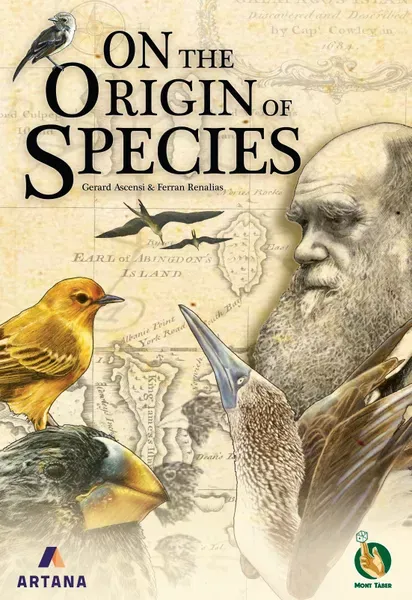
On the Origin of Species (Artana) is a board game in which players help Darwin during his journey on the Beagle through the Galapagos Islands, researching and discovering new species. For 2-4 players ages 8 and up.
See
At Neatorama’s 10 Fun Facts About Darwin, readers discover, for example, that Darwin once ate an owl.
From the December 2005 issue of Smithsonian magazine, Frank Sulloway’s The Evolution of Charles Darwin discusses Darwin’s discoveries on the Galapagos Islands and traces the changes in his thinking, from creationist to evolutionary biologist.
From the Victorian Web, Charles Darwin has information and resources related to Darwin’s place in Victorian social, political cultural, religious, and scientific history.
The Home of Charles Darwin website has views of Down House, where Darwin lived, worked, and wrote On the Origin of Species, historical background information, a plan of the house, and a timeline.
Human Evolution

Catherine Barr's The Story of People (Frances Lincoln Children's Books, 2019) is a picture-book history of the human race, beginning with our evolutionary ancestors. For ages 5-8.

Michael Bright's When We Became Humans (words & pictures, 2019) is the story of human evolution from our distant ancestors to Homo sapiens. For ages 7-11.
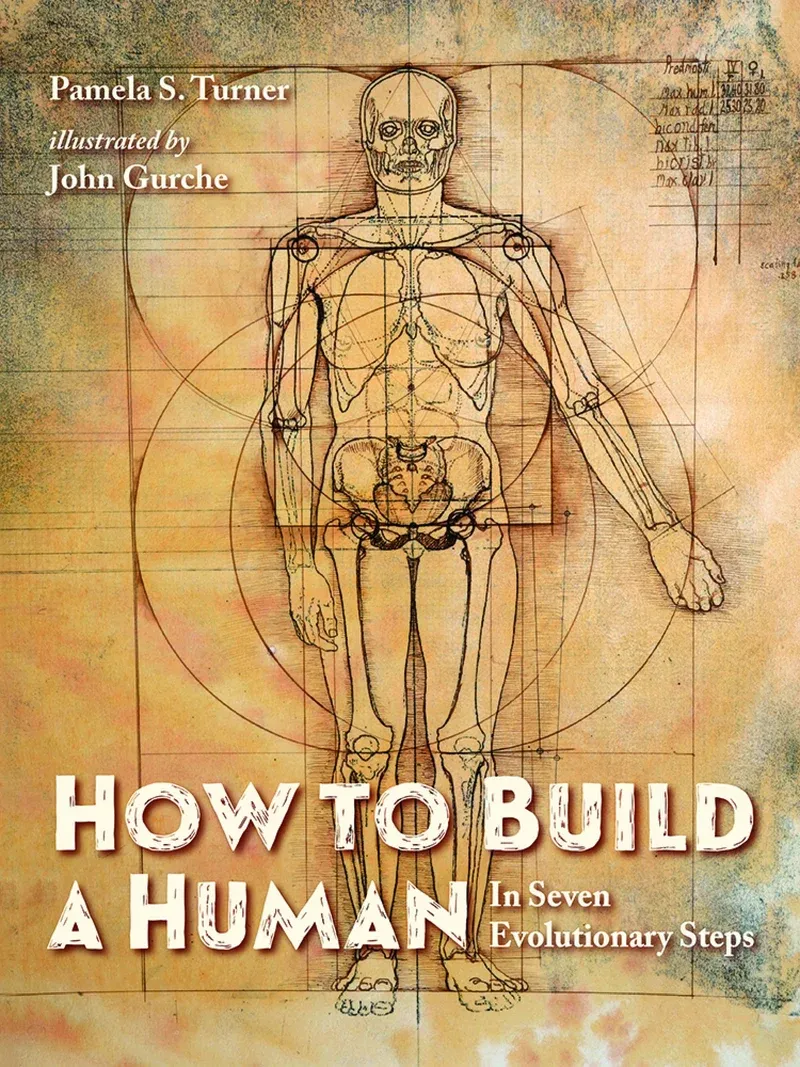
Pamela S. Turner’s terrific How to Build a Human (Charlesbridge, 2022) covers the story of human evolution in seven steps, among them “We Stand Up,” “We Smash Rocks,” “We Take a Hike,” and “We Invent Barbecue.” For ages 10 and up.

By Lee Berger and Marc Aronson, The Skull in the Rock (National Geographic Children’s Books, 2012) is the story of how nine-year-old Matthew Berger – on a fossil-hunting expedition with his paleoanthropologist father in South Africa – found a pair of two-million-year-old fossil skulls belonging to a new species of human being. The book, illustrated with color photographs, meshes evolutionary history with a real-life adventure story. For ages 10-14.

By Adrienne Zihlman and Carla Simmons, The Human Evolution Coloring Book (HarperCollins, 2001) is a very detailed and sophisticated teach-yourself tour of human evolution (while doing a lot of complex coloring), beginning with a geologic timeline, then proceeding through evolutionary genetics, primate diversification and evolution, and a chronology of hominid and early human fossils. For ages 13 and up.

By Alice Roberts, Evolution: The Human Story (DK, 2018) traces human evolution from our earliest primate ancestors through migration out of Africa and the agricultural evolution. 250+ pages long. For teens and up.

Becoming Human is an interactive documentary that covers four million years of human evolution with guide Donald Johanson, discoverer of Lucy. Included are an interactive timeline, an online exercise on bipedalism (what bone changes helped us walk upright?), and a chromosome comparison “adventure” in which participants compare banding patterns on the chromosomes of humans and apes.
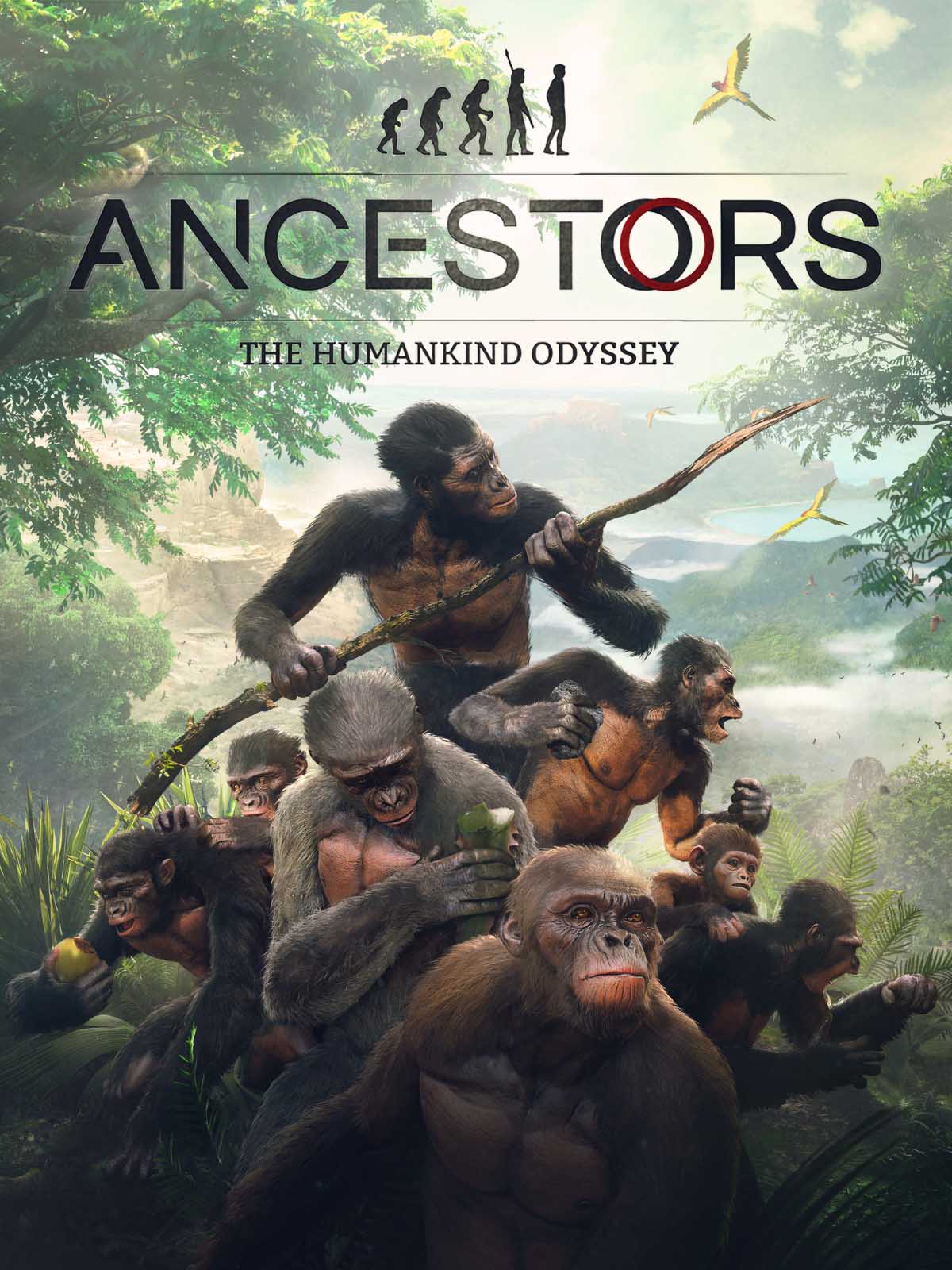
Ancestors: The Humankind Odyssey is an open-world survival videogame in which play begins ten million years ago with an early primate in Neogene Africa. Players make choices that allow their character to evolve and explore new territories, acquiring new skills and greater intelligence. Rated T for Teen. See https://store.steampowered.com/app/536270/Ancestors_The_Humankind_Odyssey/.
Origin Stories is a podcast from the Leakey Foundation exploring the many aspects of human evolution. Episode titles include “The First Story,” “The Musical Ape,” “The Story of Human Hair,” and “A Brief History of Bling.” See https://podcasts.apple.com/us/podcast/origin-stories/id982555930.
NeoK12’s Human Evolution is a collection of short videos, among them the 13-part “Journey of Man: A Genetic Odyssey” and the 5-part “Neanderthal.”
From the Smithsonian National Museum of Natural History, Introduction to Human Evolution has background information, a detailed downloadable Educator’s Guide for grades 5-12, a “How do we know…?” list of questions, lesson plans, and fun facts.
The Monkey Trial

Project: try reliving American history through letterwriting! Kids pair up and, as correspondents, take on character roles and exchange informational letters about crucial historical events. Try World War I, the 19th Amendment, or the Scopes trial.

By Jerome Lawrence and Robert E. Lee, Inherit the Wind (Ballantine Books, 2007) is a superb play based on the Scopes Monkey Trial of 1925, in which Tennessee teacher John Scopes was threatened with jail for teaching evolution in the public school. For ages 12 and up.

A dramatized view of the trial is presented in the 1960 film Inherit the Wind, based on the Lawrence and Lee play, and starring Spencer Tracy (for the defense) and Frederic March (for the prosecution).
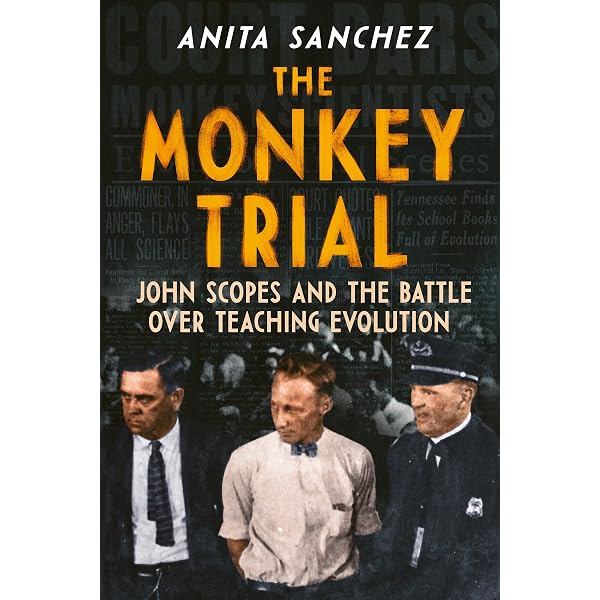
Anita Sanchez’s The Monkey Trial (Clarion, 2023) is the story of the landmark Scopes Trial of 1925 in which Tennessee biology teacher John Scopes was put on trial for teaching evolution – and was defended by renowned attorney Clarence Darrow. For ages 8-12.

In Ronald Kidd’s Monkey Town: The Summer of the Scopes Trial (Simon Pulse, 2011), 15-year-old Frances Robinson has a crush on handsome teacher Johnny Scopes – just as her father cooks up a scheme to bring publicity to the town of Dayton, Tennessee, by prosecuting Scopes for teaching evolution in the public school. The trial, which quickly gets out of hand, unfolds as seen through Frances’s eyes. For ages 11 and up.
Evolution in Fiction

In Blue Balliett’s The Danger Box (Scholastic, 2012), 12-year-old Zoomy – so near-sighted that he’s legally blind – has been raised by his grandparents. When his alcoholic father unexpectedly shows up and leaves Zoomy a stolen box that contains an old notebook, Zoomy is determined to learn more. The identity of the author of the mysterious notebook is the major mystery of the book – hints are provided through Zoomy’s personal newspaper, the Gas Gazette – though Zoomy and his friend Lorrol must also solve plenty of puzzles and cope with a criminal who wants the box and notebook back. The secret scientist (Spoiler!) is Charles Darwin. For ages 9-13.

In Jacqueline Kelly’s The Evolution of Calpurnia Tate (Square Fish, 2011), 11-year-old Calpurnia – known to her family as Callie Vee – lives with her parents and six brothers on a cotton plantation in Texas in 1899. (Her favorite brother is Harry, the oldest, but I have a soft spot for ten-year-old Travis, who names his kittens after gunslingers.) As the book progresses, bright and curious Callie Vee becomes fascinated with science and disenchanted with the ladylike future her mother has planned for her. Luckily she finds a kindred spirit in her curmudgeonly grandfather. After Callie Vee is forbidden to check Darwin’s Origin of Species out of the library, her Granddaddy not only lends her his copy, but starts taking her with him on his specimen-collecting expeditions. A wonderful story of a science-minded girl coming into her own. I’d say Caddie Woodlawn with a science twist - but Callie Vee is wholly unique. Highly recommended. For ages 10 and up.

In Robin Brande’s Evolution, Me, and Other Freaks of Nature (Ember, 2009), 14-year-old Mena is having a tough time in school – she’s been tossed out of her evangelical church for blowing the whistle on some nasty anti-gay behavior – and now the conflict ratchets up when her science teacher, Ms. Shepherd, begins a study unit on evolution. Ms. Shepherd inevitably ends up in conflict with the influential fundamentalist pastor of Mena’s ex-church, and Mena herself – who blogs as “Bible Grrrl” – must come to terms with what she believes. For ages 12 and up.

Similarly, in Rebecca Rupp’s Octavia Boone’s Big Questions About Life, the Universe, and Everything (Candlewick, 2010), seventh-grader Octavia’s parents have separated after her mother becomes committed to a fundamentalist group called the Redeemers. Octavia disagrees with the Redeemers’ take on gender roles, holidays, cosmology, and evolution – though she finds an unexpected friend in the Redeemers’ understanding Pastor Bruno – and eventually, too, comes to terms with differences in belief. Ultimately, she finds that she agrees with Henry David Thoreau: “The universe is wider than our views of it.” For ages 10 and up.

The future evolution of mankind is a popular theme in science fiction novels, featured in everything from H.G. Wells’s The Time Machine to the X-Men. Margaret Atwood’s outstanding Oryx and Crake (Anchor Books, 2004) is the story of Jimmy (the “Snowman”), possibly the last human on Earth, and his best friend, Crake, whose bioengineering experiments brought about the extinction of humans and the rise of the Crakers, a genetically altered new race of his own devising. Lots of discussion potential for teens and adults.
Evolution in Poems

Selected by Mary Ann Hoberman and Linda Winston, The Tree That Time Built (Sourcebooks Jabberwocky, 2009) is a 200+-page science-and-nature-themed poetry collection by a wide range of poets, among them X.J. Kennedy, Theodore Roethke, Emily Dickinson, Douglas Florian, Maxine Kumin, and T.S. Eliot. Several deal with the topic of evolution. See, for example, Bobbi Katz’s “Journal Jottings of Charles Darwin.” Included with the book is an audio CD. For ages 7 and up.
Langdon’s Smith’s bouncy poem Evolution – which begins “When you were a tadpole and I was a fish/In the Paleozoic time” – doesn’t quite have the science down, but gets the general idea. Hear it read by Jean Shepherd on
YouTube.
Also see Lorine Niedecker’s Darwin and C.S. Lewis’s
Evolutionary Hymn.
Evolution at the Movies

In Evolution (2001), a pair of college professors and a gorgeous government scientist (played by Julianne Moore) battle a dangerous and rapidly evolving organism that has arrived on Earth inside a meteor. Rated PG-13.

In Creation (2009), a tortured Charles Darwin struggles to complete On the Origin of Species, while torn between his own science and the religious beliefs of his wife. Rated PG-13.
See Documentaries on Evolution and Big History for a rated annotated list.

By the incomparable David Attenborough, Charles Darwin and the Tree of Life is an excellent hour-long documentary on evolution.
Also by Attenborough, see the mini-series First Life (2010) about the origin of life on Earth.

In Annihilation (2018), a team of scientists enters an area known as the Shimmer where, following a meteor strike, evolution has run amok. Sci-fi horror. Rated R.