
Apples
In this collection
Golden apples, poison apples, pie apples, Newton's apple, and, of course, Johnny Appleseed...
Apples and Apple Trees

In Zoe Hall’s The Apple Pie Tree (Blue Sky Press, 1996) two little girls watch their backyard apple tree through the seasons of the year, from leafless winter to the buds and blossoms of spring when robins arrive to build a nest, to ripening fruit in summer – and finally, in fall, harvest and an apple pie. For ages 4-7.

See Apple Tree Through the Seasons Craft Instructions for a four-seasons apple-tree project using construction paper, tissue paper, and thumb-print apples.

Betsy Maestro’s How Do Apples Grow? (HarperCollins, 2000) in the Let’s-Read-and-Find-Out Science series follows an apple from bud to fruit. For ages 4-7.

In Nancy Elizabeth Wallace’s Apples, Apples, Apples (Amazon Children’s Publishing, 2004) – which has great cut-paper illustrations - a family of bunnies spends a day picking fruit at an apple orchard while learning all about apples. Included are instructions for making apple prints and a recipe for applesauce. For ages 4-7.

In Gail Gibbons’s The Seasons of Arnold’s Apple Tree (Sandpiper, 1998), the apple tree is Arnold’s special secret place. He builds a snow fort around it and hangs strings of popcorn on its branches for the birds in winter; in spring, he builds a swing; in summer, a treehouse; and in the fall he rakes leaves and picks apples. Included is a recipe for apple pie and an explanation of cider-making. For ages 4-7.
Apples and Seasons has a simple art project in which kids make a four-season picture of a changing apple tree using apple prints, plus several multidisciplinary lesson plans.

In Monica Wellington’s Apple Farmer Annie (Puffin, 2004), Annie has a spotted dog, a yellow-and-orange striped cat, and an apple orchard. Bright stylized illustrations follow Annie as she picks her apples, turns them into cider, applesauce, and muffins, and sells these at the farmer’s market. For ages 4-7.

In Eve Bunting’s One Green Apple (Clarion, 2006), Farah, a young Muslim immigrant, is having a hard time adjusting to America. She’s not used to boys and girls sitting together; she struggles with English; and she’s the only person around to wear a dupatta or head scarf. In the fall, on a class trip to a cider mill, however, Farah begins to see the possibilities of life in her new land. The lesson is that in the same way many different kinds of apples blend together to make wonderful cider, different kinds of people interact to create good communities. A good discussion book for ages 5-9.
A Is for Apple Pie

See Kate Greenaway’s classic illustrated version of A Apple Pie, originally published in 1886. And learn more about illustrator
Kate Greenaway.

Lauren Thompson’s The Apple Pie That Papa Baked (Simon & Schuster Books for Young Readers, 2007) is a cumulative tale on the order of “This is the house that Jack built,” starting with the apples (“juicy and red, that went in the pie, warm and sweet, that Papa baked”) – and then moving back to apple tree, tree roots, rain, clouds, sky, and sun. Folk-art illustrations, in shades of black and brown, show Papa in overalls and his little daughter with long flying braids. For ages 3-6.
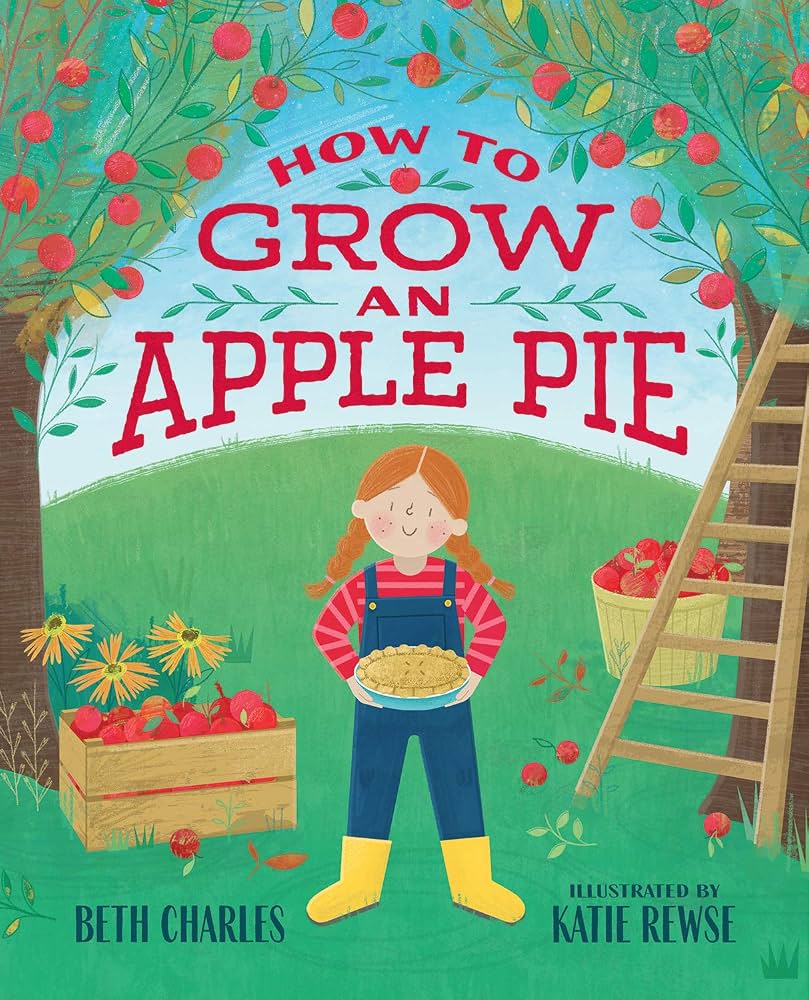
By Beth Charles, How to Grow an Apple Pie (Albert Whitman, 2024) begins “The year Sophie was born, her parents planted six new apple trees in the orchard, just for her. ‘When you’re six, you can use the apples from these trees to make your own pie,’ they said.” Find out what it takes to grow the apples for an apple pie. For ages 4-7.

Crescent Dragonwagon’s Alligator Arrived with Apples (Aladdin, 1992) is a marvelous alphabetical Thanksgiving feast, to which Alligator (on a motorcycle) contributes apples and allspice, Bear follows with biscuits and butter, through Elephant (elderberry elixir), Koala (kohlrabi), and Zebra (zucchini). A delightful romp, complete with alphabetical animal place cards. For ages 4-7.

In Steven Kroll’s The Biggest Apple Ever (Cartwheel Books, 2011), Desmond, the country mouse, and Clayton, the town mouse – who in previous books have competed to come up with the biggest pumpkin, snowman, Christmas tree, and Valentine – vie to produce the biggest apple for a school-sponsored contest. As always, friendship and sharing triumph, and the book ends with a gigantic apple pie for all. For ages 4-8.

In Marjorie Priceman’s How to Make an Apple Pie and See the World (Dragonfly Books, 1996) a determined cook in a green pinafore finds that the local market is closed and so – what else? - grabs her carpetbag and sets off to collect the ingredients for her pie from points around the globe. First she heads to Italy, via steamship, for wheat for flour; later stops include France for a chicken (eggs), Sri Lanka for cinnamon, Jamaica for sugar cane, England for a cow (butter), and Vermont for apples. Finally a multicultural crowd of guests sits down to share the finished pie, and the book ends with a recipe. For ages 5-8.
How about an apple pizza? See a recipe here.
Johnny, Johnny Appleseed

Aliki’s charming The Story of Johnny Appleseed (Aladdin, 1971) is a gentle straightforward tale, illustrated with oil pastel drawings. For ages 3-7.

Jodie Shepherd’s Johnny Appleseed (Cartwheel Books, 2010) is a simple picture-book biography, beginning with baby Johnny who had “cheeks as red and round as apples.” For ages 3-7.

Reeve Lindbergh’s poetic Johnny Appleseed (Little, Brown Books for Young Readers, 1993) is beautifully illustrated with detailed folk-art paintings and quilt-block-patterned borders. (“These apple trees were planted here/A century ago -/A hundred years of springtime bloom/A hundred years of snow.”) For all ages.

Esme Raji Codell’s picture book Seed by Seed (Greenwillow Books, 2012) describes Johnny Appleseed’s life and philosophy. Though a good deal of legend and myth surrounds him, Codell explains, we do know “that by doing the same small act of planting seeds every day, Johnny Appleseed changed the landscape of our nation. Seed by seed, deed by deed.” Lessons learned here include respect for nature, the importance of sharing, and the idea that large goals can be accomplished bit by bit, with small steps. Included is a recipe for apple pie. For ages 4-8.

Steven Kellogg’s tall-tale-style Johnny Appleseed (HarperCollins, 1998) is a mix of legend and historical fact: Johnny charms the animals, has a wolf and a raccoon as friends, sleeps in a hollow log, and grows marvelous apples that look, in the illustrations, the size of cantaloupes. For ages 5-8.

In Jane Yolen’s Johnny Appleseed: The Legend and the Truth (HarperCollins, 2011), each double-page spread has an evocative four-line rhyme, written in old-fashioned script (“Apple blossoms/Top the sill/Welcome baby/With a will/Johnny, Johnny Appleseed”), a short fictionalized paragraph of about Johnny's life and work, and a note about what we know to be fact. Richly colored illustrations feature stunningly dark-red apples. For ages 5-8.

Will Moses’s Johnny Appleseed: The Story of a Legend (Philomel, 2001), illustrated with wonderfu folk-art paintings, has a more sophisticated text and provides more historical background than most Appleseed picture books. For ages 7-10.

Howard Means’s Johnny Appleseed: The Man, The Myth, The American Story (Simon & Schuster, 2011) is a fascinating 300+-page biography of the thoroughly odd John Chapman: animal whisperer, tree hugger, vegetarian, pacifist, and (probably, says Means) insane. For older teenagers and adults.

The poem “Johnny Appleseed” first appeared in Rosemary and Stephen Vincent Benet’s A Book of Americans (Read & Co., 2017), a history in poems, originally published in 1933: “Of Jonathan Chapman/Two things are known/That he loved apples/That he walked alone.”
Apples in History

Mary and Conrad Buff’s short chapter book The Apple and the Arrow (Sandpiper, 2001) is the story of Switzerland’s 13th-century struggle for freedom from Austria, told from the point of view of William Tell’s young son, Walter. William Tell, of course, is the Swiss freedom fighter and archer who was so famously compelled by the Austrian despot Gessler to shoot an apple off his son’s head. For ages 8-12.
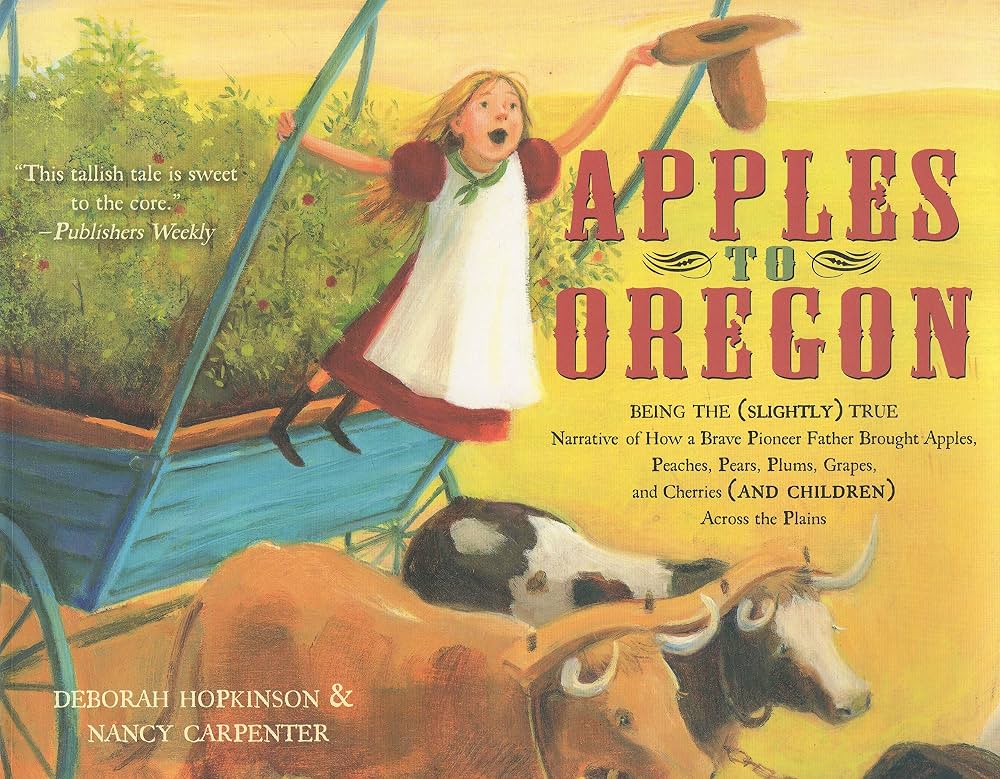
The subtitle of Deborah Hopkinson’s Apples to Oregon (Aladdin, 2008) says it all: “Being the (Slightly) True Narrative of How a Brave Pioneer Father Brought Apples, Peaches, Pears, Plums, Grapes, and Cherries (and Children) Across the Plains.” Told through the eyes of daughter Delicious, the westward-heading family packs their father’s beloved fruit trees in wagons loaded with dirt and leaves Ohio, heading for Oregon. En route they cope with river crossings, deserts, mountains, and ferocious weather (“Guard the grapes! Protect the peaches!” bellows Daddy), until finally, successfully, they reach their new home. The story is (very) loosely based on that of Henderson Luelling, who founded Oregon’s first fruit nursery in 1847. For ages 4-8.
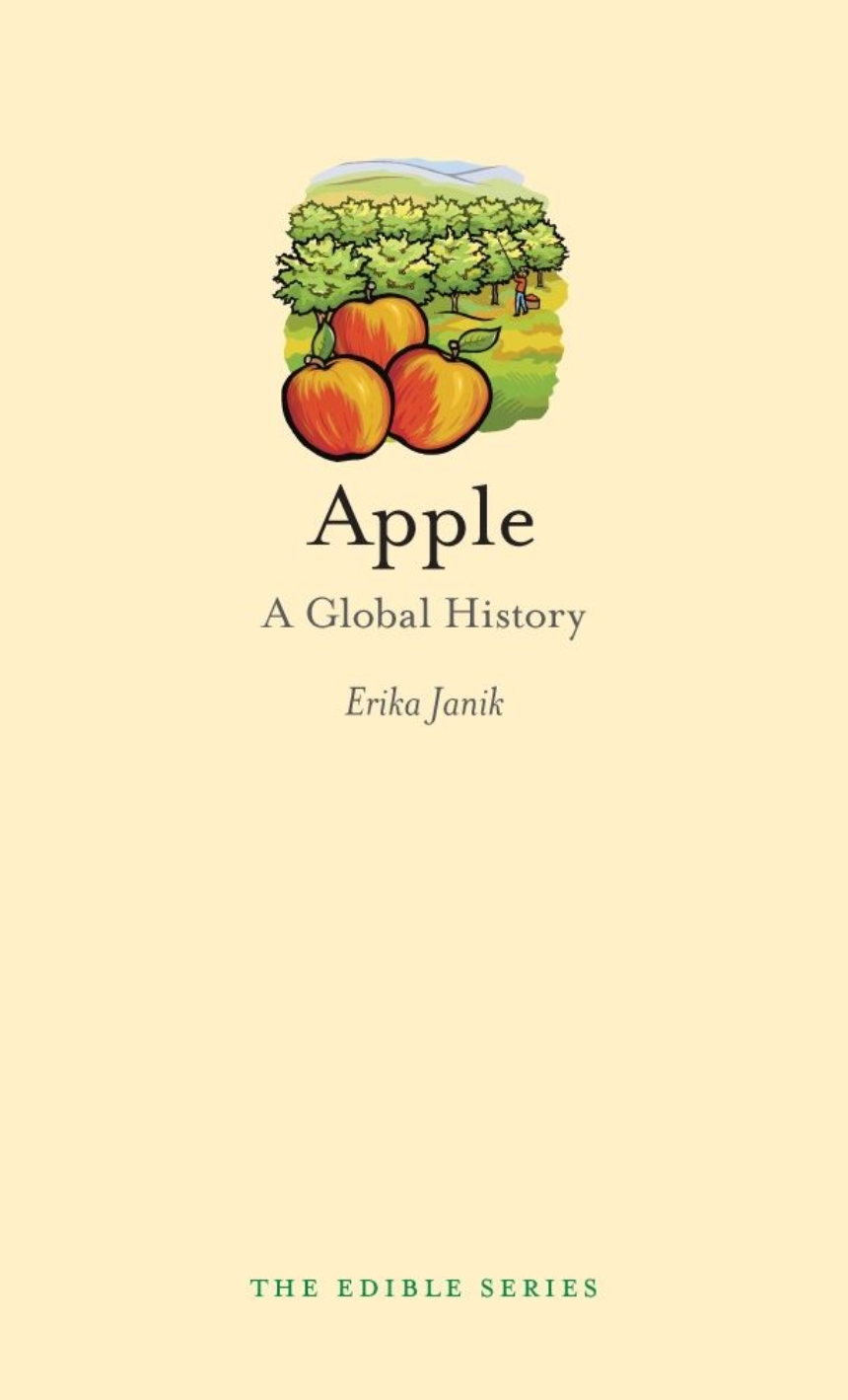
Erika Janik’s Apple: A Global History (Reaktion Books, 2012) in the Edible Series is a short history of apples from their origin in the mountains of Kazakhstan to the present day – with many fascinating connections to everything from the Trojan War to the Apple computer. For teens and adults.

For a fascinating take on the history and evolution of the apple, with information on apple diversity, weird apples, hard cider, and John (“Appleseed”) Chapman, see “Sweetness Plant: The Apple” in Michael Pollan’s The Botany of Desire (Random House, 2002). For teens and adults.
Henry David Thoreau’s natural history lecture, Wild Apples, appeared in The Atlantic in November 1862. It’s filled with unusual information and great anecdotes.
From the American Scientist, see "The Mysterious Origin of the Sweet Apple" at https://www.americanscientist.org/article/the-mysterious-origin-of-the-sweet-apple.
Apples and Arithmetic

Pat Hutchins’s Ten Red Apples (Greenwillow Books, 2000) is a rhyming counting tale in which a succession of farm animals eat the ten red apples off the apple tree – leaving none for the farmer’s wife to bake in a pie. (Luckily she finds a second apple tree.) The farmer, his wife, and the animals are all pictured as bright-colored wooden Noah’s-ark-type toys. For ages 3-6.

By the incomparable Dr. Seuss (writing as Theo LeSieg), Ten Apples Up on Top (Beginner Books, 1961) features a trio of hilarious and competitive animals who vie to see who can balance the most apples on top of their heads. For ages 3-6.

In Harriet Ziefert’s Rabbit and Hare Divide an Apple (Puffin, 1998), a giggle-promoting introduction to division, Rabbit and Hare attempt to divide an enormous mushroom – and end up fighting over the two unequal pieces. The argument is settled by a self-serving Raccoon, who offers to fix things by taking a bite out of the larger piece – but then proceeds to eat the whole thing. Rabbit and Hare next prepare to divide a humongous apple, and this time sensibly turn down help from the raccoon and neatly solve the problem for themselves. For ages 3-7.
Magical, Mythical Apples

In Jane Ray’s sumptuously illustrated fairy-tale, The Apple-Pip Princess (Candlewick, 2008), the dying queen offers each of her three daughters a gift to remember her by. Suzanna, the oldest, choses a pair of scarlet shoes; Miranda, the middle princess, a pearl-trimmed mirror; and Serenity, the youngest, a simple wooden box containing simple treasures from nature: a “splash of sunlight,” raindrops, a bird’s feather, and an apple pip. Then the king proposes a competition to see which of the three girls should become the next ruler of the kingdom – the winner, he declares, will be the princess who best makes her mark. The elder sisters build enormous self-aggrandizing towers, while Serenity plants her apple seed. A beautiful tale for ages 4 and up.

One of the most beautiful of Snow White tales is Snow-White and the Seven Dwarfs (Square Fish, 1987), translated by Randall Jarrell and exquisitely illustrated by Nancy Ekholm Burkert. My favorite.
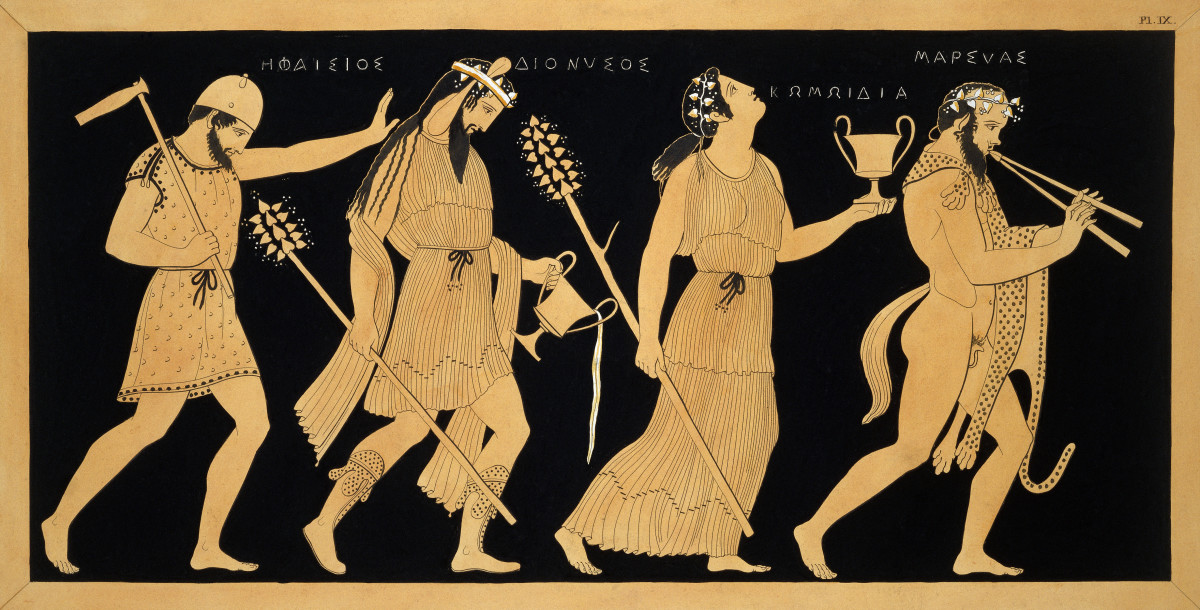
Read the tale of Hercules and the Apples of the Hesperides, illustrated with scenes on ancient Greek pottery.

Jane Ray’s enchantingly illustrated Adam and Eve and the Garden of Eden (Eerdman Books for Young Readers, 2005) is a lovely account of the Christian creation myth, complete with snake and apple. For ages 4-8.
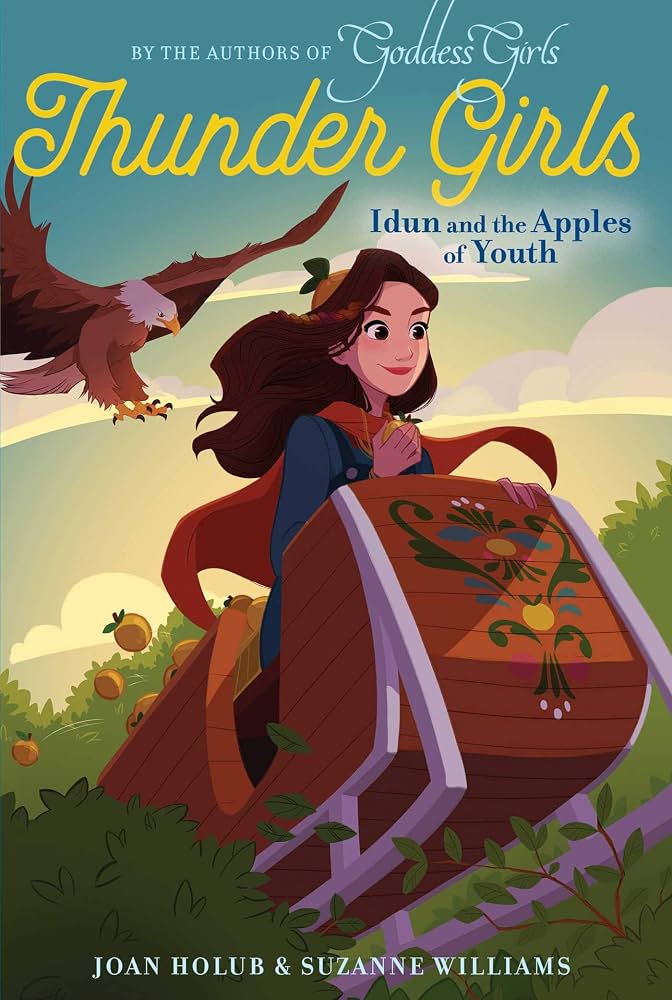
By Joan Holub and Suzanne Williams, Idun and the Apples of Youth (Aladdin, 2019) in the Thunder Girls series features 12-year-old Idun, the Norse goddess of youth, and her magical golden apples that keep all the gods and goddesses at Asgard Academy young and healthy – until the mischievous god Loki makes trouble. For ages 8-12.
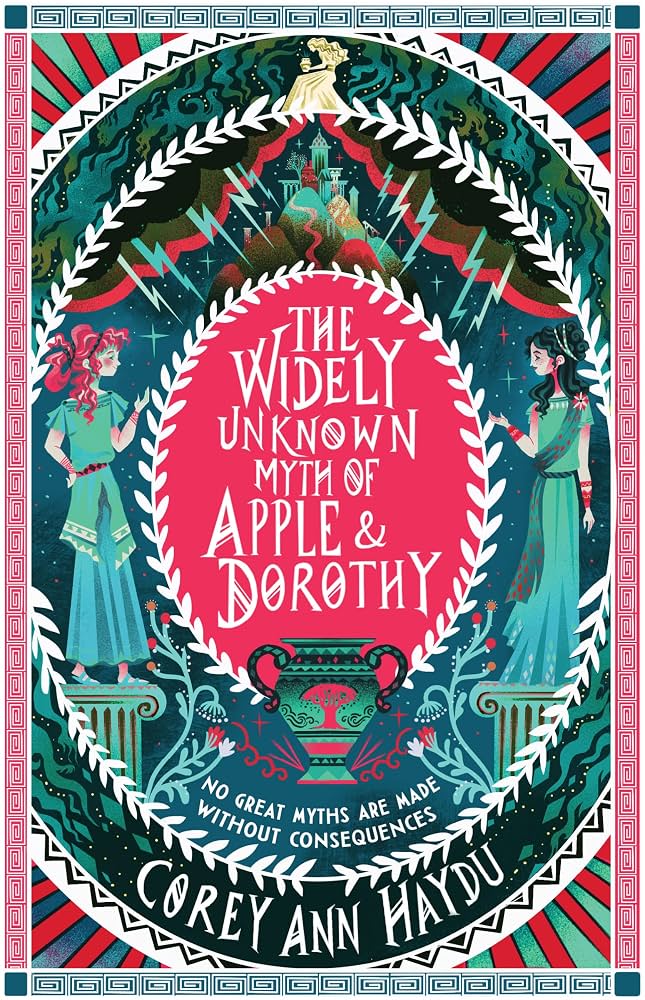
By Corey Ann Haydu, The Widely Unknown Myth of Apple & Dorothy (Quill Tree Books, 2023), friends Dorothy – a descendant of Pandora – and Apple, descendant of Zeus and Hera, must make a choice on the winter solstice: will they remain on Earth and die a human death or return to Mount Olympus to live as gods? For ages 8-12.
How much do you know about apples? Find out by taking the online quiz on Apples of Literature, History, and Myth.
Astonishing Apple Art
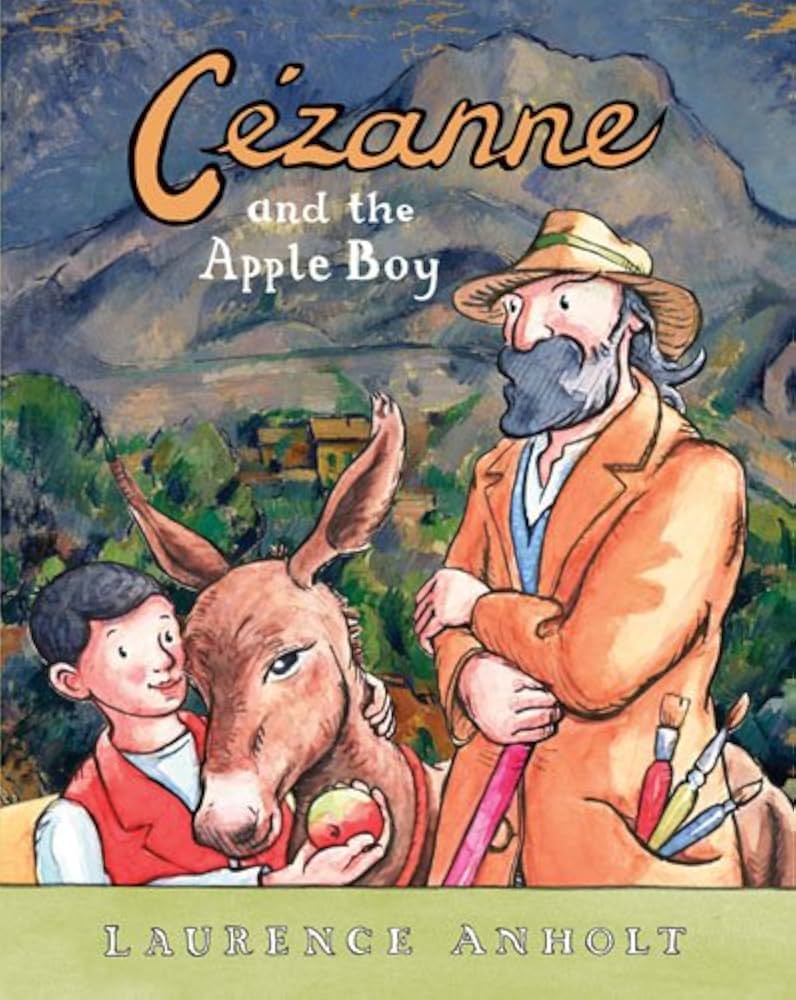
Laurence Anholt’s Cezanne and the Apple Boy (Barron’s Educational Series, 2009) is a fictionalized story in which young Paul accompanies his often-absent impressionist painter father, Cezanne, on a painting expedition in the mountains of southern France. The two form a bond; young Paul comes to appreciate his father’s paintings; and Cezanne paints a portrait of his son. He explains that his painting style involves turning everything into simple shapes – and tells Paul that he is “as round as a sweet little apple.” One of a series about famous artists for ages 4-8.
The Apple of Our Eye is a survey of apples in art, with images of works by (among others) Cezanne, Renoir, Gauguin, Klee, O’Keeffe, and Magritte.

Learn about Rene Magritte’s famous surrealistic green-apple painting, The Son of Man.

See these instructions for making great dried-apple dolls.

Make an apple-print caterpillar.
Apples to Oranges, Apples to Apples

“Comparing apples to oranges” is a phrase used to indicate that two things are so different that comparing them makes no sense at all. But what about the science of comparing apples and oranges? It turns out that, in a lot of ways, apples and oranges are quite alike. Check it out at Surprising Science: Comparing Apples and Oranges.
For a humorous infographic look at apples vs. oranges, see Apples to Oranges: The Final Comparison. (Apples win.)

Mattel's 
Poems, Proverbs, and a Few Bad Apples
Read Robert Frost’s After Apple-picking from his 1915 collection North of Boston.
See Amy Lowell’s Apples of the Hesperides.
Read William Butler Yeats’s The Song of Wandering Aengus – the wonderful poem that ends with “The silver apples of the moon/The golden apples of the sun.”

A very different kind of apple. From the Teachers Writers Collaborative, A Poem as Big as New York City: Little Kids Write About the Big Apple (Universe, 2005) is a collection of children’s poems about the city, with wonderful watercolor and graphic illustrations by Masha D’yans. For ages 5 and up.
“The apple doesn’t fall far from the tree.” “Don’t upset the apple cart.” “There’s small choice in rotten apples.” Check out a long list of proverbs and quotes about apples at Proverbs and Quotes About Fruit.
BAD apples. From NPR, linguist Geoff Nunberg discusses Bad Apple Proverbs.
Science (with apples)
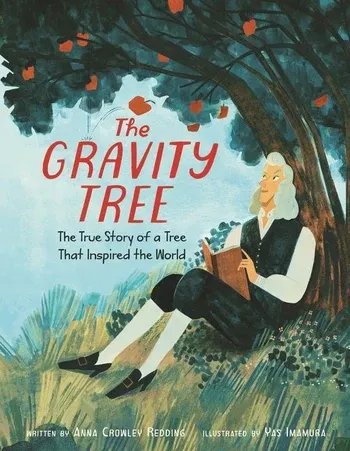
By Anna Crowley Redding, The Gravity Tree (HarperCollins, 2021) is the story of the fallen apple that inspired Isaac Newton (well, maybe) to come up with the theory of gravity. For ages 4-8.
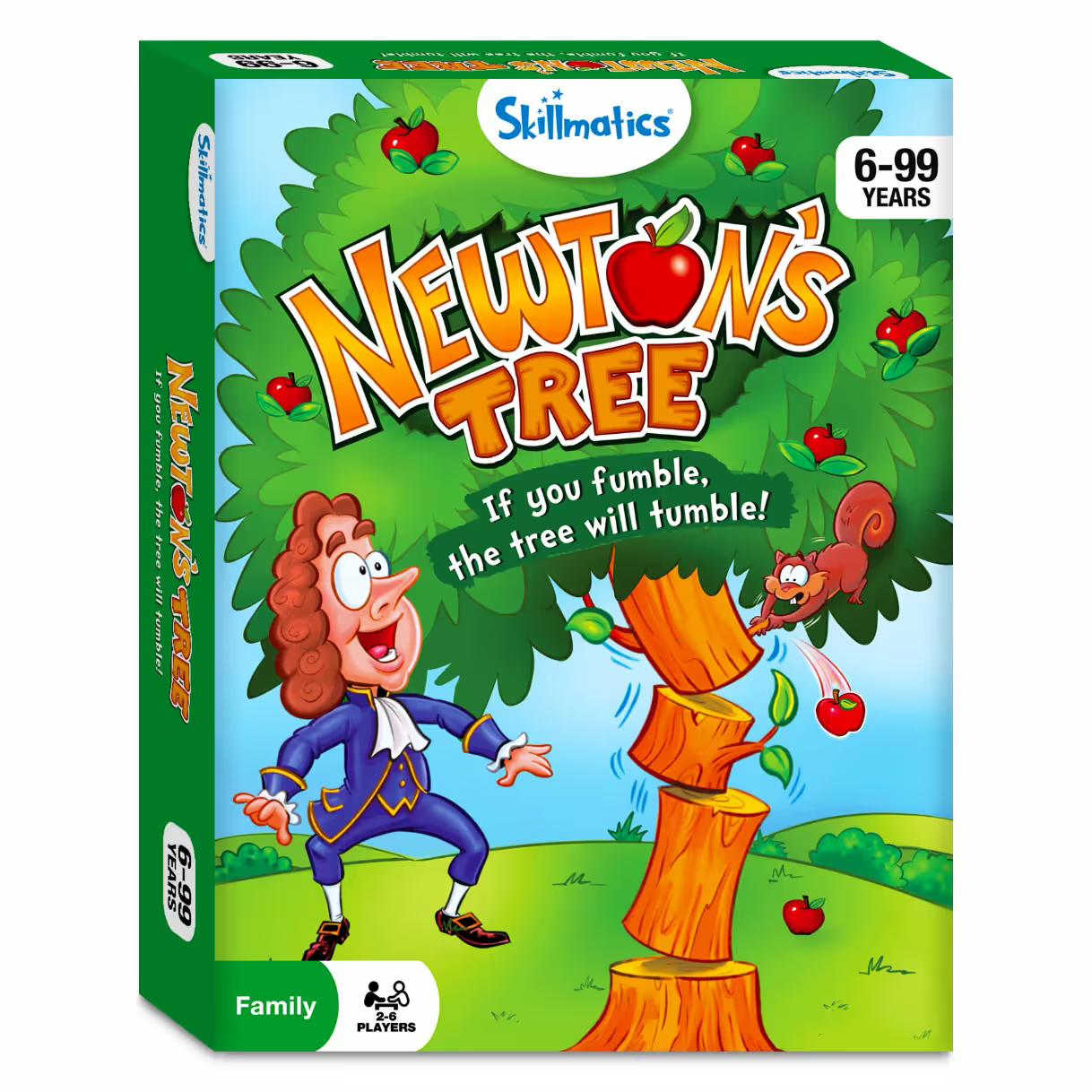
Newton’s Tree (Skillmatics) is a fun game of balancing and stacking as players build a tree, adding branches, apples, and a figure of Isaac Newton. For ages 6 and up.

MIT professor Harold Edgerton pioneered strobe flash, stop-action photography. See his famous photograph of a bullet shooting an apple ("How to make applesauce at MIT") at https://www.cnn.com/style/article/harold-edgerton-bullet-apple-snap.
For more about Edgerton's work, see the Edgerton Digital Collections Project.

Kerrie Logan Hollihan’s Isaac Newton and Physics for Kids (Chicago Review Press, 2009) is an illustrated account of Newton’s life and science, including his explanation of gravity, said to have been inspired by watching an apple fall from a tree. The book features 21 hands-on projects and experiments, among them making a waterwheel, a prism, and a crystal garden, investigating the laws of motion, and baking an “apple pye in a coffin.” Along with the modern recipe, there’s a 17th-century recipe “to make pyes of grene apples” of the sort that might have been served by a cook in Newton’s day. For ages 9 and up.
Electricity with apples? Try the Apple Battery Project.
Try an apple browning experiment. See instructions, an observation sheet, and an explanation at https://cias.wisc.edu/wp-content/uploads/sites/194/2021/06/Apple-Browning-Experiment.pdf.