
Immigrants and Refugees
In this collection
Immigration these days is a timely and contentious topic - not only in the United States, but around the world. It's also a theme that runs through history, from the early migrations of Stone Age humans out of Africa through the story of modern-day immigrants and refugees, driven by oppression, poverty, famine, and war.
When introducing kids to immigration, suggestions include discussing the many reasons why people emigrate; introducing kids to the stories of real immigrants, past and present; learning about immigration in the context of American history – we are, after all, a nation of immigrants; and emphasizing that not all immigrants – notably the millions of Africans forced into slavery – wanted to leave their homelands.
Nonfiction

Faith Ringgold’s brightly illustrated We Came to America (Knopf, 2016) is a picture-book story of the diverse people that make up America. “Some of us were already here/before the others came. And some of us were brought in chains/losing our freedom and our names.” The conclusion: “We are all Americans. Just the same.” For ages 4-8.

Betsy Maestro’s Coming to America (Scholastic, 1996) is an introductory history of immigration from the arrival of the first Stone Age peoples 20,000+ years ago through modern immigration laws. For ages 5-9.
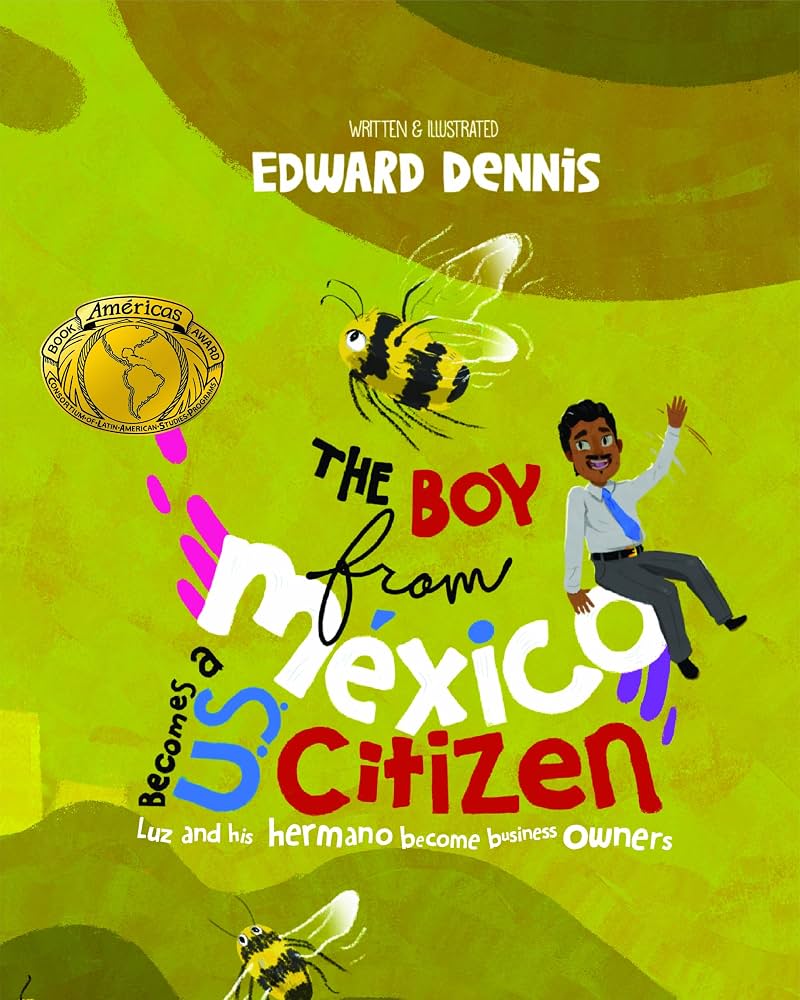
By Edward Dennis, The Boy from Mexico Becomes a US Citizen (Books That Save Lives, 2025) continues the story of Luz begun in The Boy from Mexico: An Immigration Story of Bravery and Determination and The Boy From Mexico Becomes a Farmworker. It traces the difficult and emotion-laden process of gaining U.S. citizenship, including the steps in the process and information on getting started. For ages 5-8.
Could you become a citizen? Take the Civics Practice Test.

By Ceri Roberts, Refugees and Migrants (Barron’s, 2017) is one of the “Children in Our World” series, picture books aimed at introducing children to some of today’s current global issues. This book covers, for example, where refugees and migrants come from, why they leave home, how they travel, life in refugee camps, and what it means to seek asylum.
Other titles in the series include Racism and Intolerance, Poverty and Hunger, and Global Conflict. For ages 6-10.

In the History of US series by Joy Hakim (Oxford University Press, 1999), Reconstructing America (Volume 7), which covers the period 1865-1890, includes an excellent section on 19th-century immigration. For ages 9 and up.

Russell Freedman’s Immigrant Kids (Scott Foresman, 1999), illustrated with impressive period photos, covers the journey to America and the experiences of immigrant kids at home, at school, at work, and at play. For ages 8-12.

From Kids Discover, the
Immigration issue, illustrated with photos, prints, and creative graphics, covers immigration worldwide and in the United States. Topics covered include “Ancient and Modern Migrations,” “A Nation of Immigrants,” “U.S. Immigration Since 1820,” and “How to Become a U.S. Citizen.” Available in print or digitally; there’s also an accompanying downloadable teacher’s guide and vocabulary sheet. For elementary- and middle-school-level kids.

By Ronald Takaki, professor of ethnic studies at UC Berkeley, A Different Mirror for Young People (Triangle Square, 2012) is an adaptation of his classic adult history of multicultural America. Chapters include “The Hidden Origins of Slavery,” “The Flight from Ireland,” “The War Against Mexico,” “From China to Gold Mountain,” and “Jews Are Pushed from Russia.” The book cites many primary sources, including diaries, letters, and poems, many by teens. Highly recommended for ages 12 and up.

By Judy Dodge Cummings, Human Migration: Investigate the Global Journey of Humankind (Nomad, 2016) in the “Inquire and Investigate” series covers the movements of people around the world from the Stone Age to the present day, with a reader-friendly text, fact boxes, lists of key questions, activities, and links to primary sources. For ages 11-15.

Bryan Sykes's best-selling The Seven Daughters of Eve (W.W. Norton, 2002) begins with Otzi, the Ice Man, a 5000-year old traveler found in the Italian Alps in 1991 – and goes on to trace the lineages of all humans to just seven prehistoric women. A scientific explanation of where we all came from, based on mitochondrial DNA. Includes a helpful map. For teen and adults.
Ellis Island

Eve Bunting’s Dreaming of America (Troll Communications, 2000) is the story of Irish Annie Moore, who became the first immigrant processed through Ellis Island – on January 1, 1892, her fifteenth birthday. For ages 5-8.

By Elaine Landau, Ellis Island (Childrens Press, 2008), one of the True Books series, is a short history of Ellis Island and immigration, illustrated with photographs. Included are statistics and resources lists for further investigation. For ages 6-10.
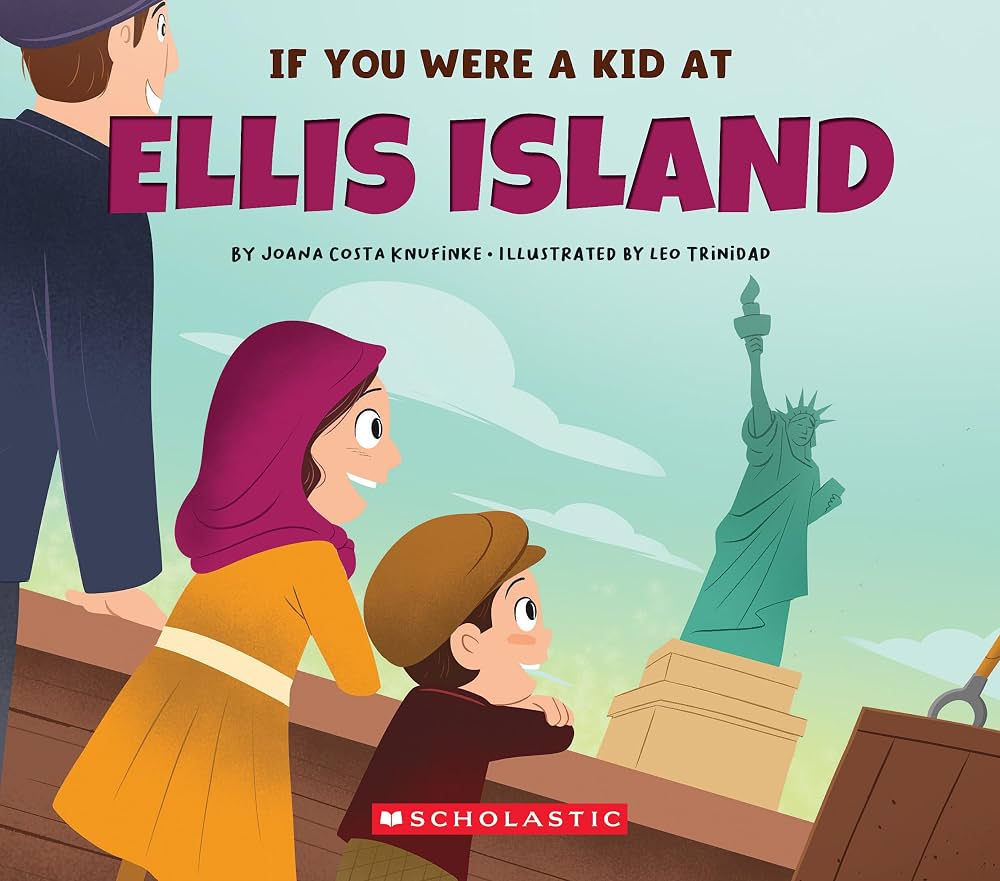
In the extensive If You Were a Kid series, in Joana Costa Knufinke’s If You Were a Kid at Ellis Island (Childrens Press, 2025), readers follow Isabella and Alberto as they travel from Italy to the United States through Ellis Island. A mix of a fictionalized story and factual information. For ages 7-9.
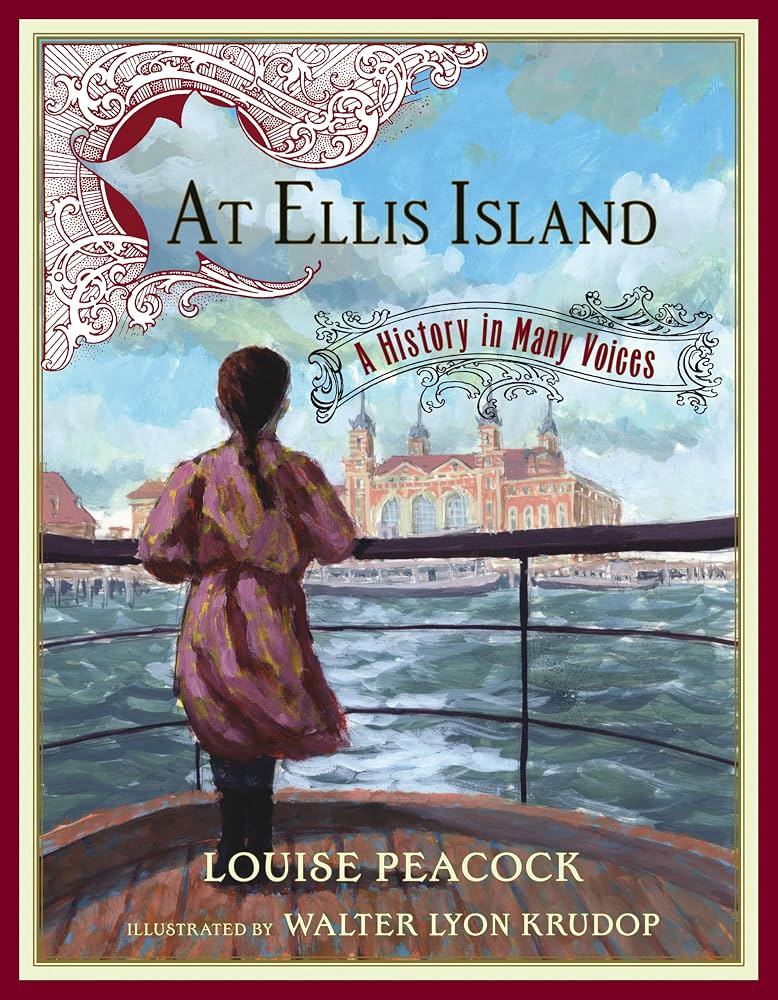
By Louise Peacock, At Ellis Island: A History in Many Voices (Atheneum, 2007) pairs letters home written by 10-year-old Sura, fleeing Armenian genocide, with quotations detailing the varied experiences of many immigrants in the past from countries all over the world. Illustrated with paintings and photos. A wide-ranging look at the immigrant experience for ages 7-10.

By Veronica Lawlor, I Was Dreaming to Come to America (Puffin, 2000) is a collection of memories of immigrants from the Ellis Island Oral History Project. Stories in their own words are paired with collage illustration. For ages 7-11.
Did your ancestors pass through Ellis Island? At the Ellis Island Foundation, enter a name and search this database of 65 million passenger records.
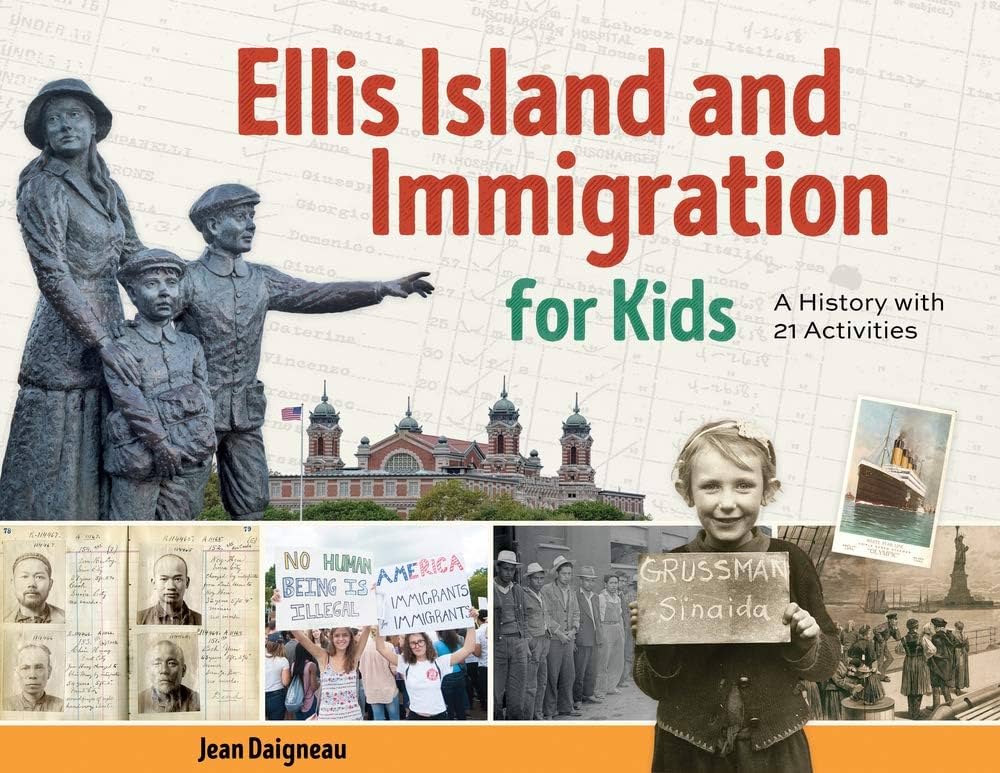
By Jean Daigneau, Ellis Island and Immigration for Kids (Chicago Review Press, 2022) is a detailed history of Ellis Island (and its predecessor, Castle Garden) and immigration, with a timeline, period photos, fact boxes, and 21 hands-on activities, among them writing a letter home, videotaping a family history, making a time capsule, and creating a whirligig and a topographical map. For ages 9-12.

From Kids Discover, Ellis Island, illustrated with great period photos, prints, and graphics, includes general information about America’s immigrants and a history of Ellis Island and what happened there. Available either digitally or in print. For elementary- and middle-school-level kids.

By Michael Burgan, Ellis Island: An Interactive History Adventure (Capstone, 2013) is one of the You Choose: History series, in which kids have a choice of three different story paths and 19 different endings. See if you can make it to a new life in the United States. For ages 8-11.

Take a virtual tour of Ellis Island. See https://ellisisland-events.com/ellis-island-tour.
Statue of Liberty

By Martha E.H. Rustad, Why Is the Statue of Liberty Green? (Millbrook Press, 2014) – through the medium of a class field trip – covers the history of the Statue of Liberty, plus assorted interesting facts (it hasn’t always looked green) for ages 4-8.

By Linda Glaser, Emma’s Poem (Houghton Mifflin Harcourt, 2013) is the picture-book story of Emma Lazarus and the poem that gave a voice to the Statue of Liberty. (“Give me your tired, your poor/Your huddled masses yearning to breathe free…”) For ages 4-8.

The Statue of Liberty isn’t standing still. Her right foot is lifted, as if she’s striding out to sea. Why? Dave Eggers’s Her Right Foot (Chronicle Books, 2017), a picture-book history of both the statue and of immigration, ventures a guess – she’s stepping forward to welcome the next wave of immigrants, because immigration goes on and on. For ages 4-8.

By Betsy and Giulio Maestro, The Story of the Statue of Liberty (HarperCollins, 1989) is a straightforward picture-book account of the statue’s inception, creation, and installation, and an explanation of its symbolism for ages 5-9.

Build your own! In the LEGO Architecture series, the 

You become the Statue of Liberty! See these instructions for making your own crown and torch!

From Deep Space Sparkle, see these art lessons for making Statue of Liberty portraits. Targeted at age 10 or so.
Immigrants Tell Their Stories

By Yuyi Morales, Dreamers (Neal Porter Books, 2018) is a gorgeously illustrated picture-book story/memoir of the gifts immigrants bring with them and the things they discover in their new country. Such as the public library, deemed “Suspicious./Improbable./Unbelievable./Surprising.” A multiple award-winner for ages 4-8.

By Allen Say, Grandfather’s Journey (Sandpiper, 2008) – based on the experience of Say’s grandfather - is the story of a young Japanese man who settles in California and then returns to Japan, and his love for both of the places that he calls home. For ages 4-8.

Dan Yaccarino’s picture book All the Way to America (Knopf, 2012) tells how his great-grandfather arrived on Ellis Island from Italy with a little shovel and some words of advice from his parents: “Work hard, but remember to enjoy life, and never forget your family.” For ages 5-9.

By Margy Burns Knight, Who Belongs Here? (Tilbury House, 2018) centers around the story of Nary, a Cambodian boy, and his grandmother, who fled the Khmer Rouge after the deaths of his parents – and now are having a hard time being accepted in America. Some kids in Nary’s class feel he should go back where he belongs. But what if everybody were made to return to their countries of origin? Who would be left? For ages 7-13.

Warren St. John’s Outcasts United (Ember, 2013) is the inspirational story of the Fugees, a diverse youth soccer team made up of players from Clarkston, Georgia, a refugee resettlement center, under the guidance of their Jordanian female coach. For ages 12 and up.

By Sandra Cisneros, the award-winning The House on Mango Street (Vintage, 1991) is the story of Esperanza, a 12-year-old Latina, growing up in the poor Hispanic quarter of Chicago, written in a series of vignettes. Based in part on the author’s own experiences. A wonderful read – and a standard on many reading lists – for ages 12 and up.

By Malala Yousafzai, We Are Displaced (Little, Brown, 2019) is a collection of true stories about the experiences of refugee girls from around the world, from the Middle East to South America, Africa to Asia. Included is the story of Malala herself, who survived an attempted assassination by the Taliban as a teenager in Pakistan, and eventually became a displaced person due to Taliban violence. For ages 13 and up.
Fiction: Younger Readers

In The Name Jar by Yangsook Choi (Dragonfly Books, 2003), Unhei has just moved to America from Korea and is worried that her new classmates will not be able to pronounce her name. Instead, she tells the class that she will soon pick a name – and the class creates a name jar, filled with possible names for her to choose. Ultimately, however, she keeps her own – and teaches her classmates how to say it. For ages 3-7.

By Michele Maria Surat, Angel Child, Dragon Child (Scholastic, 1989) is the story of Ut, who comes to America alone from Vietnam, and struggles to adjust to her new life. “’Why are you so mean to me?’ wondered Ut. ‘Because you are different. You wear funny clothes and you talk with funny words,’ answered Raymond.” For aged 3-8.

In Jairo Buitrago’s Two White Rabbits (Groundwood Books, 2015), a little girl, her two stuffed rabbits, and her father are making the difficult journey from Central America to the United States. For ages 4-7.
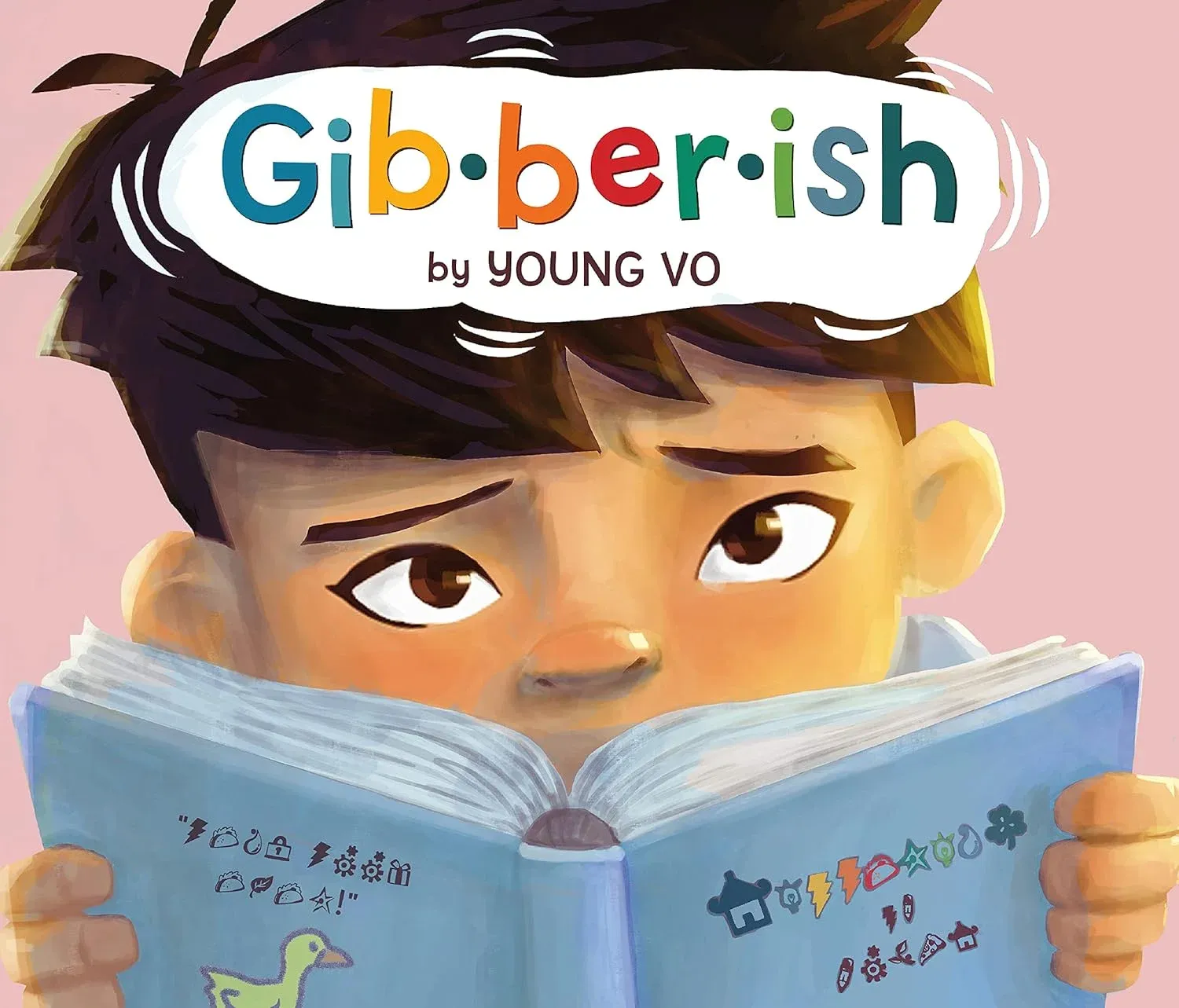
In Young Vo’s Gibberish (Levine Querido, 2022), it’s Dat’s first day of school in his new country – but no one understands his language and everything they say sounds like gibberish. He spends the day feeling miserable and alone – until a kind classmate shows there are other ways to communicate. For ages 4-7.

By Yamile Saied Mendez’s Where Are You From? (HarperCollins, 2019) celebrates diversity by showing that “Where are you from?” is not a simple question. Also available in a Spanish edition. For ages 4-8.

In Eve Bunting’s How Many Days to America? (Clarion, 2015), after the soldiers come, a family flees their country with nothing but a change of clothes and takes a small boat to America – where they arrive on Thanksgiving Day. For ages 4-8.

By the brilliant Peter Sis, the title character of Madlenka (Square Fish, 2010) tours her multicultural city block, visiting the French baker, the Indian news vendor, the Latin American grocer, and more, sharing with all the news of her loose tooth. For ages 4-8.

In Norah Dooley's Everybody Cooks Rice (Carolrhoda, 1991), Carrie travels through her multi-ethnic neighborhood looking for her brother, who is late to dinner - and discovering the many different ways in which different immigrant families cook rice. Carrie samples meals from Barbados, Haiti, Puerto Rico, Vietnam, China, and India, before ending up at home for an Italian meal of risi e bisi.
Also by Dooley in the same format, see Everybody Bakes Bread (1995), Everybody Serves Soup (2004), and Everybody Brings Noodles (2005).

In Bao Phi’s graphic novel A Different Pond (Capstone, 2017), a father and son share an early-morning fishing trip to a pond in Minneapolis. While they fish, the father tells his son the story of his life as a boy, fishing at a different pond in Vietnam. For ages 4-8.

In Jeri Watts’s A Piece of Home (Candlewick, 2016), Hee Jun and his family have moved from Korea to West Virginia, and he’s had a hard time fitting in – until a classmate invites him home and he sees a familiar flower in their garden. They give him a shoot so that he and his grandmother can plant “a piece of home” in their own new garden. For ages 4-8.

In Patricia Polacco’s The Keeping Quilt (Simon & Schuster, 2001), the quilt, made from scraps of old clothes from family back home in Russia, in passed down through generations, serving as a Sabbath tablecloth, a wedding canopy, and a blanket for newborn babies. For ages 4-8.

Jon Agee’s The Wall in the Middle of the Book (Dial, 2018) is a clever lesson about misjudging others. A brick wall runs right through the book. On one side, a knight with a ladder insists that his side of the wall is safe, protected from the fearsome rhinos, tigers, and ogres on the other side. However, as a flood (with crocodiles) threatens the knight’s side of the wall, it turns out that ogres aren’t fearsome at all. A wonderful read and a lesson in not making snap judgments about others for ages 4-8.
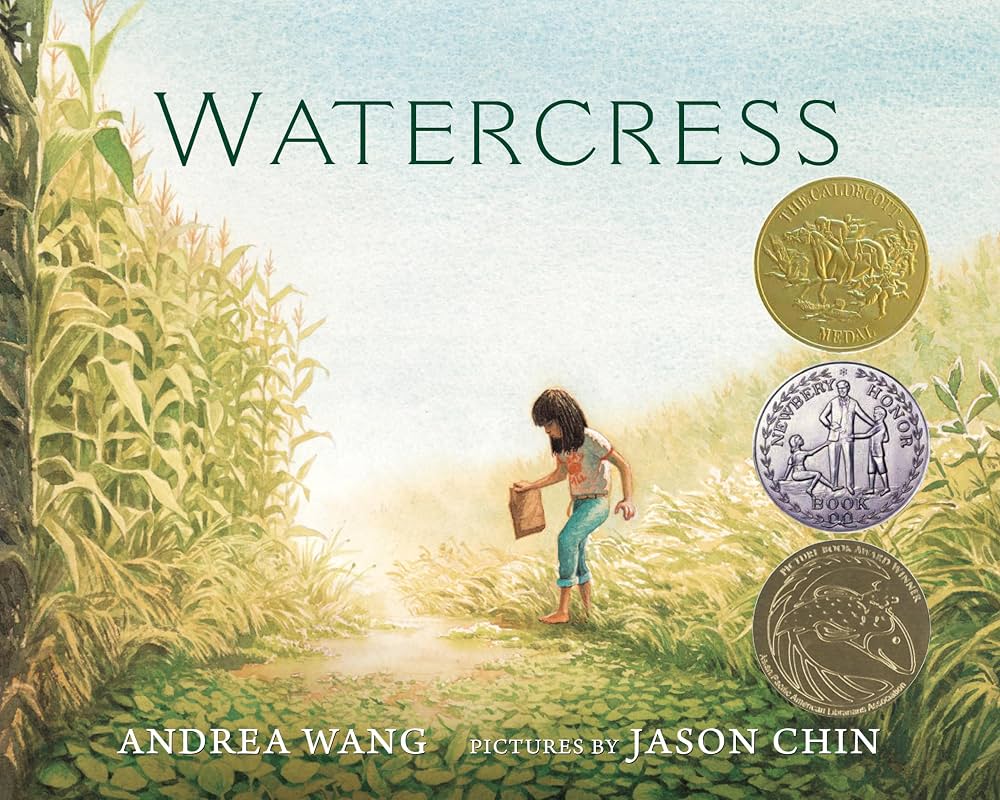
By Andrea Wang with illustrations by Jason Chin, Watercress (Neal Porter Books, 2021) – both a Caldecott Medal winner and a Newbery Honor book – a young girl is embarrassed when her Chinese immigrant parents top to gather watercress from the side of the road and protests eating “dinner from the ditch.” She changes her mind when her mother shares her story of growing up in China during a great famine. For ages 4-9.
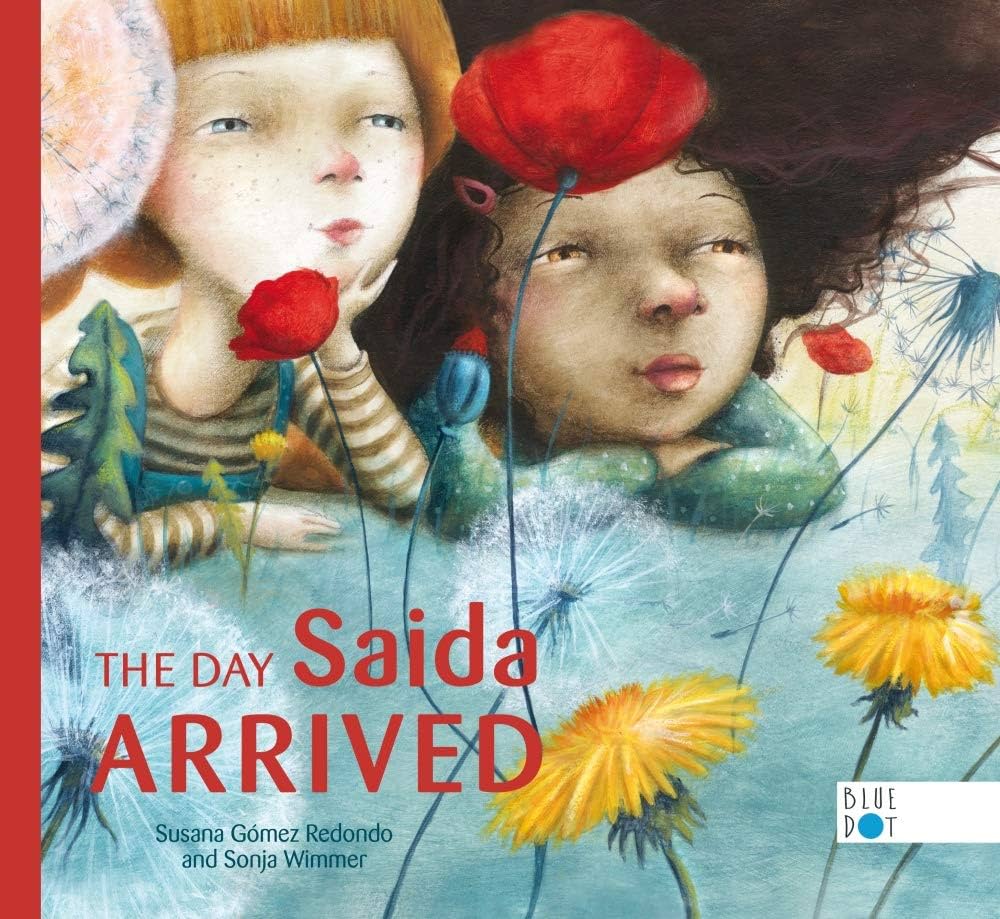
By Susana Gomez Redondo, in The Day Saida Arrived (Blue Dot, 2020), Saida, newly arrived from Morocco, doesn’t speak – so a friend tries to help her find her words. The girls communicate by drawing hearts and smiles – and then begin to trade words in English and in Saida’s native Arabic. An appendix pairs the English and Arabic alphabets. For ages 5-8.

By Leslea Newman, Gittel’s Journey (Harry N. Abrams, 2019) is the story of nine-year-old Gittell who, when her mother’s eye infection prevents her from emigrating, ends up traveling to Ellis Island alone. Worse, the ink has run on the scrap of paper with cousin Mendel’s New York address, so Gittell has no idea where to go. For ages 5-8.

In Eve Bunting’s One Green Apple (Houghton Mifflin Harcourt, 2006), Farah, a young Muslim immigrant, feels out of place in her new country, especially since she speaks little English – until a trip to an apple orchard and shared cider-making with her classmates proves that all have much in common. It takes all kinds of apples to make cider. For ages 5-9.

In Duncan Tonatiuh’s Pancho Rabbit and the Coyote (Harry N. Abrams, 2013), Pancho Rabbit is off to El Norte to find his father, who is late returning from the carrot and lettuce fields. To get there, however, he has to cross the border, which involves dealing with a guide in the form of a hungry coyote, a river, a fence, and a tunnel guarded by uniformed, bribe-taking snakes. The modern-day Mexican immigrant experience with folktale animals. For ages 6-9.

In Amy Hest’s When Jessie Came Across the Sea (Candlewick, 2003), 13-year-old Jessie is leaving her shtetl in Eastern Europe for America, leaving her beloved grandmother behind. For ages 6-9.

By Margriet Ruurs, Stepping Stones (Orca, 2016) is the picture-book story of Rama and her family, forced to flee Syria and seek safety in Europe in the wake of the raging civil war. Gorgeously illustrated with the stone artwork of Syrian artist Nizar Ali Badr. For ages 6-9.
Try some pebble art of your own. See some ideas here.

In Molly’s Pilgrim (HarperCollins, 2018) by Barbara Cohen, third-grader Molly, a Russian Jewish immigrant who struggles with English, is teased mercilessly at school – and things are made even worse when the children are asked to make pilgrim dolls for a Thanksgiving celebration, and Molly brings one dressed as a Russian peasant. It turns out, however, that there are many different kinds of pilgrims. For ages 6-10.
There’s a short (24-minute) movie version of the book in which author Barbara Cohen has a flashing appearance as a school crossing guard.

In Edwidge Danticat’s Mama’s Nightingale (Dial, 2015), Saya’s Haitian mother has been sent to a prison for undocumented immigrants and Saya’s only comfort is the stories of the nightingale that her mother records for her on cassette tapes. Finally Saya writes a story of her own, which catches the attention of a newspaper reporter. A book about the pain of the immigrant experience and the power of story for ages 6-10.

In Elvira Woodruff’s The Memory Coat (Scholastic, 1999), Rachel’s Jewish family is fleeing persecution in Russia, along with Rachel’s orphaned cousin Grisha. Grisha clings to the ragged wool coat that his mother made for him – but when the coat is marked by an Ellis Island inspector as rejecting Grisha for admission to America, Rachel quickly turns the coat inside out, allowing him to stay with the family. For ages 7-10.
Fiction: Middle-Grade and Older Readers

Khaled Hosseini’s Sea Prayer (Riverhead Books, 2018), illustrated with watercolors, is written in the form of a letter from a father to his young son as they wait for the boat that will help them escape the deadly war in Syria. Touching and powerful. It’s a short read (48 pages). Appropriate for a wide range of ages.

Katherine Applegate’s Wishtree (Feiwel & Friends, 2017) – one of the very few books narrated by a tree – is the story of Red, a neighborhood oak, home to a personality-laden crow named Bongo and many other animals. Red is also traditionally a wishtree: on the first of May, people tie rags and tags to her branches with wishes written on them. Trouble arises, however, when a Muslim family moves to the neighborhood – which leads one angry boy to carve LEAVE on Red’s bark with a screwdriver. A wonderful and hopeful read for ages 8-12.

In Pam Munoz Ryan’s Esperanza Rising (Scholastic, 2016), Esperanza, raised on the family’s ranch in Mexico in a luxurious house filled with servants, ends up fleeing to California, where she and her mother live in a farm labor camp – and Esperanza must cope with hard work, prejudice, and the financial struggles of the Great Depression. For ages 8-12.

N.H. Senzai’s Shooting Kabul (Paula Wiseman Books, 2011) is the story of 11-year-old Fadi, whose family has decided to illegally flee Afghanistan for the United States. In the chaos that takes place at the underground transport rendezvous, and with the Taliban closing in, Fadi loses his little sister Miriam in the crowd, and she is left behind. Fadi has to deal with the difficulty of adjusting to life in California in the wake of the 9/11 attack and with guilt over Miriam’s loss and the hope of finding her again. (The “shooting” of the title, incidentally, refers not to guns, but to photography.) For ages 8-12.

In Onjali Q. Rauf’s The Boy at the Back of the Class (Yearling, 2020), set in London, the new boy in class is nine-year-old Ahmet, a Syrian refugee. When four of his classmates learn that he’s separated from his family and a deadline for reunion is fast approaching, they come up with a plan to help – which involves roping in the Queen herself. For ages 8-12.

By Patricia Reilly Giff, in Nory Ryan’s Song (Yearling, 2002), Nory’s family has lived on Maidin Bay on the west coast of Ireland for generations – but now blight has attacked the potatoes, the English landlord is raising the rent, and the Ryans face starvation. So 12-year-old Nora is being sent to America. The sequel Maggie’s Door deals with the voyage across the Atlantic and arrival in New York. For ages 8-12.

By Julia Alvarez, in Return to Sender (Yearling, 2019), set in Vermont, Tyler’s father has been injured in a tractor accident, so they’ve hired a a trio of related Mexican migrant workers to help their farm survive. The workers are undocumented, and one of them has three daughters of whom the oldest, Mari, becomes Tyler’s close friend. The girls are separated from their mother, who has been unable to enter the United States, and all live in fear of deportation. The story is told in two voices, Tyler’s and Mari’s. For ages 8-12.

By Alexandra Diaz, The Only Road (Simon & Schuster, 2017) is the story of 12-year-old Jaime whose cousin and best friend has just been killed by a drug trafficking gang in his small hometown in Guatemala. Knowing that he might be next, Jaime and his cousin Angela embark on the treacherous journey from Guatemala to New Mexico, where Jaime’s older brother lives. For ages 8-12.
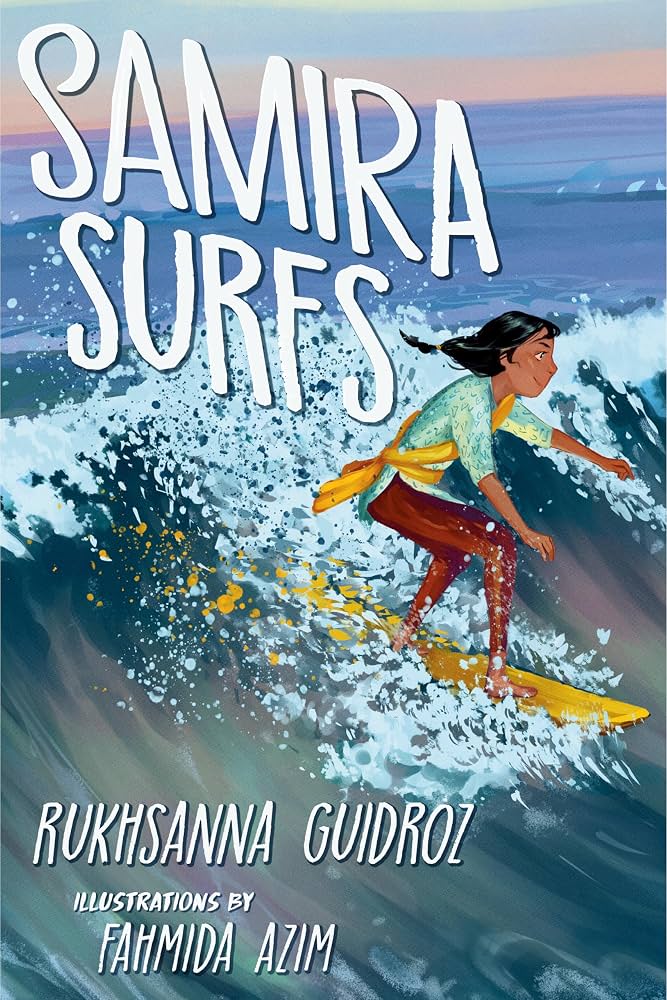
By Rukhsanna Guidroz, Samira Surfs (Kokila, 2022) is a novel in verse about Samira, an 11-year-old Rohingya refugee, whose family fled persecution in Burma and is now living in Cox’s Bazar, Bangladesh. There she begins to rebuild her life with the help of a local surf club of girls. For ages 8-12.

Thanhha Lai’s Inside Out and Back Again (HarperCollins, 2011) – a National Book Award winner - is the story in verse of 10-year old Ha, who flees Vietnam with her mother and older brothers, eventually ending up in Alabama. There she suffers from rejection and bullying – but is supported by an understanding teacher who lost a son in the Vietnam War. For ages 8-13.
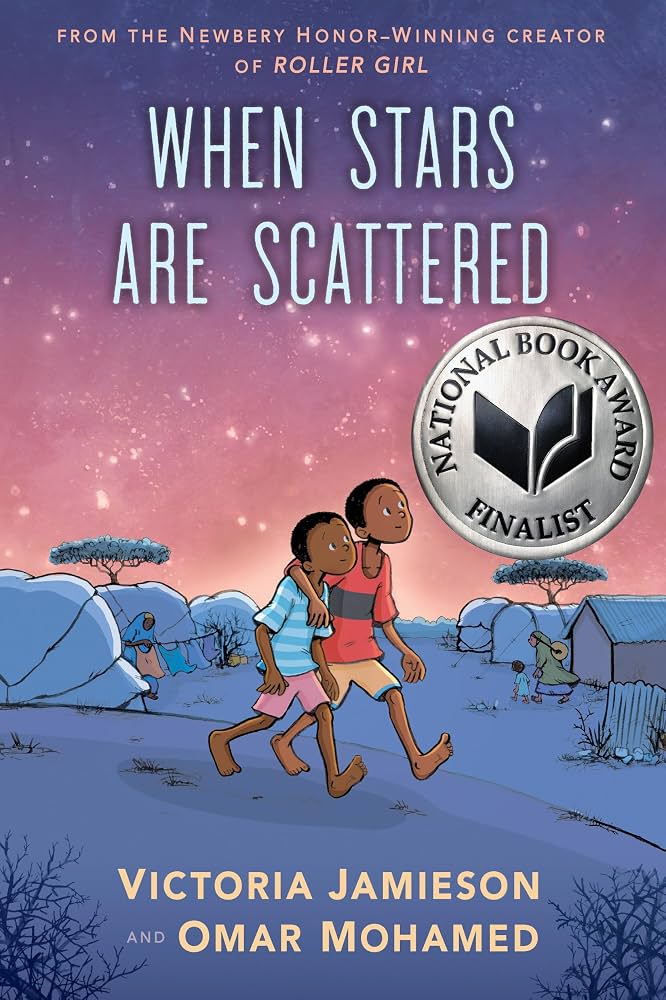
By Victoria Jamieson and Omar Mohamed, the graphic novel When Stars Are Scattered (Dial, 2020) is the story of the experiences of Mohamed and his non-verbal brother growing up in a Kenyan refugee camp and their eventual relocation to America. For ages 9-12.
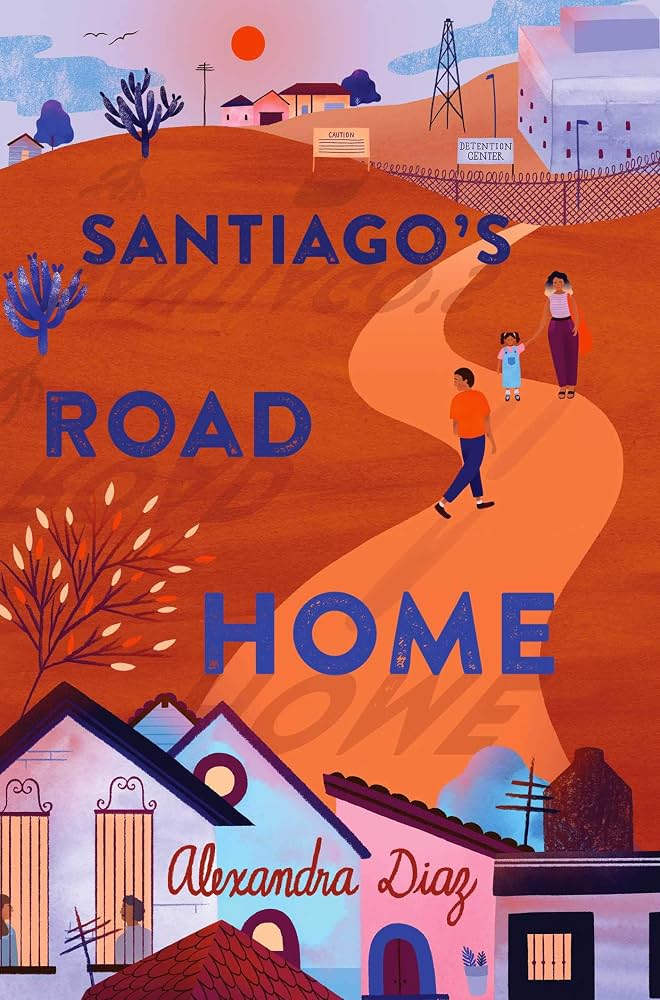
In Alexandra Diaz’s Santiago’s Road Home (Paula Wiseman/Beach Lane Books, 2021), 12-year-old Santiago, rejected by his abusive abuela (known to Santiago as the evil one), decides to cross the border from Mexico into the United States in company with Maria Dolores and her little daughter, Alegria, with whom he forms a family bond. It’s a frightening journey in which Santiago is imprisoned by ICE. A timely and ultimately hopeful story for aged 9-12.

Andrea David Pinkney’s The Red Pencil (Little, Brown, 2015), written in free verse and set in the South Darfur region of Sudan, is the story of 12-year-old Amira who is forced to flee to a refugee camp when militants attack her rural village. There she is helped to heal through art, after a teacher gives her a red pencil. For ages 9 and up.

In the Dear America series, Barry Denenberg’s So Far From Home: The Diary of Mary Driscoll, An Irish Mill Girl (Scholastic, 1997) begins in Skibbereen, County Cork, Ireland, in 1847. The potato famine has struck Ireland and young Mary is sent to America. For ages 9-12.

In Kelly Yang’s Front Desk (Arthur A. Levine, 2019), 10-year-old Mia and her parents, immigrants from China, live and work in a motel, where they protect immigrants in difficult situations by giving them shelter. If discovered by grasping owner Mr. Yao, however, they’ll lose both home and jobs. The book deals with such issues as poverty, racism, fraud, and bullying – but sends many positive messages about standing up for what is right and respecting others. For ages 9-12.

In Jasmine Warga’s Other Words for Home (Balzer + Bray, 2019), a novel in verse, Jude and her pregnant mother have left war-torn Syria, leaving Jude’s father and older brother behind, to live with Uncle Mazin, his American wife Michelle, and their unwelcoming daughter Sarah in Cincinnati. Jude struggles with a new culture, a new language, worry about her brother who has joined the revolutionaries, and anti-Muslim prejudice. Many starred reviews. For ages 9-14.
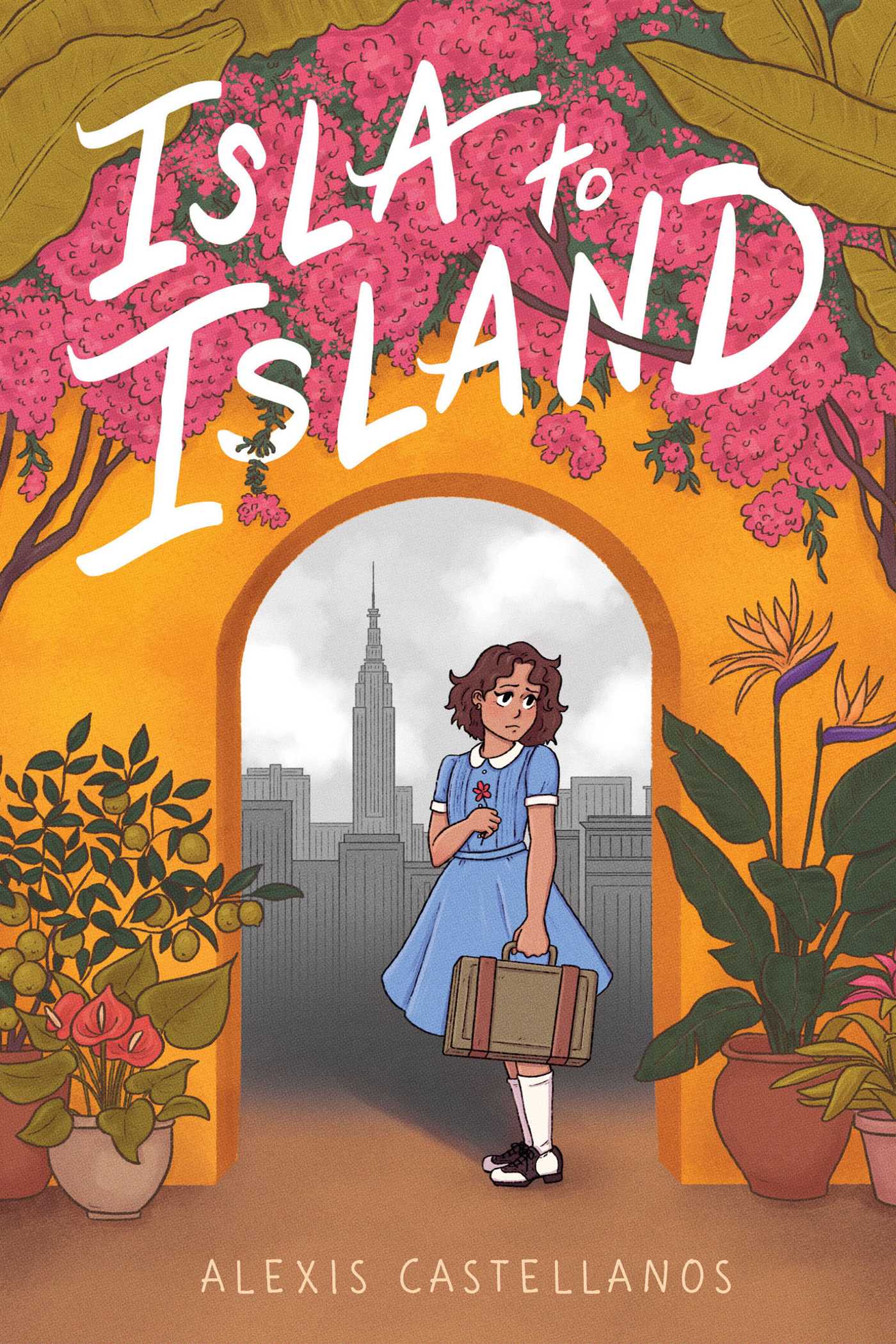
Alexis Castellanos’s graphic novel Isla to Island (Atheneum, 2022) is the nearly wordless story of Marisol, sent by her parents in the early 1960s from Cuba to safety in a foster home in New York City. The use of color – New York, when Marisol arrives, is shown only in shades of black and gray – and limited text reflect the isolation of living in a strange place with an unknown language; color gradually returns as Marisol slowly finds herself in a new home. It’s a powerful representation of the immigrant experience. Included is historical back matter on the exodus of children from Cuba in the wake of Fidel Castro’s takeover. For ages 10-12.

Veera Hirandani’s The Night Diary (Kokila, 2018) is set in India in 1947, just as the country becomes independent from Great Britain and splits into India and Pakistan. Twelve-year-old Nisha comes from a mixed-faith family: her mother, who died in childbirth, was Muslim, but the bulk of the family is Hindu. With the bloody riots that accompany partition, Nisha’s family is forced to flee their home – leaving behind Kazi, their Muslim cook, and one of Nisha’s staunchest friends – and cross the brand-new border. For ages 11 and up.

In Katherine Marsh’s Nowhere Boy (Roaring Brook Press, 2018), Ahmed is a 14-year-old Syrian refugee who lost his father in the flight by sea after the bombing of their home in Aleppo. Robbed and abandoned in Brussels, he finds shelter in the basement of the home of visiting Americans. There he hides until discovered by Max, the son of the family, who also feels isolated and out of place. The boys form a bond. This is a wonderful story of friendship, family, and a realization of the importance of things we take for granted. A lot to discuss here. For ages 10-14.

Linda Sue Park’s A Long Walk to Water (Houghton Mifflin Harcourt, 2011) tells the intertwined stories of Nya, living in South Sudan in 2008, who must walk hours each day to fetch water from the nearest pond; and Salva, in 1985, separated from his family during a civil war and struggling to find them again. He ends up leading a caravan of over a thousand similarly lost boys to a refugee camp, and eventually he emigrates to America, finds his father, and starts a volunteer group for building wells in South Sudan. Which is where Salva meets Nya. For ages 10 and up.

Firoozeh Dumas’s It Ain’t So Awful, Falafel (Clarion, 2017) is the story of Zomorod (now to be known as Cindy), growing up in California in the 1970s, where life is difficult for her Iranian family in light of Iran’s taking of American hostages. Funny and poignant for ages 10 and up.

Katherine Applegate’s Home of the Brave (Square Fish, 2008) is the story of Kek who lost his family in the war in Sudan and survived African refugee camps before finding asylum in Minnesota. There he encounters much that is new and unfamiliar (snow, washing machines), and some that he knows (cows) – while still hoping to be reunited with his mother. For ages 10 and up.

Sarah Crossan’s novel in verse, The Weight of Water (Bloomsbury, 2013), is the story of 12-year-old Kasienka who has emigrated from Poland to England with her mother in hopes of finding her father. Kasienka, ostracized and bullied at school, only feels strong while swimming – which is where she connects with William, one of her classmates. For ages 10-14.

Eoin Colfer’s graphic novel Illegal (Sourcebooks Young Readers, 2018) is the story of a young Ghanaian orphan, Ebo, who follows his older brother, Kwame, on a perilous journey seeking asylum in Europe. Well-researched and gripping. For ages 10-15.
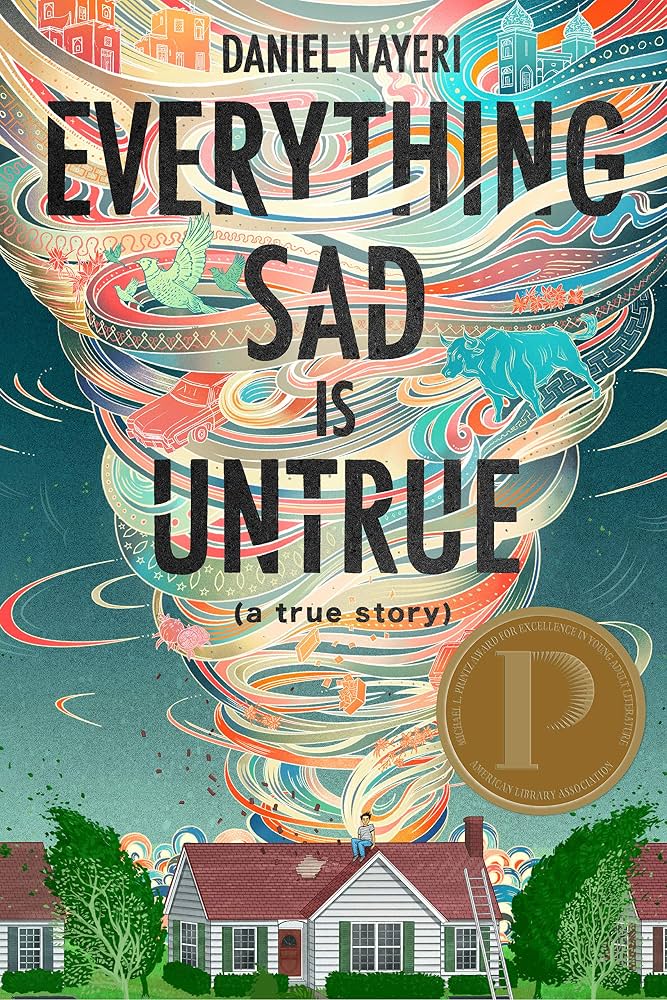
In Daniel Nayeri’s autobiographical novel Everything Sad Is Untrue (Levine Querido, 2020), Khosrou (known as Daniel) tells the story of his family’s history as Iranian refugees. The narrative blends times and places in a style reminiscent of Scheherazade of Arabian Nights. A tragic, hopeful, and wonderful read for ages 12 and up.

Nicola Yoon’s The Sun is Also a Star (Ember, 2019) is the story of Natasha, whose immigrant family is within hours of being deported to Jamaica, and Korean-American Daniel, who is preparing to interview for Dartmouth College. It turns out that Natasha’s immigration lawyer is Daniel’s interviewer. A philosophical and romantic coming-of-age story for ages 13 and up.
The movie version of the story (2019) is rated PG-13.

In Sara Saedi’s Americanized (Ember, 2019), Sara at the age of 13 discovers that she’s an illegal immigrant, brought to the United Stated from Iran by her parents at the age of two. Saedi’s memoir segues between the trials of being a teenager and fear of deportation and the struggle to get a green card. A funny and poignant coming-of-age book for ages 14 and up.
Read an NPR interview with Saedi here.
Immigration and Science Fiction

What if the entire human race had to emigrate? In Geoff Rodkey’s We’re Not From Here (Yearling, 2020), Earth is uninhabitable and Mars grim, so the remainder of the human race heads out for the planet Choom, home to several alien races, most predominately the Zhuri, who look like giant mosquitoes. In the twenty years in bio-suspension that it takes to make the trip, however, the government of Choom has changed hands and the human refugees are no longer welcome. Young Lan Mifune and family are chosen as a test case, to prove that humans can assimilate peacefully – in the face of discrimination and anti-human propaganda. For ages 9-12.

In William Alexander’s Ambassador (Margaret K. McElderry, 2015), 11-year-old Gabe Fuentes has two sets of problems: his undocumented immigrant parents are in danger of deportation – and Gabe himself has been tagged as Earth’s ambassador to the galaxy, thus discovering that Earth is in danger and that he himself is the target of an assassination plot. A clever and exciting adventure for ages 8-12.

Shaun Tan’s wordless graphic novel The Arrival (Arthur A. Levine, 2007) is the story of one man, threatened by fearsome dark shapes, who travels to a new country, where he discovers a fantastical and awesome new world. An artistic masterpiece for ages 12 and up.

In Robert Heinlein’s Stranger in a Strange Land (Ace, 2018), the immigrant is Valentine Smith, a human raised by Martians on Mars. Now on Earth, he must attempt to understand and adapt to human culture – which eventually results in him changing it altogether. Originally published in 1961, it’s still a good discussion book for teens and adults.

In District 9 (2009), a South African sci fi alternate history, a population of refugee insectoid aliens (nicknamed “the Prawns” by humans) who arrived by spaceship have been confined for decades in a slum-like internment camp called District 9. It’s intense – there’s violence and profanity – but for mature teens, there’s a lot to talk about with this one. Rated R.
Projects and Activities

By Alexandra Michaels, The Kids’ Multicultural Art Book (Williamson, 2000) has over 100 craft projects from African, Native American, Asian, and Hispanic cultures and more. For ages 7 and up.

By MaryAnn F. Kohl and Jean Potter, Global Art (Gryphon House, 1998) is a continent-by-continent tour of the globe, with geographical and historical background information and over 100 hands-on projects. For ages 7-12.

Deanna F. Cook’s Cooking Class Global Feast (Storey, 2019) is a collection of 44 yummy recipes from cultures around the world, including those of Africa, the Americas, Asia, Australia and Oceania, Europe, and the Middle East. Step-by-step instructions illustrated with color photos. For ages 6-12.

Welcome Blanket, started in 2017, combines crafting and immigration. Participants make handmade blankets of all kinds which can be displayed in an art show, then mailed (see website) to be distributed to immigrant and refugee shelters.

New York City’s Tenement Museum has online exhibit exploration guides, videos, and lesson plans all related to the immigrant experience in New York.

From the Library of Congress, see assorted Classroom Materials on varied immigration topics using primary sources from the LOC collection,
Movies
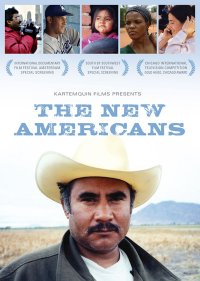
From Independent Lens/PBS, The New Americans is a documentary mini-series about immigrants in America, featuring people from Nigeria, Palestine, the Dominican Republic, Mexico, and India. Included at the website are a series of downloadable lesson plans on immigration for grades 7-12.

Very loosely based on the books by Michael Bond, the movie Paddington (2014) is a live-action animation about the trials and tribulations of a very unusual bear who emigrates to London from Darkest Peru. Rated PG.

Don Bluth’s animated An American Tail (1986) is the story of Fievel, a young Russian mouse, separated from his family on the way to America – a country they had thought was free of cats. (“There are no cats in America and the streets are paved with cheese.”) Rated G.

I Remember Mama (1948) is the warm and funny story of the Hansens, a Norwegian immigrant family in San Francisco in 1910. Nominated for five Academy Awards. It’s not rated, but definitely family-friendly.

In America (2002) is the story of a family of Irish immigrants – parents and two children - who move (illegally) to a tenement in New York City’s Hell’s Kitchen. It’s a complex story – the family is grieving the loss of a five-year-old son, Frankie – but ultimately hopeful. Rated PG-13.

Hester Street (1975) is the story of Jewish immigrants on New York City’s Lower East Side in the late 19th century. The main character, Yankel – now Americanized to Jake – has been waiting for his wife, Gitl, and son to come to America from Russia. When Gitl arrives, however, her traditional ways and slowness to assimilate cause a rift. Rated PG.

Immigration Battle is a two-hour documentary about America’s broken immigration system. For teens and adults.
See this annotated list of the 10 Most Interesting Immigration Movies of All Time.