
World War II
In this collection
All About the War

In Joy Hakim’s outstanding A History of US series, War, Peace, and All That Jazz (Oxford University Press, 2007), covers the period from 1918 to 1945, with plenty of well-presented information, period illustrations, maps, and human interest stories. Highly recommended. For ages 11-14.

By Richard Panchyk, World War II for Kids (Chicago Review Press, 2002) covers the war from Hitler’s rise to power in 1933 to the bombing of Hiroshima and the surrender of Japan in 1945. Included are timelines, maps, period photos, and 21 hands-on projects and activities. Play a rationing game, break a military code, or stage your own radio adventure series. For ages 9 and up.

Simon Adams’s World War II (DK, 2014), one of the graphically creative Eyewitness series, is filled with wonderful photos of people and artifacts. Each double-page spread covers a different aspect of the war, such as “In the German army,” “The Battle of Britain,” “Codebreakers,” “D-Day invasion,” and “A wartime childhood.” For ages 8-12.

In Terry Deary’s Horrible Histories series, Woeful Second World War (Scholastic, 2016) is a comprehensive history of the war with a clever snarky text and a lot of memory-sticking facts that kids love. (Elephants running amok in the blackout. Meals of maggots.) In the same series, also see Deary’s The Blitzed Brits (2016). For ages 8-12.

By historian Stephen E. Ambrose, The Good Fight: How World War II Was Won (Atheneum, 2001) is a chronicle of the war, illustrated with timelines, photographs, full-color maps, and Quick Facts boxes. A good introduction to World War II for ages 11 and up.

By Sheri Bell-Rehwoldt, Great World War II Projects You Can Build Yourself (Nomad Press, 2006) is divided in two parts: On the Home Front and On the Front Lines. Included are an annotated timeline, fact boxes, maps, period photos, and well-presented historical background information, plus many hands-on projects, among them making a papier-mache piggybank, a tabletop victory garden, a signal light, and a recruitment poster. For ages 9-12.
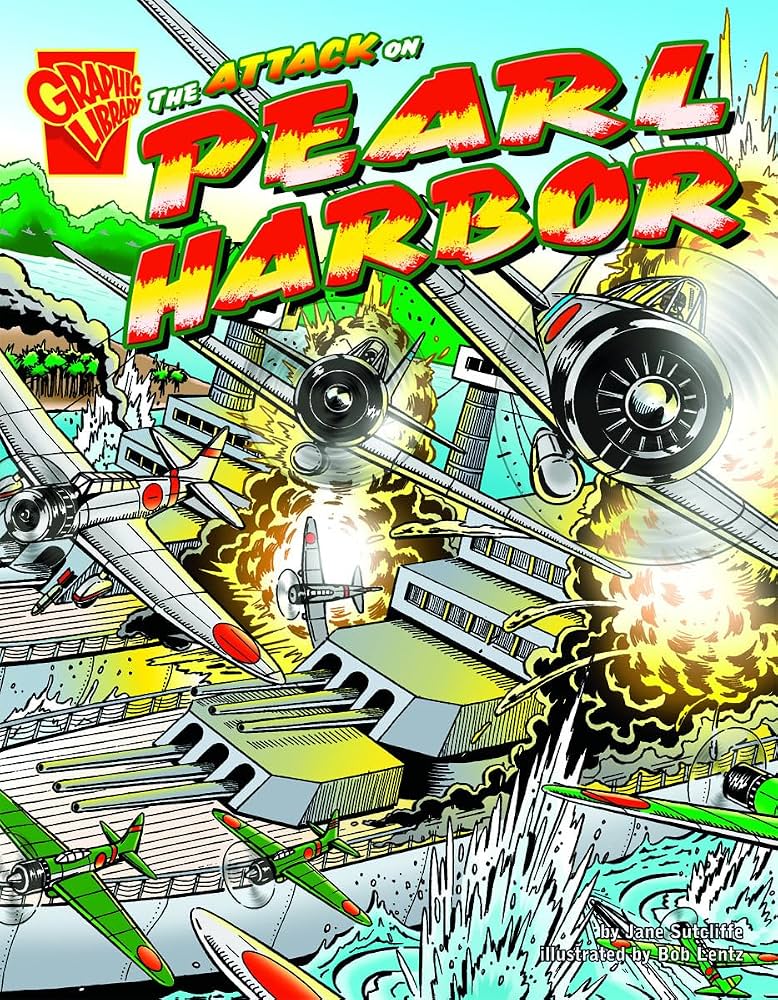
In Capstone's Graphic Library series, Attack on Pearl Harbor by Jane Sutcliff (2006) is a 32-page graphic account for ages 8 and up.

By Walter Dean Myers, We Were Heroes: The Journal of Scott Pendleton Collins (Scholastic, 2012) is the first-person story of a 17-year-old soldier in Normandy, France, in 1944, during the D-Day invasion. For ages 10-14.
World War II from the Ducksters Education site has an overview of the war, and individual photo-illustrated pages on prominent battles, events, and people.
From History.com, many illustrated topics on World War II, among them Nazi Party, Benito Mussolini, American Women in world War II, the Manhattan Project, Midway, and more.
World War II from history teacher Mr. Donn is a collection of lesson plans, activities, and information for a range of ages.

Ken Burns’s The War is a seven-part PBS series on World War II, centered around the personal stories of those who lived through it. The website also has lesson plans and activities, and a Search and Explore database of period photographs and primary source documents.
What happened when and where? See this annotated and illustrated Timeline of World War II at https://www.pbs.org/wgbh/masterpiece/specialfeatures/world-war-ii-major-events-timeline/.

One of the most famous poems of World War II is “High Flight,” written in 1941 by John Magee, a nineteen-year-old Canadian Air Force pilot. Read the poem and a brief biography of Magee – who was killed in a training accident just before the bombing of Pearl Harbor – here.

Angela Johnson’s Wind Flyers (Simon & Schuster, 2007) is a picture-book story of the Tuskegee Airmen, a band of undercelebrated World War II heroes. “Great-great-uncle was a wind flyer,” begins the young narrator. “A smooth wind flyer. A Tuskegee wind flyer…” For aged 5-9.

Joseph Bruchac’s Code Talker (Speak, 2006) is the story of young Ned Begay, a Navajo who became a World War II code talker, using his native language to confound the enemy. For ages 12 and up.
Also by Bruchac, see Chester Nez and the Unbreakable Code (Albert Whitman, 2019) for ages 7-9.
Want to learn Navajo? It’s available on Duolingo.

The 1970 movie Patton, starring George C. Scott as the controversial general, covers Patton’s career from North Africa through the invasion of Europe and the fall of the Third Reich. Rated PG.
The Roosevelts

Barbara Cooney’s Eleanor (Puffin, 1999) is a charming picture book about the childhood of Eleanor Roosevelt and how it helped shape the amazing woman she was to become. For ages 5-8.

Kathleen Krull’s A Boy Named FDR (Dragonfly, 2016) is an appealing picture-book biography concentrating on FDR’s childhood, entry into politics, and battle with polio. A summary of his achievements as president is included. For ages 5-9.

Russell Freedman’s Eleanor Roosevelt: A Life of Discovery (Clarion, 1997), a Newbery Honor book, illustrated with period photos, is an excellent biography for ages 10 and up.

Kem Knapp Sawyer’s Eleanor Roosevelt (DK, 2017), illustrated with many color and black-and-white photos, is a reader-friendly biography for ages 10 and up.

Pam Munoz Ryan’s Amelia and Eleanor Go for a Ride (Scholastic, 1999) is the picture-book story of a little-known slice of history - a night in 1933 when Eleanor Roosevelt and Amelia Earhart, still clothed in evening gowns, slipped away from a White House dinner, commandeered an airplane, and went for a ride. For ages 7-10.

Douglas Wood’s Franklin and Winston: A Christmas That Changed the World (Candlewick, 2011), beautifully illustrated with watercolor paintings by Barry Moser, is an engaging account of the momentous 1941 Christmas meeting between Franklin Delano Roosevelt and Winston Churchill that forged an essential alliance and eventually led to Allied victory in World War II. For ages 7-10.

Richard Panchyk’s Franklin Delano Roosevelt for Kids (Chicago Review Press, 2007) covers FDR’s life and times, with period photos, first-person accounts, and 21 hands-on projects and activities, among them building a model ship, starting a stamp collection, and designing a WPA-style mural. For ages 9 and up.

Ken Burns’s The Roosevelts: An Intimate History is a seven-episode mini-series from PBS, covering Theodore, Franklin, and Eleanor Roosevelt, running from 1858 to 1962. The website has a photo gallery and classroom resources and suggested activities.

Sunrise at Campobello (1960) is the story of FDR’s battle with polio, which he contracted in 1921, and its effect on his family and his political career. Not rated, but definitely in the G or PG category.

From PBS’s The Presidents series, see
FDR and
Truman. Click on each president for primary source material, images, and film clips.
The War in Europe

Louise Borden’s The Little Ships (Margaret K. McElderry, 2003) is the picture-book story of the evacuation of the trapped British army from Dunkirk in 1940, in large part by fleets of volunteers in fishing boats – the “little ships.” The story is narrated by a young girl who accompanies her father across the English Channel. For ages 7-12.

In Louise Borden’s The Greatest Skating Race (Margaret K. McElderry, 2004), it’s 1941, and in the Netherlands young Piet has been given the task of skating two neighbor children to safety, across the frozen canals and into Belgium. The trick: to look like three kids out to play. For ages 7-10.

Marie McSwigan’s Snow Treasure (Puffin, 2006) is the exciting story of young Peter Lindstrom and friends who, in Nazi-occupied Norway, managed to smuggle nine million dollars’-worth of gold out of the country to safety by hiding it on their sleds. For ages 7-11.

In Yona Zeldis McDonough’s The Bicycle Spy (Scholastic, 2020), set in France, young Marcel dreams of someday competing in the Tour de France – though his bicycle skills come into play in World War II as he smuggles secret messages along with bread from his parents’ bakery. For ages 8-12.

Illustrated with photos and cartoon drawings, Louise W. Borden’s The Journey That Saved Curious George (Houghton Mifflin Harcourt, 2010) is the story of how Hans and Margret Rey fled Paris on bicycles as the German army moved in, carrying their children’s manuscripts with them. Written in the form of a travel journal. For ages 7-12.

Alan Gratz’s Allies (Scholastic, 2019) is a gripping story of D-Day, told from the points of view of a soldier on a transport heading for the Normandy beaches, a paratrooper, a medic, and a girl who works as a spy behind enemy lines in France. For ages 9-12.

Kathryn Lasky’s Night Witches (Scholastic, 2017), through the eyes of 16-year-old Valya, is a fictionalized story of the brigade of daredevil Russian female pilots who – flying at night – stalked the German invaders. For ages 9-12.

In Ian Seraillier’s now-classic The Silver Sword (Vintage, 2012), Joseph Balicki – a schoolteacher in Nazi-occupied Warsaw – and his wife have been sent to Nazi prison camps. Their three children, Ruth, Edek, and Bronia, left on their own, must survive in war-torn Poland and struggle to find their parents. A Scholastic version has been published with the title Escape from Warsaw. For ages 9-12.

In Anne Blankman’s Blackbird Girls (Viking, 2020), set in Ukraine and Russia, the story alternates between that of Valentina Kaplan and Oksana Savchenko in the aftermath of Chernobyl and that of Valentina’s grandmother, Rifka, trying to survive in Ukraine during World War II. For ages 9-12.

Susan Hood’s gripping Lifeboat 12 (Simon & Schuster, 2019) is the story of 13-year-old Ken and the other survivors in his lifeboat after the City of Benares, the ship carrying evacuated children from England to Canada, is torpedoed. An edge-of-the-seat read for ages 9-13.
Also see Deborah Heiligman’s Torpedoed: The True Story of the World War II Sinking of “The Children’s Ship” (Henry Holt, 2019).
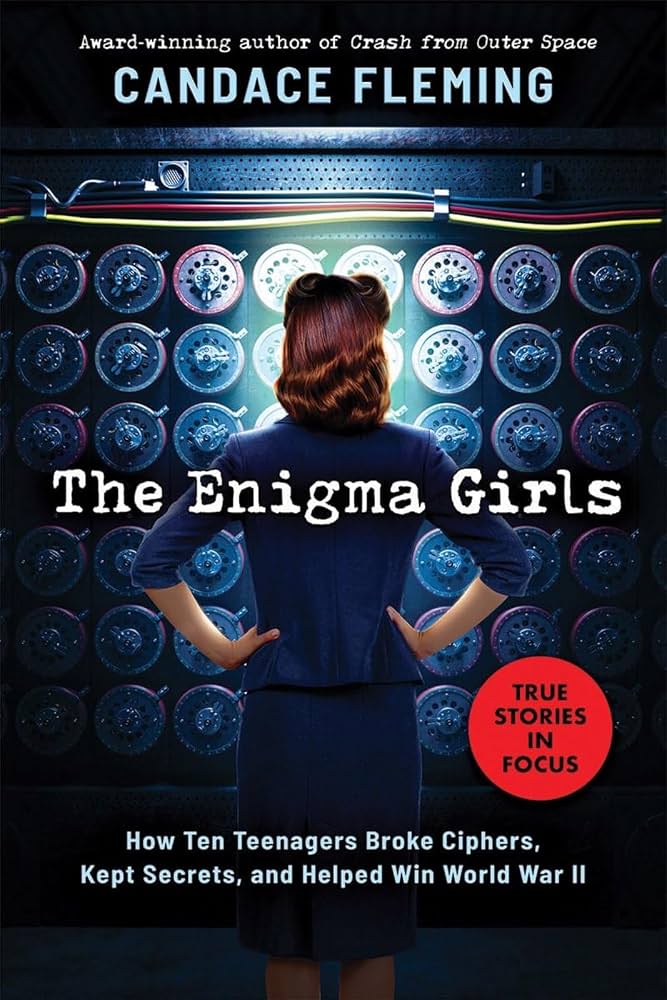
By Candace Fleming, The Enigma Girls (Scholastic Focus, 2024) is the gripping real-life story of the teenagers who worked at Bletchley Park along with a team of brilliant cryptographers and absent-minded professors, breaking ciphers – and ultimately playing a major part in winning World War II. A fascinating and thoroughly researched read for ages 9-13.
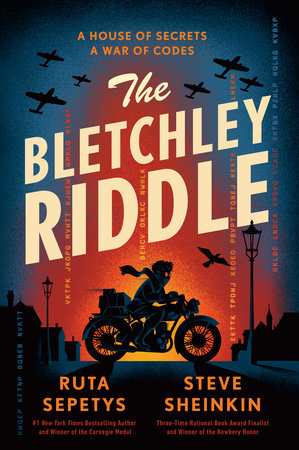
By Ruta Sepetys and Steve Sheinkin, in The Bletchley Riddle (Viking, 2025), teenage Jakob and younger sister Lizzie – both lovers of riddles and puzzles - become caught up in Britain’s top-secret codebreaking operation at Bletchley Park. Jakob works to solve German ciphers and Lizzie tracks down clues to solve the mystery of their mother’s disappearance. An exciting read for ages 10 and up.
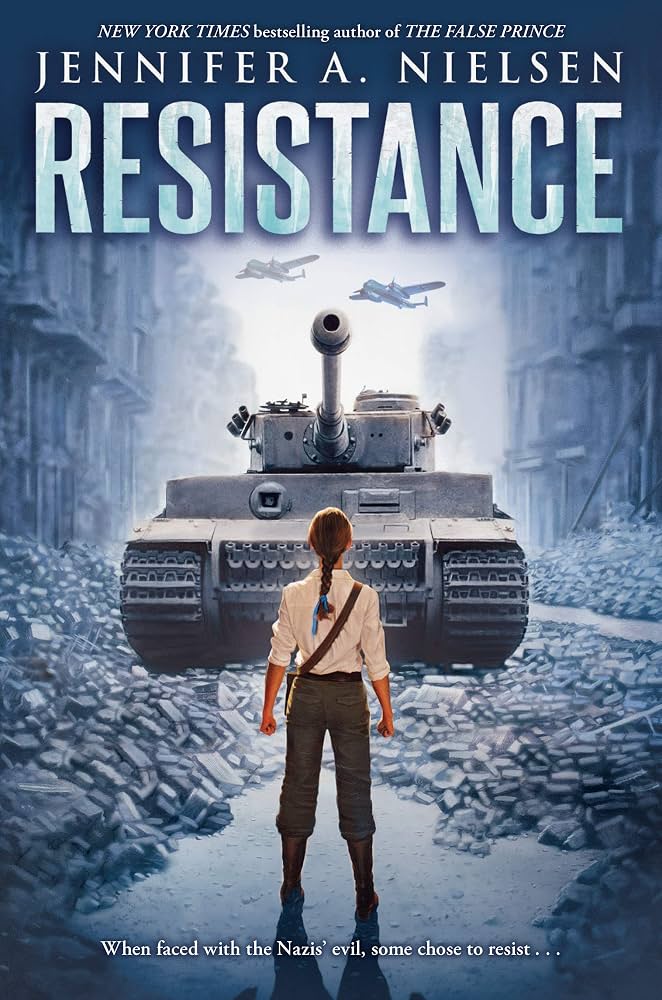
In Jennifer A. Nielsen’s Resistance (Scholastic, 2021), set in Nazi-occupied Poland, young Chaya becomes a courier, smuggling food, papers, and people between Jewish ghettos – and eventually participating in the uprising in the Warsaw Ghetto. For ages 10-13.
Also by Nielsen, see Rescue (Scholastic, 2022), set in Nazi-occupied France, where Meg’s soldier father has been taken prisoner. An injured British spy provides her with a chance to rescue him – but it will involve a dangerous journey taking German refugees into neutral Spain with the enemy in pursuit.

In Marsha Forchuk Skrypuch’s Making Bombs for Hitler (Scholastic, 2019), Lida’s Ukrainian family has been torn apart by the Nazis, and Lida and other Ukrainian children have been sent to a work camp. When they’re assigned to make bombs for the German army, Lida and her friends turn to sabotage. For ages 10-14.

In Shirley Hughes’s Hero on a Bicycle (Candlewick, 2017), set in 1944 in Nazi-occupied Italy, 13-year-old Paolo and his older sister Constanza – armed only with a bicycle – find ways to aid the Italian resistance, and to deceive the Gestapo, while hiding Allied escaped prisoners of war. An exciting read for ages 10-14.

In Alan Gratz’s Projekt 1065 (Scholastic, 2016), young Michael O’Shaughnessy and his parents live in Nazi Germany, where Michael is an upstanding member of Hitler Youth. In reality, however, all are spies for the Allies. A thriller for ages 12 and up.

Kip Wilson’s White Rose (Versify, 2019), a novel in verse, is the story of German student Sophie Scholl, whose organization – called the White Rose – distributed pamphlets opposing the Nazi regime and calling German citizens to action. Sophie and her brother were arrested for treason and executed. A story of incredible courage for ages 12 and up.

In Gavriel Savit’s Anna and the Swallow Man (Ember, 2017), set in Poland during the Second World War, seven-year-old Anna’s father has been taken to a concentration camp, leaving Anna alone. Anna then meets up with the mysterious Swallow Man – who speaks many languages, including Bird – and the two spend the years of the war hiding in the Polish forests, close to the Eastern Front. A powerful and poignant story for ages 12 and up.

In Elizabeth Wein’s gripping Code Name Verity (Little, Brown, 2013), Julie – a British spy with the code name Verity – is captured by the Gestapo behind enemy lines and does her best both to save herself and to protect the pilot who brought her there. For ages 13 and up.
Also by Wein, see Rose Under Fire (Little, Brown, 2014), in which Rose, flying an Allied fighter plane, is captured by the Nazis and sent to the Ravensbruck concentration camp.

In M.T. Anderson’s award-winning Symphony for the City of the Dead (Candlewick, 2017), it’s 1941, the German army has surrounded Leningrad, and the city is under siege – and composer Dmitri Shostakovich is writing a symphony to commemorate, encourage, and rally his fellow citizens. Illustrated with period photos. For ages 13 and up.

Marji Preus’s Shadow on the Mountain (Harry N. Abrams, 2014) is the story of 14-year-old Espen, who joins the Norwegian resistance movement after the Nazis occupy his country. He begins by delivering illegal newspapers and later graduates to full-fledged spy, dodging the Gestapo, until he's eventually forced to flee on skis across the border to Sweden. Based on real-life events. For ages 13 and up.

Ruta Sepetys’s Salt to the Sea (Penguin, 2017) is the intertwined story of four young refugees, trapped between the Germans and the advancing Russian army, and all hoping to escape on the ship Wilhelm Gustloff, which was sunk by a Soviet submarine in January 1945. Of the 10,500 people on board, at least 9000 drowned. A tragic and wonderful book that still shows the value of hope and human connection. For ages 13 and up.

By Mary Ann Shaffer and Annie Barrows, The Guernsey Literary and Potato Peel Pie Society (Dial, 2009) is an epistolary novel set just after World War II, in which London journalist Juliet begins a correspondence with the inhabitants of the island of Guernsey, all members of the Guernsey Literary and Potato Peel Pie Society. Eventually she travels to the island, meets a wide range of captivating characters, and listens to their stories about the German invasion and five-year occupation of Guernsey. Humor, sadness, gentle romance, and moments of horror – and a wonderful read for booklovers. For teens and adults.

Kurt Vonnegut’s now-classic Slaughterhouse-Five (Dial, 1999) centers around the firebombing of Dresden, which main character Billy Pilgrim experiences as a German prisoner of war. Billy, kidnapped by Tralfamadorians and held prisoner in an alien zoo, becomes unstuck in time. (Yes, really.) It’s a fascinating book and a must-read for teens and adults.

Connie Willis’s Blackout (Spectra, 2010) begins in the Oxford of 2060, when historians routinely time-travel into the past. Michael Davies is planning to head for Pearl Harbor; Merope Ward – who really wants to go to VE-Day – is in 1940 dealing with obstreperous evacuees; and Polly Churchill is preparing to go to the Blitz. Then sometime goes wrong – and the three are stranded in time for the duration of the war. Also see the sequel All Clear, which won the Nebula Award. Science fiction, with a lot of memorable and well-researched World War II history. For teens and adults.
The War in Europe - Movies

In Bedknobs and Broomsticks (1971), Charlie, Carrie, and Paul have been evacuated from war-torn London and sent to live in the country with Eglantine Price – who turns out to be an apprentice witch. Eventually the kids, Miss Price, and wizard Emelius Browne, the head of Miss Price’s witchcraft correspondence school, discover a spell that enables them to defeat a Nazi U-boat invasion. And there’s an enchanted bedknob. Rated G.

In Casablanca (1942), in the early days of World War II, cynical Rick Blaine (Humphrey Bogart) runs a nightclub in Morocco that has become a haven for refugees attempting to escape to America. A wonderful story that ends with the beginning of a beautiful friendship. A must-see. Rated PG.

In the awesome The Great Escape (1963) – based a true story - prisoners in an “escape-proof” German prisoner-of-war camp plan a massive breakout. It’s funny, tense, exciting (Steve McQueen leaping barbed wire on a motorcycle), and – in parts - painfully sad. Not rated, but not for the very young.

The Monuments Men (2014) is the story of an unlikely World War II platoon whose mission is to rescue art masterpieces from the Nazis. Rated PG-13.

In Darkest Hour (2017), it’s 1940 and Winston Churchill must decide whether to negotiate with Hitler or continue the war, which could mean the end of the British Empire. Gary Oldman plays a spectacular Churchill. Rated PG-13.

Dunkirk (2017) is the gripping story of the evacuation of many thousands of Allied soldiers, trapped on the coast of France by the German army – many saved by volunteer civilians in a motley armada of small boats. Rated PG-13.

In The King’s Speech (2010), King Edward VIII of England has abdicated, leaving the throne to his younger brother, the new King George VI (Colin Firth). The new king has a stutter, and unconventional speech therapist Lionel Logue is hired to help him overcome it – and to enable him to give the important speech that follows England’s declaration of war with Germany. It’s rated R for some bad language, which seems excessive.

Enigma (2001), set at Bletchley Park, is the story of the race to crack the German Enigma code, to which end the authorities have brought in mathematical genius Tom Jericho. Excitement, betrayal, romance, and code-breaking. It’s rated R for a sex scene and some bad language.

Band of Brothers (2001) is a ten-episode mini-series depicting the mission of Easy Company of the U.S. Army’s 101st Airborne Division in World War II Europe, from Operation Overlord through V-J Day. Not rated.
Pearl Harbor, Japan, and the Pacific Theater

Stephen Krensky’s Pearl Harbor (Simon Spotlight, 2001) in the Ready-to-Read series is a simple account of the Japanese attack on Pearl Harbor and the United States’ entry into World War II for ages 6-9.

By Lauren Tarshis, in I Survived the Bombing of Pearl Harbor, 1941 (Scholastic, 2011), eleven-year-old Danny is alone on the beach in Hawaii when the Japanese forces arrive. An exciting and catchy read for ages 7-10.
Other World War II themed books in this extensive series include I Survived the Nazi Invasion, 1944 and I Survived the Battle of D-Day, 1944.

Lois Lowry’s On the Horizon (Houghton Mifflin Harcourt, 2020) was inspired by an old home movie, in which Lowry realized that her father had not only filmed her as a toddler playing on a Hawaiian beach, but – in the distance – the USS Arizona heading for its berth at Pearl Harbor. The book is a haunting and beautiful collection of poems connecting the first and last bombings of America’s World War II, respectively at Pearl Harbor and Hiroshima. For ages 9 and up.

By Harry Mazer, A Boy at War (Simon & Schuster, 2002) is the story of Pearl Harbor from the standpoint of main character Adam, whose father is a navy lieutenant on board the USS Arizona. For ages 10-14.

In Nathan Hale’s Hazardous Tales series, Raid of No Return (Harry N. Abrams, 2017) is the story of the Doolittle Raid on Tokyo in 1942, in retaliation for Pearl Harbor. This was America’s first strike against the Japanese archipelago. In graphic novel format for ages 8-13.

Alan Gratz’s Grenade (Scholastic, 2019) is set in 1945 during the Battle of Okinawa. Thirteen-year-old Hideki has been drafted into the Blood and Iron Student Corps of the Japanese army, given a grenade, and told to use it to kill an American soldier. Ray, a young American Marine, has just landed on Okinawa for his first action of the war. Inevitably the two boys meet. A look at the brutality and moral cost of war for ages 9-12.

In Linda Sue Park’s When My Name Was Keoko (Houghton Mifflin Harcourt, 2012), set in Korea during World War II, the country is occupied by the Japanese and the Korean language and culture are forbidden. With the advent of war, Sun-hee’s family discovers that Koreans are expected to fight on the side of the hated Japanese – and her beloved uncle is a member of the Korean resistance. For ages 9-12.

In Yoko Kawashima Watkins’s So Far from the Bamboo Grove (HarperCollins, 2008), a fictionalized memoir told in the first person, Korea is in the final days of World War II, with the Koreans determined to take back their country and end the brutal Japanese occupation. Eleven-year-old Yoko and her Japanese family must flee to Japan – a country Yoko barely knows. For ages 8-12.

Herman Wouk’s The Caine Mutiny (Back Bay Books, 1992) is set on a Navy warship in the Pacific theater, where officers lead a mutiny against the autocratic and paranoid Captain Queeg. The result is a problematic court martial – was the mutiny a criminal act or a responsible move to save the ship from an unstable captain? A good discussion book for teens and adults.
Find out how The Caine Mutiny influenced the drafting of the 25th Amendment here.

In the movie version of The Caine Mutiny (1954), Humphrey Bogart plays Captain Queeg. Not rated.

Tora! Tora! Tora! (1970) is a dramatic account of the days leading up to the Pearl Harbor attack, both in Japan and in the United States, followed by the attack itself. A final scene shows Pearl Harbor in flames, with Japanese Admiral Yamamoto saying, “I fear all we have done is to awaken a sleeping giant and fill him with a terrible resolve.” Rated G.

In Empire of the Sun (1987), directed by Steven Spielberg, a privileged young boy is separated from his parents during the Japanese invasion of Shanghai and ends up in an internment camp. Rated PG.

In The Bridge on the River Kwai (1957), British prisoners of war are forced by the Japanese to build a bridge for the Burma-Siam railway. At first they plan to sabotage the bridge; then, under the leadership of the British Colonel Nicholson, the bridge becomes a monument to prisoner morale. Rated PG.

Pearl Harbor (2001) follows a pair of childhood friends, Rafe and Danny, and a Navy nurse, through the day of the Japanese attack in December, 1941. Some romance and a lot of bombs. Rated PG-13.

Midway (2019) is the story of the Battle of Midway between the American fleet and the Imperial Japanese Navy, a pivotal point in the Pacific theater, with scenes of participants on both sides. Rated PG-13.

Directed by Clint Eastwood, Flags of Our Fathers (2006) is the story of the six men who raised the American flag on the island of Iwo Jima. Rated R for bloody scenes of battle and bad language.

Also by Eastwood, Letters from Iwo Jima (2006) is the story of the battle of Iwo Jima from the perspective of the Japanese, after a modern-day crew digs up a pack of letters written by Japanese soldiers. Rated R, primarily for violent scenes of combat.
Japanese Internment

In Yoshiko Uchida’s picture book The Bracelet (Puffin, 1996), it’s 1942 and all Japanese-Americans – including seven-year-old Emi and her family – are being herded into internment camps. Before Emi leaves, her best friend Laurie gives her a bracelet to remember her by. An appendix explains the historical context and mentions the reparations eventually made to the Japanese-American internees. For ages 5-9.

In Ken Mochizuki’s award-winning picture book Baseball Saved Us (Lee & Low, 2009), a young Japanese-American boy is sent with his family to an internment camp during World War II and finds that his skill at baseball helps him cope with captivity and prejudice. For ages 6-10.

By Matt Faulkner, Gaijin: American Prisoner of War (Little, Brown, 2019) is the graphic-novel story of Koji Miyamoto, half white and half Japanese. Shunned by his American classmates, who suspect him of being an enemy spy, Koji and his mother are forced into an internment camp, where neither is the mixed-race Koji accepted by the Japanese. For ages 8-12.

By Lois Sepahban, Paper Wishes (Farrar, Straus & Giroux, 2016) is set on Bainbridge Island in 1942, after the attack on Pearl Harbor, when Manami and her Japanese-American family are sent to a prison camp in the desert. Which means leaving their dog, Yujin, behind. Guilt-ridden Manami loses her voice in the camp, but sends written paper messages on the wind, hoping they will help Yujin find the way home. For ages 9-12.

By Yoshiko Uchida, Journey to Topaz (Heyday, 2015), based on Uchida’s own childhood experience, is the story of eleven-year-old Yuki and her family’s life in a bleak World War II prison camp. A tragic and heartfelt story of a shameful event in American history. For ages 9 and up.

Beverly Patt’s Best Friends Forever: A World War II Scrapbook (Two Lions, 2015) is a scrapbook started by 14-year-old German-American Luise Kessler, when her best friend, Dottie Masuoka, is sent to a Japanese internment camp. The collage style scrapbook includes both events in Louise’s life and Dottie’s letters and drawings from the internment camp. For ages 9-12.
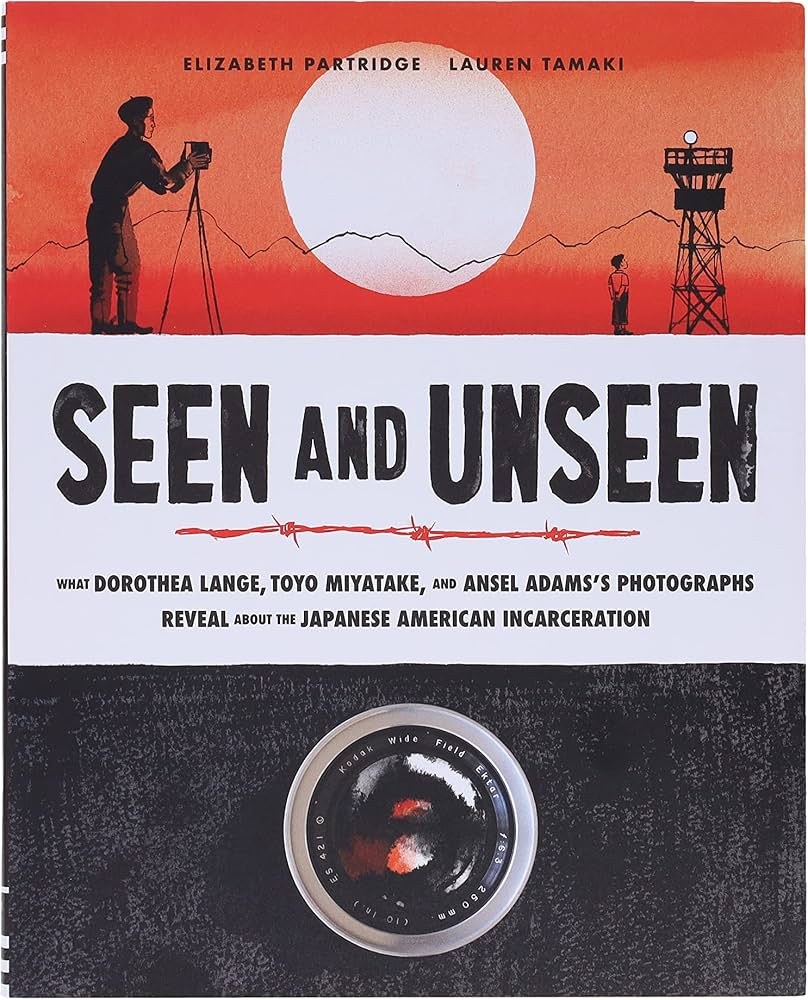
By Elizabeth Partridge, Seen and Unseen (Chronicle Books, 2022) is the creatively designed account of how three very different photographers portrayed the Japanese incarceration at Manzanar: Dorothea Lange, who opposed the policy of Japanese internment; Toyo Miyatake, a prisoner, who recorded life around him with a forbidden homemade camera; and Ansel Adams, hired by the camp director to take curated pictures of Manzanar. Included are photos, pictures of artifacts, quotations, and first-person accounts. For ages 10 and up.

In Cynthia Kadohata’s Weedflower (Atheneum, 2009), 12-year-old Sumiko and family have been forced to sell their California flower farm and relocated to a makeshift internment camp on a Native American reservation in the Arizona desert. Sumiko eventually finds hope by creating a garden and through her friendship with a young Mojave boy. Readers will find parallels between the injustice of the treatment of the World War II Japanese-Americans and that of the Native Americans. For ages 11 and up.

Jeanne Wakatsuki Houston’s Farewell to Manzanar (Houghton Mifflin Harcourt, 2017) is a memoir of life in a Japanese internment camp – where the author, then aged seven, was sent with her family in 1942. For ages 12 and up.

In Graham Salisbury’s Under the Blood-Red Sun (Ember, 2014), Pearl Harbor has been attacked by the Japanese and Tomi’s Japanese-born family has been arrested. The first of a series about Japanese-Americans in World War II for ages 12 and up.
There are movie versions of both Farewell to Manzanar (1976) and
Under the Blood-Red Sun (2014). Not rated.

Albert Marrin’s Uprooted (Knopf, 2016), illustrated with period prints and photographs, is a nonfiction history of the experience of Japanese-Americans in World War II, introduced in the context of the history of Japan and its relationship with the West. An interesting read for ages 12 and up.
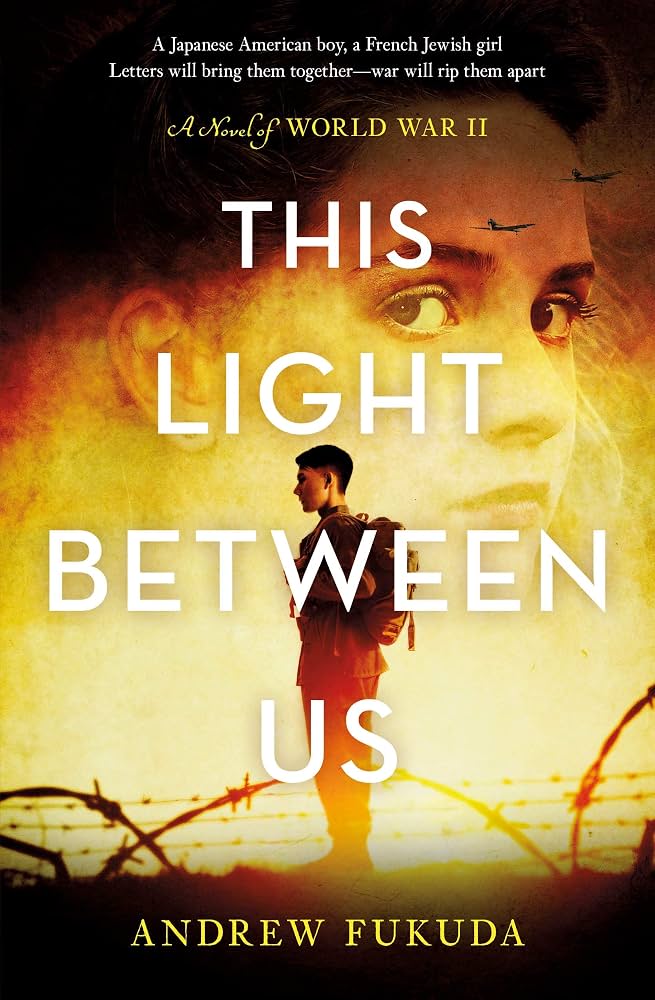
By Andrew Fukuda, The Light Between Us (Tor Teen, 2021), begins in 1935 when ten-year-old Alex from Bainbridge Island, Washington, is unhappy when forced to become penpals with Charlie Levy (a girl) fromParis, France – but their letters provide solace when World War II breaks out and Alex is interned at Manzanar and Charlie, who is Jewish, is sent to Auschwitz. For ages 13 and up.
See History.com for information on Executive Order 9066 and the Japanese interment, along with a gallery of images.
On the Home Front

Lily of Helen L. Wilbur’s Lily’s Victory Garden (Sleeping Bear Press, 2010) gets permission to plant a victory garden in the yard of the Bishops’ house, the largest house in town – and by doing so eventually brings comfort to Mrs. Bishop, grieving for her son who has been killed in the war. For ages 6-9.

Michael Foreman’s War Boy: A Wartime Childhood (Pavilion, 2006) is a beautifully done picture-book memoir of Foreman’s childhood in a small town on the coast of England during World War II. For ages 7-9.

By Marcia Williams, My Secret War Diary by Flossie Albright (Candlewick, 2008) is the World War II diary of a young English girl, beginning in 1939, when Flossie is nine, and proceeding through 1945. It’s a beautifully designed collage-style book, filled with photos, postcards, letters in envelopes, and sketches. For ages 8-12.
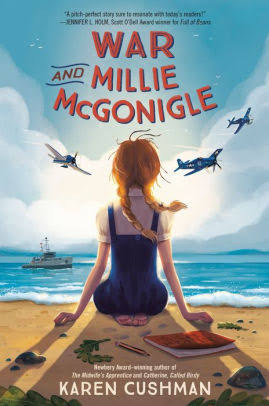
Karen Cushman’s War and Millie McGonigle (Yearling, 2022), set in California during World War II, portrays life on the homefront as seen through the eyes of 12-year-old Millie – a time of war worries, rationing, and discrimination against Japanese-Americans along with all the ups and downs of growing up and family life. For ages 8-12.

In Michelle Magorian’s Good Night, Mister Tom (HarperCollins, 1986), abused young Willie Beech is evacuated from London to the country, to stay with gruff Mr. Tom. When Willie’s mother demands him back again, Mr. Tom travels to London to save the boy he has come to love. For ages 9 and up.
The movie version, Good Night, Mister Tom (1998), is pretty much as good as the book. And I hardly ever say that.

In Kimberly Brubaker Bradley’s The War that Saved My Life (Dial, 2015), ten-year-old Ada has never been allowed to leave their one-room apartment because her abusive mother is ashamed of her crippled foot. When her younger brother Jamie is evacuated from London during World War II, Ada manages to escape and go with him. Both children end up in the care of Susan Smith, who initially doesn’t want them – but gradually, as Ada learns to read and ride, all begin to trust and love. Also see the sequel, The War I Finally Won. For ages 9-12.

In Carol Goodman’s The Metropolitans (Puffin, 2018), four 13-year-olds meet at the Metropolitan Museum of Art shortly after the bombing of Pearl Harbor and are recruited by an eccentric curator to track down pages of the Kelmsbury Manuscript, an ancient book of Arthurian legends, said to hold the key to preventing a second attack on American soil. As the four pursue their quest, they find themselves more and more absorbed by the personas of Arthur, Guinevere, Morgan le Fay, and Lancelot. For ages 9-12.

Penny Coleman’s award-winning Rosie the Riveter (Yearling, 1998) - subtitled “Women Working on the Home Front in World War II” – is packed with war history, details of life on the home front, and first-person accounts, spanning the period from the beginning of the war to the aftermath of peace. An engaging text illustrated with terrific period photographs for ages 10 and up.

In Bette Greene’s Summer of My German Soldier (Puffin, 2006), 12-year-old Patty, who is Jewish, forms a bond with a German prisoner in a camp near her hometown in Arkansas. Patty is abused and criticized by her family; Anton helps her see that she is worthwhile. Issues of prejudice and injustice; a good discussion book for ages 10 and up.

In Mary Downing Hahn’s Stepping on the Cracks (Houghton Mifflin Harcourt, 2009), it’s 1944 and both Margaret and Elizabeth have brothers who are fighting overseas. Then they discover that their arch-enemy, bully Gordy, is hiding his older brother, a deserter, in the nearby woods. There's more to this than they realize. For ages 10-12.

In Eve Bunting’s Spying on Miss Muller (Clarion, 1995), girls at an Irish boarding school become convinced that their German teacher, Miss Muller, is a spy, sending coded messages to the Nazis. For ages 10 and up.

In janet Taylor Lisle’s The Art of Keeping Cool (Atheneum, 2002), Robert and his mother and sister have gone to live with his grandparents on the coast of Rhode Island, while Robert’s father is fighting in Europe. There the town turns against a German artist, whom they accuse of being a spy. For ages 12 and up.
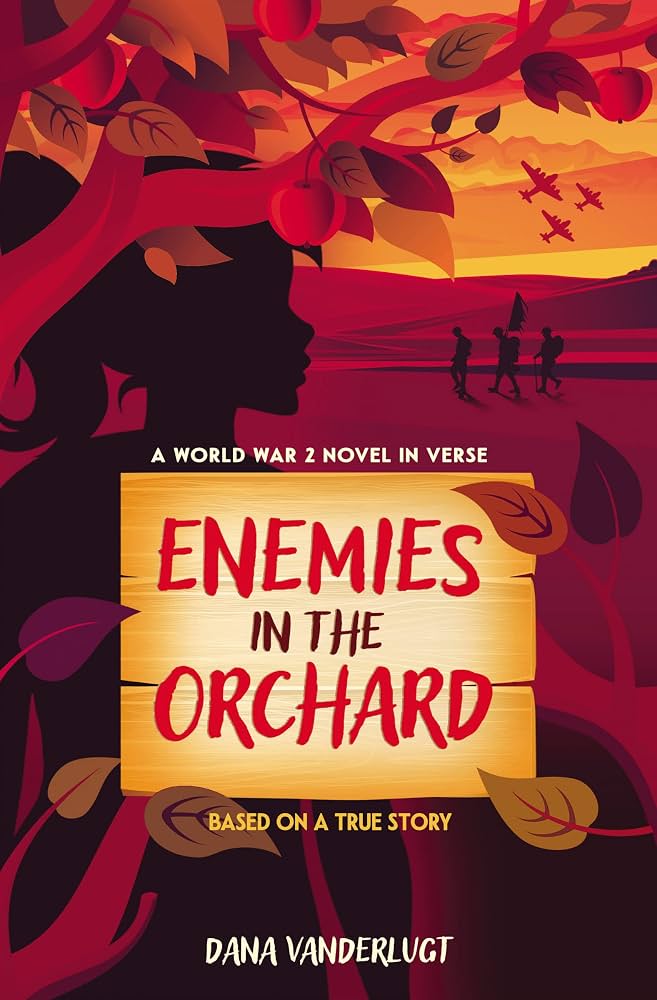
In Dana VanderLugt’s novel in verse Enemies in the Orchard (Zonderkidz, 2025), it’s 1944 and Claire is worried for her brother Danny, away at war. At the same time, she finds herself becoming friends with Karl, a German POW sent to help with the apple harvest on Claire’s family farm. For ages 12 and up.
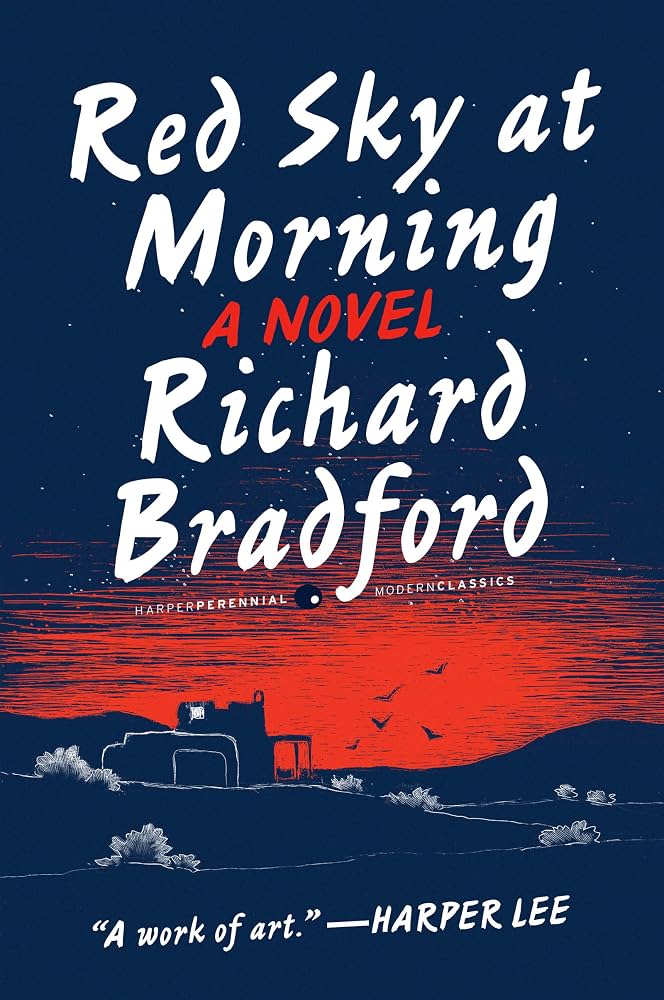
In Richard Bradford’s Red Sky at Morning (HarperPerennial, 1999), it’s 1944 and shipbuilder Frank Arnold has joined the Navy – and for the duration of the war, has moved his wife and teenage son, Josh, to their summer home in the little Hispanic town of Sagrado in the mountains of New Mexico. A funny, poignant, and wonderful coming-of-age story with a great cast of characters. For ages 13 and up.

Set in Brooklyn in the 1940s, Steve Kluger’s Last Days of Summer (William Morrow, 2008) is funny, sad, uplifting, and a gem. The protagonist is twelve-year-old Joey Margolis, a brilliant loudmouth Jewish kid who is a victim of neighborhood bullies – in part because he has (a lie) boasted that he is a friend of Charlie Banks, a player for the New York Giants. Eventually, by dint of sheer persistence, he does become friends with Charlie, and it’s a wonderful, funny, and ultimately bittersweet relationship, when Charlie goes to war. The book is told entirely in letters, interviews, memos, newspaper clippings, and Top Secret messages between Joey and his best friend Craig Nakamura (a.k.a. The Green Hornet) who lives in the apartment downstairs. Highly recommended for teens and adults.

In Jennifer Ryan’s The Chilbury Ladies’ Choir (Ballantine, 2017), the men of Chilbury village have left for war, leaving the girls and women to cope on their own. The story is told in letters and journal entries through the various voices of 13-year-old Kitty, a hopeful singer with a crush on the local aristocrat’s son; her older sister, Vanessa; 10-year-old Sophie, a refugee; Mrs. Tilling, who finds that she’s far braver than she believed herself to be; and the notably awful midwife Edwina Paltry. War, solidarity, and hope. For teens and adults.

Hope and Glory (1987) is the story of a nine-year-old boy growing up in the London blitz. For Billy, the war is as much exciting as terrifying, and even a plus when Hitler blows up his school. Rated PG-13.

Woody Allen’s Radio Days (1987) is a story of the life of a working class family in Rockaway Beach, New York in 1942 during the golden days of radio, filled with wonderful characters, period music, and the looming threat of World War II. Rated PG.

Mrs. Miniver (1942) is the story of a middle-class English family on the home front in a world at war, beginning in 1939. Oldest son Vin joins the RAF; the father, Clem, takes his boat across the Channel to help evacuate soldiers from Dunkirk; a wounded German pilot is found hiding in their garden. During bombing raids, they hid in an Anderson shelter and read Alice in Wonderland. Not rated.

In A League of Their Own (1992), set during World War II, with the men away at war, women not only take over their vacant jobs – and even form the first female professional baseball team. Rated PG.
Animals and the War

Shirley Raye Redmond’s Pigeon Hero (Simon Spotlight, 2003) in the Ready-to-Read series is the story of a carrier pigeon named G.I. Joe who saved an Italian town from attack during World War II. (He ended up with a medal for bravery.) For ages 5-7.

In Michael Morpurgo’s The Amazing Story of Adolphus Tips (HarperCollins, 2016), Lily’s family and entire town have been told to move, lock, stock, and barrel, leaving the area free for the Allied forces to practice for the D-Day landing. You can’t, however, give orders to a cat. For ages 9 and up.

In Robert Westall’s Blitzcat (Macmillan, 2015), a black cat named Lord Gort travels through the landscape of World War II Britain, looking for her owner who is in the RAF, and encountering many people along the way. Eventually she's adopted by a rear gunner, flies missions over France, and ends up bailing out over enemy territory. For ages 10 and up.

In Michael Morpurgo’s An Elephant in the Garden (Square Fish, 2013), Lizzie and Karl’s mother, a zookeeper in Dresden, Germany, rescues an elephant who was supposed to be destroyed before the city was hit by bombs. Instead, when the city is bombed, they flee with the elephant – with the help of Peter, a downed Canadian navigator. For ages 10-14.

Robin Hutton’s War Animals (Regnery History, 2018) is the story of the gallant dogs, birds, horses, mules – and even a cat – who contributed to the World War II war effort. For teens and adults.

Mark Felton’s Ghost Riders (DaCapo Press, 2018) is the story of the end-of-the-war collaboration between American and German soldiers to save the fabulous Lipizzaner horses of Vienna’s Spanish Riding School from the Russian army. For teens and adults.
For another version of the story, see The Perfect Horse by Elizabeth Letts (Ballantine, 2017).
From Military History Now, see Operation Cowboy, an account of how American GIs and German soldiers joined forces to save the Lipizzaners. Illustrated with photos.

Miracle of the White Stallions (1963) is the Disney version of the Lipizzaner story. General Patton is willing to help save the famous horses from the threat of the approaching Russian army – but he wants to see them perform first. Not rated, but clearly family-friendly.

In Valiant (2005), a little pigeon enlists in the Royal Homing Pigeon Service, determined to do his bit, carrying encoded messages across the Channel in the teeth of General Von Talon’s Falcon Brigade. Rated G.
The Atom Bomb and Hiroshima

By Jonah Winter and Jeanette Winter, The Secret Project (Beach Lane Books, 2017) is a picture-book story of the Manhattan Project for ages 6 and up.

In Ellen Klages’s The Green Glass Sea (Puffin, 2008), it’s 1943 and 11-year-old Dewey Kerrigan is living in the top-secret community of Los Alamos where her mathematician father is working on “the gadget” – a.k.a. the atomic bomb. For ages 8-12.

Steve Sheinkin’s Bomb (Square Fish, 2018) is the fascinating and true story of the race to build (and/or steal) the world’s most dangerous weapon. An award-winning read for ages 10-14.

By Jonathan Fetter-Vorm, Trinity (Hill and Wang, 2013) is a graphic history of the development of the atomic bomb, from the discovery of radioactivity in 19th-century France through Robert Oppenheimer and the Manhattan Project, and Harry Truman’s decision to drop the bomb on Hiroshima. Serious nonfiction through graphic storytelling. For ages 12 and up.

By Richard Rhodes, The Making of the Atomic Bomb (Simon & Schuster, 1986) is generally described as the definitive history of nuclear weapons and the Manhattan Project. It’s over 800 pages long. For teens and adults.

Eleanor Coerr’s Sadako and the Thousand Paper Cranes (Puffin, 2004) is the story of a young Japanese girl who develops leukemia after exposure to radiation in the wake of the Hiroshima bomb. According to legend, anyone who folds a thousand paper cranes can have a wish – so Sadako begins making cranes. She doesn’t survive – be prepared – but hers is a wonderful and far-reaching story of courage. For ages 8-12.

Also see Ishii Takayuki’s One Thousand Paper Cranes (Laurel Leaf, 2001) which begins with the bombing of Hiroshima and ends with the building of the Children’s Peace Statue in honor of Sadako and other children who died in the bombing and its aftermath. For ages 12 and up.

John Hersey’s Hiroshima, originally published in the New Yorker magazine in 1946 and rightfully described as a journalistic masterpiece, is the story of the Hiroshima bombing, as experienced by six people who were there. A short powerful read, highly recommended for teens and adults.

Fat Man and Little Boy (1989) is a dramatic and fascinating account of the Manhattan Project and the making of the atomic bomb, with an emphasis on the sometimes rocky relationship between the scientists and the military hierarchy. Rated PG-13.


The Heroes of Telemark (1965) is a thrilling dramatization of the sabotage of the Rjukan heavy water plant, with Richard Harris as a Norwegian resistance fighter and Kirk Douglas as a physicist. Some spectacular skiing. Not rated, but probably PG.