
The Periodic Table
In this collection
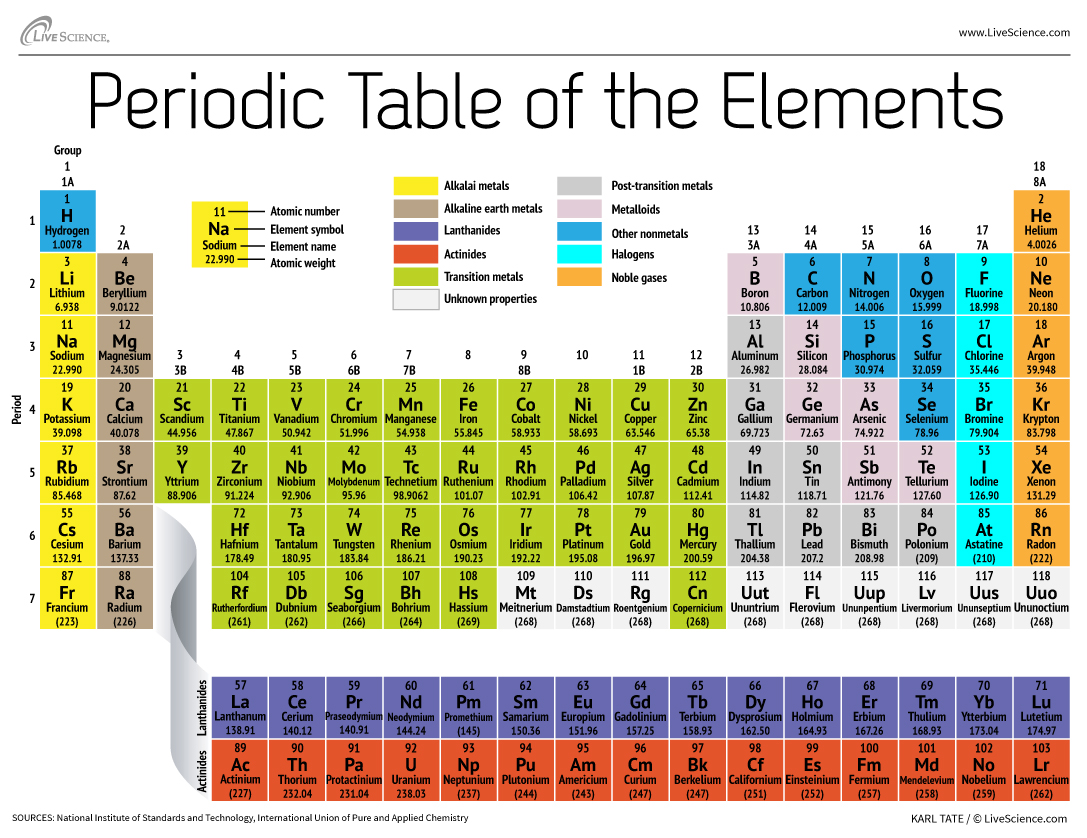
"The periodic table," begins Theodore Gray's wonderful book The Elements, "is the universal catalog of everything you can drop on your foot."
It's also been called "nature's Rosetta Stone" and "the most recognizable icon in science" It's also cool.
See below for books, games, projects, the world's best chemistry song, and the Periodic Table of Comic Books.
The Basics

By E.M. Robinson, Amber’s Atoms (Design Friendly Press, 2016) is an introduction to the first ten elements of the Periodic Table. With a puppy. For ages 6-9.

By Simon Basher and Adrian Dingle, The Complete Periodic Table: All the Elements with Style! (Kingfisher, 2015) is a clever tour of the elements in 128 creatively illustrated pages. Each, in the first person, tells a bit about itself. ("COBALT's the name: Mysterious and attractive, I am the gremlin of the underworld.") For ages 9 and up.

Dan Green’s 100+-page The Elements (Scholastic, 2012) is a real eye-catcher, filled with information, startling factoids (find out how many atoms are in the period at the end of a sentence), fantastic color photographs, and great graphics. And there’s more: the book comes with a code that can be used to download a companion digital book. For ages 10 and up.

Adrian Dingle’s How to Make a Universe with 92 Ingredients (Owlkids, 2013) is a guide to the Periodic Table and the elements, with many examples of how these appear in daily life, in human beings, ocean water, fast food, fireworks, and computers. For ages 10-14.

Theodore Gray's The Elements (Black Dog & Leventhal, 2009) is a spectacularly illustrated "Visual Exploration of Every Known Atom in the Universe." A gem of a book for all ages.
See Theodore Gray's spectacular Periodic Table website. (Click on an element for more images and information.)

In the Very Short Introduction series from Oxford University Press, Philip Ball’s The Elements (2004) and Eric Scerri’s The Periodic Table (2012) are short (150-200 pages long) as well as historical, scientific, reader-friendly, and entertaining. For teenagers and adults.

Sam Kean’s The Disappearing Spoon (Back Bay Books, 2011) is a fascinating account of the elements of the Periodic Table and the chemists who discovered and studied them, crammed with addictive anecdotes. (The disappearing spoon is made of gallium which looks like aluminum but melts at body temperature; gallium spoons at tea parties disappear when dunked in tea.) For teenagers and adults.
Also see the Young Readers edition of the book (2018), for ages 9 and up.

By Hugh Aldersey-Williams, Periodic Tales (Ecco, 2012) – subtitled “A Cultural History of the Elements from Arsenic to Zinc” – is a chatty and interesting account. On the topic of gold, for example, the author discusses a solid-gold statue of model Kate Moss, King Croesus’s gold coins, the search for El Dorado, gold rushes, and attempts to extract gold from seawater. For teenagers and adults.

By John Emsley, Nature’s Building Blocks: An A-Z Guide to the Elements (Oxford University Press, 2011) is not only a superb resource book, but a delightful read. For each element, covered in alphabetical order, there are sections on its aspects as a Human Element (what does it do in the human body?), Medical Element, Food Element, Historical Element, Element of War, Economic Element, Environmental Element, and Element of Surprise. Thoroughly fascinating, all 500+ pages of it.

From PBS’s NOVA, Hunting the Elements is a two-hour special on the elements, rare, common, deadly, and weird. Click on Education and Outreach Resources at the site for a printable periodic table, video clips, interactive activities, and lesson plans to accompany the program.
The Periodic Table, says Discover magazine, is a giant cheat sheet. Find out why and more at 10 Things You Didn’t Know About the Periodic Table.
Online Periodic Tables (and a Great Song)

Theodore Gray, co-founder of Wolfram Research, Inc. (the people who brought us Mathematica) is famous for having built a Periodic Table. By which I mean a Periodic table: it’s wooden, it’s table-sized, it has legs, and it contains actual samples of as many elements as Gray could manage to collect. His website, Theodore Gray’s Periodic Table, is illustrated with gorgeous photographs of the elements and their discoverers. Click on an element for a long photo-illustrated list of its uses with interesting explanations. (Click on the element boron, for example, and you’ll find that silly putty contains 4% boric acid, which is crucially important for bounce.) Terrific.

At The Periodic Table of Videos from Britain’s University of Nottingham, click on an element – any element – of the Periodic Table for a short, clever, informative (and often hilarious) video, with explanations and demonstrations. Watchers learn about hydrogen while watching the detonation of a hydrogen-filled balloon; about oxygen – which, in liquid form, is blue – while explosively torching cotton wool; and about roentgenium with a quick tour of a linear accelerator. These chemists are obviously having a great time, and it’s contagious.
From Annenberg Learner, The Periodic Table is an interactive overview of the Table, beginning with the structure of the atom and ending with a Test Your Skills quiz. See
https://www.learner.org/wp-content/interactive/periodic/index.html.
From How Stuff Works, also see How the Periodic Table Works.
At Scientific American’s Interactive Periodic Table, click on an element for an interesting fun fact. (Fluorine, the “tiger of chemistry,” is found in Teflon. Beryllium puts the green in emeralds.) See https://static.scientificamerican.com/sciam/assets/media/multimedia/periodic_table/periodic.html.
From the Science History Institute, see The History and Future of the Rare Earth Elements at https://www.sciencehistory.org/education/classroom-activities/role-playing-games/case-of-rare-earth-elements/history-future/.

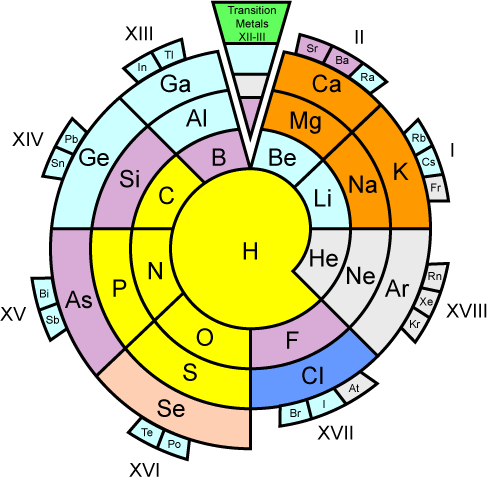
Mendeleev isn't the only person to have created a periodic table of elements. Check out the tower, the spiral, and the curled ribbon at https://www.sciencealert.com/think-periodic-tables-all-look-the-same-think-again.
The K12 Periodic Table of Elements is an iPhone, iPad, or iPod app.

Tom Lehrer’s The Elements is the best chemistry song ever. Trust me.
NeoK12’s Periodic Table is a collection of short educational videos on the Periodic Table and the elements.
Not Just Your Ordinary Periodic Table

At the Periodic Table of Comic Books, click on an element for a list of comic book pages featuring that element. (Vintage pages that are a bit behind the times include editorial comment to bring them up to date.)
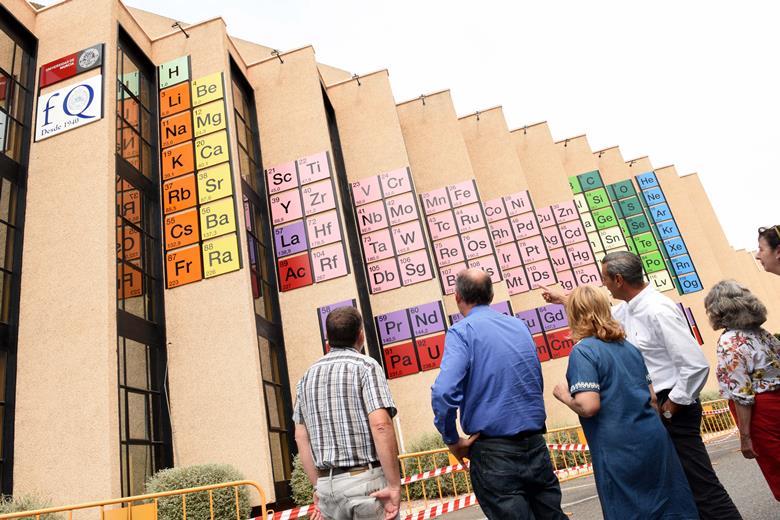
From Chemistry World, visit Ten periodic tables you really should know about at https://www.chemistryworld.com/news/ten-periodic-tables-you-really-should-know-about-/3010359.article. Included are the world's largest and smallest, the oldest known periodic table poster, and the world's most expensive periodic table.
For Tolkien fans, check out the Periodic Table of Middle-Earth.
What didn't make the cut? See The Periodic Table of Rejected Element Names.
Or check out a Periodic Table in cupcakes.
See Sam Kean's Exotic Periodic Tables at https://samkean.com/extras/dp-exotic-periodic-tables.html.
Games and Activities

By Theodore Gray, the 
The
From the American Chemical Society, see these periodic table videos and activities for ages 15 and up at https://www.acs.org/education/whatischemistry/periodictable/educational-resources-for-ages-15-18.html.
With Connecting Color Tiles (ETA), kids can build their own Periodic Tables.
From Funbrain, try the Periodic Table Game with Proton Don, a mouse in a top hat. Players can take a tutorial and then play the game, which involves identifying chemical symbols and naming elements. At three levels, easy, medium, and hard.
Chemistry Games is a collection of eight games at increasing levels of difficulty on the elements, their chemical symbols, and their properties.
From Math = Love, see this collection of periodic table activities, quizzes, and puzzles at https://mathequalslove.net/periodic-table-activities/.
Try a game of Periodic Table Battleship. The site includes instructions for making your own.
And a Few Extras

How about a

Or a Periodic Table placemat? (Learn at lunch.)

Try