
Chemistry
In this collection
The road to the laboratory is paved with fizz, slime, messy purple stuff, bad smells, and goo. “Do-it-yourself chemistry has always been the most potent recruiting tool science has to offer,” states an article in Wired magazine. Right on.
All About Chemistry

Jennifer Boothroyd’s What Is a Solid? (Lerner Classroom, 2007) is a photo-illustrated explanation for beginners, with simple experiments. Companion books are What Is a Liquid? and What Is a Gas? Basic definitions of crucial terms like solution and evaporation for ages 4-7.

Kathleen Weidner Zoehfeld’s What Is the World Made of? All About Solids, Liquids, and Gases (HarperCollins, 1998) in the Let’s-Read-and-Find-Out Science series begins “Have you ever seen anyone walk through a wall? Did you ever drink a glass of blocks?” A friendly explanation of the three states of matter with a short appended list of activities. For ages 4-8.

In Eric Braun’s Joe-Joe the Wizard Brews Up Solids, Liquids, and Gases (Picture Window Books, 2012), Joe-Joe, a student at Ms. Tickle’s Academy of Magic, is doing his best to change his homework into chocolate. Knowledgeable Ms. Tickle steps in to explain the three states of matter and how they change from one to another. With zany illustrations by Robin Boyden. For ages 5-8.
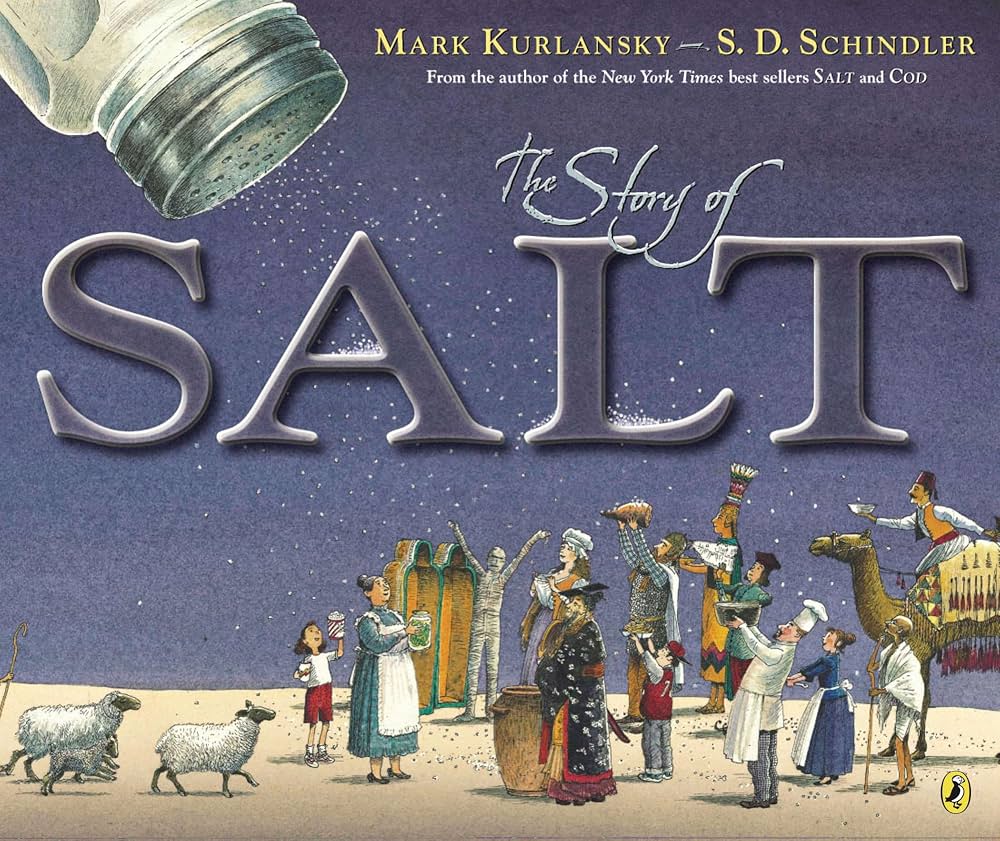
Mark Kurlansky’s The Story of Salt (Puffin, 2014) - the kid’s edition of his adult book, Salt – is an illustrated mix of science, history, and human interest. Readers learn about salt in the ancient world, salt in the human body, ways of making salt, Gandhi’s famous Salt March, and much more. For ages 5-9.
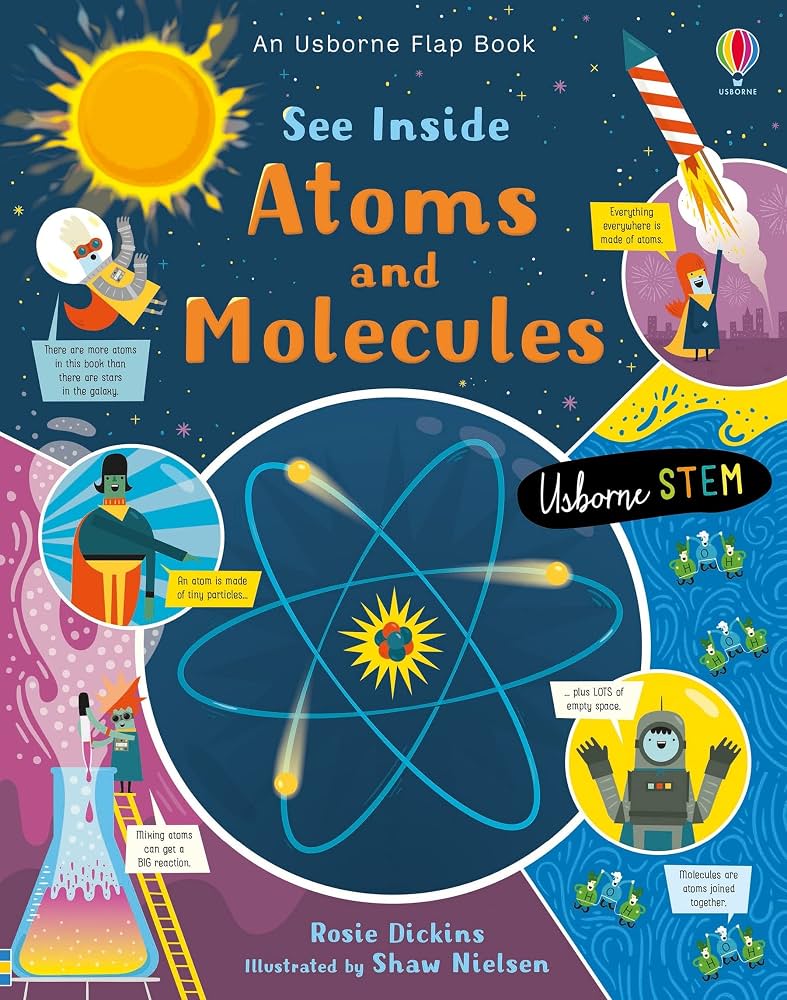
By Rosie Dickins, See Inside Atoms and Molecules (Usborne, 2020) is filled with interesting and creatively presented information for just-beginning chemists, with clever illustrations and interactive flaps. For ages 6-9.

British scientist Michael Faraday was famed for his Christmas lectures for children – most famously for “The Chemical History of a Candle,” which explained just how a candle burned. Darcy Pattison’s Burn (Mims House, 2016) is a picture-book version of Faraday’s lecture for ages 6-9.

By E.M. Robinson, Amber’s Atoms (Design Friendly Press, 2016) is an introduction to the first ten elements of the Periodic Table. With a puppy. For ages 6-9.

In Michael Elsohn Ross’s What’s the Matter in Mr. Whiskers’ Room? (Candlewick, 2007), Mr. Whiskers – the male counterpart to the Magic School Bus’s Ms. Frizzle – encourages his kids to explore matter through hands-on experiments. The kids make gloop and oobleck (recipes included), melt ice, weigh rocks, and make mud, all the while learning crucial facts about matter. For ages 5-10.
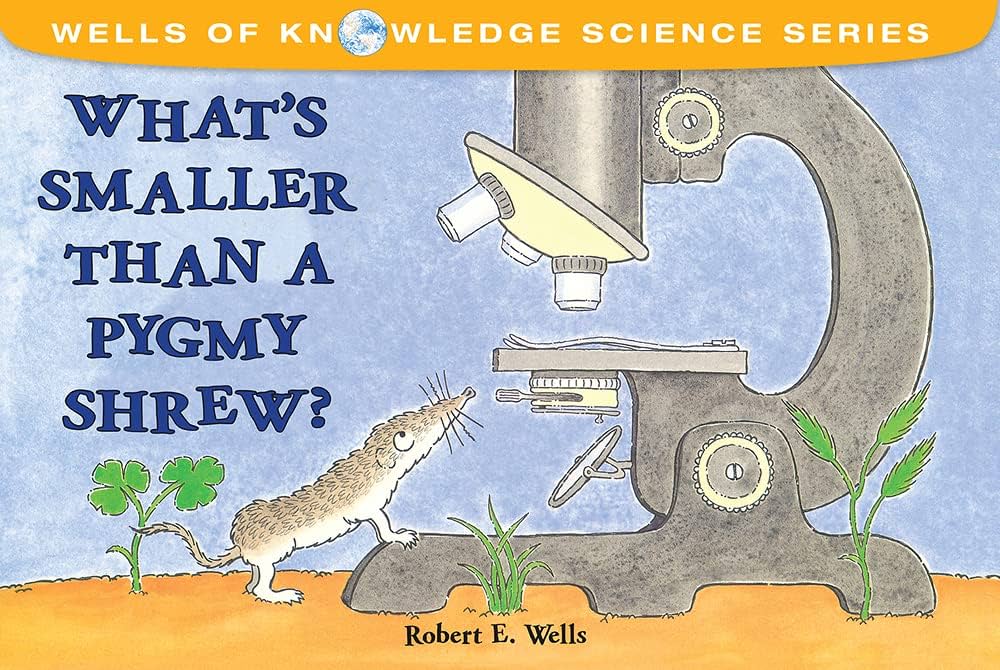
By Robert E. Wells, What’s Smaller Than a Pygmy Shrew? (Albert Whitman, 1995) traces the small, from pgymy shrew to ladybug to protozoa, bacteria, molecules, atoms, and subatomic particles. For ages 7-10.

The Max Axiom, Super Scientist series (Capstone) is a collection of graphic novels starring Max Axiom, who wears a flowing lab coat and a pair of really remarkable glasses that act as both X-ray machine and microscope. Check out The Solid Truth about States of Matter with Max Axiom and The Dynamic World of Chemical Reactions with Max Axiom. For ages 7-10.

Ann Newmark’s Chemistry (Dorling Kindersley, 2005) in the Eyewitness series is a gorgeously illustrated overview in which each topic is covered in an intriguing double-page spread. Topics include, for example, Chemistry in the Ancient World, The Elements, Investigating Compounds, The Periodic Table, Chemical Reactions, Acids and Bases, Forming Salts, The Chemistry of Life, and The First Plastics. A lot of the information is conveyed in creative picture captions. For ages 8-12.

By Mike Barfield, The Element in the Room (Laurence King Publishing, 2018) is a guide to the atomic ingredients that make up everything around us, illustrated with catchy colorful graphics and appealing “Atomic Comics.” It’s aimed at younger readers – the recommended age is 7-11 – but the complex science is probably a little much for a seven-year-old. Try 9-13.

Amy M. O’Quinn’s Marie Curie for Kids (Chicago Review Press, 2016) covers Curie’s life and scientific discoveries, with period photos, sidebars, and 21 hands-on activities. For ages 9 and up.

Kate Moore’s The Radium Girls (Sourcebooks Explore, 2020), the Young Readers edition of the adult book, is the fascinating – but scary – story of the young girls who worked painting radioactive watch dials. Then all began to develop a mysterious illness. For ages 8-12.

For real chemistry with a sense of humor, see Simon Basher and Dan Green’s 128-page Chemistry: Getting a Big Reaction (Kingfisher, 2010). The book is illustrated with great little cartoon characters and information is delivered in the first-person. In the “Basic States” chapter, for example, Liquid – a blue blobby character in a beret and sunglasses – says “Nothing much bothers me, man. Like an old-school beatnik, I’m easygoing and just go with the flow.” Memorable, clever, and thorough for ages 9-14.

Chemist Simon Quellen Field and teenager Alexa Coelho are the authors of Why Is Milk White? & 200 Other Curious Chemistry Questions (Chicago Review Press, 2012), a fascinating compilation of good questions (Alexa) and chemistry-savvy answers (Simon). Questions are grouped into ten general categories, among them People and Animals, Plants, Household Chemistry, Things That Catch Fire or Go Bang,Things That Stink, and Color. Among the questions: “How does superglue work?” “How do we make different colored fireworks?” “Why do skunks smell bad?” “Why is water clear?” “What is the strongest kind of acid?” and “Can you really change lead into gold?” Included are a handful of better-than-ordinary experiments to try at home, among them “Smoking Hands” (yes, really), “Making Oxygen,” “Butane Balloon,” and “Hollow Pennies.” These are the sorts of science questions real kids ask. For ages 9 and up.
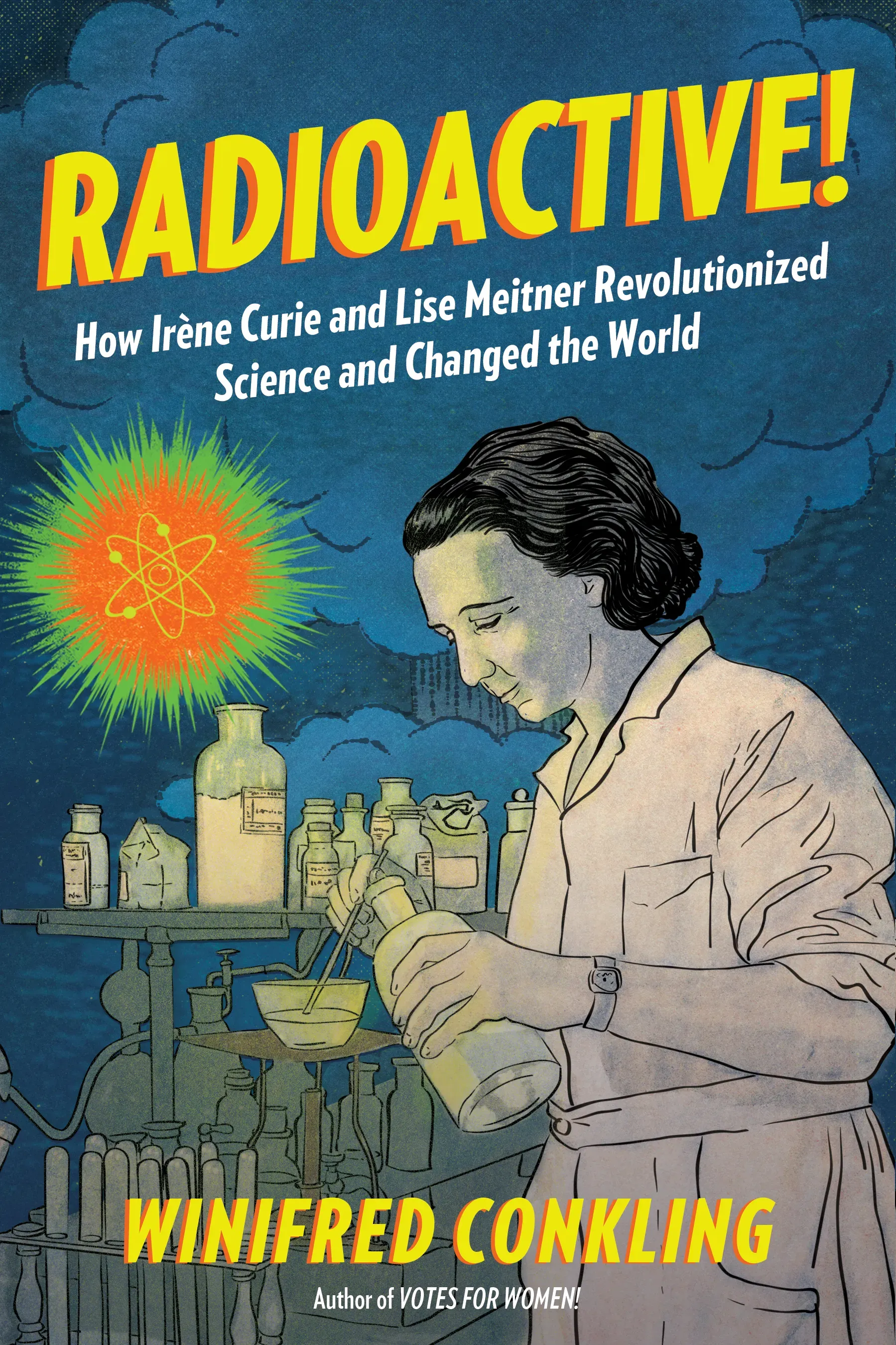
Radioactive by Winifred Conkling (Little, Brown, 2018) is the story of how the landmark discoveries of Irene Curie and Lise Meitner in chemistry and physics led to nuclear energy and the race to develop an atomic bomb. For ages 10-14.
Radioactive by Lauren Redniss (Dey Street Books, 2015) - a National Book Award finalist – is a superb illustrated biography of Marie and Pierre Curie for teens and adults.

Larry Gonick’s Cartoon Guide to Chemistry (HarperResource, 2005) is serious chemistry presented through Gonick’s clever, funny, and knowledgeable little cartoons. The book is divided into twelve chapters, among them “Hidden Ingredients,” “Chemical Reactions,” “Acid Basics,” “Chemical Thermodynamics,” and “Organic Chemistry.” A good pick for the text-shy. For ages 13 and up.

By Andy Brunning, Why Does Asparagus Make Your Pee Smell? (Ulysses Press, 2016) is a compendium of fascinating food facts, illustrated with great chemical graphics. The science behind why some people hate Brussels sprouts, why some mushrooms are poisonous, why onions make us cry, and much more. For teens and adults.

Sam Kean’s The Disappearing Spoon (Little, Brown, 2010) is a great chemical read, tying history, mythology, the arts, and a lot of fascinating anecdotes to the story of the Periodic Table of Elements. For teens and adults.
Also see the Young Readers edition, for ages 10 and up.

See the NeoK12 homepage for a long list of topics, for each of which there’s a large selection of short educational videos. Chemistry topics, for example, include Acids and Bases, Chemical Reactions, Organic Chemistry, Periodic Table, and Radioactivity.

Theodore Gray's Elements: A Visual Exploration of Every Known Atom in the Universe (Black Dog & Leventhal, 2011) is a gorgeously illustrated guide to the elements of the Periodic Table. A great source for all.
In the same format, also see Gray's Molecules (2014), which covers everything from soap to stink bombs; and Reactions (2017), which - with wonderful color photos and a snappy text - introduces readers to a wide range of chemical reactions from the boring (watching paint dry) to the spectacular.

Philip Ball’s H2O: A Biography of Water (Weidenfeld & Nicolson, 2015) is the fascinating story of the world’s most familiar – and possibly most peculiar – compound. For teens and adults.

Mark Miodownik’s Stuff Matters (Mariner Books, 2015) is an engrossing survey of the science behind the materials that make up our world, from steel to glass, concrete, and chocolate. Why is glass see-through? And what really happens when you bend a paper clip? For teens and adults.
Also by Miodownik, see Liquid Rules (Houghton Mifflin Harcourt, 2019), the science of liquids. Think blood, ink, lava, and tea.

Fight crime with chemistry! Deborah Blum’s The Poisoner’s Handbook (Penguin, 2011), set in early 20th-century New York, is the story of how chemistry revolutionized forensics. An exciting read for teens and adults.
Also see The Poisoner’s Handbook from PBS’s American Experience.

By (Dr.) Joe Schwartz, Radar, Hula Hoops, and Playful Pigs (Holt Paperbacks, 2001) is a collection of 67 “digestible commentaries on the fascinating chemistry of everyday life.” These are short (about four pages) essays on a wide array of chemistry-related topics: for example, readers learn about limelight, chocolate, champagne, tomato flavor, the forensics of blue jeans, and skunks. There are several chemistry-centered sequels along the same lines, among them The Genie in the Bottle, That’s the Way the Cookie Crumbles, and The Fly in the Ointment. For teenagers and adults.

John Emsley’s Molecules at an Exhibition (Oxford University Press, 1999) is an eccentric overview of molecules in everyday life, among them oxalic acid (“Rhubarb Pie”), methyl mercaptan (“The Worse Smell in the World”), sulfur dioxide (“Acid Rain, Vintage Wine and White Potatoes”), and many more. For teenagers and adults.

By Penny Le Couteur and Jay Burreson, Napoleon’s Buttons: How 17 Molecules Changed History (Jeremy P. Tarcher, 2004) is a thoroughly interesting read, with chapters covering ascorbic acid (and scurvy), glucose (and sweeteners), cellulose (and an exciting exploding apron), dyes, wonder drugs, rubber, “Molecules of Witchcraft,” and more. An introductory chapter covers (very nicely) chemical structures. For teenagers and adults.

Robert L. Wolke’s What Einstein Told His Cook (W.W. Norton, 2002), subtitled “Kitchen Science Explained,” is a large collection of short interesting pieces on the chemistry of cooking. Find out why meat browns, why water boils, why chocolate melts in your mouth, and whether it’s possible to fry an egg on the sidewalk. For teens and adults.
Also see the sequel, What Einstein Told His Cook 2 (2005).

By neurologist Oliver Sacks, Uncle Tungsten: Memories of a Chemical Boyhood (Vintage, 2002) is a wonderful memoir of Sacks’s childhood in England during the 1930s and 40s, intertwined with his fascination with chemistry. (Chapter titles include “Stinks and Bangs,” “Mendeleev’s Garden,” and “Madame Curie’s Element.”) The Uncle Tungsten of the title is Sacks’s Uncle Dave – so-named because he manufactured lightbulbs with tungsten filaments – who also had a passion for chemistry. For teenagers and adults.

Primo Levi’s The Periodic Table (Schocken, 1995) – written by an Italian Jewish chemist, who spent World War II in Auschwitz – is a highly original memoir told through the elements of the Periodic Table. Each chapter title is the name of a different element, and in each, the element is used as a jumping-off point to discuss Levi’s experiences both as a chemist and as a man dealing with life in a Fascist state. For teenagers and adults.
Hands-on Chemistry

Jill Frankel Hauser’s Super Science Concoctions (Williamson, 2007) is a nicely organized collection of “50 Mysterious Mixtures for Fabulous Fun.” Kids begin with “Strange-But-True Brews,” in the course of which they learn about molecules and solutions, then proceed through the phases of matter, chemical reactions, “Go With the Flow,” in which they explore viscosity, density, and immiscibility, and finally “Goo Globs of Fun,” in which they experiment with polymers, colloids, and gels. For ages 6-12.

Janet Slingerland’s Explore Atoms and Molecules! (Nomad, 2017) is an introduction to atoms, elements, molecules, and chemical reactions, with Words to Know and fact boxes, and 25 hands-on projects, among them building molecular models and creating a Periodic Table guessing game. For ages 7-10.

Vicki Cobb’s Science Experiments You Can Eat (HarperCollins, 1984) variously covers Solutions (with rock candy and red-cabbage pH indicator); Suspensions, Colloids, and Emulsions (with mayonnaise and strawberry bombe); Carbohydrates and Fats (with syrup, grape jelly, and butter); Proteins (meringues, custard, and biscuits); and much more. It’s all hands-on fun, with reader-friendly explanations. A great pick for ages 7-12.
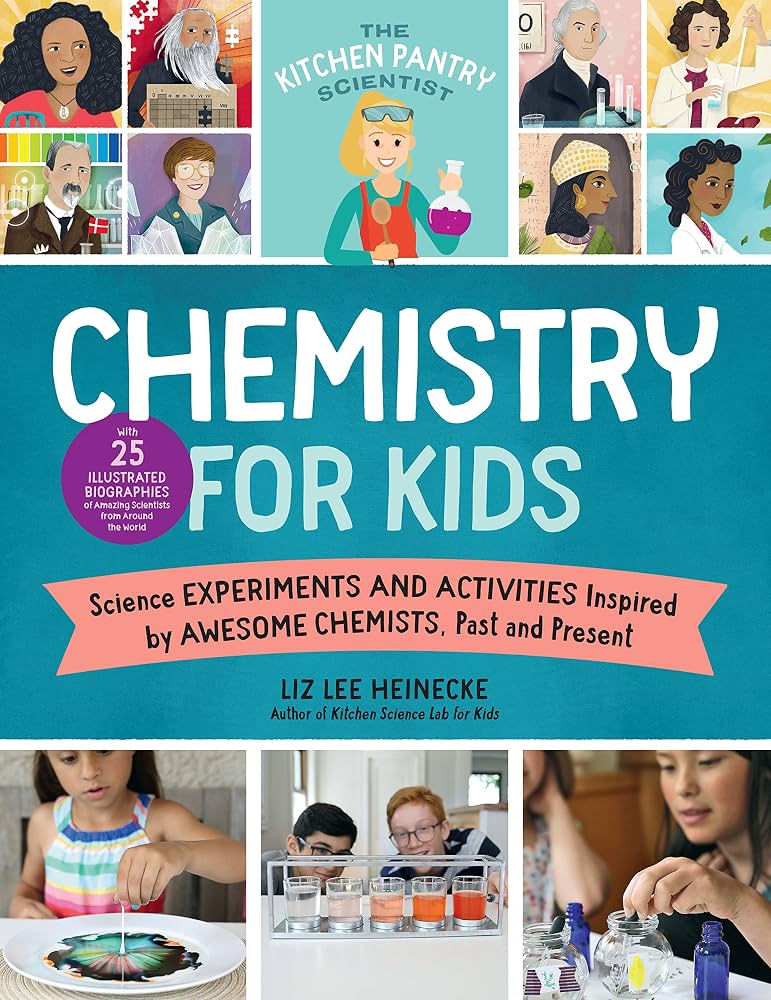
By Liz Lee Heinecke, Kitchen Pantry Chemistry for Kids (Quarry Books, 2020) is a great collection of hands-on experiments based on the work of 25 famous scientists. With Joseph Priestley, for example, kids make a carbonated beverage; with Alessandro Volta, they light up an LED with a lemon battery. For ages 7-12.

The American Chemical Society's The Best of WonderScience - available for purchase as a book; sample activities on the website - has literally hundreds of chemistry-based activities for ages 7 and up.

Jonathan Adolph’s Mason Jar Science (Storey, 2018) is a collection of 40 cool experiments in the fields of chemistry, earth science, botany, biology, and physics, all with Mason jars. For ages 8-12.

Vicki Cobb’s Chemically Active! (Lippincott, 1987) has much better than average experiments, clear instructions, and reader-friendly background information. For example, kids isolate carbon dioxide, “split” water, make iron sulfate and test compounds for iron, electroplate a penny, and make a galvanometer and test solutions for their ability to conduct an electric current. Kids may need some help, depending on their ages. This is – for no conceivable reason – out of print, but is available in inexpensive used editions. Well worth tracking down for chemists ages 9 and up.

Joey Green’s The Electric Pickle (Chicago Review Press, 2017) has 50 irresistible experiments based on the Periodic Table. Make ghastly green eggs, black-light jello, and mystery sand and do a spectacular pH-based color-changing experiment with milk of magnesia. For ages 10 and up,

MEL Science is a subscription service for ages 9-14, in which a hands-on chemistry kit of reagents, equipment, and an instruction manual arrives each month. There’s an option to expand on the service through an informative smartphone app and website links.

Steve Spangler’s Naked Eggs and Flying Potatoes (Greenleaf Books, 2010) – along with the famous mentos geyser experiment – has a section on Kitchen Chemistry. Make Taco Sauce, Penny Cleaner, a Seven-Layer Density Column, and Color Changing Milk. Illustrated with great photos of experimenting kids. For ages 9 and up.Also see Spangler’s Fire Bubbles and Exploding Toothpaste (2011).
Check out a soda geyser at https://vermont.pbslearningmedia.org/resource/mentos/how-does-a-soda-geyser-work/.
(Try it!)

Joe Rhatigan’s Cool Chemistry Concoctions (Lark Books, 2007) contains 50 different experiments, all with catchy titles, each neatly arranged in three sections: “What You Need,” “What You Do,” and “Why It Works.” (Included are nifty directions for making a geyser with a bottle of soda pop and a package of lifesavers – in our experience, it works better with Mentos, but it’s still a wow.) For ages 8-12.

Cynthia Light Brown’s Amazing Kitchen Chemistry (Nomad Press, 2008) is a 10-chapter overview of chemistry, with background information, Words to Know lists, catchy fact boxes, and a lot of appealing hands-on projects and experiments. For example, kids made a buckyball, an alka-seltzer rocket, crystals, invisible ink, and oobleck. For ages 9-12.

By Sean Connolly, The Book of Ingeniously Daring Chemistry (Workman, 2018) is an illustrated trip through the Periodic Table (Chapter 1: Hydrogen) with 24 hands-on experiments. For ages 9-14.

Anita Brandolini’s Fizz, Bubble & Flash! (Williamson, 2003) is a solid and cleverly presented introduction to chemistry, beginning with a comprehensive explanation of atoms, elements, and the Periodic Table. The book includes plenty of hands-on activities and presents fascinating facts and supplementary information in boxes and sidebars. Illustrated with humorous cartoons and photographs. For ages 9-13.

Carla Mooney’s Chemistry (Nomad, 2016) is an overview of chemistry with cartoons, sidebars, exercises, key questions, and hands-on investigative projects. For ages 12-15.

By Cathy Cobb and Monty L. Fetterolf, The Joy of Chemistry (Prometheus Books, 2010) is a hands-on introduction to chemistry. (The book begins with a “Shopping List” of all the supplies you’ll need to buy or make to complete the experiments.) First experiments (a bang and a splat) are a bottle rocket and a batch of oobleck, just to get the book off to an exciting start – but this is more than just a bunch of catchy demos; it’s a serious introduction to chemistry in 390 pages, well-written, and using lots of quotations and readily understandable references to things encountered in everyday life. Like pizza cheese. For ages 14 and up.

From the American Chemical Society (ACS), ChemMatters magazine is wonderful educational magazine filled with fascinating articles about chemistry in everyday life, plus hands-on activities, puzzles, and detailed teacher’s guides. Back issues (for the last three years) are available in print; and the ChemMatters CD has all issues and teachers’ guides from 1983-2008 ($30). A print subscription to ChemMatters costs $16 annually. Highly recommended. For ages 12 and up.

The ACS also sponsors a pair of innovative chemistry textbooks for high-school- and early-college-level students, both interestingly centered around the chemistry of various important social, political, economic, and ethical issues. These books do not, some textbook reviewers caution, substitute for conventional chemistry texts – for example, they don’t cover the history of chemistry – but they’re extremely well written, heavily hands-on-based, and dedicated to demonstrating how essential a knowledge of chemistry is to major problems in the real world. The high-school text, Chemistry in the Community (W. H. Freeman, 2006) consists of seven detailed study units, variously covering water, materials, petroleum, air, industry, nuclear energy, and food, each with chemical concepts, laboratory exercises, data analysis explanations of crucial problems, and supplementary challenges.
The unit on water, for example, begins with a pair of newspaper articles detailing a fish kill and accompanying water emergency in the imaginary community of Riverwood. Kids then investigate water properties, water purification techniques, household and national water usage, and Earth’s hydrologic cycle. Here’s one supplementary sample challenge: You’re marooned on an island in the ocean. The only available water on the island is a murky stagnant pond. Your survival kit contains a nylon jacket, a plastic cup, two plastic bags, rubber tubing, a knife, a bottle of liquid bleach, an empty glass bottle, and a bag of salted peanuts. How are you going to produce drinkable water?

Robert Bruce Thompson’s 400+-page Illustrated Guide to Home Chemistry Experiments (All Lab, No Lecture) (Make Books, 2008) is a serious, detailed, and well designed and organized volume, intended for do-it-yourself chemists, homeschoolers, and conventionally schooled kids looking for a hands-on supplement to at-school mostly-lecture chemistry courses. (Available in 
The first few (very thorough) chapters are devoted to the basics of supplying and using a home chemistry lab, with detailed lists of necessary glassware, equipment, and chemicals, safety precautions, and instruction in such essential laboratory skills as maintaining a lab notebook, making accurate measurements, handling chemicals properly, using a balance and an alcohol lamp, bending glass tubing, and titration and filtration.
The remaining 17 chapters – which comprise about two years’ worth of high-school-level chemistry labs - each include multiple lab exercises centered around a specific chemical topic, variously appropriate for a range of expertise, from beginner to advanced. Topics were selected to ensure that kids get a thorough grounding in chemistry, and run the gamut from Separating Mixtures, Solubility and Solutions, and Acid-Base Chemistry to Chemical Equilibrium, Gas Chemistry, Colloids and Suspensions, Quantitative and Qualitative Analysis, Synthesis of Useful Compounds (kids make rayon and oil of wintergreen), and Forensic Chemistry.
Each lab has well-presented background information and explanations, a list of equipment and supplies, very detailed step by step instructions illustrated with color photographs, charts and tables to be filled in with student data, and review questions. Helpful boxes provide additional information and definitions, suggested modifications and extension activities, comments and hints from scientists, and disposal instructions.

Theodore Gray’s MAD SCIENCE: Experiments You Can Do at Home – But Probably Shouldn’t (Black Dog & Leventhal Publishers, Inc., 2009) inevitably brings to mind Jean Shepherd’s A Christmas Story, in which nine-year-old Ralphie wants a Red Ryder B-B gun for Christmas, but is balked by all adults, on grounds of “You’ll shoot your eye out!” MAD SCIENCE is the Red Ryder B-B gun of chemistry, the stuff all proto-scientists crave as kids. Some of it is – yes - dangerous. It’s also a wonderful read. The book is 200+ pages long, every one of them illustrated with gorgeous and dramatic color photographs, and crammed with fascinating information and step-by-step instructions for carrying out truly spectacular experiments. Who wouldn’t want to make titanium in a flowerpot? Lightning in a can? Use your barbecue grill to turn sand into glass? This is great stuff. Just use commonsense.
Chemistry Sets
The day of the chemistry set is over, according to "Don't Try This at Home" in the June 2006 issue of Wired magazine (https://www.wired.com/2006/06/chemistry/). A combination of governmental safety regulations, Homeland Security edicts, liability issues, and popular nervousness – Wired calls it chemophobia – has put curious kids, science-supportive parents, and home-style scientists flatly out of luck. Even the public schools are now turning away from hands-on chemistry labs in favor of teacher (or video) demonstrations.
Admittedly chemistry, misused, can be dangerous – but then so can lots of other things, including football, baseball bats, gas-fueled ovens, and plastic wading pools. Included in the article are three splashy and superb hands-on chemistry experiments. You’ll love them. Just be sure to wear your safety glasses, follow directions, and don’t do anything silly.

Most modern chemistry sets are feeble imitations of their former selves, barely worthy of the name – common ingredients nowadays are clay, balloons, laundry starch, and table salt. A last hold-out is Thames & Kosmos which sells a range of well-designed science kits and chemistry sets, among them the Chem C3000 (“2400 cubic inches of pure chemistry”) which includes a substantial complement of chemicals and laboratory equipment, and a detailed 178-page instruction manual outlining some 360 experiments. It costs about $200 and is recommended for ages 12 and up.
Large science supply companies that variously sell lab equipment, kits, and chemicals include the Carolina Biological Supply Company and
Ward’s Natural Science Establishment.
American Science and Surplus (“incredible stuff, unbelievable prices”) is a good source for lab supplies and equipment, as well as all sorts of other scientific gadgets, kits, and dohickeys.
Home Science Tools is also a source for lab equipment, lab glassware and plasticware, alcohol burners, and chemicals.
Chemistry in Fiction

From Teaching Science with Children’s Literature, Chemistry includes background info and experiments to accompany twenty different picture books, including Strega Nona, Pinocchio, Snowflake Bentley, and Rumplestilskin. For elementary-level kids.
Chemistry and Harry Potter? Check out The Chemical Wizardry of J.K. Rowling.
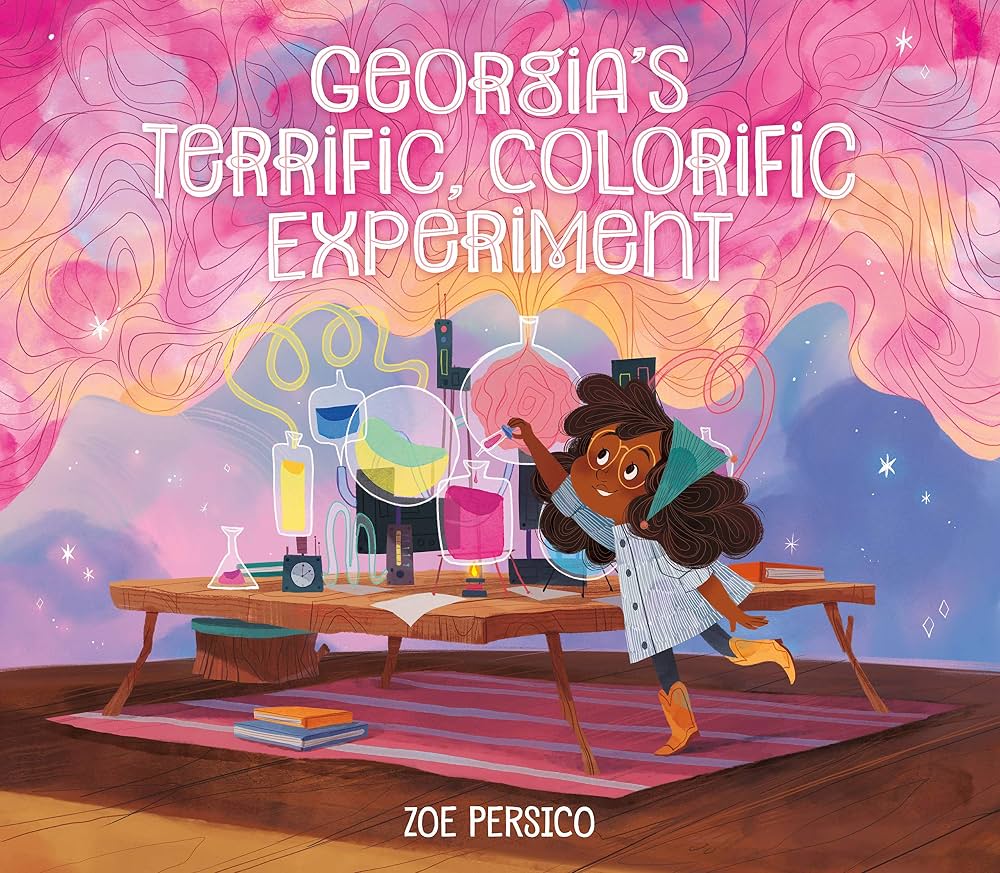
In Zoe Persico’s Georgia’s Terrific Colorific Experiment (Running Press, 2019), Georgia comes from a family of artists – but she wants to be a scientist. How to mix science and art? For ages 4-8.
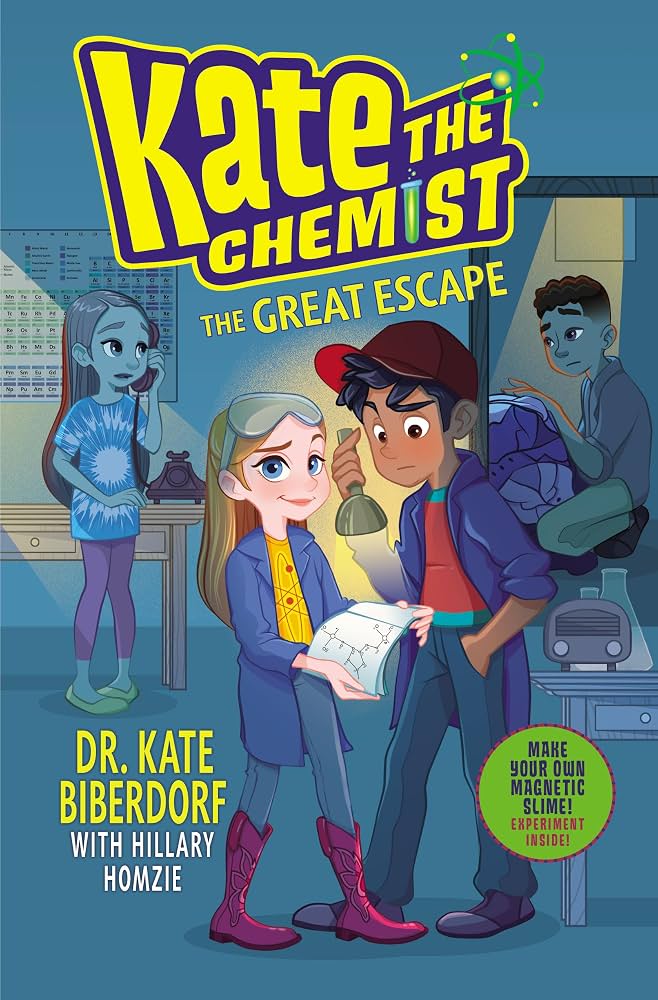
By chemist Kate Biberdorf, the Kate the Chemist series features ten-year-old Kate who uses science to solve problems. In The Great Escape (Philomel Books, 2020), for example, Kate combines magnetic slime, the periodic table, and a secret code to exit a science-themed escape room. Included is a recipe for making your own magnetic slime. For ages 8-12.
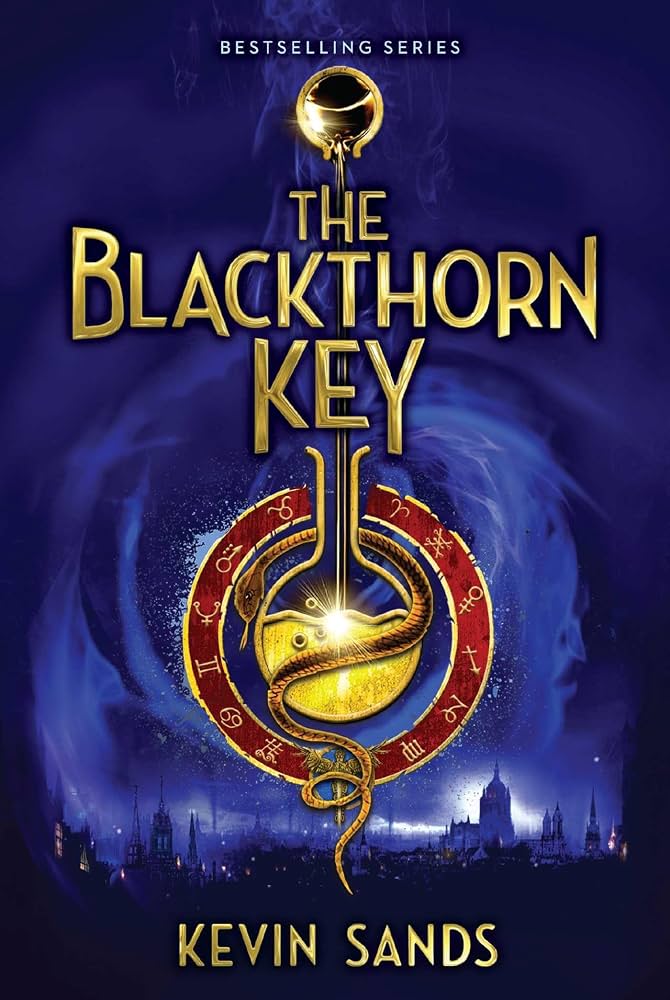
By Kevin Sands, The Blackthorn Key (Puffin, 2015), set in the 17th century, features Christopher Rowe, an apothecary’s apprentice, who becomes embroiled in a deadly plot when his master is murdered. An exciting story (with medieval chemistry) for ages 8-12. First of a series.

Simon Mayo’s Itch (Splinter, 2013) – subtitled “The Explosive Adventures of an Element Hunter” – features fourteen-year-old Itchingham Lofte, out to collect specimens of every element in the Periodic Table. A malevolent teacher, an evil corporation, and a top-secret government agency are all in hot pursuit. A chemical thriller for ages 12 and up.

By Alan Bradley, The Sweetness at the Bottom of the Pie (Bantam, 2010) is the first of the Flavia de Luce mysteries, a growing series featuring eleven-year-old Flavia, a self-taught chemist, growing up in the 1950s in the crumbling British mansion of Buckshaw, with her eccentric postage-stamp-obsessed father and two interfering older sisters. In times of trouble, Flavia asks “What would Antoine Lavoisier do?” Addictive reads for ages 13 and up.

Chemistry and Science Fiction, edited by Jack Stocker (American Chemical Society, 1999, covers chemistry in the world of science fiction – of which there’s a lot, from Arthur Conan Doyle to Ray Bradbury. For teens and adults.