Philosophy
In this collection
Typically philosophy is a college-level discipline, but there’s every reason, given the opportunity, to introduce it earlier. Kids from a very young age are fascinated by philosophy’s fundamental questions about the world and ourselves, and exploring these helps develop critical and creative thinking skills and allows kids to hone and express their own opinions.
It’s also useful to discover that there are many questions to which there are no definitive answers. (But that doesn’t mean we can’t keep trying to find some.)
“To travel hopefully is a better thing than to arrive.”
Robert Louis Stevenson
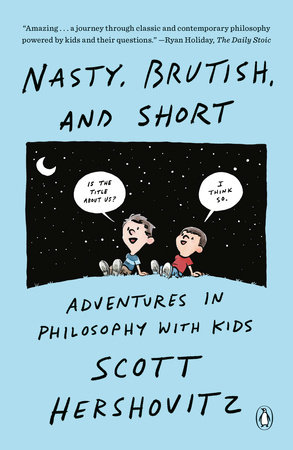
According to Scott Hershovitz, professor of philosophy and law at the University of Michigan, every kid is a philosopher. Hershovitz’s book, Nasty, Brutish, and Short: Adventures in Philosophy with My Kids (Penguin Press, 2022) is a tour of philosophy, classic and contemporary, as the author deals with the questions and opinions of Rex and Hank, his two young sons. They discuss a wide range of issues: rights, punishment, revenge, truth, infinity, and God. It’s a reminder that we’re all, whether we realize it or not, raising philosophers – and an account of how we can further the process through listening and conversation.
General

The Stanford Encyclopedia of Philosophy includes an overview of approaches to teaching philosophy to kids, along with an extensive bibliography of books and articles.

The University of Washington’s Center for Philosophy for Children includes a wide range of lesson plans, games, activities, and exercises for kids of all ages. Included , for example, are ideas for teaching philosophy through literature, using over 100 different children’s books, and activities dealing with environmental ethics, ethical dilemma, philosophical perspectives in the news, reasoning and arguments, Plato’s Cave, and much more.

Thomas Wartenburg’s Big Ideas for Little Kids (Rowman & Littlefield, 2014), subtitled “Teaching Philosophy Through Children’s Literature,” shows how to generate philosophical discussions using popular children’s books. All major branches of philosophy are covered – ethics, social and political philosophy, philosophy of the mind, environmental philosophy, logic, epistemology, aesthetics, and the philosophy of language – all through such works as The Giving Tree, Knuffle Bunny, and The Wonderful Wizard of Oz.
Teaching units for dozens of children’s books are available at the Prindle Institute for Ethics – a terrific resource.
See https://www.prindleinstitute.org/teaching-children-philosophy/.

In Marietta McCarty’s Little Big Minds (Jeremy P. Tarcher/Penguin, 2006), each chapter provides background information on the featured topic, an overview of influential philosophers in the field, resources, teaching tips, discussion questions, and exercises. Chapter titles include “Friendship,” “Responsibility,” “Happiness,” “Justice,” “God,” and “Freedom.”
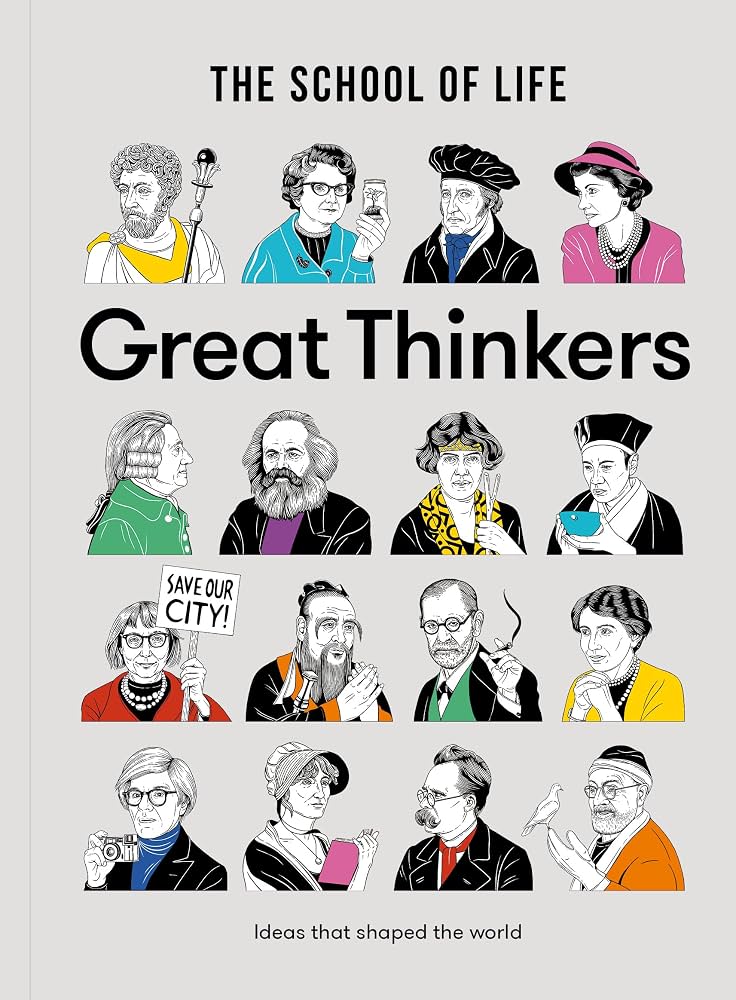
Great Thinkers (School of Life, 2018) is a reader-friendly introduction to sixty great thinkers and their ideas in the fields of Western and Eastern philosophy, sociology, psychology, art, architecture, and literature. A great resource for a wide range of ages.

Socrates Café by Christopher Phillips (W.W. Norton, 2002) is the work of an amateur philosopher attempting to start a grassroots philosophy movement. He does this by hosting “Socrates Cafes” – get-togethers in coffee shops, schools, nursing homes, libraries, or living-rooms where people meet for the purpose of asking questions and thereby exploring, clarifying, and expanding upon their opinions and beliefs. The book consists of multiple accounts of homespun philosophy groups, in which children and adults pursue answers to such questions as “What is wisdom?” “What is freedom?” “What is belief?” “What is happiness?” “What is good?” At the end of the book, Phillips includes a glossary of philosophers, suggestions for further reading, and general instructions for organizing and facilitating your own Socrates Café.
For Younger Kids

For preschoolers, Duane Armitage’s Big Ideas for Little Philosophers series (G.P. Putnam’s Sons, 2020) is a collection of simple board books introducing the thought of prominent philosophers to the youngest readers. Among the titles are Truth with Socrates, Happiness with Aristotle, Imagination with Rene Descartes, Love with Plato, Kindness with Confucius, and Equality with Simone de Beauvoir.
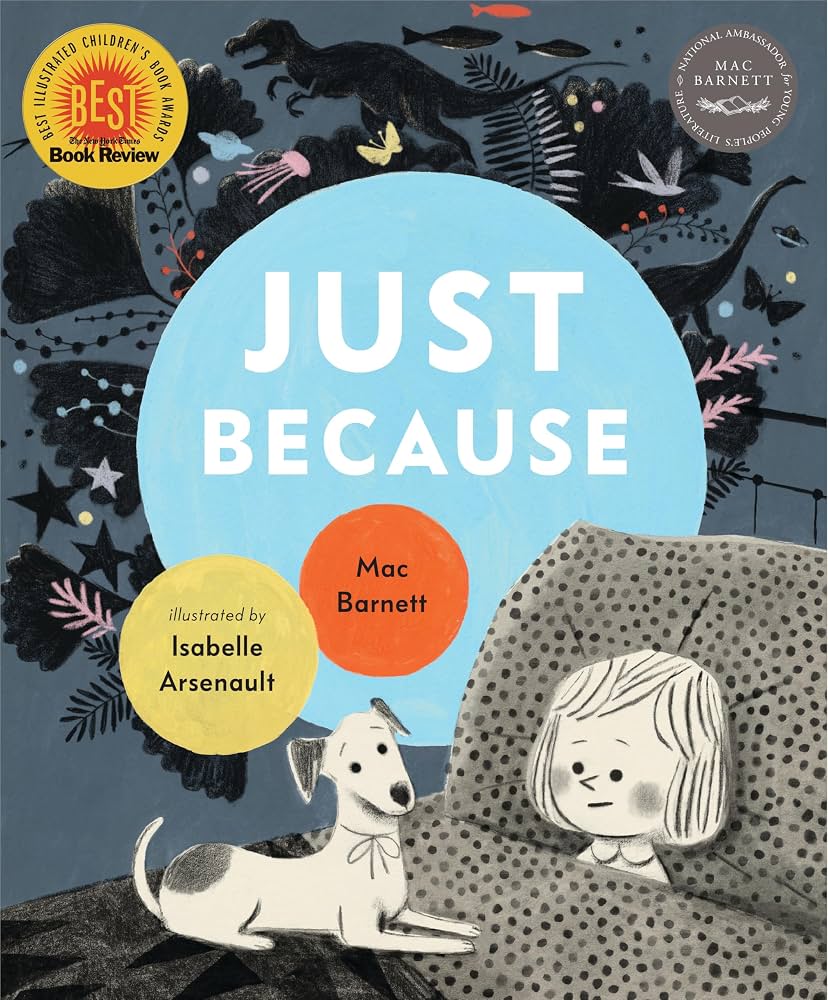
Philosophy and science began with people asking questions about the world around them - just like the little girl in Mac Barnett’s Just Because (Candlewick, 2019), who is too full of questions to fall asleep. Why is the ocean blue? What is rain? Why do birds fly south for the winter? Her father comes up with some wildly creative explanations. For ages 4-8.
What do you wonder about? Make a list of your questions.

M.D. Usher’s Wise Guy: The Life and Philosophy of Socrates (Farrar, Straus, & Giroux, 2005) is a picture-book introduction to the contentious Greek philosopher who emphasized the importance of the examined life and famously pointed out that “All I know is that I know nothing.” The simpler version of Socrates’s life and thought is presented in the main text; trickier bits, for older readers, appear in sidebar scrolls. Usher, a classics professor from the University of Vermont, has a knack for distilling the complicated for a young audience. For ages 7-11.
By the same author, see Diogenes (Farrar, Straus & Giroux, 2009), in which the main philosophical character appears as a very thoughtful dog.

Sharon Kaye’s Big Thinkers and Big Ideas: An Introduction to Eastern and Western Philosophy for Kids (Rockridge Press, 2020) is a colorful and engaging introduction to four main branches of philosophy: reality, knowledge, ethics, and logic. Chapter titles are “What is philosophy?” “What is real?” “How do I know something is true?” “How can I be a good person? and “If this is true, what else is true?” For ages 8-12.

For graphic novel fans, see Michael F. Patton and Kevin Cannon’s The Cartoon Introduction to Philosophy (Hill and Wang, 2015). Chapters cover logic, perception, minds, free will, God, and ethics. A great introduction for ages 9 and up.
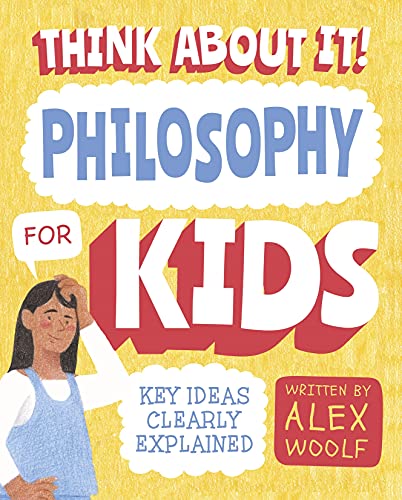
By Alex Woolf, Think About It! Philosophy for Kids (Arcturus Publishing, 2021) is filled with thought-provoking questions and concepts. For example, kids are introduced to Zeno’s paradox and the Turing test and investigate infinity, empathy, the nature of identity, and free will. For ages 9-12.
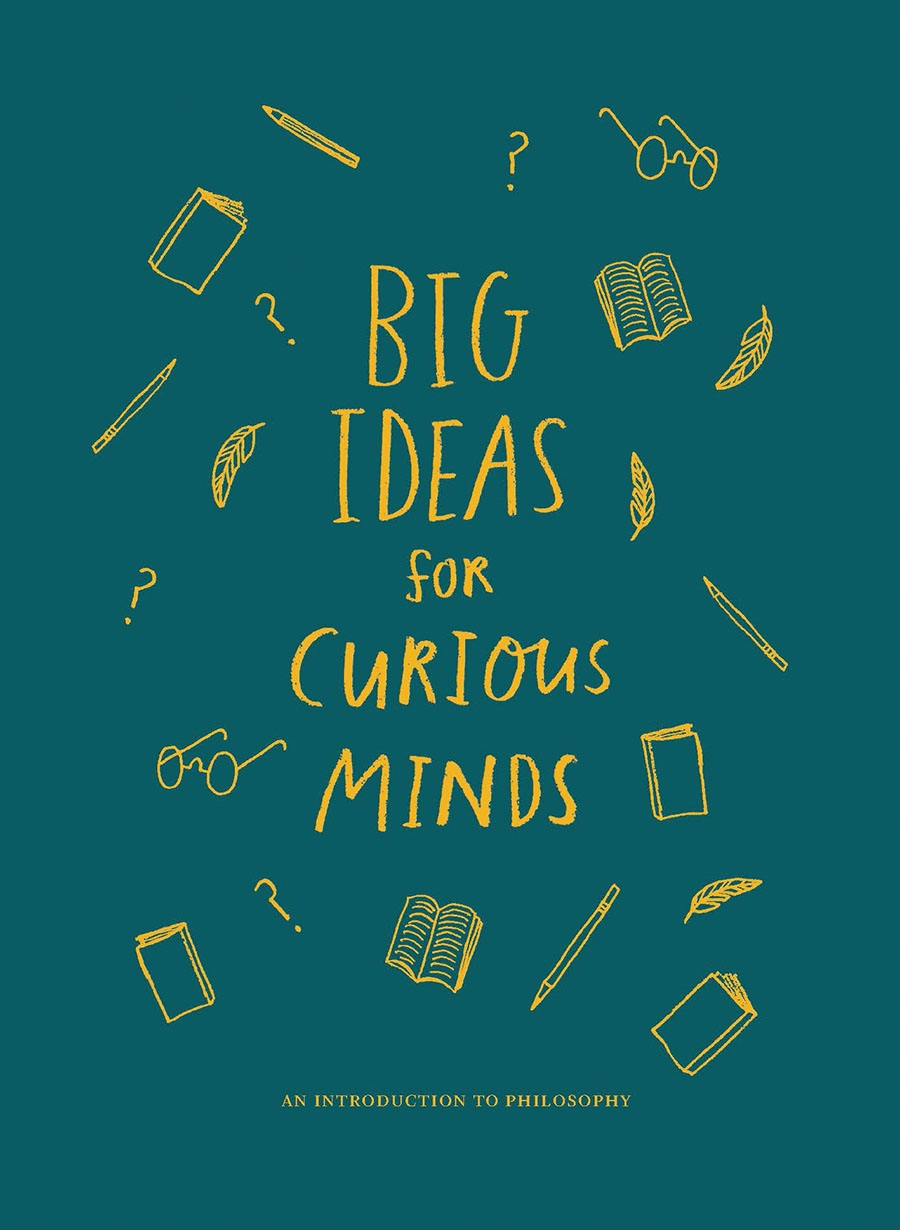
Big Ideas for Curious Minds (School of Life, 2019) is a charmingly illustrated introduction to philosophy, incorporating ideas from thinkers such as Buddha, Confucius, Socrates, Aristotle, Sartre, Descartes, and Kant. For ages 9 and up.
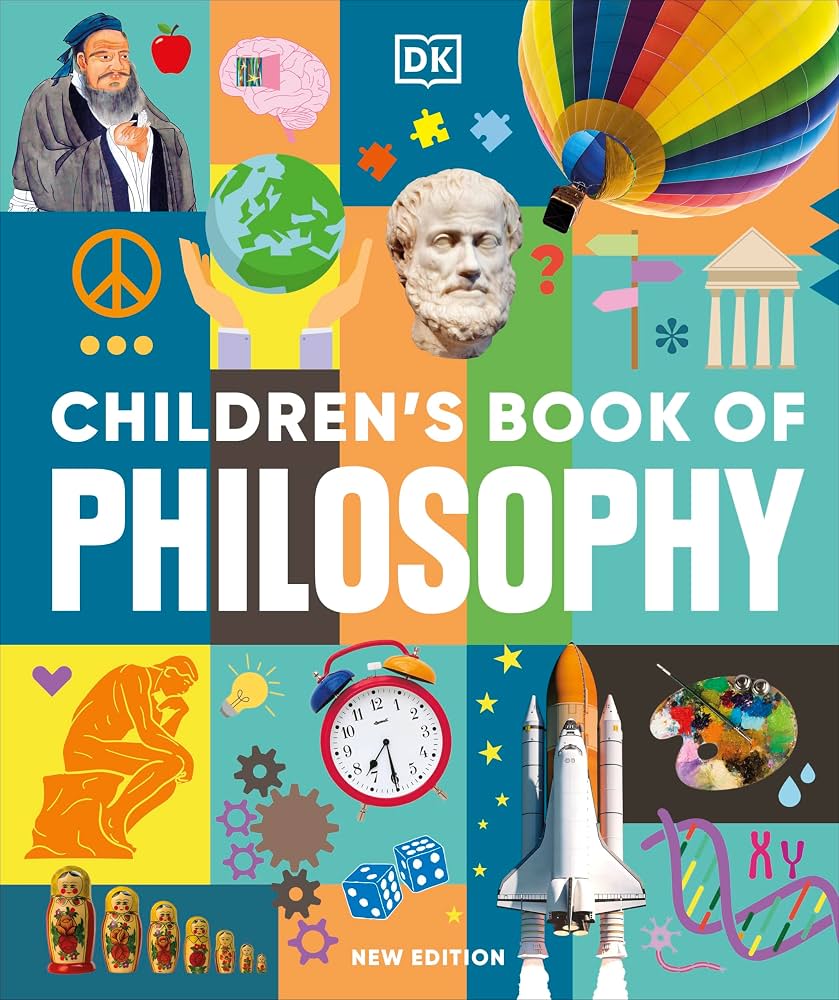
Dorling Kindersley’s gorgeously designed Children’s Book of Philosophy (DK, 2024) is an overview of philosophical questions and thinkers. Both are grouped into five categories: “Is the world real?” “What am I?” “Thinking and feeling” “How do I decide what’s right?” and “Why do we need rules?” For ages 9-13.
By Corinne Hosfeld Smith, Henry David Thoreau for Kids (Chicago Review Press, 2016) is an overview of Thoreau’s life, times, and philosophy with illustrations, fact boxes, and related hands-on activities, among them making a journal, conducting a plant inventory, and writing a protest letter. For ages 9-13.
See more resources for Henry David Thoreau.
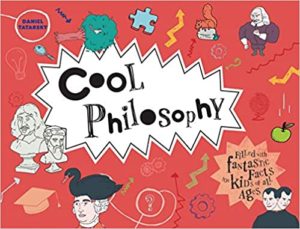
Daniel Tatarsky’s Cool Philosophy (Portico, 2015) is an attractively designed collection of philosophy facts from Aristotle on, starting with an illustrated timeline. For ages 10 and up.

Jamia Wilson’s Big Ideas for Young Thinkers (Wide Eyed Editions, 2020) is a graphically appealing and diverse overview of philosophical questions both classical (How do I know I exist? What is justice?) and contemporary (Is race real? What is gender? What is imagination?). For ages 10-14.

David White’s Philosophy for Kids: 40 Fun Questions That Help You Wonder…About Everything (Prufrock Press, 2025) categorizes forty discussion-provoking questions under the headings Values, Knowledge, Reality, and Critical Thinking. Kids ages 10 and up are encouraged to tackle such knotty problems as “What is time?” “Can you doubt that you exist?” and “Are you the same person that you were five years ago?” For ages 9 and up.
Short & Curly is an ethics podcast for ages 8-12 in which each 20-minute episode deals with such questions as “What would it be like to talk to a whale?” “Should grown-ups lie to you?” and “Do you have to forgive someone who says sorry?” See https://podcasts.apple.com/us/podcast/short-curly/id1093699006
For Older Readers

David White’s The Examined Life (Prufrock Press, 2006) pairs passages from famous philosophers with explanations and spin-off questions. Chapters include “Do We Really Know What We Think We Know?” (Plato), “The Sound of a Tree Falling in the Forest” (Berkeley), and “Technology: Servant or Destroyer?” (Heidegger). For ages 12 and up.
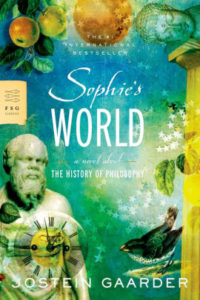
Jostein Garder’s Sophie’s World: A Novel About the History of Philosophy (Berkley Publishing Group, 1997) – a novel about the history of philosophy - has now established itself as a classic. Fourteen-year-old Sophie finds a message in her mailbox with a pair of questions – “Who are you?” and “Where does the world come from?” – and sets off on a long tour of western philosophy. There’s also an ongoing mystery and great twist at the end, but the book is somewhat dense reading in parts. For ages 13 and up.
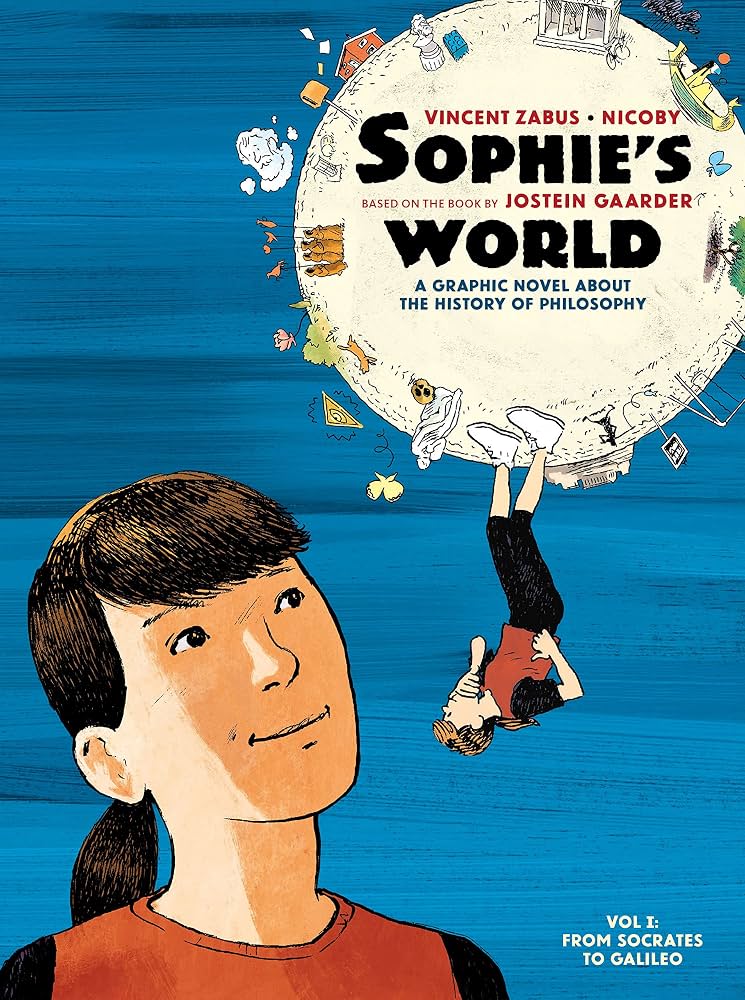
Sophie’s World is available in two volumes in graphic-novel format: Volume 1, Sophie’s World: A Graphic History of Philosophy from Socrates to Galileo (SelfMadeHero, 2022) andVolume 2, A Graphic History of Philosophy from Descartes to the Present Day (2023).
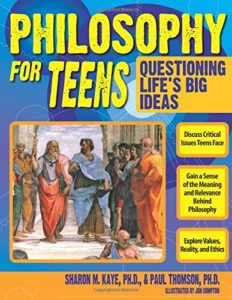
By Sharon M. Kaye and Paul Thomson, Philosophy for Teens (Prufrock Press, 2006) is a guide to questioning life’s big ideas with background from the works of famous philosophers, dialogues and thought experiments, activities, and discussion questions. For example, kids discuss whether or not lying is always wrong, what purpose art holds in the world, and what would happen if there were no government. For ages 13 and up.
By the same authors, also see More Philosophy for Teens (2007).
Stephen Law’s The Philosophy Gym: 25 Short Adventures in Thinking (Thomas Dunne Books, 2003) is an excellent resource for philosophical novices. The book is essentially an entire course in philosophical thinking; each short chapter deals with a different philosophical question, introducing key points of argument through a debate between, say, a vegetarian and a meat-eater, a human and a pair of visiting aliens, a serial killer and a judge, or a pair of philosophy students at the horse races. The debates are paired with “Thinking Tools” boxes (which contain helpful hints on the process of logical argument), expanded explanations of important issues, conclusions, and lists of what to read next. Sample chapters include: “Where Did the Universe Come From?” “Could a Machine Think?” “Why Expect the Sun to Rise Tomorrow?” and “Is Morality Like a Pair of Spectacles?” Law also demonstrates philosophical approaches to such topics as gay sex, the existence of god, creationism vs. evolution, designer babies, and moral relativism. It’s tough stuff, but it’s a thinking person’s meat. For ages 14 and up.
Stephen Law’s Philosophy Rocks! (Disney Press, 2002) is the American version of the more elegantly titled British The Philosophy Files. Basically it’s The Philosophy Gym for a younger audience, ages 12 or so and up. It covers eight major philosophical questions, again in a clever debate format, with background information, descriptive examples, points to ponder, and cartoonish illustrations. Questions include “Does God Exist?” “How Do I Know the World Isn’t Virtual?” and “Should I Eat Meat?”
By Julian Baggini, The Pig That Wants to Be Eaten (Granta, 2010) is a collection of 100 short thought experiments for armchair philosophers. Discuss: Are you a computer simulation? If God is all-powerful, could he create a square circle? For ages 13 and up.
Thomas Nagel’s What Does It All Mean? (Oxford University Press, 1999) is an excellent (and very short) introduction to philosophy for high-school-level students. In just over 100 pages, Nagel covers some of the major questions that philosophers grapple with, such as the mind-body problem, the meaning of words, free will, right and wrong, and – the kicker – the meaning of life.
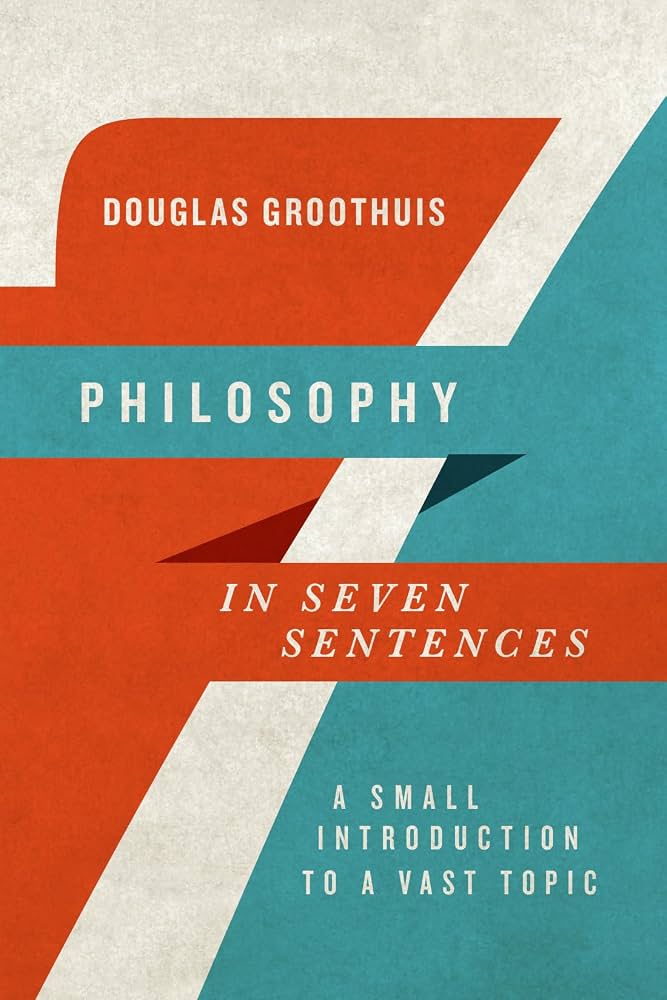
By Douglas Groothuis, Philosophy in Seven Sentences (IVP Academic, 2016) is a short introduction through seven notable philosophical quotations, beginning with Protagoras (“Man is the measure of all things”) and Socrates (“The unexamined life is not worth living”) and proceeding through Aristotle, Augustine, Descartes, Pascal, and Kierkegaard. About 150 pages for teens and adults.
Ian Olasov’s Ask a Philosopher (Thomas Dunne Books, 2020) provides witty (and philosophical) answers to questions commonly on people’s minds – based on interactions with pedestrians on the streets of New York. “Do we have free will?” “Are people innately good or bad?” “What makes a boy a boy?” “What makes someone mentally ill?” “Should you kill baby Hitler?” And finally a useful bonus question: “What’s the best way to teach myself philosophy? How do I start?” For teens and adults.
In the Blackwell Philosophy and Pop Culture Series, developed by philosophy professor William Irwin, each book consists of a series of essays exploring the philosophical themes and questions inherent in popular movies, books, and television programs. Many titles, among them Mr. Rogers and Philosophy, Dungeons and Dragons and Philosophy, The Matrix and Philosophy, and, of course, Harry Potter and Philosophy.
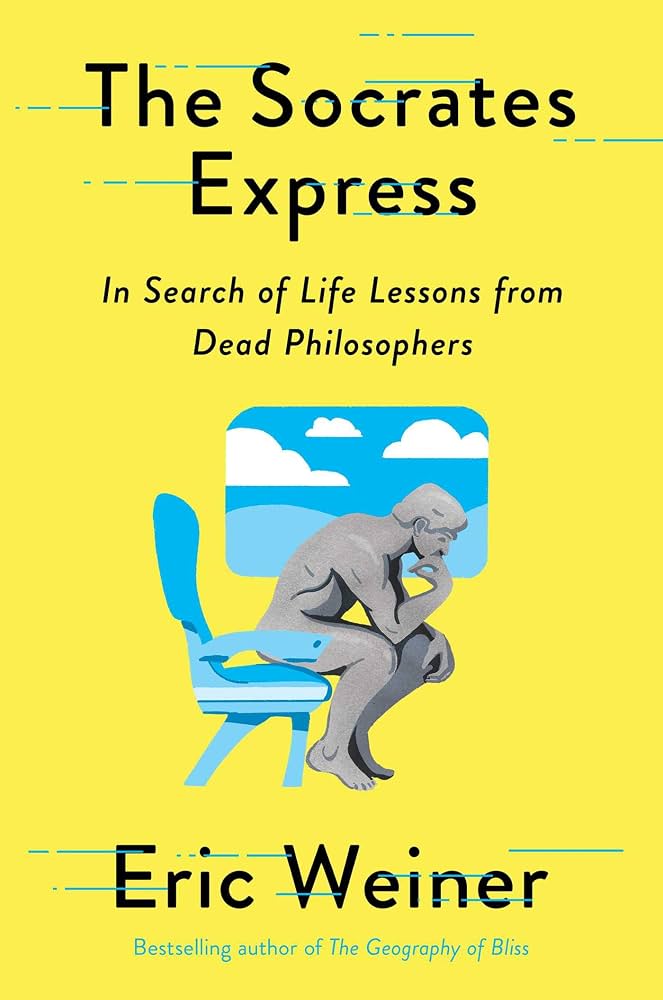
Eric Weiner’s The Socrates Express (Avid Reader Press/Simon & Schuster, 2021) pairs round-the-world train travel with a search for life lessons from fourteen historical thinkers, among them Socrates, Marcus Aurelius, Thoreau, Schopenhauer, Nietzsche, Simone de Beauvoir, and Gandhi. An engaging and thought-provoking read for teens and adults.
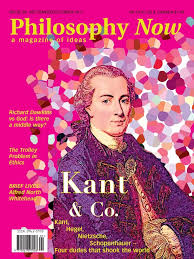
Philosophy-minded teenagers may also enjoy Philosophy Now, a quarterly periodical subtitled “A Magazine of Ideas.” It’s a philosophy magazine, rather than an academic journal – that is, what Discover is to science, Philosophy Now is to philosophy – filled with interesting articles, philosophy news (yes, there is some), book and film reviews, and more.
The Great Courses has dozens of different courses on various aspects of philosophy, available as Instant Video, Instant Audio, or on DVDs. Sample titles include “Great Ideas of Philosophy,” “The Big Questions of Philosophy,” “Introduction to Greek Philosophy,” “Science Fiction as Philosophy,” and many more. Presented as a series of 24 or more half-hour lectures by college professors. Generally appropriate for ages 13 and up.
NOTE: All the Great Courses selections periodically go on sale at greatly reduced prices.
Philosophy Talk, “the program that questions everything,” is a podcast hosted by a trio of philosophers from Stanford University. Each week the team discusses topics that range from popular culture to morality, social issues, the human condition – and much more.
Philosophize This! with Stephen West is an educational podcast about philosophy in chronological order – best if you begin at the beginning with episode one. See https://podcasts.apple.com/us/podcast/philosophize-this/id659155419.
Plays and Movies

David Egan’s play, The Fly-Bottle (2003), is the story of a confrontational meeting in 1946 among three famous philosophers – Ludwig Wittgenstein, Karl Popper, and Bertrand Russell – which legendarily culminated in Wittgenstein threatening Popper with a poker. If it comes to a theater near you, take your teens.

By Jerome Lawrence and Robert E. Lee, The Night Thoreau Spent in Jail (Hill and Wang, 2001) is a dramatic account of Thoreau’s famous act of civil disobedience, when he refused to pay taxes in protest to the U.S. government’s involvement in the Mexican War. For that, he was thrown in jail. The play has a wider reach, covering Thoreau’s life, beliefs, and philosophy. A wonderful read for ages 13 and up.

By the same authors, see Inherit the Wind (Ballantine, 2003), the fictionalized account of the 1925 Scopes “Monkey Trial,” and the clash between legal giants Clarence Darrow and William Jennings Bryan. The theme of the play – other than the obvious conflicts between religion and science, belief and reason - is the right of the individual to think his/her own thoughts.
The superb movie version of Inherit the Wind (1960) stars Spencer Tracy and Fredric March. Not rated.
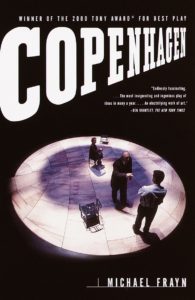
Michael Frayn’s Copenhagen (Anchor, 2000) is the imagined story of the 1941 meeting in Copenhagen of physicists Niels Bohr and Werner Heisenberg – who found themselves on opposite sides during World War II, both working to create an atomic bomb. It’s an imagined story because no one knows just what went on at that meeting between the two men – but in playwright Frayn’s hands, it becomes a debate on ethics and morality. It’s also a great supplement for physics students.
The 2002 movie is an adaptation of Frayn's stage play. See https://www.imdb.com/title/tt0340057/.
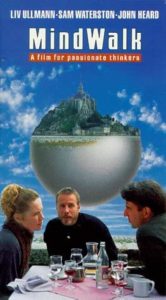
Mindwalk (1990) is a wide-ranging conversation among three characters: a physicist who has just left her job after discovering that her research was being used for weapons development, an American politician who just lost a major election, and a poet. Political and social problems are approached from their differing perspectives as they wander around Mont-Saint-Michel, France. PG.
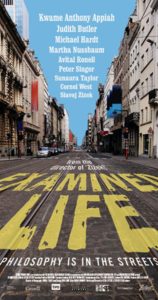
Examined Life (2008) is a documentary subtitled “Philosophy in the Streets.” Famous philosophers and thinkers discuss their theories and ideas while visiting places of particular resonance for them and their ideas. (Cornel West, while driving through Manhattan, compares philosophy to jazz and the blues.) Not rated.
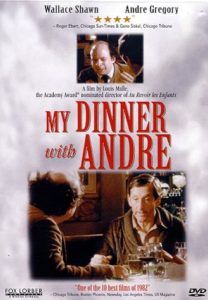
In My Dinner with Andre (1981), two old friends – played by Wallace Shawn and Andre Gregory – meet for a meal and discuss the meaning of life and their very different worldviews. PG.
Matt Whitlock’s Essential Movies for a Student of Philosophy covers 45, with synopses, reviews, and trailers for each.
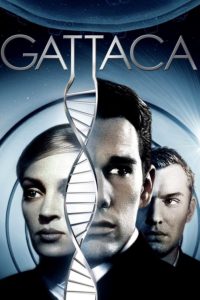
The Guardian’s I Watch Therefore I Am discusses seven different movies – each reviewed by a different philosopher and each covering a key philosophy principle. “How can we do the right thing?,” for example, is the theme of
Force Majeure (2014); “What makes life worth living?” is the theme of Frank Capra’s
It’s a Wonderful Life (1946); and “Is there more to us than biology?” is the theme of
Gattaca (1997).
Some Books to Talk About
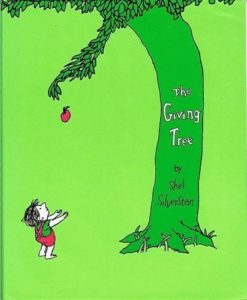
In Shel Silverstein’s much-debated picture book The Giving Tree (HarperCollins, 2003), a tree loves a boy – and gives him everything she has until there’s nothing left of her but a stump. For ages 4-8.
Check out Ruth Margalit’s pro-and-con review, The Giving Tree at Fifty, in the New Yorker.
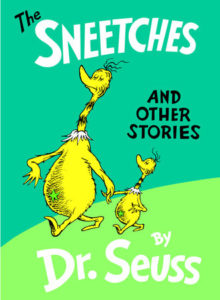
By Dr. Seuss, Sneetches and Other Stories (Random House, 1961) includes the story of the Sneeches, some of whom have stars on their bellies - and some of whom don't. A good jumping-off point to discuss prejudice and diversity. For ages 4-8.
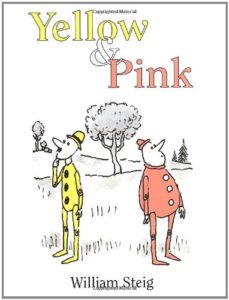
In William Steig’s Yellow and Pink (Square Fish, 1988), a pair of painted puppets debate where they came from. Did they just tumble downhill and fall into puddles of paint? Or did someone make them? For ages 5-8.
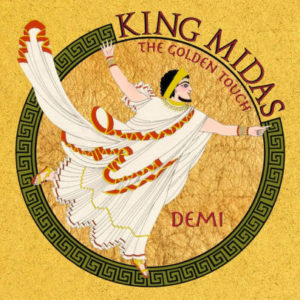
What’s happiness? Is it money? There are many editions of the story of King Midas and the Golden Touch – among them Demi’s beautifully illustrated King Midas (Margaret K. McElderry, 2002). All tell the story of the gold-obsessed king who wishes that everything he touched would turn to gold. When he gets his wish, he realizes that he’s made a terrible mistake. For ages 5-9.
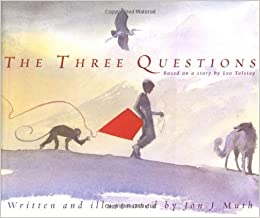
Jon J. Muth’s The Three Questions (Scholastic, 2002) – based on a story by Leo Tolstoy – follows a young boy named Nikolai seeking answers to his three questions: “When is the best time to do things?” “Who is the most important one?” “What is the right thing to do?” For ages 5-9.
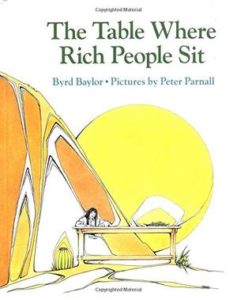
What’s a good life? In Byrd Baylor’s The Table Where Rich People Sit (Aladdin, 1998), Mountain Girl is unhappy with her family’s simple lifestyle – why can’t her parents get better jobs so that they could have nicer things? Then her parents point out all the wonders of nature that surround them and Mountain Girl decides that there’s more than one way of being rich. For ages 6-9.
Alan Arkin's The Lemming Condition (HarperOne, 1989) is the story of Bubber, a lemming and an independent thinker, who isn't about to jump off a cliff. An opportunity to discuss free will. For ages 8-12.
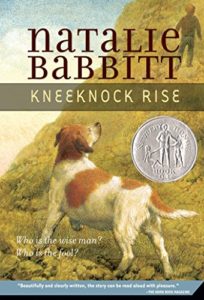
In Natalie Babbitt's KneeKnock Rise (Square Fish, 2007), young Egan arrives in the village of Instep and learns about the Megrimum, the legendary creature who moans and wails at the top of the mountain. When Egan discovers that the source of the sound is a spring in a cave, nobody will believe him. Discuss reality and belief. For ages 9-12.

Carol Kendall's The Gammage Cup (HMH, 2000), a much-underappreciated fantasy, is the wonderful tale of the Minnipins of Slipper-on-the-Water who, in a village competition to win the fabled Gammage Cup, banish non-conformists from their village. The rejected five, however, prove to be heroes when enemies tunnel through the mountains. Discuss differences, independent thinking, and tolerance. For ages 9-12.

In Rebecca Rupp’s Octavia Boone’s Big Questions About Life, the Universe, and Everything (Candlewick, 2012), Octavia struggles to find her way between divorced parents: her Thoreau-quoting artist father and her Biblical literalist mother, now a member of a fundamentalist religious sect. Among her big questions: “Is there a God?” “Why do bad things happen to good people?” “Which religion is the right religion?” “So people have souls or just brains?” “Is there a purpose to life?” The best answer, she finds, comes from Thoreau: “The universe is wider than our views of it.” For ages 9-12.

Antoine de Saint-Exupery’s The Little Prince (Mariner, 2000) is the enchanting and thought-provoking story of the Little Prince, who comes from a tiny asteroid and travels from planet to planet learning about human nature. Eventually he lands in the Sahara Desert, where he meets a pilot, the victim of a plane crash. For ages 10 and up.

The animated version of The Little Prince (2015) is rated PG.
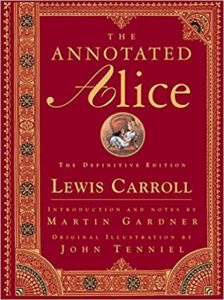
The Annotated Alice (W.W. Norton, 2015) contains both Lewis Carroll’s Alice’s Adventures in Wonderland and Through the Looking-Glass, with extensive notes and explanations by Martin Gardner. If you’ve missed any of the word play, allusions, serious nonsense, or philosophical puzzles in Carroll’s works, you’ll find them here. For ages 13 and up.
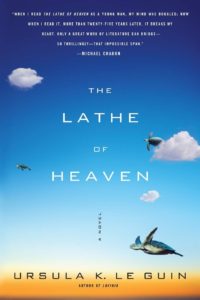
In Ursula K. LeGuin’s The Lathe of Heaven (Scribner, 2008), George Orr discovers that his dreams have the power to alter reality – and only he has a memory of what the world was like before the change. He goes to psychologist William Haber for help – only to find that Haber wants to harness George’s power to further plans of his own. Fascinating – and a great discussion book for teens and adults.
Henry David Thoreau’s Walden and Civil Disobedience – available in many editions and often published together – are standards of pre-college reading lists.
See more resources for Henry David Thoreau.
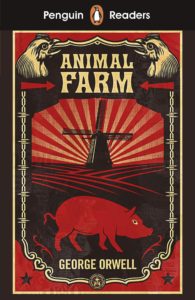
George Orwell’s Animal Farm – also a standard on reading lists – is also available in many editions, including a graphic novel adaptation (Mariner Books, 2020). In an allegory about the Russian Revolution and Stalinism, mistreated farm animals hope to create a new and ideal world – which the farm’s pigs, Snowball, Napoleon, and Squealer, transform into a political philosophy known as “animalism.” Soon, however, in place of the hoped-for egalitarian society, Animal Farm becomes a corrupt dictatorship. For ages 13 and up.
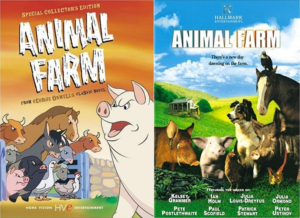
There are at leas two movie versions of Animal Farm, one an animated version (1954); the other an
animatronic version from 1999. See a critical comparison
here.
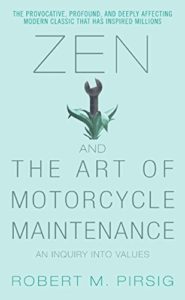
What is quality? Robert M. Pirsig’s Zen and the Art of Motorcycle Maintenance (William Morrow, 2005) turns a father-son motorcycle trip into an exploration of the nature of a good life. For teens and adults.
Games and Experiments
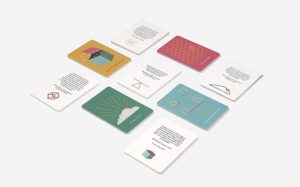
From the School of Life, Philosophical Questions for Curious Minds is a card game of challenging questions based on some of the major conundrums of philosophy. (Imagine you and your best friend swapped brains – which person would be you?) A terrific addition to the family dinner table. For ages 8 and up.
Philosophical Questions is a long online list, categorized under Human Nature and the Human Condition, The Universe and Reality, The Human Mind, Ethics and Morality, Society and Government, and Science and Technology. Make your own philosophical questions game!
Philosophy Experiments is an online interactive collection of philosophical challenges. Problems include “Should You Kill the Fat Man?” “Would You Eat Your Cat?” and “Framing the Epidemic.” Prepare for interesting, but tough, decisions.

Philosophy through videogames? From PC Games, check out this list.