
Wizards and Magicians
In this collection
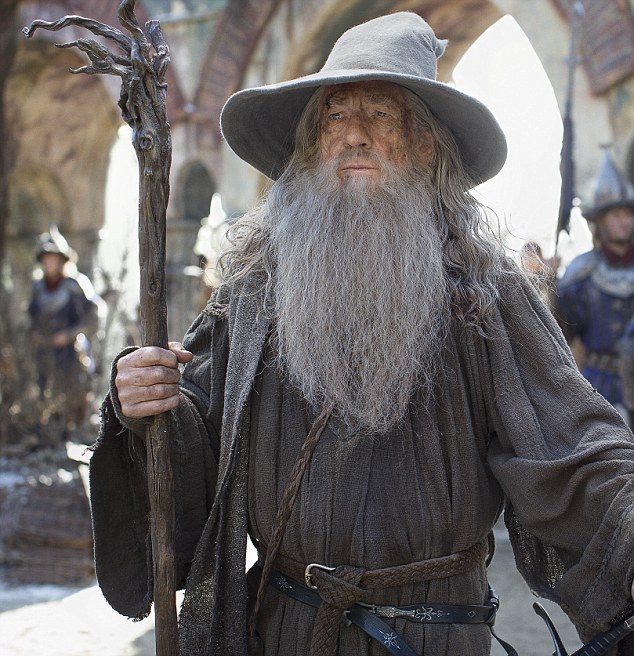
Everyone (well, almost) loves Harry Potter – but Harry and friends are not the only wizards. There’s also Gandalf, of J.R.R. Tolkien’s The Hobbit and Lord of the Rings; Schmendrick, the inept magician of Peter S. Beagle’s wonderful The Last Unicorn; Ged of Ursula LeGuin’s Wizard of Earthsea; Dallben of Lloyd Alexander’s Chronicles of Prydain; and Merlin of the King Arthur tales. And many more.
See below for wizard stories, magic tricks, the science of magic, and all about master magician Harry Houdini.
Fictional Magicians

Annette LeBlanc Cate’s The Magic Rabbit (Candlewick, 2007) is the picture-book story of the Amazing Ray, a magician, and his best friend, Bunny, who – at the word “Abracadabra!” – leaps from Ray’s top hat in a shower of glittering stars. When the two are separated, after a disastrous collision with a juggler and his dog, popcorn and a trail of golden stars help Bunny find his way home. Simple, but charming, for ages 3-6.

In Chris Van Allsburg’s picture book The Garden of Abdul Gasazi (Houghton Mifflin Books for Children, 1979), Alan has been put in charge of Miss Hester’s badly behaved dog, Fritz, who – ignoring the “ABSOLUTELY, POSITIVELY NO DOGS ALLOWED” sign - dashes into the eerie topiary garden of the dog-hating retired magician Abdul Gasazi (and is just possibly turned into a duck). For ages 5-10.
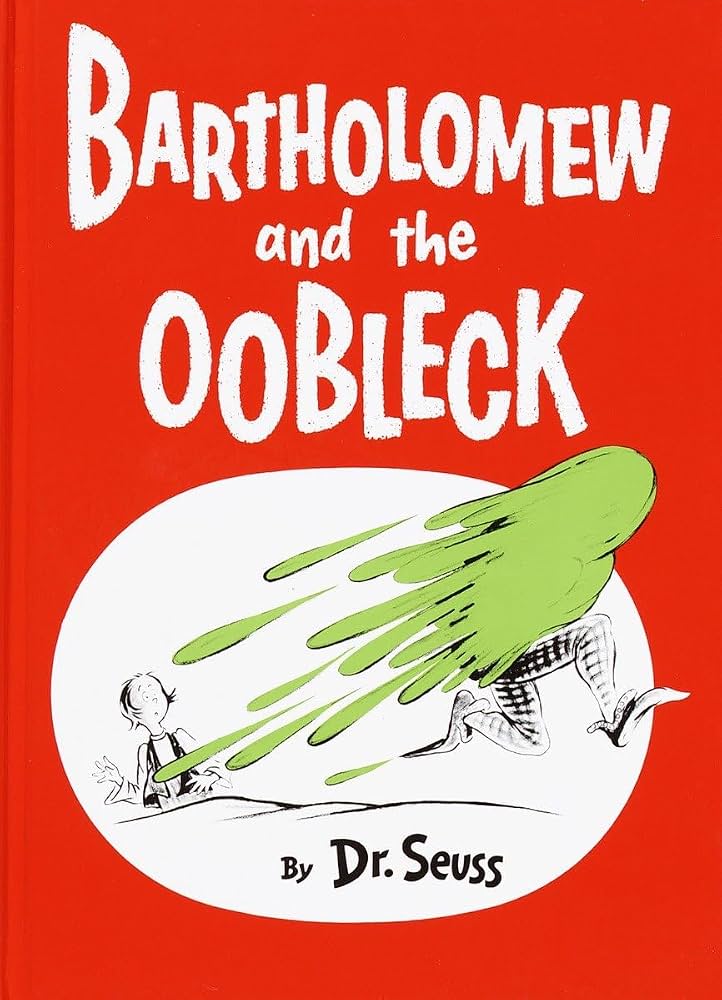
In Dr. Seuss’s Bartholomew and the Oobleck (Random House, 1949), King Derwin of Didd is bored with the weather – and so orders the royal magicians (“Mystic men who eat boiled owls”) to create something different to fall from the skies. They come up with oobleck – a sticky green goo – and it’s up to page boy Bartholomew Cubbins to deal it. For ages 5-9.
Make your own oobleck! All you need: 2 cups of cornstarch, 3-4 drops green food coloring, and 1 cup of water. See https://www.food.com/recipe/dr-seuss-oobleck-289923.
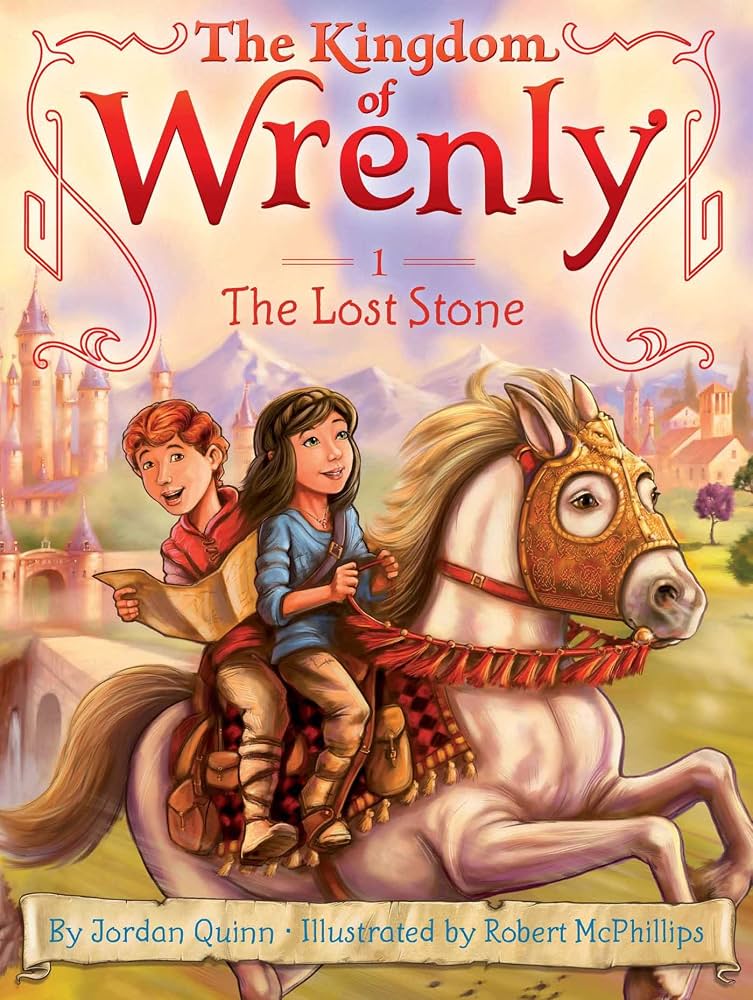
In Jordan Quinn’s The Kingdom of Wrenly fantasy adventure series, Book One: The Lost Stone (Little Simon, 2014) introduces eight-year-old Prince Lucas who sets out to explore the kingdom along with Clara, daughter of the queen’s seamstress. Together they visit Wrenly’s islands of fairies, trolls, dragons, and wizards – plus the Mermaid’s Cove – in search of a lost emerald. Illustrated chapter books for ages 5-9.
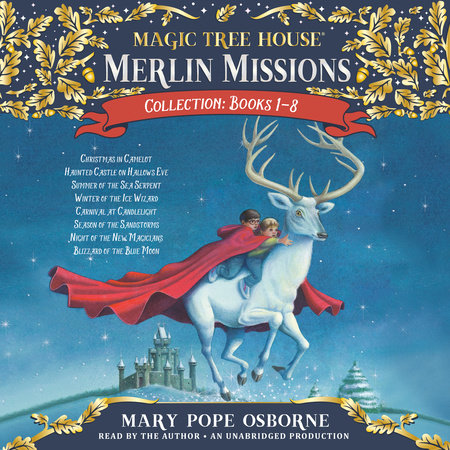
In the Merlin Missions books, a spin-off of the popular Magic Tree House series by Mary Pope Osborne, Jack and Annie now are assigned missions through time by the magician Merlin. Book #1 is Christmas in Camelot. For ages 7-10.

The Boy, the hero of Susan Cooper’s The Magician’s Boy (Aladdin, 2006) is the unhappy employee of a magician who refuses to let him learn magic. Instead he polishes the magician’s wand, tends his garden, feeds his rabbits, and operates the puppets for his performances of the puppet play “Saint George and the Dragon.” When the Saint George puppet is lost, the magician sends the Boy to the fairy-tale Land of Story to find it – and after dealing with dangers, difficulties, Red Riding Hood’s wolf, and a dragon, he ultimately wins his heart’s desire. A chapter book for ages 7-11.
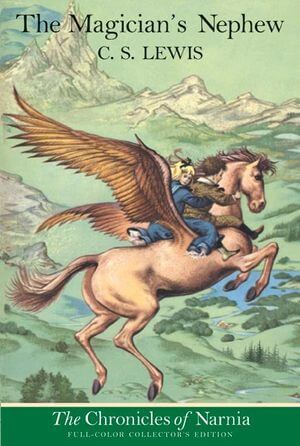
In C.S. Lewis’s Chronicles of Narnia series, most read The Lion, the Witch, and the Wardrobe first – but at least in theory Book One is The Magician’s Nephew (HarperCollins, 2000) in which Digory and Polly – with magic rings provided by Digory’s unpleasant Uncle Andrew, a magician – end up in a strange new world. Readers learn all about the creation of Narnia. For ages 7 and up.
The movie version of The Magician’s Nephew, directed by Greta Gerwig, premieres in 2027. See https://www.imdb.com/title/tt9077514/.

In J.R.R. Tolkien’s The Hobbit (HMH, 2012), originally published in 1937, readers are first introduced to Bilbo Baggins, Gandalf the wizard, and Middle-Earth in an adventurous tale that involves dwarves, elves, goblins, and a dragon. For ages 7-12.

L. Frank Baum’s classic The Wonderful Wizard of Oz (available in dozens of editions) was originally published in 1900, featuring – along with Dorothy and companions, an awful Wicked Witch, and some creepy Winged Monkeys – a totally bogus, but endearing, Wizard, who reached Oz by accident (from Omaha) in a hot-air balloon. There are fourteen books by Baum in the original series, though the Oz opus now numbers in the dozens, continued by Ruth Plumly Thompson, John R. Neill, and others.

For Oz enthusiasts, also see The Annotated Wizard of Oz (W.W. Norton & Company, 2000), edited by Michael Patrick Hearn, which includes a detailed history of the book and its author, hundreds of notes and explanations, and period photographs and illustrations.

In the classic film version of The Wizard of Oz (1939), Judy Garland as Dorothy Gale dances down the Yellow Brick Road with Ray Bolger (the Scarecrow), Bert Lahr (the Cowardly Lion), and Jack Haley (the Tin Woodsman). Margaret Hamilton, in green makeup, plays the Wicked Witch of the West. Rated PG, probably for the creepy Flying Monkeys.
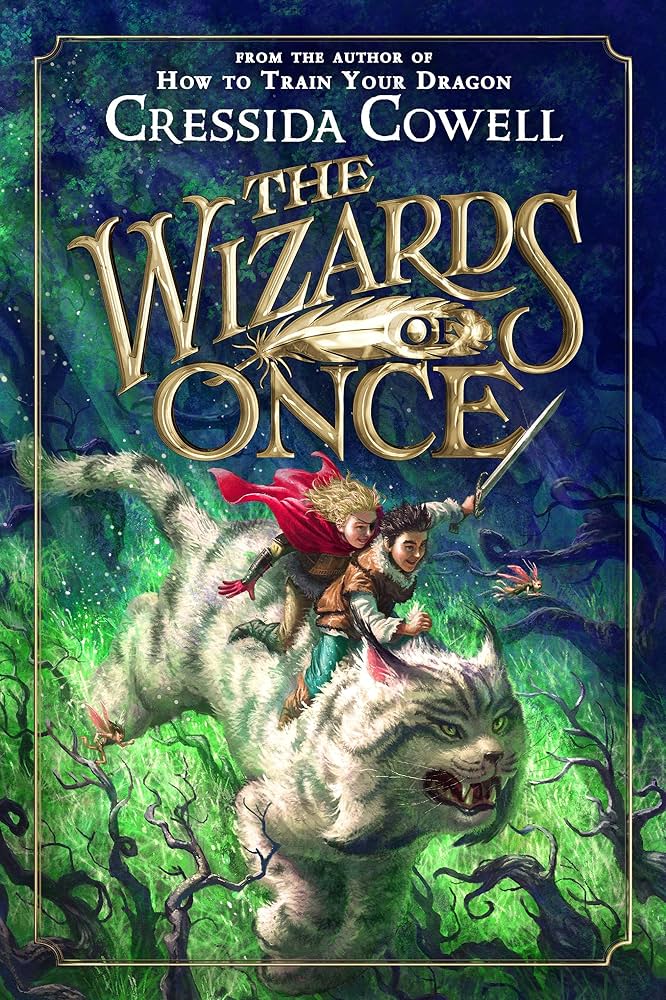
In Cressida Cowell’s The Wizards of Once (Little, Brown, 2018), Wizards are magic and Warriors are not. Then Xar, son of Encanzo the Enchanter, who can’t cast a single spell, and Wish, daughter of Sychorax, queen of the Warriors, who owns a banned magical object and has a “magic eye,” meet up in the wildwood, and join forces to battle the fearsome witches. A rich fantasy world with roots in ancient Britain. For ages 8-11. Three sequels.
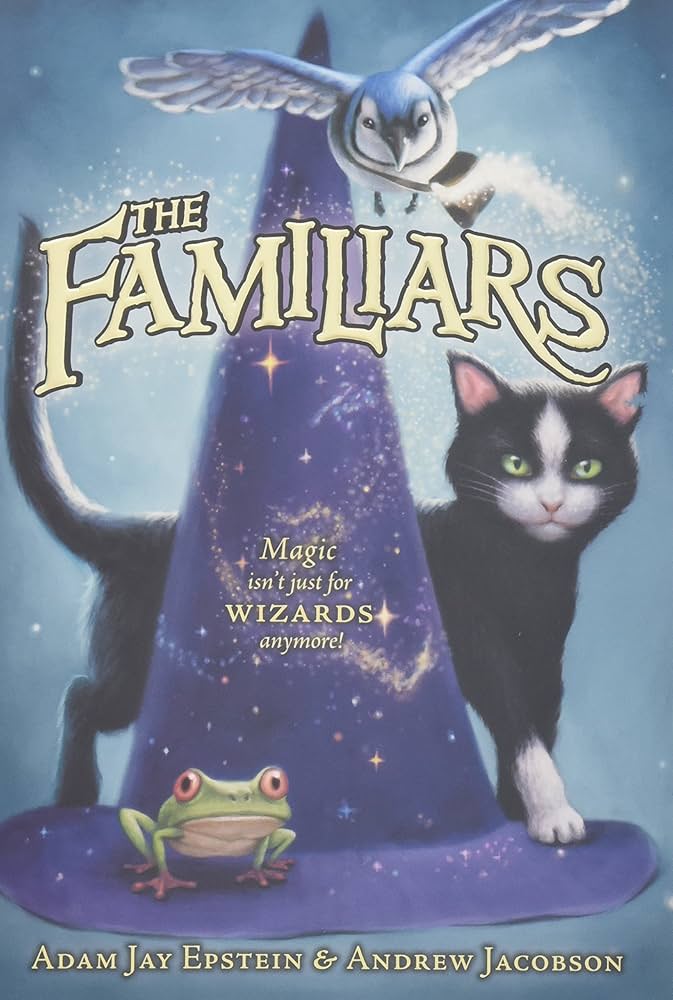
In The Familiars by Adam Jay Epstein and Andrew Jacobson (HarperCollins, 2011), Aldwyn, a scruffy alley cat, ducks into a magical pet shop to avoid capture – and ends up as a familiar to Jack, a young wizard in training. When Jack and friends are kidnapped by a witch, it’s up to Aldwyn and his friend familiars – Gilbert, a tree frog, and Skylar, a bluejay – to save them. For ages 8-11.

In Delia Sherman’s The Evil Wizard Smallbone (Candlewick, 2016), 12-year-old Nick, running away from his abusive uncle, stumbles into the bookstore owned by the possibly evil Wizard Smallbone. A delightful adventure featuring werewolves on motorcycles and a town of enchanted seals. For ages 8-12.

Susan Cooper’s Over Sea, Under Stone (Margaret K. McElderry, 2007), the first of the five-book Dark Is Rising series, is the story of Simon, Jane, and Barney Drew who, on a summer vacation at an old house in Cornwall, discover an ancient map. The map leads to a treasure associated with Arthurian legend, a key factor in the ancient battle between good and evil - and the children, with the help of their mysterious mentor Professor Merriman Lyon, must secure it before it’s nabbed by the sinister Mr. Withers and his sister. (By the end of the story, the kids also discover - SPOILER - that Professor Lyon is really Merli.) For ages 9-12. Subsequent titles in the series are Greenwitch, The Dark Is Rising, The Grey King, and Silver on the Tree.
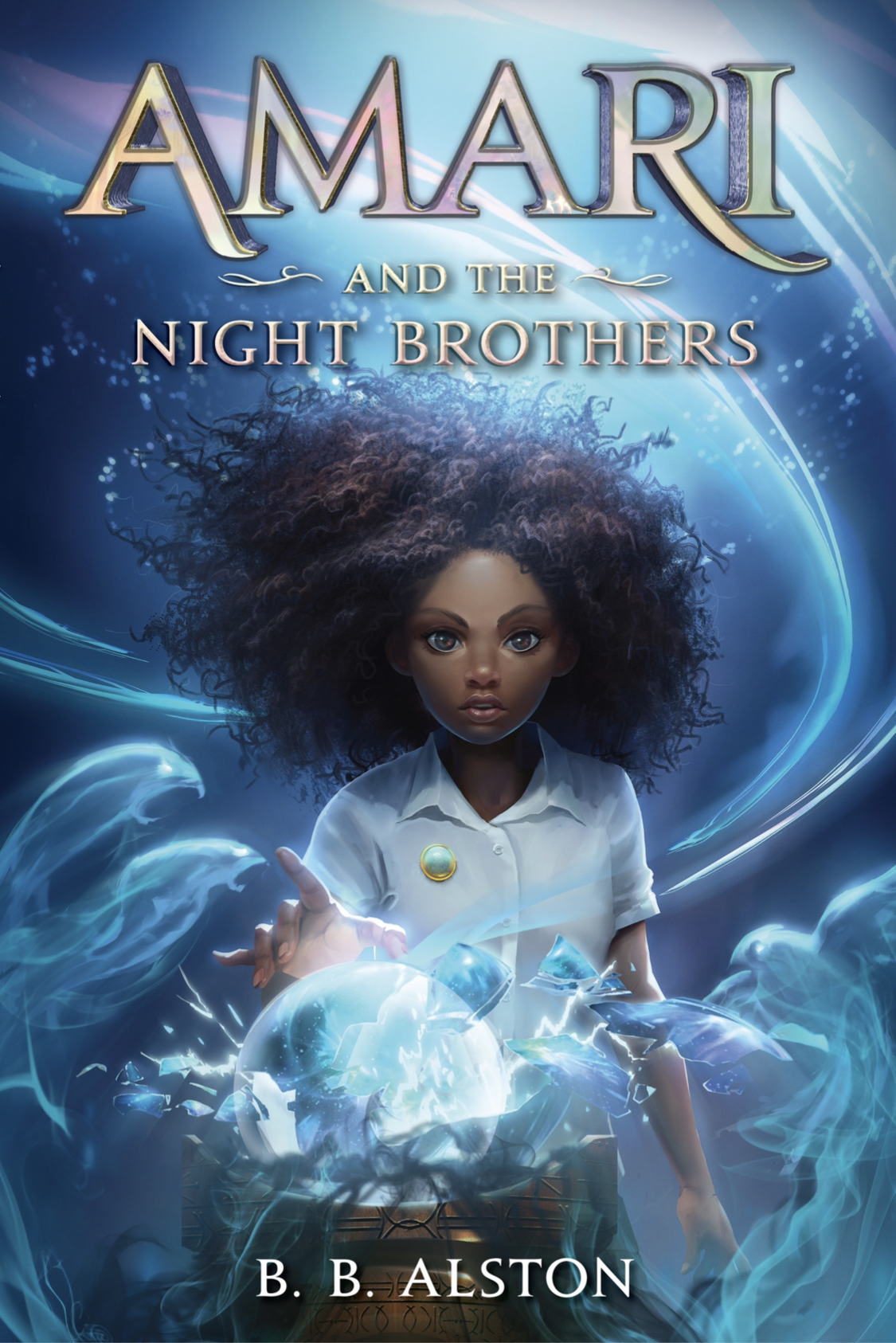
In B.B. Alston’s Amari and the Night Brothers (Storytide, 2022), Amari’s brother Quinton has disappeared – and despite what anyone tells her, Amari is convinced he’s still alive. Then she finds a ticking briefcase in Quinton’s closet containing a nomination for a tryout at the Bureau of Supernatural Affairs. There Amari discovers that she has extraordinary magical powers and becomes involved in tracking down the evil magician who now threatens the entire supernatural world. (And what a world it is, filled with mermaids, yetis, witches, strange artifacts, and spells.) Sequel is Amari and the Great Game. For ages 9-12.

T.H. White’s The Sword in the Stone (Philomel, 1993) is the stand-alone first section of White’s longer re-telling of the Arthurian legend, The Once and Future King. Appropriate for ages 9 and up, The Sword in the Stone is far deeper and more complex – and wittier – than the boiled-down Disney movie version. This is story of the boy Arthur – known as the Wart “because it more or less rhymed with Art, which was short for his real name” – and his most unusual education by Merlin, with the help of hawks, owls, fish, ants, wild geese, and Robin Wood (yes, Wood) and his Merry Men. It ends as Wart pulls the sword from the stone and is revealed as King Arthur.
The story continues in The Once and Future King with “The Queen of Air and Darkness,” “The Ill-Made Knight,” and “The Candle in the Wind,” generally recommended for ages 13 and up.

The Disney cartoon version of The Sword in the Stone is rated G.

Lloyd Alexander’s Chronicles of Prydain (Square Fish, 2011) is a five-book series – The Book of Three, The Black Cauldron, The Castle of Llyr, Taran Wanderer, and The High King – loosely based on Welsh mythology. A wonderful fantasy series for ages 9 and up. As in all good fantasy series, there’s an assistant pig-keeper, a princess, a bard, a dwarf, and a wizard.

The Disney animated movie The Black Cauldron (1985) is loosely based on the first two books of the series. Rated PG.

J.K. Rowling's Harry Potter and the Sorceror's Stone - now available in many languages and editions - is the story of the orphaned Harry, raised by a dreadful aunt and uncle, who finds that he's actually a wizard and has been accepted into the Hogwarts School of Witchcraft and Wizardry. The first of a seven-book series for ages 9 and up.

Harry Potter and the Sorceror's Stone (2001) is the first of eight movies based on the seven books. Rated PG.
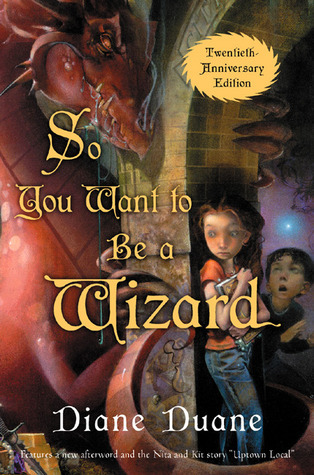
In Diane Duane’s So You Want to Be a Wizard (HMH, 2003), Nita finds a mysterious book at the library that sets her on the path to become a wizard – which turns out to be more dangerous than she had imagined. For ages 10-12.
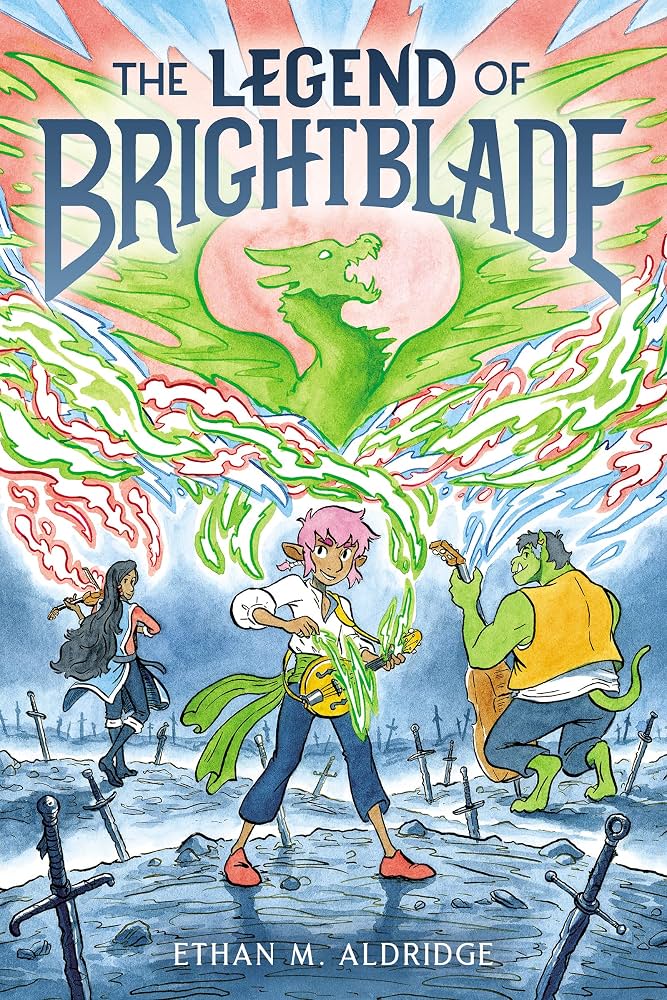
In Ethan M. Aldridge’s gorgeously illustrated graphic novel The Legend of Brightblade (Quill Tree Books, 2022), young Prince Alto, who lives in a land where bards wield musical magic, runs away to pursue the life of a bard on his own. As he makes new friends and learns more about his magic, he encounters the dangerous Discords, who use their magic to create conflict. For ages 10 and up.

In Kate DiCamillo’s The Magician’s Elephant (Candlewick, 2011), ten-year-old orphan Peter Augustus Duchene visits a fortune-teller and learns that his long-lost sister Adele is still alive and that an elephant will lead him to her. That very evening the elephant arrives, crashing through the roof of the town opera house, inadvertently conjured up by a magician. It’s a somewhat dark tale, in which a collection of eccentric characters – among them a beggar, a soldier with a wooden foot, a crippled noblewoman (the elephant fell on her), and a carver of gargoyles – deal with issues of truth, hope, compassion, and ultimately, love. For ages 10-13.
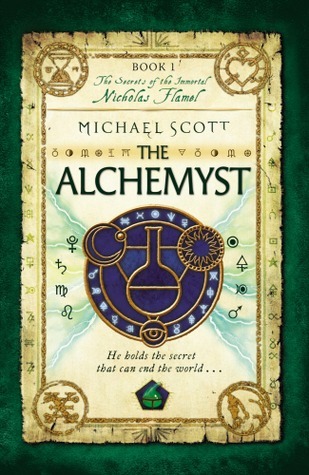
In Michael Scott’s The Alchemyst (Ember, 2008), first of The Secrets of the Immortal Nicholas Flamel series, Flamel – the greatest Alchemyst of all time – has hidden the secrets of eternal life in a book which, if it falls into the wrong hands, has the power to destroy the world. Now Dr. John Dee is out to steal the book – and it’s up to siblings Sophie and Josh to stop him. For ages 11 and up.

In Ursula K, LeGuin’s A Wizard of Earthsea (HMH, 2012), the first of a series, Ged, the greatest wizard in Earthsea, in his youth recklessly loosed a terrible shadow upon the world, and now must hunt it down. For ages 12 and up.

Peter S. Beagle’s The Last Unicorn (Ace, 1991) features Schmendrick, an inept magician, who accompanies the unicorn on her quest to find others of her kind – and eventually to confront King Haggard and his Red Bull, who drove the unicorns from the land. For teens and adults.

The animated version of The Last Unicorn is rated G.
A Shakespearean Wizard

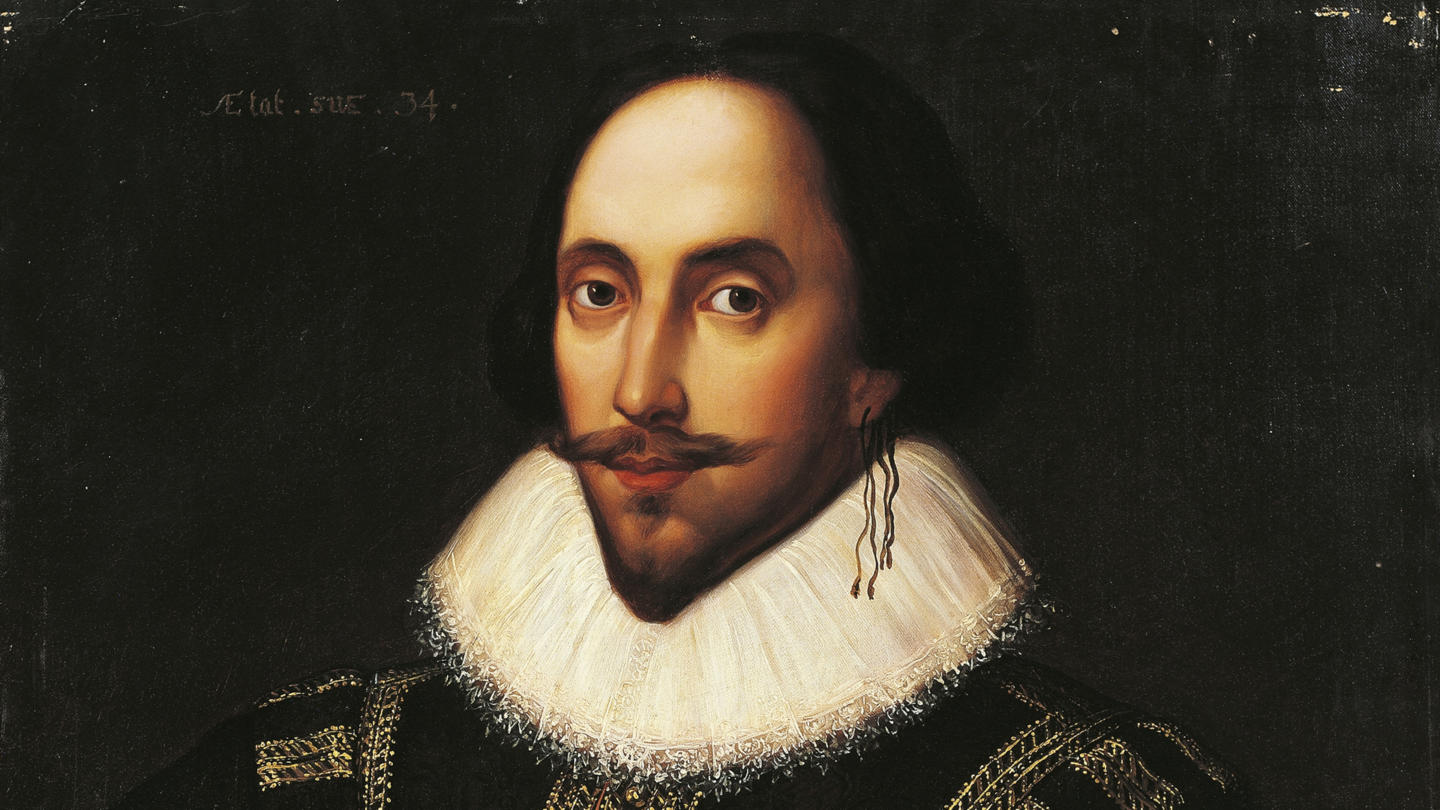
Prospero, Shakespeare’s famous magician, rules the enchanted island on which the action takes place in The Tempest. If your kids are too young for the original play, see Lois Burdett’s The Tempest (Firefly Books, 1999) in the Shakespeare Can Be Fun series for ages 5-9. These books, illustrated with terrific children’s drawings, convey Shakespeare’s plots through a kid-friendly rhyming text. It’s not the Bard’s language, but readers will get the general idea.

Marcia Williams’s Tales from Shakespeare (Candlewick, 2004) for ages 6-10 has whimsically illustrated comic-strip versions of seven plays, among them The Tempest.

For ages 9-13, Tina Packer – Shakespearean expert and director of the Shakespeare & Company theatre group – provides prose versions of ten of the best-known plays, among them The Tempest, in Tales from Shakespeare (Scholastic, 2004). The book is beautifully designed – each play is introduced with a full-page painting – and the dialogue preserves some elements of Shakespearean language.

Charles and Mary Lamb’s classic Ten Tales from Shakespeare (Dover Publications, 2003) for ages 9-12 includes a prose re-telling of The Tempest.
Tricks of the Trade

The Instructables website has illustrated instructions for making a cardboard magician-style top hat.

Make Harry-Potter-style magic wands! You’ll need a chopstick, hot glue, and paint.

Seriously into magic? The Society of Young Magicians – the youth branch of the Society of American Magicians – publishes a monthly online magazine, offers email mentoring, and sponsors magic camps for aspiring magicians ages 7-17.
The Science of Magic
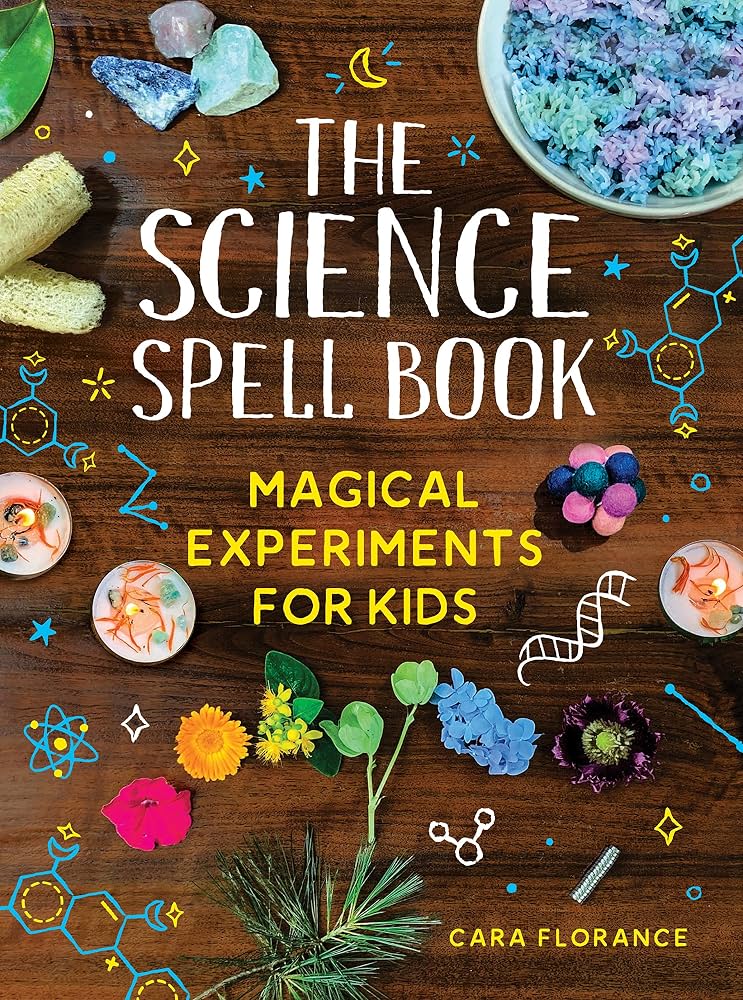
Cara Florance’s The Science Spell Book (Sourcebooks Explore, 2022) is a collection of 30 catchily titled experiments. Try Color Inversion Spell, Spellbound Circuit, Glowing Gauntlets, and Sorcerer’s Stone. For ages 7-10.
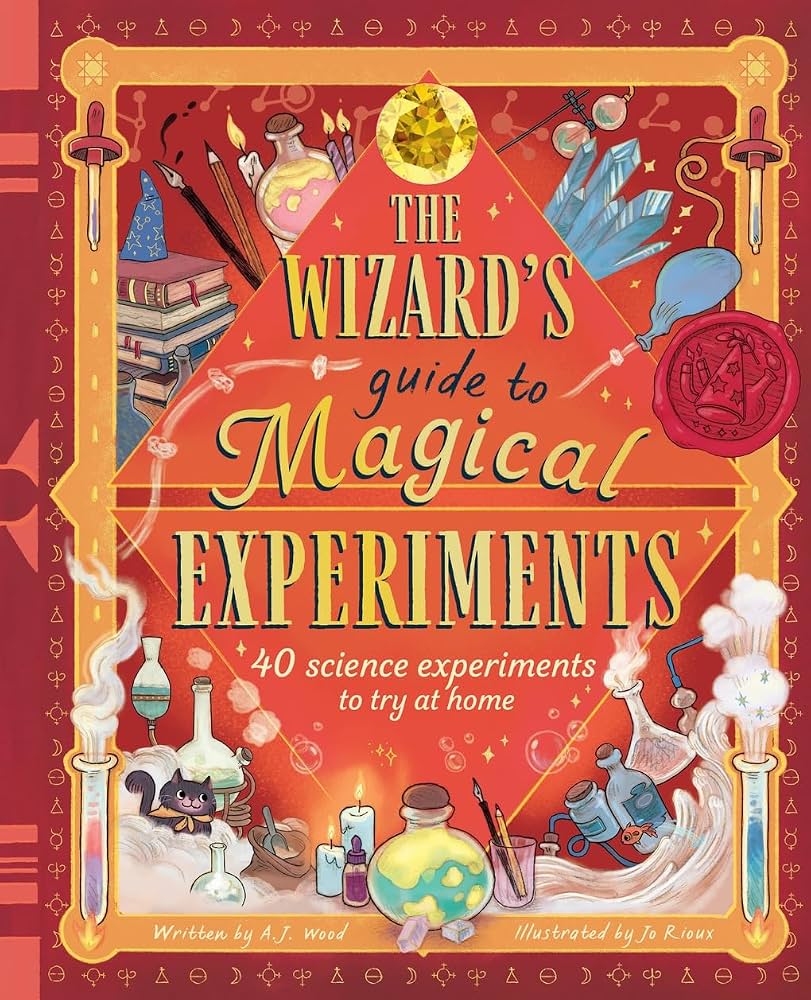
By A.J. Wood, The Wizard’s Guide to Magical Experiments (Abrams, 2025) is a collection of 40 fun experiments, ostensibly from the Touchwood Academy of Magical Thinking. Kids can make Oil Fireworks, Invisible Ink, and a Magic Lava Lamp. For ages 7-10.
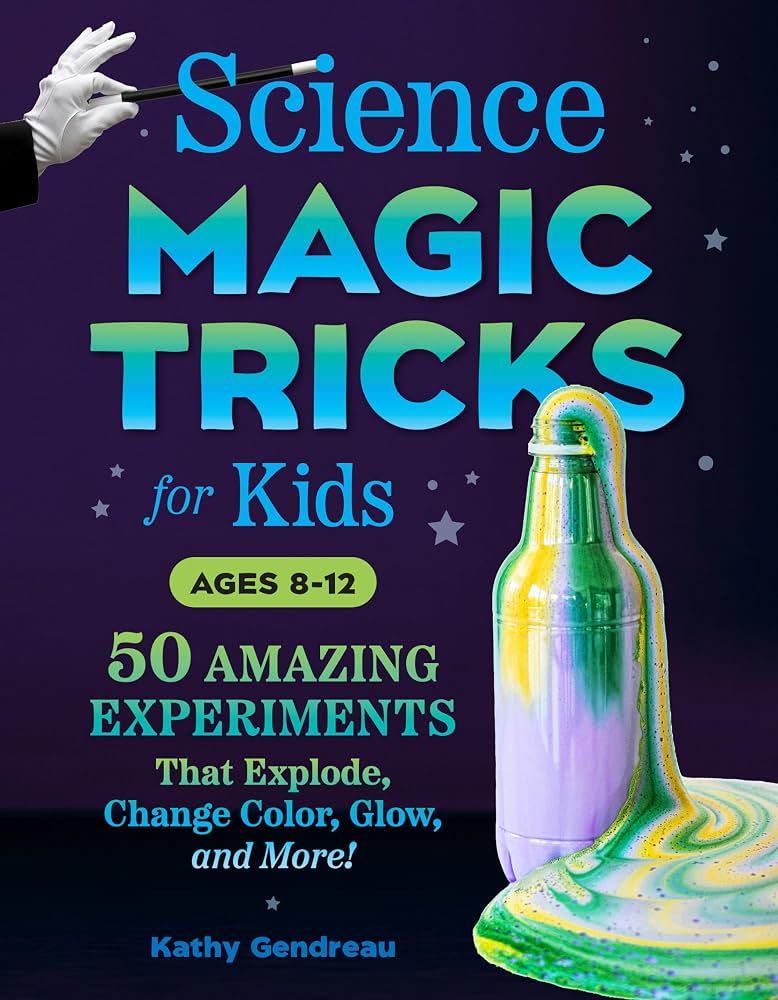
By Kathy Gendreau, Science Magic Tricks for Kids (Z Kids, 2023) is a collection of 50 (“amazing”) experiments, filled with things that glow, bubble, balance, or ooze. Scientific principles behind the tricks are clearly explained. Illustrated with color photos. For ages 8-11.
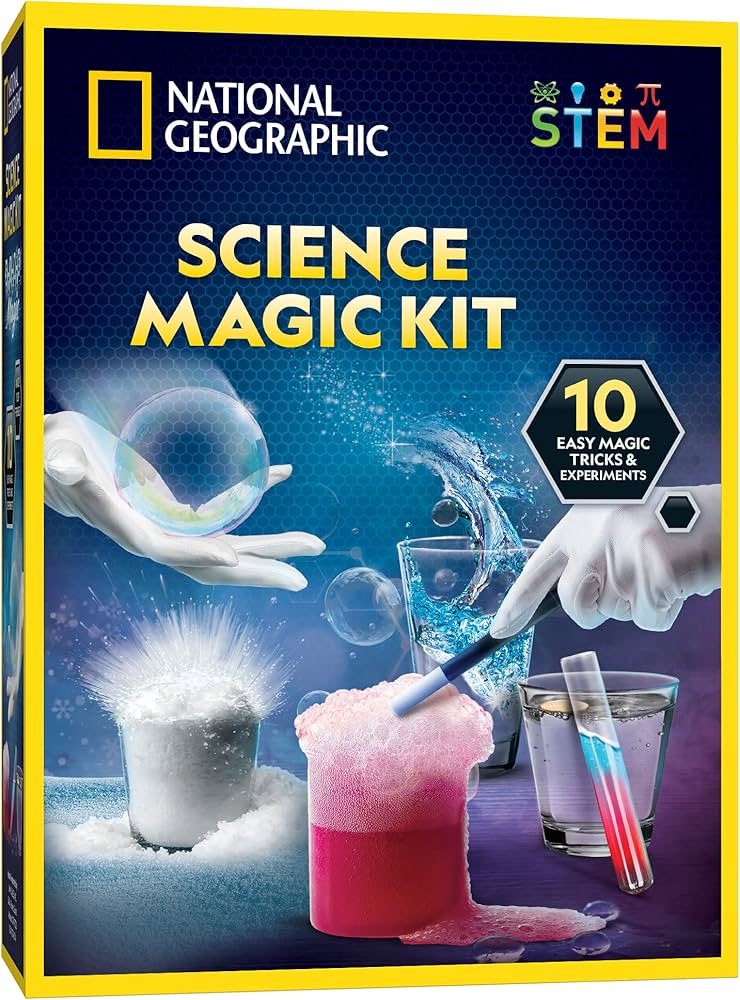
For wannabe magicians (with a splash of science), see the Blue Marble National Geographic Science Magic Kit, which – along with a magic wand and a pair of white gloves – has all the ingredients for ten showy experiments. For example, kids can change the color of a solution, make a coin float, create instant snow, and more. For ages 8-12. From Amazon or from Blue Marble at https://thinkbluemarble.com/shop/.
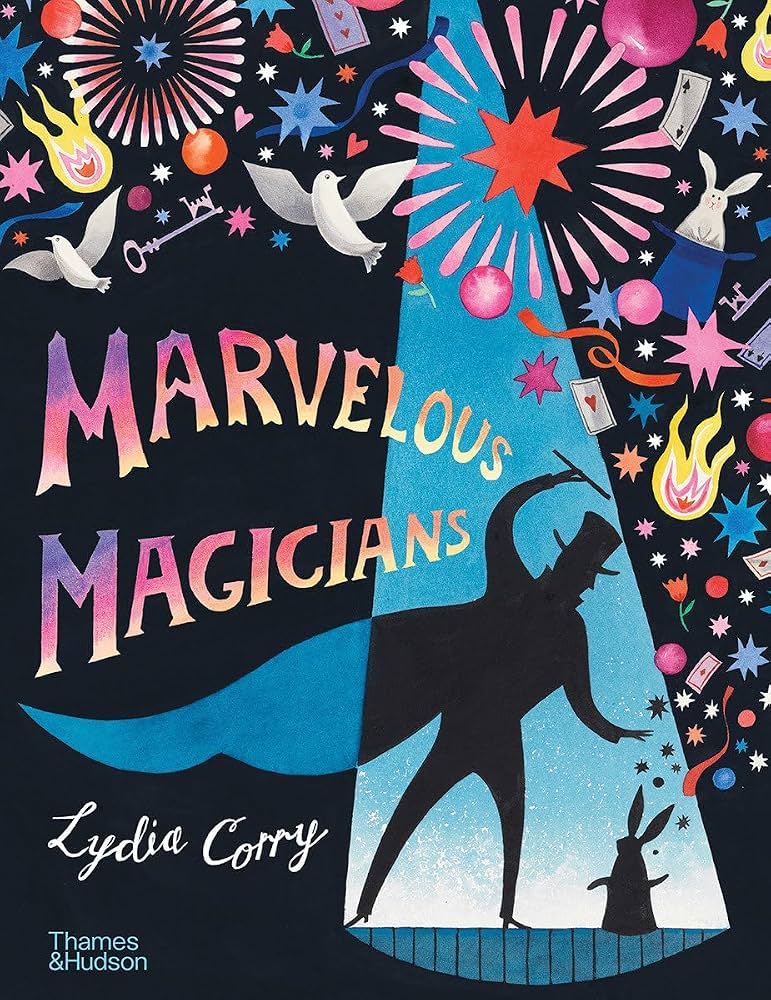
Lydia Corry’s Marvelous Magicians (Thames & Hudson, 2020) is a collective biography (and how-to guide) to eight groundbreaking illusionists and their illusions. (A section titled "Insider Secrets" explains how the illusions work.) For ages 8-12.

Roger Highfield’s The Science of Harry Potter: How Magic Really Works (Penguin, 2002) discusses the science, history, and mythology behind the Harry Potter books. (Does the Sorting Hat operate on brain waves? Was John Dee, conjurer to Queen Elizabeth I, the inspiration for Albus Dumbledore? Is the magical entrance to Platform 9 ¾ a wormhole?) Fascinating and fun reading for older teenagers and adults.

Jim Steinmeyer’s Hiding the Elephant: How Magicians Invented the Impossible and Learned to Disappear (Da Capo Press, 2004) is a fascinating history of stage magic from the mid-19th century to the 1920s, with a spectacular cast of characters. The title refers to a famous performance in 1918 when Harry Houdini made Jennie, an elephant, vanish from a circus wagon on the stage of the New York Hippodrome. For teenagers and adults.

Sleights of Mind by Stephen L. Macknik and Susana Martinez-Conde (Henry Holt and Company, 2010) is subtitled “What the Neuroscience of Magic Reveals About Our Everyday Deceptions.” The authors explain how magicians exploit the normal workings of our brains to fool us, and how our brain function can similarly play us false in daily life – via visual, cognitive, multisensory, and memory illusions, false expectations and assumptions, illusory correlations and superstitions, and more. Forewarned is forearmed, sort of. For older teenagers and adults.
From Scientific American, see What Can Magicians Teach Us About the Brain?
National Magic Day is March 24 – That is, Harry Houdini’s birthday.

David A. Adler’s A Picture Book of Harry Houdini (Holiday House, 2010) – one of Adler’s extensive Picture Book Biography series – is a simple 32-page biography for ages 5-8, with rich color illustrations.

Kathleen Krull’s Houdini: World’s Greatest Mystery Man and Escape King (Walker & Company, 2007) is a dramatic picture-book biography for ages 6-10 that gives a sense of Houdini’s showmanship. (“Welcome! Enter! Prepare to be dazzled!” the book begins.) Biographical information is interspersed with framed descriptions of Houdini’s most famous tricks.

Sid Fleischman’s Escape! The Story of the Great Houdini (Greenwillow, 2006), a photo-illustrated biography for ages 9-14, tells how young Ehrich Weiss, a poor Jewish boy from Budapest, Hungary, managed to transform himself into one of the greatest magicians of all time, capable of making elephants disappear and able to escape from high-security lock-ups at Scotland Yard. A fascinating addendum describes Fleishman’s own visits with Madame Houdini.

Brian Selznick’s The Houdini Box (Atheneum, 2008), a fiction book for ages 7-11, pairs the story of Houdini with that of ten-year-old Victor, who yearns to be a magician. After a chance encounter with Houdini, Victor visits his house – only to learn that the great man has just died. He has, however, left Victor a mysterious box – which just may hold the secret to Houdini’s famous escapes.

I, Houdini (Yearling, 2003) by Lynne Reid Banks is the tale of Houdini’s most unusual namesake: a brilliant hamster escape artist who – leaving chaos in his wake – eventually pulls off the ultimate escape and sets out to explore the great outdoors. A fun and funny read for ages 8-11.

Laurie Carlson’s Harry Houdini for Kids (Chicago Review Press, 2009) is an informational activity book on the life and times of the world’s most famous magician and escape artist, illustrated with wonderful period prints and photographs. The accompanying “21 Magic Tricks and Illusions” include learning to tie a magic knot, tackling the Magic Key trick, building a box kite, cracking a secret code, writing an invisible message, and whipping up a batch of ectoplasm. A helpful resource list includes supplementary reading suggestions and related web sites to explore. For ages 9 and up.

From PBS's American Experience series, Houdini has a film transcript, video clips, a gallery of Houdini posters, a timeline of Houdini’s life, and associated background information.

The Library of Congress American Memory project has a Houdini biography linked to historical images from the Library’s collection.