
At the Library

In this collection
See below for books about libraries and librarians, animals at the library (including the real-life tale of Dewey the Library Cat), library mysteries, library poems, library projects, and a handful of really strange libraries...
Library Tales

In Anna McQuinn’s Lola at the Library (Charlesbridge Publishing, 2006), Lola – who sports adorable pigtails – loves Tuesdays, when she and her mother visit the library. The book follows Lola through the day, ending with new library books and a story at bedtime. For ages 2-5.

In Laura Numeroff’s Beatrice Doesn’t Want To (Candlewick, 2008), Beatrice’s big brother Henry has to write a school report on dinosaurs - but he also has to babysit for Beatrice. He ends up taking Beatrice with him to the library, with Beatrice protesting (“I don’t want to!”) every step of the way. Finally, in spite of herself, Beatrice becomes entranced by a library story time and Henry, when he comes to retrieve her, finds her happily curled up in a chair, lost in a book. For ages 3-6.

In Margret and H.A. Rey’s Curious George Visits the Library (Houghton Mifflin, 2003), the Man in the Yellow Hat takes George to story hour – where the disaster-prone little monkey gets twitchy (he wants to read a dinosaur book) and chaos ensues. All ends happily, however, with new books and George’s own library card. For ages 3-7.

In Marc Brown’s D.W.’s Library Card (Little, Brown Books for Young Readers, 2003), Arthur’s little sister struggles to learn to write her full name so that she can get a library card in order to check out the book she’s been craving, Hop-a-Long Frog. A nicely done story (who doesn’t love Arthur and D.W.?) but I kept thinking “Why all this name-writing stuff? Just give the kid a library card!” For ages 3-7.

There’s an endless appeal to stories about what goes on after dark in the department store, toy store, dollhouse – and library. In Megan MacDonald’s When the Library Lights Go Out (Atheneum Books for Young Readers, 2009), the library puppets, Lion, Rabbit, and Hermit Crab, have a wonderful and imaginative moonlight adventure that ends with a picnic under the stars. A fun pick for library pajama parties. For ages 3-7.

Sarah Stewart’s rhyming picture book The Library (Farrar, Straus & Giroux, 1995) is the story of young Elizabeth Brown, bookworm, who didn’t like to play with dolls and didn’t like to skate – all she liked to do was read. Finally she accumulates so many books that there’s simply no more room: “Volumes climbed the parlor walls/And blocked the big front door/She had to face the awful fact/She could not have one more.” It’s a problem with which many of us can sympathize. Elizabeth’s solution is perfect: she donates her books to the town and turns her house into a library. For ages 4-8.

In Alexander Stadler’s Beverly Billingsly Borrows a Book (Sandpiper, 2006), Beverly, a panic-stricken small bear, has so adored her chosen library book (Dinosaurs of the Cretaceous Period) that she’s kept it too long and the book is now overdue. Friends have told her that she owes a thousand dollars in library fines and that she might end up in jail. Beverly is too upset to eat; she even has a nightmare in which the book’s due date – APRIL 7 – appears printed in red all over her pajamas. Finally she breaks down and confides in her mother; the book is safely returned; and the kindly librarian puts Beverly’s fears to rest. For ages 4-8.

In Lisa Campbell Ernst’s Stella Louella’s Runaway Book (Simon & Schuster Books for Young Readers, 2001), Stella’s library book (“due today by five o’clock”) is missing and Stella is in a tizzy. There follows a frantic cumulative search, beginning with her brother Sam, who left it on the porch by the mailbox, and variously pulling in the mailman, a neighbor, a policeman, the owner of the town diner, an entire scout troop, and more, until finally the book turns up – safely back in the hands of Mrs. Graham, the librarian. For ages 4-8.

In Lauren Child’s But Excuse Me That is My Book (Dial, 2006), the irrepressible Lola is convinced that Beetles, Bugs, and Butterflies is the best book in the world. In fact, it’s the only book that she will check out of the library. When the beloved book is not on the shelves – and Lola sees another little girl walking out with it – big brother Charlie has to explain how libraries work: the books are there to be borrowed and shared. Eventually he even manages to convince Lola to try a new book – Cheetahs and Chimpanzees. For ages 4-7.

In Barbara Bottner’s Miss Brooks Loves Books (and I Don’t) (Knopf Books for Young Readers, 2010), Missy – a ragamuffin first-grader with an evil glare, in overalls and a woolly hat – can’t abide librarian Miss Brooks, who dresses up like book characters and does her best to find every child a perfect book. Missy rejects them all: fairies are too flowery, dogs too furry, trains too clickety. (“You’re as stubborn as a wart,” Missy’s frustrated mother says.) But finally the imaginative Miss Brooks does find Missy’s perfect book: William Steig’s Shrek, the story of a stubborn, smelly, snorty, green ogre, with warts. A hoot for ages 4-8.

In Mike Thaler’s The Librarian from the Black Lagoon (Cartwheel Books, 2008), Hubie’s class is off to visit the library – rumored to be a dreadful place, presided over by the fearsome librarian Mrs. Beamster. There’s said to be a Gum Detector at the door; kids are glued to the chairs to keep them from wiggling; all the books are bolted to the shelves, and anybody who whispers gets laminated. Luckily this isn’t the case. For ages 4-8.

Kate Bertheimer’s The Lonely Book (Schwartz & Wade, 2012) is essentially The Velveteen Rabbit for books. When the book first arrives at the library, brand new, it is loved by all – but over time it grows worn and tattered; its last page is missing; and no one checks it out anymore. Relegated to the basement, the book languishes – until finally a little girl discovers it and is enchanted. For ages 4-8.

Carlene Morton’s The Library Pages (Upstart Books, 2010) is every librarian’s nightmare. Mrs. Heath, the school librarian, is out on maternity leave, but helpful kids send updates about how they’re keeping the library running smoothly: shelving the books by color, mending them with duct tape, and cutting up the encyclopedias for collages. Before Mrs. Heath totally melts down, it turns out to be an April Fool’s joke. For ages 4-9.

Suzanne Williams’s Library Lil (Puffin, 2001) – zanily illustrated by Steven Kellogg – is a library-style anti-TV tall tale starring Lil, Chesterfield’s stupendously strong and wholly unconventional librarian. When a storm blows down the Chesterfield television lines, Lil singlehandedly pushes the bookmobile from house to house, converting an entire town of TV-watching couch potatoes into voracious bookworms. Even a book-hating motorcycle gang is no match for Lil; by the end of the story, the leader of the gang, hooked on books, has become Lil’s library assistant. For ages 4-9.

In Patricia Polacco’s Aunt Chip and the Great Triple Creek Dam Affair (Philomel Books, 1996), the people of Triple Creek erected an enormous television tower fifty years ago, and have since become so addicted to television that they have forgotten how to read. Books, now useless, are used to patch roofs, fill potholes, and mend walls. Then feisty Aunt Chip, once the town librarian, teaches her nephew Eli how to read – and soon all the kids in town are reading everything they can lay their hands on. Finally Eli and friends yank a copy of Moby Dick out of a hole in the town dam, which unleashes a flood, topples the TV tower, and brings the adults to their senses. By the end of the book, Aunt Chip has her old job back and reading reigns supreme. For ages 4-9.

When Michael Garland’s red-headed teacher Miss Smith reads from her Incredible Storybook, the book characters come alive. In Miss Smith and the Haunted Library (Puffin, 2012), the class visits the library, presided over by purple-haired librarian Virginia Creeper, who uses the Storybook to conjure up such spooky characters as Frankenstein, Dracula, Captain Hook, the Hound of the Baskervilles, and the Headless Horseman. For ages 5-8.

In Carmen Agra Deedy’s The Library Dragon (Peachtree Publishers, 2012), the librarian, Miss Lotty Scales, is an actual fire-breathing dragon – and a nasty one at that; she can’t stand the thought of children pawing at the books with their sticky little fingers, and so refuses to let anyone take a book from the shelves. Finally, nearsighted little Molly Brickmeyer – who has lost her glasses – wanders into the library, bumps into a shelf, and catches the book that falls into her hands. As she begins to read aloud, children eagerly gather round, and Miss Lotty has a change of heart. For ages 6-10.
Also see the sequel, Return of the Library Dragon (Peachtree Publishers, 2012), in which Miss Lotty’s dragonish nature re-surfaces when the library’s books are replaced with computers and e-readers.

In Florence Parry Heide’s The Problem with Pulcifer (Mulberry Books, 1992), Pulcifer is an avid reader in a society dedicated to watching TV, and Pulcifer’s parents are concerned. (“It isn’t because we haven’t set a good example,” said Pulcifer’s mother. “We’re always watching television. And we’ve always had the nicest television sets. We’ve tried to make it easy for him. Color, remote, even TV dinners.”) At school, Pulcifer is put in a remedial class for non-television-watchers; eventually his parents even send him to a psychiatrist. Pulcifer, however, holds his own, and finally his parents learn that they love him even though he is different. At the end, Pulcifer happily settles down with a stack of new library books. For ages 7-11.

When I Went to the Library (Groundwood Books, 2002), edited by Debora Pearson, is a wonderful collection of short stories by nine noted writers about the ability of libraries to create adventures, liberate the imagination, solve problems, and change lives. In Ken Roberts’s “Dear Mr. Winston,” for example – which reads like something by Dorothy Parker – Cara struggles to apologize for letting a snake loose in the library. In Marc Talbert’s “Books Don’t Cry,” Tad uses the library to help come to terms with the impending death of his grandmother; and in Paul Yee’s “Fly Away,” a young Chinese girl, Mei-ping, finds that the library helps her cope with the loneliness of living in an isolated town in Canada. For ages 8-12.
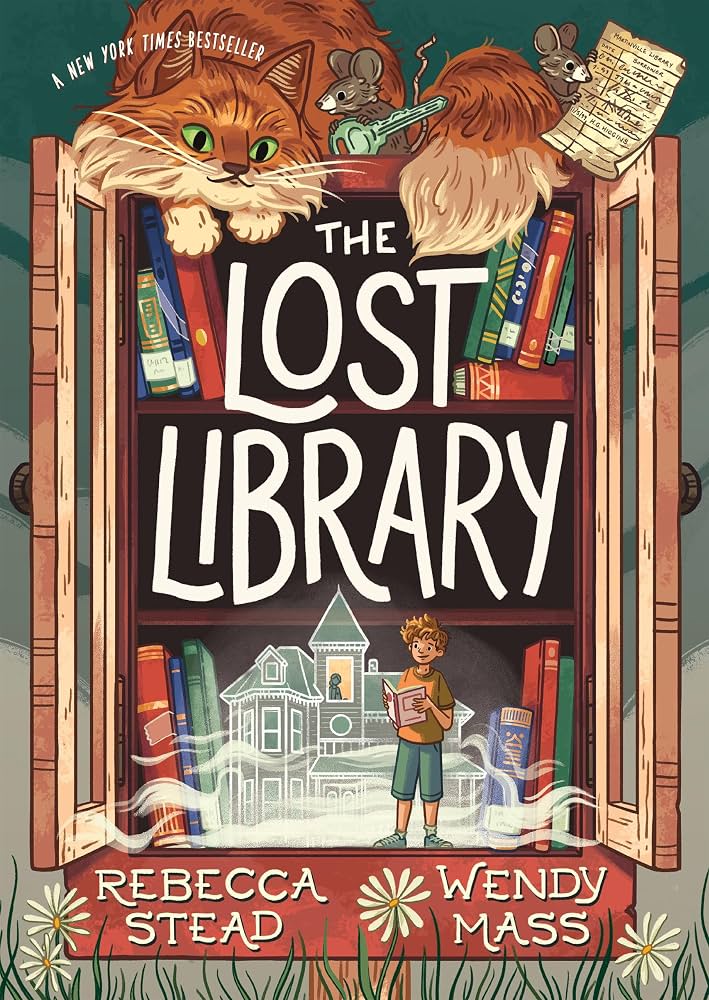
In The Lost Library by Rebecca Stead and Wendy Mass (Square Fish, 2025), a little free library, presided over by a large orange cat named Mortimer, mysteriously appears overnight in the town of Martinville. Eleven-year-old Evan chooses two books from its shelves – and finds clues to the fire that destroyed the town’s original library. Soon, along with his best friend Rafe and with help from Al, the ghost of the librarian who died in the fire, he sets out to discover the real story behind the loss of the library. A satisfying puzzle and a heartwarming conclusion. For ages 9-12.
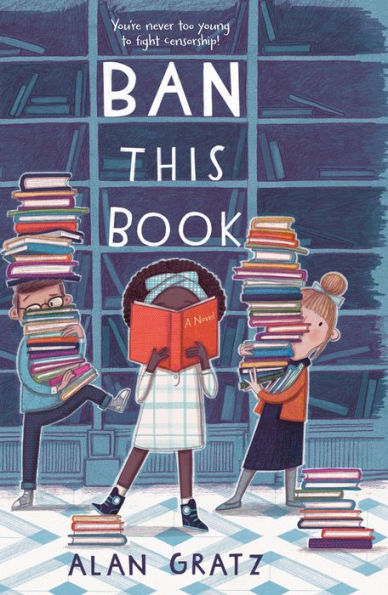
In Alan Gratz’s Ban This Book (Starscape, 2018), a concerned parent has had E.L. Koenigsburg’s From the Mixed-Up Files of Mrs. Basil E. Frankweiler removed from the school library shelves. Amy Anne takes a stand against censorship by starting a secret banned books library in her locker. For ages 9-12.
Also see Property of the Rebel Librarian by Allison Varnes (Yearling, 2019) in which 12-year-old June Harper, dismayed by censorship at the library, goes to bat for the freedom to read.

Jerry Spinelli’s The Library Card (Scholastic, 1998) is a tribute to the library’s power to help, heal, and change. The book tells the stories of four troubled kids and four library cards. Twelve-year-old Mongoose seems headed for a life of crime until he finds a library card in a stolen bag of candy and discovers a world of reading. Brenda is addicted to television until – bored to tears during her school’s Great TV Turn-Off week – she visits the library and discovers a mysterious and compelling biography of herself. Sonseray, an anti-social 13-year-old, finds comforting memories of his dead mother at the library that lead him to change his ways; and April, miserable about her family’s move to a mushroom farm in Pennsylvania, ends up on a high-jacked bookmobile, driven by the even unhappier runaway Nanette, with whom she forms a bond. For ages 9-13.

In Richard Peck's Here Lies the Librarian (Puffin, 2007), set in rural Indiana in 1914, 14-year-old Peewee (Eleanor) McGrath is being raised by her older brother Jake; the two of them run a struggling small-town garage. Then the feisty Irene Ridpath arrives, fresh out of library school, along with her three sorority sisters, preparing to take over the defunct town library. For ages 10-14.
Animals at the Library

Judy Sierra’s rhyming picture book Wild About Books (Knopf Books for Young Readers, 2004) features librarian Molly McGrew who mistakenly drives the bookmobile into the zoo and soon has all the animals hooked on reading and writing. The book is a riot of clever word play, and there are a lot of charming little touches – the crocodiles end up reading Peter Pan; the giraffes prefer tall books about skyscrapers and redwood trees. The conclusion: there’s something for everybody at the library - and you can even write your own books too. For ages 3-7.

In Toni Buzzeo’s No T. Rex in the Library (Margaret K. McElderry Books, 2010), Tess – who wears great striped stockings – is out of control. “TIME OUT!” her mother shouts. Then Tess, sent to sit next to a library cart, tips over a stack of books, from one of which leaps a rampaging T. rex. A lesson in how not to behave in the library for ages 3-5.

Lois Grambling’s Can I Bring Woolly to the Library, Ms. Reeder? (Charlesbridge Publishing, 2012) is an object lesson in library etiquette and procedure as a little boy attempts to bring his woolly mammoth to the library. (No thumping or bellowing.) For ages 4-8.

Marni McGee’s Winston the Book Wolf (Walker Children’s Books, 2006) is a literary take on the tale of Little Red Riding Hood. Winston the Wolf likes nothing better than to eat books – to the point where he’s been banned from the local library for his destructive chewing. Luckily he meets a little girl named Rosie (wearing a red hoodie and carrying a basket) who shows him that it’s better to read books than to eat them. Soon Winston is an avid reader – and Rosie even comes up with a scheme for smuggling him back into the library, disguised in her Grandma’s clothes. Soon the reformed Book Wolf is reading to groups of kids at storytime. For ages 3-7.

If Winston catches your fancy, also check out Oliver Jeffers’s The Incredible Book Eating Boy (Philomel, 2007) in which Henry devours books – that is, he chews them up and eats them, and the more he eats, the smarter he gets. Eventually, however, Henry’s habit brings on a massive case of physical and mental indigestion – and he has to find a better way to interact with books. Wonderful cartoon-style illustrations enhance the story. For ages 4-8.

In Daniel Kirk’s The Library Mouse (Harry N. Abrams, 2007), Sam – a mouse – lives in a hole in the library behind the children’s reference book section. Every night, after the library is closed, he reads to his heart’s content – and soon he decides to start writing as well. He tucks his first work – Squeak! A Mouse’s Life – into the library’s biography section; then follows up with The Lonely Cheese and The Mystery of Mouse Mansion. The curious librarian invites Sam to a “Meet the Author Day,” which Sam turns into a writing workshop, with participating kids producing their own books. Several sequels. For ages 4-8.
The World of Library Mouse is a teaching guide to accompany the Library Mouse books.
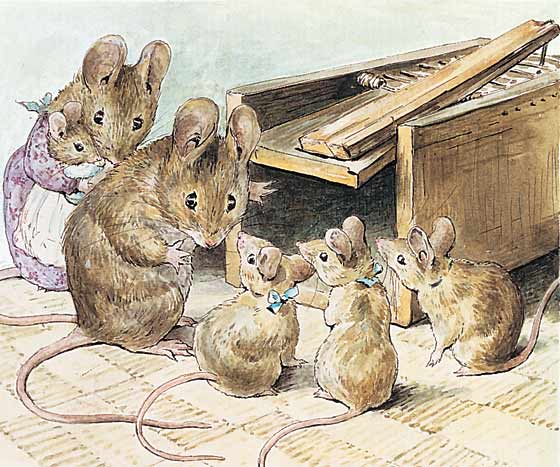

In Mary Ann Fraser’s I.Q. Goes to the Library (Walker Children’s Books, 2003), I.Q. – a bright and curious little mouse who lives in an elementary-school classroom – accompanies the kids on a trip to the library. The big worry: will I.Q. be able to get a library card? For ages 4-8.

In Brian Lies’s Bats at the Library (Houghton Mifflin Books for Children, 2008), a window left open at the library leads to an exciting adventure for a colony of bats, who zoom through the building taking pictures of themselves with the copier, swimming in the fountain, and holding a storytime for young bats featuring such bat favorites as Goodnight Sun and Little Red Riding Bat. For ages 4-8.

In Reeve Lindbergh’s rhyming Homer, the Library Cat (Candlewick, 2011), orange-striped Homer is a quiet cat who leads a peaceful existence with a quiet owner – until one day a tremendous CRASH frightens him into leaping out the window. Finally, after contending with a very noisy world, he finds his owner in another quiet place – she’s the town librarian – and the relieved Homer becomes the library cat. For ages 4-8.

In Patricia Lakin’s Clarence the Copy Cat (Dragonfly Books, 2007), pacifist Clarence – booted from Sam’s Sandwich Shop for his refusal to harm mice – finds a happy home in the local library, where he particularly enjoys sitting on top of the copy machine. Then, to Clarence’s horror, a book-chewing mouse moves in. Clarence’s mouse machinations are hilarious and the eventual solution – which involves the copy machine – scares the mouse away once and for all. For ages 4-8.

By Vicki Myron and Bret Witter, Dewey: There’s a Cat in the Library (Little, Brown Books for Young Readers, 2009) is the (true) picture-book story of the little kitten librarian Myron found in the return box at her Iowa public library. Named Dewey Readmore Books, the kitten, nursed back to health, grew up to become the official library cat and won over the entire town. For ages 4-8.
Also by Myron and Witter, Dewey the Library Cat (Little, Brown Books for Young Readers, 2010) is a more detailed 200+-page version of the story for ages 9-14.
See also


In Michelle Knudsen’s Library Lion (Candlewick, 2009), Miss Merriweather, head librarian, allows Lion to stay at the library provided that he breaks no rules – despite the disapproval of uptight circulation assistant Mr. McBee. Lion proves to be a great help – he dusts shelves with his tail, licks envelopes, and serves as a comfy backrest for young readers – but when Miss Merriweather falls and breaks an arm, he summons help with a tremendous ROAR. Upset by his breaking of the rules, Lion vanishes from the library, only to return when it becomes clear how much he is missed. For ages 4-8.
From the publisher, see this story hour activity guide to accompany Library Lion.

Susan G. Larkin’s Top Cats: The Life and Times of the New York Public Library Lions (Pomegranate, 2007) is an 80-page history of Patience and Fortitude, the much-loved marble lions that flank the entrance to the New York Public Library, illustrated with dozens of photographs, cartoons, prints, and drawings.
For a short online history of the NYPL lions (with accompanying photo of Patience), visit the library’s website here.
All About Libraries

Check It Out! The Book About Libraries by Gail Gibbons (Sandpiper, 1988) is a brightly illustrated non-fiction picture book on the many aspects of the library, including the history of libraries, the many different kinds of libraries today (from the small and local to the massive Library of Congress), and an explanation of how libraries are organized. Readers also learn what a card catalog is and find out how to check out a book. For ages 4-8.

Sonya Terry’s L is for Library (Upstart Books, 2006) is an alphabetical tour of the library, led by an orange cat and a flock of obstreperous yellow ducklings. A is for Author, B for Book, D for Dewey Decimal System. For ages 5-8.

Dotti Enderle’s The Library Gingerbread Man (Upstart Books, 2010) is a mash-up of the familiar tale about the runaway cookie and the Dewey Decimal system. The Gingerbread Man escapes from his place at 398.2 and sets off at a mad dash around the library, pursued by the librarian, with help from a wizardly thesaurus at 423.1 (who shouts “Stop! Cease! Halt! Freeze! Stay!”), a robot (629.892), and a cast of characters in the biographical 920s, including Harriet Tubman and Amelia Earhart. For ages 6-9.

By Carol K. Lee and Janet Langford, Learning about Books and Libraries (Highsmith, 2000) is a collection of 47 educational games for kids, variously covering book genres, bibliographies, research resources, and library map skills. For ages 5-12.
See 
See Wikipedia’s Library classification entry for an overview of classification systems, including the Dewey Decimal, Library of Congress, and Bliss bibliographic systems.
At Mrs. Lodge's Library, Shelve-It is a great little interactive game in which players put fiction books in order by call number.

The books on your bookshelves – what they are, how you arrange them – says a lot about you. Leah Price’s Unpacking My Library (Yale University Press, 2011), illustrated with great color photographs, describes the personal libraries of thirteen well-known writers, among them Alison Bechdel, Philip Pullman, Jonathan Lethem, and Steven Pinker. For older teenagers and adults.
Check out the world's most interesting (and accessible) library collections.

By librarian Matthew Battles, Library: An Unquiet History (W.W. Norton & Company, 2004) is the story of the difficult lives of libraries from ancient times to the present. They’ve been burned, banned, shunned, and now (some argue) just possibly rendered obsolete, but still they survive. For older teenagers and adults.

Stuart A.P. Murray’s The Library: An Illustrated History (Skyhorse Publishing, 2009) is a 300+-page history of libraries from the clay tablets of Assyria to the modern media center, crammed with fascinating stories and illustrated with wonderful prints, paintings, and photographs. For older teenagers and adults.

Alberto Manguel’s The Library at Night (Yale University Press, 2009) is a marvelous and eccentric history of the life, times, and functions of books and libraries, both public and personal, with such chapter titles as “The Library as Myth,” “The Library as Order,” “The Library as Island,” and “The Library as Identity.” Libraries, says Manguel, are “pleasantly mad places.” For older teenagers and adults.
For a history of the Library of Congress, see Jefferson's Legacy at https://www.loc.gov/item/2021690829/.
The Library History Buff has an interesting assortment of library-related resources, including “Postal Librariana” (libraries on postcards and postage stamps), an extensive list of library history links, and galleries of library artifacts.

Get your own 
Libraries: Large, Small, Grand, and Royal

Juli Cummins’s The Inside-Outside Book of Libraries (Dragonfly Books, 2008) is an exploration of thirteen very different libraries, with detailed illustrations showing both the inside and outside of each. Included are a library on board an aircraft carrier, a tiny one-room library on an island off North Carolina, a prison library, a library for the blind, and a library that lends tools rather than books. For ages 6-9.

Barb Rosenstock's Thomas Jefferson Builds a Library (Calkins Creek, 2013) explains how young Tom Jefferson discovered that he loved books and eventually amassed the wonderful collection that became the Library of Congress. A delightful and cleverly designed picture book for ages 6-10.

The Little Free Library is a community project to establish tiny free book-exchange libraries in towns across the nation. The website has information, suggestions, a gallery of tiny libraries, building plans, and more. A terrific group project.
The World's Most Beautiful Libraries is photo collection of some truly gorgeous libraries. Only one missing is Hogwarts.
Librarians: Strong and Good

In Carla Morris’s The Boy Who Was Raised by Librarians (Peachtree Publishers, 2007), Melvin, a curious bespectacled little boy, loves the library and its three librarians (Marge, Leeola, and Betty) who are a never-failing source of information and support. They help Melvin identify the creepy bugs in his collection (which promptly escape from the jar), bolster him by finding helpful passages from Organic Gardening when he’s chosen to play an eggplant in the school play, and provide resources when he competes in the school spelling bee. Eventually Marvin grows up and goes to college, and as the book ends, a new little boy arrives at the library, where Marvin is now a librarian. For ages 4-9.

In M.G. King’s Librarian on the Roof! (Albert Whitman and Company, 2010), when the new librarian arrives at the library in Lockhart, Texas, she finds to her dismay that no children use it. Determined to create a children’s room, she decides to camp out on the library roof until enough money is raised for a library addition – and eventually, inspired, the town rallies round. Based on a true story. For ages 6-9.

Pat Mora’s Tomas and the Library Lady (Dragonfly Books, 2000) is the story of Tomas, child of a family of migrant workers, who – having heard all the stories that his grandfather, Papa Grande, has to tell – is sent to the library to find more. There he meets an understanding librarian who introduces Tomas to an entire world of books. The book is based on the life story of Mexican-American author and educator Tomas Rivers. For ages 4-8.

William Miller’s Richard Wright and the Library Card (Lee & Low, 1999) is a story taken from author Wright’s autobiographical Black Boy, which details his experiences growing up black in the segregated South of the 1920s. Miller’s picture book describes how Wright as a teenager was barred from checking out books from the local public library – a privilege accorded only to whites – until a white co-worker helped him circumvent the rules. Books, for Wright, are a ticket to freedom, and by the end of the book, with a wealth of reading under his belt, he’s on his way to Chicago to start a new life. For ages 6-10.

How would you get your library books if you lived, say, on the islands off the coast of Finland or in Mongolia’s Gobi Desert? Margriet Ruurs’s My Librarian is a Camel (Boyds Mills Press, 2005) describes how isolated areas in thirteen different countries get access to books – for example, via elephant, camel, boat, donkey cart, and wheelbarrow. The book is illustrated with color photographs; sidebars provide maps and information on each of the featured countries. For ages 8-12.

Based on the real-life work of librarian Luis Soriano, Monica Brown’s Waiting for the Biblioburro (Tricycle Press, 2011), is the picture-book story of Ana who lives with her family in a tiny village in rural Colombia. Ana loves stories and longs for books, and her life is changed when a wonderful man arrives with two book-laden burros. For ages 4-8.

Luis Soriano himself is the protagonist of Jeanette Winter’s picture book Biblioburro (Beach Lane Books, 2010). Luis so loves to read that his house can barely hold his piles of books – so he loads up his burros and sets off for faraway villages to share his love of books and reading with the children there. The message is not only pro-book, it’s that one determined person can make a difference. For ages 4-8.

Heather Henson’s That Book Woman (Atheneum Books for Young Readers, 2008) is the story of young Cal, who lives with his parents and sister Lark high in the mountains of Appalachia. When the Book Woman arrives on horseback with her pack of books, his sister Lark – “the readenest child you ever did see” – is delighted, but Cal insists that books are not for him. Finally, though, impressed by the Book Woman’s determination, he asks Lark to teach him to read. The book is based on the Pack Horse Librarians of the 1930s, participants in a WPA program to deliver books to people in isolated regions. For ages 7-11.
For more on the Pack Horse Librarians, see this article from the Smithsonian.

By Sharlee Glenn, Library on Wheels (Harry N. Abrams, 2018) is the story of Mary Lemist Titcomb and America's first bookmobile, illustrated with great period photos. For ages 8-12.

By Susan Roth and Karen Leggett Abouraya, Hands Around the Library (Dial, 2012) is the story of how Egyptian students and librarians literally joined hands and formed a ring around the Bibliotheca Alexandrina to protect it during the overthrow of the Egyptian government in the 2011 Arab Spring uprisings. The simple text is accompanied by bright blended collages. An appendix has information about ancient and modern libraries and the Egyptian Revolution of January, 2011. For ages 6-9.

Jeanette Winter’s The Librarian of Basra (Harcourt Children’s Books, 2005) is the story of librarian Alia Muhammad Baker who, in the days of the Iraq war, managed to move all her library’s books to safety. An inspirational story with a lot of opportunity for discussion. For ages 7-10.

Also see Alia’s Mission by Mark Alan Stamaty (Knopf Books for Young Readers, 2004), a graphic-novel account of Baker’s accomplishment, for ages 9-13.

In Natalie Kinsey-Warnock’s Lumber Camp Library (HarperCollins, 2003), set in early twentieth-century Vermont, ten-year-old Ruby lives with her family in a lumber camp. Then her father drowns in a logging accident, her mother takes a job as lumber-camp cook, and Ruby is forced to drop out of school to take care of her ten younger siblings. She’s miserable – until Mrs. Graham, a neighbor, offers to share her books. Soon Ruby is teaching some of the lumberjacks how to read – and eventually she goes on to become a teacher and to found a lumber camp library. For ages 8-11.
Library Mysteries

In David A. Adler’s Young Cam Jansen series, Cam – her nickname is short for “camera” – has a photographic memory, which helps her solve mild mysteries. In Young Cam Jansen and the Library Mystery (Puffin, 2002), for example, Cam, her father, and friend Eric visit the library where Cam first checks out a mystery, then solves an actual mystery involving a missing shopping list. For ages 5-8.

In Gertrude Chandler Warner’s The Deserted Library Mystery – a volume in the Boxcar Children series – Henry, Jessie, Violet, and Benny set out to save an old boarded-up library from being torn down, and end up dealing with a mysterious intruder and a Civil War sword. For ages 7-10.

In Eth Clifford’s Help! I’m a Prisoner in the Library (Sandpiper, 2004), sisters Mary Rose and Jo-Beth – prosaically looking for a bathroom – end up locked in a peculiar library full of eerie Victorian artifacts. In a blizzard. A mild mystery for ages 7-10.

In Dori Hillestad Butler’s The Buddy Files: The Case of the Library Monster (Albert Whitman and Company, 2012), detective dog Buddy – also therapy dog at the Four Lakes Elementary School – tackles the mystery of the elusive creature (ghost? monster?) in the school library. Told in the first person by Buddy, who makes great paw-print-bulleted lists. For ages 7-10.

In Avi’s Who Stole the Wizard of Oz? (Yearling, 1990), Toby’s twin sister Becky has been accused of stealing a rare copy of The Wizard of Oz from the library. Together they set out to clear her name and discover the real thief. A suspenseful mystery involving clever bookish clues. For ages 7-10.

In Chris Grabenstein’s Escape from Mr. Lemoncello’s Library (Yearling, 2014), Luigi Lemoncello, the worlds’ most famous game maker, has designed the town’s new library – and 12 lucky winners will be spending the night there in a lock-in before the library’s opening day. The problem: when morning comes, there’s still no way to get out. Packed with thrills and puzzles. And there are sequels. For ages 8-12.
Library Poems

J. Patrick Lewis’s Please Bury Me in the Library (Harcourt Children’s Books, 2005) is an illustrated collection of sixteen bookish poems, among them “What If Books Had Different Names?” For ages 7-11.
Read Nikki Giovanni’s My First Memory (of Librarians).
Read In the Library by Charles Simic.
Read Branch Library by Edward Hirsch.
Strange and Magical Libraries

In William Joyce’s picture book The Fantastic Flying Books of Mr. Morris Lessmore (Atheneum Books for Young Readers, 2012), after a dreadful windstorm sweeps away everything he owns, Morris meets a lady who gives him a mysterious flying book. The book leads him to an extraordinary library where many flying books “nest,” and there Morris settles down to live, read, care for the books, and write a book of his own. Years pass, and finally Morris finishes writing his book and decides that it’s time to move on. Away he flies, pulled by a flock of flying books – but leaving his own book behind. Then a little girl arrives – and Morris Lessmore’s book flies up to her and opens its pages. And she begins to read. A visually gorgeous and fascinating surreal story for ages 4 and up.

In Edward Eager's Seven-Day Magic (Harcourt, Brace & World, 1999), five children find a mysterious red book at the library that grants wishes. They have an adventurous week with a dragon, a wizard, and a spot of time travel - but the book has to be returned to the library in seven days. For ages 8-12.
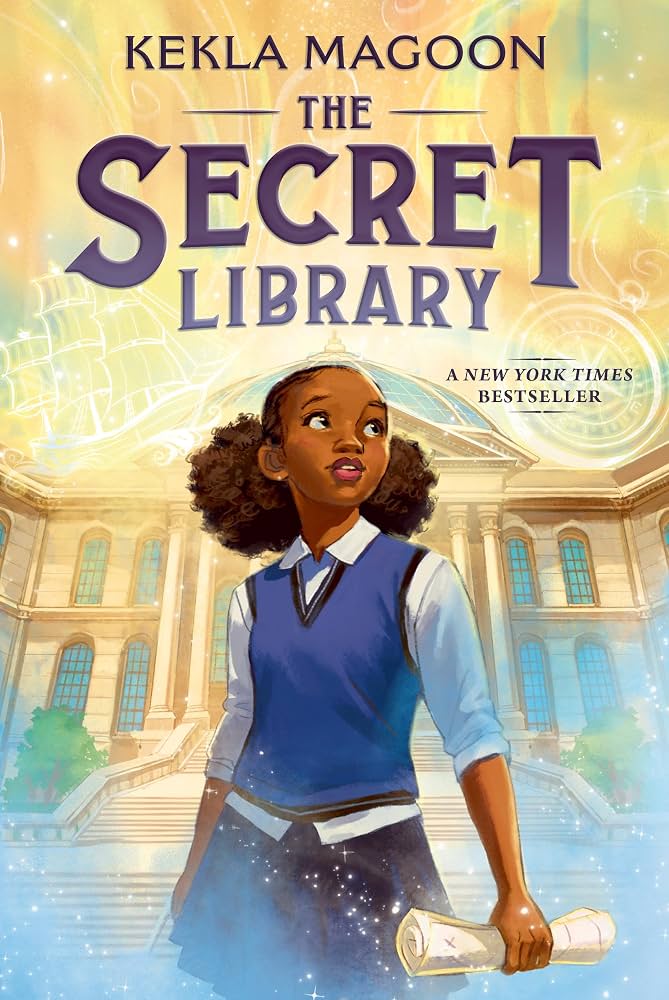
In Kekla Magoon’s The Secret Library (Candlewick, 2025), biracial Dally finds a map left to her by her Grandpa that leads her to an ancient secret library. There each book is a portal to an adventure through time that ultimately reveals secrets about her family’s hidden past. For ages 8-12.

Michael Dahl’s Attack of the Paper Bats (Stone Arch Books, 2007) is the first of the Library of Doom series, in which a mysterious Librarian presides over a fearsome collection of the world’s most dangerous books. Here, a strange book falls open, its pages flutter in the wind, and turn into razor-sharp paper bats. Other titles in the series include The Creeping Bookends, The Golden Book of Death, and The Smashing Scroll. For ages 9-12.
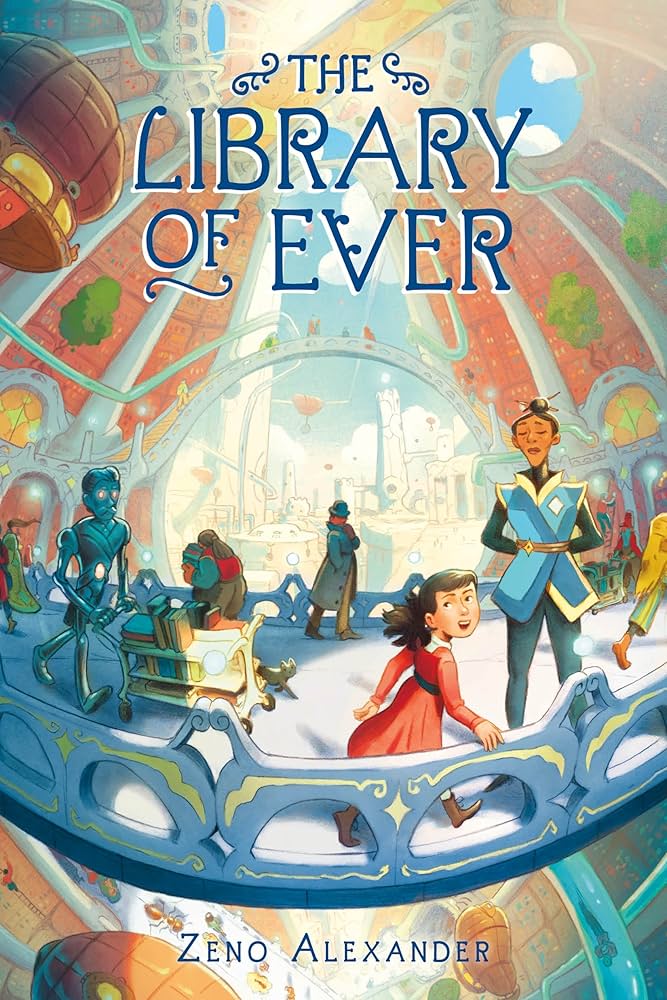
In Zeno Alexander’s The Library of Ever (Square Fish, 2020), Lenora is utterly bored while her parents are off traveling the world – until she finds a secret doorway in the library that leads to the Library, which contains all the universe’s wisdom. She becomes the Fourth Assistant Apprentice Librarian and embarks on a dangerous adventure through time and space. For ages 9-12.

In Brandon Sanderson's Alcatraz Versus the Evil Librarians (Scholastic, 2007), the evil Librarians have a powerful secret network and are plotting to take over the world. Up against them are 13-year-old Alcatraz Smedley and company - all named for famous prisons, and armed with Talents and amazing glasses. Alcatraz, whose Talent is for breaking things, receives a gift on his 13th birthday from his missing parents: a bag of sand, which is promptly stolen. It turns out that the sand is important: it can be used to forge special lenses through which Alcatraz will be able to read the mysterious Forgotten Language. The first of a series for ages 9-12.
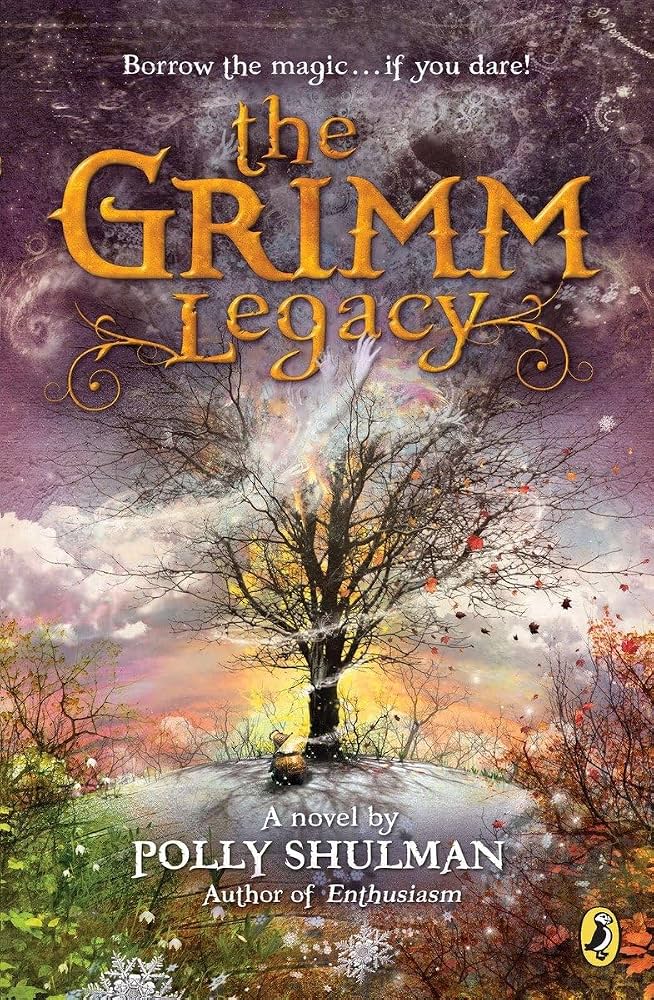
In Polly Shulman’s The Grimm Legacy (Scholastic, 2010), Elizabeth has an after-school job at a lending library of objects – where a secret room in the basement contains the Grimm Collection, magical items out of the Brothers Grimm fairy tales. When these start to disappear, Elizabeth sets out on a dangerous quest to catch the thief. Sequels include The Wells Bequest and The Poe Estate. For ages 10 and up.
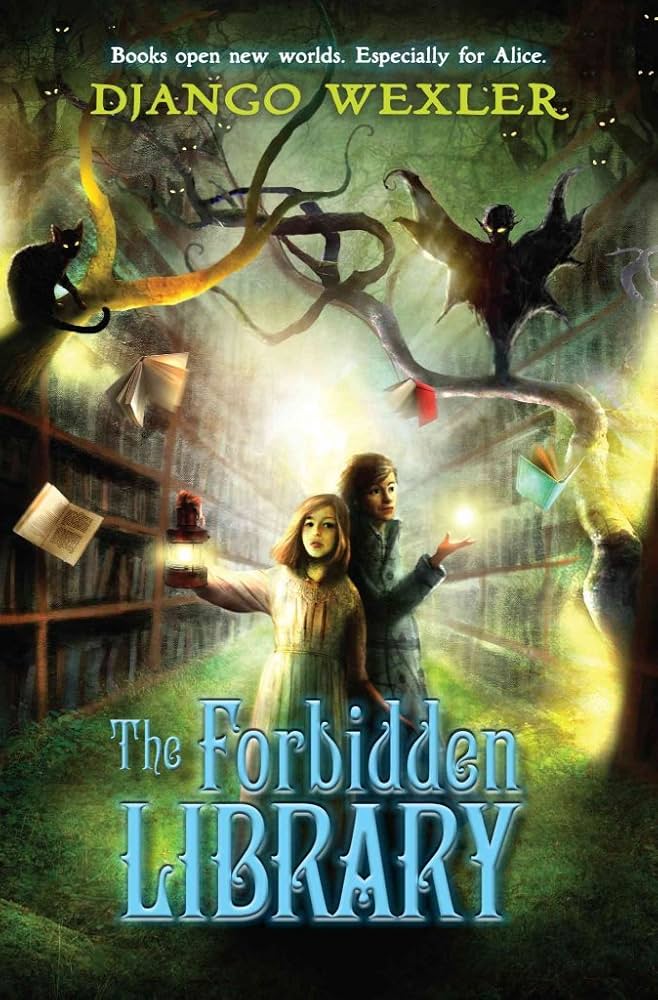
In The Forbidden Library by Django Wexler (Puffin, 2015), orphaned Alice is sent to live with her Uncle Geryon – who lives in an enormous mansion with a library that Alice is forbidden to visit. Alice, however, is a Reader, who has the power to enter books and interact with the creatures and characters in them. According to Kirkus, it’s a mix of Harry Potter, Alice’s Adventures in Wonderland, and Inkheart. First of a series for ages 10-14.

In Garth Nix’s Lirael (HarperCollins, 2016), one of the Abhorsen series, Lirael is an assistant librarian in the vast underground Library of Clayr, a storehouse of magical books and weapons. For ages 12 and up.

In Jorge Luis Borges’s famous short story “The Library of Babel,” the universe is a library – an infinite expanse of interlocking hexagonal rooms, each filled with bookshelves. The library, though its order seems random and meaningless, is believed to contain all knowledge, but the difficulty in finding anything in it has led the despairing inhabitants to propose various courses of action. A classic for teenagers and adults.

Rachel Caine’s Ink and Bone (Berkley, 2016), the first of the Great Library series, posits a world in which the powerful Library of Alexandria still exists – but in which personal ownership of books is forbidden. For teens and adults.

By Scott Hawkins, The Library at Mount Char (Broadway Books, 2016) is an enthralling and out-of-the-ordinary fantasy, in which Carolyn and 11 other children have spent their lives studying in the strange infinite Library under the tutelage of an omnipotent being they know only as Father. Now Father has gone missing, and Carolyn and siblings are on their own. Strange and fascinating for teens and adults.

Genevieve Cogman’s The Invisible Library (Ace, 2016), the first of a series, posits a universe of alternative worlds, all linked by a central Library, whose Librarians attempt to gather books from all existing realities. In this, Irene and her Sherlock-Holmes-like student helper head out for a magical alternative London. Fantasy and thrills for booklovers. For teens and adults.

In the 1994 film The Pagemaster, 10-year-old Richard fears practically everything and is obsessed with safety statistics. Caught in a thunderstorm, he stumbles into a peculiar library where he is transformed into a book illustration – and can only escape by navigating the library’s fiction section to find the exit. With the help of three anthropomorphic books – Adventure, Fantasy, and Horror – Richard deals with characters from classic literature, including Dr. Jekyll and Mr. Hyde, Long John Silver and his pirate band, a fire-breathing dragon, and a lot of hostile Lilliputians. He emerges a far braver boy. Rated G.
Library Activities and Games
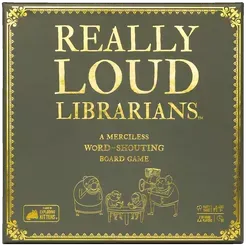
Forget SHH. In Really Loud Librarians (from the creators of Exploding Kittens), players move around the game board, shouting out words from a category listed on one of the category cards (Things Made of Metal, Green Things, Fictional Characters) that begin with the letter on the game board race track. For two or more players, ages 8 and up.
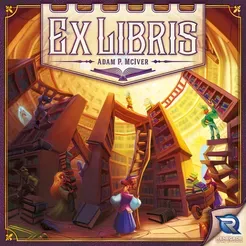
In Ex Libris (Renegade Game Studio), players – as one of twelve unique librarians – compete in a quest to find rare books for their library collections. (Extra points for putting them in alphabetical order.) Up to four players. For ages 10 and up. See
Tackle the 25 Mini-Adventures in the Library at https://www.pps.org/article/25-mini-adventures-in-the-library. Look for the biggest book in the library and take your picture with it; browse the travel section and choose a place you’d like to visit. Scan books of quotes, find a favorite, and write outside on the sidewalk in chalk.