
Geology ROCKS!
In this collection
- About Rocks and Minerals
- Hands-On Rocks
- Planet Earth, or Third Rock From the Sun
- Special Rocks
- Rock Collecting
- Geological Time, or the Long, Long, Long History of Rocks
- Fossils
- Rocks from Space
- Jewels and Gems
- Rocks and Math
- Geology and Poetry
- Famous Rocks
- Rock Art, Ancient and New
- Throwing Rocks
- Fictional Rocks and Magic Rocks
Rocks! See below for books, projects, experiments, arts and crafts, and much more.Celebrate National Fossil Day, make eggshell geodes, take a nature walk with alphabet rocks, grow gorgeous crystals, play the ancient Asian game of Five Stones and build your own catapult.
And don't miss Earth Science Week, which is celebrated each year in October. Check out the website (see below) for ideas, activities, research projects, a photo gallery, and a state-by-state list of Earth Science organizations.
About Rocks and Minerals

By Dianna Hutts Aston, A Rock is Lively (Chronicle Books, 2012) is a beautifully designed and illustrated introduction to the world of rocks, feature by feature, in the same format as Aston’s previous nature picture books, among them An Egg is Quiet and A Seed is Sleepy. For ages 4-8.
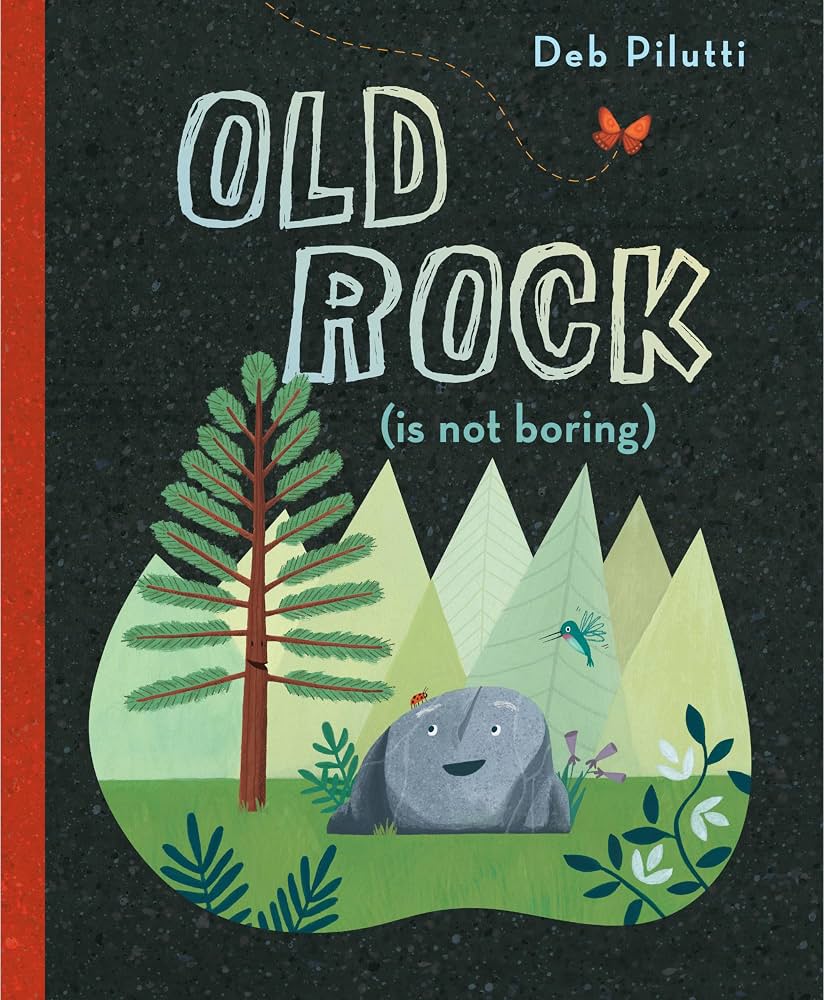
In Old Rock (is not boring) by Deb Pilutti (G,P, Putnam’s Sons, 2020), Tall Pine, Spotted Beetle, and Hummingbird think Old Rock leads a boring existence, just sitting in the same place in the forest – until Old Rock tells the exciting story of his long life. Included is an illustrated timeline. A delightful and informative picture book for ages 4-8.
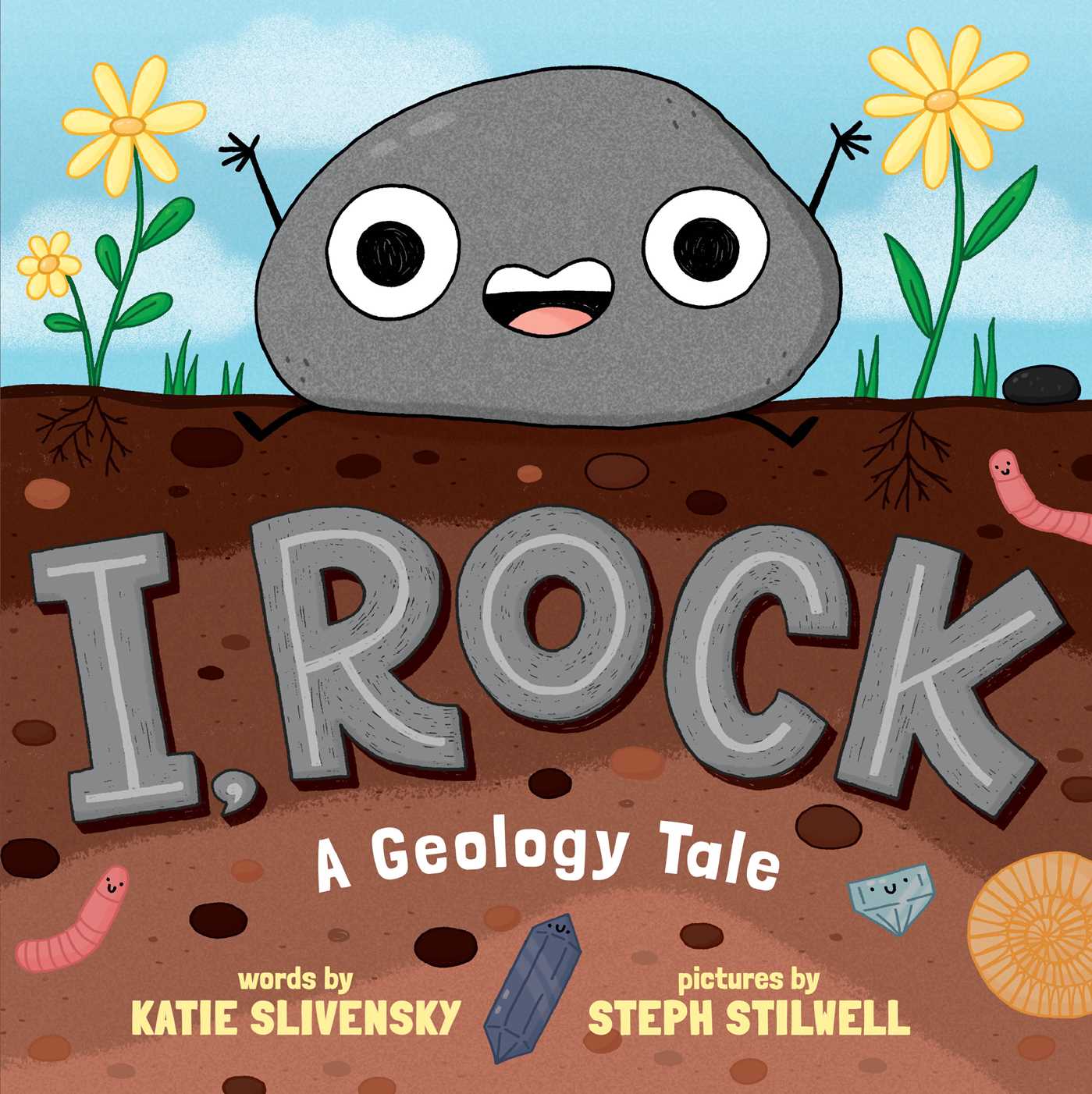
By Katie Slivensky, I, Rock (Beach Lane Books, 2025) is the exciting and cleverly designed life story of a rock – narrated by the Rock. Detailed information and eye-catching illustrations. For ages 4-8.
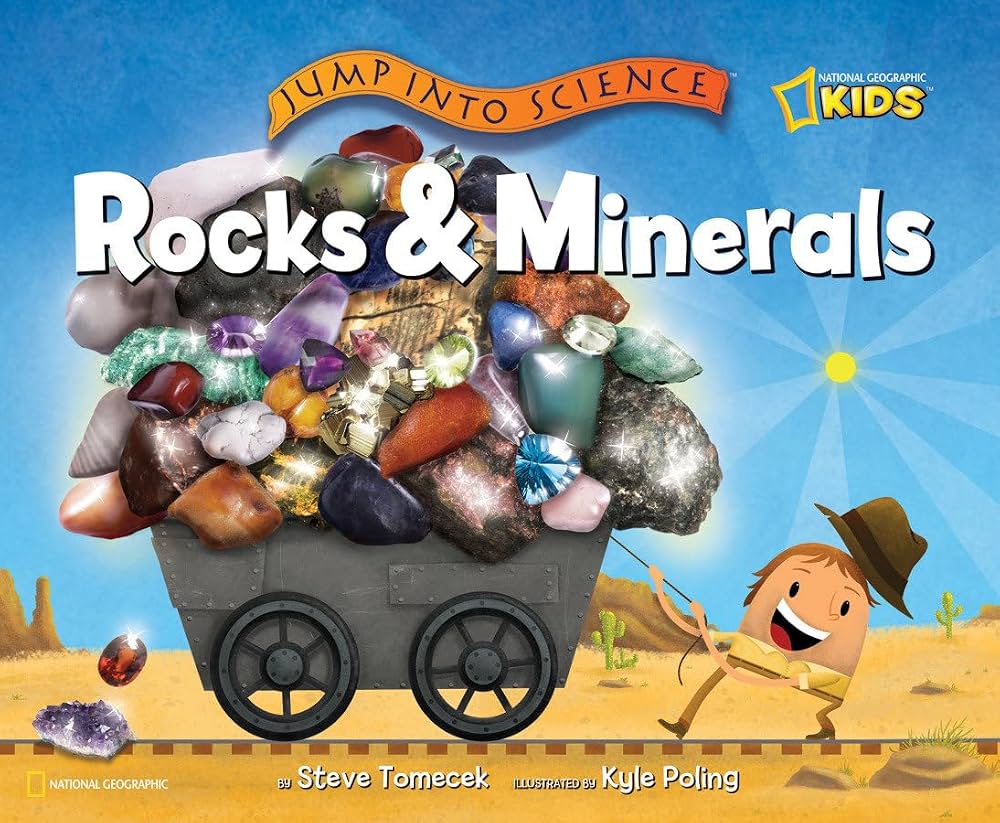
Steve Tomacek’s Rocks and Minerals (National Geographic Children’s Books, 2010) in the Jump Into Science series is a colorful introduction to rocks covering the formation of the planet, the building blocks of rocks, and uses of rocks. Included is a project for making a rock of your own (using sand, pebbles, and white glue). For ages 4-8.
In the same series, see Tomacek’s Dirt (2007), which includes a soil stratification project, and Ellen Prager’s Sand (2006).

Natalie M. Rosinsky’s Rocks: Hard, Soft, Smooth, and Rough (Picture Window Books, 2002) is a simple introduction to igneous, sedimentary, and metamorphic rocks. Included are a rock identification chart and an explanation of the Mohs Hardness Scale. For ages 5-8.
The Mohs Hardness Scale was invented in 1812 by German mineralogist Frederich Mohs. This website explains the scale (in ten easy steps, from talc to diamond) and shows how a number of common items (fingernails, a penny) fall into place. See https://www.nps.gov/articles/mohs-hardness-scale.htm.
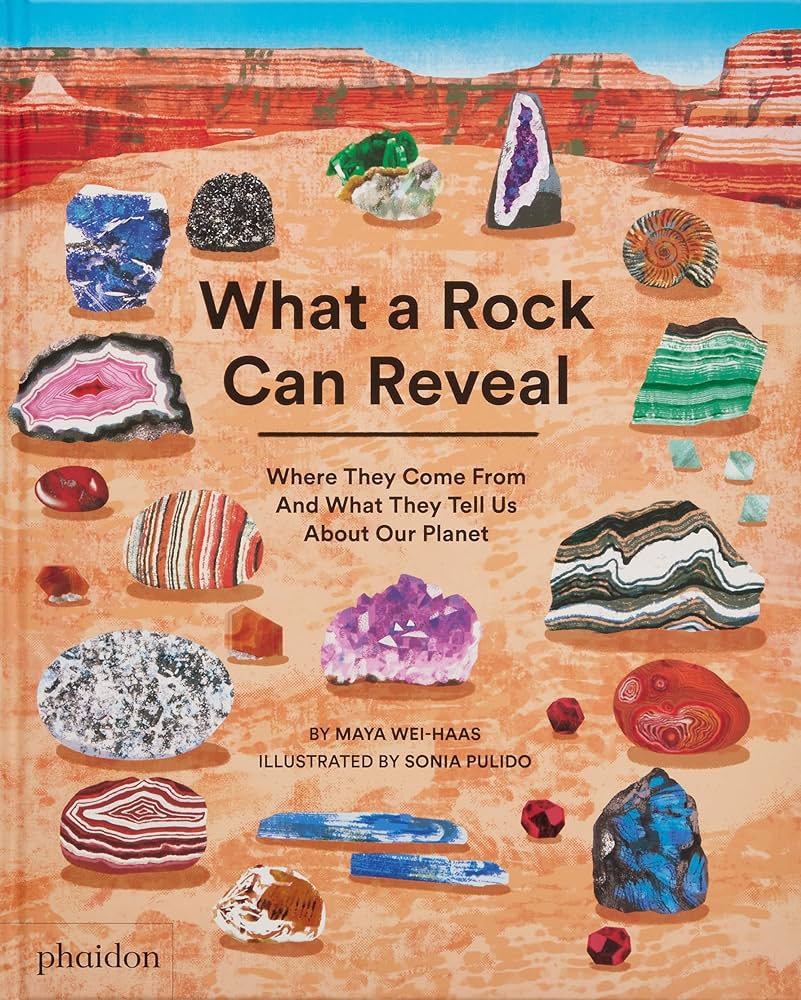
How do we know when the moon formed or what dinosaurs looked like? It’s all through rocks, explains geologist Maya Wei-Haas in What a Rock Can Reveal (Phaidon Press, 2024). The book covers the stories rocks tell, the vast diversity of rocks and minerals, and what a rock’s shape, color, and texture tell about its history. A visually exciting read for ages 6-9.

In Joanna Cole’s The Magic School Bus Inside the Earth (Scholastic, 1989), the incomparable Ms. Frizzle – in hard hat and rock-patterned jumpsuit – takes her class on a journey to the center of the earth. (They return to the surface via volcanic eruption.) Information about rock layers and rocks is delivered through cartoon bubbles and hand-lettered student reports. For ages 6-11.

Jacqui Bailey’s The Rock Factory (Picture Window Books, 2007) tells the story of the rock cycle through the adventures of one rock, born in the depths of a volcano. For ages 7-10.

By Simon Basher and Dan Green, Rocks and Minerals (Kingfisher, 2009) covers the three rock types, ores, minerals, gems, and fossils in a fact-filled breezy text, giving each feature a first-person voice. Clay, for example, states, “I’m the type of mushy goo that can suck rain boots off your feet. My main ingredients are tiny particles that you can’t see unless you use an electron microscope.” Shale announces, “My experiences in becoming a rock have been brutal.” Illustrated with great little cartoon icons. One of an extensive science series, all good. For ages 8 and up.

Steve Tomacek’s reader-friendly National Geographic Kids: Everything Rocks and Minerals variously covers different types of rocks, uses of rocks (arrowheads, coal, the Taj Mahal), the rock cycle, gemstones, and rock collecting. Illustrated with gorgeous color photographs. An appealing read for ages 8-12.
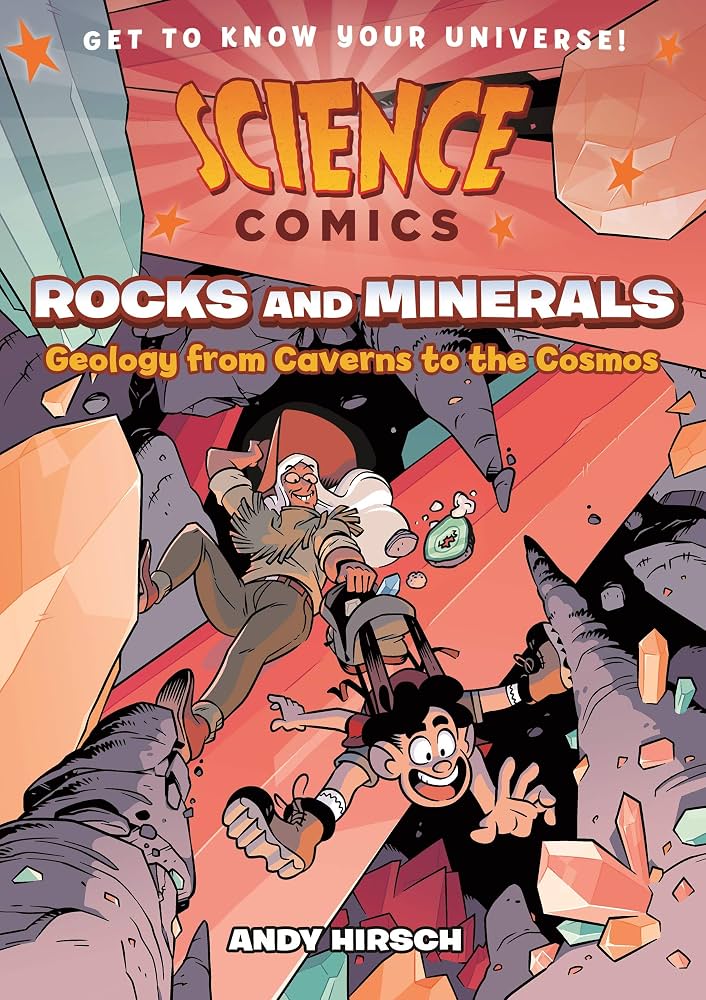
By Andy Hirsch, Science Comics: Rocks and Minerals (First Second, 2020) - one of a catchy graphic science series for ages 9-13 – covers all the basics of geology in a thoroughly entertaining way. Check out the many other Science Comics titles at https://us.macmillan.com/series/sciencecomics.

Mark Kurlansky’s The Story of Salt (Putnam Juvenile Books, 2006) is a picture-book history covering all aspects of salt. Fascinating for ages 8-12. (For teenagers and adults, see Kurlansky’s much longer Salt: A World History (Penguin Books, 2003).)
Salt is the only mineral we eat. Learn all about it at https://saltwise.com/pages/the-science-of-salt.

In the Eyewitness series, Rocks & Minerals (Dorling Kindersley, 2008) by R.F. Symes covers rock formation, weathering and erosion, the three basic kinds of rocks, fossils, gemstones, minerals, and precious metals, with separate sections devoted to limestone caves, rocks as tools, coal, rocks from space, and rock collecting. Each topic has a double-page spread, illustrated with spectacular photos and diagrams. The bulk of the text is in picture captions. For ages 8 and up.

By Rebecca Lawton, Diana Lawton, and Susan Panttaja, Discover Nature in the Rocks (Stackpole Books, 1997) is a family-friendly 200+-page survey of general geology, covering minerals, rocks, volcanoes, sediment, fossils, erosion, water, continents and tectonic plates, earthquakes, and rocks in space. Each chapter includes several activities (model sedimentary layers in a glass jar, bake a batch of volcano tarts, make a Pangaea puzzle), an interesting selection of further “Things to Think About,” and helpful book and video lists.

In Donald R. Prothero’s The Story of the Earth in 25 Rocks (Columbia University Press, 2018), chapters include “Volcanic Tuff: Vulcan’s Wrath: The Eruption of Vesuvius,” “Coal: The Rock That Burns Fires the Industrial Revolution;” and “Moon Rocks: Green Cheese or Anorthosite? The Origin of the Moon.” An absorbing read for teens and adults.

By famed nonfiction writer John McPhee, Annals of the Former World (Farrar, Straus & Giroux, 2000) is a fascinating geologic overview of the United States, based on a series of cross-country trips McPhee took in company with various geologists. Portions of the trip were published as separate earlier books (Basin and Range, In Suspect Terrain, Rising From the Plains, Assembling California); Annals of the Former World includes them all, plus. Winner of the Pulitzer Prize. Highly recommended for interested teenagers and adults.

The Roadside Geology series (Mountain Press) has a volume for each state, detailing geological history and key features. Fun to keep in the car.
The Smithsonian’s Department of Mineral Sciences has a wealth of resources, among them the incredible Dynamic Earth map (track earthquakes, volcanoes, impact craters, and plate boundaries) and the Global Volcanism Program (“10,000 years of volcanic activity at your fingertips”). Visitors can also check out (wonderful) ongoing exhibits, and learn about the Hope Diamond and the search for Antarctic meteorites.
Got a question about rocks, minerals, volcanoes, earthquakes, mountains, maps, rivers, or any other geological topic? Go to Ask-a-Geologist.
Hands-On Rocks

By Anthony D. Fredericks, Under One Rock (Dawn Publications, 2001) is a rhyming picture-book account of the ecosystems (“Bugs, Slugs, and Other Ughs”) to be found under rocks. An appendix of Field Notes provides more information on the creatures most likely to be found. Pair this one with an outdoor rock-turning expedition. For ages 4-8.

Garret Romaine’s Geology Lab for Kids (Quarry Books, 2017) has 52 experiments and projects for exploring crystals, volcanoes, rock types, earthquakes, geysers, fossils, space rocks, and more. For ages 8-12.

By Cynthia Light Brown, Rocks and Minerals! (Nomad Press, 2020) is an informational collection of 25 projects, activities, and experiments for rock lovers. Various chapters cover the structure of the earth, minerals and crystals, igneous, sedimentary, and metamorphic rocks, fossils, and rock collecting. Included are fact boxes and “Words 2 Know” lists. For example, kids make pumice (meringue) cookies, grow crystals and stalactites, make fossils, and more. For ages 8-12.

From TOPScience, Rocks and Minerals is an 88-page, activity-based study unit for grades 6-12 (or younger), variously covering types of rocks, Mohs hardness scale, rock identification, the rock cycle, and more. The TOPScience units are impressively clever, with detailed teaching tips, background information, and instructions for building your own sophisticated scientific equipment out of practically nothing. Highly recommended.
USGS Educational Resources has wonderful lesson plans, activity instructions, and downloadable teacher’s guides and student booklets on a wide range of environmental and earth science topics categorized by grade (K-2, 3-5, 6-8, and 9-12).
Geology for Kids has interactive games, videos, lists of fun facts, and lesson plans. Kids can experiment online with rocks, minerals, and soils. Make quicksand and a vinegar volcano.

The Grand Canyon National Park Education page has lesson plans, virtual field trips, and distance learning opportunities.


The Microslide Viewer is a truly terrific little apparatus – it looks a bit like a microscope (though is cheap, lightweight, washable, and pretty much indestructible) and can be used to view strips of photomicrographs (microslides), collections of eight or more photographs taken through microscopes at various degrees of magnification. There are dozens of microslide sets, among them “Rocks and Rock-Forming Minerals,” “Fossils,” and “Mineral Characteristics and Identification,” each a fascinating series of thin sections. (See granite, really close-up.) Highly recommended. Available from science suppliers.
40 Playful Ways to Teach Young Kids About Rocks is a great collection of rock activities for the very young, including a make-your-own-rock activity, a percussion rock band project, a letter R craft (with rocks), and more.
Home Science Tools carries a range of materials for geology fans, including rock and mineral collections, an earth cross-section model, soil test lab kits, gold panning gravel, and volcano kits.
MiniMe Geology is a source for rock cycle, rock, and mineral kits, starter rock collections, individual rock and mineral samples, and geology equipment for rock hounds. Also at the site are a series of fascinating geology articles on a wide range of topics and an illustrated and annotated list of birthstones.
Geology.com is a terrific source for information about geology and earth science, along with books, field guides, maps, and geology equipment (everything from rock hammers to gold pans). Click on Teacher Resources for an excellent collection of resources and activities, among them a plate tectonics animation, rock and mineral identification helps, information on buying and using a rock tumbler, and
Adaptive Earth Science Activities, an 80-page printable booklet of geology and earth science projects, among them “Parking Lot Gravel,” “Spelunking,” “Rock Riddles,” “Mighty Metamorphic Power Rocks,” and “Modeling Geologic Columns with Sand Art.” For each are included a materials list, step-by-step instructions, and follow-up questions.

Polish rocks! Home Science Tools and other science supply sources carry rock tumblers, grit, and ready-to-polish rocks.

Break your own geodes! (Put them in a sock and smack them with a hammer to reveal an inner cavity filled with crystals.) Available from several sources. For example, see 
For the dramatic geologist, Geology ROCKS! (Bad Wolf Press) is a 25-minute musical for elementary-level kids. The plot: Professor Rock has disappeared and his students head out on a quest to find him, with the dubious help of Sherlock Holmes and Doctor Watson. En route they encounter volcanoes and other geological features, and learn about the rock cycle.

Five Stones is a game believed to have originated in ancient Asia. It’s like jacks, with a twist. All you need to play is hand-eye coordination and five small stones. Another reason to collect pebbles.
Planet Earth, or Third Rock From the Sun

By Stacy McAnulty, Earth: My First 4.54 Billion Years (Henry Holt, 2017) is a picture book history of the Earth, told from the point of view of the planet itself. For ages 4-8.

Faith McNulty’s How to Dig a Hole to the Other Side of the World (HarperCollins, 1990) begins “Find a soft place. Take a shovel and start to dig a hole.” If you dig your hole in Africa, you might find diamonds; in other places, gold, silver, coal, or dinosaur bones. A fascinating account of a little kid’s 8000-mile -long journey through the earth. Will make everybody want to dig a hole. For ages 4-8.
Check out the Antipodes Map to see just where you'd come out if you managed to dig a hole to the other side of the world.

Gail Gibbons’s Planet Earth/Inside Out (HarperCollins, 1997) is a brightly colored picture-book survey of geology, covering the formation and structure of the earth, volcanoes, earthquakes, and the three major types of rocks. A simple straightforward introduction for ages 5-8.

Charlotte Guillain’s The Street Beneath My Feet (words & pictures, 2017) is a fascinating journey underground through tunnels and pipes, animal burrows, and rock layers, down to the earth’s molten core. For ages 5-9.
For young engineers, pair this one with David Macaulay’s Underground (Houghton Mifflin Harcourt, 1983), an exquisitely illustrated account of the vast underground systems that support a city.

Seymour Simon’s Volcanoes (HarperCollins, 1996) covers the origin of volcanoes and famous volcanoes worldwide with beautiful color photographs and diagrams. For ages 6-10.
In the same format, see Seymour Simon’s Earthquakes (HarperCollins, 2006).

Jason Chin’s Grand Canyon (Roaring Brook, 2017) covers the ecology, geology, and paleontology of the spectacular Grand Canyon, illustrated with great paintings and diagrams. For ages 7-12.

By Steve Tomecek, Dirtmeister’s Nitty Gritty Planet Earth (National Geographic, 2015) is part cartoon-illustrated graphic novel, part scientific explanation. A catchy introduction to rocks, minerals, fossils, and the workings of the earth for ages 8-12.

By Matthys Levy and Mario Salvadori, Earthquakes, Volcanoes, and Tsunamis (Chicago Review Press, 2009) explains the science behind earthquakes, volcanic eruptions, and tsunami waves, with helpful black-and-white illustrations, diagrams, and many projects, demonstrations, and experiments. For example, kids simulate the behavior of tectonic plates using a hardboiled egg, build a model seismograph, and demonstrate ground shocks with a Slinky. For ages 9-12.

By Dinah Zikes, The Earth Science Book (John Wiley & Sons, 1993) is an informational activity book in seven chapters, variously covering the Earth, Matter, the Lithosphere (rocks), the Hydrosphere, the Atmosphere, Life, and Our Changing Earth. Included are clear explanations, many black-and-white illustrations and diagrams, fact boxes, and “Famous Faces” with brief biographies of important scientists. For ages 7-12.

Simon Winchester’s The Map That Changed the World (Harper Perennial, 2009) is the story of William Smith – the canal digger who discovered stratigraphy – and the birth of modern geology. For teens and adults.
Also by Winchester, see A Crack in the Edge of the World (2013), the story of the Great California Earthquake of 1906; and Krakatoa (2005), the story of the phenomenal volcanic eruption of 1883.

Robert M. Hazen’s The Story of Earth: The First 4.5 Billion Years, from Stardust to Living Planet (Penguin, 2013) is a well-written popular history of planet Earth, from the Big Bang on. For teens and adults.
Special Rocks

Leslie McGuirk’s photo-illustrated If Rocks Could Sing (Tricycle Press, 2011) is a “Discovered Alphabet” in rocks, all found on the beach near the author’s home. B, for example, is for Bird, and features both a rock shaped like the letter B and a bird-shaped rock in a nest. What a great idea for a family rock-hunting project. For ages 3 and up.

Take a nature walk with alphabet rocks! In this fun activity, kids paint the letters of the alphabet on rocks, then take a hike and distribute their rocks in appropriate locations outdoors. (F next to a flower; G in the grass?)

Byrd Baylor’s wonderful picture book Everybody Needs a Rock (Atheneum Books for Young Readers, 2011) tells readers just how and why to choose their own very special rock. For ages 4 and up.

Peggy Christian’s If You Find a Rock (Houghton Mifflin Harcourt, 2008) – illustrated with lovely color-tinted photographs by Barbara Hirsch Lember – is a celebration of all the possibilities to be found in rocks: skipping stones, chalk rocks for drawing on sidewalks, mossy rocks for resting on beside a trail, wishing rocks, and more. For ages 5-9.

In Lucille Clifton’s The Lucky Stone (Yearling, 1986), Tee loves her great-grandmother’s stories of the family lucky stone (“a warm stone, shiny black as nighttime”) that has brought good luck to its owners for over a hundred years – first helping Mandy, a runaway slave, find her way to freedom. For ages 6-9.

Fairy stones or fairy crosses – actually crystals of staurolite – are found in the Smoky Mountains of Virginia, Tennessee, and Georgia. Said to bring good luck to their owners. (Charles Lindbergh – a.k.a. Lucky Lindy – carried one.) Read about them here – or go hunt for your own at Virginia’s
Fairy Stone Park.
Rocks! They make great souvenirs. Check out some of the collectibles in the Smithsonian's Souvenirs exhibit, among them pieces of Plymouth Rock, the Bastille, and the Berlin Wall, and a stone from Joan of Arc's dungeon.
Rock Collecting

By Roma Gans, Let’s Go Rock Collecting (HarperCollins, 1997) in the Let’s-Read-and-Find-Out Science series covers rock formation, types of rocks, uses of rocks (Roman roads, Egyptian pyramids), and rock collecting. (“The oldest things you can collect are rocks.”) For ages 4-8.

Carol Otis Hurst’s Rocks in His Head (Greenwillow Books, 2001) is the picture-book story of her father, an avid rock collector, who – after losing his job during the Great Depression – used his passion for rocks to win a job as Curator of Mineralogy at a science museum. It’s a great story of following a dream, even though people around him always mocked him, saying that he had rocks in his head. (To which he replied, “Maybe I have.”) For ages 4-8.

In Gail Langer Karwoski’s Julie the Rockhound (Sylvan Dell Publishing, 2007), Julie finds a piece of quartz – and immediately becomes fascinated with rocks and minerals. Included are helpful instructions for hopeful rock collectors. For ages 5-8.

Dan R. Lynch’s Rock Collecting for Kids (Adventure Publications, 2018) is an introduction to geology for ages 6-12, with basic background information, how-tos, and a photo-illustrated identification guide.
Geological Time, or the Long, Long, Long History of Rocks

In Judi Kurjian’s In My Own Backyard (Charlesbridge Publishing, 2000), a child looks out a bedroom window and wonders who lived here before – and suddenly is plunged into a trip backwards through time, sequentially viewing colonists, native Americans, glaciers and woolly mammoths, dinosaurs and swamps. Included is a timeline. For ages 3-8.

Virginia Lee Burton’s updated Life Story (Houghton Mifflin Harcourt, 2009) – originally published in 1962 – is the story of life on Earth in four acts, from the creation of the solar system to the present day. A great resource for all ages.

The star of Meredith Hooper’s The Pebble in My Pocket (Viking Juvenile Books, 1996) is a pebble that originated in a volcano 480 million years ago. The book follows the pebble through geologic time, step by step, to the present day, when it’s found on the ground by a young girl. Included is a timeline. For ages 8-11.

Bruce Hiscock’s picture book The Big Rock (Aladdin, 1999) is the multi-million-year story of a granite boulder in New York’s Adirondack Mountains. Read it and you’ll never take rocks for granted again. We read it on a picnic on a big rock in the woods and our kids were awed. (“This rock saw dinosaurs!”) For ages 5-10.
From the University of California Museum of Paleontology, learn all about the Geologic Time Scale.
Camels Often Sit Down Carefully…Check out this useful mnemonic for memorizing the geological periods in descending order of age.
Fossils

Aliki’s Fossils Tell of Long Ago (HarperCollins, 1990) is a charmingly illustrated introduction to fossils in the Let’s-Read-and-Find-Out Science series for ages 4-8.

Laurence Anholt’s Stone Girl, Bone Girl (Frances Lincoln Children’s Books, 2006) is a picture-book of Mary Anning, who at the age of 12 discovered the skeleton of an ichthyosaur in a cliff near her seaside home in England and went on to become a famous fossil hunter. (One story holds that she was the inspiration behind the traditional tongue-twister “She sells seashells by the seashore.”) For ages 6-9.

Laura Evert’s Rocks, Fossils, and Arrowheads (Cooper Square Publishing, 2001) in the Take-Along Guide series in an informational survey of rocks, minerals, fossils, arrowheads, and artifacts, with illustrations of key samples, suggestions on where to find, and assorted interesting facts. Also included are pages for field notes and project ideas (make rock candy, create your own fossil, design a friendship necklace). For ages 6-9.
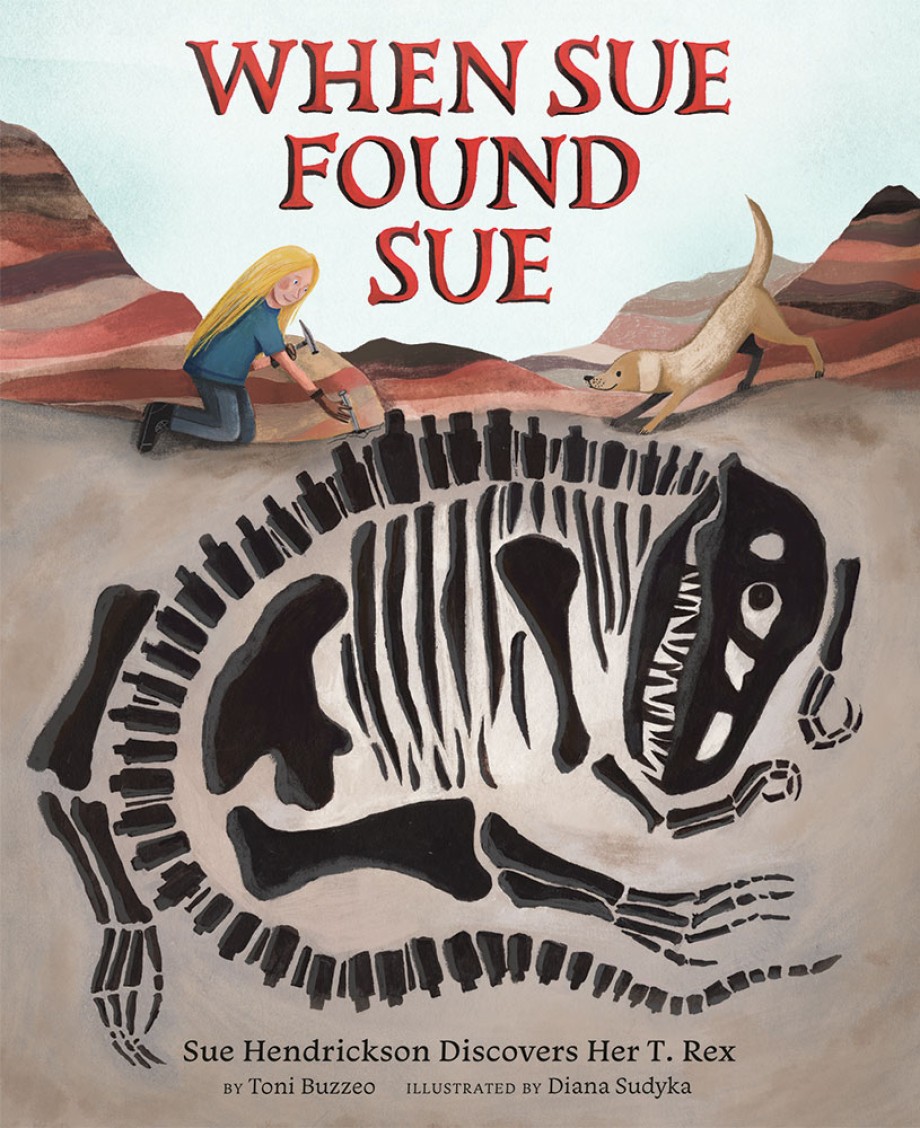
By Toni Buzzeo, When Sue Found Sue (Abrams, 2019) is the story of paleontologist Sue Hendrickson and her discovery of the most complete T. rex skeleton ever found. For ages 4-8.
From Smithsonian magazine, read about The World’s Largest Fossil Wilderness.
Fossils Rock is a wide-ranging site all about fossils with many examples, extreme fossil facts, coloring pages, puzzles, suggestions for starting a geology club, and a detailed series of lessons on the Clock of Eras, an investigation of geologic time. Included are a printable Clock and a recipe for geologic layer cake.
From the National Park Service, National Fossil Day has an Art & Photo Contest, general information, and an Educational Activities page.
From USGS. Fossils, Rocks, and Time is a unit on ordering fossils chronologically, the geologic time scale, rock layers, and fossil succession, illustrated with period photos and diagrams.

David Attenborough’s Lost Worlds, Vanished Lives is a wonderful four-part series on fossils and life on prehistoric Earth. Available on DVD.

Stephen Jay Gould’s Wonderful Life: The Burgess Shale and the Nature of History (W.W. Norton, 1989) is the story of the fossil-rich remains of a 530-million-year-old sea and what it has to tell us about evolution and the history of life on Earth. For older teens and adults.

Fossil Dig Kits, in which kids can chip fossils out of a clay matrix, are available from several sources. Just make sure you're getting a kit with genuine fossil samples, not plastic replicas.
Rocks from Space
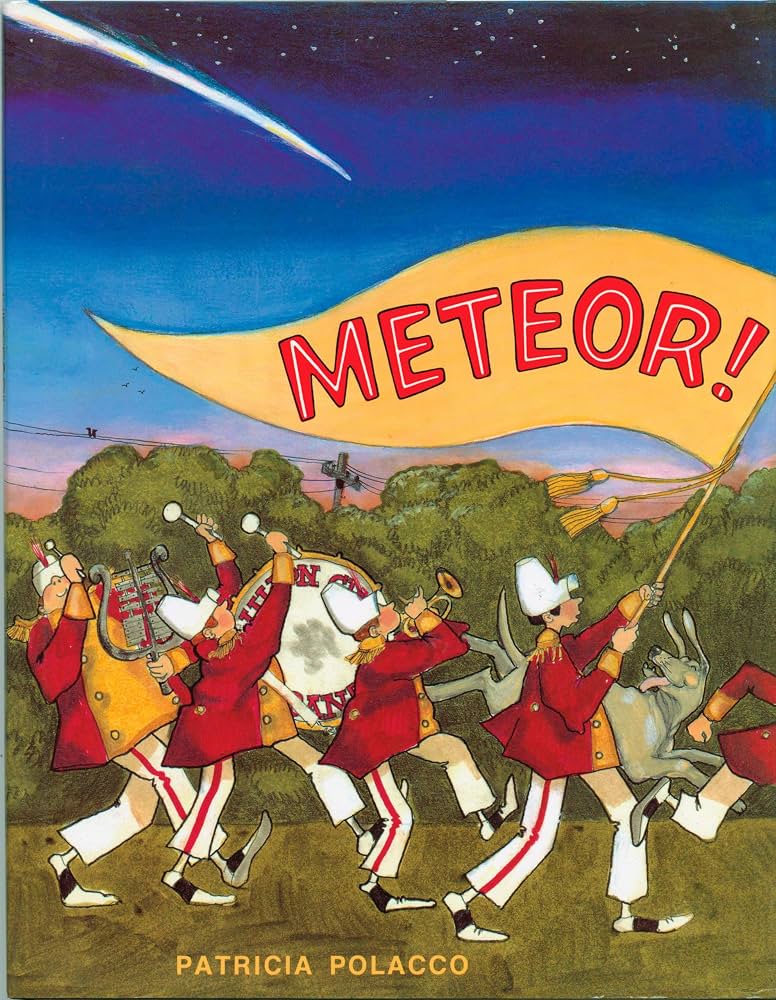
In Meteor! by Patricia Polacco (Puffin, 1996), a meteor lands in the middle of the little town of Mudsock Meadow – and what the townspeople did. (Crowds gathered; the high-school band gave a meteoric concert; the Chautauqua Circus gave a meteoric performance; a balloonist offered hot-air meteor rides.) Based on a true story. For ages 4-8.
Also see https://www.youtube.com/watch?v=sMjtV1IZHqA for a read-aloud.
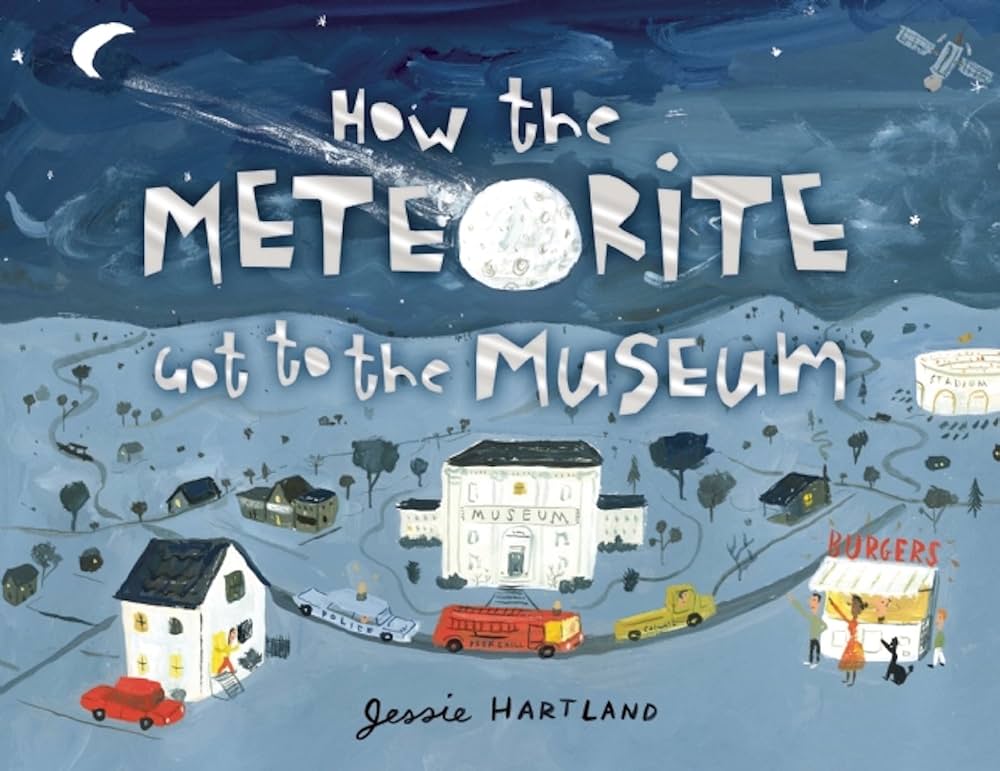
By Jessie Hartland, How the Meteorite Got to the Museum (Blue Apple Books, 2013) is the story of how a 4-billion-year old meteor entered earth’s atmosphere and crashed into a car in Peekstill, New York – finally to end up in the American Museum of Natural History. For ages 4-8.
In the same format by Hartland see How the Sphinx Got to the Museum (2010) and How the Dinosaur Got to the Museum (2011).
From the Smithsonian, see Meteorites: Messengers from Outer Space at https://naturalhistory.si.edu/education/teaching-resources/earth-science/meteorites-messengers-outer-space.
From NASA, see Meteors & Meteorite Facts at https://science.nasa.gov/solar-system/meteors-meteorites/facts/.
When to look for meteors? Check out the Meteor Shower Calendar from the American Meteor Society at https://www.amsmeteors.org/meteor-showers/meteor-shower-calendar/.
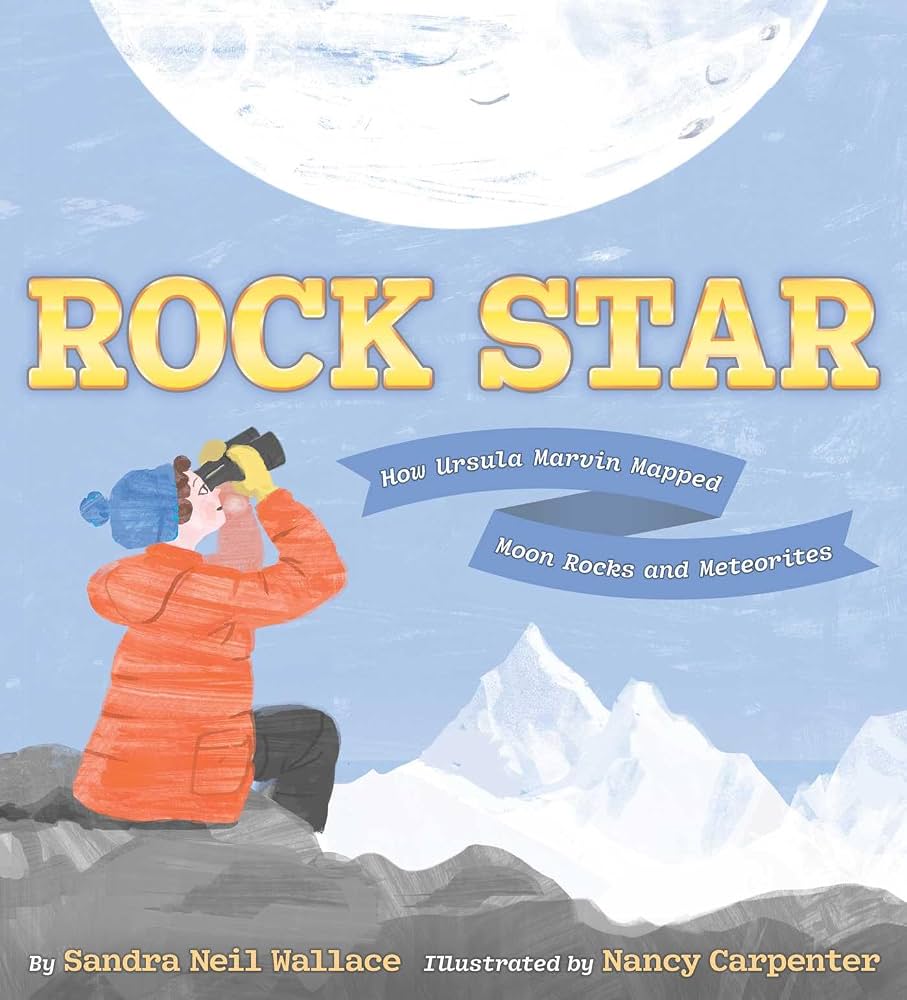
By Sandra Neil Wallace, Rock Star (Paula Wiseman/Beach Lane Books, 2025) is the picture-book story of visionary geologist Ursula Marvin who was told by her professor that she should drop geology and learn to cook –but whose studies of meteorites led to new insights into the nature of meteors and the origin of the solar system. For ages 4-8.
Jewels and Gems

In the Eyewitness series, Crystal & Gem (Dorling Kindersley, 2007) by R.F. Symes and R.R. Harding covers crystal structure, color, identification, uses, and lore and legends, with individual sections devoted to quartz, diamond, corundum, beryl, and opal. Illustrated with spectacular photographs and diagrams. For ages 8 and up.

Victoria Finlay’s Jewels: A Secret History (Ballantine Books, 2006) is a fascinating and information-crammed history of gems, variously covering the stories behind amber, jet, pearl, opal, peridot, sapphire, ruby, emerald, and diamond. An absorbing read for teenagers and adults.

In Aja Raden’s Stoned (Ecco, 2016), readers learn about everything from Faberge eggs to Japanese pearl divers. Find out why glass beads weren’t a bad exchange for Manhattan and learn the truth about Marie Antoinette’s incriminating diamond necklace. A great read for teens and adults.

By Sir Arthur Conan Doyle, in "The Adventure of the Blue Carbuncle," Sherlock Holmes solves a mystery surrounding the theft of a priceless gem.
The Mineral & Gemstone Kingdom is a comprehensive online guide to minerals and gemstones. Click on a name for a wealth of information, illustrated with photographs.
Check out the Smithsonian’s fabulous Gem Gallery. Click on a thumbnail for a photograph and explanation. In alphabetical order from afghanite and agate to zircon and zoisite.
From the Burke Museum, learn about the Science and Legends Behind Birthstones.

Crystal-growing kits are available from many science suppliers. Check some out
Rocks and Math

Stuart J. Murphy’s Dave’s Down-to-Earth Rock Shop (HarperCollins, 2000) in the MathStart series is all about sorting and classification. Josh and Amy have started collecting rocks and need to put their finds in some sort of order. They get help from their neighborhood rock shop, whose window first displays rocks sorted by size and color, then by rock type and Mohs’ scale of hardness. For ages 5-8.

Mancala – traditionally played with stones and pits dug in the ground – is one of the oldest strategy games in the world. See playing instructions at this website. Games are available for
instructions for making your own mancala boards online, most popularly using egg cartons.
Play Mancala online.
Throw Sticks is a traditional Apache game of using sticks and stones. Give it a try! Fun and clever.

The ancient Asian game of Go was traditionally played with black and white stones. Learn about the game at https://gomagic.org/ or find out how to play (in just five minutes)at
https://www.youtube.com/watch?v=6VSIf7sAGSU.
Geology and Poetry

By Lisa Westberg Peters, Earthshake: Poems From the Ground Up (Greenwillow, 2003) is a beautifully illustrated collection of 22 geology-based poems. Titles include “Instructions for the Earth’s Dishwasher,” “Wyoming Layer Cake,” “Obituary for a Clam,” and “Recipe for Granite.” For ages 6-12.

Jane Yolen’s Thunder Underground (Wordsong, 2017) is a collection of illustrated poems about the world underground, from animal burrows and fossils to caves and tectonic plates. For ages 5-10.
By Robert Browning, Among the Rocks.
By Ken Nesbitt, A Rock Makes An Excellent Puppy.
Between a Rock and a Bard - a joint celebration of National Poetry Day and Earth Science Week - discusses geology and poetry, with examples.
The Sciences Sing a Lullabye. Love this poem. (“Geology says: it will be all right.”)
Famous Rocks

Jean L.S. Patrick’s Who Carved the Mountain? The Story of Mount Rushmore (Mount Rushmore History Association, 2005) is a fact-filled picture-book account of the making of the famous national monument featuring the sculpted faces of George Washington, Thomas Jefferson, Abraham Lincoln, and Theodore Roosevelt. Included is a timeline and bibliography. For ages 5-9.

From the National Park Service, Mount Rushmore has information about the history of the carving. (Over 90% of it was done with dynamite.)

Jean Fritz’s witty Who’s That Stepping on Plymouth Rock? (Puffin, 1998) is a history of the famous rock that became a national landmark – even though the Pilgrims almost certainly didn’t land upon it. For ages 8-12.

John McPhee’s "Travels of the Rock" is a more detailed history of Plymouth Rock that appears in Irons in the Fire (Farrar, Straus & Giroux, 1998). A great read for teenagers and adults.
See https://www.newyorker.com/magazine/1990/02/26/travels-of-the-rock.


Check out these photographs of 10 Famous Balancing Rocks worldwide.

Learn about the Blarney Stone.

Check out the Stone of Scone.

History of Gibraltar is an illustrated history of the famously solid Rock of Gibraltar from prehistory to the present.
What’s your state rock? (Vermont, it turns out, is geologically loaded: we have a state gem, three state rocks, a state mineral, and a state fossil. You?)
Rock Art, Ancient and New

By Emily Arnold McCully, The Secret Cave (Farrar, Straus, & Giroux, 2010) is the exciting picture-book story of how four young French boys discovered the Lascaux cave paintings. For ages 5-9.

In Raymond Briggs’s Ug: Boy Genius of the Stone Age (Puffin, 2017), the Stone Age is all stone: Ug and his parents sleep in stone beds under stone blankets, and Ug, to his great discomfort, is even made to wear stone pants. As boy genius, however, Ug has ideas ahead of his time. (“Why can’t trousers be made of something else? Something softer?”) Eventually he invents the wheel and cooking, only to have both rejected by his parents, who don’t know how to cope with him. (“He’ll end up painting animals on the walls!” his mother cries in despair.) Which, in a final scene, Ug, now a grown man, does. The book, drawn in blocky panel cartoons, is funny, clever, and ultimately poignant; what looks like a joke soon becomes a parable about the difficulties inherent in trying to change the world for the better. For ages 7-10.

Justen Denzel’s Boy of the Painted Cave (Puffin, 1996), set in France during the Stone Age, is the story of an orphaned 14-year-old boy who wants to be a cave painter – but is forbidden by the tribal leader. Cast from the tribe, he befriends a wild dog, is mentored by an aged painter named Graybear, and eventually comes into his own. For ages 8-12.

Werner Herzog’s Cave of Forgotten Dreams is a spectacular documentary on an expedition into France’s Chauvet caves to view artwork dating back 30,000 years. 90 minutes long, rated G. Available on DVD.
Petroglyph Photos has a collection of great color photographs of petroglyphs from sites worldwide, including the American Southwest, Hawaii, India, Mexico, and Norway.

In Linda Kranz’s rock-illustrated picture book Only One You (Cooper Square Publishing, 2006), Adri’s parents decide to pass down useful wisdom to their son (look for new friends, enjoy the simple things, don’t follow the crowd). The illustrations are brightly painted pebbles designed to look like fish. (Make some of your own.) For ages 4 and up.

Linda Kranz’s photo-illustrated Let’s Rock (Cooper Square Publishing, 2003) is a collection of rock-painting projects with step-by-step instructions. For ages 6-12.
With this

Make a pebble plaque - a project in which kids collect a batch of wonderful stones, then combine them with salt dough. The result is awesome.
Here's how: Mix 2 cups flour, 1 cup salt, and 1 cup water into a pliable dough. Knead until smooth, then shape into a flat plaque. Press your pebbles into the surface to make a design. Bake at 200-250F for 2-3 hours until completely hardened.
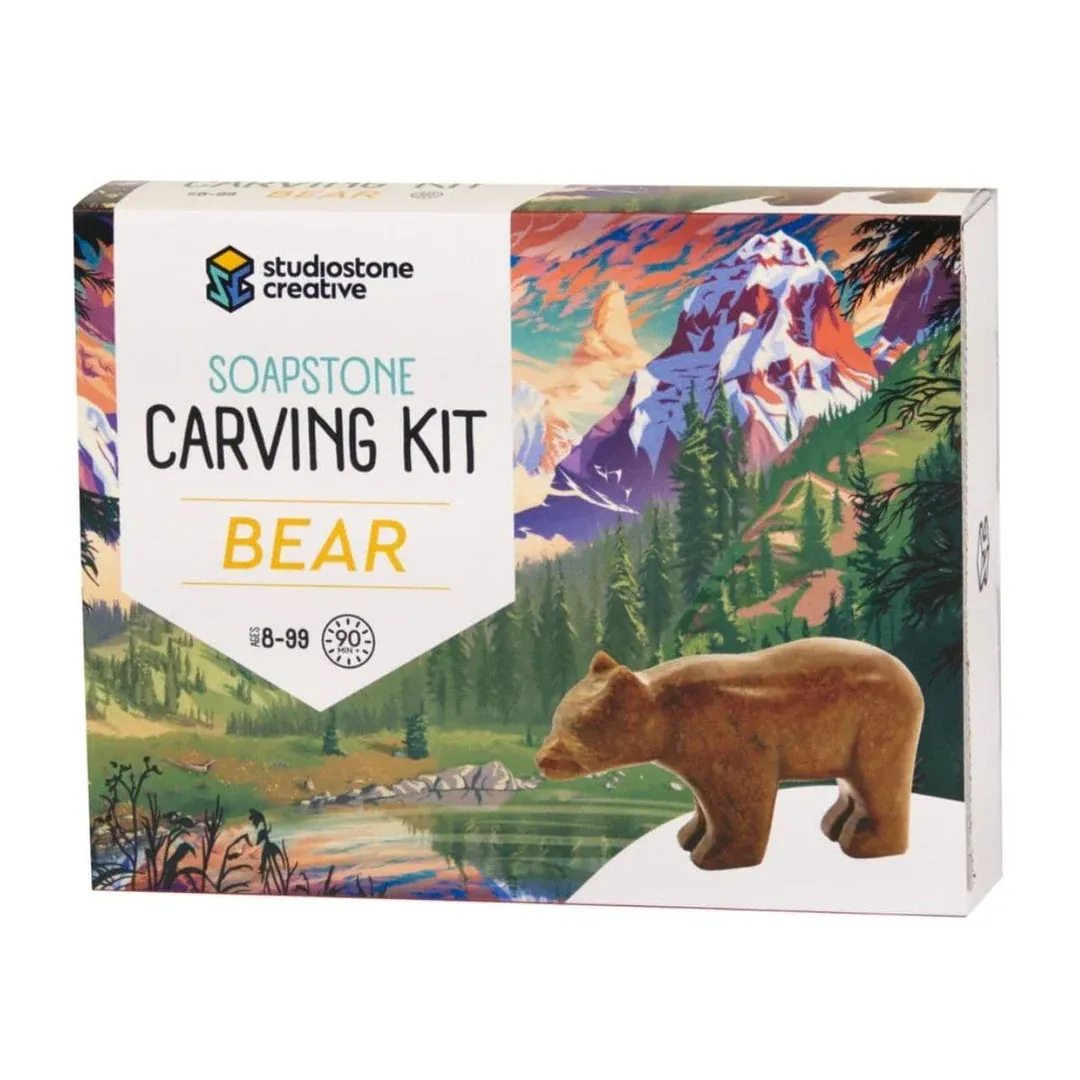
From StudioStone Creative, see these soapstone carving kits targeted at beginners: included are carving tools, chunks of soapstone, and an instruction booklet for making any number of animals. (How about a bear, a cat, or a turtle?) See
Throwing Rocks

The sling – the weapon that David used to down Goliath – is a truly ancient rock-throwing weapon. Read about its history at https://warfarehistorynetwork.com/article/learning-from-david-gloiath-true-origin-sling-weapon/.
From Instructables, illustrated instructions for making an ancient-style sling of your own. (Use it to throw tennis balls.) See https://www.instructables.com/Making-an-Ancient-Sling-for-Modern-Fun/.
How to make a catapult for kids. You'll need craft sticks and rubber bands.


William Gurstelle’s The Art of the Catapult: Build Greek Ballistae, Roman Onagers, English Trebuchets, and More Ancient Artillery (Chicago Review Press, 2004) is a collection of 10 working catapult projects with a lot of cool scientific and historical background information (and great emphasis on adult supervision and safety). For ages 11 and up.

Curt Gabrielson’s Stomp Rockets, Catapults, and Kaleidoscopes (Chicago Review Press, 2008) is subtitled “30+ Amazing Science Projects You Can Build for Less that $1” – always a happy thought. The projects are categorized under Electricity and Magnetism; Sound, Light, and Perception; Mechanics; Fluids and Aerodynamics; Biology; and Chemistry. Each comes with a parts list, instructions, and a scientific explanation. (The catapult looks terrific.) For ages 9 and up, with help.

Maxine Anderson’s Amazing Leonardo da Vinci Inventions You Can Build Yourself (Nomad Press, 2006) covers the life and times of Leonardo with 30 varied projects. For example, readers make plastic, walk-on-water shoes, a camera obscura, a helical air screw, invisible ink, and a catapult.

Jim Paul’s Catapult: Harry and I Build a Siege Weapon (Villard, 1991) is the story of how two friends build a medieval siege weapon capable of hurling rocks into San Francisco Bay. Not just your ordinary project. For teens and adults.
Fictional Rocks and Magic Rocks

In David McKee’s The Hill and the Rock (Andersen Press, 2011), Mr. and Mrs. Quest live on top of a hill with a wonderful view – except from the kitchen window, which is blocked by an enormous rock. Finally, frustrated, they roll the rock down the hill – with the result that the hill deflates like a balloon, goes flat, and then sinks to form a valley, leaving the Quests at the bottom of a hole. Luckily the rock rolls back down the slope and settles in front of the kitchen window again, the hill inflates, and all is restored to normal. For ages 3-6.

In Marcus Pfister’s, Milo and the Magical Stones (NorthSouth, 2010), Milo, a little mouse who lives in a cold cave on an island, finds a magical glowing stone that provides both light and heat. All the other (cold) mice promptly want stones of their own – though Balthazar, a particularly wise mouse, warns that if something is taken away from the island, something must be returned. The book then splits in two: there’s both a happy ending and a sad ending, depending. Basically, it’s a morality tale about environmental responsibility. For ages 3-7.

By Sara Azizi, The Knight, the Princess, and the Magic Rock (Wisdom Tales, 2012) is a re-telling of the traditional Persian tale about Bijan, a brave knight, who falls in love with Manijeh, princess of an enemy kingdom, and ends up imprisoned in a pit covered by a magic rock. For ages 4-8.

In Arnold Lobel’s Mouse Soup (HarperCollins, 2011), a dimwitted weasel catches a mouse with the intention of turning him into soup. Luckily the mouse turns the tables by means of four stories, among them the tale of “Two Large Stones.” Delightful for ages 4-8.

In Marcia Brown’s Caldecott-winning Stone Soup (Aladdin, 1997), originally published in 1947, three soldiers trudging home from the war come to a little French village, where the peasants rush to hide their food – until the clever soldiers begin to prepare a batch of Stone Soup. Soon everyone comes forward to offer ingredients, and in no time there’s a wonderful feast and a town party. For ages 4-8.

In Chris Van Allsburg’s The Wretched Stone (Houghton Mifflin, 1991), told through a ship captain’s log, the crew has brought on board a mysterious glowing stone found on a desert island. They become obsessed with the stone, which has terrible effects; soon all have been transformed into apes. They’re saved by a near-shipwreck that sends the stone to the bottom of the sea. An object lesson about the perils of too much TV for ages 5-9.

In William Steig’s Sylvester and the Magic Pebble (Aladdin, 2006), Sylvester, a young donkey, collects pebbles “of unusual shape and color.” One rainy Saturday he finds a magic pebble, capable of granting wishes – but on the way home to tell his parents the news, he encounters a lion, panics, and saves himself by wishing to be turned into a rock. The problem: he’s dropped the pebble and can’t wish himself back again. For ages 5-8.
From the Prindle Institute, see guidelines and discussion questions to accompany Sylvester and the Magic Pebble at https://www.prindleinstitute.org/books/sylvester-and-the-magic-pebble/.

Eric Kimmel’s Anansi and the Moss-Covered Rock (Holiday House, 1990) is a West African folktale featuring Anansi, the trickster spider, who finds a moss-covered rock that magically puts animals to sleep. He comes up with a nefarious scheme in which he leads animals to the rock, puts them to sleep, and then steals their stores of food – until shy little Bush Deer puts a spoke in his wheel. For ages 5-8.

Gary Schmidt’s 32-page The Great Stone Face (Eerdman’s Books for Young Readers, 2005) is a re-telling of the classic Nathaniel Hawthorne tale in which a prophecy holds that someone will be born who looks just like New Hampshire’s Great Stone Face – the rock formation commonly called the Old Man of the Mountains – and he will be “the noblest person of his time.” For ages 7-11.
Read Nathaniel Hawthorne’s The Great Stone Face online here.
The Great Stone Face – a.k.a. the Old Man of the Mountains – is no more; once a series of granite ledges on Cannon Mountain in New Hampshire’s White Mountains, the Great Stone Face broke away and fell in 2003. Read about its history here.

Rebecca Rupp’s The Waterstone (Candlewick, 2005) features a quartet of tiny characters – Tad and Birdie of the Fisher Tribe, Ditany of the Hunters, and Will of the Diggers – who are on a quest to regain the fabled Waterstone from a powerful and evil nixie who is withholding the world’s water. This one got a STARRED REVIEW from Kirkus! For ages 9-12.

Is there anyone in the world who hasn’t read Harry Potter? In Book One of J.K. Rowling’s ubiquitous series, Harry Potter and the Sorcerer’s Stone (or, in England, Philosopher’s Stone) (Scholastic, 1999), Harry and his Hogwarts pals attempt to prevent the evil Lord Voldemort from stealing the fabled sorcerer’s stone. For ages 9 and up.
Read about The Philosopher’s Stone - in alchemy a substance supposedly capable of turning base metals into gold.

T.H. White’s The Sword in the Stone (Philomel, 1993) is the first part of his much longer King Arthur saga, The Once and Future King. This is a stand-alone family read, the story of Sir Ector’s ward, young Wart, and his astonishing education by the old wizard, Merlin, culminating with his pulling the sword from the stone and revealing himself as King Arthur. Wonderful for ages 9 and up.

Grow
Make Your Own Magic Rocks explains how to make your own chemical crystal garden.
From Science Buddies, see Guide to Purchasing Chemicals, which has explanations, a common-names list, and suppliers.