
Writing: Facts, Fiction, Fantasy, and more
In this collection
All about writing - including advice from a mouse, dire warnings from a chicken, and a Machine of Death.
How-tos, Helps, (and Advice From a Mouse)

In Kate Duke’s Aunt Isabel Tells a Good One (Puffin, 1994), Penelope – an enchanting little mouse – demands a story from her Aunt Isabel after supper. A good story, however, Aunt Isabel explains, needs just the right ingredients – beginning with “a When and a Where.” With a lot of imaginative input from Penelope, Aunt Isabel helps her weave a perfect plot, complete with setting, characters (valiant Lady Nell, a captive prince, a villainous Odious Mole), conflict, suspense, and a satisfying ending. For ages 4-8.

Peggy Kaye’s Games for Writing: Playful Ways to Help Your Child Learn to Write (Farrar, Straus & Giroux, 1995) is a mother lode of creative projects and activities for young writers. Kids, for example, make story maps and pretzel letters, invent acrostic poems, make shape books and family journals, create comics, write a play, or try their hands at producing the longest story ever written. For ages 5-8.

In Roni Schotter’s Nothing Ever Happens on 90th Street (Scholastic, 1999), Eva is stumped by her homework assignment, in which she’s been asked to “write what you know.” Passing neighbors give helpful writerly advice – be observant (“The whole world’s a stage,” says Mr. Sims, the out-of-work actor), use detail and imaginative language, exaggerate, add action – and finally Eva, by feeding her leftover Danish to the pigeons, sets off a chain of events that leads to a couple falling in love, the invention of a marvelous mousse, the opening of a new restaurant, and a great story. For ages 6-10.

Gail Carson Levine’s Writing Magic: Creating Stories That Fly (2006) is a conversational and delightful guide for young writers, filled with stories about Levine’s own experience of writing, helpful information about the writing process, and writing exercises. In fact, it starts off – on the first page of chapter one – with a list of proposed first sentences that will have any young writer itching to grab a keyboard, pencil, or pen. For ages 9 and up.
For the same age group, also see Ellen Potter and Anne Mazer’s Spilling Ink: A Young Writer’s Handbook (Square Fish, 2010).
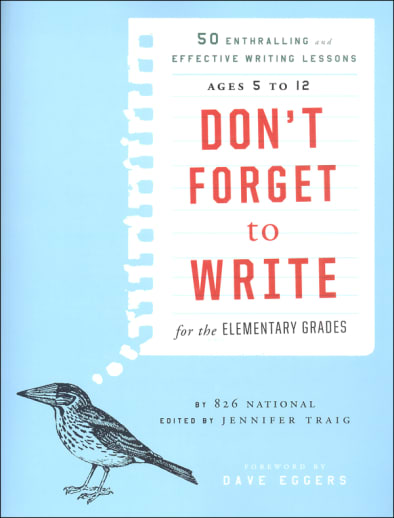
Don’t Forget to Write (826 National; Jossey-Bass, 2011) is a collection of 50 clever writing lessons created by a range of authors, either for the elementary grades (ages 5-12) or the secondary grades (ages 11 and up). Elementary-level kids, for example, can write a make-believe science journal or a Space Exploration Log, invent a fractured fairy tale, or write a how-to story such as “How to Avoid a Bath or Shower for as Long as Possible, and Maybe Even Longer.”

Ralph Fletcher’s A Writer’s Notebook (HarperCollins, 1996) explains how to take notes to serve as seeds for stories, poems, and other writing projects. “A writer’s notebook gives you a place to live like a writer…wherever you are, at any time of day.” Included are samples of notebooks by both published writers and young beginners. For ages 9-12.

Brigid Lowry’s Juicy Writing (Allen & Unwin, 2009) is a mix of inspiration and technical advice for young writers, with exercises that include such challenges as inventing a new religion, writing about a day in the life of a shoe, or re-casting your life as a fairy tale. A final chapter includes a resource list of websites and writer’s organizations. For ages 12 and up.
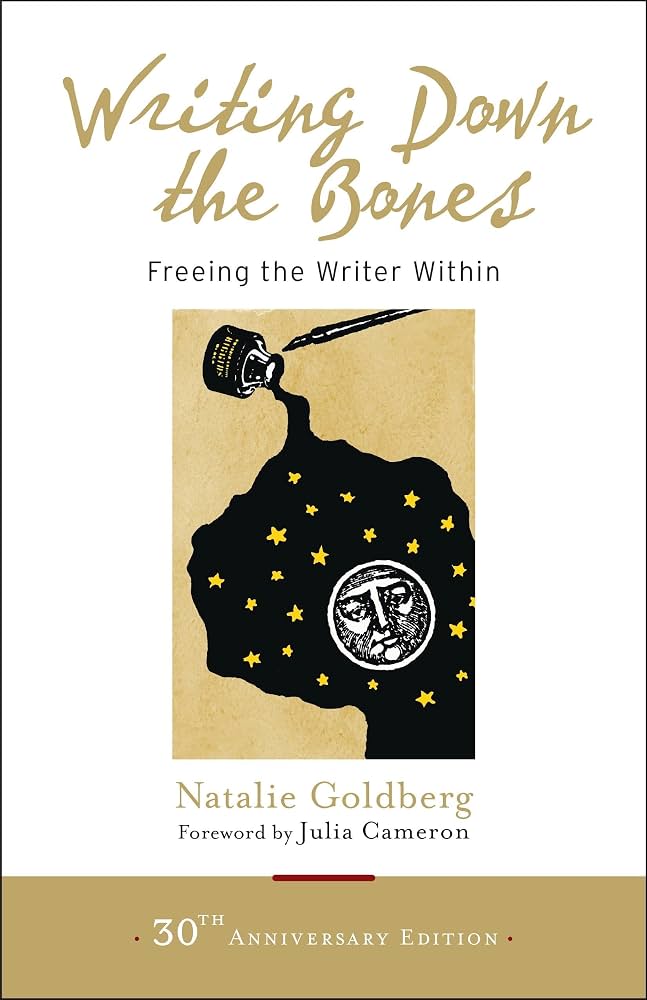
Natalie Goldberg’s Writing Down the Bones (Shambhala, 2016) offers advice and activity suggestions for writers, all with insight and humor. Often recommended for writing courses. For teens and adults.
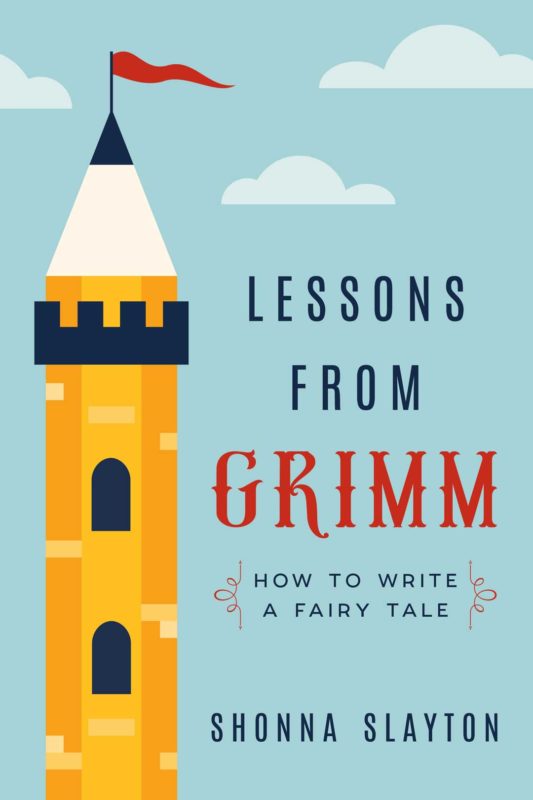
By Shonna Slayton, Lessons from Grimm: How to Write a Fairy Tale (Amaretto Press, 2020) teaches storytelling techniques using examples from traditional fairy tales. For ages 13 and up.
Also see the accompanying workbooks, among them Writing Prompts from Grimm (2020), targeted at grades 7-12, and Lessons from Grimm: Elementary Workbook for grades 3-5.

By Alfred Rosa and Paul Eschholz, Models for Writers (Bedford/St. Martin’s Press, 2012) is a collection of short essays, each accompanied by discussion questions, a vocabulary list, and related writing suggestions. The essays are used to illustrate technical aspects of the writing process – such as organization, beginnings and endings, transition, tone, figurative language - or as examples of various essay types (narration, process analysis, comparison and contrast, cause and effect). An excellent and challenging resource for high-school-level students and up.
By Jane E. Aaron and Ellen Kuhl Repetto, The Compact Reader (Bedford/St. Martin’s Press, 2021) combine short essays with detailed instructions, analytical questions, and lists of suggested writing topics. For teens and up.

John Gardner’s The Art of Fiction: Notes on the Craft for Young Writers (Vintage, 1991) is a classic of its kind, filled with astute observations on what to think about when writing fiction, what to watch out for, and what to remember – namely that “there are no rules for real fiction.” For teens and up.
By William Zinsser, On Writing Well (HarperPerennial, 2016) is a classic guide to writing nonfiction, based on a course Zinsser taught at Yale. For teens and adults.
By Benjamin Dreyer, longtime chief copy editor at Random House, Dreyer’s English (Random House, 2020) is a perfectly delightful guide to grammar and style, including a great chapter on linguistic “Peeves and Crochets.”
Also see the Young Reader’s edition (2021), adapted for ages 10 and up.
Richard Cohen’s How to Write Like Tolstoy (Random House, 2016) is filled with great examples from a wide range of authors (including Tolstoy), along with a lot of intriguing information and advice. In chapter one, “Grab, Invite, Beguile: Beginnings,” readers learn about the origin of “Once upon a time,” Agatha Christie’s swearing duchess, Nero Wolfe’s doorbell, and the famous start to Catcher in the Rye. For teens and adults.

Monica Wood’s The Pocket Muse (Writer’s Digest Books, 2004) – subtitled “ideas & inspiration for writing” – is a cleverly designed compilation of helpful hints, writing prompts, and creative thinking exercises, packed with quotations, photographs, and examples. Also see The Pocket Muse 2 (2009). For teens and adults.

By Anne Bernays and Pamela Painter, What If? Writing Exercises for Fiction Writers (William Morrow, 1991) is filled with excellent exercises on all aspects of writing: story beginnings, journaling and memory, characterization, point of view, dialogue, plot, story elements, resolutions, mechanics, writing games, and “Learning from the Greats.” For teens and adults.

Marianne Saccardi’s 178-page Books That Teach Kids to Write (Libraries Unlimited, 2011) is a treasure trove of suggestions, activities, and information on writing for kids in grades K-12 – all illustrated with excellent examples from literature, and accompanied by lengthy annotated book and reference lists. Various book sections deal with instilling a love for language, ideas for sparking reluctant writers, ways of creating a unique writer’s voice, approaches to inventing believable and memorable characters, modes of non-fiction writing, and suggestions for enhancing writing through drama. Appendices include reproducible activity sheets and a bibliography of books featuring characters who write.

By Patrick Sebranek, Dave Kemper, and Verne Meyer, Writers INC. (Write Source, 2006) is a fat (600+ pages), nicely designed and organized tome on the writing process intended for high-school-level students. The book covers the writing process, forms of writing (personal, subject, creative, persuasive, academic, literary, research, workplace), writing tools, and proofreading. A useful reference.
See Write Source for more information on student writing handbooks, a list of writing topics categorized by grade level (1-12), student writing models, research links, and style criteria.

The National Writing Project (NWP) is a national network promoting writing for students of all ages, from preschool to college. The website lists resources on all aspects of writing, including activities and projects for young writers, informational articles and essays, and research publications. There’s also an online bookstore devoted to writing education.
ReadWriteThink has a long and excellent list of lesson plans for writers, categorized by grade level. Enter "Creative Writing" in the search box, for example, for projects in which kids devise stories to accompany wordless picture books using an online interactive story map; invent alternative endings for familiar books; investigate magic realism; write fanfiction; and much more. For a range of ages.

Want to write a cookbook? Dianne Jacob’s Will Write for Food (DaCapo Lifelong Books, 2010) is a complete guide to food-writing, with writing exercises, examples, background information, suggestions for getting published, and a resource list. The book is aimed at adults, but could be the source of a great parent/child project.
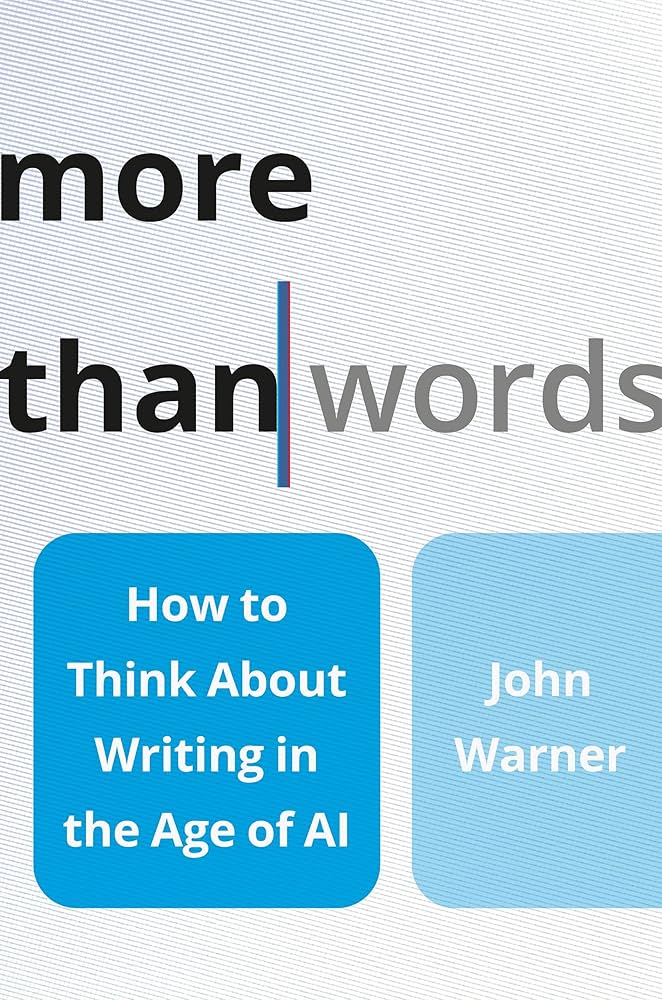
The gorilla in the room - what about AI?
John Warner’s More Than Words: How to Think About Writing in the Age of AI (Basic Books, 2025) argues that the fact that kids are given assignments that a machine can do indicates that there’s something wrong with writing instruction. Writing, Warner points out, should not consist of producing the formulaic five-paragraph essays so beloved by the public schools but should be challenging and meaningful.
Ideas and Story Starters
Enchanted Learning’s Writing Activities has printable writing prompt worksheets, draw-and-write pages, brainstorming worksheets, make-your-own writing prompt pages, thought bubble and speech balloon pages, and a long list of essay projects for elementary-level students. Only site members can actually print the pages. (A single-family membership costs $20/year.)
At Scholastic’s StoryStarters, visitors choose a genre (Adventure, Fantasy, Sci-fi, Scrambler), a grade level (K-1, 2, 3, 4-6), a format (notebook, letter, newspaper, postcard), generate a story scenario, and then create an online story (with an option for illustrations). Examples: “Write about a thrilling experience for a graceful reindeer who accidentally sets the science fair on fire.” “Describe a celebration for a tricky pirate who rides a wild boar.”

Bryan Cohen’s 1000 Creative Writing Prompts (CreateSpace, 2011) is a 132-page collection of story starters, grouped under such categories as “Holidays,” “Seasons,” “For the Kids,” “Art,” “Sports, “The Outdoors,” and “The Weird.” Adaptable for all ages. Also see Cohen's 1000 Character Writing Prompts (CreateSpace, 2012), jumpstarts for inventing a wide range of characters, from superheroes and sidekicks to zombies, monsters, wicked stepmothers, and lawyers.

By A.S. Newman and P.C. Trauth, 365 Things to Write About! (TNA Publishing, 2011) consists of 365 lined pages with a short writing prompt printed at the top of each. Examples include an airplane, Alaska, aliens, the color red, a galaxy, a potion, quicksand, the Taj Mahal, a trap door. Adaptable for all ages. Want more? Check out 642 Things to Write About (Chronicle Books, 2012).

Hank Kellner’s Write What You See (Prufrock Press, 2009) contains 99 great black-and-white photographs to be used as writing prompts, each with a quotation, a short list of questions to consider, and suggestions for approaches or possible opening lines. For ages 12 and up.
At Creative Writing Prompts, point your cursor at a number (1-346) for a writing exercise or story prompt. Examples: “Why would a speaker be afraid of cats?” “Use all these words in a poem: crash, crumpled paper, straw, gravel, ochre.” “Write a story about greed with a CEO as the main character and a chess board as a key object.” For ages 12 and up.
From The Teacher’s Corner, Daily Writing Prompts has a writing suggestion for every day of the year, based on holidays, anniversaries, historical events, and the birthdays of famous people. Adaptable for a range of ages.
The Daily Writing Prompt is a terrific source of prompts and story starters, variously categorized by genre or topic, or based on the calendar. Included are pages of writing prompts based on picture books, writing prompts paired with video clips, journaling suggestions, and student portfolio samples. There's also an option to publish your work online.
Story Writing Game for Kids is a Mad-Libs-style writing exercise is which kids choose words to generate a ghost, romance, or spy story.
Language Is a Virus has a long list of creative writing games and aids, among them a Character Name Generator and a Writing Prompts feature.
The New York Times Learning Network is a great source of innovative lesson plans, categorized by academic discipline.

Also from the New York Times, see 650 Prompts for Narrative and Personal Writing.
Inspiring Imagination
Of course, almost any book can be an inspiration for the imagination...

In Leo Lionni’s Frederick (Dragonfly Books, 1973), while all the other field mice scurry about collecting food for the winter, Frederick – a talented and imaginative little mouse - dreamily sits, watches, and thinks, explaining that he is gathering color, warmth, and words for the cold days ahead. Finally winter comes, and as food stores run low and spirits droop, Frederick revives them all with his wonderful poems and stories filled with colorful images of the spring and summer. For ages 3 and up.

In John Burningham’s It’s a Secret (Candlewick, 2009), Marie-Elaine wonders where her cat, Malcolm, spends the night – and discovers, on a magical journey, that Malcolm, wearing a hat with a plume, celebrates at midnight parties with the Queen of the Cats. (Where do you think cats go at night? Invent your own story.) For ages 3 and up.

Dr. Seuss’s rollicking And To Think That I Saw It On Mulberry Street (Random House Books for Young Readers, 1989) is a tale of imagination run amok: Marco hasn’t seen anything on the way home from school but a horse and a wagon (“That can’t be my story. That’s only a start.”) – so he proceeds to add imaginative embellishments, each more fabulous than the last. Marco is a born writer. For ages 3-8.
Learn more about And To Think That I Saw It On Mulberry Street at NPR’s How Dr. Seuss Got His Start.

In Mark Teague’s rhyming picture-book How I Spent My Summer Vacation (Dragonfly Books, 1997), young Wallace Bleff – giving a class report on a blah, but classic, back-to-school writing topic – explains that he was sent out west for the summer to recover from a too-wild imagination. His story then spirals into an improbable (but cool) account of a kidnapping by cowboys and a barbecue threatened by a cattle stampede, in which “Kid Bleff” heroically saves the day. For ages 4-8.

In Nancy Carlson’s Henry’s Amazing Imagination (Puffin, 2010), Henry – an extremely imaginative mouse – regales his class at show-and-tell with fabulous stories of pet dinosaurs, giant snowmen, and visiting aliens. Accused of lying, Henry is crushed, until he discovers how to channel his amazing imagination into writing stories. For ages 4-8.

Writing is often a matter of creating imaginative new worlds. A wonderful example of this is found in Paul Fleischman’s Weslandia (Candlewick, 2002), in which young Wesley – an ususual boy who dislikes pizza and refuses to shave half his head like all the other boys – spends his summer vacation creating a whole new civilization. (Try it.) A wonderful read for ages 4-10.
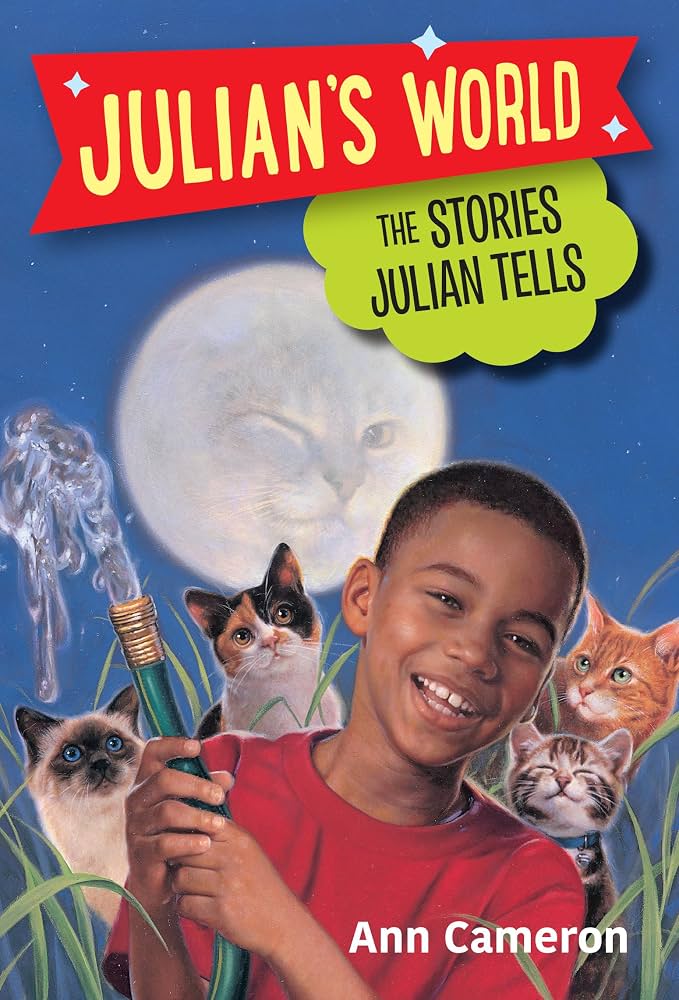
By Ann Cameron, The Stories Julian Tells (Random House, 1989) is filled with the imaginative (and far-fetched) stories that Julian tells, often to his little brother Huey – such as the story that cats arrive in catalogs (open it up and cats leap out). First of the Julian’s World series for ages 6-8.

Chris Van Allsburg’s The Mysteries of Harris Burdick (Houghton Mifflin, 1984) is a marvelous picture book: eerie, evocative, inspiring, and utterly fascinating. It consists of fourteen enchanting black-and-white pictures, each with a mysterious title and line or two of text. “Mr. Linden’s Library,” for example, shows a girl asleep with an open book, from which a leafy vine is now sprouting. “He had warned her about the book,” the text reads. “Now it was too late.” “Uninvited Guests” pictures a cellar: at the bottom of the stairs, light from a window falls on a tiny wooden door. (“His heart was pounding. He was sure he had seen the doorknob turn.”) For ages 4 and up.
From ReadWriteThink, The Mysteries of Harris Burdick is a lesson plan in which kids write mystery stories based on the pictures in the book.
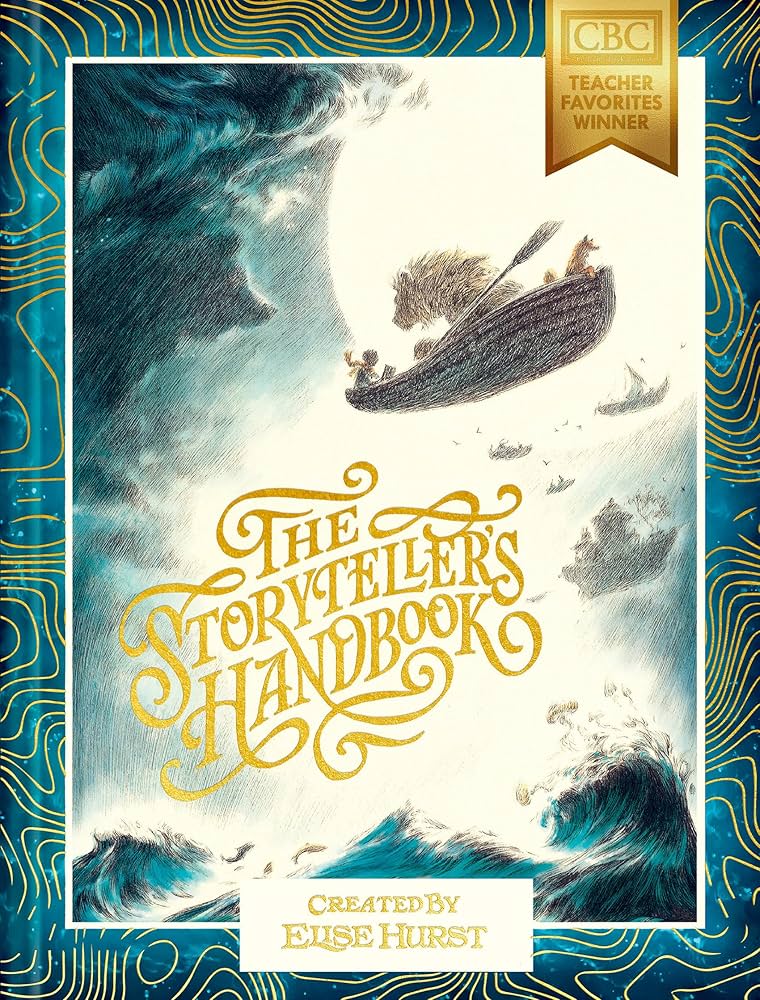
Ellen Hurst's The Storyteller's Handbook (Compendium, 2022) is a collection of 52 intricate and enchanting illustrations that inspire imaginative stories: a glowing doorway under a bridge, a pair of koalas floating on an autumn leaf, a giant mantis returning a book to the library.
For even more, see Hurst's The Storyteller's Almanac (2026), another 52 magical scenes.

Sarah Perry’s If… (J. Paul Getty Museum, 1995) pairs a simple text with fascinating surrealistic paintings: If zebras had stars and stripes…If mice were hair…If spiders could read Braille…If cats could fly…If the moon were square…Irresistible. For ages 4 and up.

Sarah L. Thomson’s magical Imagine books – Imagine a Night (Atheneum Books for Young Readers, 2003), Imagine a Day (2005), and Imagine a Place (2008) – illustrated with evocative and surreal paintings by Ron Gonsalves, are wonderful inspirations for stories, as moonlit reflections of pine trees turn into ghostly girls with lanterns; a toy train becomes life-sized; and sunflowers have human faces. For ages 9 and up.
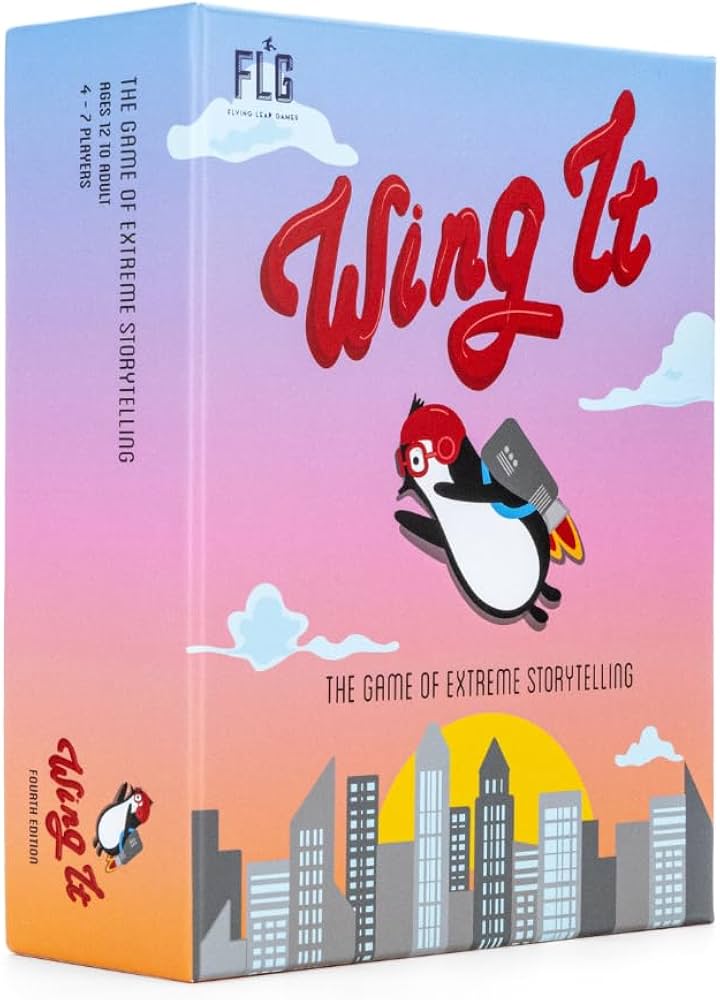
Wing It (Flying Leap Games) is a card game of “extreme storytelling” for ages 7 and up in which players use their Resource cards – examples read “38 packets of instant pudding,” “12th-century catapult,” and “parade float” - to explain how they’re going to escape from a given Situation – say, “You are being chased by a pack of carnivorous rabbits.” There are 89 Situation cards and 330 Resource cards – and the possibilities are both challenging and hilarious.
See 
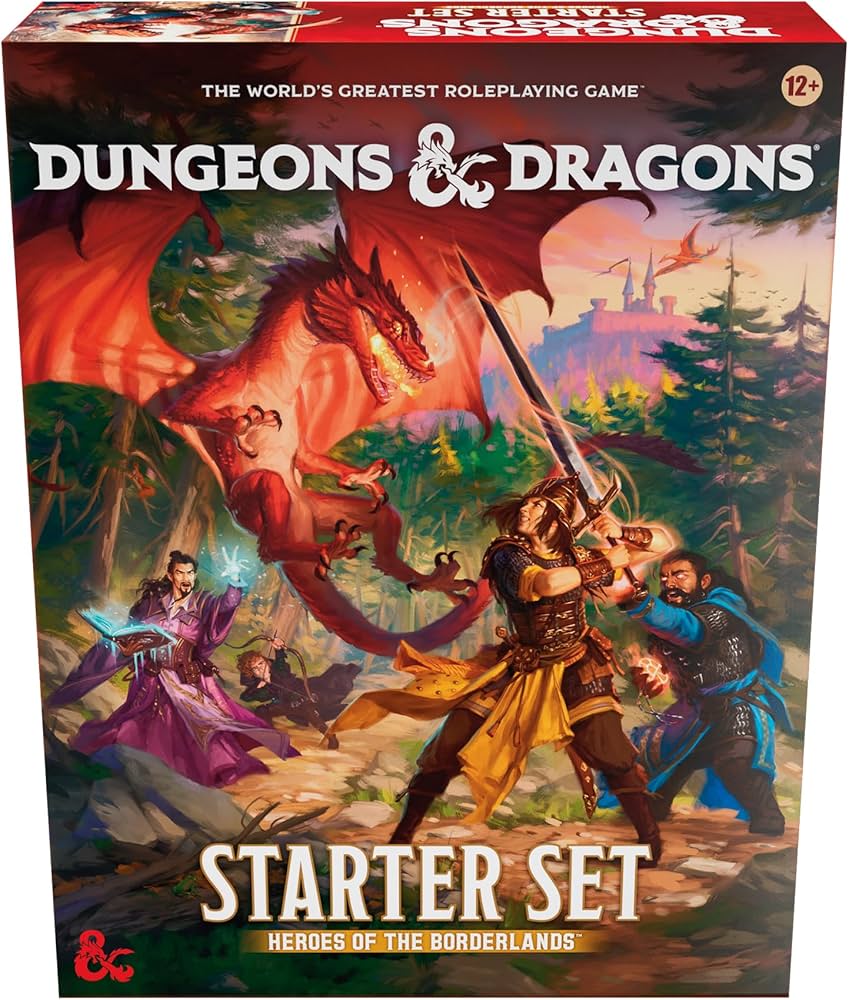
Dungeons & Dragons and other role-playing games are great venues for storytelling. Players invent characters, design environments, and participate in interactive storytelling to pursue a plot.
For beginners, the Dungeons & Dragons Starter Set (“Heroes of the Borderlands”) will set you on your way, including dice, maps, cards, character boards, and adventure booklets.
See

The Storymatic – “six trillion stories in one little box” – is touted as a writing prompt, a teaching tool, a parlor game, and a toy. It consists of a box of 540 cards in two colors. Players draw two gold cards to create a main character – say, “royalty,” “gravedigger ,” “caretaker of an elephant,” or “pig” – and two copper-colored cards as story starters, such as “invitation from a stranger,” “burning house,” “handcuffs,” “pet is behaving strangely,” or “talking doll.” The challenge: to write, tell, or co-invent a story based on your cards. Thought-provoking and addictive for ages 12 and up. Also see

From Gamewright, Rory’s Story Cubes consists of nine dice, each with imagination-sparking images on each face – for example, a key, a magic wand, a mask, an apple, a shooting star. Roll them for story-generating combinations.
Discovering Voice
In writing, voice is more than the thing you use to talk, sing, and yell – it’s a unique expression of personality, the creative quirk that gives color and pizzazz to language.
The difference between the almost right word and the right word is really a large matter – ‘tis the difference between the lightning-bug and the lightning.
Mark Twain

Nancy Dean’s Discovering Voice (Maupin House, 2006) a collection of creative writing lessons aimed at analyzing and developing a writer’s voice, using as examples excerpts from the works of published authors, paired with discussion questions, activities, and writing projects. Topics covered include diction, detail, figurative language, imagery, syntax, and tone. An exercise on diction, for example, begins with a quote from Virginia Hamilton’s M.C. Higgins the Great: “M.C. heard him scramble and strain his way up the slope of Sarah’s mountain.” Visualize it, Dean says. “How would it change your mental picture if Hamilton had written: ‘M.C. heard him walk up the slope of Sarah’s mountain’?” An excellent and thought-provoking resource for ages 12 and up.

Also by Nancy Dean, see Voice Lessons: Classroom Activities to Teach Diction, Detail, Imagery, Syntax, and Tone (Maupin House, 2000), using examples from a wide range of well-known writers, among them Barbara Kingsolver, E.B. White, Annie Proulx, Seamus Heaney, John Steinbeck, William F. Buckley, Elie Wiesel, and Langston Hughes. For high-school-level students.

By Thaisa Frank and Dorothy Wall, Finding Your Writer’s Voice: A Guide to Creative Fiction (St. Martin’s Griffin, 1996) explains that voice is what differentiates one writer from all the others in the world. The book discusses “raw” voice, narrative voice, and varying characters’ voices, with writing exercises and many examples from published authors. For teens and adults.
Characters need distinctive voices too. From Wordplay, How to Create Distinctive Character Voices has a handful of exercises for experimenting with character voice. (What would J.K. Rowling’s Professor Snape say about his first glimpse of Disneyland?)

Need a good example of character voice? One of my favorites is that of the Big Friendly Giant of Roald Dahl’s The BFG (Puffin, 2007), who – once heard – can never possibly be mistaken for anyone else: “By ringo, your head must be so full of frogsquinkers and buzzwangles, I is frittered if I know how you can think at all!” (Now there’s a voice.) For ages 7 and up.
Point of View
There are books told from the points of view of dolls, toy soldiers, and stuffed rabbits; of horses, dogs, cats, birds, and mice; and, of course, of all possible kinds of people.
You never really understand a person until you consider things from his point of view…until you climb into his skin and walk around in it.
Harper Lee, To Kill a Mockingbird

Jon Scieszka’s The True Story of the Three Little Pigs (Puffin, 1996) is the familiar classic told from the point of view of the villain. The Wolf – Alexander T. Wolf, that is – insists he’s been wronged: he only wanted to borrow a cup of sugar from the pigs to make his grandmother a birthday cake. And all the huffing and puffing? He had a cold. For ages 4 and up.

In Anthony Browne’s Voices in the Park (Dorling Kindersley, 2001), a snobbish society mother, her buttoned-up son, Charles, and their pedigreed Labrador retriever visit the park at the same time as an unemployed father, his daughter, Smudge, and their rambunctious mongrel. The story is told in four different voices, from four very different points of view. All the characters are anthropomorphic apes. For ages 7-11.

Katherine Applegate's Wishtree (Feiwel and Friends, 2017) is told from the point of view of a tree - the wise and kindly Red, an oak. For ages 8-12.

Rob Buyea’s Because of Mr. Terupt (Yearling, 2011) is the story of a life-changing teacher and a disastrous accident, told from the varying points of view of seven very different fifth-grade students. For ages 9-12.

Frances O’Roark Dowell’s The Class (Atheneum/Caitlyn Dlouhy Books, 2020) is a story told in 20 different distinct voices from Ms. Herrerra’s sixth-grade class. For ages 9-13.

Paul Fleishman’s Bull Run (HarperCollins, 1995) is the story of the Civil War, told from the points of view of sixteen different people, with sixteen widely different attitudes and backgrounds. For ages 10 and up.

Paul Fleischman’s Seedfolks (HarperTrophy, 2004) is told in thirteen different voices, beginning with nine-year-old Kim, daughter of Vietnamese immigrants, who plants some bean seeds in a vacant lot. Thus begins a community garden, with its growing cast of multicultural narrators, each with a different array of goals, problems, and perspectives. For ages 10 and up.

Anna Sewall’s classic Black Beauty, available in many editions, was originally published in 1877. The story of Black Beauty’s life, from pampered carriage horse to abused cab horse to peaceful retirement, is narrated in the first person from the point of view of the horse himself. For ages 12 and up.

Margaret Atwood’s Penelopiad (Canongate, 2006) is a new view of the Odyssey, told from the perspective of long-suffering Penelope and her twelve maids, the latter all hanged by Odysseus when he returned home. (“I knew he was tricky and a liar, I just didn’t think he would play his tricks and try out his lies on me,” Penelope says.) For teens and adults.
Going Graphic!

The main character of Jules Feiffer’s The Man in the Ceiling (HarperCollins, 1995) is young Jimmy Jibbets, who loves making comic books and wants to be a cartoonist someday – despite a total lack of support from his family. A witty take on art and the human condition for ages 8-12.

In Kenneth Oppel's Inkling (Yearling, 2020), Ethan's graphic artist dad has writer's block and Ethan - who can't draw - is supposed to be illustrating a class project. Then Inkling - a helpful and creative blob of ink - leaps off the page of his dad's sketchbook. Creativity flourishes - until Inkling is kidnapped. For ages 8-12.
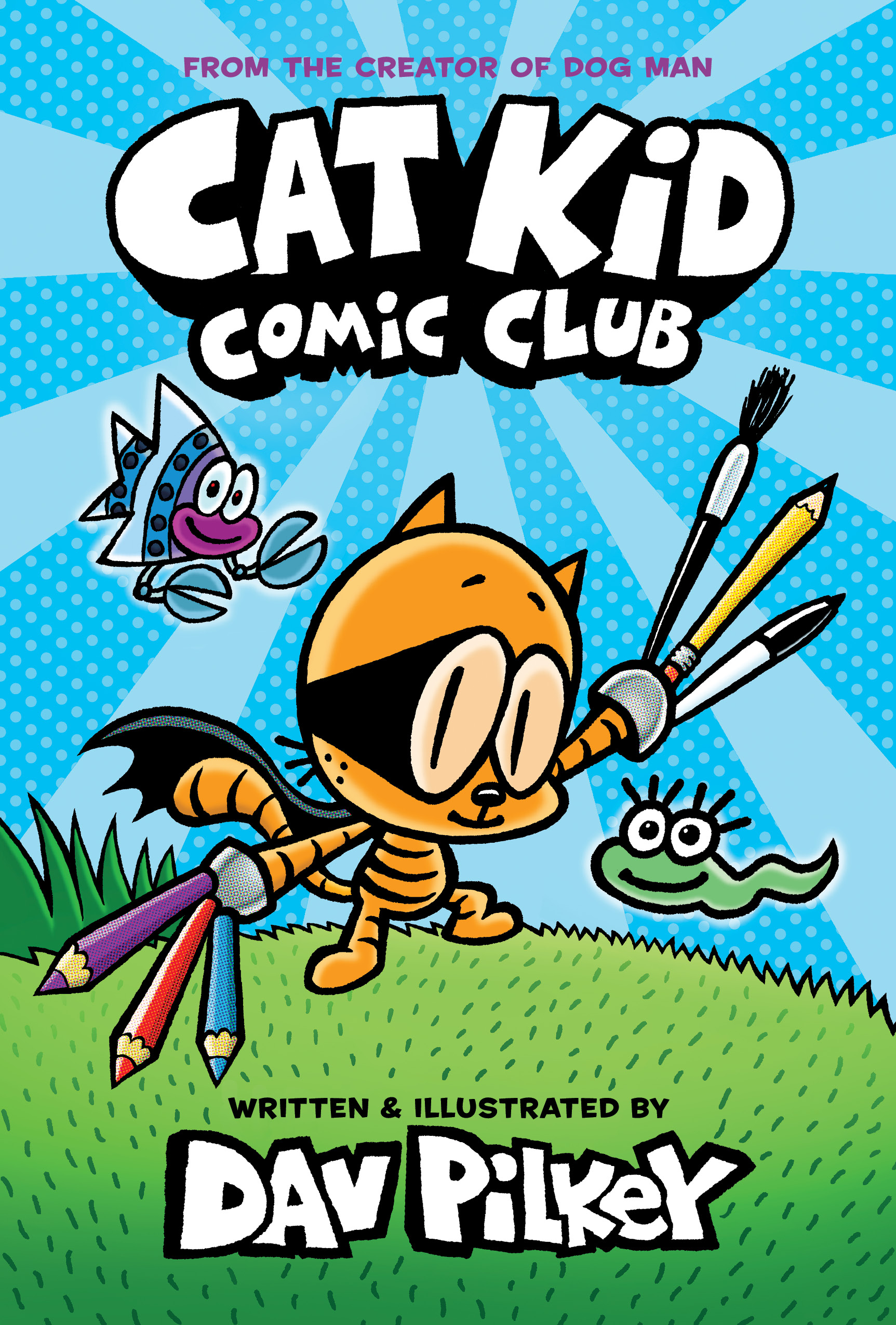
In Cat Kid Comic Club (Graphix/Scholastic, 2020) by Dav Pilkey (creator of Dog Man), Cat Kid – also known as Li’l Petey – along with Molly, a psychokinetic tadpole, does his best to teach the club full of bright-colored little frogs how to make comics. The club soon produces a host of mini-comics in a wild range of styles and genres (among them “The Cute Little Fluffy Cloud of Death”). Kids will love it. First of a series for ages 8-12.
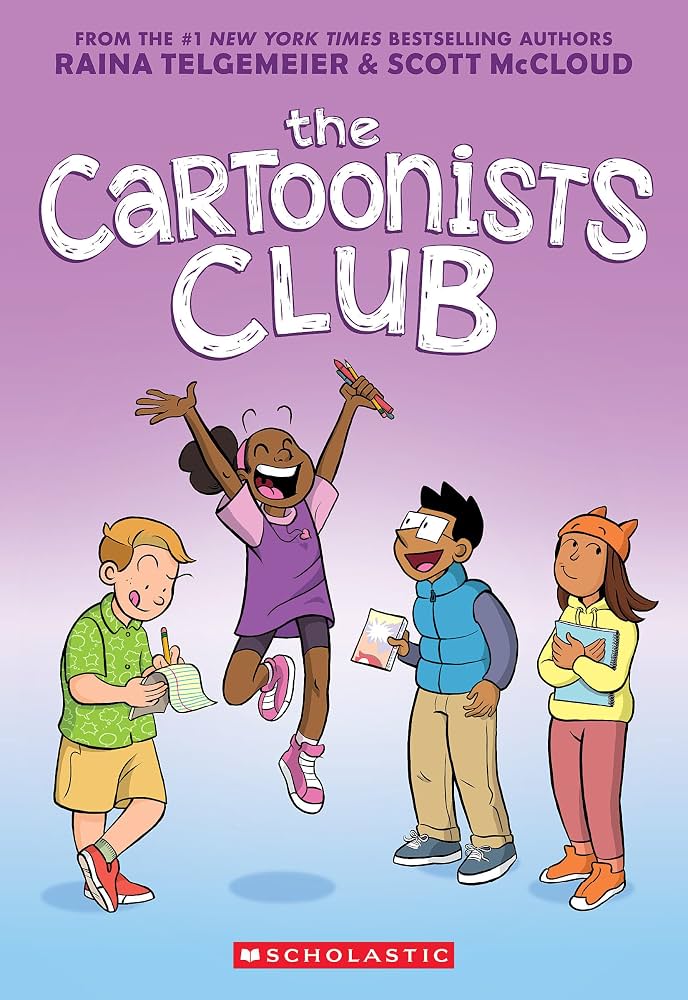
In The Cartoonists Club (Graphix, 2025), a graphic novel by Raina Telgemeier and Scott McCloud, four kids with very different talents come together to share creativity and imagination – and to make comics. A story of friendship paired with helpful how-tos for ages 9-12.

In Rob Harrell's Wink (Dial Books, 2020), Ross Maloy struggles with 7th grade and a rare form of eye cancer - while forming a rock-'n-roll band and writing his epic comicstrip, Batpig. For ages 9-13.
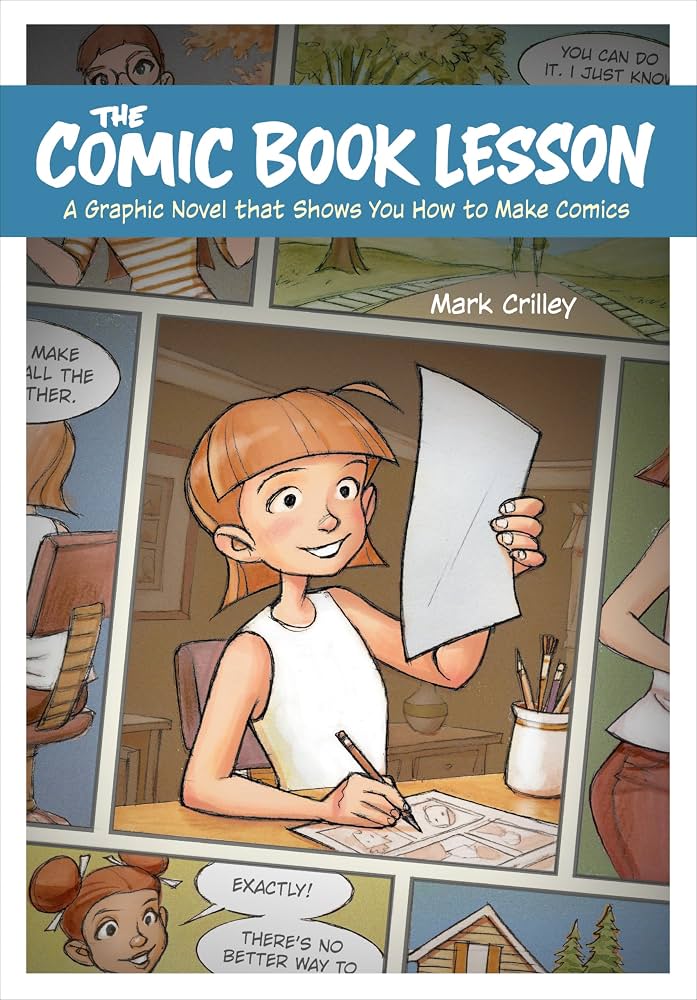
The Comic Book Lesson by Mark Crilley (Ten Speed Graphic, 2022), a “Graphic Novel That Shows You How to Make Comics,” follows comics fan Emily as she meets three helpful mentors – including a manga artist and a graphic novelist – who teach her the techniques for writing a comic book. Included are exercises for readers to try. For ages 10 and up.

Barbara Slate’s 200-page You Can Do a Graphic Novel (Richard Minsky, 2018) is a guide to graphic novels in the form of a graphic novel. It covers all the basics, including drawing, creating characters, plots, and layouts. One chapter is devoted to samples of student work. For ages 12 and up.

In Matt Madden’s 99 Ways to Tell a Story (Chamberlain Brothers, 2005), Madden tells the same story in 99 single-page comics, each time in a different way. The story isn’t much – a man goes to the refrigerator and then forgets what he’s looking for – but the possibilities are fascinating, as Madden adds characters and points of view, and experiments with flashbacks, free verse, color effects, art styles, page design, close-ups and long-shots. A great potential project for ages 14 and up.

By Jessica Abel and Matt Madden, Drawing Words and Writing Pictures (First Second, 2008) is a 15-lesson all-in-one-book course on making comics, manga, and graphic novels. For teens and adults.

Scott McCloud’s Making Comics (William Morrow, 2006) is a comic-book-style explanation of how drawings can be used to tell a story, covering everything from the “reader’s camera” to facial expressions, figure drawing, word balloons, background, tools and techniques, and publishing markets. For teens and adults.
From Donna Young, at Comic Strip Printables, visitors can choose among many different cartoon panel templates. Print your own comic-strip and graphic-novel paper.
Books with Characters Who Write

In David Ezra Stein’s Interrupting Chicken (Candlewick, 2010), a patient father rooster (in spectacles and carpet slippers) tucks his offspring, a little red chicken, into bed and attempts to read a bedtime story – only to be continually interrupted by his daughter, who can’t bear the suspense. “Out jumped a little red chicken,” she cries, as her father reaches a crucial point in Hansel and Gretel, “and she said ‘DON’T GO IN! SHE’S A WITCH!’ So Hansel and Gretel didn’t. THE END!” Finally the little red chicken decides to write a story of her own, only to be interrupted by her tired father’s snores. For ages 3-7.

Henrietta, of Mary Ann Auch and Herm Auch’s The Plot Chickens (Holiday House, 2010), is a very bookish chicken who decides, since she so loves reading, that it would be fun to write a book. Unfortunately it’s rejected for publication – and when Henrietta self-publishes, it gets a terrible review. Henrietta is thoroughly discouraged – until she discovers that the children at the library have voted her book one of the best of the year. There’s a lot of wordplay based on the word “egg.” For ages 4-8.

In Tad Hills’s Rocket Writes a Story (Schwartz & Wade, 2012), Rocket – with the help of the little yellow bird, his teacher in How Rocket Learned to Read (2010) – creates a wonderful word tree, hung with all his favorite words (feather, tree, snail, rock, bug, book, bird, dog). Then he decides to write a story using his word collection and – though he hits some bumps on the way (there’s crossing out and growling) – he eventually, adorably, succeeds. For ages 4-8.
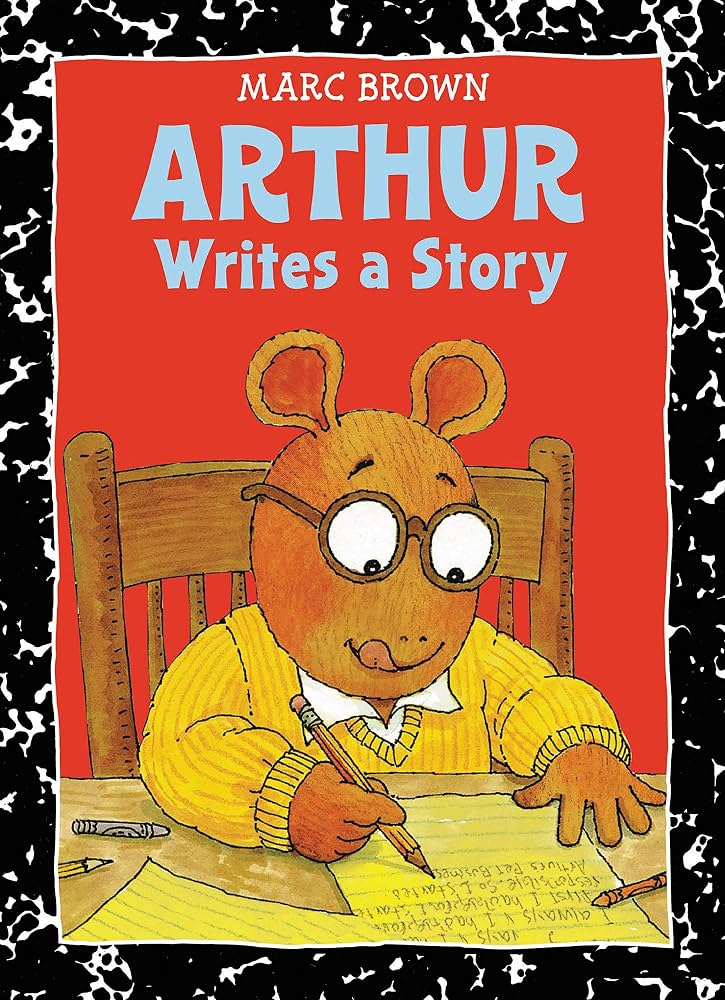
Advice is fine – up to a point. In Marc Brown’s Arthur Writes a Story (Little, Brown, 1998), starring everyone’s favorite little aardvark, Arthur has written a story about his puppy, Pal, for a school assignment. His sister says it’s boring, and suggests he substitute elephants for the puppy; friends suggest setting the story in outer space and adding jokes and a country-music song. Finally Arthur returns to his original story about his puppy – which proves to be the best after all. For ages 4-8.

In Kate Banks’s Max’s Words (Farrar, Straus & Giroux, 2006), Max’s brother Benjamin collects stamps and brother Karl collects coins – so Max, who wants a collection too, decides to collect words. (“Very funny, Max,” said Karl.) Max begins with small words cut from magazines and newspapers, then proceeds to bigger and better words, and finally begins to arrange them to make stories. The word illustrations are wonderful, in a range of sizes and fonts. Some are miniature concrete poems: “hungry” has a bite taken out of it; “park” is surrounded by trees; “baseball” is shaped like a baseball bat. For ages 4-8.

Ralph, the mouse of Daniel Kirk’s Library Mouse (Harry N. Abrams, 2007), lives behind the reference book section in the library and spends all his time reading. He enjoys books so much that he eventually decides to write one about himself – Squeak! A Mouse’s Life – using a little mirror to draw his self-portrait. He follows it up with a mystery story (The Lonely Cheese and the Mystery of Mouse Mansion) and soon is so popular that the librarian invites him to “Meet the Author” day. When the children arrive, however, they find – instead of the author – a series of blank books and mirrors to help them write books of their own. For ages 4-8.
The World of Library Mouse is a teaching guide with activities to accompany Daniel Kirk’s Library Mouse books.

In Sarah Sullivan’s Once Upon a Baby Brother (Farrar, Straus & Giroux, 2010), Lizzie's story-telling talent is admired by all – until her baby brother Marvin comes along. Lizzie, feeling neglected, begins writing stories about a beautiful princess and a villain – Marvin as ugly prince, fearsome Marvinosaurus, dangerous Marvinfish. Challenged to write a comic book by her teacher, however, Lizzie suffers from writer’s block – until Marvin returns from a visit to Grandma. Once she realizes that she loves her little brother after all, inspiration strikes, and she creates “The Amazing Adventures of Marvin (with Big George the Wonder Dog).” For ages 4-9.
Project: try using Sarah's Marvin snippets as story starters.

“Stories are everywhere!” Ralph’s teacher insists – but Ralph, of Abbie Hanlon’s Ralph Tells a Story (Amazon Children’s Publishing, 2012) has a massive case of writer’s block. Finally Ralph remembers finding an inchworm in the park, which – with the help of questions from classmates – turns into a lively story. By the end of the book, Ralph’s endless stack of dismal papers with nothing on them but his name has turned into an entire library of books, with titles like “When Milk Came Out of My Nose” and “The Scariest Hamster.” For ages 6-8.

The narrator of Eileen Spinelli’s The Best Story (Dial, 2008) wants to win the library’s story-writing contest: the prize is a roller coaster ride with her favorite author. Her brother Tim thinks the best stories are packed with action – but adding a pirate, a tornado, and a great white shark doesn’t seem to do the trick. Her father claims the best stories are funny; her Aunt Jane wants a tearjerker; her cousin Anika wants romance. Finally her mother suggests that she write from her heart – and finally she comes up with a “best story” all her own. For ages 6-9.

Harriet, of Louise Fitzhugh’s Harriet the Spy (Yearling, 2001) plans to be a famous author someday – and as practice she keeps a notebook in which she writes down observations and opinions derived from spying on neighbors and classmates. When Harriet’s classmates get their hands on the notebook and read Harriet’s comments, they’re furious, and form a Spy Catcher Club devoted to making Harriet’s life miserable. Harriet eventually works it with out, with advice from her nanny, Ole Golly, and her performance as editor of the school newspaper. For ages 8 and up. (For grown-ups who miss Harriet, see Miss Buncle’s Book below.)
The film version of Harriet the Spy (1996) is rated PG.
Learn more about the book at NPR’s Unapologetically Harriet, the Misfit Spy.

In Jeanne Birdsall’s The Penderwicks: A Summer Tale of Four Sisters, Two Rabbits, and a Very Interesting Boy (Yearling, 2007), Rosalind, Skye, Jane, Batty (age four, who wears butterfly wings) and their Latin-quoting botanist father vacation at a cottage next to a massive estate, where they meet two rabbits, the dreadful Mrs. Tifton, her even more dreadful boyfriend (Dexter Dupree), and Mrs. Tifton’s very nice son, Jeffrey, whom they save from military boarding school. In honor of which, ten-year-old Jane, an indefatigable writer and author of the exciting Sabrina Starr novels, writes her latest in which Sabrina Rescues a Boy. For ages 8 and up.

Andrew Clements’s The Landry News (Atheneum Books for Young Readers, 2000) is the story of a young writer making a difference. New girl Cara Landry, upset that her fifth-grade teacher, Mr. Larson, “does not teach,” begins publishing a newspaper, The Landry News, and criticizes his behavior in her first editorial. Soon the entire class is involved with the newspaper; Mr. Larson, fired up, is teaching again; and the school principal and the town are involved in a struggle involving the First Amendment. For ages 8-12.

The title character of L.M. Montgomery’s Anne of Green Gables, originally published in 1908, is bookish, dramatic, and trouble-prone orphan Anne Shirley, who writes overblown romances but ultimately realizes where her heart lies - and writes a successful book about the life she loves in Avonlea. Seven sequels. For ages 9 and up.
Of the many film versions, Kevin Sullivan’s award-winning Anne of Green Gables, with Megan Follows, Richard Farnsworth, and Colleen Dewhurst, is generally thought to be the most true to the books.

Following on Nory Ryan’s Song and Maggie’s Door, Patricia Reilly Giff’s Water Street (Yearling, 2008) continues the tale of Irish immigrants in 19th-century America. The year is 1875; the Brooklyn Bridge is going up; and main characters 13-year-old Bird Mallon and Thomas Neary live in the same Brooklyn tenement building. Bird wants to be a midwife and healer, like her mother; Thomas wants to be a writer. (“Thomas had made himself a notebook with cardboard covers and sewed the pages, but if the book wasn’t handy, he used anything, paper bags from the market, or even the edges of the newspaper. He wrote stories about anything he saw, and he saw a lot.”) For ages 9-13.

In Rebecca Rupp’s After Eli (Candlewick, 2012), 14-year-old Danny struggles to come to terms with the death of his older brother by writing in his Book of the Dead, in which he chronicles how people die, and why. Starred reviews from Kirkus, Booklist, and Publisher's Weekly; winner of a Parent's Choice Gold Award. For ages 9 and up.

Louisa May Alcott’s classic Little Women, originally published in 1868, is available in many editions. Everyone’s favorite character is creative tomboy Jo, who writes family plays, short stories, and a newspaper, and eventually – after a couple of false starts, and with the advice of German professor Friedrich Bhaer (with whom she falls in love) – becomes a published author. For ages 10 and up.
The 1994 film version of Little Women stars Winona Ryder as Jo and Gabriel Byrne as Professor Bhaer, which casting helps a lot of readers get over the fact that Jo didn’t marry Laurie. Rated PG. Also see the wonderful
Little Women (2019), directed by Greta Gerwig (PG)..

In D.E. Stevenson’s Miss Buncle’s Book (Sourcebooks Landmark, 2012), originally published in 1934, dowdy Barbara Buncle has written a book about life in the little English village of Copperfield – which exactly replicates the people and events of her own village, Silverstream. Readers, seeing themselves, either become outraged or have sudden revelations or both. It’s delightful and ends with Miss Buncle marrying her publisher. For teens and adults who miss Harriet the Spy.
How Books Are Made
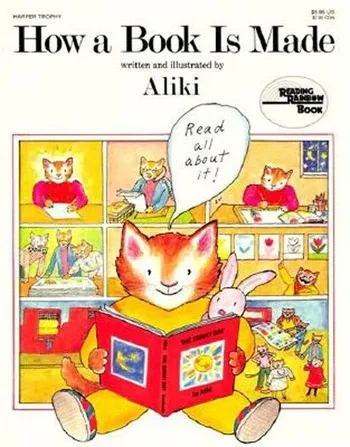
Aliki’s 32-page picture book How a Book Is Made (HarperCollins, 1988) describes the many people who participate in the process of making a book - the author, who thinks of a story, then the editor, publisher, designer, proofreader, and more – until finally the finished book lands in the hands of a child. All the characters are very well-dressed cats. For ages 6-10.

In Eileen Christelow’s What Do Authors Do? (Clarion Books, 1995), neighboring authors are simultaneously inspired to write books about their two pets – Rufus, a shaggy dog, and Max, a black-and-white cat. Through a combination of short text and fun cartoon-bubble illustrations, readers learn all about the process of creating a book, including revisions, research, illustrations, writer’s block, and interactions with editors, designers, and printers. For ages 5-8.

In Janet Stevens’s From Pictures to Words (Holiday House, 1996), an author/illustrator, with the help of three chatty animals (Cat, Koala Bear, and Rhino), shows how a picture book is made, covering characters, plot, and setting, sketches and storyboards, making a book dummy, and creating the final art. For ages 6-9.

By the author of Tacky the Penguin, Helen Lester’s Author: A True Story (Sandpiper, 2002) is the funny and delightful picture-book story of how she became an author, beginning at age three when she wrote “useful lists” for her mother (they read the same right-side-up or upside-down), and in elementary school, when her handwriting was the prettiest in the class – but it was also “perfectly backward.” A tale of the perseverance it takes to become a published author. For ages 5-8.

In W. Nikola-Lisa’s Magic in the Margins (Houghton Mifflin Books for Children, 2007), set in the Middle Ages, Simon, a young orphan, has been taken in by the local monastery and is being educated in book-making by Brother William, master scribe in the monastery’s scriptorium. His first assignment: to “capture” the monastery’s mice. Simon does, with pen and ink. For ages 7-9.

In Bruce Robertson’s Marguerite Makes a Book (J. Paul Getty Museum, 1999), set in 15th-century Paris, young Marguerite, the daughter of a book illustrator, must complete her father’s work on an illuminated prayer book after her father breaks his glasses. A lovely look at the process of early book-making, with illustrations by Kathryn Hewitt. For ages 8-12.
Pop-ups, Accordions, and Storybooks: Create a Book of Your Own

With the Illust0ry kit, kids can write and illustrate their own 20-page books - and then have the result printed in the form of a real hardcover book. There's even space for an "About the Author" blurb on the back cover. For ages 5 and up.
See

Gwen Diehn’s photo-illustrated Making Books That Fly, Fold, Wrap, Hide, Pop Up, Twist & Turn (Lark Books, 2006) has step-by-step instructions for an array of truly beautiful and creative books, among them an accordion-fold book with pockets, a ring-bound journal, and a tetraflexagon book. Cool projects for ages 9 and up.

Want to make a pop-up book? A good introduction is Joan Irvine’s Easy-to-Make Pop-Ups (Dover Publications, 2005) which has clear illustrated instructions for many pop-up projects for beginners. Make a talking-mouth, a trapeze, a rocket, a fire-breathing dragon, a turning circle, and an entire zoo. A final section discusses using your new skills to make a pop-up book. Also by Irvine, see Super Pop-Ups (Dover Publications, 2008). For ages 9 and up.

Pam Scheunemann’s photo-illustrated Cool Stuff for Reading and Writing (Checkerboard Library, 2011) is a collection of snazzy crafts for writers and booklovers, among them a Fancy-Nancy-style flower pen, felt book covers, a creative writer’s notebook, bookmarks, and bookends. For ages 9-12.

Kathleen McCafferty’s Making Mini Books (Lark Crafts, 2012) is an enchanting collection of small and very small books – among them a rainbow book that unfolds into the shape of a rainbow, matchbook books, and a book tiny enough to be worn as a necklace. For ages 10 and up.

Esther K. Smith’s How to Make Books (Potter Craft, 2007) – subtitled “”Fold, Cut & Stitch Your Way to a One-of-a-Kind Book” – has instructions for making basic “instant” books, accordion books, envelope books, pamphlets, journals, and sketchbooks, all with beautiful drawings and photographs of finished products.
Artist Susan Kapuscinski Gaylord’s Makingbooks.com has instructions for making eight simple book projects – among them a wish scroll, a stick-and-elastic book, an accordion book, and a step book, as well as an extensive resource list and helpful teaching tips.
From Favecrafts, Handmade Books has book-binding tutorials and instructions for making a variety of books, among them a keyhole book, a cupcake recipe book, a journal, a memory book, and a soft book (great for toddlers).

The Instructables Envelope Book has illustrated step-by-step instructions for a book made from 12 vintage envelopes. Assemble and fill with cool stuff.
Getting Published!
What about writing a book?
What about writing a book? The National Youth Foundation sponsors an annual Student Book Scholars Contest for kids in grades K–8. Contestants submit a twenty-to-thirty-page illustrated book—including one page of art for each page of text—centered on an annual theme, such as anti-bullying. Entries can be by an individual student or can be written by teams of up to ten kids. See https://www.nationalyouthfoundation.org/.

By Jessica Dunn and Danielle Dunn, A Teen’s Guide to Getting Published (Prufrock Press, 2006) covers the writing craft, freelance publishing (including how to prepare submissions and what you should know about rights and copyright), feedback, and market venues. Appendices list writing camps and workshops, and book publishing opportunities.
The Young Writers Project is a nonprofit with the goal of mentoring and promoting young writers and artists ages 13-19. See the website for contests and challenges, opportunities for publication, a book review page (share what you're reading), and more. See https://youngwritersproject.org/.

The Scholastic Art and Writing Awards are the nation's longest-running award program for creative teens. Many categories for entries; for writers, for example, these include essays, dramatic scripts, flash fiction, humor, poetry, sci fi and fantasy, and short stories. For grades 7-12 and homeschoolers ages 13 and up. See https://www.artandwriting.org/.

Stone Soup publishes stories, poems, and art by kids ages 8-13. Six issues are published each year.

Skipping Stones is a multicultural literary magazine that accepts stories, essays, and poems from kids of all ages and languages.
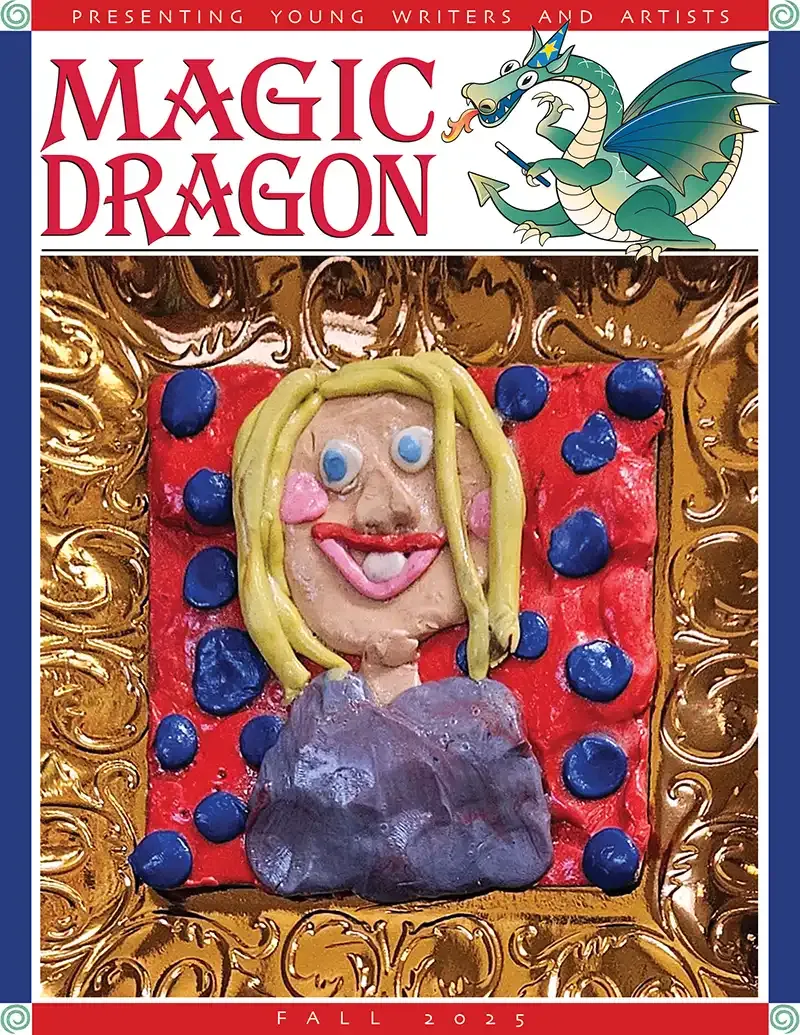
Magic Dragon publishes stories, essays, poems, and artwork by kids ages 12 and younger. See https://www.magicdragonmagazine.com/.

New Moon Girls – “by girls, for girls” – is written largely by girls ages 8-14. See the website for submission guidelines. Available either on paper or as an e-magazine.
Teen Ink publishes articles, stories, poetry, art, and photos by teens, and sponsors numerous contests.
The Apprentice Writer publishes fiction, memoir, personal essays, poetry, and photography by high-school-level students.

For the young non-fiction writer, The Concord Review, a quarterly history journal, is a highly respected publisher of academic essays by secondary students. Visit the website for instructions, sample essays, and the table of contents of the current issue. An annual subscription costs $40.

Nanowrimo stands for National Novel Writing Month, a literary marathon event during which all participating writers share the goal of completing an entire 50,000-word novel in the month of November. A subset of the program – the
Nanowrimo Young Writers Program – is designed for K-12 groups or for writers ages 12 and under writing solo; in this case, total word count is left to teachers, parents, the group, or the individual kid. The benefits of Nanowrimo are said to be legion: among these are increased verbal fluency, self-confidence, and creativity, and an enhanced understanding of time management, since churning out a novel in a mere thirty days necessarily requires focus, scheduling, and dedication.

The Machine of Death (MOD) began as a writing contest that led to two books of collected short stories. The premise: a machine has been invented that can tell you, by taking a sample of your blood, just how you’re going to die. The machine gives you no specifics – simply generates a card printed with a single word or phrase (DROWNED, CHOKED ON A TACO, BURIED ALIVE). Now…write a story. Try it! Now available as a game.
Storyjumper is an online site at which kids can create and edit books, using a variety of provided props and settings. Finished books can be shared online or printed.
Poems About Writing

Compiled by Lee Bennett Hopkins, Wonderful Words (Simon and Schuster Books for Young Readers, 2004) is an illustrated collection of 15 poems about the joy of language in reading, writing, speaking, and listening by such poets as Emily Dickinson, Carl Sandburg, David McCord, Eve Merriam, and Karla Kuskin.
Charles Bukowski’s So You Want to Be a Writer explains when not to write: “If it doesn’t come bursting out of you/in spite of everything/don’t do it.”
Richard Wilbur’s poem The Writer begins with his young daughter writing a story.