
The Middle Ages
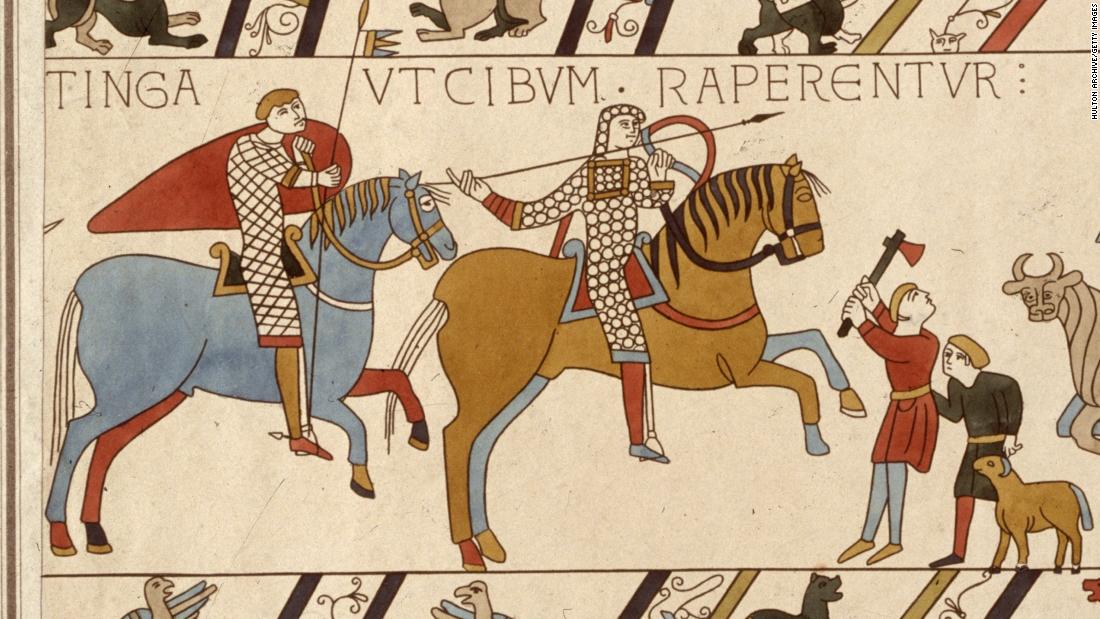
In this collection
The Middle Ages: knights and squires, castles and cathedrals, peasants and troubadours, monks and Crusaders, pease porridge, stuffed swans, King Arthur, the Canterbury Tales, and the black plague – and much more.
See below for books, resources, projects, activities, and arts and crafts, including instructions for making your own castle, Bayeux Tapestry, and catapult.
About the Middle Ages

In Aliki’s A Medieval Feast (HarperCollins, 1986), the king is coming to Camdenton Manor and the lord, lady, serfs, and villagers are in a frenzy of preparation, hunting, fishing, brewing, baking, and churning. Beautiful detailed illustrations show every step of the exciting process. For ages 4-8.
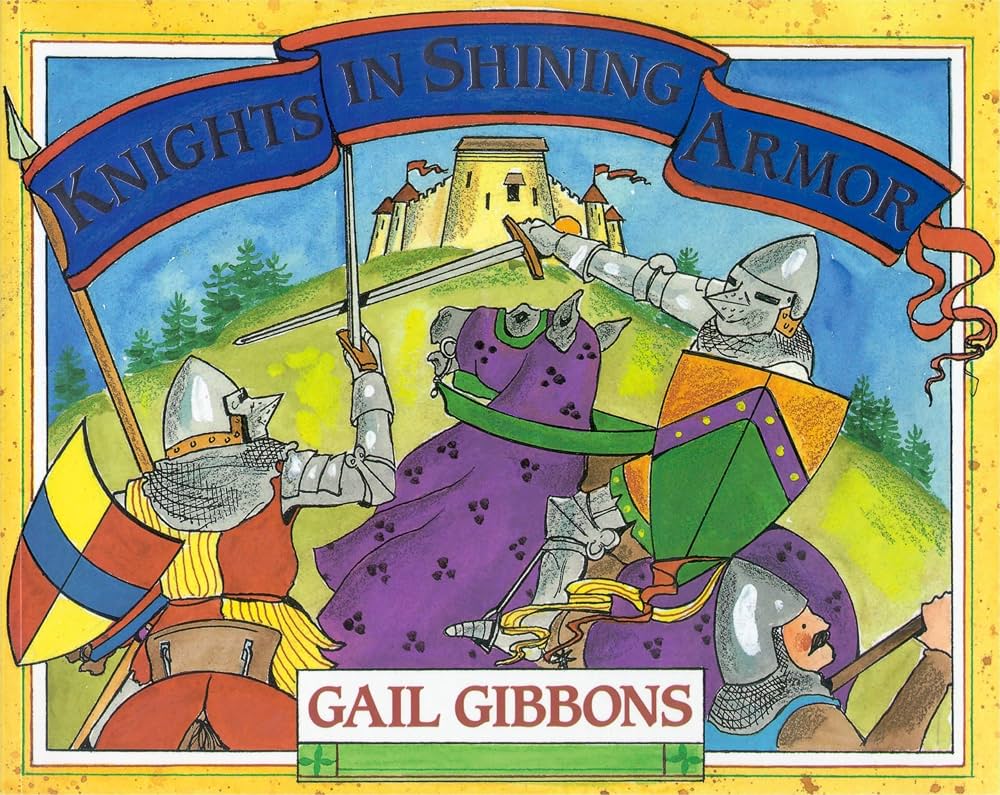
Gail Gibbons’s Knights in Shining Armor (Little, Brown, 1998) is a pcture-book history of the Middle Ages with bright, attractive illustrations and a simple straightforward text. Knights, writes Gibbons, “wore strong armor and fought on horseback with deadly weapons. Their entire way of life was based on warfare.” For ages 4-8.
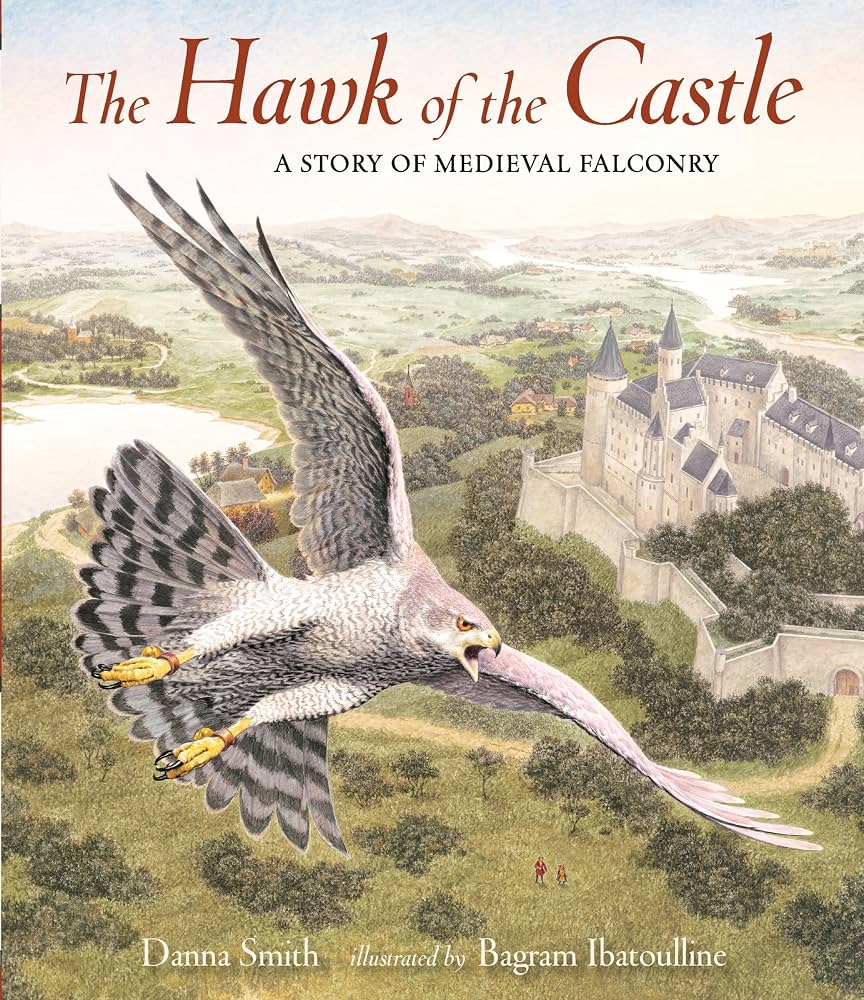
Danna Smith’s The Hawk of the Castle (Candlewick, 2017) is a story of medieval falconry as a young girl and her father take a goshawk out for a training flight. For ages 4-8.
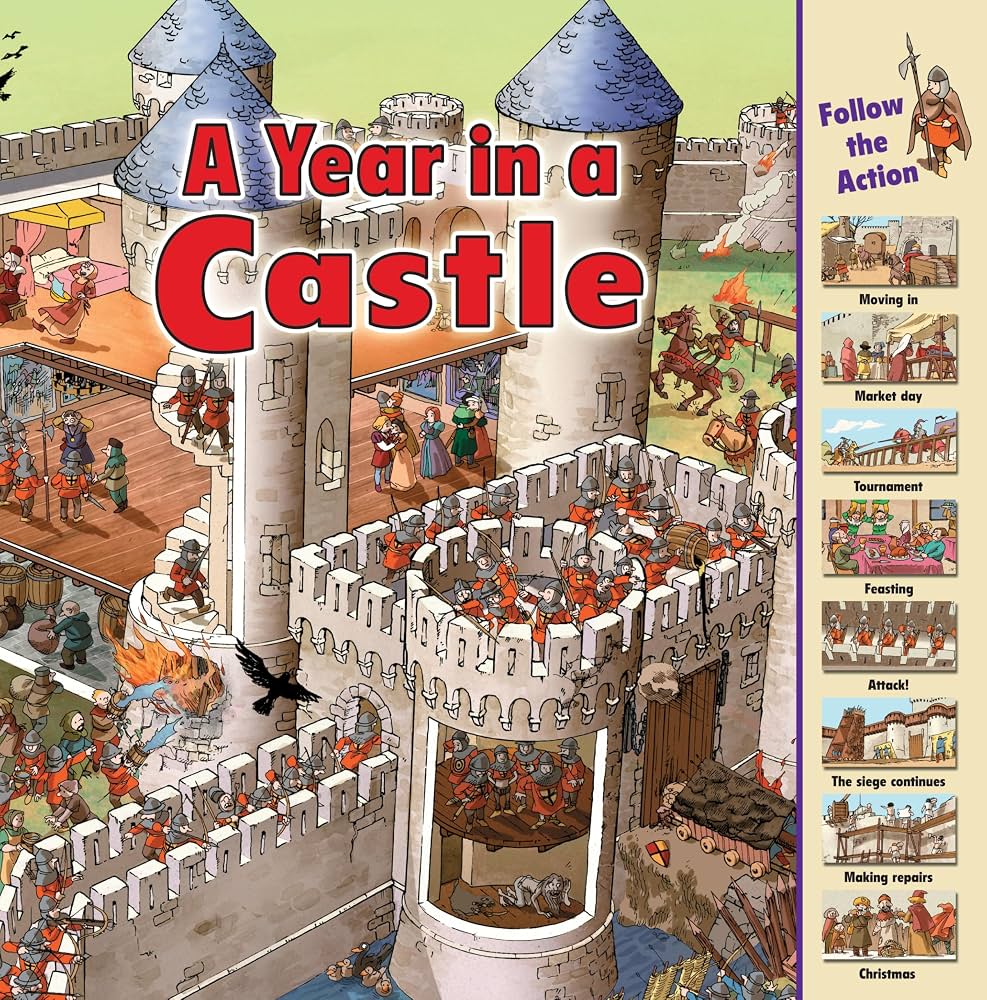
Rachel Coombs’s A Year in a Castle (First Avenue Books, 2009) traces life in a castle month by month through the seasons of the year, beginning with moving-in day in January. The illustrations are marvelous detailed cut-away drawings with “Can you find…?” call-outs in the margins. (Can you find the guard? The priest? The well?) An interactive read for ages 5-8.
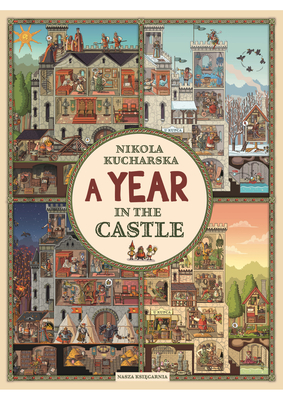
Nikola Kucharska’s lavishly illustrated A Year in the Castle (Prestel Junior, 2024) is essentially “I Spy” for medieval fantasy lovers; detailed double-page spreads of a castle through the seasons are populated with a crowded cast of characters, among them a sword-fighting princess, a gardening king, a dragon (in the cellar), an annoying jester, and a ghost. For ages 6-9.

Patrick O’Brien’s The Making of a Knight (Charlesbridge, 1998) traces the story of seven-year-old James who becomes a page, then a squire, and finally, triumphantly, a full-fledged knight. Included are many details about medieval life. For ages 5-9.

Andrew Langley’s Medieval Life (Dorling Kindersley, 2011) is one of the popular Eyewitness series, characterized by wonderful photographs of artifacts and reproductions of historical illustrations. Each double-page spread in the book is devoted to a different topic, among them “A medieval home,” “The medieval soldier,” “The royal court,” “Building a cathedral,” and “Fairs and feast days.” For ages 7 and up.

In the same series, also see Christopher Gravett’s Knight (Dorling Kindersley, 2007) and Castle (2026), and Michele Byam’s Arms and Armor (2011).
Kathy Allen’s The Horrible Miserable Middle Ages (Capstone Press, 2011) is one of the Digusting History series, in which all the titles include such kid-appealing words as Foul, Filthy, Crude, Rotten, and Smelly. Each 32-page book covers the gickiest aspects of a given historical period – in this case, everything from messy trenchers to repulsive chamber pots, fearsome medical practices, lice, and the black plague. For ages 8-11.
Terry Deary’s popular Horrible Histories series is available in updated “newspaper editions,” featuring splashy headlines, clever cartoons, and quirky news articles in the style of tabloid newspapers. Many titles, including Measly Middle Ages (Scholastic, 2021). Real history with a snarky twist for ages 8-12.

By Steven Kroll, Barbarians! (Dutton, 2009) describes the lives and times of the "barbarians:" Goths, Huns, Vikings, and Mongols. For ages 9-12.

Were the barbarians really that barbaric? See the alternative side of history in Barbarians (BBC, 2006), Terry Jones’s 4-part documentary. Episodes are The Primitive Celts,
Savage Goths,
The Brainy Barbarians, and
The End of the World. Also available on DVD.
From Crabtree Publishing, the Graphic Medieval History series by Gary Jeffrey includes several graphic-novel titles for ages 10-14, among them Castles, Crusades, Knights, and The Black Death.
By Barbara A. Hanawalt, The European World 400-1450 (Oxford University Press, 2005) is an illustrated, interesting, and well-researched history from the fall of the Roman Empire through the beginning of the Renaissance for ages 13 and up.
Other books in the same series cover medieval Africa and Asia. See The African and Middle Eastern World 600-1500 by Randall Pouwels, and The Asian World, 600-1500 by Roger Des Forges and John S. Major.

William Manchester’s A World Lit Only by Fire (Little, Brown, 1993) was a best-seller. An absorbing narrative history of the Middle Ages for teenagers and adults. Don’t get your high-school-level kids a textbook. Get this.
By Robert Lacey and Danny Danziger, The Year 1000 (Back Bay Books, 2000) is a delightful read describing, in twelve chapters, what life was like for the English at the turn of the first millennium. Find out how people managed without buttons or sugar.

Also by Danny Danziger, see the equally reader-friendly and absorbing 1215: The Year of the Magna Carta (Touchstone, 2005).
By David Howarth – a wonderful history writer – 1066: The Year of the Conquest (Penguin Books, 1981) is a short (200 pages) account of the pivotal year in English history when William the Conqueror defeated King Harold at the Battle of Hastings. The book contrasts life in the little village of Horstede before and after William took over. For teenagers and adults.
The Battle of Hastings Game is an interactive exercise in which players re-enact the famous battle. You have a choice of playing as either William or Harold.
By Joseph and Frances Gies, Life in a Medieval Castle (Harper Perennial, 1979) is a fascinating history, packed with human interest, appealing information, and primary sources. (It begins with a bang, with the arrival of a thousand longboats, bearing the vast army of William the Conqueror.) For teenagers and adults.
By the same authors, also see Life in a Medieval Village (HarperPerennial, 1991), Life in a Medieval City (HarperCollins, 1981), and Cathedral, Forge, and Waterwheel: Technology and Invention in the Middle Ages (1995).

Ian Mortimer’s The Time Traveler’s Guide to Medieval England (Touchstone, 2011), subtitled “A Handbook for Visitors to the Fourteenth Century,” is just that: readers find out how to greet people in the street, what to expect in towns and villages, where to stay along the way, what to wear – even what to use for toilet paper. A real look at the medieval world for teenagers and adults.

Barbara Tuchman’s A Distant Mirror (Random House, 1987) is a fat (700+ pages) but fascinating account of the “calamitous 14th century,” much of it centering around French nobleman Enguerrand de Coucy, who played a surprisingly large part in it. A great read for interested teenagers and adults.
Mr. Donn’s Medieval Times topics are categorized under Power of the Secular Rulers, Daily Life, and Power of the Catholic Church. There’s a lot of kid-friendly material to explore. For example, visitors learn about Justinian’s Code, Mythical Medieval Beasts, Medieval Music, the Inquisition, Holy Relics, and Illuminated Manuscripts. Generally aimed at an upper-elementary and middle-school audience.
Khan Academy’s Medieval Europe is a multifaceted study unit in five parts: A beginner’s guide to medieval Europe; Books and the dissemination of knowledge in medieval Europe; Early Christian; Byzantine; and Latin (Western) Europe. Lots of well-presented, illustrated information.
Mostly Medieval has information on ballads, Books of Days, heraldry, fabulous medieval beasts, the medieval church, and medieval medicine.
From the BBC, The Middle Ages has a series of interesting essays, categorized under such topics as John and Richard I: Brothers and Rivals, Invasion, Conquest, and the Hundred Years War, The Black Death, and the Houses of Lancaster and York.
The Great Courses offers several courses on various aspects of the Middle Ages and the Crusades. (At full price, the cost is intimidating, but all of the Great Courses go on sale periodically, at substantial savings.) Recommended for college-level learners, but fine for interested high-school-level students.
From Fordham University, The Internet History Sourcebook Project is an enormous compendium of categorized primary sources. Included are the Ancient History Sourcebook, Medieval History Sourcebook, Modern History Sourcebook, and more. Medieval subcategories include End of Rome, Celtic World, Crusades, Carolingians, France, England, Medieval Church, and Social History. A terrific resource.
Fiction
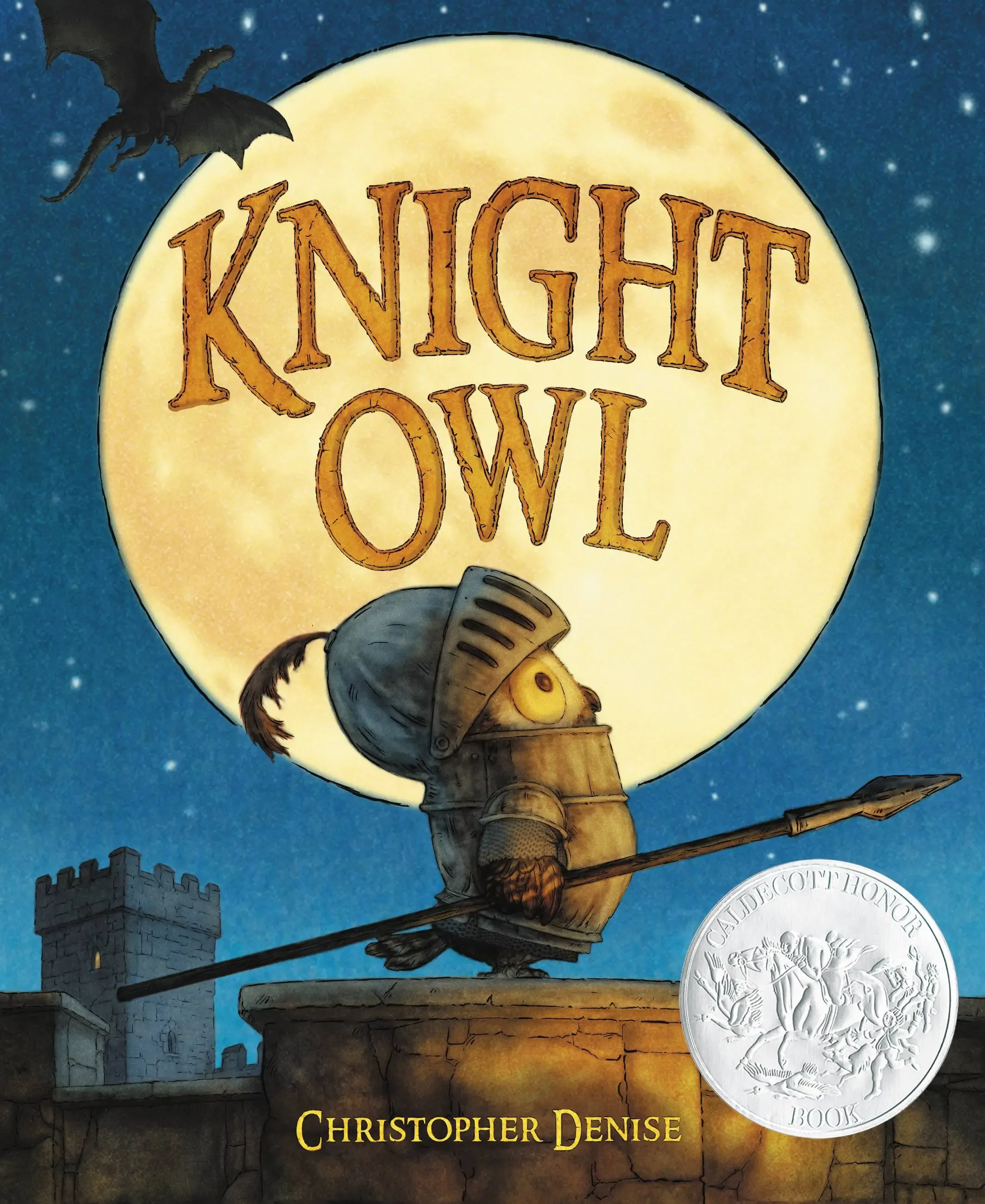
By Christopher Denise, in Knight Owl (Christy Ottaviano Books, 2022), Owl, though small, has always dreamed of becoming a knight. Eventually he graduated (with honors) from Knight School and is assigned to the castle Night Watch – where he encounters a dragon. (“You don’t look like a knight,” said the dragon. “You look like a midnight snack.”) For ages 3-8.

In Tomie DePaola’s The Knight and the Dragon (Puffin, 1998), a cluelessly innocent knight and dragon realize that they’re supposed to fight each other – so each resorts to how-to books, then to solitary practice. The dragon makes fearsome faces in the mirror and swishes his tail; the knight accumulates a stock of armor and weapons. The fight, which it’s clear nobody is enthusiastic about, is a flop; and the pair are saved by the arrival of a friendly medieval librarian with books that show them how to share their real talents. For ages 4-8.
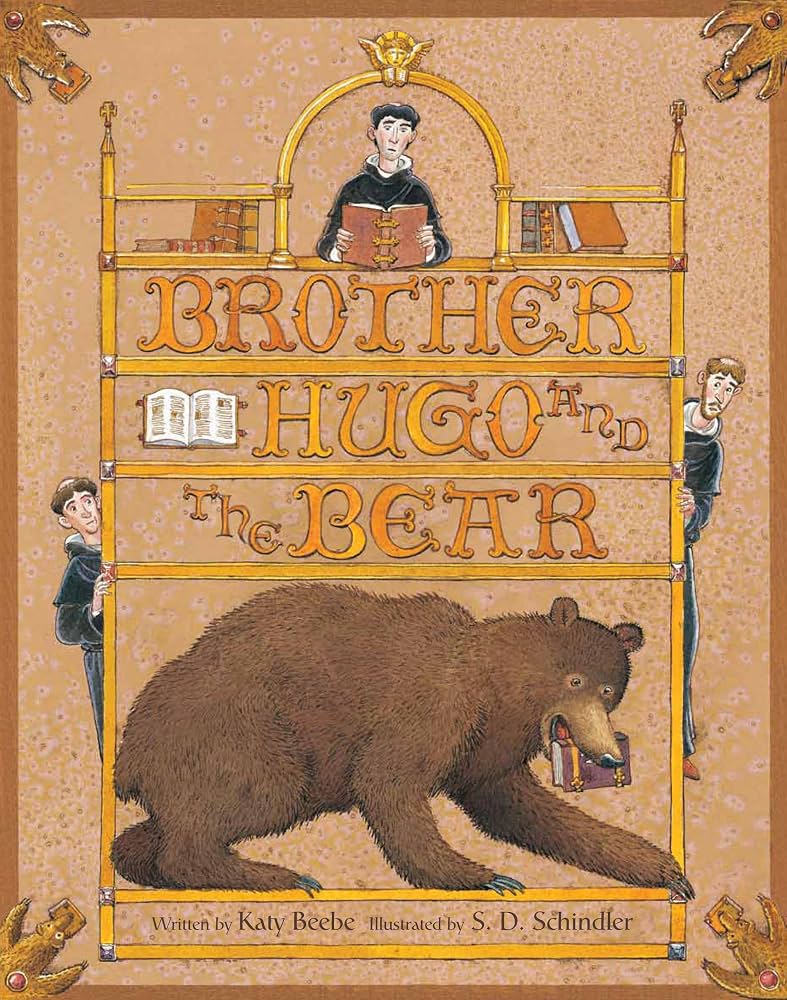
In Katy Beebe’s Brother Hugo and the Bear (Eerdmans Books, 2014), Brother Hugo can’t return his library book – the letters of St. Augustine – because it’s been eaten by a bear. His penance: to travel to the monastery of Chartreuse, borrow the manuscript, and make a new copy of it. On his way to return the borrowed manuscript, however, he again meets...the bear. For ages 5-9.
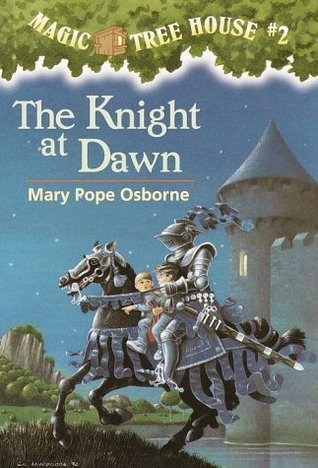
In Mary Pope Osborne’s The Knight at Dawn (Random House, 1993), second in the Magic Treehouse series, Jack and Annie travel to the Middle Ages, where they encounter a castle, a feast, and a moat full of crocodiles, narrowly escape being hanged, and ultimately meet a helpful knight in shining armor. For ages 6-9.
Also see Osborne’s Knights and Castles Fact Tracker (Random House, 2000), an illustrated 128-page non-fiction companion to The Knight at Dawn, filled with the real info on castle life. Included, for example, are accounts of castle architecture, medieval festivals and fairs, and medieval battles and sieges.
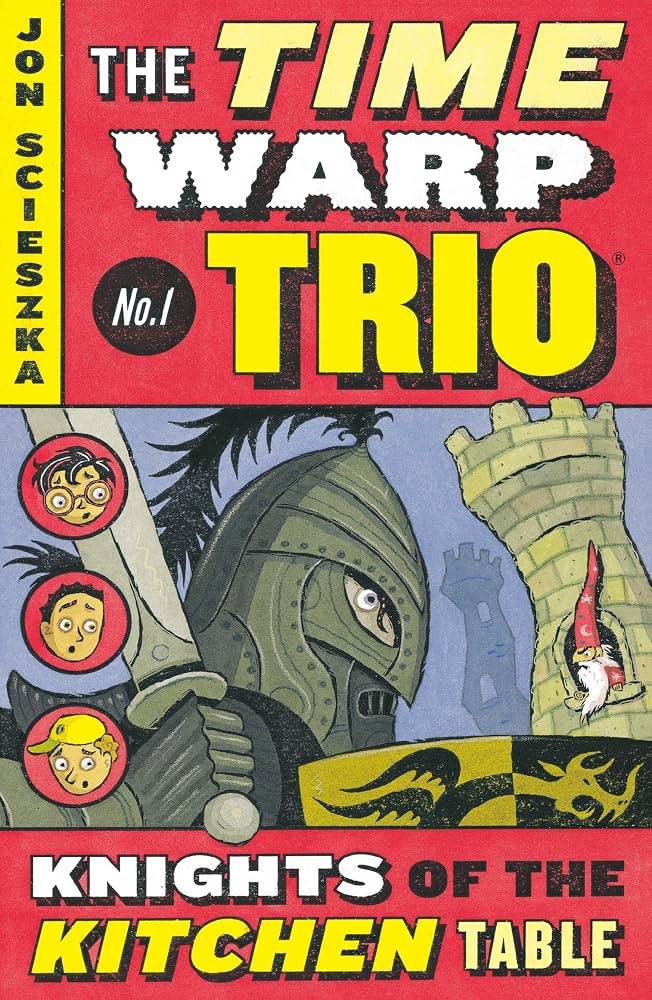
In the first of the books starring the slapstick Time Warp Trio, Jon Scieszka’s Knights of the Kitchen Table (Puffin, 2004), Joe is given a magical book as a birthday gift from his wizard uncle, and he and his two best friends are transported to King Arthur’s Britain, where they are disastrously mistaken for heroes. For ages 7-9.
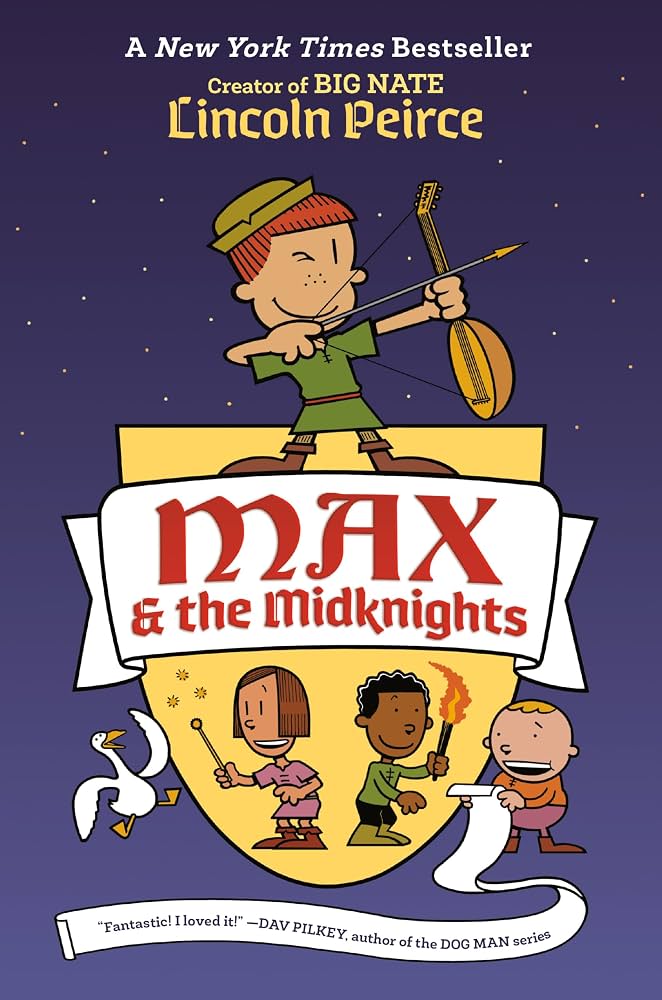
In Lincoln Peirce’s comic-style Max and the Midknights (Yearling, 2024), Max has no chance of being a knight – until his Uncle Budrick is kidnapped and Max – along with a fellow band of misfit adventurers – sets out on a quest to save the day. Funny and delightful for ages 7-9. First of a series.

Sharon Creech’s The Castle Corona (HarperCollins, 2013) is a medieval fairytale, featuring Pia and Enzio, a pair of peasant children who have found a stolen pouch stamped with the king’s seal, King Guido and Queen Gabriella and family, who live in luxury in the glittering Castle Corona, and the king’s hermit advisor. By the end of the book, each – from their various stations in life – has come to understand the other a little better, and all ends “happily, most of the time.” For ages 8-12.
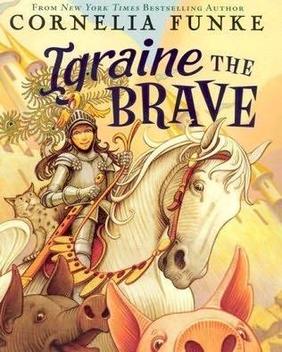
In Cornelia Funke’s Igraine the Brave (Chicken House, 2006), Igraine wants to be a knight like her famous great-grandfather. On her twelfth birthday, she’s given a magical suit of armor – which, disastrously, results in her parents being turned into pigs. Igraine and her brother are left to defend their castle from the evil Osmond the Greedy, protect their family’s horde of magic books, and deal with the pig spell. For ages 8-12.

In Edward Eager’s Knight’s Castle (Houghton Mifflin Harcourt, 1999), four kids – via magic, a toy castle, and an army of toy soldiers – are transported back to the days of Ivanhoe. Much of it is tongue-in-cheek – for example, the kids can change events in the magical world by re-arranging and adding things to the castle in the real world – and the action doesn’t quite tie up as Sir Walter Scott had intended. A delightful read for ages 8-12.
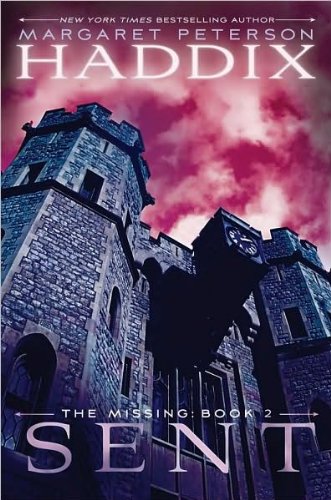
In Margaret Peterson Haddix’s The Missing series, adopted children in the present are found to be missing (famous) children from the past. In Book 2, Sent (Simon & Schuster, 2010), friends Chip and Alex turn out to have come from 1483: they’re the Little Princes in the Tower, commonly believed to have been murdered by King Richard III. For ages 8-12.
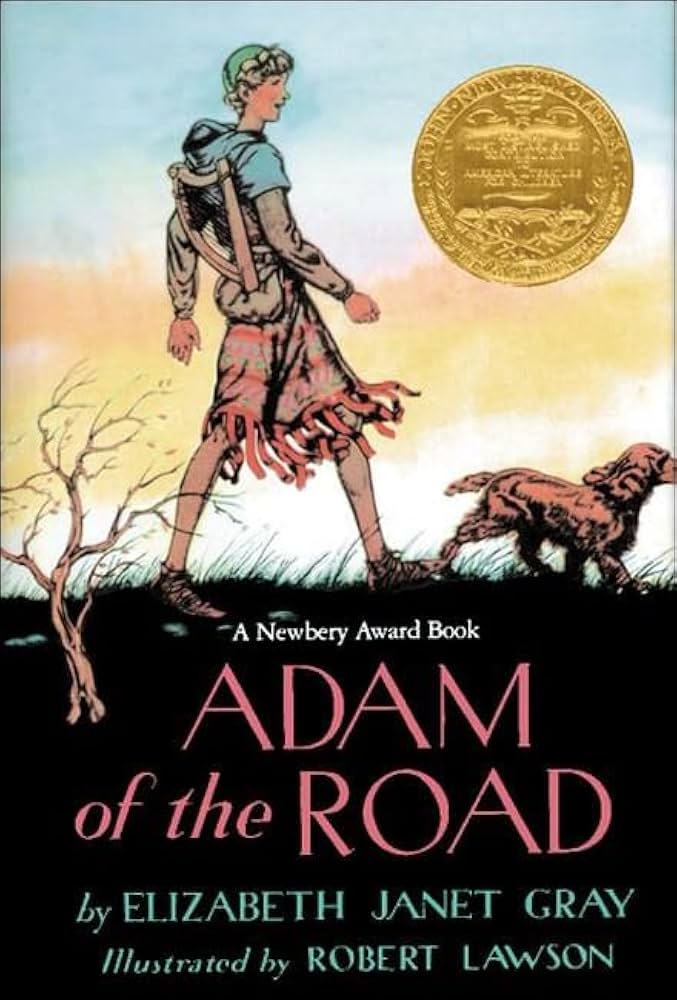
The Adam of Elizabeth Janet Gray’s Newbery-winning Adam of the Road (Puffin, 2006) is the son of Roger, a wandering minstrel; along with dog, Nick, the two travel through 13th-century England. Then Nick is stolen, Roger disappears, and Adam sets out to find them – which isn’t easy. For ages 8-12.
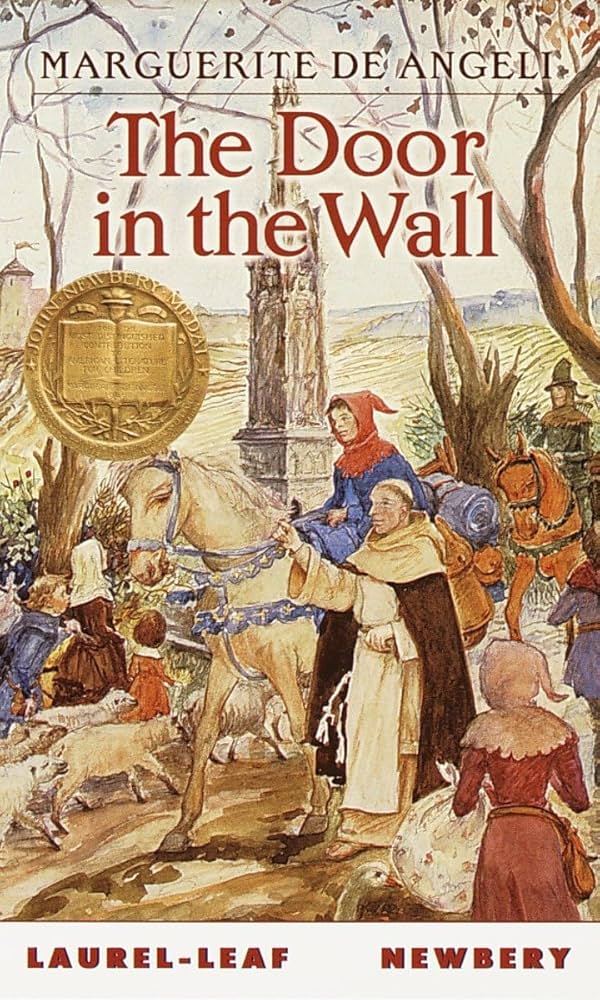
In Marguerite de Angeli’s The Door in the Wall (Yearling, 1990), originally published in 1949, young Robin had assumed that he would become a knight like his father – until an illness makes him unable to walk. His father is away at war, his mother is serving as lady-in-waiting to the queen, and – fearing the plague – the servants abandon Robin, leaving him helpless and alone. He is saved by kind Brother Luke from a nearby monastery, who teaches Robin to swim, to make and play a harp, and to find his “door in the wall” – that is, if you keep trying in the face of challenge, eventually you’ll find a way to succeed. Good book and great message for ages 8-12.
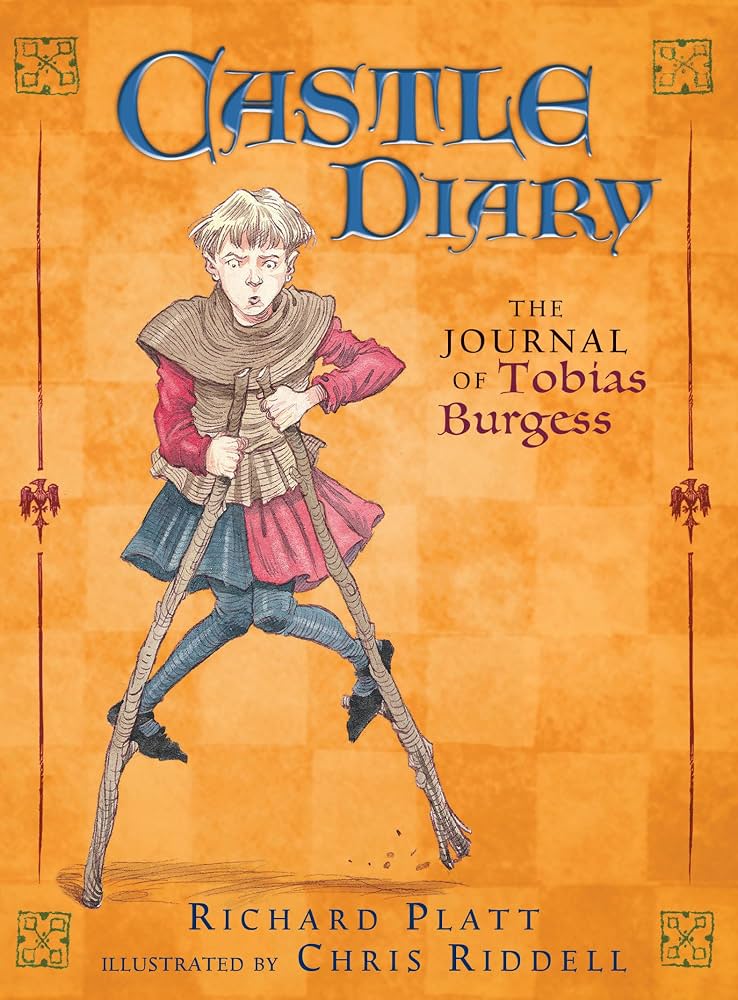
By Richard Platt, Castle Diary: The Journal of Tobias Burgess (Candlewick, 2003) is the (imaginary) 13th-century diary of eleven-year-old Tobias, a page, in which he describes everyday events and special occasions – a tournament, a visit from an earl. Illustrated. For ages 9-12.
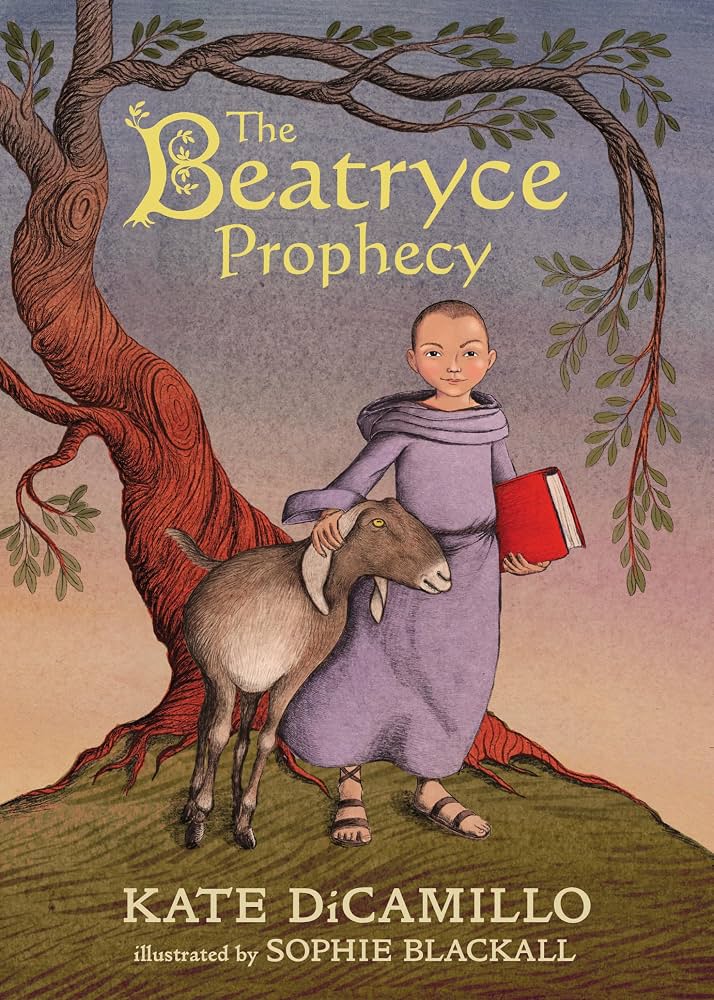
In Kate DiCamillo’s magical medieval tale The Beatryce Prophecy (Candlewick, 2023), a mysterious child with a dangerous secret (and a goat) shows up at the monastery of the Order of the Chronicles of Sorcery. When Beatryce sets off to confront her nemesis, she has friends at her back: Edik, the gentle monk who found her; Jack, an orphan boy with a sword; and Cannoc, the former king. For ages 9-12.

What if kids had kept blogs at different periods in history? Laura Scandiffio's Crusades (Annick Press, 2009) is that of 12-year-old Hans, growing up in the Holy Roman Empire. For ages 9-12. (Great project: invent historical kids' blogs of your own!)
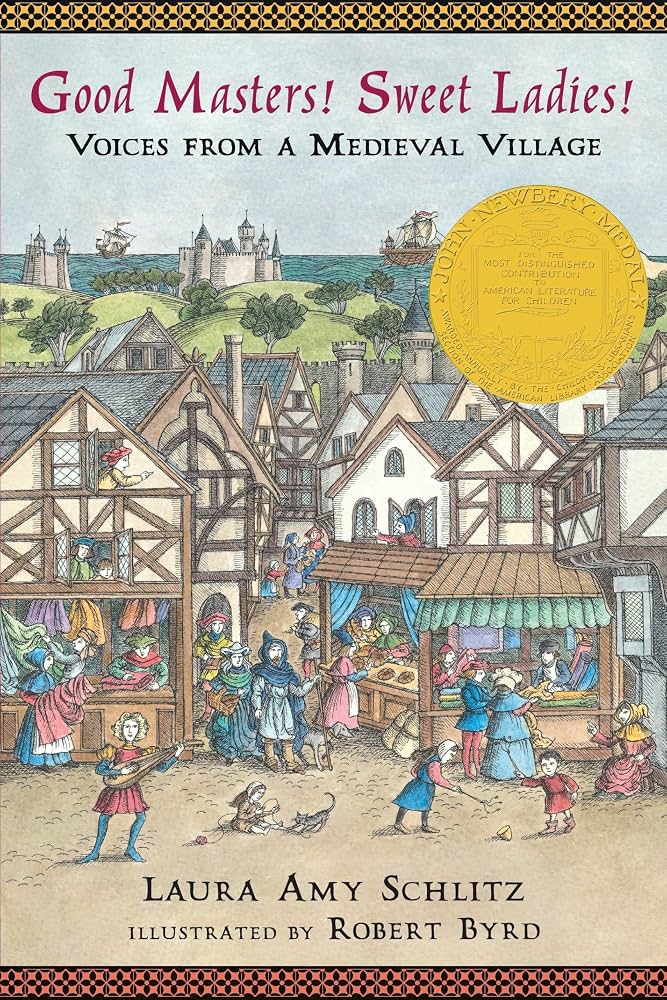
By Laura Amy Schlitz, Good Masters! Sweet Ladies! (Candlewick, 2011), set in 1255 and subtitled “Voices from a Medieval Village,” tells the story of 22 different medieval characters in short, wonderful vignettes – among them Hugo, the lord’s nephew, Mogg, the villein’s daughter, Simon, the knight’s son, Piers, the glassblower’s apprentice, and Giles, the beggar. Highly recommended. For ages 10 and up.
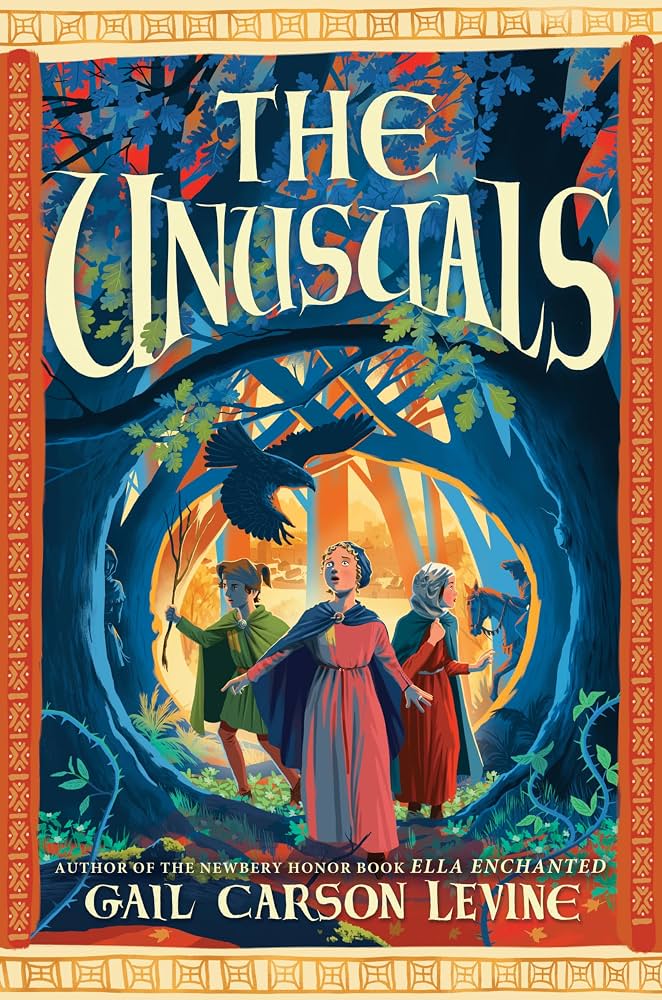
Gail Carson Levine’s The Unusuals (Quill Trees, 2026), set in 13th-century England, is a murder mystery featuring friends Chera, Lummie, and Joan – unusual for the times because Chera and Lummie are Jewish, while Joan is a Christian. Issues of anti-semitism. For ages 10 and up.

Karen Cushman’s Catherine Called Birdy (Houghton Mifflin Harcourt, 2012) is the irreverent diary of 14-year-old Catherine, a nobleman’s daughter and proto-feminist, unhappy with the suitors her father produces for her. The book begins “I am commanded to write an account of my days: I am bit by fleas and plagued by my family.” For ages 11 and up.
Other novels by Cushman set in the medieval period include The Midwife’s Apprentice (1995), Alchemy and Meggy Swann (2010), Will Sparrow’s Road (2012), and Matilda Bone (2000).

By Catherine Gilbert Murdock, The Book of Boy (Greenwillow, 2018) is the story of the strange hump-backed Boy who links up with a shadowy pilgrim named Secondus and ends up traveling across Europe, attempting to find (and steal) the seven precious relics of Saint Peter. Imaginative, unforgettable, and a multiple award-winner. For ages 9 and up.

In Kathryn Erskine’s The Badger Knight (Scholastic, 2013), 13-year-old Adrian is both small for his age and an albino (“puny, sickly, and pale as milk”) – but nonetheless, even though his father wants him to become a scribe, Adrian wants to be an archer. When the Scots invade England, Adrian runs away to join his best friend Hugh – and finds that war is not as simple or as straightforward as he had believed. A coming of age story for ages 10-13.

In Adam Gidwitz's The Inquisitor's Tale (Puffin, 2018), travelers gather at an inn in France one night in 1242 to hear the tales of three magical children. A richly researched adventure for ages 11 and up.
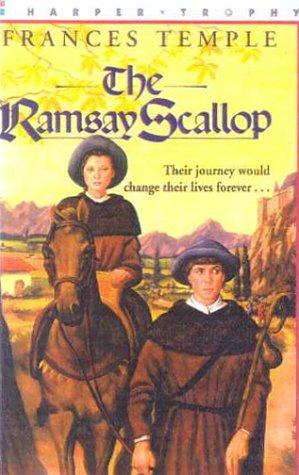
In Frances Temple’s The Ramsay Scallop (HarperCollins, 1995), set in 1299, 14-year-old Eleanor is dismayed at the prospect of marriage to her betrothed, Thomas, newly returned from eight years of fighting in the Crusades. The wise town priest sends the pair on a pilgrimage to Spain, an eye-opening experience during which – through meeting many different people - they learn about the wider world, themselves, and their feelings for each other. For ages 11-14.
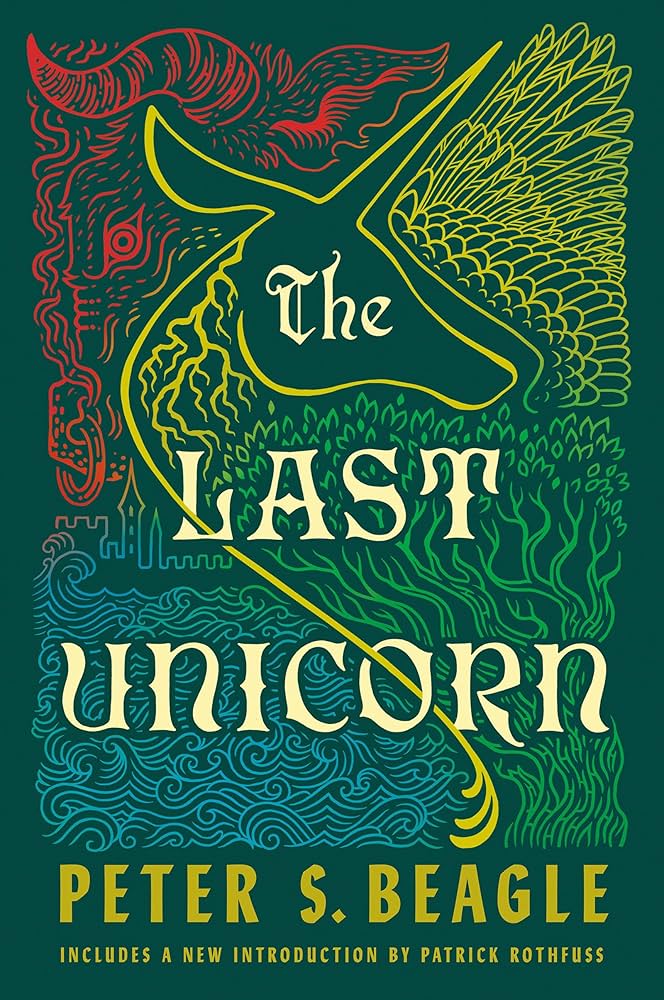
Peter S. Beagle’s The Last Unicorn (Roc, 1991) is an enchanting fantasy in which the unicorn who lives in a lilac wood is the last of her kind in the world. She sets off in search of others, in company with Schmendrick, an inept magician, and the cynical, but still believing, Molly Grue; ultimately the three have to confront the cruel King Haggard and the fearsome Red Bull. And, of course, rescue the unicorns. For ages 12 and up.

The Last Unicorn (1982) is a well-done animated film based on the book with Mia Farrow as the voice of the unicorn, Tammy Grimes as Molly Grue, and Alan Arkin as Schmendrick. Rated G.
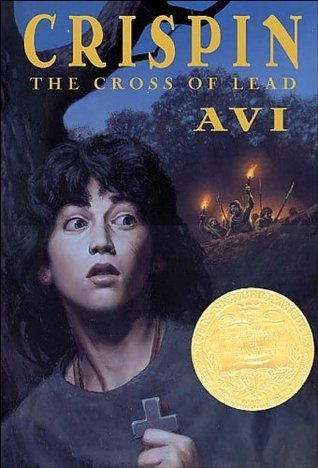
In Avi’s Newbery winner Crispin: The Cross of Lead (Disney-Hyperion, 2004), set in 14th-century England, Crispin – wrongly accused of theft by the corrupt manor steward – is forced to flee, taking with him only an engraved lead cross that belonged to his mother. Then he links up with Orson Hrothgar, a traveling juggler known as Bear, who gradually encourages Crispin to think for himself, and helps protect Crispin from his pursuers. Eventually Crispin, in turn, is able to save Bear – and to find out who he really is. The first of a trilogy for ages 12 and up.
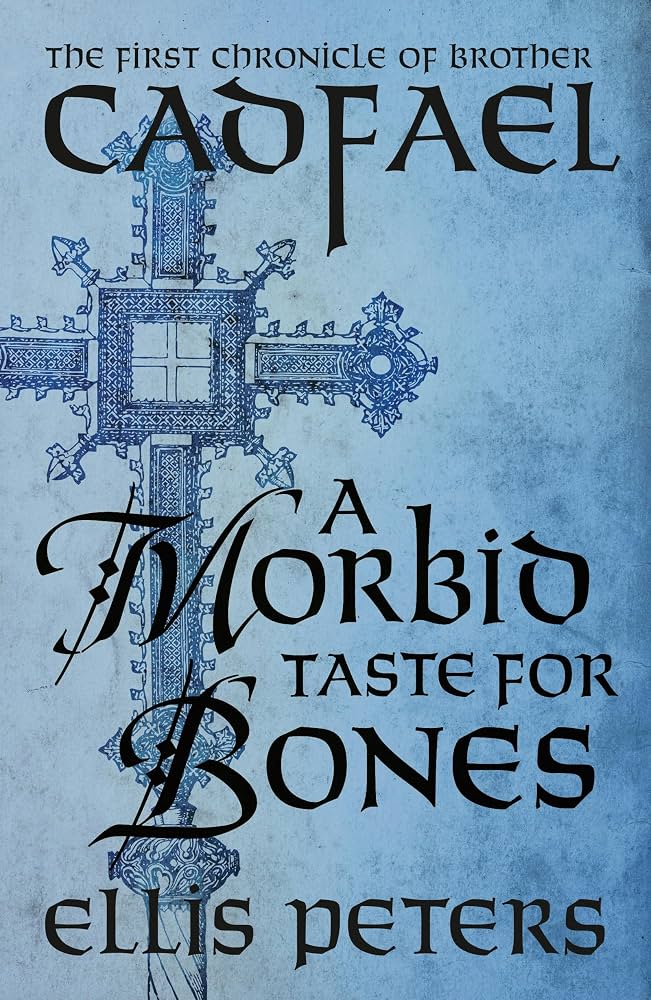
Ellis Peters’s Brother Cadfael mystery series is set in the 12th century, at a time of civil war in England between rival claimants to the throne. Brother Cadfael, monk, herbalist, and veteran of the Crusades, has a dry sense of humor and a knack for solving mysteries. Book one of the series is A Morbid Taste for Bones (Grand Central Publishing, 1994). Fun reads for ages 12 and up.

Cadfael (1994-1996) is a 13-episode TV series, starring Derek Jacobi as Brother Cadfael.
Kings, Queens, and Famous People
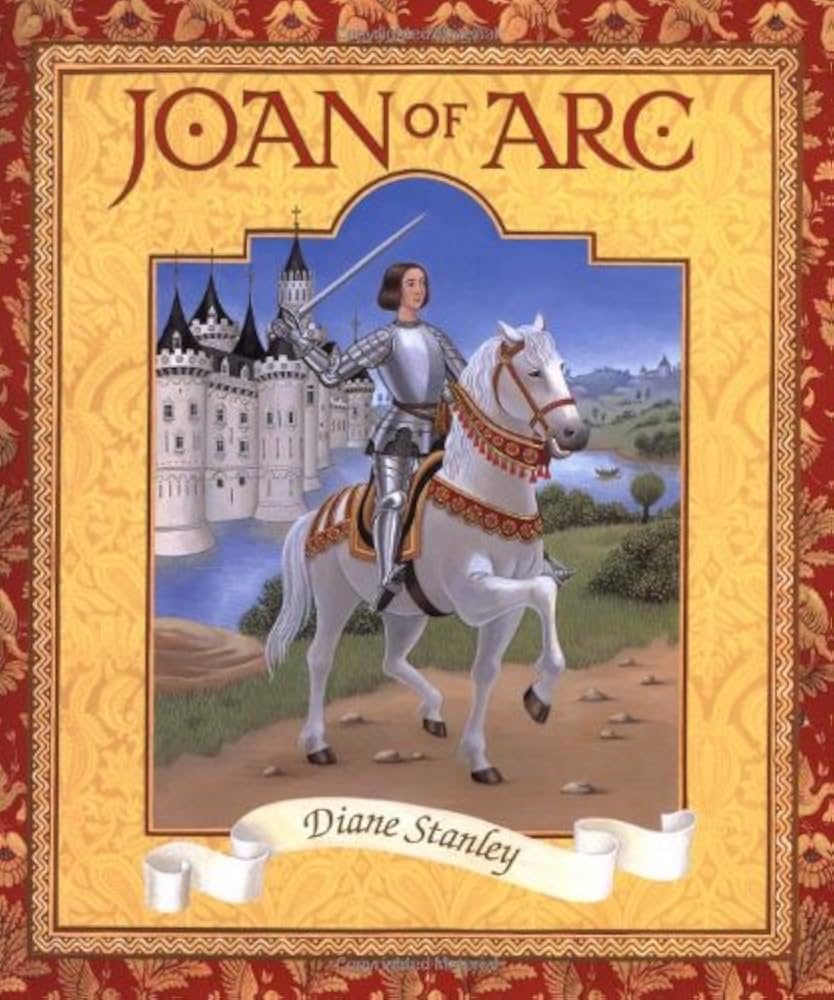
Diane Stanley’s Joan of Arc (HarperCollins, 2002) is the story of the 13-year-old peasant girl whose visions led her to lead France to victory during the Hundred Year’s War. Included are a map and information on the war. For ages 6-10.
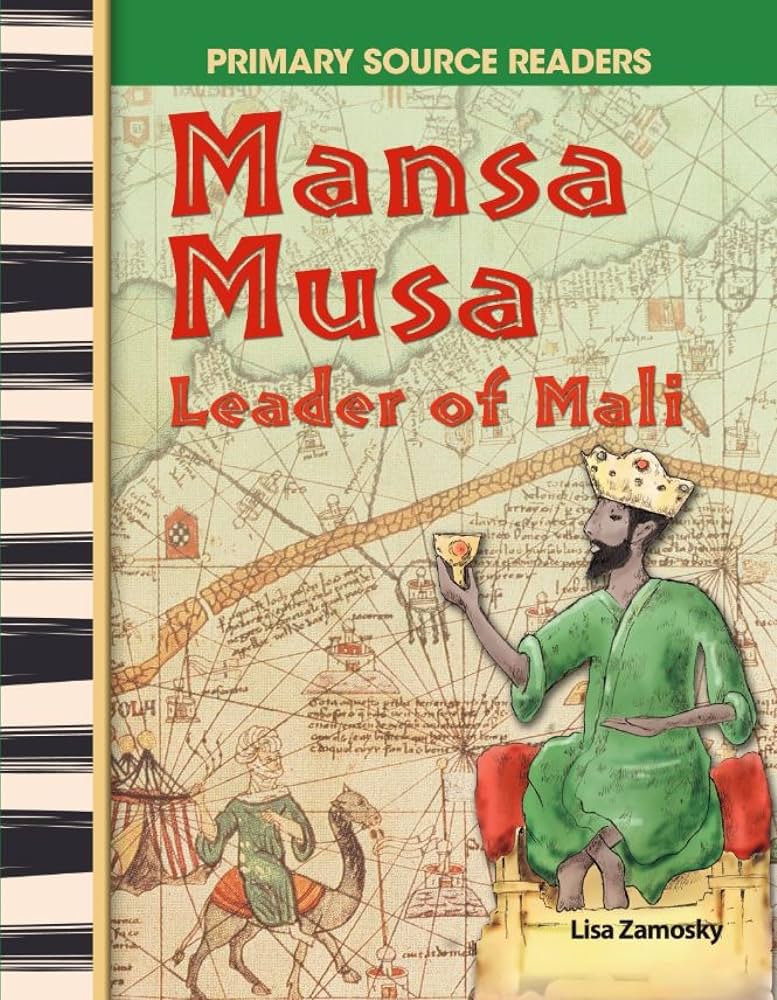
Lisa Zamosky’s Mansa Musa : Leader of Mali (Teacher Created Materials, 2007) is a short illustrated biography of the richest man in history for ages 8 and up.
Also see Divid Wisniewski’s Sundiata: Lion King of Mali (Clarion, 1992) is the gorgeously illustrated story of the near legendary Sundiata, who overcame many hardships to rule an empire. “Listen to me, children of the Bright Country, and hear the great deeds of ages past,” the book begins. For ages 5-8.
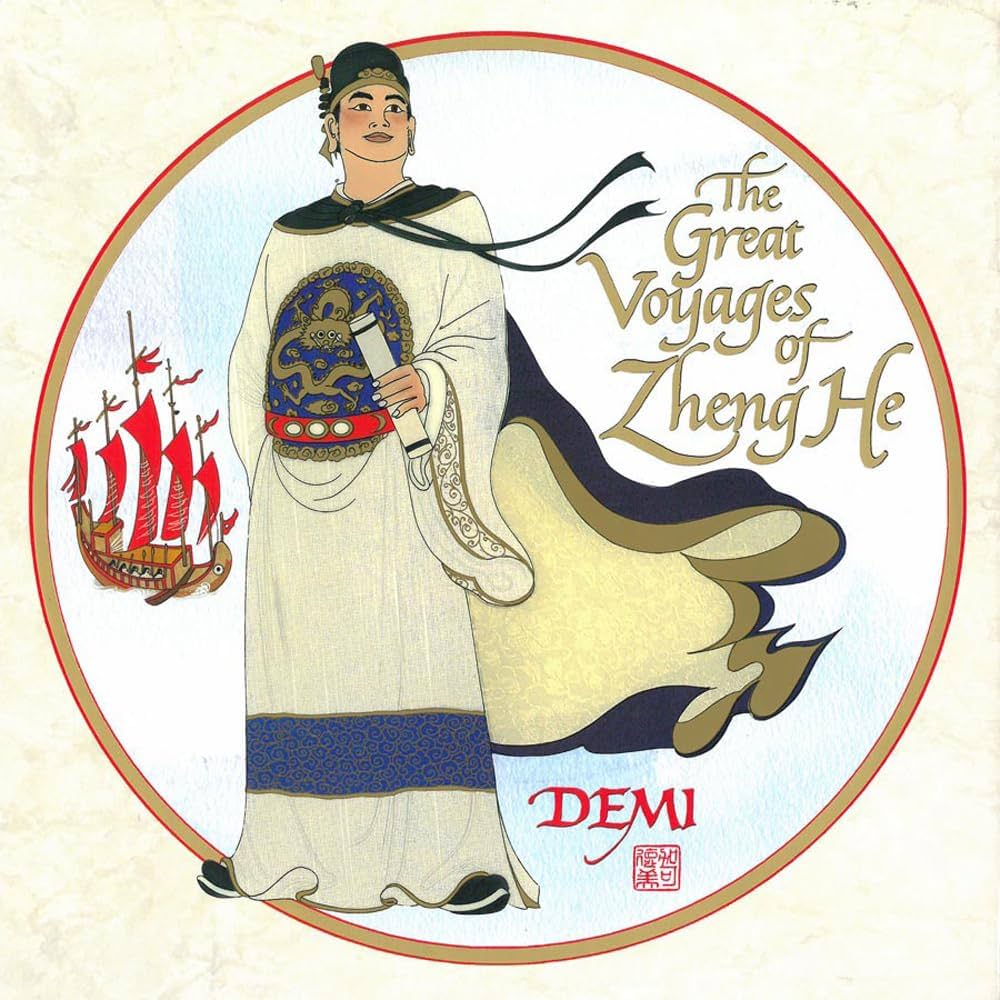
By Demi, The Great Voyages of Zheng He (Lee & Low, 2025) is the story of the famed Chinese admiral who from 1405 to 1431 led the greatest naval fleet in the world around the globe in treasure-seeking voyages – making China the world’s first superpower. For ages 9-12.
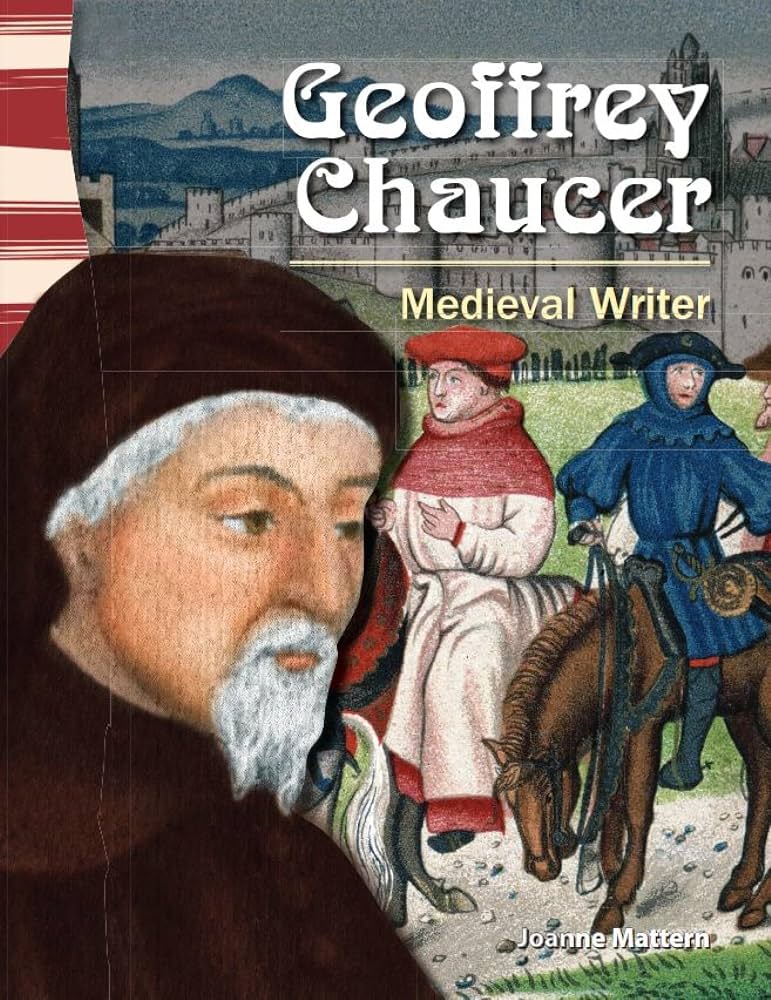
By Joanne Mattern, Geoffrey Chaucer: Medieval Writer (Teacher Created Materials, 2012) is a lively biography including illustrations, catchy facts, sidebars, and info on The Canterbury Tales. For ages 9-12.

In E.L. Konigsberg’s A Proud Taste for Scarlet and Miniver (Atheneum Books, 2001), Eleanor of Aquitaine is in heaven, impatiently awaiting the arrival of her husband, King Henry II. As she waits, she and the important people in her life tell her remarkable life story. Highly recommended. For ages 10 and up.
A Queen, Two Kings, and a Kingdom has a detailed summary of the book, with suggested discussion questions and activities.

In the Royal Diaries series, Kristiana Gregory’s Eleanor: Crown Jewel of Aquitaine, 1136 (Scholastic, 2002) is the story of the brilliant young Eleanor, who becomes queen of France at the age of 15. For ages 9-12.
The Lion in Winter (1968) is a must-see. The year is 1183; King Henry II’s three sons – Richard, Geoffrey, and John – are angling to inherit the throne; and Henry has just let his wife, Queen Eleanor of Aquitaine, out of prison to attend the Christmas court. Peter O’Toole plays Henry; Katharine Hepburn is Eleanor. Rated PG.

Jean Anouilh’s Becket (Riverhead, 1995) is the renowned play on which the 1964 film (see below) is based. It tells the story of King Henry II and friend Thomas Becket, who part ways when Thomas becomes Archbishop of Canterbury. Eventually Becket’s refusal to bend his conscience and obey the king leads to his murder. For teenagers and adults.
Becket (1964), the film version of Jean Anouilh’s play, features Peter O’Toole as Henry II and Richard Burton as Becket. A superb performance. Rated PG-13.

T.S. Eliot’s Murder in the Cathedral (Harcourt, 1964) is a verse dramatization of the 12th-century murder of Thomas Becket at the behest of Henry II. For teenagers and adults.

Kenneth Branagh’s Henry V – based on Shakespeare’s play – is the story of the young king’s conquest of France, ending with the Battle of Agincourt in 1415. Rated PG-13.
Medieval Kings has biographies and timelines of all the medieval kings of England, including a discussion of King Arthur (real and legendary). (See more on Arthur, below.) Check out the short poem that serves as a mnemonic for learning the names of all the monarchs of England in order.
Middle Ages: Famous Queens has brief biographies of some notable medieval women, among them Queen Maude, Eleanor of Aquitaine, Margaret of Anjou, and Elizabeth of York.
From Horrible Histories, learn all the kings and queens of England with the hilarious Monarch's Song at https://horriblehistoriestv.wixsite.com/horriblehistoriestv/song-the-monarchs-song.
Medieval Legends (and updates)

By Margaret Hodges, Saint George and the Dragon (Little, Brown, 1990) is an exquisitely illustrated classic version of the tale. (The pages all have stained-glass-window-like borders.) For ages 4-8.
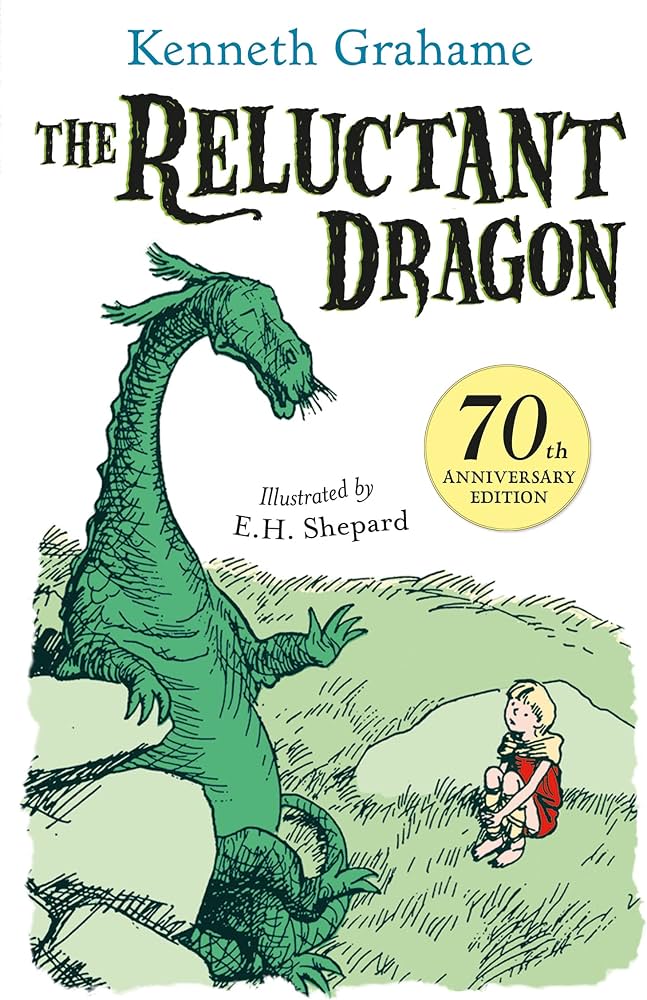
Kenneth Grahame’s The Reluctant Dragon (Square Fish, 1998) is my favorite of all Saint George tales. The dragon would much rather stay peacefully in his cave writing poetry – but upset townspeople send for Saint George and clamor for a battle. All ends happily, however, with the help of a sympathetic boy who has become the dragon’s friend. For ages 7-11.
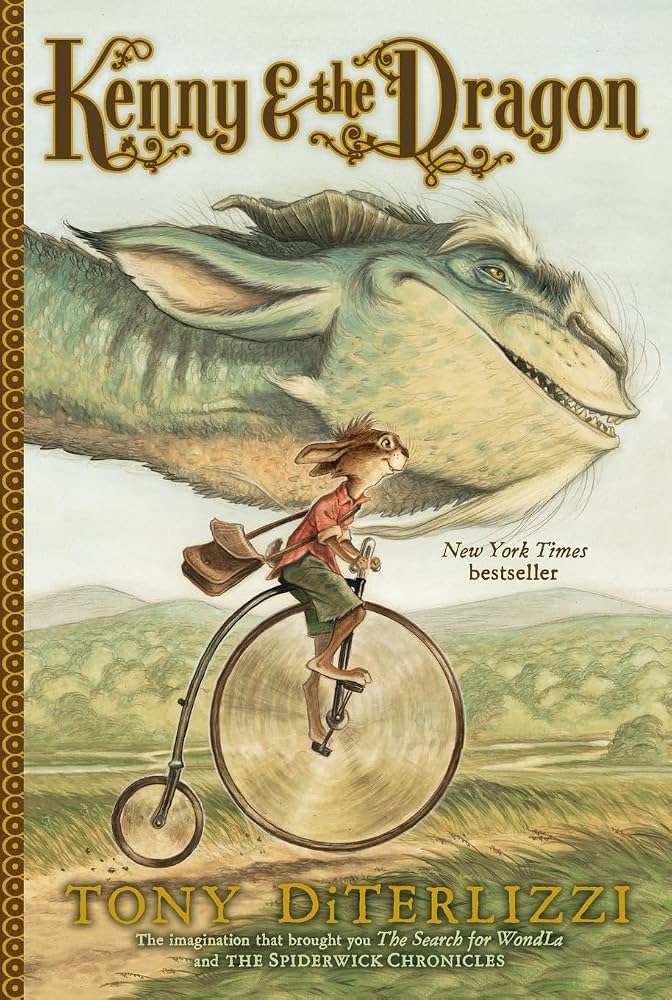
In Tony DiTerlizzi's Kenny and the Dragon (Simon & Schuster, 2012), Kenny's friends Grahame - an erudite dragon - and George, a retired knight and bookshop owner, are being chivvied by the townspeople into fighting a battle. And it's now up to Kenny to stop it. For ages 6-10.
Saint George and the Dragon has a summary of the tale and a list of links on the legendary saint.

In the movi George and the Dragon (2004), George, just home from the grueling Crusades, is ready to hang up his sword and settle down in the north of England. There, however, all is chaos; the kingdom’s princess has disappeared. George eventually finds her protecting what she believes may be the last dragon’s egg. Rated PG.
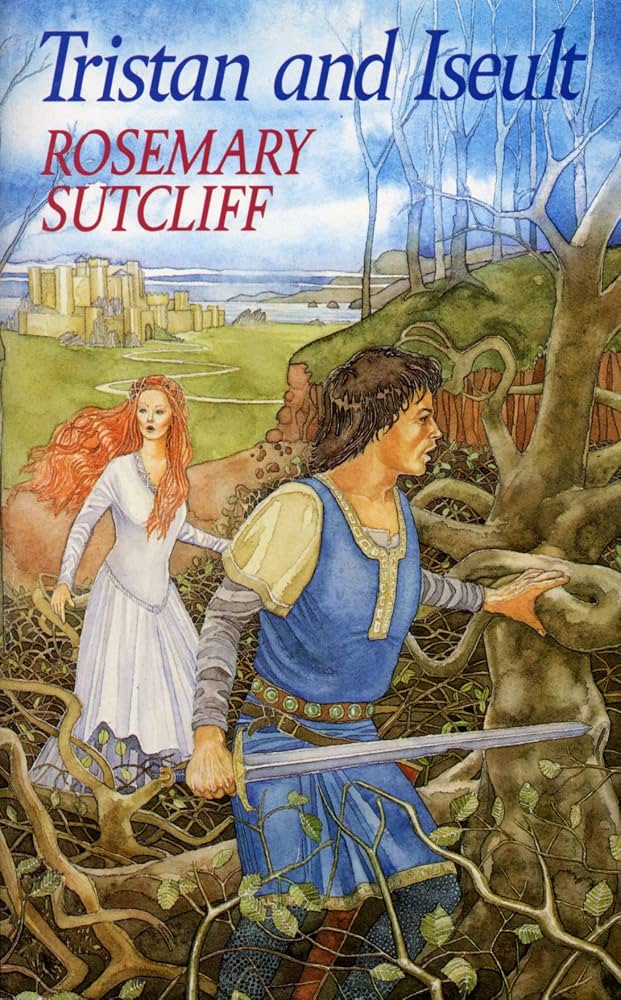
By Rosemary Sutcliff, see Tristan and Iseult (Farrar, Straus & Giroux, 1999), a retelling of the classic medieval Celtic tale of star-crossed lovers. Tristan, warrior of Cornwall, is in love with Iseult, a red-haired Irish princess, who is the promised bride of Mark, the King of Cornwall, and Tristan’s uncle. This doesn’t end well. For ages 10-14.
From Project Gutenberg, another version of The Romance of Tristan and Iseult.
King Arthur and the Knights of the Round Table
The Great Illustrated Classics series are simplified versions of dozens of classic books, targeted at ages 7-10. Most are about 200 pages long, with black-and-white illustrations and biggish print. They’re intended to give kids the sense of and enjoyment for the stories, so that when they move on to the adult versions of – say – David Copperfield, The Adventures of Robinson Crusoe, or Moby Dick – they’ll be primed for the transition. Among these, for those studying the Middle Ages, are versions of Howard Pyle’s King Arthur and the Knights of the Round Table and Sir Walter Scott’s Ivanhoe.

Margaret Hodges’s The Kitchen Knight (Holiday House, 1993) is the story of young Gareth, who comes to King Arthur’s court as a kitchen boy, and eventually vanquishes the fearsome Knight of the Red Plain and wins the hand of the Lady Linesse. Lavish medieval-style illustrations by Trina Schart Hyman. For ages 7-11.

T.H. White’s The Sword in the Stone (Philomel, 1993) is the first part of White’s larger work, The Once and Future King (see below). It covers the young Arthur’s childhood, his meeting with Merlin, his magical schooling, and finally his pulling of the sword from the stone, revealing him as the king. It’s clever, funny, poignant, and wonderful – and bears not much, if any, resemblance to the Disney movie of the same name. Highly recommended for ages 9 and up.
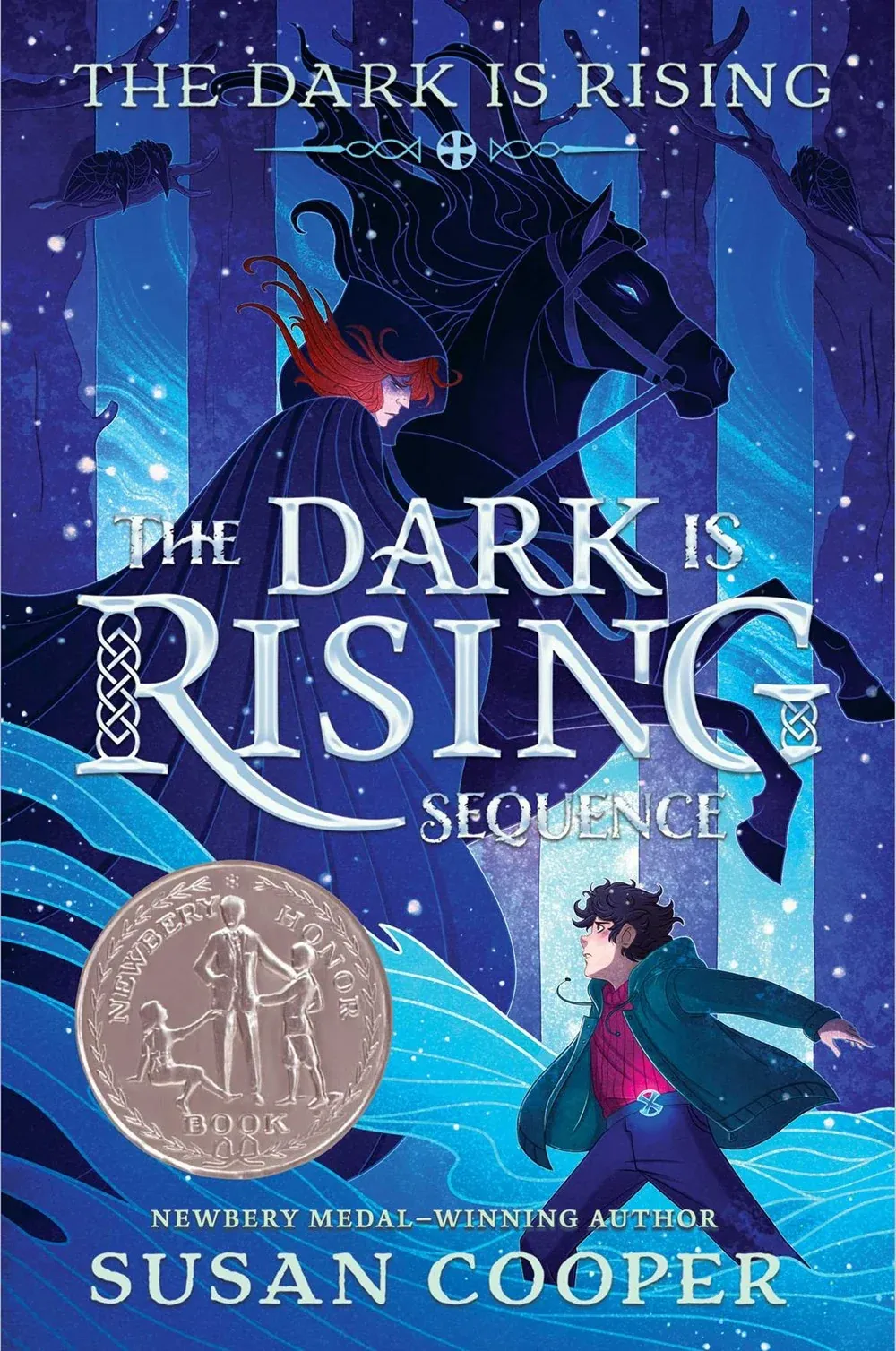
Susan Cooper’s The Dark Is Rising series (Margaret K. McElderry) is a wonderful fantasy centered around the battle between the forces of Light and Dark, ongoing throughout time. Now siblings Simon, Jane, and Barney have been drawn into the conflict – as well as young Will Stanton, who is really one of the Old Ones, an immortal dedicated to fighting the Dark. There are echoes of Arthurian and Welsh legend; Merriman Lyon, the professor who supports the kids, was once Merlin. A great read for ages 9-12.
T.H. White’s The Once and Future King (Ace Trade, 2011), originally published in 1958, is a brilliant re-telling of the story of King Arther, divided into four main parts: The Sword in the Stone, The Queen of Air and Darkness, The Ill-Made Knight, and The Candle in the Wind. Only the first part, The Sword in the Stone (see above), is suitable for young kids – but for teenagers and up, it’s all a wonderful read. Highly recommended.

Rosemary Sutcliff – who writes excellent historical fiction – has adapted the story of King Arthur into a trilogy: The Sword and the Circle, The Light Beyond the Forest, and The Road to Camlann (Puffin, 1994). For ages 10 and up.
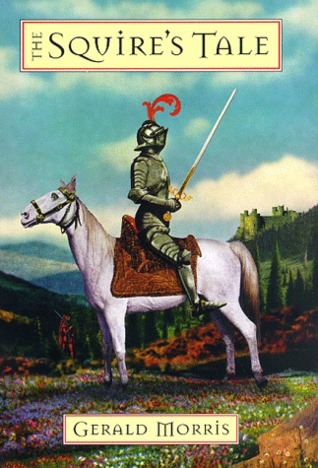
Gerald Morris’s The Squire’s Tale (Houghton Mifflin Harcourt, 2008) is the first of a series that combines Arthurian legend with original plotlines. In this first book, young Terence, an orphan, becomes squire to Gawain, one of the knights of the Round Table, and embarks on a life of magic and adventure. For ages 10 and up.
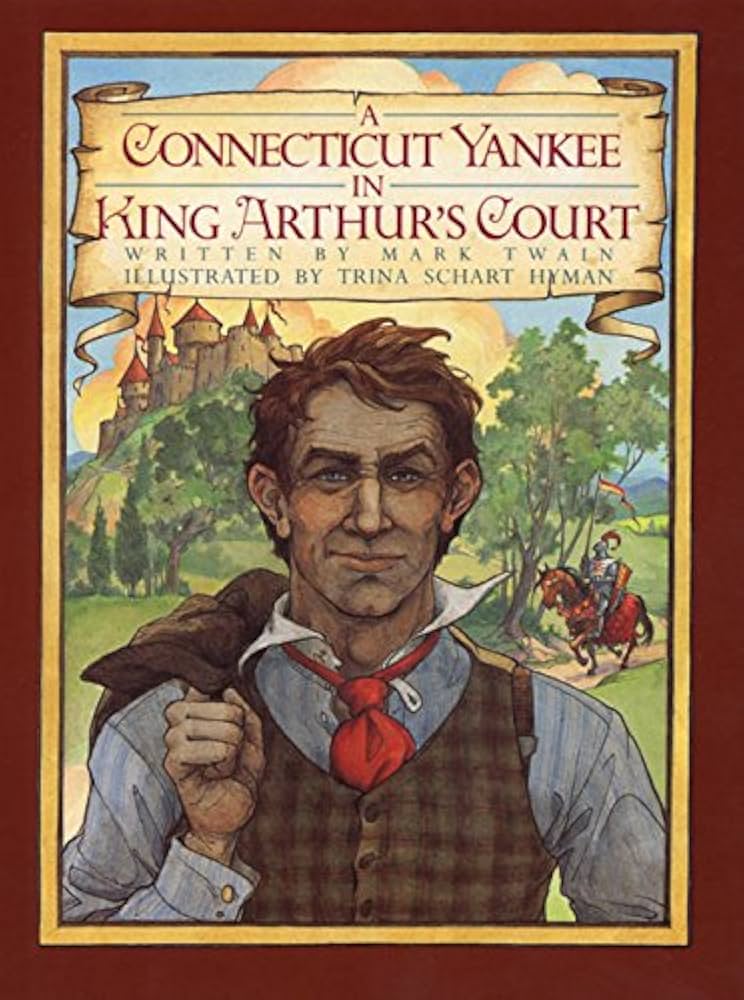
In Mark Twain’s A Connecticut Yankee at King Arthur’s Court, originally published in 1889 and now available in many editions, Hank Morgan, an engineer, is knocked unconscious by a whack from a crowbar and wakes up over a thousand year in the past, in the days of King Arthur. He’s nearly burned as a witch, but manages to save himself by predicting an eclipse; he then becomes famed in Camelot for his technological “miracles” involving gunpowder, electricity, and fireworks, which land him on the bad side of Merlin. For ages 12 and up.

By M.T. Anderson with illustrations by Andrea Offermann, Yvain: The Knight of the Lion (Candlewick, 2017) is a gorgeous graphic novel set in the days of King Arthur. For ages 12 and up.
Jim Weiss’s wonderfully narrated 

Alfred, Lord Tennyson’s Idylls of the King (Penguin, 1989), published between 1859 and 1885, is a series of twelve narrative poems based on the King Arthur legends. For fans of Anne of Green Gables, this is one of Anne’s favorites.
See Project Gutenberg’s Idylls of the King online.

From the University of Rochester, The Camelot Project lists Arthurian authors and texts (many), artists and images, characters from the stories, and symbols and motifs found in the Arthurian legends.

Lerner and Loewe’s musical Camelot (1967) – loosely based on T.H. White’s The Once and Future King – is a delightful romantic fantasy. Rated G.

Excalibur (1981) – named for King Arthur’s magical sword - is a grim, but impressive, version of the Arthurian story, starting with Uther Pendragon and ending with Arthur conveyed to Avalon. Rated PG.
Robin Hood

By Marcia Williams, The Adventures of Robin Hood (Candlewick, 1995) is a panel-cartoon-style re-telling of eleven tales of Robin Hood and his merry men, with wonderful detailed illustrations. For ages 5-9.
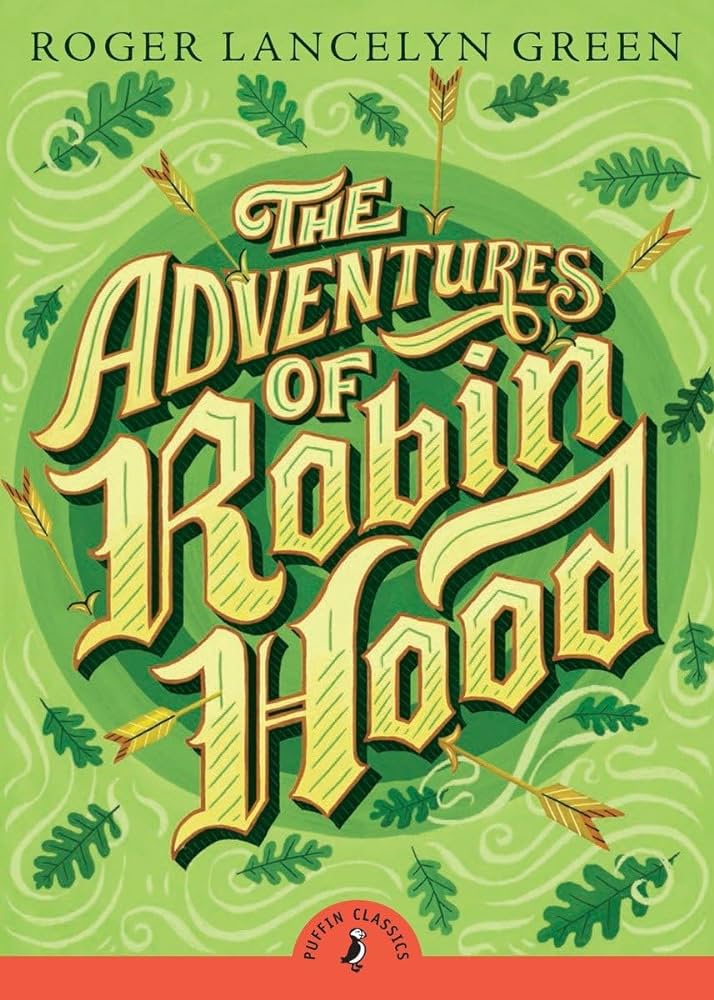
Roger Lancelyn Green’s The Adventures of Robin Hood (Puffin, 2010) is an entertaining version of the Robin Hood tales with all the main characters: minstrel Allan a Dale, Little John with his quarterstaff, Maid Marian, the Sheriff of Nottingham, and the famous archery contest in which Robin wins the golden arrow. A good pick for ages 8-12.
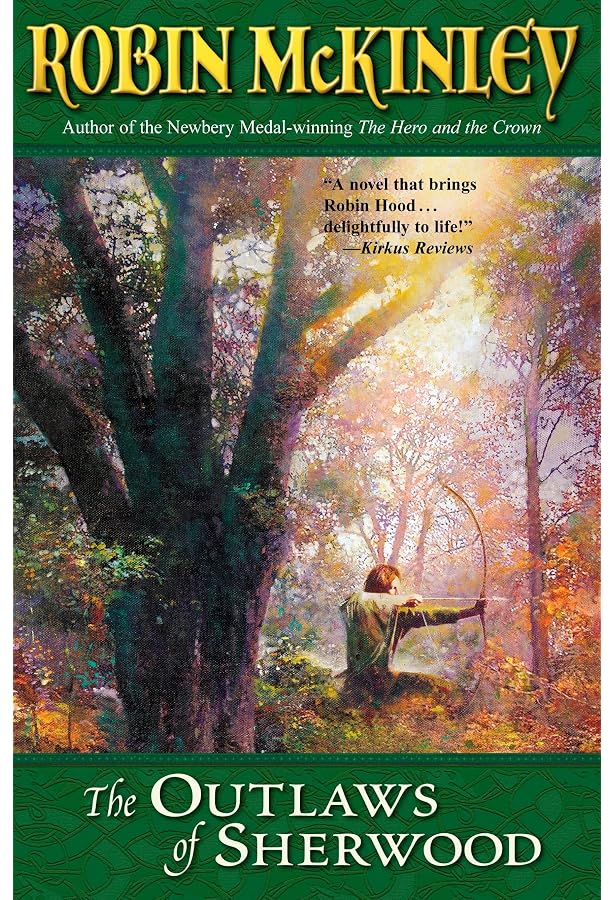
By Robin McKinley, in The Outlaws of Sherwood (Viking, 2002), Robin Longbow, once an apprentice forester, is on the run for killing a man – and now, deep in Sherwood Forest, is building a community of Saxon outlaws, dedicated to opposing the greedy Norman overlords. For ages 8-12.
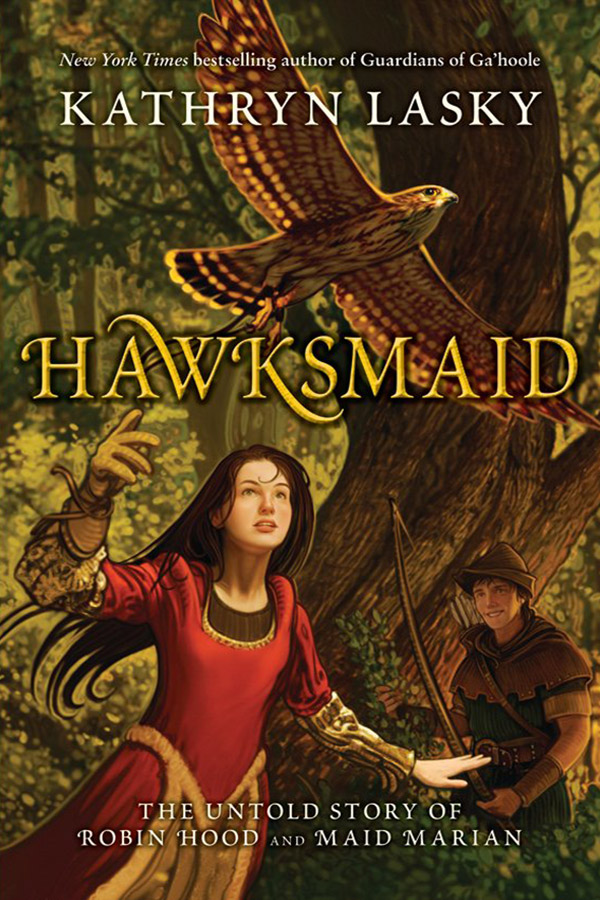
Kathryn Lasky’s Hawksmaid (HarperCollins, 2010) is the “untold story of Robin Hood and Maid Marian.” Here, Marian – known as Matty – learns to handle (and speak the language of) her father’s hawks after followers of Prince John loot her parents’ castle and murder her mother. In company with her friend Fynn, she becomes a leader of a band of boys who rob from the rich to give to the poor – and as they grow older, she and Fynn, now Maid Marian and Robin Hood, do their best to rescue England from the clutches of John. For ages 10-13.
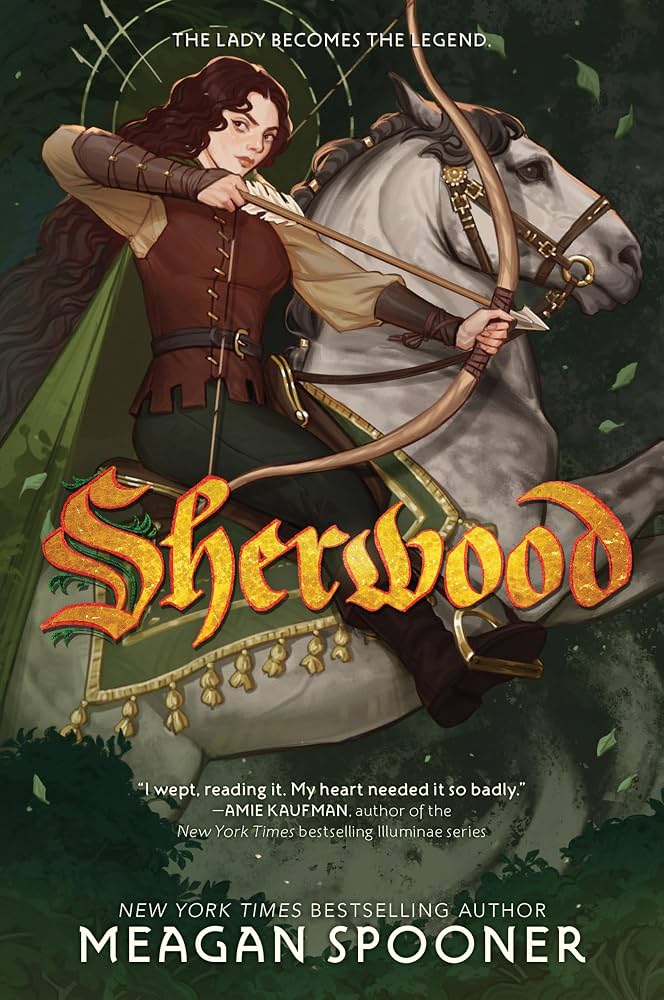
In Meagan Spooner’s Sherwood (Storytide, 2020), a feminist take on the Robin Hood story, Robin has died in the Crusades, the evil Guy of Gisborne and taken over Locksley Hall, and is demanding Marian's hand in marriage. It's now up to Maid Marian to pick up Robin’s legacy in defense of the people of Nottingham. For ages 13 and up.
From the University of Rochester, The Robin Hood Project includes a history of Robin Hood, book and image lists, and an annotated list of Robin Hood characters.

In the Disney animated version of Robin Hood, all the characters are animals: Robin and Marian as foxes, Prince John a sulky lion, and the Sheriff of Nottingham, a wolf. Rated G.

Still one of the best versions of the Robin Hood story on screen is The Adventures of Robin Hood (1938), starring Errol Flynn as Robin, Olivia de Havilland as Maid Marian, and Basil Rathbone as Sir Guy of Gisbourne. Rated PG.
The Canterbury Tales
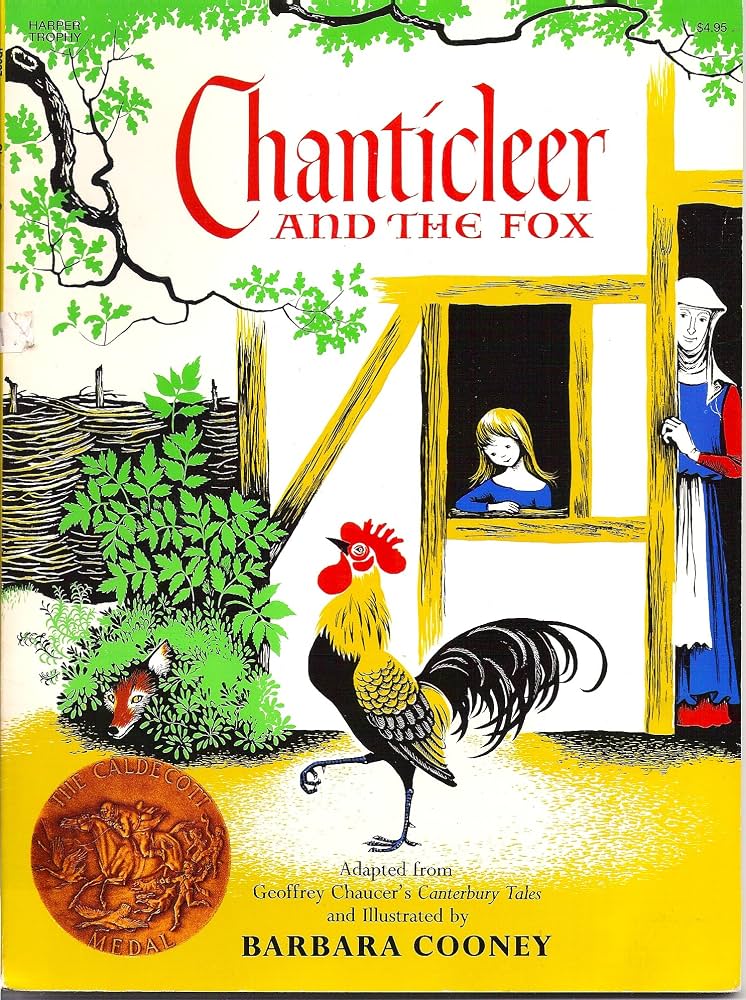
Geoffrey Chaucer’s Chanticleer and the Fox (HarperCollins, 1992) is a picture-book version of the famous story from The Canterbury Tales, illustrated by Barbara Cooney, in which Chanticleer’s conceit and susceptibility to flattery nearly get him eaten by the fox. Luckily some quick thinking saves the day. For ages 4-8.

By Marcia Williams, Chaucer’s Canterbury Tales (Walker Books, 2008) is a delightful retelling of nine of the tales in panel-cartoon form, with detailed and colorful little illustrations. For ages 8-12.

Geraldine McCaughrean’s The Canterbury Tales (Puffin Classics, 1997) is a lively and very reader-friendly 110+-page prose retelling of Geoffrey Chaucer’s classic for ages 12 and up. Includes 13 of the original 24 pilgrim’s tales.
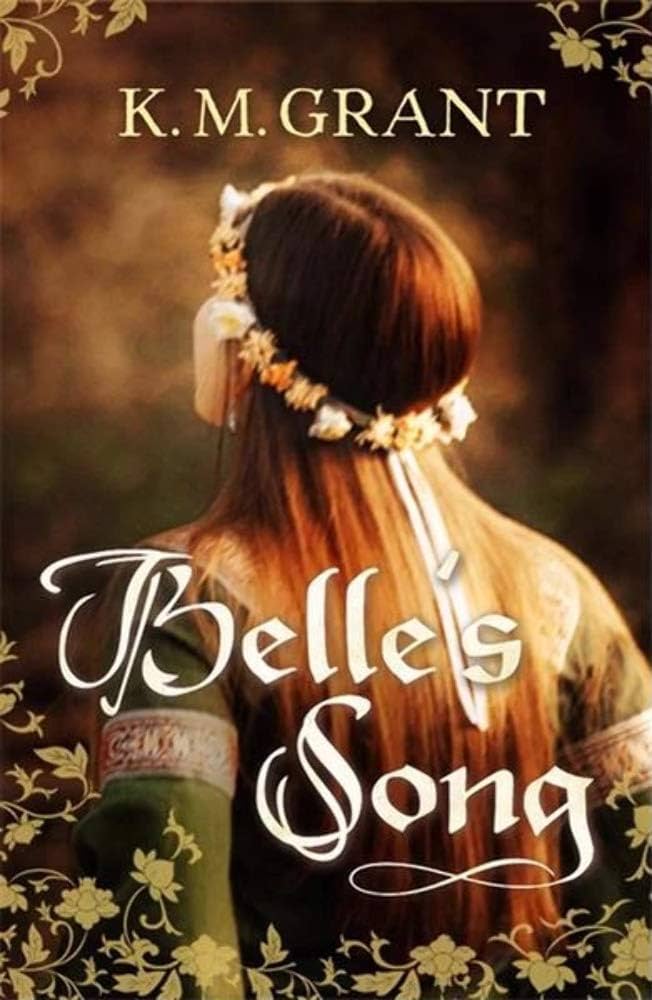
In K.M. Grant’s Belle’s Song (Walker Children’s Books, 2011), fifteen-year-old Belle, daughter of a crippled bellmaker, sets off on a pilgrimage to Canterbury to pray that her father will walk again. She’s accompanied by writer Geoffrey Chaucer, his scribe, Luke, a handsome young squire named Walter, and a motley band of pilgrims. Then she discovers that Chaucer is involved in a dangerous political intrigue centered around the court of Richard II. For ages 12 and up.
BEOWULF
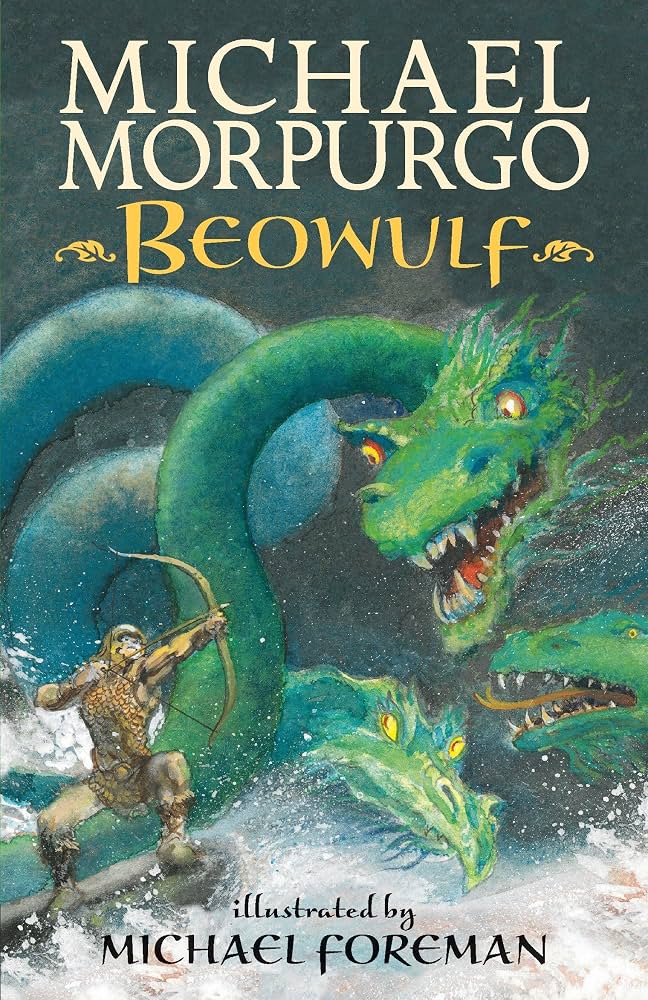
Michael Morpurgo’s Beowulf (Candlewick, 2006) is a retelling of the epic tale, originally written sometime between the 8th and the 11th centuries, of the young warrior who comes to save the Danes from a pair of terrifying monsters, including the fearsome Grendel. Illustrated with full-page paintings. For ages 12 and up.

Nobel laureate Seamus Heaney’s Beowulf (W.W. Norton and Company, 2001) is a beautifully done “new verse translation.” It’s bilingual, in Old and modern English. For teenagers and adults.

John Gardner’s Grendel (Vintage, 1969) is a re-telling of the Beowulf epic from the monster’s point of view. Fascinating and heartbreaking. For teenagers and adults.
From Project Gutenberg, another version of Beowulf.
“Slaying Monsters” is an interesting article on J.R.R. Tolkien’s Beowulf from the New Yorker.

In The 13th Warrior (1999) – set in the 10th century and based on the novel Eaters of the Dead by Michael Crichton - a young Arab poet travels with a party of Vikings to the north, where he becomes embroiled in combatting a horrible and mysterious monster. Reminiscent of Beowulf. Rated R.
Medieval Art and Architecture
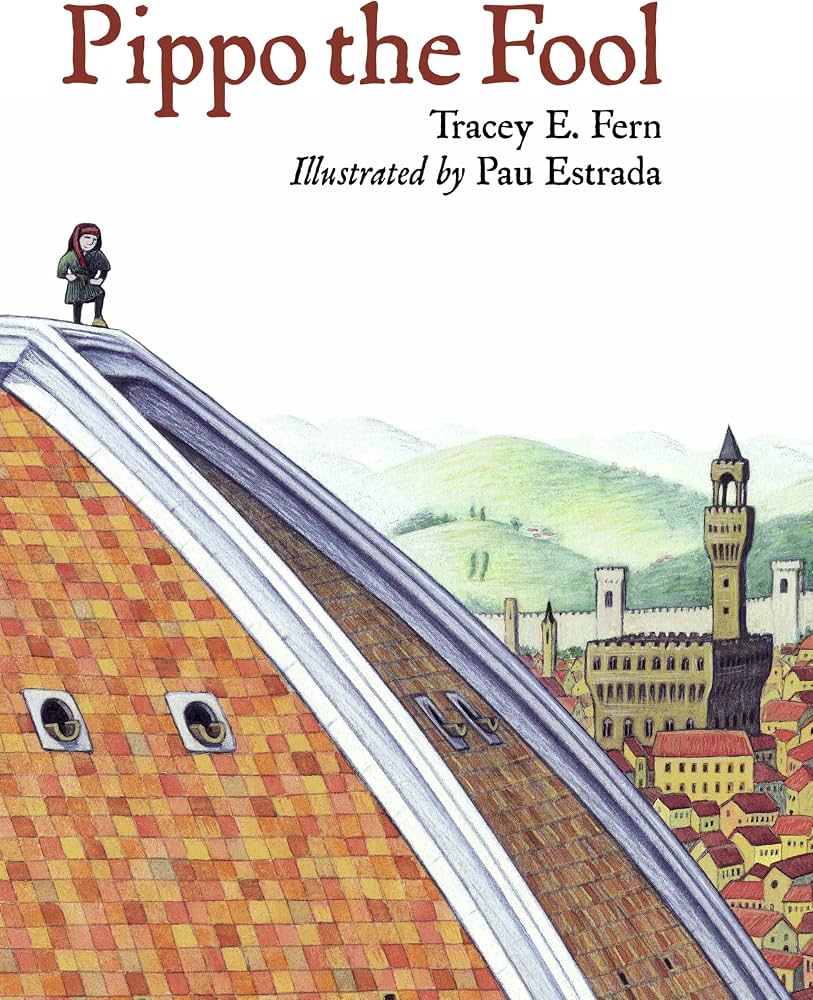
Tracey E. Fern’s Pippo the Fool (Charlesbridge, 2011) is the story of Filippo Brunelleschi – nicknamed Pippo the Fool – and the construction of his architectural masterpiece, a dome for the top of the Cathedral of Santa Maria in Florence. For ages 5-8.
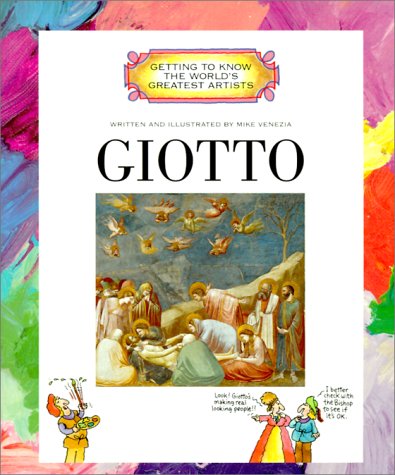
In Mike Venezia’s Getting to Know the World’s Greatest Artists series, Giotto (Childrens Press, 2000) is a clever and appealing picture-book biography of the Italian artists said to be the most important of the 14th century. For ages 6-10.
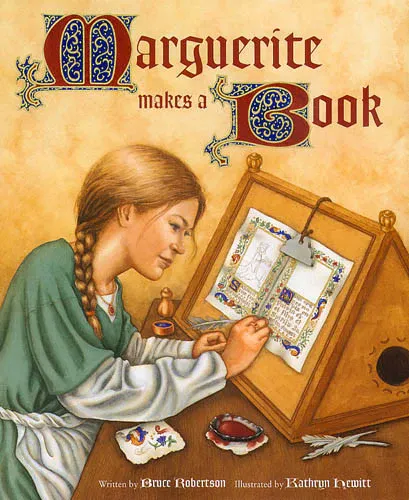
In art historian Bruce Robertson’s beautifully illustrated Marguerite Makes a Book (J. Paul Getty Museum, 1999), set in Paris in the 1400s, Marguerite’s father has a commission to illuminate a book of hours for his patron, Lady Isabelle. Marguerite does her best to help, running errands to collect parchment, quills, and paint ingredients – and when her nearly blind father breaks his precious glasses, she steps in to complete the manuscript herself. For ages 8-12.

C.M. Millen’s The Ink Garden of Brother Theophane (Charlesbridge, 2010) is the picture-book story of a creative monk who devised beautifully colored inks for illuminated manuscripts. For ages 6-11.
Theodore Menten’s The Illuminated Alphabet (Dover Publications, 1971) is a coloring books for would-be medieval-style illuminators. Based on medieval manuscripts.
View illuminate manuscripts from the British Library at https://www.bl.uk/collection/digitised-manuscripts-archives.
From the J. Paul Getty Museum, Looking at Illuminated Manuscripts has images, historical background information, and a series of lesson plans categorized by grade (K-12).

By Joann Johansen Burch, Fine Print: A Story about Johann Gutenberg (Lerner Classroom, 1991) is a lightly fictionalized biography of Gutenberg and his invention of the printing press. For ages 9-12.

John Agard’s Book: My Autobiography (Candlewick, 2015) – narrated by Book itself – is a captivating history of writing and books, including a chapter on Gutenberg’s movable type. For ages 10 and up.
Learn about Johann Gutenberg and the Gutenberg Bible at https://www.youtube.com/watch?v=tyBbj5hj8DQ.
Medieval Art: A Resource for Educators, available as a free download from the Metropolitan Museum of Art, is a 190+-page publication covering the history of medieval art, period by period and the techniques used by medieval artists, along with a color-illustrated, annotated gallery of wonderful medieval images from the museum collection. Included are detailed lesson plans on medieval gardens, medieval bestiaries, medieval symbolism and heraldry, and medieval art techniques (including weaving, mosaic, and stained-glass projects). For a range of ages. See https://www.metmuseum.org/met-publications/medieval-art-a-resource-for-educators.

Design your own Illuminated Initials. See https://www.english-heritage.org.uk/members-area/kids/kids-rule-things-to-make-and-do/design-your-illuminated-initials/.

David Macauley’s Castle (Houghton Mifflin Harcourt, 1982) is the marvelously illustrated story of the building of a magnificent castle in 13th-century Wales. The book takes readers step by step through planning and construction, ending with the castle playing a part in a battle and siege. Highly recommended for ages 8-12.
There’s an animated adaptation of Macauley’s Castle, available on DVD from PBS Home Video or on YouTube from the National Endowment for the Humanities.
In the same format, see Macauley’s Cathedral (1981) and its animated adaptation.

In Alexandra S.D. Hinrichs’s Therese Makes a Tapestry (J. Paul Getty Museum, 2016), set in 17th-century Paris, young Therese works at the Gobelins Manufactory, making tapestries for King Louis XIV. For ages 7-11.
The Bayeux Tapestry – really an embroidery – depicts the events leading up to the Battle of Hastings in 1066 and its aftermath. The original is in the Bayeux Museum in France. See Britain's Bayeux Tapestry for a history and scene-by-scene images.
From the Heilbrunn Timeline of Art History, How Medieval and Renaissance Tapestries Were Made explains just that. Included is a slide show of tapestries.
Check out the Animated Bayeux Tapestry
Plague!
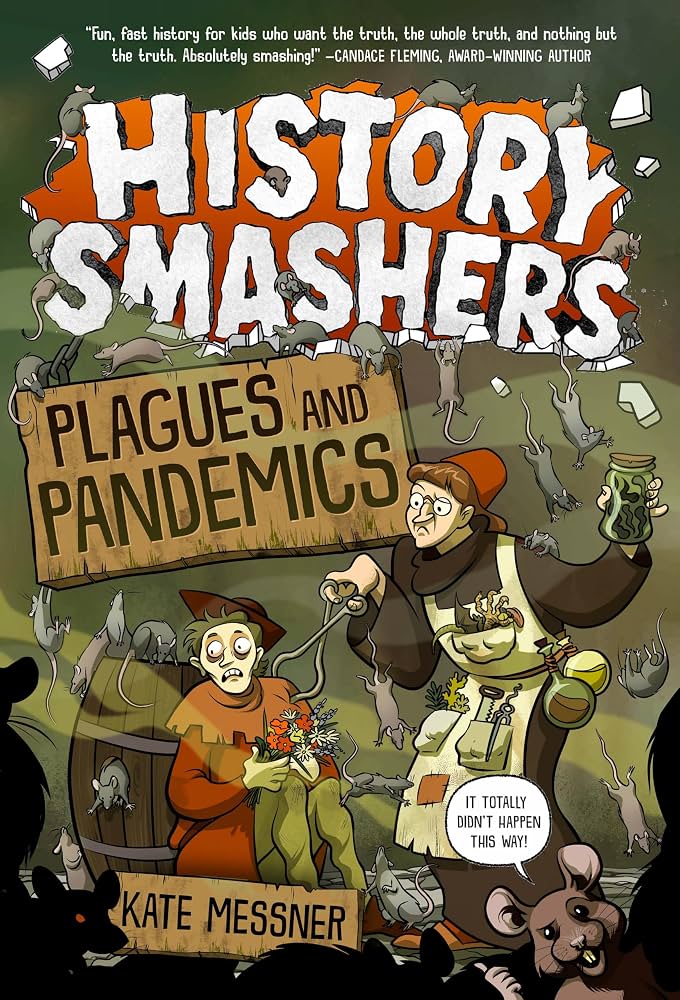
By Kate Messner, Plagues and Pandemics (Random House, 2021) in the History Smashers series covers diseases throughout history – including the catastrophic Black Death – with a mix of reader-friendly text, fact boxes, capsule biographies, and photos. For ages 8-12.
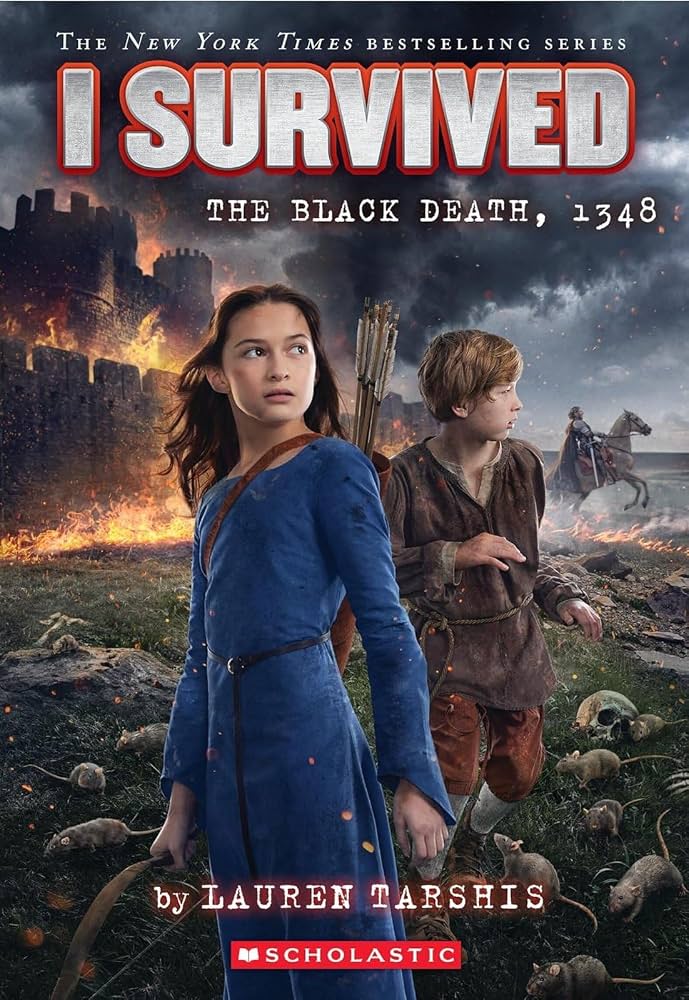
By Lauren Tarshis, I Survived the Black Death, 1348 (Scholastic, 2024) is the story of Elsie – who has dreamed of becoming an archer in England’s war against France – but instead faces the Black Death, perhaps the deadliest disease in world history. For ages 9-11.
Also see Natasha Deen’s Maria and the Plague (Stone Arch Books, 2020) in the Girls Survive series for ages 8-12.

James Cross Giblin’s When Plague Strikes (HarperCollins, 1997) is a fascinating overview of three terrible diseases - the black plague that wiped out a third of Europe’s population in the 14th century, smallpox, and AIDS – covering their causes and their effects on civilization. For ages 10 and up.

Edgar Allan Poe’s short story, "The Masque of the Red Death," first published in 1842, is the chilling Gothic tale of Prince Prospero’s vain attempts to avoid a black-plague-like malady called the Red Death. See https://poemuseum.org/the-masque-of-the-red-death/.

Connie Willis’s The Doomsday Book (Spectra, 1993) is set in a future Oxford, where history students participate in time travel. The main character, Kivrin, traveling back to the Middle Ages, is mistakenly sent to 1348, at the peak of the Black Death. At the same time, a pandemic rages in the 21st century. For teenagers and adults.
From the Heilbrunn Timeline of Art History, see Medicine in the Middle Ages.
Hands-on Projects and Activities
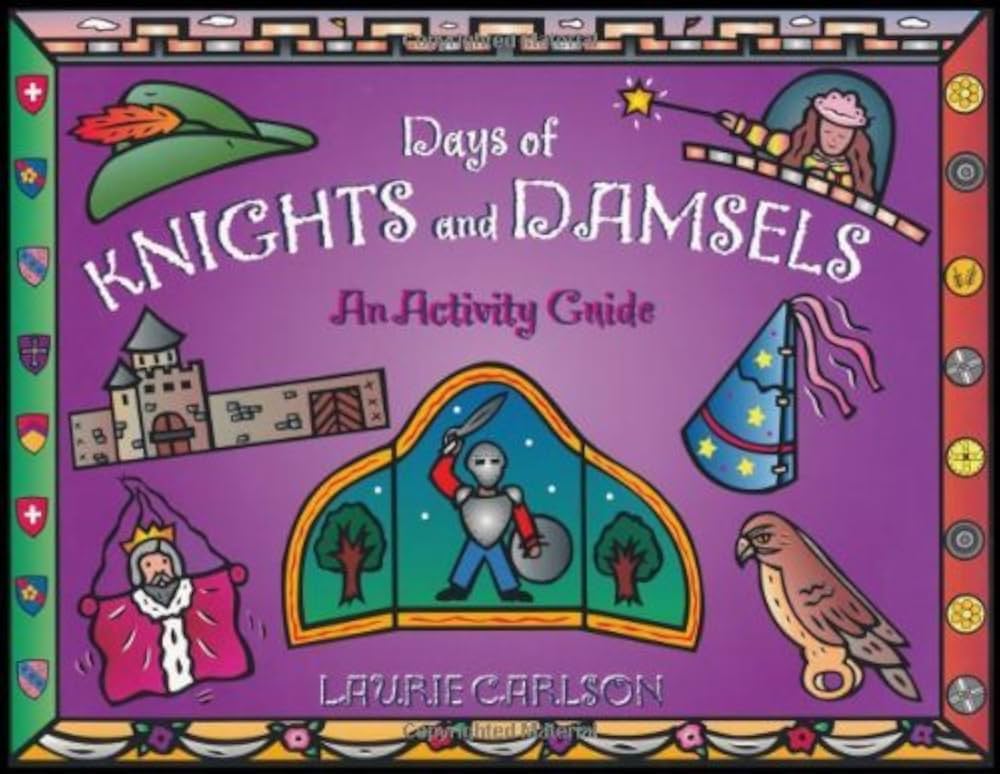
Laurie Carlson’s Days of Knights and Damsels (Chicago Review Press, 1998) is a collection of creative medieval-style activities, recipes, and games. Kids can make a princess hat, a cloak, a crown, and a knight’s helmet; whip up a batch of porridge, make a blackbird pie, or eat lunch out of a trencher; try their hands at draughts and 9 Men’s Morris; and make a set of medieval character finger puppets. And more. For ages 5-8.

Medieval LEGO by Grayson Beights (No Starch Press, 2015) is a short history of the Middle Ages from William the Conqueror to the Battle of Bosworth Field, entirely illustrated with LEGO scenes and characters. For ages 7 and up. For LEGO lovers, there are many medieval- and castle-themed LEGO brick building sets.
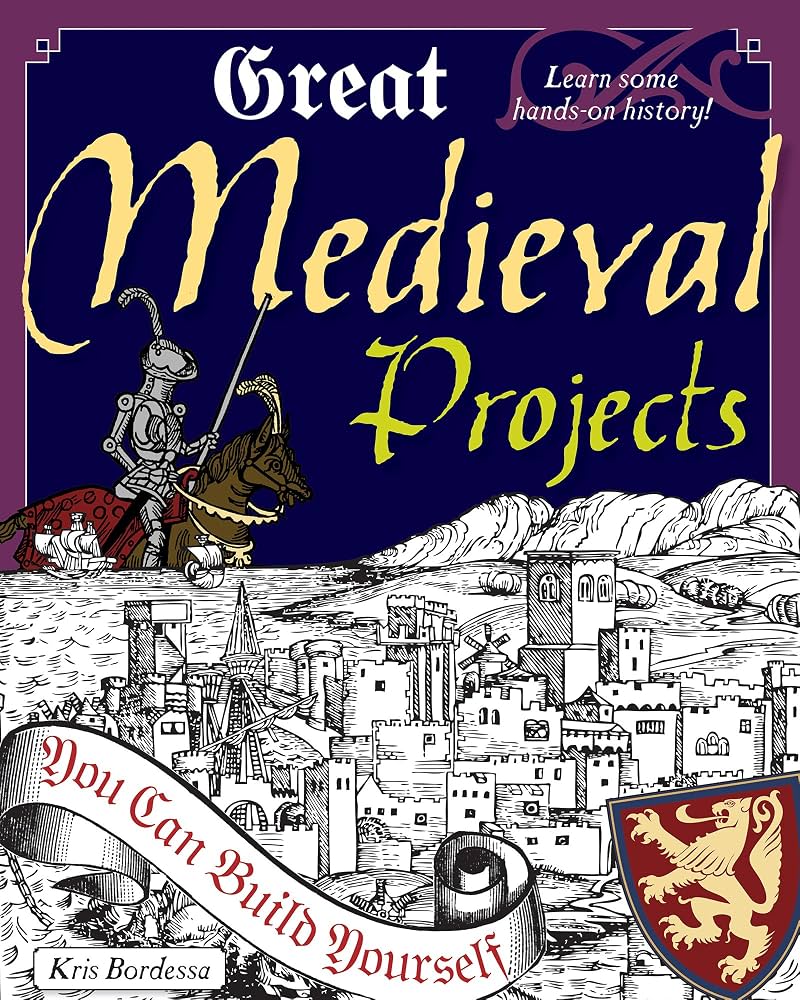
Kris Bordessa’s Great Medieval Projects You Can Build Yourself (Nomad Press, 2008) is divided into 12 informative chapters with maps, drawings, “Words to Know” lists, and accompanying hands-on projects. For example, kids make butter and pretzels, chain mail, a helmet, a set of juggling sticks, and a model trebuchet. For ages 9-12.

Rob Ives’s Castle Attack: Make Your Own Medieval Battlefield (Hungry Tomato, 2016) has instructions for making your own medieval battlefield, using such simple materials as cardboard, aluminum foil, and plastic Easter eggs. Clear instructions, but younger kids will need adult help. Other books in Ives’s Tabletop Wars series include Break the Siege: Make Your Own Catapults and Surprise the Enemy: Make Your Own Traps and Triggers.

William Gurstelle's Defending Your Castle (Chicago Review Press, 2014) is a gem for young medieval engineers. Includes historical background information and instructions for building everything from catapults and crossbows to a Mongol Smoke Monster. Adult supervision a good idea.

John Green’s Life in a Medieval Castle and Village Coloring Book (Dover Publications, 1990) includes a brief informational text and 42 ready-to-color black-line drawings of scenes from daily life in castle, village, monastery, and farm.
Similarly themed coloring books from Dover include A.G. Smith’s Knights and Armor Coloring Book (1985) and Castles of the World Coloring Book (1986), and Tom Tierney’s Medieval Fashions Coloring Book (1998).
From A Book in Time, Medieval Crafts has instructions for making a medieval border, a triptych, a cereal-box castle with paper soldiers, a stained glass window (using melted crayons), a coat-of-arms shield, a crown, and a jester’s hat.
From Built by Kids, How to Build a Cardboard Castle has instructions for a terrific kid-sized castle. Materials include big cardboard boxes, colored tape, and markers.

Rosemary Chorzempa’s Design Your Own Coat of Arms (Dover Publications, 1987) is a workbook-style introduction to heraldry for ages 9-12.
Inexpensive DIY white cardboard shields (ready for decorating) are available from the Oriental Trading Company.

Make a duct tape sword and shield.
From NOVA, Secrets of the Medieval Siege has an illustrated description of a medieval arms race, a slide show of NOVA’s successful attempt to build and fire a giant trebuchet, and an account of life in a medieval castle. Also at the site,
Destroy the Castle is an interactive online science project in which players design a trebuchet capable of crushing a castle wall.
The Middle Ages at the Movies

The Princess Bride (1987) – based on the wonderful novel by William Goldman (featured on many recommended high-school reading lists) – is a classic and clever medieval-style fairy tale, complete with a pirate, a wicked prince, a beautiful princess, a giant, a swordsman, and a swamp full of RUSs – that is, Rodents of Unusual Size. In the frame story, a grandfather (Peter Falk) is reading the story as a bedside tale to his little grandson. One of our all-time favorites. Rated PG.

The Secret of Kells (2009) is an animated film set in the Middle Ages in which young Brendan sets out on a dangerous quest after a master illuminator brings him an ancient book filled with secrets. Not rated.

Directed by Ron Howard, Willow (1988) is the magical medieval story of an unlikely hero – the dwarf Willow Ufgood – who must save the baby girl destined to bring about the downfall of the evil sorceress Queen Bavmorda. Rated PG.

Monty Python and the Holy Grail (1975), now a cult classic, is a hilarious take on the Arthurian legend, featuring the Trojan Rabbit, the cowardly Sir Robin, a famously insulting French soldier, and the Black Beast of Arrrggggh. A completely different view of the knights of the Round Table. Rated PG.

Ladyhawke (1985) is a lovely medieval fantasy in which a young thief aids two lovers, Captain Navarre and Lady Isabeau, who have been placed under a curse by an evil Bishop. Navarre is a wolf by night; Isabeau, a hawk by day – and they can only glimpse each other briefly at sunrise. Rated PG-13.
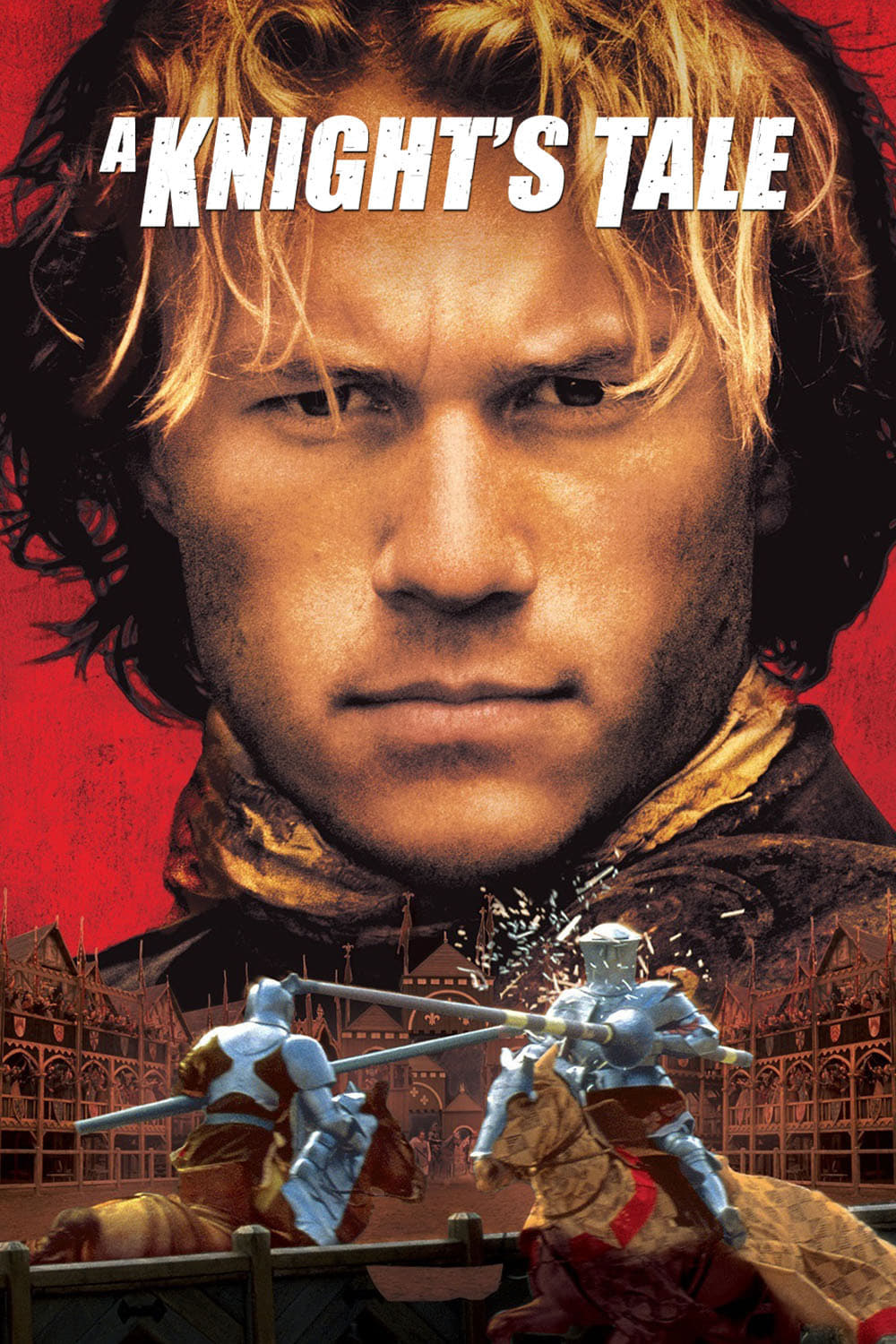
A Knight’s Tale (2001) is the story of William, a young squire, who – after his master dies – meets up with Geoffrey Chaucer and convinces him to forge documents that will allow him to pass himself off as a knight and enter a jousting competition. Said to prioritize fun over authenticity. Rated PG-13. See https://www.imdb.com/title/tt0183790/.

El Cid (1961) is the tale of the legendary Castilian nobleman Rodrigo Diaz, known as El Cid, who defends Christian Spain against the invading Moors. Charlton Heston plays El Cid. Not rated. Over three hours long.

The Seventh Seal (1957), written and directed by Ingmar Bergman, is set in Sweden at the time of the Black Death. The main character, played by Max von Sydow, is a knight, newly returned from the Crusades, who ends up playing chess with Death himself. A classic of world cinema. Not rated, but definitely for teenagers and adults.

The Name of the Rose (1986), set in the 14th century and based on Umberto Eco’s novel, is the story of an intellectually ahead-of-his-time monk, William of Baskerville (Sean Connery), and his novice assistant (Christian Slater) attempting to solve the mystery of mysterious deaths at a Benedictine Abbey and save a young woman from being burned as a witch by the Inquisition. Beautifully done. Rated R.

Braveheart (1975) pops up on almost all lists of best medieval-themed movies, though it’s not for the weak of stomach or faint of heart. Mel Gibson plays William Wallace, the hero who led the Scots against the English under King Edward I, also known as Longshanks. Lots of slaughter. Rated R.