
Terrific Trains
In this collection
Who doesn’t love a train?
Think Thomas the (talking) Tank Engine, the Hogwarts Express, model train lovers, and creative students of American history, who want to know what happened to the Golden Spike that completed the Transcontinental Railroad. (If you’ve got rosy visions of driving to Promontory Point and extracting it, forget it: it's in the Smithsonian.)
See below for books and resources for all ages, including a great train robbery, adventurous orphans, a really cool model steam engine, and a railroad version of Moby Dick (with giant moles).
Trains for Beginners
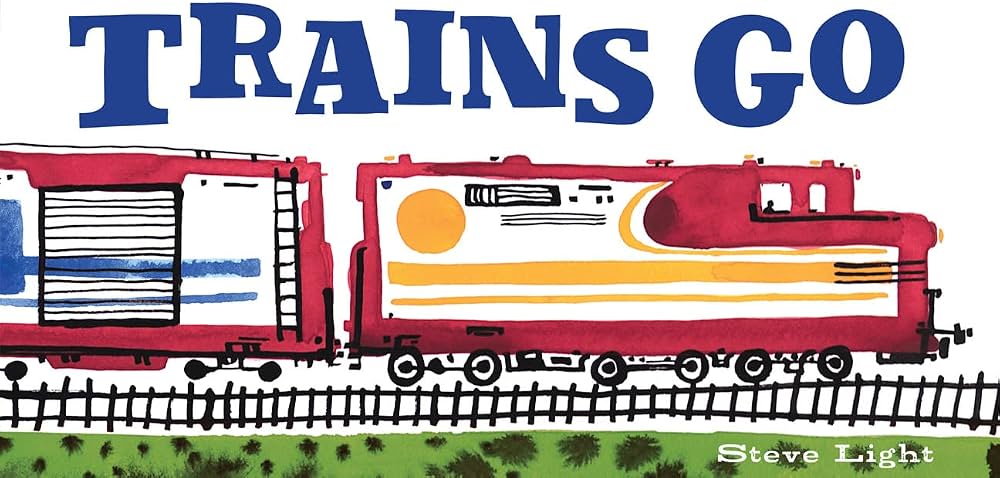
Steve Light’s Trains Go (Chronicle Books, 2012) is a masterpiece of onomatopoeia for toddlers, with great illustrations and lots of ZOOSHs, WHOOSHs, CLANGs, and TOOTs. For ages 2-5.
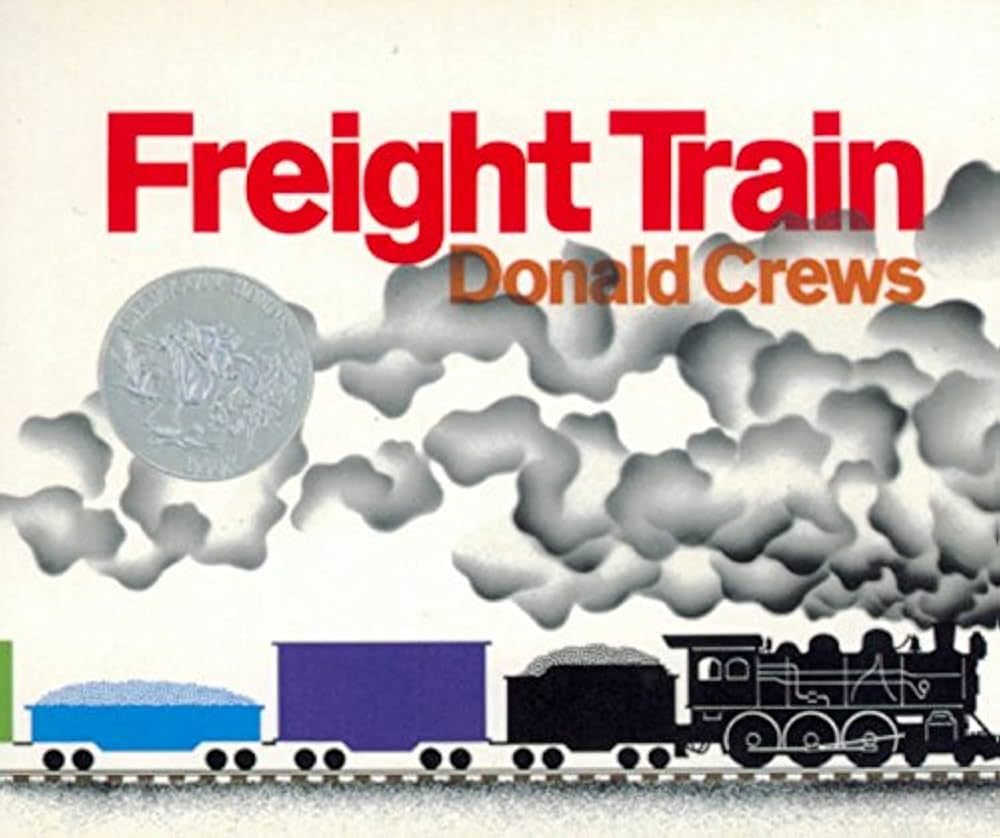
Donald Crews’s Freight Train (Greenwillow, 2004) is a gorgeous and colorful introduction to the parts of a train: black steam engine, purple box car, green cattle car, orange tank car, red caboose. For ages 2-6.

Dinosaurs! And trains! In John Steven Gurney’s Dinosaur Train (HarperCollins, 2002), a little boy whose favorite things are dinosaurs and trains draws a dinosaur-and-train picture before going to bed and heads off on an imaginative train adventure, packed with colorful dinosaurs, among them a T. rex engineer in overalls. For ages 3-5.

In Tony Mitton’s adorable Terrific Trains (Kingfisher, 2000), pop-eyed animal characters head off on a rhyming train journey (“Starting from the station with a whistle and a hiss/steam trains huffing and puffing like this”). For ages 3-6.

In Philemon Sturges’s I Love Trains (HarperCollins, 2003), a little boy in a stripey engineer’s cap and overalls watches a train go by, while telling – in rhyme – all about it, from engine, hopper, boxcar, and flatcar to caboose. For ages 3-6.

Thomas the Tank Engine (Random House Books for Young Readers, 2005) was first featured in the Railway Series books by Wilbert Awdry in the 1940s – and, like Winnie the Pooh, Thomas was based on a child’s (real) toy. Now Thomas is the star of countless books, games, apps, and a TV series. For ages 3-7.

Patricia Hubbell’s Trains (Two Lions, 2009) – subtitled “Steaming! Pulling! Huffing!” – is a rhyming introduction to all things train, with clever collage-style illustrations and a lot of creative typefaces. For ages 3-7.

Watty Piper's classic The Little Engine That Could (Platt & Munk, 1930) is now available in any number of editions, but all star the determined little blue train who finally ("I think I can; I think I can...") makes it over the mountain with a load of toys. It's supposed to instill the virtues of courage and persistence in the very small; parents can quote bits of it comfortingly to frustrated five-year-olds, who have thrown a failed project on the floor and are stamping upon it.

In Lois Lenski’s The Little Train (Random House, 2000), Engineer Small drives his train from Tinytown to Union Station in the big city, with lots of explanations for young train fans along the way. For ages 4-7.

By Gail Gibbons, Trains (Holiday House, 1988) is a simple non-fiction introduction to trains with appealing bright-colored illustrations, variously covering all things train, including steam, diesel, and electric engines, boxcars, tank cars, passenger cars, refrigerator cars, and the ever-popular caboose. For ages 4-7.

In Margaret and H.A. Rey’s Curious George Takes a Train (Houghton Mifflin, 2002), everybody’s favorite little monkey heads for the busy train station along with the Man in the Yellow Hat – and inevitably gets in a lot of trouble. For ages 4-8.

Diane Siebert’s Train Song (HarperCollins, 1993), illustrated with gorgeous glowing paintings, is a rhythmic poem that captures the clickety-clack essence of train travel: “locomotives/cars in tow/going places/Buffalo/New York City/Boston, Mass./slowing ‘neath the underpass.” For ages 4-8.

Virginia Lee Burton’s Choo Choo (Sandpiper, 1988), illustrated in dramatic black, white, and red, is the story of a rebellious little engine who runs away, having decided that she can go much faster without any troublesome passengers. She gets into all kinds of trouble before learning a useful lesson. For ages 4-8.

John Burningham’s award-winning Hey! Get Off Our Train (Dragonfly Books, 1994) is an unlikely mix of train trip and endangered animals – but it works. A little boy and his stuffed dog embark on a magical nighttime train trip, collecting animals along the way. Each is initially greeted with cries of “Hey! Get off our train!” until the animal explains its plight: someone is trying to cut off the elephant’s tusks; the polar bear is being hunted for fur; the tiger’s forest is being cut down. For ages 4-9.

Photographer Walter Wick’s Can You See What I See? Toyland Express (Cartwheel Books, 2011) is a fascinating picture-puzzle book that begins in a toymaker’s workshop, where a wooden train is being assembled and painted; then moves to a toy shop window, where the finished train is displayed along with dozens of other toys; and next to a birthday party. In each wonderful image-crammed spread there is a list of 20 things for readers to find: “Can you see what I see? 2 bells, a birdhouse/a pencil, a pail/a ball of string/a long cat tail…” Fun for ages 5 and up.

Chris Van Allsburg’s Christmas-themed The Polar Express (Houghton Mifflin, 2009), in which a wonderful train transports the narrator to the North Pole, is now a classic – with a final theme of unshakeable belief. For all ages.
The computer-animated movie version of The Polar Express (Warner Brothers, 2004), directed by Robert Zemeckis, is rated PG. The book is better.

Folk musician Gordon M. Titcomb’s The Last Train (Roaring Brooks Press, 2010), with stunning illustrations by Wendell Minor, is an evocative celebration of the great age of the railroads, as a boy recalls the experiences of his father and grandfather, both railroad men. (“My Granddad was a railroad man, he drove the trains around/My Daddy, he sold tickets till they closed the station down/Now the tracks that shone like silver have turned to rusty brown/Thirty years ago the last train rolled through town.”) Wonderful for all ages.
Trains for Older Readers

Gertrude Chandler Warner’s The Boxcar Children (Albert Whitman & Company, 1989), originally published in 1924, features four orphan siblings who – terrified of being separated – set up house on their own in an abandoned boxcar. As of the end of the book, they’ve been adopted by a wealthy grandfather who preserves the boxcar. Many many sequels. For ages 7-10.
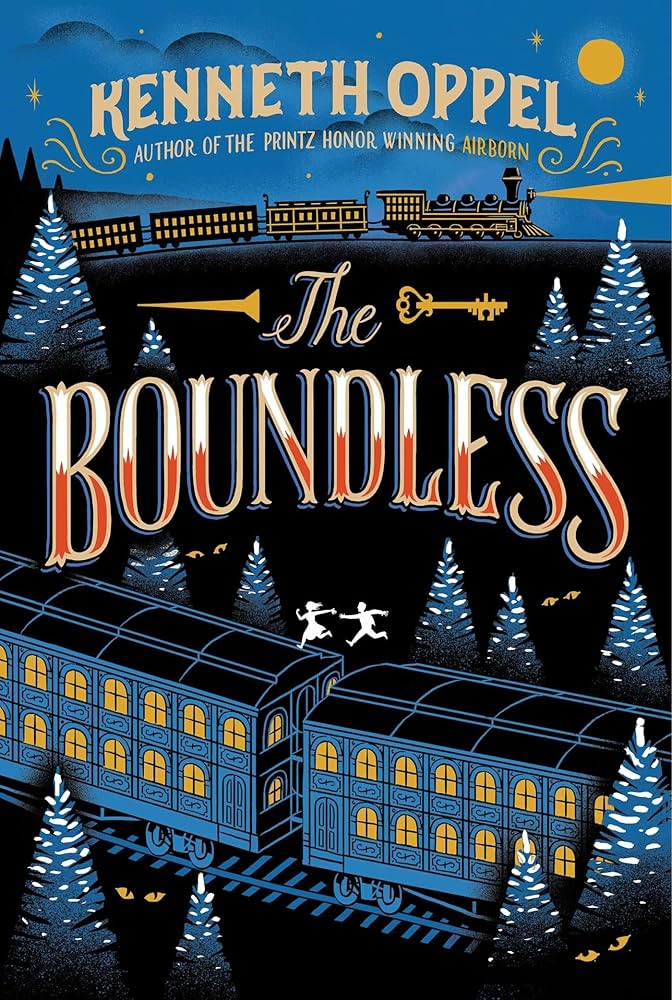
By Kenneth Oppel, The Boundless (Simon & Schuster, 2015) is a truly spectacular train, seven miles long, composed of nearly a thousand cars, built to cross Canada in the late 19th century. Young Will Everett, son of an engineer, ends up with a key to a dead railroad baron’s car filled with priceless treasures – and runs afoul of Brogan, a murderous crook. The upshot is a suspenseful chase the length of the train, with the help of Maren, an escape artist and tightrope walker from an onboard traveling circus troupe. Exciting historical fiction for ages 8-11.

In Lev Grossman's The Silver Arrow (Little, Brown, 2020), Kate for her 11th birthday gets a train - an actual steam locomotive - from rich Uncle Herbert, and off she and her brother go, picking up animals holding tickets. The train is marvelous (complete with a library and a candy car), but the animal passengers have serious messages. An environmental fantasy with a train for ages 8-12.
Also see the sequel, The Golden Swift (2022).
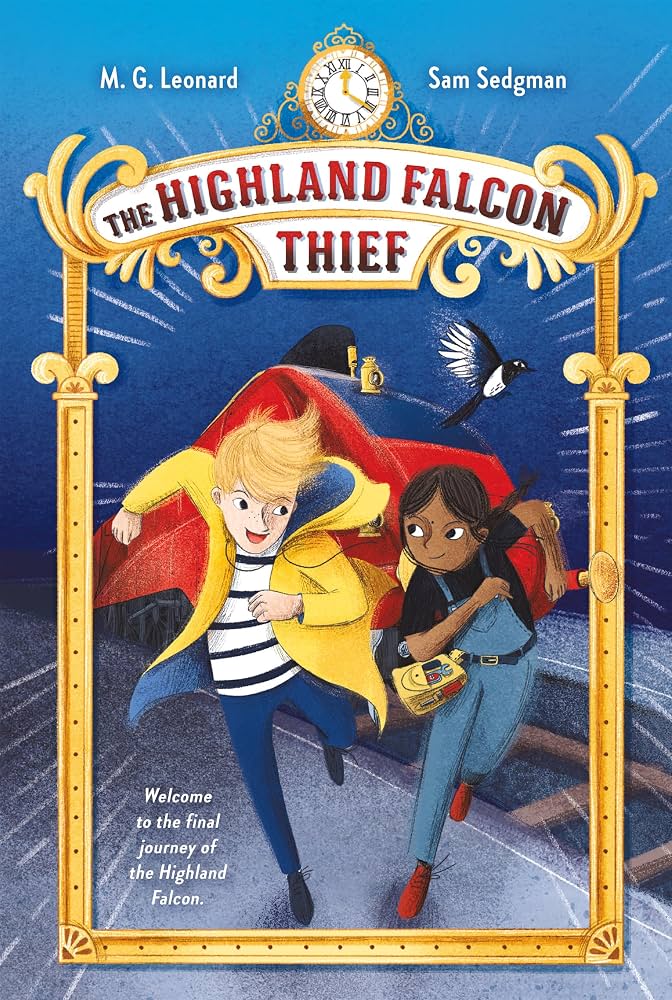
Book one in the Adventures on Trains series by M.G. Leonard and Sam Sedgman is The Highland Falcon Thief (Square Fish, 2021) in which 11-year-old Hal Beck – on a trip on the royal steam train, the Highland Falcon, with his travel-writer uncle – becomes involved with stowaway Lenny and the theft of the princess’s diamond brooch. A fast-paced mystery for ages 9-13.

E. Nesbit’s The Railway Children (Random House, 2012), originally published in 1906, is still a great read. The main characters – three children, with their mother – move to a house near the railroad when their father mysteriously disappears. Through their interest in the trains, the kids are eventually able to find and vindicate their father, who has been unfairly accused of spying. For ages 9-12.
Also see the movie version (2000).
From Project Gutenberg, see the text of The Railway Children online.

Daniel Pinkwater’s The Neddiad: How Neddie Took the Train, Went to Hollywood, and Saved Civilization (Sandpiper, 2009) is hysterically funny – and it involves train travel, as Neddie’s father on a whim relocates the entire family from Chicago to LA, so that they can eat cheeseburgers at the Brown Derby, a restaurant shaped like a hat. The plot involves a shaman named Melvin, a mysterious turtle token, a phantom bellboy, and several of Neddie’s friends, among them Yggdrasil (Iggy), a very competent girl named after the mythological World Tree. For ages 10-13.

Agatha Christie’s Murder on the Orient Express (Harper, 2011) features debonair detective Hercule Poirot (he of the little gray cells and the enormous moustache), a famous train, and a wealth of suspects. For ages 13 and up.

The 1974 movie version of Murder on the Orient Express stars Albert Finney as Poirot and an impressive cast of potential murderers, among them Lauren Bacall, Sean Connery, John Gielgud, Anthony Perkins, and Vanessa Redgrave. Rated PG.
The 2017 version - which stars Kenneth Branagh, in a spectacular mustache, as Poirot - is rated PG-13.

P.G. Bell’s The Train to Impossible Places (Feiwel and Friends, 2018), the first of a trilogy, features the Impossible Postal Express, a troll-operated delivery service that travels everywhere – including a pass through Suzy’s living room, after which she's off to save the impossible universe with the help of Frederick, a boy imprisoned in a snow globe. An exciting fantasy adventure for ages 10-14.

In Paul Mosier’s Train I Ride (HarperCollins, 2018), Rydr – whose caretaking grandmother has died– is heading from Palm Springs to Chicago by train to stay with an uncle she’s never met. She’s broke, but resilient – and as the trip progresses she makes connections with the people on board, including a traveling poet, a gay snack bar worker, Dorothea, her assigned Amtrak escort, and a misfit Boy Scout. A wonderful, painful, and uplifting read for ages 11-16.

China Mieville’s Railsea is set in a universe of continents and islands connected by train tracks (the railsea) and populated by moldywarpes, giant tunneling mole rats, tundra worms, and blood rabbits. Our hero, Sham ap Soorap, is part of the crew of the moletrain Medes, where he serves as apprentice to the train’s doctor, while the Captain obsessively pursues a vicious ivory-colored mole that took her arm off years ago. (Sound like Moby Dick? It’s supposed to.) There’s also a treasure map and pirates. For ages 14 and up.

Michael Crichton’s The Great Train Robbery (Harper, 2008) is riveting story and a fascinating look at the Victorian era, with adventure, romance, and trains. Highly recommended for teens and adults - and a great connection to 19th-century history.
The 1978 movie version of The Great Train Robbery stars Sean Connery, Donald Sutherland, and Lesley-Anne Down. Rated PG.

Traveler extraordinaire Paul Theroux is known for fabulous train journeys, recounted in such train classics as The Great Railway Bazaar (Mariner Books, 2006), in which he travels through Asia on the Orient Express; Riding the Iron Rooster (Mariner Books, 2006), an account of a train trip through China, and many more. A great connection to geography for teens
Orphan Trains
From the mid-19th century to the 1920s, New York City’s Children’s Aid Society shipped abandoned or orphaned children by train to adoptive families in the west. These trains came to be known as the Orphan Trains.

In Eve Bunting’s picture book Train to Somewhere (Sandpiper, 2000), shy, plain Marianne has been sent west on an orphan train, at each stop along the way looking vainly for her real mother. Finally, in Somewhere, Iowa, the train’s last stop, she finds a loving home with a couple who had thought they wanted a boy. For ages 5-8.

Joan Lowery Nixon’s Orphan Train Adventures series follows the adventures of the six Kelly children (Frances Mary, Mike, Megan, Danny, Peg, and Petey), sent west on the orphan train to find new homes when their widowed mother is no longer able to support them. There are seven books in the series, beginning with A Family Apart (Laurel Leaf, 1995). Suspense, adventure, and mystery for ages 9 and up.

Andrea Warren’s Orphan Train Rider (Sandpiper, 1998) alternates a history of the orphan train movement with the real-life story of Lee Nailling, sent to Nebraska via orphan train in 1926. A fascinating account, illustrated with period black-and-white photos, for ages 10 and up.

Also by Andrea Warren, We Rode the Orphan Trains (Sandpiper, 2004) is a collection of personal histories of eight different orphan train riders. For ages 10 and up.

Christine Baker Kline's Orphan Train Girl (William Morrow, 2013) is the story of young Molly, who has spent her life moving from foster home to foster home, and the bond she forms with Vivian, now in her nineties, who was an orphan train child. The original book is for teens and adults; there's also a Young Readers version (3018) for ages 8-12.

In PBS’s American Experience series, the 60-minute film The Orphan Trains (2006) is fascinating history of the movement, with first-person accounts and period photos. Included at the website are background information, an extensive resource list, and a teacher’s guide.
Wrecks and Disasters

Paul Goble's distinctively illustrated picture-book The Death of the Iron Horse (Bradbury, 1987) is the true story of a band of young Cheyenne warriors who, on August 7, 1867, derailed a Union Pacific freight train - the fearsome Iron Horse, that breathed smoke and had a voice like thunder. For ages 5-9.

Kate Shelley and the Midnight Express (Margaret K. Wetterer; Carolrhoda, 1991) is the brave and true tale of young Kate Shelley who saves the Midnight Express from disaster when, during the Mississippi Flood of July, 1881, the railroad bridge over Honey Creek breaks. An exciting bit of history for ages 6-10.

In Angela Johnson’s award-winning I Dream of Trains (Simon & Schuster, 2003), a young black boy, working in the cotton fields near the railroad track, dreams of trains and of his hero, the legendary engineer Casey Jones. When Jones is killed in a train collision, he worries that his dreams are over – until his father wisely explains that “there’ll be other trains,” reassuring him that someday he’ll be able to leave and find his place in the world. For ages 5-9.

Stephen Krensky’s Casey Jones (First Avenue Editions, 2007) in the On My Own Folklore series is the story of the train engineer who became a folk hero when he managed to save all his passengers when the Cannonball collided with another train. For ages 7-10.
History reports that the train wreck may have been all Casey’s fault. See an alternate account of the story here. Listen to Johnny Cash's
Casey Jones on You Tube.
Check out the world’s 8 Most Amazing Train Wrecks. (Casey’s Cannonball isn’t one of them.)

George Bibel’s Train Wreck: The Forensics of Rail Disasters (The Johns Hopkins University Press, 2012) is an analysis of crashes for the seriously interested. Chapter titles include “How Trains Crash, Then and Now” and “Gravity: It’s the Law.” For teenagers and adults.
Historical Trains

Patrick O’Brien’s Steam, Smoke, and Steel: Back in Time with Trains (Charlesbridge Publishing, 2000) is a lovely picture-book story of trains, as a boy traces his family history on the railroad from his several-times-great-grandfather on.

Seymour Simon’s Book of Trains (HarperCollins, 2004) pairs full-page color photos of trains with an informative text. For ages 6-10.
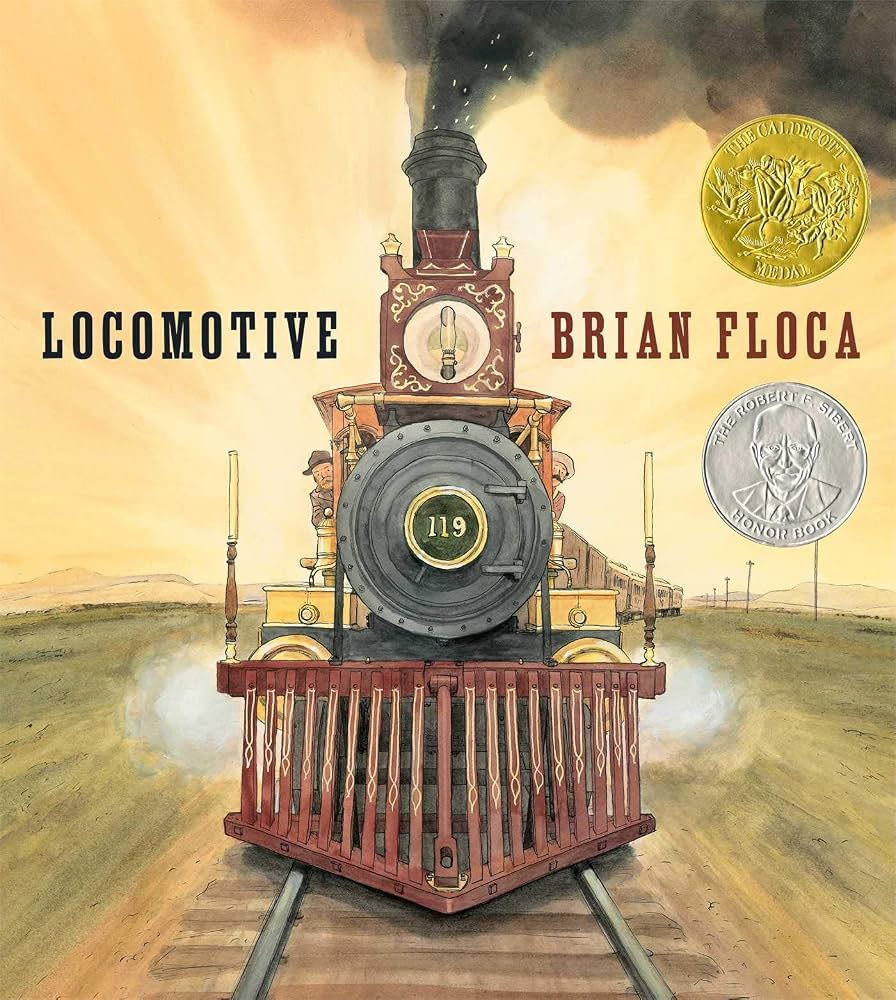
Locomotive by Brian Floca (Atheneum/Richard Jackson Books, 2013) - a Caldecott Medal winner – traces the history of cross-country train travel via an 1869 trip from Omaha to Sacramento on the newly completed Transcontinental Railroad. For ages 7-10.

In John Colley’s Train (Dorling Kindersley, 2009), one of the volumes in the Eyewitness series, each double-page spread covers an aspect of trains in chronological order, from the first railroads through the trains of the future, all illustrated with wonderful prints and photographs. Learn about steam trains, electric trains, royal trains, and locomotive record breakers. For ages 7-11.

Illustrated with gorgeous paintings and diagrams, Lynn Curlee’s Trains (Atheneum, 2009) is a 48-page history for ages 8-12.

John Perritano’s The Transcontinental Railroad (Children’s Press, 2010) is a nicely designed short chapter book – illustrated with photos, drawings, maps, and prints - about the building of the famous cross-country railroad, a project that enlisted 20,000 workers and took from 1863 to 1869. Included are resource lists, a page of “True Statistics,” and a glossary. For ages 7-11.

Mary Ann Fraser’s Ten Mile Day (Square Fish, 1996) – illustrated with paintings and peppered with informative sidebars – is a history of the transcontinental railroad centering around the record-making day when 10 miles of track were laid (the result of a $10,000 bet). For ages 8-11.
From Legends of America, The Railroad Crosses America is a collection of railroad lore, historical accounts, quotations, and vintage photographs.


From PBS’s American Experience series, Riding the Rails is an account of the Great Depression, when hundreds of thousands of teenagers became hobos, crossing the country by illegally hopping on freight trains. See a teacher's guide
here.

Christian Wolmar’s The Great Railroad Revolution is a history of American railroads beginning in the 1830s when the our very first railroad line, the Baltimore & Ohio, opened. For teenagers and adults.
Scientific Trains
How Trains Work has great illustrated (and reader-friendly) information on the history and science of trains, with a helpful resource list.
Are hydrogen-fueled trains the wave of the future?
Train Tracks is a hands-on experiment that demonstrates how trains go around corners. It’s harder than you might think.
Build a Levitating Train using magnets, similar in concept to the phenomenal Maglev trains now being used in Europe and Japan.

See this 
Railroad Songs and Poems

From Smithsonian Folkways, Classic Railroad Songs (2006) is a collection of 29 traditional songs by various musicians, among them “Jay Gould’s Daughter,” “Rock Island Line,” “John Henry,” “Casey Jones,” and “Wabash Cannonball.” Available as either a CD or download.
One of the best known of all American railroad songs is I’ve Been Working on the Railroad. Turns out it's got a complicated history.
Robert Louis Stevenson’s poem From a Railway Carriage has a wonderful beat like a speeding train: “Faster than fairies, faster than witches,/Bridges and houses, hedges and ditches;/And charging along like troops in a battle/All through the meadows the horses and cattle…”
In W.H. Auden’s Night Mail, a train carries the mail: “This is the night mail crossing the Border/Bringing the cheque and the postal order/Letters for the rich, letters for the poor/The shop at the corner, the girl next door…”

From T.S. Eliot’s Old Possum’s Book of Practical Cats (Harcourt Children’s Books, 2009), Skimbleshanks: The Railway Cat is the cat without whom the Night Mail just can’t go.
Edna St. Vincent Millay’s Travel evokes all the romance of train travel: “My heart is warm with friends I make/And better friends I’ll not be knowing;/Yet there isn’t a train I wouldn’t take/No matter where it’s going.”

Edited by Peter Ashley, Railway Rhymes (Everyman’s Library, 2007) is a priceless collection of poems celebrating trains and train travel. For teenagers and adults.
Arts, Crafts, and Activities
From Preschool Express, Trains is a collection of simple train-based art projects and games for little kids.
Printable Train Craft has nice templates for engine, cars, and caboose, to color and assemble.

Ed Emberley’s Drawing Book of Trucks and Trains (Little, Brown, 2005) is a step-by-step instruction book in which simple shapes are combined to turn out a series of fantastic trains and trucks. For artists ages 7-10.

From Days of Wonder,
Model Trains

Lionel, still the primo name in model trains, sells dozens of train sets and accoutrements for beginners on up.

The Jensen Dry Fuel Steam Engine is a terrific little working replica of an 18th-century steam engine, of the sort used to propel early locomotives. The engine is about eight inches tall, equipped with nickel-plated boiler, throttle valve, ear-piercing whistle, water gauge, and safety valve. It runs on dry fuel pellets, which are safe and simple to use. This is one marvelous little machine. Unfortunately it's also expensive - but may be a worthwhile investment for a truly enthusiastic family of budding engineers. At least take a look. See https://jensensteamengines.com/hobby.htm.