
Tea
In this collection
“Come along inside…We’ll see if tea and buns can make the world a better place.”
Kenneth Grahame; The Wind in the Willows
The tea party is a staple of children’s literature. In The Lion, the Witch, and the Wardrobe, Lucy, on her first visit to Narnia, sits down to tea with the faun, Mr. Tumnus; in The House on Pooh Corner, Pooh and Piglet share a Very Nearly Tea (which is one you forget about afterwards) with Christopher Robin; and in Alice in Wonderland, Alice stumbles upon a peculiar and philosophically challenging tea party hosted by the maddening Mad Hatter.
January, it turns out, is National Hot Tea Month, which makes perfect sense: it’s cold outside and we’re all thinking longingly of curling up in woolly slippers with a cup of something warm.
Best of all, there are many mind-broadening resources – literary, geographical, historical, philosophical, and scientific – to make the experience even better.
Tea Stories

In Rosemary Wells’s Ruby’s Tea for Two (Viking Juvenile Books, 2003) – featuring Max and Ruby, possibly the world’s most adorable bunny siblings – Ruby and a friend are having a tea party for two and insist that Max be the waiter. (“Three!” protests Max.) For ages 1-4.
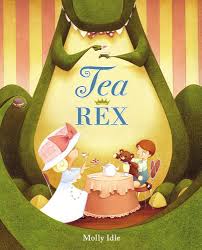
In Molly Idle’s Tea Rex (Viking, 2013), is a very proper account of how to host a dinosaur for a tea party. (“Lead him through to the parlor” is paired with a picture of Cordelia and brother – Cordelia in a huge pink-ribboned hat – hauling the dinosaur through the too-small front door.) For ages 3-6.

In Judith Kerr’s The Tiger Who Came to Tea (Candlewick, 2009), just as Sophie and her Mummy are sitting down to tea, a hungry and rambunctious tiger arrives who eats and drinks everything in the house, including all the biscuits and Daddy’s beer. For ages 3-7.
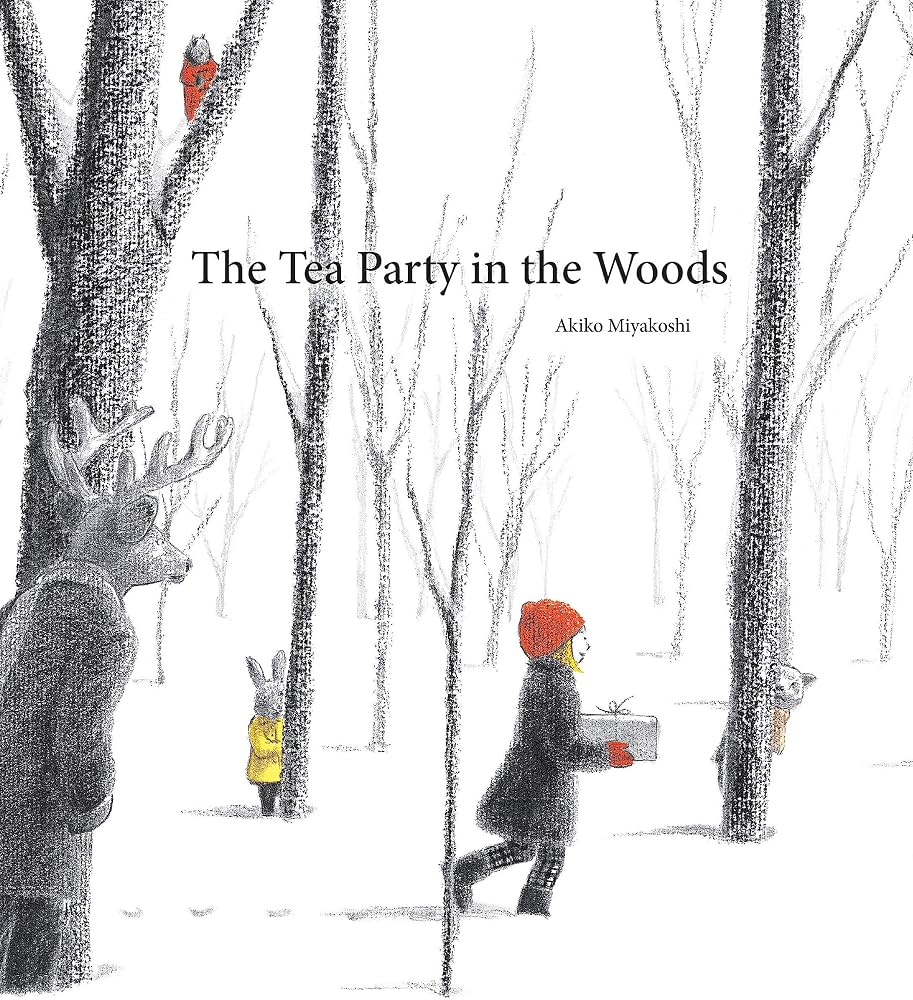
By Akiko Miyakoshi, The Tea Party in the Woods (Kids Can Press, 2015) Kikko, hurrying through the winter woods with a pie for her grandma, comes upon a strange house where a talking lamb invites her to a magical tea party. Bewitching. For aged 4-7.
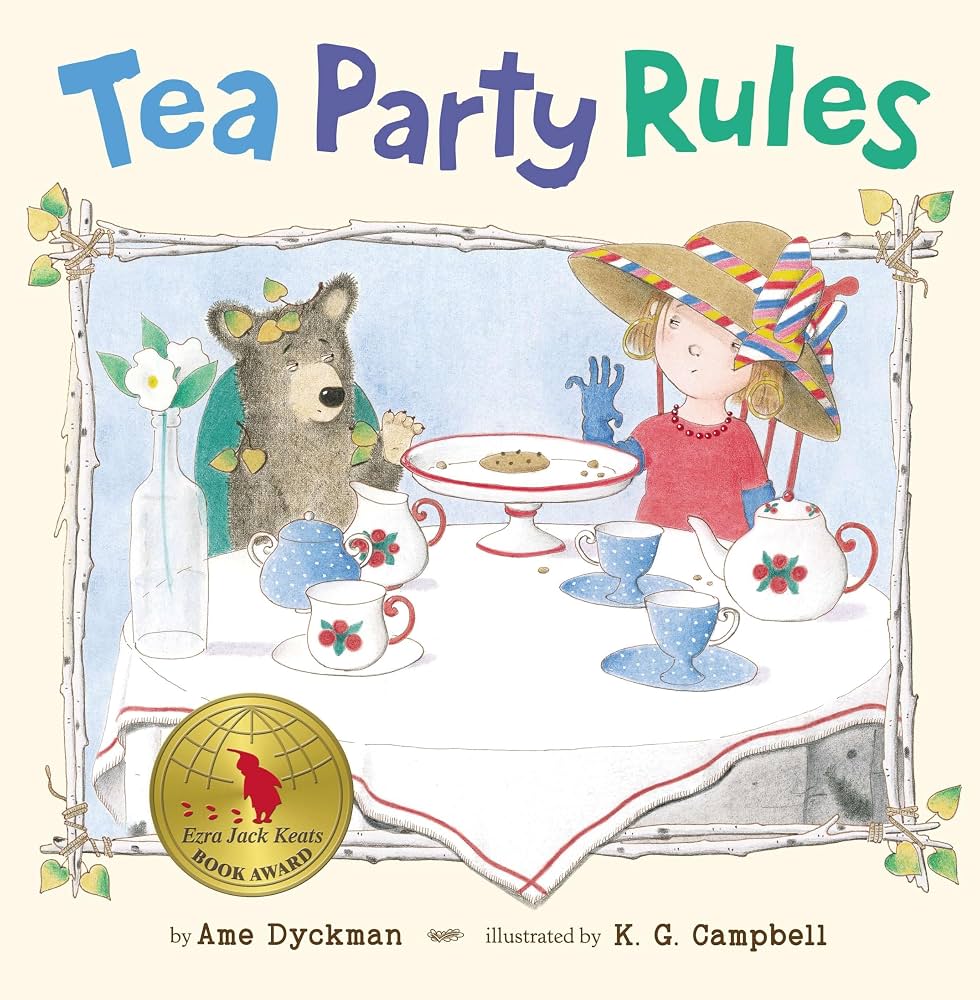
In Anne Dyckman’s Tea Party Rules (Viking, 2013), a little bear cub comes across a tea party set up in the woods and just wants a cookie – until the little girl whose party it is arrives, mistakes him for her teddy bear, and starts imposing Tea Party Rules. Funny and clever for ages 4-8.
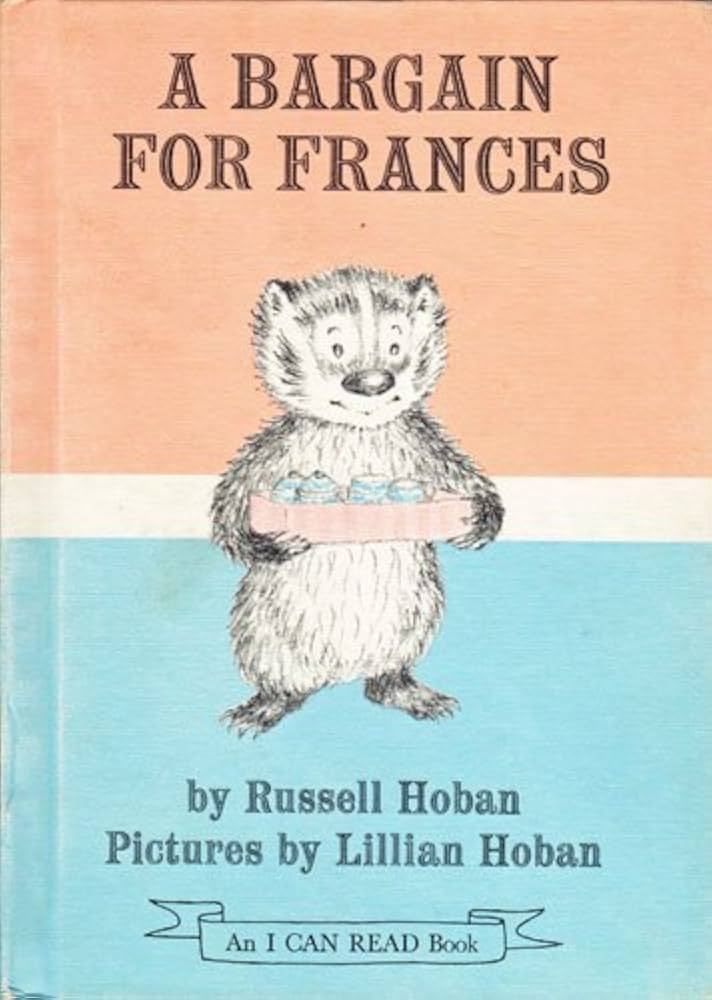
In Russell Hoban’s A Bargain for Frances (HarperCollins, 1992), Frances, a little badger, has been saving to buy a china tea set – until her problematic friend Thelma tricks her into buying her old plastic set instead. (“No backsies,” says Thelma.) Frances turns the transaction into a lesson in friendship. All the Frances books are delightful. For ages 4-8.

Allen Say’s Tea with Milk (Houghton Mifflin Harcourt, 2009) is the story of young Masako – known as May – raised in San Francisco and then moved as a teenager to Japan. There Masako struggles to find her place between her two cultures, each represented throughout the book by tea – either American-style, with milk and sugar, or plain, green, and Japanese. Eventually the independent-minded May meets a young Japanese man who likes milk in his tea too, and at the very end of the book, readers discover that these are the author’s parents. For ages 5-10.
Should you drink your tea with milk? Maybe not, according to the New York Times. Check out Adding Milk to Tea Destroys its Antioxidants.

Lindsey Tate’s Teatime with Emma Buttersnap (Henry Holt, 1998) is a delightful and wide-ranging account of tea with the help of Emma’s well-informed English Aunt Pru, a tea aficionado. (Aunt Pru’s cats, Lapsang Souchang and Jasmine, are named after her favorite teas.) The book includes a brief history of tea, instructions for brewing tea, recipes, and an account of the Boston Tea Party. For ages 7-9.
Tea - and dragons?
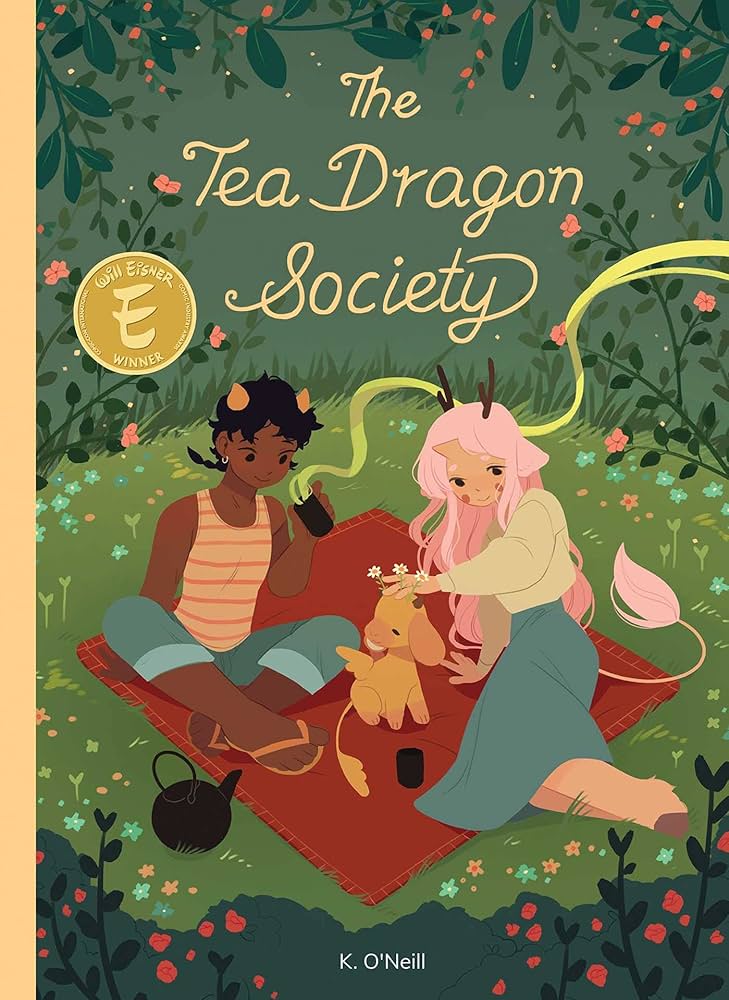
In K. O’Neill’s The Tea Dragon Society (Random House Graphic, 2026), Greta – learning to be a blacksmith – discovers a lost tea dragon in the marketplace and learns how to care for them from tea shop owners Hesekiel and Erik. The first of a graphic-novel fantasy series for ages 8 and up.
Tea Poems

Joyce Carol Thomas’s Brown Honey in Broomwheat Tea (HarperCollins, 1995), for ages 4-9, is a lovely collection of poems celebrating African-American heritage, among them the title poem, “Brown Honey in Broomwheat Tea.” (“Broomwheat tea: good for what ails you, especially when poured by loving hands…”). For ages 4-8.
By Laura Richard, the poem “Punkydoodle and Jollapin” is a rollicking nonsense poem all about tea. (“Oh, Pillykin Willykin Winky Wee/How does the Emperor take his tea?/He takes it with melons, he takes it with milk/He takes it with syrup and sassafras silk.”) See https://www.gutenberg.org/files/39741/39741-h/39741-h.htm#punkydoodle_and_jollapin.
See Four Ancient Chinese Poems on Tea at https://www.tranquiltuesdays.com/resource-library/four-ancient-chinese-poems-about-tea-and-one-symphony.
Read the first poem in English to mention the word tea at https://www.bostonteapartyship.com/tea-blog/first-english-poem-tea.
Tea Parties
There are many books on the how-tos of tea parties for kids, many with thematic or literary twists. Have tea with Alice and the Mad Hatter, for example, or try to amuse Queen Victoria.

Emilie Barnes’s Let’s Have a Tea Party (Harvest House, 1997) covers everything from invitations to after-tea activities, with instructions for a number of themed teas (among them a “Little Women” tea party and a Pony Club tea). It’s subtitled “Special Celebrations for Little Girls.” For ages 6 and up.

Stephanie Dunnewind’s Come to Tea (Sterling Publishing, 2003) includes recipes, crafts, games, hints on manners (no fingers in the cups), and descriptions of everything from a Mad Hatter Party to a Teddybear Picnic. For ages 6-10.

Shozo Sato’s Tea Ceremony (Tuttle Publishing, 2004) in the Asian Arts and Crafts for Creative Kids series explains the history and practice of the Japanese tea ceremony and provides step-by-step instructions for performing one of your own. For ages 9 and up.

Kim Wilson’s Tea with Jane Austen (Jones Books, 2004) intersperses tea-related Austen quotes with historical information about early 19th-century tea drinking and recipes – a perfect accompaniment to a reading of Pride and Prejudice and a study of all things Jane. For ages 13 and up.

Dawn Hylton Gottlieb’s Taking Tea with Alice: Looking-Glass Tea Parties and Fanciful Victorian Teas (Benjamin Press, 2008), illustrated with color photographs, provides menus and activity suggestions for Mad-Hatter-style get-togethers. (Find out how to play “Off With Their Heads” Musical Chairs.)

By Martin Gardener and Lewis Carroll, The Annotated Alice (W.W. Norton, 1999) is marvelous resource for Alice readers, with extensive and fascinating annotations on the historical, cultural, philosophical, and literary aspects of the text. Many deal with the Mad Hatter and his tea party.
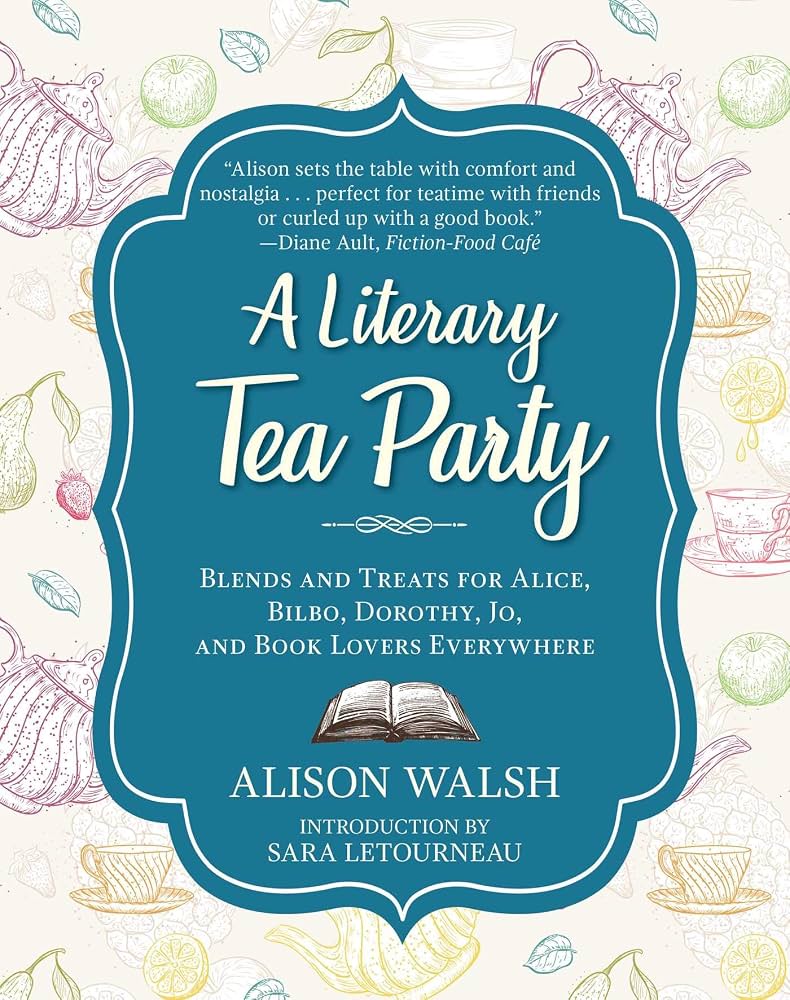
By Alison Walsh, A Literary Tea Party (Skyhorse, 2018) pairs classic books with recipes for teatime. Concoct delicious feasts from Alice in Wonderland, the Chronicles of Narnia, Winnie-the-Pooh, The Hobbit, and many more.
The Boston Tea Party
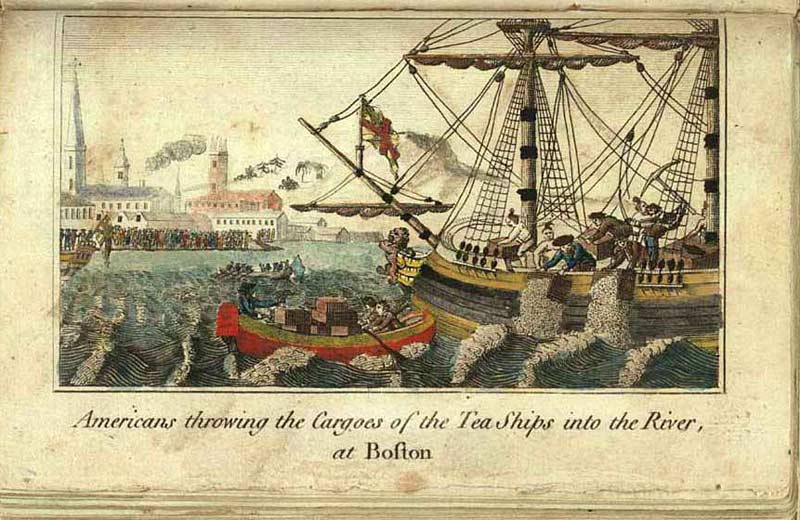
The quintessential political tea party, of course, took place in Boston on December 16, 1773, and involved a lot of angry colonists and three shiploads of tea. There are many books on this landmark event.

Russell Freedman’s The Boston Tea Party (Holiday House, 2013) is a compelling 39-page account of the fatal tea-dumping, filled with human interest, quotations, and excitement. (Discover the story of Peter Slater, a 14-year-old apprentice, who sneaked out of his bedroom window to join the action.) For ages 7-10.

Peter Cook’s You Wouldn’t Want to Be at the Boston Tea Party! (Franklin Watts, 2013) is one of the catchy You Wouldn’t Want to… series which presents real history with a kid-appealing humorous twist. Here, you’re poor shoemaker, one of nine children, orphaned at the age of 14. You were rejected when you tried to join the British army because you are too short; now you resent the redcoats and hate the British taxes. A great read for ages 7-12.

Kathleen Krull’s What Was the Boston Tea Party? (Grosset & Dunlap, 2013) is a terrific account of what Krull calls “one of the most powerful protests ever.” “What a strange tea party,” the book begins. “It took place in near darkness and in almost total silence. It lasted for about three hours. There were no women there, just men, many in their teens.” For ages 8-12.

The We Were There series is a collection of 36 historical novels, each featuring a pair of children – usually, fairly, a boy and a girl – as the main characters, involved in a key historical event. The books were originally published in the 1950s and 60s, but some have now been reissued by Dover Publications. In Robert N. Webb’s We Were There at the Boston Tea Party (Dover Publications, 2013), young Jeremy and Deliverance Winthrop become involved in a conspiracy leading up to the Boston Tea Party. For ages 9-12.

Boston wasn’t the only colonial town to host a Revolutionary tea party. Brenda Seabrooke’s The Chester Town Tea Party (Tidewater Publishers, 1991) is a picture-book account of a similar occurrence in Maryland. The story centers around nine-year-old Amanda Wetherby who decides to dress as a boy and go along. For ages 4-8.
Anywhere near Boston? Visit the Boston Tea Party Ships & Museum to see reconstructions of the famous tea ships. (Visitors can join the protest and pitch their own tea chest overboard.) See the website for information on Boston Tea Party history.
The Boston Tea Party, 1773 includes an eyewitness account of the event by a participant.
Science with Tea
Tea can be a handy tool for kitchen-table chemistry: strong tea, for example, can be used in a chemical assay for iron in fruit juices. Add about four tablespoons of the juice to be tested to a small glass about half full of strong tea. If a dark precipitate forms, the juice contains iron. (Iron combines with the tannins in tea to form insoluble iron tannate.)

From Fizzics Education, see instructions at Use Tea to Detect Iron in Food. Better yet, see Vicki Cobb’s Chemically Active! (J.B. Lippincott, 1987), which has a clear explanation of the experiment and several extension activities. This excellent hands-on chemistry book is (WHY?) out of print, but is available from libraries and in inexpensive used editions.

Tea in space! Mystery in a Cup of Tea at https://www.firstscience.com/SITE/ARTICLES/tea.asp investigates the principles of fluid mixing with honey and a cup of tea - on Earth and on board the International Space Station.

Use tea bags to make ancient-looking paper, suitable for papercrafts, journaling, or pirate treasure maps.
Grow your own tea! For starter suggestions, see How to Make Herbal Teas which has instructions for tea-brewing and a plant list.
History and Tea
From the United Kingdom Tea Council, The History of Tea has an amazing amount of information, covering – among much else – the origin of tea, tea smuggling, the Boston Tea Party, the tea clippers, and the invention of the tea bag.
Abigail Adams served rose petal tea; Andrew Johnson brewed his tea in a teapot shaped like a steam train. Find out about the presidents and tea at http://www.tea-happiness.com/2017/01/tea-and-presidency.html.
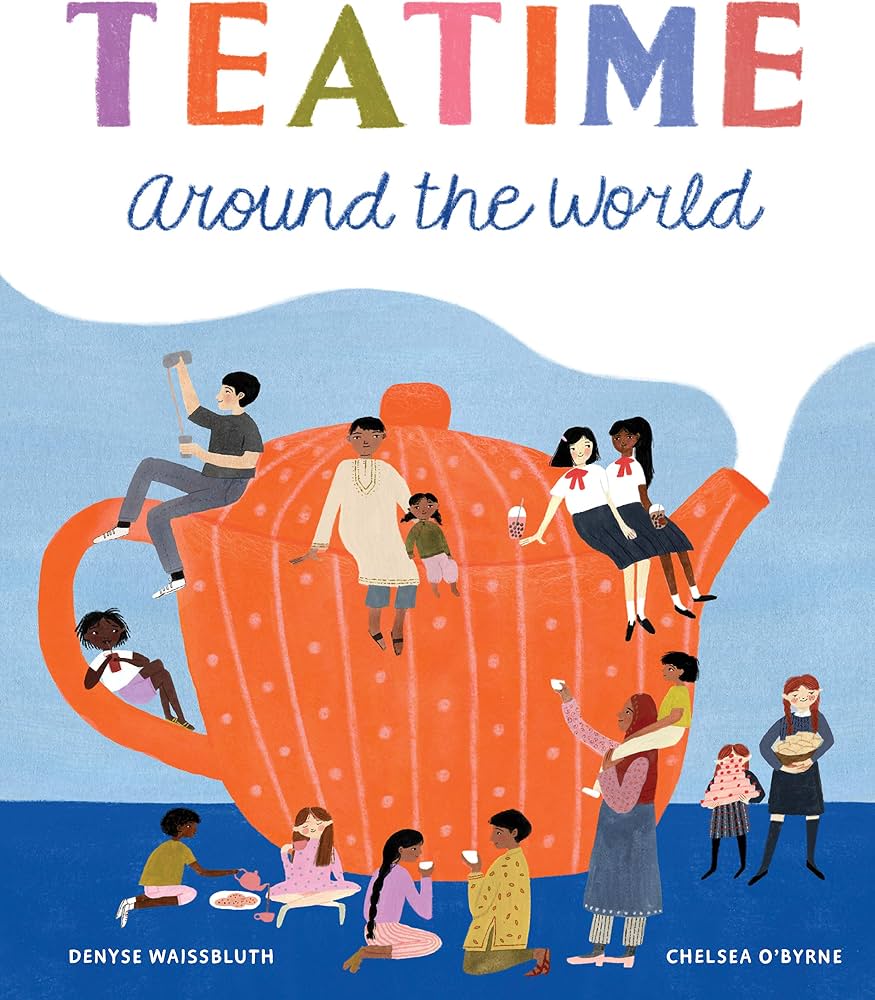
By Denyse Waissbluth, Teatime Around the World (Greystone Kids, 2020) is a simple picture-book tour of how many world cultures drink tea – with yak butter in Tibet, hibiscus flowers in West Africa, with jam in Russia. A like to geography for ages 4-7.

Sarah Rose’s For All the Tea in China (Penguin Books, 2011) – subtitled “How England Stole the World’s Favorite Drink and Changed History” – is a daring tale of espionage in which master plant collector Robert Fortune disguised himself as a mandarin and set out to steal tea seedlings for the East India Company. For teenagers and adults.

Tom Standage’s A History of the World in 6 Glasses (Walker Publishing Company, 2006) is a history of humankind from the Stone Age to the present, told through the medium of six essential beverages – beer, wine, spirits, coffee, cola, and tea. For teenagers and adults.