
Cephalopods: Squid and Company
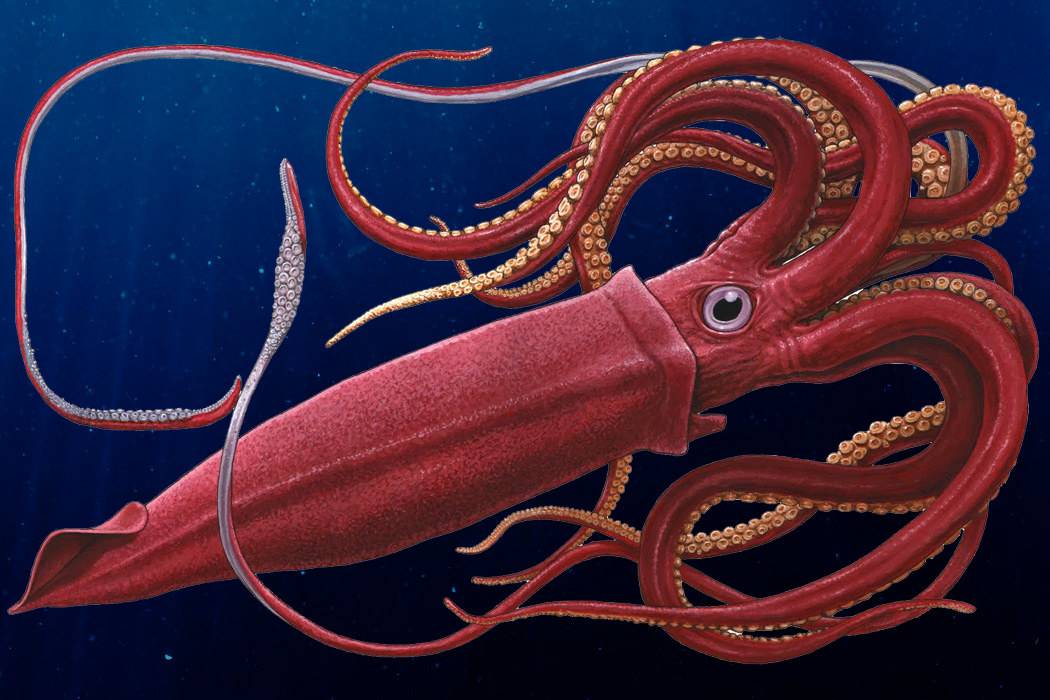
In this collection
Cephalopods, real and imaginary, pop up in an array of literature, from Game of Thrones to 20,000 Leagues Under the Sea (in which a giant cephalopod attacks a submarine named for a cephalopod).
H.P. Lovecraft’s all-powerful Cthulhu is a part-octopus-like god with tentacles, first appearing in 1928 in the creepy short story The Call of Cthulhu. The wicked witch in the film version of
The Little Mermaid is Ursula, an octopus; and
Finding Nemo features a pink
flapjack octopus named Pearl.
Germany’s late Paul the Octopus was famed for predicting the winners in international soccer matches.
Cephalopod Awareness Days come around every year from October 8-12. In fact, each of the days is devoted to a different type of cephalopod: October 8 is Octopus Day; the 9th is Nautilus Night; the 10th, Squid and Cuttlefish Day; the 11th celebrates the kraken and other legendary cephalopods; and the 12th is the day for cephalopods now gone, such as the extinct ammonites.
Cephalopod Stories

In Kevin Sherry’s I’m the Biggest Thing in the Ocean (Dial, 2010), an electric-blue giant squid boasts that he’s bigger than everything in sight. Then he’s swallowed by a whale. (But he’s the biggest thing in the whale.) For ages 3-6.

I love Jon Scieszka. I love Lane Smith. Their collaboration in Squids Will be Squids (Puffin, 2003) is a wacky and hilarious take on Aesopian fables. (Warning: there’s a really sad squid.) For ages 8-12.

In Greg van Eekhout's Kid vs. Squid (Bloomsbury, 2010), Thatcher Hill (the kid), sent to spend a summer helping his Uncle Griswold run the Museum of the Strange and Curious on an oceanside boardwalk , meets the mysterious Shoal (who pinches a witch’s head in a box) and becomes involved in the world of lost Atlantis. And there’s an evil squid. For ages 8-12.

In Roland Smith’s adventure-packed Tentacles (Scholastic, 2011), Marty lives with his uncle, the famous cryptozoologist Travis Wolfe, and Travis’s daughter Grace. In this, the second of a series, all set off on board the Coelacanth in search of the giant squid. Also along for the ride: a chimpanzee, a trio of bottle-nosed dolphins, Laurel Lee – a circus acrobat turned anthropologist, and, of course, in hot pursuit, an unscrupulous villain. For ages 9-13.

Brian Kesinger’s Walking Your Octopus: A Guide to the Domesticated Cephalopod (Baby Tattoo Books, 2013) is a clever and hilarious instruction manual for octopus-owners., as Victorian-era Victoria Psismall copes with her pet octopus, Otto. Out of print, but so bizarrely unique that it's worth at leas a look. For all ages.

Jules Verne’s 20,000 Leagues Under the Sea – first translated into English in 1873 – is now available in many editions, including simplified versions for kids. The story of Captain Nemo, his submarine the Nautilus, and the fearsome kraken – giant squid? – never wears thin. The full text is available online for free here.

The Disney movie version of 20,000 Leagues Under the Sea (1954) stars James Mason and Kirk Douglas.
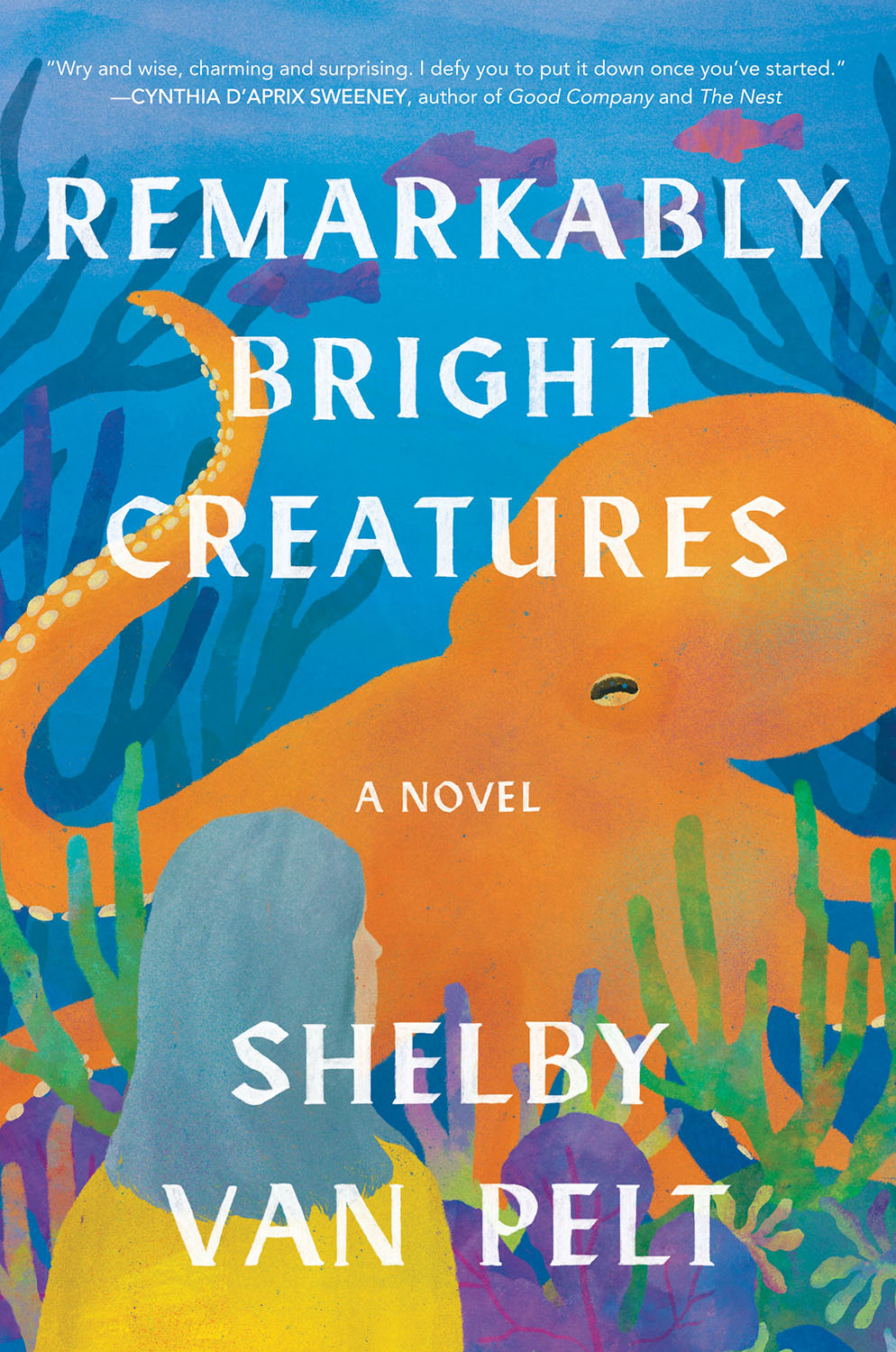
In Shelby Van Pelt’s Remarkably Bright Creatures (Ecco, 2025), Tova Sullivan – whose son Erik disappeared on a boat in Puget Sound thirty years ago – works nights as a cleaner at the Sowell Bay Aquarium, where she has forged a bond with Marcellus, a wise (and curmudgeonly) Giant Pacific octopus. A wonderful and heartwarming story for teens and adults.
Also see the movie version (2026), rated PG-13.
Real Live Cephalopods

Jennifer Dussling’s Giant Squid: Mystery of the Deep (Penguin Young Readers, 1999) is a good pick for young non-fiction fans. All about the giant squid for ages 4-7.
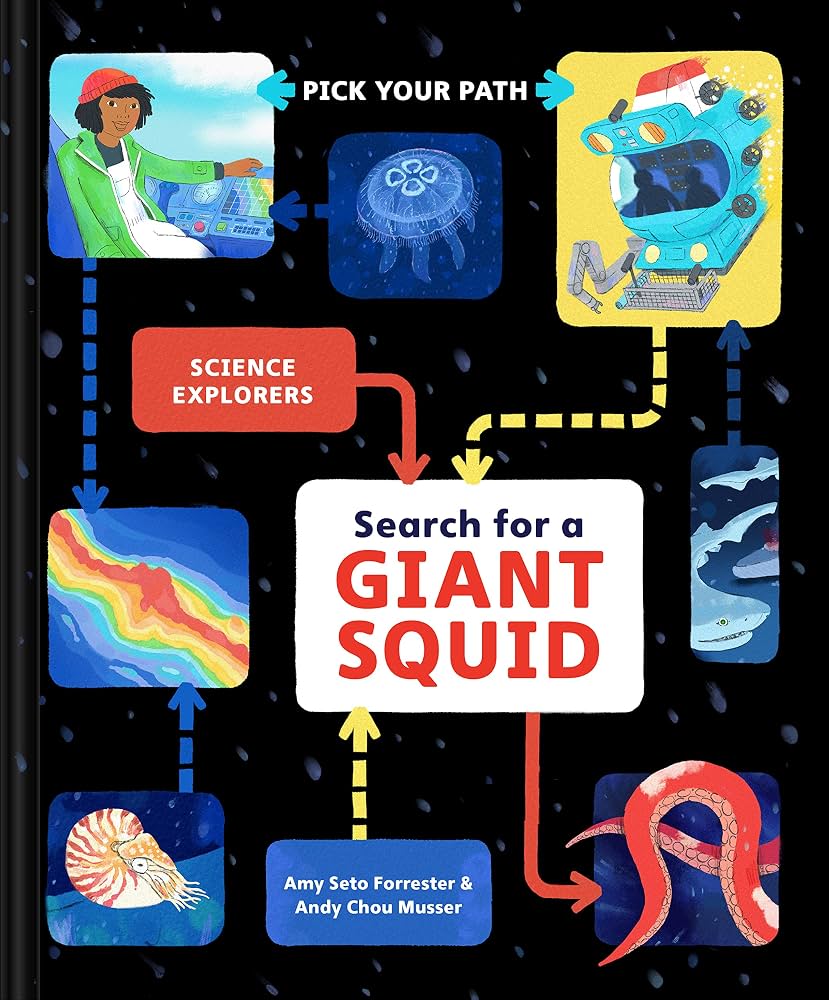
Remember the Choose Your Own Adventure books? By Amy Seto Forrester and Andy Chou Musser, Search for a Giant Squid: Pick Your Path (Chronicle Books, 2023) is an interactive science adventure in which readers travel to the depths of the ocean in search of a giant squid, making choices along the way. Good practice in being a teuthologist – that is, a scientist who studies cephalopods. For ages 5-8.
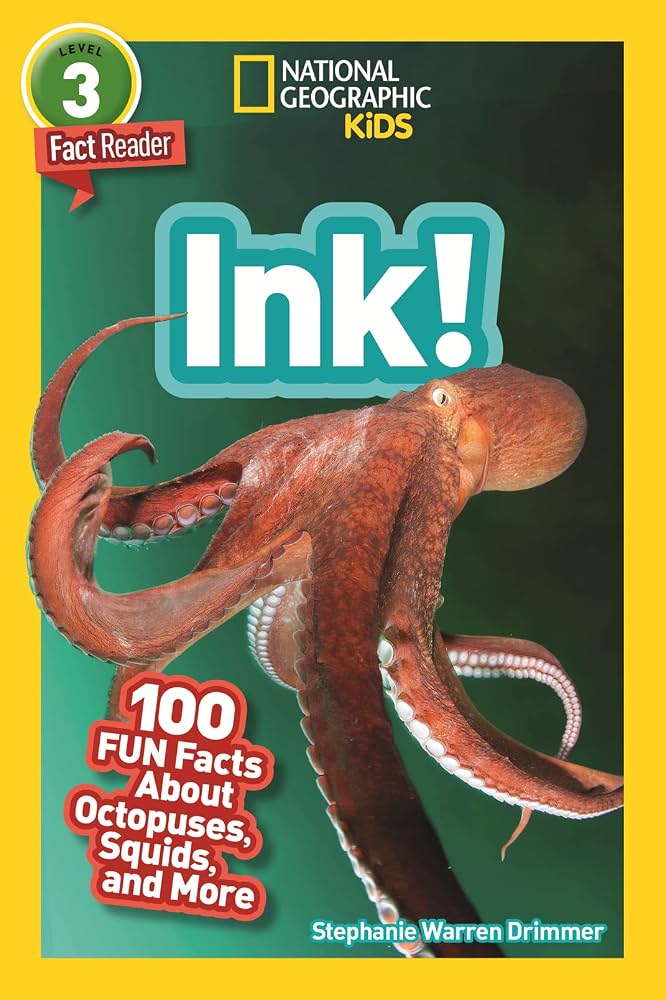
Ink! by Stephanie Warren Drimmer (National Geographic Kids, 2019) is filled with color photos and catchy facts about octopuses, squids, cuttlefish, and more. For ages 7-9.
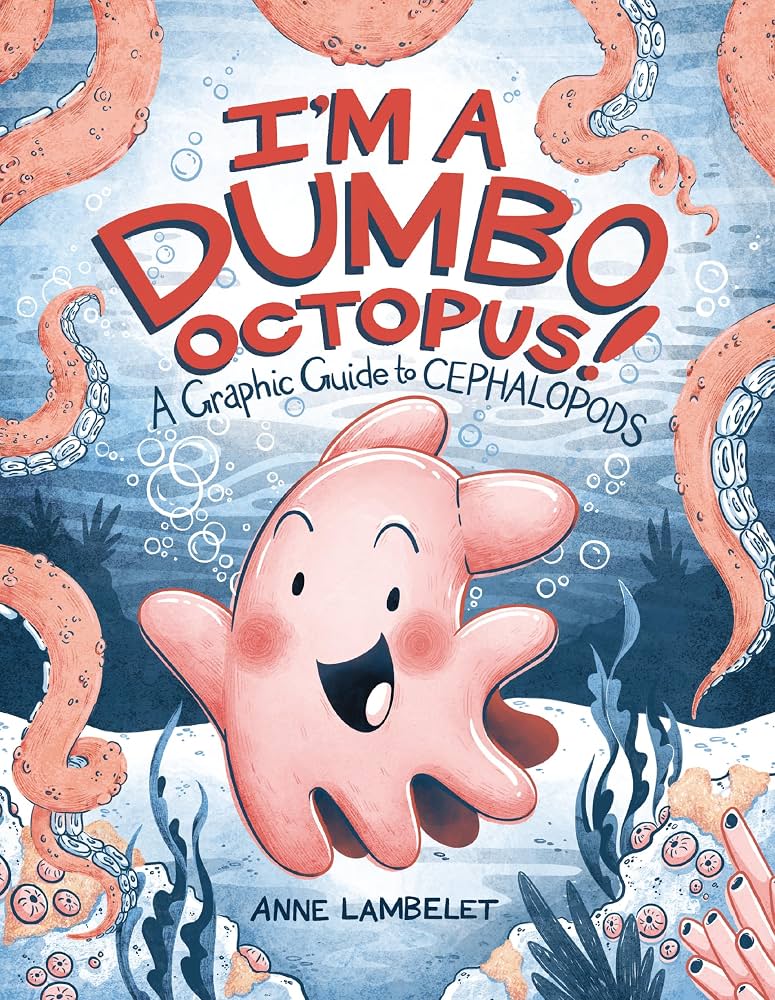
By Anne Lambelet, I’m a Dumbo Octopus (Graphic Universe, 2025) is a graphic guide to cephalopods for ages 7-11. Not my favorite title, but so funny and clever that kids will love it.

Shirley Raye Redmond’s Tentacles (Random House Books for Young Readers, 2003) – a Step Into Reading book – is a catchy non-fiction account of the giant squid for ages 6-8.

By Mary Jo Rhodes and David Hall, Octopuses and Squid (Children’s Press, 2006) is a nice basic scientific introduction, illustrated with great color photographs. For ages 6-10.
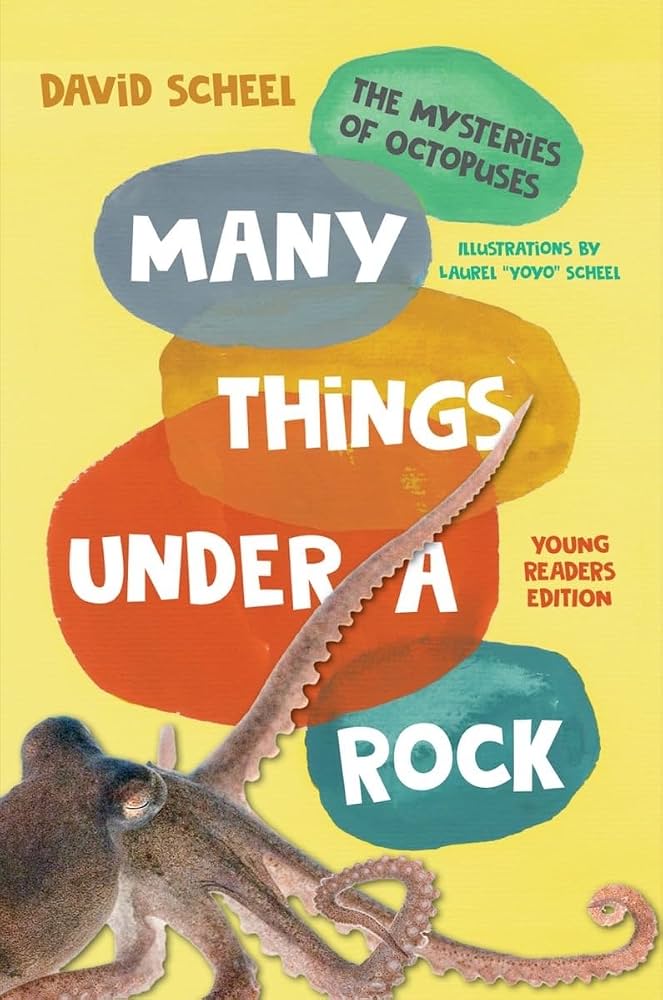
By marine biologist David Scheel, Many Things Under a Rock (Norton, 2025) - the Young Reader Edition of his adult book of the same title – is a fascinating account of the lives and behaviors of octopuses. (They’re “antisocial jerks but neat-freak roommates” and are boneless, but can defeat sharks.) For ages 8-12.

By H.P. Newquist, Here There Be Monsters (Houghton Mifflin Harcourt, 2010) is a beautifully designed and illustrated account of the legendary kraken and Architeuthis dux, the giant squid. A great mix of literature, legend, history, and science for ages 9-12.

Mary Cerullo and Clyde Roper’s Giant Squid (Capstone Press, 2012) is the exciting story of the giant squid and the quest to track it down, packed with historical engravings and color photos. For ages 9-12.
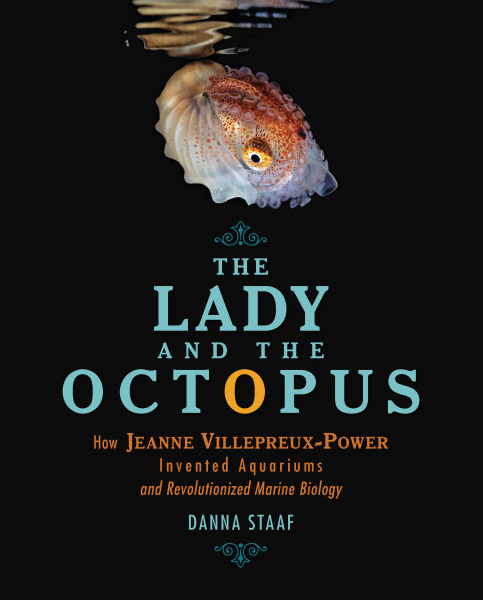
By Danna Staaf, The Lady and the Octopus (Carolrhoda, 2022) is an illustrated biography of 18th-century amateur naturalist Jeanne Villepreux-Power whose studies of the octopus led to the invention of the aquarium – and a revolutionary change in the practice of marine biology. For ages 12 and up.
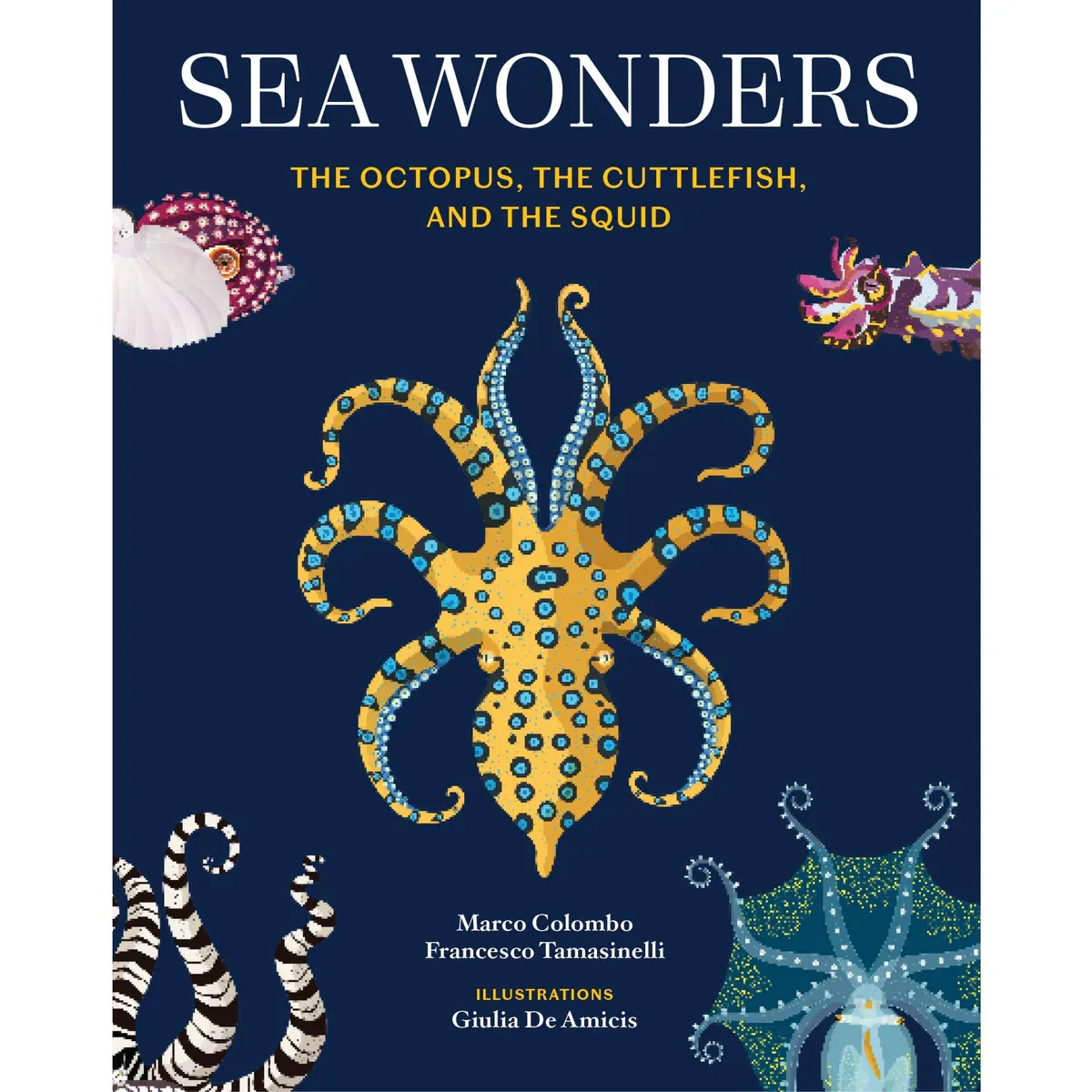
By Marco Colombo and Francesco Tomasinelli, Sea Wonders: The Octopus, the Cuttlefish, and the Squid (Princeton Architectural Press, 2025) is filled with exquisitely detailed illustrations, descriptions, and surprising scientific facts about a host of cephalopods, among them the emperor nautilus, the strawberry squid, the striped pajama squid, and the flapjack octopus. Included are 30 specimen cards. Will appeal to a wide range of ages.

For committed squid enthusiasts, Wendy Williams’s Kraken (Abrams, 2011) is a reader-friendly coverage of “The Curious, Exciting, and Slightly Disturbing Science of Squid.” A cool read for teenagers and adults.

By Richard Ellis, The Search for the Giant Squid (Penguin Books, 1999) is a fascinating overview of the biology and mythology of one of the great mysteries of the sea. For teenagers and adults.
From the University of California Museum of Paleontology, see Cephalopoda for detailed information about cephalopods and their evolutionary history. The site has diagrams, photographs, and some fascinating hyperlinked fun facts.
The Cephalopod Page has information on octopuses, squid, cuttlefish, and nautiluses, a photo gallery, informational articles, and detailed illustrated lesson plans, among them “Color Change in Cephalopods” and “Cephalopod Vision.”
From The New Yorker, The Squid Hunter is the story of marine biologist Steve O’Shea’s quest for the giant squid.
From the Smithsonian magazine, The Giant Squid: Dragon of the Deep is a short history of sightings of the squid, the creature most likely to have been the inspiration for the legendary kraken. See https://www.smithsonianmag.com/science-nature/the-giant-squid-dragon-of-the-deep-18784038/.
From the Discovery Channel, see the first ever video of a Giant Squid in its natural habitat.
Octopus vs. Squid – find out the differences and similarities with this handy chart.
The octopus brain is nothing like ours, but scientists are using it to discover how intelligence evolved. From Wired magazine, see How the Freaky Octopus Can Help Us Understand the Human Brain at https://www.wired.com/2013/10/how-the-freaky-octopus-can-help-us-understand-the-human-brain/.
It’s hard to find a cephalopod. Check out Cephalopod: Master of Camouflage on You Tube. Also see
Where’s the Octopus?
The chambered nautilus is a living fossil – it’s been around for half a billion years – but it now may be in danger, due to the high demand for its pearly shell. From the New York Times, see Loving the Chambered Nautilus to Death.
Squid in space! Really. Bobtail squids were sent into space on board the space shuttle. See https://www.theguardian.com/science/2021/jun/22/squid-space-international-space-station-study.
Arts, Crafts, and Activities

Possibly the best Halloween pumpkin ever? See Extreme Pumpkins’ Giant Squid Pumpkin.

Make this particularly cool 

Make OCTOPUS CUPCAKES! (The tentacles are gummy worms.)

Squidy is a classic science toy – the cephalopod version of the Cartesian diver. Learn all about density and buoyancy (with a squid). See http://www.analyticalsci.com/store/p387/Squidy_-_Cartesian_DIver_Demonstration.html.
Poems

By Ogden Nash, see "The Octopus" at https://allpoetry.com/poem/8496523-The-Octopus-by-Ogden-Nash; and by Jack Prelutsky, from his collection A Pizza the Size of the Sun (Greenwillow, 1996), see "I’m Wrestling With an Octopus." (Giggle.)
Kenn Nesbit’s Speedy Squid – which appears in The Tighty Whitey Spider (Sourcebooks Jabberwocky, 2010) - features a racing squid and ends with a pun. Kids will love it.

Poet/molecular biologist Katherine Larson celebrates – among other things – squid in her poetry collection Radial Symmetry (Yale University Press, 2011). Learn about her work in her PBS interview Dissecting Prose and Squid.
For a classic poem about a cephalopod, see The Chambered Nautilus by Oliver Wendell Holmes.
And finally…

Maryanne Wolf’s Proust and the Squid (HarperPerennial, 2008) doesn’t really have a whole lot to do with squid, but it is an interesting discussion of the neurobiology of reading – a skill that most of us adore, but doesn’t come naturally. For teenagers and adults.