
Robots
In this collection
Who doesn't love robots? See below for robot books and resources of all kinds. Build a robotic arm and a programmable robot; make tin-can and cereal-box robots; and learn about a robot so adorable that people help it cross the street.
Read About Robots – Fiction

In Ame Dyckman’s Boy and Bot (Knopf Books for Young Readers, 2012), a boy out gathering pine cones meets a big bright-red soup-can-shaped robot in the woods and the two have a wonderful time playing – until the robot’s power switch is inadvertently switched off. Worried, the boy takes the robot home and does everything he can think of to revive it, including reading it a story and feeding it applesauce. Finally the boy falls asleep. The robot then powers on, only to find his new friend – off. He carries the boy back to the laboratory and attempts to repair the malfunction (oil? a new battery?). Luckily all is put right by the timely arrival of the robot’s inventor. Cleverly funny, with a simple text for ages 3-6.
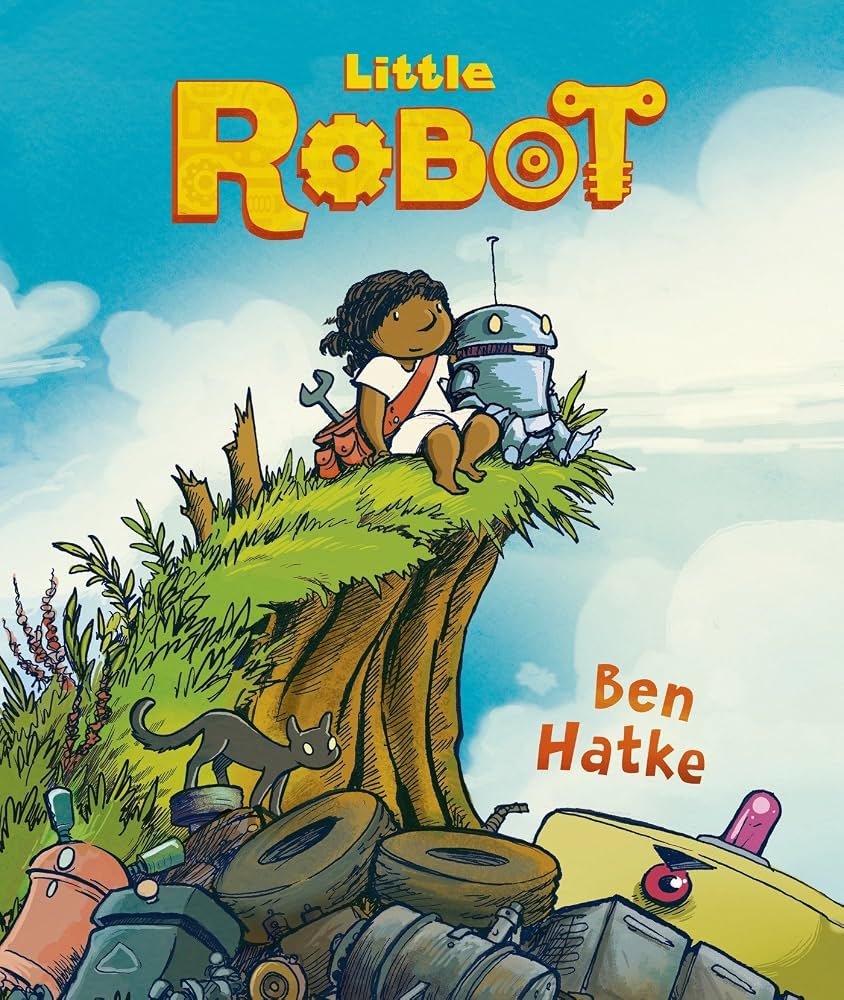
By Ben Hatke, Little Robot (First Second, 2015) is a near-wordless graphic novel in which a little girl discovers an abandoned robot (it’s fallen off a truck) and manages to activate it. The two soon become friends – but danger is on the way; the factory is sending out a threatening recovery robot to retrieve the little robot. For ages 3-7.

Jon Scieszka’s Robot Zot! (Simon & Schuster, 2009) is out to conquer the Earth. The problem: he has landed in a household kitchen and he’s just three inches tall. He battles enemy kitchen appliances and a television set, and rescues the Queen of All Earth (a pink cell phone), before speeding off to conquer new galaxies. The pictures are hilarious, and so is Robot Zot, who talks like the Terminator. (“No one stop Robot Zot. Robot Zot crush lot.”) For ages 3-7.

The star of Kelly DiPucchio’s Clink (Balzer + Bray, 2011) is an outmoded little robot with red feet, who can make (burned) toast and play music, but lacks the glitzier features of the newer, spiffier robots. Eventually, however, a little boy comes along for whom Clink is just right. It’s a Corduroy story, with robots. For ages 4-7.

In Margaret McNamara’s The Three Little Aliens and the Big Bad Robot (Schwartz & Wade, 2011), an outer-space take on the Three Little Pigs tale, the three little (green) aliens, Bork, Gork, and Nklxwcyz, have been sent off by their mama to find planets of their own – but have been told to beware of the Big Bad Robot. (“I’ll crack and smack and whack your house down!” meeped the Robot.) For ages 4-8.

David Lucas’s The Robot and the Bluebird (Farrar, Straus & Giroux, 2008) is an old-fashioned fable (with robot). A robot with a broken heart is sent to the scrap heap where, one cold night, he adopts a shivering little bluebird. The bird makes her home in the robot’s empty chest and when she explains that she needs to travel south for the winter, he sets out to take her there. The robot gives out when they arrive, with the last words “Make your home in my heart” – and he ends up as a home for generations of nesting bluebirds. For ages 4-8.

In Mac Barnett’s Oh No! Or How My Science Project Destroyed the World (Disney Hyperion, 2010) – a picture book in graphic novel format – a little girl builds a gigantic robot for the science fair. The robot promptly breaks loose and goes on a rampage through the city. (“I probably shouldn’t have given it a superclaw or a laser eye or the power to control dogs’ minds,” she opines.) Funny and clever. For ages 4-9.

In Cece Bell’s Rabbit and Robot (Candlewick, 2014), Robot spends the night with his friend Rabbit. Rabbit has a list of activities planned, but everything soon goes wrong – beginning with the pizza. (Robot doesn’t like carrots on his; he prefers nuts and bolts.) And there’s a great scene is which both appear in Rabbit-shaped pajamas. For early readers ages 5-7.
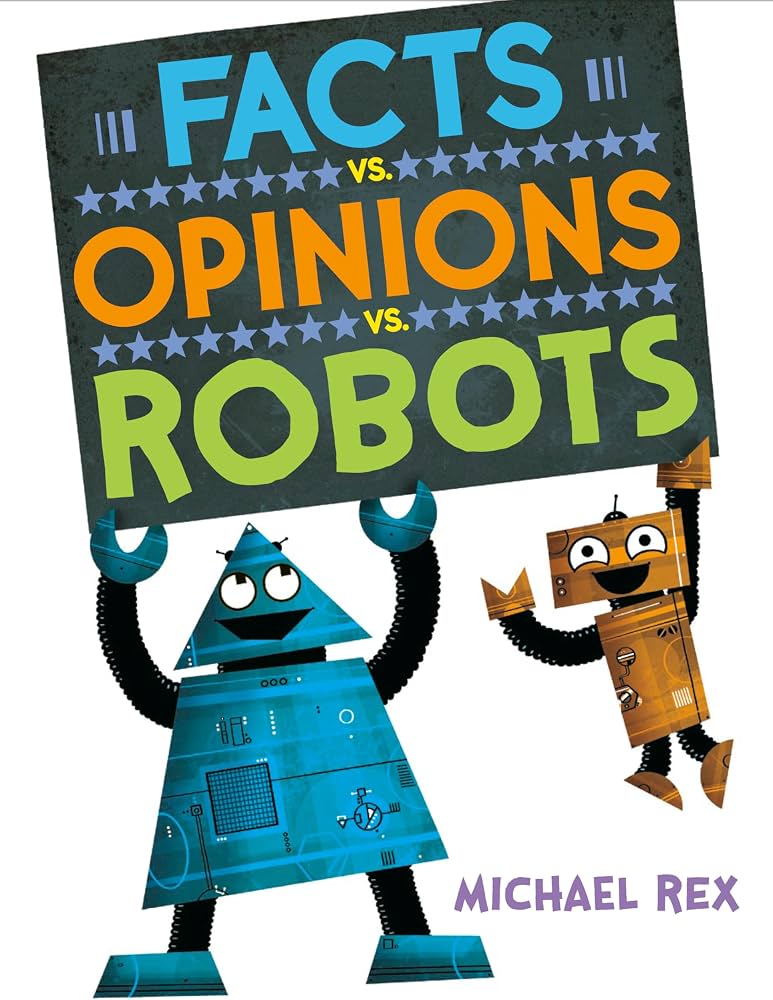
Michael Rex’s Facts vs. Opinion vs. Robots (Nancy Paulsen Books, 2020) challenges readers to separate fact from opinion with a lot of bright-colored robots. (The robot is green. Is that fact or opinion? What about “Green is a good color for robots”?) For ages 5-8.

In poet Ted Hughes’s The Iron Giant (Yearling, 1999), an enormous and indestructible robot with glowing eyes has crashed to Earth and is feeding himself on metal: barbed wire, tractors, and farm equipment. A little boy named Hogarth befriends the Giant and turns to him when a mysterious alien creature – the Space-Bat-Angel-Dragon – lands in Australia. As it turns out, the space creature is really there to bring about world peace. For ages 6-9.

The 1999 film version of The Iron Giant is rated PG.
From Wired magazine, a thought-provoking article on The Iron Giant.

Vintage robot! L. Frank Baum’s Tik-Tok of Oz (HarperCollins, 1996) – eighth book in the original Oz series – features Tik-Tok, a clockwork man, and Betsy Bobbin of Oklahoma, who ends up in Oz along with her friend Hank, a mule. For ages 7-11.
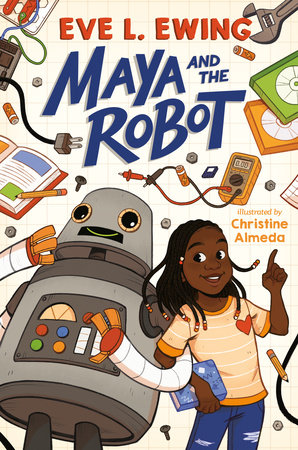
In Eve L. Ewing’s Maya and the Robot (Kokila, 2022), science-savvy fifth-grader Maya is given broken-down homemade robot (Ralph) by Mr. Mac, owner of the convenience store where she helps out - and manages to get it up and running for a science-fair project. Science, technology, and issues of friendship and loneliness for ages 7-11.
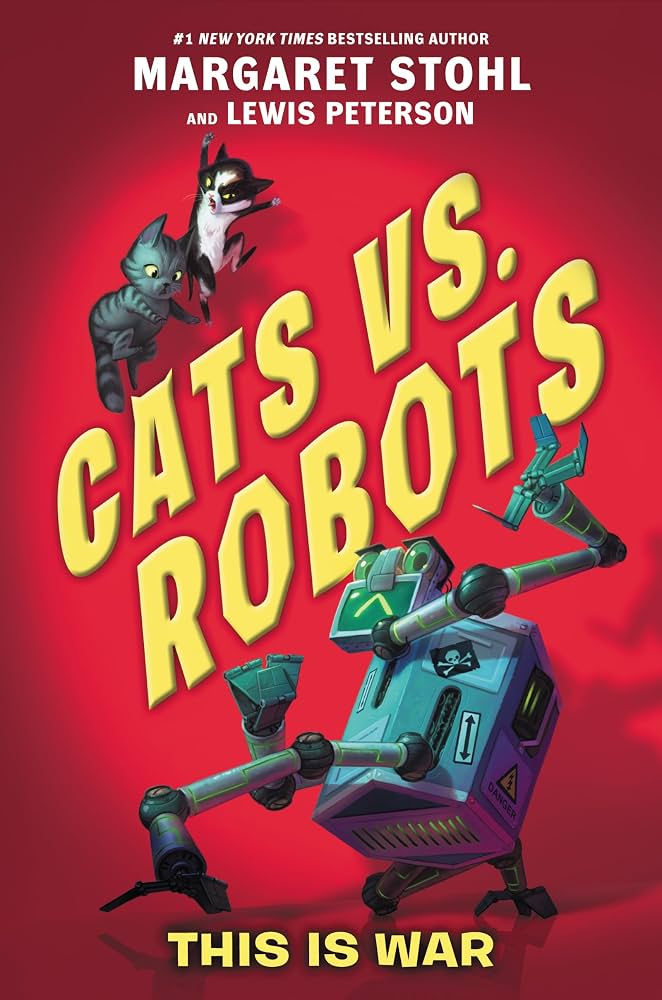
In Cats vs. Robots by Margaret Stohl and Lewis Peterson (HarperCollins, 2019), the Robot Federation and the Feline Empire are engaged in everlasting war – and now the conflict is coming to Earth, where both sides are determined to retrieve the all-important Singularity Chip. On Earth, the Wengrod twins – Max (who likes cats) and Min (who likes robots) – are about to be caught up in the action. A fun and exciting read for those who like cats or robots or both. For ages 8-12.
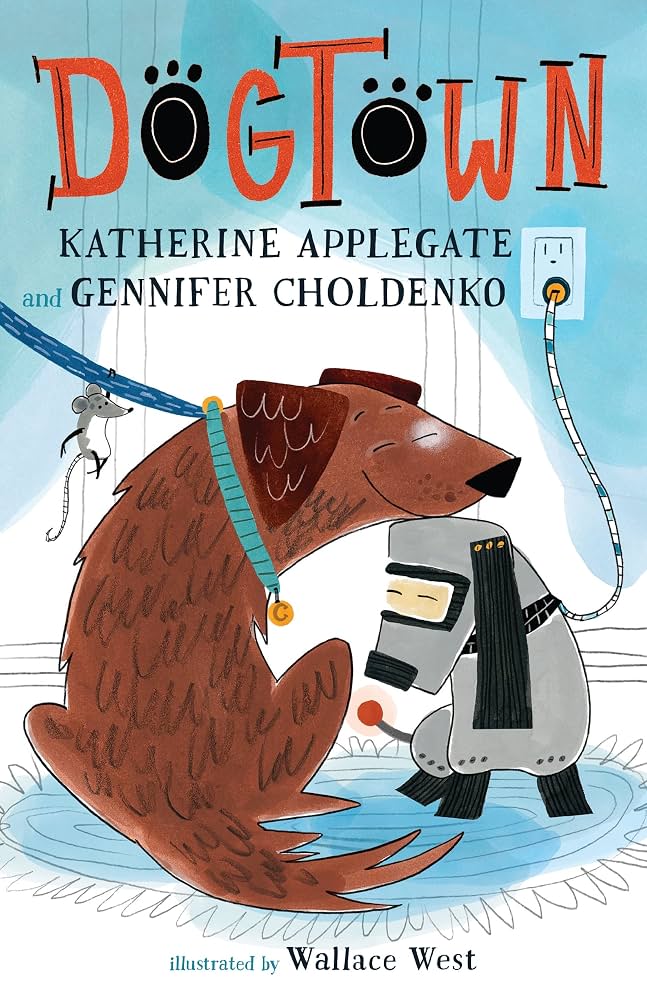
Dogtown by Katherine Applegate and Gennifer Choldenko (Square Fish, 2024) is a shelter for stray and abandoned dogs – and there Chance, a real dog (lost when his irresponsible dogsitters skipped town) and Metal Head, a discarded robot dog, meet and set off on an adventure to find their real homes. A lovely read for ages 8-12 – and there are sequels.

John Olander’s steampunk-ish My Robots (Two Lions, 2012) purports to be notes on the robots made by genius inventor Lady Regina Bonquers III (who disappeared in 1972). The book is designed like a scrapbook, crammed with photos, notes, sketches, newspaper clippings, and souvenirs. A fun read for ages 8-12.

By Bob Pflugfelder and Steve Hockensmith, Nick and Tesla’s Robot Army Rampage (Quirk Books, 2014) features Nick and Tesla, 11-year-old sleuths who solve mysteries using science. In this book – one of a series – they nab a criminal mastermind using robots. Instructions for building four different robots are included in the book, among them the Semi-Invisible Bottle Bot, for which you’ll need (among other things) two wire coat hangers and a 2-liter plastic water bottle. For ages 8-12.

In Peter Brown’s The Wild Robot (Little, Brown, 2016), the robot – Roz (short for ROZZUM unit 7134) has ended up on an island, where she is inadvertently activated by a bunch of sea otters. As Roz struggles to survive, she learns to cope with her new environment and gradually to become part of the animal community. For ages 8-12.

Cog, the star of Greg van Eekhout's Cog (HarperCollins, 2019),looks like a 12-year-old boy but is actually a robot - his name, Cog, is short for "cognitive development." Separated from his kind scientist caretaker, Gina, by the unscrupulous uniMIND corporation, who plans to use him for experiments, Cog escapes and sets off to find Gina, along with four robot accomplices, including his sister ADA (a weapon android). A thought-provoking story of what it means to be human for ages 8-12.

In Lee Bacon's The Last Human (Harry N. Abrams, 2019), humans have been eliminated from the planet and robots have established a society of their own. Then XR-935, whose purpose in life is to install solar panels, meets a 12-year-old human, Emma, looking for help for her dying family and friends in their hidden bunker. In company with two robot companions - enormous Ceeron and zippy SkD, who communicates via emoji pictures - Emma and XR_935 set off on a dangerous journey, discovering much along the way about friendship and tolerance. For ages 9-12.

Brian Selznick’s The Invention of Hugo Cabret (Scholastic, 2007) features 12-year-old Hugo, an orphan who lives secretly in the Paris train station, an incredible automaton in the form of a writing man, and Georges Melies, a master of early silent film. A terrific read for ages 9-12.

Hugo, the 2011 film version of the book, was directed by Martin Scorsese. Rated PG.

Selznick’s automaton is based on The Writer, an automaton built by Pierre Jaquet-Droz in the late 1770’s and believed to be the oldest example of a computer.
A similar automaton, Maillardet’s Draughtsman-Writer, dates to the same period. It is now in the Franklin Institute science museum in Philadelphia.

Gary Blackwood’s The Curiosity (Dial, 2014) is the story of Rufus, a 12-year-old chess prodigy, recruited by a sleazy showman to operate a chess-playing automaton called the Turk. History, mystery, and suspense for ages 9-12.

In Damien Love’s Monstrous Devices (Viking, 2018), young Alex is given an old tin robot by his grandfather, with a note reading “This one is special.” Soon Alex and his grandfather end up fleeing across Europe, pursued by dangerous people and animated robots. An exciting adventure for ages 9-12.

John Bellairs’s books are Gothic novels for kids: creepy, dark, and exciting. In The Eyes of the Killer Robot (Bantam, 1994), starring Johnny Dixon, evil wizard Evaristus Sloane plans to bring a robot to life – using Johnny’s eyes. Available for Kindle and at libraries. (If you get hooked, all the Bellairs books are available for Kindle. The series was continued by Brad Strickland after Bellairs’s death.) For ages 9-12.

In Evan Kuhlman’s Brother from a Box (Atheneum, 2013), Matt’s “brother” is a French robot named Norman, created by his genius computer scientist father. There’s humor and suspense – Norman catches a computer virus and goes nuts; a pair of sinister strangers attempt to steal him – but there’s food for thought here too. Matt, for example, discovers that Norman resembles a son his parents lost years ago. For ages 9-12.

In Greg van Eekhout’s post-apocalyptic The Boy at the End of the World (Bloomsbury USA, 2012), Fisher – who may be the last living person on Earth – sets off on a quest with Click, the robot, a pygmy mammoth, and a talking prairie dog to find others of his kind. For ages 10 and up.
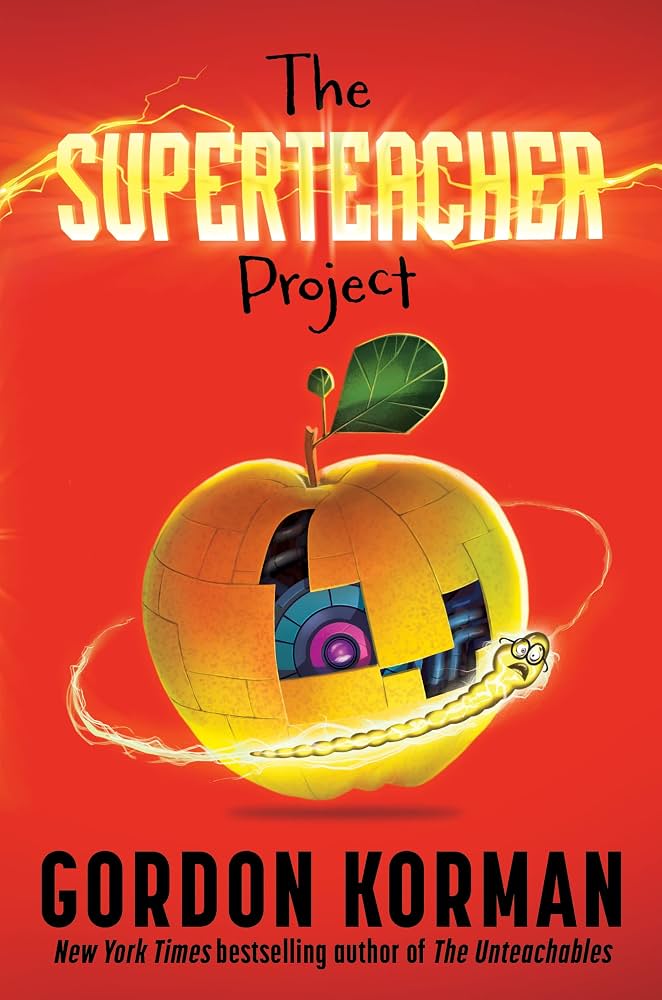
In Gordon Korman’s The SuperTeacher Project (HarperCollins, 2024), class clown Oliver and his best friend Nathan have run up against new teacher Mr. Aidact – who turns out to be an experimental AI robot. For ages 10-12.

In Helen Fox’s Eager (Yearling, 2006), set in a high-tech future England, Grumps, the old-fashioned robot belonging to Gavin and Fleur Bell’s family, is running down, and they can’t afford one of the new state-of-the-art BDC4s. A helpful scientist friend then loans them EGR3, known as Eager, an unusual little robot who is able to learn and feel emotions like a human child. Together, the children and Eager uncover a plot by the sinister BDC4 robots to rebel against their owners and take over the world. The book raises questions about what it means to be human and the dangers of technology. A discussion promoter for ages 11-14.

Isaac Asimov’s I, Robot (Spectra, 2008) introduces the famous “Three Laws of Robotics:” (1) A robot may not injure a human being or, through inaction, allow a human to come to harm. (2) A robot must obey orders give to it by humans except where such orders conflict with the First Law. (3) A robot must protect its own existence as along as such protection does not conflict with the First or Second Law. He follows up with a terrific series of interlinked robot stories. Two sequels. Highly recommended for ages 12 and up.

The 2004 film I, Robot is sort of based on parts of the book. Rated PG-13.

The title story of Ray Bradbury’s short-story collection I Sing the Body Electric! (William Morrow, 1998) is a tale of how a robotic grandmother comes to comfort a family of grieving children. It’s a lovely story and if you can track down the 1982 television movie version – The Electric Grandmother starring Maureen Stapleton – even better.

In Philip K. Dick’s dystopic post-World-War-Terminus sci-fi novel Do Androids Dream of Electric Sheep? (Del Ray, 1996), Rick Deckard, the main character, is a bounty hunter, tracking androids – which is difficult, because the androids are nearly impossible to tell from human beings. (The crucial difference: androids lack empathy.) Decakard is also broke, and can’t afford an organic pet – the ultimate in status symbols. Instead he owns an electric sheep. A thought-provoking read for ages 13 and up.
The 1982 film Blade Runner is loosely (very loosely) based on the PKD’s book. Harrison Ford plays Rick Deckard. Rated R (for violence).

Karel Capek’s R.U.R. (Penguin Classics, 2004) is the science fiction play, originally written in 1920, that first introduced the word “robot.” The initials stand for Rossum’s Universal Robots, a robot-making factory. Issues of justice, power, and the effect of advanced technology on humanity. For ages 13 and up.
Read R.U.R. online here.
Read About Robots – Nonfiction

Clive Gifford’s Robots (Atheneum Books, 2008) is an informative non-fiction account of the many different types of robots and their abilities. Learn about underwater robots, humanoid robots, medical robots, space robots, and spy robots. (An earlier version of the book cover was much friendlier, with a cute robotic giraffe.) For ages 5-9.
Learn about zoobots at 5 Robots That Look, Act, and Are Designed Like Animals. (Robot sea turtles, hummingbirds, squirrels, fish, flies, and more.)

Roger Bridgman’s Robot (Dorling Kindersley, 2004) in the Eyewitness series features a different robotic topic on each double-page spread, among these Fictional Robots, Robot Ancestors, Artificial Intelligence, Robots in Industry, Animatronics, and Cyborgs. Illustrated with wonderful color photographs. For age 8-12.

By Gaby Wood, Edison’s Eve (Anchor, 2003) – subtitled “A Magical History of the Quest for Mechanical Life” – is a reader-friendly history of robotics. The Eve of the title refers to Thomas Edison’s attempt to capture the American toy market with a talking doll. (He failed; the doll was creepy.) A thoroughly interesting read for teenagers and adults.
How creepy was Edison's talking doll? (Very.) See https://www.youtube.com/watch?v=_bgXH7U2Ja0.

Tom Standage’s The Turk (Berkley Trade, 2003) is the story of Wolfgang von Kempelen’s marvelous chess-playing automaton – a robotic creation that thrilled the world and inspired both the computer and the modern detective story. For teenagers and adults. (Also see Gary Blackwood's The Curiosity, above.)
From The Atlantic magazine, The Robot Will See You Now is a 2013 article by Jonathan Cohn on medical robots.
From How Stuff Works, How Robots Work is an illustrated multi-page explanation.
From the History Channel, check out 7 Early Robots and Automatons.
A Brief History of Robots runs from Karel Capek’s R.U.R. (1921) through DARPA’s Pet-Proto and Legged Squad Support System (said to look like a warthog). Video clips accompany each entry.
From Forbes magazine, 30 Great Moments in the History of Robots runs from the Babylonian clepsydra to the driverless car. Hyperlinked and illustrated.

Kacie Kinzer’s Tweenbots are possibly the world’s most adorable robots. People help them cross the street. See http://www.tweenbots.com/.
Building Robots
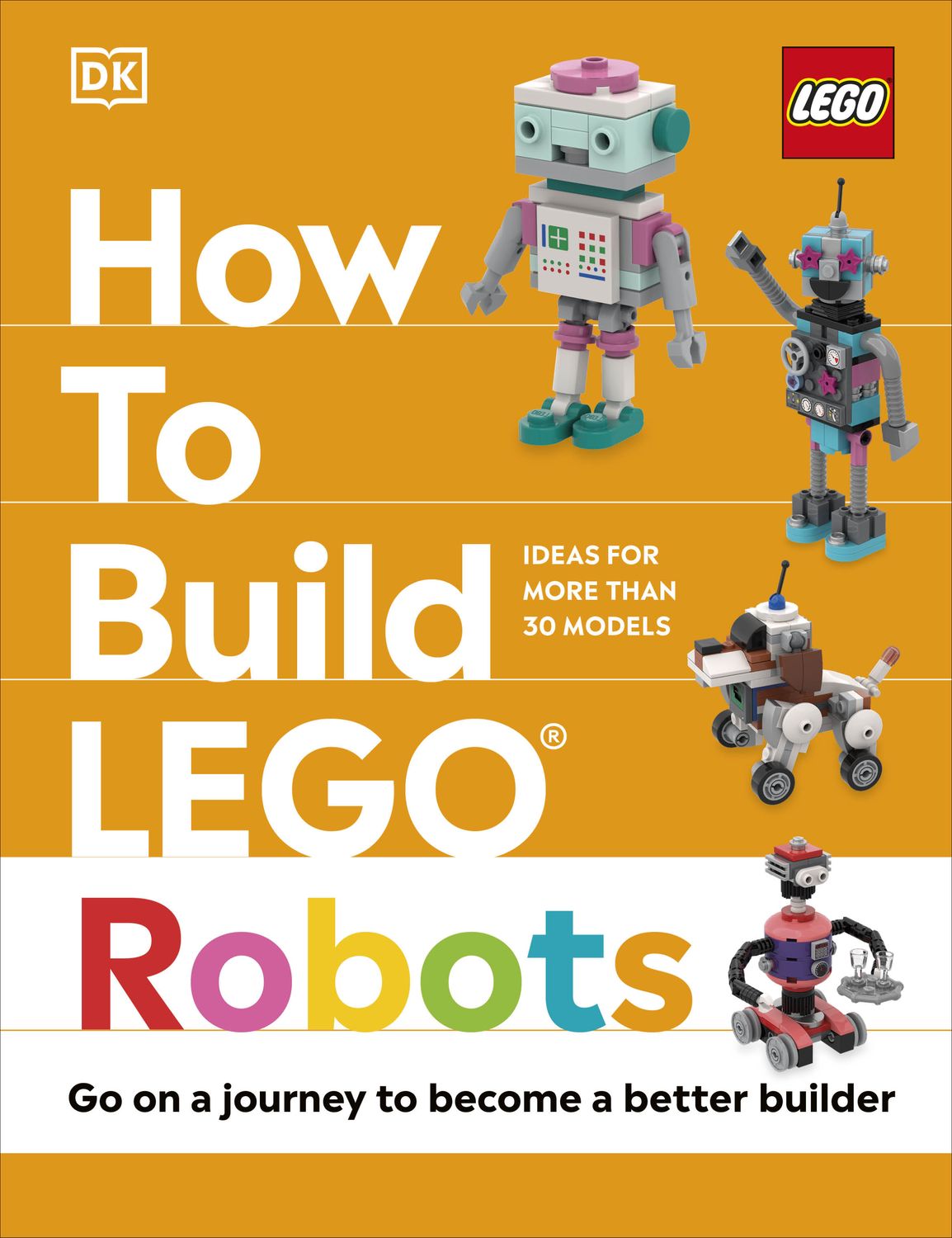
Got a bin or two of LEGOs? See How to Build LEGO Robots by Jessica Farrell and Hannah Dolan (DK, 2024) – over 40 creative robot ideas with illustrated instructions. For ages 7-9.

Sean Kenney’s Cool Robots (Henry Holt and Company, 2010) has instructions for building a lot of great LEGO robots (and spaceships). Illustrated with color photographs. For ages 6-10.
See Sean Kenney: Art with LEGO Bricks for more on Kenney’s books and exhibits of his LEGO creations.
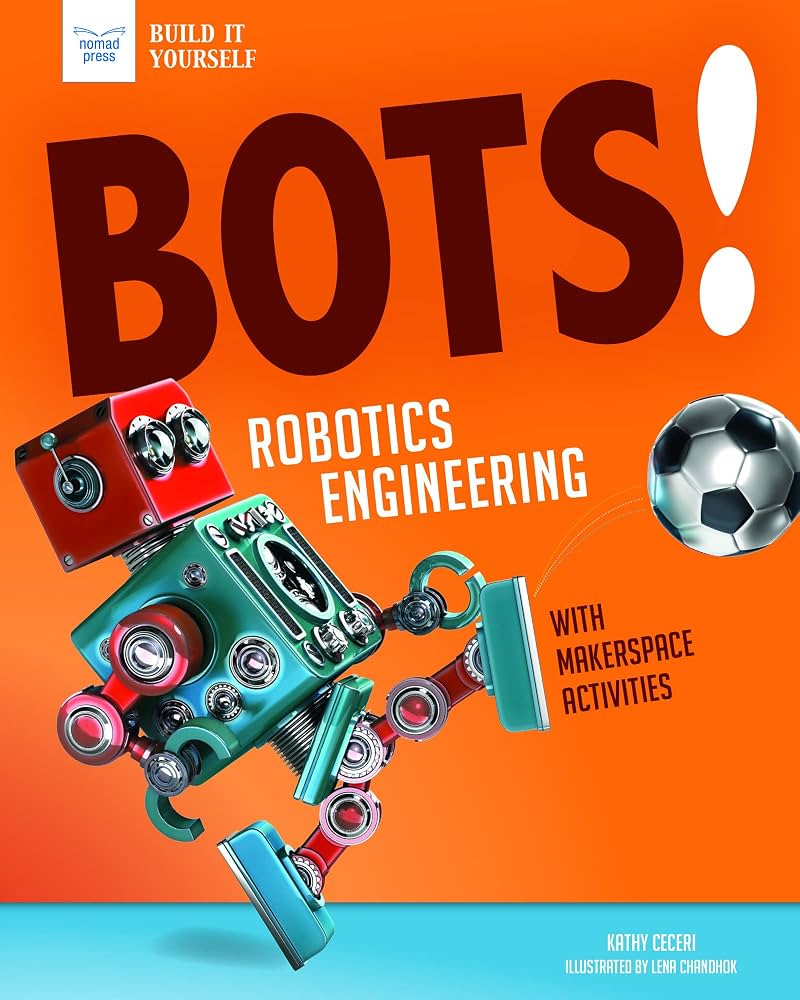
By Kathy Ceceri, Bots! Robotics Engineering (Nomad Press, 2019) is a great introduction to robots and robotics – including short biographies of key researchers and multiple hands-on activities, among them building a hydraulic arm, an inflatable soft robot, and a motorized ArtBot, learning coding basics, and experimenting with the free online computer language Scratch. For ages 9-12.
Also by Ceceri, see Making Simple Robots (Make Community, 2022) – subtitled “Wasy Robotics Projects for Kids Using Everyday Stuff.” Each project includes step-by-step instructions and is illustrated with photos. For ages 7-13.

Daniel Benedettelli’s The LEGO Mindstorms EV3 Laboratory (No Starch Press, 2013) has clear step-by-step instructions for building, programming, and experimenting with “five wicked cool robots!” For ages 12 and up. (See Robot Kits, below.)
From Carnegie Mellon, Robotics Academy is a robotics curriculum using LEGO Mindstorms.
How to Make a Robot is a 10-lesson tutorial on robot-building for beginners. See https://community.robotshop.com/tutorials/show/how-to-make-a-robot-lesson-1-getting-started.
From TryEngineering, Build Your Own Robot Arm has complete instructions for building your own robot arm using everyday materials. Recommended for ages 8-18.
Robot Kits

LEGO Mindstorms is a series of terrific programmable LEGO robots. See https://www.lego.com/en-us/themes/mindstorms/about.

OWI Robotics is a great source for robot kits of all kinds. For example, check out the Robotic Arm and the Moonwalker II.

The 
Arduino is “the microcontroller that launched a maker revolution.” What can you do with it? Check out this Popular Science article:
One 12-Year-Old’s Quest to Remake Education, One Arduino at a Time.
Check out this Arduino tutorial from MIT at https://learn.illuminations.mit.edu/chapter/intro-to-arduino. Also see Arduino Tutorial for Beginners at
https://www.youtube.com/watch?v=Q7zPm2Eqtw8.
The Hummingbird Robotics Kit is a spin-off from a research project at Carnegie Mellon’s CREATE lab, whose mission was to create engineering and robotics activities appealing to middle-school-level girls and boys. The site has instructions, tutorials, sample robots, project ideas, and curricula.

Sphero! Check out these great programmable robots for kids.
Bee Bot, an easy-to-operate rechargeable black-and-yellow striped bee robot, uses directional keys to enter some forty commands, sending the Bee backward, forward, right, and left. See the website at https://bee-bot.us/.
With the Code & Go Robot Mouse Activity Set (Learning Resources), kids build mazes and then program Colby, the robot mouse, to maneuver through them to find the cheese. See
Engino at http://www.engino.com/ is a source for dozens of creative building and robotics kits and programming software for a wide range of ages from preschoolers on up.
KiwiCo at http://www.kiwico.com/ provides kits, individually or by subscription, for young builders and engineers. The Tinker Crates, for example, for ages 9–16, provide materials for an awesome array of STEM projects, including automata, trebuchets, and hydraulic claws; the Eureka Crates are engineering and design kits for ages 14 to adult.
Activities and Lesson Plans

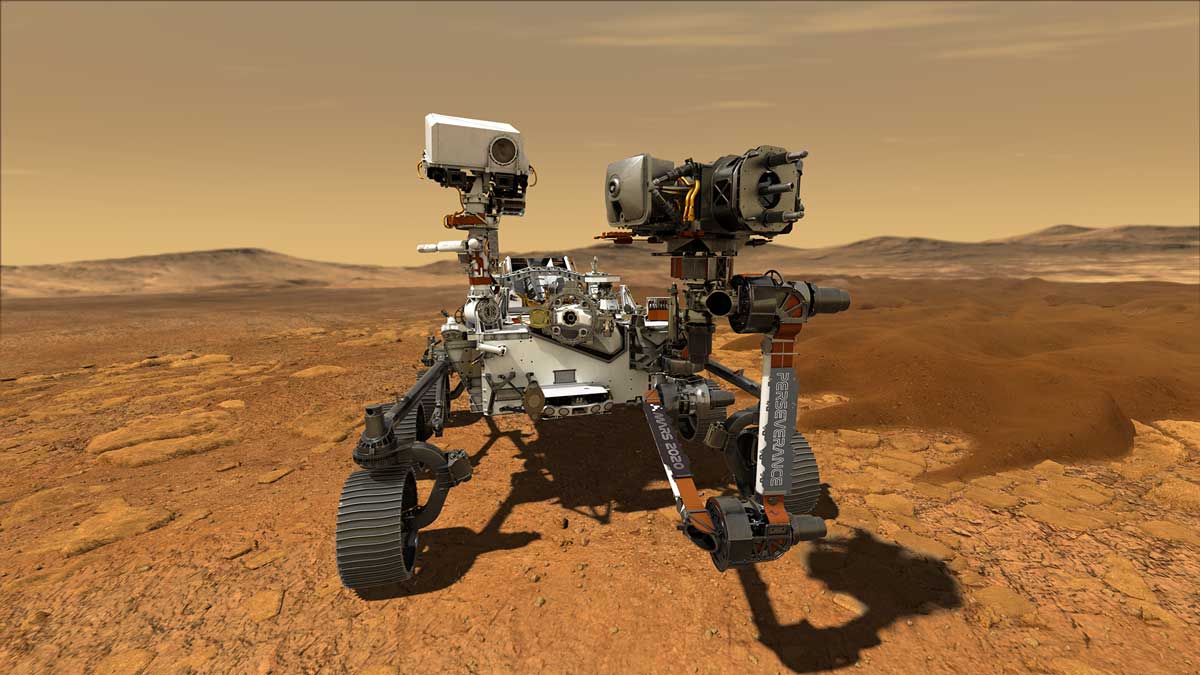
See NASA’s Mars Exploration Rovers for information about the robotic rovers. The site has pages for kids, students, and educators, with many activities and printable resources.
Robots for Kids has a history of robotics, a robot image gallery, robot video clips, online experiments with electrical circuits, lesson plan outlines, and quizzes.
Robot Guide is a terrific iPad and iPhone app featuring a host of wonderful robots. Find out all about them.
From NASA, see the Design a Robotic Insect Activity at https://www.nasa.gov/stem-content/design-a-robotic-insect-classroom-activity/. For grades K-8.
From PBS Learning Media, What Is a Robot? is a lesson plan supplemented with QuickTime videos of several different kinds of robots, targeted at grades 3-5. (Requires registration.)

Play Botball! This is a robotics competition of middle- and high-school-level students. Participants get a kit with reusable components to get them started building their robots.

See Junk Drawer Robotics, a 4H-designed robotics curriculum for grades 3-12. Available for purchase at https://shop4-h.org/products/junk-drawer-robotic-level-1-give-robotics-a-hand..
Robot Arts and Crafts

Stephen T. Johnson’s My Little Blue Robot (Simon & Schuster, 2012) is a build-it-yourself book with which kids can made a terrfic talking (!) cardboard robot on wheels. All the pieces, of heavy-duty cardboard, are right there in the book. (No glue; the whole thing goes together with slots and tabs.) For ages 3-8.

Ralph Masiello’s Robot Drawing Book (Charlesbridge, 2011) has step-by-step instructions for drawing a wonderful array of colorful robots. For ages 7-9.
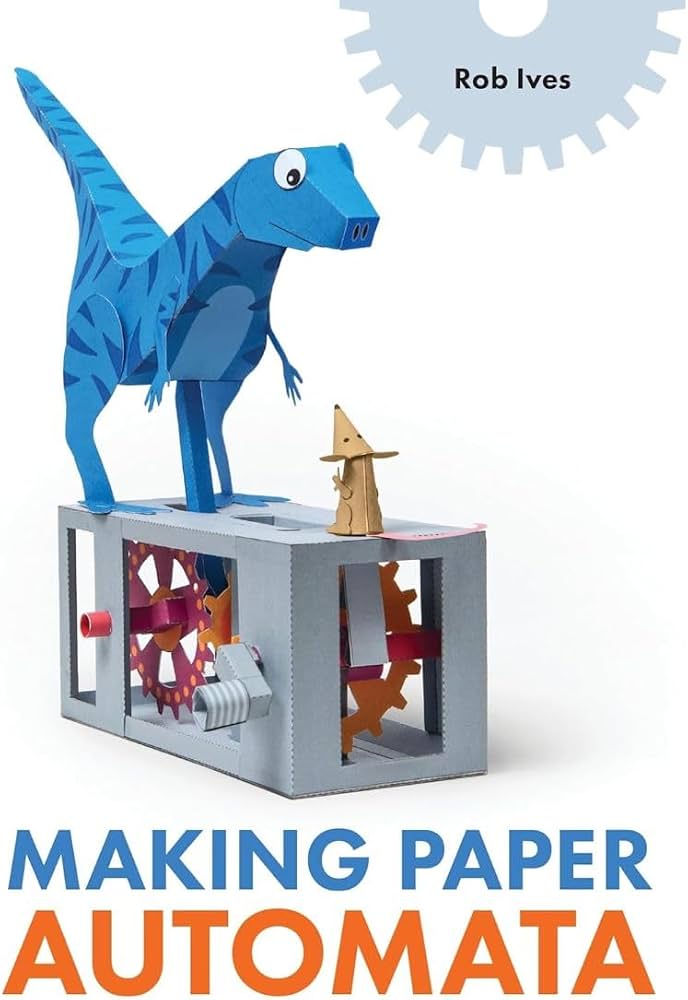
By Rob Ives, Making Paper Automata (Crowood Press, 2025) has instructions for making truly fabulous-looking working paper automata. They're complicated; not for the very young.

Keisuke Saka’s Karakuri: How to Make Mechanical Paper Models That Move (St. Martin’s Griffin, 2012) explains the mechanism by which karakuri work (levers, cams, cranks, gears, linkages, and Geneva stops), describes basic paper crafting techniques, and includes five karakuri models to build, among them a tea-serving robot. For ages 12 and up.

Build tin-can robots! See https://www.pbs.org/parents/crafts-and-experiments/tin-can-robots.
Robot Crafts from Activity Village include a cut-and-paste robot, edible cracker-and-vegetable robots, a robot costume, and a robot mask.
From the MAKE website, see these illustrated instructions for making Cereal Box Robots.
California artist Larry Wong builds robotic sculptures called Mechanoids from junk. Check them out here.
Robots and Poetry

Kenn Nesbit’s poem, My Robot’s Misbehaving, comes from his book of children’s poetry, My Hippo Has the Hiccups (Sourcebooks Jabberwocky, 2009).
Scryf is a robot that writes poetry in the sand. (In Dutch.) See
http://www.gijsvanbon.nl/skryf--blom.html.
By poet Robert Pinsky, see Death and the Powers: A Robot Pageant.
Robotics Poetry is a great middle-school-level project that combines robots and poetry.
Robots in the Movies

Pixar’s animated film Wall-E features possibly the most appealing robot ever, a garbage-collecting bot left behind on an abandoned earth so buried in trash that life is no longer sustainable. Then Wall-E finds a growing plant – which alerts EVE, a reconnaissance robot with electric-blue eyes. Rated G.

Robots (2005) is an animated film set in a world of robots, starring Rodney Copperbottom, brilliant inventor, who sets off to the big city to try to make the world a better place. Rated PG.

In The Day the Earth Stood Still (1951), a visiting alien and his all-powerful robot, Gort, have come to compel humans to live in peace - or else be destroyed as a danger to other civilizations. Important phrase to know: Klaatu barada nikto. Trust me. Rated G. There's a 2008 remake rated PG-13 with a scarier robot.

Transformers! There are toys, cartoons, and a 2007 movie,

Robot & Frank (2012), starring Frank Langella, set in the near future, is the story of an ex-jewel thief whose son gives him a robot caretaker. The two develop an unlikely friendship. A wonderful thought-provoking film. Rated PG-13.