
Money and the Economy

In this collection
A study from the University of Cambridge found that kids’ money habits – will they be conservative savers or profligate spenders? – are formed by the time they’re seven years old. All the more reason to teach our kids about money management, personal finances, and the economy.
For the Grown-Ups

Beth Kobliner’s Make Your Kid a Money Genius (Simon and Schuster, 2017) is a parents’ guide for teaching kids from preschool to young adulthood about money management. It’s not all about money; it’s also about such values as delaying gratification, working hard, thrifty living, and generosity toward others.
Debit cards for kids? Advantages include building financial responsibility and a good credit score; disadvantages – if improperly managed – include the risk of a less-than-responsible kid spending a lot of money. Recommended is the Greenlight card, with apps which allow parents to set spending limits, transfer allowance money, and pay for completion of specific chores.
See Finder’s Best Debit Cards for Kids.
Money: Fiction

In Rosemary Wells’s Bunny Money (Puffin, 2000), Max and Ruby can’t agree on a birthday gift for their grandma – Ruby votes for a ballerina box; Max for vampire teeth – but some disastrous money management leads to trouble. For ages 3-6.

In Emily Jenkins’s Lemonade in Winter (Schwartz & Wade, 2012), Pauline and John-John – even though it’s freezing outside – come up with a plan for selling lemonade and limeade. Simple math and money concepts for ages 3-7.

In Amy Axelrod’s Pigs Will Be Pigs (Aladdin, 1997), there’s not food in the house so the pig family wants to go out to dinner – but they have no money. And so they comb the house, unearthing coins and bills (and adding them up along the way). For ages 5-8.

One of the MathStart series, Stuart J. Murphy’s The Penny Pot (HarperCollins, 1998) is a picture-book exercise in coin-counting as kids try to come up with fifty cents at a face painting booth. For ages 5-8.

In Barbara Johnston Adams’s The Go-Around Dollar (Simon and Schuster, 1992), Matt finds a dollar on his way home from school and uses it to buy shoelaces from Eric. Eric then uses the dollar to buy bubblegum; and Jennifer – the next customer in line – gets the dollar as part of her change. On and on the dollar goes until it finally ends up in a frame, as the first dollar earned at the opening of a new store. Included are facts and information about dollar bills. For ages 4-8.
Want to track a dollar bill? Check out the Where’s George project.
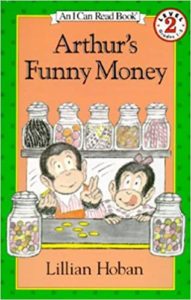
By Lillian Hoban, Arthur’s Funny Money (HarperCollins, 1984) – an I Can Read Level 2 book – is the story of Arthur’s struggle to earn enough money to buy a T-shirt and cap, with help from his sister Violet. (“Well,” said Violet, “if I have five peas and you take three and give me back two, how many peas will I have?” “All of them,” said Arthur. “I don’t like peas.”) For ages 4-8.
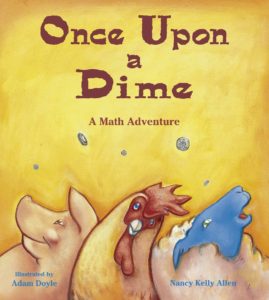
In Nancy Kelly Allen’s Once Upon a Dime (Charlesbridge, 1999), a little tree on organic farmer Truman Worth’s farm begins sprouting money – beginning with a crop of shiny pennies. For ages 4-8.
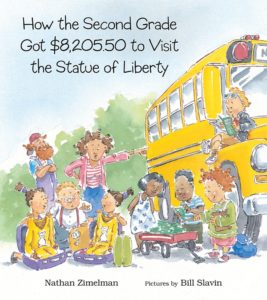
In Nathan Zimelman’s How the Second Grade Got $8,205.50 to Visit the Statue of Liberty (Albert Whitman & Company, 2017), class treasurer Susan Olson – listing their sometimes hilarious experiences under “Expenses” and “Profit” – details all the money-raising projects the class devises for their trip to the Statue of Liberty. For ages 4-8.
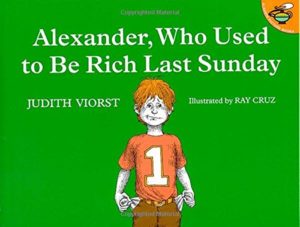
In Judith Viorst’s Alexander, Who Used to Be Rich Last Sunday (Simon and Schuster, 1995), Alexander is given a dollar by his grandparents – but soon fritters it away on disastrous choices, including a hour’s rental of a friend’s pet snake. For ages 4-8.
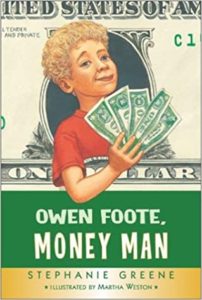
In Stephanie Greene’s Owen Foote, Money Man (Clarion, 2003), Owen – hooked on a catalog of desirable “Junk You Never Knew About” – wants to make money and so comes up with one dreadful money-making scheme (try toilet demonstrations) after another. Things only begin to improve when he changes his ideas about how to earn and spend money. For aged 7-10.
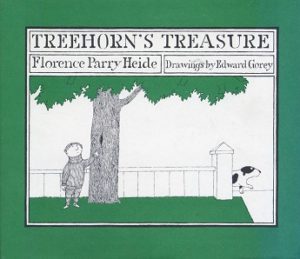
In Florence Parry Heide’s Treehorn’s Treasure (Pomegranate, 2011) – illustrated by Edward Gorey – Treehorn discovers that the tree in his yard is sprouting dollar bills, but his clueless parents refuse to pay attention. Treehorn is priceless. For ages 8 and up.
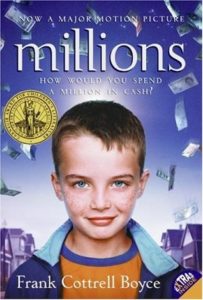
In Frank Cottrell-Boyce’s Millions (Macmillan, 2019) is a British delight. Damian and Anthony Cunningham – respectively obsessed with saints and house prices – find a sack of two million pounds – and have just seventeen days to spend it before the British pound converts to the euro. Damian wants to help the poor; Anthony has other ideas – and there are thieves who just want the money back. For ages 8-12.
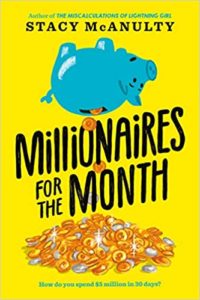
In Stacy McAnulty’s Millionaires for the Month (Random House, 2020), Felix and Benji on a class trip find the lost wallet of billionaire Laura Friendly – from which they abstract $20 to buy themselves lunch. Friendly therefore lands the boys with a challenge: spend $5 million in 30 days. It’s much harder than it sounds. For ages 9-13.
Money: Nonfiction

Rozanne Lanczak Williams’s The Coin Counting Book (Charlesbridge, 2001) is a rhyming introduction to money from pennies to dollar bill, illustrated with photos. For ages 4-7.

Brian P. Cleary’s A Dollar, a Penny, How Much and How Many? (Millbrook Press, 2014) is a humorous introduction to money for ages 4-8, with wacky cartoon illustrations.

By David A. Adler, Money Madness (Holiday House, 2009) is a simple picture-book introduction to money concepts for ages 4-8.
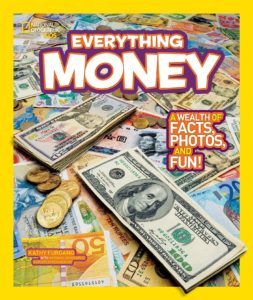
Kathy Furgang’s Everything Money (National Geographic, 2013) is packed with gorgeous photographs, kid-friendly information, and catchy facts about the history, use, and effects of money. An appealing introduction for ages 8-12.
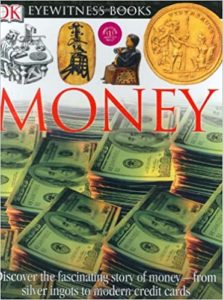
Joe Cribb’s Money (DK, 2016) in the popular Eyewitness series covers the story of money from silver ingots to credit cards. Each double-page spread, illustrated with drawings, graphics, and wonderful photos of artifacts, covers a different money-related topic, among these “The first coins,” “The first paper money,” “Money and trade,” “Money in war,” and money from a wide range of different countries. For ages 8 and up.
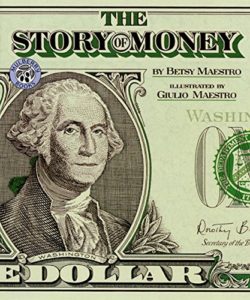
In Betsy Maestro’s The Story of Money (HarperCollins, 1995), readers learn about the many different forms money has taken around the world and through history. For ages 6-10.
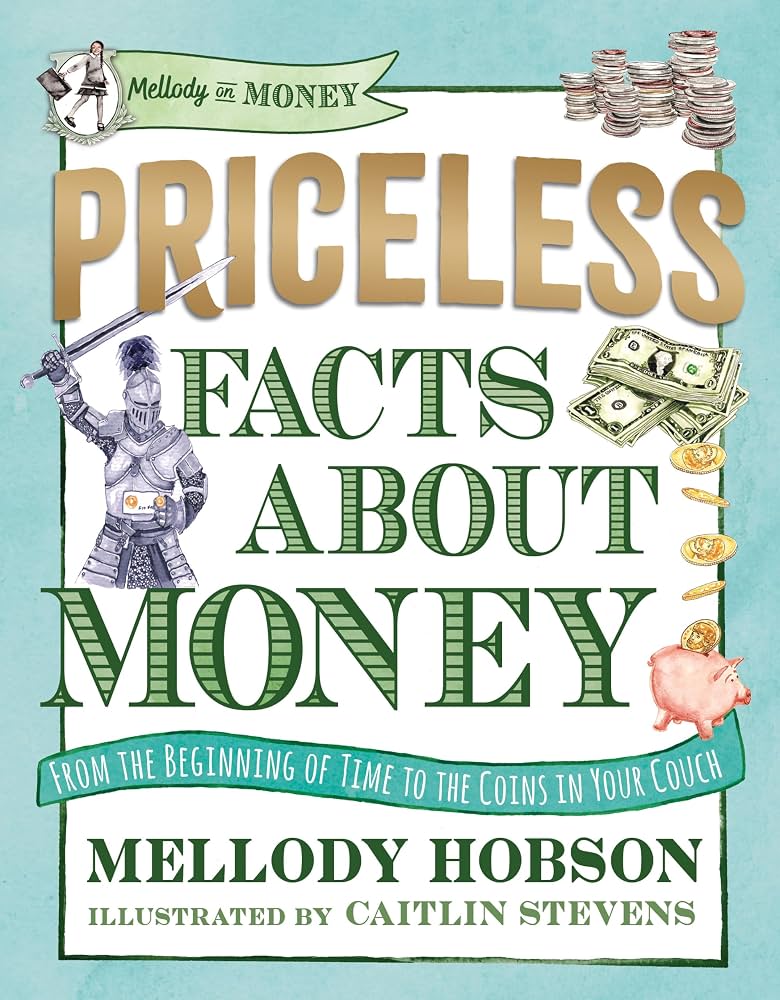
By Mellody Hobson, Priceless Facts about Money (Candlewick, 2024) is a treasure trove of information about money and how it works, with appealing illustrations and a sprinkling of weird memory-catching facts. For ages 7-12.
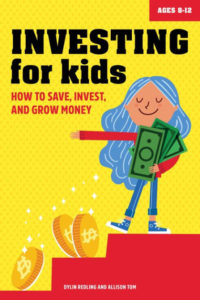
By Dylin Redling and Allison Tom, Investing for Kids (Rockridge Press, 2020) is a beginner’s guide to earning, saving, investing, risk, stocks and bonds, and financial planning for ages 8-12.
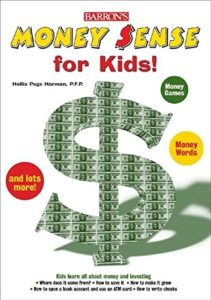
By Hollis Page Harman, Money Sense for Kids (Barron’s, 2004) covers the anatomy of bills (who’s on what? And what do all those symbols mean?), how money travels from mint to bank to consumer, earning, saving, and investing, stocks and bonds, and more, with activity suggestions. For ages 9-13.
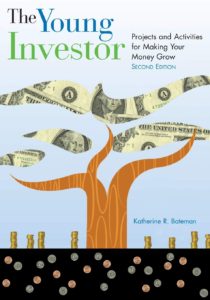
Katherine R. Bateman’s The Young Investor (Chicago Review Press, 2010) covers the basics of money, how saving works, simple and compound interest, stocks and bonds (and how to buy and sell them), mutual funds, inflations and recession, the function of the Federal Reserve, how mortgages work, and more. Included are many projects and activities; kids, for example, learn to balance a checkbook and read a stock table. For ages 9 and up.
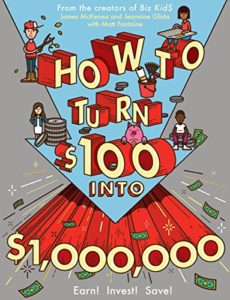
By James McKenna, Jeannine Glista, and Matt Fontaine, How to Turn $100 into $1,000,000 (Workman, 2016) may not immediately rocket you to millionaire-dom, but it is filled will helpful and conversational information on financial goals, budgets, jobs, starting a business, savings, compound interest, and more for ages 10 and up.
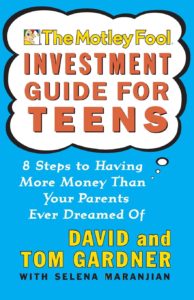
By David and Tom Gardner, The Motley Fool Investment Guide for Teens (Touchstone, 2002) is a witty and informational guide to investment and money management. The subtitle is “8 Steps to Having More Money Than Your Parents Ever Dreamed Of.” The authors suggest that kids start now. For ages 13 and up.

Visit the United States Mint Kids Site for games and activities, information on coins and coin collecting, coin programs and scout badges, and more.
A sobering look at money. Check out the U.S. Debt Clock.
Making a Living

In Mal Peet’s Cloud Tea Monkeys (Candlewick, 2010), Tashi’s mother – who works as a picker on a tea plantation – has fallen ill and, without her wages, they have no money to pay the doctor. Tashi is too small to pick tea leaves herself – but she’s helped by a pack of friendly monkeys, who fill her basket for her with the rarest and most wonderful of leaves. The impressed Royal Tea Taster pays Tashi a hefty sum and promises her more in the future. Themes of poverty and unequal working conditions along with kindness and a little bit of magic. For ages 5-9.

By Page McBrier, Beatrice’s Goat (Aladdin, 2004) is the story of a young Ugandan girl who receives a goat as a gift from Heifer International – and by selling milk, is able to save enough money to buy books so that she can attend school. For ages 4-8.

Heifer International is a non-profit group that works to combat hunger and poverty by providing livestock to struggling families in countries around the world. Visit the website to see how you can help.
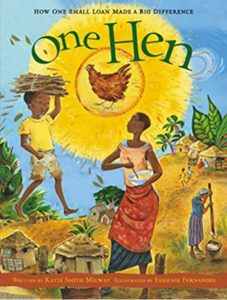
By Katie Smith Milway, One Hen (Kids Can Press, 2020) is the story of young Kojo from Ghana who – after his father dies – receives a tiny loan from neighbors. He uses the money to buy a hen – and soon he has a flock of 25 and has earned enough money to enable him to return to school. An appendix explains the microloan system – and how small loans make a big difference for many families. For ages 7-10.
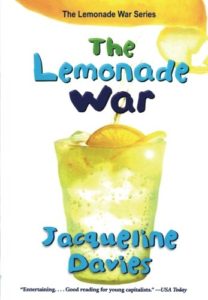
By Jacqueline Davies, The Lemonade War (HMH, 2009) – the first of a series – teaches economic theory, math, and marketing through the adventures of siblings Evan and Jessie and their competing lemonade stands. Includes tips for starting your own business. For ages 8-12.
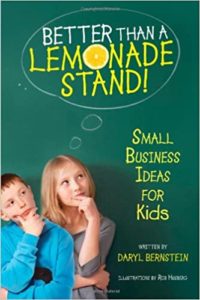
Daryl Bernstein’s Better than a Lemonade Stand! (Aladdin, 2012) is a collection of small-business ideas for kids, from babysitting broker and balloon-bouquet maker to house checker, leaf raker, mural painter, website designer, and window washer. For ages 9-14.

Careers: The Ultimate Guide to Planning Your Future (DK, 2022) is a cleverly designed overview of over 400 different possible professions. (Want to be a zookeeper? A game designer?) Entries for each career include a job description, a check list of interests and qualifications, diagrams of career paths, a skills guide, and a cross-referenced list of related careers. For ages 12-17.

By Steven Jenkins et al., 99 Things to Do Before You Finish High School (Zest Books, 2026) points out that preparing for the future means trying new things and making discoveries along the way. Try going to the theater, joining (or starting) a club, taking a road trip, cooking a three-course meal, joining a political campaign. A thoughtful and wide-ranging account of things to explore and experience for yourself, your family, your community, and just because you should. For ages 12 and up.

By Carol Christen, What Color Is Your Parachute? For Teens (Ten Speed Press, 2022) is a helpful career guide for high-school- and college-level kids, with advice for identifying your interests and skills and using these to pursue a career. Sections are “Discover Your Dream Job,” “On the Way to Your Future,” and “Land Your Dream Job.” For ages 13 and up.
Barter and Trade
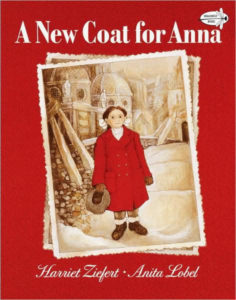
In Harriet Ziefert’s A New Coat for Anna (Dragonfly, 1988), Anna needs a coat – but times are hard just after World War II. So Anna’s mother comes up with a plan to trade some of their valuables – such as a gold watch and a porcelain teapot – for wool and the services of a spinner, weaver, and tailor. Finally they throw a Christmas party for all those who have helped in the making of Anna’s coat. For ages 4-8.
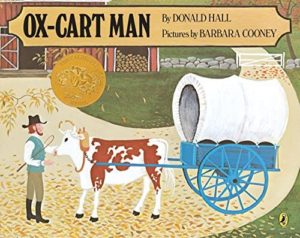
Donald Hall’s wonderful Ox-Cart Man (Puffin, 1983) – a Caldecott Medal winner – is the story of the economic life of a colonial New England farm. The ox-cart man loads his wagon with goods from the farm: apples, potatoes, wool from his sheep, shawls and mittens knitted by his wife and daughter, birch brooms made by his son, goose feathers from their flock of geese – and heads to town where he sells these (including the ox and cart) for money; then uses the money to buy provisions for his family, and heads home to start the cycle all over again. For ages 3-8.

By Brenda Williams, Lin Yi’s Lantern (Barefoot Books, 2012), Lin Yi is sent to the market to buy food for the Moon Festival – but hopes, by clever bargaining, that he’ll have enough money left over for a red rabbit lantern. For ages 4-7.

In Elizabeth Bram’s Rufus the Writer (Schwartz & Wade, 2015), Rufus – in lieu of a lemonade stand – sets up a story-writing table and swaps stories for “Whatever you think. Surprise me.” For ages 5-8.

In Neil Gaiman’s The Day I Swapped My Dad for Two Goldfish (HarperCollins, 2006), the main character does just that – and then finds that he’s not the only person swapping. It might be tricky to get his dad back again. A riotous read for ages 4-8.
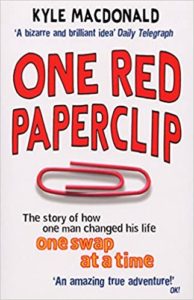
Wondering what to give for Christmas? What about…one red paperclip? Kyle MacDonald’s One Red Paperclip (River Grove, 2015) is the story of how Kyle, trade by trade, bartered one red paperclip into a house. For teens and adults.
Economics: Fiction
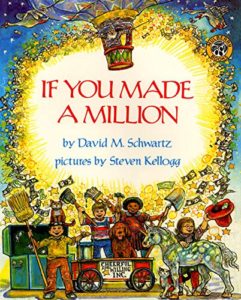
David M. Schwarz’s If You Made a Million (HarperCollins, 1994) – with the help of Marvelosissimo the Mathematical Magician, takes readers from one penny (earned by feeding the fish) to a million dollars, explaining on the way the nature of money, earning, investing, dividends, and interest. A delightful read for ages 5-9.
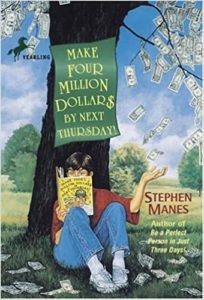
In Stephen Manes’s Make Four Million Dollars by Next Thursday! (Cadwallader & Stern, 2020), Jason Nozzle finds a book of that title in the park (by Dr. K. Pinkerton Silverfish) and tries to follow the instructions. For ages 8-12.
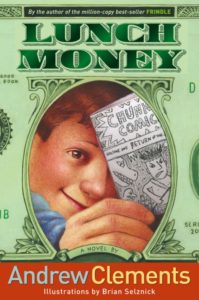
In Andrew Clements’s economics-themed Lunch Money (Simon & Schuster, 2005), budding tycoon Greg has been earning money since he was in preschool – he even maintains his own bank (the First Family Bank of Greg) from which he lends money to his brothers (with interest). Then in sixth grade he starts a business selling homemade comic books – and runs up against rival Maura who is doing the same. Their conflict leads the principal to ban comics from the school. Greg and Maura then join together to combat the system. For ages 9-12.

Robert McCloskey’s hilarious Homer Price (Puffin, 2005) includes the story of Homer and the runaway doughnut machine, a tongue-in-cheek lesson on the law of supply and demand. For ages 8-12.
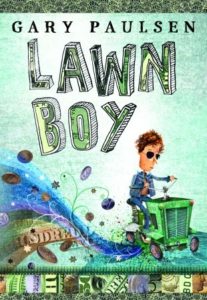
In Gary Paulsen’s Lawn Boy (Yearling, 2009), the 12-year-old protagonist is given an old lawn mower and sets out to earn money mowing lawns. One of his clients is day-trader Arnold, who offers to teach him the ins and outs of capitalism while bartering his lawn money into a fortune – which turns out to have unforeseen complications. For ages 8-12.
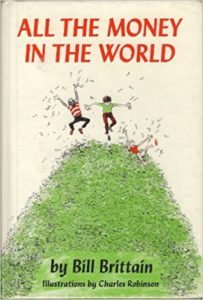
Bill Brittain’s All the Money in the World (HarperCollins, 1992) is well worth tracking down. Quentin nabs a leprechaun and wishes for all the money in the world – which turns out to have a lot of unexpected repercussions. For ages 9-12.
Economics: Nonfiction
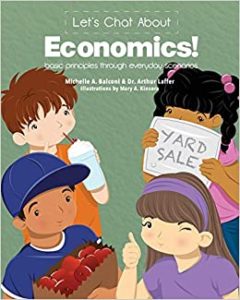
By Michelle A. Balconi and Arthur Laffer, Let’s Chat About Economics! (Gichigami Press, 2014) explains basic economic principals – scarcity, supply and demand, opportunity costs and diminishing returns – through familiar scenarios such as grocery shopping, a family vacation, and a yard sale. For ages 6-12.
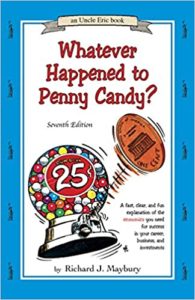
Richard J. Maybury’s Whatever Happened to Penny Candy? (Bluestocking Press, 2016), written as a series of letters from knowledgeable Uncle Eric to a young niece or nephew (Chris), is an excellent explanation of money and economic theory for ages 9 and up. Highly recommended.
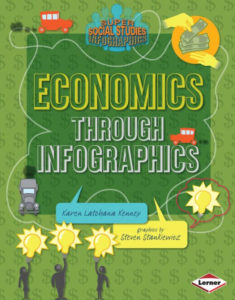
A picture often really is worth a thousand words. Karen Latchana Kenney’s Economics Through Infographics (Lerner, 2014) uses creative and colorful graphics to explain the history of trade, types of world economies, money exchange, supply and demand, exports and imports, and more. For ages 9-12.

The Economics Book: Big Ideas Simply Explained (DK, 2018) uses creative design and catchy illustrations and graphics to cover the history and science of economics. Chapters include “Let the Trading Begin,” “Industrial and Economic Revolutions,” “War and Depressions,” “Contemporary Economics,” and more. For teens and adults.

By Yoram Bauman and Grady Klein, The Cartoon Introduction to Economics (Volume I: Microeconomics and Volume II: Macroeconomics) (Hill and Wang, 2010) covers the history, theory, and trends of economics with catchy cartoon illustrations and a sense of humor. For teens and adults.
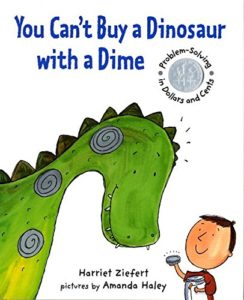
Kiddynomics is a five-lesson interactive economic curriculum for ages 3-5, incorporating read-alouds, reading readiness skills, counting, songs, and art. Each lesson is about 45 minutes long. Titles include “Betty Bunny Wants Everything,” “Just Saving My Money,” and “You Can’t Buy a Dinosaur with a Dime.”
Teaching Economics with Children’s Literature includes a book list and suggestions for teaching elementary-level kids the basis of economics: goods and services, consumers and producers, capital and entrepreneurship.

From PBS Learning Media, see this series of videos and interactive lessons on economics, categorized by grade. Included are Lights, Camera, Budget!: A Personal Finance Game (grades 6-12) and Rags to Riches, in which participants launch and run an online T-shirt business (grades 7-12).
From Econedlink, see lessons, resources, and videos categorized by grade level (K-2, 3-5, 6-8, 9-12).
From the National Assessment of Educational Progress, see the economics assessment measurements for grade 12 in three main content areas: the market, national, and international economies.

Check out the Great Courses for multi-lesson classes on a range of economic topics, generally appropriate for ages 13 and up. Sample titles include Game Theory, Economic History of the World, Globalism vs. Nationalism, and Capitalism vs. Socialism. Most consist of about 25 half-hour lectures. (Note: all Great Courses offerings periodically go on sale at significantly reduced prices.)
Games and Projects
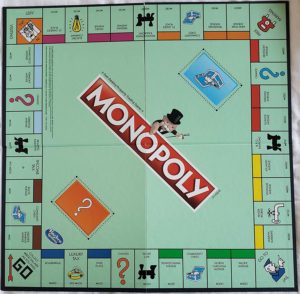
In Monopoly (Hasbro), a board game of which there are now multiple editions, players buy, sell, and improve upon (how many hotels can you put on Broadway?) their real estate properties, hoping to bankrupt their opponents and amass riches. For 2-6 players, ages 8 and up.
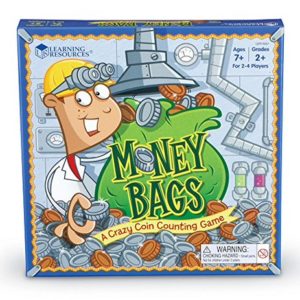
From Learning Resources, 
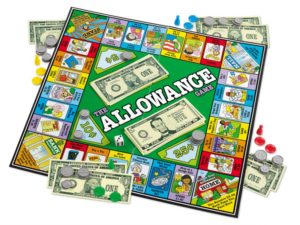
In The Allowance Game (Lakeshore Learning) players circle the board, earning (and paying out) money. Each time you pass HOME, you get a $3 allowance. For ages 5-9.
See https://www.lakeshorelearning.com/products/games/board-dice-games/the-allowance-game/p/LC956/.
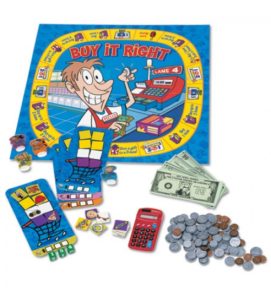
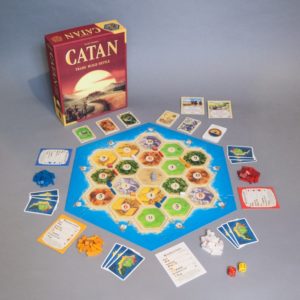
In
See this annotated list of the Top 10 Economic and Money Board Games.
From Math for Kids, Money Games has a selection of interactive online games, including a shopping game, money counting game, coin weighing game, lemonade stand game, and more.
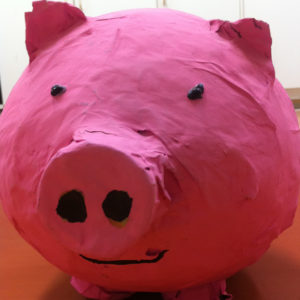
How to make a papier-mache piggybank.

Piggybanks have been around for a long time. From the History Blog, check out the world’s oldest piggybanks.

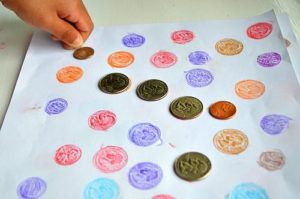
Make coin rubbings and play a coin-matching game.
Money Isn't Everything

In Vera B. Williams’s A Chair for My Mother (Greenwillow, 2007), Rosa’s family has lost their home in a fire – and now she and her mother and grandmother are working to save money to buy a really comfortable chair. A story of community and familial support for ages 4-8.

By Maribeth Boelts, Those Shoes (Candlewick, 2009) deals with the often difficult question of “need” versus “want.” Jeremy wants a pair of black high-top shoes like the rest of the kids at school are wearing – but his grandmother tells him that they’re too expensive, especially since he needs winter boots. Jeremy persists, and ends up with a pair of the coveted shoes from a thrift shop, even though they’re much too small for him. Then he notices that his friend Antonio’s shoes are falling apart, held together only by duct tape – and decides to give his shoes to Antonio. For ages 5-9.
From the Prindle Institute for Ethics, Those Shoes is a discussion unit that uses the book to teach children philosophy, covering themes of altruism/selfishness, generosity, and distributive justice, with a long list of helpful discussion questions.

In Sarah Stewart’s The Money Tree (Square Fish, 1994), Miss McGillicuddy leads a happy live with her garden and animals – until a strange tree in her yard begins to sprout money in place of leaves. Soon greedy townspeople and strangers converge on the tree – until finally, as the leaves fall and winter approaches, Miss McGillicuddy cuts it down and uses the wood for her winter fire. A good discussion book for ages 5-10.
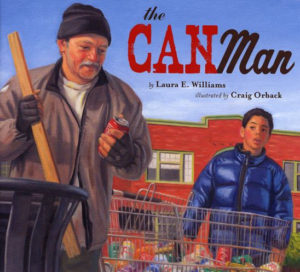
In Laura E. Williams’s The Can Man (Lee & Low), Tim, who wants a skateboard, is inspired by a homeless man collecting soda cans and decides to earn money by doing the same. When the Can Man helps Tim cart his cans to the redemption center, however, Tim realizes that acts of kindness are more important than skateboards. For ages 5-10.
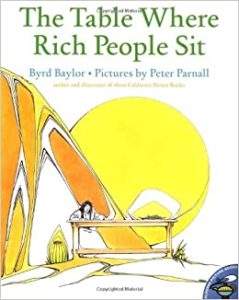
In Byrd Baylor’s The Table Where the Rich People Sit (Aladdin, 1998), Mountain Girl is unhappy with their scratched kitchen table and old clothes. (“I tell my parents they should get better jobs so we could buy a lot of nice new things.”) Then her parents point out the wonderful things that they have – the beauty of the mountains and canyons, the smell of rain, the starry sky – and Mountain Girl realizes that they’re really rich after all. A lovely book for ages 6-10.

O.Henry’s The Gift of the Magi (Candlewick, 2008) is the story of Della – who sells her hair to buy a Christmas gift for her husband, a fob for his watch – and of Jim, who sells his watch to buy combs for Della’s hair. A beautiful story for ages 10 and up.
The text is available online at Project Gutenberg,