
Snow
In this collection
If the weather outside is about to be frightful, take heart! See below for books, resources, projects, activities, and some great snow science just right for snowy days.
Snow Stories

Ezra Jack Keats’s 1963 Caldecott-Medal-winning The Snowy Day (Viking Juvenile, 2011) is a beloved classic about a child’s delight in new snow: a little boy in a coat with a pointy hood makes the first tracks in fallen snow, knocks snow off the tree branches, and makes a snow angel. For ages 2-7.

Wong Herbert Lee’s Tracks in the Snow (Square Fish, 2007) follows the adventures of a little girl as she follows a mysterious line of tracks in the snow (“Just outside my window/There are tracks in the snow/Who made the tracks? Where do they go?”) – finally realizing, as the tracks lead her right back home again, that she made them herself yesterday. For ages 2-7.

In Uri Shulevitz’s beautiful picture book Snow (Farrar, Straus, & Giroux, 2012), nobody believes it’s snowing – certainly not all the skeptical and grumpy grown-ups – but a little boy and his dog spot one flake, then two, and soon the entire city has been transformed into a wonderful snowscape. For ages 3-6.

In Sybelle von Olfers’s The Story of the Snow Children (Floris Books, 2005), Poppy runs out in the snow to play with the dozens of little white-bonneted snow children, and ends up traveling – via sledge pulled by polar bears – to the Snow Queen’s crystal palace, just in time for the little Snow Princess’s birthday party. Lovely period illustrations feature snowdrop-bordered pages and Poppy in a red coat with muff and gaiters. For ages 3-7.

In Lauren Child’s Snow is My Favorite and My Best (Dial, 2006) – starring Charlie and his irrepressible little sister Lola – the first snow of winter has finally fallen and Lola is thrilled. She and her brother share a wonderful winter day of sledding and snowman-building – until the snow melts, leaving Lola devastated. Charlie, however, wisely saves the day, explaining that – while snow is special – there would be disadvantages to having snow every day. For ages 4-7.

Alvin Tresselt’s White Snow, Bright Snow (HarperCollins, 1988) – originally published in 1947 – is a delightful account of snow on the way (the farmer claims it smells like snow; the policeman’s wife can tell it's coming because her big toe hurts), the preparations made for it, and all that happens when it finally arrives. For ages 4-8.

Cynthia Rylant’s Snow (Harcourt Children’s Books, 2008), with enchanting illustrations by Lauren Stringer, is a lyrical celebration of snow - some “comes softly in the night, like a shy friend afraid to knock” - complete with snow angels, sledding, lacy tree branches, and a night walk. For ages 4-8.

Jan Brett’s exquisitely illustrated The Three Snow Bears (Putnam Juvenile Books, 2007) is a Goldilocks tale set in the snowy far north, where Aloo-ki, a little Inuit girl, loses her sled and sled dogs (they float away on an ice floe) and, while searching for them, happens upon an empty igloo. Inside, she samples soup, tries on boots, and finally falls asleep in the littlest bed. Then the bears – who have in the meantime rescued her dogs – come home. For ages 4-8.

In Amy Hest’s The Reader (Amazon Children’s Publishing, 2012), a small boy and his dog head up a (very very tall) snowy hill, dragging a suitcase on a sled. Finally at their destination, they play in the snow; then the boy opens the case, and the pair share a winter picnic (toast) and the boy reads a book to his dog, titled Two Best Friends. For ages 4-8.

In Loretta Krupinkski’s The Snow Dog’s Journey (Dutton Juvenile, 2010), Anna and Olen make a dog out of snow. Then one day the dog is gone; he’s been taken by the Frost King to live in a palace made of icicles, where he’ll be safe from the sun and thaw. Snow Dog, however, is miserable without the children and he sets off to return home – and is finally rewarded, Velveteen-Rabbit-style, by becoming a real dog. For ages 5-8.

Berla Hader’s The Big Snow (Aladdin, 1993) won the Caldecott Medal in 1949. The woodland animals all prepare for winter – the geese head south, the ground hog goes to sleep – but still an unexpected big snow causes trouble for many. Luckily a kindly human couple are ready with help. For ages 5-9.

In Carol Fenner’s Snowed In with Grandmother Silk (Puffin, 2005), young Ruddy has to deal with a lot of snow. Sent to stay with his aloof grandmother while his parents go on a cruise, Ruddy is lonely and unhappy until a snowstorm strikes, cutting off the power, closing the roads, and leaving him and his grandmother to fend for themselves. They cope by fetching water from the lake, inventing makeshift meals, burning fires to keep warm, playing chess together in the long dark evenings – and all the while learning to appreciate, enjoy, and love each other. For ages 7-9.

Ingri and Edgar Parin D’Aulaire’s marvelously illustrated D’Aulaires’ Book of Norse Myths (New York Review of Books, 2005) is an absorbing collection of largely snowy myths, including tales of the Frost Giants and the story of Skade, the Ski-Goddess. For ages 8-12.

Lafcadio Hearn’s creepy Kwaidan: Stories and Studies of Strange Things (Tuttle Publishing, 2005) is a collection of traditional Japanese tales and legends, among them the story of Yuki-onna, the demonic snow maiden. For ages 13 and up.
Snow Queens

There are many available editions of Hans Christian Andersen’s story “The Snow Queen,” in which young Kay – with a fragment of the devil’s mirror in his eye - is taken away by the cruel but beautiful Snow Queen to a land of snow and ice, and his faithful friend Gerda takes a perilous journey to rescue him. One wonderful picture-book retelling is Amy Ehrlich’s The Snow Queen (Dutton Juvenile, 2006), with illustrations by Susan Jeffers.
For the complete text of the original Hans Christian Andersen “The Snow Queen” online, see here.

Anne Ursu’s Breadcrumbs (Walden Pond Press, 2011) is a creative take on Andersen’s Snow Queen, set in Minnesota, where Hazel’s friend Jack is stolen by an evil woman in a sleigh, and Hazel braves the woods, now populated by Andersen fairy-tale characters, to get him back. For ages 8-12.

In the Disney animated film Frozen (2013), inspired by The Snow Queen, the newly crowned Queen Elsa has powers that inadvertently turn her kingdom into a land of permanent ice and snow. Her sister Anna is determined to break the spell. Anybody who hasn’t, willy-nilly, memorized all the Frozen songs (“Let It Go”) hasn’t been listening. Rated PG.
Super Snowplows

The Katy of Virginia Lee Burton’s Katy and the Big Snow (Sandpiper, 1974) is an indomitable little snowplow, busily saving the stranded citizens of Geopolis, whose streets have been buried by a blizzard. (This one is also nice for reinforcing early map skills, since the illustrations include wonderful little picture maps of the town, showing Katy’s route through the streets.) For ages 4-8.
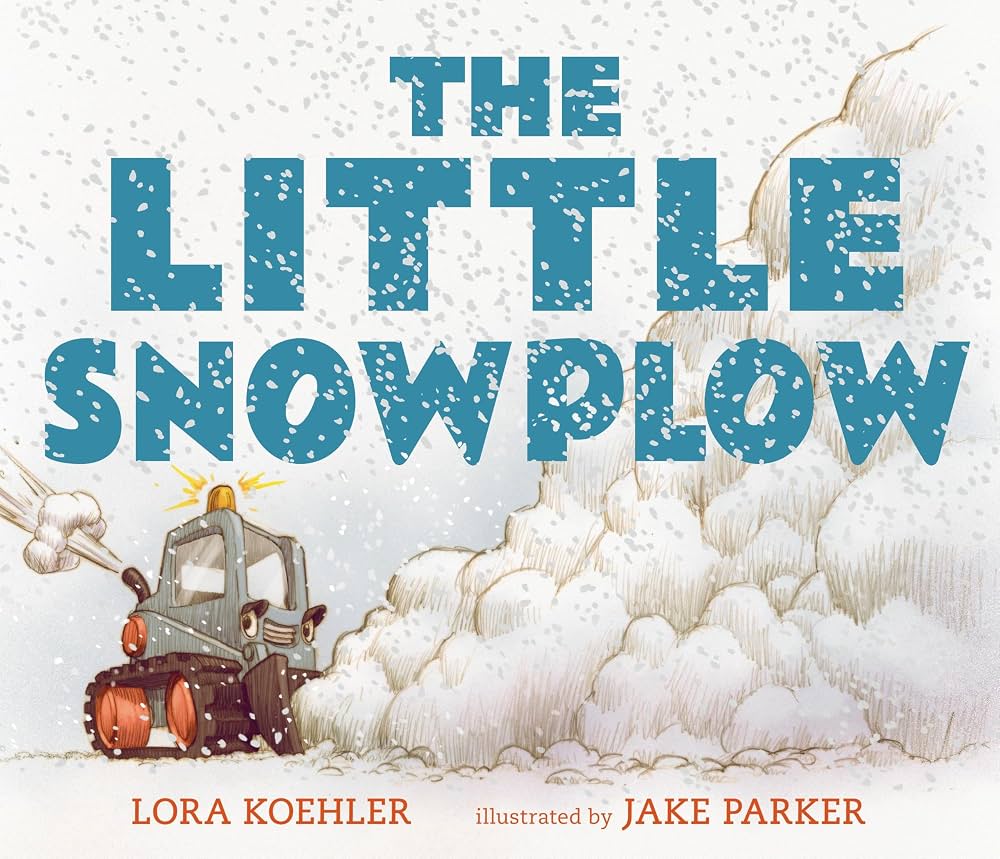
By Laura Koehler, The Little Snowplow (Candlewick, 2022) is a Little-Engine-That-Could story in which the little snowplow proves to all the big trucks that he can hold his own when a blizzard hits the town. For ages 2-5.

In Snowstorm!, a cooperative board game from Family Pastimes, a winter storm is moving in on Little City but, despite the awful weather, everyone has places to go and errands to run. Players must collaborate to get people to their destinations and return them safely home again, while coping with snow and ice. For up to 12 players, ages 5-8.
Spectacular Snowmen

In Alice Schertle’s All You Need for a Snowman (Sandpiper, 2007), a group of kids, pudgy in bright padded jackets, build an enormous snowman. Feature after feature accumulates to the refrain of “That’s all you need for a snowman” – beginning with one fluttering snowflake, then billions of snowflakes, balls of snow, bottle caps, walnuts, a carrot, a scarf, a hat, a broom. For ages 2-6.

In Raymond Briggs’s lovely wordless picture book The Snowman (Random House Books for Young Readers, 1978), a little boy builds a snowman who that evening comes to life, first exploring the unfamiliar indoors (the stove makes him nervous), then taking the boy on a wonderful tour of the winter world, flying through the snowy night sky. For ages 3 and up.

In Caralyn Buehner’s rhyming picture book Snowmen at Night (Dial, 2002), a little boy imagines what snowmen do at night: they slide off to the park for snowball fights, skating, snow-angel-making, and sled races. No wonder they look a little disheveled in the morning. For ages 3-8.

Lois Ehlert’s wonderful collage-illustrated picture book Snowballs (Harcourt Brace, 1995) is packed with creative ideas for making and decorating snow animals and people – and includes a recipe for popcorn-ball snowmen for those who lack enough real live snow. For ages 4-8.

In Steven Kroll’s The Biggest Snowman Ever (Cartwheel Books, 2005), mouse pals Clayton and Desmond – stars of The Biggest Pumpkin Ever – are back and preparing to compete in the town snowman contest. (Again the winning secret is cooperation.) For ages 4-8.

Tony Parillo’s picture book Michelangelo’s Surprise (Farrar, Straus & Giroux, 1998) is based on an actual historical incident: in 1494, after a rare snowfall in Florence, Michelangelo was summoned to the Medici palace to create a sculpture out of snow. For ages 4-8.
Unfortunately no one now knows what Michelangelo’s snow sculpture looked like. But one artist made a guess. See https://emuseum.delart.org/objects/24666/michelangelo-making-the-snow-image-for-piero-de-medici.

Bob Eckstein’s The History of the Snowman (Gallery Books, 2007) is a catchy and informational account, filled with unusual facts and wonderful period illustrations and photographs. There’s even a gallery of the best in snowman cartoons. For teenagers and adults.
Snowman Math has instructions for interactive math-based activities for elementary-level students with printable activity and game sheets. Included are counting, skip counting, and pattern-making exercises (with snowmen), a Frosty Estimation Station, snowman graphing ideas, instructions for an addition-fact “Last Snowman Standing” game, and more.
Snow Science

Nancy Van Laan’s When Winter Comes (Atheneum, 2000) is a wonderful introduction to the winter season for very young readers. A gently repetitive rhyming text explains what happens to leaves, caterpillars, birds, mice, deer, and fish as winter approaches (“Where, oh where, do the leaves all go/When winter comes and the cold winds blow?”), and ends up with a questioning child, red-cheeked from a walk in the snow, being tucked into a cozy bed. For ages 2-7.

Henrietta Bancroft’s Animals in Winter (HarperCollins, 1996) in the Let’s-Read-and-Find-Out Science series explains how animals cope with snow and cold: some migrate; some hibernate; some store stocks of food. Included are simple suggestions for helping animals in winter. For ages 3-6.

In Kate Messner’s Over and Under the Snow (Chronicle Books, 2011), a little girl and her father ski through the woods, exploring the mysterious hidden world of animals beneath the snow. An appendix provides extra information about the animals mentioned in the book. For ages 3-7.

Barbara Seuling’s Winter Lullaby (Sandpiper, 2002) explains in a mix of free verse and rhyme what bees, birds, bats, fish, and people do to keep warm in winter (though the cover, which shows red-leaved trees and a field full of pumpkins, looks like fall). For ages 3-7.

Franklyn Branley’s Snow is Falling (HarperCollins, 2000) in the Let’s-Read-and-Find-Out Science series is a simple explanation of what snow is, where it comes from, and how it can be both good (keeps some things warm) and bad (avalanches). Included are a couple of simple experiments. For ages 4-7.

Jacqueline Briggs Martin’s Snowflake Bentley (Sandpiper, 2009), illustrated with beautiful woodcut prints by Mary Azarian, is the story of Wilson Bentley of Jericho, Vermont, a pioneer in the study of snowflakes, famed for his beautiful photographs of snow crystals taken through a microscope. For ages 4-9.

W. A. Bentley’s Snowflakes in Photographs (Dover Publications, 2000) is an 80-page collection of (many of) Bentley’s original photos.
Check out the official Snowflake Bentley website maintained by the Jericho Historical Society.

Neil Waldman’s The Snowflake: A Water Cycle Story (Millbrook Press, 2003) is the gorgeously illustrated story of the travels of a single drop of water month by month through the year, beginning in chilly January with a snowflake. The next time you throw a snowball, stop and think, the author urges: that water may have tumbled over Niagara Falls, been trapped in a glacier at the North Pole, or been guzzled by a thirsty dinosaur. For ages 5-9.

Mark Cassino’s The Story of Snow (Chronicle Books, 2009) is a well-designed explanation of the science of snowflakes, illustrated with diagrams and photographs. Included are instructions for catching and studying your own snow crystals. For ages 5-10.

Maxine Anderson’s activity-laden Explore Winter! 25 Great Ways to Learn About Winter (Nomad Press, 2007) covers why we have winter in the first place, various ways of coping with it when it arrives (from hibernation to migration to camouflage), and all the scientific specifics of cold weather, snow, and ice. Sample projects: kids build a hibernation den and construct a pair of (cardboard) snowshoes, use cut-out animals for a “Sneak Camouflage Peek,” grow crystals, make snowflake models and preserve captured snowflakes, determine the water content of snow, and build a weather-predictive barometer. For ages 6-10.

Ken Libbrecht’s The Snowflake (Voyageur Press, 2003) is a terrific overview of the science and history of snowflakes, illustrated with gorgeous color photographs. Included are a “Field Guide to Snowflakes” and a discussion of identical snowflakes (Are there really no two alike?). For ages 12 and up.

In Giles Whittell's The Secret Life of Snow (Short Books, 2019) - subtitled "The science and the stories behind nature's greatest wonder" - readers learn how many snowflakes it takes to build a snowman, how snow once saved a British prime minister's life, and the location of the snowiest place on Earth. And more. For teens and adults.
What about when snow turns deadly?
Learn all about avalanches (including how to survive one) at How Stuff Works: Avalanches.
From the Snow and Ice Data Center, All About Snow has a wealth of well-organized and presented information about types of snow, snow formation, snow prediction, snow and climate, and snow ecology (how plants and animals adapt to snow). Included is a terrific resource list.
From Discover magazine, 20 Things You Didn’t Know About Snow is a fascinating (and surprising) list. Learn about watermelon snow, the world’s biggest snowflake, and how snow can (literally) drive you nuts.

Snowflakes really close up! For wonderful images of snowflakes under an electron microscope, see here.
From Cal Tech, Snow Crystals may be the best snow science site on the web. Included are a history of snow crystal studies, information on the physics of snowflake formation, a guide to snowflake classification, snowflake activities for all ages, galleries of snowflake photos, and more. See https://snowcrystals.com/.
Activities and Experiments

Make your own snowflakes! See How to Make the Best Crystal Snowflakes at https://gosciencekids.com/crystal-snowflakes-experiment/.
Make your own snow globe! See https://www.thoughtco.com/benzoic-acid-snow-globe-605981.

Want to build an igloo? Here's how.
Among the Easy Snow and Ice Experiments are instructions for making an icicle, melting ice cubes with salt, making snow ice cream, and painting with rainbow ice.
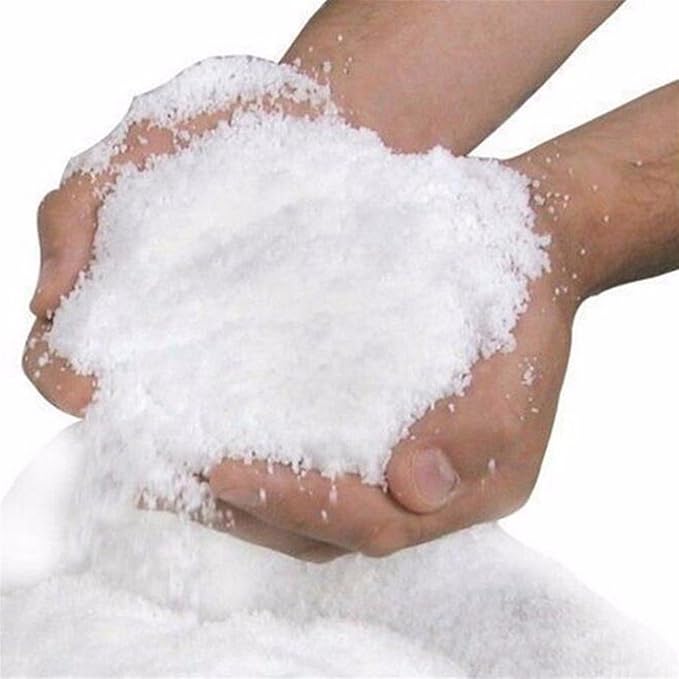
No snow of your own? Try instant snow powder (it's really sodium polyacrylate). Available educational supply companies and Amazon.
See 
Snow Math

Fractals! From Science Out Loud, earn about Koch snowflakes and more.
The Infinite World of Fractals is an interactive overview with questions and problems.
Gorgeous photos of Amazing Fractals Found in Nature.
See How Fractals Work.
Find out why we like fractals. See Why Fractals Are So Soothing.
Is it true that no two snowflakes are alike? Not everybody agrees. Research and report!

It's amazing what you can do with imagination and snowshoes! Check out the incredible geometric snow art of Simon Beck here.
How Many Names for Snow?

In Judi K. Beach’s Names for Snow (Hyperion, 2003), a little mouse asks “What is snow?” and gets a lot of answers – snow is called “Welcome in November” when it first falls, “Trickster” when it shows up belatedly in April, and many other things in between. For ages 4-8.

In Huy Voun Lee’s picture book In the Snow (Henry Holt and Company, 2000), kids learn ten Chinese characters as a mother and child take a snowy walk. (Included, of course, is the character for “snow.”) For ages 4-9.
Most of us have heard the story of the Inuits’ legendary 200 (or so) names for snow – a story that has been debunked by Geoffrey K. Pullum in The Great Eskimo Vocabulary Hoax and Other Irreverent Essays on the Study of Language (University of Chicago Press, 1991). (The crucial essay, for interested older kids, can also be found at https://languagelog.ldc.upenn.edu/myl/EskimoVocabularyHoax.pdf?.)
It looks like nobody yet agrees on the number of Inuit names for snow. See https://www.thevindi.com/post/the-great-eskimo-vocabulary-hoax-how-many-words-represent-snow-in-the-inuit-yupik-unangan-langu.
Snow Arts and Crafts

Cindy Higham’s Snowflakes for All Seasons (Gibbs Smith, 2004) has instructions and patterns for 72 different versions of paper snowflakes for every holiday of the year. Try heart flakes for Valentine’s Day, bunny flakes for Easter, or bat flakes for Halloween. Fun all year round.

Peggy Edwards’s Make Your Own Paper Snowflakes (Dover Publications, 2006) has patterns for 32 different lacy paper snowflakes.

See these illustrated step-by-step instructions for making paper snowflakes.
Instructions for making a cool 3-D paper snowflake can be found here.

Make gorgeous 6-sided kirigami snowflakes – or try these
pattern block snowflakes!
Enchanted Learning has illustrated instructions for making paper snowflakes and snowflake greeting cards.

See here for instructions for making your own snow paint. The recipe calls for white glue and shaving cream; the result is a thick fluffy white paint that looks like snow. Great for snowman pictures.

Snow Painting and Snow Gems has a recipe for colorful paints used for painting on snow. You’ll need liquid food coloring, water, and plastic spray bottles. And, of course, snow.
Winter Crafts for Kids has instructions for making cotton ball snowmen, a snow measuring stick, sparkly cereal snow, and more.
Snow Poems

Jack Prelutsky’s It’s Snowing! It’s Snowing! (HarperCollins, 2006) is an illustrated collection of sixteen snowy poems, among them “Winter Signs,” “My Sister Would Never Throw Snowballs at Butterflies,” and “The Snowman’s Lament.” For ages 4-9.

Douglas Florian’s Winter Eyes (Greenwillow, 1999) is an illustrated collection of 28 short clever rhyming poems (including “What I Love About Winter” – “Snowball fights/Fireplace nights” – and “What I Hate About Winter” – “Frozen toes/Running nose”). Try some of your own. For ages 6-10.

Steven Schnur’s Winter: An Alphabet Acrostic(Clarion Books, 2002) is a playful collection of 26 acrostic poems arranged alphabetically – they’re fun to read and almost certain to inspire young writers to try versions of their own. For ages 6-10.

Paul B. Janeczko’s Poetry from A to Z (Simon & Schuster Books for Young Readers, 2012) is a collection of alphabetized examples, suggestions, and projects for would-be poets. Kids try acrostics, clerihews, list poems, memory poems, shape poems, and much more. Under “How-to Poems,” see Ralph Fletcher’s “How to Make a Snow Angel.” For ages 9 and up.

Jane Yolen’s photo-illustrated Snow, Snow: Winter Poems for Children (Wordsong, 2005) is a collection of Yolen’s own winter poems (among them a tribute to a snowmobile). For ages 9-12.

Robert Frost’s Stopping by Woods on a Snowy Evening (Dutton Juvenile, 2001), exquisitely illustrated by Susan Jeffers, is a beautiful picture-book version of the classic poem. For all ages.
Ralph Waldo Emerson’s poem “The Snow-Storm” can be found here. (“Announced by all the trumpets of the sky/Arrives the snow…”)
Robert Frost’s poem “Dust of Snow” can be found here.
Billy Collins’s poem “Snow Day” (“Today we woke up to a revolution of snow…”) can be found here.
Henry Wadsworth Longfellow’s poem “Snow-flakes” (“This is the poem of the air…”) can be found here.
Cooking with Snow
Make snow cream! See https://www.youtube.com/watch?v=CVB9DDdRFIA. (You'll need four cups of fresh snow.)

Make sugar on snow. (You’ll need snow and maple syrup.)