
Presidents and Elections
In this collection
Elephants and donkeys; why voting is important; a president who got stuck in the bathtub; and some great political cartoons…
Election Stories
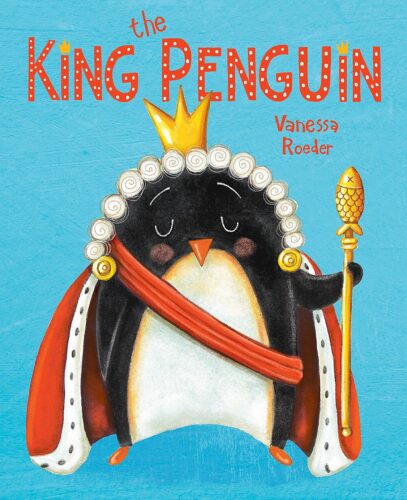
In Vanessa Roeder’s The King Penguin (Dial Books, 2023), Percival the King penguin insists on making all the rules and having his own way. The other penguins protest, so he sets off to find subjects who are more obedient. Nobody—not the seals, not the whales, and definitely not the rude sardines—wants a king, so Percival finally learns that he needs to live in a community, not a kingdom. For ages 3-6.

By Doreen Cronin and Betsy Lewin, Duck for President (Atheneum Books for Young Readers, 2004) is a clever and hilarious take on the political process. Duck is unhappy with his assigned chores on the farm (take out the trash, mow the lawn, grind the coffee beans), so he decides to hold an election and run for farmer. He beats the incumbent Farmer Brown; then finds that running a farm is hard work, so – in best Peter Principle fashion - he decides to run for governor, then president. (His campaign motto: “Duck, making us proud again.”) Executive office, however, also proves too taxing, and when Duck discovers that Farmer Brown is now advertising for a duck, he turns the Oval Office over to the vice president and returns to the farm. A hoot for ages 4 and up.

The cover of Ben Clanton’s Vote for Me! (Kids Can Press, 2012) has a glaring Donkey on the blue half of the page and a hostile Elephant on the red, which sets the stage for the rest of the action: the respective candidates bicker, bellow, call each other names, and offer shameless bribes to the electorate (PEANUTS! CANDY!). The outcome: independent candidate Mouse swoops in and wins the day. It’s a fun (but sobering) take on political discourse for ages 4 and up.
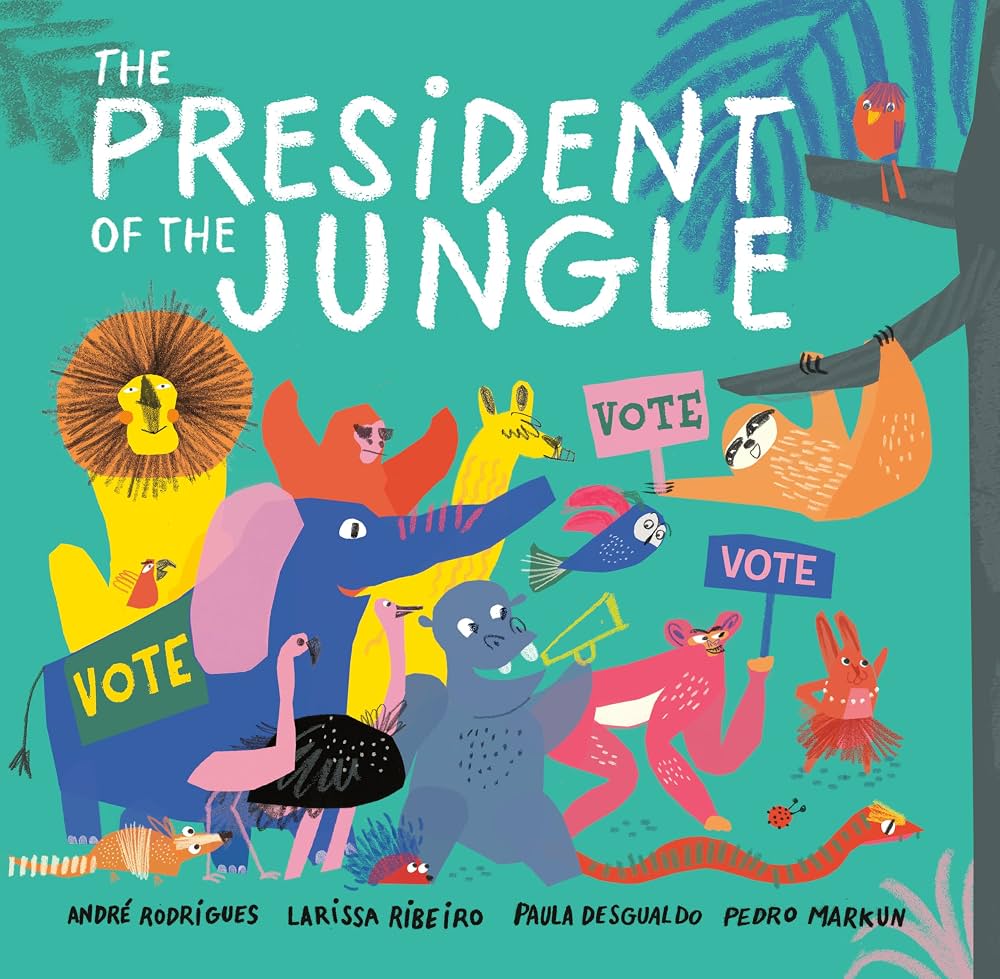
By André Rodrigues et al., in The President of the Jungle (Nancy Paulsen Books, 2020), Lion is king of the jungle—but after he reroutes the river to make a personal swimming pool, the other animals decide they’ve had enough of his selfishness and prepare to hold an election for a president. A funny and friendly introduction to election rules, campaigns, rallies, debates, and public engagement. For ages 5-8.

Election Day (Simon Spotlight, 2004) in Margaret McNamara’s Robin Hill School Ready-to-Read series features a classroom election. Kid candidates make grand campaign promises – a candy machine, no homework, a six-month summer vacation – until Becky takes a turn, explaining sensibly that she can’t guarantee spectacular treats, but that she’ll do her best. Guess who wins? (After, that is, the everybody-cover-your-eyes secret vote.) For ages 4-6.
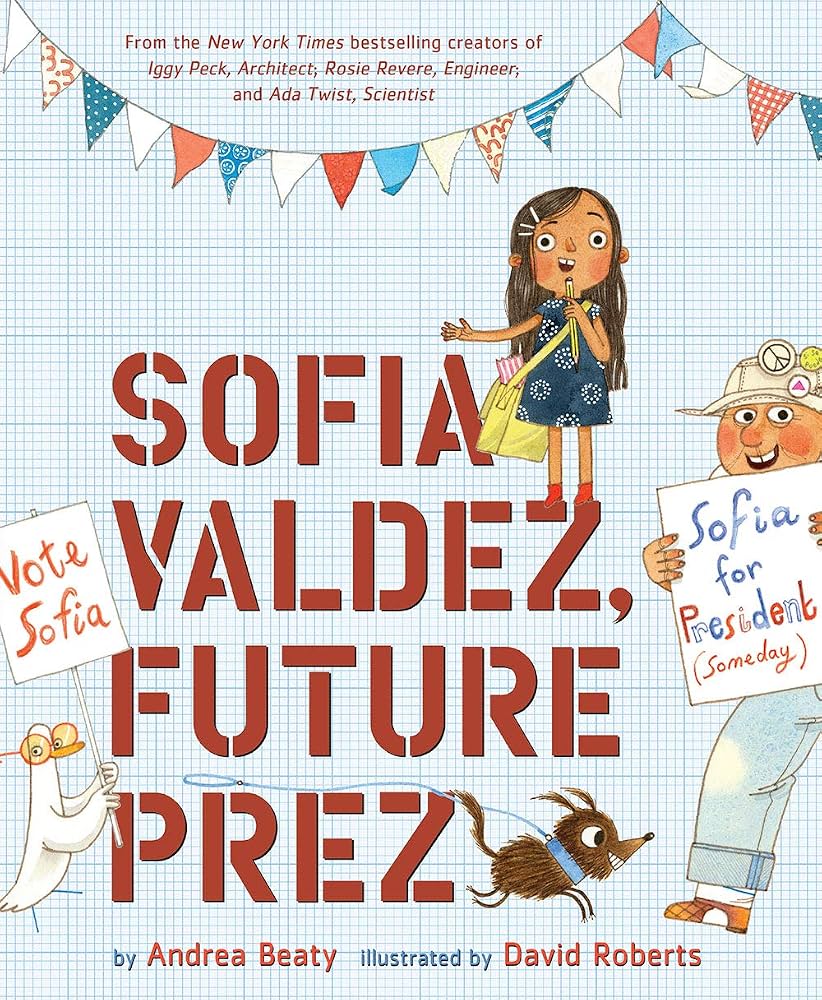
In Andrea Beaty’s Sofia Valdez, Future Prez (Abrams, 2019), when Sofia’s abuelo hurts his ankle at the local landfill, Sofia is inspired to become a political activist. For ages 4-7.
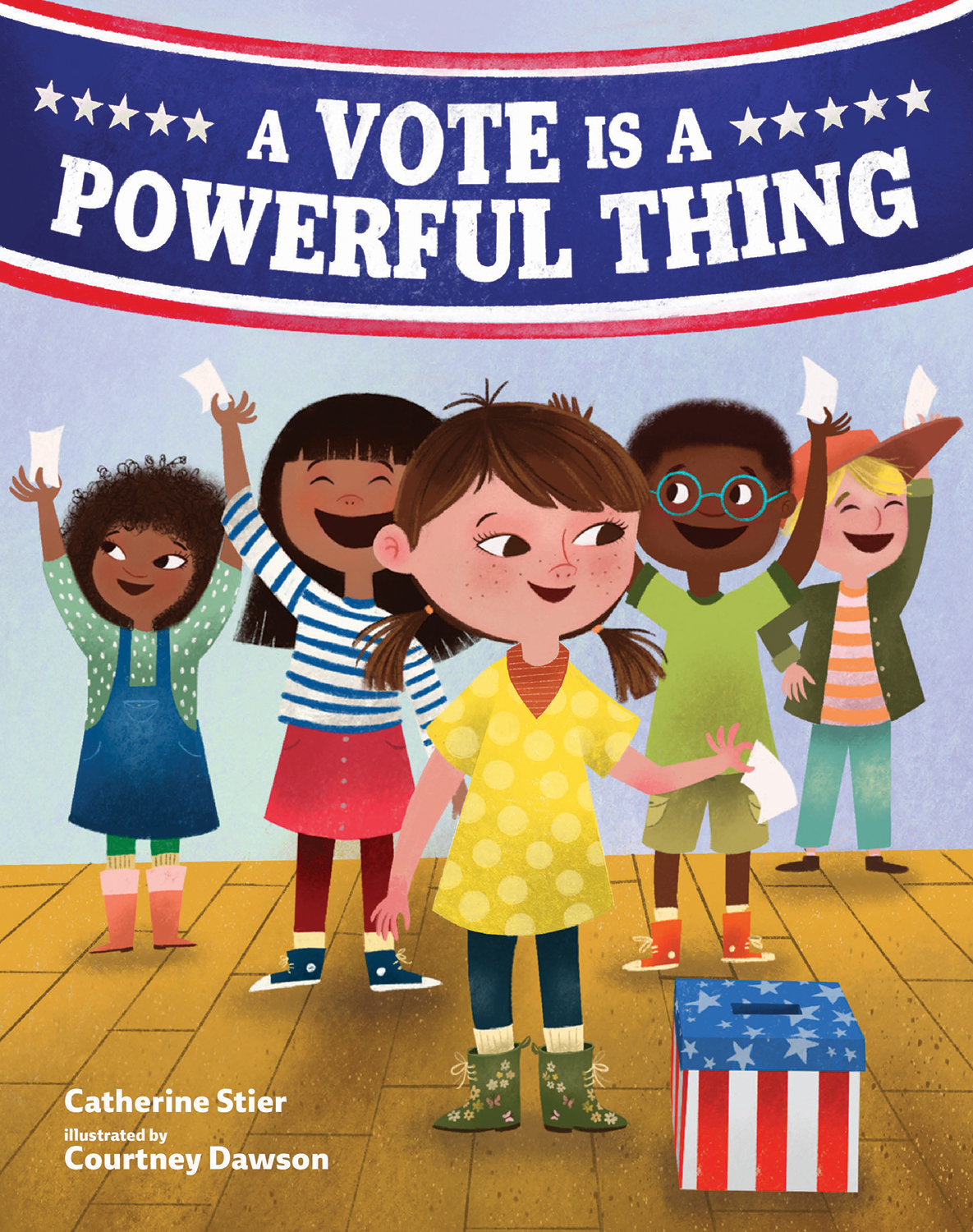
In Catherine Stier’s A Vote Is a Powerful Thing (Albert Whitman, 2020), a presidential election is coming up—but Callie’s school class is holding an election too: where to go on the class field trip, the cookie factory or the wilderness park? All about elections and election issues, voting and campaigns. For ages 4-8.
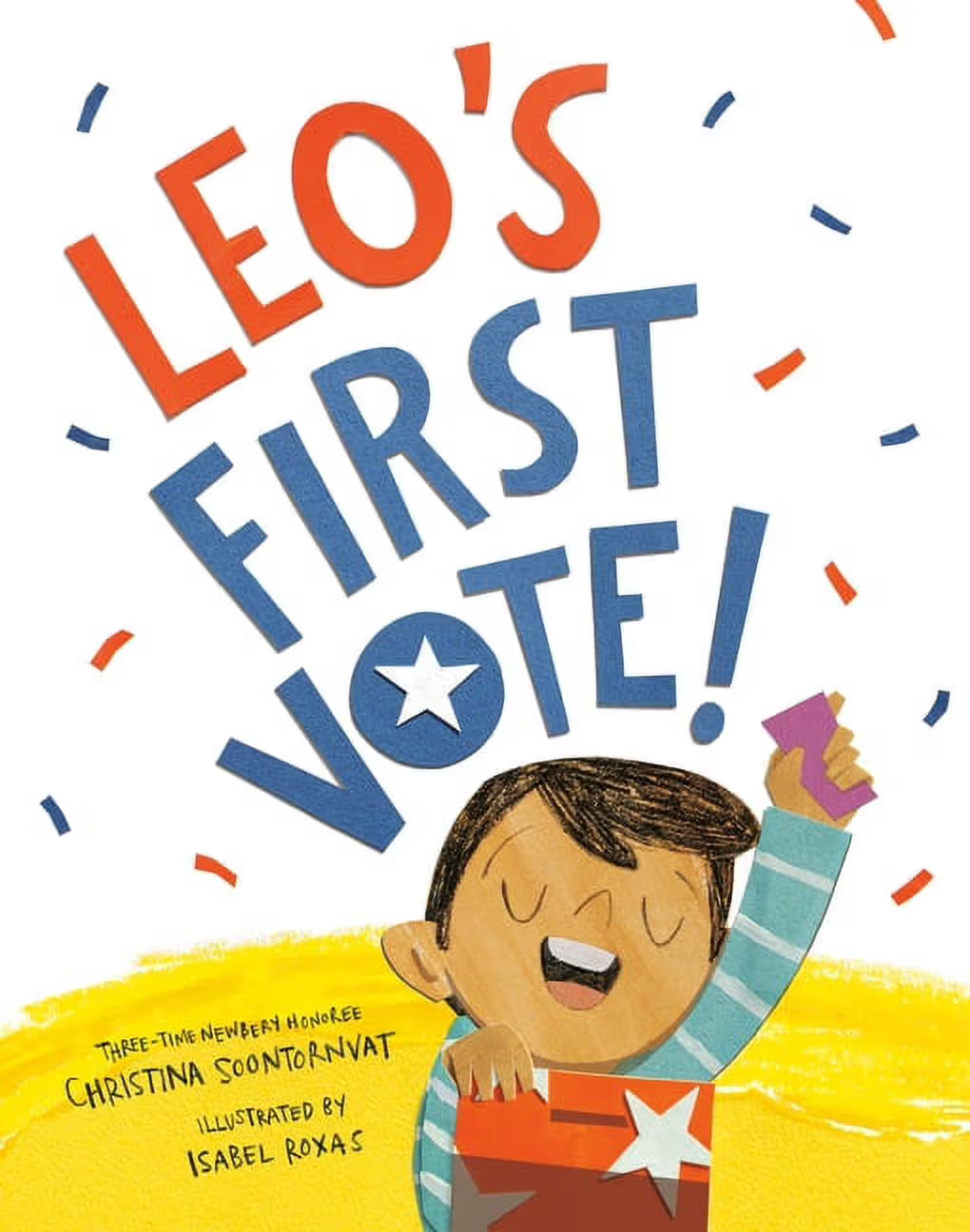
By Christina Soontornvat, in Leo’s First Vote (Knopf, 2020), Leo’s dad is casting his first vote as a naturalized American citizen and is taking Leo with him to the polls—but does any one vote really matter? A catchy picture-book account of the processes of voting and the importance of elections—and yes, every single vote matters. For ages 4-8.

In Kelly S. DiPucchio’s Grace for President (Hyperion Books for Children, 2012), when teacher Mrs. Barrington rolls out a poster of presidential portraits, Grace Campbell is appalled: “WHERE ARE THE GIRLS?” Upset, Grace decides to run for president – and her teacher helps by organizing an election in which the kids in the class represent different states with their varying complements of electoral college votes. For ages 5-8.

Nick Bruel’s Bad Kitty books are hilarious graphic novels, with black-and-white illustrations and interpolated nonfiction explanations of the action (from Uncle Murray, owner of the hapless Poor Puppy). In Bad Kitty for President (Square Fish, 2012), readers learn about elections as Bad Kitty competes to be president of the Neighborhood Cat Coalition. For ages 7 and up.

In Johanna Hurwitz’s Class President (HarperCollins, 1990), the fifth grade is electing a president. The main contenders are class clown Lucas and teacher’s pet Cricket (characters featured in Hurwitz’s earlier books), but Julio, Lucas’s generous, upright, and responsible campaign manager, seems more suited for the job. A chapter book for ages 7-10.

In Jennifer Holm and Matthew Holm’s Babymouse for President (Random House, 2012), Babymouse – the endearing mouse “with messy whiskers and a complete inability to remember her gym sneakers” – is running for president on a platform of a cupcake in every locker. She’s up against Felicia Furrypaws and her notorious mean-girl coalition. This is one of the popular Babymouse graphic novel series (in black, white, and pink) for ages 7-11.
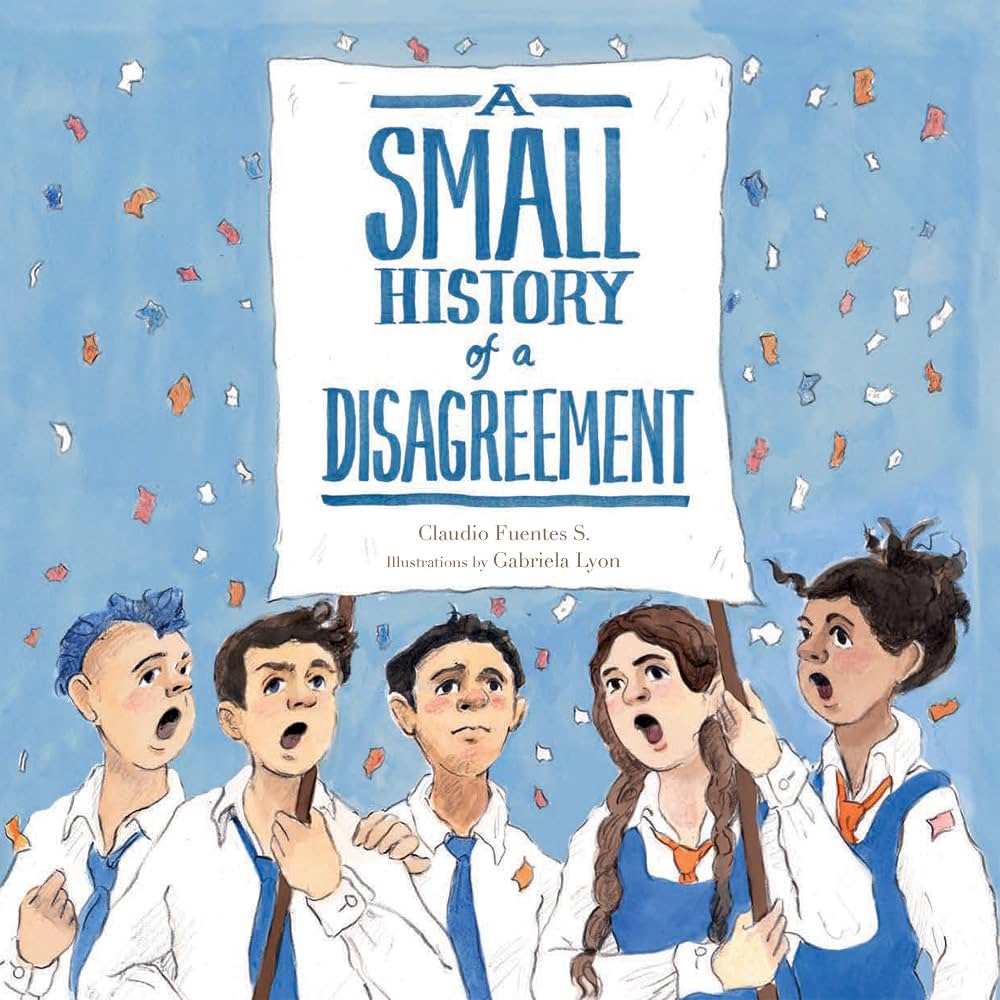
By Claudio Fuentes, in A Small History of a Disagreement (Greystone Kids, 2020), there are plans to cut down an ancient monkey puzzle tree to make room for new classrooms - and soon the school is divided between Millennials, who want to save the tree, and Developers, who want it to go. Kids march, protest, and eventually put the issue to a vote. For ages 7-12.

In Catherine Clark’s How Not to Run for President (Egmont USA, 2011), twelve-year-old clarinet player Aidan Schroeckenbauer saves presidential candidate Bettina Brandon (of the Fresh Idea Party) from a plummeting sign at a rally and ends up adopted by her campaign. The book is a catchy take on the election process, as Aidan copes with dirty politics and invasive media – and with Brandon’s daughter Emma, who can’t stand him. For ages 8-12.

The star of Dan Gutman’s The Kid Who Ran for President (Scholastic Paperbacks, 2012) is 12-year-old Judson Moon, who decides to run for president in the 2000 election. He and best friend/campaign manager Lane Brainard found the Lemonade Party, recruit June Syers, Judson’s elderly African-American ex-babysitter as vice presidential running mate, and make it all the way to the debates on national TV. Amazingly, he wins the election (voters love him) - though Judson ultimately turns down the presidency, feeling that he’s bitten off more than he can chew. It’s funny, but there’s food for discussion here too: why, for example, do you have to be at least 35 to run for president? And why would adults vote for a kid? For ages 8-11.

Tom Angleberger’s thoroughly goofy Fake Mustache (Amulet Books, 2012), subtitled “Or, How Jodie O’Rodeo and Her Wonder Horse (and Some Nerdy Kid) Saved the U.S. Presidental Election from a Mad Genius Criminal Mastermind,” features seventh-grader Lenny Flem Jr. and his friend Casper, who gets a gift of $400 from his nana Nookums and uses it to buy an impressive and expensive fake mustache (a Heidelberg Handlebar Number Seven) and a man-about-town suit. Thus disguised, Casper embarks on a career of bank-robbing (lifting billions), with the goal of becoming President of the United States and taking over the world. Only Lenny (the nerdy kid of the title) and Jodie O’Rodeo, a TV teenage singing cowgirl, are immune to Casper’s mesmerizing appeal, and it’s up to them to foil his dastardly plot. For ages 9-12.

Janet Tashjian’s footnote-spotted Vote for Larry (Square Fish, 2008) is told in the first person by 17-year-old prodigy Josh Swenson, whose virtual alter ego Larry plans to reform politics by running for the presidency. Mystery, romance, idealism, and a lot of political facts for ages 14 and up. Also by Tashjian featuring Josh/Larry: The Gospel According to Larry (2004) and Larry and the Meaning of Life (2008).

Philip Roth's The Plot Against America (HMH, 2004) is an alternative history in which Franklin Roosevelt is defeated in the election of 1940 by Charles Lindbergh, a Hitler sympathizer, under whom anti-Semitism runs rampant. For teens and adults.

Sinclair Lewis’s It Can’t Happen Here (Signet, 2014), originally published in 1935, is a cautionary tale about the fragility of democracy. Buzz Windrip, a jingoistic demagogue, has been elected to the presidency, promising to bring prosperity and greatness, but instead establishing an authoritarian state. In opposition is small-town Vermont newspaper editor Doremus Jessup. An important and timely read for teens and adults.
Voting and Democracy (and a few problems)
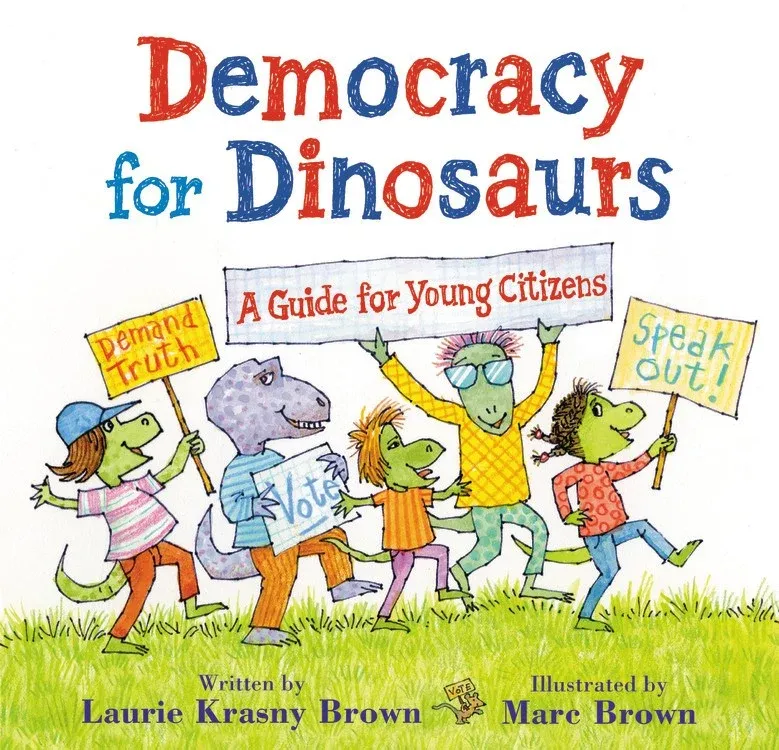
By Laurie Krasny Brown, Democracy for Dinosaurs (Little, Brown, 2022) is a graphic-novel-style guide for the youngest citizens, covering principles of sharing, fairness, honesty, truth, respect for free speech, civic responsibility, and the rule of law. For ages 4-8.

Catherine Stier’s If I Ran for President (Albert Whitman & Company, 2007) is a nicely done introduction in which six multiracial kids take turns explaining the ins and outs of the election process, from the initial decision to run, through campaigns, primaries, conventions, debates, voting, and the ultimate decision of the electoral college, ending with the inaugural address. For ages 5-9.
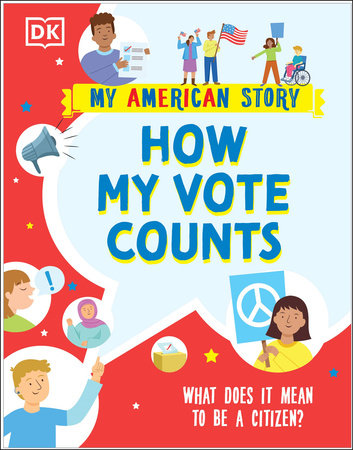
How My Vote Counts (DK, 2023) in the My American Story series is a picture-book account of what it means to be a citizen and the history and events that have shaped citizens’ rights and American government. For ages 7-9.
Other titles in the series are Power for the People, Making the Rules, and Our Traditions.

Eileen Christelow’s Vote! (Clarion Books, 2018) uses the election of a new mayor as a jumping-off point for a discussion of the history of voting rights, the nature of political parties, and the campaign and voting process, with a lot of humorous illustrations and comments by the mayoral candidate’s two very involved dogs, Elmer and Sparky. A great choice for ages 7-10.
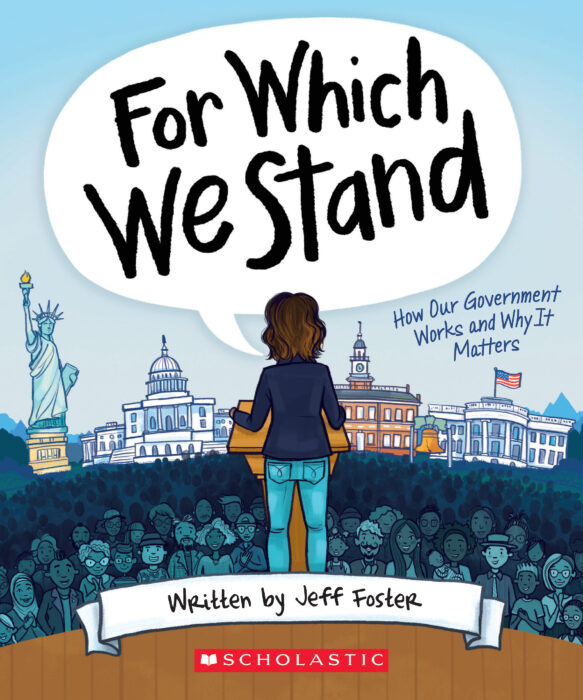
Jeff Foster’s For Which We Stand (Scholastic, 2020) covers all the basics of our government and how it works with charts, maps, color illustrations, and infographics. Readers learn about founding documents, the three branches of government, checks and balances, political parties, running for office, voting, the Electoral College, the powers of the president, the powers of Congress, how a bill becomes a law, the Supreme Court, and the cabinet. For ages 8-11.

Vote in the popular DK Eyewitness series (Dorling Kindersley Publishing, 2008) is a visually appealing history of the election process, lushly illustrated with photos of artifacts and reproductions of prints and paintings. Each double-page spread covers a different topic, among them “Democratic roots,” “The first parliaments,” “Slaves or citizens?” “Power to the workers,” “Votes for women,” “How elections work,” and “Protest!” Also included are world facts and figures, a timeline of democracy, and an “A to Z of famous people.” For ages 8-12.
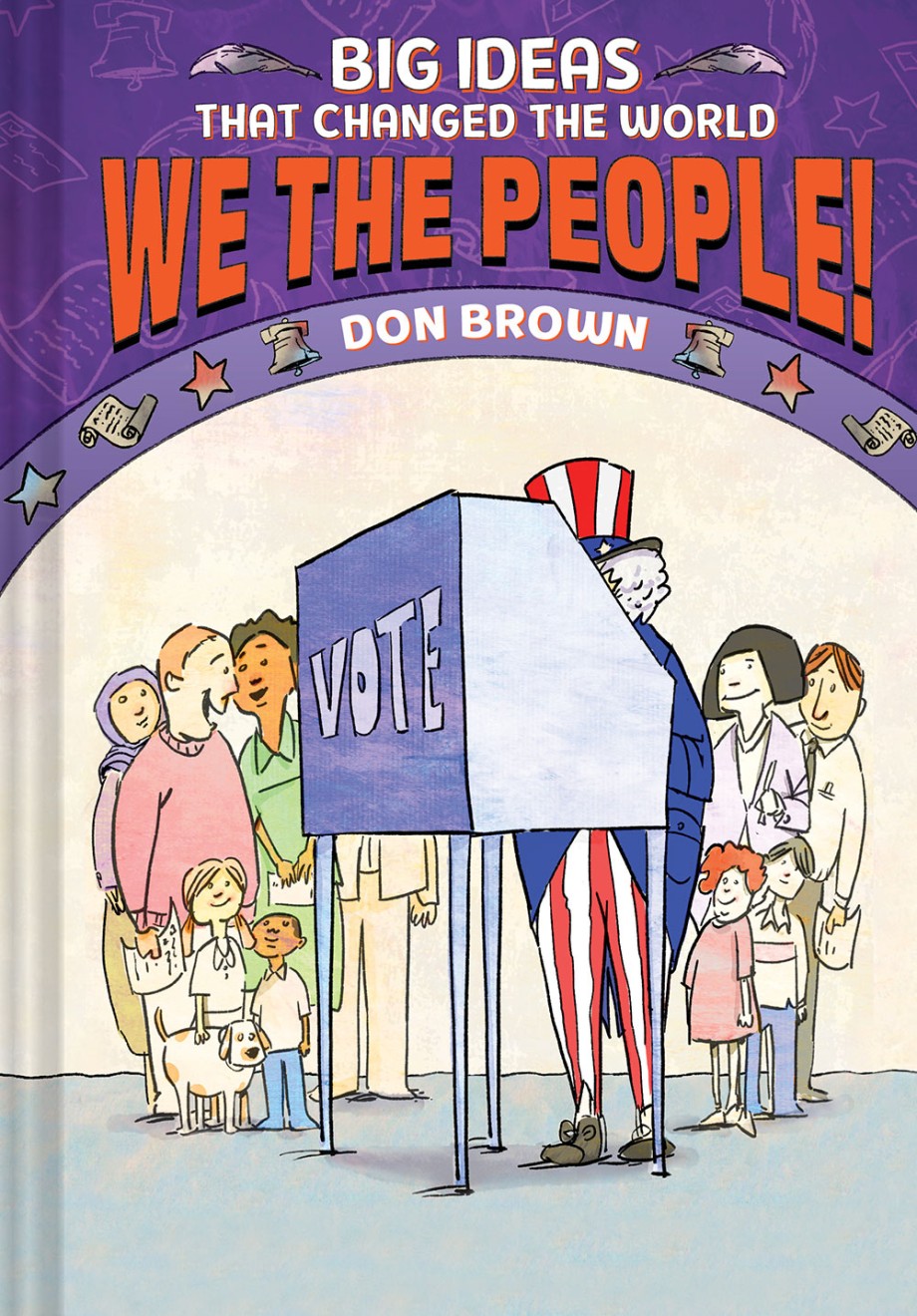
We the People! by Don Brown (Abrams Fanfare, 2022) in the Big Ideas That Changed the World series, is a fact-filled graphic novel—narrated by Abigail Adams—that traces the history of democracy from the dawn of civilization on. For ages 8-12.

See How They Run: Campaign Dreams, Election Schemes, and the Race to the White House by Susan E. Goodman (Bloomsbury USA, 2008) is a 96-page history of elections from the beginnings of democracy in ancient Greece to the modern-day electoral college, spattered with witty anecdotes, fact sidebars, quotations, photos, illustrations, and clear explanations. Readers learn all the basics, plus get the scoop on mudslinging, assassinations, and Andrew Jackson’s over-the-top inauguration party that wreaked havoc with the White House chairs. For ages 9-13.

Jaded adults may not agree with the introductory description of a presidential campaign (“It’s like one big yearlong party”), but Dan Gutman’s Election! A Kid’s Guide to Picking Our President (Open Road Young Readers, 2012), written in a catchy question-and-answer format, is an excellent overview of presidential elections for ages 9-12. Sample questions include “Why do we have a president?” “Is the president the boss of the United States?” and “What’s the difference between a Democrat and a Republican?” For ages 9 and up.
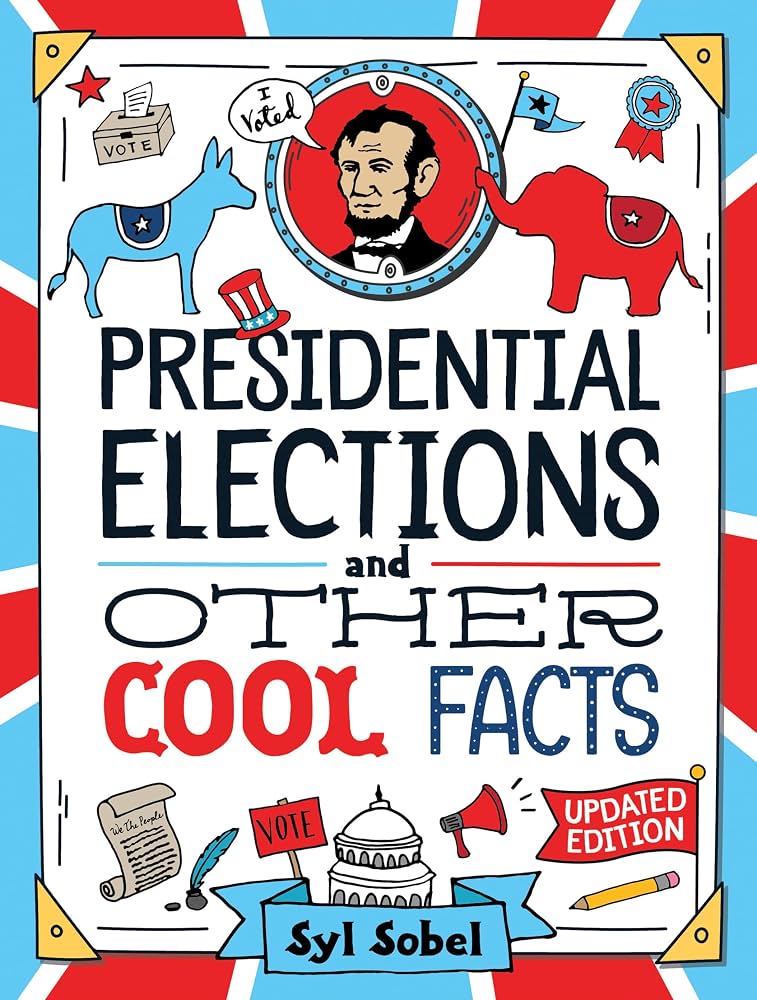
By Syl Sobel, Presidential Elections and Other Cool Facts (Sourcebooks Explore, 2024) is a step-by-step guide to the process of electing a president. Readers find out who can run, who’s eligible to vote, what the electoral college is and why we have it, and more. For ages 8-12.

Richard J. Maybury’s Are You Liberal? Conservative? Or Confused? (Bluestocking Press, 2004), written as a series of helpful letters from the savvy Uncle Eric to his politically confused niece/nephew Chris, endeavors to define such essential terms as liberal, conservative, left, and right, and to put them in historical perspective. Maybury is opinionated and readers may not always agree with his views, but he’s a guaranteed discussion-starter. For ages 11 and up.
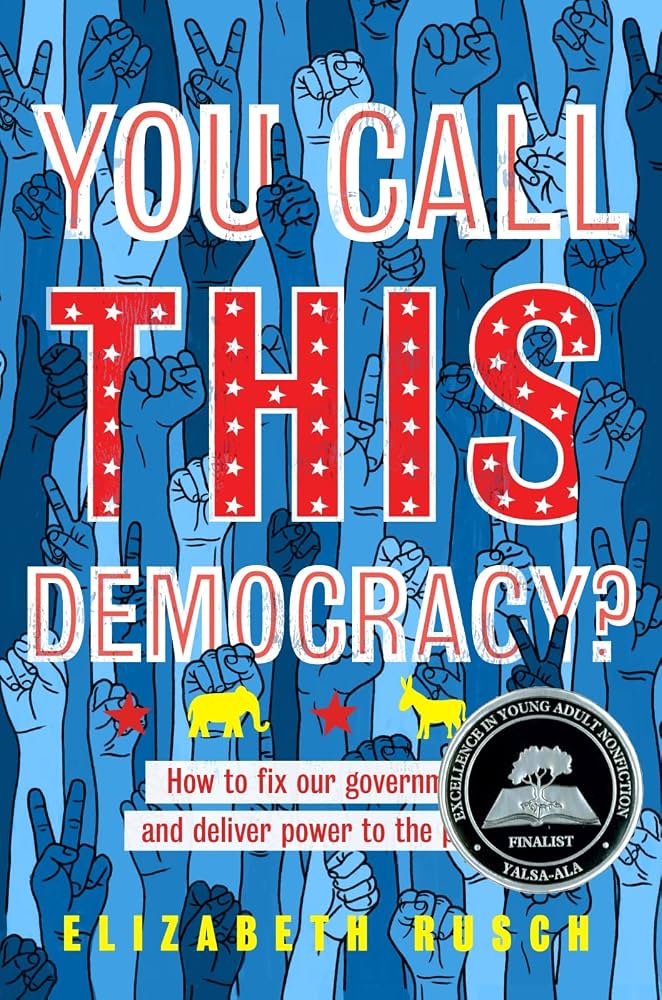
By Elizabeth Rusch, You Call This Democracy? (Clarion, 2020) is an overview of the problems we face in government today, explaining each and offering possible solutions and ways to effect change. Chapters include “You Can’t Vote for President,” “Strange Maps,” “Unrepresentative Senate,” “Elections for Sale,” and “Suppressing the Vote.” For ages 12 and up.
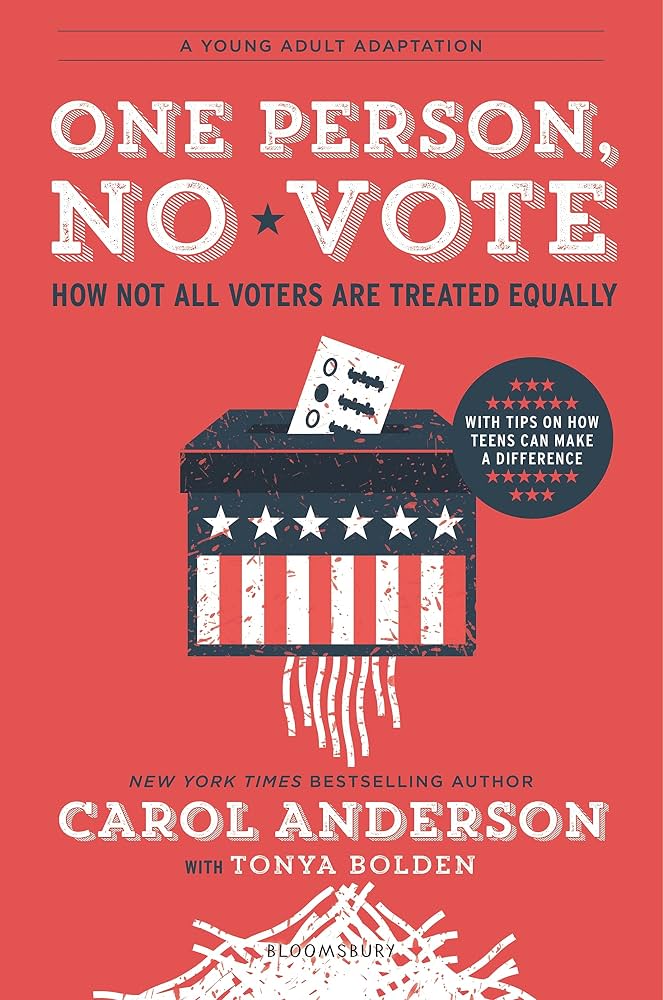
Carol Anderson and Tonya Bolden’s One Person, No Vote (Bloomsbury YA, 2019) is a history of voter suppression. This is an adaptation of the adult book of the same title for younger readers. For ages 12 and up.

At Ben’s Guide to the U.S. Government for Kids, Ben is a cartoon Benjamin Franklin who provides grade-specific general information on the process of electing the president, vice president, senators, and representatives. Explanations are provided at three different levels, for grades 3-5, 6-8, and 9-12.

From the Library of Congress, Presidential Elections and Voting in U.S. History provides lesson plans and primary source documents for studying concepts and events in election history. Topics covered include nominating candidates, election campaigns, and voters and voting rights. See https://www.loc.gov/classroom-materials/elections/.
Election Scavenger Hunt is a project in which kids scour the newspapers for informational articles, photographs, and cartoons about the opposing candidates. Adaptable for a wide range of ages.

From the Smithsonian in Your Classroom, Winning the Vote: How Americans Elect Their President is a collection of interactive lesson plans on the presidency, political parties, and presidential campaigns. Included at the website are instructions, discussion questions and printable illustrated worksheets.
From the Center for Civic Education, We the People: The Citizen & Democracy by Charles N. Quigley is a civics text available in Upper Elementary, Middle School, and High School editions. The Upper Elementary book (grades 3-5), for example, is divided into two major sections—“What Is Democracy?” and “How Did the United States Become a Democracy?”—and consists of eleven lessons, illustrated with maps, colorful drawings, and photos. Lessons include a list of discussion questions. See https://www.civiced.org/we-the-people.
PRESIDENTS
Presidential Elections covers all in order, starting with George Washington.

Catherine Stier’s If I Were President (Albert Whitman & Company, 1999), explains the duties (and perks) of the president through the eyes of a presidential kid, wearing a blue jacket and red bowtie. “If I were president, I’d start work early each morning in the Oval Office…If I were president, each year I’d give a speech to Congress called the State of the Union…If I were president, one of my favorite jobs would be passing out medals to people who had done brave deeds.” For ages 4-8.

Judith St. George’s So You Want to Be President? (Philomel Books, 2004), a creative picture-book overview of presidents and the presidency, begins with the good and bad aspects of the office. Good: You get to live in the White House, with your own swimming pool, bowling alley, and movie theater. Bad: You have to be dressed up all the time. (William McKinley, St. George tells us, decked himself out daily in a frock coat, satin tie, gloves, and top hat.) A collective portrait of presidents in labeled T-shirts is a gallery of presidential first names: six Jameses, four Johns, four Williams, three Georges, two Andrews, and two Franklins. Many presidents had pets (Benjamin Harrison kept a goat); some were musical (Jefferson played the violin; John Quincy Adams, the flute; Warren Harding, the sousaphone); and several had unconventional educations. (Nine presidents never went to college; and Andrew Johnson didn’t learn to read until he was fourteen). An appendix lists the presidents in chronological order, with brief statements of crucial events of their administrations. For ages 6-10.

Mike Venezia’s Getting to Know the U.S. Presidents series (Children’s Press) is a collection of clever 32-page biographies of every president from George Washington to George W. Bush, each illustrated with photos, period prints, and clever cartoon asides. For ages 5-9.

Susan Katz’s The President’s Stuck in the Bathtub (Clarion Books, 2012) is a collection of 43 funny and fact-filled illustrated poems, one for each president (so far), beginning with “Where Didn’t George Washington Sleep?” (Everywhere except the White House.) For ages 6-9.

Also see Mac Barnett's President Taft is Stuck in the Bath (Candlewick, 2016). ("Blast!" said Taft. "This could be bad.") For ages 4-8.
For more on the particularly plump President Taft, see William Howard Taft is Still Stuck in the Tub.

Laurie Calkhoven’s I Grew Up to Be President (Scholastic Paperbacks, 2011) is a nicely designed introduction to the presidents from Washington to Obama, with a colorful pair of pages devoted to each, covering childhood, career, notable accomplishments, and unusual facts. Short sections at the end explain the three branches of government and the process of presidential elections. For ages 7-11.

Julia Moberg’s Presidential Pets (Charlesbridge, 2012) provides bulleted lists of catchy information (Presidential Stats, Tell Me More, and Accomplishments & Events) on all the presidents and their pets – which included, along with a lot of conventional dogs and cats, John Quincy Adams’s alligator, Thomas Jefferson’s bear cubs, Martin Van Buren’s tigers, Teddy Roosevelt’s zebra, and Woodrow Wilson’s sheep. A drawback: each president/pet is introduced with an awkward little poem. For ages 7-11.

Kathleen Krull’s Lives of the Presidents: Fame, Shame, (and What the Neighbors Thought) (Harcourt Children’s Books, 2011) is a talented, terrific, and highly readable collection of 42 presidential biographies, filled with human interest, and illustrated with (giant-headed) portraits by Kathryn Hewitt. Highly recommended for ages 8 and up.

Joe Rhatigan’s White House Kids (Imagine Publishing, 2012) is a creatively designed 96-page history of presidents’ children, illustrated with photos, paintings, and period prints. Included are short first-person accounts of their experiences by the kids themselves and intriguing fact boxes with titles like “What Did the Jackson White House Kids Get for Christmas?” For ages 7-12.

PBS’s The Presidents series covers them all in individual episodes, from George Washington to Bill Clinton. At the website, click on each president for primary source material, images, and film clips.
Voting, ELECTIONS...and Math

Eleanor May’s Mac & Cheese, Pleeze! (Kane Press, 2008) is an upbeat exercise in election math as Caitlin’s class holds a Lunch Election, with each kid campaigning for a chosen main dish. Among the contenders are Turkey Wieners, Tofu Surprise, and Caitlin’s own Mac & Cheese. As Caitlin plugs her favorite, she devises quick tricks for calculating the rapidly changing numbers of supportive voters. For ages 6-8.

Is Democracy Fair? by Leslie Johnson Nielsen and Michael de Villiers (Key Curriculum Press, 1997) is an activity-based 150+-page text on the mathematics of voting and apportionment – that is, problems created by different voting methods and election decision procedures, and problems pertaining to apportioning equitable numbers of representatives to the U.S. House. A thought-provoking meld of math, history, and politics with many project suggestions for ages 12 and up.
The Mathematics of Voting covers fairness criteria, voting methods, and ranking procedures, all with explanations and exercises. For ages 12 and up.
See Voting and Elections from the American Mathematical Society. For teens and up.

George G. Szpiro’s Numbers Rule (Princeton University Press, 2010), subtitled “The Vexing Mathematics of Democracy from Plato to the Present,” is a fascinating in-depth look at elections and voting methods, combining biography, human interest, history, and – yes – math. Learn about ancient Greek murder trials, Lewis Carroll’s take on voting, and how to choose a pope. For older teenagers and adults.
From the New Yorker, Win or Lose discusses various voting methods and reviews Szpiro’s book.
Political Cartoons
Just as no man is a hero to his valet, no politician is a hero to a political cartoonist. Those cartoons provide lots of food for thought. Especially in an election year.

From Greenhaven Press, the Examining Issues Through Political Cartoons series includes themed volumes on Abortion, Censorship, The Death Penalty, The Environment, Euthanasia, The Great Depression, Illegal Immigration, Iraq, The Nazis, Terrorism, The Vietnam War, and Weapons of Mass Destruction. For ages 12 and up.

Edited by Charles Brooks, Best Editorial Cartoons of the Year (Pelican Publishing), issued annually, is a thought-provoking collection of the best, covering a broad range of political and social topics. For teenagers and adults.
From the Association of American Editorial Cartoonists, Cartoons for the Classroom has many downloadable cartoon-based lesson plans, cartoon evaluation worksheets, and blank cartoons (invent your own captions).
Interpreting Political Cartoons in the History Classroom is a general guide to understanding and analyzing political cartoons. Included are teaching suggestions and printable worksheets with sample cartoons.
From the Library of Congress, Political Cartoons has lesson plans, a teacher’s guide, historical political cartoon collections, and more.
Who Says You're Too Young to Vote?

The University of Virginia’s Youth Leadership Initiative - an online resource for civics teachers - has lesson plans for grades K-12, an interactive legislative simulation (“E-Congress”) in which participating kids can bring a bill to law, a political campaign simulation (“A More Perfect Union”), and a mock election in which registered participants can vote for senators, representatives, state governors, and president.