
Cooking
In this collection
It turns out that everything – well, almost everything – can be learned through cooking.
Science, history, math, geography, art, and literature are all connected to cooking – to say nothing of the benefits of cooking itself, which involves making something yummy and nutritious to eat.
See below for cross-curricular connections, projects and experiments, storybooks and poems, and many not-just-your-ordinary recipes.
Cooking and Literature

Eat the alphabet! Many distributors offer letter and number cookie-cutter sets. (Learn to spell and count with cookies!)

Cheryl Apgar’s Book Cooks (Creative Teaching Press, 2002) has a book-related recipe for each letter of the alphabet from A (Apple Smiles) to Z (Zebra Pudding), plus poems, songs, and extension activities. Featured books include The Very Hungry Caterpillar, The Tiny Seed, Green Eggs and Ham, Harold and the Purple Crayon, and Stone Soup. (No heat source required for any of the recipes, which makes things easy for groups of little kids.) For ages 3-7.

By Georgeanne Brennan, the Green Eggs and Ham Cookbook (Random House, 2006) is a terrific collection of Dr. Seussian recipes, paired with catchy passages from the books. Readers learn to make Roast Beast, Cat in the Hat Pudding, and Pink Yink Ink Drink. (See below for more on Green Eggs and Ham.) For ages 7-10.

Brian Jacques’s The Redwall Cookbook (Philomel, 2005) is a charmingly illustrated collection of recipes from the Redwall series, categorized by season of the year. Learn to make the Abbot’s Special Abbey Trifle, Great Hall Gooseberry Fool, Mole’s Favourite Deeper’n Ever Turnip ‘n’ Tater ‘n’ Beetroot Pie - and, of course, October Ale. For ages 8 and up.

Jane Yolen’s Fairy Tale Feasts (Interlink Books, 2009) is an illustrated collection of 20 fairy tales with accompanying recipes. “Cinderella,” for example, is paired with a recipe for pumpkin tarts, “Little Red Riding Hood” features recipes for picnic food (pack a basket), and “Snow White” comes with instructions for baked apples. For ages 8-12.
Robert Tuesley Anderson's The Brothers Grimm Cookbook (Thunder Bay, 2022) is a collection of recipes based on traditional fairy tales. Recipes include Rapunzel's Mother's Salad, Pumpkin Coach Curry, and Hansel and Gretel's Gingerbread House.

In P.L. Travers’s, Mary Poppins in the Kitchen (Houghton Mifflin Harcourt, 2006), the Banks family cook, Mrs. Brill, has been called away – leaving Mary Poppins and the children in charge of the cooking. The frame story features many favorite Poppins characters such as Admiral Boom and the Bird Woman; recipes include Gingerbread Stars, Queen of Puddings, Jam Tarts, and Shepherd’s Pie. For ages 9 and up.

Dinah Bucholz’s The Unofficial Narnia Cookbook (Sourcebooks Jabberwocky, 2012) – a midnight-blue book with gold corners – is a collection of recipes and menus based on C.S. Lewis’s Narnia books. Make plum cake, ginger beer, and Turkish delight. For ages 9 and up.

Dinah Bucholz’s Unofficial Harry Potter Cookbook (Adams Media, 2010) – purple with gold corners – is a collection of 150 recipes based on the Potter books, among them Hagrid’s Rock Cakes, Petunia’s Pudding, Treacle Tart, and Molly’s Meat Pies. Included with each recipe is a snippet of British food history. For ages 10 and up.

By Roald Dahl and Felicity Dahl, with wonderful illustrations by the incomparable Quentin Blake, Roald Dahl’s Revolting Recipes (Puffin, 1997) is a collection of (actually yummy) recipes from Dahl’s books, among them Snozzcumbers, Frobscottle, Hot Frogs, Lickable Wallpaper, Eatable Marshmallow Pillows, Candy-Coated Pencils for Sucking in Class, and Stickjaw for Talkative Parents. A hoot for all ages.

In Anna Shapiro’s A Feast of Words: For Lovers of Food and Fiction (W.W. Norton; 1996), classic works of literature are paired with creative recipes. Featured books include Anna Karenina, Moby Dick, Jane Eyre, Ethan Frome, Emma, and David Copperfield. Literary discussion and kitchen projects for teenagers and adults.

By Shaunda Kennedy Wenger and Janet Jensen, The Book Lover’s Cookbook (Ballantine Books, 2005) is a collection of 170 recipes for foods featured in classic books (both for children and adults), paired with literary quotations. If your kids have clamored to try the White Witch’s Turkish Delight or wondered about the Cratchit family’s carrot pudding, this is the book for you. For all ages.
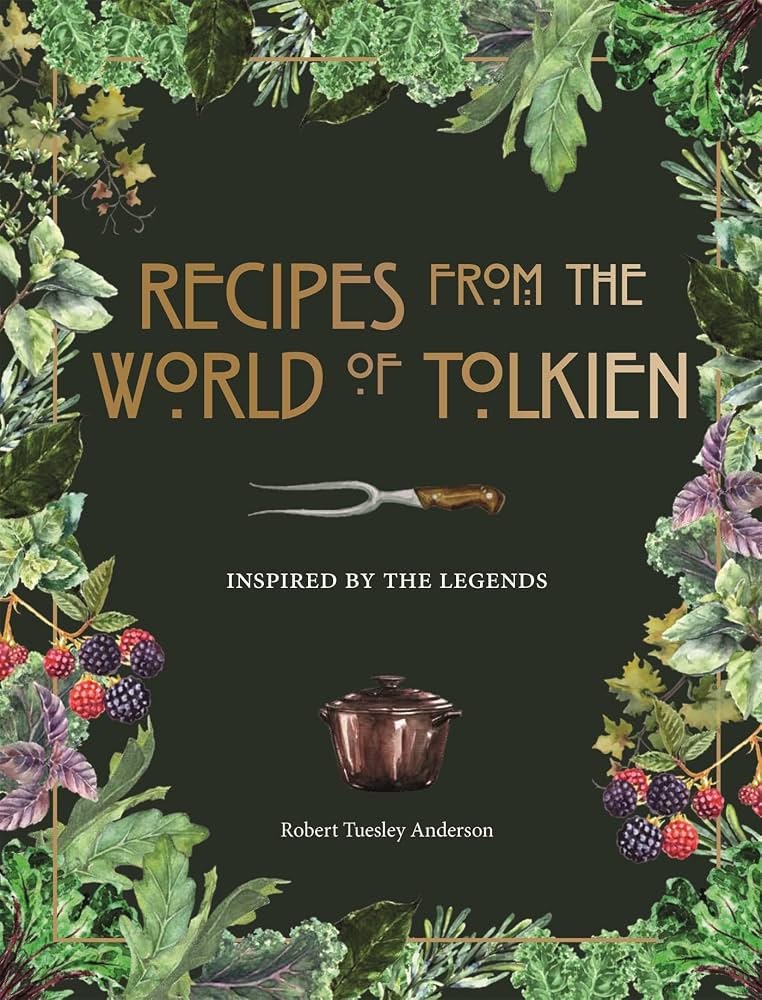
By Robert Tuesley Anderson, see Recipes from the World of Tolkien (Thunder Bay Press, 2020). Find out what to serve for second breakfasts and elevenses and how to make Bilbo's Eleventy-first Birthday Cake.
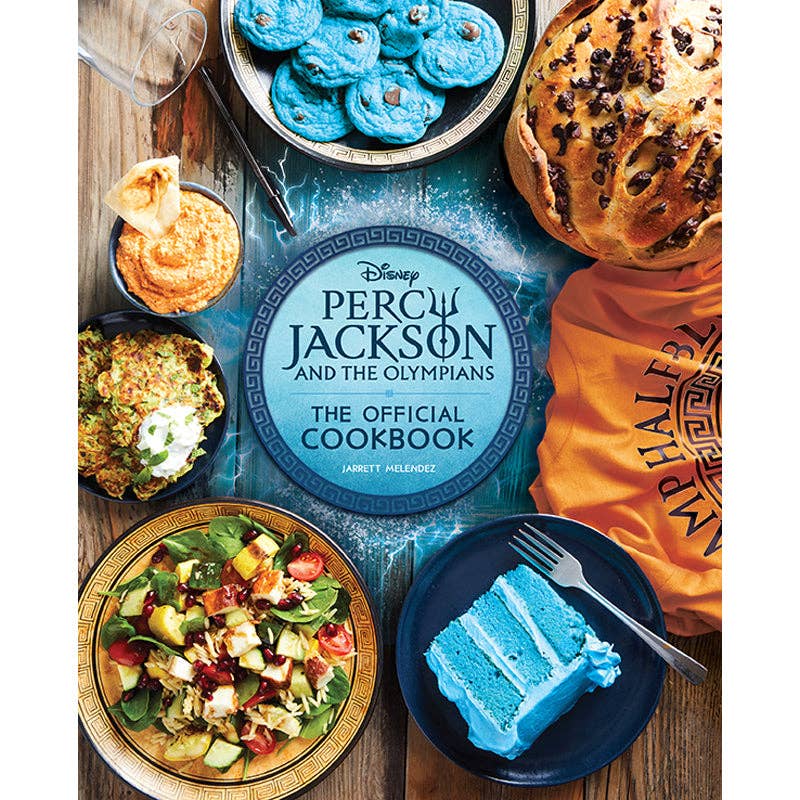
By Jarrett Melendez, Percy Jackson and the Olympians: The Official Cookbook (Insight Editions, 2024) features such recipes as Souvlaki (aka Skewered Minotaur), Icarus’s Melt in Your Mouth Wings, and Cyclops Eyes.

By Chelsea Monroe-Cassel and Sarian Lehrer, A Feast of Ice and Fire: The Game of Thrones Companion Cookbook (Bantam, 2012) provides photo-illustrated recipes (categorized by region), plus basic information on stocking a medieval-style kitchen. Included is a list of modern substitutes for things you can’t possibly get, such as auroch. For older teenagers and adults.
Cooking and History

Cooking, castle-style. In Aliki’s marvelously illustrated picture book A Medieval Feast (HarperCollins, 1986), the king is coming to visit Camdenton Manor and everyone is busy preparing for a magnificent (and expensive) feast. Text and pictures, crammed with detail, describe hunting and fishing, baking and brewing, and all the contributions to the feast from vineyards, herb gardens, kitchen gardens, barns, and beehives. For ages 4-8.

Eating the Plates: A Pilgrim Book of Food and Manners by Lucille Recht Penner (Aladdin, 1997) is an absorbing history of Pilgrim foods, cooking, and table manners, with ten simple recipes for a complete Pilgrim meal. For ages 7-12.

Mark Kurlansky’s The Story of Salt (Putnam Juvenile Books, 2006) is a delightfully illustrated history covering all aspects of salt. Trust me; it’s fascinating. For ages 8-12. (For teenagers and adults, see Kurlansky’s Salt: A World History (Penguin Books, 2003).)

Barbara Walker’s The Little House Cookbook (HarperCollins, 1989) is a collection of “Frontier Foods from Laura Ingalls Wilder’s Classic Stories.” The book contains historical information about the life and food of the pioneers, quotes from the Little House books, and recipes for such Ingalls family favorites as hasty pudding, pancake men, sourdough bread, pumpkin pie, crab-apple jelly, and cucumber pickles. For ages 8-12.

Cooking Up U.S. History: Recipes and Research to Share With Children by Suzanne I. Barchers and Patricia C. Marden (Libraries Unlimited, 1999) includes recipes for such traditional American foods as porridge, Indian pudding, and sourdough bread, and for such homemade necessities as candles, soap, and ink. Recipes are categorized by historical period, from pre-Columbian days to the Civil War. Each recipe is accompanied by background information, discussion questions, suggested research projects, and supplementary reading lists. For ages 6-12.

By Jean Fritz, George Washington’s Breakfast (Puffin, 1998) features young George Washington Allen, who knows a great deal about George Washington – including the names of his horses and dogs, and his shoe size – but doesn’t know what the great man ate for breakfast. After a lot of persistence and research he finds out – and convinces his grandma to cook it. For ages 7-10.
Have Breakfast with George Washington includes a quote about Washington’s breakfast from his step-granddaughter, Nelly Custis Lewis, and a recipe for Washington’s favorite hoecakes.

James Solheim’s It’s Disgusting - and We Ate It! (Aladdin, 1998), subtitled “True Food Facts from Around the World and Throughout History,” is an account of unusual dishes and surprising foods that people worldwide eat or have eaten in the past – among them fried grasshoppers, robins, earthworm soup, and camel hump stew. Included are zany illustrations, fascinating facts, and clever poems. For ages 8-12.
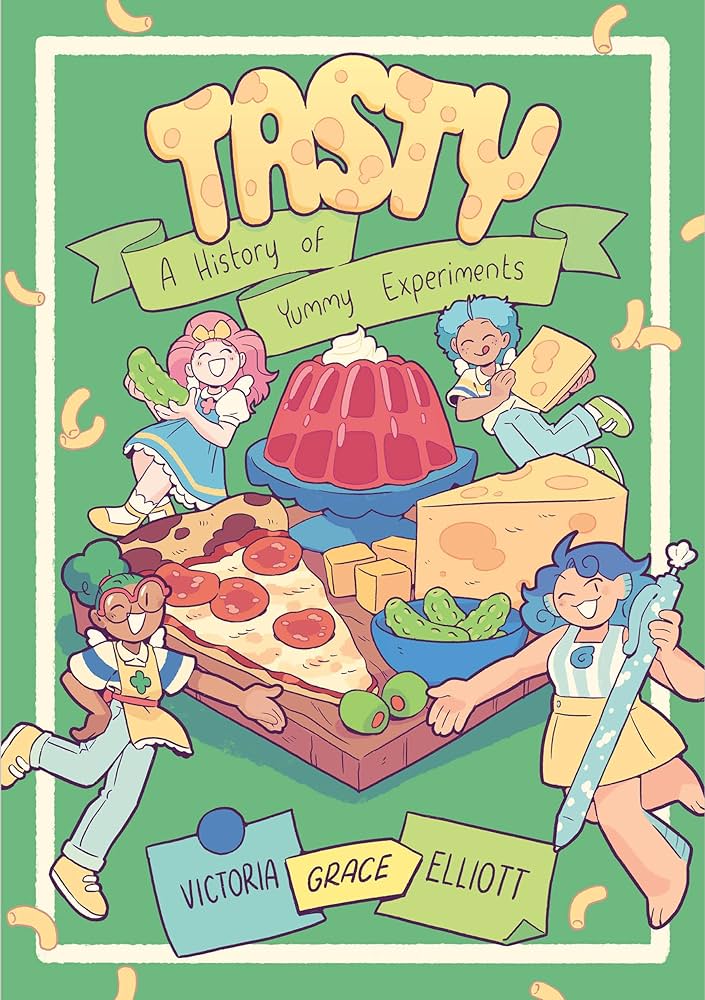
Victoria Grace Elliott’s Tasty: A History of Yummy Experiments (Random House Graphic, 2024) is a catchy graphic account of the history of food with the help of three humorous food sprites. Readers learn all about the origins of cheese, pickles, soda, pizza, and more. Yummy, fun, and educational for ages 8-12.
Also by Elliott in the same format, see Yummy: A History of Desserts (2021).

By Joan D’Amico and Karen Eich Drummond, The U.S. History Cookbook (John Wiley & Sons, 2003) is a collection of “Delicious Recipes and Exciting Events from the Past” arranged in chronological order from “The First Thanksgiving” through “Colonial Fare,” “A Pioneer Breakfast,” “Plantation Life,” “A Victorian Tea,” “Making Do During the Great Depression,” “World War II Rations,” and “Fabulous Fifties Foods” (and more). Make your own cornmeal mush, beef jerky, depression cake, and TV dinners. For ages 9-12.

Published by Reaktion Books, the Edible Series is a collection of catchy short (128-page) global histories of a wide (wide) range of foods. Titles include Pizza (Carol Helstosky), Cheese (Andrew Dalby), Ice Cream (Laura B. Weiss), Cake (Nicola Humble), Bread (William Rubel), Soup (Janet Clarkson), Hot Dog (Bruce Kraig), Pancake (Ken Albala), Sandwich (Bee Wilson), and many more. For the complete list, see the Edible Series at https://press.uchicago.edu/ucp/books/series/RB-EDIBLE.html.
Fun for foodies ages 13 and up.

Rebecca Rupp's How Carrots Won the Trojan War (Storey, 2012) is a catchy history of vegetables, crammed with interesting information and anecdotes. Find out how a pirate named the bell pepper and what corn has to do with vampires. For teens and adults.

William Sitwell’s illustrated A History of Food in 100 Recipes (Little, Brown and Company, 2013) is a witty chronological history of food, beginning with a bread recipe gleaned from an ancient Egyptian tomb – and then on to roast goat, salted ham, pasta, party planning (circa 1420), hippocras jelly, “peas soope,” the invention of the sandwich, Rice Krispies treats, and the rise of food TV. A great read for teenagers and adults.

Cooking, argues anthropologist Richard Wrangham, made human beings what they are today. In Catching Fire: How Cooking Made Us Human (Basic Books, 2010), Wrangham argues that once our ancestors learned to control fire some 1.8 million years ago, they also learned to cook – an inspired leap that both provided us with more and better food and eventually led to smaller jaws, bigger brains, complex social structures, and civilization. For teenagers and adults.

Bee Wilson’s Consider the Fork (“A History of How We Cook and Eat”) (Basic Books, 2012) is an addictive history of cooking and eating, packed with fascinating – and surprising – information. Various chapters cover pots and pans, the history of knives, cooking with fire (always risky), eating utensils (fingers, tongs, chopsticks, and spoons, as well as the title fork), and more. For teenagers and adults.
The Food Timeline is an annotated timeline of food and cooking from prehistory (17,000 BCE) to the present, packed with quotes from historians, excerpts from period cookbooks, general information, historical recipes, and more. A terrific and wide-ranging resource.
Cooking and Geography

In Marjorie Priceman’s How to Make an Apple Pie and See the World (Dragonfly Books, 1996), a little girl takes an imaginary trip around the world to find out where all the ingredients for an apple pie come from: wheat from Italy, eggs from France, cinnamon from Sri Lanka, sugar from Jamaica, and apples from Vermont. The book includes a recipe for your very own international apple pie. For ages 5-8.

Also by Priceman in the same format is How to Make a Cherry Pie and See the U.S.A. (Knopf Books for Young Readers, 2008).

In Norah Dooley’s picture book Everybody Cooks Rice (Carolrhoda Books, 1992), a little girl tours her neighborhood at dinnertime, discovering all the many ways in which persons of different ethnic backgrounds cook rice – among them Haitians, Indians, Puerto Ricans, and Chinese. For ages 6-8. Also see Dooley’s Everybody Bakes Bread (1995), Everybody Serves Soup (2004), and Everybody Brings Noodles (2005).

In the Children Just Like Me series, Food Like Mine (DK, 2017) is a celebration of kids and food from around the world, with 27 easy-to-follow recipes. For ages 6-10.
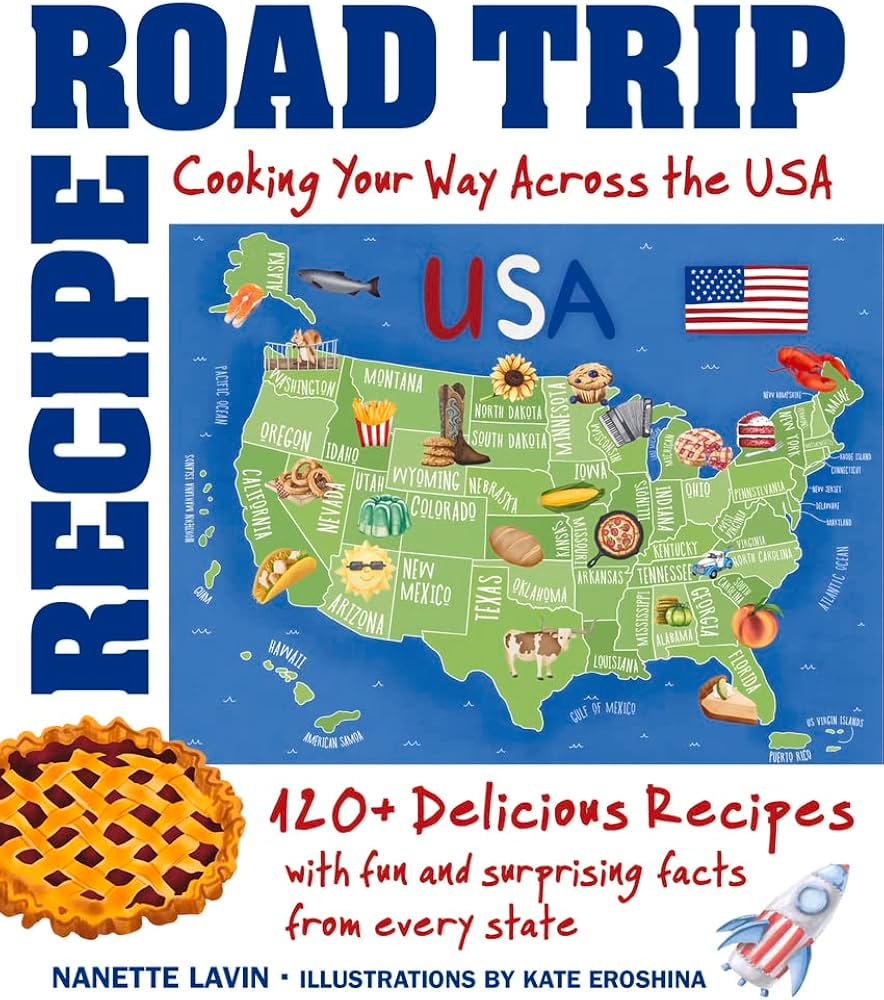
With Nanette Lavin’s Recipe Road Trip (Kitchen Ink Publishing, 2023), kids can cook and eat their way across the United States, with recipes and fun facts for each state. For ages 6-10.
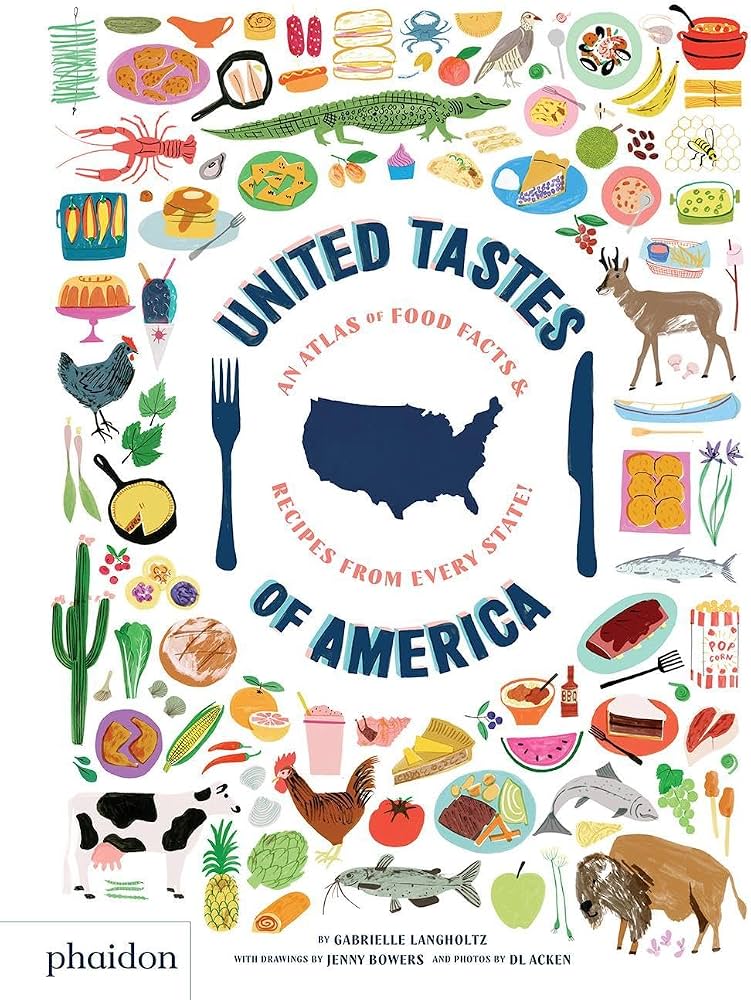
By Gabrielle Langholtz, United Tastes of America (Phaidon Press, 2019) is an atlas of food facts, maps, and recipes for ages 7-10. Kids can cook their way around the country with kid-friendly recipes for every state plus three territories and Washington, D.C. (Make Pennsylvania Dutch pretzels and Virginia peanut soup.)
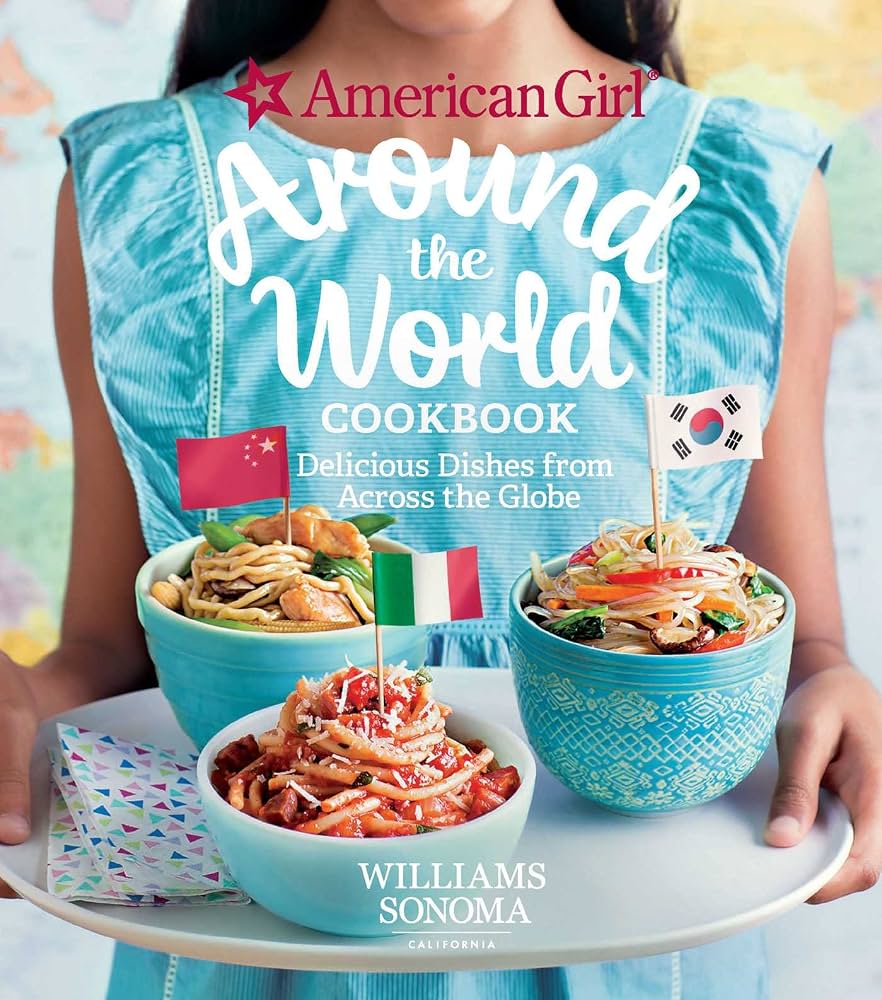
The American Girl Around the World Cookbook (Welden Owen, 2018), written in collaboration with Williams Sonoma and illustrated with color photographs, is a collection of 50 recipes from around the globe, among them potato latkes, Mexican chocolate pudding, and sushi. For ages 8-12.

Arlette N. Braman’s illustrated Kids Around the World Cook (Jossey-Bass, 2000) is a collection of recipes for drinks, breads, soups and starters, main dishes, and desserts from a wide range of different countries. For example, kids can make Indian sweet lassi, Israeli challah, Polish strawberry soup, Chinese stir-fried rice, and Norwegian nutmeg cookies. Included are historical and cultural information, notes on multicultural word origins, and a lot of catchy facts. For ages 8-12.
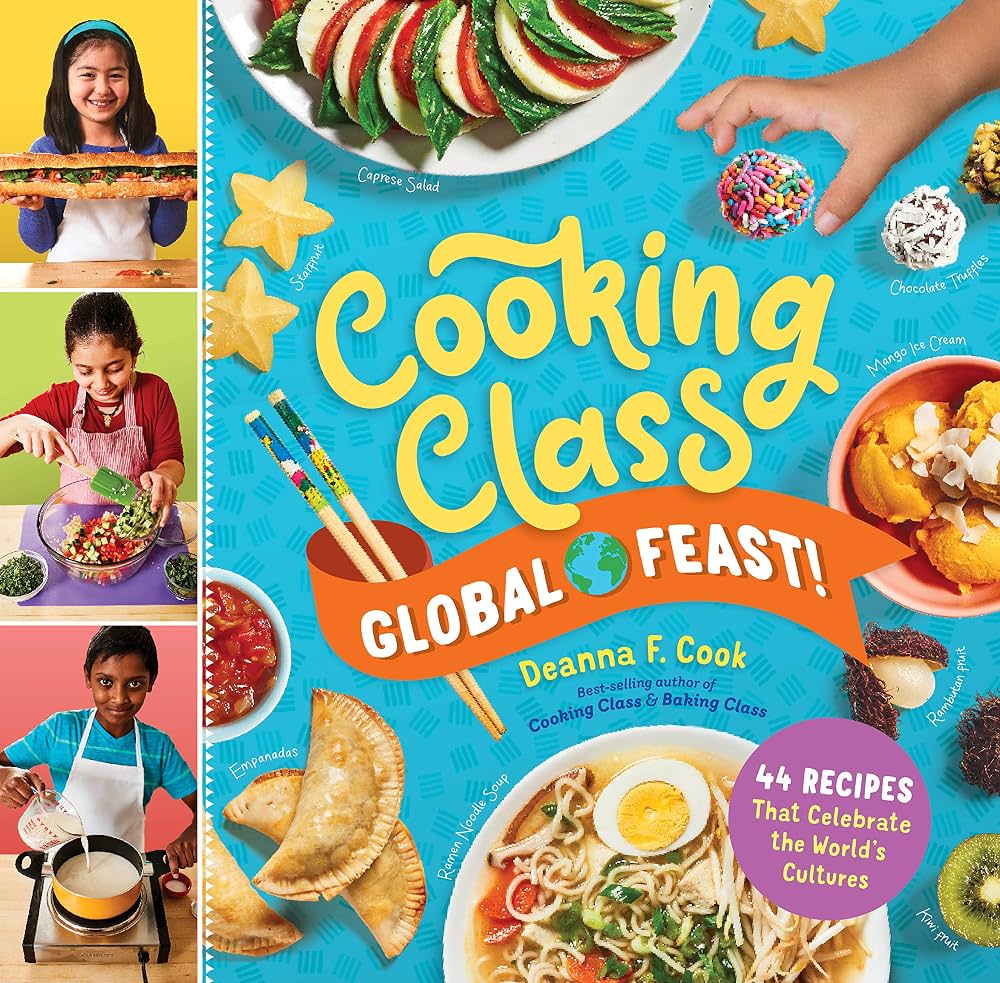
By Deanna F. Cook, Cooking Class Global Feast! (Storey, 2019) is a collection of 44 recipes from around the world for ages 6-12, illustrated with luscious color photographs. Included are suggestions for serving and entertainment, food facts, and language flash cards.

By Joan D’Amico and Karen Eich Drummond, The United States Cookbook (John Wiley & Sons, 2000) is a 128-page compendium of “Fabulous Foods and Fascinating Facts from All 50 States.” States are grouped by region: for each, there’s a map, basic background information, a short summary of state foods, and a traditional recipe. (From Massachusetts, Boston Baked Beans; from New York, Waldorf Salad; from Pennsylvania, Soft Pretzels.) Boxes of “Fun Food Facts” provide a lot of unusual information, among them the distance record for spitting watermelon seeds. For ages 9-12.

By Joan D’Amico and Karen Eich Drummond, The Coming to America Cookbook (John Wiley & Sons, 2005) is a collection of kid-friendly recipes from multicultural immigrants. The book covers eighteen different countries – among them Mexico, China, Morocco, and Nigeria – with information about the country and its customs and representative recipes. For ages 11 and up.

Matthew Locricchio’s International Cookbook for Kids (Two Lions, 2012), illustrated with mouthwatering color photographs, is a collection of recipes from Italy, France, China, and Mexico (including an entire menu for a taco party). Recipes are clearly presented, with attractive step-by-step instructions. Intended for serious young cooks who can cope with multiple ingredients and techniques. For ages 11 and up.
Eat2Explore is a subscription program in which families receive Explorer Boxes, each containing recipe cards, a shopping list, essential spice packets, a featured country brochure and activity sheet, and more. A cool multicultural learn-and-cook experience.
Cooking and Science
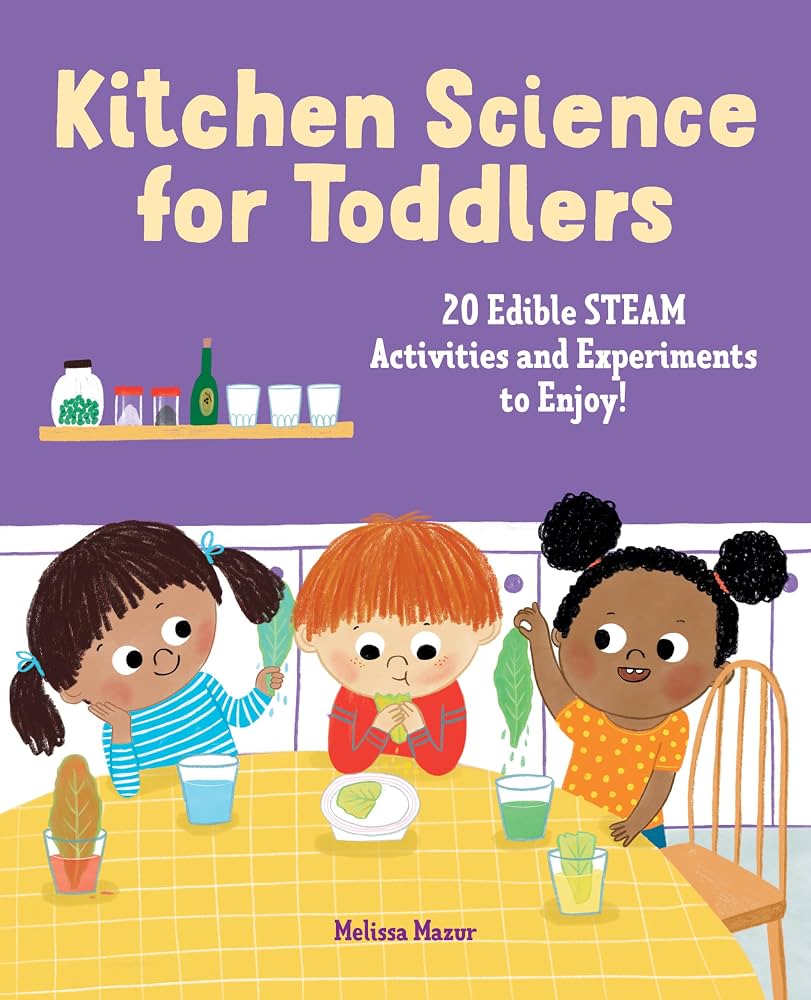
By Melissa Mazur, Kitchen Science for Toddlers (Callisto Kids, 2021) features 20 STEAM activities and experiments. For example, kids build melon towers and make a homemade lava lamp. For ages 3-5.

By Liz Plaster and Rick Krustchinsky, Incredible Edible Science (Redleaf Press, 2010) is a collection of 160 food-based science activities for preschoolers and early elementary students, categorized under observation (via the five senses: sight, smell, taste, touch, and sound), classification, communication, measurement, inference, prediction, and language and literacy. (Under this last, for example, kids make alphabet pretzels and Three Bears’ Porridge, and grow Jack’s beanstalk.)
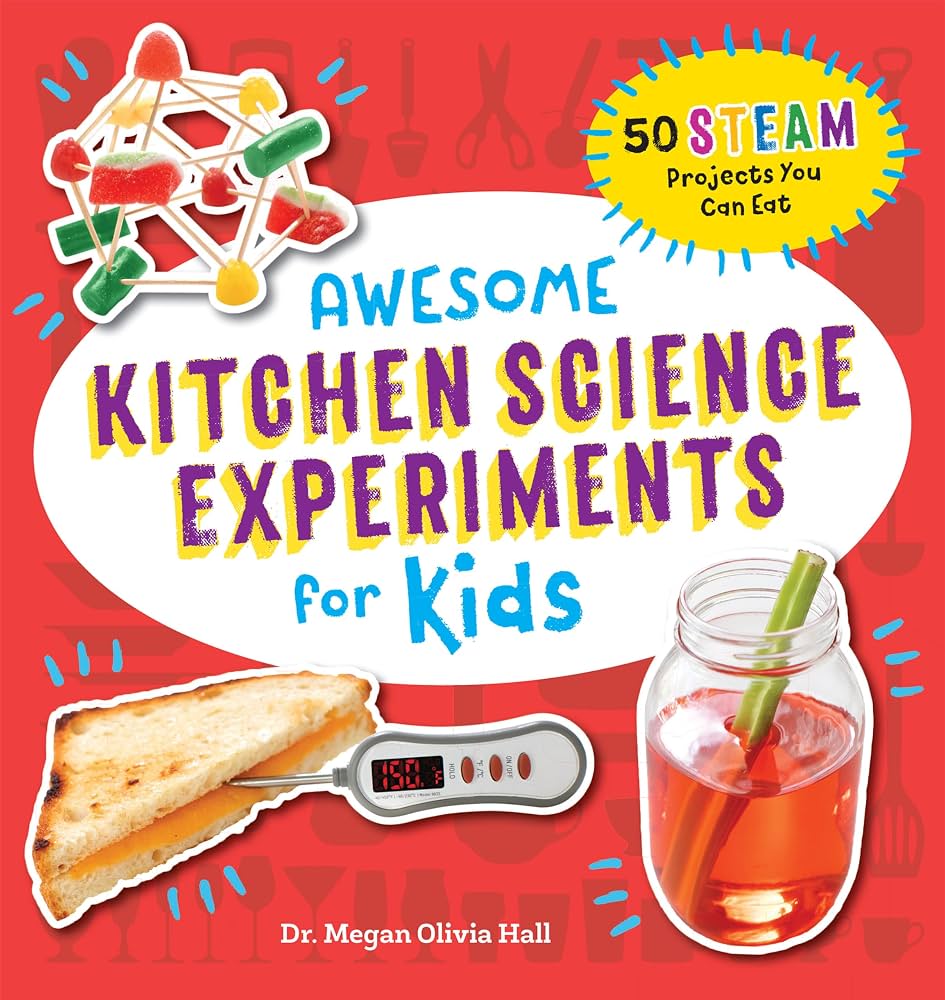
In Megan Olivia Hall’s Awesome Kitchen Science Experiments for Kids (Callisto Kids, 2020), experiments are categorized under Science, Technology, Engineering, Art, and Mathematics. Included are explanations and boxes for recording observations and results. Try spinach chromatography and build a marshmallow catapult. For ages 5-9.

Vicki Cobb’s Science Experiments You Can Eat (HarperCollins, 1984) pairs interesting recipes with equally interesting scientific discussions: for example, kids make rock candy, grape jelly, and popcorn while learning about crystallization, polymerization, and steam pressure. Cobb is brilliant at making science accessible for a wide range of ages. (Get all her books!) Highly recommended.
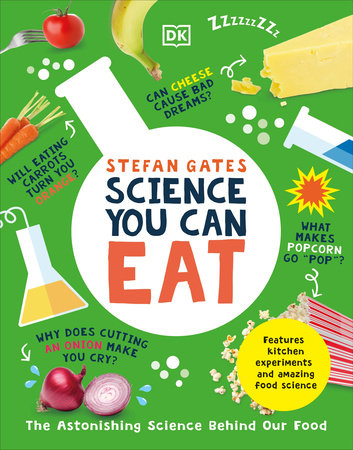
By Stefan Gates, Science You Can Eat (DK, 2026) pairs experiments, fun facts, and scientific explanations while answering such questions as “What makes popcorn pop?” “Will eating carrots turn you orange?” and “Why does cutting onions make you cry?” For ages 7-11.

Loralee Leavitt’s colorfully illustrated Candy Experiments (Andrews McMeel Publishing, 2013) has a wealth of tempting and creative things to do with candy other than eat it. Discover candy’s secret ingredients, investigate candy color, experiment with density (find out how to sink a marshmallow), and try squashing it, stretching it, melting it, or blowing it up, all in the name of science. Included are complete instructions and explanations. For ages 7-12.

The Science Chef by Joan D’Amico and Karen Eich Drummond (Jossey-Bass, 1994) is a collection of “100 Fun Food Experiments and Recipes for Kids,” among them recipes and brief scientific information on salad dressing, pasta sauce, cheese, butter, and pudding. Readers learn why toasted bread turns brown and discover the chemistry of baking powder. For ages 9-12.

The Science Chef Travels Around the World by Joan D’Amico and Karen Eich Drummond (John Wiley & Sons, 1996) covers fourteen different countries, among them Brazil, Israel, China, India, Morocco, Canada, and Ghana. For each is listed an interesting science experiment based on a representative ethnic food – for example, kids learn about viscosity with honey (Egypt) and osmosis with pickled cucumbers (France) – along with recipes and menus. For ages 9-13.

Andy Brunning's Why Does Asparagus Make Your Pee Smell? (Ulysses Press, 2016) - subtitled "Fascinating Food Trivia Explained With Science" - is a large collection of short informational snippets ("Why Do Onions Make You Cry? Why Does Turkey Make You Sleepy? Why Does Garlic Give You Bad Breath?"), accompanied by terrific chemical graphics. For ages 12 and up.

Simon Quellen Field’s Culinary Reactions (Chicago Review Press, 2011) is neither a chemistry book nor a cookbook, but rather a friendly and clearly written melding of the two, explaining just what goes on – chemically – in the process of making whipped cream, bread, meringue, hollandaise sauce, cheese, roast turkey, lemonade, and ice cream. (There’s also a nice account of how to extract DNA from your Halloween pumpkin.) Various chapters cover foams, emulsions, colloids and gels, oils and fats, solutions, crystallization, protein chemistry, acids and bases, oxidation and reduction, and more. For ages 14 and up – best for those with a little basic chemistry under their belts.

From the acclaimed author of The Omnivore’s Dilemma, Michael Pollan’s Cooked (Penguin Press, 2013) covers Pollan’s own experiences in learning how to cook, and explores the science of cooking - categorized by classical element : fire, water, air, and earth. Under “Fire,” Pollan learns to barbecue; in “Water,” he tackles soups and stews; “Air” is a study of bread; and “Earth” is all about fermentation and pickling. (Beer, cheese, and vinegar.) An interesting and informative read for teenagers and adults.
See the Young Readers edition of the book for ages 10-13.

Harold McGee’s On Food and Cooking: The Science and Lore of the Kitchen (Scribner, 2004) is a terrific resource. The book, all 600+ pages of it, is jam-packed with historical and scientific information: for example, readers discover the history of graham crackers and chewing gum; learn about the biochemistry of meringue, mayonnaise, blue cheese, and ripening bananas; and find out how Brazil nuts are harvested and how bees make honey. Scientifically detailed and thorough; a good reference work for teenagers and adults.
EdX’s Science & Cooking is a challenging and creative online course collaboratively taught by famous chefs and Harvard research scientists, complete with video lectures and virtual labs. The class can be audited or taken to obtain a Certificate of Mastery, which involves homework and exams. Either way it’s absolutely free.
From the San Francisco Exploratorium, see Science of Cooking at https://annex.exploratorium.edu/cooking/ for cool information, creative projects and activities, virtual labs, webcasts, and book lists on many aspects of cooking. Featured sections cover eggs, pickles, candy, bread, seasoning, and meat. A great resource.
Cooking & Food Science Fair Project Ideas has many suggestions for science-minded cooks, categorized by difficulty level (Beginner, Intermediate, Advanced). For example, kids analyze the starch content of potatoes and the gluten content of wheat, determine the caloric content of foods, and explore the chemistry of ice-cream-making.
From Penn State, Food Science has experiments, activities, lesson plans, and informative resources for kid in grades K-12. (Find out how to determine the speed of light with marshmallows.)
From the American Chemical Society, Food and Cooking Chemistry has a range of cool experiments, mostly targeted at high-school kids.
Cooking and Math

In Stuart J. Murphy’s A Fair Bear Share (HarperCollins, 1997), four little bear cubs gather, count, and sort blueberries, nuts, and seeds (in sets of ten) for their mother’s special Blue Ribbon Blueberry Pie. For ages 4-7.

In Spaghetti and Meatballs for All (Scholastic, 1997) by Marilyn Burns, the Comforts have invited many guests for dinner – which turns into a clever mathematical exercise in rearranging tables and chairs and apportioning food. For ages 4-8.
From the BBC’s Good Food, Cooking with Kids: Spaghetti & Meatballs has a shared parent-and-kids recipe, with helpful instructions for each.

In Amy Axelrod’s Pigs in the Pantry (Aladdin, 1999) – subtitled “Fun with Math and Cooking” - Mrs. Pig has a cold so her husband and children decide to make her a batch of spicy Firehouse Chili (recipe included). Measuring errors lead to disaster. For ages 5-8.

Ann McCallum’s Eat Your Math Homework (Charlesbridge Publishing, 2011) pairs food and math concepts (with a couple of wacky bunnies). Kids learn about probability with trail mix and pi with pizza, bake batches of tessellating two-color brownies and tangram cookies, and make Fibonacci snack sticks. Informative and fun for ages 7-12.

The Math Chef: Over 60 Math Activities and Recipes for Kids by Joan D’Amico and Karen Eich Drummond (John Wiley & Sons, 1997) is divided into four main sections: “Measuring,” “Arithmetic,” “Fractions and Percents,” and “Geometry.” Kids combine mathematical exercises with cooking, calculating the number of grams in a pound of potatoes, figuring out how to triple a sandwich recipe, and determining the area of a brownie and the circumference of an apple pie. For ages 8-12.
Cooking and Poetry

Larry Fagin, in The List Poem (Teachers & Writers Collaborative, 2000), a book of poetry exercises and projects for aspiring writers, suggests that students try writing “recipe poems” based on recipe-style lists of ingredients. Samples (by students) include “Recipe for Martin Luther King, Jr.” (“7 gallons of love/10 cups of courage/10 cups of caring...”) and a recipe for “King Midas Touch” (“1 pound egg shells/2 pounds of mosquitoes (bones removed)/1 purple duck with polka dots...”). For all ages.
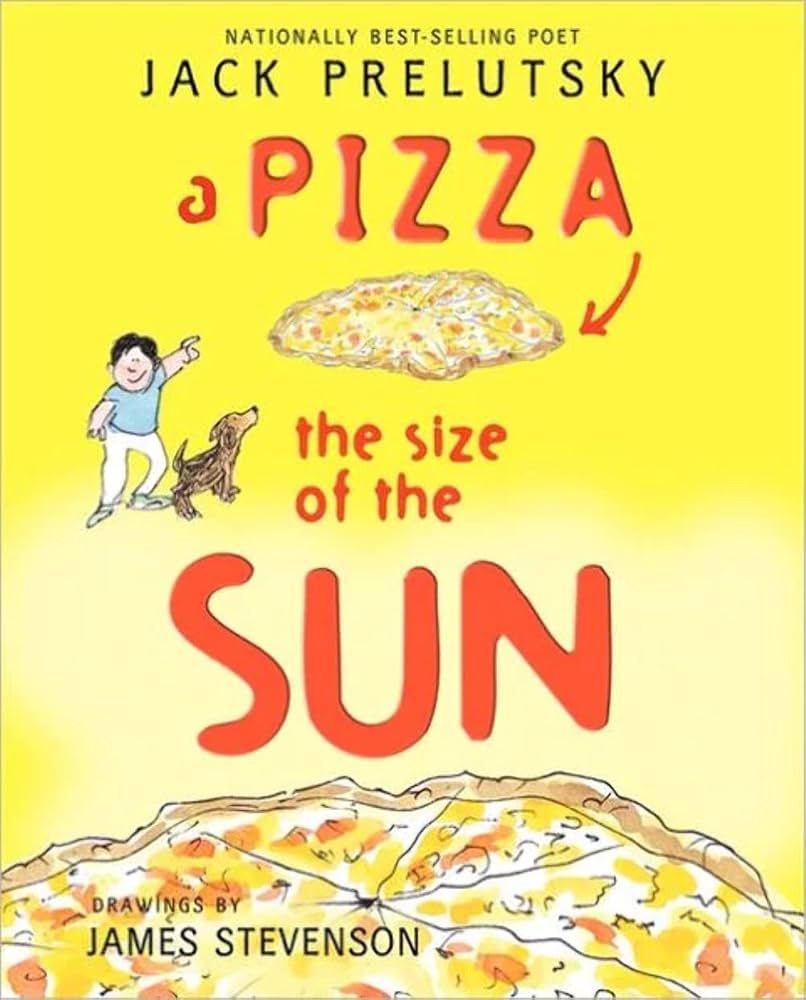
In Jack Prelutsky’s A Pizza the Size of the Sun (Greenwillow, 2013), a collection of funny and delightful poems for kids ages 5-10, the title poem is all about constructing a truly gigantic pizza.
You might connect to any number of picture books about pizza – such as The Little Red Hen Makes a Pizza by Philemon Sturgis; Pete’s a Pizza by William Steig; and Greg Pizzoli’s Pizza: A Slice of History – and try making your own fabulous pizzas!
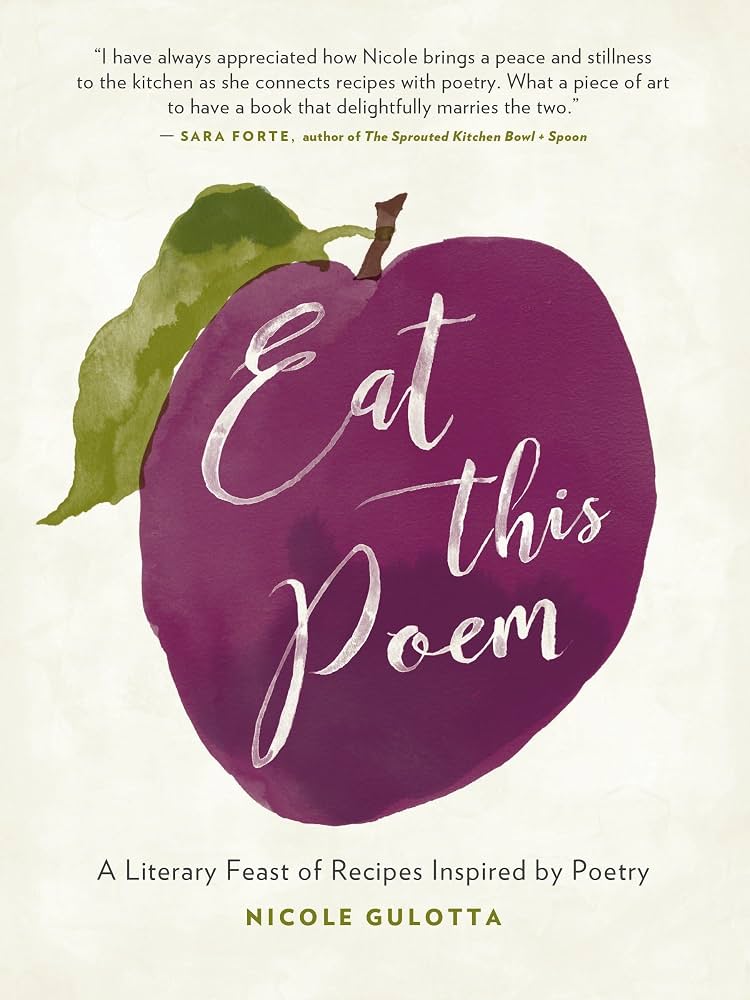
Nicole Gulotta’s Eat This Poem (Shambhala, 2017) is a literary cookbook, pairing poems – such as Jane Kenyon’s “Potato,” Billy Collins’s “While Eating a Pear,” and Mary Oliver’s “Mushrooms” - with recipes. For teens and adults.

Peter Washington’s Eat, Drink, and Be Merry (Everyman’s Library, 2003) is an anthology of poems on food and drink, among them “Breakfast” by William Carlos Williams, “Blueberries” by Robert Frost, “Recipe for a Salad” by Sydney Smith, and “Gooseberry Fool” by Amy Clampitt. For teenagers and adults.
See Eve Merriam’s “How to Eat a Poem” at https://allpoetry.com/How-to-eat-a-Poem,
Cooking and Art
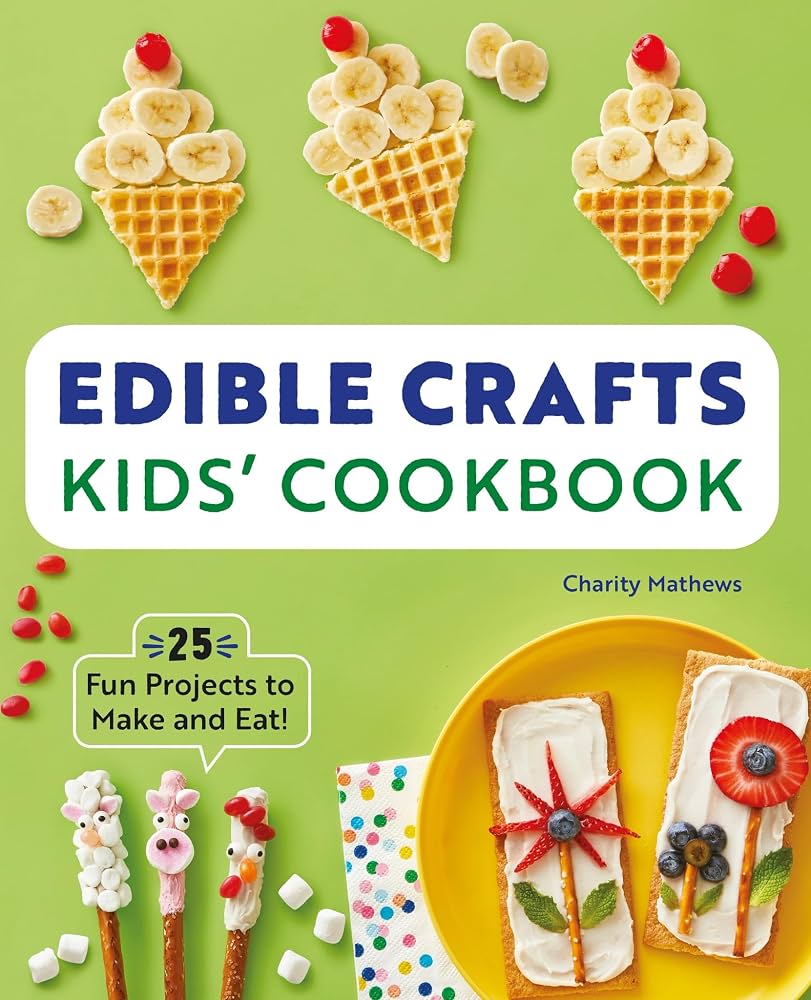
By Charity Mathews, the Edible Crafts Kids Cookbook (Callisto Kids, 2021) has 25 creative food-based crafts for ages 4-8. Make Monster Veggie Cups or write your name in grapes!

By Maryann F. Kohl and Jean Potter, Cooking Art: Easy Edible Art for Young Children (Gryphon House, 1997) is a fat collection of artistic cooking projects for kids aged 4-10. Projects are grouped under such subheadings as “Shapes and Forms,” “Colors and Design,” “Flowers and Trees,” and “Animals and Creatures.” There’s also a month-by-month list of special seasonal projects for around the year. Sample projects: kids make potato ghosts, number pretzels, cucumber airplanes, a flowerpot salad, and “Mush and Jelly Paint” for making pictures on bowls of breakfast oatmeal. For ages 3 and up.
Make edible play dough! See recipes for marshmallow, fruit-drink, vanilla, and peanut butter play doughs at https://www.oxo.com/blog/cooking-with-kids/make-own-edible-play-dough.
From NPR, see A Feast for the Eyes, an account of a food exhibition at the Metropolitan Museum of Art.
15 Fascinating Food Artists and Sculptors is a gallery of works made from food: mosaics made from cookies and noodles, carved eggs, sculptures made from butter or vegetables, and some truly phenomenal cakes.
Even More Recipes

Raddish is a subscription cooking club for kids. Participants get a monthly themed cooking class in a box with recipe guides, projects, and grocery lists. Appropriate for a wide range of ages (some with parental help).

ChopChop is a magazine of varied healthy recipes, food facts, games, puzzles, and informational articles for young cooks and their families. Published quarterly.

Marjorie Winslow’s Mud Pies and Other Recipes (New York Review Children’s Collection, 2010) is a charming collection of (wholly inedible) recipes for make-believe, among them Pine Needle Upside-Down Cake, Boiled Buttons, and Rainspout Tea. For all ages.

Cordon Bleu chef (and mom) Annabel Karmel’s Mom and Me Cookbook (Dorling Kindersley, 2008), illustrated with great color photographs, is a collection of beautifully presented recipes for cooks ages 4-7. Try your hands at potato mice, avocado frog dip, animal cookies, and many more.

Also by Karmel, see The Toddler Cookbook (Dorling Kindersley, 2008) for ages 2-5, which features such dishes as lettuce boats, little pita pizzas, and peanut butter bears.

Mollie Katzen’s Pretend Soup and Other Real Recipes (Tricycle Press, 1994) is a wonderful illustrated vegetarian cookbook for preschoolers, in which each recipe appears twice – once in words and once in step-by-step pictures. Cooks ages 3-6 can – with a little help – make green spaghetti, blueberry pancakes, zucchini moons, and hide and seek muffins. And, of course, pretend soup.

Also see the sequel, Salad People and More Real Recipes (2005) and, for older cooks ages 8-12, Honest Pretzels and 64 Other Amazing Recipes for Kids Who Like to Cook (2009).
For sample recipes, see Children’s Cookbooks at Mollie Katzen’s website.

Linda White’s Cooking on a Stick (Gibbs Smith, 2000) is a collection of campfire recipes for kids, variously to be cooked on sticks, in pouches, or on grills or grates. Included are safety tips and instructions for building a campfire. Try Moose Kebobs, S’mores, Hop Toad Popcorn, and Squirrel Nibbles. For ages 6-11.

Kate White’s Cooking in a Can (Gibbs Smith, 2006) has instructions and recipes not only for cooking in a can, but on a (homemade) tin-can grill, wrapped in leaves, with hot rocks, in a pit, in a (homemade) solar oven, and more. Fun for campers and backyard cooks ages 6 and up.

Melissa Barlow’s Noodlemania (Quirk Books, 2013) is a collection of 50 wacky pasta recipes – categorized by shape (“Totally Tubular,” “Twisty & Twirly”) – plus assorted catchy facts. Make Robot Bites, Super Stuffed Slugs, and Green Stink Bugs. Fun for ages 6 and up.
Check out What's Cooking?, a culinary curriculum for pre-K through grade 12.
Books About Cooks (and a Movie)

In Rosemary Wells’s Bunny Cakes (Viking, 1999), it’s Grandma’s birthday - and Max wants to make her an earthworm cake, while Ruby opts for an angel surprise cake with raspberry-fluff icing. Adorable for ages 3-5.

In Maurice Sendak’s classic In the Night Kitchen (HarperCollins, 1996), Mickey falls into the surreal world of the night kitchen where three Alice-in-Wonderland-ish bakers are mixing the batter for the morning cake. They need milk – so Mickey makes an airplane out of bread dough and flies off to fetch some from a gigantic milk bottle. In the process of falling into the night kitchen, Mickey also falls out of his clothes, which has caused endless fuss among people who have never seen a child bare. For ages 2-7.

In William Steig’s Pete’s a Pizza (HarperCollins, 1998), Pete is miserable – it’s raining and he can’t play ball – so his father decides to cheer him up by turning him into a pizza. Pete is kneaded and tossed, smeared with oil (water), decorated with toppings (checkers and paper scraps), and baked on the couch. When the time comes for the pizza to be sliced, Pete runs away, pursued by his father (“Pizzas are not supposed to laugh!”). Possibly the funniest pizza recipe ever. For ages 4-7.

Bruce Eric Kaplan’s Monsters Eat Whiny Children (Simon & Schuster Books for Young Readers, 2010) is hilarious. Henry and Eve, going through a “TERRIBLE phase,” do nothing but whine, and have been warned by their father that monsters eat whiny children. The kids continue to whine and – lo and behold – a monster pops them in a sack and takes them off to his lair on the bad side of town. There problems arise, as the monsters bicker over just how to cook and serve whiny children – in salad? Burgers? Cake? Vindaloo? By the time the monsters finally agree on cucumber sandwiches (on fluffy white bread), the whiny kids – hopefully with a lesson learned – have escaped. For ages 4-8.

In Dr. Seuss’s Scrambled Eggs Super (Random House, 1953, Peter T. Hooper produces the most spectacular dish of scrambled eggs ever, with dozens of zany eggs, 99 pans, 55 cans of beans, a pound of horseradish, and nine prunes. And more. For ages 4-8.

Also see Seuss’s Green Eggs and Ham (Random House, 1960) in which the relentless Sam-I-Am pulls out all stops to convince the stubborn narrator to try a scrumptious dish of green eggs and ham.

In Lynne Barasch’s picture-book biography Hiromi’s Hands (Lee & Low Books, 2007), young Hiromi, whose father is a sushi chef, wants to become one too – and she grows up to become one of the first female sushi chefs in America. (But it wasn't easy.) For ages 5-8.
Make Vegetable Maki Sushi with Kids! has step-by-step photo-illustrated instructions for making homestyle sushi.

Deborah Hopkinson’s picture book Fannie in the Kitchen (Aladdin, 2004) – subtitled “The Whole Story from Soup to Nuts of How Fannie Farmer Invented Recipes with Precise Measurements” – is told from the point of view of young Marcia Shaw, who is not exactly pleased when Fannie Farmer comes to cook for her family’s Victorian household. Soon, though, she’s hooked on Fannie’s delicious meals and even has a hand in writing the famous Boston Cooking-School Cook Book. For ages 5-9.

Jessie Hartland’s Bon Appetit! (Schwartz & Wade, 2012) is a delightful and hilariously illustrated biography of Julia Child, filled with anecdotes, food, and recipes (and a smattering of French). For ages 5-9.

By Alice Waters, Fanny at Chez Panisse (William Morrow Cookbooks, 1997) is the charmingly illustrated story of Waters’s famous California restaurant, Chez Panisse, as told by her seven-year-old daughter, Fanny. The first chunk of the book introduces the restaurant and the people who work there; the rest is a collection of 46 scrumptious recipes, ostensibly Fanny’s. For ages 9-12.

In Kathryn Littlewood’s Bliss (Katherine Tegen Books, 2013), the Bliss family, owners of a magical bakery in the town of Calamity Falls, have in their possession an ancient Cookery Booke, filled with arcane recipes for Singing Gingersnaps, Love Muffins, and Cookies of Truth. When the Bliss parents are called out of town, it’s up to 12-year-old Rose and her siblings to keep the book safe – particularly from the suspicious Lily, who arrives at their door claiming to be a distant cousin. For ages 8-12.

In Natasha Lowe’s The Power of Poppy Pendle (Simon and Schuster, 2013), Poppy has inherited the much-coveted witch powers – but she doesn’t want to be a witch. She wants to be a baker. The book includes a dozen recipes. The first of a series for ages 8-12.

Lisa Graff’s A Tangle of Knots (Puffin, 2014) is set in a magical world where everyone has a Talent – and Cady’s is for baking. Mystery, magic, and recipes for cakes. For ages 8-12.

In Rufus Kingfisher’s Madame Pamplemousse and Her Incredible Edibles, Madame Pamplemousse’s edibles are indeed incredible: among them are Minotaur Salami, Pterodactyl Bacon, Crocodile Kidneys in Blueberry Wine, and Giant Squid Tentacle in Jasmine-Scented Jelly. Young Madeleine – forced to work for her awful Uncle Lard at his restaurant, The Squealing Pig – discovers Madame Pamplemousse when the Squealing Pig runs out of pate, at which point evil Uncle Lard decides to steal Madame Pamplemousse’s secrets. A wonderful magical read for ages 9 and up. (And there are sequels.)

In Sarah Weeks’s Pie (Scholastic, 2013), set in the 1950s, Alice’s Aunt Polly – the Pie Queen of Ipswitch – has died, leaving the recipe for her famous pie crust to her cat, and her cat (Lardo) to Alice. Great characters, a mystery, a story of friendship and family relationships, and fourteen recipes for pie. For ages 9-12.
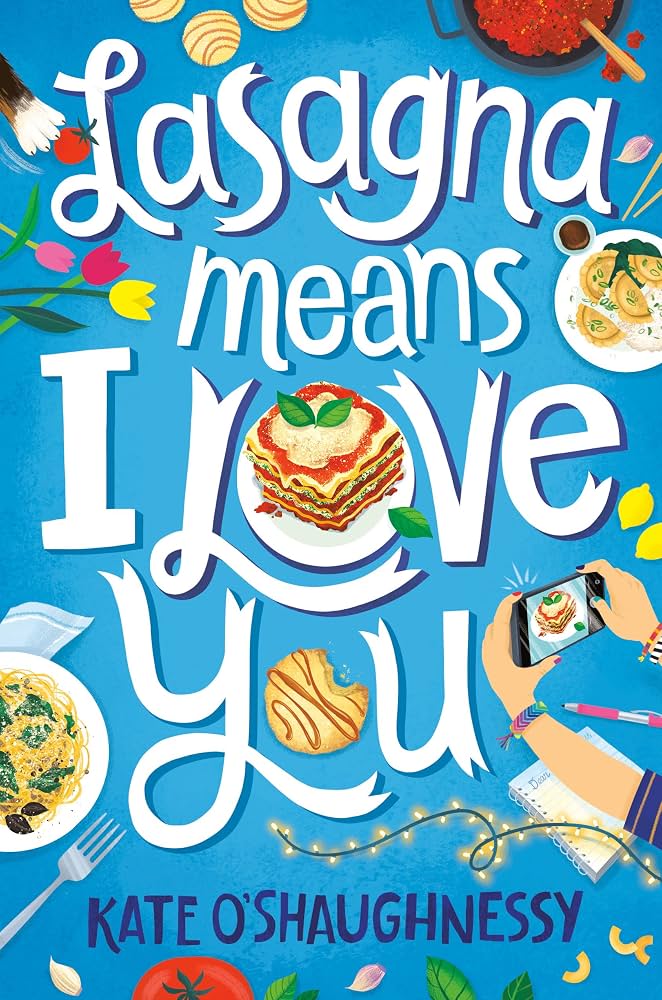
In Kate O’Shaughnessy’s Lasagna Means I Love You (Yearling, 2024), 11-year-old Mo – after the death of her grandmother – finds herself in foster care with a notebook left by Nan that tells her to find a hobby. When Mo finds a cookbook filled with someone’s family recipes, she decides to start collecting family recipes from everyone she meets – and to learn the stories behind them – and eventually it’s through recipes that Mo finds family and a new beginning. For ages 9-12.

The parents of Primrose Squarp, the star of Polly Horvath’s Everything on a Waffle (Square Fish, 2008), have been lost at sea, and Primrose has been sent to live with her Uncle Jack (who at least is better than her former babysitter, Miss Perfidy, who smells of mothballs and dislikes children). Primrose spends her time on the docks, waiting for her parents to return, and hanging out with Miss Bowzer, proprietor of the restaurant The Girl on the Red Swing, where everything – absolutely everything – is served on a waffle. Miss Bowzer teaches her to cook – the book is filled with recipes for everything from caramel apples to pear soup and cherry pork chops - and Primrose’s observations on the people and life in her small Canadian town are priceless. Also there’s a happy (though somewhat unbelievable) ending. For ages 9 and up.

Twelve-year-old Foster McFee, main character of Joan Bauer’s Close to Famous (Puffin, 2012), has learning disabilities (she can’t read), a talent for baking (marvelous cupcakes), and a dream of hosting her own television cooking show. When she and her mother settle in Culpepper, West Virginia – after fleeing her mother’s abusive boyfriend – both find new friends and new hope. A satisfying read for ages 10 and up.
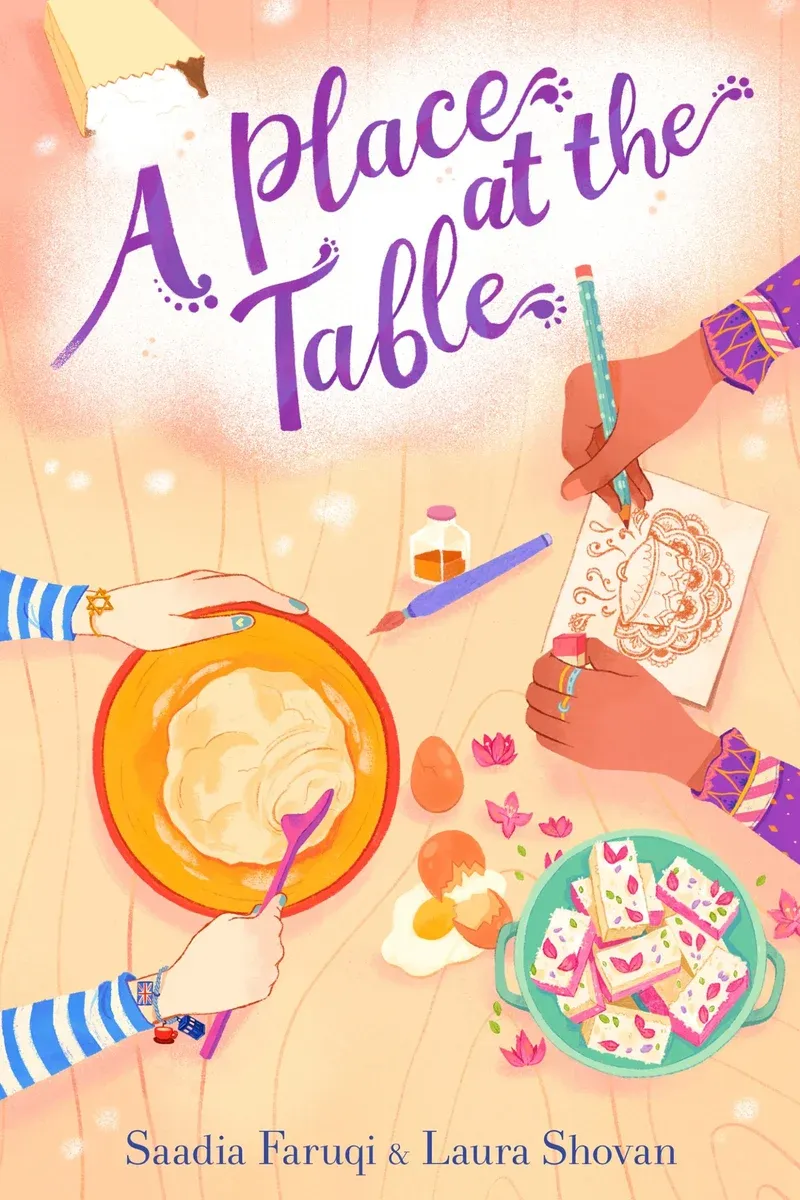
By Saadia Faruqi and Laura Shovan, A Place at the Table (Clarion, 2022) features sixth graders Sara, a Pakistani American, and Elizabeth, a white Jewish girl with a British mother. The two meet in an after-school South Asian cooking class – Elizabeth takes it because her depressed mother has stopped cooking; Sara because her mother is the teacher – and the girls gradually form a bond over plans to create a cross-cultural dish delicious enough to win a place on a local food show. How food can bring us together for ages 10-12.

Lucy Knisley’s Relish: My Life in the Kitchen (First Second, 2013) is a cheerful autobiographical graphic novel of a child “raised by foodies,” with lots of great illustrated recipes. For food-loving teenagers and adults.

In Pixar’s 2007 animated film Ratatouille, Remy, a young rat, dreams of becoming a great French chef. The major drawback: he’s a rat. Rated G.