
Black History
In this collection
- General: African-American History
- Brown, Black, White, and In-between
- Slavery
- Presidents and Slaves
- Fugitives, Runaways, and the Underground Railroad
- Segregation and Jim Crow
- When Some Couldn't Get a Library Card
- People Who Made a Difference
- Civil Rights
- At War
- Growing Up Black
- Black Lives Matter
- Remarkable African Americans
- Folktales and Legends
- Poetry
- Problematic Books
- Lesson Plans and Activities
In the fraught atmosphere of the present day, teaching black history is essential – especially since it’s clear, despite social and political steps forward, there’s still a long way to go.
From the School Library Journal, An Updated Look at Diversity in Children’s Books shows that while representation of diverse characters in children’s books has improved since 2015, it’s still overwhelmingly white. Statistics indicate 50% of books with white characters, 10% with African or African American characters, 7% with Asians, 5% Latinx, and 1% Native Americans.

Inequality is a problem for all – which means that it’s also important for white kids to recognize the impact of being white. Anastasia Higginbotham’s picture book Not My Idea (Dottir Press, 2018) deals with just that – explaining how privilege and power affect our lives, often to the detriment of others, and emphasizing the importance of being aware of racism and racial justice, even if they don’t seem to affect you directly. (“You can be white without signing on to whiteness.”) A good discussion book for ages 7 and up.
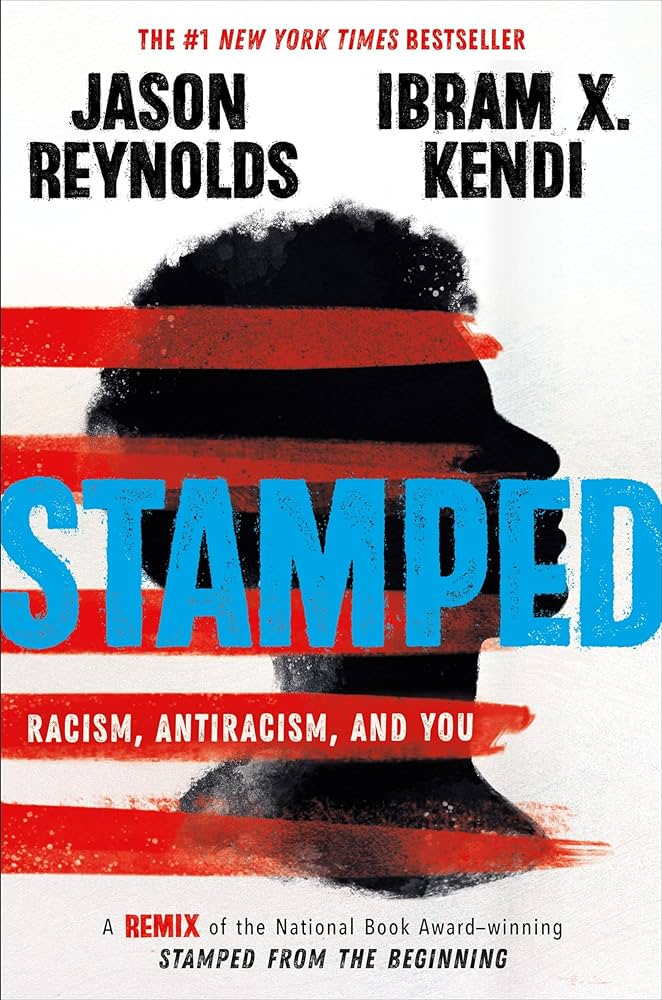
Jason Reynolds and Ibram X. Kendi’s award-winning Stamped (Little, Brown, 2025), subtitled “Racism, Antiracism, and You,” is a powerful narrative, tracing the historical and current presence of racism in America and pointing the way to identifying and eliminating racist thoughts, paving the way for an antiracist community. A must-read for ages 12 and up.
For younger readers, see Stamped (For Kids) (Little Brown, 2024) for ages 7-11.
For an Educator’s Guide to accompany the book, see https://www.hachettebookgroup.com/wp-content/uploads/2020/03/Stamped-Educator-Guide.pdf.
General: African-American History

Kwame Alexander’s award-winning The Undefeated (Versify, 2019), illustrated by Kadir Nelson, is a poetic tribute to the black American experience. “This is for the unforgettable./The swift and sweet ones/who hurdled history/and opened a world/of possible./The ones who survived America/by any means necessary./And the ones who didn’t.” For ages 7 and up.

By Charles R. Smith, Jr., 28 Days: Moments in Black History that Changed the World (Roaring Brook Press, 2015) is a creative picture book of African-American history in chronological order, beginning with Day 1: Crispus Attucks (March 5, 1770) and proceeding through Dred Scott, Harriet Tubman, Bessie Coleman, Marian Anderson, Jackie Robinson, Dr. Martin Luther King, Jr., Thurgood Marshall, Malcolm X, and many more. For ages 6-10.

By Kadir Nelson, Heart and Soul (Balzer + Bray, 2013), illustrated with exquisite paintings, is a history of America and African Americans from colonial times through the Civil Rights Movement, told in the voice of an older narrator telling the story to children. The book ends: “We have come a mighty long way, honey, and we still have a good ways to go. But that promise and the right to fight for it is worth every ounce of its weight in gold. It’s our nation’s heart and soul.” For ages 6-12.

By Nancy I. Sanders, A Kid’s Guide to African American History (Chicago Review Press, 2007) is a comprehensive history from the cultures of Africa through the Civil Rights Movement and beyond, illustrated with photos, prints, maps, and a timeline. Included are capsule biographies of prominent people and over 70 activities, songs, and games. Make an African mask, whip up a batch of peanut butter, grow a sweet potato vine, and invent your own Brer Rabbit riddles. With a publication date of 2007, it’s missing some crucial modern history, but still an excellent resource. For ages 7-12.

By Jabari Asim, A Child’s Introduction to African American History (Black Dog & Leventhal, 2018) is a multifaceted overview from the beginnings of slavery to modern times. Included are a timeline, short biographies of prominent people and a wealth of creative illustrations. For ages 8-12.

By Nancy I. Sanders, America’s Black Founders (Chicago Review Press, 2010) includes background history, a timeline, period illustrations, capsule biographies, and 21 varied activities – among them turning out a batch of homemade salt, publishing a newspaper, drawing a political cartoon, and exploring your family tree. For ages 9-14.

Jeffrey C. Stewart’s 1001 Things Everyone Should Know About African American History (Three Rivers Press, 1998) is a comprehensive and reader-friendly compilation of significant events and people, divided into six parts: Great Migrations, Civil Rights and Politics, African Americans in the Military, Culture and Religion, Invention, Science, and Medicine, and Sports. Heavily illustrated with photos and prints. This is long (400+ pages) but the info is presented in bite-sized bits. For teens and adults.

Glory Edim’s Well-Read Black Girl (Ballantine, 2018), subtitled “Finding Our Stories, Discovering Ourselves,” is an anthology of wonderful essays by black women writers. For teens and adults.
From Reading Rockets, see this list of Favorite Books for Black History Month.
From Mental Floss, 25 Amazing Books by African-American Writers. For older readers.
For middle-grade and teen readers, see this list of graphic novels on black history from the New York Public Library at https://www.nypl.org/blog/2024/01/31/middle-teen-graphic-novels-black-history.

At the Smithsonian National Museum of African American History & Culture website, visitors can view the collection, tour exhibits, and access a wealth of digital resources and videos.
IndieWire’s 12 Films About Black History has summaries and reviews. Among the chosen films are “Amistad,” “The Jackie Robinson Story,” “Malcolm X,” and “Ghosts of Mississippi.”


The 1977 TV miniseries Roots, a dramatization of Alex Haley’s book of the same name, traces an African American family beginning when young Kunta Kinte is abducted from his village, sold into slavery, and taken to America, and proceeding through the Revolution, the Civil War, and emancipation. Recommended for teens and adults.

The Autobiography of Miss Jane Pittman (1974), with Cicely Tyson in the title role, is the story of a 110-year-old woman who was born into slavery in the 1850s and lived to become part of the Civil Rights Movement. Rated PG.
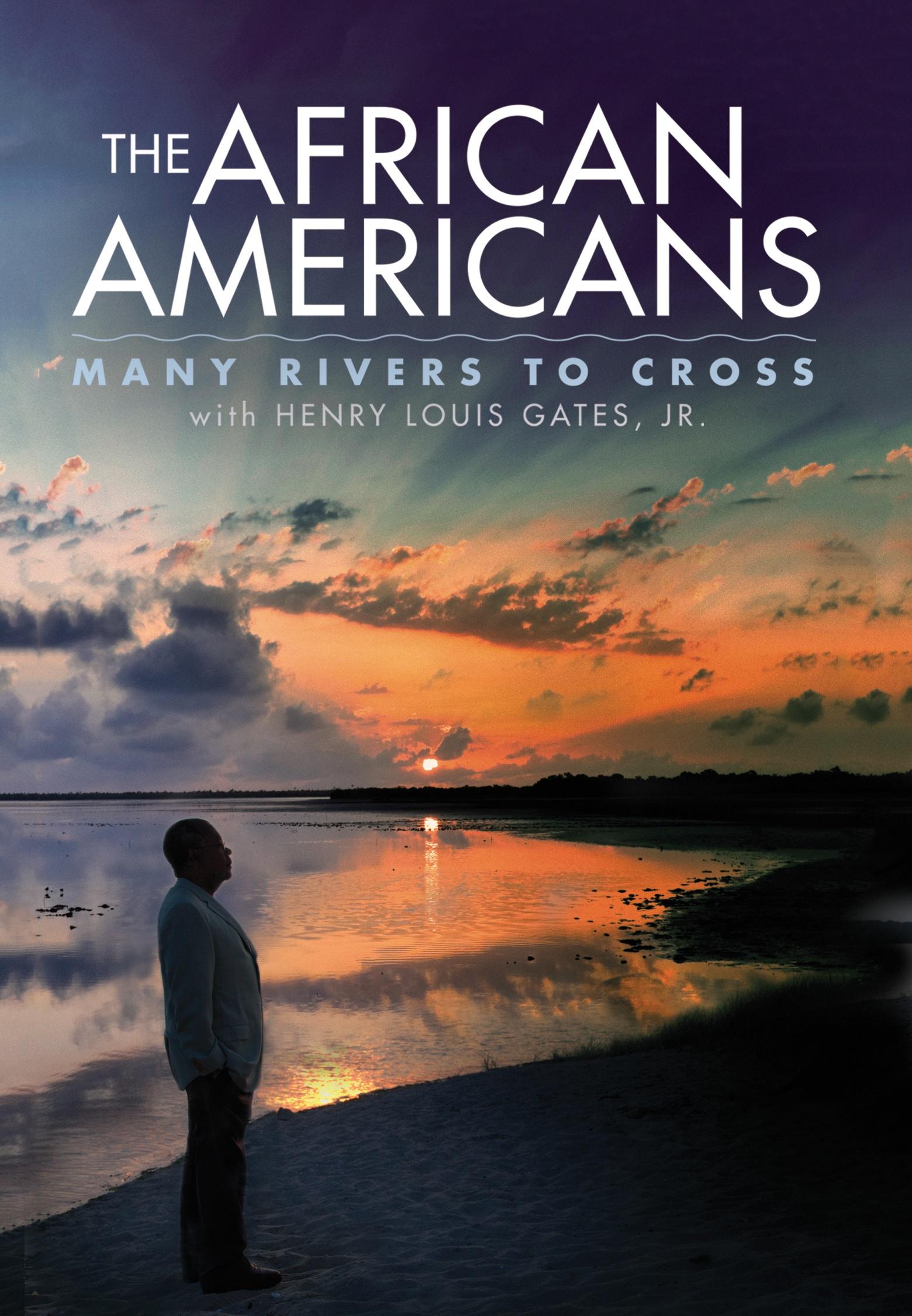
Written and hosted by Henry Louis Gates, Jr., The African Americans: Many Rivers to Cross (2013) is a six-episode documentary tracing 500 years of African-American history from the beginning of plantation slavery in the American South through the election of Barack Obama. Rated TV-PG. See https://www.imdb.com/title/tt3281646/.
Brown, Black, White, and In-between

Katie Kissinger’s All the Colors We Are (Redleaf Press, 2014) is a simple scientific explanation of skin color for ages 3-7. Bonus: it’s bilingual (English/Spanish.)

In Karen Katz’s The Colors of Us (Square Fish, 2002), seven-year-old Lena wants to paint a self-portrait – but what color is her skin? Cinnamon? Peanut butter? A walk through her neighborhood turns up many shades of brown. For ages 4-8.
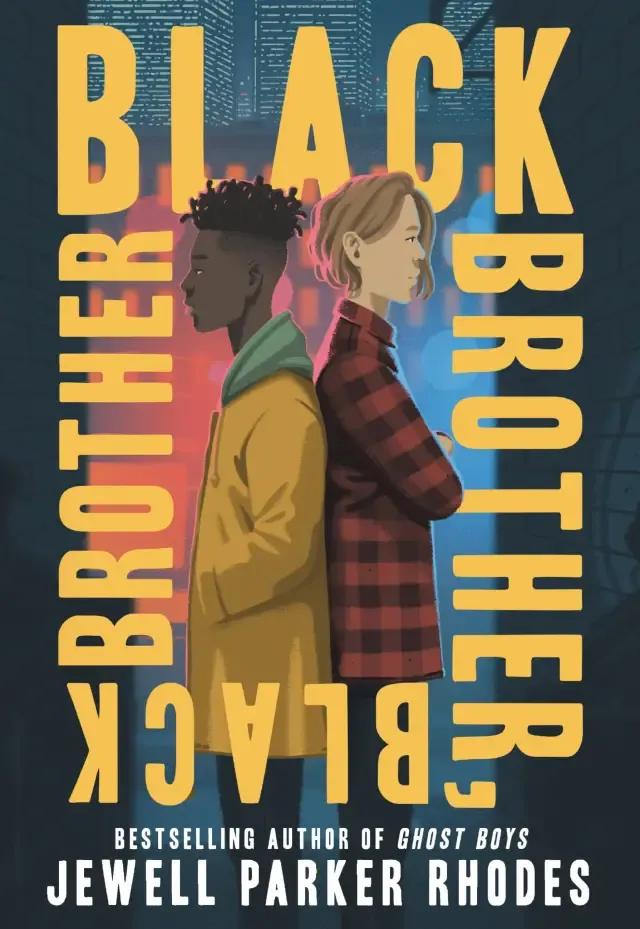
By Jewell Parker Rhodes, Black Brother, Black Brother (Little, Brown, 2021) is the story of two brothers - Donte, who presents as black, and Trey, who looks white – and the very different ways in which they’re treated. The frame story involves a fencing competition. For ages 9-12.

Crayons now come in the many colors of people. From Lakeshore Learning, People Colors, for example, is a collection of 24, from ivory to ebony, with lots of pinks, tans, and browns in between; and Crayola’s


From TED-Ed, see The Science of Skin Color.

From Discover Magazine, Why Did Darker and Lighter Skin Colors Evolve?
Slavery

Slave marriages weren’t legal – and many enslaved couples could only pledge themselves to each other until “death, distance, or the white man” tore them apart. By Kelly Starling Lyons, Ellen’s Broom (G.P. Putnam’s Sons, 2012) is set just after the Civil War, when ex-slaves at last could legally register their marriages. As Ellen’s family heads for the courthouse, Ellen brings along the broom that hung over the family fireplace – that her slave parents jumped many years ago, in an old tradition of slave marriage. For ages 5-8.

Ann Turner’s Nettie’s Trip South (Aladdin, 1995), written in the form of letters to a friend, is a view of slavery as seen by a little girl visiting the South just before the Civil War. Based on the diary of the author’s great-grandmother. For ages 6-9.
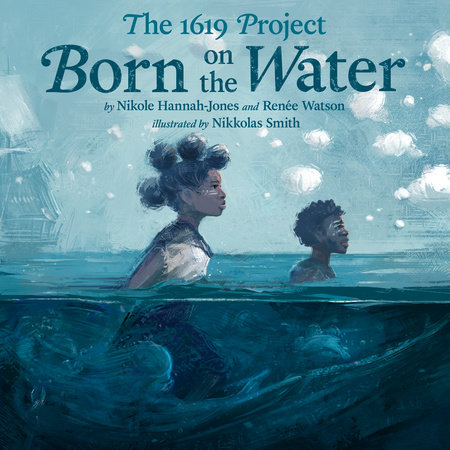
By Nikole Hannah-Jones and Renee Watson, the 1619 Project’s Born on the Water (Kokila, 2021) begins with a young girl given a family tree assignment by her teacher – but she can only trace her family back three generations. Her grandmother then tells her the story of her ancestors, stolen and brought to America by white slave traders – and said to be “born on the water.” A powerful story in verse for ages 7-10.
The 1619 Project, inaugurated in 2019, has a goal of illuminating the legacy of slavery in the present-day United States and highlighting contribution of Black Americans to American society. For more information, curricular resources, and educational materials for grades K-12, see https://1619education.org/.

Ashley Bryan’s Freedom Over Me (Atheneum/Caitlyn Dlouhy Books, 2016), based on original estate appraisal and auction documents, uses narrative poetry to create portraits of eleven slaves belonging to the Fairchild family. A wonderful and compelling book for ages 8-12.

Julius Lester’s From Slave Ship to Freedom Road (Puffin, 1999) is an illustrated and painfully accurate account of slavery and its aftermath. “They took the sick and the dead and dropped them into the sea like empty wine barrels. But wine barrels did not have beating hearts, crying eyes, and screaming mouths.” For ages 8-12.

Elizabeth Yate’s Amos Fortune, Free Man (Puffin, 1989), a Newbery Medal winner, is the story of Amos Fortune, kidnapped and sold into slavery at the age of fifteen, who spends the rest of his life determined to win his freedom. After decades, at last he does. For ages 8-12.

Patricia C. McKissack’s gorgeously illustrated Never Forgotten (Schwartz & Wade. 2011) is a story told in poems of an African blacksmith, Dinga, who raises his much-loved young son, Mustafa, on his own after the death of his wife. When Mustafa is kidnapped and sold into slavery, Dinga calls on the Elements – Earth, Fire, Water, and Wind – for help. Through them, he learns of his son’s passage to America and his life as a blacksmith in South Carolina. Few books deal with the pain of the families in Africa who lost their loved ones. A beautiful and heartbreaking story for ages 9 and up.

Virginia Hamilton’s Many Thousand Gone (Knopf, 1995) traces the history of slavery in America through the voices and stories of the people who lived through it – among them an African prince who was sold into slavery, the mother whose escape over an icy river inspired Eliza’s famous scene in Uncle Tom’s Cabin, and Tice Davids, supposedly the first slave to reach freedom by traveling north on the “underground road.” For ages 9-14.

In Laurie Halse Anderson’s Chains (Atheneum, 2010), set during the Revolutionary War, Isabel and her little sister Ruth have been promised their freedom upon the death of their mistress. Instead, they become the property of the abusive Locktons, a Loyalist couple from New York City. There Isabel becomes friends with Curzon, a slave boy helping the American rebels, and agrees to act as a spy. This is the first of the Seeds of America trilogy; sequels are Forge and Ashes. For ages 10 and up.

In Paula Fox’s The Slave Dancer (Aladdin, 2008), young Jessie Bollier is kidnapped and taken to a slave ship, where his job is to play the fife while the captive Africans are forced to dance to keep their muscles strong. Jessie is horrified by what he sees – and the voyage ends even more horrifically, when the ship sinks following a storm. Jessie and a slave boy manage to survive by clinging to a mast, and eventually reach Mississippi, where they are rescued by an escaped slave. An intense and gripping read for ages 11 and up.

In Gary Paulsen’s Nightjohn (Laurel Leaf, 1995), the title character is an escaped slave who has returned to the South and comes by night to teach slaves to read – and is willing to risk his life to do so. The story is told through the eyes of a young slave girl, Sarny, who is determined, in the face of threats and brutality, to learn. For ages 12 and up.

In Delia Sherman’s time-travel fantasy The Freedom Maze (Candlewick, 2014), 13-year-old Sophie is spending the summer at her grandmother’s old house in the Louisiana bayou – from which she’s transported back to the year 1860, where she finds herself enslaved on a sugar plantation by her own ancestors. An exploration of racial relationships then and now, for ages 12 and up.

M.T. Anderson’s The Astonishing Life of Octavian Nothing: The Pox Party (Candlewick, 2008), set in Revolutionary Boston, is the story of Octavian, a young black boy being raised by a group of rational philosophers who study his every move. It’s a life of eerie luxury – until Octavian discovers that he and his mother are slaves, subjects of an experiment aimed at discovering whether or not Africans are inferior to Europeans. After the death of his mother following a “pox party,” Octavian escapes and becomes a soldier in the Patriot army – only to find that liberty isn’t in the cards for slaves. A complex and thought-provoking book. Winner of a National Book Award. For ages 12 and up.
Also see the sequel: The Astonishing Life of Octavian Nothing: Traitor to the Nation.

Julius Lester’s powerful To Be a Slave (Puffin, 2000) incorporates the words of enslaved people, interspersed with historical commentary. An important and highly recommended read for ages 12 and up.

In Octavia E. Butler’s Kindred (Beacon Press, 2003), Dana, a modern African-American woman, is abruptly torn away from her white husband and ends up in the antebellum South, where she saves Rufus, the young son of the plantation owner, from drowning. Dana’s connection to Rufus persists over time, with her trips to the past becoming ever longer and more difficult and dangerous. A fascinating story of racism, sexism, and white supremacy that shows how badly it damages all concerned. A powerful read for teens and adults.

Harriet Beecher Stowe’s Uncle Tom’s Cabin, originally published in 1852, was the second-best-selling book of the 19th century, narrowly outdistanced by the Bible. A passionate anti-slavery novel, featuring the saintly slave Uncle Tom and the evil white overseer, Simon Legree, the book fueled and inspired the abolitionist movement. Supposedly Lincoln, upon meeting Stowe, remarked “So you are the little woman who wrote the book that started this great war.” Available in many editions.

The movie Twelve Years a Slave (2013) is based on the memoirs of Solomon Northup, a free black man from New York, who was kidnapped and sold into slavery in Louisiana. Many awards. Rated R for violence, nudity, and some sex scenes – generally recommended for ages 16 and up.

Amistad (1997), directed by Steven Spielberg, is the name of a slave ship, traveling to Cuba in 1839, which was taken over by its cargo of kidnapped Africans. They hoped to return to Africa – but instead ended up in the United States. There their case, passionately defended by John Quincy Adams, came before the Supreme Court. Rated R for nudity, violence, and intense emotional scenes.
Presidents and Slaves
Despite the Declaration of Independence’s claim that all men are created equal, many of our founding fathers were slave owners, a conflict of practice and belief that has reverberated throughout American history.

By Jonah Winter, My Name is James Madison Hemings (Schwartz & Wade, 2016) is the first-person account of Jefferson’s conflicted legacy and his relationship with his slave family by Sally Hemings, as narrated by the young James Madison Hemings. For ages 5-9.

By Kimberly Brubaker Bradley, Jefferson’s Sons (Puffin, 2013) tells the stories of three of Jefferson’s children by Sally Hemings, Beverly, Madison, and Peter. Jefferson is shown as a difficult and contradictory figure – the kindly man who nonetheless permits whippings and slave sales. Would a great person sell someone else’s son? Can a person be great and still participate in evil? A good discussion book for ages 9-12.

Marfe Ferguson Delano’s Master George’s People (National Geographic, 2013) is the story of George Washington’s slaves, including capsule biographies, period prints. and photographs of the Mount Vernon historical site. For ages 10 and up.

By Erica Armstrong Dunbar, Never Caught (Aladdin, 2019) is the story of Ona Judge, born into slavery at Mount Vernon, who escaped from Washington’s presidential mansion in Philadelphia in 1796 and boarded a ship for New Hampshire. Despite Washington’s determined efforts to recapture her, she was never caught. Young Reader’s Edition of a more detailed adult book. For ages 9-14.

By Kenneth C. Davis, In the Shadow of Liberty (Square Fish, 2019), subtitled “The Hidden History of Slavery, Four Presidents, and Five Black Lives,” is the story of five enslaved people who were owned by our founding fathers, among them George Washington’s valet, Billy Lee; Isaac Granger, raised at Monticello; and Paul Jennings, who accompanied James and Dolley Madison to the White House. Well-researched nonfiction for ages 10-14.
Fugitives, Runaways, and the Underground Railroad

In Unspoken, a lovely wordless picture book by Henry Cole (Scholastic, 2012), a little farm girl finds a runaway slave hiding in the barn. For ages 3-8.

Jeanette Winters’s Follow the Drinking Gourd (Dragonfly, 1992) is the story of Peg Leg Joe, who helps slaves escape North to freedom by teaching them a song about the Big Dipper. For ages 4-8.

Ellen Levine’s Henry’s Freedom Box (Scholastic, 2007) is based on the true story of Henry Brown who – after his wife and children are sold – has himself nailed into a wooden crate and shipped to the free city of Philadelphia. A beautifully illustrated picture book for ages 4-8.

Alan Schroeder’s Minty (Puffin, 2000) is a picture-book story of young Harriet Tubman, the clever and courageous woman who helped hundreds of slaves escape north to freedom via the Underground Railroad. For ages 4-8.

In Faith Ringgold’s fantastical Aunt Harriet’s Underground Railroad in the Sky (Dragonfly, 1995), young Cassie is taken on a magical journey retracing the experiences of escaping slaves by none other than Harriet Tubman herself. For ages 4-8.

By Monica Kulling, Escape North! The Story of Harriet Tubman (Random House, 2000) is a Step Into Reading Book covering Tubman’s life from her childhood as a slave through her years as a conductor on the Underground Railroad to her later work fighting for women’s right to vote. For ages 6-9.

By Carole Boston Weatherford and beautifully illustrated with paintings by Kadir Nelson, Moses (Hyperion, 2006) is the story of Harriet Tubman, with emphasis on how her reliance on religious faith aided her in her escape to freedom and her later role in the Underground Railroad. For ages 6-9.

In Bettye Stroud’s The Patchwork Path (Candlewick, 2007), Hannah’s father is planning to make a break for freedom, and the patchwork quilt left to Hannah by her mother contains clues that will guide them on their way to Canada. For ages 5-8.

In Deborah Hopkinson’s Sweet Clara and the Freedom Quilt (Dragonfly Books, 2015), Clara longs for freedom and dreams of being reunited with her mother. When she learns about the Underground Railroad, she fashions a quilt from fabric scraps that secretly functions as a map, showing other slaves how to find the way North. For ages 5-8.

In Shelley Pearsall’s Trouble Don’t Last (Yearling, 2003), 11-year-old Samuel has been raised by the elderly Harrison after his mother was sold – and now, when Harrison decides to run away, Samuel goes with him. The journey north via Underground Railroad is harrowing and dangerous – but ends with a reunion and a promise of a new life in Canada. For ages 8-12.

When the title character of Jean Fritz’s Brady (Puffin, 2001) discovers an Underground Railroad station near his home in Pennsylvania, he has to decide where his values lie – with his preacher father who is anti-slavery, or with his Virginia mother, who defends it. For ages 8-12.

In Margaret Goff Clark’s Freedom Crossing (Scholastic, 1991), Laura returns to the family farm in New York after living for four years with her aunt and uncle in Virginia – only to find that her father and brother are now conductors on the Underground Railroad, helping escaping slaves reach Canada. When a runaway slave is brought to the farm while Laura’s father is away, Laura has to decide where her values lie – even though it may mean breaking the law. For ages 9-12.

In Avi’s Something Upstairs (Scholastic, 2010), 12-year-old Kenny and family have moved to an old house in Providence, Rhode Island, where Kenny discovers that his attic bedroom in haunted by the ghost of a young slave named Caleb. A time-travel thriller and murder mystery with a social message for ages 9-12.

In Katherine Paterson’s Jip, His Story (Puffin, 1998), Jip – tossed off a wagon as an infant – has been raised on a Vermont poor farm. Then he discovers that he’s half-black, the son of an escaped slave – and is at risk of being claimed as property by a Southern plantation owner. For ages 9-14.

In Virginia Hamilton’s The House of Dies Drear (Aladdin, 2006), 13-year-old Thomas’s new home, once a stop on the Underground Railroad, is said to be haunted by the ghosts of fugitive slaves, killed by bounty hunters, and by the ghost of abolitionist Dies Drear. A history mystery for ages 9 and up.

By Christopher Paul Curtis, Elijah of Buxton (Scholastic, 2009), a Newbery Honor winner, is the story of eleven-year-old Elijah, the first child to be born free in the town of Buxton, Canada, settled by escaped slaves. When a thief steals the money that his friend, Mr. Leroy, was saving to buy his still-enslaved family, Elijah crosses the border from free Canada into America in an attempt to get it back. Sad, glad, and wonderful. For ages 9-12.

In Ann E. Burg’s Unbound (Scholastic, 2018), a novel in verse, young Grace – sent from the slave cabins to work in the Big House - simply can’t keep her thoughts about injustice to herself. Grace and her family, now in danger of retribution, run away, and find sanctuary in the Great Dismal Swamp, with a settlement of other runaways. For ages 9-12.
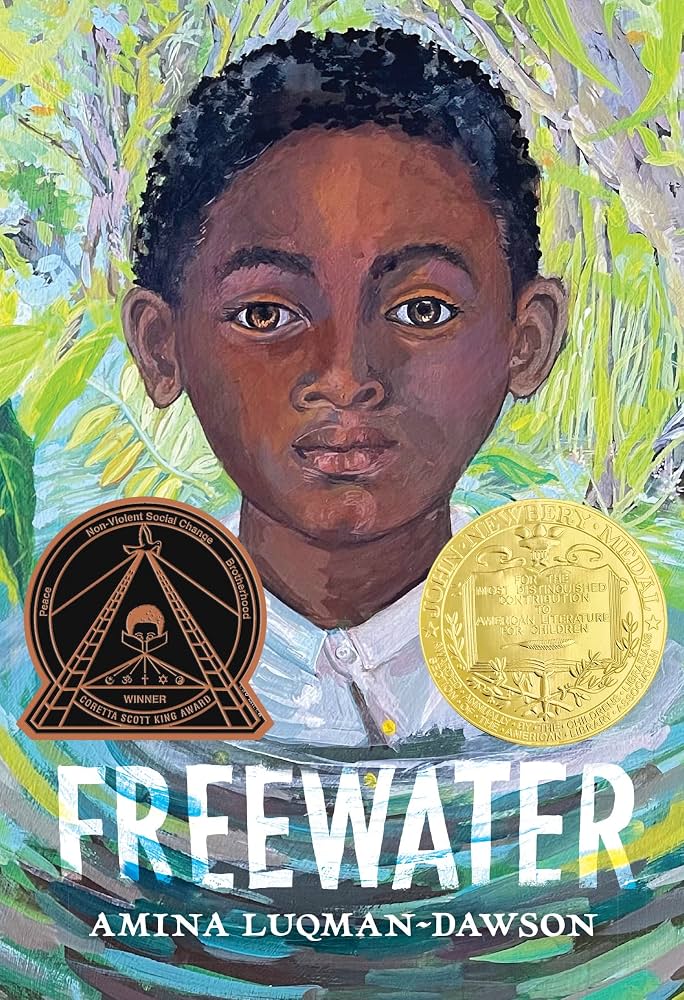
By Amina Luqman-Dawson, Freewater (Jimmy Patterson, 2023) – a Newbery Medal winner – is the story of 12-year-old Homer and little sister Ada, who flee slavery on the Southerland plantation to live with the secret community of Freewater, hidden deep in the swamp. Told from a range of different perspectives. Loosely based on the history of the self-emancipated maroon communities that made their homes in the Southern swamps. For ages 10 and up.

By Christopher Paul Curtis, in The Journey of Little Charlie (Scholastic, 2018), Little Charlie’s white sharecropper father has just died and the family is in debt to the noxious Cap’n Buck – so Charlie is forced to accompany Buck north to retrieve some stolen property for his boss, which turns out to be a family of escaped slaves. The young son of the family, Sylvanus, is at school in Canada, so Charlie, who is beginning to doubt the rightness of his mission, is soon embroiled in an international kidnapping. For ages 10-14.

In Tom Tingle’s Stone River Crossing (Tu Books, 2019), the Bok Chitto River is the border between Martha Tom’s Choctaw Nation and the Mississippi plantation where Lil Mo and his family are enslaved. When Lil Mo learns that his mother is to be sold, the family manages to cross the river via a secret underwater pathway and find shelter with the Native Americans. The story centers around the little-known historical bond between Native Americans and slaves, both victims of tyranny and discrimination. For ages 10-14.
A picture-book version of this story, also by Tingle, Crossing Bok Chitto (Cinco Puntos Press, 2008), is recommended for ages 7-12.

Based on Colson Whitehead’s The Underground Railroad (Knopf Doubleday, 2016) – winner of both a Pulitzer Prize and a National Book Award – The Underground Railroad (2021), a 10-episode series, is the story of Cora, an escapee who is relentlessly pursued by Ridgeway, a slavecatcher, while she travels north on the Underground Railroad.
Segregation and Jim Crow

In Karen Hesse’s Witness (Scholastic, 2003), the Ku Klux Klan moves into a small Vermont town in the 1920s, bringing danger to 12-year-old Leanora, who is black, and six-year-old Esther, who is Jewish. A novel in verse, told in many voices. For ages 9-12.

In William Armstrong’s Sounder (HarperCollins, 2019), a Newbery Medal winner, the father of a poverty-stricken black sharecropper family is sent to prison for stealing food. In his absence, the family struggles to survive, while his son does his best to get an education. The story revolves around the father’s hunting hound, Sounder – and (spoiler) expect to cry.
Also see the movie version (1972), rated G.

Set in 1943, Karyn Parsons’s How High the Moon (Little, Brown, 2020) is the story of Ella, growing up in the Jim Crow South. A much-longed-for visit to her mother in Boston ends in disappointment – Ella is simply trapped in an apartment while her mother works all day as a shipfitter and spends nights singing in jazz clubs – and back home tragedy strikes as Ella's friend George is accused of the murder of two white girls. Narration alternates between Ella and her cousins Henry and Myrna. For ages 9-12.

In Sharon M. Draper’s Stella by Starlight (Atheneum/Caitlyn Dlouhy Books, 2016), set in Depression-era North Carolina, the Ku Klux Klan is fomenting violence and has burned down the house of a black family whose father just registered to vote. Stella and family and friends, however, stand up for change. For ages 9-13.

In Christopher Paul Curtis’s Bud, Not Buddy (Yearling, 2002), a Newbery Medal winner, set during the Depression, ten-year-old Bud, after a stint in another horrible foster home, is on the run, searching for his father – who just might be the leader of a band, the Dusky Devastators of the Depression. Issues of abuse, racism, poverty, and family – and a tie-in to the importance of music in African-American history. For ages 10 and up.

Linda Williams Jackson’s Midnight Without a Moon (Houghton Mifflin Harcourt, 2017) is set in Mississippi in the summer of 1955, where Rose Lee Carter lives with her sharecropper grandparents – and hopes to move north to live with her mother in Chicago. Jim Crow laws are in effect at home, and registering to vote is enough to get black citizens killed. Then young Emmett Till is murdered for supposedly whistling at a white woman – and Rose realizes that she’d rather stay where she is and fight for change. For ages 10-13.

Mildred D. Taylor’s Roll of Thunder, Hear My Cry (Puffin, 2004), set in Mississippi during the Depression, is the story of young Cassie Logan and family, and their struggle to hold their own in the face of racism and social injustice in the Jim Crow era. For ages 11 and up.
Also see the movie version (1978).

Harper Lee’s To Kill a Mockingbird (Harper Perennial, 2002), one of the best novels of the 20th century, is a coming-of-age story set in Alabama during segregation. The story is told through the eyes of seven-year-old Scout, whose father – Atticus Finch – is defending a black man accused of raping a white woman. For teens and adults.
It’s rare that a movie is just as good as the book, but To Kill a Mockingbird (1962), with Gregory Peck as Atticus Finch, is an exception to the rule. Generally recommended for ages 12 and up.

Patricia Hruby Powell’s Loving vs Virginia (Chronicle Books, 2017) is a documentary novel in verse about the landmark court case over the marriage of Richard Loving and Mildred Jeter. Richard was white; Mildred black; and the law in Virginia forbade interracial marriage. Their story is told in part with news clippings, maps, and period photos. A discussion-promoting read for ages 12 and up.

John Howard Griffin’s classic Black Like Me (Berkley, 2010) is the story of the author’s experiences in the Deep South in the 1950s, when he darkened his skin and entered the viciously segregated world of America’s black people. A searing indictment of racism. For teens and adults.

A landmark autobiographical memoir, Richard Wright’s Black Boy (Harper Perennial, 2020) is an intense and unforgettable story of Wright’s growing up in virulently racist Mississippi. For teens and adults.
When Some Couldn't Get a Library Card

In Ann Malaspina’s Finding Lincoln (Albert Whitman, 2009), set in 1951 in Alabama, young Louis has a school assignment to write an essay about Abraham Lincoln – but he’s forbidden to use the “whites only” library. When he bravely visits the library anyway, he receives unexpected help from a sympathetic librarian. For ages 5-8.

In Rose Blue’s Ron’s Big Mission (Dutton, 2009), young Ron McNair, growing up in the 1950s in South Carolina, is forbidden to check out books from the town library – though eventually he manages to prevail over injustice. Based on a true story. McNair went on to become an astronaut. For ages 5-8.

William Miller’s Richard Wright and the Library Card (Lee & Low, 1997) is the picture-book story of Wright, author of Native Son and Black Boy, who as a young man in the South in the 1920s was forbidden to borrow books from the public library. For ages 6-9.
Also by Miller for the same age group, see Zora Hurston and the Chinaberry Tree (Lee & Low, 1994) and Frederick Douglass: The Last Day of Slavery (Lee & Low, 2005).

In Lesa Cline-Ransome’s Finding Langston (Holiday House, 2020), set in 1946, 11-year-old Langston and his father, after Langston’s mother died, moved from Alabama to Chicago. Langston is having a hard time adjusting to his new town – until he discovers the library which, unlike the whites-only library back home, is open to all. There he discovers Langston Hughes, the poet after whom he is named. For ages 8-12.
People Who Made a Difference

Lisa Cline-Ransome’s Words Set Me Free (Simon & Schuster, 2012) is a picture-book biography of Frederick Douglass, told in the first person. For ages 5-9.

Illustrated with beautiful paintings by Kadir Nelson, Martin Luther King, Jr.’s I Have a Dream (Schwartz & Wade, 2012) captures the passion of one of the most famous speeches of the 20th century. For ages 6 and up.

By Anne Rockwell, Only Passing Through (Dragonfly, 2002) is a picture-book biography of Sojourner Truth, who survived slavery to become a brave and eloquent spokesperson for abolition and women’s rights. For ages 6-9.

By Eloise Greenfield, Mary McLeod Bethune (HarperCollins, 1994) is the story of the brilliant educator and civil rights activist who worked to provide schools for African Americans in the late 19th and early 20th centuries. For ages 6-9.

Andrea Davis Pinkney’s Let it Shine (Houghton Mifflin Harcourt, 2013) is an illustrated collective biography of black women freedom fighters, among them Sojourner Truth, Harriet Tubman, Ida B. Wells, Mary McLeod Bethune, Ella Josephine Baker, and Shirley Chisholm. For ages 6-9.

Malcolm Little: The Boy Who Grew Up to Become Malcolm X (Atheneum, 2014) is a picture-book biography by Ilyasah Shabazz, Malcolm X’s daughter. For ages 7-11.

By Walter Dean Myers, Malcolm X: By Any Means Necessary (Scholastic, 2019) is a prize-winning biography for ages 12 and up.

By Andrea Davis Pinkney, Hand in Hand (Little, Brown, 2012) tells the stories of “ten bold men who build a chain called hand in hand…working toward freedom.” Among these: Benjamin Banneker, Frederick Douglass, Thurgood Marshall, Malcom X, and Martin Luther King, Jr. For ages 8-12.

By Booker T. Washington, Up From Slavery (many editions) is the autobiography of the American educator, author, and presidential advisor, who was a key leader in the African-American community in the late 19th and early 20th centuries. A classic for teens and adults.
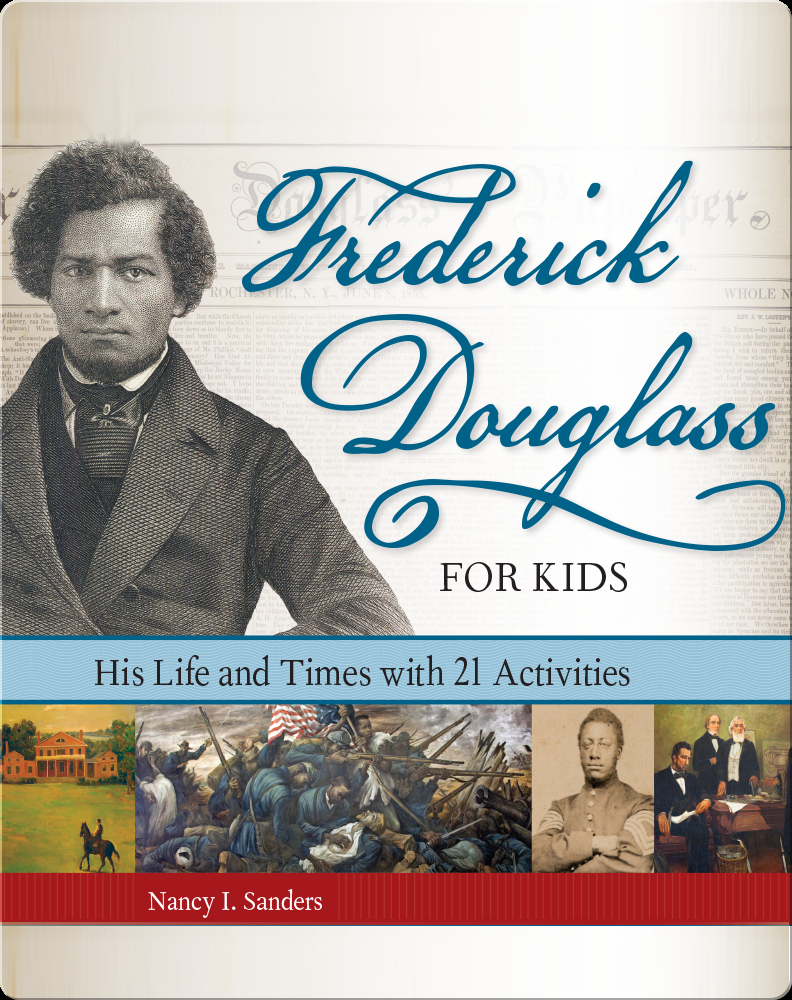
Few Americans have made such a difference as Frederick Douglass. Nancy I. Sanders’s Frederick Douglass for Kids (Chicago Review Press, 2012) covers the life and times of Douglass with a timeline, period photos and illustrations, fact boxes, and 21 projects and activities. For ages 9 and up.
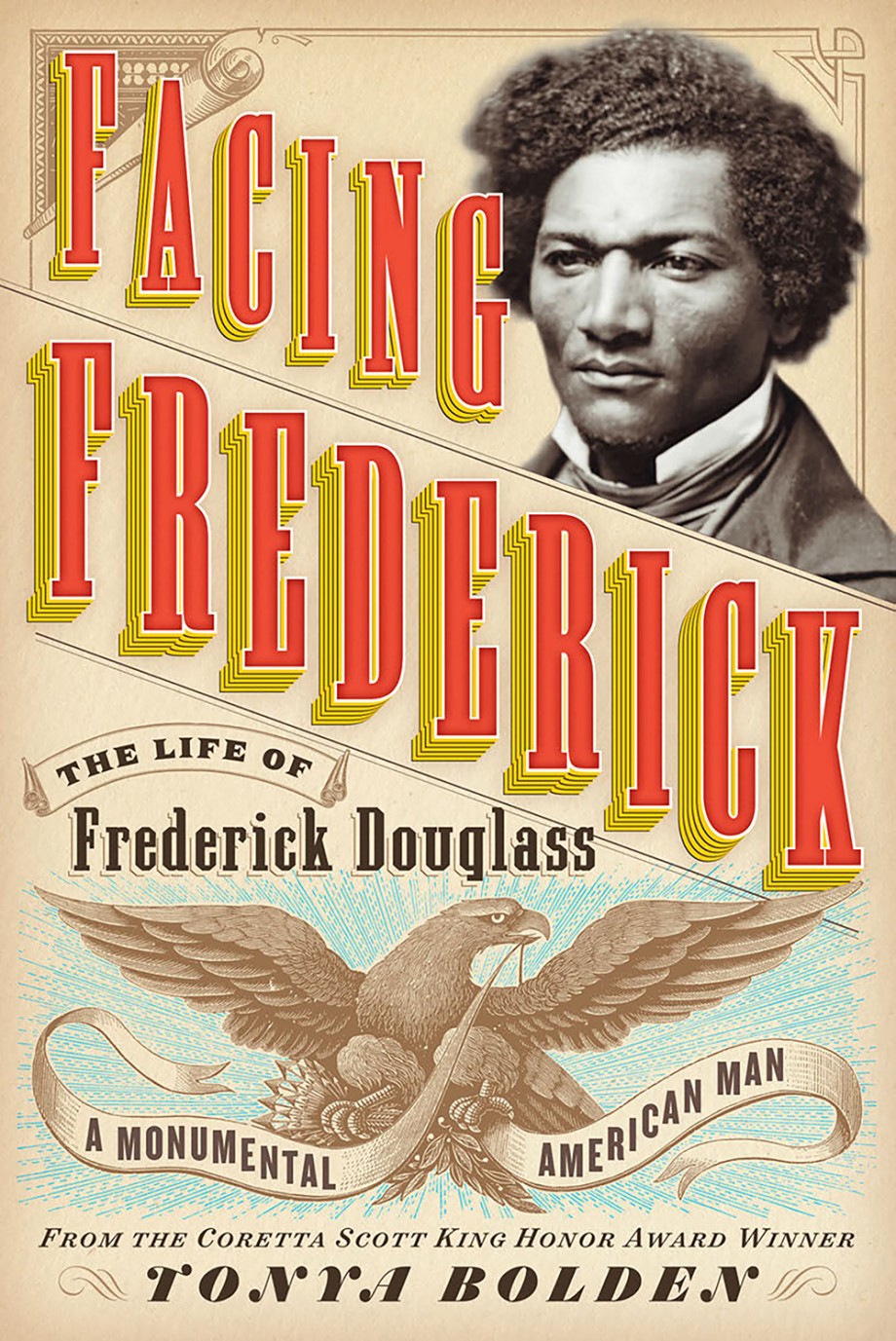
Tonya Bolden’s Facing Frederick (Abrams, 2018) is an engrossing biography of a truly monumental and multifaceted man for ages 10 and up.

By Frederick Douglass, Narrative of the Life of Frederick Douglass (many editions), originally written in 1845, is the autobiography of the brilliant writer whose harrowing story and passionate voice inspired the abolitionist cause. A classic for teen and adults.

Dubbed one of the most important nonfiction books of the 20th century, The Autobiography of Malcolm X (Ballantine, 1992) is based on a series of interviews conducted over two years, from 1963 to Malcom X’s assassination in 1965. It’s the story of the fiery human rights activist and his promotion of black pride and black nationalism, as well as an account of his personal spiritual journey. Highly recommended for teens and adults.
Civil Rights

In Faith Ringgold’s picture book If A Bus Could Talk (Aladdin, 2003), a talking bus tells Marcia the story of Rosa Parks, mother of the Civil Rights movement. For ages 4-8.

Aaron Reynolds’s Back of the Bus (Puffin, 2013) is the story of Rosa Parks as told from the point of view of a small black boy sitting in the back of the bus and playing with a marble. For ages 5-8.

Connie Rose Miller’s Rosa Parks and the Montgomery Bus Boycott (Capstone, 2006) is a graphic-novel version of the story for ages 9-12.

By Deborah Wiles, Freedom Summer (Atheneum, 2014) is the story of the friendship of two young boys, one black, one white, in the wake of the Civil Rights Act of 1964. “John Henry swims better than anyone I know./He crawls like a catfish/blows bubbles like a swamp monster/but he doesn’t swim in the town pool with me./He’s not allowed.” For ages 4-8.

By Robert Coles, The Story of Ruby Bridges (Scholastic, 2010), is the story of six-year-old Ruby who, ordered by a judge to attend an all-white school, must cope with angry mobs of white protesters. For ages 4-8.

By Norman Rockwell, The Problem We All Live With, painted in 1963, is a portrait of little Ruby, flanked by U.S. Marshalls. Read about Rockwell and his Civil-Rights-era paintings here.

In Carole Boston Weatherford’s Freedom on the Menu (Puffin, 2007), eight-year-old Connie realizes that things could change when she sees four young men take a stand for civil rights at the Woolworth lunch counter in Greensboro, North Carolina. For ages 4-8.

Andrea Davis Pinkney’s Sit-In: How Four Friends Stood Up by Sitting Down (Little, Brown, 2010) is a picture-book account of the famous Woolworth lunch counter sit-in, when four black college students staged a peaceful protest in Greensboro, North Carolina in 1960, and helped inspire the growing Civil Rights movement. Included are a Civil Rights timeline and suggestions for further reading. For ages 6-10.

By Cynthia Levinson, The Youngest Marcher (Atheneum, 2017) is the story of nine-year-old Audrey Faye Henrick, the youngest person to be arrested for a civil rights protest in Birmingham, Alabama, in 1963. For ages 5-9.

By Kristina Brooke Daniele, Civil Rights Then and Now (Wendybird Press, 2019) is a timeline of the long-going struggle for equality, with historical background, capsule biographies of key people, and descriptions of landmark court cases. Part One (Civil Rights Then) begins with abolitionists and early activists and proceeds through the Civil War and the Civil Rights era; Part Two (Civil Rights Now) deals with the modern Civil Rights movement and rising violence against black Americans. For ages 9 and up.

By Mary C. Turck, The Civil Rights Movement for Kids (Chicago Review Press, 2000) has historical background information, a timeline, capsule biographies of influential people, period photos, and 21 hands-on projects and activities. An appendix has additional resources and a book list. For ages 9-12.
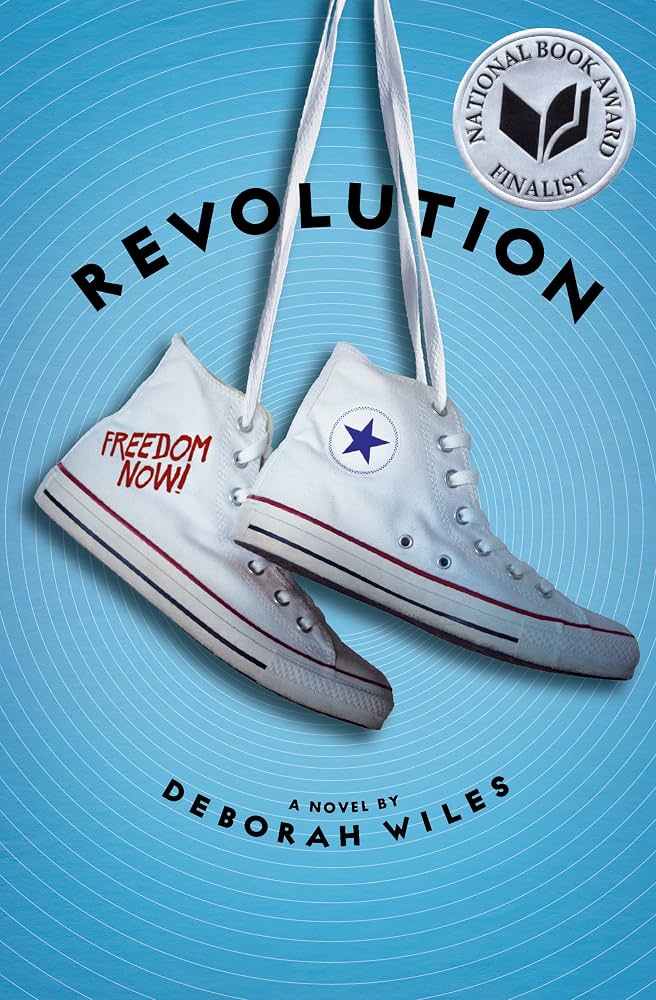
Revolution (Scholastic, 2017), second book in the Sixties Trilogy by Deborah Wiles, in set in Mississippi in 1964 during Freedom Summer, a civil-rights campaign to register Black voters. The books are documentary novels, using a mix of fictional story, historic photos, news clippings, song lyrics, quotations, and primary sources. Other titles in the trilogy are Countdown and Anthem. Highly recommended for ages 8-12.

By Christopher Paul Curtis, in The Watsons Go to Birmingham – 1963 (Yearling, 1997), narrated by 10-year-old Kenny, the Watsons of Flint, Michigan, pile into their car, the Brown Bomber, and head for Birmingham, where they plan for older son Byron (an “official juvenile delinquent”) to live for a while with his grandmother. They arrive at the time of Birmingham’s 16th Street Baptist Church bombing, that killed four young black girls. For ages 9-12.

In Susan Vaught’s Things Too Huge to Be Fixed by Saying Sorry (Simon & Schuster, 2016), set in Oxford, Mississippi, black scholar Ruth Beans and white novelist Avadelle Richardson have had a long-standing rift. Ruth now has Alzheimer’s disease, but she’s left behind clues to the source of the problem, which Ruth’s granddaughter, Dani, and Avadelle’s grandson, Mac, are determined to solve. The truth lies in the struggle for civil rights, the turbulent desegregation of the University of Mississippi in 1961, and the toxic legacy of racism. For ages 10-14.
For more info on the desegregation of the University of Mississippi, see James Meredith at Ole Miss.
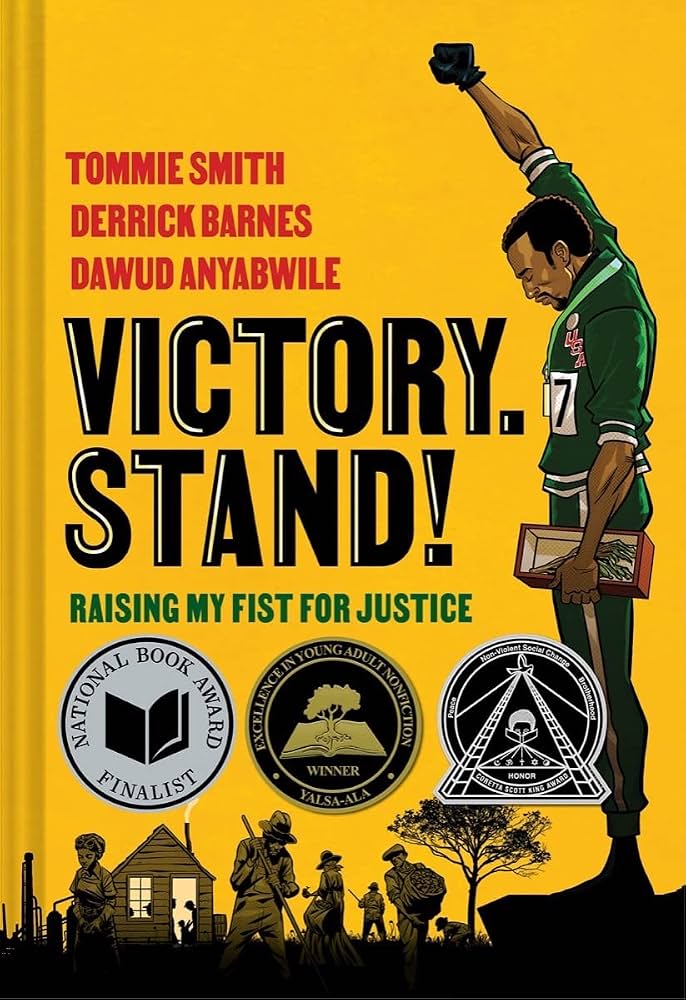
By Tommie Smith and co-authors, Victory. Stand! (Norton, 2022) is an acclaimed graphic-novel-style memoir of Smith’s childhood, athletic career, Olympic victory in 1968, when Smith and fellow winner John Carlos unforgettably raised fists to protest racial injustice, and its aftermath. For ages 12 and up.

Congressman John Lewis’s March (Top Shelf, 2013), winner of a National Book Award, is the first of a graphic-novel trilogy about Lewis’s lifelong fight for civil rights. An eyewitness story of social change for ages 13 and up.

From PBS’s American Experience, Eyes on the Prize is a highly acclaimed nine-part history of the American Civil Rights Movement, featuring contemporary interviews and historical footage.
Also see this selection of “must watch” black history documentaries.

In The Long Walk Home (1990), two women in Montgomery, Alabama, one black, one white – respectively played by Whoopi Goldberg and Sissy Spacek – must decide what to do during the Montgomery Bus Boycott of 1955, the first large-scale demonstration in opposition to segregation. Rated PG.
For more info, also see Montgomery Bus Boycott from History.com.
At War

By Gretchen Woelfle, Answering the Cry for Freedom (Calkins Creek, 2016) tells the stories of 13 African Americans who lived through or fought in the Revolutionary War, among them James Armistead Lafayette, Phillis Wheatley, Elizabeth Freeman, and more. For ages 9 and up.

In James Lincoln Collier’s War Comes to Willy Freeman (Yearling, 1987), the story of a 13-year-old free African American girl during the Revolution, Willy’s father has been killed by the Redcoats and her mother taken as a prisoner to New York City. Willy, disguised as a boy, sets out to find her mother and ends up at the Fraunces Tavern, a favorite haunt of George Washington. For ages 8-12.

Judith Berry Griffin’s Phoebe the Spy (Puffin, 2002) is the story of Phoebe Fraunces, a young black girl who saves the life of George Washington when she discovers a poisoning plot. For ages 8-12.

In Lauren Tarshis’s I Survived the Battle of Gettysburg, 1863 (Scholastic, 2013), Thomas and his sister Birdie, escaped slaves, are heading north toward freedom, when they encounter a Union soldier and are invited to accompany his regiment. The regiment, however, is marching to Pennsylvania, and is about to fight in the most famous battle of the Civil War. For ages 7-10.

In Patricia Polacco’s heartbreaking historical picture book Pink and Say (Philomel, 1994), both the title characters are young Union soldiers – Say is white, and Pink black. Pink saves Say, who has been wounded on the battlefield, and takes him home to his mother in Georgia to heal. Eventually the two are captured by Confederate soldiers and sent to Andersonville prison, where Say survives, but Pink is hanged. Based on a true story. For ages 7-10.

Sherry Garland’s The Buffalo Soldier (Pelican, 2006) is the fictional story of a newly freed slave who joins an army cavalry regiment and becomes a “buffalo soldier,” protecting western settlements from “Indians and bandits.” (Discuss.) For ages 8-12.
For more info, see Buffalo Soldiers at History.com.

Carole Boston Weatherford’s You Can Fly (Atheneum, 2017) is the story of the Tuskeegee Airmen, told in poems, with scratchboard illustrations based on World War II photographs. For ages 9-12.

Tanya Lee Stone’s Courage Has No Color (Candlewick, 2013) is an account of the Triple Nickles, America’s first black paratroopers, little-known heroes of World War II. Illustrated with wonderful period photos. For ages 10-14.

In Brenda Woods’s The Unsung Hero of Birdsong, USA (Puffin, 2020), 12-year-old Gabriel Haberlin, riding his new birthday bicycle, is nearly killed in a car accident – but is saved by Meriwether Hunter, a mechanic who works in Gabriel’s dad’s auto shop. Gabriel soon learns that Hunter is a war hero – he served in the army’s all-black tank battalion, the Black Panthers, in World War II – and also learns about the bigotry and racial prejudice that leads him to keep the fact quiet. For ages 10-13.

In Marilyn Nelson’s novel in verse American Ace (Dial, 2016), Connor’s Italian nonna has died, leaving a letter to Connor’s father revealing that he is not the biological son of her husband, but the child of an American who died during World War II. The only clues to his identity are a class ring and a pair of pilot’s wings. Connor sets out to solve the mystery, eventually discovering (spoiler!) that his grandfather was one of the famous Tuskegee Airmen. For ages 12 and up.
Growing Up Black

Matt de la Pena’s Last Stop on Market Street (G.P. Putnam’s Sons, 2015), winner of the Newbery Medal, follows a young black boy and his grandmother as they travel through their very diverse city, finding beauty in it as they go. For ages 4-8.

In Jerry Craft’s graphic novel New Kid (Quill Tree Books, 2019), a Newbery Medal winner, art-loving seventh-grader Jordan has been sent by his parents to the upscale Riverdale Academy, where he is one of the few enrolled black students. Jordan struggles with adjusting to two very different social milieus – at school, where there are problems with racism and microaggressions, and back home with friends in his Washington Heights neighborhood – while finding out how to remain true to himself. For ages 8-12.

In Rita Williams-Garcia’s One Crazy Summer (Quill Tree Books, 2011), Delphine, Vonetta, and Fern travel cross-country from Brooklyn to spend the summer with their mother, Cecile, a poet, who left them seven years ago to find a new life in California. It’s 1968 – a year of great civil unrest – and Cecile enrolls the girls in a day camp run by the Black Panthers. Themes are racism, injustice, black pride, and the meaning of family. For ages 9-12.

Jason Reynolds’s Ghost (Atheneum, 2017) is the story of young Castle Cranshaw (a.k.a. Ghost), a champion runner – who finds that no matter how fast he is, he’s can’t run away from his painful past. Issues include drug abuse, theft, gun violence, honesty, and anger. The first of a series for ages 10 and up.

Jacqueline Woodson’s Brown Girl Dreaming (Puffin, 2016), a National Book Award winner, is a memoir in verse about growing up in the 1960s, in the days of the Civil Rights Movement, in part in the North and in part in the segregated South. For ages 10 and up.

By Nikki Grimes, Ordinary Hazards (Wordsong, 2019) is a memoir in verse, a story of trauma, trouble, and self-discovery, all unfolding in Civil-Rights-era America. For ages 12 and up.
See The Poetry Zone: Nikki Grimes for many more wonderful books.

In the multi-award-winning Monster by Walter Dean Myers (HarperCollins, 2009), 16-year-old Steve Harmon is on trial for his life for his role in the fatal shooting of a convenience store owner. As he sits in the courtroom, Steve chronicles the proceedings in the form of a movie script, alternating with his journal entries. For ages 12 and up.

Maya Angelou’s I Know Why the Caged Bird Sings (Ballantine, 2009) is a powerful, joyous, and painful memoir, written when Angelou was challenged to write an autobiography that was also literature. She succeeds superbly, exploring such subjects as identity, rape, racism, and the power of writing. On many high-school and college reading lists. For teens and adults.
Black Lives Matter

In Lisa Moore Ramee’s A Good Kind of Trouble (Balzer + Bray, 2020), 12-year-old Shayla goes out of her way to follow the rules and stay out of trouble. Inspired by her activist older sister Hana, however, she begins wearing a black armband in honor of the Black Lives Matter movement – which turns out to be against school rules. Eventually, however, Shay comes to believe that standing up for your beliefs may make for trouble – but it’s worth it. For ages 9-12.

By Jewell Parker Rhodes, in Ghost Boys (Little, Brown, 2019), 12-year-old Jerome is a ghost, shot and killed by a police officer who thought his toy gun was a real weapon. In his journey toward understanding the history of racism that led to his death, Jerome meets the ghost of Emmett Till, as well as Sarah, the (living) daughter of the police officer, who can see the ghost boys, and must come to terms with her father’s action. The narration alters between “Dead” and “Alive.” A powerful and heartbreaking story for ages 10 and up.

In Angie Thomas’s award-winning The Hate U Give (Balzer + Bray, 2017), 16-year-old Starr juggles two lives – one in her poor neighborhood, the other in her upscale suburban prep school – until her two worlds collide after her best friend Khalil is killed by a police officer. As tensions escalate, pressure builds on Starr, since she’s the only one who knows what really happened. For ages 14 and up.

In Kekla Magoon’s How It Went Down (Square Fish, 2015), after 16-year-old Tariq Johnson is killed by a white shooter, an entire community struggles to deal with the tragedy – especially after the police release the shooter. Told in several voices. For ages 14 and up.
Remarkable African Americans
Just to get you started...

Roda Ahmed’s Mae Among the Stars (HarperCollins, 2018) is a charming picture-book biography of Mae Jemison, the first African American woman to travel in space. (If you dream and work hard, anything is possible.) For ages 4-8.

Aliki’s A Weed is a Flower (Aladdin, 1998) is a picture-book biography of brilliant agricultural scientist George Washington Carver. For ages 4-8.
See NPR’s George Washington Carver on the creative inventor sometimes called “the black Leonardo.”

Jen Bryant’s A Splash of Red (Knopf, 2013), gorgeously illustrated by Melissa Sweet, is the story of African American artist Horace Pippin. For ages 5-8.
Also see this annotated list of children’s books about African American artists and photographers.

Louise Borden’s Fly High (Aladdin, 2004) is the story of Bessie Coleman, the first African-American to earn a pilot’s license. For ages 5-9.

Helaine Becker’s award-winning Counting on Katherine (Henry Holt, 2018) is the story of the African American mathematician who worked at NASA during the space race and was instrumental in saving Apollo 13. For ages 5-9.

Andrea Davis Pinkney’s Dear Benjamin Banneker (Houghton Mifflin Harcourt, 1998) is the story of the largely self-taught scientist and inventor, who also kept up a challenging correspondence about slavery with Thomas Jefferson. For ages 6-9.

Patricia Hruby Powell’s Josephine (Chronicle Books, 2014) is a creative picture-book biography of the extraordinary dancer and activist Josephine Baker. Written in free verse. For ages 7-10.

Margot Lee Shetterly’s Hidden Figures, the story of the four African American female mathematicians – nicknamed the “human computers” - behind NASA’s space program, is available in adult, Young Reader, and picture-book versions.
The movie version of Hidden Figures (2016) is rated PG.

In Sharon Robinson’s The Hero Two Doors Down (Scholastic, 2017), a black family is moving into Stephen’s all-Jewish Brooklyn neighborhood, and he’s thrilled to find that his new neighbor is his hero, Jackie Robinson. Based on a true story. For ages 9-12.

By Stephanie Stein Crease, Duke Ellington: His Life in Jazz (Chicago Review Press, 2009) covers Ellington’s life and career, as well as the evolution of jazz and the Harlem Renaissance. Included are a timeline, period photos, resource lists, and 21 varied activities, among them writing song lyrics and learning to dance the Lindy Hop. For ages 9-14.

By Kareem Abdul-Jabbar, the autobiographical Becoming Kareen: Growing Up On and Off the Court (Little, Brown, 2018) is the story of how Lew Alcindor, a kid from New York City, dealt with racism, prejudice, and struggles to fit in, eventually becoming a famous basketball star and dedicated social activist. For ages 10-13.

Arlisha Norwood’s Black Heroes (Rockridge Press, 2020) is a collection of short biographies of 51 inspiring people from ancient Africa to the present-day United States, from Hatshepsut and Mansa Musa to Jackie Robinson, Mae Jemison, and Barack Obama. A great resource for ages 8-12.

For the same age group, also see Jamia Wilson’s Young, Gifted, and Black (Wide Eyed Editions, 2018), a collective biography of 52 figures from black history and culture, among them Harriet Tubman, W.E.B. Dubois, Langston Hughes, Martin Luther King, Jr., and Maya Angelou.
Folktales and Legends

In Patricia McKissack’s Mirandy and Brother Wind (Dragonfly, 1997), Mirandy plans to have the very best dance partner for the junior cakewalk jubilee – Brother Wind himself. But it’s not easy to catch the wind. For ages 4-8.

Julius Lester’s John Henry (Puffin, 1999) is the picture-book story of the legendary strong man (born with a hammer in his hand) who could dig through a mountain faster than a steam drill. For ages 4-8.
For the same age group, also see John Henry: An American Legend by Ezra Jack Keats (Knopf, 1987).

For older readers, ages 10 and up, Scott Reynolds Nelson’s Ain’t Nothing but a Man: My Quest to find the Real John Henry (National Geographic, 2007) is a fascinating account of attempts to identify the man behind the songs and stories.

Virginia Hamilton’s The People Could Fly (Knopf, 1993) is an illustrated collection of 24 African-American folk tales, including animal tales, supernatural stories, and slave tales about freedom. For ages 8 and up.
Also see Hamilton’s Her Stories: African American Folktales, Fairy Tales, and True Tales (Blue Sky Press, 1995).

Kwame Mbalia’s Tristan Strong Punches a Hole in the Sky (Rick Riordan Presents, 2019) is a wonderful fantasy set in a world of West African gods and African American folk heroes – including John Henry, Brer Rabbit, and High John the Conqueror. The title character, Tristan, punches his grandmother’s bottle tree, and inadvertently rips open a hole in the sky of an alternative universe, MidPass – and soon it turns out that Tristan is a pivotal figure in saving this strange world from destruction. An exciting read for ages 11 and up.

By Julius Lester, with illustrations by Jerry Pinkney, Uncle Remus: The Complete Tales (Dial, 1999) is a hefty compendium of African-American folktales starring Brer Rabbit, Brer Fox, and friends. There are many editions of these; this one drops the heavy dialect of the earlier Joel Chandler Harris version. For all ages.

Tiana, the first African American Disney princess, stars in The Princess and the Frog (2009), a retelling of the tale of “The Frog Prince.” But with voodoo and a trumpet-playing alligator. Rated G.
Poetry

Ashley Bryan’s ABC of African American Poetry (Atheneum, 2001) is an illustrated collection of poetry excerpts from works by 25 African American poets (plus one spiritual). For ages 4-8.

By master poet Langston Hughes, I, Too, Am America (Simon & Schuster, 2012) is a picture book version of the classic poem of the same title. “I, too, sing America./I am the darker brother./They send me to eat in the kitchen/When company comes,/But I laugh/And eat well/And grow strong.” For ages 4-8.
For a biography of Hughes, a list of his works, and sample poems, see Langston Hughes from the Academy of American Poets.

By Langston Hughes, The Negro Speaks of Rivers (Hyperion, 2009) is a picture-book version of the poem of the same title, which melds world rivers with the story of African Americans. (“I’ve known rivers:/I’ve known rivers ancient as the world/and older than the flow of human blood in human veins.”) For ages 7-12.
Also see The Negro Speaks of Rivers from the Academy of American Poets.

By J. Patrick Lewis, When Thunder Comes (Chronicle Books, 2012) is a collection of poems in the voices of seventeen civil rights leaders from around the world, among them Harvey Milk, Coretta Scott King, Aung San Suu Kyi, and Nelson Mandela. For ages 9 and up.

By Cynthia Grady, I Lay My Stitches Down (Eerdsmans Books, 2012) is a collection of poems about American slavery, each from a different perspective – for example, that of a house slave, a blacksmith, and a fugitive. Each poem is illustrated with images from quilting or textile arts. For ages 10 and up.

Belinda Rochelle’s Words with Wings (Amistad, 2000) pairs 20 poems and 20 works of art by African American poets and artists. A beautiful book for all ages.
At Famous Poets and Poems, African American Poets has short biographies and selections of poems for many, among them Maya Angelou, Gwendolyn Brooks, Countee Cullen, Rita Dove, Nikki Giovanni, Langston Hughes, and Phillis Wheatley.
See Black History Month from the Academy of American Poets for lists of featured poems, essays, and books. Also see the Poetry Foundation’s
Celebrating Black History Month.
Problematic Books

The original Story of Little Black Sambo, published in 1899 by Helen Bannerman and clearly set in India, makes any modern reader cringe, especially the awful golliwog-like illustrations – but, stripped of its racist stereotypes, it actually boils down to a story about a brave and resourceful little boy who manages to defeat a bunch of hungry tigers. Julius Lester’s Sam and the Tigers (Puffin, 2000), with illustrations by Jerry Pinkney, has managed to do just that, and there’s a wonderful ending that involves tiger-striped pancakes. A great retelling for ages 4-8.
For more info, see The complicated racial politics of Little Black Sambo.

Mark Twain’s Adventures of Huckleberry Finn (available in many editions) – in which young Huck flees an abusive father and his companion, Jim, flees slavery – has been banned by one group or another ever since it first came off the printing press in 1885. See Teaching Huck Finn: The Controversy and the Challenge and
Huck Finn and the N-Word.

For younger readers, there’s a Great Illustrated Classics version of The Adventures of Huckleberry Finn, with a simplified text appropriate for ages 7-10.
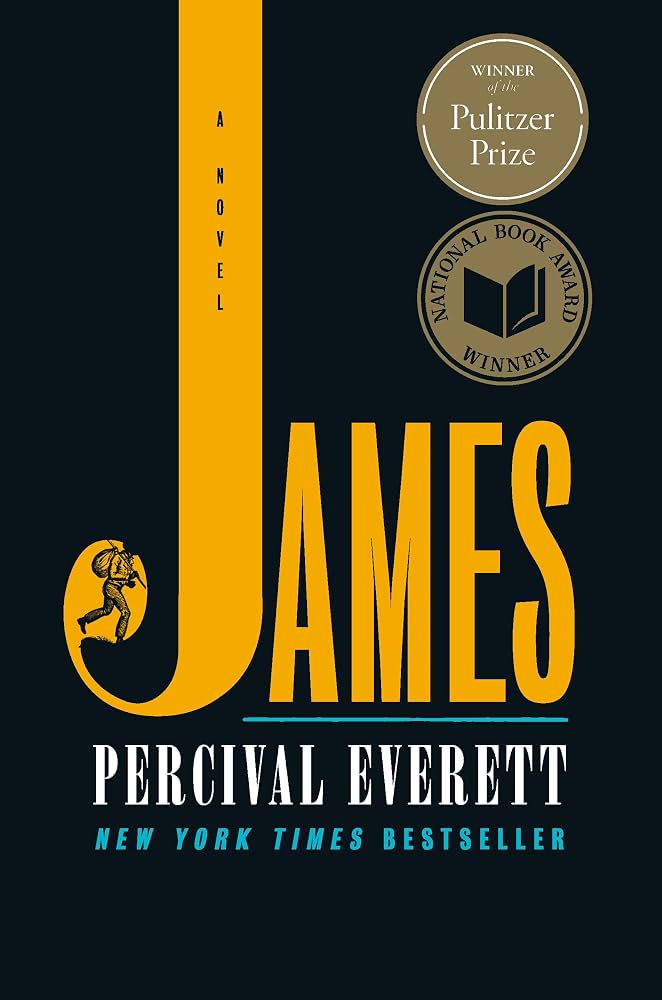
By Percival Everett, James (Vintage, 2026) – winner of the Pulitzer Prize and the National Book Award – is the story of Huckleberry Finn as told by James, Huck’s enslaved companion, on his journey down the Mississippi by raft. A brilliant and eye-opening read for teens and adults.

Pair with Nat Hentoff’s The Day They Came to Arrest the Book (Laurel Leaf, 1993), in which Barney Roth, editor of the George Mason High School newspaper, protests when there’s an attempt to ban Huckleberry Finn. For ages 12 and up.

Nobel laureate Toni Morrison’s Beloved (Vintage, 2004) is the story of Sethe, escaped to Ohio, who killed her child rather than let her baby grow up in slavery. Many times challenged on high school reading lists for its racial and sexual content, but nonetheless a powerful and wonderful book.

Alice Walker’s Pulitzer Prize and National Book Award winner, The Color Purple (Penguin, 2019), set in rural Georgia in the early 20th century and written in the form of letters, is a painful story of abuse and violence, resilience and bravery. Frequently challenged for graphic depictions of violence and sexuality. For teens and adults.

While some once hoped that slavery in the United States could die a peaceful death, economists Robert Fogel and Stanley Engerman in Time on the Cross (Norton, 1995) – crammed with statistics – argue that there wasn’t a chance. Slavery was highly profitable, and far more productive and efficient than the free-labor economy of the North. Not everyone agrees. (A good link to math.) For teens and adults.

By Richard Herrnstein and Charles Murray, the controversial The Bell Curve (Free Press, 1996) is perhaps the literary equivalent of screaming “Fire!” in a crowded theater. Subtitled “Intelligence and Class Structure in American Life,” the authors - using a wealth of statistical analyses – link IQ, birth rate, crime, and poverty to class and race. For teens and adults. Be prepared to argue.
Lesson Plans and Activities

Kathy Ross’s Crafts That Celebrate Black History (Millbrook Press, 2019) has step-by-step instructions for crafts based on the accomplishments of famous African Americans, among them Benjamin Banneker, Frederick Douglass, Paul Laurence Dunbar, Matthew Henson, Louis Armstrong, Marian Anderson, and Jesse Owens. For ages 6-9.
Black History Month Lessons & Resources has plans and activities on a range of subjects and in a range of disciplines (history, science, the arts), listed by grade level (K-5, 6-8, and 9-12).

From the NY Times Learning Network, Celebrate Black History Month has a selection of teaching materials, including historical NY Times front pages (from the 1857 Dred Scott case through the Obama election), photos, lesson plans, and student opinion questions.

From Education.com’s Learning Library, Black History Month Activities has recipes and hands-on projects. For example, kids make Mae Jemison rockets, Misty Copeland portraits, kente cloth, and Jackie Robinson baseball cards, and cook up African peanut soup.

From Art Projects for Kids, Black History has great step-by-step tutorials for drawing and collage projects.