
Awesome Archaeology
In this collection
Bones, stones, gold doubloons, mummies, and a chance to grub around in the dirt...what's not to like about archaeology?
Books: All About Archaeology

In Kate Duke’s Archaeologists Dig for Clues (HarperCollins, 1996), one of the Let’s-Read-and-Find-Out Science series, three kids and their pets accompany Sophie, an archaeologist, on a dig, asking questions every step of the way. A nice introduction to archaeology for ages 4-8.

Mark Dubrowski and Cathy East Dubrowski’s Ice Mummy (Random House Books for Young Readers, 1998) in the “Step into Reading” series is the story of the 5000-year-old man found frozen in Alpine ice by a pair of hikers in 1991. Dubbed Otzi, this is Europe’s oldest natural human mummy. For ages 5-9.
Also for young archaeologists in the “Step Into Reading” series, see Edith Kunhardt Davis’s Pompeii…Buried Alive (1987), Judy Donnelly’s Tut’s Mummy: Lost…and Found (1988), and Mark Dubrowski’s Discovery in the Cave (2010).
For older readers, see Final Days of Otzi the Iceman and NOVA’s
Ice Mummies.

Jane O’Connor’s Hidden Army (Grosset & Dunlap, 2011) is the story of ancient China’s fabulous army of 7000 life-sized clay soldiers, discovered by farmers in 1974. For ages 5-8.
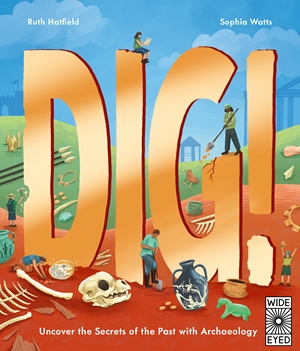
Dig! by Ruth Hatfield (Wide Eyed Editions, 2025) is a cleverly designed illustrated archaelogical tour through millions of years of human history for ages 6-8.
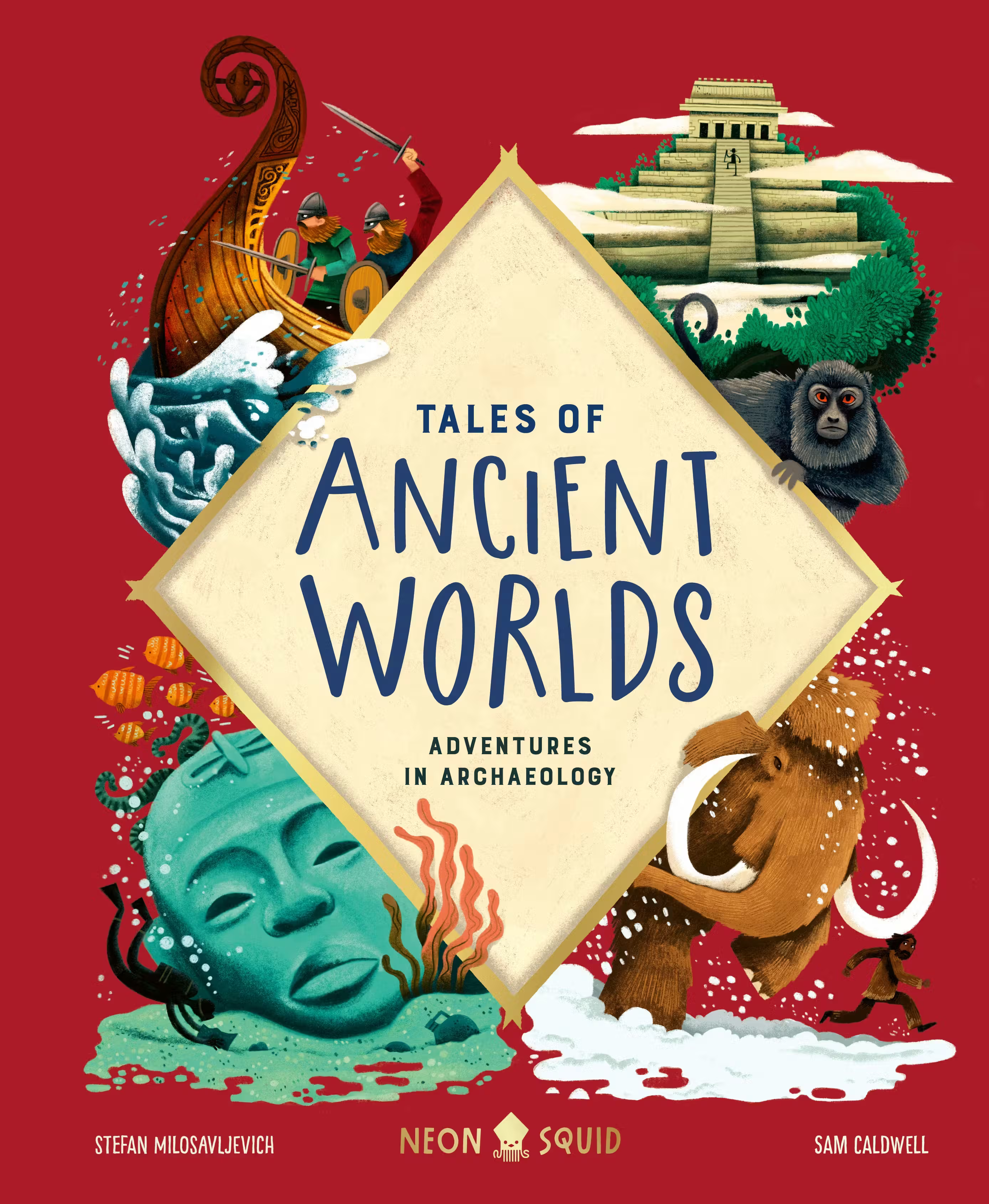
By Stefan Milosavljevich, Tales of Ancient Worlds: Adventures in Archaeology (Neon Squid, 2022) is a beautifully illustrated collection of fascinating archaeological tales, divided in four parts: The First Humans, The Age of Cities, Ancient Empires, and The Age of Discovery. Highly recommended for ages 6-12.

Anne Millard’s A Street Through Time (Dorling Kindersley, 1996) is a series of wonderful panoramic drawings of the same riverside European location in fourteen different time periods, from 10,000 BCE – a Stone-Age hunters’ camp – to modern times. (An additional feature for readers: find the Where’s-Waldo-type hidden time traveler.) Archaeology in a nutshell, for all ages.

Philip Steele’s A City Through Time (Dorling Kindersley, 2013) might better be called Cities Through Time - the idea is the same, but, unlike Anne Millard’s Street, these are clearly different cities. Readers progress from a Greek colony in 550 BCE to a Roman city, a medieval city (with detailed castle), a 19th-century industrial port, and finally a modern metropolis (with cutaway view of skyscraper). Included are annotated timelines with historical info. For ages 7-12.

Peter Kent’s City Across Time (Kingfisher, 2019) tracks an imaginary European city from the Stone Age to the present (and future), with detailed drawings of what’s going on both above and below ground. As time moves on, today’s buildings and people become tomorrow’s rubble and bones. For ages 7-11.
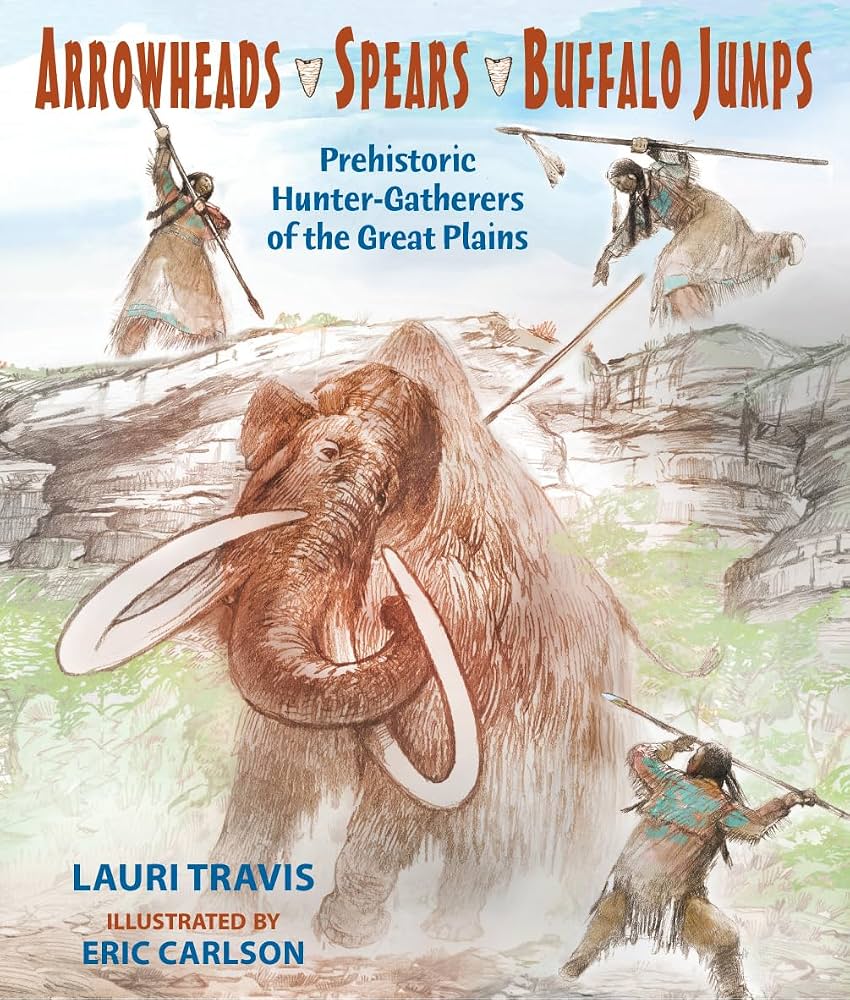
In Arrowheads, Spears, and Buffalo Jumps (Mountain Press, 2018), author Lauri Travis shows readers how archaeologists study the lives of hunter-gatherers on America’s Great Plains 14,000 years ago. For ages 8-12.
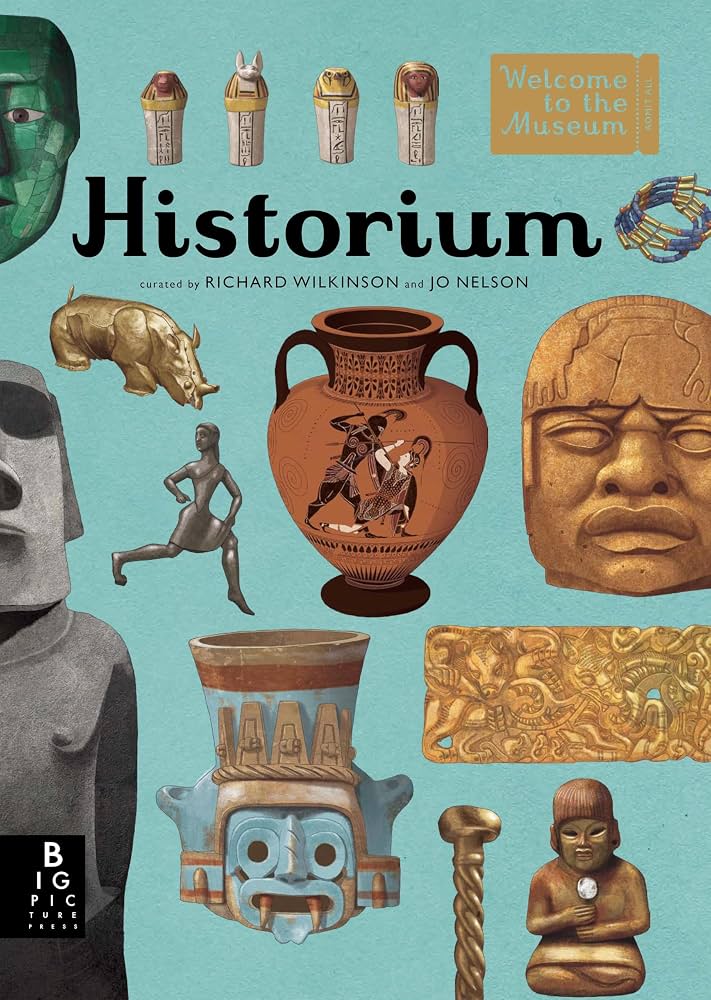
By Jo Nelson, Historium (Big Picture Press, 2015) is a fabulous museum in a book, each chapter devoted to a different ancient civilization and illustrated with wonderful color photos of artifacts. For ages 8-13.

By Robert Ballard and team - the same crew that discovered the remains of the Titanic - The Lost Wreck of the Isis (Hodder & Stoughton, 1990) is the story of the discovery of a sunken Roman ship in the Mediterranean and a recreation of the final voyage of the ship. For ages 9-12.
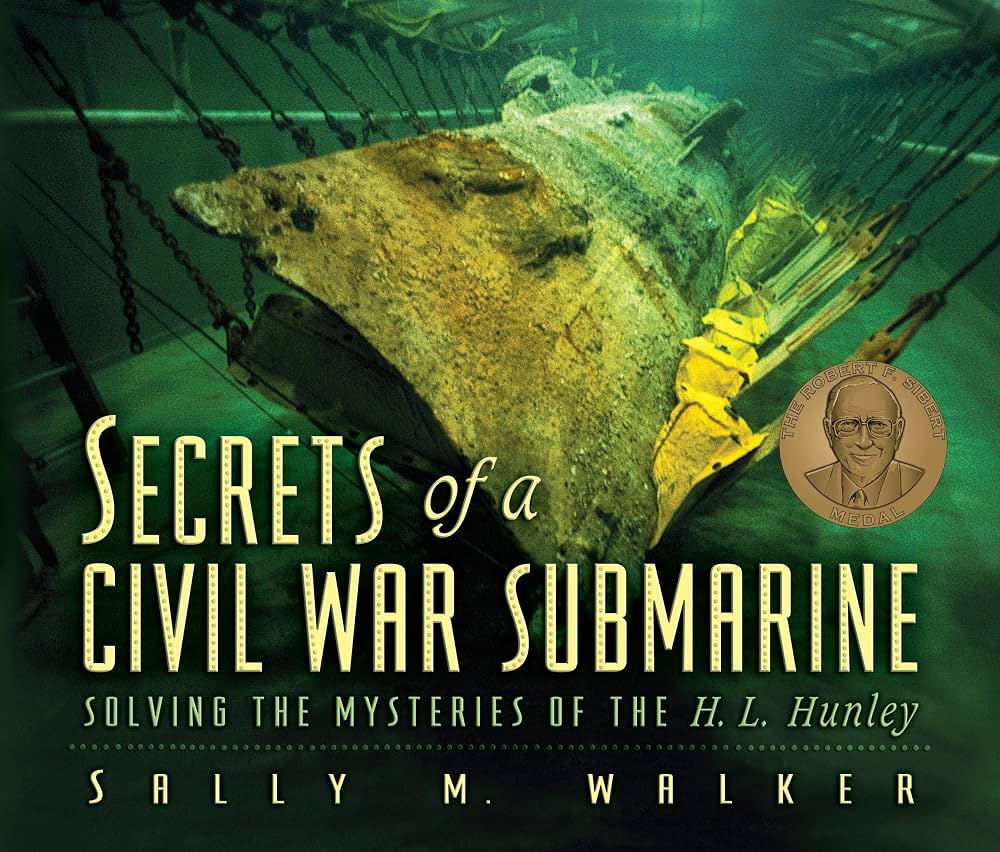
By Sally M. Walker, Secrets of a Civil War Submarine (Carolrhoda, 2023) is the story of the discovery of the lost H.L. Hunley, found buried off the coast of South Carolina in 1995. For ages 9 and up.
The Friends of the Hunley website has histories of the submarine and its crews, maps, photos of artifacts, a Hunley simulator, lesson plans and activities (K-college), and more.

In the Eyewitness series, Archeology (Dorling Kindersley, 2000) is organized as a series of double-page spreads, covering such topics as “Preservation and decay,” “Looking at the landscape,” “All kinds of documents,” and “Buildings of the past.” Gorgeously illustrated with photographs of archaeological artifacts. For ages 8 and up.

Other Eyewitness books of potential interest to young archaeologists include Ancient China (2005), North American Indian (2005), Mesopotamia (2007), Ancient Greece (2007), Ancient Rome (2008), Ancient Egypt (2008), and Aztec, Inca, and Maya (2011). (Check out a reasonably complete list here.) For ages 8 and up.

Anthony Aveni’s Buried Beneath Us: Discovering the Ancient Cities of the Americas (Roaring Brook Press, 2013) begins with the discovery – by startled electrical workers – of the fabulous Aztec capital, Tenochtitlan, beneath the streets of Mexico City. An information-packed and interesting read for ages 9-12.

James Deem’s Bodies From the Ash: Life and Death in Ancient Pompeii (Houghton Mifflin Harcourt, 2005) is an enthralling account of what was once one of the largest cities in the Roman Empire, destroyed by the eruption of Vesuvius in AD 79. The book describes what happened in the wake of the eruption and how archaeologists rediscovered the city. Illustrated with many photographs of excavations, artifacts, bones, and plaster molds of victims. Starred reviews. For ages 9-13.
Also by Deem in the same format, see Bodies from the Ice (HMH, 2008) and Bodies from the Bog (HMH, 2003).

Ilene Cooper’s The Dead Sea Scrolls (HarperCollins, 1997) is the story of what has been called the “greatest archaeological discovery of the twentieth century:” a collection of over 900 ancient texts, discovered in the Qumran Cave on the shore of Israel’s Dead Sea. Cooper discusses the history and significance of the scrolls, and how they were found and reconstructed by archaeologists. For ages 10 and up.
Digital Dead Sea Scrolls has images of the scrolls online with historical background information.

The National Geographic Investigates series is a collection of 64-page books on the archaeology and history of ancient cultures worldwide, each with maps, timelines, interviews with researchers, and gorgeous color photographs. Titles include Ancient Maya, Ancient Pueblo, Ancient China, Ancient Africa, Ancient Celts, and more. For ages 10 and up.

Marc Aronson’s If Stones Could Speak (National Geographic Children’s Books, 2010) is an award-winning account of the archaeology of Stonehenge, demonstrating how archaeologists work to solve ancient puzzles. A recent hypothesis is that Stonehenge was a memorial to honor the dead, with a sister complex made of wood for the living. A fascinating read, illustrated with color photographs, for ages 10 and up.
From Smithsonian magazine, New Light on Stonehenge discusses the site's history and summarizes recent research.

David Macaulay’s Ship (Houghton Mifflin Harcourt, 1993) begins with a crew of underwater archaeologists recovering a sunken 15th-century ship from a reef near the Bahamas, then leaps back in time to follow the building of the ship and its eventual demise. Fictitious, but archaeologically accurate; illustrated with terrific detailed architectural drawings. For ages 10 and up.
Similar and equally wonderful books by Macaulay include Pyramid (HMH, 1982), Castle (HMH, 1982), Cathedral (Sandpiper, 1981), Mill (HMH, 1989), Mosque (HMH, 2008), and City (HMH, 1983) – this last “A Story of Roman Planning and Construction.”

By Simon Adams, Archaeology Detectives (Barron’s Educational Series, 2009) is the story of great archaeologists and archaeological discoveries worldwide, illustrated with color photographs. Among the sites featured are India’s Mohenjo-Daro, the tomb of Tutankhamun, China’s terracotta warriors, Pompeii, and the palace of Knossos. For ages 10 and up.
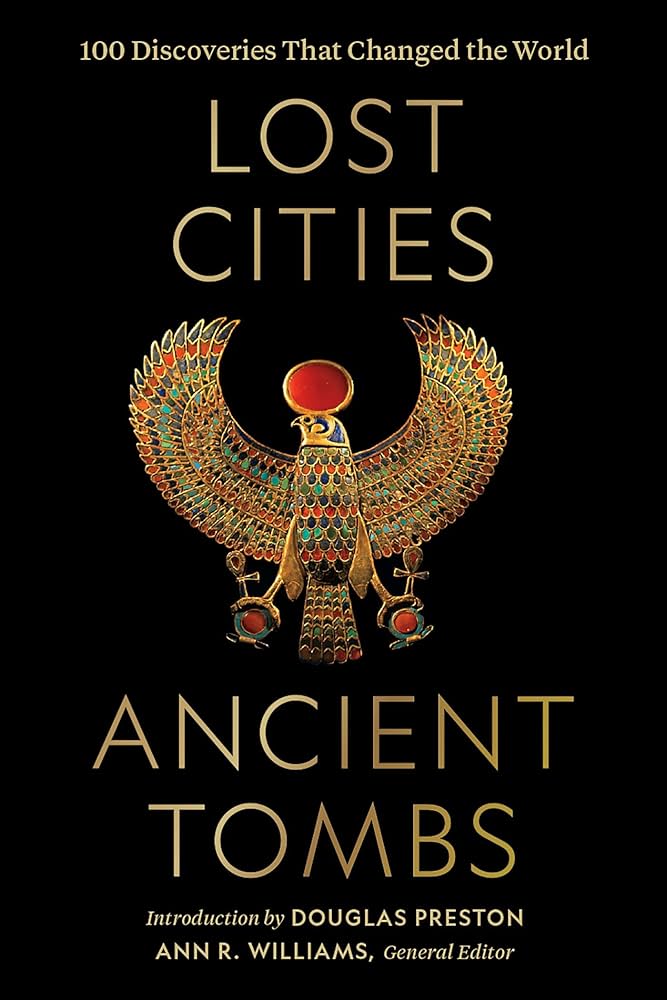
National Geographic’s Lost Cities, Ancient Tombs (2021) covers “100 Discoveries That Changed the World” - among them the toolmakers of the Olduvai Gorge, Otzi the Iceman, the Royal Tombs of Ur, China’s terra-cotta warriors, Angkor Wat, the Titanic, and many more. Illustrated – this is, after all, National Geographic – with superb color photographs. Officially for teens and adults, but much to interest everyone.

Michael Wood’s books – chatty and addictive mixes of archaeology and history – include In Search of the Dark Ages (BBC Books, 2007), In Search of the Trojan War (University of California Press, 1998), In the Footsteps of Alexander the Great (University of California Press, 2001), and In Search of England (University of California Press, 2001). Wood’s titles have all (or almost all) been made into excellent film documentaries.

James Deetz’s In Small Things Forgotten (Anchor Books, 1996) surveys the archaeology of early American life as revealed through such small and often-forgotten artifacts as doors and porches, chairs, grave markers, and pottery shards. A classic for teenagers and adults.

Ivor Noel Hume’s Martin’s Hundred (University of Virginia Press, 1991) is a fascinating account of the excavation of Martin’s Hundred, a 17th-century English settlement in Virginia. Hume, for many years director of archaeological research at Colonial Williamsburg, is a terrific writer and the author of many excellent books on archaeology. For teenagers and adults.

Brian Fagan’s Time Detectives (Simon & Schuster, 1996) is a detailed account of how modern archaeologists use technology. (“Today archaeologists can identify Chinese silk from a single fabric strand, conjure up ancient landscapes from handfuls of tiny seeds and pollen grains, and use carbon isotopes to reconstruct prehistoric diets.”) The science behind the archaeology for teenagers and adults.
Indiana Jones and Co.: Fun Fiction
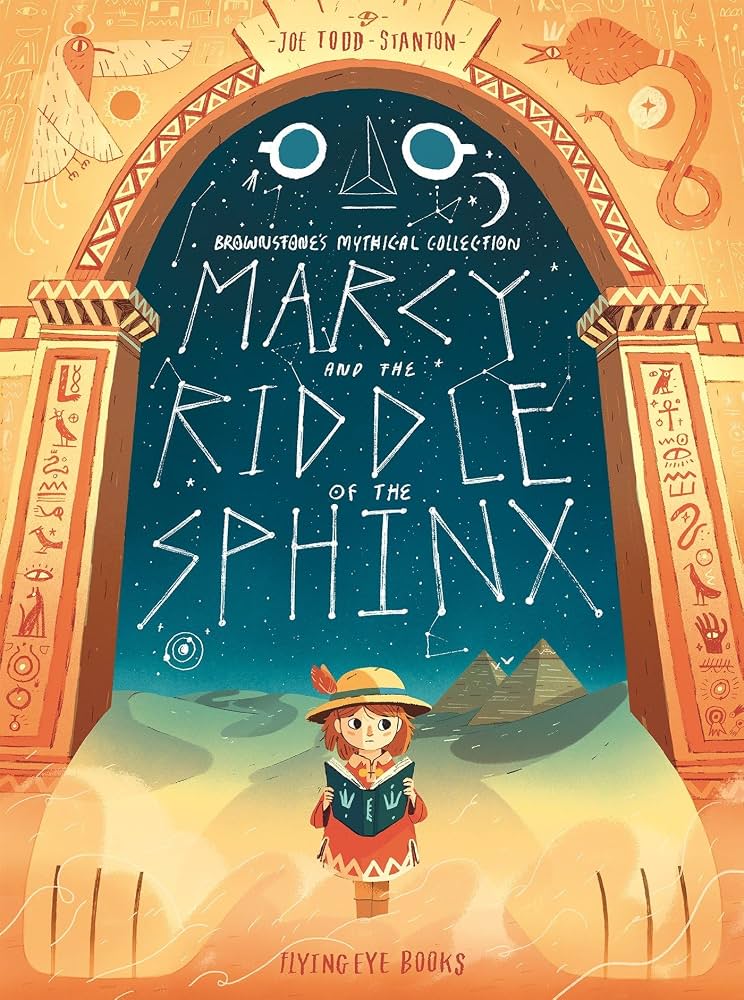
By Joe Todd-Stanton, in Marcy and the Riddle of the Sphinx (Flying Eye Books, 2020) - one of the graphic-novel Brownstone’s Mythical Collection – Marcy's father Arthur Brownstone has gone to Egypt to find the legendary Book of Thoth. When he doesn’t return, Marcy sets out to rescue him. For ages 5-9.
Other titles in the Collection are Arthur and the Golden Rope, Kai and the Monkey King, Leo and the Gorgon’s Curse, and Luna and the Treasure of Tlaloc.
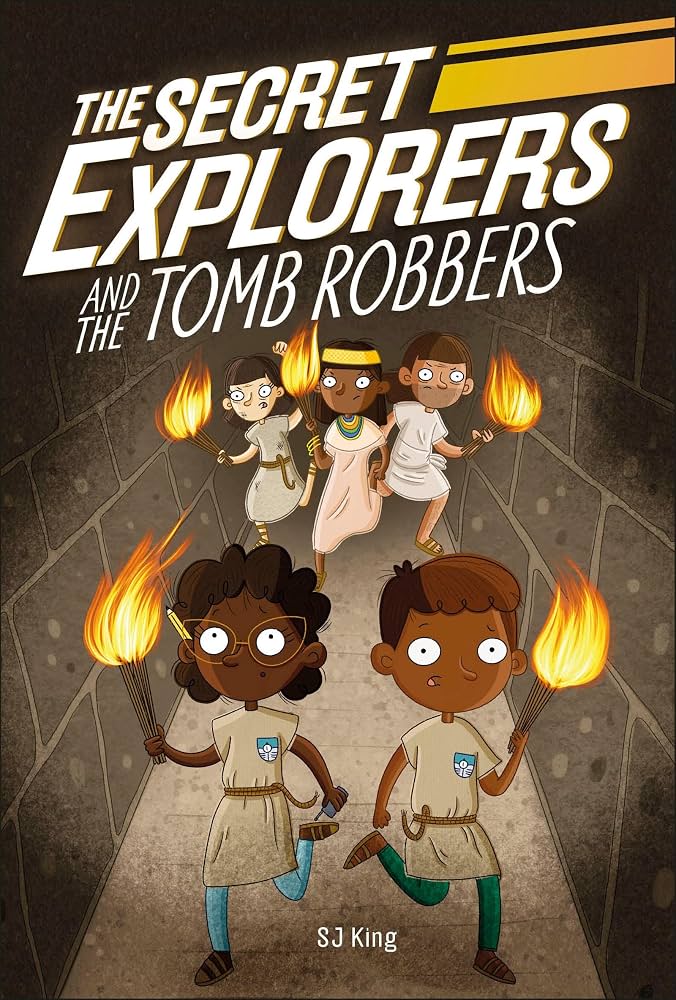
In S.J. King’s The Secret Explorers and the Tomb Robbers (DK, 2020), the Explorers – a band of brilliant kids from around the world – are off to Egypt where they’re up against robbers stealing treasures from the Great Pyramid of Giza. One of the exciting Secret Explorers series for ages 7-9.

Isabel Soto – dauntless archaeologist and world explorer – is the star of a series of graphic novels published by Capstone Press’s Graphic Library. Titles, variously by Terry Collins and Agnieszka Biskup, include Egypt’s Mysterious Pyramids, Uncovering Mummies, Escape from Pompeii, The Mesa Verde Cliff Dwellers, and Exploring Titanic. (Isabel also occasionally goes farther afield, as in Tracking Bigfoot and Searching for UFOs.) For ages 8 and up.
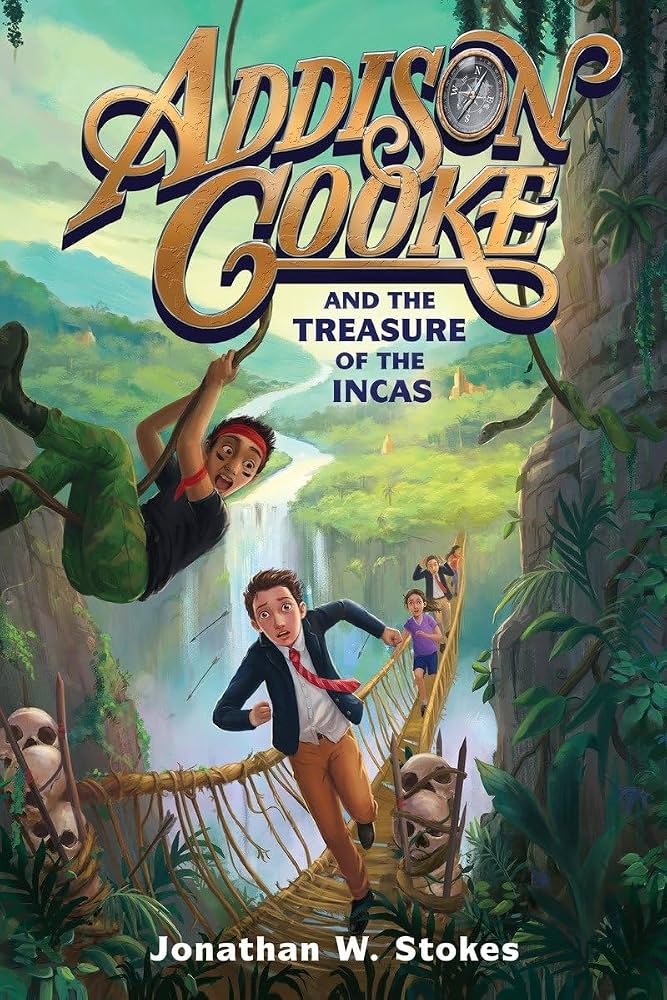
Twelve-year-old amateur archaeologist Addison Cooke – think a middle-grade Indiana Jones – is plunged into globe-trotting adventures when his treasure-hunting aunt and uncle run afoul of kidnappers and criminals. By Jonathan W. Stokes, titles are Addison Cooke and the Treasure of the Incas (Puffin, 2017), Addison Cooke and the Tomb of the Khan (Puffin, 2018), and Addison Cooke and the Ring of Destiny (Puffin, 2020). For ages 8-12.
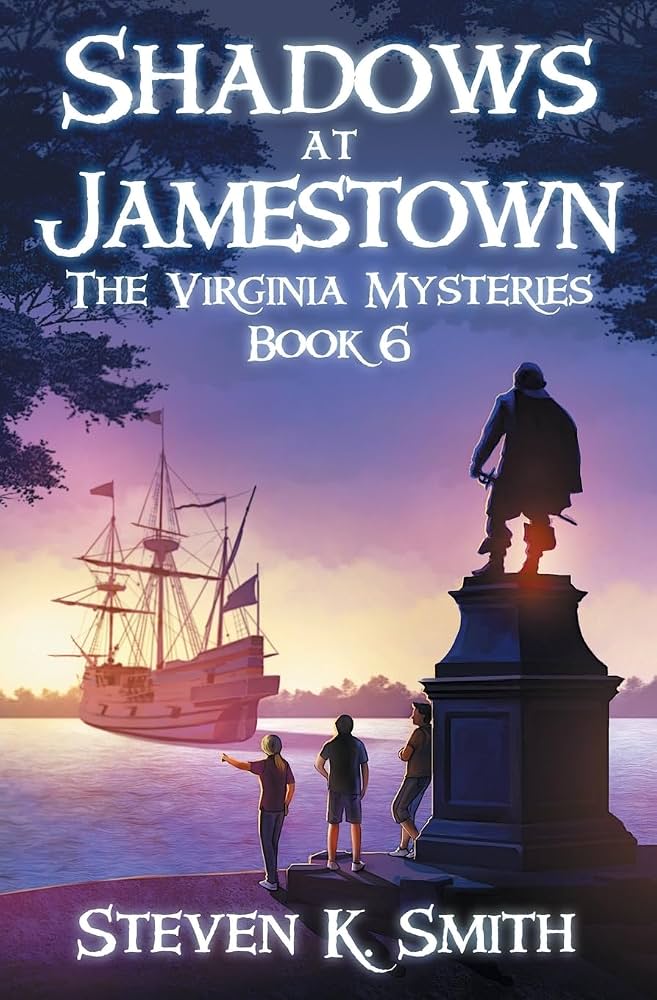
In Shadows at Jamestown by Steven K. Smith (MyBoys3 Press, 2017) - one of the Virginia Mysteries series – Sam, Derek, and Caitlin are invited to spend a week at an archaeological dig at historic Jamestown. There they discover that valuable artifacts are disappearing from the museum and set out to catch the perpetrator. For ages 8-12.
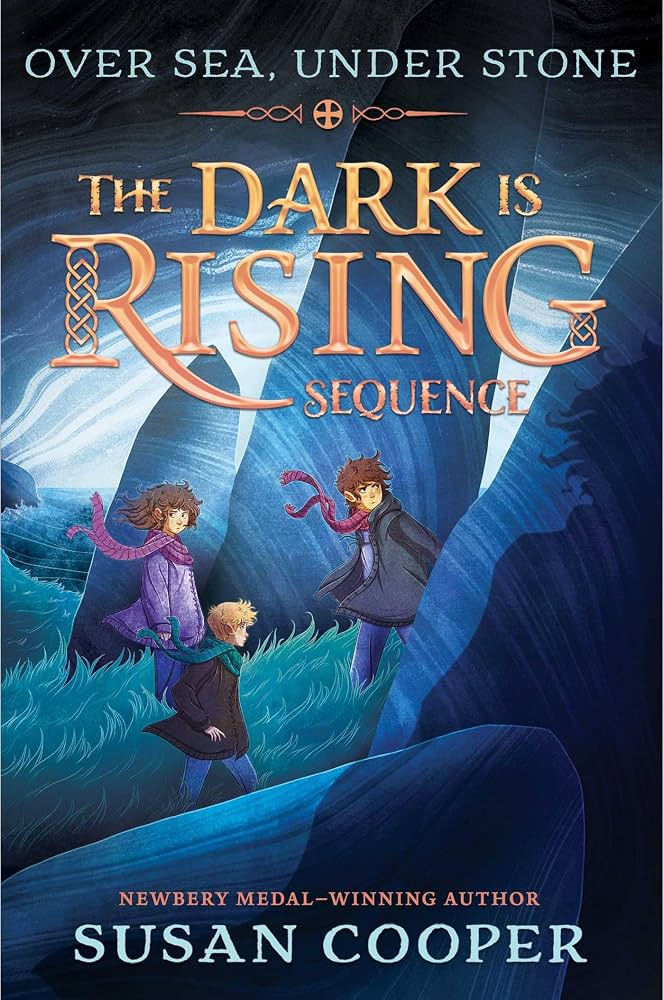
In Over Sea, Under Stone – the first of Susan Cooper’s Dark Is Rising series (Margaret K. McElderry, 2023) - Simon, Jane, and Barney, on a holiday in Cornwall, discover an ancient map in the attic of the house they’re sharing with their mysterious Uncle Merry that leads to the long-hidden Grail of King Arthur. The books combine Arthurian legends, Celtic mythology, and British folklore – and even a bit of archaeology. Wonderful reads for ages 8-13.
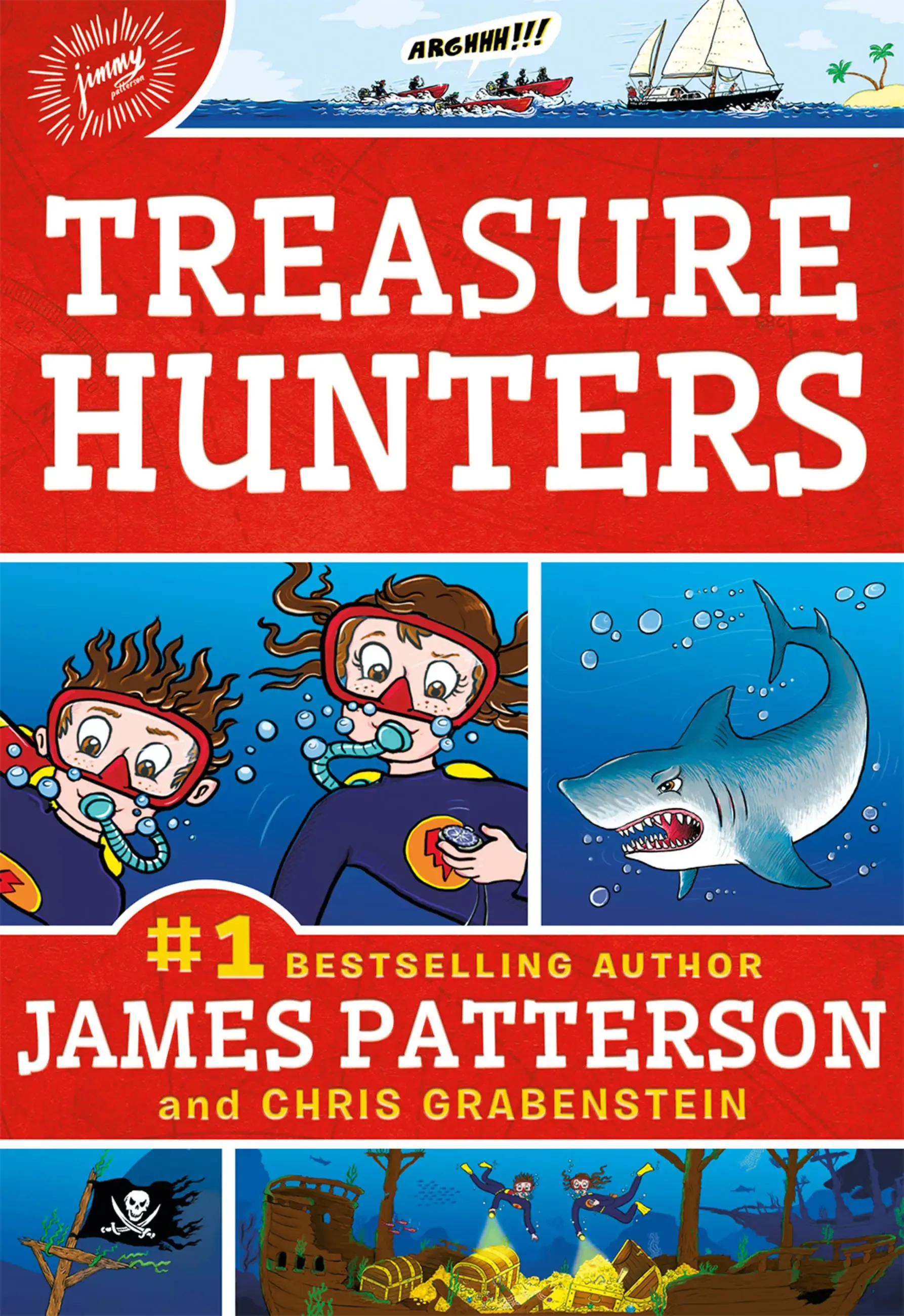
I James Patterson's Treasure Hunters series (jimmy patterson), the four Kidd siblings have grown up diving for shipwrecks and traveling the world with their treasure-hunting parents, looking for everything from lost swords to gold doubloons. Action and humor for ages 9-12.
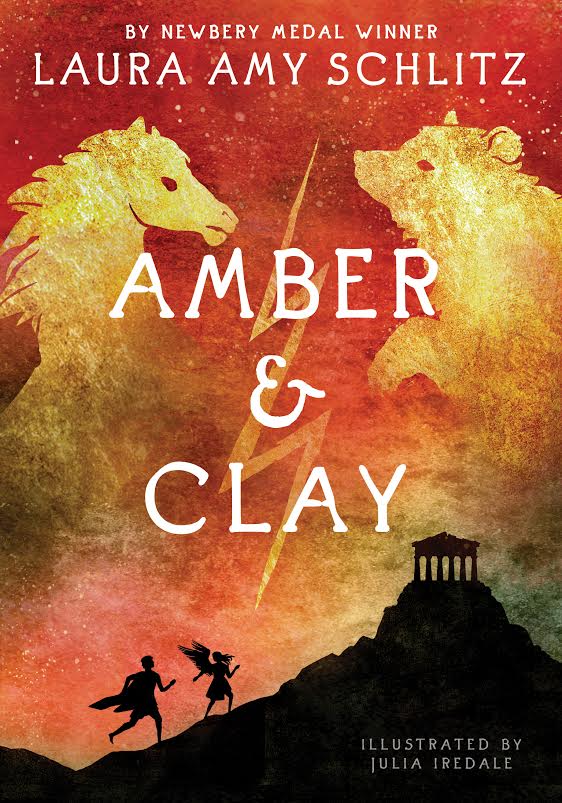
Laura Amy Schlitz’s Amber & Clay (Candlewick, 2022) juxtaposes the stories of Rhaskos, a Thracian slave in a Greek household who grows up to be a talented potter, and Melisto, a free-spirited aristocrat, sent for a season to be a bear girl serving the goddess Artemis. The book combines prose, verse, multiple voices, and illustrated archaeological artifacts in a powerful story for ages 10-14.
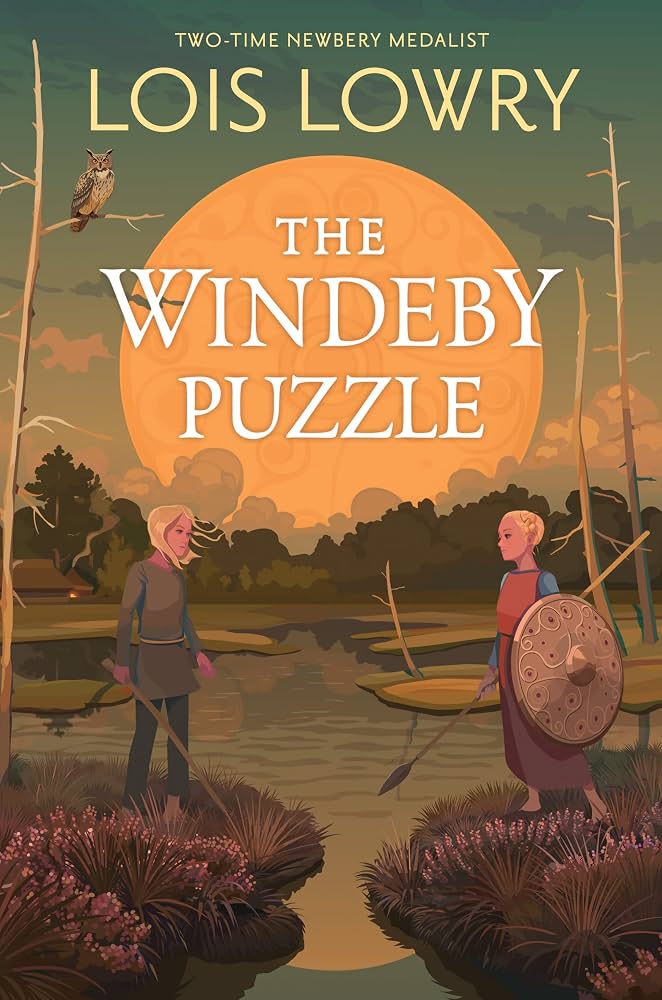
Lois Lowry’s The Windeby Puzzle (Clarion, 2024) is a blend of history, archaeology, and fiction, based on the discovery of the Windeby bog body, the 2000-year-old remains of a young teenager discovered in northern Germany. Lowry pairs the story of the discovery with the hypothetical stories of two Iron Age young people: Estrild, a girl who wants to be a warrior, and Varick, a boy born with a crooked back. For ages 10-13.

In David Macaulay’s Motel of the Mysteries (Houghton Mifflin Harcourt, 1979), the year is 4022 and archaeologist Howard Carson is excavating what he believes to be a sacred burial chamber, lying just past a crumbling DO NOT DISTURB sign hung on an ancient doorknob. A clever spoof for ages 12 and up.

Elizabeth Peters’s Crocodile on the Sandbank (Grand Central Publishing, 2013) is the first of an extensive mystery series set in the late 19th century and starring feisty Egyptologist Amelia Peabody. (The author knows her stuff; she herself has a doctorate in Egyptology.) Among the subsequent titles are The Curse of the Pharaohs, The Mummy Case, and Lion in the Valley. Fun and exciting reads for teenagers and adults.

Agatha Christie's second husband, Max Mallowan, was an archaeologist. See Christie’s Murder in Mesopotamia, set on an archaeological dig in Ur.
“Dr. Indiana Jones is worse at recovering precious items than a magpie stuffed with explosives.” 8 Famous Fictional Archaeologists Who Suck at Their Job is a snarky overview of archaeologists in the movies for teenagers and adults.

Michael Crichton’s Timeline (Ballantine Books, 2003) is a fast-paced thriller that pairs archaeologists, excavations of 14th-century French castles, the Hundred Years’ War, and a time machine. For teenagers and adults. Like everything else Crichton ever wrote, it was made into a movie. Rated PG-13.
Magazines

From Kids Discover, see
Archaeology - and many related issues, variously on Mesopotamia, Pompeii, Ancient Egypt, Ancient Persia, and more. For ages 7-13.

Archaeology magazine, published bimonthly by the Archaeological Institute of America, is aimed at adults and has a fairly sophisticated text, but the pictures - all in color - are great for persons of all ages. Each issue includes several feature articles about archaeological discoveries worldwide.
Archaeology Online and on Screen
In the TV series Time Team, a group of British archaeologists has three days to excavate archaeological sites around Britain. Many episodes, many seasons. See https://www.imdb.com/title/tt0108961/.

The History Channel’s Digging for Truth series, starring Josh Bernstein, deals with unsolved historical and archaeological mysteries, and each episode – after site visits, interviews with researchers, and investigation – ends with a working hypothesis. Titles include “Hunt for the Lost Ark,” “Secrets of the Nazca Lines,” “Mystery of the Anasazi,” “The Real Temple of Doom,” and “Roanoke: The Lost Colony.”

From PBS, the Secrets of the Dead series is an exciting mix of forensic science, archaeology, and history. Episode titles include Bones of the Buddha, Ultimate Tut, Caveman Cold Case, and Blackbeard’s Lost Ship. (View online or available on DVD.) Click on “Educators” at the website for lesson plans to accompany the episodes, aimed at middle- and high-school-level students.

Titles from National Geographic's 12-part 

NOVA’s five-part Secrets of Lost Empires series includes “Medieval Siege,” “Pharaoh’s Obelisk,” “Easter Island,” “Roman Bath,” and “China Bridge.” The website has online teacher’s guides, background information, and creative activities.

From PBS, First Peoples (2015) is a documentary tracing the 200,000-year-old history of the human race, as we left Africa and migrated around the world.
NOVA’s Mystery of the First Americans explores the discovery and controversy surrounding the 9000-year-old skeleton of Kennewick Man. The website has a teacher’s guide, supplementary information, and “The Dating Game,” an interactive explanation of radiocarbon dating.
From Dig-It Games, play Excavate! Egypt online at https://dig-itgames.com/portfolio/excavate-egypt-world-history-lesson-game/. (Also check out the associated curriculum resources.)
Other Excavate! games include digs in ancient Greece, Rome, Byzantium, Mesopotamia, and Mesoamerica.
Archaeologists and Treasure Hunters

Mike Venezia’s Mary Leakey: Archaeologist Who Really Dug Her Work (Children’s Press, 2009) is a delightful introductory biography of one of the foremost contributors to the history of human evolution, illustrated with photographs and clever little cartoons. For ages 5-9.
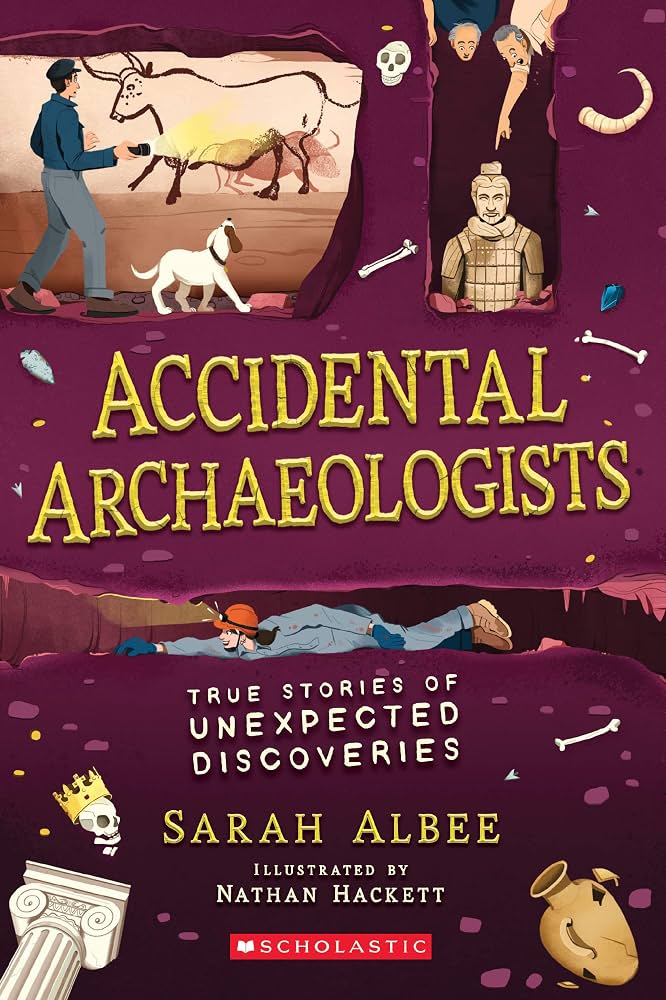
Sarah Albee’s Accidental Archaeologists (Scholastic, 2020) tells the (true) stories of amazing and unexpected archaeological discoveries – such as finding the remains of King Richard III under a British parking lot and the story of the boy who found the Dead Sea Scrolls while hunting for a lost goat. For ages 8-12.

By Laura Amy Schlitz, The Hero Schliemann: The Dreamer Who Dug for Troy (Candlewick, 2013) is a great 80-page biography of the problematic amateur archaeologist who found the ancient city of Troy. For ages 9-13.

Paul Bahn’s The Great Archaeologists (Southwater, 2009) is a 96-page composite biography of 47 famous archaeologists, illustrated with color photographs.

Vandal, thief – or undeservedly neglected archaeologist? Ivor Noel Hume’s Belzoni: The Giant Archaeologists Love to Hate (University of Virginia Press, 2011) is the biography of the early 19th-century Italian circus strongman Giovanni Belzoni who became one of the first Egyptologists. (Certainly he was the largest – 6’6” tall - and the most flamboyant). For teenagers and adults.
The Great Belzoni is a great 50-minute film version of Belzoni’s life.
Who Owns Archaeological Artifacts? Just because you dug it up, doesn’t mean you get to take it home. Read all about it.

Sharon Waxman’s Loot: The Battle Over the Stolen Treasures of the Ancient World (Times Books, 2009) pairs trips to famous museums with visits to the countries where some of their most famous exhibits originated, dealing with the thorny question of who owns what. (Should the Elgin marbles go back to Greece?) An interesting topic for teenagers and adults.
Almost Like Being There

Stefania Perring’s Then & Now (Macmillan General Reference, 1991) is a collection of photographs of twenty famous ancient sites as they appear today paired with overlays of an artist’s reconstruction of what each site looked like originally. Included are the Parthenon, Machu Picchu, Pompeii, Angkor Wat, the Minoan palace of Knossos, and more. For all ages.

Odyssey Online is a beautifully designed museum site in which visitors can explore the Near East, Egypt, Greece, Rome, Africa, and the ancient Americas. Learn about people, mythology, daily life, death and burial, writing, and archaeology; click on artifacts to discover their histories; access maps; and find lists of books and helpful websites. A terrific resource.
National Geographic’s Archaeology site features stories of archaeological discoveries, paired with images of famous sites. See
https://www.nationalgeographic.com/history/topic/archaeology.

Archaeologist Leonard Woolley famously excavated the fabulous Royal Tombs in the ancient Sumerian city of Ur.See a YouTube video on the Royal Tombs of Ur.
At Smith College’s virtual Museum of Ancient Inventions, visitors click on color photographs of (many) artifacts to learn all about them. For example, check out a Sumerian lyre, a cuneiform cylinder seal, and an Aztec calendar wheel. See https://www.smith.edu/academics/departments-programs-courses/history-science-technology/virtual-museum-ancient-inventions.
Projects, Puzzles, Lesson Plans, and Activities

Richard Panchyk’s Archaeology for Kids (Chicago Review Press, 2001) is a survey of archaeology, variously covering how archaeology works, human evolution, the Ice Age and the Neolithic, the first civilizations, ancient Greece and Rome, the New World, and historical archaeology. Included are maps and diagrams, photos, a timeline, and a helpful bibliography. There are also 25 hands-on projects, among them calculating height from a footprint mold, analyzing soil, practicing dendrochronology by counting tree rings, playing a seriation game (with photos of old cars), and making an ancient-Greek-style oil lamp. For ages 9 and up.

John White’s Hands-On Archaeology (Prufrock Press, 2006), an informational collection of “Hands-On Activities for Kids,” has a wealth of projects based on site research, excavation, field records, artifact preparation and cataloging, and more. Included are a lengthy appendix of teacher resources and reproducible forms and worksheets. For ages 9 and up.
From teacher Mr. Donn’s website, Archaeology for Kids is packed with kid-friendly information (What is an archaeologist? How do archaeologists find sites to explore?), along with short biographies of famous archaeologists, games, quizzes, and interactive activities.
What to do with pottery shards? In Archeology Game, kids decorate clay flower pots, smash them (gently; you don’t want smithereens) in a paper bag, and then re-assemble them with glue, archaeologist-style.

From the American Museum of Natural History's Ology site, see Archaeology for activities, info, and talks with real-live archaeologists. Pages include "Maya Investigation," "If Trash Could Talk," "Mint Your Own Coin," "The Ancient City of Petra," and more.
The Colonial Williamsburg Archaeological Research page has general information about archaeology and an overview of current projects.
The Archaeological Institute of America has a great series of AIA Lesson Plans, variously for grades K-12, with complete instructions. Sample titles are Aztec Codex, Greek Vase Painting, Layer Cake Archaeology, and Shoebox Dig.
From the Smithsonian, Decoding the Past is an illustrated, printable, three-lesson introduction to archaeology in which kids learn to identify and interpret artifacts, and date soil layers. For ages 9 and up.
The Society for American Archaeology has lesson plans, simulated archaeological dig projects, online archaeological adventures, and more for K-12. For example, Archaeologyland is a collection of hands-on archaeology-based activities for ages 5 and up, in which kids replicate pottery designs, make a pot puzzle, create petroglyphs, make a cordage bracelet, and more. See https://www.saa.org/Member/SAAMember/Education-and-Outreach/Teaching-Resources.aspx.
Cool Kits and Games

From LEGO, archaeology-themed games - which players first build with Lego blocks, then play - include
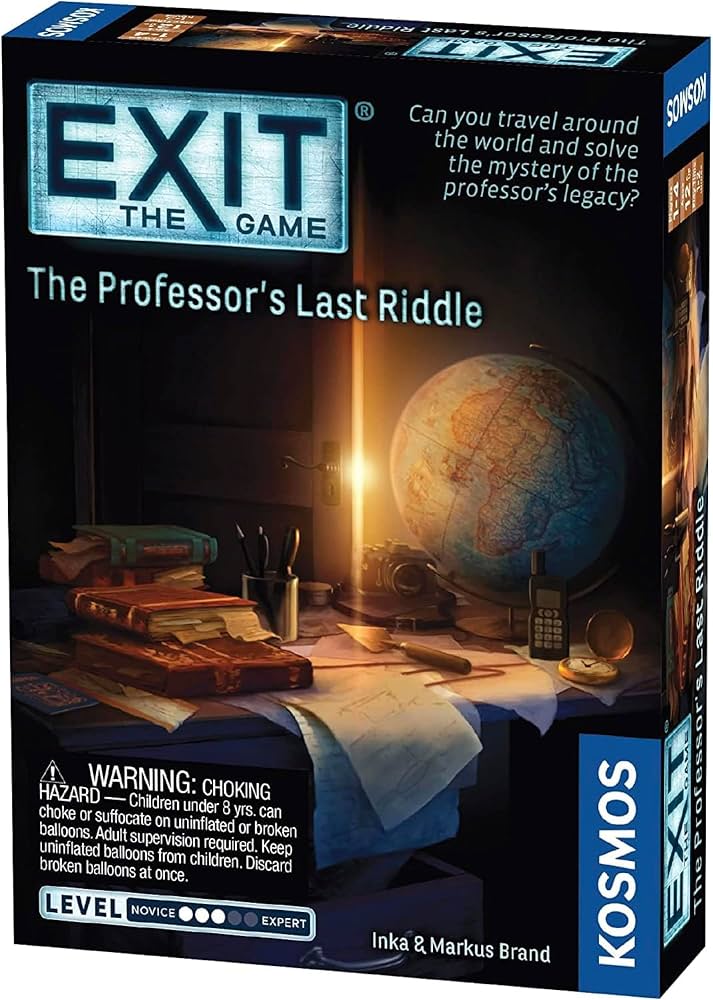
In Exit: The Professor’s Last Riddle (Thames & Kosmos), players travel the world solving puzzles as they try to unravel the mystery left by their late archaeology professor. For 1-4 players ages 12 and up.
For younger players ages 8 and up, there's a kid's version of the game.
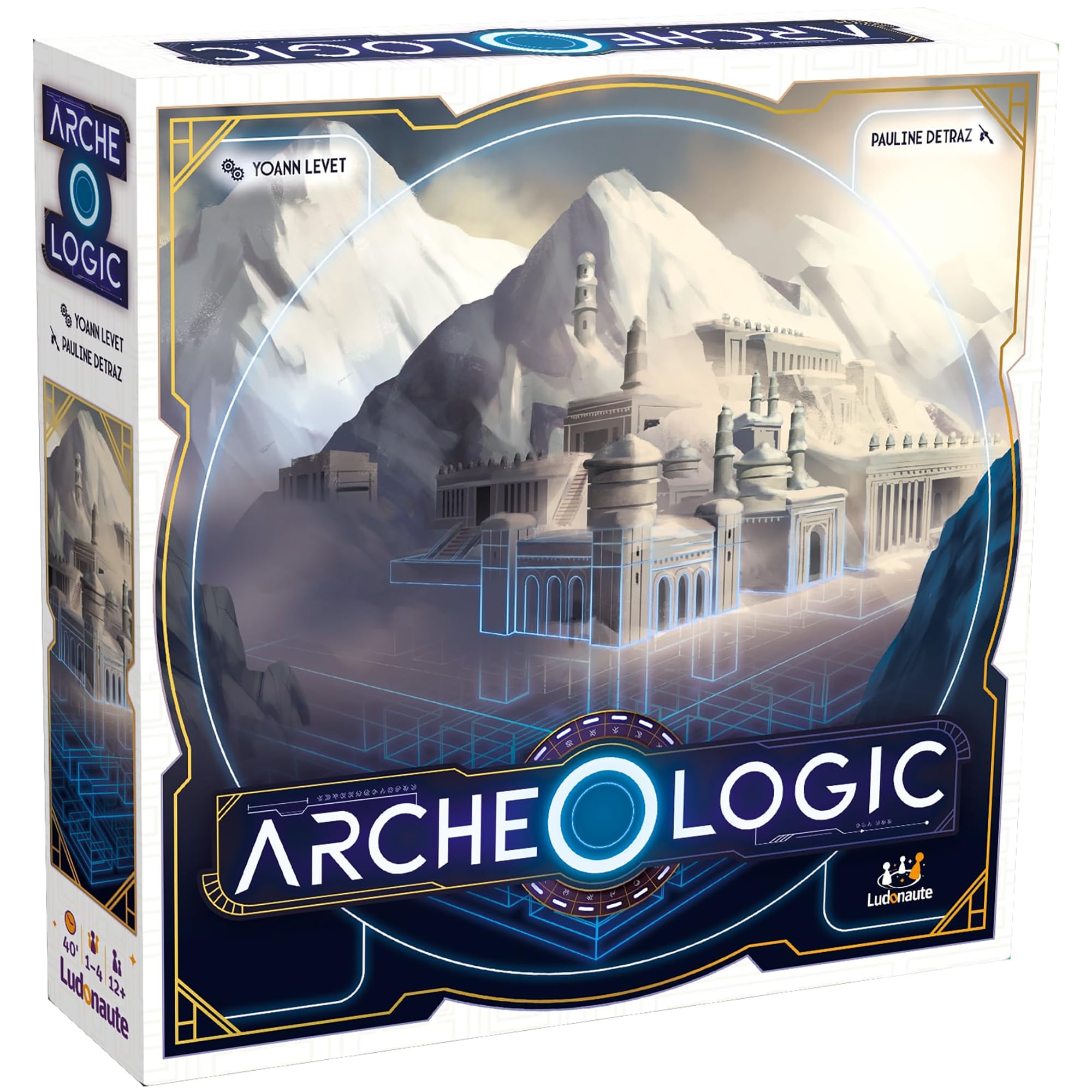
In ArcheOlogic – a deduction board game - players compete to map the layout of an ancient city found hidden in the mountains. For ages 12 and up. See
Real Digs and Citizen Science
Finally, for those eager to get out in the field, armed with trowel, teaspoon, and paintbrush, and dig, the Archaeological Institute of America publishes the Archaeological Fieldwork Opportunities Bulletin (AFOB), a detailed list of digs, field schools, and programs with positions for volunteers or students. (The bad part: You don’t get to keep anything you find. The good part: It’s the finding that’s the most fun.)
From the USDA Forest Service, Passport in Time lists volunteer archaeological fieldwork and historical preservation opportunities at Forest Service-sponsored sites around the United States. (Cool family vacation.) See https://forestservicevolunteer.org/about-us/passport-in-time/.
Ancient Lives is a citizen science project in which participants help decode ancient Greek papyri. An online tutorial shows you what to do.